Many know Benedict Cumberbatch as neurosurgeon-turned-Master of the Mystic Arts Doctor Strange. Originally created in the 1960s by Marvel Comics artist and writer Steve Ditko, the character has gained a new fan following through the films of the Marvel Cinematic Universe. In 2016’s Doctor Strange, the upcoming Doctor Strange in the Multiverse of Madness, and several other MCU pictures besides, he’s been played by Benedict Cumberbatch. Open Culture readers may know Cumberbatch better as the 21st-century detective protagonist of the BBC series Sherlock — or, even more likely, as a reader-out-loud of historical and literary letters.
The material in this correspondence, all of which Cumberbatch reads aloud for Letters of Note’s Letters Live project, varies considerable in both tone and content. Little of it resembles the comic-book or detective-novel material with which he has won mainstream fame. But like any good actor, Cumberbatch knows how to tailor his performative persona to each new context without losing the innate sensibility that sets him apart. At the same time, he clearly understands how to interpret not just different characters, realistic as well as fantastical, but also the personalities of real human beings who actually lived. Whatever other pleasures it offers, hearing Cumberbatch read letters underscores the fact that we could all do much worse than to be played by him in the movie of our life.
Based in Seoul, Colin Marshall writes and broadcasts on cities and culture. His projects include the book The Stateless City: a Walk through 21st-Century Los Angeles and the video series The City in Cinema. Follow him on Twitter at @colinmarshall or on Facebook.
Rock critic Lester Bangs described bubblegum pop as “the basic sound of rock ’n’ roll – minus the rage, fear, violence and anomie.” The short-lived genre had its roots in the Please Please Me era of the Beatles’ minus the sex and the sarcasm. But from the Beatles we can trace a pretty solid path to the Archies. Not that we deserved this band as an inevitability, but the cartoon concoction is one of a thousand variants from that infectious strain of post-war pop.
The Archie’s lasting legacy is one single: the bonafide earworm, “Sugar Sugar.” Written by Jeff Barry and Andy Kim, it was a real number one single (it knocked the Rolling Stones’ “Honky Tonk Woman” off the throne in 1969) sung by a completely fake band, namely the cast of Archie Comics, the five or six perpetual teenagers that have been around since 1941.
How we got there, we must go back to the Beatles. Once the Fab Four had started to quickly outgrow their innocent image, King Features turned the four into a Saturday Morning cartoon show in 1965 so their Richard Lester-inspired antics could continue apace. This then led producers Bob Rafelson and Bert Schneider to ask themselves: why use the Beatles when America could manufacture its own? The Monkees were born in 1966: three Americans and one Brit sorta-moptops who starred in a sitcom based around their own hilarious, failed attempts to be as good as John, Paul, George, and Ringo. Music Supervisor Don Kirshner came from a career at the Brill Building, launching the careers of Neil Diamond, Carole King, and Tony Orlando, and on the Monkees, he was in charge of seeking out songwriters for the group, along with studio musicians, calling in the band to sing only when necessary. This led to “Last Train to Clarksville” (Boyce and Hart), “Daydream Believer” (John Stewart) and “I’m a Believer” (Diamond), all solid hits. But that dismissiveness of the actors’ own talents led to tensions in the band, especially Michael Nesmith, who had his own country-leaning interests. Upon hearing “Sugar, Sugar” as a possible Monkees song, Nesmith absolutely refused. “It’s a piece of junk,” he told Kirshner. “I’m not doing it.”
Kirshner returned home knowing that the song could be a hit. His son Ricky was reading Archie comic books, and the idea formed-—why not turn the comic into a band, and have them perform the single. (The rights for the Archie characters at that time were very affordable.)
So take a rejected Monkees song, add a bit of Beatles-style, cheapo animation, and a guaranteed promotion machine (television) and “Sugar, Sugar” turned into a hit. Initially reluctant to play a fake band, pop radio started playing the single two months after its initial release, from May to July, and it would go on to spend 22 weeks in the chart, four of them at Number One. It was Billboard’s Number One song of the year for 1969, a year better known for the crumbling of the Summer of Love. Rape, murder, it was just a shot away. But so was that “candy girl” and that “honey, honey” and why wouldn’t people choose the latter?
The Archies released five albums in total, only the first featuring the comic characters on the cover. But they all continued in the bubble gum vein, written by a small stable of songwriters such as Ritchie Adams, Jeff Barry, Robert Levine, Gene Allen, and others. Rob Dante sang the lead vocals; Toni Wine sang both Betty and Veronica (the latter had the higher register).
Unlike the Monkees, who embraced the pop psychedelia in the culture and put out a grand folly of a movie called Head (with Frank Zappa! and Ringo Starr!), the Archies just kept banging out bubblegum until it turned into sunshine (the name of their third album) and the fad had passed. Fifty years later, “Sugar, Sugar,” remains a good pop song. Wilson Pickett even covered it, injecting some much needed soul into the proceedings.
The idea of a fake, cartoon pop group has never gone away. In fact, Damon Albarn’s Gorillaz project (which has been around for some 20 years now!) showed the benefits that can be had when cartoons take over the image and let the musicians work in the background. Can we give the Archies some of the credit? Chew on that, why don’t ya.
Ted Mills is a freelance writer on the arts who currently hosts the Notes from the Shed podcast and is the producer of KCRW’s Curious Coast. You can also follow him on Twitter at @tedmills, and/or watch his films here.
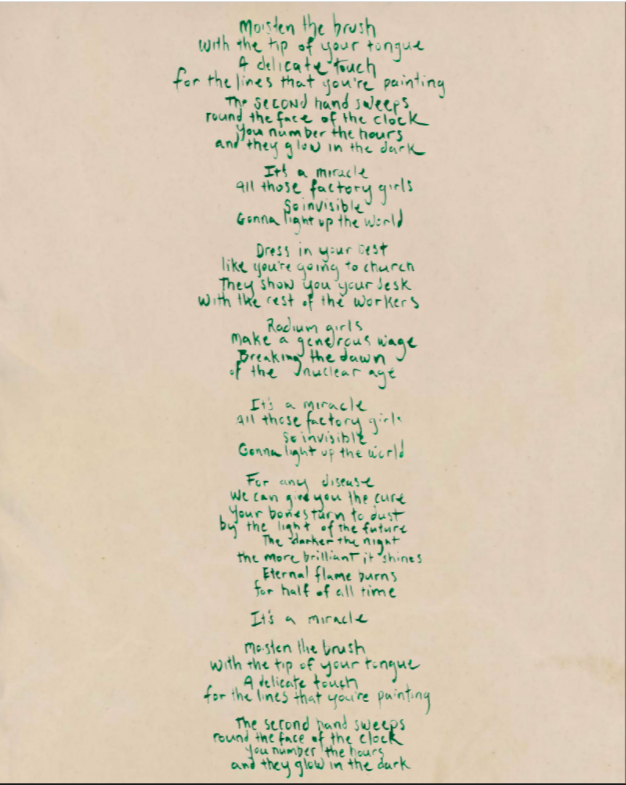
After several years of writing and performing songs influenced by such sources as authors Edward Gorey and Raymond Chandler, filmmaker Tim Burton, and murder ballads in the American folk tradition, Ellia Bisker and Jeffrey Morris, known collectively as Charming Disaster, began casting around for a single, existing narrative that could sustain an album’s worth of original tunes.
The result is Our Lady of Radium, a nine song exploration of Curie’s life and work.
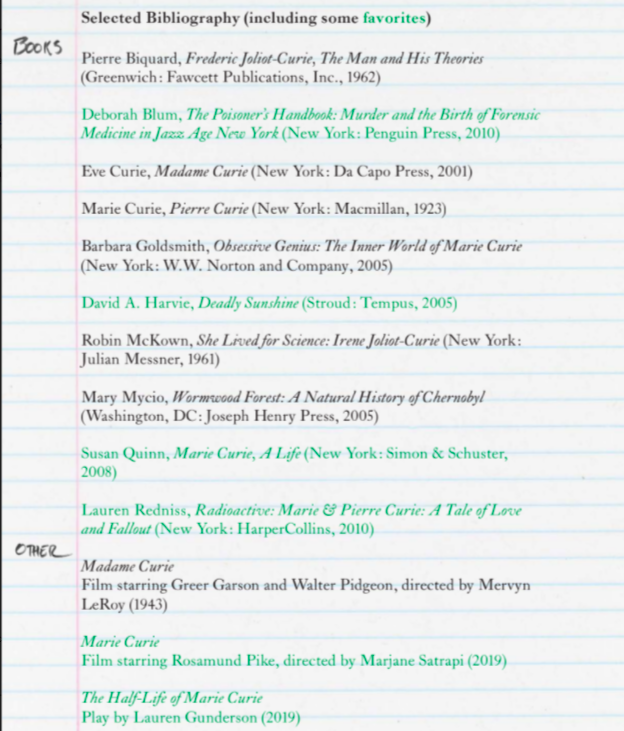
The crowdfunded album, recorded during the pandemic, is so exhaustively researched that the accompanying illustrated booklet includes a bibliography with titles ranging from David I. Harvie’s technically dense Deadly Sunshine: The History and Fatal Legacy of Radium to Deborah Blum’s The Poisoner’s Handbook, described by The New York Observer as “a vicious, page-turning story that reads more like Raymond Chandler than Madame Curie.”
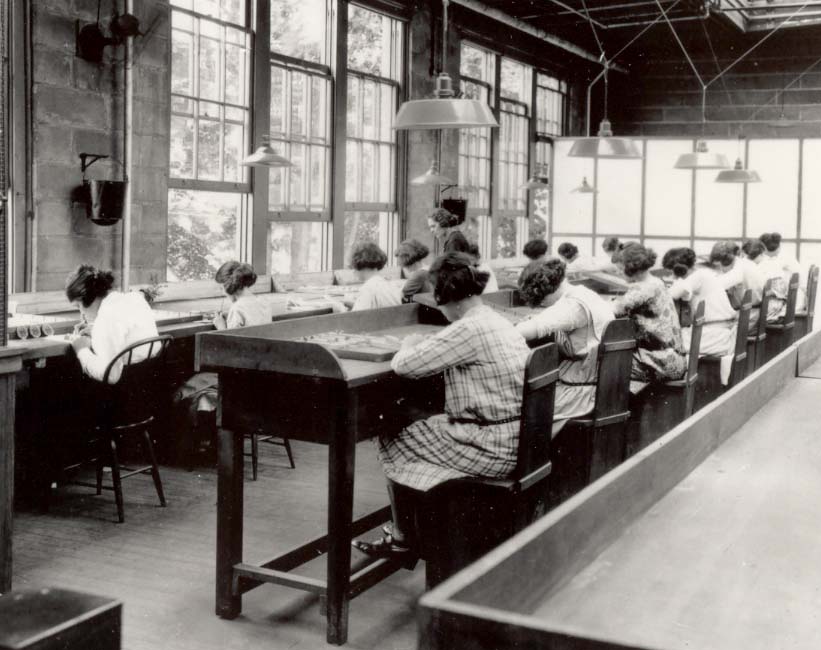
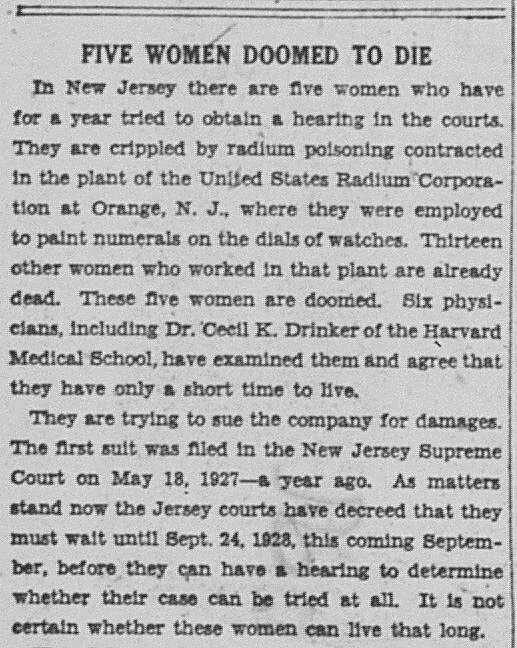
A chapter in the The Poisoner’s Handbook introduced Bisker and Morris to the Radium Girls, young workers whose prolonged exposure to radium-based paint in early 20th-century clock factories had horrific consequences.
Each girl procured a tray containing twenty-four watch dials and the material to be used to paint the numerals upon them so that they would appear luminous. The material was a powder, of about the consistency of cosmetic powder, and consisted of phosphorescent zinc sulphide mixed with radium sulphate…The powder was poured from the vial into a small porcelain crucible, about the size of a thimble. A quantity of gum arabic, as an adhesive, and a thinner of water were then added, and this was stirred with a small glass rod until a paintlike substance resulted. In the course of a working week each girl painted the dials contained on twenty-two to forty-four such trays, depending upon the speed with which she worked, and used a vial of powder for each tray. When the paint-like substance was produced a girl would employ it in painting the figures on a watch dial. There were fourteen numerals, the figure six being omitted. In the painting each girl used a very fine brush of camel’s hair containing about thirty hairs. In order to obtain the fine lines which the work required, a girl would place the bristles in her mouth, and by the action of her tongue and lips bring the bristles to a fine point. The brush was then dipped into the paint, the figures painted upon the dial until more paint was required or until the paint on the brush dried and hardened, when the brush was dipped into a small crucible of water. This water remained in the crucible without change for a day or perhaps two days. The brush would then be repointed in the mouth and dipped into the paint or even repointed in such manner after being dipped into the paint itself, in a continuous process.
The band found themselves haunted by the Radium Girls’ story:
Partly it’s that it seemed like a really good job — it was clean work, it was less physically taxing and paid better than factory or mill jobs, the working environment was nice — and the workers were all young women. They were excited about this sweet gig, and then it betrayed them, poisoning them and cutting their lives short in a horrible way.
There were all these details we learned that we couldn’t stop thinking about. Like the fact that radium gets taken up by bone, which then starts to disintegrate because radium isn’t as hard as calcium. The Radium Girls’ jaw boneswere crumbling away, because they (were instructed) to use their lips to point the brushes when painting watch faces with radium-based paint.
The radium they absorbed was irradiating them from inside, from within their own bones.
Radium decays into radon, and it was eventually discovered that the radium girls were exhaling radon gas. They could expose a photographic plate by breathing on it. Those images—the bones and the breath—stuck with us in particular.
Fellow musician, Omer Gal, of the “theatrical freak folk musical menagerie” Cookie Tongue, heightens the sense of dread in his chilling stop-motion animation for Our Lady of Radium’s first music video, above. There’s no question that a tragic fate awaits the crumbling, uncomprehending little worker.
Before their physical symptoms started to manifest, the Radium Girls believed what they had been told — that the radium-based paint they used on the timepieces’ faces and hands posed no threat to their well being.
Compounding the problem, the paint’s glow-in-the-dark properties proved irresistible to high-spirited teens, as the niece of Margaret “Peg” Looney — 17 when she started work at the Illinois Radium Dial Company (now a Superfund Site) — recounted to NPR:
I can remember my family talking about my aunt bringing home the little vials (of radium paint.) They would go into their bedroom with the lights off and paint their fingernails, their eyelids, their lips and then they’d laugh at each other because they glowed in the dark.
Looney died at 24, having suffered from anemia, debilitating hip pain, and the loss of teeth and bits of her jaw. Although her family harbored suspicions as to the cause of her bewildering decline, no attorney would take their case. They later learned that the Illinois Radium Dial Company had arranged for medical tests to be performed on workers, without truthfully advising them of the results.
Eventually, the mounting death toll made the connection between workers’ health and the workplace impossible to ignore. Lawsuits such as La Porte v. United States Radium Corporation led to improved industrial safety regulations and other labor reforms.
Too late, Charming Disaster notes, for the Radium Girls themselves:
(Our song) Radium Girls is dedicated to the young women who were unwittingly poisoned by their work and who were ignored and maligned in seeking justice. Their plight led to laws and safeguards that eventually became the occupational safety protections we have today. Of course that is still a battle that’s being fought, but it started with them. We wanted to pay tribute to these young women, honor their memory, and give them a voice.
Preorder Charming Disaster’s Our Lady of Radiumhere.
If resistance to the Slave Power was the reserved watchword of your first election, the triumphant war cry of your re-election is Death to Slavery.
In 1864, Karl Marx and his International Working Men’s Association (the “First International”) sent an address to Abraham Lincoln, congratulating “the American people upon your re-election by a large majority.” As historian Robin Blackburn writes, “The US ambassador in London conveyed a friendly but brief response from the president. However, the antecedents and implications of this little exchange are rarely considered.” It was not the first time Marx and Lincoln had encountered each other. They never met personally, but their affinities led to what Blackburn calls an “unfinished revolution” — not a communist revolution in the U.S.; but a potential revolution for democracy.
Lincoln and Marx became mutual admirers in the early 1860s due to the latter’s work as a foreign correspondent for The New York Daily Tribune. From 1852 until the start of the Civil War, Marx, sometimes with Engels, wrote “over five hundred articles for the Tribune,” Blackburn notes. Fiercely anti-slavery, Marx compared Southern planters to the European aristocracy, “an oligarchy of 300,000 slaveholders.” Early in the war, he championed the Union cause, even before Lincoln decided on emancipation as a course of action. Marx believed, writes Blackburn, that ending slavery “would not destroy capitalism, but it would create conditions far more favorable to organizing and elevating labor, whether white or black.”
“Marx was intensely interested in the plight of American slaves,” Gillian Brockell writes at The Washington Post. “In January 1860, he told Engels that the two biggest things happening in the world were ‘on the one hand the movement of the slaves in America started by the death of John Brown, and on the other the movement of serfs in Russia.’ ” Lincoln was an “avid reader” of the Tribune and Marx’s articles. The paper’s managing editor, Charles A. Dana, an American socialist fluent in German who met Marx in 1848, would go on to become “Lincoln’s ‘eyes and ears’ as a special commissioner in the War Department” and later the Department’s Assistant Secretary.
Lincoln was not, of course, a Communist. And yet some of the ideas he absorbed from Marx’s Tribune writings — many of which would later be adapted for the first volume of Capital– made their way into the Republican Party of the 1850s and 60s. That party, writes Brockell, was “anti-slavery, pro-worker and sometimes overtly socialist,” championing, for example, the redistribution of land in the West. (Marx even considered emigrating to Texas himself at one time.) And at times, Lincoln could sound like a Marxist, as in the closing words of his first annual message (later the State of the Union ) in 1861.
“Labor is prior to and independent of capital,” the country’s 16th president concluded in the first speech since his inauguration. “Capital is only the fruit of labor, and could never have existed if labor had not first existed. Labor is the superior of capital, and deserves much the higher consideration.” That full, 7,000 word address appeared in newspapers around the country, including the Confederate South. The Chicago Tribune subtitled its closing arguments “Capital vs. Labor.”
Lincoln’s own position on abolition evolved throughout his presidency, as did his views on the position of the formerly enslaved within the country. For Marx, however, the questions of total abolition and full enfranchisement were settled long before the country entered the Civil War. The democratic revolution that might have begun under Lincoln ended with his assassination. In the summer after the president’s death, Marx received a letter from his friend Engels about the new president, Andrew Johnson: “His hatred of Negroes comes out more and more violently… If things go on like this, in six months all the old villains of secession will be sitting in Congress at Washington. Without colored suffrage, nothing whatever can be done there.” Hear the address Marx drafted to Lincoln for his 1865 re-election read aloud at the top of the post, and read it yourself here.
A good disaster story never fails to fascinate — and, given that it actually happened, the story of Pompeii especially so. Buried and thus frozen in time by the eruption of Mount Vesuvius in 79 AD, the ancient Roman town of 11,000 has provided an object of great historical interest ever since its rediscovery in 1599. Baths, houses, tools and other possessions (including plenty of wine bottles), frescoes, graffiti, an ampitheater, an aqueduct, the “Villa of the Mysteries”: Pompeii has it all, as far as the stuff of first-century Roman life goes.
The ash-preserved ruins of Pompeii, more than any other source, have provided historians with a window into just what life in that time and place was like. A Day in Pompeii, an exhibition held at the Melbourne Museum in 2009, gave its more than 330,000 visitors a chance to experience Pompeii’s life even more vividly. The exhibition included a 3D theater installation that featured the animation above. Watch it, and you can see Pompeii brought back to life with computer-generated imagery — and then, in snapshots over the course of 48 hours, entombed by Vesuvius again.
As inherently compelling as we find the story of Pompeii, modern drama has struggled to capture the power of the disaster that defines it. The late-1960s BBC show Up Pompeii!offered a comedic rendering of life in the city before the explosion, but more serious interpretations, like the 2014 Hollywood movie Pompeii, met with only lukewarm critical reception. Best, it seems, to stick to the words of Pliny the Younger, witness to the destruction and still its most evocative describer:
You could hear the shrieks of women, the wailing of infants, and the shouting of men; some were calling their parents, others their children or their wives, trying to recognize them by their voices. People bewailed their own fate or that of their relatives, and there were some who prayed for death in their terror of dying. Many besought the aid of the gods, but still more imagined there were no gods left, and that the universe was plunged into eternal darkness for evermore.
If you would like to support the mission of Open Culture, consider making a donation to our site. It’s hard to rely 100% on ads, and your contributions will help us continue providing the best free cultural and educational materials to learners everywhere. You can contribute through PayPal, Patreon, and Venmo (@openculture). Thanks!
Martin Heidegger is often called the most important philosopher of the 20th century. I’m not in a position to evaluate this claim, but his influence on contemporary and successive European and American thinkers is considerable. That influence spread all the way to Thailand, where Buddhist monk and university professor Bhikku Maha Mani came to think of Heidegger as “the German philosopher.” (A conception, writes Otto Poggeler in an essay on Heidegger and Eastern thought, that may have “perverted the monk’s wanting to talk” to the philosopher, “since philosophy never lets itself be embodied in an idol.”) The Buddhist monk, also a radio presenter who later left his order to work for American television, met the German philosopher in 1963 for an interview on German TV station SWR. Maha Mani asks his questions in English, Heidegger responds in German. See the first part of the interview above, the second below.
This was not at all the first time the German philosopher had dialogued with an East Asian thinker. In a study on the Buddhist and Taoist influences on Heidegger’s work, Reinhold May writes that Heidegger’s “direct contact with East Asian thought dates back at least as far as 1922” when he began conversations with several major Japanese thinkers. Nonetheless, Heidegger apparently had little to say on the correspondences between his ideas and those of Eastern philosophers until the 1950s, and the little that he did say seems marginal at best to his main body of work.
May’s claims of “hidden influence” may be highly exaggerated, yet Heidegger was familiar with Buddhist thought, and, in the interview, he makes some interesting distinctions and comparisons. In answer to the Bhikku’s first, very general, question, Heidegger launches into his familiar refrain—“one question was never asked [in “Occidental” philosophy], that is, the question of Being.” Heidegger defines “the human being” as “this essence, that has language,” in contrast to “the Buddhist teachings,” which do not make “an essential distinction, between human beings and other living things, plants and animals.” For Heidegger, consciousness—“a knowing relation to Being” through language—is the exclusive preserve of humans.
In the second part of the interview (read a transcript here), Bhikku Maha Mani asks Heidegger what he thinks about the contradictory Western tendency to identify people without religion as “communists” and those who live “according to religious rules” as insane. Heidegger responds that religion, in its most radical sense, simply means “a bonding-back to powers, forces and laws, that supersede human capability.” In this respect, he says, “no human being is without religion,” whether it be “the belief in science” of communists or “an atheistic religion, namely Buddhism, that knows no God.” Heidegger goes on to explain why he sees little possibility of “immediate and simple understanding” between people of different religions, philosophies, and political groups. While it may be tempting to view Heidegger’s work—and that of other phenomenological, existential, or skeptical philosophers—as working in tandem with much Eastern thought, as perhaps “the” German philosopher himself would caution, the differences are significant. In the interview above, Heidegger largely faults Germany and “all of Europe in general” for a general lack of human harmony: “We do not have any clear, common and simple relation to reality and to ourselves,” he says. “That is the big problem of the Western world.”
On January 13, 1968, Johnny Cash recorded his famous live concerts within the walls of Folsom State Prison, California, a week into what would be one of his busiest years of touring. While Columbia Records worked on trimming down the two sets into one LP, Cash set off across the States, into Canada and back, playing almost every night, and returning to the West Coast for a final stop at the Carousel Ballroom in San Francisco.
Recording the gig that night was Owsley “Bear” Stanley, the Grateful Dead’s engineer and also the man responsible for creating the purest LSD on the West Coast. As Rolling Stone once asked, would there have been a Summer of Love if not for Stanley? Apparently, Stanley had *another* secret stash, and we are only now hearing a tiny fraction of it. This gig is one of over 1,300 the engineer recorded and kept in his private collection. Stanley died in 2011, and ten years later the Oswald Stanley Foundation is selectively releasing recordings from this treasure trove as a way to preserve the recordings and fund more releases. This Cash set was one of the first releases in the “Bear’s Sonic Journals” series, released in October of 2021.
Cash’s new bride June Carter Cash joined him onstage. It was on the Ontario stop of the aforementioned tour that Cash proposed to her live on stage, and they were married March 1 in Kentucky. You can hear his pride as he introduces her to the audience; the two immediately launch into “Jackson.” “We got married in a fever,” indeed. (The two remained married until her death in 2003.) June sings several numbers, including “Wabash Cannonball,” and Carl Perkins’ “Long Legged Guitar Pickin’ Man.”
Stanley recorded these sets for himself, coming straight out of the soundboard. Where the Carousel Ballroom concert lacks in quality—-vocals, audience, and Cash’s guitar are on the left, the band to the right—-they make up for in history and excitement.
Currently, the label has released full concerts from Tim Buckley, Ali Akbar Khan, with Indranil Bhattacharya and Zakir Hussain, Commander Cody & His Lost Planet Airmen, New Riders of The Purple Sage, Jorma Kaukonen & Jack Casady, The Allman Brothers Band, and Doc and Merle Watson. As Stanley recorded for two decades of his career, the catalog promises untold delights.
The full playlist from the Carousel Ballroom gig is below:
Ted Mills is a freelance writer on the arts who currently hosts the Notes from the Shed podcast and is the producer of KCRW’s Curious Coast. You can also follow him on Twitter at @tedmills, and/or watch his films here.
On Friday, August 31, 1979, Andy Warhol records in his diary that he took a cab to Elaine’s to “meet the guy who might get me a guest appearance on The Love Boat.” But nearly five years pass before he writes that the writers are working on his episode; with the shooting dates set, “I started to get scared, I don’t know if I can go through with it.” A couple of months later, as the appointed time approaches, he hears the plot: “There’s a girl on the boat named Mary with her husband, and she used to be a superstar of mine, and she doesn’t want her husband to know that she used to be ‘Marina Del Rey.’ And I just have a few lines, things like ‘Hello, Mary.’ But one of the lines I have to say is something like ‘Art is crass commercialism,’ which I don’t want to say.”
Whatever his objections to the script, Warhol doesn’t seem to have been an especially difficult participant, of whom The Love Boat must have had more than a few in its 250 episodes. During its run on ABC from 1977 to 1986, the series became an American pop-cultural phenomenon of a scale difficult to comprehend today. But as a connoisseur of American pop culture, Warhol would have comprehended it fully. By the time of his appearance in October 1985, The Love Boat had entered its ninth season, presumably hungrier than ever for attention-grabbing guest stars; on “his” episode, Warhol shares that billing with, among others, Milton Berle, Happy Days’ Tom Bosley and Marion Ross, and Andy Griffith (who, Warhol notes, “seems bitter to be on The Love Boat”).
“If there was any space where painters and artists could brush shoulders with soap stars and teen idols, it was aboard the Pacific Princess,” says MeTV. “In one episode dedicated to the fashion industry, designers Gloria Vanderbilt, Geoffrey Beene and Halston all came aboard.” Warhol’s coming aboard, then, “was both unexpected and somehow inevitable.” You can witness this surprising yet unsurprising cultural crossover in the video above, which contains just the scenes from Warhol’s story within the episode (which, like most LoveBoat scripts, has three different plotlines). Even if it delivers few profound insights into the nature of art, celebrity, and human aspiration, it does capture Warhol’s presence as it seems really to have been during his final years.
“My Stephen Sprouse jackets were there on the wardrobe rack,” Warhol writes in his diary during the shoot. “When I wear them, I think I finally look like people want Andy Warhol to look again.” That must have been true of the shiny silver number he wears in his first scene of the episode, when first he rolls up with his “entourage” to the ship’s reception desk. “As we’re walking off, the Love Boat girl asks Raymond St. Jacques, ‘How does an artist know when a painting is really successful?’ And he says, ‘When the check clears.’ ” But on one take “they did it wrong and it was better — she said, ‘When is a painting really finished.’ ” Unfortunately, that version of the line seems to have been a bit too Warholian for the Pacific Princess.
Based in Seoul, Colin Marshall writes and broadcasts on cities and culture. His projects include the book The Stateless City: a Walk through 21st-Century Los Angeles and the video series The City in Cinema. Follow him on Twitter at @colinmarshall or on Facebook.
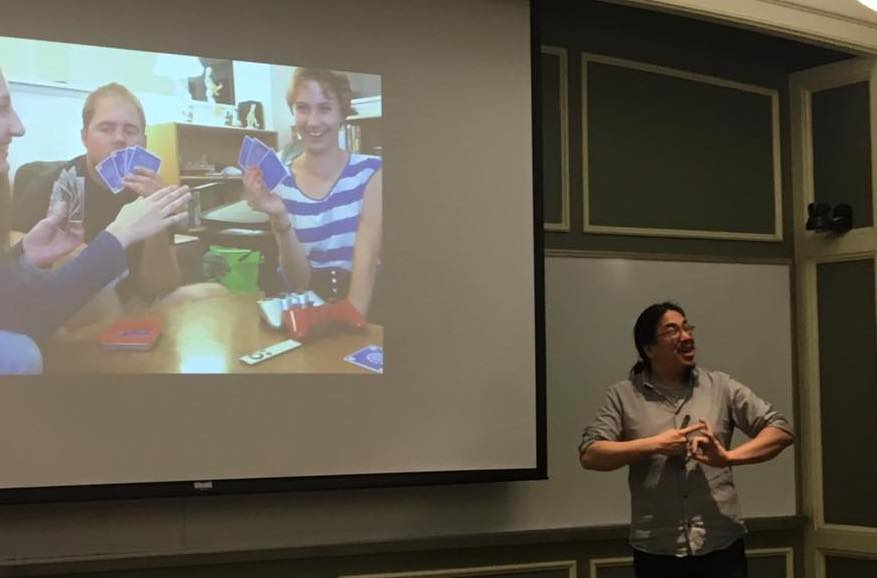
Thi Nguyen (pronounced “TEE NWEEN”) teaches at the University of Utah, and his first book, 2020’s Games: Agency as Art, makes a case for games being treated as a serious object of study for philosophy. Thi sees game analysis as not just a sub-division in the philosophy of art (aesthetics), but in the philosophy of action. How do games relate to other human activities with constraints, like customs, language, and more specifically performative acts within language (like saying “I do” during a marriage ceremony, where you’re not just describing that you do something, but actually taking action)?
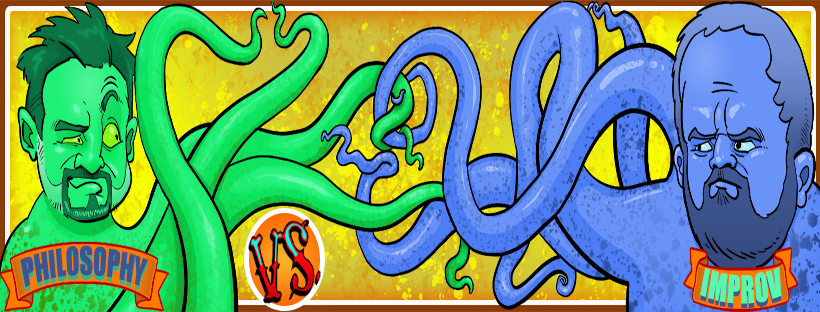
On this recording (episode 24 of the podcast), Thi joins philosophy podcaster Mark Linsenmayer of The Partially Examined Life and improvisational comedy coach Bill Arnett of the Chicago Improv Studio to talk about games and improv, and to engage in a couple of improv scenes that explore the connection between the two.
This is the third philosophy guest for the Philosophy vs. Improv podcast, which alternates between guests from the improv world, guests from the philosophy world, and no guest at all. The overall format involves a lesson from each host, which they teach to each other (and the guest) simultaneously. This often results in unexpected synchronicity given the connections between two disciplines that stress the analysis of language, living deliberately, and quick thinking.
For another philosophically rich episode, see episode #20 in which St. Lawrence University’s Jennifer L. Hansen appeared to discuss the many aspects of the concept of “The Other” in philosophy.
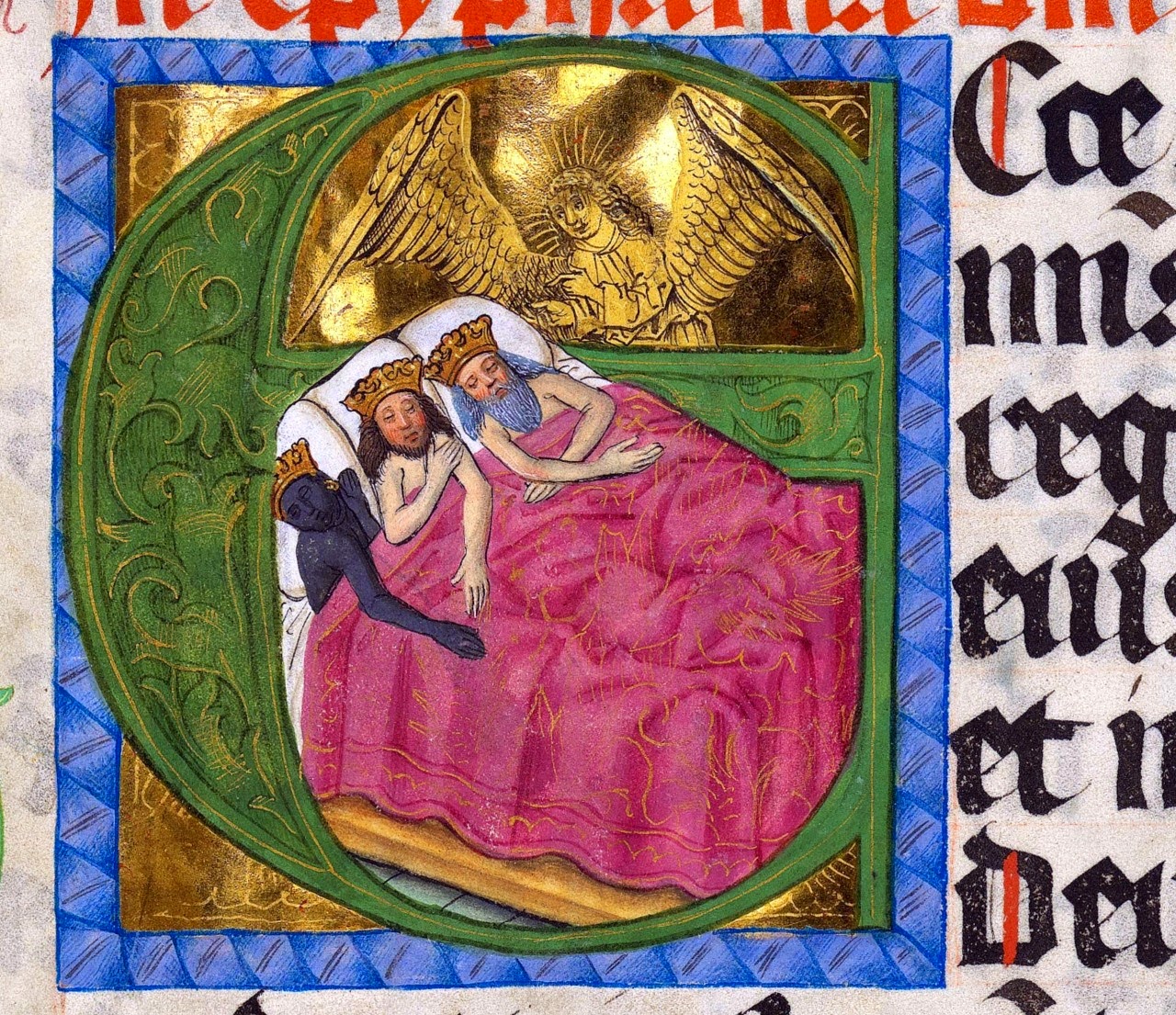
The importance of a good night’s sleep has been featured now and again here on Open Culture. But were a medieval European to visit our time, he’d probably ask — among other questions — if we didn’t mean a good night’s sleeps, plural. The evidence suggests that the people of the Middle Ages slept not straight through the night but in two distinct stretches. This practice has come back to light in recent years thanks to the research of historian Roger Ekirch, author of At Day’s Close: Night in Times Past. “Both phases of sleep lasted roughly the same length of time,” he writes in that book, “with individuals waking sometime after midnight before returning to rest.”
But “not everyone, of course, slept according to the same timetable. The later at night that persons went to bed, the later they stirred after their initial sleep; or, if they retired past midnight, they might not awaken at all until dawn. Thus, in ‘The Squire’s Tale’ in The Canterbury Tales, Canacee slept ‘soon after evening fell’ and subsequently awakened in the early morning following ‘her first sleep’; in turn, her companions, staying up much later, ‘lay asleep till it was fully prime’ (daylight).” Proof widespread “biphasic sleep” exists not just in Chaucer, but — for those who know where to look — all over the surviving documents from medieval Europe.
“In France, the initial sleep was the premier somme,” writes BBC.com’s Zaria Gorvett. “In Italy, it was primo sonno. In fact, Eckirch found evidence of the habit in locations as distant as Africa, South and Southeast Asia, Australia, South America and the Middle East”; the earliest reference he turned up comes from Homer’s Odyssey. Whatever their era of history, biphasic sleepers seem to have made good use of their intervals of wakefulness, known in English as “the watch.” During it, peasants worked, Christians prayed, and thieves thieved, “but most of all, the watch was useful for socializing – and for sex.” After a long day’s work, “the first sleep took the edge off their exhaustion and the period afterwards was thought to be an excellent time to conceive copious numbers of children.”
Biphasic sleep and its attendant habits didn’t survive the 19th century. The reasons, as Ekirch explains in the interview above, have to do with the Industrial Revolution, that great disruption of traditions followed since time immemorial. Along with “the increasing prevalence of artificial illumination both within homes and outside,” he says, “bedtimes were pushed back, even though people still awakened at the same time in the morning.” Apart from introducing new technologies, the Industrial Revolution “also changed peoples’ attitudes toward work,” making humanity “increasingly time-conscious: productivity, efficiency were the hallmarks of the 19th century.” We continue to set store by them today, though we also handle the disruption of sleep in our own, distinctively 21st-century ways. Would anyone care to explain to our medieval time-traveler the practice of midnight Twitter-scrolling?
Based in Seoul, Colin Marshall writes and broadcasts on cities and culture. His projects include the book The Stateless City: a Walk through 21st-Century Los Angeles and the video series The City in Cinema. Follow him on Twitter at @colinmarshall or on Facebook.
We're hoping to rely on loyal readers, rather than erratic ads. Please click the Donate button and support Open Culture. You can use Paypal, Venmo, Patreon, even Crypto! We thank you!
Open Culture scours the web for the best educational media. We find the free courses and audio books you need, the language lessons & educational videos you want, and plenty of enlightenment in between.
Get the best cultural and educational resources on the web curated for you in a daily email. We never spam. Unsubscribe at any time.
FOLLOW ON SOCIAL MEDIA
Open Culture editor Dan Colman scours the web for the best educational media. He finds the free courses and audio books you need, the language lessons & movies you want, and plenty of enlightenment in between.