An Introduction to Consumer Neuroscience & Neuromarketing: A Free Online Course from the University of Copenhagen

Thomas Zoëga Ramsøy, a neuropsychologist at the University of Copenhagen, presents An Introduction to Consumer Neuroscience & Neuromarketing, a course that explores the following set of questions:
How do we make decisions as consumers? What do we pay attention to, and how do our initial responses predict our final choices? To what extent are these processes unconscious and cannot be reflected in overt reports? This course will provide you with an introduction to some of the most basic methods in the emerging fields of consumer neuroscience and neuromarketing. You will learn about the methods employed and what they mean. You will learn about the basic brain mechanisms in consumer choice, and how to stay updated on these topics. The course will give an overview of the current and future uses of neuroscience in business.
You can take Introduction to Consumer Neuroscience & Neuromarketing for free by selecting the audit option upon enrolling. If you want to take the course for a certificate, you will need to pay a fee.
Introduction to Consumer Neuroscience & Neuromarketing will be added to our list of Free Business Courses, a subset of our collection: 1,700 Free Online Courses from Top Universities.
Related Content:
For a complete list of online courses, please visit our complete collection, 1,700 Free Online Courses from Top Universities.
For a list of online certificate programs, visit 200 Online Certificate & Microcredential Programs from Leading Universities & Companies, which features programs from our partners Coursera, Udacity, FutureLearn and edX.
And if you’re interested in Online Mini-Masters and Master’s Degrees programs from universities, see our collection: Online Degrees & Mini Degrees: Explore Masters, Mini Masters, Bachelors & Mini Bachelors from Top Universities.
Read More...The Changing Landscape of Ancient Rome: A Free Online Course from Sapienza University of Rome

Image by Lil Herodotus, via Wikimedia Commons
From Paolo Carafa, a professor at Sapienza University of Rome, comes a free course that explores the archaeology of ancient Rome. The course description for The Changing Landscape of Ancient Rome. Archaeology and History of the Palatine Hill reads:
Studying ancient — as well as medieval or modern — cities basically means telling local urban stories based on the reconstruction of changing landscapes through the centuries. Given the fragmentary nature of archaeological evidence, it is necessary to create new images that would give back the physical aspect of the urban landscape and that would bring it to life again. We are not just content with analyzing the many elements still visible of the ancient city. The connections between objects and architectures, visible and non visible buildings, which have been broken through time have to be rejoined, to acknowledge the elements that compose the urban landscape.
Landscape and its content are a very relevant and still vital part of any national cultural heritage. The course will introduce students to the way we have been reflecting on over the last twenty years and still are engaged with the study of the past of our cities, beginning from the most complex case in the ancient Mediterranean World: the core of Italy and of Roman Empire. On the other hand, knowledge means also preservation and defense of material remains and cultural memory.
You can take The Changing Landscape of Ancient Rome for free by selecting the audit option upon enrolling. If you want to take the course for a certificate, you will need to pay a fee.
The Changing Landscape of Ancient Rome will be added to our list, 1,700 Free Online Courses from Top Universities.
Related Content:
For a complete list of online courses, please visit our complete collection, 1,700 Free Online Courses from Top Universities.
For a list of online certificate programs, visit 200 Online Certificate & Microcredential Programs from Leading Universities & Companies, which features programs from our partners Coursera, Udacity, FutureLearn and edX.
And if you’re interested in Online Mini-Masters and Master’s Degrees programs from universities, see our collection: Online Degrees & Mini Degrees: Explore Masters, Mini Masters, Bachelors & Mini Bachelors from Top Universities.
Read More...Hear the Earliest Recorded Customer Complaint Letter: From Ancient Sumeria 1750 BC
Three-thousand, seven-hundred, and seventy-one years ago, in the city of Dilmun, near Ur in Mesopotamia, there was a merchant named Ea-nasir. His business was in selling metal ingots that he purchased in the Persian Gulf. Was he a good merchant? Not according to one of his customers, Nanni. If Yelp had existed back in 1750 BC, Nanni would definitely have given Ea-nasir a one-star review.
We know this because Nanni’s complaint about Ea-nasir, written in Akkadian cuneiform, still exists. The tiny 4.5x2x1 inch tablet is currently on display at the British Museum, and was discovered by archaeologist Sir Leonard Wooley in his 1920s excavation of Ur.
In the video above, you can hear Nanni’s complaint come to life.
Ea-nasir had agreed to sell copper ingots to Nanni, who sent a servant with some money to pick them up. Not only were the ingots of low quality, but Ea-nasir was rude to the servant, giving him the ol’ “take it or leave it” treatment. And not only that, but the servant had to travel through enemy territory. And for all the things Nanni’s done for Ea-nasir! (You can just imagine Nanni picking out a fresh clay tablet and getting down to some furious cuneiformin’.)
This reading brings out some of the haughty anger from Nanni’s complaint, but I wonder if it is being too nice. Maybe Voices of the Past should hire a New York cabbie to have a go the next time they find some several-millennia-old ephemera from Ea-nasir’s former business quarters. We don’t know if Nanni ever settled his dispute, but apparently he wasn’t the only one.
The room that Sir Leonard excavated contained many complaints from many customers, including several back and forths from frustrated people all over Mesopotamia. According to this Forbes article, Ea-nasir did have a legit profitable business once, but as his debt grew, the creditors came calling, and he began to stiff people. What makes Nanni’s letter stand out is that he used both the front and back of the tablet to write his withering assessment. We’ve all seen those kind of letters.
The full text from Nanni reads:
Now, when you had come, you spoke saying thus: ‘I will give good ingots to Gimil-Sin’; this you said to me when you had come, but you have not done it. You have offered bad ingots to my messenger, saying ‘If you will take it, take it; if you will not take it, go away.’ Who am I that you are treating me in this manner — treating me with such contempt? and that between gentlemen such as we are. I have written to you to receive my money, but you have neglected [to return] it. Repeatedly you have made them [messengers] return to me empty-handed through foreign country. Who is there amongst the Dilmun traders who has acted against me in this way? You have treated my messenger with contempt. And further with regard to the silver that you have taken with you from my house you make this discussion. And on your behalf I gave 18 talents of copper to the palace, and Sumi-abum also gave 18 talents of copper, apart from the fact that we issued the sealed document to the temple of Samas. With regard to that copper, as you have treated me, you have held back my money in a foreign territory, although you are obligated to hand it over to me intact. You will learn that here in Ur I will not accept from you copper that is not good. In my house, I will choose and take the ingots one by one. Because you have treated me with contempt, I shall exercise against you my right of selecting the copper.
It’s kind of comforting in its own weird way, knowing that finding a good business you can trust has been an eternal quest, whether you’re trying to get a refund from eBay or looking at some low quality ingots and dealing with a very annoyed servant.
Related Content:
Hear The Epic of Gilgamesh Read in the Original Akkadian and Enjoy the Sounds of Mesopotamia
Ted Mills is a freelance writer on the arts who currently hosts the Notes from the Shed podcast and is the producer of KCRW’s Curious Coast. You can also follow him on Twitter at @tedmills, and/or watch his films here.
Read More...Bass Sounds: One Song Highlights the Many Different Sounds Made by Different Bass Guitars
If you’re a seasoned bass player, the diversity of bass sounds in the “Bass Sounds” videos here will hardly surprise you. Most other people — including many musicians — have little understanding of the range of the bass, an instrument thought to just hold down the low end. Yes, it does do that, but it doesn’t always do it with bass frequencies. Bass tones and overtones fall anywhere in the range of 40hz — a low rumble more felt than heard — to a snappy 4000hz, the high-midrange frequency of snare drums and guitars.
That’s a lot of sonic territory for an instrument to explore. It includes the sound of Paul McCartney’s Hofner Violin Bass on “Penny Lane,” a “bass-heavy tone with almost no mids or treble,” Joel McIver writes at MusicRader; the smooth top end of Jaco Pastorious’ homemade fretless Fender Jazz bass; and the buzzsaw power chords of Lemmy Kilmister’s Rickenbacker 4001, which he played with midrange turned to 11 and bass controls completely off.
Of course, amplifiers and effects make all the difference in famous bassists’ tones, but it starts at the fingers, the body, the pickups, and the frets, as bass player Bart Soeters demonstrates with a series of classic, modern, and obscure bass guitars, accompanied by the music of Joris Holtackers. Basses here include such recognizable shapes as the Hofner, with its chambered body and f‑holes, the Fender Jazz and Precision basses, and the Gibson SG. They also include unusual or unique instruments like the NS Design Basscello and Soeters’ own Adamovic FBC signature bass.
Boomy, woody, even reedy — bass guitars can rumble and they can croon. They can be imitated by an electric cello — as Soeters demonstrates in the follow-up Bass Sounds II video at the top — make lovely acoustic thumps, and generally sound as percussive or melodic as you like. Will educating others about the range of bass guitar tones change unfortunate stereotypes about bass players (demonstrated below via interpretive dance and spoken word by The Kids in the Hall’s Kevin McDonald and Bruce McCulloch)? Only time will tell. But it can certainly sharpen the music appreciation skills of musicians and non-musicians alike. See all the different basses listed on the Bass Sounds YouTube pages here and here.
via Laughing Squid
Related Content:
The Neuroscience of Bass: New Study Explains Why Bass Instruments Are Fundamental to Music
The Story Behind the Iconic Bass-Smashing Photo on the Clash’s London Calling
Paul McCartney Offers a Short Tutorial on How to Play the Bass Guitar
Josh Jones is a writer and musician based in Durham, NC. Follow him at @jdmagness
Read More...Behold the Astronomicum Caesareum, “Perhaps the Most Beautiful Scientific Book Ever Printed” (1540)
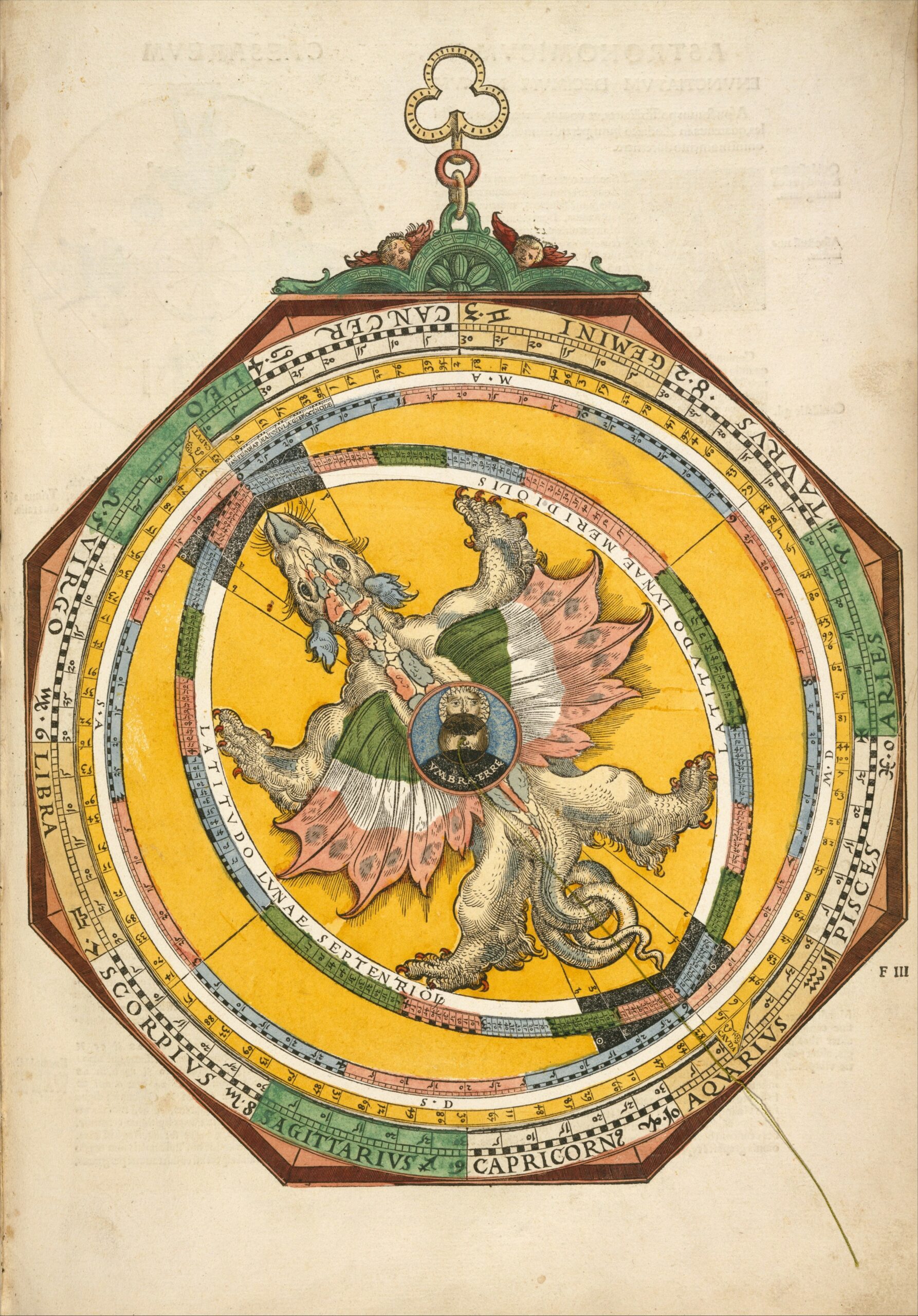
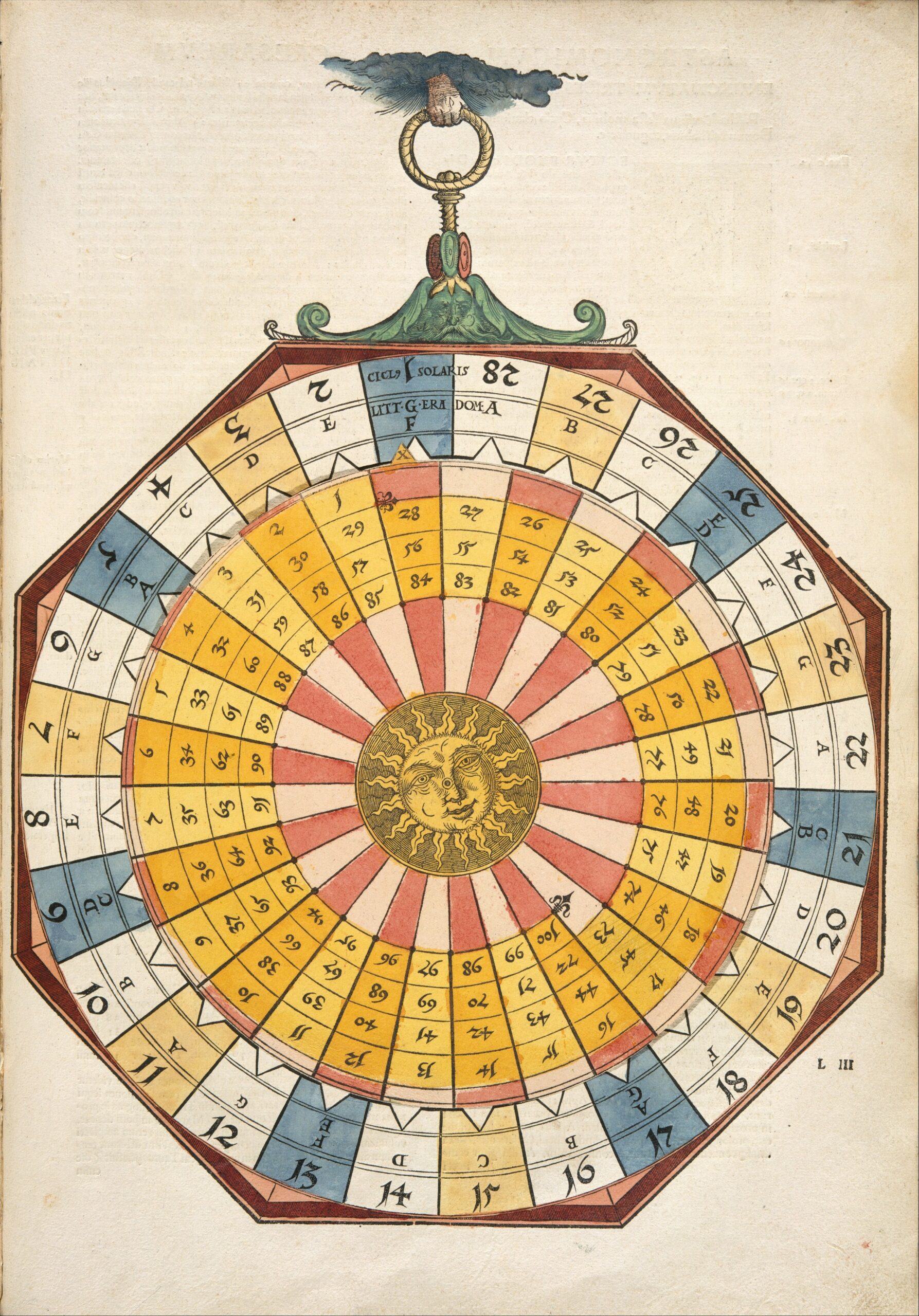
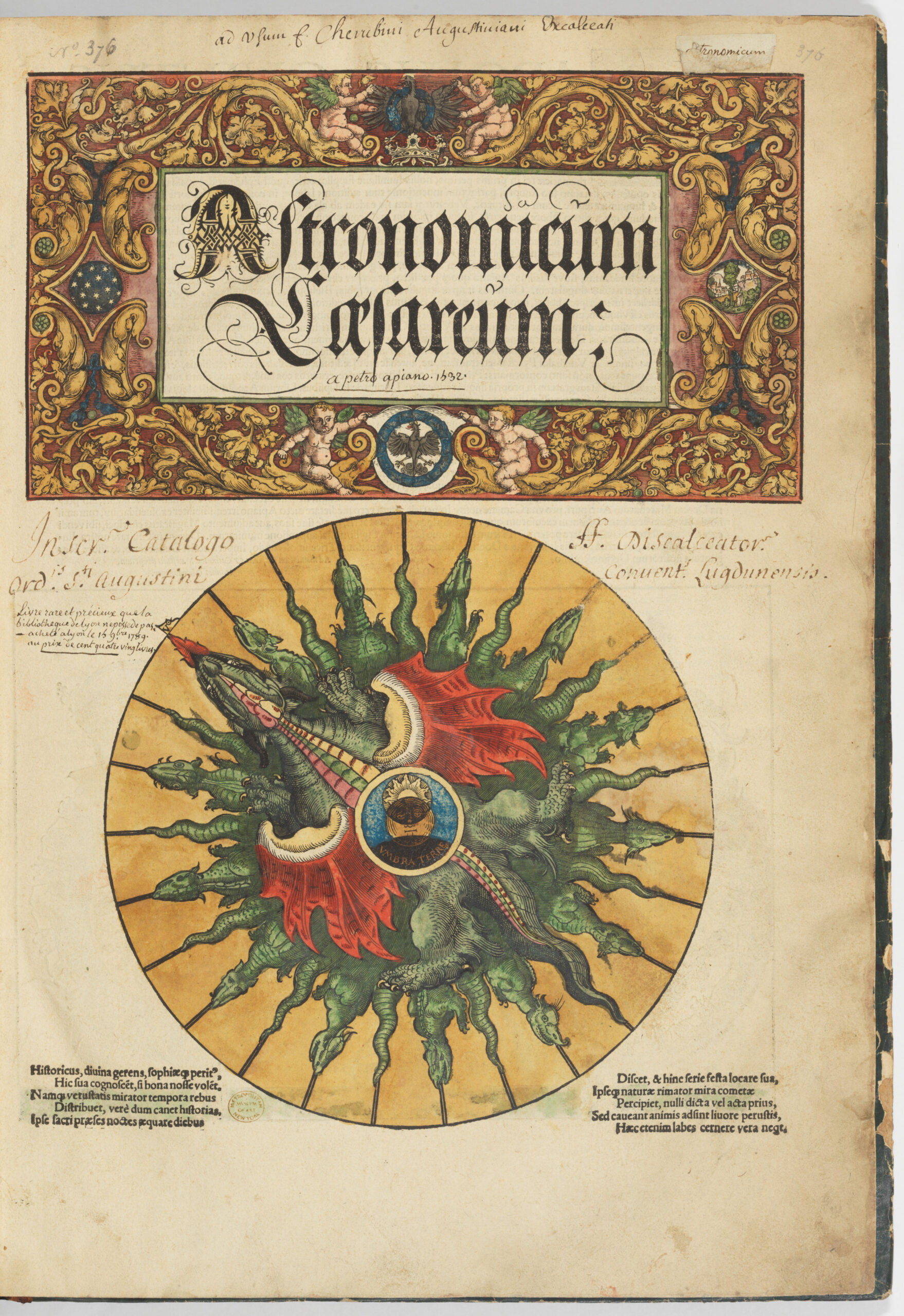
Art, science, and magic seem to have been rarely far apart during the Renaissance, as evidenced by the elaborate 1540 Astronomicum Caesareum — or “Emperor’s Astronomy” — seen here. “The most sumptuous of all Renaissance instructive manuals, ” the Metropolitan Museum of Art notes, the book was created over a period of 8 years by Petrus Apianus, also known as Apian, an astronomy professor at the University of Ingolstadt. Modern-day astronomer Owen Gingerich, professor emeritus at Harvard University, calls it “the most spectacular contribution of the book-maker’s art to sixteenth-century science.”
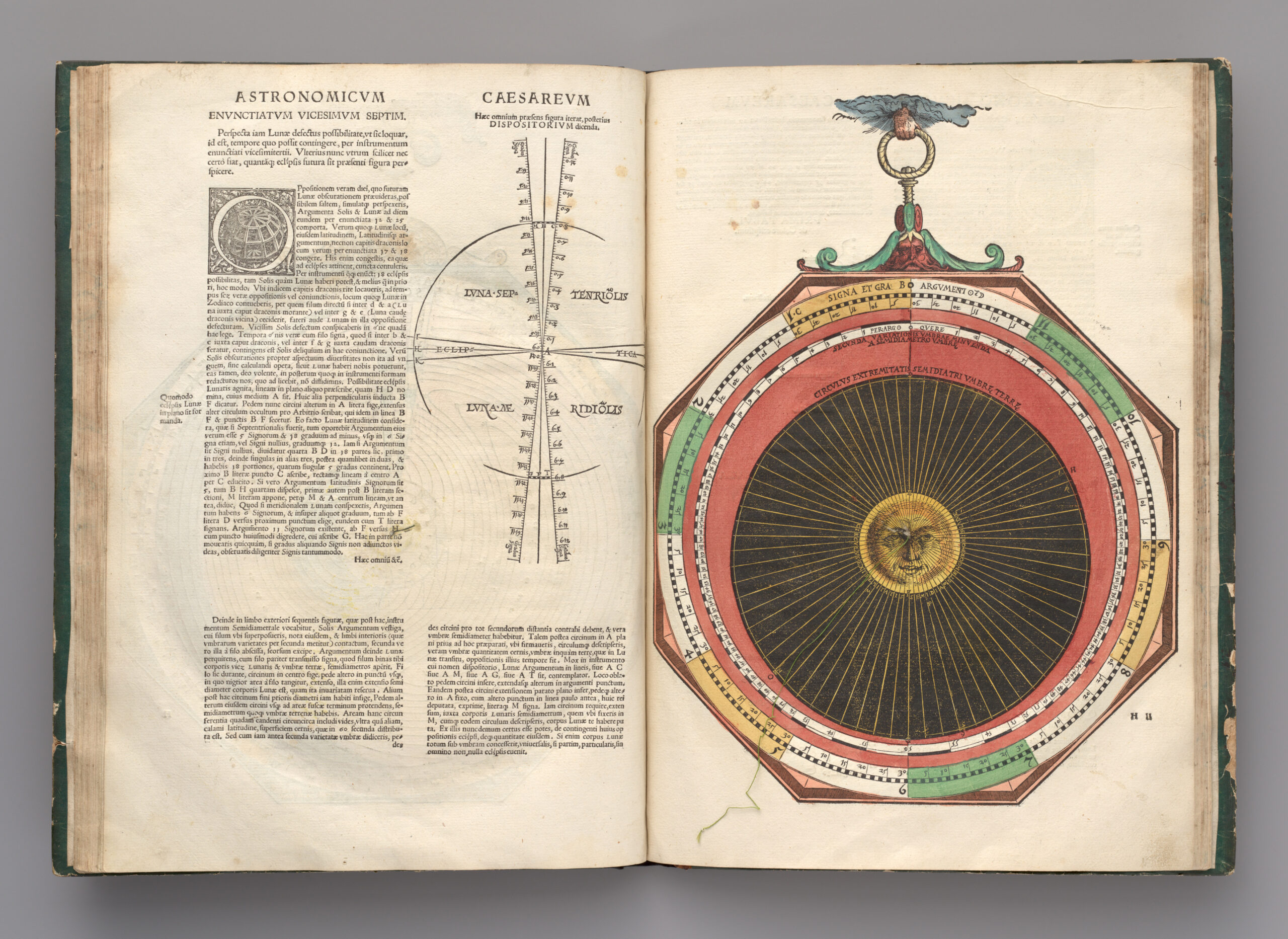
Apian’s book was mainly designed for what is now considered pseudoscience. “The main contemporary use of the book would have been to cast horoscopes,” Robert Batteridge writes at the National Library of Scotland. Apian used as examples the birthdays of his patrons: Holy Roman Emperor Charles V and his brother Ferdinand I. But the Astronomicum Caesareum did more than calculate the future.
Despite the fact that the geocentric model on which Apian based his system “would begin to be overtaken just 3 years after the book’s publication,” he accurately described five comets, including what would come to be called Halley’s Comet.
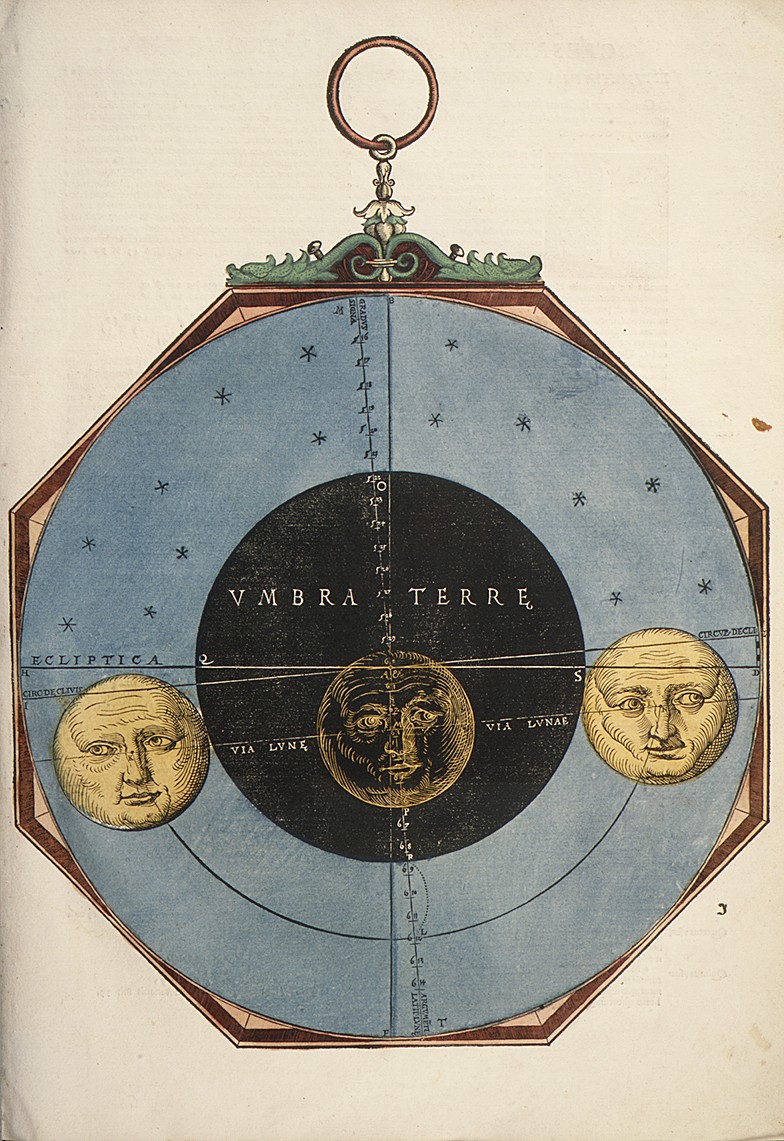
Apian also “observed that a comet’s tail always points away from the sun,” Fine Books and Collections writes, “a discovery for which he is credited.” He used his book “to calculate eclipses,” notes Gingerich in an introduction, including a partial lunar eclipse in the year of Charles’ birth. And, “in a pioneering use of astronomical chronology, he takes up the circumstances of several historical eclipses.” These discussions are accompanied by “several movable devices” called volvelles, designed “for an assortment of chronological and astrological inquiries.”
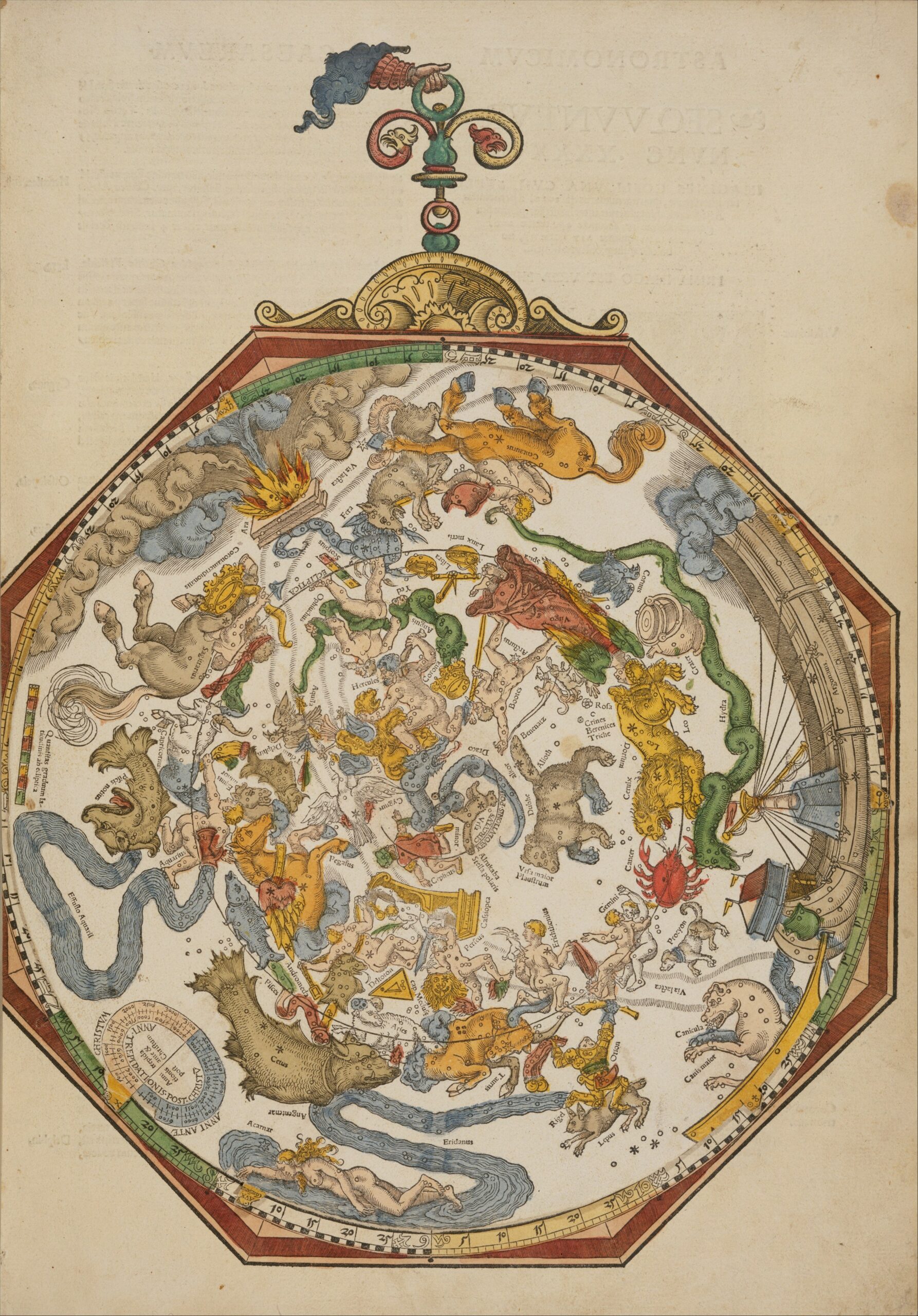
Medieval volvelles were first introduced by artist and writer Ramón Llull in 1274. A “cousin of the astrolabe,” Getty writes, the devices consist of “layered circles of parchment… held together at the center by a tie.” They were considered “a form of ‘artificial memory,’” called by Lund University’s Lars Gislén “a kind of paper computer.” Apian was a specialist of the form, publishing several books containing volvelles from his own Ingolstadt printing press. The Astronomicum Caesareum became the pinnacle of such scientific art, using its hand-colored paper devices to simulate the movements of the astrolabe. “The great volume grew and changed in the course of the printing,” Gingerich writes, “eventually comprising fifty-five leaves, of which twenty-one contain moving parts.”
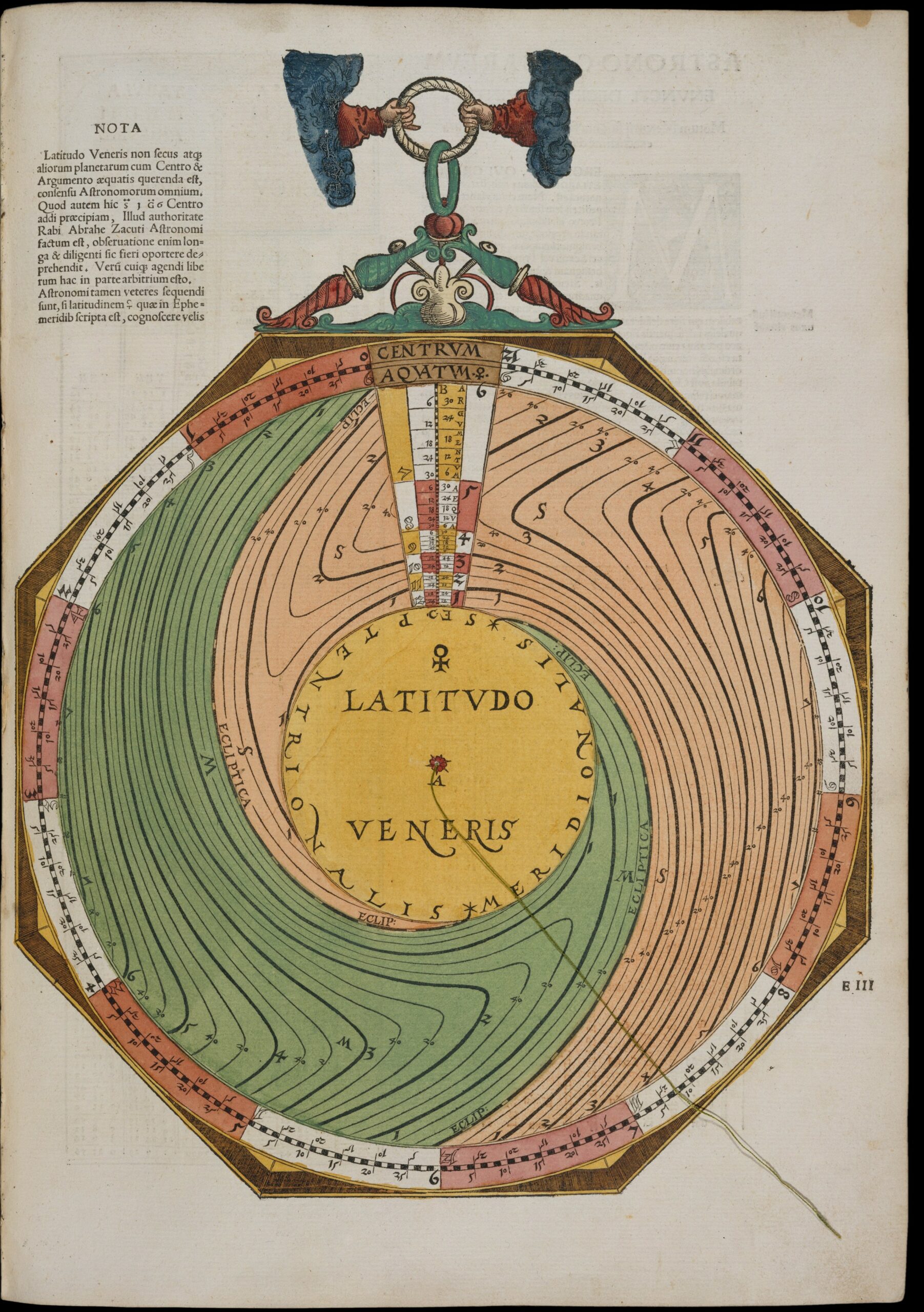
Apian was rewarded handsomely for his work. “Emperor Charles V granted the professor a new coat of arms,” and “the right to appoint poets laureate and to pronounce as legitimate children born out of wedlock.” He was also appointed court mathematician, and copies of his extraordinary book lived on in the collections of European aristocrats for centuries, “a triumph of the printer’s art,” writes Gingerich, and an astronomy, and astrology, “fit for an emperor.”
Related Content:
A Medieval Book That Opens Six Different Ways, Revealing Six Different Books in One
160,000+ Medieval Manuscripts Online: Where to Find Them
Josh Jones is a writer and musician based in Durham, NC. Follow him at @jdmagness
Read More...Meet the Linda Lindas, the Tween Punk Band Who Called Out Racism & Misogyny and Scored a Record Deal
“Sticks and stones may break my bones,” we chanted as kids, but “words will never hurt me.” The saying seems to both invite physical violence and deny the real effects of verbal abuse. Maybe this was once effective as a stock playground retort, but it’s never been true, as anyone who’s been picked on as a child can attest. When the taunts are racist, the damage is exponentially multiplied. Not only are kids being singled out and mocked for immutable characteristics, but their family and entire culture of origin are being targeted.
What to do? Lash out? Fight back? Ignore it and pretend it isn’t happening? To quote another cliche, “the best revenge is success.” More appropriately for the case at hand, take an original line from Radiohead’s Thom Yorke: “Be constructive with your blues.”
The Linda Lindas, a four-piece punk band ranging in age from 10 to 16 would agree. When one of the girls was harassed by a classmate, they got bummed about it, then rallied, wrote a song, went viral, and scored a record deal. Dealing with bullies will rarely lead to such joyful results, but it’s worth paying attention when it does.
The song, “Racist, Sexist Boy” has “become something of a 2021 anthem,” writes NPR, with its gleeful call-outs (“Poser! Blockhead! Riffraff! Jerk face!”) and crunchy power chords. “In what has become a very familiar cycle to music-industry watchers, the band landed a record deal almost as soon as its video went viral,” signing with L.A.’s Epitaph Records. “By Friday, the band’s performance of ‘Racist, Sexist Boy’ had been posted on Epitaph’s YouTube channel.” The video comes from a performance at the Los Angeles Public Library, which you can watch in full above, with an introduction and interview with the band. (See a setlist on YouTube and don’t miss their cover of Bikini Kill’s “Rebel Girl” at 35:56.)
So, who are the Linda Lindas? On their Bandcamp page, they describe themselves as “Half Asian / half Latinx. Two sisters, a cousin, and their close friend. The Linda Lindas channel the spirit of original punk, power pop, and new wave through today’s ears, eyes and minds.” You can meet the multi-talented tweens and teens in the video above, made in 2019 by a fifth grade teacher to inspire his students. The girls are hardly new to the music business. Clips in the video show them performing with Money Mark and opening for Bikini Kill. They got their start in 2018 at Girlschool LA, “a celebration of females challenging the status quo,” and they’ve been mentored by Karen O of the Yeah Yeah Yeahs.
The Linda Lindas also captured the attention of Amy Pohler, who featured the band in her Netflix documentary Moxie. See a clip above. Not every kid who fights bullying with music — or art, science, sports, or whatever their talent — can expect celebrity, and we shouldn’t set kids up to think they can all win the internet lottery. But the Linda Lindas have become heroes for millions of young girls who look like them, and who dream not of fame and fortune but of a united front of friendship and fun against racism, misogyny, and the pains of growing up.
Related Content:
Hear 11-Year-Old Björk Sing “I Love to Love”: Her First Recorded Song (1976)
Josh Jones is a writer and musician based in Durham, NC. Follow him at @jdmagness
Read More...De-Mystifying Mindfulness: A Free Online Course by Leiden University
From Chris Goto-Jones–now Dean of Humanities and Professor of Philosophy at the University of Victoria–comes a free course which was named ‘one of the best online courses of all time’ in 2020. The course description for De-Mystifying Mindfulness reads:
Interest in meditation, mindfulness, and contemplation has grown exponentially in recent years. Rather than being seen as mystical practices from ancient Buddhism or esoteric philosophy, they are increasingly seen as technologies rooted in evidence from psychology and neuroscience. Mindfulness has become the basis for numerous therapeutic interventions, both as a treatment in healthcare and as a means of enhancing well-being and happiness. For millions around the world, mindfulness has become a life-style choice, enhancing and enriching everyday experience. Mindfulness is big business.
But, what actually is mindfulness? Is it really good for you? Can anyone learn it? How can you recognize charlatans? Would you want to live in a mindful society, and would it smell like sandalwood? What does it feel like to be mindful? Are you mindful already, and how would you know?
Evolving from the popular Honours Academy course at Leiden University [in the Netherlands], this innovative course combines conventional scholarly inquiry from multiple disciplines (ranging from psychology, through philosophy, to politics) with experiential learning (including specially designed ‘meditation labs,’ in which you’ll get chance to practice and analyze mindfulness on yourself). In the end, the course aims to provide a responsible, comprehensive, and inclusive education about (and in) mindfulness as a contemporary phenomenon.
You can take De-Mystifying Mindfulness for free by selecting the audit option upon enrolling. If you want to take the course for a certificate, you will need to pay a fee.
De-Mystifying Mindfulness will be added to our list, 1,700 Free Online Courses from Top Universities.
Related Content:
Free Guided Meditations From UCLA: Boost Your Awareness & Ease Your Stress
Philosopher Sam Harris Leads You Through a 26-Minute Guided Meditation
Stream 18 Hours of Free Guided Meditations
Listen to Bill Murray Lead a Guided Meditation on How It Feels to Be Bill Murray
Read More...Real D‑Day Landing Footage, Enhanced & Colorized with Artificial Intelligence (June 6, 1944)
Steven Spielberg’s Saving Private Ryan drew great acclaim for its harrowing depiction of “D‑Day,” the 1944 Allied landing operation that proved a decisive blow against Nazi Germany. More specifically, Spielberg and his creators recreated the landing on Omaha Beach, one of five code-named stretches of the Normandy coast. The video above depicts the landing on another, Juno Beach. This, its uploader stresses, “is not the famous movie D‑day the Sixth of June but actual and real footage.” No wonder it feels more realistic than that 1956 Henry Koster spectacle — and, in another way, more so than Spielberg’s picture, whose use of not just color and widescreen dimensions but advanced visual effects made World War II visceral in a way even those who’d never seen combat could feel.
The taking of Omaha Beach was assigned to the United States Army, with support from the U.S. Coast Guard as well as the U.S., British, Canadian and Free French navies. As such, it made a suitable inclusion indeed for an American war story like Saving Private Ryan. Juno Beach, however, was primarily a Canadian job: that country’s army landed there under support from the Royal Canadian Navy (with additional help from several other Allied navies).
As on Omaha Beach, the troops who first landed on Juno Beach came under heavy German fire and sustained serious casualties. But within two hours the Allied forced managed to overcome these coastal defenses and began making their way inland — a direction in which the 3rd Canadian Infantry Division managed to push farther than any of D‑Day’s other landing forces.
These Juno Beach D‑Day clips benefit from a technology unavailable even in Saving Private Ryan’s day: artificial intelligence-based enhancement and colorization processes. Originally shot in black-and-white like most (but not all) Army footage of the 1940s, it’s been “motion-stabilized, contrast- and brightness-enhanced, de-noised, upscaled, restored to full HD and artificially colorized.” The result looks crisp enough that anyone without first-hand memories of the Western Front — a generation, alas, now fast leaving the stage — may well forget that it isn’t a war film but a film of war. None of the participants are re-enactors: not the Allied troops boarding their boats by the hundreds, not General Dwight D. Eisenhower, not the German prisoners of war, and certainly not the wounded and dead. What’s more, none of their actions are rehearsed: as the 77th anniversary of D‑Day approaches, we should remember that, whatever the bravery on their faces, not one of these men could have felt assured of victory.
Related Content:
The Normandy Invasion Captured on 16 mm Kodachrome Film (1944)
Photo Archive Lets You Download 4,300 High-Res Photographs of the Historic Normandy Invasion
Dramatic Color Footage Shows a Bombed-Out Berlin a Month After Germany’s WWII Defeat (1945)
David Lynch Recounts His Surreal Dream of Being a German Solider Dying on D‑Day
Based in Seoul, Colin Marshall writes and broadcasts on cities, language, and culture. His projects include the Substack newsletter Books on Cities, the book The Stateless City: a Walk through 21st-Century Los Angeles and the video series The City in Cinema. Follow him on Twitter at @colinmarshall or on Facebook.
Read More...De-Mystifying Mindfulness: A Free Online Course by Leiden University
From Chris Goto-Jones–now Dean of Humanities and Professor of Philosophy at the University of Victoria–comes a free course which was named ‘one of the best online courses of all time’ in 2020. The course description for De-Mystifying Mindfulness reads:
Interest in meditation, mindfulness, and contemplation has grown exponentially in recent years. Rather than being seen as mystical practices from ancient Buddhism or esoteric philosophy, they are increasingly seen as technologies rooted in evidence from psychology and neuroscience. Mindfulness has become the basis for numerous therapeutic interventions, both as a treatment in healthcare and as a means of enhancing well-being and happiness. For millions around the world, mindfulness has become a life-style choice, enhancing and enriching everyday experience. Mindfulness is big business.
But, what actually is mindfulness? Is it really good for you? Can anyone learn it? How can you recognize charlatans? Would you want to live in a mindful society, and would it smell like sandalwood? What does it feel like to be mindful? Are you mindful already, and how would you know?
Evolving from the popular Honours Academy course at Leiden University [in the Netherlands], this innovative course combines conventional scholarly inquiry from multiple disciplines (ranging from psychology, through philosophy, to politics) with experiential learning (including specially designed ‘meditation labs,’ in which you’ll get chance to practice and analyze mindfulness on yourself). In the end, the course aims to provide a responsible, comprehensive, and inclusive education about (and in) mindfulness as a contemporary phenomenon.
You can take De-Mystifying Mindfulness for free by selecting the audit option upon enrolling. If you want to take the course for a certificate, you will need to pay a fee.
De-Mystifying Mindfulness will be added to our list, 1,700 Free Online Courses from Top Universities.
Related Content:
Free Guided Meditations From UCLA: Boost Your Awareness & Ease Your Stress
Philosopher Sam Harris Leads You Through a 26-Minute Guided Meditation
Stream 18 Hours of Free Guided Meditations
Read More...Creative Thinking: A Free Online Course from Imperial College London
From Peter Childs (Head of the Dyson School of Design Engineering at Imperial College London) comes a free course that explores creative thinking techniques, and how to apply them to everyday problems and global challenges. The course description for Creative Thinking: Techniques and Tools for Success reads:
In today’s ever-growing and changing world, being able to think creatively and innovatively are essential skills. It can sometimes be challenging to step back and reflect in an environment which is fast paced or when you are required to assimilate large amounts of information. Making sense of or communicating new ideas in an innovative and engaging way, approaching problems from fresh angles, and producing novel solutions are all traits which are highly sought after by employers.
The greatest innovators aren’t necessarily the people who have the most original idea. Often, they are people- or teams- that have harnessed their creativity to develop a new perspective or more effective way of communicating an idea. You can train your imagination to seize opportunities, break away from routine and habit, and tap into your natural creativity.
This course will equip you with a ‘tool-box’, introducing you to a selection of behaviours and techniques that will augment your innate creativity. Some of the tools are suited to use on your own and others work well for a group, enabling you to leverage the power of several minds.
You can take Creative Thinking: Techniques and Tools for Success for free by selecting the audit option upon enrolling. If you want to take the course for a certificate, you will need to pay a fee.
Creative Thinking will be added to our list, 1,700 Free Online Courses from Top Universities.
Related Content:
David Lynch Explains How Simple Daily Habits Enhance His Creativity
Read More...Support Us
We're hoping to rely on loyal readers, rather than erratic ads. Please click the Donate button and support Open Culture. You can use Paypal, Venmo, Patreon, even Crypto! We thank you!

About Us

Open Culture scours the web for the best educational media. We find the free courses and audio books you need, the language lessons & educational videos you want, and plenty of enlightenment in between.
Advertise With Us
FREE UPDATES!
GET OUR DAILY EMAIL
Get the best cultural and educational resources on the web curated for you in a daily email. We never spam. Unsubscribe at any time.
FOLLOW ON SOCIAL MEDIA
Open Culture editor Dan Colman scours the web for the best educational media. He finds the free courses and audio books you need, the language lessons & movies you want, and plenty of enlightenment in between.
Advertise With Us


