What Makes for a Beloved Bad Film? Jackey Neyman Jones (Manos: The Hands of Fate) Talks to Pretty Much Pop (ep. 73)
While there have of course been numerous attempts at movie magic that have resulted in something less than audience pleasing, only a few demonstrate such bold ineptitude as to become “so bad that they’re good.” Such a film requires a strong sense of vision coupled with a complete inability to realize that vision in a coherent way, and it must display real charm, as we see through the presentation to behold real human beings captured in the poignancy of their doomed filmic endeavor.
Some often cited candidates for this new kind of film canon include the classic Plan 9 from Outer Space, whose creation was dramatized in Tim Burton’s film Ed Wood; Tommy Wiseau’s The Room, chronicled by the book and film The Disaster Artist; Troll 2, a film that has no business or creative relation to the already dubious film Troll that was documented in Best Worst Movie; and the an up-and-comer Birdemic: Shock and Terror, self-financed by James Nguyen, whose popularity greatly increased through the treatment of his films by Rifftrax, one of the TV show Mystery Science Theater 3000’s Internet successors.
And then there’s Manos: The Hands of Fate, lauded as one of the most trippy finds of the original 1993 MST3K. It’s a film written, directed by, and starring (literal) fertilizer salesman Harold P. Warren about a family (on their “first vacation”) getting lost in Western Texas and ending up staying the night at a house with a religious cult. Jackey Neyman Jones played the six-year-old girl in the film who eventually (spoiler!) ends up tied to a stake as the cult leader’s seventh wife. Her father played the cult leader and created much of the art for the show, her mother sewed the costumes, and her voice was dubbed over by a fully grown woman who was not at all warned that she’d be having to imitate a child’s voice.
Jackey wrote a memoir about the experience, and here joins your Pretty Much Pop: A Culture Podcast hosts Mark Linsenmayer, Erica, Spyres, and Brian Hirt to talk about the ongoing interest in the film despite its initial, complete dismissal as well as the dynamics and perils of working with a supremely confident “auteur.”
The discussion also touches on other bad films like Catwoman, The Happening, and Battleship. Are these contemporary, big-budget flops worthy of such canonization? What about films made intentionally to be cheesy, whether by auteurs like Velocipastor or pumped out by a company like Syfy’s Sharknado series?
You can watch Jackey read her entire book online. See her art. Read her interviewed in Cracked, Entertainment Weekly, and the AV Club. Check out her IMDB page and her short-lived Hand of Horror podcast. Manos: The Hands of Fate is in the public domain, so watch it unriffed if you dare, or check out the classic MST3K episode or the more recent Rifftrax treatment. See also the warped stage version with puppets: Manos: The Hands of Felt.
To think more generally about this topic, we consulted some lists of bad (or “so-bad-they’re-good”) films by The Ringer, Thrillist, Screenrant, Yardbarker, and Wikipedia.
Hear more of this podcast at prettymuchpop.com. This episode includes bonus discussion you can access by supporting the podcast at patreon.com/prettymuchpop. This podcast is part of the Partially Examined Life podcast network.
Pretty Much Pop: A Culture Podcast is the first podcast curated by Open Culture. Browse all Pretty Much Pop posts.
Read More...The Dune Graphic Novel: Experience Frank Herbert’s Epic Sci-Fi Saga as You’ve Never Seen It Before
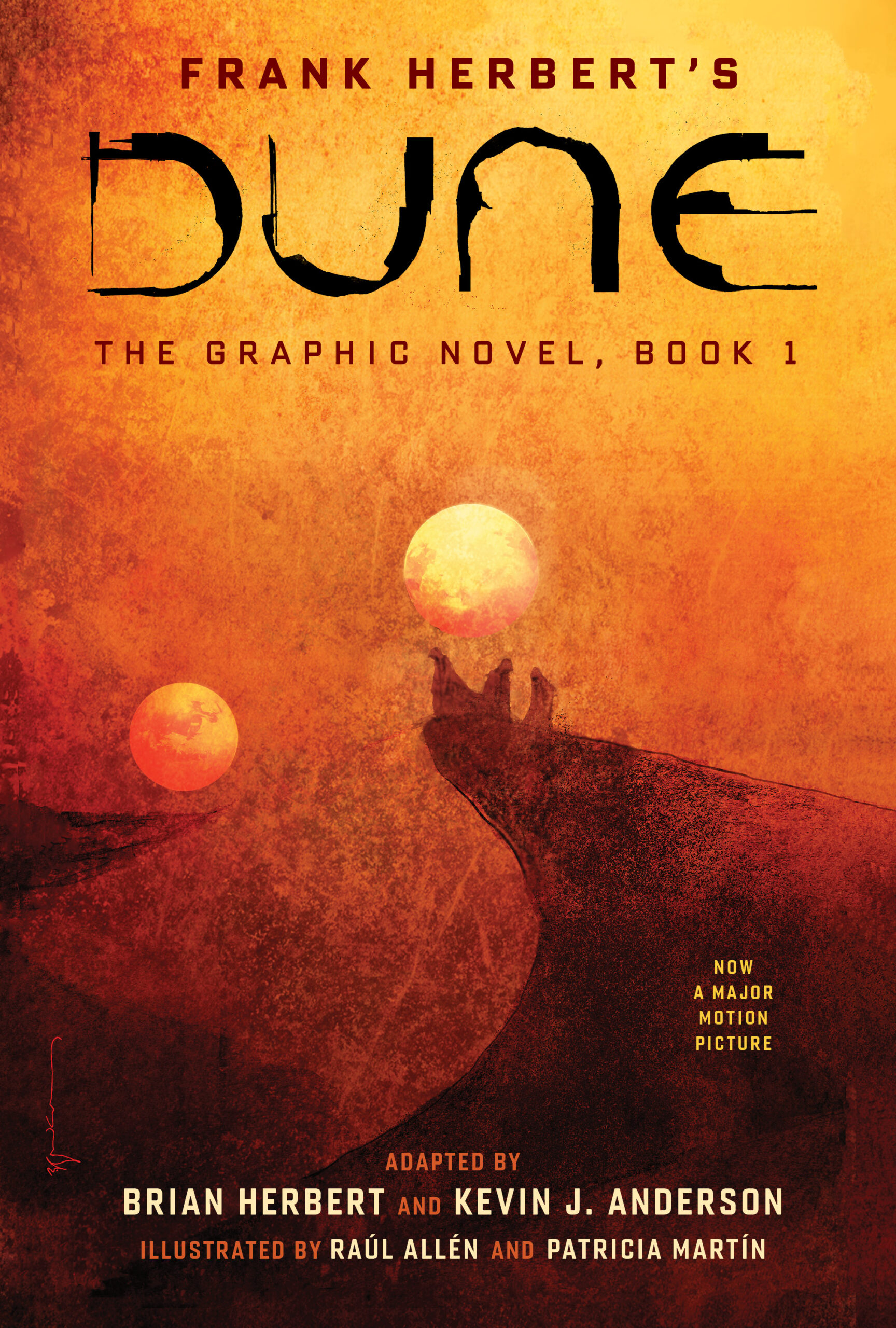
Like so many major motion pictures slated for a 2020 release, Denis Villeneuve’s Dune has been bumped into 2021. But fans of Frank Herbert’s epic science-fiction saga haven’t had to go entirely without adaptations this year, since last month saw the release of the first Dune graphic novel. Written by Kevin J. Anderson and Frank Herbert’s son Brian Herbert, co-authors of twelve Dune prequel and sequel novels, this 160-page volume constitutes just the first part of a trilogy intended to visually retell the story of the first Dune book. This tripartite breakdown seems to have been a wise move: the many adaptors (and would-be) adaptors of the linguistically, mythologically, and technologically complex novel have found out over the decades, it’s easy to bite off more Dune than you can chew.
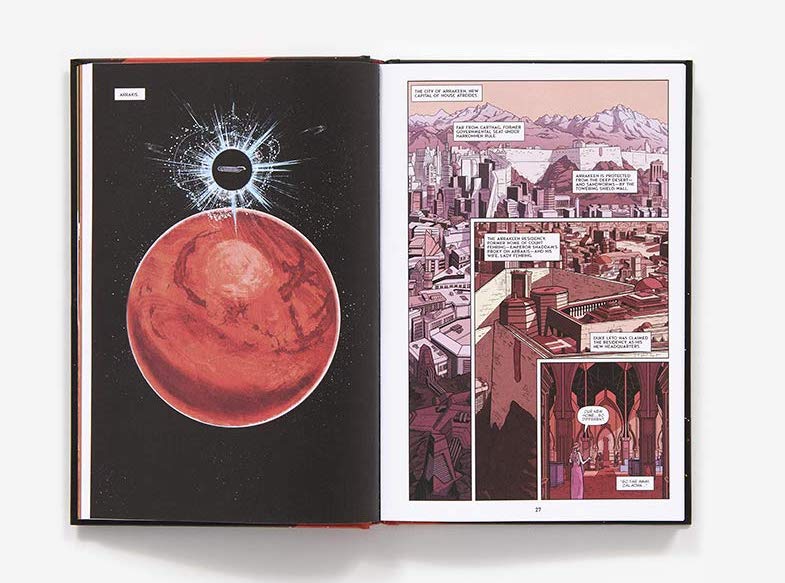
Audiences, too, can only digest so much Dune at a sitting themselves. “The particular challenge to adapting Dune, especially the early part, is that there is so much information to be conveyed — and in the novel it is done in prose and dialog, rather than action — we found it challenging to portray visually,” says Anderson in an interview with the Hollywood Reporter.
“Fortunately, the landscape is so sweeping, we could show breathtaking images as a way to convey that background.” This is the landscape of the desert planet Arrakis, source of a substance known as “spice.” Used as a fuel for space travel, spice has become the most precious substance in the galaxy, and its control is bitterly struggled over by numerous royal houses. (Any resemblance to Earth’s petroleum is, of course, entirely coincidental.)
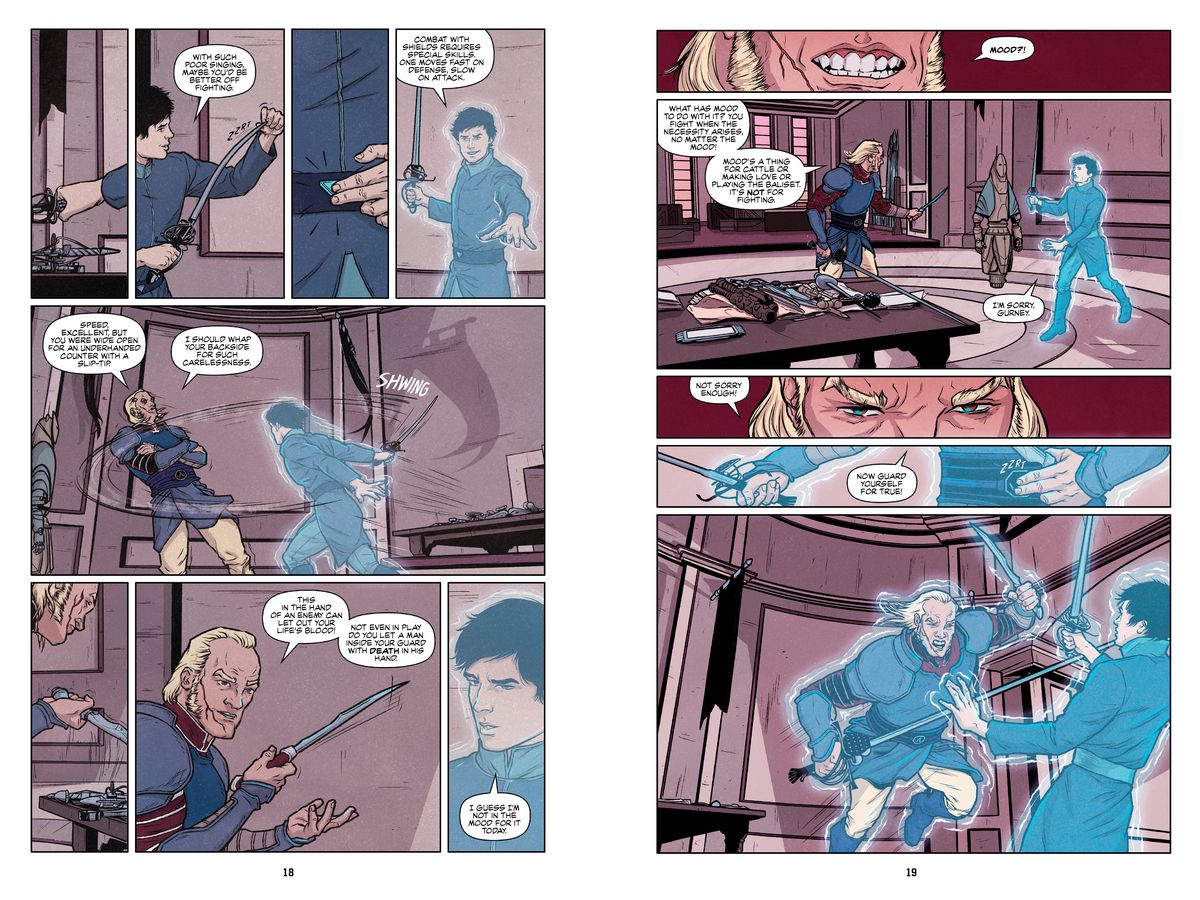
The main narrative thread of the many running through Dune follows Paul Atreides, scion of the House Atreides. With his family sent to run Arrakis, Paul finds himself at the center of political intrigue, planetary revolution, and even a clandestine scheme to create a superhuman savior. Though Herbert and Anderson have produced a faithful adaptation, the graphic novel “trims the story down to its most iconic touchstone scenes,” as Thom Dunn puts it in his Boing Boing review (adding that it happens to focus in “a lot of the same scenes as David Lynch did with his gloriously messy film adaptation”). This streamlining also employs techniques unique to graphic novels: to retain the book’s shifting omniscient narration, for example, “differently colored caption boxes present inner monologues from different characters like voiceovers so as not to interrupt the scene.”
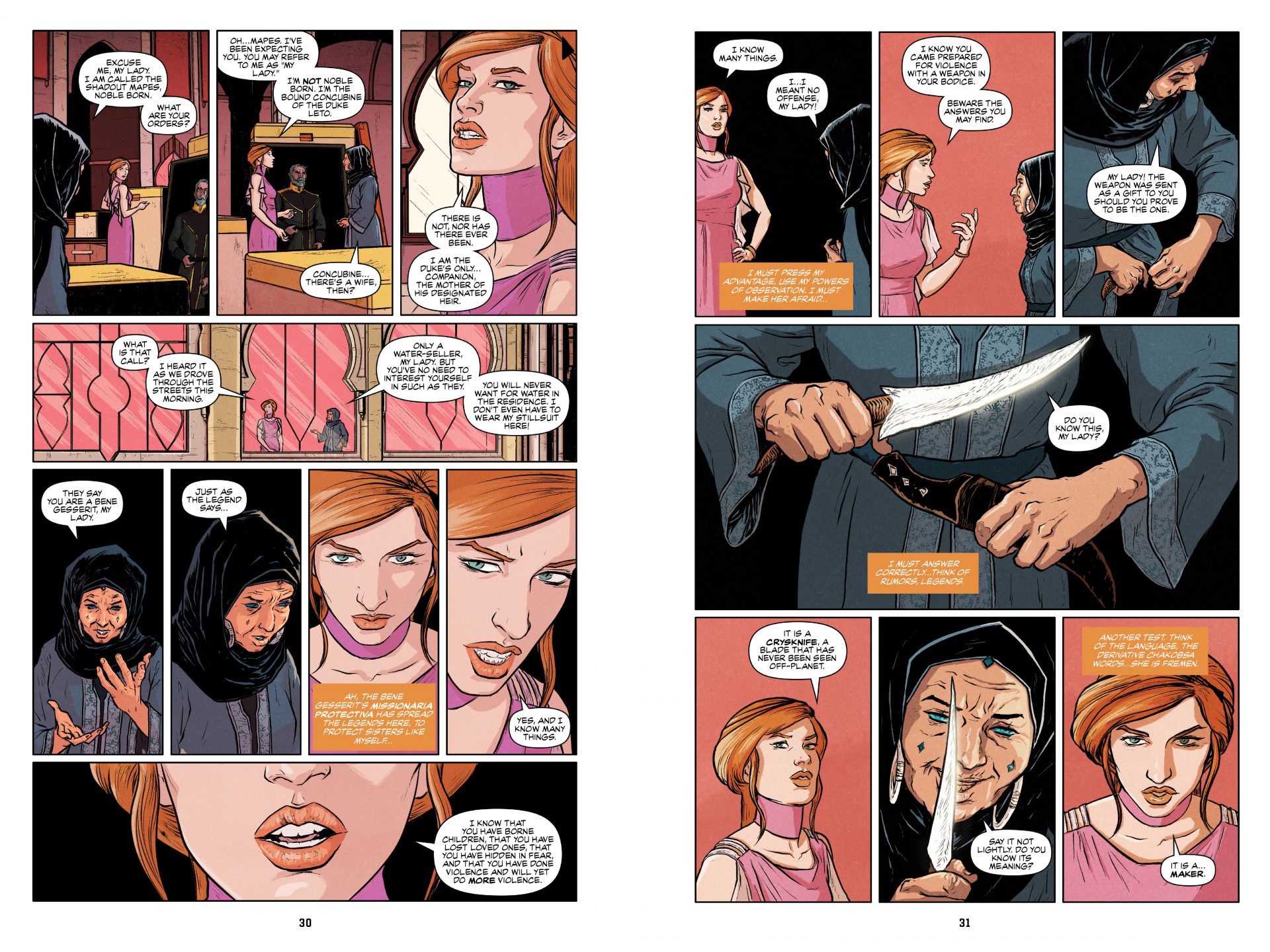
As if telling the story of Dune at a graphic novel’s pace wasn’t task enough, Anderson, Herbert and their collaborators also have to convey its unusual and richly imagined world — in not just words, of course, but images. “Dune has had a lot of visual interpretations over the years, from Lynch’s bizarre pseudo-period piece treatment to the modern televised mini-series’ more gritty interpretation,” writes Polygon’s Charlie Hall. While “Villeneuve’s vibe appears to take its inspiration from more futuristic science fiction — all angles and chunky armor,” the graphic novel’s artists Raúl Allén and Patricia Martín “opt for something a bit more steampunk.” These choices all further what Brian Herbert describes as a mission to “bring a young demographic to Frank Herbert’s incredible series.” Such readers have shown great enthusiasm for stories of teenage protagonists who grow to assume a central role in the struggle between good and evil — not that, in the world of Dune, any conflict is quite so simple.
Related Content:
Moebius’ Storyboards & Concept Art for Jodorowsky’s Dune
Based in Seoul, Colin Marshall writes and broadcasts on cities, language, and culture. His projects include the Substack newsletter Books on Cities, the book The Stateless City: a Walk through 21st-Century Los Angeles and the video series The City in Cinema. Follow him on Twitter at @colinmarshall, on Facebook, or on Instagram.
Read More...Get Inside the Head of a New York City Christmas Tree: A Gonzo Short Film from Artist Nina Katchadourian
For every year this Christmas tree
Brings to us such joy and glee
O Christmas tree, O Christmas tree
Such pleasure do you bring me…
All over New York City, tree stands are springing up like mushrooms.
Unlike the fanciful windows lining 5th avenue, the Union Square holiday market, or Rockefeller Center’s tree and skating rink, this seasonal pleasure requires no special trip, no threat of crowds.
You could battle traffic, and lose half a day, dragging the kids to a cut-your-own farm on Long Island or in New Jersey, but why, when the sidewalk stands are so festive, so convenient, so quintessentially New York?
The vendors hail from as far away as Vermont and Canada, shivering in lawn chairs and mobile homes 24–7.
What befalls the unsold trees on Christmas Eve?
No one knows. They vanish along with the vendors by Christmas morning.
The spontaneous cooperation of two such vendors was critical to artist Nina Katchadourian’s “Tree Shove,” above.
Katchadourian, who may look familiar to you from Lavatory Self-Portraits in the Flemish Style, recalls:
My friend Andrew had been hearing me say for years that I wanted to be shoved through one of those things and he found two friendly Canadians selling Christmas trees in a Brooklyn supermarket parking lot and worked it out with them.
The result is highly accessible, gonzo performance art from an artist who always lets the public in on the joke.
Add it to your annual holiday special playlist.
Related Content:
Artist Nina Katchadourian Creates Flemish Style Self-Portraits in Airplane Lavatory
Watch The Insects’ Christmas from 1913: A Stop Motion Film Starring a Cast of Dead Bugs
When Salvador Dalí Created Christmas Cards That Were Too Avant Garde for Hallmark (1960)
Ayun Halliday is an author, illustrator, theater maker and Chief Primatologist of the East Village Inky zine. Follow her @AyunHalliday.
Read More...Dave Grohl & Greg Kurstin Cover 8 Songs by Famous Jewish Artists for Hanukkah: Bob Dylan, Beastie Boys, Velvet Underground & More
Whatever you say to people this holiday season, whether it involves a “happy” or a “merry” or a nothing at all, maybe we can agree: winter holidays can brighten up a dark time of the year, even if they’re also fraught with family tension and other stresses. Maybe not everyone’s great at decorating or singing holiday songs, but we can all appreciate a job well done. Holiday lights shine like beacons on dark, cold winter nights… we swoon to the sounds of the Beastie Boys’ “Sabotage,” Mountain’s “Mississippi Queen,” and Peaches’ “Fuck the Pain Away”.…
Well, I don’t know what your holidays are like, but those all work for me.
There are plenty of great Christmas songs—many written and recorded by Jewish songwriters, Andrew Frisicano points out at Time Out—and many a great Hanukkah song, some written by gentiles.
But when Dave Grohl and Foo Fighters producer Greg Kurstin decided to celebrate the Festival of Lights and chase away the darkness of a particularly dark winter, they went with standards you won’t find in any songbook. Their latest Hanukkah cover, Bob Dylan’s “Rainy Day Women #12 & 35,” maybe comes closest to that other big holiday.
After his conversion to Christianity, Dylan went wild for Christmas, hosting a “Yuletide extravaganza” on his Theme Time Radio Hour. In their celebrations this year, Grohl and Kurstin decided “instead of doing a Christmas song,” as the Foo Fighters’ singer said in their announcement video at the top, they would “celebrate Hanukkah by recording eight songs by eight famous Jewish artists and releasing one song each night of Hanukkah.” In addition to those named above, they’ve also covered Drake’s “Hotline Bling,” a favorite of Jewish grandparents everywhere over the holidays.
Grohl himself is not Jewish, but Kurstin is. In any case, they’ve both thrown themselves wholeheartedly into the endeavor. What would you like to see next up on the setlist? I don’t think they’re taking requests, but a little “Heaven’s on Fire” might be nice, or a nice long cover of “Sister Ray”? Just throwing that out there.
The dynamic Hanukkah duo have given us a way to reimagine holiday music, and with “all the mishegas of 2020,” as they write in their Twitter announcement for the Hanukkah Sessions, I think we might as well say why not and seize the moment. See the full playlist of Grohl and Kurstin’s Hanukkah Sessions here.
Related Content:
Bob Dylan Reads “‘Twas the Night Before Christmas” On His Holiday Radio Show (2006)
David Byrne Creates a Playlist of Eclectic Music for the Holidays: Stream It Free Online
Hear Paul McCartney’s Experimental Christmas Mixtape: A Rare & Forgotten Recording from 1965
Josh Jones is a writer and musician based in Durham, NC. Follow him at @jdmagness
Read More...A Brief History of Talking Heads: How the Band Went from Scrappy CBGB’s Punks to New Wave Superstars
We could split hairs all day. Are Talking Heads punk? Are they New Wave? Are they “art rock”? Why not all of the above. Consider their cred. Two art students, David Byrne and Chris Frantz, move to New York in the late 70 with their three-chord, two-piece band The Artistics. With minimal musical ability and no experience in the music business, they thought, said Byrne, “we’d have a serious try at a band.” Unable to recruit new members in the city, they asked Frantz’s girlfriend, fellow art student Tina Weymouth, who did not play bass, to be their bassist. Soon enough, they’re playing their first show as Talking Heads at CBGB’s in 1975, opening for the Ramones and Television.
What could be more of a prototypically punk origin story? But then there’s the evolution of Talking Heads from jangly, nervous art rockers to confident re-interpreters of funk, disco, and polyrhythmic Afrobeat in their 80s New Wave epics. Their ability to absorb so many influences from outside of punk’s narrow repertoire made them one of the best live bands of the decade, and Frantz and Weymouth one of the most formidable rhythm sections in modern rock. Their experiments with Brian Eno, Adrian Belew, and Robert Fripp lent them a progressive edge that made Remain in Light an unlikely New Wave classic among Phish fans; they made one of the most beloved concert films of all time with Jonathan Demme in 1984….
How did all this come about? You’ll get a very good explanation in “A Brief History of Talking Heads,” above. Suffice to say they were an instant hit, arriving in “the right place at the right time,” a still-astonished Byrne remembers years later in an interview clip. After their first gig, they appeared on the cover of The Village Voice, in a 1975 article by James Wolcott calling punk “a conservative impulse in the New Rock Underground.”
Seeing them for the first time is transfixing: Frantz is so far back on drums that it sounds as if he’s playing in the next room; Weymouth, who could pass as Suzy Quatro’s sorority sister, stands rooted to the floor, her head doing an oscillating-fan swivel; the object of her swivel is David Byrne, who has a little-boy-lost-at-the-zoo voice and the demeanor of someone who’s spent the last half hour whirling around in a spin dryer. When his eyes start Ping-Ponging in his head, he looks like a cartoon of a chipmunk from Mars. The song titles aren’t tethered to conventionality either: “Psycho Killer” (which goes “Psycho Killer, qu’est-ce c’est? Fa-fa-fa-fa-fa-fa-fa-fa-fa”), “The Girls Want to Be With the Girls,” “Love is Like a Building on Fire,” plus a cover version of that schlock classic by ? and the Mysterians, “96 Tears.”
Wolcott would go on to identify all of the qualities that made them “such a central ‘70s band,” including Weymouth’s bass playing providing “hook as well as bottom” and the “banal facade under which run ripples of violence and squalls of frustration.” As for what they should have been called, Byrne is matter of fact, as always. “I don’t think anyone liked being called ‘punk rockers,’” he says, “even though being lumped together and having this kind of handle made it easier for us all to be thought of as a movement.”
It was a movement of bands all deciding to do their own thing in their own way, but to do it together, restoring what Wolcott called the “efficacious beauty” of rock as a “communal activity.” The critic wondered at the time whether “any of the bands who play [CBGB’s] will ever amount to anything more than a cheap evening of rock and roll?” Learn above how one of the “most intriguingly off-the-wall bands in New York” in the mid-70s exceeded the expectations of even the most devoted of early punk connoisseurs.
Related Content:
Talking Heads Live in Rome, 1980: The Concert Film You Haven’t Seen
Watch Phish Play the Entirety of the Talking Heads’ Remain in Light (1996)
Josh Jones is a writer and musician based in Durham, NC. Follow him at @jdmagness
Read More...David Byrne Turns His Acclaimed Musical American Utopia into a Picture Book for Grown-Ups, with Vivid Illustrations by Maira Kalman
Whatever your feelings about the sentimental, lighthearted 1960 Disney film Pollyanna, or the 1913 novel on which it’s based, it’s fair to say that history has pronounced its own judgment, turning the name Pollyanna into a slur against excessive optimism, an epithet reserved for adults who display the guileless, out-of-touch naïveté of children. Pitted against Pollyanna’s effervescence is Aunt Polly, too caught up in her grown-up concerns to recognize, until it’s almost too late, that maybe it’s okay to be happy.
Maybe we all have to be a little like practical Aunt Polly, but do we also have a place for Pollyannas? Can that not also be the role of the modern artist? David Byrne hasn’t been waiting for permission to spread joy in his late career. Contra the common wisdom of most adults, a couple years back Byrne began to gather positive news stories under the heading Reasons to Be Cheerful, now an online magazine.
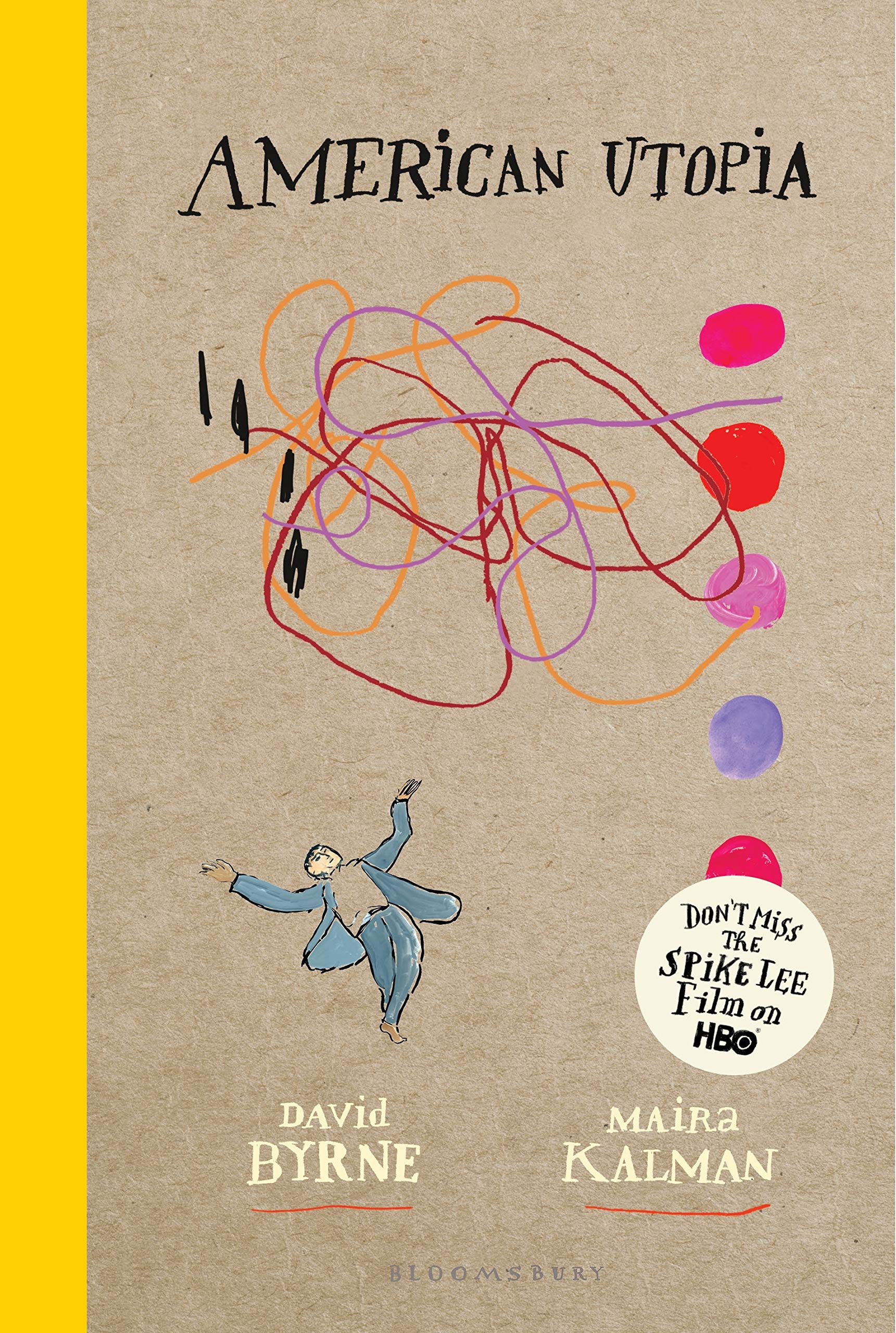
Then, Byrne had the audacity to call a 2018 album, tour, and Broadway show American Utopia, and the gall to have Spike Lee direct a concert film with the same title, and release it smack in the middle of 2020, a year all of us will be glad to see in hindsight. Byrne’s two-year endeavor can be seen as his answer to “American Carnage,” the grim phrase that began the Trump era.
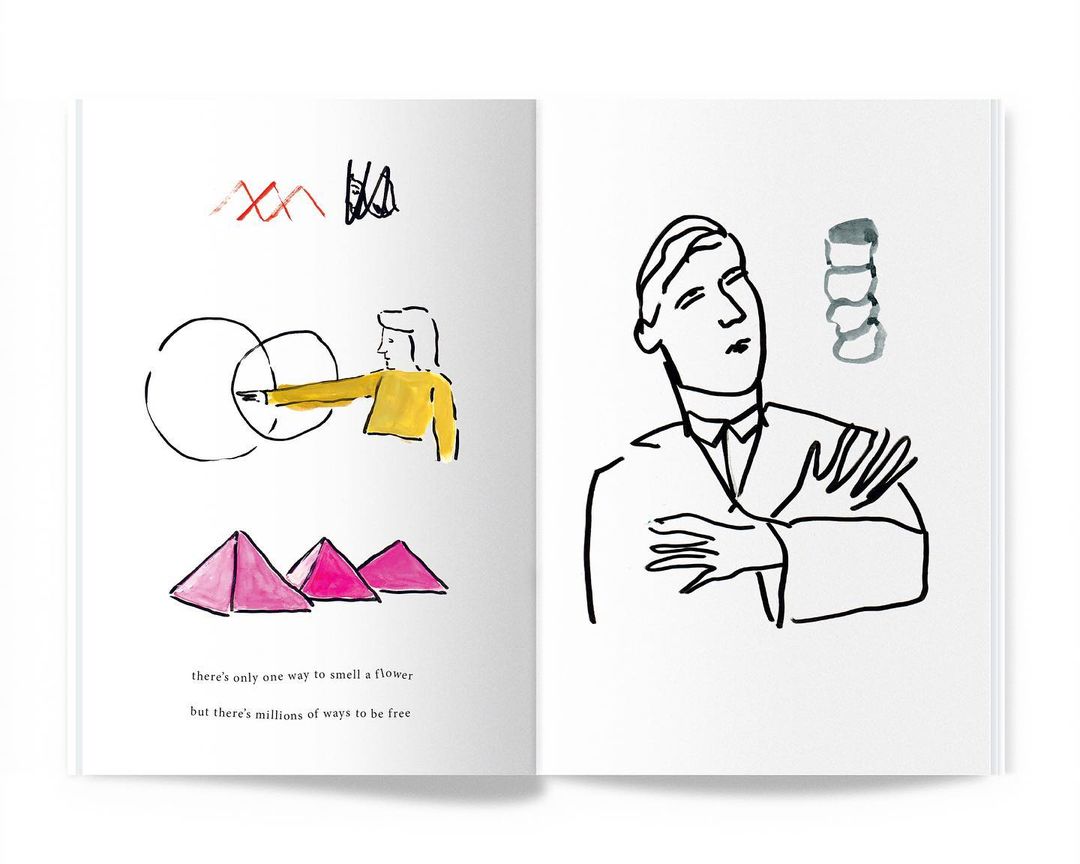
As if all that weren’t enough, American Utopia is now an “impressionistic, sweetly illustrated adult picture book,” as Lily Meyer writes at NPR, “a soothing and uplifting, if somewhat nebulous, experience of art.” Working with artist Maira Kalman, Byrne has turned his conceptual musical into something like a “book-length poem… filled with charming illustrations of trees, dancers, and party-hatted dogs.”
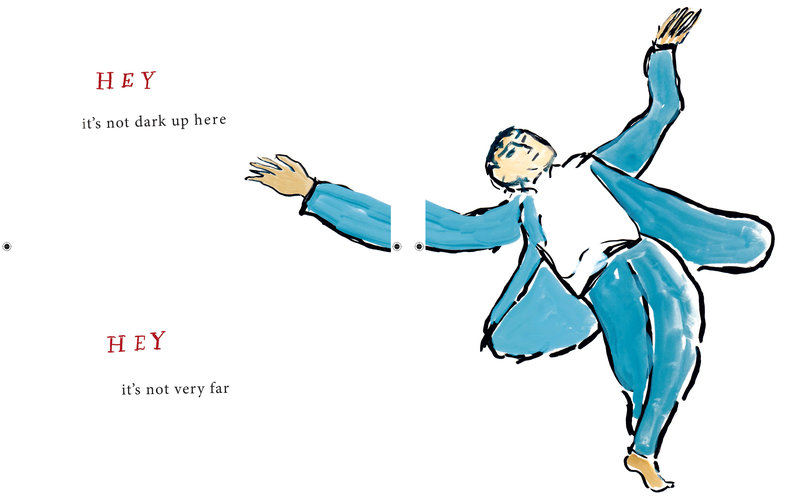
Byrne’s project is not naive, Maria Popova argues at Brain Pickings, it’s Whitmanesque, a salvo of irrepressible optimism against “a kind of pessimistic ahistorical amnesia” in which we “judge the deficiencies of the present without the long victory ledger of past and fall into despair.” American Utopia doesn’t articulate this so much as perform it, either with bare feet and gray suits onstage or the vivid colors of Kalman’s drawings, “lightly at odds,” Meyer notes, “with Byrne’s words, transforming their plain optimism into a more nuanced appeal.”
American Utopia the book, like the musical before it, was written and drawn before the pandemic. Do Byrne and Kalman still have reasons to be cheerful post-COVID? Just last week, they sat down with Isaac Fitzgerald for Live Talks LA to discuss it. You can see the whole, hour-long conversation just above. Kalman confesses she’s still in “quiet shock,” but finds hope in historical perspective and “incredible people out there doing fantastic things.”
Byrne takes us on one of his fascinating investigations into the history of thought, referencing a theorist named Aby Warburg who saw in the sum total of art a kind “animated life” that connects us, past, present, and future, and who reminded him, “Yes, there are other ways of thinking about things!” Perhaps the visionary and the Pollyannaish need not be so far apart. See several more of Kalman and Byrne’s beautifully optimistic pages from American Utopia, the book, at Brain Pickings.
Related Content:
David Byrne’s American Utopia: A Sneak Preview of Spike Lee’s New Concert Film
Watch Life-Affirming Performances from David Byrne’s New Broadway Musical American Utopia
Josh Jones is a writer and musician based in Durham, NC. Follow him at @jdmagness
Read More...Isaac Newton Theorized That the Egyptian Pyramids Revealed the Timing of the Apocalypse: See His Burnt Manuscript from the 1680s
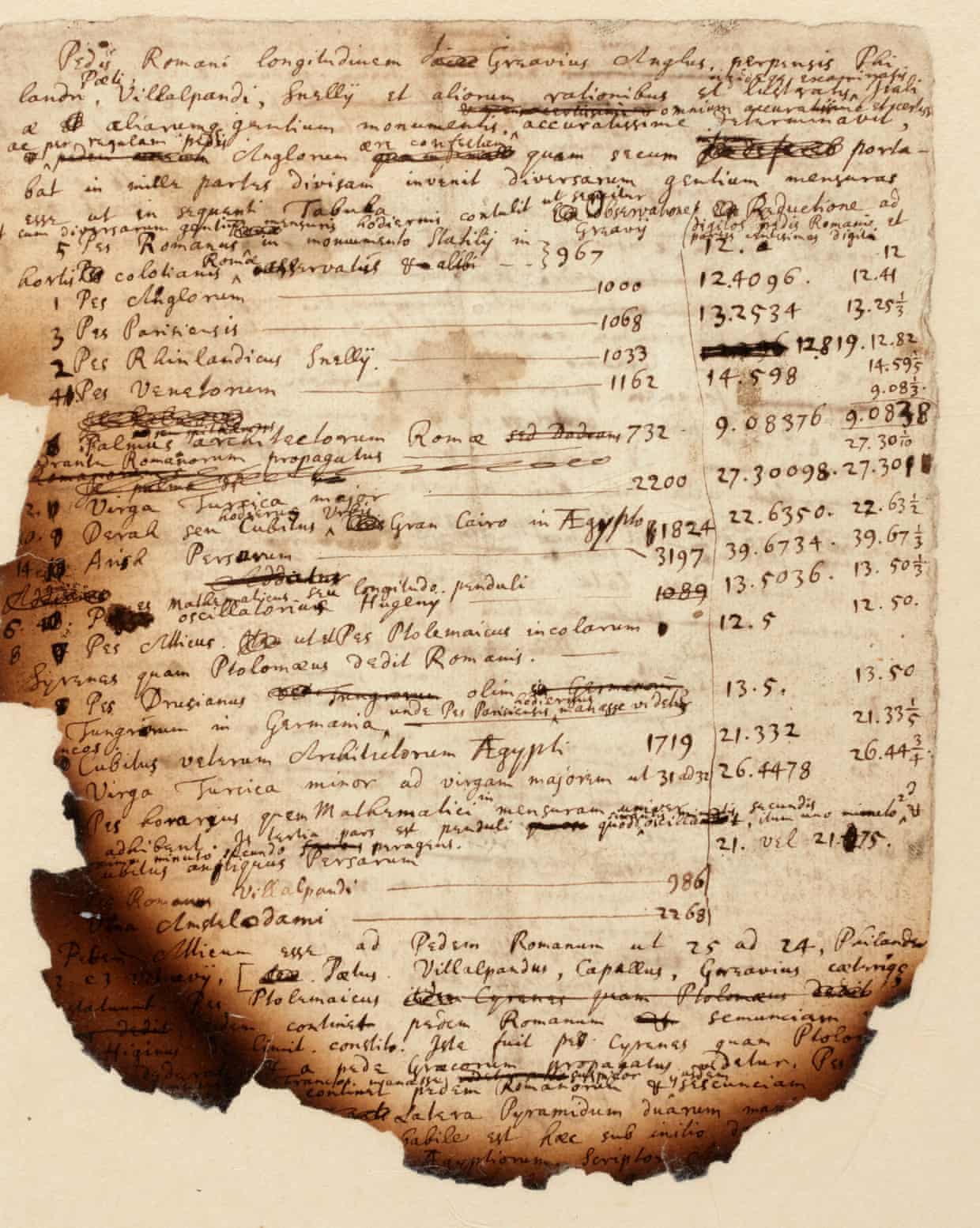
Today one can behold the pyramids of Giza and feel the temptation to believe that the ancient Egyptians knew something we moderns didn’t. Just imagine, then, what it must have felt like in the 17th century, when the recovery of lost ancient knowledge was still very much an active enterprise. Back then, no less formidable a mind than Sir Isaac Newton suspected that to understand the pyramids would be to understand much else besides, from the nature of gravity — a subject on which he would become something of an authority — to Biblical prophecy. The key he reckoned, lay in an ancient Egyptian unit of measurement called the royal cubit.
“Establishing the precise length of the Egyptian cubit would allow him to reconstruct in turn other ancient measures, crucially the sacred cubit of the Hebrews, and so be able to reconstruct with precision a building that was, to Newton, of much greater import even than the Great Pyramid: the Temple of Solomon,” says Sotheby’s.
There, a few pages of Newton’s notes on the subject (burnt at the edges, which legend has it happened when his dog knocked over a candle) recently sold for £378,000, but you can still view them online. Given that Ezekiel describes the Temple of Solomon as the setting of the Apocalypse — the end of the world being another subject of Newtonian interest — “an exact knowledge of the Temple’s architecture and dimensions was therefore needed to correctly interpret the Bible’s deep and hidden meanings.” It would also reveal the eventual timing of the the Apocalypse.
Newton’s belief that “the ancient Egyptians possessed knowledge that had been lost in the intervening centuries,” as Smithsonian.com’s Livia Gershon puts it, did not set him far apart from mainstream European scholarship at the time. He also thought, Gershon writes, “that the ancient Greeks had successfully measured Earth’s circumference using a unit called the stade, which he believed was borrowed from the Egyptians. By translating the ancient measurement, Newton hoped to validate his own theory of gravity,” as he ultimately did, though not, perhaps, in the manner he first expected to. We must, it seems, consider the pyramids, alongside the Philosopher’s stone, the South Sea Company, and toad-vomit plague cures, as another example of the great genius’ occasionally excessive enthusiasms — albeit an unusually powerful one.
Related Content:
Neil deGrasse Tyson on the Staggering Genius of Isaac Newton
Isaac Newton Conceived of His Most Groundbreaking Ideas During the Great Plague of 1665
In 1704, Isaac Newton Predicts the World Will End in 2060
How the Egyptian Pyramids Were Built: A New Theory in 3D Animation
Based in Seoul, Colin Marshall writes and broadcasts on cities, language, and culture. His projects include the Substack newsletter Books on Cities, the book The Stateless City: a Walk through 21st-Century Los Angeles and the video series The City in Cinema. Follow him on Twitter at @colinmarshall, on Facebook, or on Instagram.
Read More...How the Garage-Rock Anthem “Louie Louie” Became the Subject of a Lengthy FBI Investigation (1964)
Rock and roll history is built on happy accidents, moments where enthusiasm and raw talent exceed the limits of technology. Distortion, the sine qua non of modern rock, came from broken amplifiers and mixing boards, and speakers slashed to ribbons. Such excesses can be threatening. Link Wray’s gritty 1958 instrumental “Rumble” earned a ban from the airwaves for its alleged menace. Since then, rock has survived one crusade after another, launched by parents, church groups, and scaremongering charlatans.
One classic case illustrates the norm: parental overreaction to teenage rumors, incompetent response from authorities, and, as above, a technical limitation that led to a stylistic revolution. The incomprehensible vocals in the Kingsmen’s 1963 recording of “Louie, Louie” are legendary, covered and imitated by garage bands and rock stars since, and going down “in pop history,” Anwen Crawford writes at The New Yorker, “as one of the medium’s more endearing (and enduring) moments of amateurism.”
The performance “was a result of accident rather than design.” The Kingsmen recorded the song into a single microphone suspended several feet above singer Jack Ely and the band. “Ely was wearing dental braces,” notes Crawford, “and his bandmates, who were gathered around Ely in a circle, played their instruments loudly.” The band had learned the song from the Wailers, whose 1961 version covered songwriter Richard Berry’s original, both of which had been regional hits in the Pacific Northwest.
The Kingsman’s “Louie Louie” became an instant garage-rock classic, hitting No. 2 on the Billboard singles charts, despite the fact that no one who hadn’t heard the earlier versions had a clue what it was about. Since the lyrics could have said almost anything, it seemed, they provoked immediate speculation about obscenity. Rock critic Dave Marsh describes the phenomenon:
Back in 1963, everybody who knew anything about rock ‘n’ roll knew that the Kingsmen’s “Louie Louie” concealed dirty words that could be unveiled only by playing the 45 rpm single at 33–1/3. This preposterous fable bore no scrutiny even at the time, but kids used to pretend it did, in order to panic parents, teachers, and other authority figures. Eventually those ultimate authoritarians, the FBI got involved, conducting a thirty-month investigation that led to “Louie”‘s undying — indeed, unkillable — reputation as a dirty song.
So “Louie Louie” leaped up the chart on the basis of a myth about its lyrics so contagious that it swept cross country quicker than bad weather. Nobody — not you, not me, not the G‑men ultimately assigned to the case — knows where the story started. That’s part of the proof that it was a myth, because no folk tales ever have a verifiable origin. Instead society creates them through cultural spontaneous combustion.
The FBI investigation into “Louie Louie”’s lyrics began when outraged parents wrote letters to attorney general Robert F. Kennedy and J. Edgar Hoover. Off and on, for two years, the Bureau investigated the recording. They played it “backwards and forwards,” says Eric Predoehl, director of a documentary about the song. “They played it at different speeds, they spent a lot of time on it–but it was indecipherable at any speed.” Why they bothered is really anyone’s guess. Agents finally had to give up and close the case, after a meaningless expenditure of government resources.
They never bothered, during their investigation, to listen to the earlier recordings of the song. (The band swears Ely sung the lyrics as written verbatim.) They never interviewed Ely himself. Nor did anyone have the bright idea to walk down to the Bureau of Copyright, where they would have found un-salacious lyrics to “Louie Louie” on file. Rumor and innuendo were as good as evidence. Read the Full FBI report at NPR. “Reader beware,” they caution, “the document describes listener theories that the lyrics of ‘Louie Louie’ were secretly vulgar, and includes the supposed vulgarities.”
via Ted Gioia
Related Content:
Two Guitar Effects That Revolutionized Rock: The Invention of the Wah-Wah & Fuzz Pedals
Josh Jones is a writer and musician based in Durham, NC. Follow him at @jdmagness
Read More...MIT’s Introduction to Deep Learning: A Free Online Course
MIT has posted online its introductory course on deep learning, which covers applications to computer vision, natural language processing, biology, and more. Students “will gain foundational knowledge of deep learning algorithms and get practical experience in building neural networks in TensorFlow.” Prerequisites assume calculus (i.e. taking derivatives) and linear algebra (i.e. matrix multiplication). Experience in Python is helpful but not necessary. The first lecture appears above. The rest of the course materials (videos & slides) can be found here.
Introduction to Deep Learning will be added to our list of Free Computer Science Courses, a subset of our larger meta collection, 1,700 Free Online Courses from Top Universities. You can also find Deep Learning courses on Coursera.
If you would like to support the mission of Open Culture, consider making a donation to our site. It’s hard to rely 100% on ads, and your contributions will help us continue providing the best free cultural and educational materials to learners everywhere. You can contribute through PayPal, Patreon, and Venmo (@openculture). Thanks!
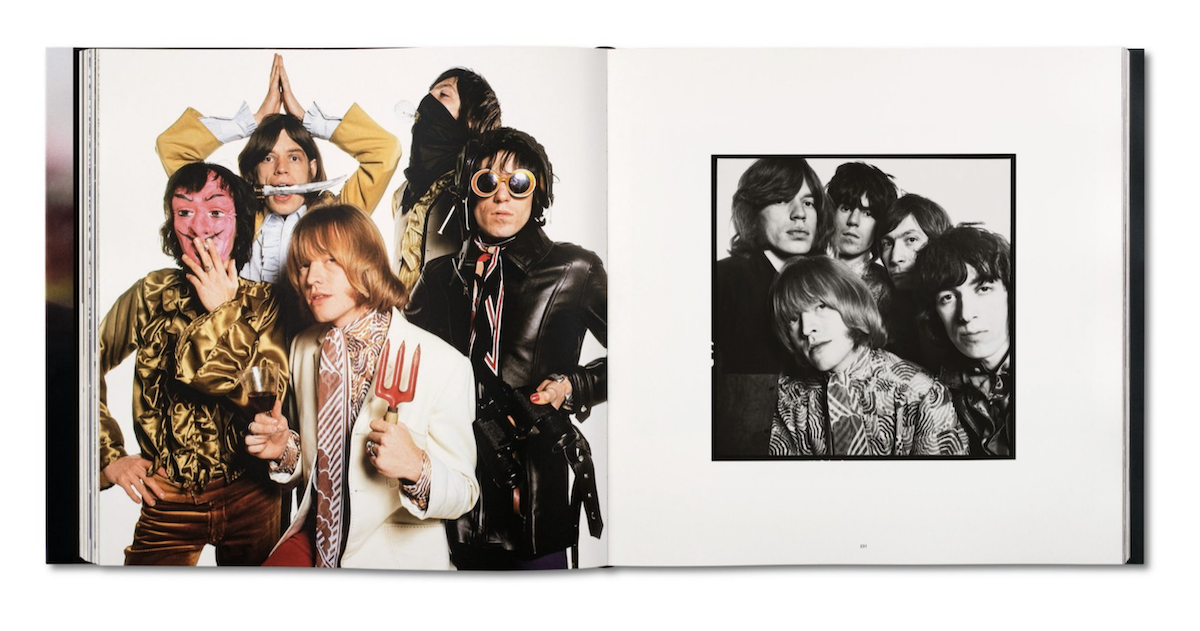
Read More...A Visual History of The Rolling Stones Documented in a Beautiful, 450-Page Photo Book by Taschen
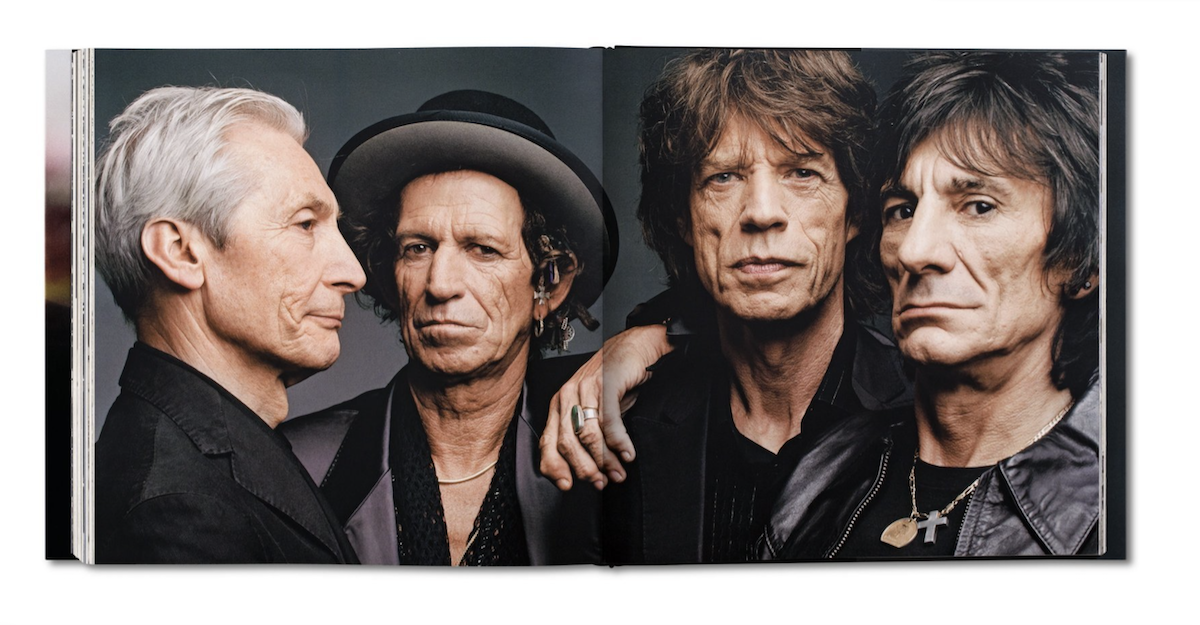
There is a certain look that screams rock ‘n’ roll—one part outlaw biker, one part psychedelic magician, one part pimp, one part circus performer…. But where did it come from? We could trace it back to Link Wray, Little Richard, Elvis, Screamin’ Jay Hawkins. But the Rolling Stones refined and perfected the look, as they refined and perfected the slurred, shambling barroom blues that became a signature sound at their peak. Even punks who rejected the rock star image couldn’t help looking like Keith Richards at times. It’s unavoidable. The Beatles turned rock into immaculate chamber pop. The Stones turned it into pure, raw, greasy sleaze, and bless them for it.
“Early on,” says photographer Ethan Russell, who photographed them during 1969 and 1972 tours, “the Rolling Stones had this phenomenal edginess in their image, and they were able to carry it into the age of imagery and stay out in front of it. The way the Stones have inhabited their images is one reason they have been able to stay a relevant act over all these years.”
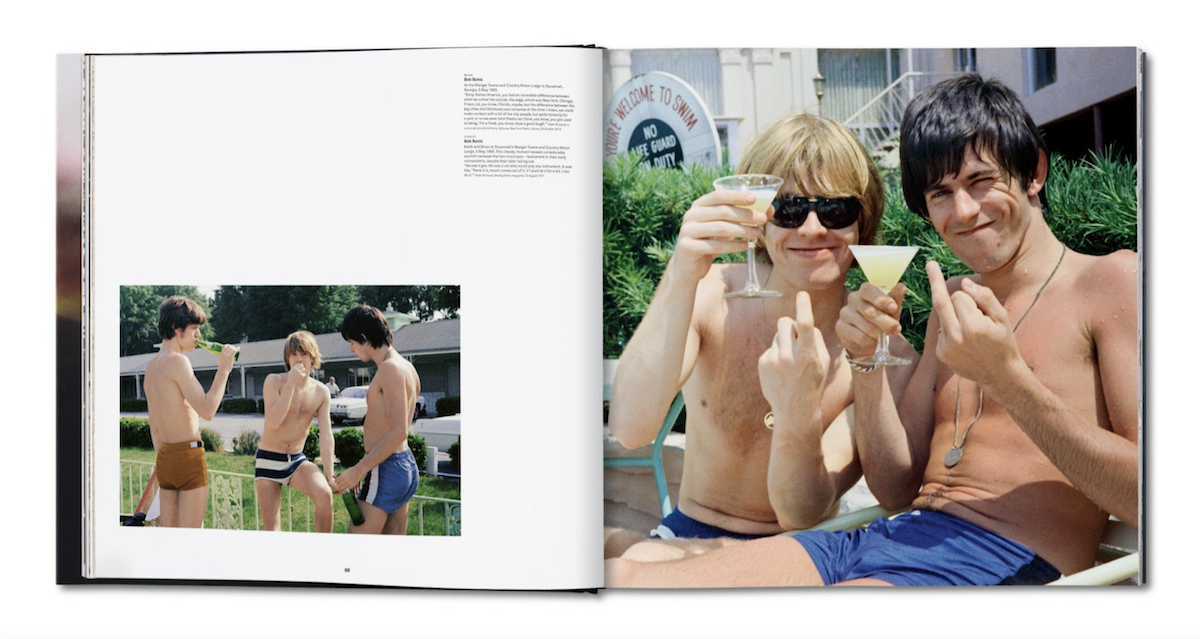
For the band’s 50th anniversary in 2012, they came up with the idea of a massive photo book with Taschen that collects hundreds of photographs from the span of their career. The photos “range from the Stones’ nascent days as blues-crazed boy musicians in houndstooth jackets,” notes The New York Times, “to their most recent years as the leather-faced but stylishly venerable elders of rock ‘n’ roll.”
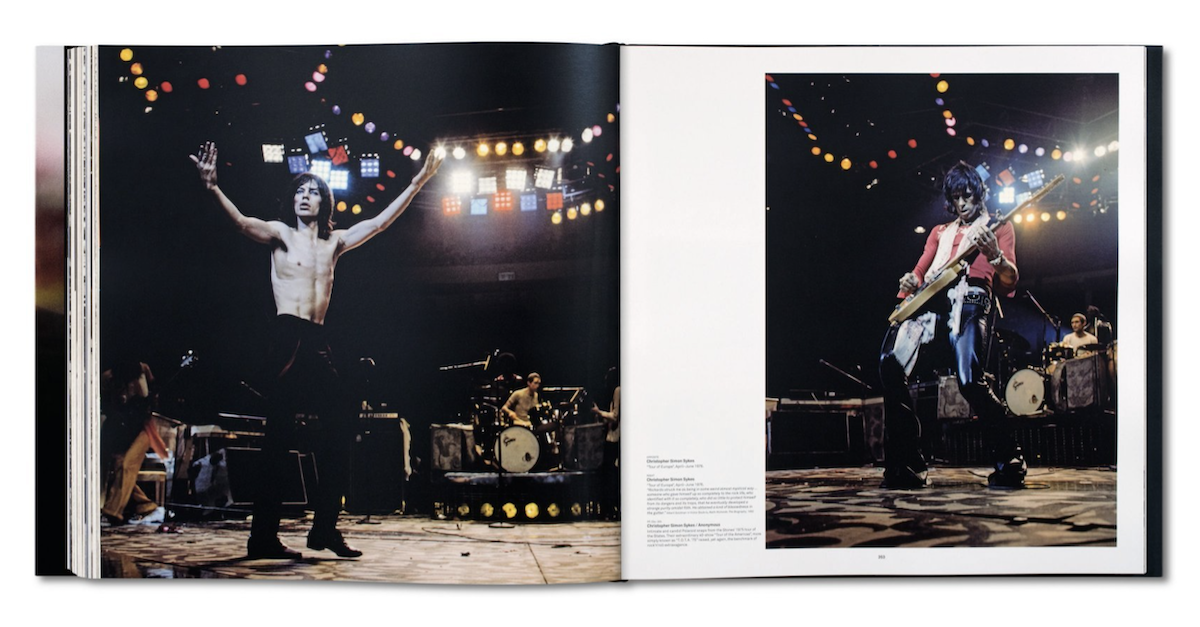
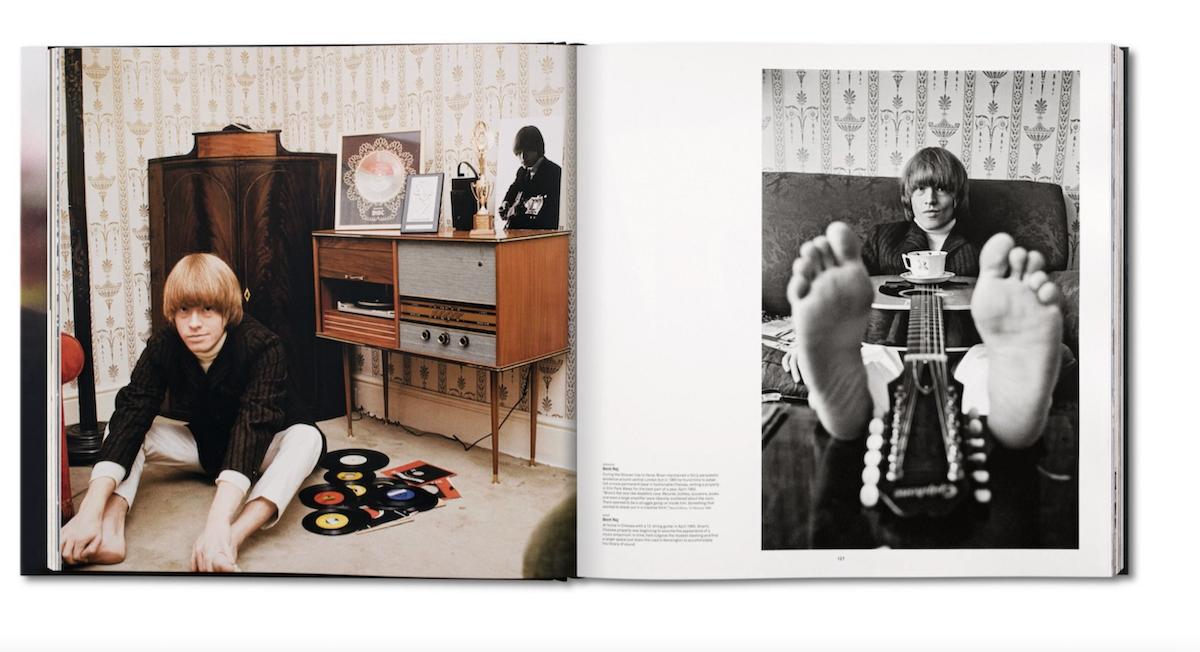
The book also charts the band’s lineup changes along the way, capturing brilliant and tragic Brian Jones, underrated Mick Taylor, and understated Bill Wyman, who left in the early 90s. Over the years, a couple dozen famous photographers have immortalized them: David Bailey, Herb Ritts, Peter Beard, Andy Warhol, David LaChapelle, Annie Leibovitz, Gered Mankowitz, Cecil Beaton, Anton Corbijn, and so many more—all represented here in glorious full-color spreads. The over 500-page book also includes essays from writers like David Dalton, Waldemar Januszczak, and Luc Sante and an appendix with a timeline, discography, and bios of the photographers.
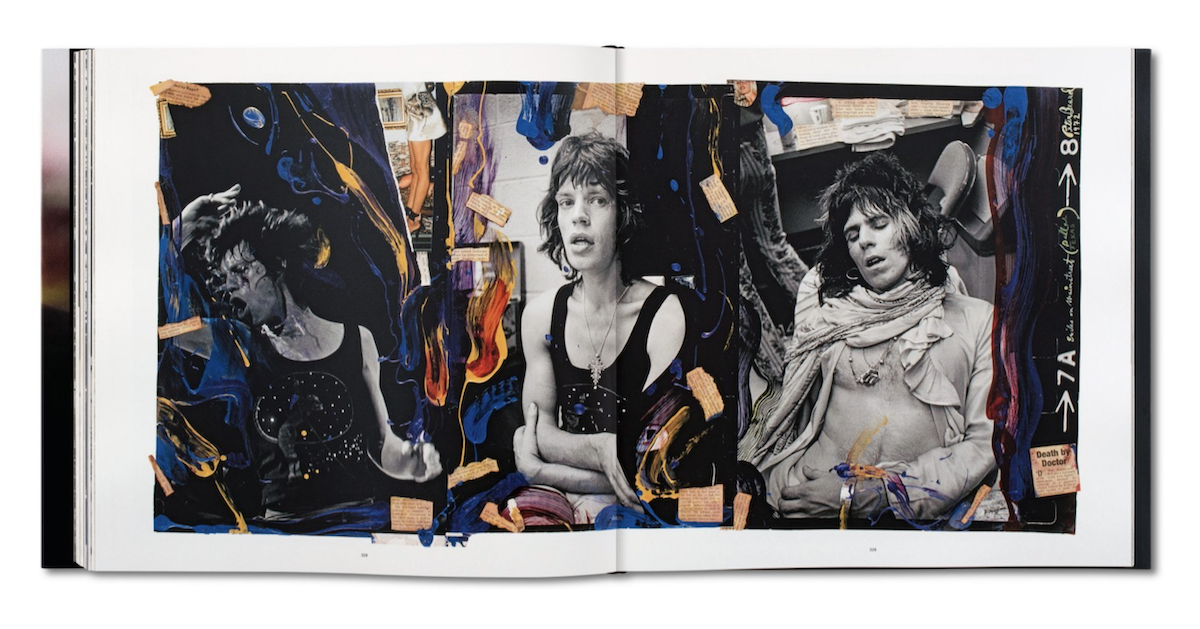
The Rolling Stones also features images from the Stones’ archives in New York and London, adding “an equally extraordinary, more private side to their story,” writes Taschen. First published in 2012, the book will soon be reissued in an updated edition for 2020. Need a gift for the Stones superfan in your life? Consider a ringing endorsement from another rock star, Anthony Bourdain, who called the book his favorite: “iconic then, iconic now,” says Bourdain, “they wrote the book on what it meant to be rock stars: how to look, dress, behave.… They were the first rock and roll aristocrats.” Pick up a copy of Taschen’s The Rolling Stones on Amazon.
Related Content:
The Rolling Stones Release a Long Lost Track Featuring Led Zeppelin’s Jimmy Page
Josh Jones is a writer and musician based in Durham, NC. Follow him at @jdmagness
Read More...Support Us
We're hoping to rely on loyal readers, rather than erratic ads. Please click the Donate button and support Open Culture. You can use Paypal, Venmo, Patreon, even Crypto! We thank you!

About Us

Open Culture scours the web for the best educational media. We find the free courses and audio books you need, the language lessons & educational videos you want, and plenty of enlightenment in between.
Advertise With Us
FREE UPDATES!
GET OUR DAILY EMAIL
Get the best cultural and educational resources on the web curated for you in a daily email. We never spam. Unsubscribe at any time.
FOLLOW ON SOCIAL MEDIA
Open Culture editor Dan Colman scours the web for the best educational media. He finds the free courses and audio books you need, the language lessons & movies you want, and plenty of enlightenment in between.
Advertise With Us

