Watch “Jackson Pollock 51,” a Historic Short Film That Captures Pollock Creating Abstract Expressionist Art on a Sheet of Glass
Jackson Pollock was described as an “action painter,” a label that surely wouldn’t have stuck if the public never had the chance to see him in action. In that sense, only the era of photography could have produced an artist like him: not just because that technology pushed painting toward abstraction, but because it could disseminate images of the artist himself far and wide. One photographer did more for this cause than any other: the German-born Hans Namuth, who despite a lack of initial interest in Pollock’s work nevertheless took up the challenge of capturing his creative process — and thereby doing much to craft the artist’s image of raw, intuitive and individualistic physicality. Namuth accomplished this even more memorably with a motion picture: the short “Jackson Pollock 51,” which you can watch above.
After attempting some shooting at the artist’s East Hampton, Long Island home,“Namuth was unhappy about having to choose between focusing on the painting or on Pollock,” as the New York Times’ Sarah Boxer puts it. “He wanted to catch painter and paint at once.” Namuth eventually hit upon a solution: “The painting would have to be on glass, and I would film from underneath.”
The film first shows Pollock painting more or less as usual (albeit outdoors, to obviate the need for lighting), and in laconic voiceover the artist describes his development and process. “I can control the flow of the paint,” he says. “There is no accident, just as there is no beginning and no end. Sometimes, I lose a painting.” Indeed, he admits, “I lost contact with my first painting on glass, and I started another one.”
This hints at the rigorous standards — and standards entirely his own — to which Pollock held his work. But he also left his second glass painting to ruin, having by some accounts entered personal and professional freefall immediately after he and Namuth wrapped this shoot. The two got into a shouting match that night, accusing one another of phoniness; at its height, Pollock action-painted the dining-room floor by overturning the laden dinner table in anger. “According to Pollock lore, his relationship with the camera was a Faustian bargain,” writes Boxer. “After that night [with Namuth], Pollock never stopped drinking.… Six years later, bloated, depressed and drunk, he drove his car into a tree, killing himself and a friend.” “The implication is that Namuth killed Pollock, that the photographs stole the artist’s ‘savage’ spirit. In doing things for the camera that he once did more spontaneously, Pollock came to feel he was indeed a phony.” But it’s also thanks to Namuth, too-active a director of the action though he may have been, that we can look at a Pollock canvas today and so vividly imagine its creation.
Related Content:
Watch Portrait of an Artist: Jackson Pollock, the 1987 Documentary Narrated by Melvyn Bragg
The MoMA Teaches You How to Paint Like Pollock, Rothko, de Kooning & Other Abstract Painters
Dripped: An Animated Tribute to Jackson Pollock’s Signature Painting Technique
Vintage Footage of Picasso and Jackson Pollock Painting… Through Glass
How the CIA Secretly Funded Abstract Expressionism During the Cold War
Based in Seoul, Colin Marshall writes and broadcasts on cities, language, and culture. His projects include the Substack newsletter Books on Cities, the book The Stateless City: a Walk through 21st-Century Los Angeles and the video series The City in Cinema. Follow him on Twitter at @colinmarshall, on Facebook, or on Instagram.
Read More...One of the Greatest Dances Sequences Ever Captured on Film Gets Restored in Color by AI: Watch the Classic Scene from Stormy Weather
It really is a wonder, knowing what we know about the history of racism and discrimination in Hollywood and America in general, that the musical Stormy Weather even got made in 1943. Along with one other similar film Cabin in the Sky, it’s one of the few American musicals of the 20th century with an all-Black cast, top billing and all. And what a cast, just some of the most talented artists of their time: Bojangles Robinson, Lena Horne, Fats Waller, Cab Calloway, and the Nicholas Brothers star. Katherine Dunham, the “queen mother of Black dance” performs and choreographs. Coleman Hawkins, though uncredited, is there too, playing sax.
The film also gave you its money’s worth, with nearly two dozen musical numbers in less than 80 minutes. And the top performance is the one that closes the film, seen here remastered from a high quality source (make sure your YouTube is set to 1080p) and colorized with DeOldify, the machine-learning colorization tool. (Your mileage may vary with the colorization, but hey, it’s a start. Check back in a year or so and we might have another version that looks like it was truly shot in color.)
If you’ve never seen the “Jumpin’ Jive” number, or never heard of the Nicholas Brothers, you will soon find out why Fred Astaire called it the greatest dancing he’d ever seen on film. Their journey down the risers, one leapfrogging over the other and landing in the splits, has never been matched. There’s moments where they just seem to float on air. The band leader, Cab Calloway, who knew how to slink and slide around a stage, wisely gives them the floor. And at the end, while applause bursts out, the entire club is invited to flood the dancefloor. It’s pure joy on film.
Older brother Fayard Nicholas was 29 in the film, his younger brother Harold was 22. Eleven years before that they had moved to New York from Philadelphia and wowed the audiences at the Cotton Club with their mix of tap, ballet, and acrobatics. It was when producer Samuel Goldwyn saw them at the Club that their career took off. But their sequences were always separate in white musicals, so that racist cinemas in the South could easily edit them out. Not so in Stormy Weather, where they end the film.
It is often written that this sequence was shot in “one take” and improvised, but that is plainly not the case. There’s eleven cuts in the dance sequence where the camera repositions itself. That’s not to take away from the Nicholas Brothers’ mastery, and hey, maybe they zipped through the sequence, as dancing was like breathing to them. Let’s just celebrate this for what it actually is: the Nicholas Brothers at the height of their powers, bringing the house down.
Related Content:
A 1932 Illustrated Map of Harlem’s Night Clubs: From the Cotton Club to the Savoy Ballroom
Ted Mills is a freelance writer on the arts who currently hosts the Notes from the Shed podcast and is the producer of KCRW’s Curious Coast. You can also follow him on Twitter at @tedmills, and/or watch his films here.
Read More...A Look into the Wondrous Life & Expansive Work of the Late Jan Morris, Who Wrote the Entire World
Jan Morris spent her long life and career writing about the world. Her voluminous body of work includes books about countries like Spain, the United States, and her ancestral homeland of Wales; cities like Oxford, Trieste, and Sydney; and even city-states like Hong Kong and her beloved (if sometimes resented) Venice. And yet, as she declared on CBS Sunday Morning twenty years ago, “I hate being called a travel writer, and I don’t believe I am one. When I go to a place, I describe its effect upon my own sensibility. I’m not telling the reader what they’re going to find there; I’m just telling people what effect the place has had upon me.” To The Paris Review she called herself a “a belletrist, an old-fashioned word,” and a belletrist “mostly concerned with place.”
“It’s hard not to be fascinated by Jan Morris,” says Observer editor Robert McCrum in the BBC profile just above. This would be true of any writer who had seen and considered so much of the Earth, which in Morris’ case also happens to include the top of Mt. Everest, conquered in 1953 along with the history-making expedition of Sir Edmund Hillary.
She reached the summit as a he, having lived for her first forty or so years as James Morris; becoming Jan, in her perception, constituted a journey of another kind. “I have interpreted this thing romantically, coyly, and tweely as some sort of a quest that has been imposed upon me,” she said in a 1974 talk-show appearance promoting her narrative of transition Conundrum — “an arrogant book, an egotistical book about myself, and I’m afraid that you must take it or leave it.”
Just as Morris never called herself a travel writer, she never spoke of having undergone a sex change. “I did not change sex,” she told her final interviewer, The Guardian’s Tim Adams. “I really absorbed one into the other. I’m a bit of each now.” For her many readers, this greatly deepens her value as an observer. “I’ve written as an outsider, always,” as she puts it to McCrum. “I’ve never pretended to get inside the spirit, or the thoughts of other cultures, other people, other cities, even. I’m always the onlooker.” And yet this very nature made her, among other things, “the kindest, shrewdest and most indefatigable master portraitist of cities,” as her fellow writer of place Pico Iyer tweeted in response to the news of her death on November 20 at the age of 94.
Among Morris’ work not filed under “travel” one finds subjects like Abraham Lincoln, the Japanese Battleship Yamato, and the rise and fall of the British Empire. To my mind, this historical perspective did a good deal to make her a model “city critic,” and one whose work lights the way for writers of place to come. She continued publishing that work up until the end — and indeed will continue past it, a deliberately posthumous volume called Allegorizings having been completed years ago. “When I die, which I’m going to one of these days, I think people will be able to say that I’ve written an awful lot of books about the whole world at a particular moment,” Morris said in a recent interview on BBC Radio 3’s The Verb. She enjoyed a longer moment, not to mention a wider expanse, than most; through her writing, we’ll carry on enjoying it ourselves.
Related Content:
Watch Sir Edmund Hillary Describe His Everest Ascent, on the 60th Anniversary of His Climb
The Best Writing Advice Pico Iyer Ever Received
Based in Seoul, Colin Marshall writes and broadcasts on cities, language, and culture. His projects include the Substack newsletter Books on Cities, the book The Stateless City: a Walk through 21st-Century Los Angeles and the video series The City in Cinema. Follow him on Twitter at @colinmarshall, on Facebook, or on Instagram.
Read More...The Power of Empathy: A Quick Animated Lesson from Brené Brown
Several years back, the RSA (Royal Society of the Arts) created a series of distinctive animated shorts where well-known intellectuals presented big ideas, and a talented artist rapidly illustrated them on a whiteboard. Some of those talks featured the likes of Slavoj Zizek, Carol Dweck, Steven Pinker and Barbara Ehrenreich. Now RSA presents a video series created in an entirely different aesthetic. Above, you can watch the first of many “espresso shots for the mind.” This clip features Dr. Brené Brown, a well-known research professor at the University of Houston Graduate College of Social Work, providing some quick insights into the difference between sympathy and empathy, and explaining why empathy is much more meaningful. To learn more about The Power of Empathy, you can watch Brown’s complete RSA lecture below . You can also watch her very popular TED Talk on The Power of Vulnerability here.
Note: An earlier version of this post appeared on our site in December, 2013.
If you would like to support the mission of Open Culture, consider making a donation to our site. It’s hard to rely 100% on ads, and your contributions will help us continue providing the best free cultural and educational materials to learners everywhere. You can contribute through PayPal, Patreon, and Venmo (@openculture). Thanks!
Related Content:
Free Online Psychology Courses (Part of our list of Free Online Courses)
Meditation 101: A Short, Animated Beginner’s Guide
The Psychology of Blame: Another Animated Lesson That Can Make You a Better Person
Read More...A 1913 Children’s Book Lampoons Duchamp, Picasso & Other Avant-Garde Artists: Read The Cubies’ ABC Online
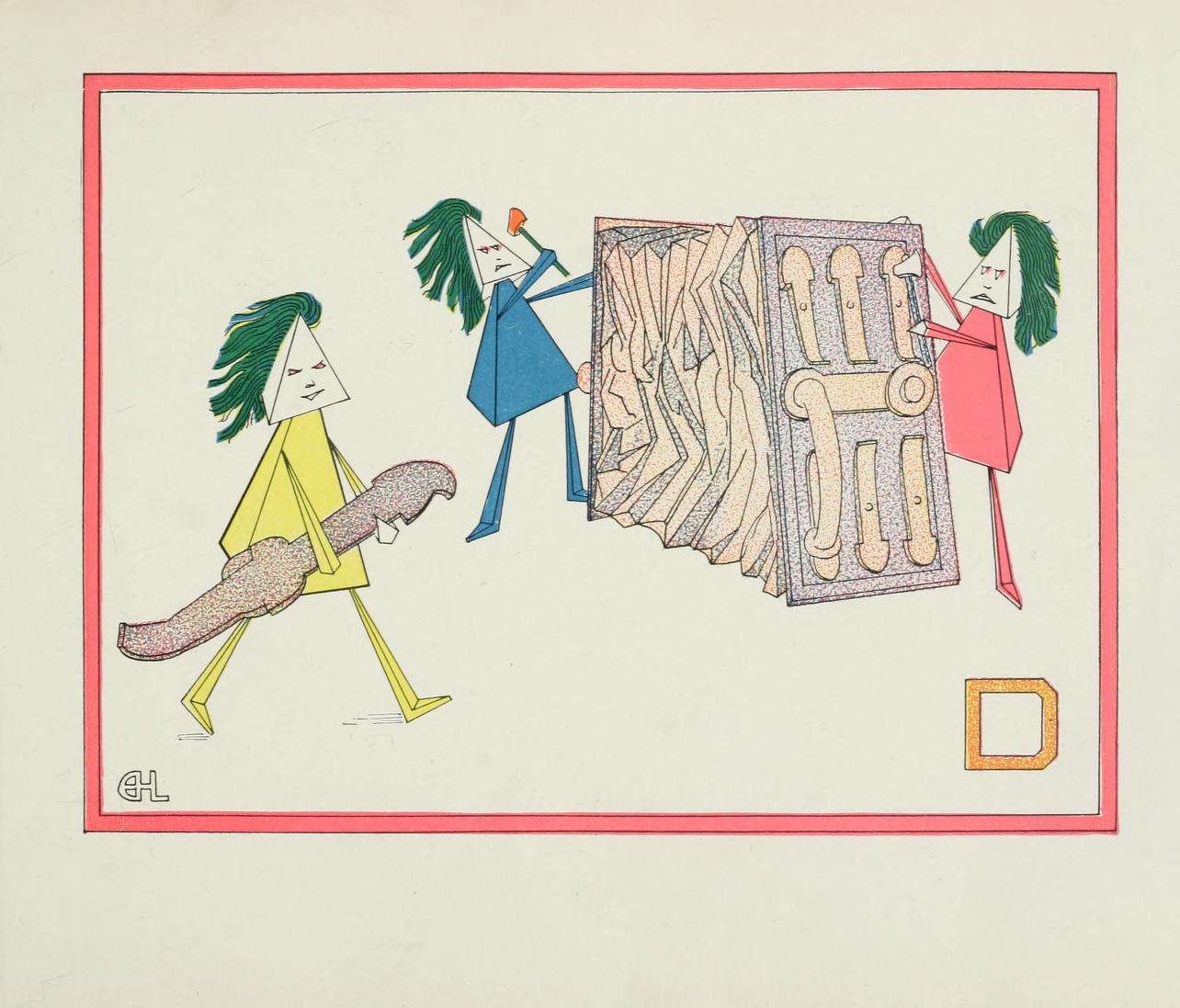
Igor Stravinsky’s The Rite of Spring premiered in 1913, and its violent break from musical and choreographic tradition, so the story goes, pushed the genteel Parisian audience to violent rebellion. That tale may have grown taller over the past century, but public distaste for then-novel trends in all forms of “modern art” has left a paper trail. Here we have a particularly amusing exhibit, and long an obscure one: The Cubies’ ABC, a picture book by a couple named Mary Mills and Earl Harvey Lyall. They were inspired by another major cultural event of 1913, the International Exhibition of Modern Art, or “Armory Show,” which offered the United States of America its first look at groundbreaking work by Marcel Duchamp, Pablo Picasso, and Wassily Kandinsky, among a host of other foreign artists.
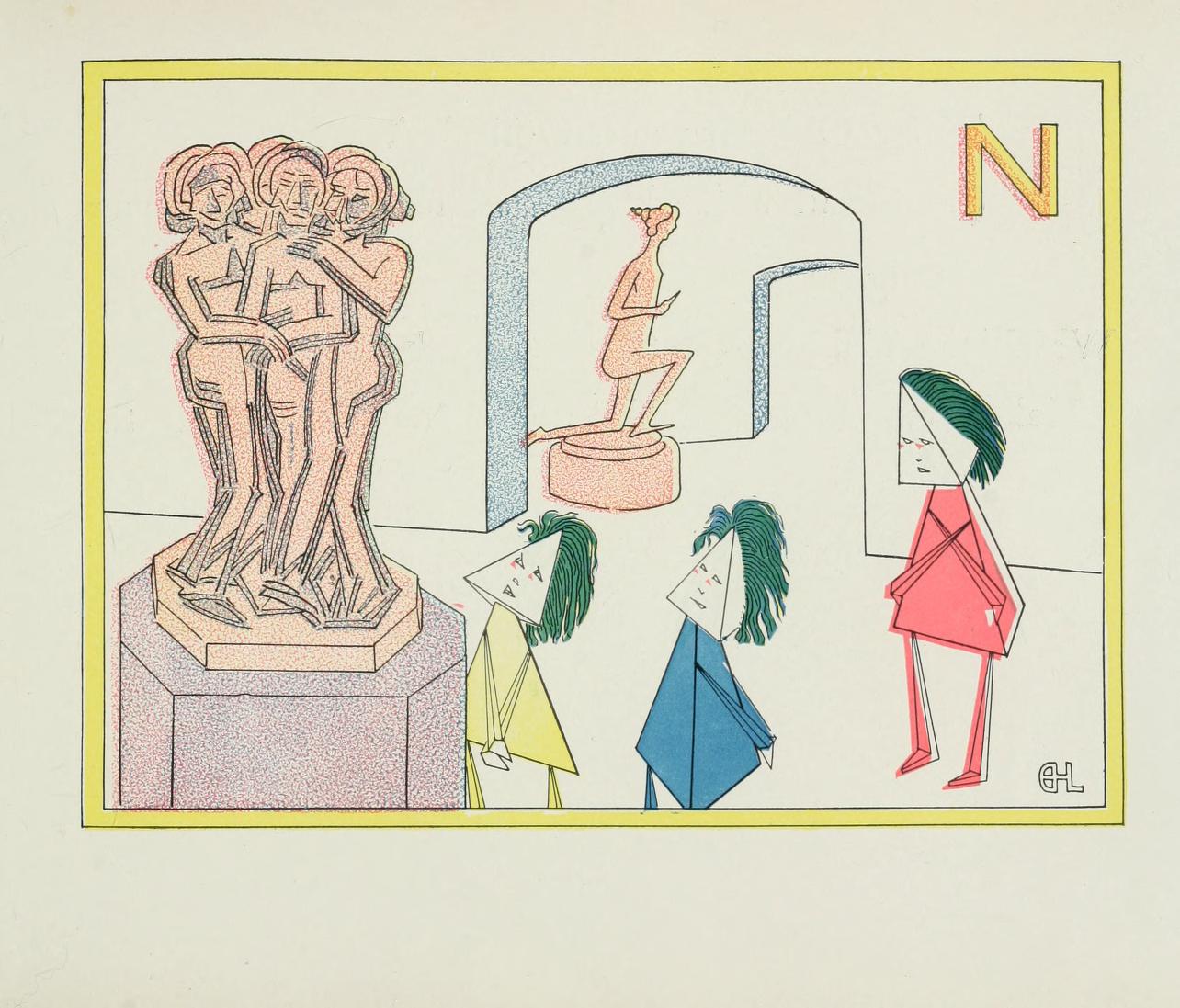
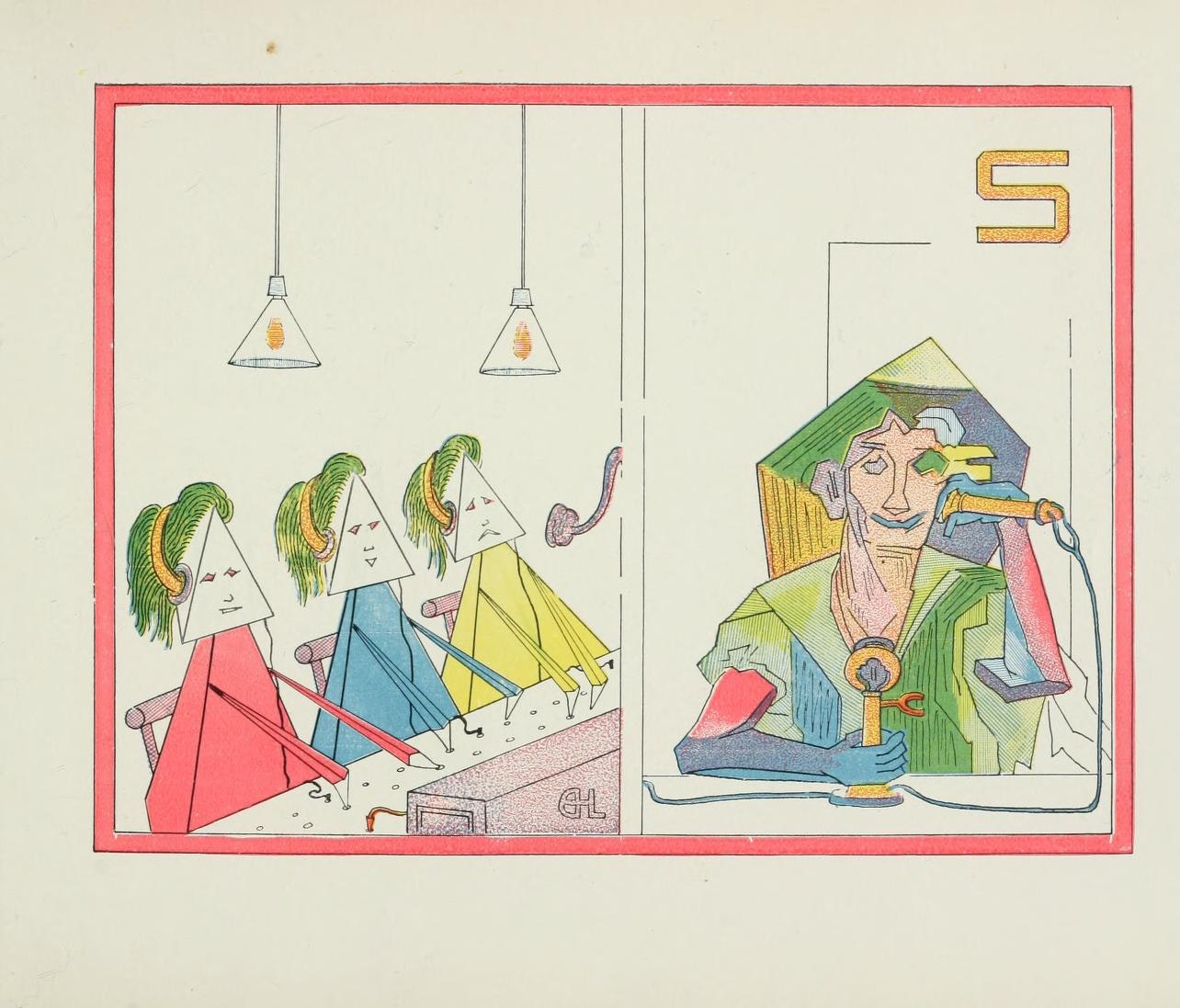
The Lyalls, evidently, were not impressed. In order to ridicule what they seem to have considered the pretensions of the avant-garde, they came up with the Cubies, a trio of angular, wild-haired troublemakers bent on discarding all established conventions in the name of Ego, the Future, and Intuition.
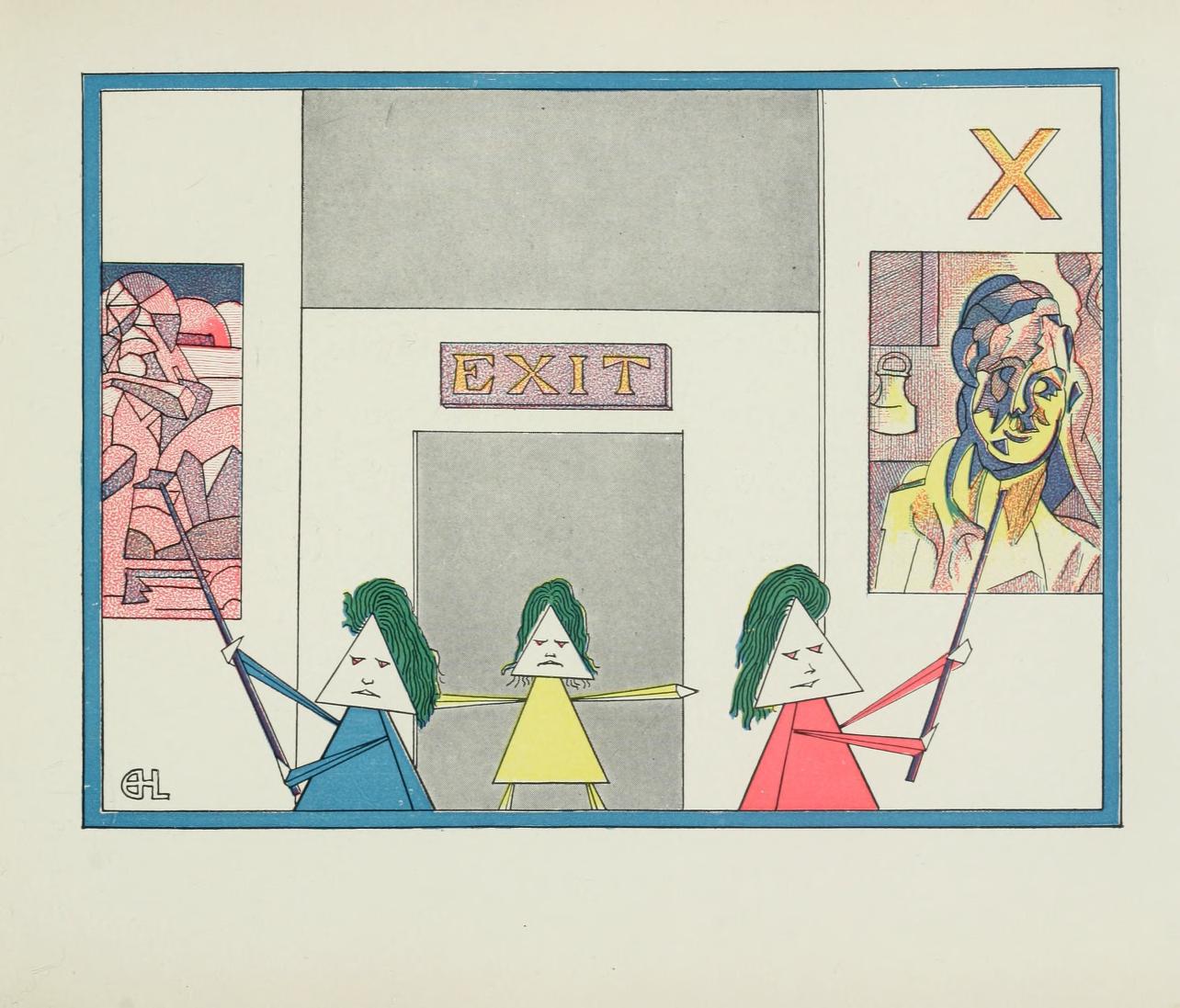
Those three concepts get their own pages in this alphabetically organized book, as do artists — not that the authors would unironically grant them the title — like Duchamp, “the Deep-Dyed Deceiver, who, drawing accordions, labels them stairs”; Kandinsky, painter of “Kute ‘improvisations’ ”; and even Gertrude Stein, “eloquent scribe of the Futurist soul.” X stands, of course, for “the Xit,” a direction “Xtremely alluring when Cubies invite us to study their Art.”
“We tend to forget, now that the Cubists and Futurists have become as integral to the history of art as the painters of the Dutch Golden Age and the Italian Renaissance, how hostile most people — even most artists — felt toward the non-representational innovations of the artists on display at the Armory,” says the Public Domain Review, where you can read The Cubies’ ABC in full.

You can also buy a copy of the reprint organized by gallerist Francis Naumann in commemoration of the Armory show’s centenary. “People in those days thought that they could stop modern art in its tracks,” says Naumann in a New Yorker piece on the book. Did the Lyalls think the Cubies’ antics would land a decisive blow against abstraction and subjectivity? Then again, could they have imagined us enjoying them more than a hundred years later, in a time unknowable to even the most far-sighted Futurist?
Related Content:
Take a Virtual Tour of the 1913 Exhibition That Introduced Avant-Garde Art to America
The Nazi’s Philistine Grudge Against Abstract Art and The “Degenerate Art Exhibition” of 1937
The Guggenheim Puts Online 1700 Great Works of Modern Art from 625 Artists
The Anti-Slavery Alphabet: 1846 Book Teaches Kids the ABCs of Slavery’s Evils
Based in Seoul, Colin Marshall writes and broadcasts on cities, language, and culture. His projects include the Substack newsletter Books on Cities, the book The Stateless City: a Walk through 21st-Century Los Angeles and the video series The City in Cinema. Follow him on Twitter at @colinmarshall, on Facebook, or on Instagram.
Read More...When Sun Ra Went to Egypt in 1971: See Film & Hear Recordings from the Legendary Afrofuturist’s First Visit to Cairo
Sun Ra died in 1993 (or he returned to his home planet of Saturn, one or the other). Twenty-seven years later his Arkestra is still going strong. “No group in jazz history has embodied the communal spirit like the Arkestra,” writes Peter Margasak at The Quietus. “Their hardcore fans are the closest thing jazz has to Deadheads.” We could further compare Sun Ra and Jerry Garcia as bandleaders—their embrace of extended free form playing against a background of traditionalism. Folk, and country in Garcia’s case and big band swing in the work of the man born Herman Poole Blount in Birmingham, Alabama in 1914.
But (all due respect to Jerry, and he earned it), Sun Ra had a vision that was wider than his dedicated fanbase. He harnessed the powerful symbols of ancient Egypt and other African kingdoms to form the base of his Afrofuturist message, a blend of “Black Nationalism, ancient spirituality, and science fiction” for the jazz masses. Ra fleshed these themes out fully in his 1974 film Space is the Place, a sci-fi fantasy in which he battles his adversaries in a plan to transport Black Americans to a new planet.
What seems like a call for separatism is really an allegory critiquing what scholar Daniel Kreiss calls the “terrestrial community programs” of the Black Panthers and the ills of poverty, racism, and exploitation. “Only the band’s use of technology and music will liberate the people by changing consciousness” the film suggests. Space, and ancient Egypt, are also places in the mind. Sun Ra had his own consciousness changed a couple year earlier when he visited the real Egypt for the first time in 1971. The resulting recordings—newly released—stand as “one of Sun Ra’s major works” Edwin Pouncey writes at Jazzwise, and “would lead him to other worlds of inner discovery in the future.”
Film of the 22-member collective at the pyramids (top), taken by Arkestra member Thomas Hunter, creates “an audio-visual teleportation into their interstellar universe,” The Vinyl Factory’s Gabriela Helfet remarks. Previously unpublished photographs of the Cairo concerts complete the image of the band as a psychedelic pan-African spaceship made of music. Where will it take you? Wherever you need to go. In a recorded Q&A held during one show, Sun Ra tells the audience that his adopted name is “my natural, vibrational name,” his true identity.
Each person, Sun Ra suggests, has to find to find their own frequency. “Progressive music is keeping ahead of the times, you might say. In America they call it avant-garde music. It’s supposed to stimulate people to think for themselves.” The message and the music resonated, and the band would return to Egypt two more times in the coming decade after their first visit, as Bradford Bailey notes:
Beyond personal appeal, the trip proved creatively fruitful—introducing the entourage to figures in Cairo’s growing jazz scene. The most notable was Salah Ragab—founder of the seminal outfits, The Cairo Jazz Band and The Cairo Free Jazz Ensemble, with whom they would collaborate on their second and third visits, recordings of which came to light on the 1983 LP, The Sun Ra Arkestra Meets Salah Ragab Plus The Cairo Jazz Band – In Egypt.
Hear “Watusa” from that LP, above, listen to the full Egypt 1971 sessions at Bandcamp (or below), and see several more newly published photographs at the Vinyl Factory.
Related Content:
A Collection of Sun Ra’s Business Cards from the 1950s: They’re Out of This World
Sun Ra Applies to NASA’s Art Program: When the Inventor of Space Jazz Applied to Make Space Art
Josh Jones is a writer and musician based in Durham, NC. Follow him at @jdmagness
Read More...An Introduction to Rap Battles: Pretty Much Pop: A Culture Podcast #71

Pretty Much Pop hosts Mark Linsenmayer, Erica Spyres, and Brian Hirt are rejoined by our audio editor and resident rapper Tyler Hislop (rap name: “Sacrifice”) to discuss a form of entertainment close to his heart: Two people staring each other in the face in front of a crowd and taking lengthy turns insulting each other in a loud voice using intricate rhymes, references, jokes and even some cultural commentary and philosophical spit-balling.
So what are the rules? How does modern battle rap compare to free-styling, the beefs aired on rap albums, and classic insult comedy? What’s the appeal of this art form? Is it because of or despite the aggression involved? Battle rap is regarded as a free speech zone, where anything’s fair game, but does that really make sense?
A few relevant films came up in the discussion:
- Bodied (2017), a film written by Alex Larsen (aka Kid Twist) and produced by Eminem, featuring several current battle rappers doing their thing along with discussion by the characters of the ethical issues involved
- 8 Mile (2002), a semi-autobiographical film starring Eminem, which displays the older, free-styling over a beat type of battle rapping
- Roxanne Roxanne (2017) a biopic about Roxanne Shante depicting hip-hop rivalries of the 1980s.
Here are some matches Tyler recommended that also get mentioned:
- Conceited vs. Dumbfounded. Perhaps the most viewed battle of all time
- A 2x2 battle: B. Dot/Geechi Gotti vs. A. Ward/Loso. Note that the latter are “Christian-based” rappers.
- A compliment battle: Pat Stay vs. Rone.
- Immaculate vs. Soul. Immaculate is Tyler’s favorite battler, and Soul is Scottish.
- More: Pat Stay vs. Charron, Rone vs. Big T, The Saurus vs. Daylyt, Shotty Horroh vs. Arsonal, Calicoe vs. Bigg K, Shotty Horroh vs. Tony D
- Not actually rap battles: Trump vs. Biden, Keynes vs. Hayek
More resources:
- The Battle Rap Hall of Fame
- Wikipedia on Battle Rap
- The Ruin Your Day YouTube Channel where battle rappers comment on notable battles.
- “A Brief Hip-Hop History of Rap Battles” by Jake Hall
- “Flyting Was Medieval England’s Version of an Insult-Trading Rap Battle” by Tao Tao Holmes
Hear Tyler talk about his many rap albums on Nakedly Examined Music #24.
Hear more of this podcast at prettymuchpop.com. This episode includes bonus discussion you can access by supporting the podcast at patreon.com/prettymuchpop. This podcast is part of the Partially Examined Life podcast network.
Pretty Much Pop: A Culture Podcast is the first podcast curated by Open Culture. Browse all Pretty Much Pop posts.
Read More...What Ancient Egyptian Sounded Like & How We Know It
If you’ve seen any Hollywood movie set in ancient Egypt, you already know how its language sounded: just like English, but spoken with a more formal diction and a range of broadly Middle-Eastern accents. But then there are many competing theories about life that long ago, and perhaps you’d prefer to believe the linguistic-historical take provided in the video above. A production of Joshua Rudder’s NativLang, a Youtube channel previously featured here on Open Culture for its videos on ancient Latin and Chinese, it tells the story of “the many forms of the long-lived Egyptian languages,” as well as its “ancestors and relatives,” and how they’ve helped linguists determine just how the ancient Egyptians really spoke.
Rudder begins with a certain artifact called — perhaps you’ve heard of it — the Rosetta Stone. Discovered in 1799 during Napoleon’s campaign in Egypt, it “bore two Egyptian scripts and, auspiciously, a rough translation in perfectly readable Greek.” Using this information, the scholar Jean-François Champollion became the first to decipher ancient Egyptian hieroglyphs. But as to the question of what they sounded like when pronounced, the stone had no answers. Champollion eventually became convinced that the still-living Coptic language was “the Egyptian language, the very same one that stretches back continuously for thousands of years.”
Though Coptic sounds and grammar could provide clues about spoken ancient Egyptian, it couldn’t get Champollion all the way to accurate pronunciation. One pressing goal was to fill in the language’s missing vowels, an essential type of sound that nevertheless went unrecorded by hieroglyphs. To the archives, then, which in Egypt were especially vast and contained documents dating far back into history. These enabled a process of “internal reconstruction,” which involved comparing different versions of the Egyptian language to each other, and which ultimately “resulted in an explosion of hieroglyphic knowledge.”
But the journey to reconstruct the speaking of this “longest written language on Earth” doesn’t stop there: it thereafter makes such side quests as one to a “pocket of Ethiopia” where people speak “a cluster of languages grouped together under the label Omotic.” Along with the Semitic, the Amazigh, the Chadic, and others, traceable with Egyptian to a common ancestor, these languages provided information essential to the state of ancient Egyptian linguistic knowledge today. Given the enormous amount of scholarship required to let us know what to call them, it’s enough to make you want ankhs to come back into fashion.
Related Content:
What Ancient Chinese Sounded Like — and How We Know It: An Animated Introduction
What Ancient Latin Sounded Like, And How We Know It
Hear The Epic of Gilgamesh Read in the Original Akkadian and Enjoy the Sounds of Mesopotamia
Based in Seoul, Colin Marshall writes and broadcasts on cities, language, and culture. His projects include the Substack newsletter Books on Cities, the book The Stateless City: a Walk through 21st-Century Los Angeles and the video series The City in Cinema. Follow him on Twitter at @colinmarshall, on Facebook, or on Instagram.
Read More...Quentin Tarantino’s Copycat Cinema: How the Postmodern Filmmaker Perfected the Art of the Steal
You can call Quentin Tarantino a thief. Call him unoriginal, a copycat, whatever, he doesn’t care. But if you really want to get him going, call him a tribute artist. This, he insists, is the last thing he has ever been: great directors, Tarantino declares, “don’t do homages.” They outright steal, from anyone, anywhere, without regard to intellectual property or hurt feelings.
But great directors don’t plagiarize in the Tarantino school of filmmaking. (Pay attention students, this is important.) They don’t take verbatim from a single source, or even two or three. They steal everything. “I steal from every single movie ever made,” says Tarantino, and if you don’t believe him, you’ll probably have to spend a few years watching his films shot by shot to prove him wrong, if that’s possible.
But, of course, he’s overstating things. He’s never gone the way of blockbuster CGI epics. On the contrary, Tarantino’s last film was an homage (sorry) to an older Hollywood, one on the cusp of great change but still beholden to things like actors, costumes, and sets. Maybe a paraphrase of his claim might read: he steals from every movie ever made worth stealing from, and if you’re Quentin Tarantino, there are a lot of those most people haven’t even heard of.
The Cinema Cartography video essay above, “The Copycat Cinema of Quentin Tarantino,” begins with a reference not to a classic work of cinema, but to a classic album made two years before the time of Once Upon a Time in Hollywood. The cover of the Beatles’ Sgt. Pepper’s Lonely Hearts Club Band is “a signifier of the artist’s status as an icon within a social milieu… this image more than anything explores the social ambiance in which someone lives in pop culture before becoming pop culture themselves.”
To suggest that the Beatles weren’t already pop culture icons in 1967 seems silly, but the visual point stands. On the cover of Sgt. Pepper’s they eclipse even their earlier boy band image and freshly insert themselves into the center of 20th century cultural history up to their present. “Understanding this idea,” says narrator Lewis Michael Bond, “is fundamental to understanding the cinema of Quentin Tarantino.” How so?
“All artists, consciously or unconsciously, take from their influences, “but it’s the degree of self-awareness and internal referencing that would inevitably bring us to the concept of postmodernism.” Tarantino is nothing if not a postmodern artist—rejecting ideas about truth, capital T, authenticity, and the uniqueness of the individual artist. All art is made from other art. There is no original and no originality, only more or less clever and skillful remixes and restatements of what has come before.
Tarantino, of course, knows that even his postmodern approach to cinema isn’t original. He stole it from Godard, and named his first production company A Band Apart, after Godard’s 1964 New Wave film Band of Outsiders, which is, Pauline Kael wrote, “like a reverie of a gangster movie as students in an espresso bar might remember it or plan it.” Tarantino’s films, especially his early films, are genre exercises made the way an adrenaline-fueled video store clerk would make them—stuffing in everything on the shelves in artful pastiches that revel in their dense allusions and in-jokes.
In this school of filmmaking, the question of whether or not a filmmaker is “original” has little meaning. Are they good at ripping off the past or not? When it comes to exquisite, bloody mash ups of exploitation flicks and the revered high classics of cinema, no one is better than Tarantino.
Related Content:
Quentin Tarantino Picks the 12 Best Films of All Time; Watch Two of His Favorites Free Online
An Analysis of Quentin Tarantino’s Films Narrated (Mostly) by Quentin Tarantino
Quentin Tarantino Explains How to Write & Direct Movies
Josh Jones is a writer and musician based in Durham, NC. Follow him at @jdmagness
Read More...Salvador Dalí Gets Surreal with 1950s America: Watch His Appearances on What’s My Line? (1952) and The Mike Wallace Interview (1958)
When was the last time you saw a Surrealist (or even just a surrealist) painter appear on national television? If such a figure did appear on national television today, for that matter, who would know? Perhaps surrealist painting does not, in our time, make the impact it once did, but nor does national television. So imagine what a spectacle it must have been in 1950s America, cradle of the “mass media” as we once knew them, when Salvador Dalí turned up on a major U.S. television network. Such a fabulously incongruous broadcasting event happened more than once, and in these clips we see that, among the “big three,” CBS was especially receptive to his impulsive, otherworldly artistic presence.
On the quiz show What’s My Line?, one of CBS’ most popular offerings throughout the 50s, contestants aimed to guess the occupation of a guest. They did so wearing blindfolds, without which they’d have no trouble pinning down the job of an instantaneously recognizable celebrity like Dalí — or would they? To the panel’s yes-or-no questions, the only kind permitted by the rules, Dalí nearly always responds flatly in the affirmative.
Is he associated with the arts? “Yes.” Would he ever have been seen on television? “Yes.” Would he be considered a leading man? “Yes.” At this host John Charles Daly steps in to clarify that, in the context of the question, Dalí would not, in fact, be considered a leading man. One contestant offers an alternative: “He’s a misleading man!” Few titles have captured the essence of Dalí so neatly.
The artist, showman, and human conscious-altering substance later appeared on The Mike Wallace Interview. Hosted by the formidable CBS newsman well before he became one of the faces of 60 Minutes, the show featured a range of guests from Aldous Huxley and Frank Lloyd Wright to Eleanor Roosevelt and Ayn Rand. In this broadcast, Wallace and Dalí discuss “everything from surrealism to nuclear physics to chastity to what artists in general contribute to the world,” as Brain Pickings’ Maria Popova describes it. A curious if occasionally bemused Wallace, writes The Wallbreakers’ Matt Weckel, “asks Dalí such gems as ‘What is philosophical about driving a car full of cauliflowers?’ and ‘Why did you lecture with your head enclosed in a diving helmet?’ ” But they also seriously discuss “the fear of death, and their own mortality,” topics to which American airwaves have hardly grown more accommodating over the past sixty years.
Related Content:
Salvador Dalí Gets Surreal with Mike Wallace (1958)
A Soft Self-Portrait of Salvador Dali, Narrated by the Great Orson Welles
Q: Salvador Dalí, Are You a Crackpot? A: No, I’m Just Almost Crazy (1969)
Salvador Dalí Explains Why He Was a “Bad Painter” and Contributed “Nothing” to Art (1986)
Salvador Dalí Goes Commercial: Three Strange Television Ads
Based in Seoul, Colin Marshall writes and broadcasts on cities, language, and culture. His projects include the Substack newsletter Books on Cities, the book The Stateless City: a Walk through 21st-Century Los Angeles and the video series The City in Cinema. Follow him on Twitter at @colinmarshall, on Facebook, or on Instagram.
Read More...Support Us
We're hoping to rely on loyal readers, rather than erratic ads. Please click the Donate button and support Open Culture. You can use Paypal, Venmo, Patreon, even Crypto! We thank you!

About Us

Open Culture scours the web for the best educational media. We find the free courses and audio books you need, the language lessons & educational videos you want, and plenty of enlightenment in between.
Advertise With Us
FREE UPDATES!
GET OUR DAILY EMAIL
Get the best cultural and educational resources on the web curated for you in a daily email. We never spam. Unsubscribe at any time.
FOLLOW ON SOCIAL MEDIA
Open Culture editor Dan Colman scours the web for the best educational media. He finds the free courses and audio books you need, the language lessons & movies you want, and plenty of enlightenment in between.
Advertise With Us

