Hear the Oldest Song in the World: A Sumerian Hymn Written 3,400 Years Ago
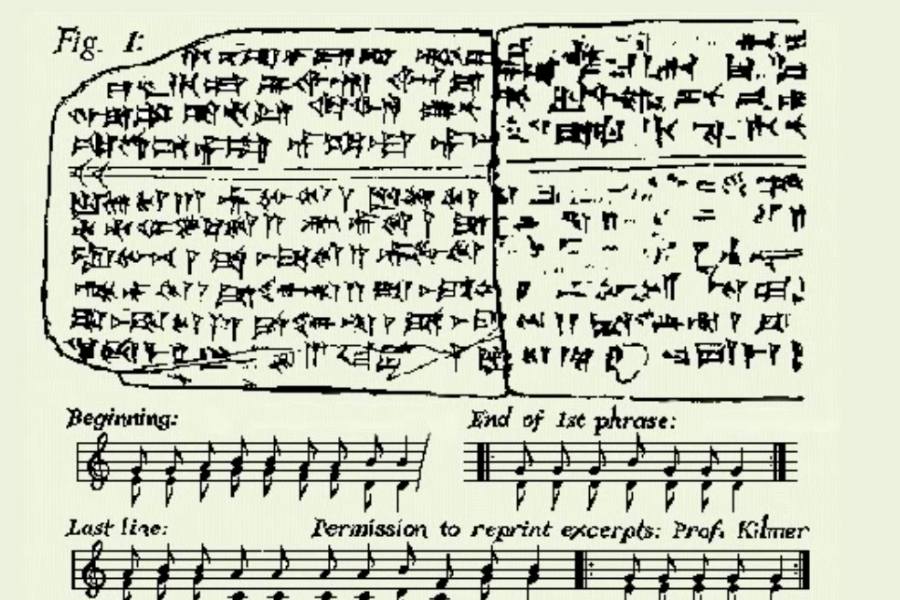
In the early 1950s, archaeologists unearthed several clay tablets from the 14th century BCE. Found, WFMU tells us, “in the ancient Syrian city of Ugarit,” these tablets “contained cuneiform signs in the hurrian language,” which turned out to be the oldest known piece of music ever discovered, a 3,400 year-old cult hymn. Anne Draffkorn Kilmer, professor of Assyriology at the University of California, produced the interpretation below in 1972. (She describes how she arrived at the musical notation—in some technical detail—in this interview.) Since her initial publications in the 60s on the ancient Sumerian tablets and the musical theory found within, other scholars of the ancient world have published their own versions.
The piece, writes Richard Fink in a 1988 Archeologia Musicalis article, confirms a theory that “the 7‑note diatonic scale as well as harmony existed 3,400 years ago.” This, Fink tells us, “flies in the face of most musicologists’ views that ancient harmony was virtually non-existent (or even impossible) and the scale only about as old as the Ancient Greeks.”
Kilmer’s colleague Richard Crocker claimed that the discovery “revolutionized the whole concept of the origin of western music.” So, academic debates aside, what does the oldest song in the world sound like? Listen to a midi version below and hear it for yourself. Doubtless, the midi keyboard was not the Sumerians instrument of choice, but it suffices to give us a sense of this strange composition, though the rhythm of the piece is only a guess.
Kilmer and Crocker published an audio book on vinyl (now on CD) called Sounds From Silence in which they narrate information about ancient Near Eastern music, and, in an accompanying booklet, present photographs and translations of the tablets from which the song above comes. They also give listeners an interpretation of the song, titled “A Hurrian Cult Song from Ancient Ugarit,” performed on a lyre, an instrument likely much closer to what the song’s first audiences heard. Unfortunately, for that version, you’ll have to make a purchase, but you can hear a different lyre interpretation of the song by Michael Levy below, as transcribed by its original discoverer Dr. Richard Dumbrill.
Note: An earlier version of this post appeared on our site in 2014. It’s old but gold. So we hope you enjoy revisiting it again.
If you would like to support the mission of Open Culture, consider making a donation to our site. It’s hard to rely 100% on ads, and your contributions will help us continue providing the best free cultural and educational materials to learners everywhere. You can contribute through PayPal, Patreon, and Venmo (@openculture). Thanks!
Related Content:
What Ancient Greek Music Sounded Like: Hear a Reconstruction That is ‘100% Accurate’
Hear The Epic of Gilgamesh Read in the Original Akkadian and Enjoy the Sounds of Mesopotamia
Behold the Fantastical, Uncannily Lifelike Puppets of Barnaby Dixon
Barnaby Dixon’s incredible two-piece creations redefine the notion of hand puppets, by moving and responding in highly nuanced, realistic ways.
The pinkie and index finger of one hand slip into the creature’s arms, leaving the thumb free to operate the tiny controls that tilt head and mouth movements.
The pinkie and index finger of one hand slip into the creature’s legs, an attribute few hand puppets can claim.
A waistline magnet joins the puppet’s top half to its bottom.
His goal is for viewers to “forget the mechanisms and forget the process that’s gone into making it so they can just enjoy the motions.”
Each character has a unique set of motions and a custom-designed plastic, silicone and metal assembly, informed by many hours of anatomical observation and study. Their structures speak to Dixon’s early years as a stop motion animator, as do his fabrication methods.
His frustration with the glacial pace of achieving the end product in that realm spurred him to experiment with puppets who could be filmed moving in real time.
His first puppet, Dab Chick, below, holds a special place in his heart, and is also one of his mouthiest.
Dab Chick’s tiny head cocks on spectacle hinges and a hand-wound spring wrapped in silicone. The mechanism that opens and closes his beak is a miniature spin on bicycle hand brakes.
While many of Dixon’s recent puppets thrive in a Day-Glo, synth-heavy environment, Dab Chick is a crowd-pleasing curmudgeon, spouting opinions and repartee. He even plays drunk… a hard assignment for any performer to pull off, but Dixon nails it.
Phil the fish is operated with two rods. He performs best in water, appropriately enough, highlighting his talent for blowing bubbles, as well as Dixon’s for using physics to his advantage.
Many puppeteers match their breathing to that of their puppet’s in an effort to get into the zone. Dixon takes it to the next level by streaming real time video of his mouth to a tiny screen embedded below the nose of the puppet he is operating.
In addition to creating and directing original work, he puppeteered the True History of Thra, The Dark Crystal: Age of Resistance’s play within a play and designed the origami-inspired, animal-shaped demon puppets for the Bridge Theatre production of Book of Dust – La Belle Sauvage.
The Guardian lauded the latter as “gorgeous,” a “marvel (that) seem like Jungian projections rather than airy, fantastical creatures.”
Watch more of Barnaby Dixon’s puppet videos here.
Related Content:
The Hand Puppets That Bauhaus Artist Paul Klee Made for His Young Son
– Ayun Halliday is the Chief Primatologist of the East Village Inky zine and author, most recently, of Creative, Not Famous: The Small Potato Manifesto and Creative, Not Famous Activity Book. Follow her @AyunHalliday.
Read More...An Architect Breaks Down the Design of New York City Subway Stations, from the Oldest to Newest
With 26 lines and 472 stations, the New York City subway system is practically a living organism, and way too big a topic to tackle in a short video.
Architect Michael Wyetzner may not have time to touch on rats, crime track fires, flooding, night and weekend service disruptions, or the adults-in-a-Peanuts-special sound quality of the announcements in the above episode of Architectural Digest’s Blueprints web series, but he gives an excellent overview of its evolving design, from the stations themselves to sidewalk entrances to the platform signage.
First stop, the old City Hall station, whose chandeliers, skylights, and Guastavino tile arching in an alternating colors herringbone pattern made it the star attraction of the just-opened system in 1904.
(It’s been closed since 1945, but savvy transit buffs know that they can catch a glimpse by ignoring the conductor’s announcement to exit the downtown 6 train at its last stop, then looking out the window as it makes a U‑turn, passing through the abandoned station to begin its trip back uptown. The New York Transit Museum also hosts popular thrice yearly tours.)
Express tracks have been a feature of New York’s subway system since the beginning, when Interborough Rapid Transit Company enhanced its existing elevated line with an underground route capable of carrying passengers from City Hall to Harlem for a nickel fare.
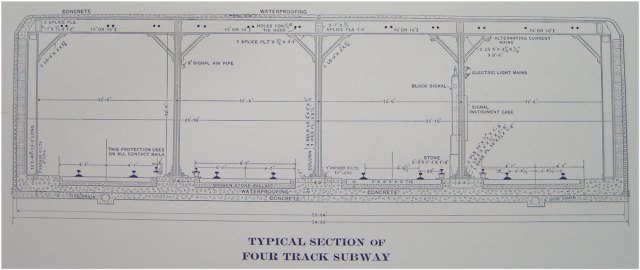
Wyetzner efficiently sketches the open excavation design of the early IRT stations — “cut and cover” trenches less than 20’ deep, with room for four tracks, platforms, and no frills support columns that are nearly as ubiquitous white subway tiles.
For the most part, New Yorkers take the subway for granted, and are always prepared to beef about the fare to service ration, but this was not the case on New Year’s Day, 2017, when riders went out of their way to take the Q train.
Following years of delays, aggravating construction noise and traffic congestion, everyone wanted to be among the first to inspect Phase 1 of the Second Avenue Subway project, which extended the line by three impressively modern, airy column-free stations.
(The massive drills used to create tunnels and stations at a far greater depth than the IRT line, were left where they wound up, in preparation for Phase 2, which is slated to push the line up to 125th St by 2029. (Don’t hold your breath…)
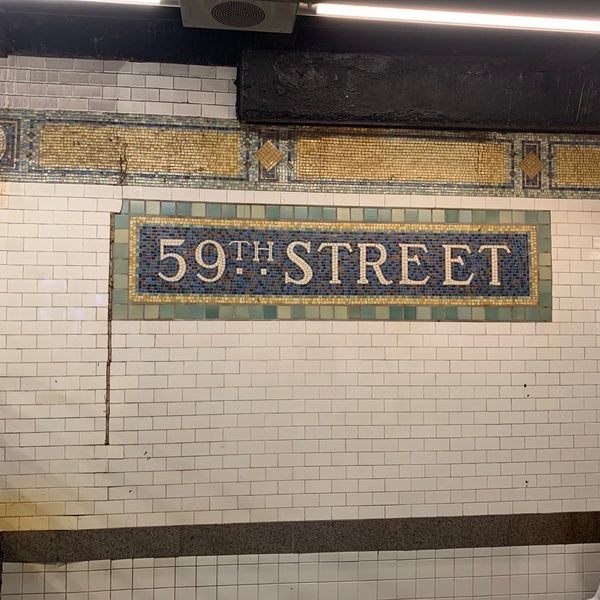
The designers of the subway placed a premium on aesthetics, as evidenced by the domed Art Nouveau IRT entrance kiosks and beautiful permanent platform signs.
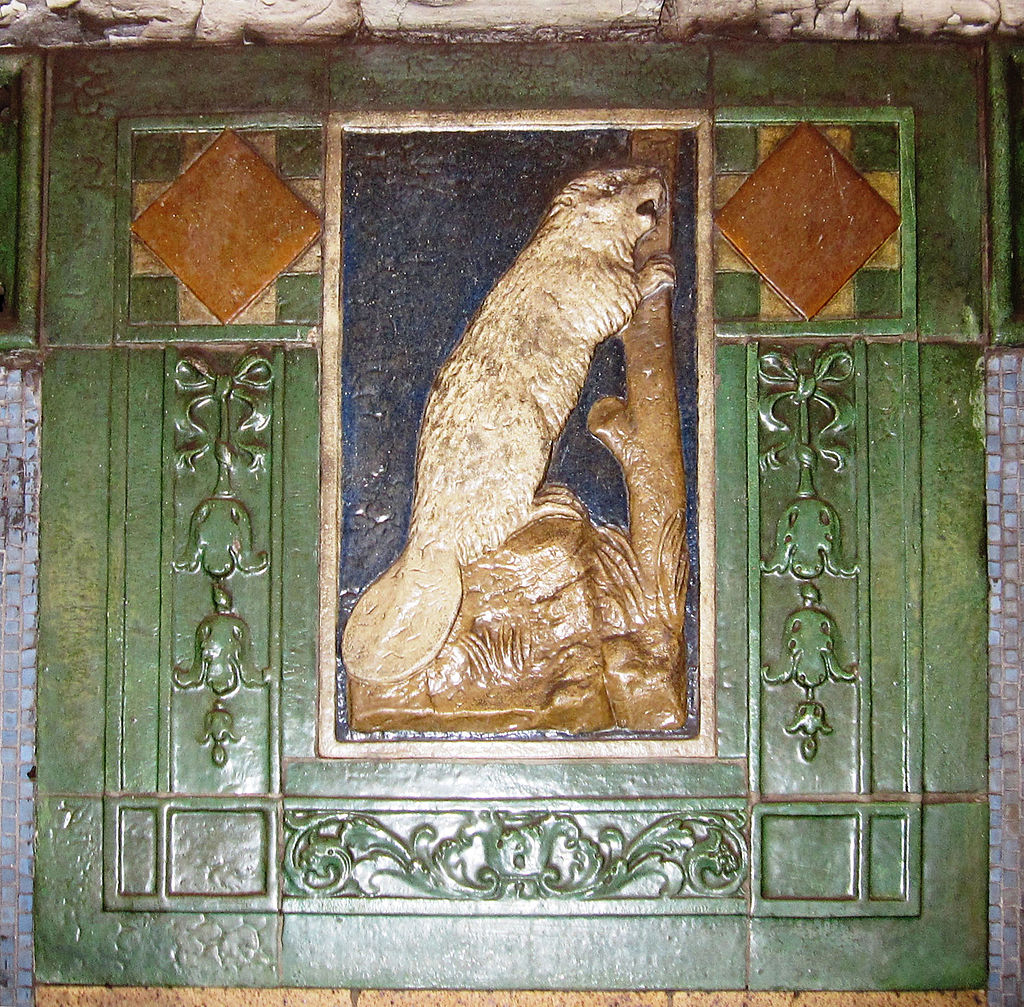
From the original mosaics to Beaux Arts bas relief plaques like the ones paying tribute to the fortune John Jacob Astor amassed in the fur trade, there’s lots of history hiding in plain sight.
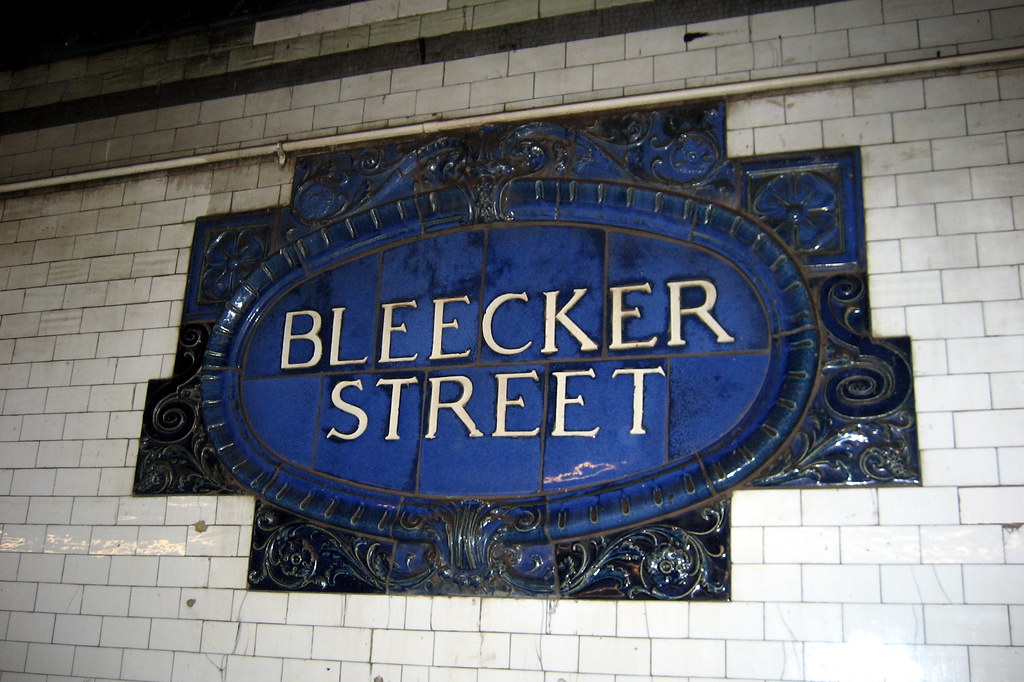
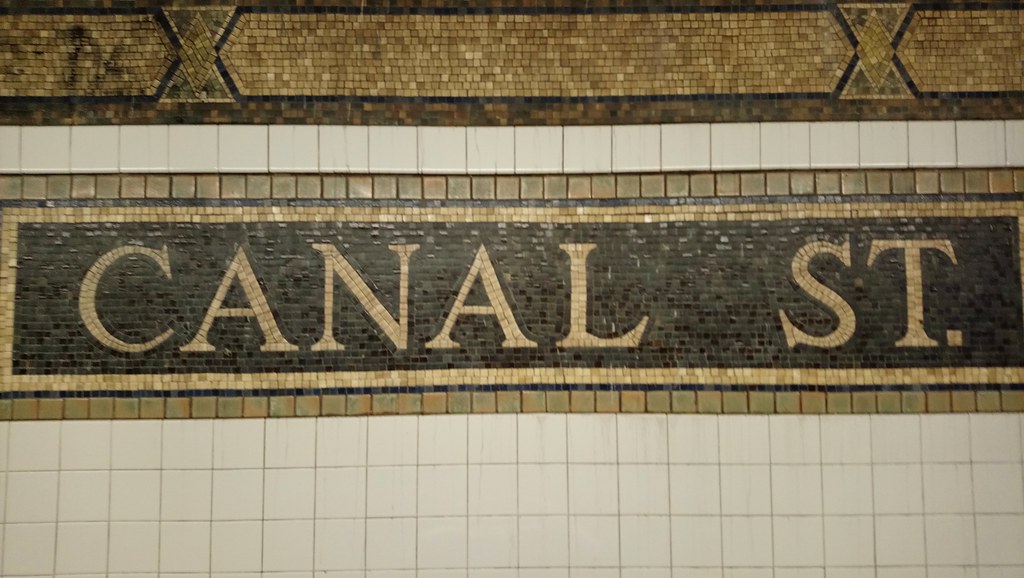
The mid-80s initiative to bring public art underground has filled stations and passageways with work by some marquee names, like Vik Muniz, Chuck Close, William Wegman, Nick Cave, Tom Otterness, Roy Lichtenstein and Yoko Ono.
Wyetzner also name checks graphic designer Massimo Vignelli who was brought aboard in 1966 to standardize the informational signage.
The white-on-black sans serif font directing us to our desired connections and exits now seems like part of the subway’s DNA.
Perhaps 21st-century innovations like countdown clocks and digital screens listing real-time service changes and alternative routes will too, one of these days.
If Wyetzner is open to filming the follow-up viewers are clamoring for in the comments, perhaps he’ll weigh in on the new A‑train cars that debuted last week, which boast security cameras, flip-up seating to accommodate riders with disabilities, and wider door openings to promote quicker boarding.
(Yes, they’re still the quickest way to get to Harlem…)
Related Content
A Subway Ride Through New York City: Watch Vintage Footage from 1905
Designer Massimo Vignelli Revisits and Defends His Iconic 1972 New York City Subway Map
– Ayun Halliday is the Chief Primatologist of the East Village Inky zine and author, most recently, of Creative, Not Famous: The Small Potato Manifesto and Creative, Not Famous Activity Book. Follow her @AyunHalliday.
Read More...John Cleese on How “Stupid People Have No Idea How Stupid They Are” (Otherwise Known as the Dunning-Kruger Effect)
Monty Python icon John Cleese had this to say about Marjorie Taylor Greene yesterday: “She is the perfect example of someone who is not intelligent enough to realise that she’s not very intelligent. Hence her enormous self-confidence. Sadly, her supporters are even less intelligent than she is. Hence their confidence in her.” It turns out that, as Cleese further explains in the video above, there’s a scientific term for MTG’s condition–the Dunning–Kruger effect, “a cognitive bias wherein unskilled individuals suffer from illusory superiority, mistakenly rating their ability much higher than is accurate” owing to “a metacognitive inability of the unskilled to recognize their ineptitude” (and, by the same token, of “highly skilled individuals to underestimate their relative competence, erroneously assuming that tasks which are easy for them are also easy for others”). This condition gets its name from Cornell University researchers Justin Kruger and David Dunning, the latter of whom Cleese–who has spent time at Cornell as a long-term visiting professor–counts as a friend. You can learn more about the Dunning–Kruger effect here.
Related Content
Free Online Psychology & Neuroscience Courses
Read More...Turning the Pages of an Illuminated Medieval Manuscript: An ASMR Museum Experience
Page turning is to ASMR as the electric bass is to rock.
The Victoria and Albert Museum’s popular Autonomous Sensory Meridian Response video series (find it here) has seen episodes devoted to iconic Second Wave feminist magazines and a couple of late 20th-century pop up artist’s books, but the parchment pages of this medieval antiphonary — or choirbook — make for some truly legendary sounds.
Audio designer and performance-maker Julie Rose Bower deserves a portion of the credit for heightening the aural experience for her use of the ambisonics format.
Kudos too to National Art Library Special Collections curator Catherine Yvard…if she ever wants a break from medieval manuscript illumination and Gothic ivory sculpture, she could specialize in extremely soothing voiceover narration.
It’s rare to find such pleasurably tingly ASMR sensations paired with allusions to the somewhat barbarous process of making parchment from animal skins, but that’s what illuminator Francesco dai Libri, and his son Girolamo were working with in 1492 Verona.
Our ears may not be able to detect much difference between the skin sides and flesh sides of these remarkably well preserved pages, but Bower does due diligence, as Yvard slowly drags her fingers across them.
No need to fear that Yvard’s bare hands could cause harm to this 530-year-old object.
Experts at the British Library have decreed that the modern practice of donning white gloves to handle antique manuscripts decreases manual dexterity, while heightening the possibility of transferred dirt or dislodged pigments.
The sturdy parchment of this particular antiphonary has seen far worse than the careful hands of a professional curator.
Pages 7, 8, 9 have been singed along the bottom margins, and elsewhere, the gothic hand lettering has been scraped away, presumably with a knife, in preparation for a liturgical update that never got entered.
If your brain is crying out for more after spending 15 and a half intimate minutes with these medieval pages, we leave you with the snap crackle and pop of other items in the V&A’s collection:
Treat your ears to Victoria and Albert’s full ASMR at the Museum playlist here.
– Ayun Halliday is the Chief Primatologist of the East Village Inky zine and author, most recently, of Creative, Not Famous: The Small Potato Manifesto and Creative, Not Famous Activity Book. Follow her @AyunHalliday.
Read More...How to Silence the Negative Chatter in Our Heads: Psychology Professor Ethan Kross Explains
A couple of weeks ago, the New York Times published an article headlined “How to Stop Ruminating.” If your social media feeds are anything like mine, you’ve seen it pop up with some frequency since then. “Perhaps you spend hours replaying a tense conversation you had with your boss over and over in your head,” writes its author Hannah Seo. “Maybe you can’t stop thinking about where things went wrong with an ex during the weeks and months after a breakup.” The piece’s popularity speaks to the commonness of these tendencies.
But if “your thoughts are so excessive and overwhelming that you can’t seem to stop them,” leading to distraction and disorganization at work and at home, “you’re probably experiencing rumination.” For this broader phenomenon University of Michigan psychology professor Ethan Kross has a more evocative name: chatter.
“Your inner voice is your ability to silently use language to reflect on your life,” he explains in the Big Think video above. “Chatter refers to the dark side of the inner voice. When we turn our attention inward to make sense of our problems, we don’t end up finding solutions. We end up ruminating, worrying, catastrophizing.”
Despite being an invaluable tool for planning, memory, and self-control, our inner voice also has a way of turning against us. “It makes it incredibly hard for us to focus,” Kross says, and it can also have “severe negative physical health effects” when it keeps us perpetually stressing out over long-passed events. “We experience a stressor in our life. It then ends, but in our minds, our chatter perpetuates it. We keep thinking about that event over and over again.” When you’re inside them, such mental loops can feel infinite, and they could result in perpetually dire consequences in our personal and professional lives. To those in need of a way to break free, Kross emphasizes the power of rituals.
“When you experience chatter, you often feel like your thoughts are in control of you,” he says. But “we can compensate for this feeling out of control by creating order around us. Rituals are one way to do that.” Performing certain actions exactly the same way every single time gives you “a sense of order and control that can feel really good when you’re mired in chatter.” Kross goes into greater depth on the range of chatter-controlling tools available to us (“distanced-self talk,” for example, which involves perceiving and addressing the self as if it were someone) in his book Chatter: The Voice in Our Head, Why It Matters, and How to Harness It. His interview with Chase Jarvis above offers a preview of its content — and a reminder that, as means of silencing chatter go, sometimes a podcast works as well as anything.
Related content:
Why You Do Your Best Thinking In The Shower: Creativity & the “Incubation Period”
Based in Seoul, Colin Marshall writes and broadcasts on cities, language, and culture. His projects include the Substack newsletter Books on Cities, the book The Stateless City: a Walk through 21st-Century Los Angeles and the video series The City in Cinema. Follow him on Twitter at @colinmarshall or on Facebook.
Read More...Watch Conservationists Moving & Restoring an Exquisite Ancient Greek Mosaic
Raise a glass to the city of Dion on the Eastern slopes of Mount Olympus, considered by the ancient Greeks a divine location, where Zeus held sway.
And while we’re at it, raise a glass to Zeus’ son, Dionysus the god of fertility and theater, and most famously, wine:
…hail to you, Dionysus, god of abundant clusters! Grant that we may come again rejoicing to this season, and from that season onwards for many a year. — The Homeric hymn to Dionysus
In the summer of 1987, archaeologists working at an excavation site near the modern village of Dion unearthed a mosaic of thousands of stone tessarae depictng “ivy-crowned Dionysus, the loud-crying god, splendid son of Zeus and glorious Semele,” raising a drinking horn as he rides nude in a chariot pulled by sea panthers.
1800 some years earlier, it had adorned the floor of a sumptuous villa’s banquet hall.
The villa was destroyed by fire, possibly as the result of an earthquake, but a layer of rich Dion mud preserved the mosaic in astonishing condition for nearly two millennia.
A roof was erected over the rediscovered mural, with a footbridge on the perimeter affording the public excellent views for over twenty years.
Exposure to the elements inevitably started taking a toll, with individual tiles melting into the earth and plants springing up in the cracks.
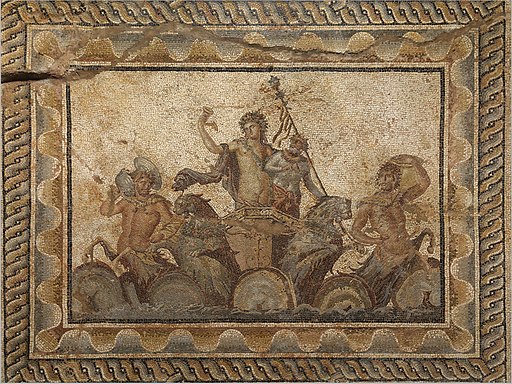
Using funds from the Onassis Foundation, the mosaic was rehabilitated and relocated to a specially designed, environmentally-secure building.
The Onassis Foundation’s narration-free video above provides a peek at the process, reducing what must, at times, have been a supremely nerve-wracking 2‑year endeavor to a pleasant seven-minute meditation, punctuated by birdsong and calm, coordinated group effort.
For those who prefer a more specific blow by blow, Rion Nakaya’s The Kid Should See This breaks down the conservation team’s efforts to divide the mural along a grid using drills, flat steel blades, and adhesive fabric, before sandwiching the sections between steel and wooden plates for transport to their new home.
(We found the moment when the protective fabric is steamed away to be a particularly harrowing thrill. )
Those who’d like to explore Dion’s treasures in depth might enjoy Onassis Foundation’s exhibition catalogue Gods and Mortals at Olympus: Ancient Dion, City of Zeus, edited by the late archeologist Dimitrios Pandermalis, below.
Related Content
What Ancient Greek Music Sounded Like: Hear a Reconstruction That is ‘100% Accurate’
Introduction to Ancient Greek History: A Free Online Course from Yale
Mythos: An Animation Retells Timeless Greek Myths with Abstract Modern Designs
- Ayun Halliday is the Chief Primatologist of the East Village Inky zine and author, most recently, of Creative, Not Famous: The Small Potato Manifesto and Creative, Not Famous Activity Book. Follow her @AyunHalliday.
Read More...How The Parthenon Marbles Ended Up In The British Museum
Last month, we delved into a proposal to use digital technology to clone the 2,500-year-old Parthenon Marbles currently housed in the British Museum.
The hope is that such uncanny facsimiles might finally convince museum Trustees and the British government to return the originals to Athens.
Today, we’ll take a closer look at just how these treasures of antiquity, known to many as the Elgin marbles, wound up so far afield.
The most obvious culprit is Thomas Bruce, the 7th Earl of Elgin, who initiated the takeover while serving as Britain’s ambassador to the Ottoman Empire from 1798–1803.
Prior to setting sail for this posting, he hatched a plan to assemble a documentary team who would sketch and create plaster molds of the Parthenon marbles for the eventual edification of artists and architects back home. Better yet, he’d get the British government to pay for it.
The British government, eying the massive price tag of such a proposal, passed.
So Elgin used some of his heiress wife’s fortune to finance the project himself, hiring landscape painter Giovanni Battista Lusieri — described by Lord Byron as “an Italian painter of the first eminence” — to oversee a team of draftsmen, sculptors, and architects.
As The Nerdwriter’s Evan Puschak notes above, political alliances and expansionist ambition greased Lord Elgin’s wheels, as the Ottoman Empire and Great Britain found common cause in their hatred of Napoleon.
British efforts to expel occupying French forces from Egypt generated good will sufficient to secure the requisite firman, a legal document without which Lusieri and the team would not have been given access to the Acropolis.
The original firman has never surfaced, and the accuracy of what survives — an English translation of an Italian translation — casts Elgin’s acquisition of the marbles in a very dubious light.
Some scholars and legal experts have asserted that the document in question is a mere administrative letter, since it apparently lacked the signature of Sultan Selim III, which would have given it the contractual heft of a firman.
In addition to giving the team entry to Acropolis grounds to sketch and make plaster casts, erect scaffolding and expose foundations by digging, the letter allowed for the removal of such sculptures or inscriptions as would not interfere with the work or walls of the Acropolis.
This implies that the team was to limit itself to windfall apples, the result of the heavy damage the Acropolis sustained during a 1687 mortar attack by Venetian forces.
Some of the dislodged marble had been harvested for building materials or souvenirs, but plenty of goodies remained on the ground for Elgin and company to cart off.
In an article for Smithsonian Magazine, Hellenist author Bruce Clark details how Elgin’s personal assistant, clergyman Philip Hunt, leveraged Britain’s support of the Ottoman Empire and anti-France position to blur these boundaries:
Seeing how highly the Ottomans valued their alliance with the British, Hunt spotted an opportunity for a further, decisive extension of the Acropolis project. With a nod from the sultan’s representative in Athens—who at the time would have been scared to deny a Briton anything—Hunt set about removing the sculptures that still adorned the upper reaches of the Parthenon. This went much further than anyone had imagined possible a few weeks earlier. On July 31, the first of the high-standing sculptures was hauled down, inaugurating a program of systematic stripping, with scores of locals working under Lusieri’s enthusiastic supervision.
Lusieri, whose admirer Lord Byron became a furious critic of Elgin’s removal of the Parthenon marbles, ended his days believing that his commitment to Lord Elgin ultimately cost him an illustrious career as a watercolorist.
He also conceded that the team had been “obliged to be a little barbarous”, a gross understatement when one considers their vandalism of the Parthenon during the ten years it took them to make off with half of its surviving treasures — 21 figures from East and West pediments, 15 metope panels, and 246 feet of what had been a continuous narrative frieze.
Clark notes that although Elgin succeeded in relocating them to British soil, he “derived little personal happiness from his antiquarian acquisitions.”
After numerous logistical headaches involved in their transport, he found himself begging the British government to take them off his hands when an acrimonious divorce landed him in financial straits.
This time the British government agreed, acquiring the lot for £35,000 — less than half of what Lord Elgin claimed to have shelled out for the operation.
The so-called Elgin Marbles became part of the British Museum’s collection in 1816, five years before the Greek War of Independence’s start.
They have been on continual display ever since.
The 21st-century has witnessed a number of world class museums rethinking the provenance of their most storied artifacts. In many cases, they have elected to return them to their land of origin.
Greece has long called for the Parthenon marbles in the British Museum to be permanently repatriated to Athens, but thusfar museum Trustees have refused.
In their opinion, it’s complicated.
Is it though? Lord Elgin’s ultimate motivations might have been, and Bruce Clark, in a brilliant ninja move, suggests that the return could be viewed as a positive stripping away, atonement by way of getting back to basics:
Suppose that among his mixture of motives—personal aggrandizement, rivalry with the French and so on—the welfare of the sculptures actually had been Elgin’s primary concern. How could that purpose best be served today? Perhaps by placing the Acropolis sculptures in a place where they would be extremely safe, extremely well conserved and superbly displayed for the enjoyment of all? The Acropolis Museum, which opened in 2009 at the foot of the Parthenon, is an ideal candidate; it was built with the goal of eventually housing all of the surviving elements of the Parthenon frieze…. If the earl really cared about the marbles, and if he were with us today, he would want to see them in Athens now.
Related Content
The Metropolitan Museum of Art Restores the Original Colors to Ancient Statues
John Oliver’s Show on World-Class Art Museums & Their Looted Art: Watch It Free Online
Take a Virtual Reality Tour of the World’s Stolen Art
- Ayun Halliday is the Chief Primatologist of the East Village Inky zine and author, most recently, of Creative, Not Famous: The Small Potato Manifesto and Creative, Not Famous Activity Book. Follow her @AyunHalliday.
Read More...Why We All Need Subtitles Now
We live in an age of subtitles. On some level this is a vindication of the cinephiles who spent so much of the twentieth century complaining about shoddy dubbing of foreign films and public unwillingness to “read movies.” Today we think nothing of reading not just movies but television shows as well, even those performed in our native language. For an increasing proportion of at-home viewers — including on-computer, on-tablet, and on-phone viewers — subtitles have come to feel like a necessity, even in the absence of any hearing difficulties. Vox’s Edward Vega investigates why this has happened in the video above.
The chief irony of the story is that the intelligibility of film and television dialogue seems to have degraded as a result of sound recording and editing technology having improved. Back in the early days of sound film, actors had practically to shout into bulky microphones concealed on-set or placed just off it. Today, a production can keep a couple of boom mics suspended overhead at all times, but also rig each actor up with a few hidden lavaliers. The upshot is that dialogue almost always gets recorded acceptably, but it removes the pressure on performers to deliver their lines with the clarity they would, say, on stage.
For better or for worse, this has encouraged a tendency toward unprecedentedly naturalistic dialogue, manifest though it often does as slurring and mumbling. At the same time, says dialogue editor Austin Olivia Kendrick, filmmakers have come to believe that “if you want your movie to feel ‘cinematic,’ you have to have wall-to-wall bombastic, loud sound.” Yet a soundtrack can be cranked up only so high, an explosion of the same loudness as a human voice won’t sound like an explosion at all: “you need that contrast in volume in order to give your ear a sense of scale.”
This need to preserve the sound mix’s “dynamic range” — just the opposite of the “loudness wars” in popular music — thus keeps dialogue on the quiet side. You can still hear it clear as day in a theater equipped with up-to-date surround-sound facilities, but much less so when it’s coming out of the tiny speakers crammed into the back of a flat-panel television, let alone the bottom of a cellphone. Turning the subtitles on and leaving them on has emerged as a common solution to this thoroughly modern problem. Another would be to invest in a proper high-end amplifier and speaker setup, which, if widely adopted, would certainly come as a vindication for all the frustrated audiophiles out there.
Related content:
Why Do People Talk Funny in Old Movies?, or The Origin of the Mid-Atlantic Accent
How the Sounds You Hear in Movies Are Really Made: Discover the Magic of “Foley Artists”
Based in Seoul, Colin Marshall writes and broadcasts on cities, language, and culture. His projects include the Substack newsletter Books on Cities, the book The Stateless City: a Walk through 21st-Century Los Angeles and the video series The City in Cinema. Follow him on Twitter at @colinmarshall or on Facebook.
Read More...An Immersive, Architectural Tour of New York City’s Iconic Grand Central Terminal
New Yorkers can be a maddeningly closed-mouth bunch, selfishly guarding our secret haunts lest they be overrun with newcomers and tourists…
But there’s not much we can do to deflect interest from Grand Central Teminal’s whispering gallery, a wildly popular acoustic anomaly in the tiled passageway just outside its famous Oyster Bar.
So we invite you to bring a friend, position yourselves in opposite corners, facing away from each other, and murmur your secrets to the wall.
Your friend will hear you as clearly as if you’d been whispering directly into their ear…and 9 times out of 10, a curious onlooker will approach to ask what exactly is going on.
Initiate them!
Sharing secrets of this order cultivates civic pride, a powerful force that Jacqueline Kennedy Onassis harnessed when developers threatened to obscure Grand Central’s beauty with a towering addition designed by Modernist architect Marcel Breuer.

Onassis wrote to Mayor Abraham Beame in 1975, hoping to enlist him in the fight to spare midtown Manhattan’s jewel from an affront that the Landmarks Preservation Commission called an “aesthetic joke:”
Is it not cruel to let our city die by degrees, stripped of all her proud moments, until there is nothing left of all her history and beauty to inspire our children? If they are not inspired by the past of our city, where will they find the strength to fight for her future?
The Supreme Court sealed the deal in Grand Central’s favor in Penn Central Transportation Co. vs. New York City, a (pardon the pun) landmark decision that ensured future generations could discover the Beaux-Arts treats historian Anthony Robins, author of Grand Central Terminal: 100 Years of a New York Landmark, divulges above.
Hopefully, you’ll be inspired to budget a few extra minutes to hunt for Caducei and Vanderbilt family acorns next time you’re grabbing a Metro-North commuter train.
(Amtrak’s long distance lines operate out of Penn Station…)
Spend some time in Grand Central’s iconic Main Concourse.
Gaze up toward the great arched windows to see if you can catch a tiny human figure behind the glass bricks, passing along one of the high up hidden catwalks connecting office buildings anchoring Grand Central’s corners.
Perhaps you’ll be privy to some intrigue near the famous four-sided clock, a time-honored rendez-vous spot that’s appeared in numerous films, including The Godfather, Men in Black, and North by Northwest.
Admire the upside down and backwards constellations adorning the vaulted ceiling, marveling that it not only took five men — architect Whitney Warren, artist Paul Helleu, muralist J. Monroe Hewlett, painter Charles Basing, and astronomer Harold Jacoby — to get it wrong, their celestial boo-boo has been embraced during subsequent renovations.
If your wallet’s as fat as a Park Avenue swell’s, head to the Campbell Apartment atop the West Staircase. Formerly the private office of Jazz Age financier, John W. Campbell, it’s now a glamorous venue for blowing $20 on a martini.
(Hot tip — that same $20 can fetch you sixteen Long Island Blue Points during Happy Hour at the Oyster Bar.)
As for the East Staircase, nearly 100 years younger than its seeming fraternal twin across the Concourse’s marble expanse, that one leads to an Apple Store.
Browse various options for Grand Central Terminal guided and self-guided tours here.
Related Content
Architect Breaks Down Five of the Most Iconic New York City Apartments
A Whirlwind Architectural Tour of the New York Public Library–“Hidden Details” and All
An Architect Demystifies the Art Deco Design of the Iconic Chrysler Building (1930)
- Ayun Halliday is the Chief Primatologist of the East Village Inky zine and author, most recently, of Creative, Not Famous: The Small Potato Manifesto and Creative, Not Famous Activity Book. Follow her @AyunHalliday.
Read More...Support Us
We're hoping to rely on loyal readers, rather than erratic ads. Please click the Donate button and support Open Culture. You can use Paypal, Venmo, Patreon, even Crypto! We thank you!

About Us

Open Culture scours the web for the best educational media. We find the free courses and audio books you need, the language lessons & educational videos you want, and plenty of enlightenment in between.
Advertise With Us

FREE UPDATES!
GET OUR DAILY EMAIL
Get the best cultural and educational resources on the web curated for you in a daily email. We never spam. Unsubscribe at any time.
FOLLOW ON SOCIAL MEDIA

Open Culture editor Dan Colman scours the web for the best educational media. He finds the free courses and audio books you need, the language lessons & movies you want, and plenty of enlightenment in between.
Advertise With Us

