DJ Cummerbund’s Astonishing Mashups Create Unexpected Collaborations Between Rock, Soul & Hip Hop Icons
“History in the making,” Jay‑Z calls out a few bars into Beyoncé’s debut solo single “Crazy in Love.”
The sentiment may be even more germane, when he does it in remix master DJ Cummerbund’s irresistible mashup “Crazy Together,” above.
The recent assemblage finds Queen Bey splitting screen time with The Beatles, as DJ Cummerbund weaves “Crazy in Love” together with “Come Together.”
The video is as much fun as the seamless audio, with a hammy cameo from Ringo Starr, courtesy of the 1981 comedy Caveman, and Yoko Ono and James Brown doing some heavy lifting.
John Lennon’s take as Brown fires up his Sex Machine is priceless. It really feels as if these unlikely collaborators were active, rather than passive contributors.
Here’s a peek into how DJ Cummerbund arranged the audio clips.
Asked in a 2020 interview with Digital Journal about the source of his inspiration, he responded:
I’m not sure if you can call it inspiration exactly, but I have a neurological condition that causes me to hear and feel melodies and frequencies where most cannot (in the wind, the soil, celestial bodies, etc.) This ultimately causes me to constantly hear songs on top of other songs to the point of extreme frustration and the only way to subdue that is to actually create what I’m hearing in my head. It’s almost therapeutic for me, and I was even told I could die if I don’t continue to create my works. It’s definitely like a curse sometimes but can also be a blessing as my music seems to bring a great deal of joy to millions of people.
An undersung element of these crowd pleasing remixes is how skillfully DJ Cummerbund ties things together by recording supplemental vocals and instrumentals.
Ozzy Osbourne fronts “Earth, Wind and Ozzys,” which marries his 1980 solo hit “Crazy Train” with Earth Wind & Fire’s evergreen “September” so successfully, it’s a let down to remember that a gorgeous, harmonized “I’m going off the rails on a crazy train” is an invented, not sampled disco chorus.
The combinations the DJ comes up with can’t help but force a fresh perspective on artists who would never in a million years have shared a stage or fanbase.
Step into a no man’s land where the rapid fire punk brattiness of the Ramones can coexist with the Hanson brothers’ lemon fresh, Tulsa wholesomeness, and Cotton Eye Joe comes in out of nowhere.
When a title like “Me and Coolio Down by the Schoolyard” pops into your head, it arrives as a self-thrown gauntlet. You can’t not see it through to fruition.
The late rapper’s “Fantastic Voyage” infuses Paul Simon’s gently nostalgic “Me And Julio Down By The School Yard” with some NSFW lyrics and a much harder outlook.
The lo-fi joys of double dutch and playground hoops from the original Julio video present a plausible vision of a “place where (Coolio’s) kids can play outside without livin’ in fear of a drive-by.”
This being a DJ Cummerbund production, baseball Hall of Famer, Mickey Mantle and football coach John Madden, who were on hand for Julio, have to make room for his ever present muse, the late wrestling superstar Randy “Macho Man” Savage.
DJ Cummerbund is willing to consider requests, particularly if you do a bit of homework to ensure that your chosen songs’ keys match up and their BPMs inhabit the same realm.
See more of his mash ups, including Shaxicula, the MTV Video Music Award-winning B‑52s/Britney Spears remix here.
In recent weeks, DJ Cummerbund has been opening for the B‑52s during their residency at the Venetian.
Related Content
50 Songs from a Single Year, Mixed Together Into One 3‑Minute Song (1979–89)
The History of Rock Told in a Whirlwind 15-Minute Video
– Ayun Halliday is the Chief Primatologist of the East Village Inky zine and author, most recently, of Creative, Not Famous: The Small Potato Manifesto and Creative, Not Famous Activity Book. Follow her @AyunHalliday.
Read More...Take Carl Jung’s Word Association Test, a Quick Route Into the Subconscious (1910)
We’ve all, at one time or another, been asked to say the first thing that pops into our heads in response to a certain word or phrase. It may have happened to us in school, in a market research group, or perhaps in a job interview at a company that regards itself as somewhat outside-the-box. Most such exercises, and the theories supporting their efficacy as a tool for revealing the speaker’s inner self, originate with the work of the Swiss psychiatrist-psychoanalyst and then-protégé of Sigmund Freud Carl Jung.
Jung published his description of this “association method” in the American Journal of Psychology in 1910, and you can see the story of its creation — animated in the usual Monty Python-esque paper-cutout style — told in the new School of Life video above. In his word-association test, says narrator Alain de Botton, “doctor and patient were to sit facing one another, and the doctor would read out a list of one hundred words. On hearing each of these, the patient was to say the first thing that came into their head.” The patient must “try never to delay speaking and that they strive to be extremely honest in reporting whatever they were thinking of, however embarrassing, strange, or random it might seem.”
Trial runs convinced Jung and his colleagues that “they had hit upon an extremely simple yet highly effective method for revealing parts of the mind that were normally relegated to the unconscious. Patients who in ordinary conversation would make no allusions to certain topics or concerns would, in a word association session, quickly let slip critical aspects of their true selves.” The idea is that, under pressure to respond as quickly and “unthinkingly” as possible, the patient would deliver up contents from the instinct-driven subconscious mind rather than the more deliberate conscious mind.
Jung used 100 words in particular to provoke these deep-seated reactions, the full list of which you can see below. While some of these words may sound fairly charged — angry, abuse, dead — most could hardly seem more ordinary, even innocuous: salt, window, head. “When the experiment is finished I first look over the general course of the reaction times,” Jung writes in the original paper. “Prolonged times” mean that “the patient can only adjust himself with difficulty, that his psychological functions proceed with marked internal frictions, with resistances.” He found, as de Botton puts it, that “it was precisely where there were the longest silences that the deepest conflicts and neuroses lay.” In Jung’s worldview, there were the quick, and there were the neurotic: a drastic simplification, to be sure, but as he showed us, sometimes the simplest language goes straight to the heart of the matter.
Related content:
Carl Jung Offers an Introduction to His Psychological Thought in a 3‑Hour Interview (1957)
How Carl Jung Inspired the Creation of Alcoholics Anonymous
Carl Jung Explains His Groundbreaking Theories About Psychology in a Rare Interview (1957)
The Visionary Mystical Art of Carl Jung: See Illustrated Pages from The Red Book
Face to Face with Carl Jung: ‘Man Cannot Stand a Meaningless Life’ (1959)
Based in Seoul, Colin Marshall writes and broadcasts on cities, language, and culture. His projects include the Substack newsletter Books on Cities, the book The Stateless City: a Walk through 21st-Century Los Angeles and the video series The City in Cinema. Follow him on Twitter at @colinmarshall or on Facebook.
Read More...Take Virtual Tours of Every Star Trek Enterprise Bridge: A New Interactive Web Portal Created by The Roddenberry Archive
It’s a rare young Star Trek fan indeed who doesn’t fantasize about sitting on the bridge of the starship Enterprise. That has gone for every generation of fan, every Star Trek series, and every Enterprise, whose bridges you can see in the new video above from the Roddenberry Archive. It begins, naturally, with the original Star Trek, the show with which creator Gene Roddenberry started it all — and for which art director Matt Jefferies designed a bridge that would become a model not just for all subsequent Enterprises, but real-life command centers as well. As the narrator says, “Jefferies’ bridge made such an impression that engineers from NASA, the U.S. Navy, and private industry have studied it as a model for an advanced, efficient control room.”
That narrator happens to be John de Lancie, whom viewers of Star Trek: The Next Generation and subsequent series will know as the all-powerful extra-dimensional being Q. He’s not the only familiar performer to participate in this retrospective project: in the video above appears a certain William Shatner, who as James Tiberius Kirk occupied the captain’s chair of the very first Enterprise.
Even those who prefer the later, more complex Star Treks have surely wondered what that position would feel like, and now they can get a virtual sense of it at the Roddenbery Archive’s web site, which is now offering virtual tours of the bridge of every series’ central ship.

“The site features 360-degree, 3D models of the various versions of the Enterprise, as well as a timeline of the ship’s evolution throughout the franchise’s history,” writes Smithsonian.com’s Sarah Kuta. “Fans of the show can also read detailed information about each version of the ship’s design, its significance to the Star Trek storyline and its production backstory.” All this comes online to mark the end of Star Trek: Picard, the recent series built around Patrick Stewart’s Enterprise captain from The Next Generation, whose final episode went up last month on the streaming service Paramount+. For that grand finale, production designer Dave Blass “recreated the bridge of the Enterprise D,” and “Picard’s triumphant return to his beloved ship brought nostalgic tears to the eyes of more than a few fans,” no doubt regardless of generation. Take the virtual tours here.
via Smithsonian
Related content:
Watch Star Trek: New Voyages: The Original Fan-Made Sequel to the 1960s TV Series
How Isaac Asimov Went from Star Trek Critic to Star Trek Fan & Advisor
William Shatner Narrates Space Shuttle Documentary
The Encyclopedia of Science Fiction: 17,500 Entries on All Things Sci-Fi Are Now Free Online
Star Trek: World-Building Over Generations — Pretty Much Pop: A Culture Podcast #42
Based in Seoul, Colin Marshall writes and broadcasts on cities, language, and culture. His projects include the Substack newsletter Books on Cities, the book The Stateless City: a Walk through 21st-Century Los Angeles and the video series The City in Cinema. Follow him on Twitter at @colinmarshall or on Facebook.
Read More...The Amazing Engineering of Gauntlets (Armored Gloves) from the 16th Century
The phrase “to throw down the gauntlet” means to issue a challenge, and this is understood all over the English-speaking world — even by those who have no idea what, exactly, a gauntlet is. “The word itself comes from the French word gantelet, and referred to the heavy, armored gloves worn by medieval knights,” writes History.com’s Elizabeth Harrison. “In an age when chivalry and personal honor were paramount, throwing a gauntlet at the feet of an enemy or opponent was considered a grave insult that could only be answered with personal combat, and the offended party was expected to ‘take up the gauntlet’ to acknowledge and accept the challenge.”
How many of us, here in the twenty-first century, have ever literally taken up a gauntlet? Adam Savage never has, which may come as a surprise to fans of the former MythBusters co-host and enthusiast of combat technologies past, present, and future.
Or at least he hadn’t until making the new video above, which finds him in the Metropolitan Museum of Art’s Arms and Armor conservation lab. There, armorer Ted Hunter has opened up the museum’s “gauntlet drawer” and laid out an array of genuine examples for Savage to take up, all of them made in Germany or Italy in the sixteenth century.
Each of these gauntlets was made in a different style, with details like a fine-meshed chain mail underside (to make it easier to keep a grip on your sword) or even a locking spring catch (to make it impossible to let go of your sword at all). Savage marvels at these features, but also the visibly painstaking craftsmanship that went into every aspect of these gauntlets’ construction, which he has more than enough experience to understand. His enthusiasm and knowledge are evidenced by the wealth of armor-related videos on his Youtube channel, including a series about building his own full suit of armor, a challenge that it was inevitable he would set himself against — a gauntlet, in other words, he both threw down and took up.
Related content:
How to Make and Wear Medieval Armor: An In-Depth Primer
How Well Can You Move in Medieval Armor?: Medievalist Daniel Jaquet Gives It a Try in Real Life
How to Get Dressed & Fight in 14th Century Armor: A Reenactment
What It’s Like to Actually Fight in Medieval Armor
What’s It Like to Fight in 15th Century Armor?: A Surprising Demonstration
Watch Adam Savage Build Barbarella’s Space Rifle in One Day
Based in Seoul, Colin Marshall writes and broadcasts on cities, language, and culture. His projects include the Substack newsletter Books on Cities, the book The Stateless City: a Walk through 21st-Century Los Angeles and the video series The City in Cinema. Follow him on Twitter at @colinmarshall or on Facebook.
Read More...The Pioneering Data Visualizations of William Playfair, Who Invented the Line, Bar, and Pie Charts (Circa 1786)
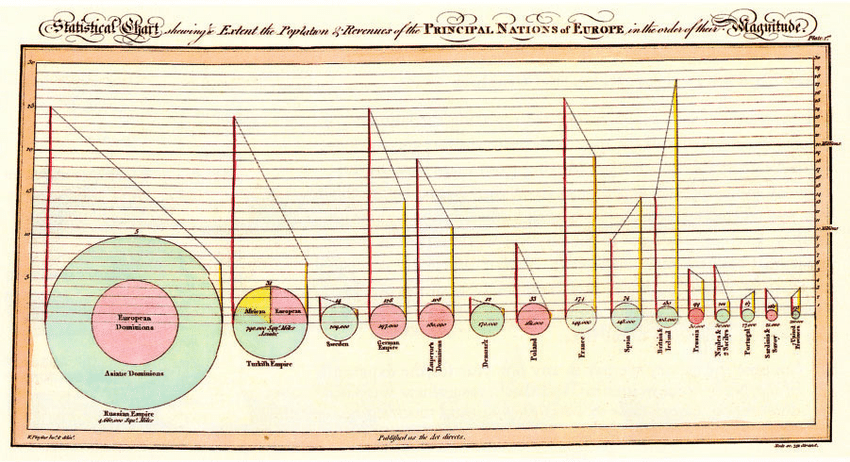
“If you see a pie chart projected twelve feet high in front of you, you know you’re in the hands of an idiot.” These words have stuck with me since I heard them spoken by Edward Tufte, one of the most respected living authorities on data visualization. The latter-day sins of pie-chart-makers (especially those who make them in PowerPoint) are many and varied, but the original sin of the pie chart itself is that of fundamentally misrepresenting one-dimensional information — a company budget, a city’s population demographics — in two-dimensional form.
Yet the pie chart was created by a master, indeed the first master, of information design, the late-eighteenth- and early-nineteenth-century Scottish economist William Playfair. Tufte includes Playfair’s first pie chart, an illustration of the land holdings of various nations and empires circa 1800, in his book The Visual Display of Quantitative Information.
“The circle represents the area of each country,” Tufte explains. “The line on the left, the population in millions read on the vertical scales; the line on the right, the revenue (taxes) collected in millions of pounds sterling read also on the vertical scale.” The dotted lines between them show, in Playfair’s words, whether “the country is burdened with heavy taxes or otherwise” in proportion to its population.
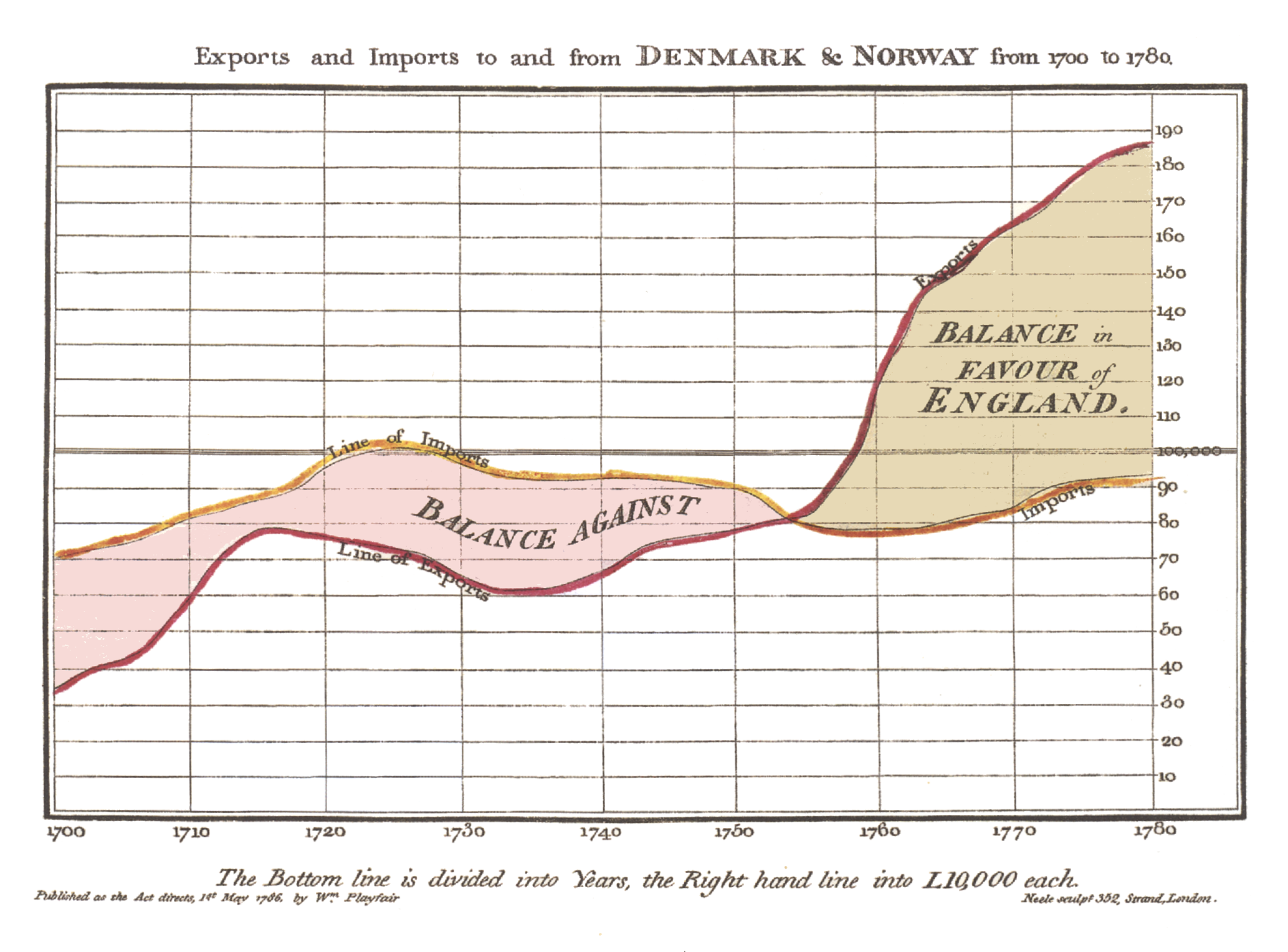
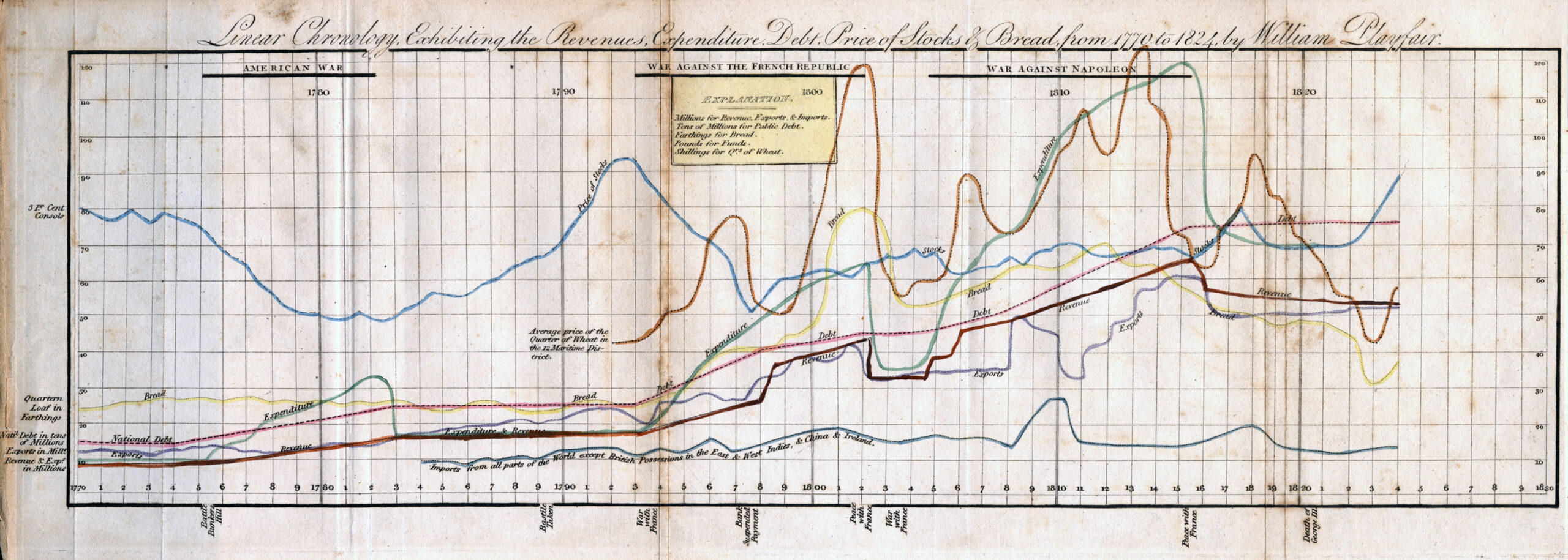
Playfair was experimenting with data visualization long before his invention of the pie chart. He also came up with the more truthful bar chart, history’s first example of which appeared in his Commercial and Political Atlas of 1786. That same book also contains the striking graph above, of England’s “exports and imports to and from Denmark and Norway from 1700 to 1780,” whose lines create fields that make the balance of trade legible at a glance. A much later example of the line graph, another form Playfair is credited with inventing, appears just below, “exhibiting the revenues, expenditure, debt, price of stocks and bread from 1770 to 1824,” a period spanning the American and French Revolutions as well as the Napoleonic Wars.
It’s safe to say that Playfair lived in interesting times, and even within that context lived an unusually interesting life. During Great Britain’s wars with France, he served his country as a secret agent, even coming up with a plan to counterfeit assignats, a French currency at the time, in order to destabilize the enemy’s economy. “Their assignats are their money,” he wrote in 1793, “and it is better to destroy this paper founded upon an iniquitous extortion and a villainous deception than to shed the blood of men.” Two years after the plan went into effect, the assignat was worthless and France’s ship of state had more or less run aground. Playfair’s measures may seem extreme, but then, you don’t win a war with pie charts.
Related content:
The Art of Data Visualization: How to Tell Complex Stories Through Smart Design
Based in Seoul, Colin Marshall writes and broadcasts on cities, language, and culture. His projects include the Substack newsletter Books on Cities, the book The Stateless City: a Walk through 21st-Century Los Angeles and the video series The City in Cinema. Follow him on Twitter at @colinmarshall or on Facebook.
Read More...Watch Cab Calloway Actually Perform “Mr. Hepster’s Dictionary,” His Famous Dictionary of Jazz Slang (1944)
Who’s up for a good dictionary on film?
Colin Browning, assistant editor of The Bluff, a Loyola Marymount University student newspaper, has some kopasetic casting suggestions for a hypothetical feature adaptation of the “Merriam-Webster classic.”
He’s just muggin’, of course. Still, he seems like a young man who’s got his boots on.
Dig?
…no?
In that case, you’d best acquaint yourself with the only cinematic dictionary adaptation we’re aware of, the Mr. Hepcat’s Dictionary number from Sensations of 1945, above.
Musical team Al Sherman & Harry Tobias drew directly from Cab Calloway’s Cat-ologue: a Hepster’s Dictionary, a lexicon of Harlem jazz musicians’ slang originally published in 1938 ’ when choosing terms for Calloway to define for a young protégée, eager to be schooled in “the lingo all the jitterbugs use today.”
In between, Calloway, lays some iron in white tie and tails.
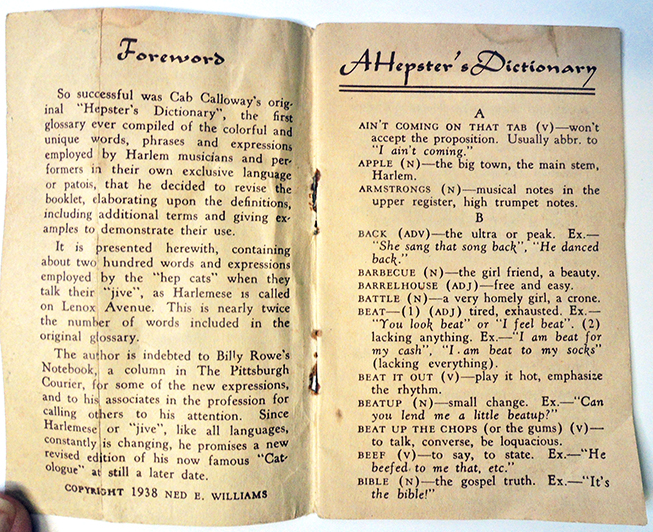
By the time the film came out, Calloway’s Hepster Dictionary was in its seventh edition, and had earned its place as the official jive language reference book of the New York Public Library.
As Calloway wrote in the foreword to the sixth edition:
“Jive talk” is now an everyday part of the English language. Its usage is now accepted in the movies, on the stage, and in the song products of Tin Pan Alley. It is reasonable to assume that jive will find new avenues in such hitherto remote places as Australia, the South Pacific, North Africa, China, Italy, France, Sicily, and inevitably Germany and wherever our Armed Forces may serve.
I don’t want to lend the impression here that the many words contained in this edition are the figments of my imagination. They were gathered from every conceivable source. Many first saw the light of printer’s ink in Billy Rowe’s widely read column “The Notebook,” in the Pittsburgh Courier.
And now to enrich our vocabularies…
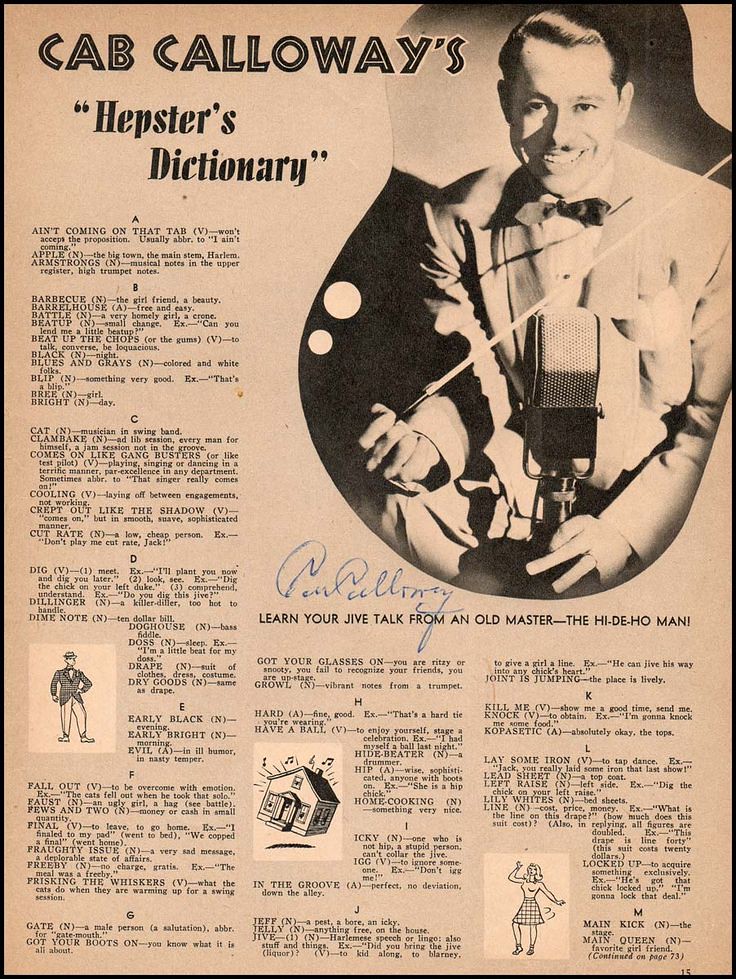
HEPSTER’S DICTIONARY
A
- A hummer (n.): exceptionally good. Ex., “Man, that boy is a hummer.”
- Ain’t coming on that tab (v.): won’t accept the proposition. Usually abbr. to “I ain’t coming.”
- Alligator (n.): jitterbug.
- Apple (n.): the big town, the main stem, Harlem.
- Armstrongs (n.): musical notes in the upper register, high trumpet notes.
B
- Barbecue (n.): the girl friend, a beauty.
- Barrelhouse (adj.): free and easy.
- Battle (n.): a very homely girl, a crone.
- Beat (adj.): (1) tired, exhausted. Ex., “You look beat” or “I feel beat.” (2) lacking anything. Ex, “I am beat for my cash”, “I am beat to my socks” (lacking everything).
- Beat it out (v.): play it hot, emphasize the rhythm.
- Beat up (adj.): sad, uncomplimentary, tired.
- Beat up the chops (or the gums) (v.): to talk, converse, be loquacious.
- Beef (v.): to say, to state. Ex., “He beefed to me that, etc.”
- Bible (n.): the gospel truth. Ex., “It’s the bible!”
- Black (n.): night.
- Black and tan (n.): dark and light colored folks. Not colored and white folks as erroneously assumed.
- Blew their wigs (adj.): excited with enthusiasm, gone crazy.
- Blip (n.): something very good. Ex., “That’s a blip”; “She’s a blip.”
- Blow the top (v.): to be overcome with emotion (delight). Ex., “You’ll blow your top when you hear this one.”
- Boogie-woogie (n.): harmony with accented bass.
- Boot (v.): to give. Ex., “Boot me that glove.”
- Break it up (v.): to win applause, to stop the show.
- Bree (n.): girl.
- Bright (n.): day.
- Brightnin’ (n.): daybreak.
- Bring down ((1) n. (2) v.): (1) something depressing. Ex., “That’s a bring down.” (2) Ex., “That brings me down.”
- Buddy ghee (n.): fellow.
- Bust your conk (v.): apply yourself diligently, break your neck.
C
- Canary (n.): girl vocalist.
- Capped (v.): outdone, surpassed.
- Cat (n.): musician in swing band.
- Chick (n.): girl.
- Chime (n.): hour. Ex., “I got in at six chimes.”
- Clambake (n.): ad lib session, every man for himself, a jam session not in the groove.
- Chirp (n.): female singer.
- Cogs (n.): sun glasses.
- Collar (v.): to get, to obtain, to comprehend. Ex., “I gotta collar me some food”; “Do you collar this jive?”
- Come again (v.): try it over, do better than you are doing, I don’t understand you.
- Comes on like gangbusters (or like test pilot) (v.): plays, sings, or dances in a terrific manner, par excellence in any department. Sometimes abbr. to “That singer really comes on!”
- Cop (v.): to get, to obtain (see collar; knock).
- Corny (adj.): old-fashioned, stale.
- Creeps out like the shadow (v.): “comes on,” but in smooth, suave, sophisticated manner.
- Crumb crushers (n.): teeth.
- Cubby (n.): room, flat, home.
- Cups (n.): sleep. Ex., “I gotta catch some cups.”
- Cut out (v.): to leave, to depart. Ex., “It’s time to cut out”; “I cut out from the joint in early bright.”
- Cut rate (n.): a low, cheap person. Ex., “Don’t play me cut rate, Jack!”
D
- Dicty (adj.): high-class, nifty, smart.
- Dig (v.): (1) meet. Ex., “I’ll plant you now and dig you later.” (2) look, see. Ex., “Dig the chick on your left duke.” (3) comprehend, understand. Ex., “Do you dig this jive?”
- Dim (n.): evening.
- Dime note (n.): ten-dollar bill.
- Doghouse (n.): bass fiddle.
- Domi (n.): ordinary place to live in. Ex., “I live in a righteous domi.”
- Doss (n.): sleep. Ex., “I’m a little beat for my doss.”
- Down with it (adj.): through with it.
- Drape (n.): suit of clothes, dress, costume.
- Dreamers (n.): bed covers, blankets.
- Dry-goods (n.): same as drape.
- Duke (n.): hand, mitt.
- Dutchess (n.): girl.
E
- Early black (n.): evening
- Early bright (n.): morning.
- Evil (adj.): in ill humor, in a nasty temper.
F
- Fall out (v.): to be overcome with emotion. Ex., “The cats fell out when he took that solo.”
- Fews and two (n.): money or cash in small quantity.
- Final (v.): to leave, to go home. Ex., “I finaled to my pad” (went to bed); “We copped a final” (went home).
- Fine dinner (n.): a good-looking girl.
- Focus (v.): to look, to see.
- Foxy (v.): shrewd.
- Frame (n.): the body.
- Fraughty issue (n.): a very sad message, a deplorable state of affairs.
- Freeby (n.): no charge, gratis. Ex., “The meal was a freeby.”
- Frisking the whiskers (v.): what the cats do when they are warming up for a swing session.
- Frolic pad (n.): place of entertainment, theater, nightclub.
- Fromby (adj.): a frompy queen is a battle or faust.
- Front (n.): a suit of clothes.
- Fruiting (v.): fickle, fooling around with no particular object.
- Fry (v.): to go to get hair straightened.
G
- Gabriels (n.): trumpet players.
- Gammin’ (adj.): showing off, flirtatious.
- Gasser (n, adj.): sensational. Ex., “When it comes to dancing, she’s a gasser.”
- Gate (n.): a male person (a salutation), abbr. for “gate-mouth.”
- Get in there (exclamation.): go to work, get busy, make it hot, give all you’ve got.
- Gimme some skin (v.): shake hands.
- Glims (n.): the eyes.
- Got your boots on: you know what it is all about, you are a hep cat, you are wise.
- Got your glasses on: you are ritzy or snooty, you fail to recognize your friends, you are up-stage.
- Gravy (n.): profits.
- Grease (v.): to eat.
- Groovy (adj.): fine. Ex., “I feel groovy.”
- Ground grippers (n.): new shoes.
- Growl (n.): vibrant notes from a trumpet.
- Gut-bucket (adj.): low-down music.
- Guzzlin’ foam (v.): drinking beer.
H
- Hard (adj.): fine, good. Ex., “That’s a hard tie you’re wearing.”
- Hard spiel (n.): interesting line of talk.
- Have a ball (v.): to enjoy yourself, stage a celebration. Ex., “I had myself a ball last night.”
- Hep cat (n.): a guy who knows all the answers, understands jive.
- Hide-beater (n.): a drummer (see skin-beater).
- Hincty (adj.): conceited, snooty.
- Hip (adj.): wise, sophisticated, anyone with boots on. Ex., “She’s a hip chick.”
- Home-cooking (n.): something very dinner (see fine dinner).
- Hot (adj.): musically torrid; before swing, tunes were hot or bands were hot.
- Hype (n, v.): build up for a loan, wooing a girl, persuasive talk.
I
- Icky (n.): one who is not hip, a stupid person, can’t collar the jive.
- Igg (v.): to ignore someone. Ex., “Don’t igg me!)
- In the groove (adj.): perfect, no deviation, down the alley.
J
- Jack (n.): name for all male friends (see gate; pops).
- Jam ((1)n, (2)v.): (1) improvised swing music. Ex., “That’s swell jam.” (2) to play such music. Ex., “That cat surely can jam.”
- Jeff (n.): a pest, a bore, an icky.
- Jelly (n.): anything free, on the house.
- Jitterbug (n.): a swing fan.
- Jive (n.): Harlemese speech.
- Joint is jumping: the place is lively, the club is leaping with fun.
- Jumped in port (v.): arrived in town.
K
- Kick (n.): a pocket. Ex., “I’ve got five bucks in my kick.”
- Kill me (v.): show me a good time, send me.
- Killer-diller (n.): a great thrill.
- Knock (v.): give. Ex., “Knock me a kiss.”
- Kopasetic (adj.): absolutely okay, the tops.
L
- Lamp (v.): to see, to look at.
- Land o’darkness (n.): Harlem.
- Lane (n.): a male, usually a nonprofessional.
- Latch on (v.): grab, take hold, get wise to.
- Lay some iron (v.): to tap dance. Ex., “Jack, you really laid some iron that last show!”
- Lay your racket (v.): to jive, to sell an idea, to promote a proposition.
- Lead sheet (n.): a topcoat.
- Left raise (n.): left side. Ex., “Dig the chick on your left raise.”
- Licking the chops (v.): see frisking the whiskers.
- Licks (n.): hot musical phrases.
- Lily whites (n.): bed sheets.
- Line (n.): cost, price, money. Ex., “What is the line on this drape” (how much does this suit cost)? “Have you got the line in the mouse” (do you have the cash in your pocket)? Also, in replying, all figures are doubled. Ex., “This drape is line forty” (this suit costs twenty dollars).
- Lock up: to acquire something exclusively. Ex., “He’s got that chick locked up”; “I’m gonna lock up that deal.”
M
- Main kick (n.): the stage.
- Main on the hitch (n.): husband.
- Main queen (n.): favorite girl friend, sweetheart.
- Man in gray (n.): the postman.
- Mash me a fin (command.): Give me $5.
- Mellow (adj.): all right, fine. Ex., “That’s mellow, Jack.”
- Melted out (adj.): broke.
- Mess (n.): something good. Ex., “That last drink was a mess.”
- Meter (n.): quarter, twenty-five cents.
- Mezz (n.): anything supreme, genuine. Ex., “this is really the mezz.”
- Mitt pounding (n.): applause.
- Moo juice (n.): milk.
- Mouse (n.): pocket. Ex., “I’ve got a meter in the mouse.”
- Muggin’ (v.): making ’em laugh, putting on the jive. “Muggin’ lightly,” light staccato swing; “muggin’ heavy,” heavy staccato swing.
- Murder (n.): something excellent or terrific. Ex., “That’s solid murder, gate!”
N
- Neigho, pops: Nothing doing, pal.
- Nicklette (n.): automatic phonograph, music box.
- Nickel note (n.): five-dollar bill.
- Nix out (v.): to eliminate, get rid of. Ex., “I nixed that chick out last week”; “I nixed my garments” (undressed).
- Nod (n.): sleep. Ex., “I think I’l cop a nod.”
O
- Ofay (n.): white person.
- Off the cob (adj.): corny, out of date.
- Off-time jive (n.): a sorry excuse, saying the wrong thing.
- Orchestration (n.): an overcoat.
- Out of the world (adj.): perfect rendition. Ex., “That sax chorus was out of the world.”
- Ow!: an exclamation with varied meaning. When a beautiful chick passes by, it’s “Ow!”; and when someone pulls an awful pun, it’s also “Ow!”
P
- Pad (n.): bed.
- Pecking (n.): a dance introduced at the Cotton Club in 1937.
- Peola (n.): a light person, almost white.
- Pigeon (n.): a young girl.
- Pops (n.): salutation for all males (see gate; Jack).
- Pounders (n.): policemen.
Q
- Queen (n.): a beautiful girl.
R
- Rank (v.): to lower.
- Ready (adj.): 100 per cent in every way. Ex., “That fried chicken was ready.”
- Ride (v.): to swing, to keep perfect tempo in playing or singing.
- Riff (n.): hot lick, musical phrase.
- Righteous (adj.): splendid, okay. Ex., “That was a righteous queen I dug you with last black.”
- Rock me (v.): send me, kill me, move me with rhythm.
- Ruff (n.): quarter, twenty-five cents.
- Rug cutter (n.): a very good dancer, an active jitterbug.
S
- Sad (adj.): very bad. Ex., “That was the saddest meal I ever collared.”
- Sadder than a map (adj.): terrible. Ex., “That man is sadder than a map.”
- Salty (adj.): angry, ill-tempered.
- Sam got you: you’ve been drafted into the army.
- Send (v.): to arouse the emotions. (joyful). Ex., “That sends me!”
- Set of seven brights (n.): one week.
- Sharp (adj.): neat, smart, tricky. Ex., “That hat is sharp as a tack.”
- Signify (v.): to declare yourself, to brag, to boast.
- Skins (n.): drums.
- Skin-beater (n.): drummer (see hide-beater).
- Sky piece (n.): hat.
- Slave (v.): to work, whether arduous labor or not.
- Slide your jib (v.): to talk freely.
- Snatcher (n.): detective.
- So help me: it’s the truth, that’s a fact.
- Solid (adj.): great, swell, okay.
- Sounded off (v.): began a program or conversation.
- Spoutin’ (v.): talking too much.
- Square (n.): an unhep person (see icky; Jeff).
- Stache (v.): to file, to hide away, to secrete.
- Stand one up (v.): to play one cheap, to assume one is a cut-rate.
- To be stashed (v.): to stand or remain.
- Susie‑Q (n.): a dance introduced at the Cotton Club in 1936.
T
- Take it slow (v.): be careful.
- Take off (v.): play a solo.
- The man (n.): the law.
- Threads (n.): suit, dress or costume (see drape; dry-goods).
- Tick (n.): minute, moment. Ex., “I’ll dig you in a few ticks.” Also, ticks are doubled in accounting time, just as money is doubled in giving “line.” Ex., “I finaled to the pad this early bright at tick twenty” (I got to bed this morning at ten o’clock).
- Timber (n.): toothpick.
- To dribble (v.): to stutter. Ex., “He talked in dribbles.”
- Togged to the bricks: dressed to kill, from head to toe.
- Too much (adj.): term of highest praise. Ex., “You are too much!”
- Trickeration (n.): struttin’ your stuff, muggin’ lightly and politely.
- Trilly (v.): to leave, to depart. Ex., “Well, I guess I’ll trilly.”
- Truck (v.): to go somewhere. Ex., “I think I’ll truck on down to the ginmill (bar).”
- Trucking (n.): a dance introduced at the Cotton Club in 1933.
- Twister to the slammer (n.): the key to the door.
- Two cents (n.): two dollars.
U
- Unhep (adj.): not wise to the jive, said of an icky, a Jeff, a square.
V
- Vine (n.): a suit of clothes.
- V‑8 (n.): a chick who spurns company, is independent, is not amenable.
W
- What’s your story?: What do you want? What have you got to say for yourself? How are tricks? What excuse can you offer? Ex., “I don’t know what his story is.”
- Whipped up (adj.): worn out, exhausted, beat for your everything.
- Wren (n.): a chick, a queen.
- Wrong riff: the wrong thing said or done. Ex., “You’re coming up on the wrong riff.”
Y
- Yarddog (n.): uncouth, badly attired, unattractive male or female.
- Yeah, man: an exclamation of assent.
Z
- Zoot (adj.): exaggerated
- Zoot suit (n.): the ultimate in clothes. The only totally and truly American civilian suit.
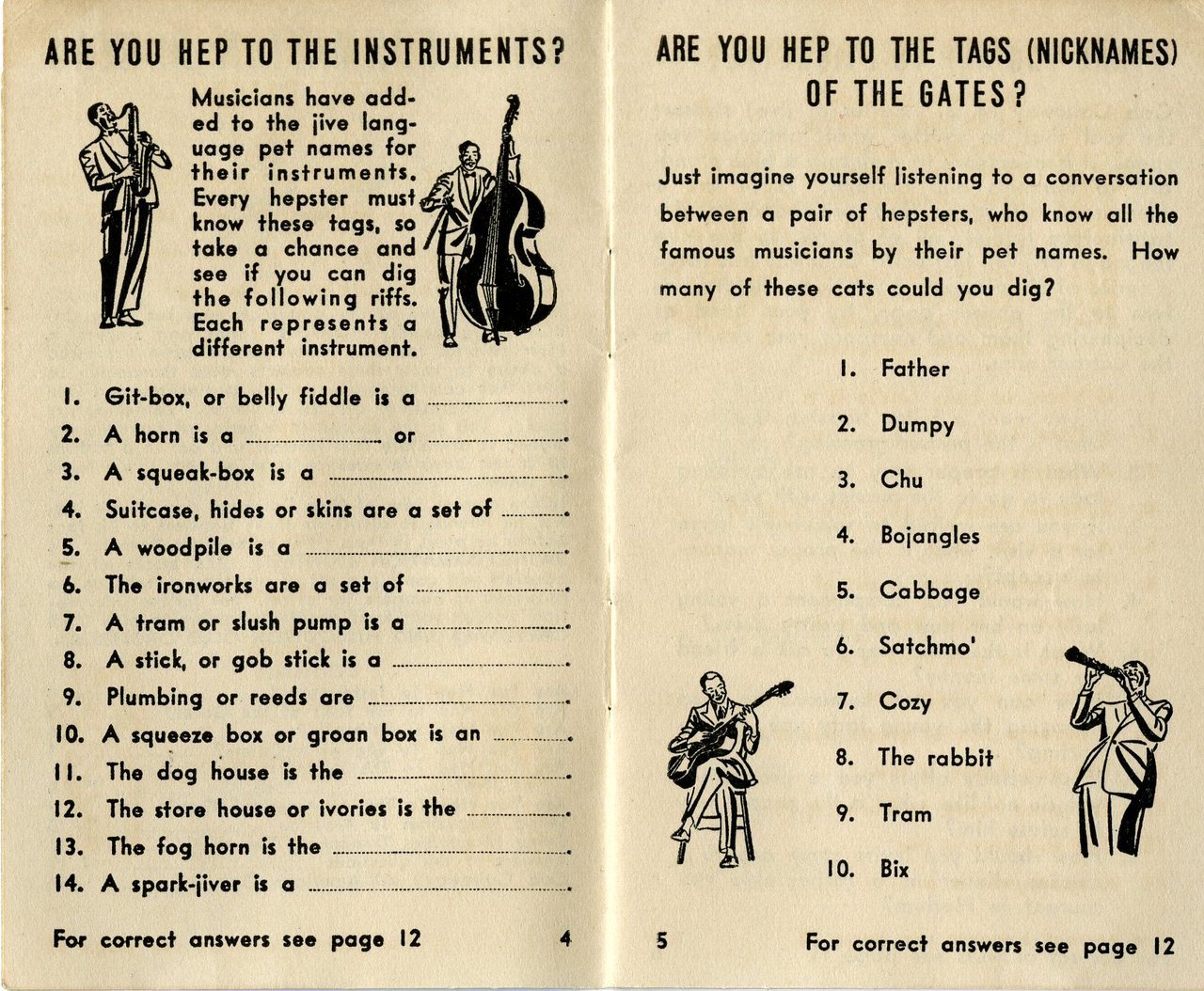
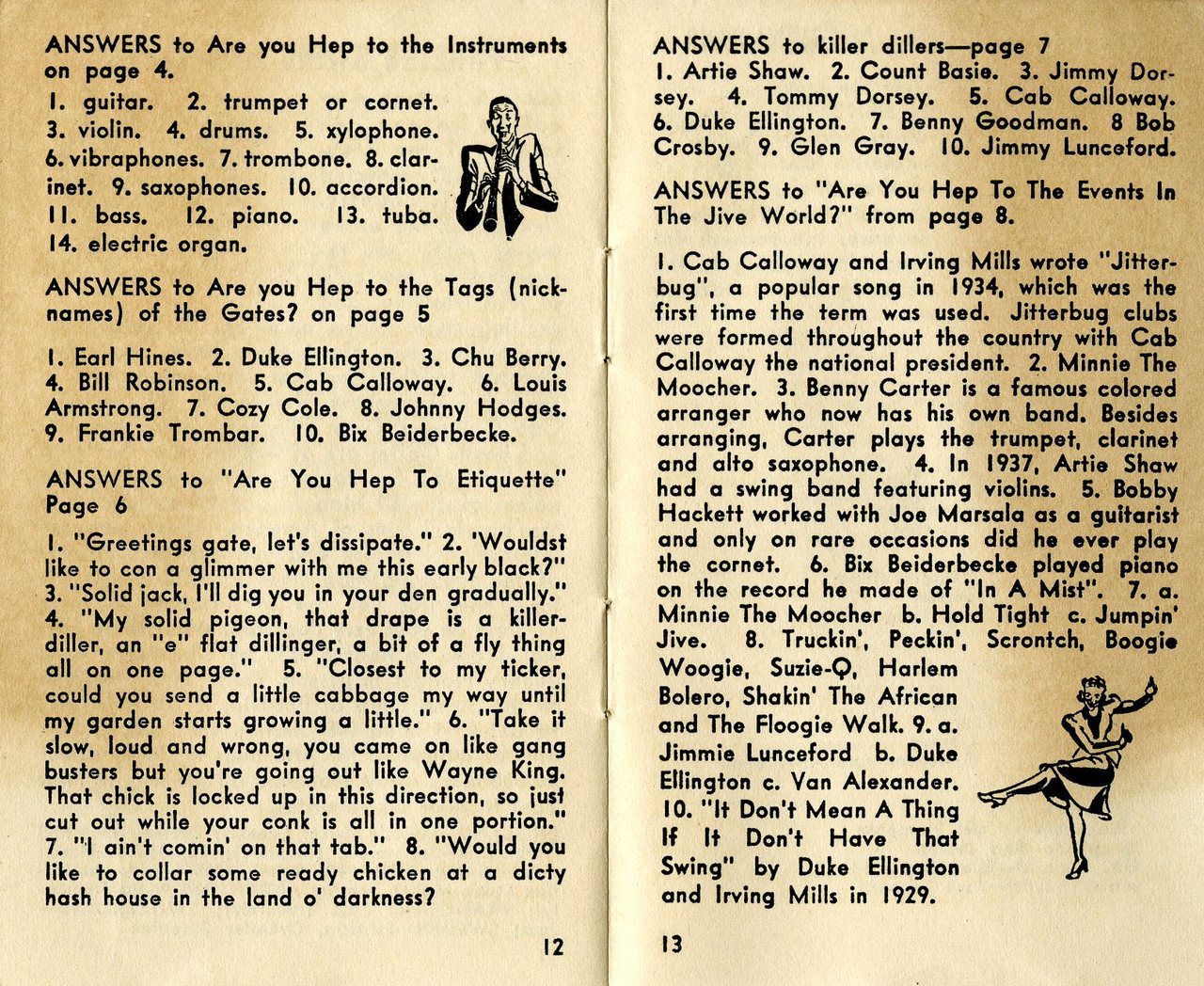
That’s solid murder, gate!
If you’re not too beat, Jazz Night In America builds on Calloway’s dictionary with some additional vocabulary in the video below. Watch it for the meanings of stank, ictus, swoop, and scoop, defined collectively by drummer Ali Jackson as the sort of colloquialisms you use when you “don’t want everyone to know what you’re saying, but you want to express a point.”
Listen to poet Lemn Sissay’s BBC history of Cab Calloway’s Hepster’s Dictionary here.
Related Content
– Ayun Halliday is the Chief Primatologist of the East Village Inky zine and author, most recently, of Creative, Not Famous: The Small Potato Manifesto and Creative, Not Famous Activity Book. Follow her @AyunHalliday.
Read More...Jazz Drummer Larnell Lewis Hears Metallica’s “Enter Sandman” for the Very First Time, Then Plays It Near-Perfectly
Even if you don’t think you know “Enter Sandman,” you know “Enter Sandman.” For more than thirty years it’s been the signature song of Metallica, the best-known heavy metal band in the world, and as such practically unavoidable — unavoidable, that is, unless you’re jazz drummer Larnell Lewis. Previously featured here on Open Culture for his demonstration of the thirteen levels of drumming difficulty, Lewis is most closely associated with the fusion band Snarky Puppy, and has, fair to say, spent his professional life outside the realm of metal. Hence the intrigue of the challenge he takes on in the video above: can he play through “Enter Sandman” after hearing it just once?
Metallica die-hards know how formidable a task this is. Recording the song in the first place took the band’s drummer Lars Ulrich more than one take — in fact, it took him nearly fifty takes, in each of which he played just one section of the song, never the whole thing straight through.
The final mix edits together all of the most precise and intense pieces of his performance into one seemingly impossible-to-replicate whole. But for Lewis, learning a song by ear and then playing it perfectly is all in a day’s work, a process he demonstrates in the earlier video just below, talking his listeners through his mental process of active listening to a percussion-free song, then coming up with all the drum parts on the fly.
Watching Lewis actively listen to “Enter Sandman” has the appeal of those viral videos in which Youtubers hear hit songs for the first time — but even more so, since Lewis knows his craft backwards and forwards, and doesn’t hesitate to express his own reactions and perceptions. He notes a few tricky shifts into half time, and even one especially dramatic shot that he foresees missing when he tries his own hand at the song. Apart from that, however, he then plays the song himself with an accuracy that astonishes even the Metallica fans in the comments. As one says, it’s hard to say which is more unbelievable: Lewis’ extraordinary talent or the fact that he’d never heard ‘Enter Sandman’ before. The man must never have set foot in a gym — but then, he probably gets more than enough of a workout at the drum kit.
Related content:
Metallica’s “Enter Sandman” Sung in the Style of David Bowie
A Bluegrass Version of Metallica’s Heavy Metal Hit, “Enter Sandman”
Metallica Playing “Enter Sandman” on Classroom Toy Instruments
The Neuroscience of Drumming: Researchers Discover the Secrets of Drumming & The Human Brain
Based in Seoul, Colin Marshall writes and broadcasts on cities, language, and culture. His projects include the Substack newsletter Books on Cities, the book The Stateless City: a Walk through 21st-Century Los Angeles and the video series The City in Cinema. Follow him on Twitter at @colinmarshall or on Facebook.
Read More...Discover the Sarajevo Haggadah, the Medieval Illuminated Manuscript That Survived the Inquisition, Holocaust & Yugoslav Wars
If you attended a seder this month, you no doubt read aloud from the Haggadah, a Passover tradition in which everyone at the table takes turns recounting the story of Exodus.
There’s no definitive edition of the Haggadah. Every Passover host is free to choose the version of the familiar story they like best, to cut and paste from various retellings, or even take a crack at writing their own.
As David Zvi Kalman, publisher of the annual, illustrated Asufa Haggadah told the New York Times, “The Haggadah in America is like Kit Kats in Japan. It’s a product that accepts a wide variety of flavors. It’s probably the most accessible Jewish book on the market.”
21st century adaptations have included Marvelous Mrs. Maisel, Seinfeld, Harry Potter, and Curb Your Enthusiasm themed Haggadot.
There are Haggadot tailored toward feminists, Libertarians, interfaith families, and advocates of the Black Lives Matter movement.
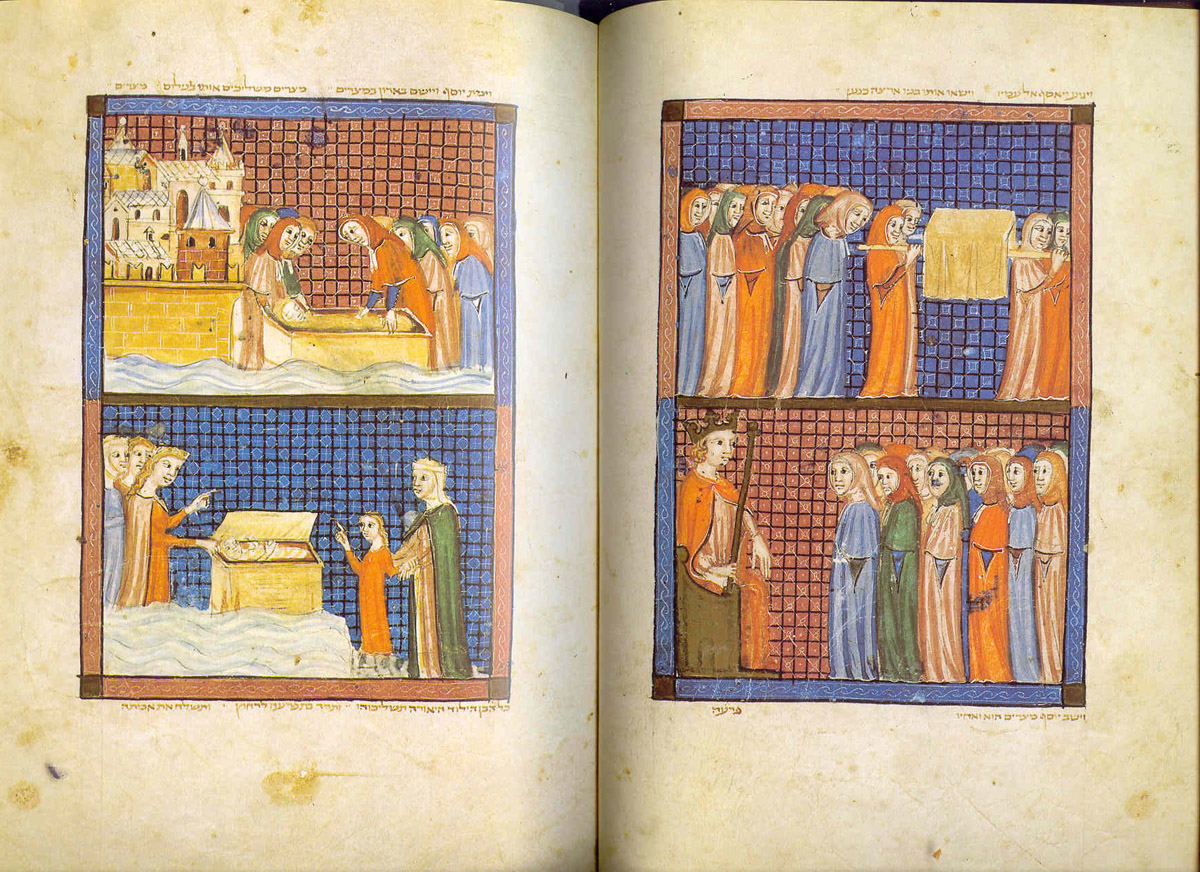
One of the oldest is the miraculously-preserved Sarajevo Haggadah, an illuminated manuscript created by anonymous artists and scribes in Barcelona around 1350.

Though it bears the coats of arms of two prominent families, its provenance is not definitively known.
Leora Bromberg of the University of Toronto’s Thomas Fisher Rare Book Library notes that it is “especially striking for its colorful illuminations of biblical and Passover ritual scenes and its beautifully hand-scribed Sephardic letterforms:”
As precious as this Haggadah was, and still is, Haggadot are books that are meant to be used in festive and messy settings—sharing the table with food, wine, family and guests. The Sarajevo Haggadah was no exception to this; its pages show evidence that it was well used, with doodles, food and red wine stains marking its pages.
Some brave soul took care to smuggle this essential volume out with them when 1492’s Alhambra Decree expelled all Jews from Spain.
The manuscript’s travels thereafter are shrouded in mystery.
It survived the Roman Inquisition by virtue of its contents. As per a 1609 note jotted on one of its pages, nothing therein seemed to be aimed against the Church.
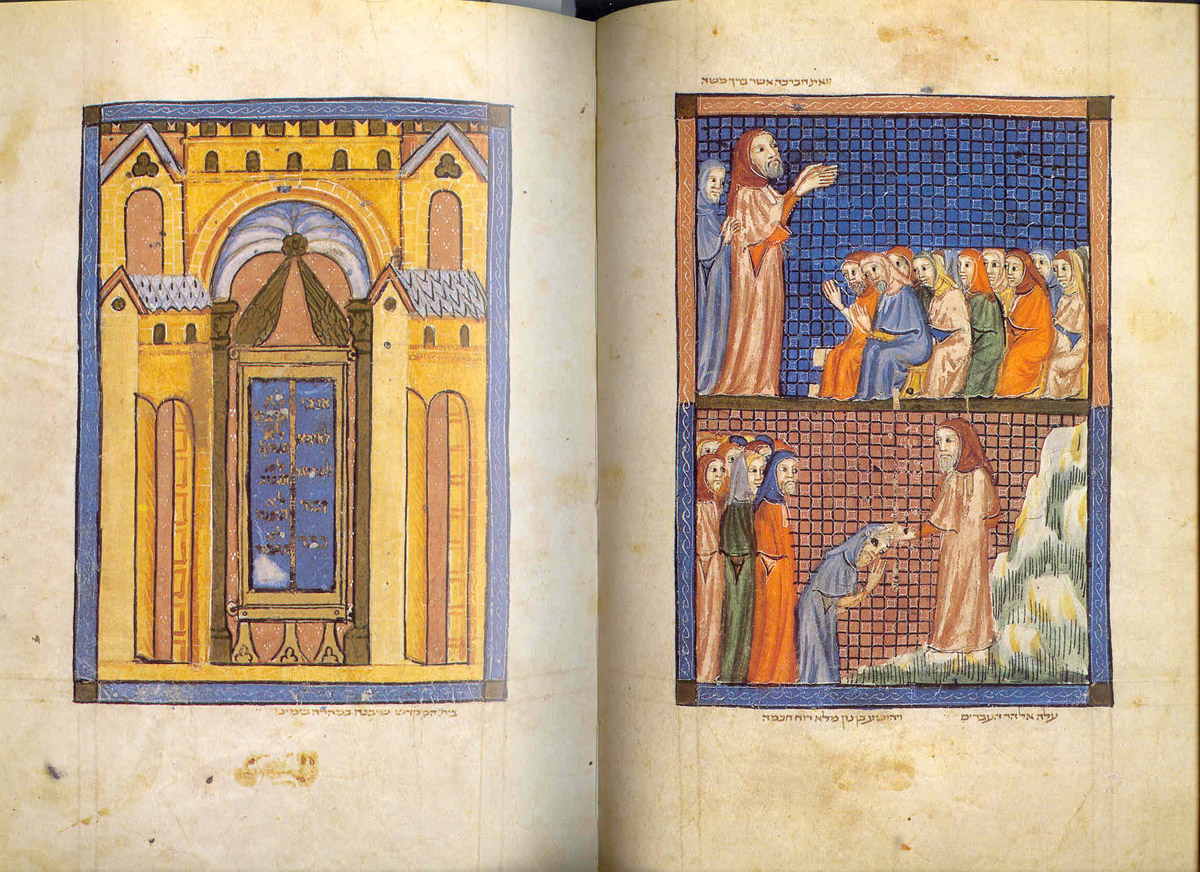
More handwritten notes place the book in the north of Italy in the 16th and 17th centuries, though its new owner is not mentioned by name.
Eventually, it found its way to the hands of a man named Joseph Kohen who sold it to the National Museum of Sarajevo in 1894.
It was briefly sent to Vienna, where a government official replaced its original medieval binding with cardboard covers, chopping its 142 bleached calfskin vellum down to 6.5” x 9” in order to fit them.
It had a narrow escape in 1942, when a high-ranking Nazi official, Johann Fortner, visited the museum, intent on confiscating the priceless manuscript.
The chief librarian, Dervis Korkut, a Muslim, secreted the Haggadah inside his clothing, reputedly telling Fortner that museum staff had turned it over to another German officer.
After that folklore takes over. Korkut either stowed it under the floorboards of his home, buried it under a tree, gave it to an imam in a remote village for safekeeping, or hid it on a shelf in the museum’s library.
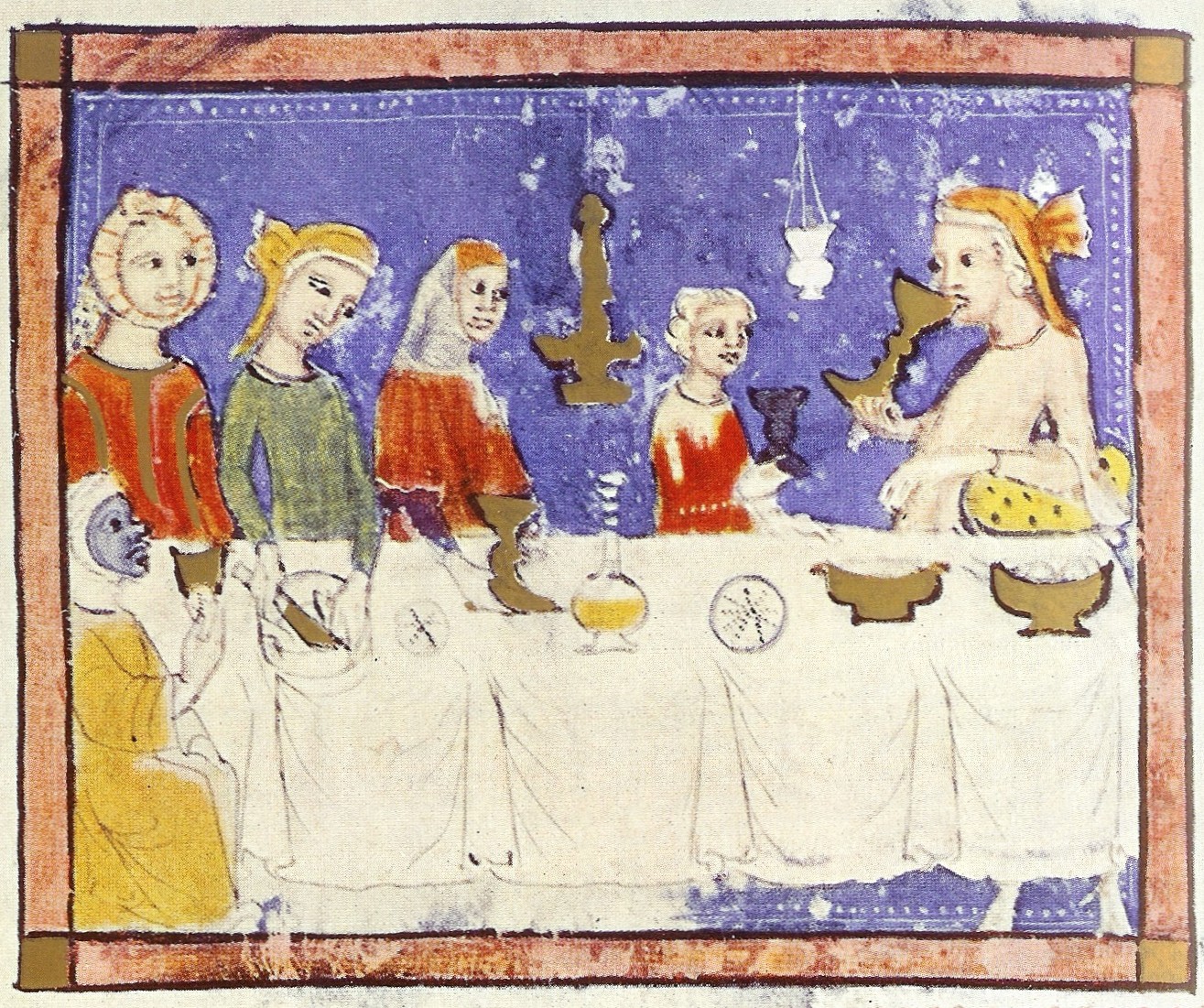
Whatever the case, it reappeared in the museum, safe and sound, in 1945.
The museum was ransacked during 1992’s Siege of Sarajevo, but the thieves, ignorant of the Haggadah’s worth, left it on the floor. It was removed to an underground bank vault, where it survived untouched, even as the museum sustained heavy artillery damage.
The president of Bosnia presented it to Jewish community leaders during a Seder three years later.
Shortly thereafter, the head of Sarajevo’s Jewish Community sought the United Nations’ support to restore the Haggadah, and house it in a suitably secure, climate-controlled setting.
A number of facsimiles have been created, and the original codex once again resides in the museum where it is stored under the prescribed conditions, and displayed on rare special occasions, as “physical proof of the openness of a society in which fear of the Other has never been an incurable disease.”
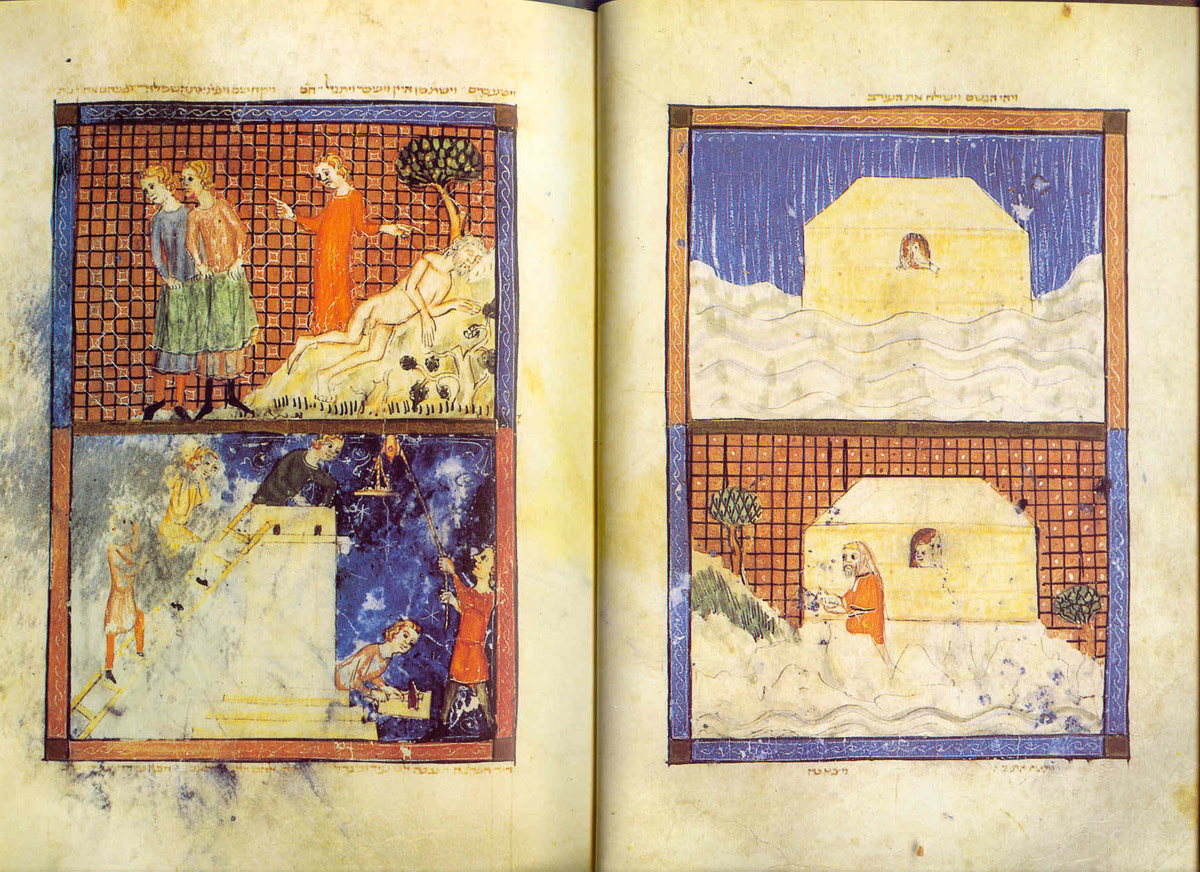
UNESCO added it to its Memory of the World Register in 2017, “praising the courage of the people who, even in the darkest of times during World War II, appreciated its importance to Jewish Heritage, as well as its embodiment of diversity and intercultural harmony depicted in its illustration:”
Regardless of their own religious beliefs, they risked their lives and did all in their power to safeguard the Haggadah for future generations. Its destruction would be a loss for humanity. Protecting it is a symbol of the values which we hold dear.
For those interested, the Sarajevo Haggadah figures centrally in the bestselling 2008 novel People of the Book, written by the Pulitzer Prize-winning author Geraldine Brooks. You can read an New Times review here.
Related Content
Turning the Pages of an Illuminated Medieval Manuscript: An ASMR Museum Experience
The Medieval Masterpiece, the Book of Kells, Has Been Digitized and Put Online
– Ayun Halliday is the Chief Primatologist of the East Village Inky zine and author, most recently, of Creative, Not Famous: The Small Potato Manifesto and Creative, Not Famous Activity Book. Follow her @AyunHalliday.
Read More...Al Jaffee, the Longest Working Cartoonist in History, Dies at 102: Discover How He Invented the Iconic “Folds-Ins” for Mad Magazine
Note: Yesterday, Mad Magazine legend Al Jaffee died at the age of 102. Below, we present our 2016 post featuring Jaffee talking about how he invented the iconic Fold-ins for the satirical magazine.
Keep copying those Sunday funnies, kids, and one day you may beat Al Jaffee’s record to become the Longest Working Cartoonist in History.
You’ll need to take extra good care of your health, given that the Guinness Book of World Records notified Jaffee, above, of his honorific on his 95th birthday.
Much of his legendary career has been spent at Mad Magazine, where he is best-known as the father of Fold-ins.
Conceived of as the satirical inverse of the expensive-to-produce, 4‑color centerfolds that were a staple of glossier mags, the first Fold-In spoofed public perception of actress Elizabeth Taylor as a man-eater. Jaffe had figured it as a one-issue gag, but editor Al Feldstein had other ideas, demanding an immediate follow up for the June 1964 issue.
Jaffe obliged with the Richard Nixon Fold-in, which set the tone for the other 450 he has hand-rendered in subsequent issues.
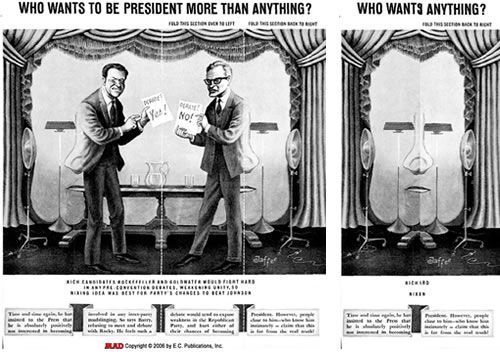
For those who made it to adulthood without the singular pleasure of creasing Mad’s back cover, you can digitally fold-in a few samples using this nifty interactive feature, courtesy of The New York Times.
With all due respect, it’s not the same, just enough to give a feel for the thrill of drawing the outermost panel in to reveal the visual punchline lurking within the larger picture. The print edition demands precision folding on the reader’s part, if one is to get a satisfactory answer to the rhetorical text posed at the outset.
Jaffe must be even more precise in his calculations. In an interview with Sean Edgar of Paste Magazine, he described how he turned a Republican primary stage shared by Nelson Rockefeller and Barry Goldwater into a surprise portrait of the man who would become president five years hence:
The first thing I did was draw Richard Nixon’s face, not in great detail, just a very rough establishment of where the eyes, nose and mouth would be, and the general shape. I did an exaggerated caricature of Nixon and then I cut it in half, and moved it apart. Once the face was cut in half, it didn’t have the integrity of a face anymore — it was sort of a half of face. Then I looked at what the eyes were like, and I said, ‘what can I make out of the eyes?’ He had these heavy eyebrows. I played around with many things, but I had to keep in mind all the time what the big picture was. So there they (Goldwater and Rockefeller) were up on a stage somewhere, doing a debate, and I thought, ‘What kind of stage prop can I put alongside these guys that would seem natural there?’ I decided that I could make eyes out of the lamps, and as far as the nose was concerned, that could come out of the figures — their clothing. Then I figured the mouth; I could use some sort of table that could give me those two sides. That’s how it all came about. You have to have some kind of visual imagination to see the possibilities. I had to concentrate on stuff that looked natural on a stage.
Each Fold-In is a reflection of the zeitgeist. Past preoccupations have included Vietnam, feminism, illegal drug use and, more recently, the Jersey Shore.
via Gothamist
Related Content:
A Gallery of Mad Magazine’s Rollicking Fake Advertisements from the 1960s
Watch Mad Magazine’s Edgy, Never-Aired TV Special (1974)
A Look Inside Charlie Hebdo, Their Creative Process & the Making of a Fateful Cartoon
Cartoonists Draw Their Famous Cartoon Characters While Blindfolded (1947)
Ayun Halliday is an author, illustrator, and Chief Primatologist of the East Village Inky zine. Follow her @AyunHalliday
Read More...Discover Edo, the Historic Green/Sustainable City of Japan
When you picture modern day Tokyo, what comes to mind?
The electronic billboards of Shibuya and Shinjuku?
The teeming streets?
The maid cafes?
The robot hotel?
A 97 square foot micro apartment?
Bernard Guerrini’s documentary Naturopolis — Tokyo, from megalopolis to garden-city describes Tokyo as “a giant city, a city which never stops growing:”
It has destroyed its natural spaces. It has created its own weather. It’s too big for its own good. They say Tokyo is like an amoeba that absorbs everything in its path.
It’s a far cry from the urban space Tokugawa Ieyasu, founder of the Tokugawa Shogunate, intended when planting the seeds for Edo, as Tokyo was originally called.
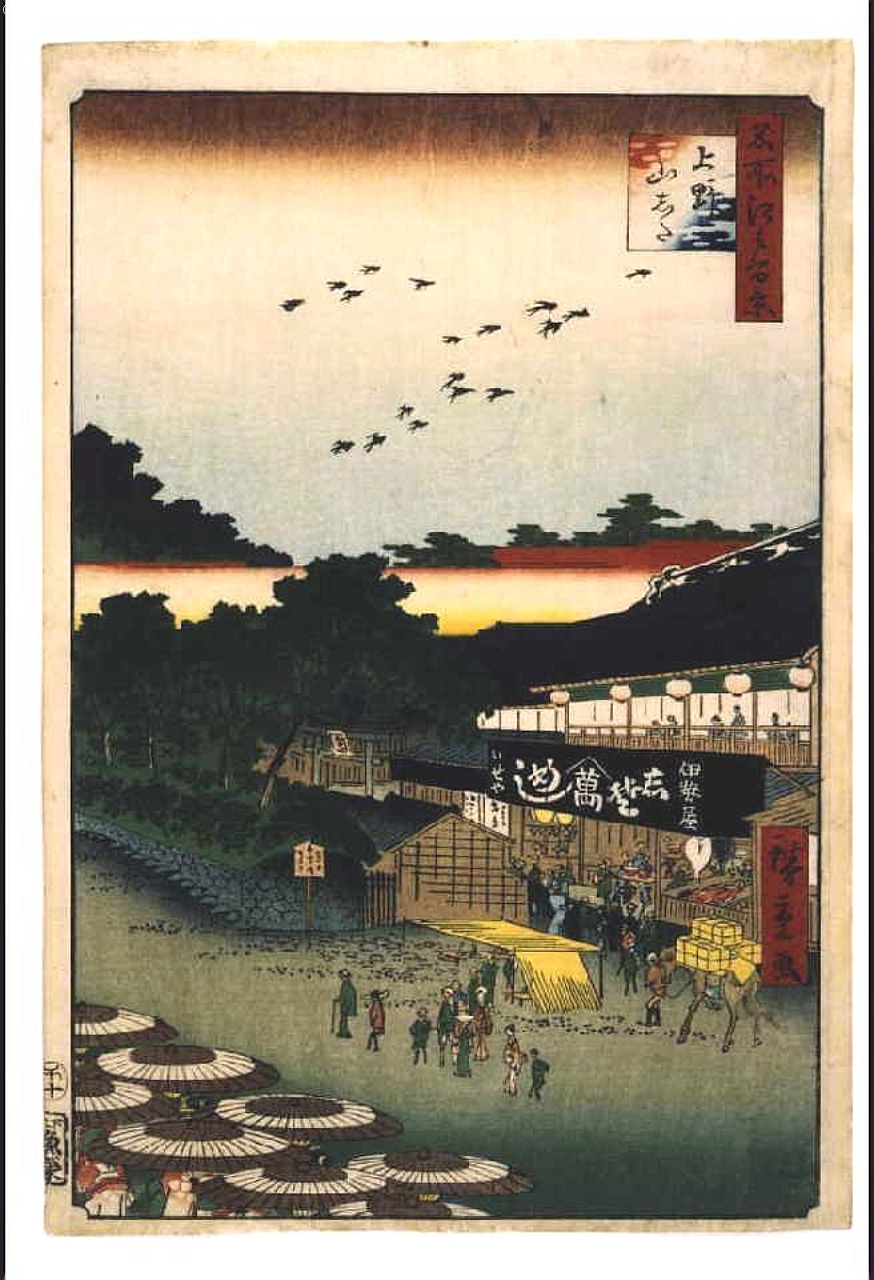
As the above excerpt from Naturopolis explains, the 16th-century city was innovative in its incorporation of green space.
The daimyō, or military lords, were required by the shogunate to keep residences in Edo. Each of these homes was furnished with a gardener and a landscaper to maintain the beauty of its al fresco areas.
Meanwhile, crops were cultivated in all communal outdoor open spaces, with irrigation canals supplying the necessary water for growing rice.
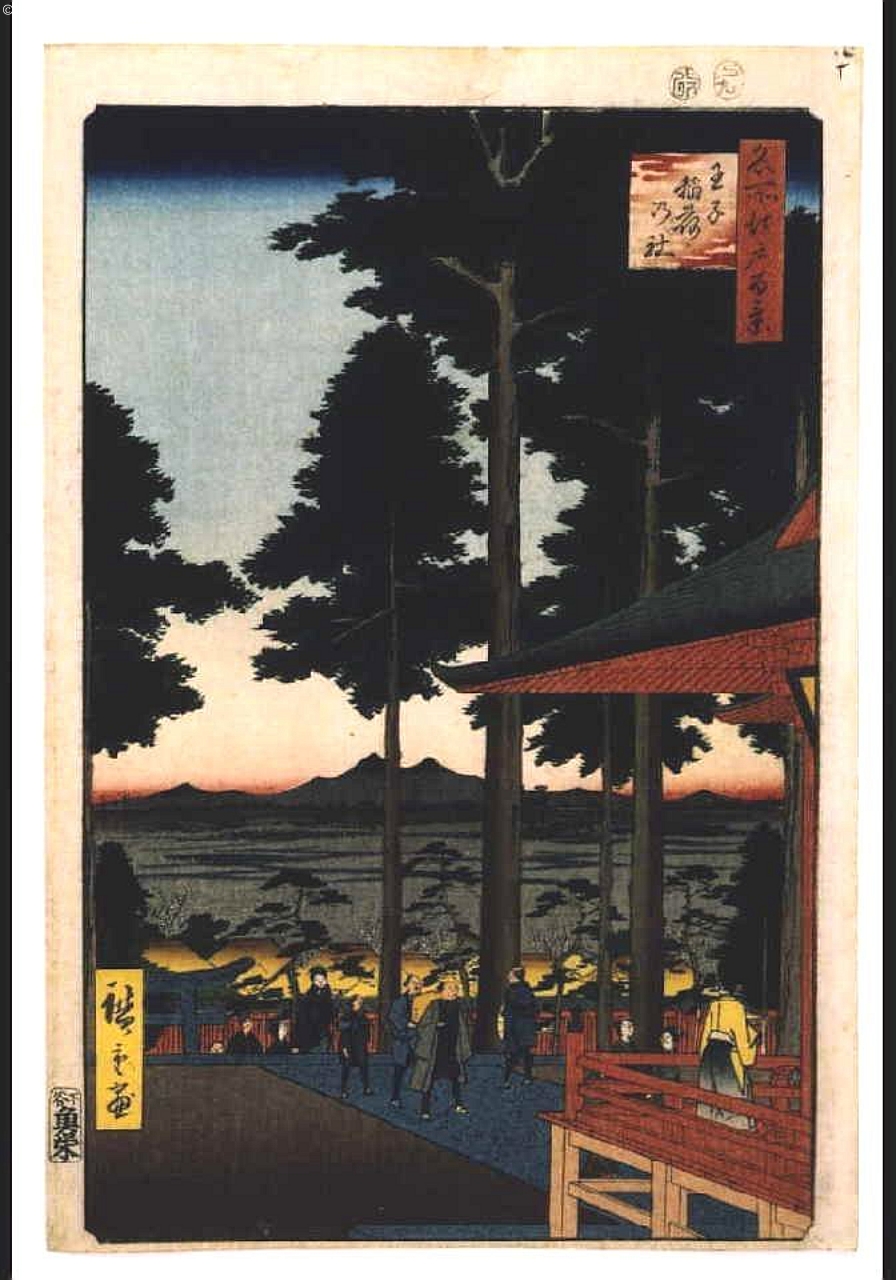
These plant-rich settings provided a hospitable environment for animals both wild and domestic. The carefully curated natural zones invited quiet contemplation of flora and fauna, giving rise to the seasonal celebrations and rites that are still observed throughout Japan.
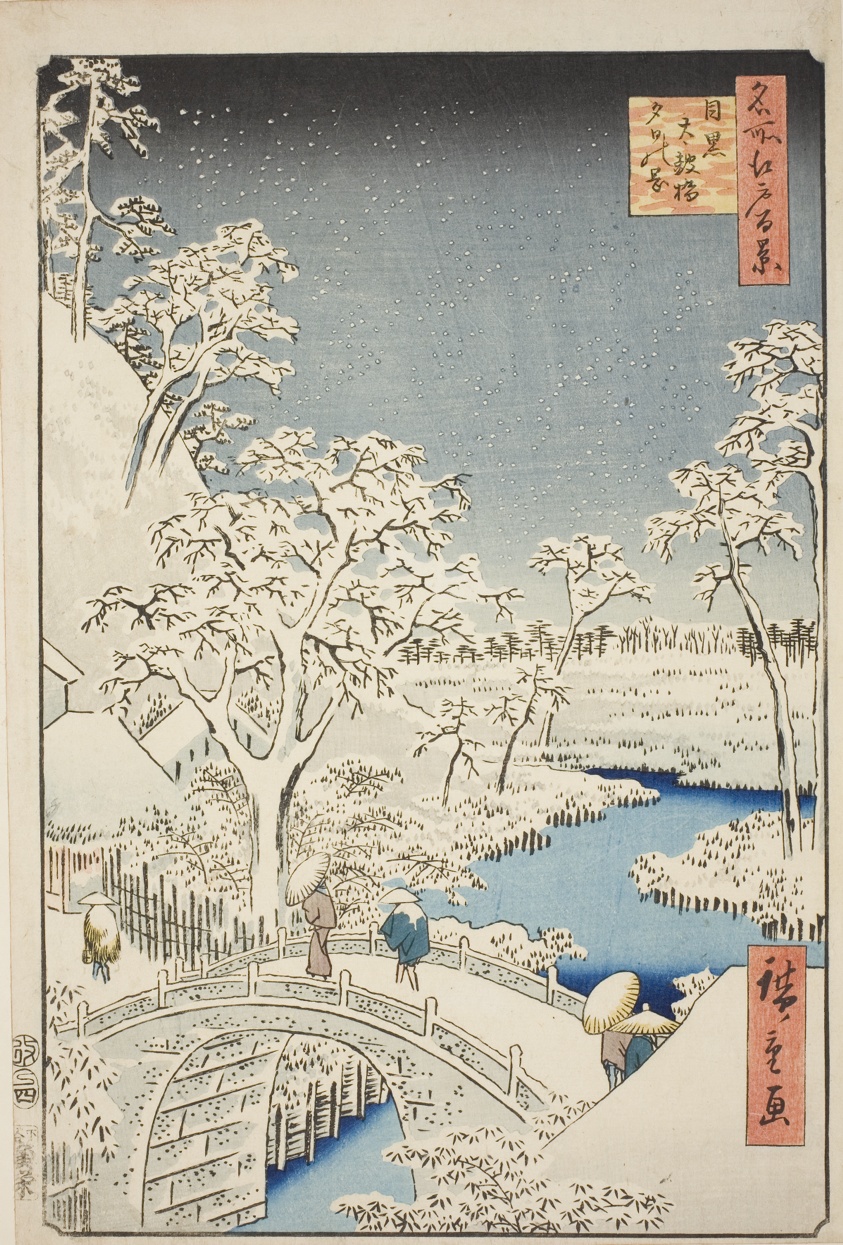
Whether admiring blossoms and fireflies in spring and summer or autumn leaves and snowy winter scenes in the colder months, Edo’s citizens revered the natural world outside their doorsteps.
Bashō did the same in his haiku; Utagawa Hiroshige in his series of ukiyo‑e prints, One Hundred Famous Views of Edo.

Somewhat less poetically celebrated was the importance of night soil to this biodynamic, pre-industrial shogunate capital. As environmental writer Eisuke Ishikawa delicately notes in Japan in the Edo Period — An Ecologically-Conscious Society:
A long time ago, when excrement was a precious fertilizer, it naturally belonged to the person who produced it. Farmers used to buy excrement for cash or trade it for a comparable amount of vegetables. Fertilizer shortages were a chronic problem during the Edo period. As the standard of living in cities improved, surrounding villages needed an increasing amount of fertilizer…
(Anyone who’s shouldered the surprisingly heavy interactive–not THAT interactive–night soil buckets on display in Tokyo’s Edo Museum will have a feel for just how much of this necessary element each block of the capital city generated on a daily basis.)
The Meiji Restoration of 1868 brought many changes — a new government, a new name for Edo, and a race toward Western-style industrialization. Many parks and gardens were destroyed as Tokyo rapidly expanded beyond Edo’s original footprint.
But now, the Tokyo Metropolitan Government is looking to its past in an effort to combat the effects of climate change with a push toward environmental sustainability.
The goal is net zero CO2 emissions by 2050, with 2030 serving as a benchmark.
In addition to holding the business, financial, and energy sectors to environmentally responsible standard, the zero emission plan seeks to address the average citizen’s quality of life, with a literal return to more green spaces:
Accelerating climate change measures is important to preserve biodiversity and continue to reap its bounty. In recent years, the idea of green infrastructure that utilizes the functions of the natural environment has attracted attention. It is one of the most important considerations for the future: achieving both biodiversity conservation and climate change measures.
A United Nation report* pointed out that COVID-19 is potentially a zoonotic disease derived from wildlife, such infectious diseases will increase in the future, and one of the reasons is the destruction of nature by humans.
Read Tokyo Metropolitan Government’s Zero Transmission Strategy and Update here.
Related Content
Wabi-Sabi: A Short Film on the Beauty of Traditional Japan
See How Traditional Japanese Carpenters Can Build a Whole Building Using No Nails or Screws
The Entire History of Japan in 9 Quirky Minutes
Cats in Japanese Woodblock Prints: How Japan’s Favorite Animals Came to Star in Its Popular Art
– Ayun Halliday is the Chief Primatologist of the East Village Inky zine and author, most recently, of Creative, Not Famous: The Small Potato Manifesto and Creative, Not Famous Activity Book. Follow her @AyunHalliday.
Read More...Support Us
We're hoping to rely on loyal readers, rather than erratic ads. Please click the Donate button and support Open Culture. You can use Paypal, Venmo, Patreon, even Crypto! We thank you!

About Us

Open Culture scours the web for the best educational media. We find the free courses and audio books you need, the language lessons & educational videos you want, and plenty of enlightenment in between.
Advertise With Us

FREE UPDATES!
GET OUR DAILY EMAIL
Get the best cultural and educational resources on the web curated for you in a daily email. We never spam. Unsubscribe at any time.
FOLLOW ON SOCIAL MEDIA

Open Culture editor Dan Colman scours the web for the best educational media. He finds the free courses and audio books you need, the language lessons & movies you want, and plenty of enlightenment in between.
Advertise With Us

