Of the many readings and adaptations of Edgar Allan Poe’s classic moody-broody poem “The Raven,” none is more fun than The Simpsons’, in which Lisa Simpson’s intro transitions into the reading voice of James Earl Jones and the slapstick interjections of Homer as Poe’s avatar and Bart as the titular bird. Jones’ solo reading of the poem is not to be missed and exists in several versions on YouTube.
But Jones is not the only classically creepy actor to have mastered Poe’s diction. Above, we have Christopher Walken, whose unsettling weirdness is always tinged with a certain wry humor, perhaps an effect of his classical New York accent.
Accompanying Walken’s reading are the standard eerie wind sounds and the unusual addition of some distorted metal guitar: perhaps an intrusion, perhaps a unique dramatic effect. The visual component, a montage of expressive pencil drawings, also may or may not work for you.
You may wish to contrast this production with what may be the locus classicus for televisual interpretations of “The Raven.” Of course I mean the hammy Vincent Price reading (above), which lent so much aesthetically to The Simpsons parody. One of my favorite little in-jokes in the latter occurs during Bart and Lisa’s introduction. Bart whines, “that looks like a school-book!” and Lisa replies, “don’t worry, Bart. You won’t learn anything.”
Lisa’s rejoinder is a sly reference to Poe’s contempt for literature meant to instruct or moralize, a tendency he called “the heresy of the Didactic.” Poe’s theory and practice grew out of his desire that literature have a “unity of effect,” that it produce an aesthetic experience solely through the author’s skillful use of literary form. Poe may have anticipated and directly influenced the French symbolists and other aesthetes like Oscar Wilde, but his assured place in high culture has thankfully not gotten in the way of pop appropriations of his more oddball tales, like “The Raven.” A perennial favorite reading of the poem is classic horror actor Christopher Lee’s (below), which may be the most straightforwardly creepy of them all.
Note: An earlier version of this post appeared on our site in 2013.
Apart from certain stretches of absence, Leonardo’s Mona Lisa has been on display at the Louvre for 228 years and counting. Though created by an Italian in Italy, the painting has long since been a part of French culture. At some point, the reverence for La Joconde, as the Mona Lisa is locally known, reached such an intensity as to inspire the label Jocondisme. For Marcel Duchamp, it all seems to have been a bit much. In 1919, he bought a postcard bearing the image of that most famous of all paintings, drew a mustache and goatee on it, and dubbed the resulting “artwork” L.H.O.O.Q., whose French pronunciation “Elle a chaud au cul” translates to — as Duchamp modestly put it — “There is fire down below.”
A century ago, this was a highly irreverent, even blasphemous act, but also just what one might expect from the man who, a couple years earlier, signed a urinal and put it on display in a gallery. Like the much-scrutinized Fountain, L.H.O.O.Q. was one of Duchamp’s “readymades,” or artistic provocations executed by modifying and re-contextualizing found objects.
Neither was singular: just as Duchamp signed multiple urinals, he also drew (or didn’t draw) facial hair on multiple Mona Lisa postcards. In one instance, he even gave the okay to his fellow artist Francis Picabia to make one for publication in his magazine in New York as, nevertheless, “par Marcel Duchamp” — though it lacked a goatee, an omission the artist corrected in his own hand some twenty years later.
In the 1956 interview just above, Duchamp describes L.H.O.O.Q. as a part of his “Dada period” (and, with characteristic modesty, “a great iconoclastic gesture on my part”). He also brings out a fake check — belonging to “no bank at all” — that he created to use at the dentist (who accepted it); and a system designed to “break the bank at Monte Carlo” (which stubbornly remained unbroken). “I believe that art is the only form of activity in which man, as a man, shows himself to be a true individual, and is capable of going beyond the animal state,” he declares. With his collision of Jocondisme and Dada, among the other unlikely juxtapositions he engineered, he showed himself to be the premier prankster of early twentieth-century art — and one whose pranks transcended amusement to inspire a scholarly industry that persists even today.
Based in Seoul, Colin Marshall writes and broadcasts on cities, language, and culture. His projects include the Substack newsletterBooks on Cities and the book The Stateless City: a Walk through 21st-Century Los Angeles. Follow him on the social network formerly known as Twitter at @colinmarshall.
To many longtime fans, there are — at the very least — two Pink Floyds. The first is the rock band that in 1965 took the name the Pink Floyd Sound, an invention of its newest member Syd Barrett. A guitar-playing singer-songwriter, the young Barrett soon became the group’s guiding creative intelligence, albeit of a cracked kind. It was under his influence that, two years later, the Floyd released their first two hit singles,“Arnold Layne” and “See Emily Play,” as well as their debut studio album The Piper at the Gates of Dawn. This early material exhibits a kind of darkly whimsical English eccentricity that turned out to fit neatly indeed with the psychedelia of the music-driven late-sixties counterculture.
This first Pink Floyd lasted until partway through the production of their second album, A Saucerful of Secrets. Up to that point, Barrett’s behavior had been turning ever stranger and less manageable; eventually, he passed entire concerts in a state of near catatonia onstage (with the occasional spasm of a deep-seated tendency to practical jokes).
After considering and finding unfeasible the option to retain him as a non-touring contributor, the other members decided simply to eject him from the band. Thus began the Floyd’s second iteration, which, despite the loss of the man who’d been writing 90 percent of their songs, did nevertheless manage to come up with albums like Atom Heart Mother, The Dark Side of the Moon, Wish You Were Here, and The Wall.
When Barrett died in 2006, after decades of life as a recluse (and, ever the Englishman, an enthusiastic gardener), he was widely remembered as a casualty of the psychedelic drug wave. But according to Roger Waters, who took the band’s reins, “LSD was not solely responsible for Syd’s illness.” He says so in the video above, a compilation of his recollections of Barrett’s decline. “It felt to me at the time that Syd was drifting off the rails, and when you’re drifting off the rails, the worst thing you could do is start messing around with hallucinogenics.” There was “no doubt that Syd was schizophrenic, and that he was taking those drugs at the same time.” It could well have been that Barrett’s state of mind allowed him to voyage into realms that the Floyd could otherwise never have accessed. But whatever the causal factors and their proportions, he eventually found himself unable to come back home.
Based in Seoul, Colin Marshall writes and broadcasts on cities, language, and culture. His projects include the Substack newsletterBooks on Cities and the book The Stateless City: a Walk through 21st-Century Los Angeles. Follow him on the social network formerly known as Twitter at @colinmarshall.
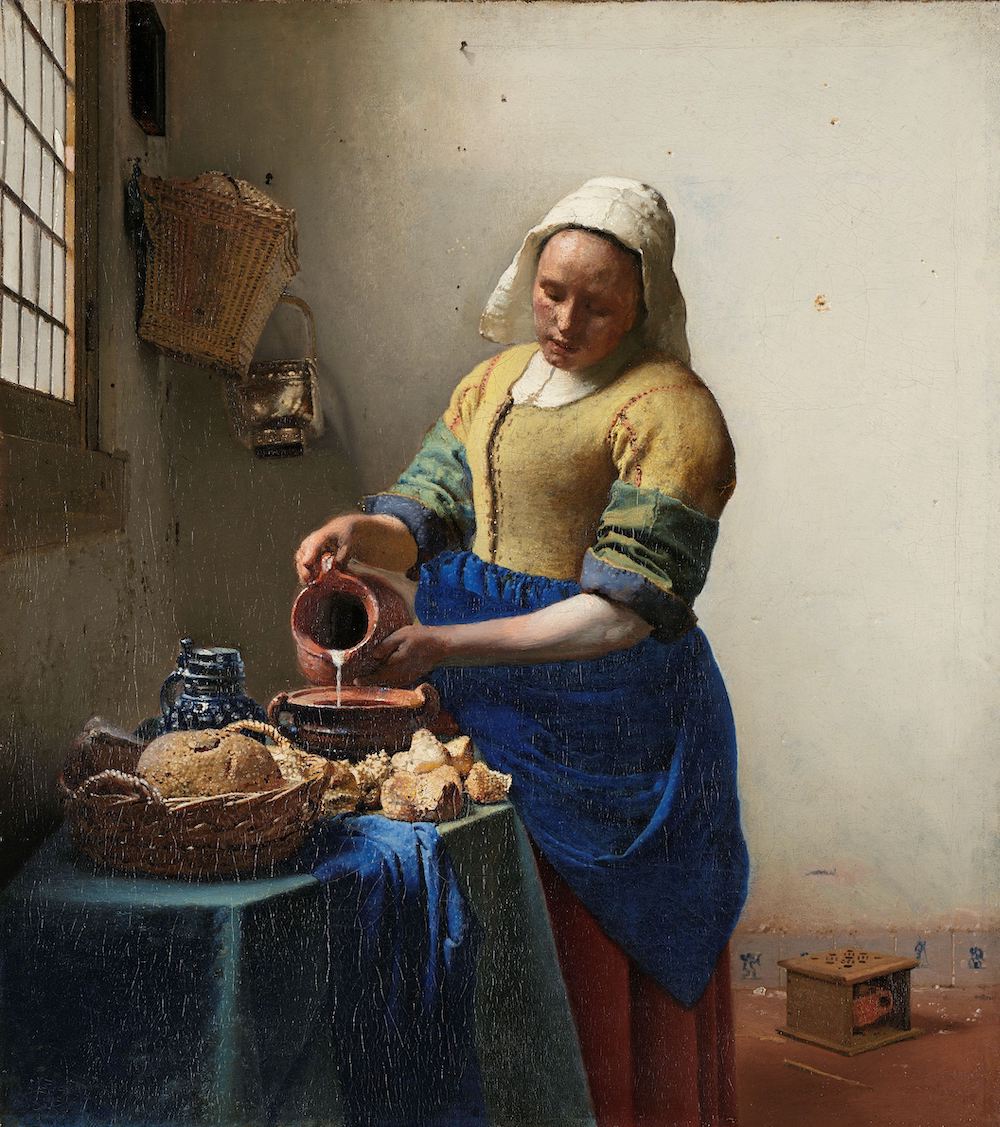
American is a tricky word. It can refer to everyone and everything of or pertaining to all the countries of North America — and potentially South America as well — but it’s commonly used with specific regard to the United States. For Frank Lloyd Wright, linguistic as well as architectural perfectionist, this was an untenable state of affairs. To his mind, the newest civilization of the New World, a vast land that offered man the rare chance to remake himself, needed an adjective all its own. And so, repurposing a demonym proposed by geographer James Duff Law in the nineteen-hundreds, Wright began to refer to his not just architectural but also broadly cultural project as Usonian.
Wright completed the first of his so-called “Usonian houses,” the Herbert and Katherine Jacobs House in Madison, Wisconsin, in the middle of the Great Depression. Challenged to “create a decent home for $5,000,” says the Frank Lloyd Wright Foundation’s web site, the architect seized the chance to realize “a new affordable architecture that freed itself from European conventions and responded to the American landscape.”
This first Usonian house and its 60 or so successors “related directly to the earth, unimpeded by a foundation, front porch, protruding chimney, or distracting shrubbery. Glass curtain walls and natural materials like wood, stone and brick further tied the house to its environment.” In Pleasantville, New York, there even exists a Usonia Historic District, three of whose 47 homes were designed by Wright himself.
The BBC Global video at the top of the post offers a tour of one of the Usonia Historic District’s houses led by the sole surviving original owner, the 100-year-old Roland Reisley. The Architectural Digest video above features Reisley’s home as well as the Bertha and Sol Friedman House, which Wright dubbed Toyhill. Both have been kept as adherent as possible to the vision that inspired them, and that was meant to inspire a renaissance in American civilization. The Usonian homes may have fallen short of Wright’s Utopian hopes, but they did have a certain influence on postwar suburb-builders, and have much enriched the lives of their more appreciative inhabitants. The centenarian Reisley credits his startling youthfulness to the man-made and natural beauty of his domestic surroundings — but then, this last of the Usonians also happens to be one of the rare clients who could get along with Frank Lloyd Wright.
Based in Seoul, Colin Marshall writes and broadcasts on cities, language, and culture. His projects include the Substack newsletterBooks on Cities and the book The Stateless City: a Walk through 21st-Century Los Angeles. Follow him on the social network formerly known as Twitter at @colinmarshall.
We all know the manchild Mozart of Milos Forman’s 1984 biopic Amadeus. As embodied by a manic, braying Thomas Hulce, the precocious and haunted composer supposedly loved nothing more than scandalizing, amusing, or exasperating friends and enemies alike with juvenile pranks and scatological humor. Surely a fiction, eh? Gross exaggeration, no? Undoubtedly Mozart comported himself with more dignity? Those familiar with the composer’s biography know otherwise.
We have, for example, a ridiculously dirty letter that the 21-year-old “poop-loving musical genius” wrote to his 19-year-old cousin Marianne—a missive Letters of Note prefaces with the disclaimer “if you’re easily offended, please do not read any further” (oh, but how can you resist?). This piece of correspondence is but one of many “shockingly crude letters” Mozart wrote to his family. And if these slightly insane documents don’t convince you, we offer as further evidence of Mozart’s exuberantly childish sensibility the above canon in B flat for six voices, Leck Mich Im Arsch, which translates roughly to “Kiss My Ass.”
One of three naughty canons composed in 1782 with lyrics like “Good night, sleep tight, / And stick your ass to your mouth,” this piece was discovered in 1991 at Harvard University. Harvard librarian Michael Ochs, with a clear penchant for understatement, said at the time: “These are minor works. They’re not the Requiem, or ‘Don Giovanni.’ They were written for the amusement of Mozart and his friends, and they show another side of him.” The first edition of Mozart’s complete works, published in 1804, bowdlerized the texts and removed the racy humor, changing the title of Leck Mich Im Arsch to “Let us be glad!”—likely, writes Lucas Reilly at Mental Floss, “the complete opposite of what this tune means.”
Reilly also points out that Mozart’s “potty mouth” was probably not, as some have supposed, evidence of Tourette’s syndrome, but rather of an especially strong current in German humor, shared by Johannes Gutenberg, Martin Luther, and Mozart’s equally brilliant contemporary, Johann Wolfgang von Goethe. In fact, Leck Mich Im Arsch alludes to Goethe’s serious dramatic work, Götz Von Berlichingen. The chorus reads as follows in English:
Kiss my arse! Goethe, Goethe! Götz von Berlichingen! Second act; You know the scene too well! Let’s sing out now summarily: Here is Mozart literary!
Hear two additional dirty choral pieces—Bona Nox and Difficile Lectu—at Mental Floss. Some other scatological canons thought to be Mozart’s, such as Leck mir den Arsch fein recht schönsauber (“Lick my ass right well and clean”), have since been attributed to amateur composer and physician Wenzel Trnka, yet it appears that the three featured at Mental Floss are genuine.
Note: An earlier version of this post appeared on our site in 2014.
As an exercise draw a composition of fear or sadness, or great sorrow, quite simply, do not bother about details now, but in a few lines tell your story. Then show it to any one of your friends, or family, or fellow students, and ask them if they can tell you what it is you meant to portray. You will soon get to know how to make it tell its tale.
- Pamela Colman-Smith, “Should the Art Student Think?” July, 1908
A year after Arts and Crafts movement magazine The Craftsman published illustrator Pamela Colman-Smith’s essay excerpted above, she spent six months creating what would become the world’s most popular tarot deck. Her graphic interpretations of such cards as The Magician, The Tower, and The Hanged Man helped readers to get a handle on the story of every newly dealt spread.
Colman-Smith—known to friends as “Pixie”—was commissioned by occult scholar and author Arthur E. Waite, a fellow member of the British occult society the Hermetic Order of the Golden Dawn, to illustrate a pack of tarot cards.
In a humorous letter to her eventual champion, photographer Alfred Stieglitz, Colman-Smith (1878 – 1951) described her 80 tarot paintings as “a big job for very little cash,” though she betrayed a touch of genuine excitement that they would be “printed in color by lithography… probably very badly.”
Although Waite had some specific visual ideas with regard to the “astrological significance” of various cards, Colman-Smith enjoyed a lot of creative leeway, particularly when it came to the Minor Arcana or pip cards.
These 56 numbered cards are divided into suits—wands, cups, swords and pentacles. Prior to Colman-Smith’s contribution, the only example of a fully illustrated Minor Arcana was to be found in the earliest surviving deck, the Sola Busca, which dates to the early 1490s. A few of her Minor Arcana cards, notably 3 of Swords and 10 of Wands, make overt reference to that deck, which she likely encountered on a research expedition to the British Museum.
Mostly the images were of Colman-Smith’s own invention, informed by her sound-color synesthesia and the classical music she listened to while working. Her early experience in a touring theater company helped her to convey meaning through costume and physical attitude.
Here are Pacific Northwest witch and tarot practitioner Moe Bowstern’s thoughts on Smith’s Three of Pentacles:
Pentacles are the suit of Earth, representative of structure and foundation. Colman-Smith’s theater-influenced designs here identify the occupations of three figures standing in an apse of what appears to be a cathedral: a carpenter with tools in hand; an architect showing plans to the group; a tonsured monk, clearly the steward of the building project.
The overall impression is one of building something together that is much bigger than any individual and which may outlast any individual life. The collaboration is rooted in the hands-on material work of foundation building, requiring many viewpoints.
A special Pixie Smith touch is the physical elevation of the carpenter, who would have been placed on the lowest rung of medieval society hierarchies. Smith has him on a bench, showing the importance of getting hands on with the project.
For years, Colman-Smith’s cards were referred to as the Rider-Waite Tarot Deck. This gave a nod to publisher William Rider & Son, while neglecting to credit the artist responsible for the distinctive gouache illustrations. It continues to be sold under that banner, but lately, tarot enthusiasts have taken to personally amending the name to the Rider Waite Smith (RWS) or Waite Smith (WS) deck out of respect for its previously unheralded co-creator.
It’s sad, but not a total shocker, to learn that this interesting, multi-talented woman died in poverty in 1951. Her paintings and drawings were auctioned off, with the proceeds going toward her debts. Her death certificate listed her occupation not as artist but as “Spinster of Independent Means.” Lacking funds for a headstone, she was buried in an unmarked grave.
With Halloween just days away, many of us are even now readying a scary movie or two to watch on the night itself. If you’re still undecided about your own Halloween viewing material, allow us to suggest The Shining, Stanley Kubrick’s “masterpiece of modern horror.” Those words come straight from the original poster hung up at theaters when the film was released in 1980, and presumptuous though they may have sounded at the time — especially considering the mixed first wave of critical reception — the decades have proven them right. Even if you’ve watched it for ten, twenty, forty Halloweens in a row, The Shining remains frightening on both the jump-scare and existential-dread levels, while its each and every frame appears more clearly than ever to be the work of an auteur.
One could hardly find a more suitable figure to represent the notion of the auteur — the director as primary “author” of a film — than Kubrick, whose aesthetic and intellectual sensibility comes through in all of his major pictures, each of which belongs to a different genre. Kubrick had tried his hand at film noir, World War I, swords-and-sandals epic, psychological drama, Cold War black comedy, science fiction, dystopian crime, and costume drama; a much-reworked adaptation of Stephen King’s novel, The Shining represents, of course, Kubrick’s foray into horror.
Despite the famously quick-and-dirty tendencies of that defiantly unrespectable cinematic tradition, Kubrick exercised, if anything, an even greater degree of meticulousness than that for which he was already notorious, demanding perfection not just on set, but also in the creation of the marketing materials.
According to the new Paper & Light video above, famed designer Saul Bass (who’d previously created the title sequence of Kubrick’s Spartacus) did more than 300 drawings for The Shining’s movie poster. The only concept that met with the director’s approval placed a terrified, vaguely inhuman visage inside the lettering of the title. We don’t know whose face it’s supposed to be, but Paper & Light hazards a guess that it may be that of Danny, the young son of the Overlook Hotel’s doomed caretaker Jack Torrance, or even Danny’s invisible friend Tony. (Note the containment of all of its features within the T.) Though Kubrick credited Bass’ final design with solving “the eternal problem of trying to combine artwork with the title of the film,” The Shining’s bright yellow poster now sits somehow uneasily with the movie’s legacy, more as a curiosity than an icon. Nevertheless, it does evoke — and maybe too well — what we’ll all hope to feel when we press play this, or any, Halloween night.
Based in Seoul, Colin Marshall writes and broadcasts on cities, language, and culture. His projects include the Substack newsletterBooks on Cities and the book The Stateless City: a Walk through 21st-Century Los Angeles. Follow him on the social network formerly known as Twitter at @colinmarshall.
In the graduate department where I once taught freshmen and sophomores the rudiments of college English, it became common practice to include Shakespeare’s Titus Andronicus on many an Intro to Lit syllabus, along with a viewing of Julie Taymor’s flamboyant film adaptation. The early work is thought to be Shakespeare’s first tragedy, cobbled together from popular Roman histories and Elizabethan revenge plays. And it is a truly bizarre play, swinging wildly in tone from classical tragedy, to satirical dark humor, to comic farce, and back to tragedy again. Critic Harold Bloom called Titus “an exploitative parody” of the very popular revenge tragedies of the time—its murders, maimings, rapes, and mutilations pile up, scene upon scene, and leave characters and readers/audiences reeling in grief and disbelief from the shocking body count.
Part of the fun of teaching Titus is in watching students’ jaws drop as they realize just how bloody-minded the Bard is. While Taymor’s adaptation takes many modern liberties in costuming, music, and set design, its horror-show depiction of Titus’ unrelenting mayhem is faithful to the text. Later, more mature plays rein in the excessive black comedy and shock factor, but the bodies still stack up. As accustomed as we are to thinking of contemporary entertainments like Game of Thrones as especially gratuitous, the whole of Shakespeare’s corpus, writes Alice Vincent at The Telegraph, is “more gory” than even HBO’s squirm-worthy fantasy epic, featuring a total of 74 deaths in 37 plays to Game of Thrones’ 61 in 50 episodes.
All of those various demises came together in a 2016 compendium staged at The Globe (in London) called The Complete Deaths. It included everything “from early rapier thrusts to the more elaborate viper-breast application adopted by Cleopatra.” The only death director Tim Crouch excluded is “that of a fly that meets a sticky end in Titus Andronicus.” In the infographic above, see all of the causes of those deaths, including Antony and Cleopatra’s snakebite and Titus Andronicus’ piece-de-resistance, “baked in a pie.”
Part of the reason so many of my former undergraduate students found Shakespeare’s brutality shocking and unexpected has to do with the way his work was tamed by later 17th and 18th century critics, who “didn’t approve of the on-stage gore.” The Telegraph quotes director of the Shakespeare Institute Michael Dobson, who points out that Elizabethan drama was especially gruesome; “the English drama was notorious for on-stage deaths,” and all of Shakespeare’s contemporaries, including Christopher Marlowe and Ben Jonson, wrote violent scenes that can still turn our stomachs.
More recent productions like a bloody staging of Titus at The Globe have restored the gore in Shakespeare’s work, and The Complete Deaths left audiences with little doubt that Shakespeare’s culture was as permeated with representations of violence as our own—and it was as much, if not more so, plagued by the real thing.
Note: An earlier version of this post appeared on our site in 2016.
In 1949, George Orwell received a curious letter from his former high school French teacher.
Orwell had just published his groundbreaking book Nineteen Eighty-Four, which received glowing reviews from just about every corner of the English-speaking world. His French teacher, as it happens, was none other than Aldous Huxley, who taught at Eton for a spell before writing Brave New World (1931), the other great 20th-century dystopian novel.
Huxley starts off the letter praising the book, describing it as “profoundly important.” He continues, “The philosophy of the ruling minority in Nineteen Eighty-Four is a sadism which has been carried to its logical conclusion by going beyond sex and denying it.”
Then Huxley switches gears and criticizes the book, writing, “Whether in actual fact the policy of the boot-on-the-face can go on indefinitely seems doubtful. My own belief is that the ruling oligarchy will find less arduous and wasteful ways of governing and of satisfying its lust for power, and these ways will resemble those which I described in Brave New World.” (Listen to him read a dramatized version of the book here.)
Basically, while praising Nineteen Eighty-Four, Huxley argues that his version of the future was more likely to come to pass.
In Huxley’s seemingly dystopian World State, the elite amuse the masses into submission with a mind-numbing drug called Soma and an endless buffet of casual sex. Orwell’s Oceania, on the other hand, keeps the masses in check with fear thanks to an endless war and a hyper-competent surveillance state. At first blush, they might seem like they are diametrically opposed but, in fact, an Orwellian world and a Huxleyan one are simply two different modes of oppression.
While we haven’t quite arrived at either dystopian vision, the power of both books is that they tap into our fears of the state. While Huxley might make you look askance at The Bachelor or Facebook, Orwell makes you recoil in horror at the government throwing around phrases like “enhanced interrogation” and “surgical drone strikes.”
You can read Huxley’s full letter below.
Wrightwood. Cal.
21 October, 1949
Dear Mr. Orwell,
It was very kind of you to tell your publishers to send me a copy of your book. It arrived as I was in the midst of a piece of work that required much reading and consulting of references; and since poor sight makes it necessary for me to ration my reading, I had to wait a long time before being able to embark on Nineteen Eighty-Four.
Agreeing with all that the critics have written of it, I need not tell you, yet once more, how fine and how profoundly important the book is. May I speak instead of the thing with which the book deals — the ultimate revolution? The first hints of a philosophy of the ultimate revolution — the revolution which lies beyond politics and economics, and which aims at total subversion of the individual’s psychology and physiology — are to be found in the Marquis de Sade, who regarded himself as the continuator, the consummator, of Robespierre and Babeuf. The philosophy of the ruling minority in Nineteen Eighty-Four is a sadism which has been carried to its logical conclusion by going beyond sex and denying it. Whether in actual fact the policy of the boot-on-the-face can go on indefinitely seems doubtful. My own belief is that the ruling oligarchy will find less arduous and wasteful ways of governing and of satisfying its lust for power, and these ways will resemble those which I described in Brave New World. I have had occasion recently to look into the history of animal magnetism and hypnotism, and have been greatly struck by the way in which, for a hundred and fifty years, the world has refused to take serious cognizance of the discoveries of Mesmer, Braid, Esdaile, and the rest.
Partly because of the prevailing materialism and partly because of prevailing respectability, nineteenth-century philosophers and men of science were not willing to investigate the odder facts of psychology for practical men, such as politicians, soldiers and policemen, to apply in the field of government. Thanks to the voluntary ignorance of our fathers, the advent of the ultimate revolution was delayed for five or six generations. Another lucky accident was Freud’s inability to hypnotize successfully and his consequent disparagement of hypnotism. This delayed the general application of hypnotism to psychiatry for at least forty years. But now psycho-analysis is being combined with hypnosis; and hypnosis has been made easy and indefinitely extensible through the use of barbiturates, which induce a hypnoid and suggestible state in even the most recalcitrant subjects.
Within the next generation I believe that the world’s rulers will discover that infant conditioning and narco-hypnosis are more efficient, as instruments of government, than clubs and prisons, and that the lust for power can be just as completely satisfied by suggesting people into loving their servitude as by flogging and kicking them into obedience. In other words, I feel that the nightmare of Nineteen Eighty-Four is destined to modulate into the nightmare of a world having more resemblance to that which I imagined in Brave New World. The change will be brought about as a result of a felt need for increased efficiency. Meanwhile, of course, there may be a large scale biological and atomic war — in which case we shall have nightmares of other and scarcely imaginable kinds.
Thank you once again for the book.
Yours sincerely,
Aldous Huxley
Note: An earlier version of this post appeared on our site in 2015.
If you’ve made the journey to Athens, you probably took the time to visit its most popular tourist attraction, the Acropolis. On that monument-rich hill, you more than likely paid special attention to the Parthenon, the ancient temple dedicated to the city’s namesake, the goddess Athena Parthenos. But no matter how much time you spent amid the ruins of the Parthenon, if that visit happens to have taken place in the past 200 years, you may now question whether you’ve truly seen it at all. That’s because only recently has scaffolding been removed that has partially obscured its western façade for the past two decades, resulting in the purer visual state seen in the clips collected above.
The press attention drawn by this event prompted Greece’s Minister of Culture Linda Mendoni to declare this the first time the Parthenon’s exterior has been completely free of scaffolding in about two centuries. Having been originally built in the fifth century BC, and come through most of that span much the worse for wear, it requires intensive and near-constant maintenance.
Its inundation by visitors surely doesn’t help: an estimated 4.5 million people went to the Acropolis in 2024, the kind of figure that makes you believe in the diagnoses of global “overtourism” thrown around these days. The Greek government’s countermeasures include a daily visitor cap of 20,000, implemented in 2023, and a requirement to reserve a timed entry slot.
If you’d like to see the wholly un-scaffolded Parthenon in person, you’d best reserve your own slot as soon as possible: more conservation work is scheduled to begin in November, albeit with temporary infrastructure designed to be “lighter and aesthetically much closer to the logic of the monument,” as Mendoni has explained. But if you miss that window, don’t worry, since that operation should only last until early next summer, and upon its completion, “the Parthenon will be completely freed of this scaffolding too, and people will be able to see it truly free.” Not that they’ll be able to see it for free: even now, a general-admission Acropolis reservation costs €30 (about $35 USD) during the summertime peak season. Athena was the goddess of wisdom, warfare, and handicraft, not wealth, but it clearly lies within her powers to command a decent price.
Based in Seoul, Colin Marshall writes and broadcasts on cities, language, and culture. His projects include the Substack newsletterBooks on Cities and the book The Stateless City: a Walk through 21st-Century Los Angeles. Follow him on the social network formerly known as Twitter at @colinmarshall.
One of my very first acts as a new New Yorker many years ago was to make the journey across three boroughs to Woodlawn Cemetery in the Bronx. My purpose: a pilgrimage to Herman Melville’s grave. I came not to worship a hero, exactly, but—as Fordham University English professor Angela O’Donnell writes—“to see a friend.” Professor O’Donnell goes on: “It might seem presumptuous to regard a celebrated 19th-century novelist so familiarly, but reading a great writer across the decades is a means of conducting conversation with him and, inevitably, leads to intimacy.” I fully share the sentiment.
I promised Melville I would visit regularly but, alas, the pleasures and travails of life in the big city kept me away, and I never returned. No such petty distraction kept away a friend-across-the-ages of another 19th-century American author.
“For decades,” writes the Baltimore Sun, “Edgar Allan Poe’s birthday was marked by a mysterious visitor to his gravesite in Baltimore. Beginning in the 1930s, the ‘Poe Toaster’ placed three roses at the grave every Jan. 19 and opened a bottle of cognac, only to disappear into the night.” The identity of the original “Poe Toaster”—who may have been succeeded by his son—remains a tantalizing mystery. As does the mystery of how Edgar Allan Poe died.
Most of you have probably heard some version of the story. On October 3, 1849, a compositor for the Baltimore Sun, Joseph Walker, found Poe lying in a gutter. The poet had departed Richmond, VA on September 27, bound for Philadelphia “where he was to edit a volume of poetry for Mrs. St. Leon Loud,” the Poe Museum tells us. Instead, he ended up in Baltimore, “semiconscious and dressed in cheap, ill-fitting clothes so unlike Poe’s usual mode of dress that many believe that Poe’s own clothing had been stolen.” He never became lucid enough to explain where he had been or what happened to him: “The father of the detective story has left us with a real-life mystery which Poe scholars, medical professionals, and others have been trying to solve for over 150 years.”
Most people assume that Poe drank himself to death. The rumor was partly spread by Poe’s friend, editor Joseph Snodgrass, whom the poet had asked for in his semi-lucid state. Snodgrass was “a staunch temperance advocate” and had reason to recruit the writer posthumously into his campaign against drink, despite the fact that Poe had been sober for six months prior to his death and had refused alcohol on his deathbed. Poe’s attending physician, John Moran, dismissed the binge drinking theory, but that did not help clear up the mystery. Moran’s “accounts vary so widely,” writes Biography.com, “that they are not generally considered reliable.”
So what happened? Doctors at the University of Maryland Medical Center theorize that Poe may have contracted rabies from one of his own pets—likely a cat. This diagnosis accounts for the delirium and other reported symptoms, though “no one can say conclusively,” admits the Center’s Dr. Michael Benitez, “since there was no autopsy after his death.” As with any mystery, the frustrating lack of evidence has sparked endless speculation. The Poe Museum offers the following list of possible cause of death, with dates and sources, including the rabies and alcohol (both overimbibing and withdrawal) theories:
Beating (1857) The United States Magazine Vol.II (1857): 268.
Murder (1998) Walsh, John E., Midnight Dreary. Rutgers Univ. Press, 1998: 119–120.
Epilepsy (1999) Archives of Neurology June 1999: 646, 740.
Carbon Monoxide Poisoning (1999) Albert Donnay
The Smithsonianadds to this list the possible causes of brain tumor, heavy metal poisoning, and the flu. They also briefly describe the most popular theory: that Poe died as a result of a practice called “cooping.”
A site called The Medical Bag expands on the cooping theory, a favorite of “the vast majority of Poe biographies.” The term refers to “a practice in the United States during the 19th century by which innocent people were coerced into voting, often several times, for a particular candidate in an election.” Oftentimes, these people were snatched unawares off the streets, “kept in a room, called the coop” and “given alcohol or drugs in order for them to follow orders. If they refused to cooperate, they would be beaten or even killed.” One darkly comic detail: victims were often forced to change clothes and were even “forced to wear wigs, fake beards, and mustaches as disguises so voting officials at polling stations wouldn’t recognize them.”
This theory is highly plausible. Poe was, after all, found “on the street on Election Day,” and “the place where he was found, Ryan’s Fourth Ward Polls, was both a bar and a place for voting.” Add to this the notoriously violent and corrupt nature of Baltimore elections at the time, and you have a scenario in which the author may very well have been kidnapped, drugged, and beaten to death in a voter fraud scheme. Ultimately, however, we will likely never know for certain what killed Edgar Allan Poe. Perhaps the “Poe Toaster” was attempting all those years to get the story from the source as he communed with his dead 19th century friend year after year. But if that mysterious stranger knows the truth, he ain’t talking either.
Note: An earlier version of this post appeared on our site in 2015.
We're hoping to rely on loyal readers, rather than erratic ads. Please click the Donate button and support Open Culture. You can use Paypal, Venmo, Patreon, even Crypto! We thank you!
Open Culture scours the web for the best educational media. We find the free courses and audio books you need, the language lessons & educational videos you want, and plenty of enlightenment in between.