Before Super Bowl LVII fades too far into the background (being an Eagles fan, it can’t fade fast enough for me), it’s worth flagging this great ASL performance of Rihanna’s Super Bowl Halftime Show. Above, you can watch Justina Miles, a nursing student at HBCU Bowie State University, become “the first female deaf performer for the Super Bowl’s halftime show,” notes CNBC. Before this, Miles went viral when her ASL performance of Lil’ Kim’s “Crush on You” exploded on TikTok. As one commenter noted on YouTube, this may be the best Super Bowl performance since Prince.
If you would like to support the mission of Open Culture, consider making a donation to our site. It’s hard to rely 100% on ads, and your contributions will help us continue providing the best free cultural and educational materials to learners everywhere. You can contribute through PayPal, Patreon, and Venmo (@openculture). Thanks!
Admittedly, you’re probably not using your phone to stay atop the reproductive cycles of reindeer, salmon, and birds, but such information was of critical interest to our hunter-gatherer ancestors.
Knowing how crucial an understanding of animal behavior would have been to early humans led London-based furniture conservator Ben Bacon to reconsider what purpose might have been served by non-figurative markings — slashes, dots, and Y‑shapes — on the cave walls’ 20,000-year-old images.
Their meaning had long eluded esteemed professionals. The marks seemed likely to be numeric, but to what end?
Bacon put forward that they documented animal lives, using a lunar calendar.
The amateur researcher assembled a team that included experts from the fields of mathematics, archeology, and psychology, who analyzed the data, compared it to the seasonal behaviors of modern animals, and agreed that the numbers represented by the dots and slashes are not cardinal, but rather an ordinal representation of months.
As Bacon toldAll Things Considered his fellow self-taught anthropological researcher, science journalistAlexander Marshack, came close to cracking the code in the 1970s:
… but he wasn’t actually able to demonstrate the system because he thought that these individual lines were days. What we did is we said, actually, they’re months because a hunter-gatherer doesn’t need to know what day a reindeer migrates. They need to know what month the reindeer migrates. And once you use these months units, this whole system responds very, very well to that.
As to the frequently occurring symbol that resembles a Y, it indicates the months in which various female animal birthed their young. Bacon and his team theorize in the Cambridge Archeological Journal that this mark may even constitute “the first known example of an ‘action‘ word, i.e. a verb (‘to give birth’).
Taken together, the cave paintings and non-figurative markings tell an age-old circular tale of the migration, birthing and mating of aurochs, birds, bison, caprids, cervids, fish, horses, mammoths, and rhinos … and like snakes and wolverines, too, though they were excluded from the study on basis of “exceptionally low numbers.”
Early humans were able to log months by observing the moon, but how could they tell when a new year had begun, essential information for anyone seeking to arrange their lives around their prey’s previously documented activities?
Bacon and his peers, like so many poets and farmers, look to the rites of spring:
The obvious event is the so-called ‘bonne saison’, a French zooarchaeological term for the time at the end of winter when rivers unfreeze, the snow melts, and the landscape begins to green.
Your Pretty Much Pop hosts Mark Linsenmayer, Lawrence Ware, Sarahlyn Bruck, and Al Baker talk through various ethical and narrative problems having to do with the creation of artificial life.
We all watched M3GAN and Steve Spielberg’s A.I., and also touch on After Yang, Ex Machina, Bicentennial Man, the BBC show Humans, and of course this is an element in classic sci-fi properties like Alien, Blade Runner, Star Trek, etc.
We also go on a tangent about A.I. writing academic papers.
Punk is not only not dead, it’s getting a fresh burst of energy, thanks to The Unglamorous Music Project, a female collective in Leicester.
In accordance with punk tradition, musical ability is not a primary concern.
Shockingly, life experience is.
With five, six, and seven decades worth, Unglamorous Music Project participants have no illusions about how women their age — with the possible exception of Patti Smith — are perceived.
Rather than content themselves with crumbs and conform to societal expectations, they are going hard in newly formed bands like The Wonky Portraits, Dada Women, BOILERS, Velvet Crisis and The Verinos, above.
I’ve got no fucks to give any more about what anyone thinks of me…We write our own music and we’ve got a lot to say about everything we’re angry about. I’ve been enraged for years.
The Verinos’ 61-year-old Ruth Miller, founder of The Unglamorous Music Project, told RNZ how she tapped into an unexpectedly rich reservoir of previously unacted upon mature female musical impulse, when she mentioned her plan to form a band to the friend with whom she drank coffee and talked politics.
The friend confessed that she’d long wanted to take up the drums, and on the strength of that comment was drafted as drummer for the Verinos, after watching one instructional YouTube video.
A “really cool looking older woman” with “sticking up hair” whom Miller approached in a restaurant, asking, “Excuse me, are you in a band?” earned her place by answering “No, but I’ve always wanted to learn bass.”
I think as a woman, you hit a particular age and you think, “Well, I don’t care what anyone thinks. It’s my life, and I really want to do music again, and it doesn’t matter whether people like it or not. They don’t have to listen…”
But they do like it! It’s incredibly appealing, that idea of seeing a group of older women who are just themselves.
Miller believes that rather than paying for private lessons and concentrating on the “proper” way to play music, beginners should let go of their inhibitions and have a go at playing communally.
The principles of the Unglamorous Music Project spell it out even more explicitly:
Choose an instrument that appeals and fits in with others
Find helpful people to lend you stuff and support unconditionally
Form a duo or band with other beginners straightaway
Explore very simple rhythms and sounds
Write your own words about your life
Sing great tunes and backing vocals
Play your song in a confident, cool, challenging way
Get encouragement and applause from friends
Start performing to audiences as soon as possible
Perhaps an unspoken principle, given the Project’s emphasis on fun, is assuming Ramones-style stage names, a la Vim, Vi, Volcano, Vixen and VeeDee Verino.
If you’re inspired to join the movement, mark your calendar for March, 8, International Women’s Day and join Miller’s Facebook group, 66 Days to your Debut.
Zaha Hadid won the Pritzker Prize, architecture’s most prestigious award, in 2004. She was then in her early fifties — practically a schoolgirl by the standards of her profession — and had only completed four buildings. Yet the Pritzker committee already suspected that she saw possibilities in the built environment, and perhaps entire dimensions, that others did not. Indeed, she would spend her remaining dozen years proving them right, as evidenced by the legacy of impressive structures she left all across the world, from the Contemporary Arts Center in Cincinnati and the BMW Central Building in Leipzig to the London Aquatics Center and the Guangzhou Opera House.
Living in Seoul, I myself have occasion every so often to pass through a Hadid building: the Dongdaemun Design Plaza, which opened in 2013. Essentially a collection of shops and exhibition spaces, it has become best known as a quasi-public gathering place full of backdrops suitable for Instagram photography.
In its size, shape, and aesthetic, the DDP stands well apart from its urban context, looking like a spaceship sent by an advanced alien civilization to colonize an old downtown garment district. In that respect it’s representative of Hadid’s work, which realizes the kind of irregular, unrelentingly curvilinear forms practically unknown in architecture before her rise to its highest level of stardom.
“In her buildings, walls are never quite vertical, floors seldom remain flat for long, and the twain meet not in ninety-degree angles but, rather, in the kinds of curves one finds in skateboard parks,” writes the New Yorker’s John Seabrook, profiling Hadid in 2009. “There is no single Hadid style, although one can detect a watermark in her buildings’ futuristic smoothness. Certain themes carry through her use of materials (glass, steel, concrete), her lines (corridors often trace flowing arabesque shapes, while roof struts make sharp Z‑shaped angles), her structures (she favors column-free spaces), and her sculptural interiors and asymmetric façades.”
Such distinctive designs — of buildings as well as of furniture, jewelry, and other consumer objects — earned Hadid the informal title of “queen of the curve.” You can learn more about her reign and its lasting influence in these two video essays, one from Curious Muse and the other from The B1M. Like all the most innovative architects, Hadid had visions realizable only with, and simultaneously influenced by, the technology of her time. “The idea is not to have any 90-degree angles,” she once said, and the development of advanced computer-aided design tools in the nineteen-nineties made that idea a reality. In pursuing that idea to its very limits, she took the most concrete of all art forms and, improbably, made it abstract.
Based in Seoul, Colin Marshall writes and broadcasts on cities, language, and culture. His projects include the Substack newsletterBooks on Cities, the book The Stateless City: a Walk through 21st-Century Los Angeles and the video series The City in Cinema. Follow him on Twitter at @colinmarshall or on Facebook.
ChatGPT, the system that understands natural language and responds in kind, has caused a sensation since its launch less than three months ago. If you’ve tried it out, you’ll surely have wondered what it will soon revolutionize — or, as the case may be, what it will destroy. Among ChatGPT’s first victims, holds one now-common view, will be a form of writing that generations have grown up practicing throughout their education. “The essay, in particular the undergraduate essay, has been the center of humanistic pedagogy for generations,” writes Stephen Marche in TheAtlantic. “It is the way we teach children how to research, think, and write. That entire tradition is about to be disrupted from the ground up.”
If ChatGPT becomes able instantaneously to whip up a plausible-sounding academic essay on any given topic, what future could there be for the academic essay itself? The host of YouTube channel EduKitchen puts more or less that very question to Noam Chomsky — a thinker who can be relied upon for views on education — in the new interview above. “For years there have been programs that have helped professors detect plagiarized essays,” Chomsky says. “Now it’s going to be more difficult, because it’s easier to plagiarize. But that’s about the only contribution to education that I can think of.” He does admit that ChatGPT-style systems “may have some value for something,” but “it’s not obvious what.”
As the relevant technology now stands, Chomsky sees the use of ChatGPT as “basically high-tech plagiarism” and “a way of avoiding learning.” He likens its rise to that of the smartphone: many students “sit there having a chat with somebody on their iPhone. One way to deal with that is to ban iPhones; another way to do it is to make the class interesting.” That students instinctively employ high technology to avoid learning is “a sign that the educational system is failing.” If it “has no appeal to students, doesn’t interest them, doesn’t challenge them, doesn’t make them want to learn, they’ll find ways out,” just as he himself did when he borrowed a friend’s notes to pass a dull college chemistry class without attending it back in 1945.
After spending most of his career teaching at MIT, Chomsky retired in 2002 to become a full-time public intellectual. The University of Houston’s Robert Zaretsky, who still teaches, recently offered his own, grimmer take on ChatGPT and education. “The college essay died years ago,” he argues. “It’s a mug’s game in which a student sends me an electronic file that, when open, spills out a jumble of words that the sender propounds to be a finished paper” — to which, presumably, the output of a machine-learning system would actually be far preferable. Most technological “disruptions” leave both positive and negative effects in their wake. If the college essay is indeed unsalvageable, perhaps ChatGPT will finally bring about its replacement with something more interesting.
Based in Seoul, Colin Marshall writes and broadcasts on cities, language, and culture. His projects include the Substack newsletterBooks on Cities, the book The Stateless City: a Walk through 21st-Century Los Angeles and the video series The City in Cinema. Follow him on Twitter at @colinmarshall or on Facebook.
Many of us built our first LEGO models in childhood and, a few years thereafter in adolescence, read our first Lord of the Rings novel. We continue to look fondly back on such formative cultural experiences in adulthood, and indeed, some of us retain a genuine appreciation for the artifacts themselves well into middle age.
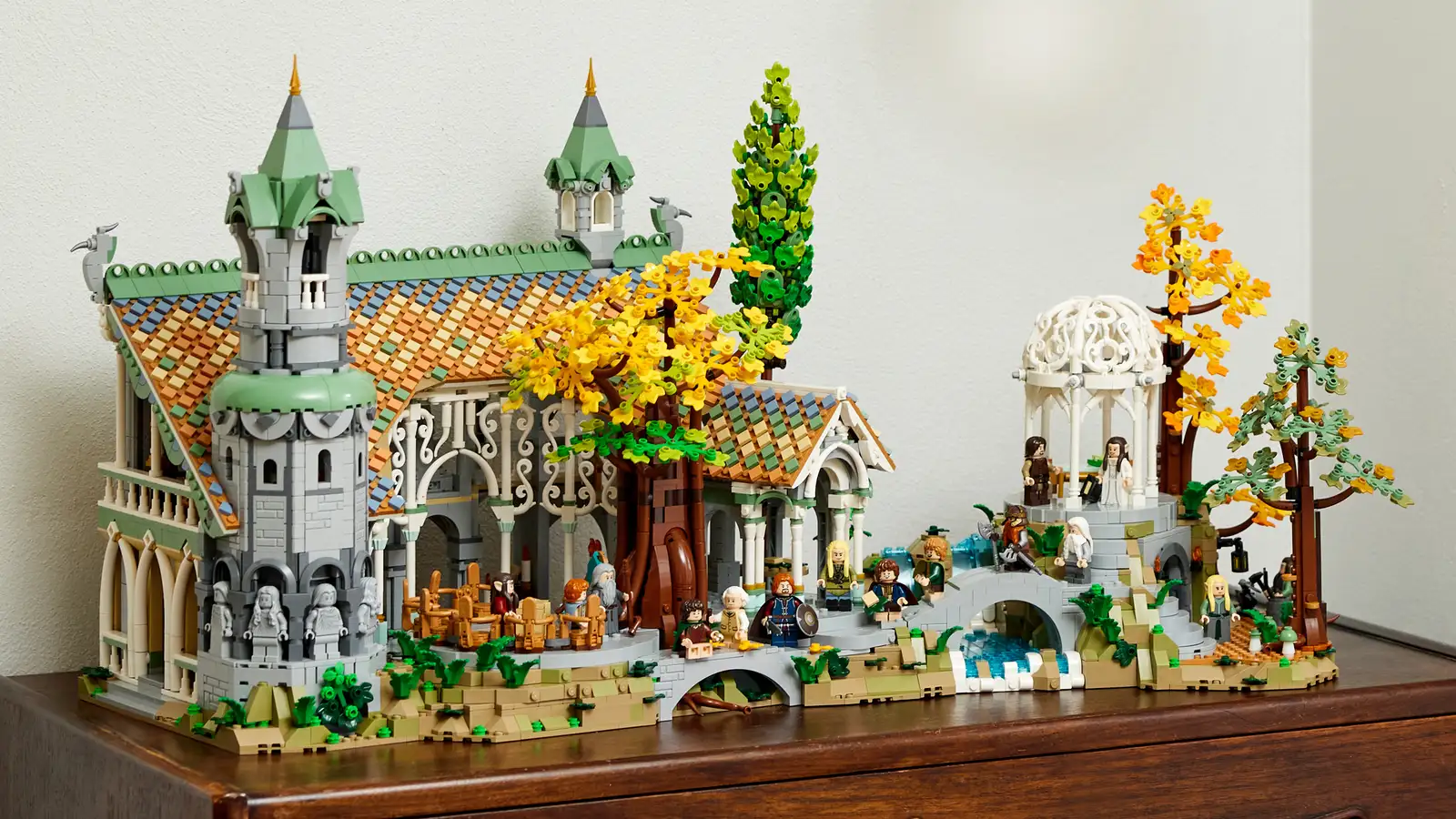
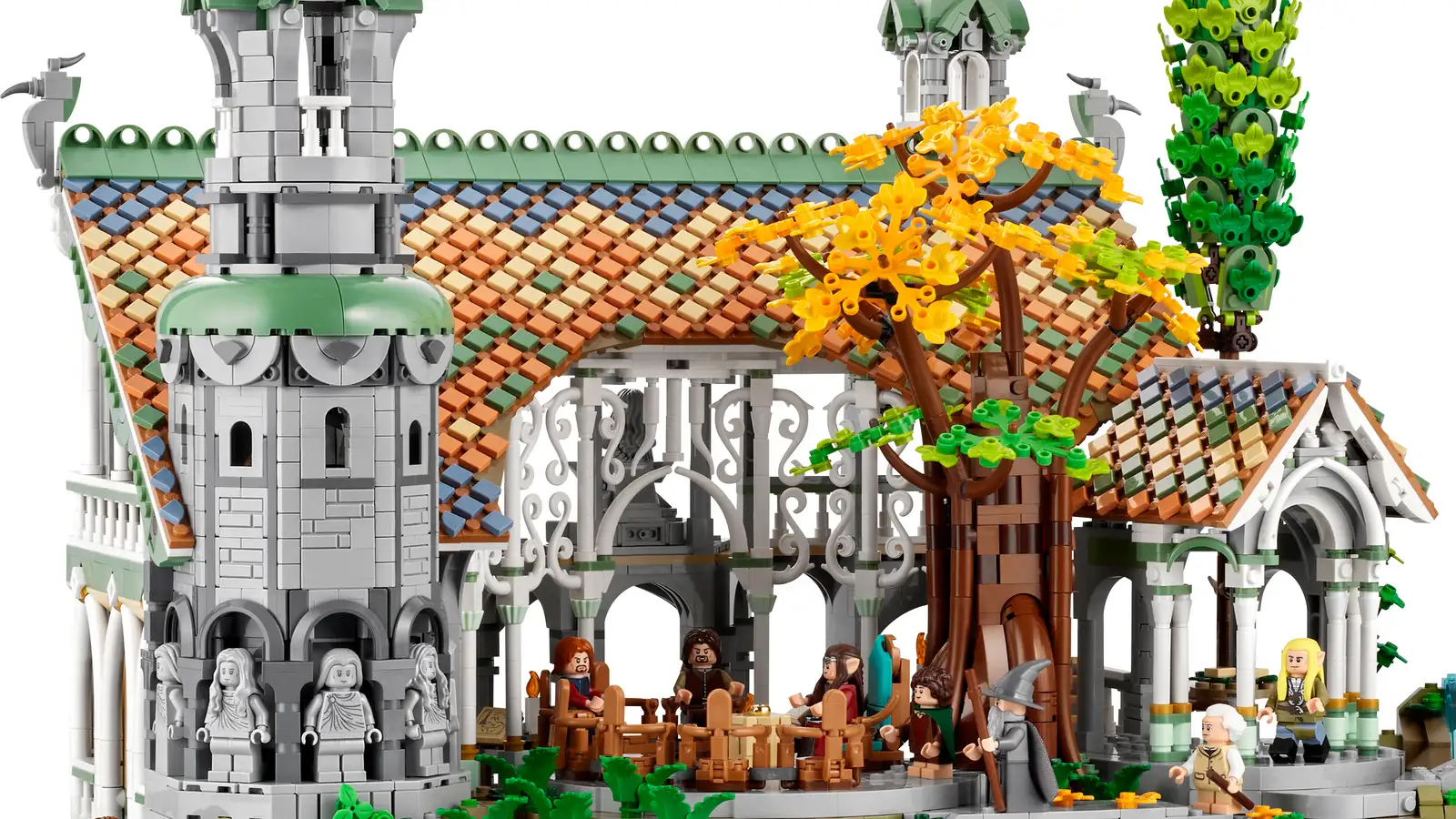
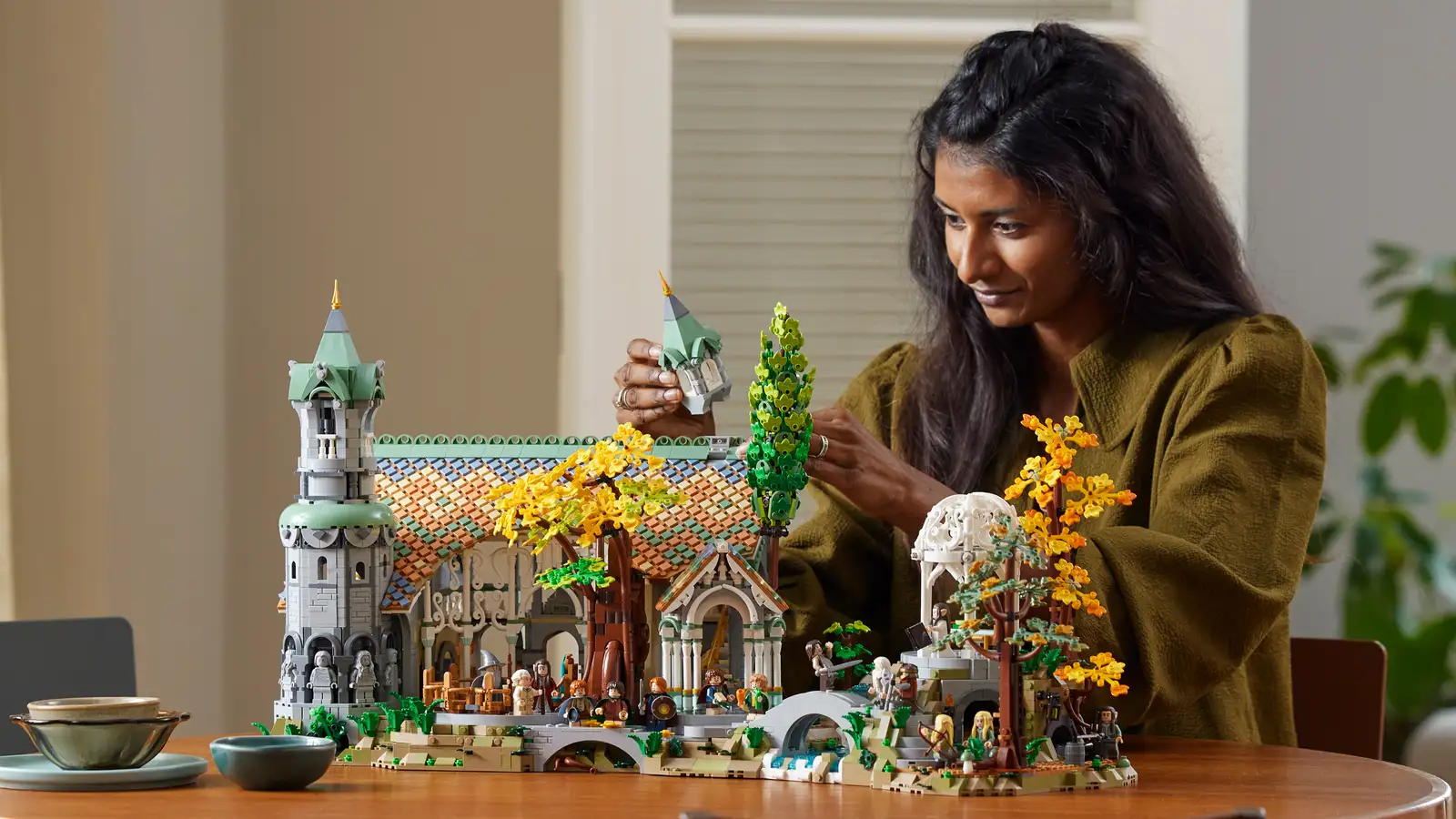
It is toward that very intersection of enthusiasm and means that LEGO has targeted its latest and largest Lord of the Rings-themed set: a 6,167-piece model of the Rivendell, the sanctuary located in the eponymous Elvish valley, which is set to retail for $500 USD.
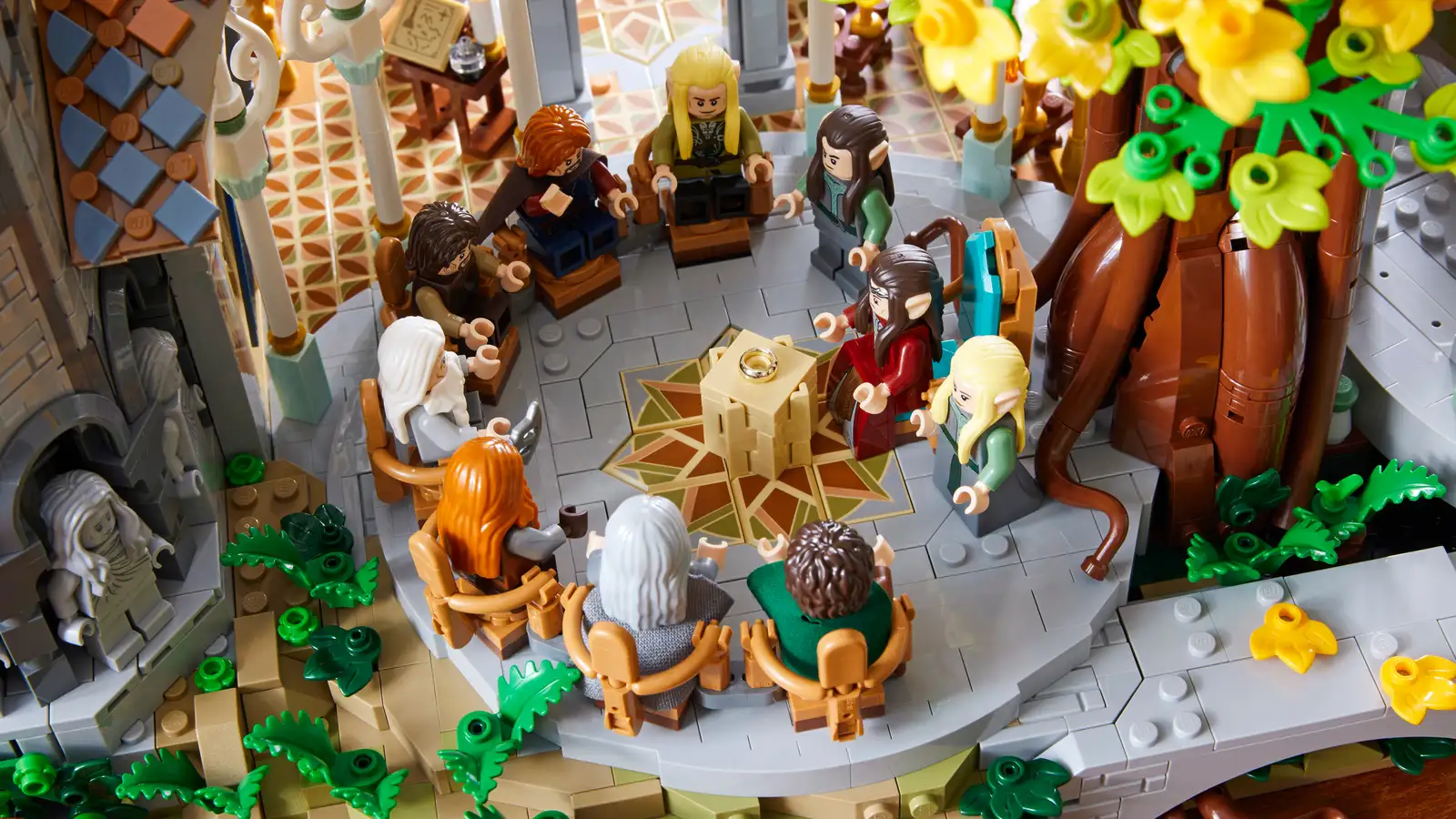
This new LEGO Rivendell has room “for the entire Fellowship to debate The One Ring, and the shards of a particularly noteworthy sword,” writes The Verge’s Sean Hollister, and it includes “tiled rooftops, imaginative arches, and enough distinct spaces to recreate multiple scenes from the movies.”
This marks a considerable improvement on the sets that came out at the time of Peter Jackson’s Lord of the Rings movies in the early 2000s: Andrew Liszewski at Gizmodo notes that “the largest one was a 1,300+-piece recreation of the Battle of Helm’s Deep that, by today’s LEGO standards, was relatively small. The collection also included a tiny 243-piece recreation of the Council of Elrond, which, understandably, left LOTR fans disappointed.”
You can see an in-depth review of the new Rivendell set in the video just above from LEGO Youtuber Bricksie. He has a great deal of praise for the details of its components, yet whatever resources LEGO can put toward an official consumer product, they can hardly match the power of sheer fan obsession.
If you want to experience a truly faithful re-creation of Rivendell in the medium of LEGO, you’ll have to attend a convention with Alice Finch and David Frank, builders of an elaborate model that includes no fewer than 200,000 bricks: a sprawling monument to the kind of quasi-religious (and sometimes lifelong) devotion inspired by both the imagination of Tolkien and the possibilities of LEGO.
Based in Seoul, Colin Marshall writes and broadcasts on cities, language, and culture. His projects include the Substack newsletterBooks on Cities, the book The Stateless City: a Walk through 21st-Century Los Angeles and the video series The City in Cinema. Follow him on Twitter at @colinmarshall or on Facebook.
The vinyl record–we’ve shown you how they were made way back in 1937, and also in 1956. But how about nowadays, during the renaissance of vinyl? Above, Wired visits Jack White’s Third Man Records vinyl pressing plant in Detroit, Michigan to “find out exactly what goes into the creation of a vinyl record; from cutting and pressing to making sure they sound great.” If you’re in the Detroit area, you can take a tour of Third Man Records’ pressing plant. Get more info here.
If you would like to support the mission of Open Culture, consider making a donation to our site. It’s hard to rely 100% on ads, and your contributions will help us continue providing the best free cultural and educational materials to learners everywhere. You can contribute through PayPal, Patreon, and Venmo (@openculture). Thanks!
In the year 1966, “it seemed to Western youth that The Beatles knew — that they had the key to current events and were somehow orchestrating them through their records.” So writes Ian McDonald in the critical study Revolution in the Head: The Beatles’ Records and the Sixties. But some had been looking to John Lennon, Paul McCartney, George Harrison, and Ringo Starr as pop-culture oracles since they put out their first album in 1963. Unlike the youth-oriented stars who came before, they fully inhabited the roles of both performers and creators. If anyone knew how to read the zeitgeist of that decade, surely it was the Beatles.
Hence the appearance of each Beatle in Melody Maker magazine’s “Blind Date” feature, which captured its subjects’ spontaneous reactions to the singles on the charts at the moment. When Lennon sat for a Blind Date in January of 1964, he gave his verdict on songs from Manfred Mann, Gerry and the Pacemakers, Ray Charles, and Ricky Nelson — as well as the now-less-well-known Marty Wilde, Millicent Martin, and The Bruisers.
You can see the article turned into a full audiovisual production, complete with clips of the music, at the Youtube channel Yesterday’s Papers. There you can also compare its playlist to that of McCartney’s session just three years later, but on a transformed musical landscape populated by the likes of The Small Faces, Donovan, the Lovin’ Spoonful, and the Byrds.
For that last California band McCartney expresses appreciation, if also reservations about what then seemed to him their stylistic stagnation: the late David Crosby, he notes, “knows where they should be going musically.” Other than calling the then-passé Gene Pitney’s “In the Cold Light of Day” a song he’s heard “hundreds of times before, although I haven’t actually heard this record,” he keeps his assessment characteristically positive. More surprising are Starr’s harsh verdicts on the pop music of December 1964, not just the songs themselves (though the Shangri-Las’ “Leader of the Pack” notably fails to impress him), but also the judgment of the audiences they target. “Being good,” he says of the Daylighters’ “Oh Mom,” “it won’t sell.”
Of Sandra Barry’s “We Were Lovers (When The Party Began),” Starr comments that it “sounds like an Englishman trying to be American, which never works properly.” Having grown up worshiping American rock-and-roll and started their own careers anxious about being received as foreign interlopers, the Fab Four show a natural sensitivity to this transatlantic dynamic in pop music. “It’s good if it’s English, mediocre if it’s American,” says Harrison of a song before finding out that the singer is his countryman Glyn Geoffrey Ellis, better known as Wayne Fontana. “Those breaks are so British,” Lennon says of a Unit 4 + 2 single of December 1965, and he doesn’t seem to mean it as a good thing. But when McCartney calls a Kiki Dee number “British to the core” the following year, it’s hard not to hear a note of admiration.
Based in Seoul, Colin Marshall writes and broadcasts on cities, language, and culture. His projects include the Substack newsletterBooks on Cities, the book The Stateless City: a Walk through 21st-Century Los Angeles and the video series The City in Cinema. Follow him on Twitter at @colinmarshall or on Facebook.
Back in 2016, we showed you Queen’s “Bohemian Rhapsody” getting played on a 1905 fairground organ. But now we’re stepping it up a level, and letting you behold this: organist Joshua Stafford performing the same Queen classic on a Midmer-Losh pipe organ. Built with 33,112 pipes, it’s apparently the “largest pipe organ ever constructed, the largest musical instrument ever constructed, and the loudest musical instrument ever constructed.” You can find it in the Main Auditorium of the Boardwalk Hall in Atlantic City, NJ. Enjoy.
h/t Allie
If you would like to support the mission of Open Culture, consider making a donation to our site. It’s hard to rely 100% on ads, and your contributions will help us continue providing the best free cultural and educational materials to learners everywhere. You can contribute through PayPal, Patreon, and Venmo (@openculture). Thanks!
No matter how much coffee you drink, you never drink the same coffee twice. Coffee-drinkers understand this instinctively, even those who only drink their coffee at home using the same beans and the same brewing process day in and day out. For even in the most controlled coffee-making conditions we can achieve in our everyday lives, variations have a way of creeping in. Endless scrutiny of those variations is all in a day’s work for someone like Matt Perger, who’s come out on or near the top of several barista championships, and who founded the online coffee-education service Barista Hustle and its associated Youtube channel.
In the channel’s most popular video by far, Perger delivers an 80-minute lecture on “advanced coffee making” at Assembly Coffee in London. After covering the adjectives used to describe the flavor of coffee in general — from “weak,” “delicate,” and “tea-like” to “luscious,” “bitter,” and “overwhelming” — he moves on to the vocabulary of extraction.
The most important stage in the coffee-making process as far as the resulting taste is concerned, extraction is accomplished by putting hot water through coffee grounds, in whichever manner and with whichever device you may choose to do it. Weaker methods of extraction result in “salty” or “vegetal” tastes, and stronger methods in “astringent” or “powdery” ones.
As in so many pursuits, the most desirable outcomes lie in the middle of the spectrum. Just how to achieve that perfectly “transparent,” “nutty,” “balanced,” and even “sweet” cup of coffee constitutes the driving professional question for Perger and baristas like him. Clearly possessed of a taste for rigor, he explains the effects of everything from the design of roasters and grinders to the techniques of brewing and pouring while citing the findings of experiments and blind taste tests — and even acknowledging when pieces of expensive coffee-making gear yield no demonstrable quantitative benefit. True coffee aficionados who have an endless appetite for this kind of talk may find themselves tempted to sign up for Barista Hustle’s online courses, but even more so to brew another cup for themselves.
Based in Seoul, Colin Marshall writes and broadcasts on cities, language, and culture. His projects include the Substack newsletterBooks on Cities, the book The Stateless City: a Walk through 21st-Century Los Angeles and the video series The City in Cinema. Follow him on Twitter at @colinmarshall or on Facebook.
We're hoping to rely on loyal readers, rather than erratic ads. Please click the Donate button and support Open Culture. You can use Paypal, Venmo, Patreon, even Crypto! We thank you!
Open Culture scours the web for the best educational media. We find the free courses and audio books you need, the language lessons & educational videos you want, and plenty of enlightenment in between.