Between 1985 and 1988, a teenager by the name of Sohrab Habibion was attending punk and post-punk shows around the Washington, DC area. What set him apart was the bulky video camera he’d bring to the show and let roll, documenting entire gigs in all their low-rez, lo-fi glory. Just a kid trying to document a great night out. Habibion might not have known at the time what an important time capsule he was creating, but these 60 or so tapes have now been digitized and uploaded to YouTube, thanks to Roswell Films and the DC Public Library’s Punk Archive.
“Please keep in mind that I was a teenager when I shot these shows,” Habibion writes, “and had zero proficiency with the equipment. And, as you might imagine, nobody was doing anything with the lights or the sound to make things any better. What you get here is what was recorded on my Betamax and probably best appreciated with a bit of generosity as a viewer.”
Highlights include the above full concert by Fugazi on December 28, 1987, a year before their first e.p. and playing songs that would turn up on their 1990’s classic debut Repeater; Descendents in 1987 at the height of their career; The Lemonheads when they were a punk band and not a power pop group; the insane and hilarious GWAR from 1988, the year of their debut; and another hometown punk band, Dain Bramage, which featured Dave Grohl on drums, long before he played with Nirvana and the Foo Fighters (see below).
Habibion went on to his own musical career: first as the frontman for post-hardcore band Edsel, and currently as part of the band SAVAK.
Habibion’s tape archive makes one wonder: who else is out there sitting on a trove of historic recordings? And where is that person’s equivalent of the DC Library? Who would help fund such a project? And who would see the worth of such recordings? Not only are Habibion’s tapes about the bands themselves, but they tell a separate history of music venues come and gone, of a time and place that will never come again. Watch the shows here.
Note: An earlier version of this post appeared on our site in 2022.
Ted Mills is a freelance writer on the arts who currently hosts the Notes from the Shed podcast and is the producer of KCRW’s Curious Coast. You can also follow him on Twitter at @tedmills, and/or watch his films here.
You could say that we live in the age of artificial intelligence, although it feels truer about no aspect of our lives than it does of advertising. “If you want to sell something to people today, you call it AI,” says Yuval Noah Harari in the new Big Think video above, even if the product has only the vaguest technological association with that label. To determine whether something should actually be called artificially intelligent, ask whether it can “learn and change by itself and come up with decisions and ideas that we don’t anticipate,” indeed can’t anticipate. That AI-enabled waffle iron being pitched to you probably doesn’t make the cut, but you may already be interacting with numerous systems that do.
As the author of the global bestseller Sapiens and other books concerned with the long arc of human civilization, Harari has given a good deal of thought to how technology and society interact. “In the twentieth century, the rise of mass media and mass information technology, like the telegraph and radio and television” formed “the basis for large-scale democratic systems,” but also for “large-scale totalitarian systems.”
Unlike in the ancient world, governments could at least begin to “micromanage the social and economic and cultural lives of every individual in the country.” Even the vast surveillance apparatus and bureaucracy of the Soviet Union “could not surveil everybody all the time.” Alas, Harari anticipates, things will be different in the AI age.
Human-operated organic networks are being displaced by AI-operated inorganic ones, which “are always on, and therefore they might force us to be always on, always being watched, always being monitored.” As they gain dominance, “the whole of life is becoming like one long job interview.” At the same time, even if you were already feeling inundated by information before, you’ve more than likely felt the waters rise around you due to the infinite production capacities of AI. One individual-level strategy Harari recommends to counteract the flood is going on an “information diet,” restricting the flow of that “food of the mind,” which only sometimes has anything to do with the truth. If we binge on “all this junk information, full of greed and hate and fear, we will have sick minds; perhaps a period of abstinence can restore a certain degree of mental health. You might consider spending the rest of the day taking in as little new information as possible — just as soon as you finish catching up on Open Culture, of course.
Based in Seoul, Colin Marshall writes and broadcasts on cities, language, and culture. His projects include the Substack newsletterBooks on Cities and the book The Stateless City: a Walk through 21st-Century Los Angeles. Follow him on the social network formerly known as Twitter at @colinmarshall.
It’s an old TV and movie trope: the man of wealth and taste, often but not always a supervillain, offers his distinguished guest a bottle of wine, his finest, an ancient vintage from one of the most venerable vineyards. We might follow the motif back at least to Edgar Allan Poe, whose “Cask of Amontillado” puts an especially devious spin on the treasured bottle’s sinister connotations.
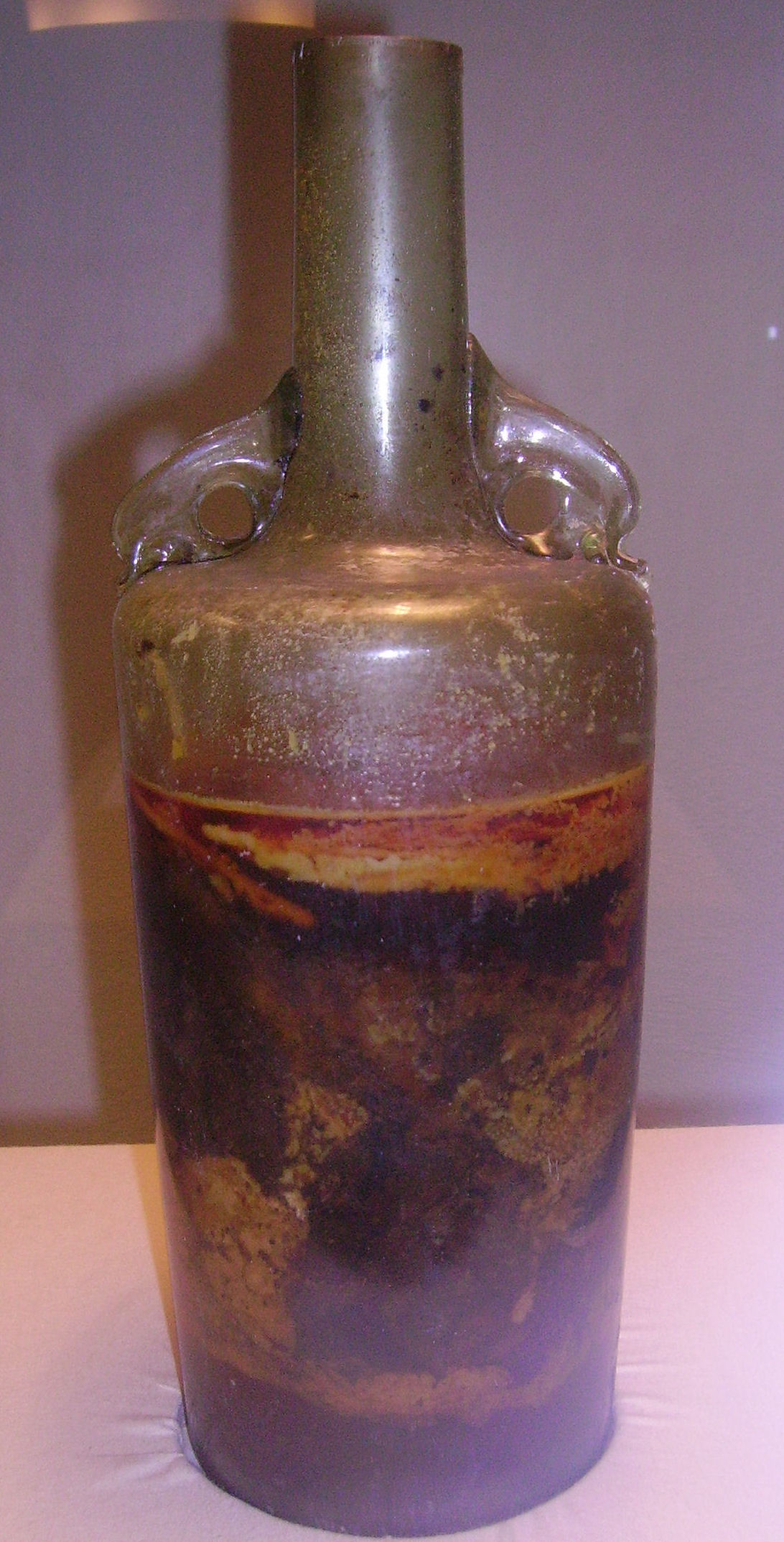
If our suave and possibly deadly host were to offer us the bottle you see here, we might hardly believe it, and would hardly be keen to drink it, though not for fear of being murdered afterward. The Römerwein, or Speyer wine bottle—so called after the German region where it was discovered in the excavation of a 4th century AD Roman nobleman’s tomb—dates “back to between 325 and 359 AD,” writes Abandoned Spaces, and has the distinction of being “the oldest known wine bottle which remains unopened.”
A 1.5 liter “glass vessel with amphora-like sturdy shoulders” in the shape of dolphins, the bottle is of no use to its owner, but no one is certain what would happen to the liquid if it were exposed to air, so it stays sealed, its thick stopper of wax and olive oil maintaining an impressively hermetic environment. Scientists can only speculate that the liquid inside has probably lost most of its ethanol content. But the bottle still contains a good amount of wine, “diluted with a mix of various herbs.”
The Römerwein resides at the Historical Museum of the Palatinate in Speyer, which seems like an incredibly fascinating place if you happen to be passing through. You won’t get to taste ancient Roman wine there, but you may, perhaps, if you travel to the University of Catania in Sicily where in 2013, scientists recreated ancient wine-making techniques, set up a vineyard, and followed the old ways to the letter, using wooden tools and strips of cane to tie their vines.
They proceeded, writes Tom Kingston at The Guardian, “without mechanization, pesticides or fertilizers.” Only the organic stuff for Roman vintners.
The team has faithfully followed tips on wine growing given by Virgil in the Georgics, his poem about agriculture, as well as by Columella, a first century AD grower, whose detailed guide to winemaking was relied on until the 17th century.
Those ancient winemakers added honey and water to their wine, as well as herbs, to sweeten and spice things up. And unlike most Italians today who “drink moderately with meals,” ancient Romans “were more given to drunken carousing.” Maybe that’s what the gentleman in the Speyer tomb hoped to be doing in his Roman afterlife.
Note: An earlier version of this post appeared on our site in 2017.
Western scholarship has had “a bias against studying sensual experience,” writes Reina Gattuso at Atlas Obscura, “the relic of an Enlightenment-era hierarchy that considered taste, touch, and flavor taboo topics for sober academic inquiry.” This does not mean, however, that cooking has been ignored by historians. Many a scholar has taken European cooking seriously, before recent food scholarship expanded the canon. For example, in a 1926 English translation of an ancient Roman cookbook, Joseph Dommers Vehling makes a strong case for the centrality of food scholarship.
“Anyone who would know something worthwhile about the private and public lives of the ancients,” writes Vehling, “should be well acquainted with their table.” Published as Cookery and Dining in Imperial Rome (and available here at Project Gutenberg and at the Internet Archive), it is, he says, the oldest known cookbook in existence.
The book, originally titled De Re Coquinaria, is attributed to Apicius and may date to the 1st century A.C.E., though the oldest surviving copy comes from the end of the Empire, sometime in the 5th century. As with most ancient texts, copied over centuries, redacted, amended, and edited, the original cookbook is shrouded in mystery.
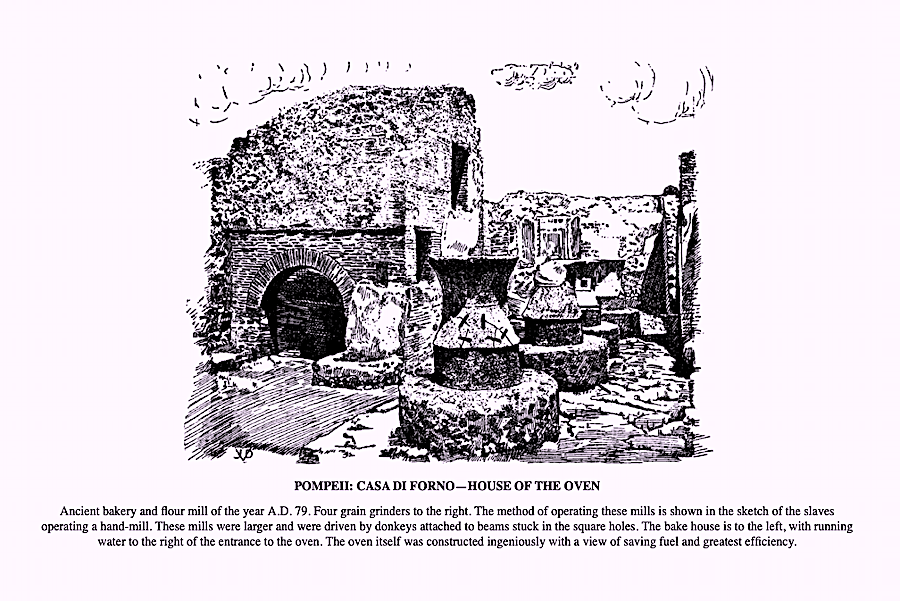
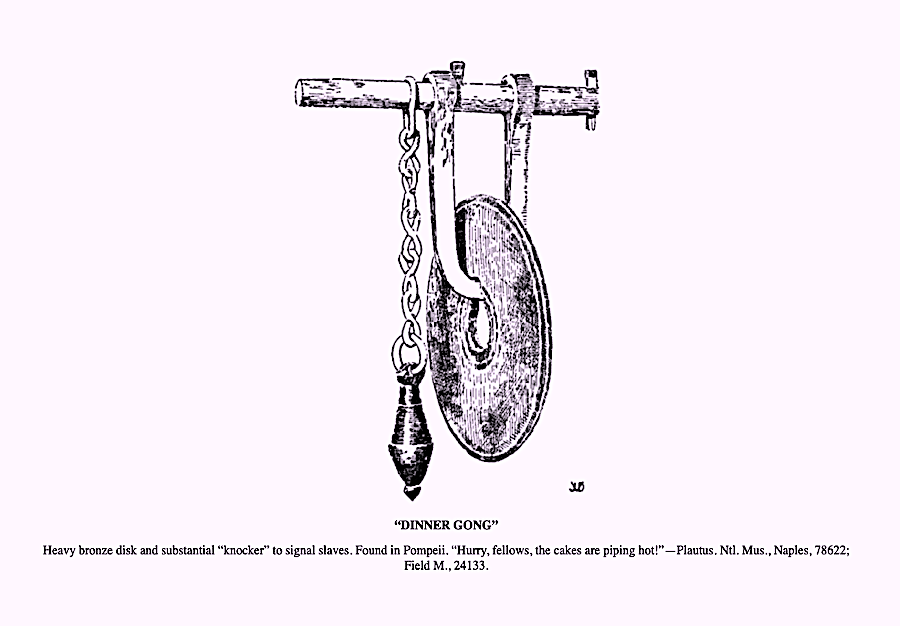
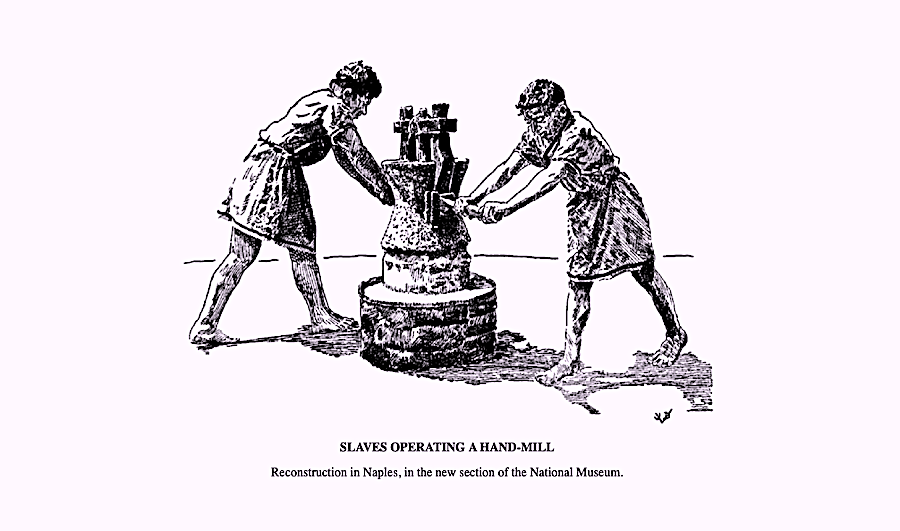
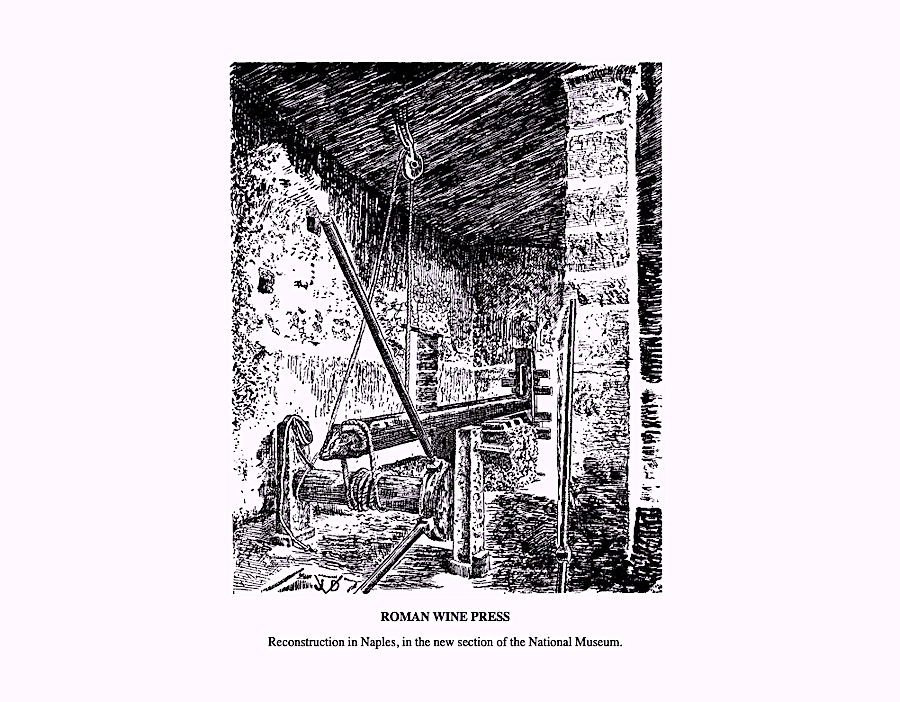
The cookbook’s author, Apicius, could have been one of several “renowned gastronomers of old Rome” who bore the surname. But whichever “famous eater” was responsible, over 2000 years later the book has quite a lot to tell us about the Roman diet. (All of the illustrations here are by Vehling, who includes over two dozen examples of ancient practices and artifacts.)
Meat played an important role, and “cruel methods of slaughter were common.” But the kind of meat available seems to have changed during Apicius’s time:
With the increasing shortage of beef, with the increasing facilities for raising chicken and pork, a reversion to Apician methods of cookery and diet is not only probably but actually seems inevitable. The ancient bill of fare and the ancient methods of cookery were entirely guided by the supply of raw materials—precisely like ours. They had no great food stores nor very efficient marketing and transportation systems, food cold storage. They knew, however, to take care of what there was. They were good managers.
But vegetarians were also well-served. “Apicius certainly excels in the preparation of vegetable dishes (cf. his cabbage and asparagus) and in the utilization of parts of food materials that are today considered inferior.” This apparent need to use everything, and to sometimes heavily spice food to cover spoilage, may have led to an unusual Roman custom. As How Stuff Works puts it, “cooks then were revered if they could disguise a common food item so that diners had no idea what they were eating.”
As for the recipes themselves, well, any attempt to duplicate them will be at best a broad interpretation—a translation from ancient methods of cooking by smell, feel, and custom to the modern way of weights and measures. Consider the following recipe:
WINE SAUCE FOR TRUFFLES
PEPPER, LOVAGE, CORIANDER, RUE, BROTH, HONEY AND A LITTLE OIL.
ANOTHER WAY: THYME, SATURY, PEPPER, LOVAGE, HONEY, BROTH AND OIL.
I foresee much frustrating trial and error (and many hopeful substitutions for things like lovage or rue or “satury”) for the cook who attempts this. Some foods that were plentifully available could cost hundreds now to prepare for a dinner party.
SEAFOOD MINCES ARE MADE OF SEA-ONION, OR SEA CRAB, FISH, LOBSTER, CUTTLE-FISH, INK FISH, SPINY LOBSTER, SCALLOPS AND OYSTERS. THE FORCEMEAT IS SEASONED WITH LOVAGE, PEPPER, CUMIN AND LASER ROOT.
Vehling’s footnotes mostly deal with etymology and define unfamiliar terms (“laser root” is wild fennel), but they provide little practical insight for the cook. “Most of the Apician directions are vague, hastily jotted down, carelessly edited,” much of the terminology is obscure: “with the advent of the dark ages, it ceased to be a practical cookery book.” We learn, instead, about Roman ingredients and home economic practices, inseparable from Roman economics more generally, according to Vehling.
He makes a judgment of his own time even more relevant to ours: “Such atrocities as the willful destruction of huge quantities of food of every description on the one side and the starving multitudes on the other as seen today never occurred in antiquity.” Perhaps more current historians of antiquity would beg to differ, I wouldn’t know.
But if you’re just looking for a Roman recipe that you can make at home, might I suggest the Rose Wine?
ROSE WINE
MAKE ROSE WINE IN THIS MANNER: ROSE PETALS, THE LOWER WHITE PART REMOVED, SEWED INTO A LINEN BAG AND IMMERSED IN WINE FOR SEVEN DAYS. THEREUPON ADD A SACK OF NEW PETALS WHICH ALLOW TO DRAW FOR ANOTHER SEVEN DAYS. AGAIN REMOVE THE OLD PETALS AND REPLACE THEM BY FRESH ONES FOR ANOTHER WEEK; THEN STRAIN THE WINE THROUGH THE COLANDER. BEFORE SERVING, ADD HONEY SWEETENING TO TASTE. TAKE CARE THAT ONLY THE BEST PETALS FREE FROM DEW BE USED FOR SOAKING.
You could probably go with red or white, though I’d hazard Apicius went with a fine vinum rubrum. This concoction, Vehling tells us in a helpful footnote, doubles as a laxative. Clever, those Romans. Read the full English translation of the ancient Roman cookbook here.
Note: An earlier version of this post appeared on our site in 202o.
The snail may leave a trail of slime behind him, but a little slime will do a man no harm… whilst if you dance with dragons, you must expect to burn.
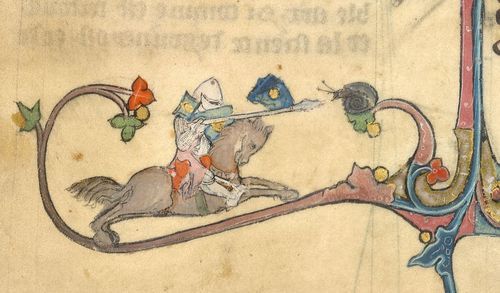
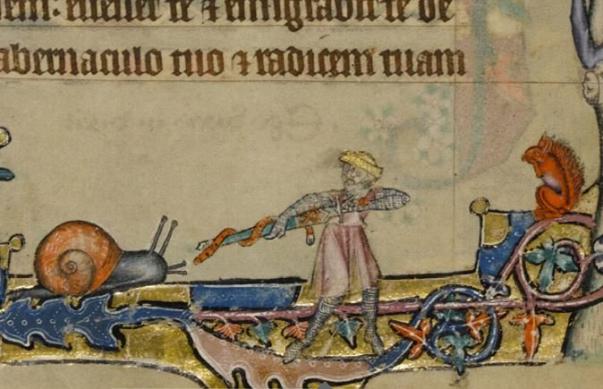
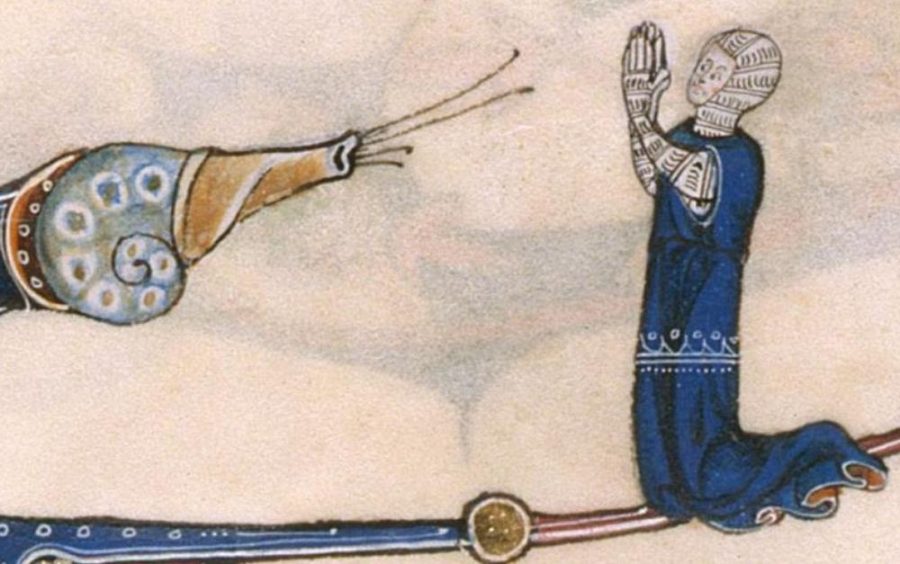
Randall, who found some 70 instances of man-on-snail combat in 29 manuscripts dating from the late 1200s to early 1300s, believed that the tiny mollusks were stand ins for the Germanic Lombards who invaded Italy in the 8th century.
After Charlemagne trounced the Lombards in 772, declaring himself King of Lombardy, the vanquished turned to usury and pawnbroking, earning the enmity of the rest of the populace, even those who required their services.
Their profession conferred power of a sort, the kind that tends to get one labelled cowardly, greedy, malicious … and easy to put down.
Which rather begs the question why the knights going toe-to- …uh, facing off against them in the margins of these illuminated manuscripts look so damn intimidated.
Let us remember that the doodles in medieval marginalia are editorial cartoons wrapped in enigmas, much as today’s memes would seem, 800 years from now. Whatever point—or joke—the scribe was making, it’s been obscured by the mists of time.
And these things have a way of evolving. The snail vs. knight motif disappeared in the 14th-century, only to resurface toward the end of the 15th, when any existing significance would very likely have been tailored to fit the times.
Other theories that scholars, art historians, bloggers, and armchair medievalists have floated with regard to the symbolism of these rough and ready snails haunting the margins:
I like to imagine a monk drawing out his fantastical daydreams, the snail being his nemesis, leaving unsightly trails across the page and him building up in his head this great victory wherein he vanquishes them forever, never again to be plagued by the beastly buggers while creating his masterpieces.
Joan Baez was already heralded as the “Queen of Folk” by the time Robert Zimmerman aka Bob Dylan arrived in New York City. Many things brought him to the burgeoning folk scene there, but Baez was the siren who called to a young Dylan through his television set long before he met her. He was smitten. He would write much later in Chronicles, Vol. 1, that she had “A voice that drove out bad spirits… she sang in a voice straight to God… Nothing she did didn’t work.”
And for a couple of years they became collaborators, partners, lovers, and folk royalty. It was Baez who introduced a then-unknown Dylan to the crowds at the 1963 Newport Folk Festival. But soon, fortunes changed: Dylan became an unstoppable cultural force and Baez would be on the receiving end of several betrayals, artistic and otherwise.
An excerpt from an Earl Scruggs documentary, the cute video above, shot by David Hoffman and posted on his YouTube channel, shows Baez imitating Dylan after she sings a verse of “It Ain’t Me Babe”. (She does this while holding her baby and trying to get it to drink from a pitcher, too.) A 16-year-old Ricky Skaggs—not looking anything like a teenager—accompanies her on guitar.
For one thing she does a crackin’ good Dylan impression. The other is watching the emotion behind that impression—there’s a lot of history there, a bit of sadness, a bit of nostalgia, nothing bitter or mean, but evidence of a shared life together that once existed.
By this time in 1972, Dylan’s voice had matured. The crooner on Nashville Skyline was a different person from the man on Blonde on Blonde, all those rough corners sanded off and the register deepened. Yet when anyone imitates Dylan, they head on back to those mid-‘60s albums, the “braying beatnik” as writer Rob Jones calls him. (Jones posits that Dylan has had eight particular voices during his career.)
Remember, as Slate’s Carl Wilson points out, when Dylan first started out, he was commended for his voice, and was considered “one of the most compelling white blues singers ever recorded,” by Robert Shelton, who wrote the copy on the back cover of Dylan’s 1962 debut album. He came from a tradition of both Woody Guthrie and Howlin’ Wolf, and several other idiosyncratic singers who didn’t sound like Frank Sinatra. (Although Dylan’s last few projects have been covers from the Great American Songbook.)
Critics have been giving me a hard time since Day One. Critics say I can’t sing. I croak. Sound like a frog. Why don’t critics say that same thing about Tom Waits? Critics say my voice is shot. That I have no voice. [Why] don’t they say those things about Leonard Cohen? Why do I get special treatment? Critics say I can’t carry a tune and I talk my way through a song. Really? I’ve never heard that said about Lou Reed. Why does he get to go scot-free? … Slur my words, got no diction. Have you people ever listened to Charley Patton or Robert Johnson, Muddy Waters? … “Why me, Lord?” I would say that to myself.
Fast forward to the present and Dylan’s voice shows the wear of years of performing and years of indulgence. It’s gravelly and phlegmatic, smoky and whiskey-soaked, but Wilson points out: “Even the rasp and burr of his late voice, several keen listeners have noticed, is very much like a more genuine copy of the old-bluesman timbre he pretentiously affected as a young man. It’s almost like this is what he’s been aiming toward.”
Note: An earlier version of this post appeared on our site in 2018.
Though the pop-cultural moment that gave rise to the association has passed, when many of us hear about Kabbalah, we still think of Madonna. Her study of that Jewish-mystic school of thought in the nineteen-nineties has been credited, at least in part, with the sonic transformation that led to her hit album Ray of Light. A few years later, when she recorded the theme song for the 2002 James Bond movie Die Another Day, she managed to include in its music video such Kabbalistic imagery as the Hebrew letters lamed, aleph, and vav — which come, as Religion for Breakfast creator Andrew M. Henry says in the video above, from one of the 72 names of God according to Jewish tradition.
But what, exactly, is Kabbalah? That’s the question Henry takes it upon himself to answer, attempting to separate the real thing from the pop-cultural ephemera that’s come to surround it.
This entails first going back to the earliest Kabbalists, “Jewish teachers, theologians, and philosophers” among “the educated elite of medieval Europe, living in Spain and France, writing new and innovative studies on Jewish texts and concepts about mystical contemplation of the divine realms, the nature of God, the purpose of humanity, and the creation of the universe.” They searched, and their successors have continued to search, for secret divine wisdom originally vouchsafed to Moses at Mount Sinai.
The word kabbalah can be translated as “that which has been received,” but that may make the enterprise sound simpler than it is. Henry frames Kabbalah as a series of traditions “encompassing several modes of reading, a library of texts, a series of concepts, and a range of practices within Judaism that is concerned with mystical contemplation.” But whatever their differences, most Kabbalists revere concepts like Ein Sof, “an infinite impersonal god or supreme entity or supreme entity that we cannot describe with our own human faculties,” and vast works like the novelistic Zohar, or “The Book of Radiance,” in which “even the search for mystical knowledge becomes sexualized”: an aspect that, given the skill with which she’s crafted her provocative pop-icon image, Madonna could hardly fail to appreciate.
Based in Seoul, Colin Marshall writes and broadcasts on cities, language, and culture. His projects include the Substack newsletterBooks on Cities and the book The Stateless City: a Walk through 21st-Century Los Angeles. Follow him on the social network formerly known as Twitter at @colinmarshall.
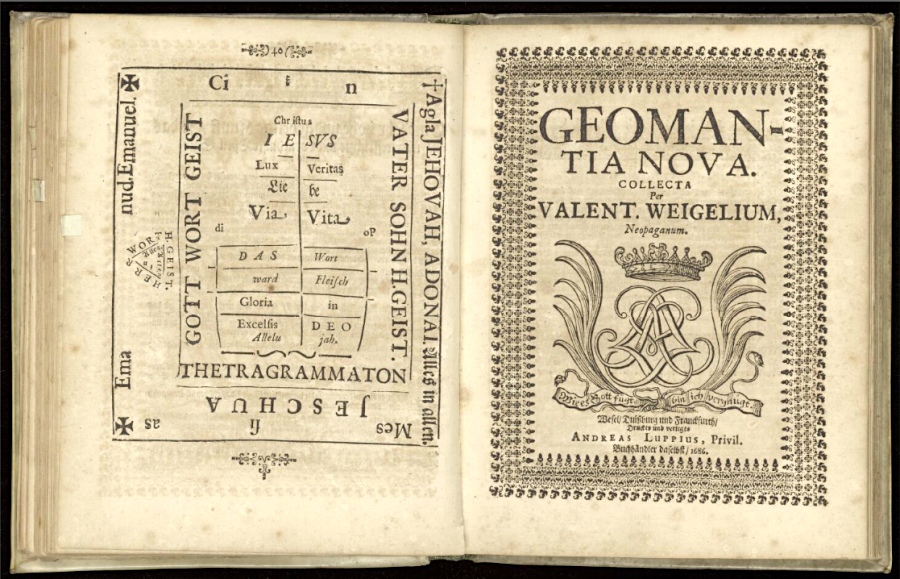
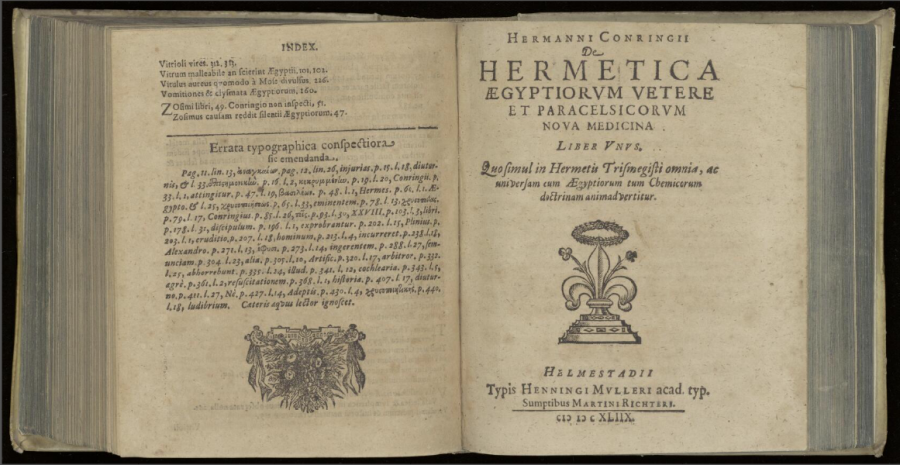
In 2018 we brought you some exciting news. Thanks to a generous donation from Da Vinci Code author Dan Brown, Amsterdam’s Ritman Library—a sizable collection of pre-1900 books on alchemy, astrology, magic, and other occult subjects—has been digitizing thousands of its rare texts under a digital education project cheekily called “Hermetically Open.” We are now pleased to report that the first 2,178 books from the Ritman project have come available in their online reading room.
Visitors should be aware that these books are written in several different European languages. Latin, the scholarly language of Europe throughout the Medieval and Early Modern periods, predominates, and it’s a peculiar Latin at that, laden with jargon and alchemical terminology. Other books appear in German, Dutch, and French. Readers of some or all of these languages will of course have an easier time than monolingual English speakers, but there is still much to offer those visitors as well.
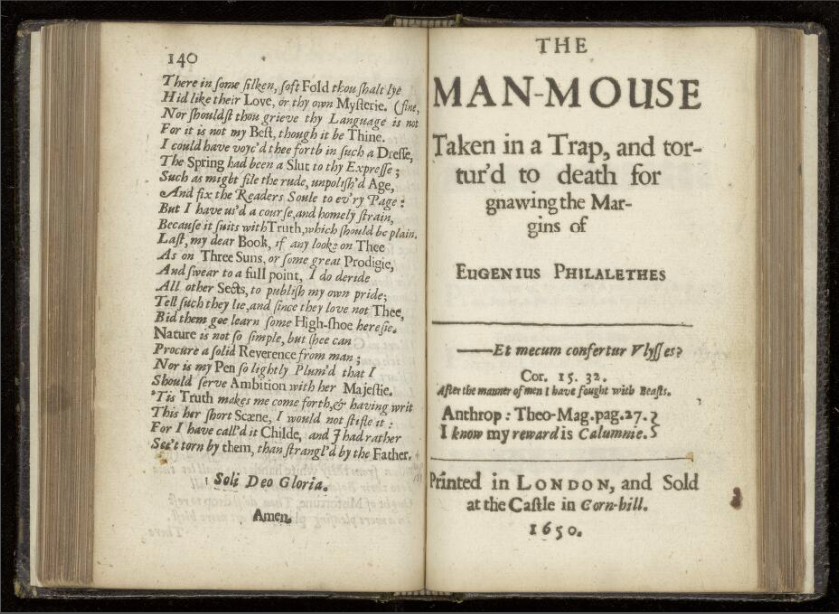
In addition to the pleasure of paging through an old rare book, even virtually, English speakers can quickly find a collection of readable books by clicking on the “Place of Publication” search filter and selecting Cambridge or London, from which come such notable works as The Man-Mouse Takin in a Trap, and tortur’d to death for gnawing the Margins of Eugenius Philalethes, by Thomas Vaughan, published in 1650.
The language is archaic—full of quirky spellings and uses of the “long s”—and the content is bizarre. Those familiar with this type of writing, whether through historical study or the work of more recent interpreters like Aleister Crowley or Madame Blavatsky, will recognize the many formulas: The tracing of magical correspondences between flora, fauna, and astronomical phenomena; the careful parsing of names; astrology and lengthy linguistic etymologies; numerological discourses and philosophical poetry; early psychology and personality typing; cryptic, coded mythology and medical procedures. Although we’ve grown accustomed through popular media to thinking of magical books as cookbooks, full of recipes and incantations, the reality is far different.
Encountering the vast and strange treasures in the online library, one thinks of the type of the magician represented in Goethe’s Faust, holed up in his study,
Where even the welcome daylight strains But duskily through the painted panes. Hemmed in by many a toppling heap Of books worm-eaten, gray with dust, Which to the vaulted ceiling creep
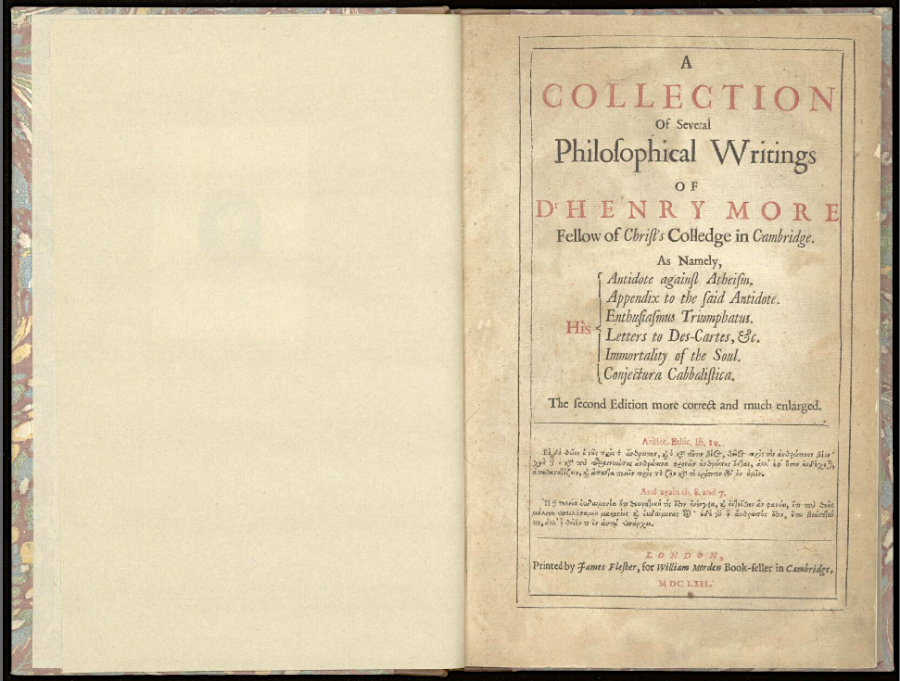
The library doesn’t only contain occult books. Like the weary scholar Faust, alchemists of old “studied now Philosophy / And Jurisprudence, Medicine,— / And even, alas! Theology.” Click on Cambridge as the place of publication and you’ll find the work above by Henry More, “one of the celebrated ‘Cambridge Platonists,’” the Linda Hall Library notes, “who flourished in mid-17th-century and did their best to reconcile Plato with Christianity and the mechanical philosophy that was beginning to make inroads into British natural philosophy.” Those who study European intellectual history know well that More’s presence in this collection is no anomaly. For a few hundred years, it was difficult, if not impossible, to separate the pursuits of theology, philosophy, medicine, and science (or “natural philosophy”) from those of alchemy and astrology. (Isaac Newton is a famous example of a mathematician/scientist/alchemist/believer in strange apocalyptic predictions.) Enter the Ritman’s new digital collection of occult texts here.
Note: An earlier version of this post appeared on our site in 2018.
Buster Keaton’s penchant and skill for comedic stunts made him one of the biggest stars of the silent-film era. Nobody at the time imagined that he would still be engaging in dangerous-looking pratfalls 40 years later in his seventies, especially since his career seemed to have come to an end in 1926. That was the year of his Civil War-set film The General, which, though now critically respected, left contemporary audiences cold. Flops are, perhaps, inevitable, but this one happened to incorporate into the picture the most expensive shot in cinema history to date. As a result, says the Ming video above, “Keaton was never given control over his films again.”
Ironically, unlike the cinematic images that had made him famous, the $42,000 shot in The General did not put its director-star in apparent mortal peril, depicting only a railroad bridge collapsing while a train crosses it. Though undoubtedly impressive, it wouldn’t have been what people went to a Buster Keaton movie to see.
Here was a man willing, after all, to fly from the back of a moving streetcar, dangle off the edge of a waterfall, risk being crushed by an entire wall of a house, and even break his neck — though he didn’t discover that he’d done so until eleven years later. Making these and all of Keaton’s other famous stunts involved considerable amounts of both calculated danger and movie magic.
Some of that movie magic was conceived by Keaton himself, the first filmmaker, in Quentin Tarantino’s words, to “use cinema itself to be the joke.” Few performers could have adapted so well to the medium of silent film, with its realms of silent comedy just waiting to be opened. And after sound had been around for a few decades, longtime moviegoers started to feel like cinema had lost some of the visual exuberance that it once possessed. By that time, luckily, Keaton had emerged from his long post-General period of hard-drinking malaise, ready to appear not just in the movies again, but also on television, delighting the generations who remembered his earlier work and fascinating those too young to recognize him. Even today, when we find ourselves laughing at a scene of elaborately orchestrated physical danger, we are, in some sense, witnessing Keaton’s legacy.
Based in Seoul, Colin Marshall writes and broadcasts on cities, language, and culture. His projects include the Substack newsletterBooks on Cities and the book The Stateless City: a Walk through 21st-Century Los Angeles. Follow him on the social network formerly known as Twitter at @colinmarshall.
Tim Burton grew up watching Japanese monster movies in Burbank, which must explain a good deal about his artistic sensibility. It seems to be for that reason, in any case, that the new Konbini “Vidéo Club” episode above takes him first to the Asian cinema section of JM Vidéo, one of Paris’ last two DVD rental shops. Early and repeated exposure to such kaiju classics as Honda Ishirō’s Godzilla and The War of the Gargantuas may have instilled him with an affection for poor English dubbing, but it didn’t rob him of his ability to appreciate more refined (if equally visceral) examples of Japanese film like Shindō Kaneto’s Onibaba and Kuroneko.
Burton describes those pictures as dreamlike, a quality he goes on to praise in other selections from a variety of different eras and cultures. Even cinephiles who don’t share his particular taste in viewing material — bound on one end, it seems, by The Passion of Joan of Arc and The Cabinet of Dr. Caligari, and on the other by I Was a Teenage Werewolf and The Brain That Wouldn’tDie, with the likes of Jason and the Argonauts and The Fly in between — have to admit that this indicates a deep understanding of cinema itself.
It may be the art form whose experience is most similar to dreaming, but only occasionally throughout its history have particular films attained the status of the truly oneiric. One suspects that Burton knows them all.
In fact, one of the twenty-first century’s most notable additions to the canon of the dreamlike won the Palme d’Or with Burton’s involvement. This video includes his brief reminiscences of being on the jury at the 2010 Cannes Film Festival, where Apichatpong Weerasethakul’s Uncle Boonmee Who Can Recall His Past Lives took the top prize. That same year saw the release of Burton’s own Alice in Wonderland, which he describes as “the most chaotic movie I’ve ever made.” In 2019, he directed his second live-action Disney adaptation Dumbo, which, though hardly a passion project, wasn’t without its autobiographical resonances: “At that point, I kind of felt like Dumbo,” he admits, “a weird creature trapped at Disney.” Perhaps that long on-and-off corporate association finally having come to an end, or so he suggests, means he’ll now be freer than ever to draw from the depths of his own cinematic subconsciousness.
Based in Seoul, Colin Marshall writes and broadcasts on cities, language, and culture. His projects include the Substack newsletterBooks on Cities and the book The Stateless City: a Walk through 21st-Century Los Angeles. Follow him on the social network formerly known as Twitter at @colinmarshall.
Since its ancient origins as the camera obscura, the photographic camera has always mimicked the human eye, allowing light to enter an aperture, then projecting an image upside down. Renaissance artists relied on the camera obscura to sharpen their own visual perspectives. But it wasn’t until photography—the ability to reproduce the obscura’s images—that the rudimentary artificial eye began evolving the same complex structures we rely on for our own visual acuity: lenses for sharpness, variable apertures, shutter speeds, focus controls…. Only when it began to seem that photography might vie with the other fine arts did the development of camera technology take off. And it moved quickly.
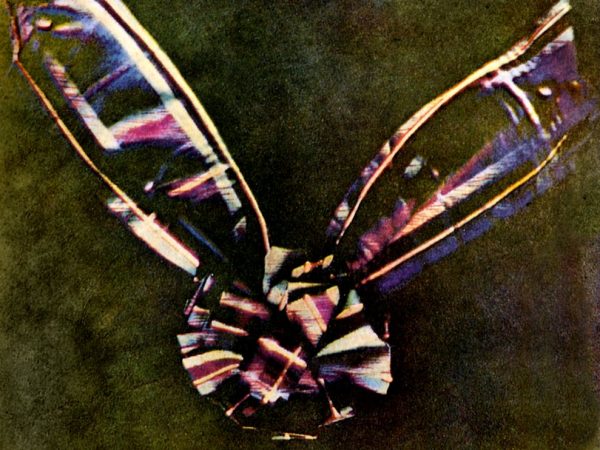
Between the time of the first photograph in 1826 by Joseph Nicéphore Niépce and 1861, photography had advanced sufficiently that physicist James Clerk Maxwell—known for his “Maxwell’s Demon” thought experiment—produced the first color photograph that did not immediately fade or require hand painting (above).
The Scottish scientist chose to take a picture of a tartan ribbon, “created,” writes National Geographic, “by photographing it three times through red, blue, and yellow filters, then recombining the images into one color composite.” Maxwell’s three-color method was intended to mimic the way the eye processes color, based on theories he had elaborated in an 1855 paper.
Maxwell’s many other accomplishments tend to overshadow his color photography (and his poetry!). Nonetheless, the polymath thinker ushered in a revolution in photographic reproduction, almost as an aside. “It’s easy to forget,“ writes BBC picture editor, Phil Coomes, “that not long ago news agencies were transmitting their wire photographs as colour separations, usually cyan, magenta, and yellow—a process that relied on Clerk Maxwell’s discovery. Indeed, even the latest digital camera relies on the separation method to capture light.” And yet, compared to the usual speed of photographic advancement, the process took some time to fully refine.
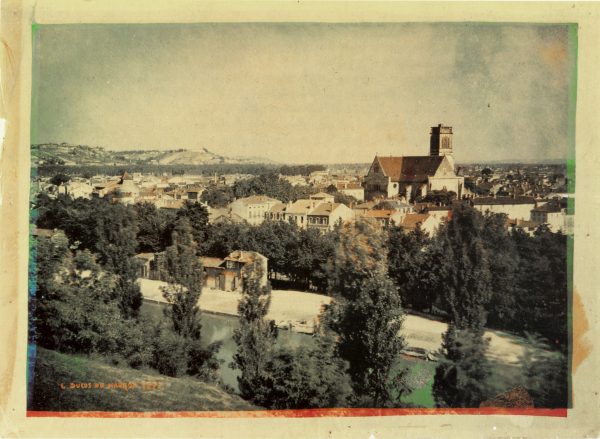
Maxwell created the image with the help of photographer Thomas Sutton, inventor of the single lens reflex camera, but his interest lay principally in its demonstration of his color theory, not its application to photography in general. Sixteen years later, the reproduction of color had not advanced significantly, though a subtractive method allowed more subtlety of light and shade, as you can see in the 1877 example above by Louis Ducos du Hauron. Even so, these nineteenth-century images still cannot compete for vibrancy and lifelikeness with hand-colored photos from the period. Despite appearing artificial, hand-tinted images like these of 1860s Samurai Japan brought a startling immediacy to their subjects in a way that early color photography did not.
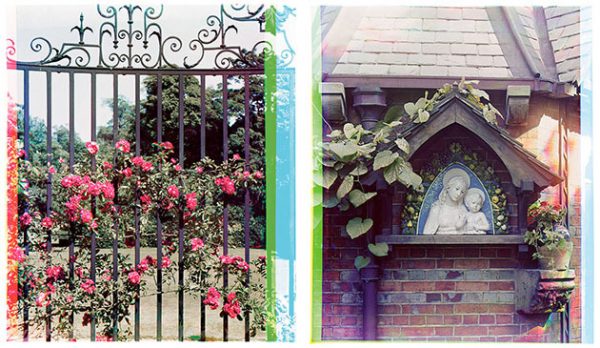
It wasn’t until the early 20th century—with the development of color processes by Gabriel Lippman and the Sanger Shepherd company—that color came into its own. Leo Tolstoy appeared early in the century in brilliant full color photos. Paris came alive in color images during WWI. And Sarah Angelina Acland, a pioneering English photographer, took the image above in 1900 using the Sanger Shepherd method. That process—patented, marketed, and sold—thoroughly improved upon Maxwell’s results, but its basic operation was nearly the same: three images, red, green, and blue, combined into one.
Note: An earlier version of this post appeared on our site in 2016.
We're hoping to rely on loyal readers, rather than erratic ads. Please click the Donate button and support Open Culture. You can use Paypal, Venmo, Patreon, even Crypto! We thank you!
Open Culture scours the web for the best educational media. We find the free courses and audio books you need, the language lessons & educational videos you want, and plenty of enlightenment in between.