A 110-Year-Old Book Illustrated with Photos of Kittens & Cats Taught Kids How to Read
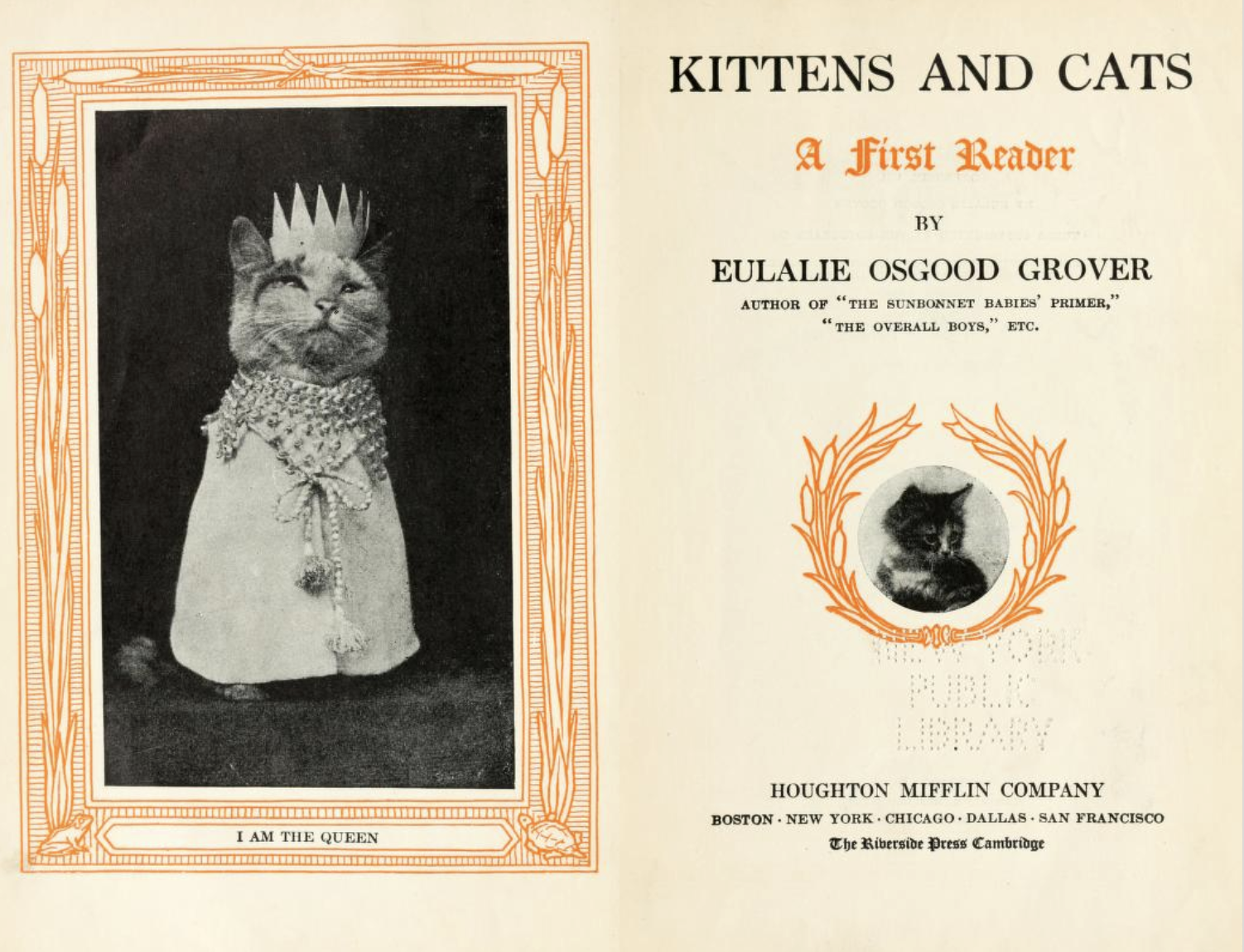
Unlike our 21st-century cat memes and other such online feline-based entertainments, children’s author Eulalie Osgood Grover’s 1911 work, Kittens and Cats: A First Reader was intended to educate.
Its related poems will almost certainly strike those of us whose understanding of feline attitude has been shaped by LOLCats, Grumpy Cat, the existential Henri, Talking Kitty Cat’s acerbic Sylvester, and the mordant 1970s TV spokescat Morris as sweet to the point of sickly. But it boasts six hundred vocabulary words, a rhyme structure that promotes reading aloud, and a note to teachers with suggestions for classroom activities.
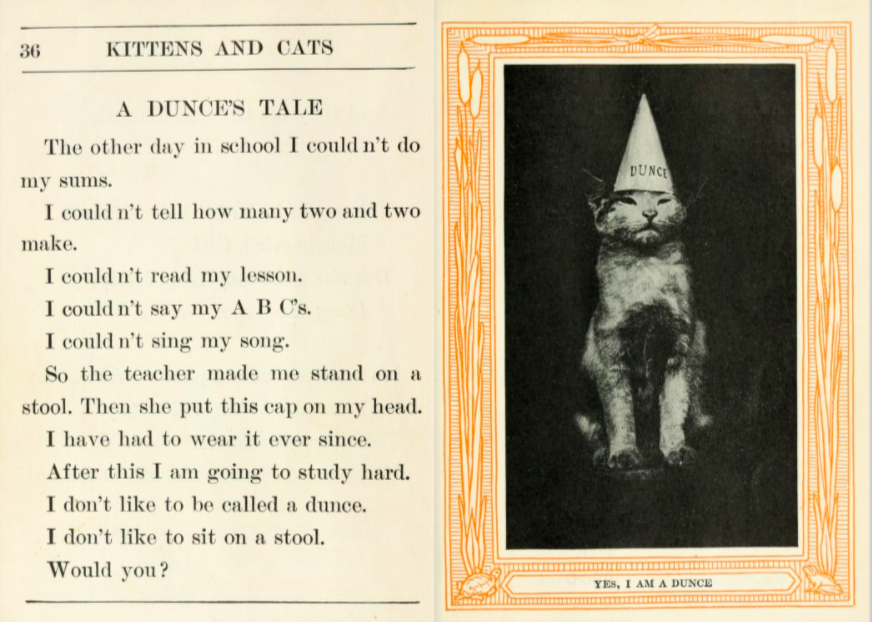
Grover explained how her feline cast of characters would win over even the most reluctant reader, inspiring “much the same delight to the little reader of juvenile fiction, as do adventure and romance to the grown-up reader”:
In one respect kittens take precedence over dolls. They are alive. They must be treated kindly. They will not bear the abuse and neglect given to many beautiful dolls. They demand attention and companionship, and they return a real devotion in return for kindness and care. Therefore we love them and especially do our children love them and delight in stories of them.
The loosely structured story concerns a grand party thrown by the Queen of the Cats. Following some breathless preparations, the guests take turns introducing themselves to her majesty, though unlike T.S. Eliot’s Old Possum’s Book of Practical Cats (1939), there’s not much that could be cobbled into a hit musical.
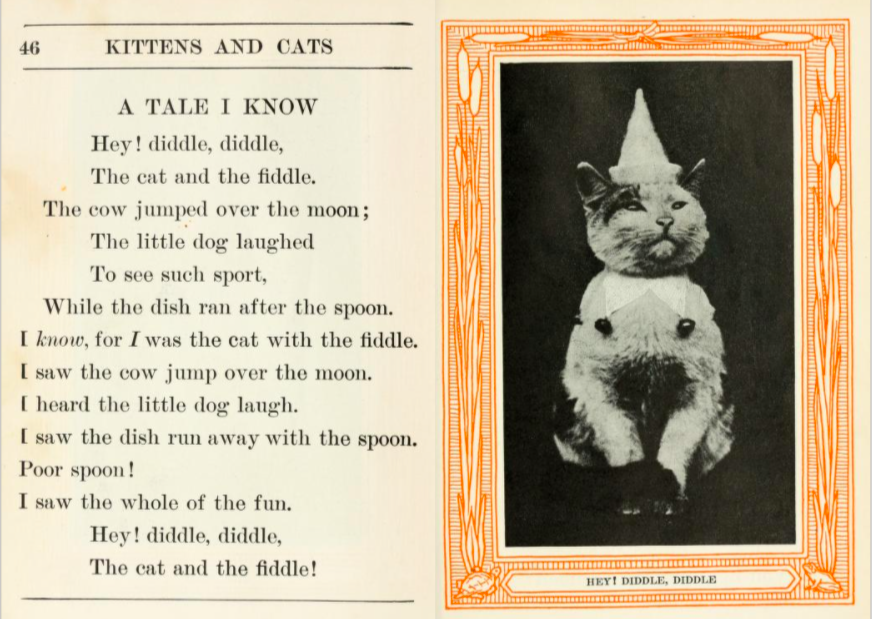
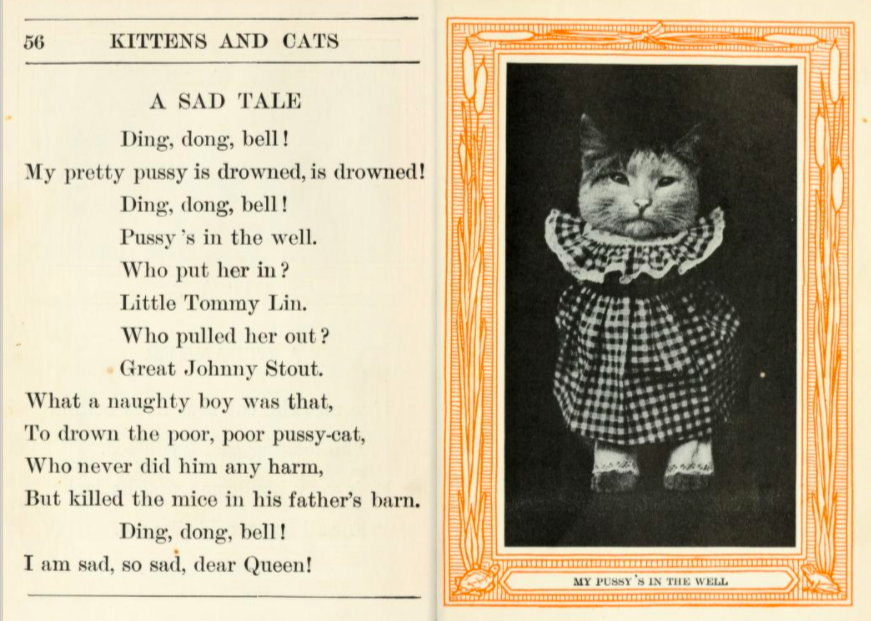
Grover fleshes out the narrative with callbacks to a number of cat-rich nursery rhymes — Hickory Dickory Dock, Three Little Kittens, Hey Diddle Diddle, As I Was Going to St. Ives, Ding Dong Bell…
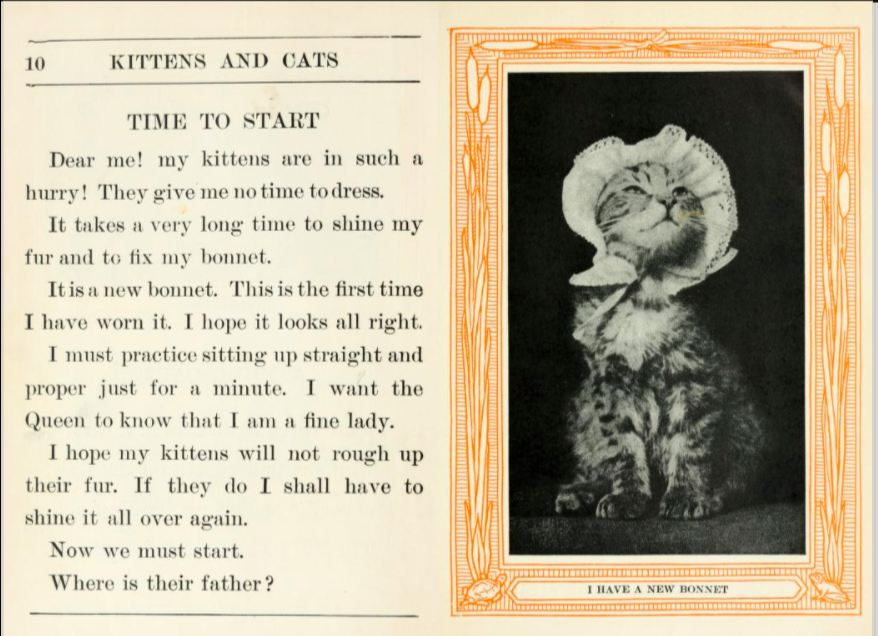
One lace-bonneted character is reminiscent of Tom Kitten’s mother, Mrs. Tabitha Twitchit, and her unsuccessful attempts to wrangle her rambunctious offspring into clothing fit for “fine company,” though the wit falls somewhat short of Beatrix Potter’s.
Headgear abounds, as do restrictive buntings that must’ve been a great help when dealing with uncooperative models and long exposures.
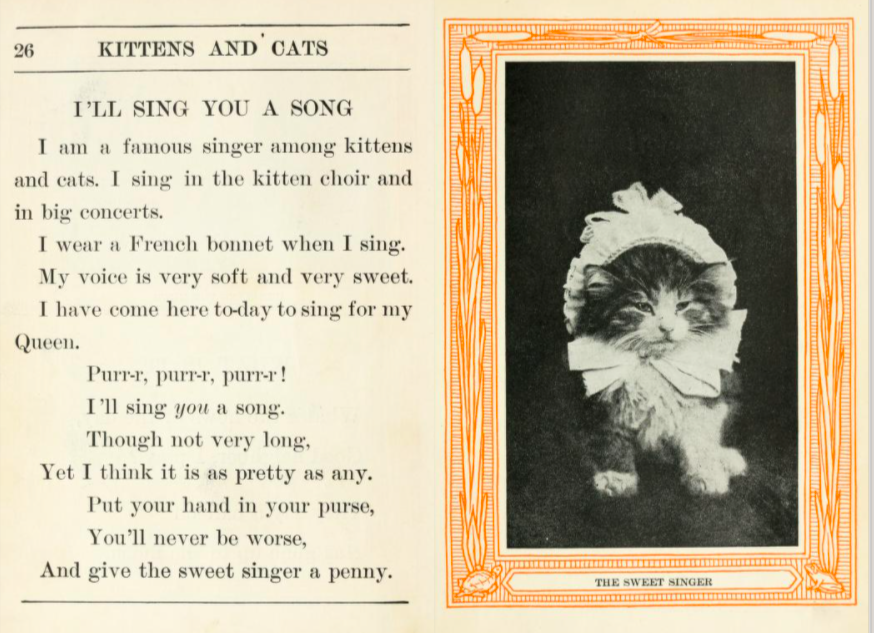
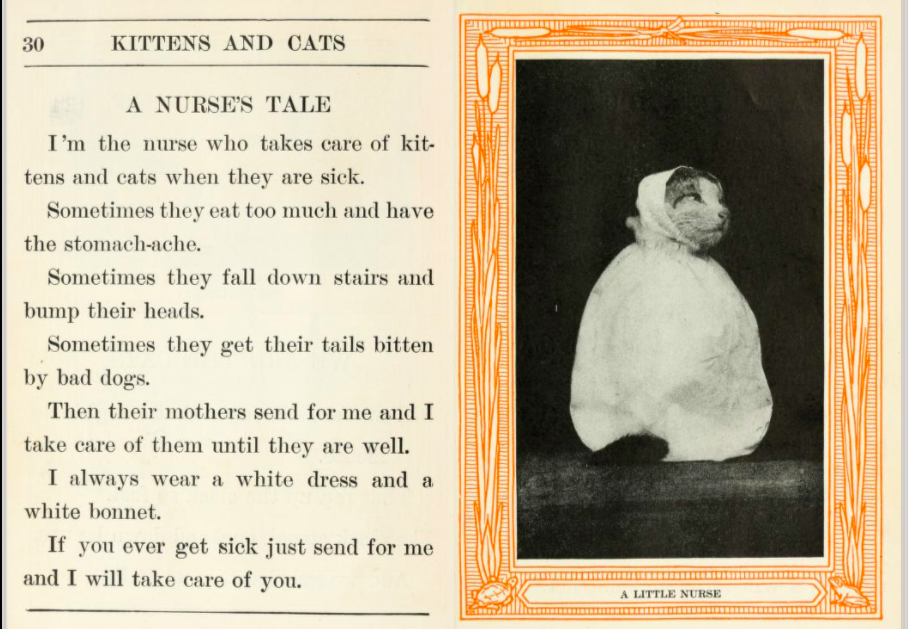
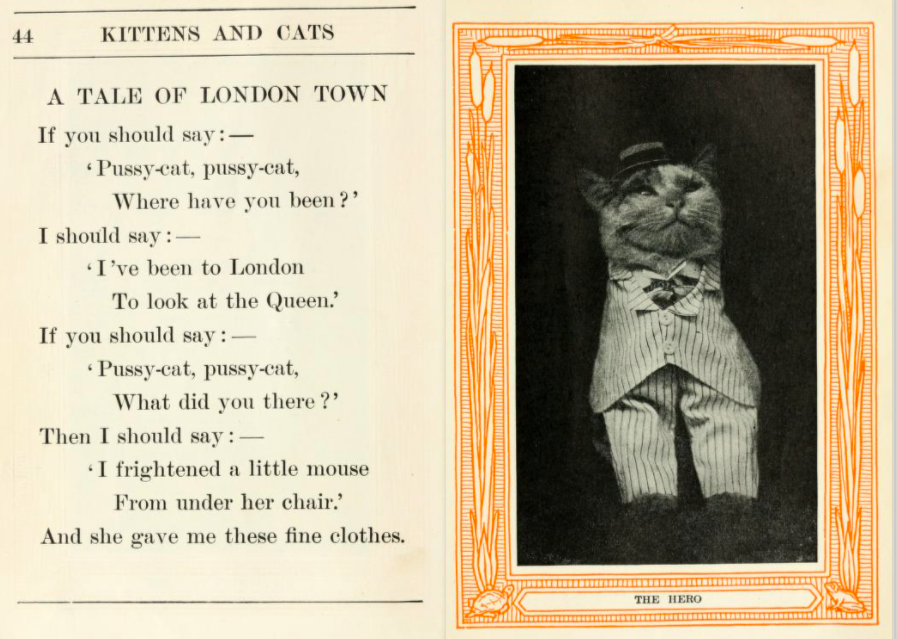
Although the photographer is uncredited, the images are likely the work of Harry Whittier Frees, a “pioneer of the anthropomorphic kitten photograph genre” as per the New York Daily News. In his introduction to his far more ambitiously posed 1915 work, The Little Folks of Animal Land, Frees alluded to his process:
The difficulties of posing kittens and puppies for pictures of this kind have been overcome only by the exercise of great patience and invariable kindness. My little models receive no especial training, and after their daily performance before the camera they enjoy nothing more than a good frolic about the studio.
That’s a pleasant thought, though historian and postcard collector Mary L. Weigley tells a somewhat different tale in an article for Pennsylvania Heritage, describing how only 3/10 of his negatives could be published, and his work was so “challenging, time-consuming and nerve-wracking” that he took 9 months out of every year to recuperate.
Cats!
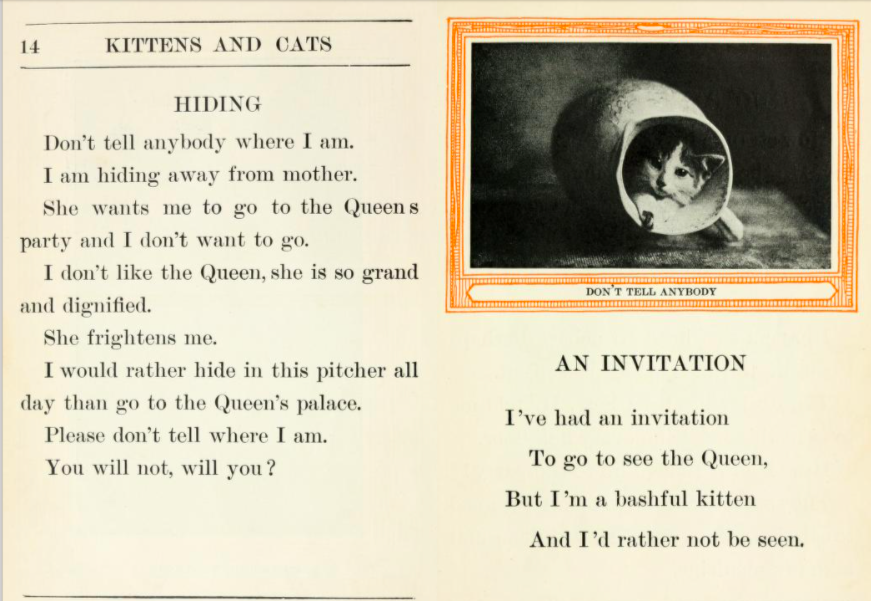
Download a free copy of Eulalie Osgood Grover’s Kittens and Cats here.
Related Content:
Why Humans Are Obsessed with Cats
GPS Tracking Reveals the Secret Lives of Outdoor Cats
Ayun Halliday is an author, illustrator, theater maker and Chief Primatologist of the East Village Inky zine. Follow her @AyunHalliday.
Read More...John Lennon Finally Meets & Jams with His Hero, Chuck Berry (1972)
“If you had tried to give rock and roll another name, you would call it Chuck Berry,” says John Lennon by way of introduction to his hero in the clip above from The Mike Douglas Show. The two perform Berry’s “Memphis, Tennessee” and “Johnny B. Goode” (with Lennon’s backing band, Elephant’s Memory, and unwelcome discordant backing vocals from Yoko). The moment was a major highlight of Lennon’s post-Beatles’ career. The year was 1972, and Lennon and Yoko Ono had taken over Douglas’ show for the week, booking such guests as Ralph Nader, Jerry Rubin, and then Surgeon General Dr. Jesse Steinfeld. Douglas called it “probably the most memorable week I did in all my 20-something years on air,” Guitar World notes. Lennon used it as the opportunity to finally meet, and jam out, with his idol.
Berry wasn’t just a major inspiration for the young Lennon; “From his songwriting and lyrics, to his guitar playing and stage antics, perhaps nobody else short of Elvis Presley was as influential on [all] the young Beatles as Chuck Berry,” writes Beatles scholar Aaron Krerowicz, listing “at least 15” of Berry’s songs the band covered (as either the Quarrymen or the Beatles). Paul McCartney credits Berry for the Beatles’ very existence. They were fans, he wrote in tribute after Berry’s death, “from the first minute we heard the great guitar intro to ‘Sweet Little Sixteen.’” But it wasn’t only Berry’s playing that hooked them: “His stories were more like poems than lyrics…. To us he was a magician.”
McCartney first pointed out the similarities between Lennon’s “Come Together” (originally penned as a campaign song for Timothy Leary’s run against Ronald Reagan for the governorship of California) and Berry’s 1956 “You Can’t Catch Me,” he tells Barry Miles in Many Years From Now. “John acknowledged it was rather close to it,” says Paul, “so I said, ‘Well, anything you can do to get away from that.’” Despite the resulting “swampy” tempo, Berry’s legal team still sued over the lyric “here comes old flat-top,” a direct lift from Berry’s song. In an out-of-court settlement, Lennon agreed to record even more of Berry’s tunes. “You Can’t Catch Me” appears on Lennon’s 1975 album of classic covers, Rock ‘n’ Roll.
This legal tussle aside, there was no beef between the two. The appearance on Douglas’ show proved to be a huge boost for Berry, who revitalized his career that year with the suggestive, controversial “My Ding-a-Ling,” his biggest-selling hit, and — in an ironic twist — originally a goofy novelty song composed and recorded by Dave Bartholomew 20 years earlier. When asked by Douglas, however, what drew him to Berry’s music, Lennon echoes McCartney: “[Berry] was writing good lyrics and intelligent lyrics in the 1950s when people were singing ‘Oh baby, I love you so.’ It was people like him that influenced our generation to try and make sense out of the songs rather than just sing ‘do wah diddy.’”
Lennon wasn’t above covering Gene Vincent’s “Be-Bop-a-Lula” a few years later, and the Beatles themselves mixed intelligent narrative songwriting with healthy doses of pop nonsense — patterning themselves after the man Lennon called “my hero, the creator of Rock and Roll.” A few years after Lennon’s 1980 death, Berry returned the compliment, calling Lennon “the greatest influence in rock music” before bringing Julian Lennon onstage and exclaiming, “ain’t he like his pa!”
The year was 1986 and the occasion was Berry’s 60th birthday concert. After their performance of “Johnny B. Goode,” Berry leaned over to Julian and said, “Tell papa hello. I’ll tell you what he says. I’ll see him.” It’s a bittersweet moment. Little, I guess, did Berry suspect that he would rock on for another 30 years, releasing his final, posthumous album in 2017 after his death at age 90.
Related Content:
Chuck Berry Takes Keith Richards to School, Shows Him How to Rock (1987)
Hear the Original, Never-Heard Demo of John Lennon’s “Imagine”
Josh Jones is a writer and musician based in Durham, NC. Follow him at @jdmagness
Read More...The Little-Known Bombing of Pompeii During World War II
In 79 AD, 17-year-old Gaius Plinius Caecilius Secundus, known as Pliny the Younger, gazed across the Bay of Naples from his vacation home in Misenum and watched Mount Vesuvius erupt. “Darkness fell, not the dark of a moonless or cloudy night,” Pliny wrote in his eyewitness account — the only surviving such document — “but as if the lamp had been put out in a dark room.” Unbeknownst to Pliny and his famous uncle, Pliny the Elder, admiral of the Roman navy and revered naturalist, hundreds of lives were also snuffed out by lava, clouds of smoke and ash, and temperatures in the hundreds of degrees Fahrenheit. The Elder Pliny launched ships to attempt an evacuation. In the morning, he was found dead, likely from asphyxiation, along with over two thousand residents of Pompeii and Herculaneum.
When the buried town was first unearthed, a new cycle of witness, death, and resurrection began. “Since its rediscovery in the mid-18th century,” writes National Geographic, “the site has hosted a tireless succession of treasure hunters and archeologists,” not to mention tourists — starting with aristocratic gentlemen on their Grand Tour of Europe. In 1787, Goethe climbed Vesuvius and gazed into its crater. “He recorded with disappointment that the freshest lava was already five days old, and that the volcano neither belched flame nor pelted him with stones,” writes Amelia Soth in an article about “Pompeii Mania” among the Romantics, a passion that culminated in Edward Bulwer-Lytton’s 1834 potboiler, The Last Days of Pompeii, “hands-down the most popular novel of the age.”
Bulwer-Lytton’s book “had such a dramatic impact on how we think about Pompeii,” the Getty writes, that the museum named an exhibition after it that features — unlike so many other histories — Pompeii’s 20th century “apocalypse”: an Allied bombing raid in the autumn of 1943 that damaged nearly every part of the site, including “some of Pompeii’s most famous monuments, as well as its museum.” As Nigel Pollard shows in his book Bombing Pompeii, over 160 Allied bombs hit Pompeii in August and September. Few tourists who now flock to the site know how much of the ruins have been rebuilt since then. “Only recently have the literature and the scientific community paid due attention to these dramatic events, which constitute a fundamental watershed in the modern history of the site,” writes archeologist Silvia Bertesago.
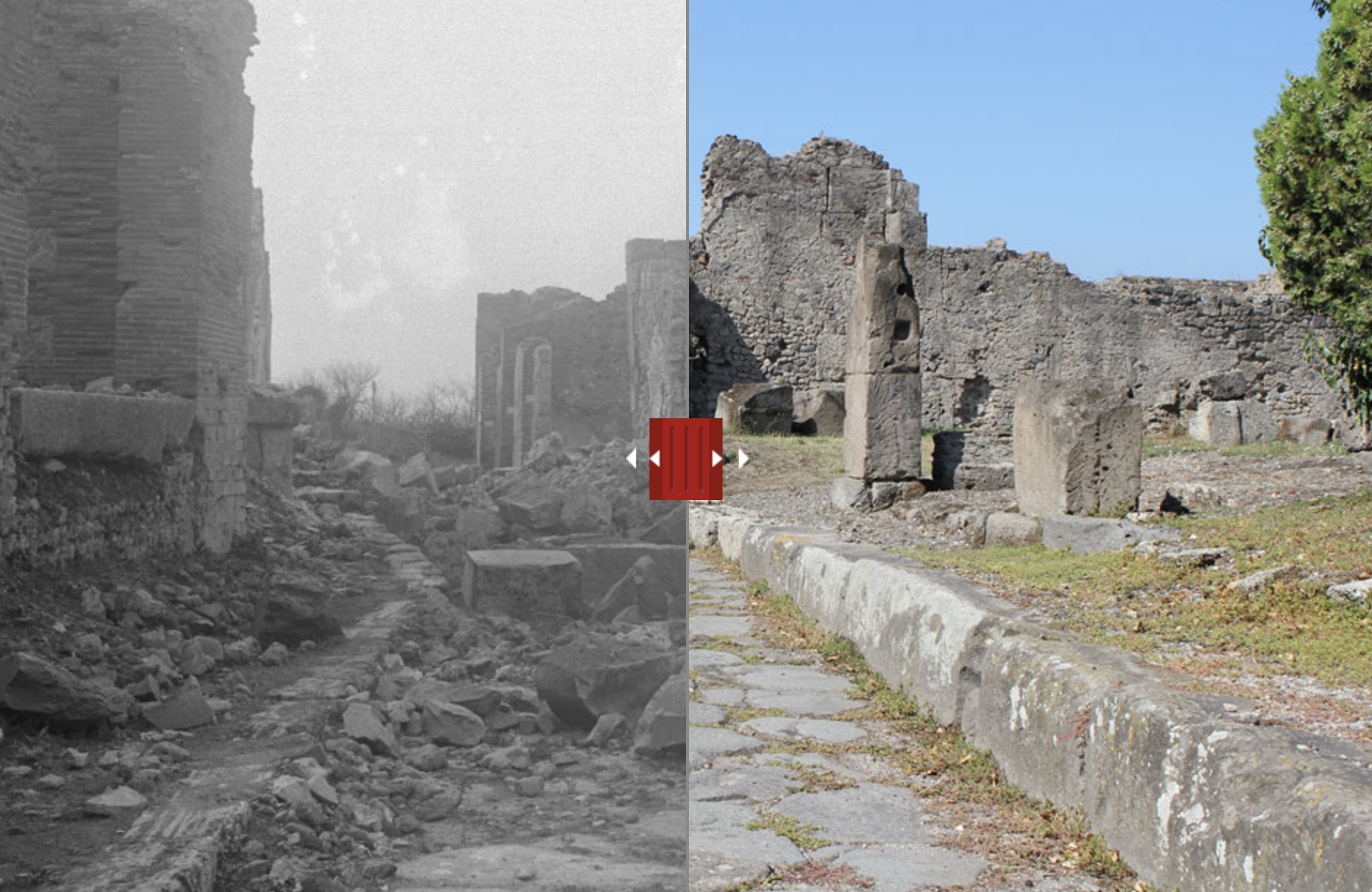
A Pliny of his time (an Elder, given his decades of scientific accomplishment), Pompeii’s superintendent, archeologist Amedeo Maiuri, “accelerated the protection of buildings and moveable items” in advance of the bombing raids. But “who will save monuments, houses and paintings from the fury of the bombardments?” he wrote. Maiuri had warned of the coming destruction, and when false information identified the slopes of Vesuvius as a German hideout, the longest-running archeological excavation in the world became “a real target of war.… The first bombing of Pompeii took place on the night of August 24 1943.… Between August 30 and the end of September, several other raids followed by both day and night.… No part of the excavations was completely spared.”
Maiuri chronicled the destruction, writing:
It was thus that from 13 to 26 September Pompeii suffered its second and more serious ordeal, battered by one or more daily attacks: during the day flying low without fear of anti-aircraft retaliation; at night with all the smoke and brightness of flares […]. During those days no fewer than 150 bombs fell within the excavation area, scattered across the site and concentrated where military targets were thought to be.
Himself wounded in his left foot by a bomb, Maiuri helped draw up a list of 1378 destroyed items and over 100 damaged buildings. Hasty, emergency rebuilding in the years to follow would lead to the use of “experimental materials” like reinforced concrete, which “would later prove incompatible with the original materials” and itself require restoration and repair. The ruins of Pompeii were rebuilt and resurrected after they were nearly destroyed a second time by fire from the sky — this time entirely an act of humankind. But the necropolis would have its revenge. The following year, Vesuvius erupted, destroying nearly all of the 80 B‑25 bombers and the Allied airfield at the foot of the mountain.

In the video above, you can learn more about the bombing of Pompeii. See photographs of the destruction at Pompeii Commitment and at the Getty Museum, which features photos of Pompeiian sites destroyed by bombing side-by-side with color images of the rebuilt sites today. These images are dramatic, enough to make us pay attention to the seams and joints if we have the chance to visit, or revisit, the famous archeological site in the future. And we might want to ask our guide if we can see not only the ruins of the natural disaster, but also the multiple undetonated bombs from the “apocalypse” of World War II.
Related Content
Pompeii Rebuilt: A Tour of the Ancient City Before It Was Entombed by Mount Vesuvius
A Drone’s Eye View of the Ruins of Pompeii
Josh Jones is a writer and musician based in Durham, NC. Follow him at @jdmagness
Read More...136 Paintings by Gustav Klimt Now Online (Including 63 Paintings in an Immersive Augmented Reality Gallery)
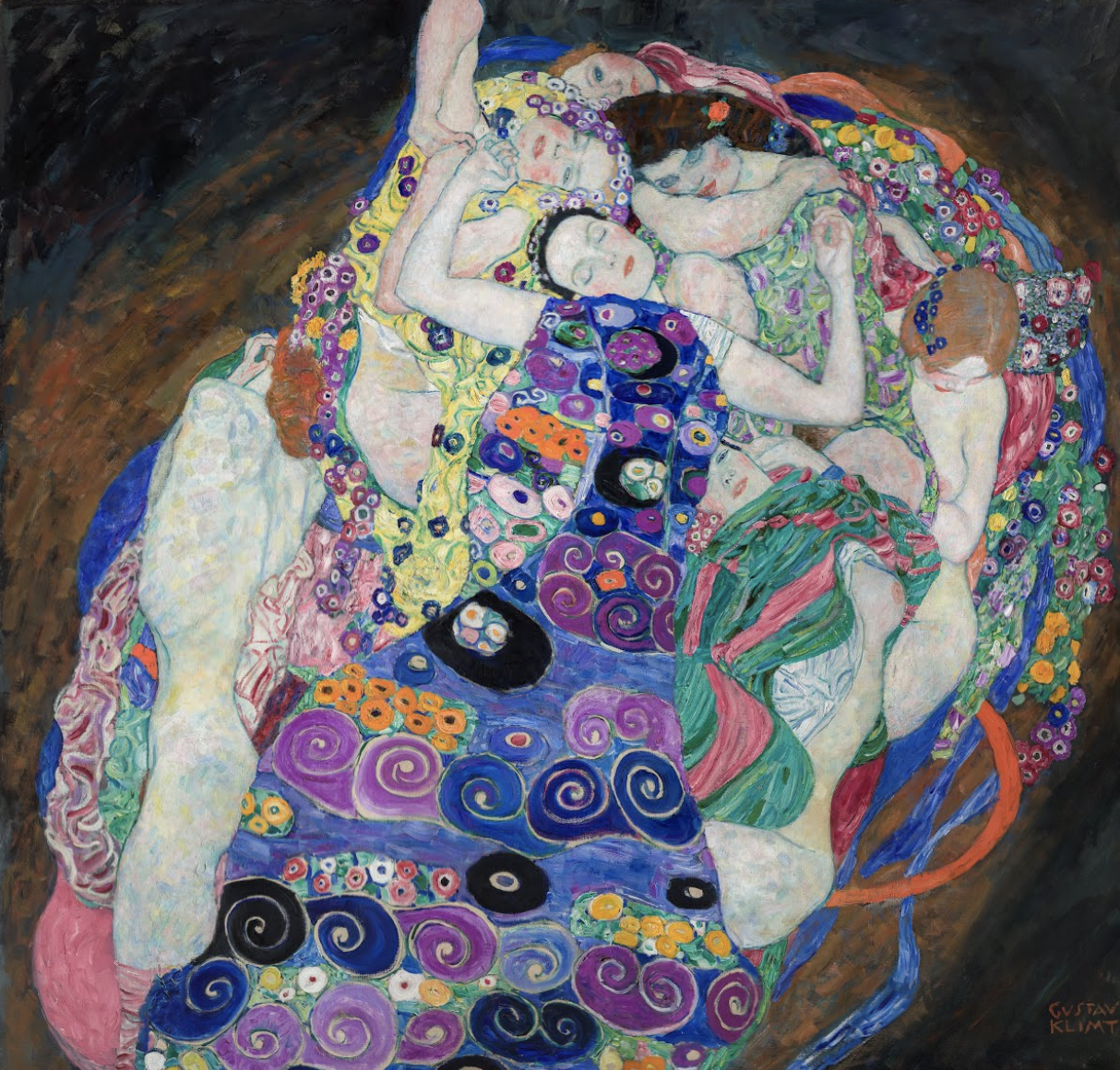
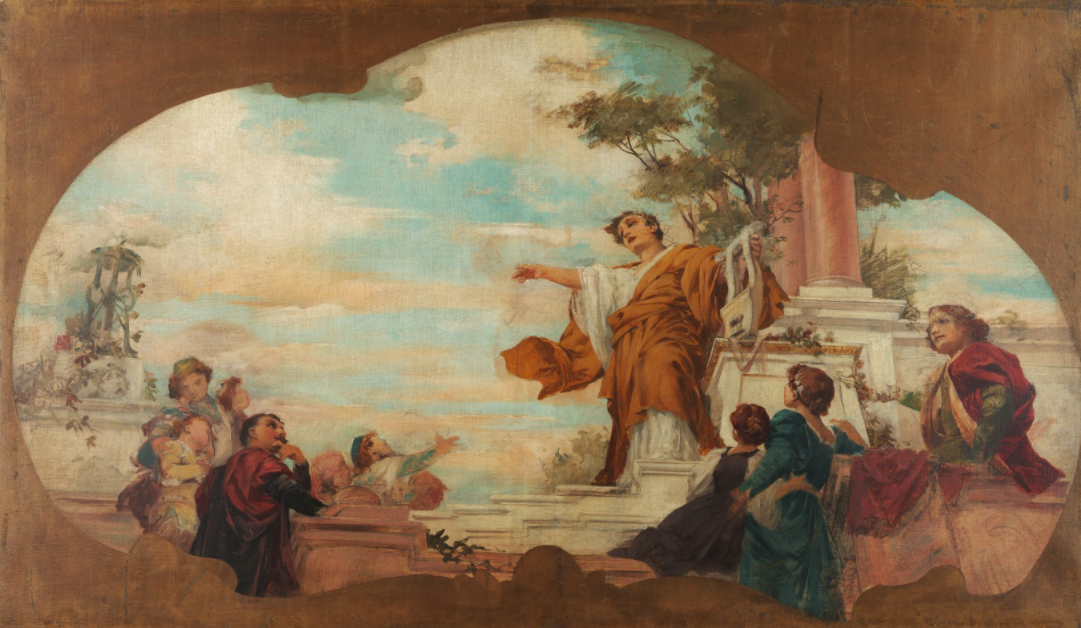
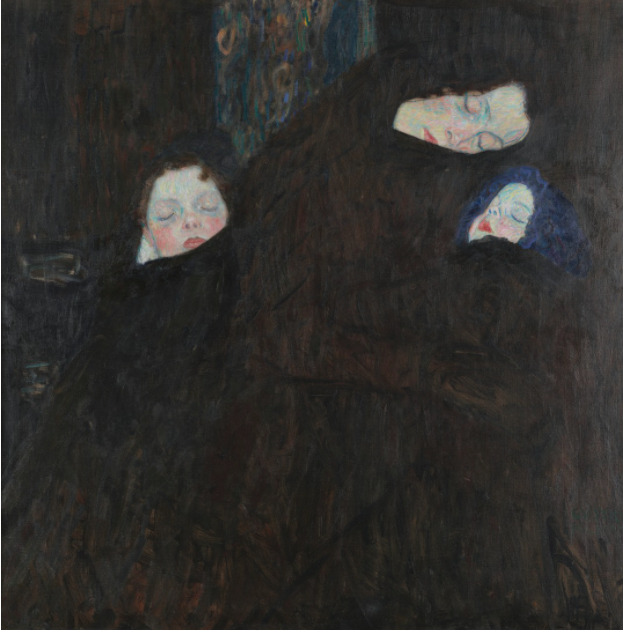
At the end of World War II the Nazis burned an Austrian castle full of masterpieces, including three paintings by Gustav Klimt entitled Philosophy, Medicine, and Jurisprudence. Called the “Faculty Paintings,” these were commissioned by the University of Vienna for the ceiling of its Great Hall in 1900, then, upon completion seven years later, were deemed pornographic and never exhibited. Until now, they were preserved for posterity only in black and white photographs.
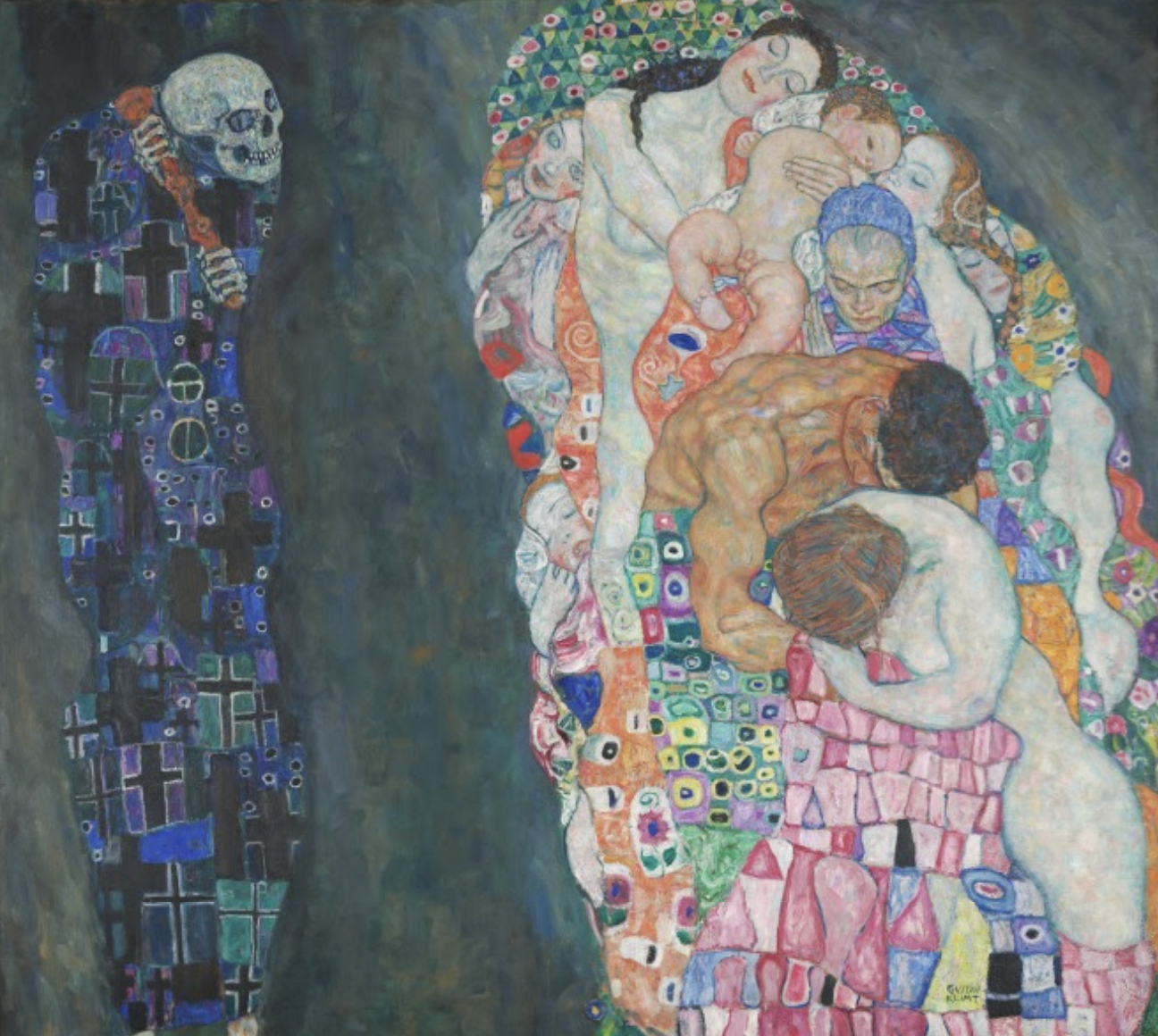
Thanks to cutting edge art restoration AI, the monochromatic images of Klimt’s Faculty Paintings have been reconstructed in color. They are now on display in an online gallery of 130 paintings, plus a virtual exhibition of 63 of the artist’s works, all brought together by Google Arts & Culture and appropriately called Klimt vs. Klimt. It’s a retrospective exploring the artist’s many contradictions. Was he a “scholar or innovator? Feminist or womanizer? Famous artist or humble craftsman? The answer, in most cases, is both,” notes Google. There’s more, of course, given the venue, as Art Daily explains:
The exhibition features an immersive Augmented Reality Pocket Gallery, which digitally organizes 63 of Klimt’s masterworks under a single roof. Audiences can virtually walk the halls of the gallery space at scale and zoom in on the paintings’ fine ornamentation and pattern, characteristic of Klimt’s practice, made possible by the digitization of his iconic artworks in ultra-high resolution.
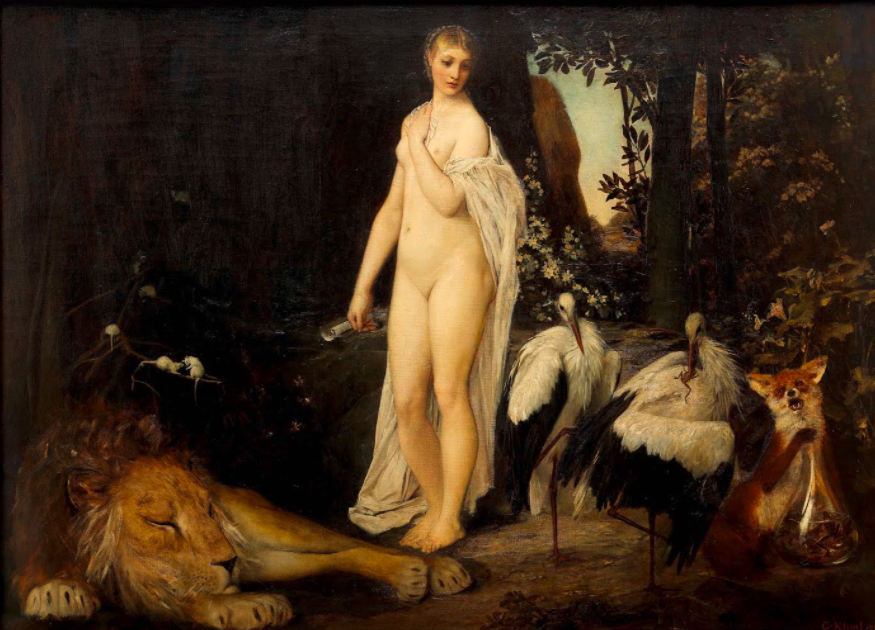
With respect to the first pair of oppositions (that is, scholar or innovator?), Klimt was assuredly both, though not exactly at the same time. Trained as an architectural painter at the University of Applied Arts in Vienna, his early work is solidly academic — realist, formal, classical and conservative.
So conservative an artist was Klimt, in fact, he was elected an honorary member of the University of Munich and the University of Vienna, and in 1888 Klimt received the Golden Order of Merit from Austrian Emperor Franz Josef I … before, that is, his work was judged obscene — a judgment that did surprisingly little to hinder Klimt’s career.
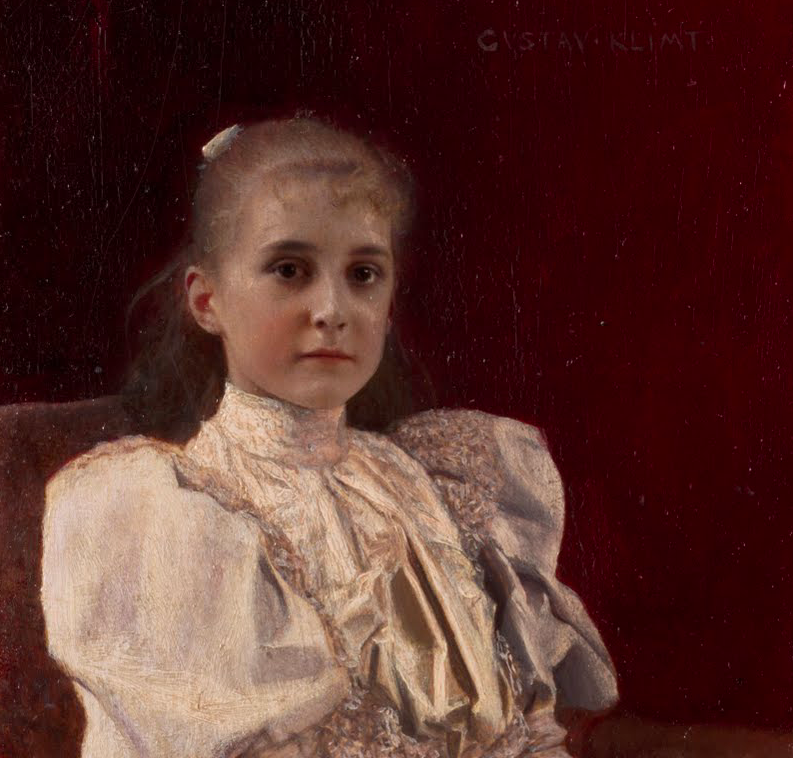
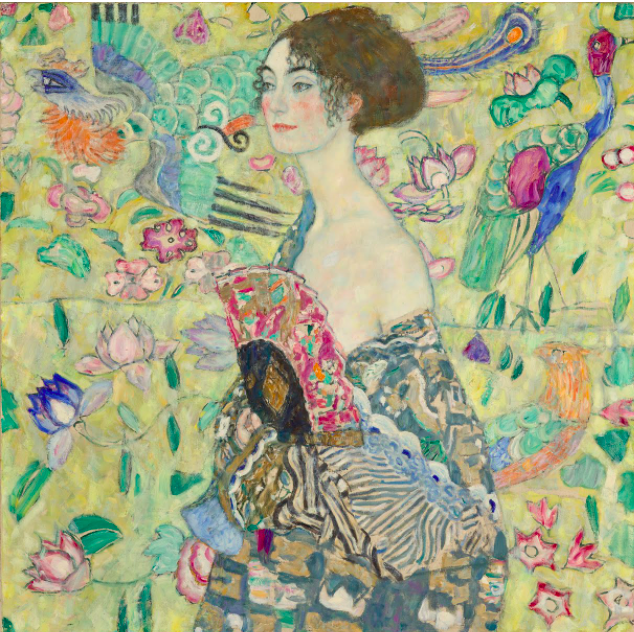
At the end of the 19th century, Klimt abruptly shifted focus, particularly after the death of his artist brother Ernst and his father, a gold engraver, in 1892. He became a founding member of the Vienna Secession movement, producing some of his most famous Symbolist works during his “Golden Phase,” when many of his works contained real gold leaf in tribute not only to his father but to the Byzantine art he saw during visits to Venice and Ravenna. This was the height of Klimt’s career, when he produced such works as The Kiss, The Embrace, and Fulfillment and Expectation, “probably the ultimate stage of my development of ornament,” he said.
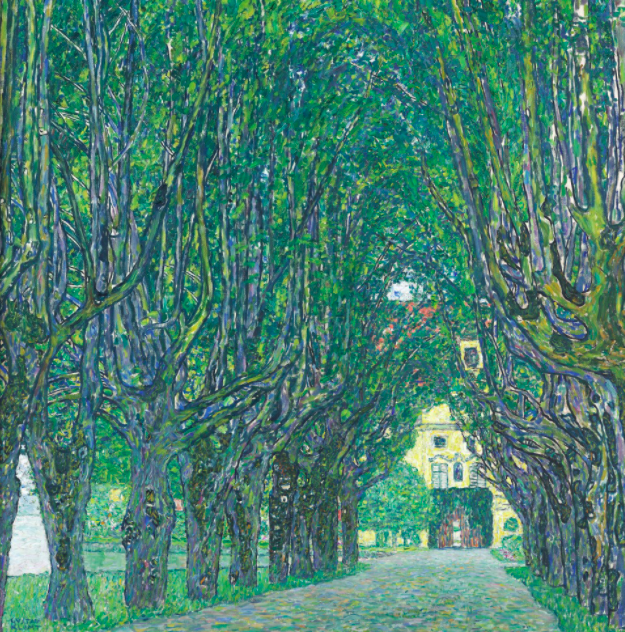
In many ways, Klimt embodied contradiction. An admirer of society and luxury, he also spurned company, turned away all visitors, and spending so much time painting landscapes during summer holidays that locals called him Waldschrat, “forest demon.” Renowned for his sexual adventurousness (he supposedly fathered 14 children), Klimt was also an intensely focused and isolated individual. In a piece entitled “Commentary on a Non-Existent Self-Portrait,” he writes:
I have never painted a self-portrait. I am less interested in myself as a subject for a painting than I am in other people, above all women… There is nothing special about me. I am a painter who paints day and day from morning to night… Whoever wants to know something about me… ought to look carefully at my pictures.
Look carefully at an online gallery of Klimt’s works here. And see the immersive Augmented Reality gallery here.
Related Content:
Josh Jones is a writer and musician based in Durham, NC. Follow him at @jdmagness
Read More...Watch Jaco Pastorius: The Lost Tapes Documentary, the Fan-Made Film on the Most Innovative Bass Player of All Time
People do not understand how hard a jazz musician works for a living. I’m not putting nobody down, but I’m telling you nobody understands how hard jazz musicians work. Jazz is not big in the US, because the States are too worried about Pac-Man and The Police. — Jaco
When Jaco Pastorius uttered the quote above in a typically entertaining and insightful interview with Guitar World from 1983, he meant no disrespect to the members of The Police. It’s safe to say, in fact, that Pastorius significantly influenced crossover subgenres in punk, New Wave, and No Wave, through compositions like “Punk Jazz” — “a real jazz players stab at a brave new music,” writes Guitar World’s Peter Mengaziol. In general, Pastorius’ music was “a fusion with energy but without overkill.” He absorbed influences from everywhere, and nothing seemed out of bounds in his playing. “I am not an original musician,” he says in the same interview:
I am a thief…. You see, I rip off everything. I have no originals. Only animals and children can understand my music; I love women, children, music, I love everything that’s going in the right direction, everything that flows… I just love music. I don’t know what I’m doing!
It’s not that Pastorius necessarily thought of jazz as a more elevated form than rock or funk or soul or pop — hardly. He regarded Hendrix with the same worshipful awe as he did Motown bassist Jerry Jemmott, and both equally informed his playing and showmanship. Yet he seemed to feel under-appreciated in his time, and that is probably because he was, even though he was acclaimed as one of the world’s greatest bass players during his brief 35 years, and he radically altered the sound of popular music on albums by Joni Mitchell and other non-jazz-world stars.
But Pastorius knew that few understood what he was trying to do with jazz-rock groups like Weather Report and Blood, Sweat & Tears and in his solo work. He knew he could sell records and sell out performances, but he didn’t care about commerce. (He spent the last few years of his life sleeping on park benches.)
Warner Bros. refused to release his third solo album, Holiday for Pans — a selection of original compositions and tunes by the Beatles, Coltrane, and Alan Hovhaness, centered around the steel drum playing of Othello Molineaux — on the basis that it was “extremely esoteric.” Described by The Penguin Guide to Jazz as “by far the most imaginative project Pastorius ever undertook,” Holiday for Pans received a release in Japan in 1993, but remains unreleased in the US, perhaps validating the bassist’s opinion of his country’s cultural limitations.
The fan-made documentary at the top, Jaco Pastorius — The Lost Tapes Documentary, first appeared “on a somewhat obscure French channel called ‘Realcut’,” notes the site Jazz in Europe. The title refers the interview footage with choice subjects like Marcus Miller, Joe Zawinul, Peter Erskine, Dave Carpenter, and Paco Seri, all shot while the musicians “were on tour in France back in the mid noughties.” In 2008, “the images were definitively lost,” the filmmakers write in their description, only to surface again on a hard drive in a dusty attic last year.
Tying these interviews together with archival Internet footage of Pastorius, the makers of The Lost Tapes Documentary have done an excellent job of introducing the man and his work to a broad audience through the words of those who knew and played with him, and they’ve done so with “no budget, no financial aid or no image purchase.… The people who worked on this project did it voluntarily, out of passion and love of music, and the film will in no way be monetized on the platforms.” Pastorius would have approved. “I don’t want to sell shit,” he told Guitar World back in 1983. “I want to do what has to be done.” For him, that meant constant innovation and change. “I’m not a magician, I’m not a politician, I’m a musician,” he said. “I have no goal. You don’t get better, you grow. I am a musician, and I finally realized it!”
Related Content:
Jazz Legend Jaco Pastorius Gives a 90 Minute Bass Lesson and Plays Live in Montreal (1982)
How Jaco Pastorius Invented the Electric Bass Solo & Changed Musical History (1976)
Bass Sounds: One Song Highlights the Many Different Sounds Made by Different Bass Guitars
Josh Jones is a writer and musician based in Durham, NC. Follow him at @jdmagness
Read More...How to Make Comics: A Four-Part Series from the Museum of Modern Art
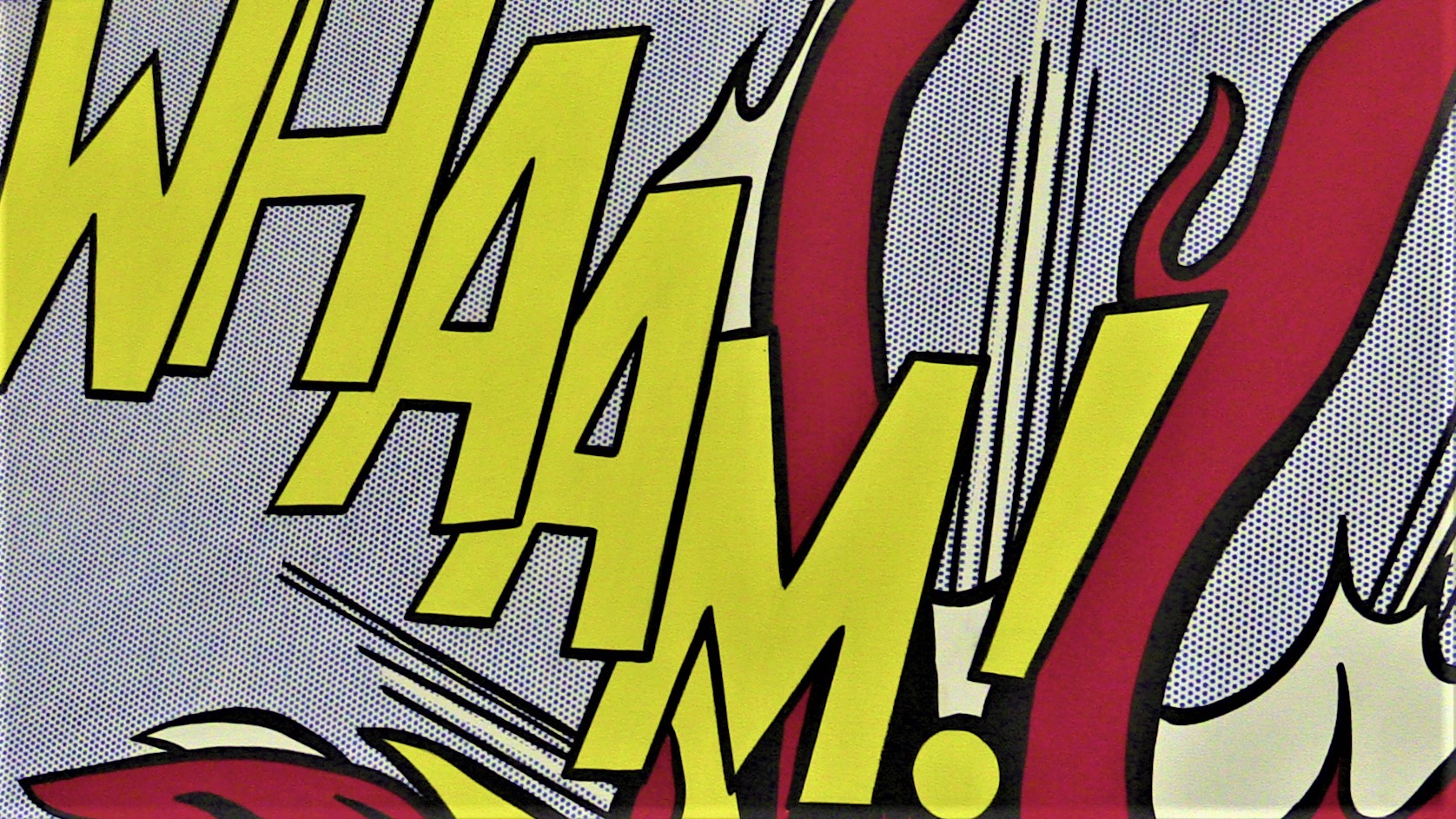
A painting? “Moving. Spiritually enriching. Sublime. ‘High’ art.” The comic strip? “Vapid. Juvenile. Commercial hack work. ‘Low’ art.” A painting of a comic strip panel? “Sophisticated irony. Philosophically challenging. ‘High’ art.” So says Calvin of Bill Watterson’s Calvin and Hobbes, whose ten-year run constitutes one of the greatest artistic achievements in the history of the newspaper comic strip. The larger medium of comics goes well beyond the funny pages, as any number of trend pieces have told us, but as an art form it remains less than perfectly understood. Perhaps, as elsewhere, one must learn by doing: hence “How to Make Comics,” a “four-part journey through the art of comics” from the Museum of Modern Art.
Created by comics scholar and writer Chris Gavaler, this educational series begins with the broadest possible question: “What Are Comics?” That section offers two answers, the first being that comics are “cartoons in the funnies sections of newspapers and the pages of comic books” telling stories “about superheroes or talking animals” — or they’re longer-format “graphic novels,” which “can be more serious and include personal memoirs.”
The second, broader answer conceives of comics as nothing more specific than “juxtaposed images. Any work of art that divides into two or more side-by-side parts is formally a comic. So if an artist creates two images and places them next to each other, they’re working in the comics form.”
That second definition of comics includes, say, Andy Warhol’s Jacqueline Kennedy III — a work of art that conveniently happens to be owned by MoMA. The museum’s visual resources figure heavily into the whole “How to Make Comics,” in which Gavaler explains not just the process of creating comics but the relationship between comics and other (often longer institutionally approved) forms of art. And to whatever degree they juxtapose images, the works of art in MoMA’s online collection — rich as so many of them are with action, character, narrative, humor, and even words — offer inspiration to comic artists budding and experienced alike. The better part of two centuries into its development, this thoroughly modern medium has the power to incorporate ideas from any other art form; the high-and-low distinctions can take care of themselves. Enter “How to Make Comics” here.
Related Content:
Watch Cartoonist Lynda Barry’s Two-Hour Drawing Workshop
Download Over 22,000 Golden & Silver Age Comic Books from the Comic Book Plus Archive
Download 15,000+ Free Golden Age Comics from the Digital Comic Museum
MoMA’s Online Courses Let You Study Modern & Contemporary Art and Earn a Certificate
Based in Seoul, Colin Marshall writes and broadcasts on cities, language, and culture. His projects include the Substack newsletter Books on Cities, the book The Stateless City: a Walk through 21st-Century Los Angeles and the video series The City in Cinema. Follow him on Twitter at @colinmarshall or on Facebook.
Read More...Albert Camus on the Responsibility of the Artist: To “Create Dangerously” (1957)

Literary statements about the nature and purpose of art constitute a genre unto themselves, the ars poetica, an antique form going back at least as far as Roman poet Horace. The 19th century poles of the debate are sometimes represented by the dueling notions of Percy Shelley — who claimed that poets are the “unacknowledged legislators of the world” — and Oscar Wilde, who famously proclaimed, “all art is quite useless.” These two statements conveniently describe a conflict between art that involves itself in the struggles of the world, and art that is involved only with itself.
In the mid-twentieth century, Albert Camus put the question somewhat differently in a 1957 speech entitled “Create Dangerously.”
Of what could art speak, indeed? If it adapts itself to what the majority of our society wants, art will be a meaningless recreation. If it blindly rejects that society, if the artist makes up his mind to take refuge in his dream, art will express nothing but a negation.
And yet, grandiose ideas about the artist’s role seemed absurd in the mid-twentieth century, when the question becomes whether artists should exist at all. “Such amazing optimism seems dead today,” writes Camus. “In most cases the artist is ashamed of himself and his privileges, if he has any. He must first of all answer the question he has put to himself: is art a deceptive luxury?”
Women artists have also had to consider the question, of course. Brain Pickings’ Maria Popova quotes Audre Lorde’s call for artists to “uphold their responsibility toward ‘the transformation of silence into language and action.” Ursula Le Guin believed that art expanded the imagination, and thus the possibilities for human freedom. Both of these writers were politically engaged artists, and so it’s little wonder that we find similar sentiments in Camus’ speech from decades earlier.
To make art, Camus writes, is to make choices. Artists are already involved, as Shelley declared, in shaping the world around them, whether they acknowledge it or not:
Reality cannot be reproduced without exercising a selection… The only thing needed, then, is to find a principle of choice that will give shape to the world. And such a principle is found, not in the reality we know, but in the reality that will be — in short, the future. In order to reproduce properly what is, one must depict also what will be.
The most eloquent, enduring expressions of future thinking are that which we call art. Even art that seeks to depict the fleetingness of nature freezes itself for posterity.
Art, in a sense, is a revolt against everything fleeting and unfinished in the world. Consequently, its only aim is to give another form to a reality that it is nevertheless forced to preserve as the source of its emotion. In this regard, we are all realistic and no one is. Art is neither complete rejection nor complete acceptance of what is. It is simultaneously rejection and acceptance, and this is why it must be a perpetually renewed wrenching apart.
To understand art as purposelessly divorced from the world is to misunderstand it, Camus argues. This is the misunderstanding of “a fashionable society in which all troubles [are] money troubles and all worries [are] sentimental worries” — the self-satisfied bourgeois society “about which Oscar Wilde, thinking of himself before he knew prison, said that the greatest of all vices was superficiality.”
Art for art’s sake is the doctrine of a “society of merchants… the artificial art of a factitious and self-absorbed society,” Camus declared. “The logical result of such a theory is the art of little cliques.” Or, to a degree Camus could not have imagined, we have the entertainment industrial complex of art for commerce’s sake, which in the 21st century can make it nearly impossible for art to thrive. (As actor Stellan Skarsgård recently said in public comments, the problem with the film industry is “that we have for decades believed that the market should rule everything.”)
Therefore, the question before Camus, and no less before artists today, is how to “create dangerously” in a society “that forgives nothing.” The question of whether or not art serves a purpose is a false one, he suggests, since “every publication is a deliberate act,” and therefore purposeful. The real question, for Camus the philosopher, “is simply to know — given the strict controls of countless ideologies (so many cults, such solitude!) — how the enigmatic freedom of creation remains possible.” If only arriving at such knowledge were so simple. Camus’ lecture has recently been translated by Sandra Smith and published in the short volume, Create Dangerously: The Power and Responsibility of the Artist. You can read a section of the lecture at Lithub.
Camus’ speech was presented on December 14, 1957 at the University of Uppsala in Sweden, shortly after he won the Nobel Prize.
via Brain Pickings
Related Content:
Hear Albert Camus Deliver His Nobel Prize Acceptance Speech (1957)
See Albert Camus’ Historic Lecture, “The Human Crisis,” Performed by Actor Viggo Mortensen
Josh Jones is a writer and musician based in Durham, NC. Follow him at @jdmagness
Read More...The Beach Boys’ Lost Concert: Watch the Band Perform Their Classics at Their Zenith (1964)
In early 1964, there could hardly have been an American teenager ignorant of the Beach Boys. Singing in immaculate harmonies about surfing, hot rods, girls, and root beer — as well as various combinations and permutations thereof — they soon found themselves riding an unprecedentedly high wave, so to speak, of postwar teen culture. On the other side of the pond, the Beatles had been hard at work playing to demographically similar, also-enraptured audiences. In February of 1964 the Fab Four arrived in America, and their performance on The Ed Sullivan Show alone put them on at least an equal footing there with the Beach Boys.
“The next opportunity for your average American Beatlemaniac to see the Beatles perform would have been at the movie theater watching the Beatles’ Washington D.C. concert at the Coliseum on a closed circuit broadcast on March 14 or 15, 1964,” says the blog Meet the Beatles for Real. “This was the first time in history that the closed-circuit was used for a concert. Previously, it had only been used to show boxing matches.”
The direct-to-theaters broadcast also included shorter opening acts Lesley Gore and the Beach Boys, the latter of whose performance was thought lost until its rediscovery in 1998. In the video above, you can see its entire 22 minutes at an audiovisual quality well exceeding most concert films of its era.
Beginning with “Fun, Fun, Fun,” the Beach Boys play a variety of early numbers that would turn out to rank among their most beloved songs, also including “Little Deuce Coupe,” “Surfer Girl,” “Surfin’ U.S.A.,” and “Shut Down.” (“Long Tall Texan” would only be properly recorded 32 years later, with the late country singer Doug Supernaw.) The set even features “In My Room,” whose melancholic break from the surfing-cars-girls spectrum offered a sign of things to come from the group’s musical mastermind Brian Wilson. Unsuited to the stress of stardom, he would recuse himself from live performance the following year. This show thus marks the onstage zenith of the Beach Boys’ classic lineup of the Wilson brothers Brian, Carl, and Dennis with Al Jardine and Mike Love. But as makers of classic albums — and classic albums pushed to heights of ambition by competition with the Beatles — they’d only just begun.
Related Content:
How the Beach Boys Created Their Pop Masterpieces: “Good Vibrations,” Pet Sounds, and More
Based in Seoul, Colin Marshall writes and broadcasts on cities, language, and culture. His projects include the Substack newsletter Books on Cities, the book The Stateless City: a Walk through 21st-Century Los Angeles and the video series The City in Cinema. Follow him on Twitter at @colinmarshall or on Facebook.
Read More...Footage of the Last Known Tasmanian Tiger Restored in Color (1933)
Last month, the U.S. Fish and Wildlife Service announced that nearly two dozen wildlife species would be removed from the endangered species list, as CNN reported, including the ivory-billed woodpecker, “the Bachman’s warbler, two species of freshwater fishes, eight species of Southeastern freshwater mussels and 11 species from Hawaii and the Pacific Islands.” This is not good news. The animals have been delisted because they’ve been added to a list of extinct creatures, one that grows longer each year.
Most of us have seen few, if any, of these animals and cannot grasp the scope of their loss. What does it mean to say there are no more Bachman’s warblers left on Earth? Species wiped out by climate change, overfarming, overfishing, or the encroachment of humans and invasive species can feel far away from us, their loss a distant tragedy; or extinction can seem inevitable, like that of the Dodo or Sicilian wolf, creatures that seem too fantastic for the world we now inhabit. So too, the dog-like marsupial Tasmanian tiger — or thylacine — an animal that lived as recently as 1936 when the last representative of its species, named Benjamin, died in captivity in Australia.
The thylacine looks like an evolutionary oddity, too weird to survive. But this judgment is a misapplication of Darwinism as egregious as the idea that only the “fittest,” i.e. those who can take good beating, survive. The day Benjamin died, September 7, has been commemorated in Australia as National Threatened Species Day, which raises awareness about the hundreds of plant and animal species close to extinction. The day also celebrates the hundreds of species found nowhere else in the world, animals that could come to seem to us in the near future as strange and exotic as the thylacine — a fascinating example of convergent evolution: a marsupial canid that evolved completely independently of wolves, dogs, and other canine species with which it had no contact whatsoever until the British arrived.
Found only on the island of Tasmania by the time of European settlement, thylacine populations were destroyed by disease, dogs, and, primarily, human hunters. Before the final member of the species died, they were kept in zoos and captured on silent film by naturalists like David Fleay, who shot the black-and-white footage just above of Benjamin at Beaumaris Zoo in Hobart, Tasmania. In the video at the top, we can see the same footage in vivid color — and full digital restoration — thanks to Samuel François-Steininger and his Paris-based company Composite Films.
Sent an HDR (High Dynamic Range) scan of the film by the National Film and Sound Archive of Australia (NFSA), François-Steininger had to make a lot of interpretive choices. Next to “original skins preserved in museums,” the NFSA notes, his team “had to rely on sketches and paintings because of the lack of original color pictures or footage that could be used for research.” While there are 9 short film clips of the animals from the London and Hobart zoos, these are all, of course, in black and white. “Written descriptions of the thylacine’s coat gave them a general idea of the tints and shades present in the fur, information they supplemented with scientific drawings and recent 3D color renderings of the animal.” The results are incredibly natural-looking and startlingly immediate.
Are the thylacine, Bachman’s warbler, and other extinct species victims of the Anthropocene? Will our children’s children children watch films of polar bears and koalas and wonder how our planet could have contained such wonders? Geological epochs deal with “mile-thick packages of rock stacked up over tens of millions of years,” Peter Brannen writes at The Atlantic, and thus it overstates the case to call the last four centuries of climate change and mass extinction an “Anthropocene.” The word names “a thought experiment” rather than a span of deep time in Earth’s history. But from the perspective of critically endangered species — maybe to include, eventually, humans themselves — the transformations of the present seem squarely focused on our reckless behavior and its effects on habitats we never see.
We are far less important to geological time than we think, Brannen argues, but it does, indeed, seem up to us at the moment whether there is a future on Earth filled with plant, animal, and yes, human, life:
We haven’t earned an Anthropocene epoch yet. If someday in the distant future we have, it will be an astounding testament to a species that, after a colicky, globe-threatening infancy, learned that it was not separate from Earth history, but a contiguous part of the systems that have kept this miraculous marble world habitable for billions of years.
Related Content:
Two Million Wondrous Nature Illustrations Put Online by The Biodiversity Heritage Library
Are You Ready for the Return of Lost Species?: Stewart Brand on the Dawn of De-Extinction
Josh Jones is a writer and musician based in Durham, NC. Follow him at @jdmagness
Read More...Facebook Whistleblower Offers an Unprecedented Look at How the Company “Chooses Profits Over Safety”
On Sunday night, Frances Haugen, a former Facebook data scientist, appeared on 60 Minutes and revealed that she left the company with a trove of private Facebook research–research which shows, she contends, that the company knowingly amplifies hate, misinformation and political unrest, all to keep people engaged and outraged, and thus their advertising money machine rolling. And that’s just the tip of the iceberg.
Initially, she gave the company’s leaked documents to the Wall Street Journal, and they became the basis of the podcast series The Facebook Files. According to the Journal, “Time and again, the documents show, Facebook’s researchers have identified the platform’s ill effects. Time and again, despite congressional hearings, its own pledges and numerous media exposés, the company didn’t fix them. The documents offer perhaps the clearest picture thus far of how broadly Facebook’s problems are known inside the company, up to the chief executive himself.”
Watch the 60 Minutes interview above. Then stream the Facebook Files on WSJ’s site, Spotify and/or Apple. The episodes all appear below:
Episode 1
Episode 2
Episode 3
Episode 4
Episode 5
Episode 6
Related Content
The Problem with Facebook: “It’s Keeping Things From You”
New Animation Explains Sherry Turkle’s Theories on Why Social Media Makes Us Lonely
Read More...
Support Us
We're hoping to rely on loyal readers, rather than erratic ads. Please click the Donate button and support Open Culture. You can use Paypal, Venmo, Patreon, even Crypto! We thank you!

About Us

Open Culture scours the web for the best educational media. We find the free courses and audio books you need, the language lessons & educational videos you want, and plenty of enlightenment in between.
Advertise With Us
FREE UPDATES!
GET OUR DAILY EMAIL
Get the best cultural and educational resources on the web curated for you in a daily email. We never spam. Unsubscribe at any time.
FOLLOW ON SOCIAL MEDIA
Open Culture editor Dan Colman scours the web for the best educational media. He finds the free courses and audio books you need, the language lessons & movies you want, and plenty of enlightenment in between.
Advertise With Us


