An Introduction to Chinoiserie: When European Monarchs Tried to Build Chinese Palaces, Houses & Pavilions
Today it would be viewed as cultural appropriation writ large, but when Louis XIV ordered the construction of a 5‑building pleasure pavilion inspired by the Porcelain Tower of Nanjing (a 7th Wonder of the World few French citizens had viewed in person) as an escape from Versailles, and an exotic love nest in which to romp with the Marquise de Montespan, he ignited a craze that spread throughout the West.
Chinoiserie was an aristocratic European fantasy of luxurious Eastern design, what Dung Ngo, founder of AUGUST: A Journal of Travel + Design, describes as “a Western thing that has nothing to do with actual Asian culture:”
Chinoiserie is a little bit like chop suey. It was wholesale invented in the West, based on certain perceptions of Asian culture at the time. It’s very watered down.
And also way over the top, to judge by the rapturous descriptions of the interiors and gardens of Louis XIV’s Trianon de Porcelaine, which stood for less than 20 years.
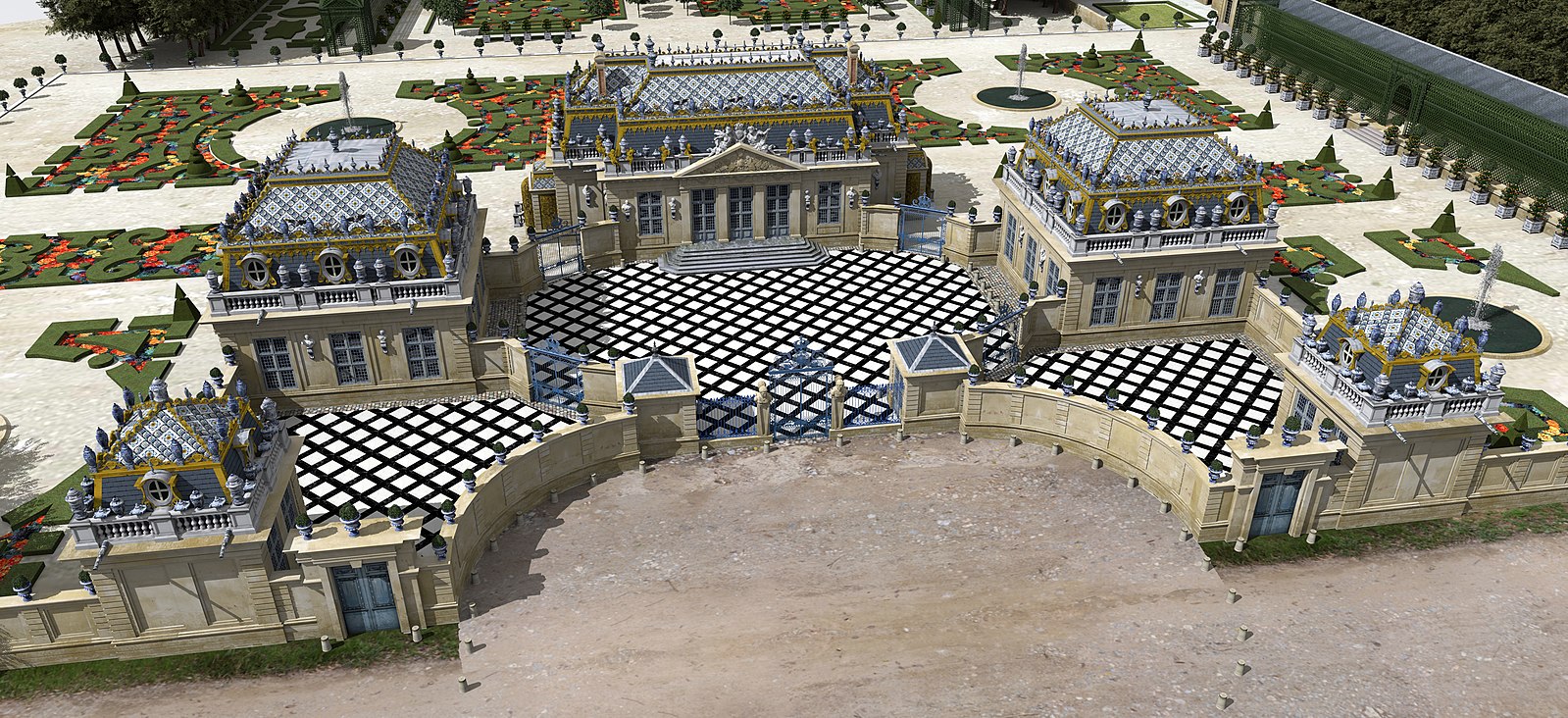
Image by Hervé Gregoire, via Wikimedia Commons
The blue-and-white Delft tiles meant to mimic Chinese porcelain swiftly fell into disrepair and Madame de Montespan’s successor, her children’s former governess, the Marquise de Maintenon, urged Louis to tear the place down because it was “too cold.”
Her lover did as requested, but elsewhere, the West’s imagination had been captured in a big way.
The burgeoning tea trade between China and the West provided access to Chinese porcelain, textiles, furnishings, and lacquerware, inspiring Western imitations that blur the boundaries between Chinoiserie and Rococo styles
This blend is in evidence in Frederick the Great’s Chinese House in the gardens of Sanssouci (below).
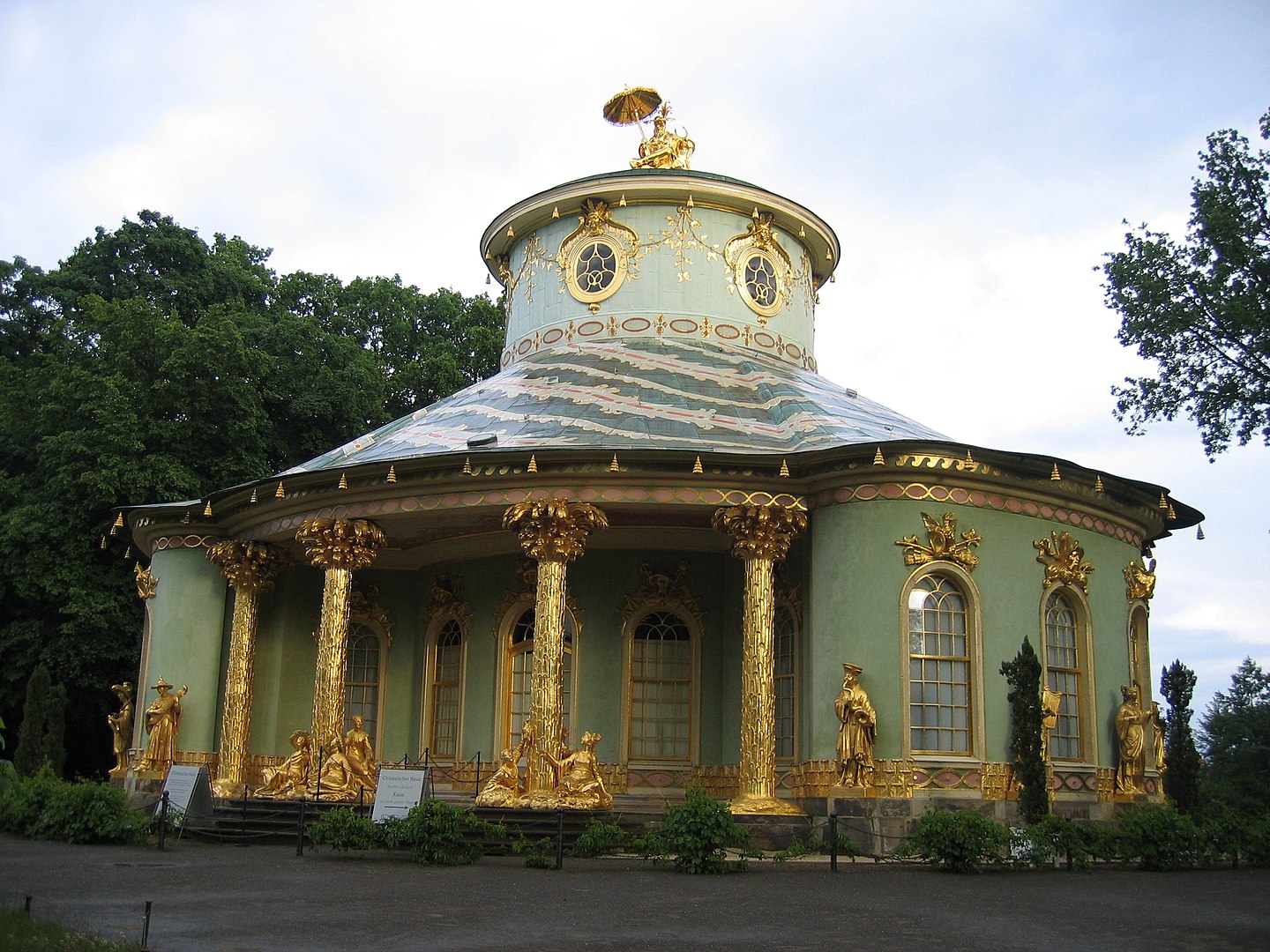
Image by Johann H. Addicks, via Wikimedia Commons
Dr Samuel Wittwer, Director of Palaces and Collections at the Prussian Palaces and Gardens Foundation, describes how the gilded figure atop the roof “is a mixture of the Greek God Hermes and the Chinese philosopher Confucius:”
His European face is more than just a symbol of intellectual union between Asia and Europe…The figure on the roof has an umbrella, an Asian symbol of social dignity, which he holds in an eastern direction. So the famous ex oriente lux, the good and wise Confucian light from the far east, is blocked by the umbrella. Further down, we notice that the foundations of the building seem to be made of feathers and the Chinese heads over the windows, resting on cushions like trophies, turn into a monkey band in the interior. The frescoes in the cupola mainly depict monkeys and parrots. As we know, these particular animals are great imitators without understanding.
Frederick’s enthusiasm for chinoiserie led him to engage architect Carl von Gontard to follow up the Chinese House with a pagoda-shaped structure he named the Dragon House (below) after the sixteen creatures adorning its roof.
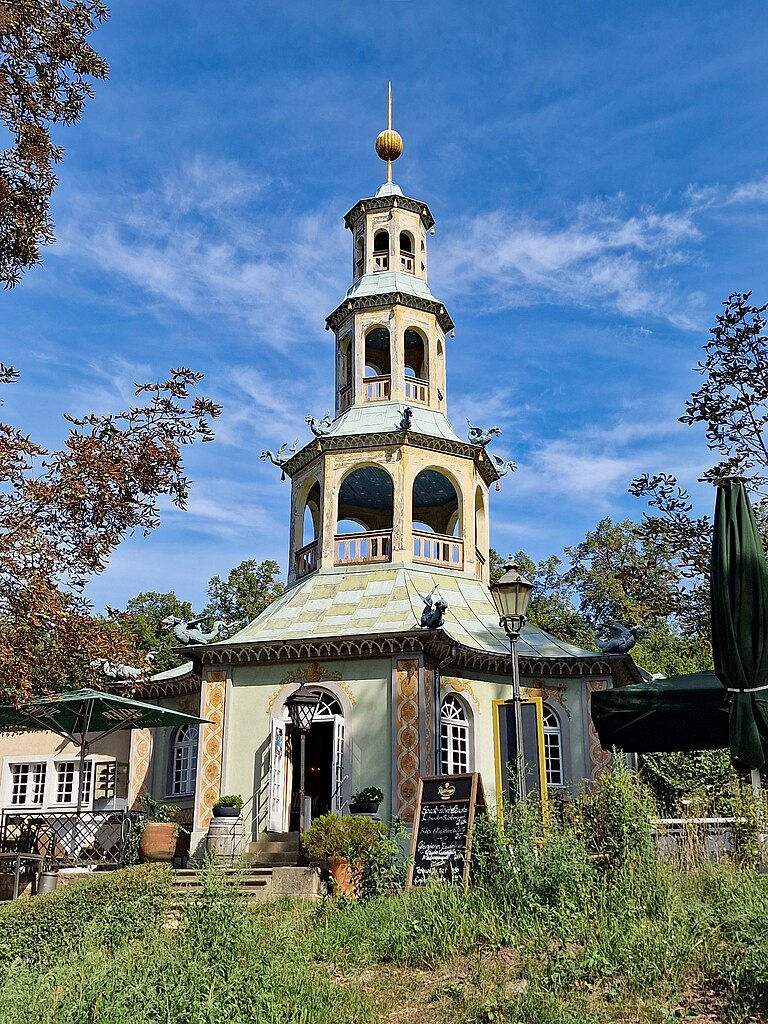
Image by Rigorius, via Wikimedia Commons
Dragons also decorate the roof of the Great Pagoda in London’s Kew Gardens, though the gilded wooden originals either succumbed to the elements or were sold off to settle George IV’s gambling debts in the late 18th century.
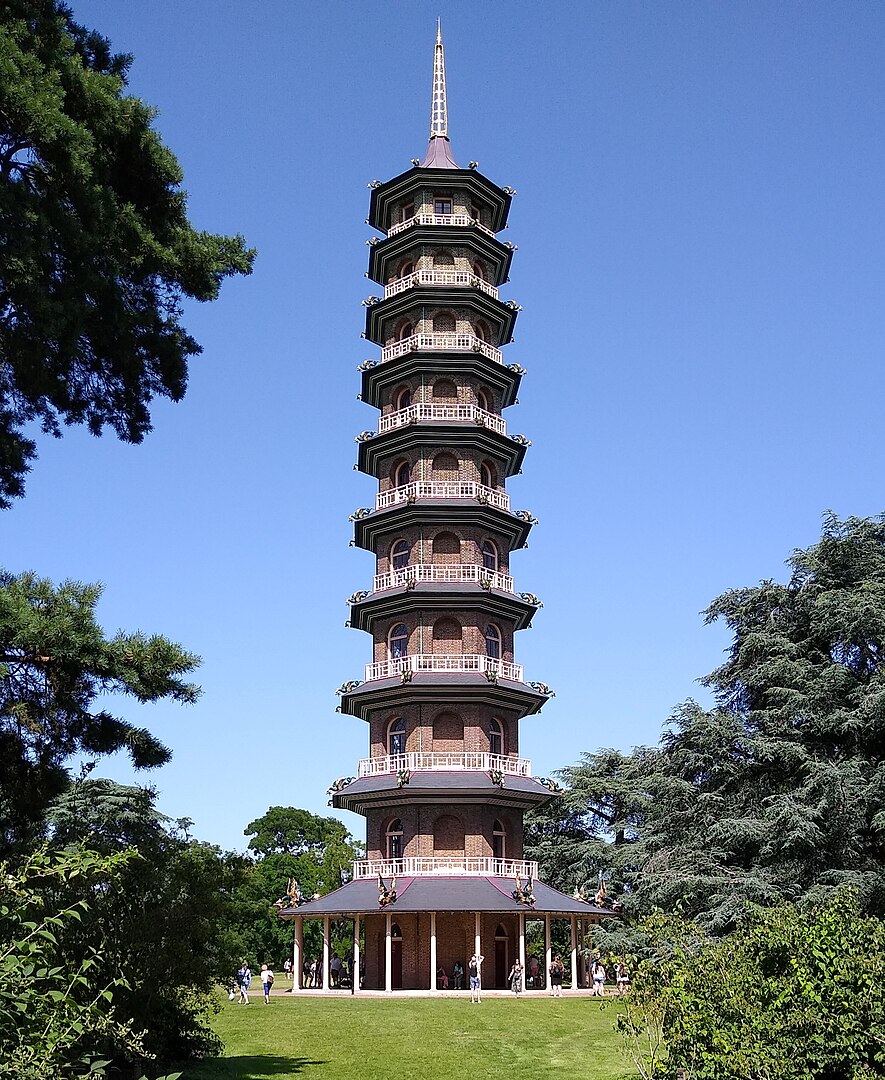
Image by MX Granger, via Wikimedia Commons
There are even more dragons to be found on the Chinese Pavilion at Drottningholm, Sweden, an architectural confection constructed by King Adolf Fredrik as a birthday surprise for his queen, Louisa. The queen was met by the entire court, cosplaying in Chinese (or more likely, Chinese-inspired) garments.
Not to be outdone, Russia’s Catherine the Great resolved to “capture by caprice” by building a Chinese Village outside of St. Petersburg.
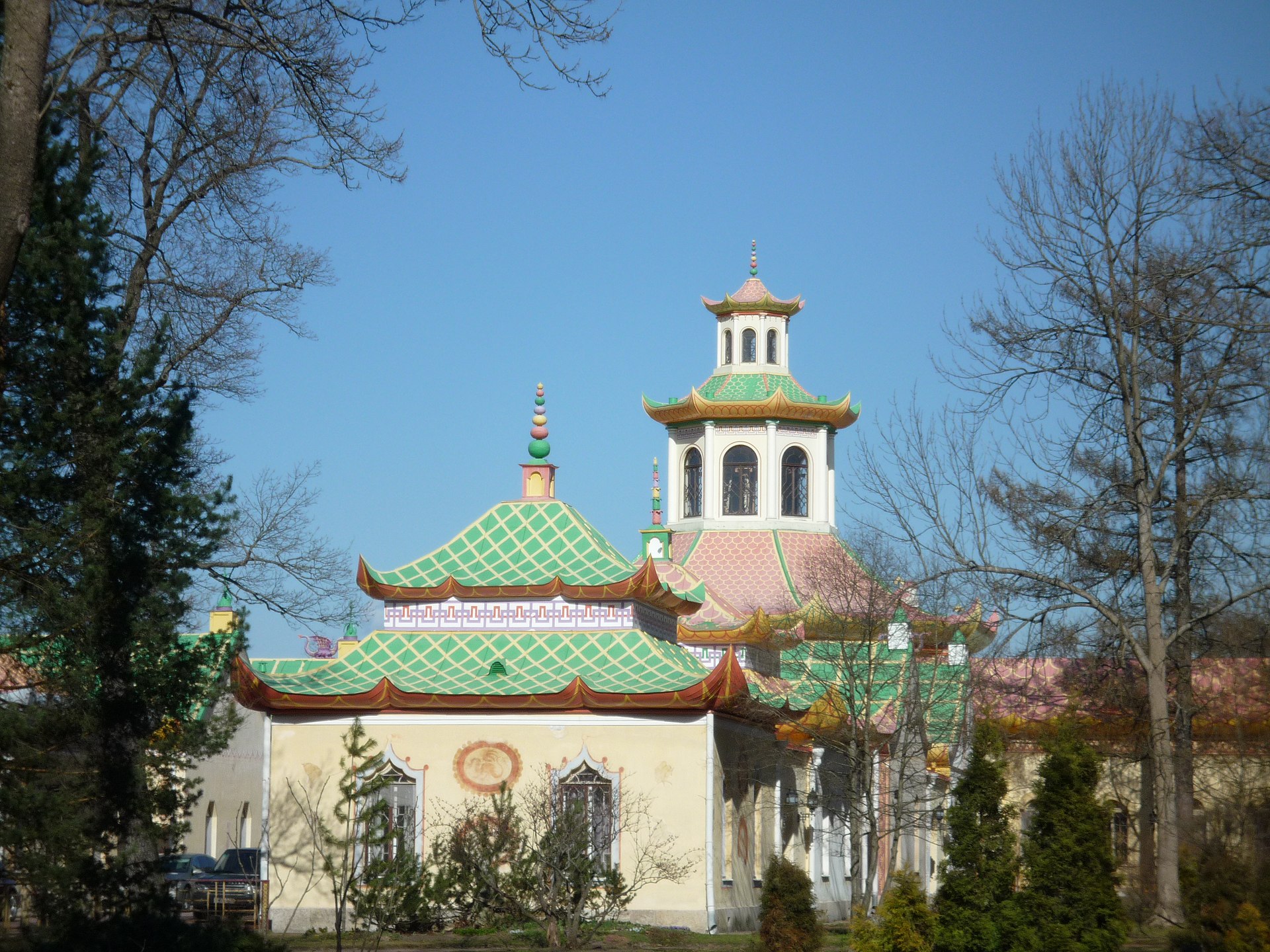
Image by Макс Вальтер, via Wikimedia Commons
Architect Charles Cameron drew up plans for a series of pavilions surrounding a never-realized octagonal-domed observatory. Instead, eight fewer pavilions than Cameron originally envisioned surround a pagoda based on one in Kew Gardens.
Having survived the Nazi occupation and the Soviet era, the Chinese Village is once again a fantasy plaything for the wealthy. A St. Petersburg real estate developer modernized one of the pavilions to serve as a two-bedroom “weekend cottage.”
Given that no record of the original interiors exists, designer Kirill Istomin wasn’t hamstrung by a mandate to stick close to history, but he and his client still went with “numerous chinoiserie touches” as per a feature in Elle Decor:
Panels of antique wallpapers were framed in gilded bamboo for the master bedroom, and vintage Chinese lanterns, purchased in Paris, hang in the dining and living rooms. The star pieces, however, are a set of 18th-century porcelain teapots, which came from the estate of the late New York socialite and philanthropist Brooke Astor.
Explore cultural critic Aileen Kwun and the Asian American Pacific Islander Design Alliance’s perspective on the still popular design trend of chinoiserie here.
h/t Allie C!
Related Content
How the Ornate Tapestries from the Age of Louis XIV Were Made (and Are Still Made Today)
– Ayun Halliday is the Chief Primatologist of the East Village Inky zine and author, most recently, of Creative, Not Famous: The Small Potato Manifesto and Creative, Not Famous Activity Book. Follow her @AyunHalliday.
Read More...The Story of Lorem Ipsum: How Scrambled Text by Cicero Became Used by Typesetters Everywhere
In high school, the language I most fell in love with happened to be a dead one: Latin. Sure, it’s spoken at the Vatican, and when I first began to study the tongue of Virgil and Catullus, friends joked that I could only use it if I moved to Rome. Tempting, but church Latin barely resembles the classical written language, a highly formal grammar full of symmetries and puzzles. You don’t speak classical Latin; you solve it, labor over it, and gloat, to no one in particular, when you’ve rendered it somewhat intelligible. Given that the study of an ancient language is rarely a conversational art, it can sometimes feel a little alienating.
And so you might imagine how pleased I was to discover what looked like classical Latin in the real world: the text known to designers around the globe as “Lorem Ipsum,” also called “filler text” and (erroneously) “Greek copy.”
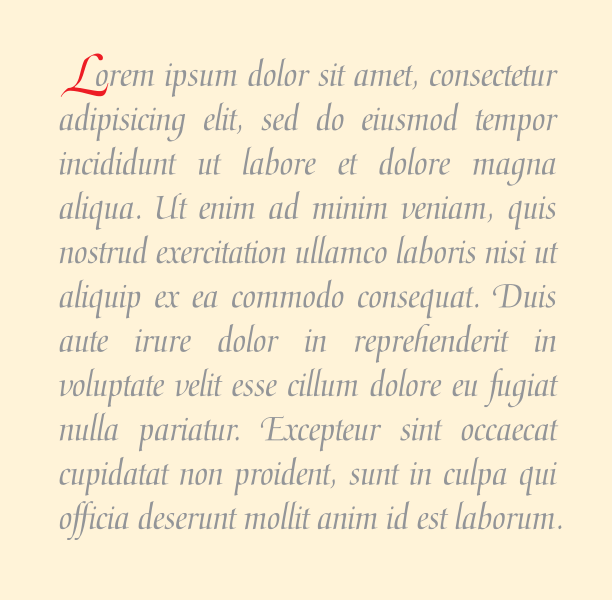
The idea, Priceonomics informs us, is to force people to look at the layout and font, not read the words. Also, “nobody would mistake it for their native language,” therefore Lorem Ipsum is “less likely than other filler text to be mistaken for final copy and published by accident.” If you’ve done any web design, you’ve probably seen it, looking something like this:
Lorem ipsum dolor sit amet, consectetur adipiscing elit, sed do eiusmod tempor incididunt ut labore et dolore magna aliqua. Ut enim ad minim veniam, quis nostrud exercitation ullamco laboris nisi ut aliquip ex ea commodo consequat. Duis aute irure dolor in reprehenderit in voluptate velit esse cillum dolore eu fugiat nulla pariatur. Excepteur sint occaecat cupidatat non proident, sunt in culpa qui officia deserunt mollit anim id est laborum.
When I first encountered this text, I did what any Latin geek will—set about trying to translate it. But it wasn’t long before I realized that Lorem Ipsum is mostly gibberish, a garbling of Latin that makes no real sense. The first word, “Lorem,” isn’t even a word; instead it’s a piece of the word “dolorem,” meaning pain, suffering, or sorrow. So where did this mash-up of Latin-like syntax come from, and how did it get so scrambled? First, the source of Lorem Ipsum—tracked down by Hampden-Sydney Director of Publications Richard McClintock—is Roman lawyer, statesmen, and philosopher Cicero, from an essay called “On the Extremes of Good and Evil,” or De Finibus Bonorum et Malorum.
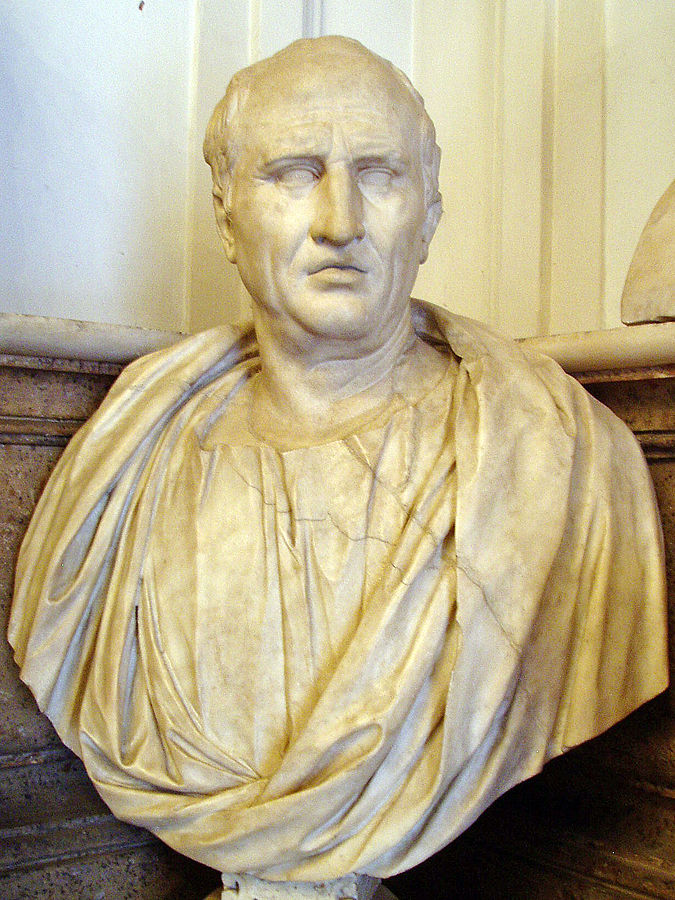
Why Cicero? Put most simply, writes Priceonomics, “for a long time, Cicero was everywhere.” His fame as the most skilled of Roman rhetoricians meant that his writing became the benchmark for prose in Latin, the standard European language of the Middle Ages. The passage that generated Lorem Ipsum translates in part to a sentiment Latinists will well understand:
Nor is there anyone who loves or pursues or desires to obtain pain of itself, because it is pain, but occasionally circumstances occur in which toil and pain can procure him some great pleasure.
Dolorem Ipsum, “pain in and of itself,” sums up the tortuous feeling of trying to render some of Cicero’s complex, verbose sentences into English. Doing so with tolerable proficiency is, for some of us, “great pleasure” indeed.
But how did Cicero, that master stylist, come to be so badly manhandled as to be nearly unrecognizable? Lorem Ipsum has a history that long predates online content management. It has been used as filler text since the sixteenth century when—as McClintock theorized—“some typesetter had to make a type specimen book, to demo different fonts” and decided that “the text should be insensible, so as not to distract from the page’s graphical features.” It appears that this enterprising craftsman snatched up a page of Cicero he had lying around and turned it into nonsense. The text, says McClintock, “has survived not only four centuries of letter-by-letter resetting but even the leap into electronic typesetting, essentially unchanged.”
The story of Lorem Ipsum is a fascinating one—if you’re into that kind of thing—but its longevity raises a further question: should we still be using it at all, this mangling of a dead language, in a medium as vital and dynamic as web publishing, where “content” refers to hundreds of design elements besides font. Is Lorem Ipsum a quaint piece of nostalgia that’s outlived its usefulness? In answer, you may wish to read Karen McGrane’s spirited defense of the practice. Or, if you feel it’s time to let the garbled Latin go the way of manual typesetting machines, consider perhaps as an alternative “Nietzsche Ipsum,” which generates random paragraphs of mostly verb-less, incoherent Nietzsche-like text, in English. Hey, at least it looks like a real language.
Note: An earlier version of this post appeared on our site in 2015.
Related Content:
What Ancient Latin Sounded Like, And How We Know It
Can Modern-Day Italians Understand Latin? A Youtuber Puts It to the Test on the Streets of Rome
Josh Jones is a writer and musician based in Durham, NC. Follow him at @jdmagness
Read More...Scientists Working in Antarctica Unwittingly Started to Develop a New Accent

The distinctiveness of the accent heard in a place reflects that place’s isolation. It’s probably no coincidence that, as almost every place in the world has become less isolated, accents have become less distinctive. In these days of vanishing forms of regional speech, if you wanted to hear a new one coming into being, you’d have to go to the ends of the Earth — or one specific end of the Earth, anyway, as demonstrated not long ago by researchers from the Ludwig Maximilian University of Munich. Taking and analyzing recordings made over the course of one winter, they discovered that a new accent has begun to take shape in English as spoken in Antarctica.
“Antarctica has no native population or permanent residents, but it does have a transitory community of scientists and support staff who live there for part of the year on a rotational basis,” writes Tom Hale at IFL Science. “In the summer months, there are typically around 5,000 people living in Antarctica, but that drops to just 1,000 in the winter.” It was from this group of the Antarctic “over-winterers” — and in particular, from those working on the British Antarctic Survey — that the linguistic researchers recruited their subjects, eight of whom were from England, one from the United States, one from Germany, and one from Iceland.
“The findings revealed subtle but measurable changes in the speech of the overwintering staff during their time in Antarctica,” writes Mental Floss’ Brett Reynolds. “One change was convergence, where individuals in a close-knit group unconsciously begin to adopt similar speech characteristics. In this case, that meant convergence of /u/ (the ‘oo’ in goose), /ju/ (the ‘you’ in few), /ou/ (the ‘oh’ in goat), and /ɪ:/ (the ‘ee’ in the last syllable in happy).” Apart from that phenomenon, the researchers also noticed another change in the /ou/ of goat: “the over-winterers began to pronounce it more toward the front of their mouths than toward the back. (British pronunciations are already typically fronter than American /ou/.)”
Even if you got into a conversation with a scientist just back from a long winter in Antarctica, you probably wouldn’t notice any of this. But the fact that the differences between the series of recordings taken at six-week intervals during the winter show measurable changes in pronunciation when compared to control recordings taken back in the United Kingdom suggests that the isolation of Antarctica really does encourage the formation of a new accent. Given a sufficiently long time span, an accent naturally becomes a dialect, and eventually a separate language. Perhaps, even in our age of much-lamented loss of linguistic diversity, some of us can look forward to having Antarctic-speaking descendants.
via Mental Floss
Related content:
The Speech Accent Archive: The English Accents of People Who Speak 341 Different Languages
Why You Have an Accent When You Speak a Foreign Language
What English Would Sound Like If It Was Pronounced Phonetically
Based in Seoul, Colin Marshall writes and broadcasts on cities, language, and culture. His projects include the Substack newsletter Books on Cities, the book The Stateless City: a Walk through 21st-Century Los Angeles and the video series The City in Cinema. Follow him on Twitter at @colinmarshall or on Facebook.
Read More...The Only Color Picture of Tolstoy, Taken by Photography Pioneer Sergey Prokudin-Gorsky (1908)
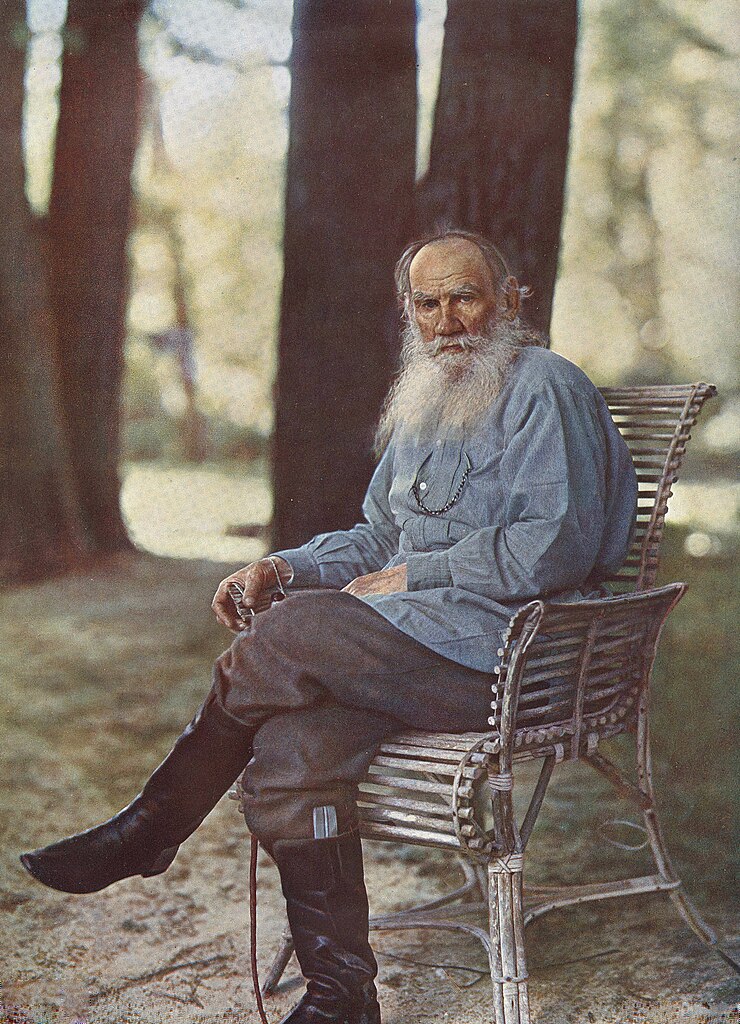
The photo above depicts Lev Nikolayevich Tolstoy, better known in the English-speaking world as Leo Tolstoy. It dates from 1908, when he had nearly all his work behind him: the major novels War and Peace and Anna Karenina, of course, but also the acclaimed late book The Death of Ivan Ilyich. His own death, in fact, lay not much more than two years before him. (See footage of the final days of his life here.) This didn’t offer much of a window of opportunity to the chemist Sergey Prokudin-Gorsky, who had recently developed a photography process that could capture the great man of letters in “true color” — and who understood that such a portrait would score a promotional coup for his innovation.
“After many years of work, I have now achieved excellent results in producing accurate colors,” Prokudin-Gorsky wrote to Tolstoy early that same year. “My colored projections are known in both Europe and in Russia. Now that my method of photography requires no more than 1 to 3 seconds, I will allow myself to ask your permission to visit for one or two days (keeping in mind the state of your health and weather) in order to take several color photographs of you and your spouse.” After receiving that permission, Prokudin-Gorsky spent two days at Yasnaya Polyana, Tolstoy’s family estate, where he took color pictures of not just the man himself but his working quarters and the surrounding grounds.
“A few months later, in its August 1908 issue, The Proceedings of the Russian Technical Society ran the following announcement describing ‘the first Russian color photoportrait,’ a color photograph of L. N. Tolstoy,” according to Tolstoy Studies Journal. The resulting fame drew Prokudin-Gorsky an invitation to show his work to Tsar Nicholas II, who subsequently furnished him with the resources to spend ten years photographically documenting Russia in color. “To this day, nobody knows exactly what camera Prokudin-Gorsky used,” writes Kai Bernau at Words that Work, “but it was likely a large wooden camera with a special holder for a sliding glass negative plate, taking three sequential monochrome photographs, each through a different colored filter.” This appears to be a technological descendant of the process developed in the early eighteen-sixties by Scottish physicist-poet James Clerk Maxwell, creator of the first color photograph in history.
To view that photograph, Maxwell “projected the three slides using three different projectors, each affixed with the same color filter that had been used to produce the slide.” Prokudin-Gorsky, too, had to project his photos, though he did later make color prints; “he also published it, in significant numbers, as a collectible postcard,” says Tolstoy Studies Journal, adding that the version seen here is a scan of one such postcard. “How accurately a lithographed reproduction like the one above of Tolstoy represents the ‘real’ colors of Prokudin-Gorsky’s original projected image is debatable”; the basic technological difference between “subtractive” lithography and “additive’ projection means that we can’t be seeing quite the same picture of Tolstoy that the Tsar did — but then, it’s a good a likeness of him as we’re ever going to get.
Related content:
The Very Last Days of Leo Tolstoy Captured on Video
Tsarist Russia Comes to Life in Vivid Color Photographs Taken Circa 1905–1915
Colorized Photos Bring Walt Whitman, Charlie Chaplin, Helen Keller & Mark Twain Back to Life
Based in Seoul, Colin Marshall writes and broadcasts on cities, language, and culture. His projects include the Substack newsletter Books on Cities, the book The Stateless City: a Walk through 21st-Century Los Angeles and the video series The City in Cinema. Follow him on Twitter at @colinmarshall or on Facebook.
Read More...A Fully Functional Replica of the Antikythera Mechanism, the First Analog Computer from Ancient Greece, Re-Created in LEGO
?si=n8hyTDl7Wn6FLq3a
Discovered amidst the wreckage of a sunken ship off the coast of Greece in 1901, the Antikythera Mechanism (previously featured here on Open Culture) is often considered the world’s oldest known analog computer. Dating back to approximately 150–100 BCE, the device has a complex arrangement of precisely cut gears, all designed to track celestial movements, predict lunar and solar eclipses, and chart the positions of planets. It’s a testament to Ancient Greek engineering. Above, you can see a fully functional replica of the Antikythera Mechanism re-created in LEGO, courtesy of the scientific journal Nature. As one YouTuber put it, “The device is unbelievably cool, and the video is masterfully done.”
If you would like to support the mission of Open Culture, consider making a donation to our site. It’s hard to rely 100% on ads, and your contributions will help us continue providing the best free cultural and educational materials to learners everywhere. You can contribute through PayPal, Patreon, and Venmo (@openculture). Thanks!
Related Content
Download Instructions for More Than 6,800 LEGO Kits at the Internet Archive
With 9,036 Pieces, the Roman Colosseum Is the Largest Lego Set Ever
Read More...
“Doctor, My Eyes” Performed by Jackson Browne & Musicians Around the World
The music collective Playing for Change is back. This time, they have Jackson Browne performing his 1970s hit, “Doctor, My Eyes,” supported by musicians from Brazil, Jamaica, India, Puerto Rico, France and beyond. Browne is also joined by Leland Sklar and Russ Kunkel, who played on the original 1972 song, and they still sound amazing. Enjoy.…
If you would like to support the mission of Open Culture, consider making a donation to our site. It’s hard to rely 100% on ads, and your contributions will help us continue providing the best free cultural and educational materials to learners everywhere. You can contribute through PayPal, Patreon, and Venmo (@openculture). Thanks!
Related Content
“When The Levee Breaks” Performed by John Paul Jones & Musicians Around the World
Read More...
The 50 Greatest Music Videos of All Time, Ranked by AV Club
It’s not an especially straightforward matter to pin down when music videos first emerged. In a sense, the Beatles were already making them back in the late sixties, but then, MTV, where the music video as we know it rapidly took shape, didn’t start broadcasting until 1981. The very first video aired on the channel, “Video Killed the Radio Star” by the Buggles, had actually been made almost two years earlier, in 1979. But that didn’t stop it from doing a good deal to define the form that would, itself, define the popular culture of the eighties. Nor did it stop it from appearing, 40-odd years later, on The AV Club’s list of the 50 greatest music videos of all time. They’re viewable as a Youtube playlist here, or you can stream them all above.
Not that it ranks especially high. In fact, it comes in at number 50, leading into a selection of videos from artists popular in a range of subsequent periods: Talking Heads, George Michael, Nirvana, LL Cool J, Britney Spears, Taylor Swift. As the artistic ambitions of the music video grew, it reflected not just a song’s cultural moment, but put several such moments in play at once.
In Sonic Youth’s “Teen Age Riot,” “a clip of Elvis Presley is followed by space-jazz pioneer Sun Ra; a snatch of underground comic book auteur Harvey Pekar on Late Night with David Letterman flits by.” For the “high water mark for kitschy 1990s irony” that is Weezer’s “Buddy Holly,” “Spike Jonze sets the video in the 1950s… but it’s the ’50s as seen on Happy Days, a sitcom that painted a rosy picture of the Eisenhower years.”
Jonze also draws inspiration from seventies television for the Beastie Boys’ “Sabotage,” a tribute to the cop shows of that era that makes up for an apparent lack of budget with sheer humor and energy (a reminder of the director’s origin in skateboarding videos). I remember my millennial peers getting excited about that video in the 90s, as, in the 200s, they’d get excited about Michel Gondry’s all-LEGO animation of the White Stripes’ “Fell in Love with a Girl.” This was roughly when Britney Spears was breaking through to superstardom, thanks not least to videos like “Baby One More Time,” which combines the slickness of teen pop with the chintz of teen life. “The idea for Britney’s iconic schoolgirl uniform and pigtails came from the singer herself: director Nigel Dick followed her lead, then had wardrobe buy every stitch of clothing in the video from Kmart.”
This was also before Youtube, whose ascent made the music video more viable than it had been in years. The AV Club’s list does include a few videos from the past decade and a half— Beyoncé’s “Single Ladies,” Lady Gaga’s “Bad Romance” — but on the whole, it underscores that there’s never been another time like the eighties. That decade that went from “Ashes to Ashes” to “Girls Just Want to Have Fun,” “Relax,” “Money for Nothing,” “Walk This Way,” “Take on Me,” and “Rhythm Nation” — to say nothing of institutions like Duran Duran, Madonna, and Michael Jackson, all of whom make the list more than once, but none of whom take its top spot. That goes to Peter Gabriel, whose stop-motion fantasia “Sledgehammer” is MTV’s all-time most-played music video. “If anyone wants to try and copy this video, good luck to them,” Gabriel once said. He meant its painstaking production, but he could just as easily have been talking about the place it attained in pop culture.
Related content:
Watch the First Two Hours of MTV’s Inaugural Broadcast (August 1, 1981)
Michel Gondry’s Finest Music Videos for Björk, Radiohead & More: The Last of the Music Video Gods
All the Music Played on MTV’s 120 Minutes: A 2,500-Video Youtube Playlist
David Bowie Releases 36 Music Videos of His Classic Songs from the 1970s and 1980s
Hans Zimmer Was in the First-Ever Video Aired on MTV, The Buggles’ “Video Killed the Radio Star”
David Lynch’s Music Videos: Nine Inch Nails, Moby, Chris Isaak & More
Based in Seoul, Colin Marshall writes and broadcasts on cities, language, and culture. His projects include the Substack newsletter Books on Cities, the book The Stateless City: a Walk through 21st-Century Los Angeles and the video series The City in Cinema. Follow him on Twitter at @colinmarshall or on Facebook.
Read More...The Earliest Surviving Photos of Iran: Photos from 1850s-60s Capture Everything from Grand Palaces to the Ruins of Persepolis
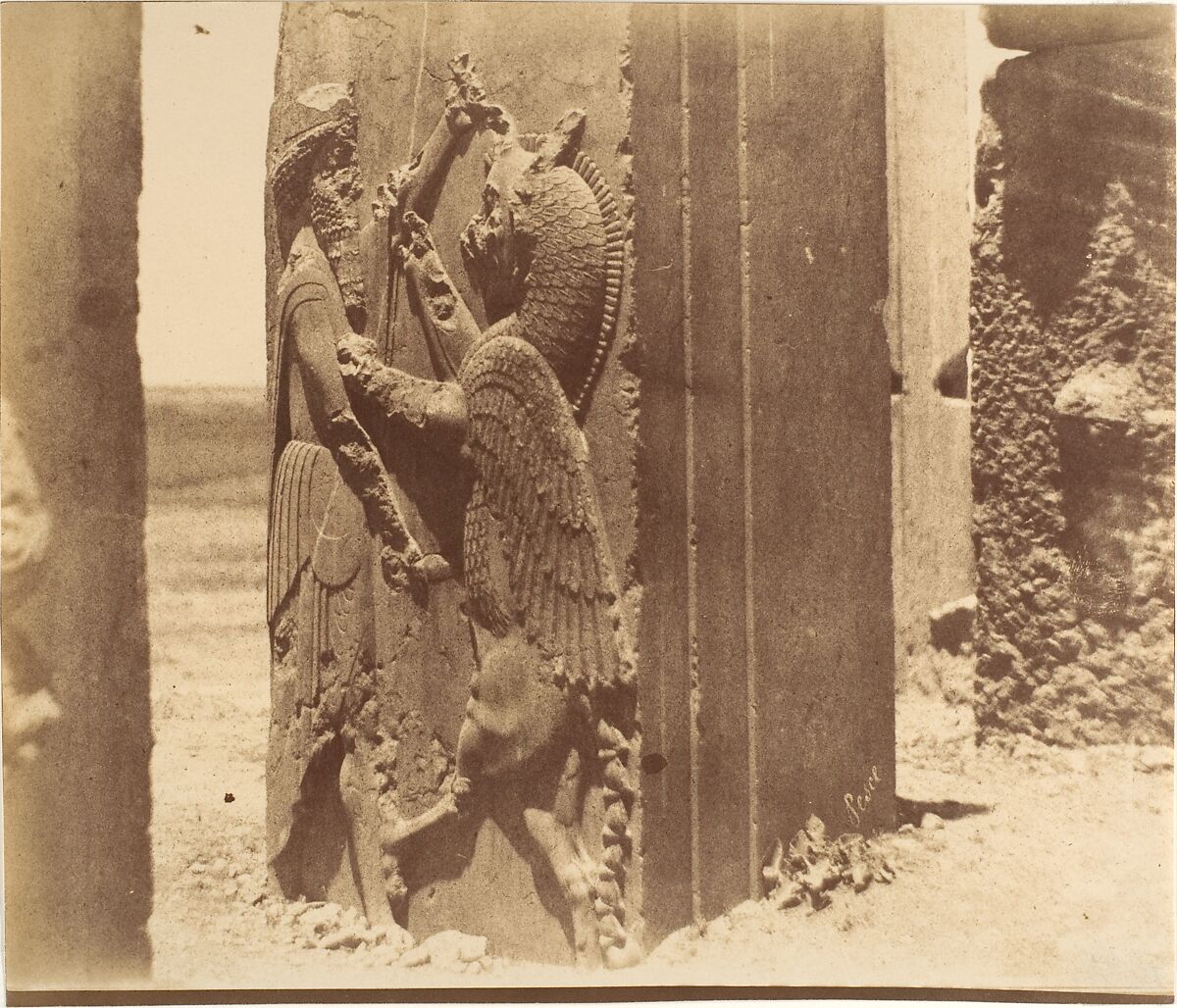
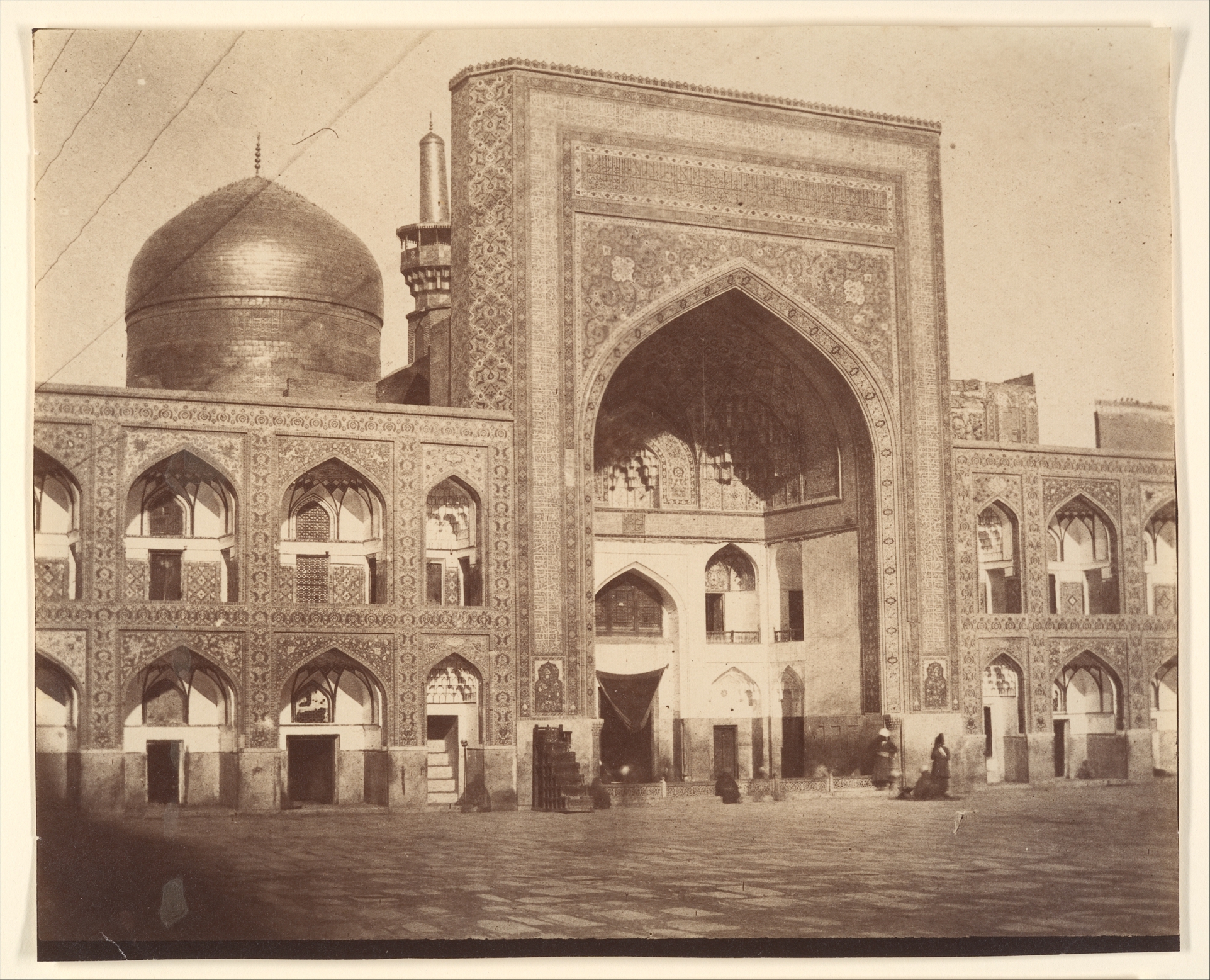
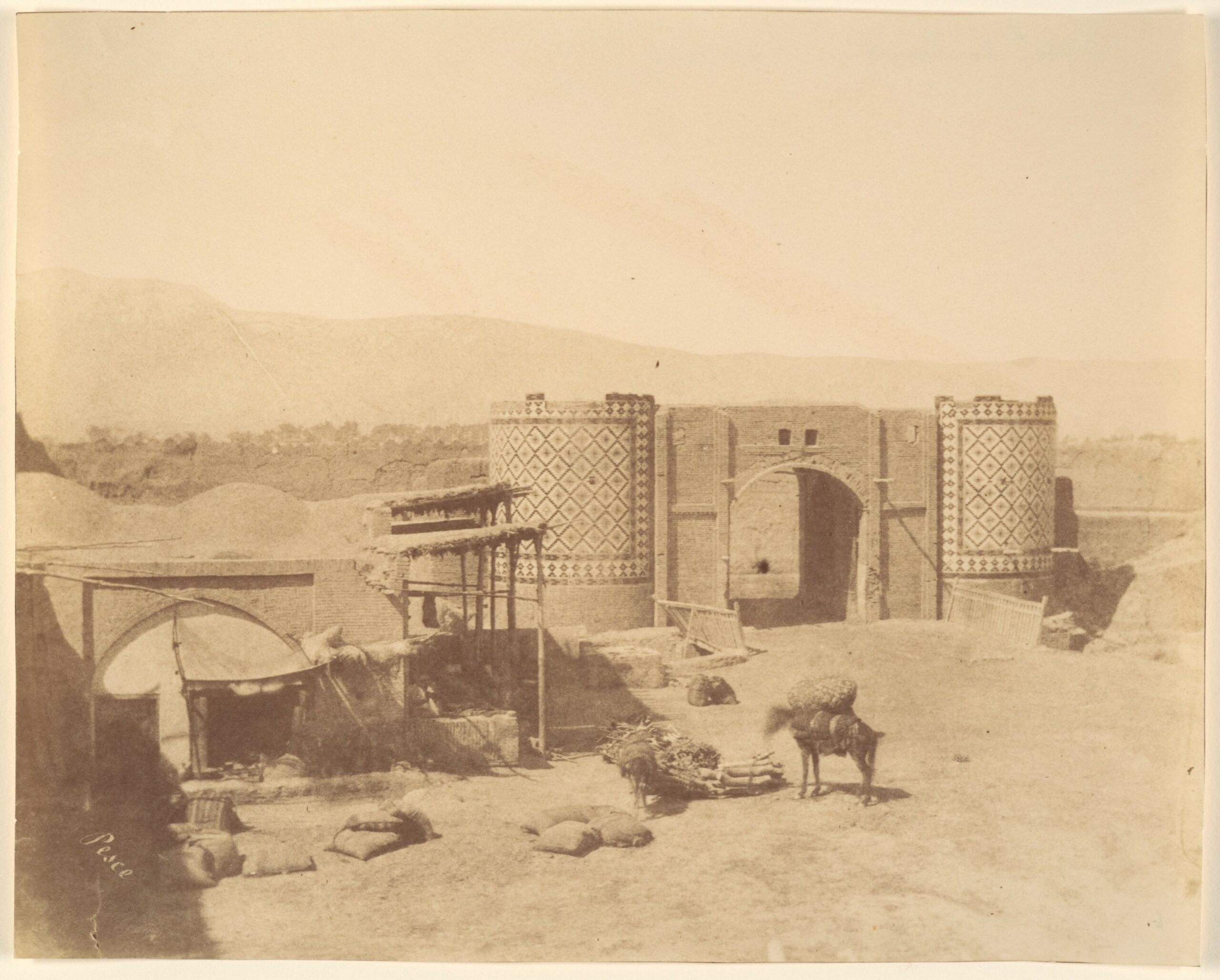
The technology and art of photography emerged in nineteenth-century Europe. And so, when a part of the world outside Europe was well-photographed in those days, it tended to be a traveling European behind the camera. Take John Thomson, previously featured here on Open Culture, for his photos of China in the eighteen-seventies. Even before that, an Italian colonel and photographer named Luigi Pesce was hard at work documenting a land geographically closer to Europe, but hardly less exotic in the European worldview of the time: Persia, or what we would today call Iran.
“According to scholars and historians, the first photographer in Iran was Jules Richard, a Frenchman who, as stated in his diaries, arrived in Tehran in 1844,” says the web site of the National Museum of Asian Art.
“He served as the French language tutor of the Gulsaz family and took daguerreotypes of Mohammad Shah (reigned 1834–48) and his son, the crown prince, Nasir al-Din Mirza.” Alas, these photographs seem to be lost, much like most others taken before Pesce’s arrival in the country in 1848, “during the reign of Naser al-Din Shah Qajar, to train Iranian infantry units.”
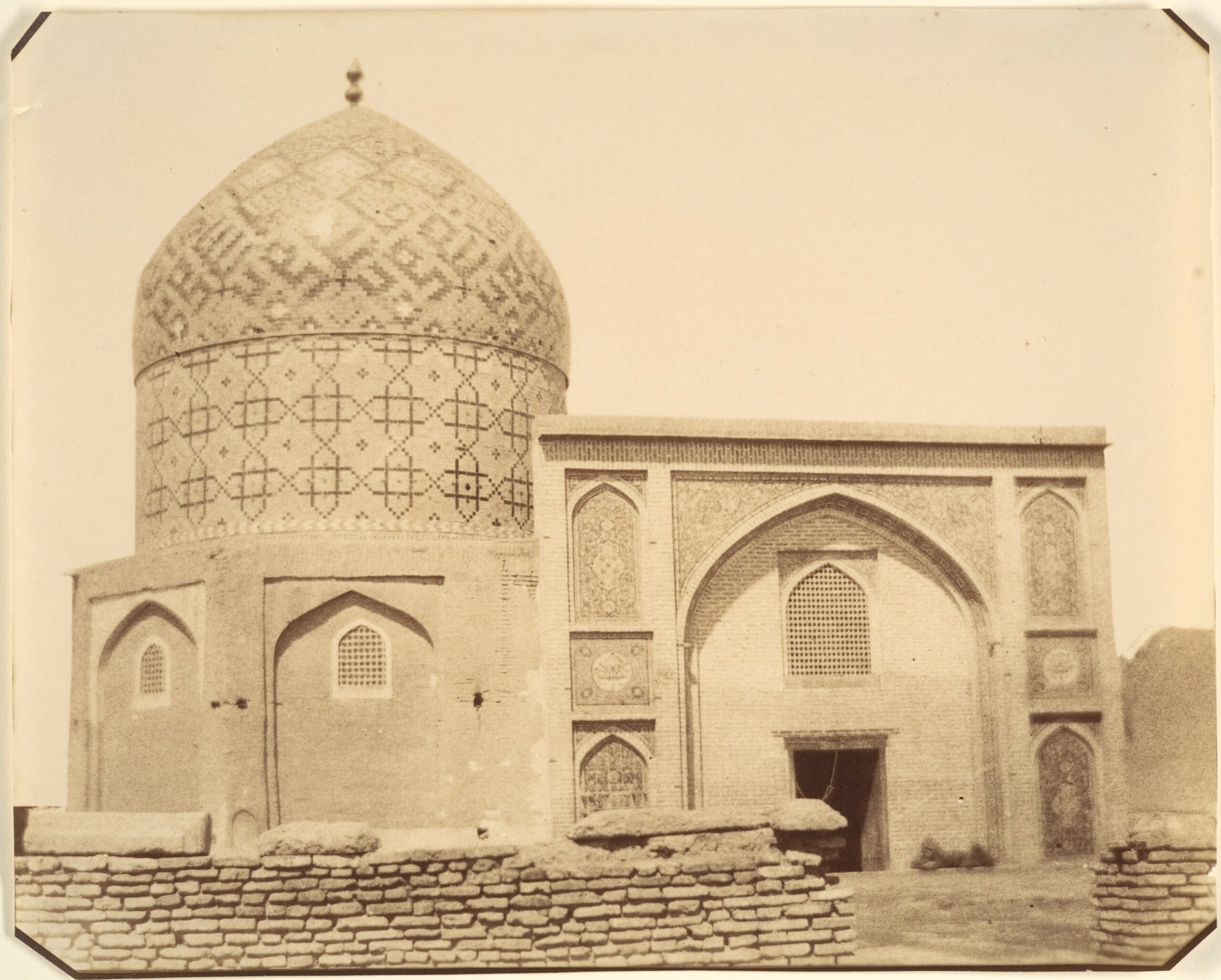
Pesce’s photographic subjects included Naser al-Din himself, pictures of whom appear in the online collection of Pesce’s work at the Metropolitan Museum of Art. It was the Met that received a copy of the photo collection Pesce produced of Iran’s ancient monuments — probably the very same copy that the photographer had originally sent to Prince William I, King of Prussia.
In those days, even such exalted figures had a great deal of curiosity about far-flung realms, and before photography, they had no easier way of seeing what those realms really looked like than making the arduous journey themselves.
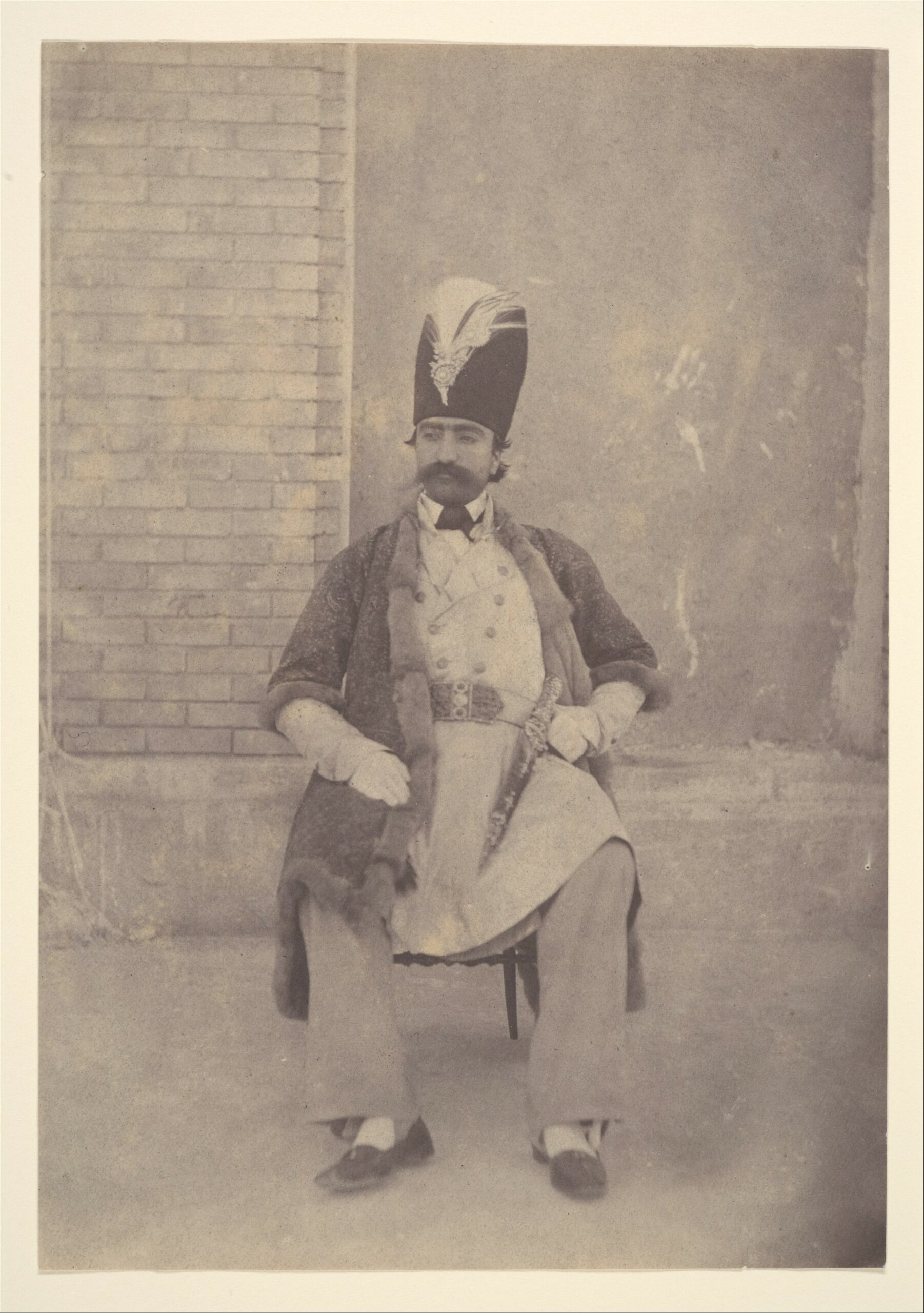
The sites captured in this collection include Toghrol Tower, the Tomb of Seeh‑i Mumin, and the Mosque of Nasser-eddin Shah — as well as Pasargadae, Naqsh‑e Rustam, and Persepolis, the famed ceremonial capital complex of the ancient Achaemenid Empire, which Pesce was the first to photograph. Or at least he was the first to succeed in doing so, Naser al-Din having previously sent Richard off to make some daguerreotypes of Persepolis that never came out.
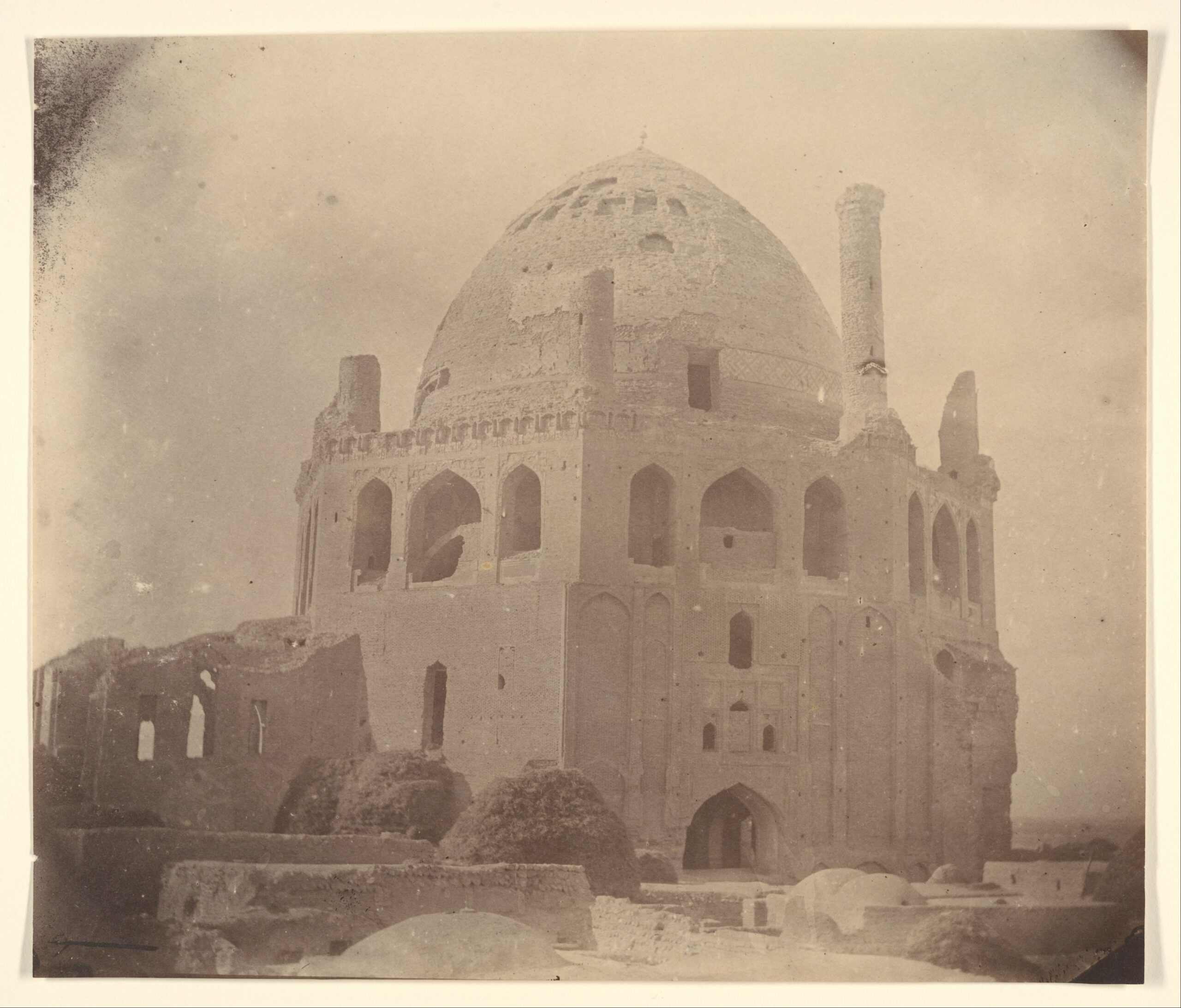
But even Pesce’s photographs, fully executed using just about the height of the technology at the time, no longer have the immediacy they would have when Prince William gazed upon them; more than a century and a half later, they have a patina of historical distance that shades into unreality, making them feel not unlike ruins themselves. You can also view more photos on Google Arts and Culture.
Related content:
New Archive of Middle Eastern Photography Features 9,000 Digitized Images
Behold the World’s Oldest Animation Made on a Vase in Iran 5,200 Years Ago
The Oldest Known Photographs of Rome (1841–1871)
700 Years of Persian Manuscripts Now Digitized & Free Online
Based in Seoul, Colin Marshall writes and broadcasts on cities, language, and culture. His projects include the Substack newsletter Books on Cities, the book The Stateless City: a Walk through 21st-Century Los Angeles and the video series The City in Cinema. Follow him on Twitter at @colinmarshall or on Facebook.
Read More...Coffee Connoisseur James Hoffmann Reviews a $20,000 Espresso Maker
It costs roughly $20,000, weighs nearly 100 pounds, and looks like a high-end microscope. Handmade in Switzerland, the MANUMENT Leva Machine makes espresso. How well does it make espresso? How do the shots taste?: According to coffee expert James Hoffmann–he’s the author of The World Atlas of Coffee–the shots have a texture that is “very enjoyable.” The texture is “silky, buttery and soft.” That verdict is sandwiched in the middle of a 20-minute review of the machine, which you can watch above.
If you would like to support the mission of Open Culture, consider making a donation to our site. It’s hard to rely 100% on ads, and your contributions will help us continue providing the best free cultural and educational materials to learners everywhere. You can contribute through PayPal, Patreon, and Venmo (@openculture). Thanks!
Related Content
The Birth of Espresso: The Story Behind the Coffee Shots That Fuel Modern Life
Understanding Espresso: A Six-Part Series Explaining What It Takes to Pull the Ideal Shot
Coffee College: Everything You Wanted to Know about Coffee Making in One Lecture
How to Make Coffee in the Bialetti Moka Pot: The “Ultimate Techique”
Read More...How to Make Medieval Mead: A 13th Century Recipe
Read a story set in the Middle Ages, Beowulf or anything more recently written, and you’re likely to run across a reference to mead, which seems often to have been imbibed heartily in halls dedicated to that very activity. The same goes for medieval-themed plays, movies, and even video games. Take Assassin’s Creed Valhalla, described by Max Miller, host of Youtube channel Tasting History, as “a history-based game of, like, my favorite time period — Saxons and Vikings, you know, fightin’ it out — so I’m assuming that there’s going to be mead in there somewhere.” He uploaded the video, below, in the fall of 2020, just before that game’s release, but according to the Assassin’s Creed Wiki, he was right: there is, indeed, mead in there.
Perhaps throwing back a digital horn of mead in a video game has its satisfactions, but surely it would only make us curious to taste the real thing. Hence Miller’s episode project of “making medieval mead like a viking,” which requires only three basic ingredients: water, honey, and ale dregs or dry ale yeast. (The set of required tools is a bit more complex, involving several different vessels and, ideally, a “bubbler” to let out the carbonation.)
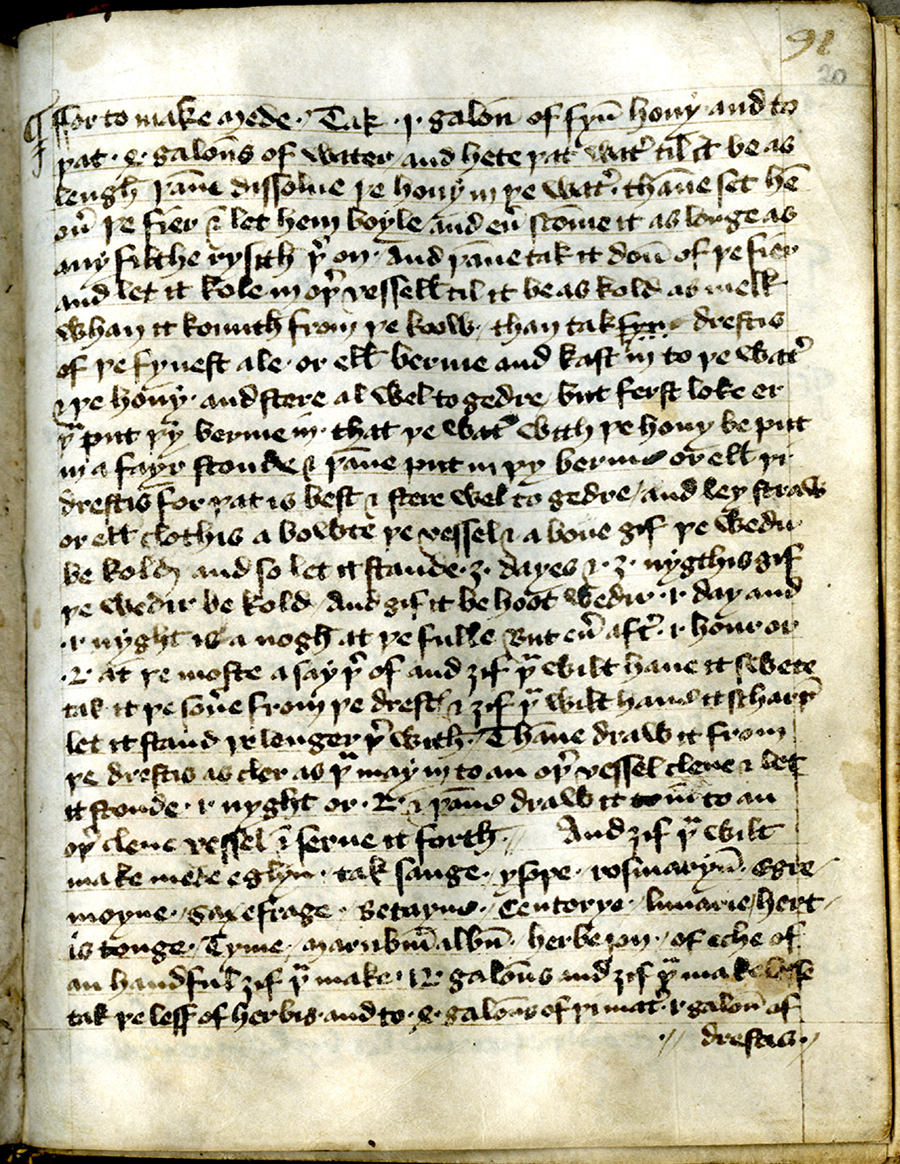
In it he consults a thirteenth- or fourteenth-century manuscript (above) called the Tractatus de Magnetate et Operationibus eius, which includes not just a letter on the workings of magnets — and “a university handbook on the theory of numbers, proportions, and harmony” and “the seven signs of bad breeding; the seven signs of elegance” — but also “one of the oldest known surviving English mead recipes.”
“When you think of Saxons and Vikings, yes, you think of mead,” Miller says, “but mead actually got its start way before that,” evidenced in the alcohol-and-honey residue found on Chinese pottery dating to 7000 BC and a written mention in the Indian Rigveda. “I have tasted the sweet drink of life, knowing that it inspires good thoughts and joyous expansiveness to the extreme, that all the gods and all mortals seek it together,” says that sacred text. Even if Miller’s mead doesn’t make you feel like a god, it does have the virtue of requiring only a few days’ fermentation, as opposed to the traditional period of months. Toward the video’s end, he mentions having set one bottle aside to ripen further, and possibly to feature in a later episode. That was nearly three years ago; today, Tasting History fans can only speculate as to what alcoholic Valhalla that brew has so far ascended.
You can find the text of the medieval recipe below:
//ffor to make mede. Tak .i. galoun of fyne hony and to
þat .4. galouns of water and hete þat water til it be as
lengh þanne dissolue þe hony in þe water. thanne set hem
ouer þe fier & let hem boyle and ever scomme it as longe as
any filthe rysith þer on. and þanne tak it doun of þe fier
and let it kole in oþer vesselle til it be as kold as melk
whan it komith from þe koow. than tak drestis
of þe fynest ale or elles berme and kast in to þe water
& þe hony. and stere al wel to gedre but ferst loke er
þu put þy berme in. that þe water with þe hony be put
in a fayr stonde & þanne put in þy berme or elles þi
drestis for þat is best & stere wel to gedre/ and ley straw
or elles clothis a bowte þe vessel & a boue gif þe wedir
be kolde and so let it stande .3. dayes & .3. nygthis gif
þe wedir be kold And gif it be hoot wedir .i. day and
.1. nyght is a nogh at þe fulle But ever after .i. hour or
.2. at þe moste a say þer of and gif þu wilt have it swete
tak it þe sonere from þe drestis & gif þu wilt have it scharpe
let it stand þe lenger þer with. Thanne draw it from
þe drestis as cler as þu may in to an oþer vessel clene & let
it stonde .1. nyght or .2. & þanne draw it in to an
oþer clene vessel & serve it forth // And gif þu wilt
make mede eglyn. tak sauge .ysope. rosmaryne. Egre-
moyne./ saxefrage. betayne./ centorye. lunarie/ hert-
is tonge./ Tyme./ marubium album. herbe jon./ of eche of
an handful gif þu make .12. galouns and gif þu mak lesse
tak þe less of herbis. and to .4. galouns of þi mater .i. galoun of
drestis.
Related content:
How to Make Ancient Mesopotamian Beer: See the 4,000-Year-Old Brewing Method Put to the Test
5,000-Year-Old Chinese Beer Recipe Gets Recreated by Stanford Students
Bars, Beer & Wine in Ancient Rome: An Introduction to Roman Nightlife and Spirits
Discover the Oldest Beer Recipe in History From Ancient Sumeria, 1800 B.C.
Beer Archaeology: Yes, It’s a Thing
Based in Seoul, Colin Marshall writes and broadcasts on cities, language, and culture. His projects include the Substack newsletter Books on Cities, the book The Stateless City: a Walk through 21st-Century Los Angeles and the video series The City in Cinema. Follow him on Twitter at @colinmarshall or on Facebook.
Read More...Support Us
We're hoping to rely on loyal readers, rather than erratic ads. Please click the Donate button and support Open Culture. You can use Paypal, Venmo, Patreon, even Crypto! We thank you!

About Us

Open Culture scours the web for the best educational media. We find the free courses and audio books you need, the language lessons & educational videos you want, and plenty of enlightenment in between.
Advertise With Us
FREE UPDATES!
GET OUR DAILY EMAIL
Get the best cultural and educational resources on the web curated for you in a daily email. We never spam. Unsubscribe at any time.
FOLLOW ON SOCIAL MEDIA
Open Culture editor Dan Colman scours the web for the best educational media. He finds the free courses and audio books you need, the language lessons & movies you want, and plenty of enlightenment in between.
Advertise With Us



