Watch the Building of the Empire State Building in Color: The Creation of the Iconic 1930s Skyscraper From Start to Finish
Ambition is not unknown in the New York City of the 2020s, but the New York City of the 1920s seems to have consisted of nothing but. Back then, where else would anyone dare to propose the tallest building in the world — much less end up with the job twelve days ahead of schedule and $9 million under budget? The construction of the Empire State Building began in January of 1930, just three months after the Wall Street Crash that began the Great Depression. Though economic conditions kept the project from attaining profitability until the 1950s (and stuck it with the nickname “Empty State Building”), it nevertheless stood in symbolic defiance of those hard times — and, ultimately, came to stand for New York and indeed the United Sates of America itself.
You can see footage of the Empire State Building’s construction in the compilation above, which gathers clips from contemporary newsreels and other sources and presents them in “restored, enhanced and colorized” form.
These images showcase the history-making skyscraper’s technical innovations as well as its marshaling of labor at an immense scale: at the height of construction, more than 3,500 workers were involved. That most of them were recent immigrants from countries like Ireland and Italy reflects the popular image of early 20th-century America as a “land of opportunity”; the sheer scale of the skyscraper they built reflects the previously unimaginable works made possible by America’s resources.
The Empire State Building set records, and over the 90 years since its opening has remained a difficult achievement to surpass. Only in 1970 did it lose its title of the tallest building in New York City, to Minoru Yamasaki’s World Trade Center — and then regained it in 2001 after the latter’s collapse. Today, one can easily point to much taller and more technologically advanced skyscrapers all around the world, but how many of them are as beloved or rich with associations? Back in 1931, architecture critic Douglas Haskell described the Empire State Building as “caught between metal and stone, between the idea of ‘monumental mass’ and that of airy volume, between handicraft and machine design, and in the swing from what was essentially handicraft to what will be essentially industrial methods of fabrication” — as good an explanation as any of why they don’t build ’em like this anymore.
Related Content:
New York’s Lost Skyscraper: The Rise and Fall of the Singer Tower
Watch the Building of the Eiffel Tower in Timelapse Animation
Based in Seoul, Colin Marshall writes and broadcasts on cities and culture. His projects include the book The Stateless City: a Walk through 21st-Century Los Angeles and the video series The City in Cinema. Follow him on Twitter at @colinmarshall or on Facebook.
Read More...Why “White Christmas,” “Here Comes Santa Claus,” “Let It Snow,” and Other Classic Christmas Songs Come from the 1940s
Cast your mind back, if you will, to Christmastime eighty years ago, and imagine which holiday songs would have been in the air — or rather, which ones wouldn’t have been. You certainly wouldn’t have heard the likes of “Jingle Bell Rock” or “Rockin’ Around the Christmas Tree,” rock-and-roll itself not yet having emerged in the form we know today. Even the thoroughly un-rocking “Silver Bells” wouldn’t be recorded until 1951, for the now-forgotten Bob Hope film The Lemon Drop Kid. What of children’s favorites like “Here Comes Santa Claus,” “Rudolph, the Red-Nosed Reindeer,” and “Frosty the Snowman”? None were popular until Gene Autry laid them down in 1947, 1949, and 1950, respectively.
Even “The Christmas Song,” whose most beloved version was recorded by Nat King Cole, wasn’t written until 1945 (as was “Let It Snow”). The year before that brought “Have Yourself a Merry Little Christmas”; the year before that, “Santa Claus Is Comin’ to Town” and “I’ll Be Home for Christmas.” That was recorded first and most definitively by Bing Crosby, the singer most closely identified with the 1940s Christmas-music boom. That boom began, as the Cheddar Explains video at the top of the post tells it, with Crosby’s Christmas Day 1941 rendition of “White Christmas,” just weeks after the attack on Pearl Harbor.
“It’s no coincidence that the boom in Christmas tunes came during World War II, when tens of thousands of American soldiers were abroad defending their country, no doubt longing for the simple warmth of home,” writes The Atlantic’s Eric Harvey. “Irving Berlin invested ‘White Christmas’ with the sort of meterological longing that comes from living in Southern California, but troops picked up on the sentiment, making the song a classic in this regard.” This also happened to be the zenith of the golden age of radio (a compilation of whose Christmas broadcasts we featured last year here on Open Culture). “By the 1940s, radios were a default presence in most American homes. And by the late 1940s television was growing out of radio, and through the 1950s the pair set holiday living rooms around the country aglow with musical performances.”
That most popular Christmas songs still come from the 1940s and 50s (a Spotify playlist of which you can find here) has given rise to theories of a Baby-Boomer conspiracy to preserve their own childhoods at all costs to the culture. But then, as Christopher Ingraham writes in The Washington Post, “the postwar era really was an exceptional time in American history: jobs were plentiful, the economy was booming, and America’s influence on the world stage was at its peak.” Thus “what we now think of as the holiday aesthetic isn’t just about a particular time of the year — it’s also very much about a particular time of American history.” This aligns with the perception that Christmas has turned from a religious holiday into an American one. But take it from me, an American living in Korea: even on the other side of the world, you can’t escape its songs.
Related Content:
David Bowie & Bing Crosby Sing “The Little Drummer Boy” (1977)
Stream a Playlist of 79 Punk Rock Christmas Songs: The Ramones, The Damned, Bad Religion & More
Based in Seoul, Colin Marshall writes and broadcasts on cities and culture. His projects include the book The Stateless City: a Walk through 21st-Century Los Angeles and the video series The City in Cinema. Follow him on Twitter at @colinmarshall or on Facebook.
Read More...J.R.R. Tolkien Sent Illustrated Letters from Father Christmas to His Kids Every Year (1920–1943)
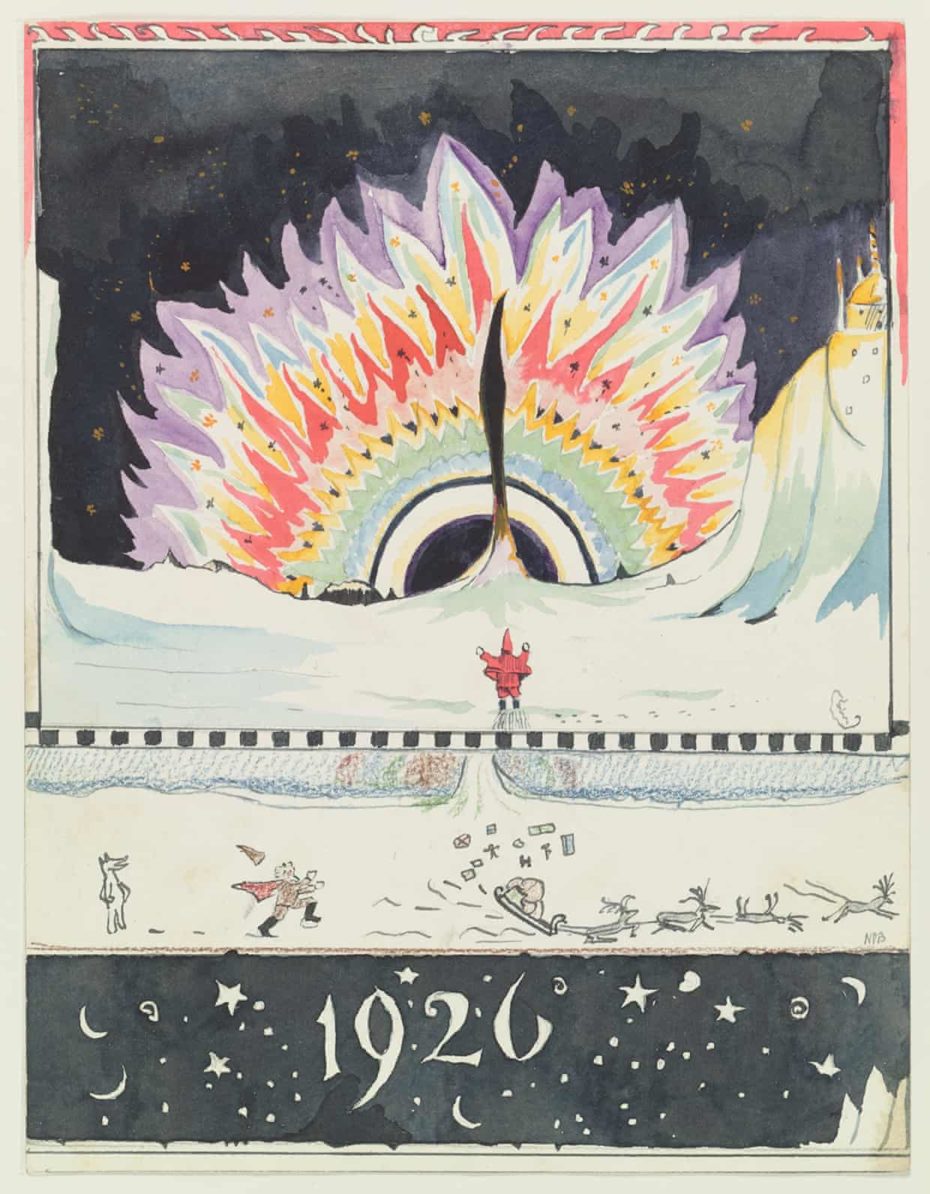
It doesn’t take children long to suspect that Santa Claus is actually their parents. But if Mom and Dad demonstrate sufficient commitment to the fantasy, so will the kids. This must have held even truer for the family of the 20th century’s most celebrated creator of fantasies, J. R. R. Tolkien. Before Tolkien had begun writing The Hobbit, let alone the Lord of the Rings trilogy, he was honing his signature storytelling and world-building skills by writing letters from Father Christmas. The toddler John Tolkien and his infant brother Michael received the first in 1920, just after their Great War veteran father was demobilized from the army and made the youngest professor at the University of Leeds. Another would come each and every Christmas until 1943, two more children and much of a life’s work later.
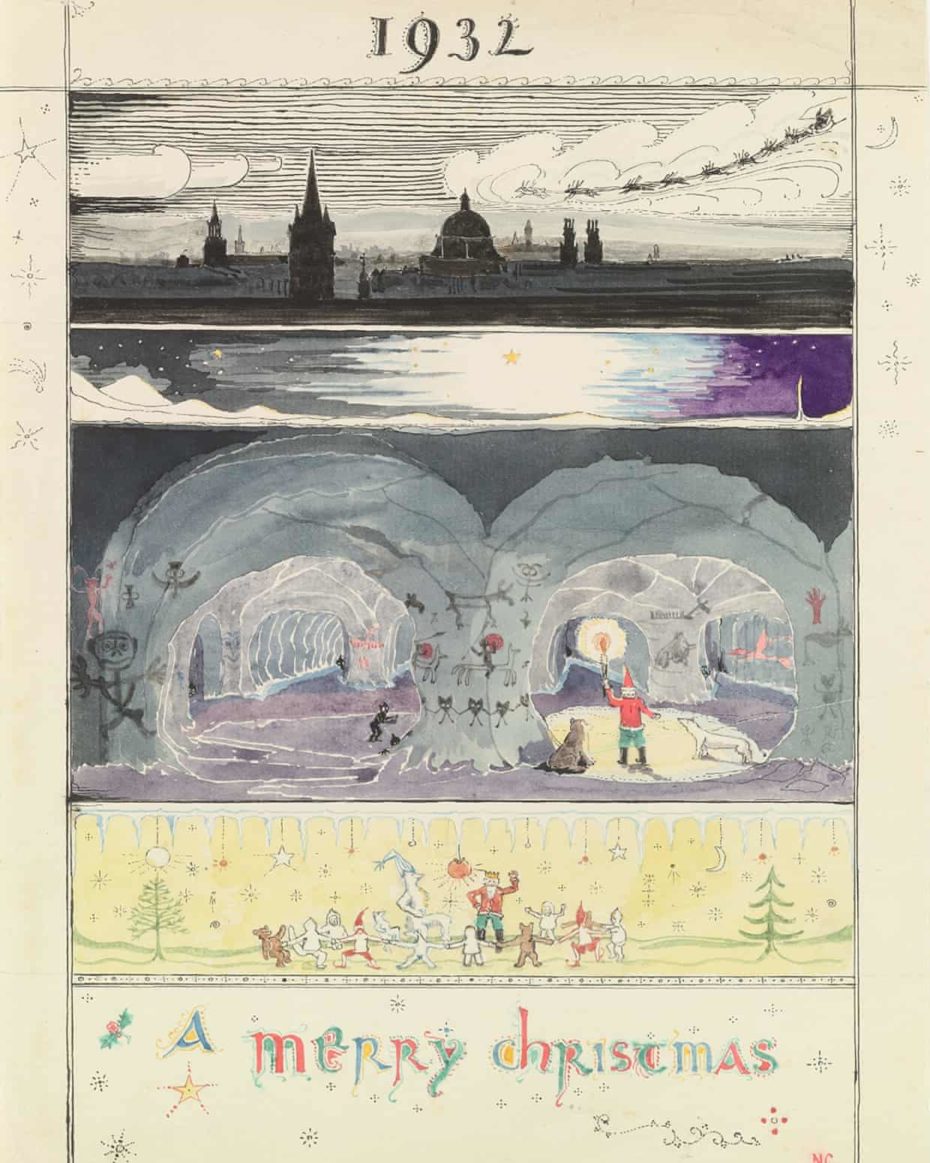
Every year, Tolkien’s Father Christmas had a great deal to report to John, Michael, and later Christopher and Priscilla. Apart from the usual hassle of assembling and delivering gifts, he had to contend with a host of other challenges including but not limited to attacks by marauding goblins and the accidental destruction of the moon.
The cast of characters also includes an unreliable polar-bear assistant and his cubs Paksu and Valkotukka, the sound of whose names hints at Tolkien’s interest in language and myth. Since the publication of the collected Letters From Father Christmas a few years after Tolkien’s death, enthusiasts have identified many traces of the qualities that would later emerge, fully developed, in his novels. The spirit of adventure is there, of course, but so is the humor.
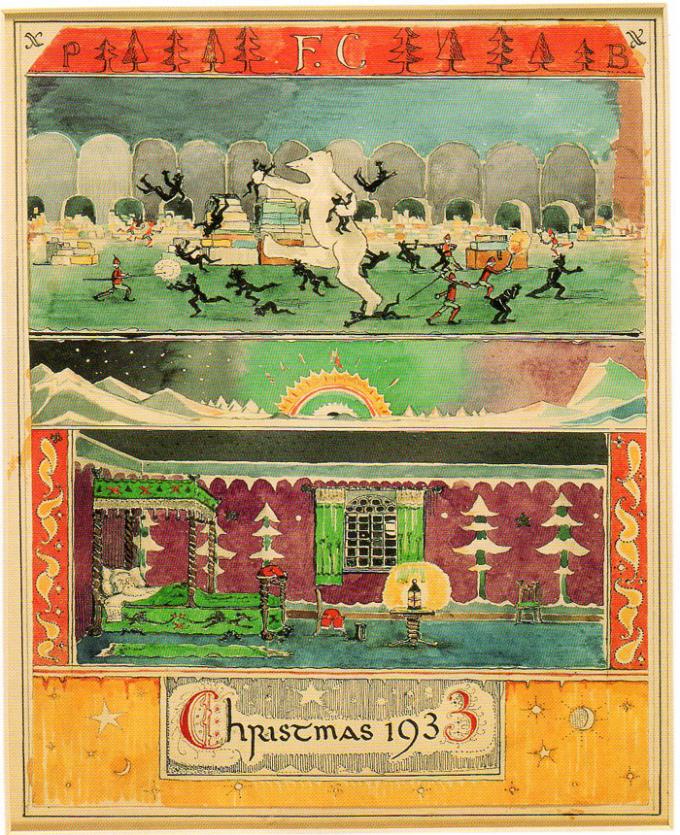
Understanding seemingly from the first how to fire up a young reader’s imagination, the multitalented Tolkien accompanied each letter from Father Christmas with an illustration. Colorful and evocative, these works of art depict the scenes of both mishap and revelry described in the correspondence (itself stamped with a Tolkien-designed seal from the North Pole). How intensely must young John, Michael, Christopher, and Priscilla have anticipated these missives in the weeks — even months — leading up to Christmas. And how astonishing it must have been, upon much later reflection, to realize what attention their father had devoted to this family project. Growing up Tolkien no doubt had its downsides, as relation to any famous writer does, but unmemorable holidays can’t have been one of them.
Related Content:
Read J. R. R. Tolkien’s “Letter From Father Christmas” To His Young Children
Discover J. R .R. Tolkien’s Personal Book Cover Designs for The Lord of the Rings Trilogy
The Only Drawing from Maurice Sendak’s Short-Lived Attempt to Illustrate The Hobbit
110 Drawings and Paintings by J.R.R. Tolkien: Of Middle-Earth and Beyond
When Salvador Dalí Created Christmas Cards That Were Too Avant-Garde for Hallmark (1960)
Based in Seoul, Colin Marshall writes and broadcasts on cities and culture. His projects include the book The Stateless City: a Walk through 21st-Century Los Angeles and the video series The City in Cinema. Follow him on Twitter at @colinmarshall or on Facebook.
Read More...The 850 Books a Texas Lawmaker Wants to Ban Because They Could Make Students Feel Uncomfortable

“Who’s afraid of critical race theory?” asked lawyer, legal scholar and Harvard professor Derrick Bell in a 1995 essay. Bell helped pioneer the discipline in the 70s, and until recently, it remained mostly confined to academic journals, grad school seminars and the pages of progressive magazines. Now the phrase is everywhere. What happened? Did radical scholars force third graders to read footnotes? Or did conservatives show up fifty years late to a conversation, skip the reading, and decide the best way to respond was to lash out indiscriminately at every identity and civil rights issue that makes them uncomfortable, starting with kindergarten and working their way up? Maybe Bell’s question has answered itself.
In the recent moral panic over CRT, the term has become a denunciation, a shibboleth that can apply to any history, civics, or literature lesson broadly construed, whether taught through current events, fiction, poetry, memoir, nonfiction, or any material — to use the language of the “anti-CRT” Texas House Bill 3979 — that might make a student “feel discomfort, guilt, anguish, or any other form of psychological distress on account of the individual’s race or sex.” Connections to Bell’s critical race theory are tenuous, at best. As Allyson Waller notes at the Texas Tribune, that academic discipline “is not being taught in K‑12 schools.”
This fact means little to right wing legislators, school board members and parents’ groups, who have found a convenient boogeyman on which to project their anxieties. What the Texas bill means in practice has been impossible to parse. American Civil Liberties Union lawyer Emerson Sykes filed a federal suit over a similar law in Oklahoma, arguing that it’s “so vague,” as Michael Powell reports at The New York Times, “that it fails to provide reasonable legal guidance to teachers and could put jobs in danger.” A Black principal near Dallas has already been forced to resign in the anti-CRT panic, for writing a public letter after George Floyd’s death that declared, “Education is the key to stomping out ignorance, hate, and systemic racism.”
In another part of the state, a district-level executive director of curriculum has recommended teaching “other perspectives” on the Holocaust to meet the bill’s mandates. Teachers and administrators are not the only ones targeted by the bill and its supporters. “One minute they’re talking critical race theory,” says middle school librarian Carrie Damon. “Suddenly I’m hearing librarians are indoctrinating students. One library in Llano County, about 80 miles northwest of Austin, shut down for three days for a “thorough review” of every children’s book. At the statewide level, Texas Republican State Representative Matt Krause launched an anti-CRT witch-hunt, in advance of a run for State Attorney General, by emailing a list 850 books to state superintendents, asking if any of them appeared in their libraries.
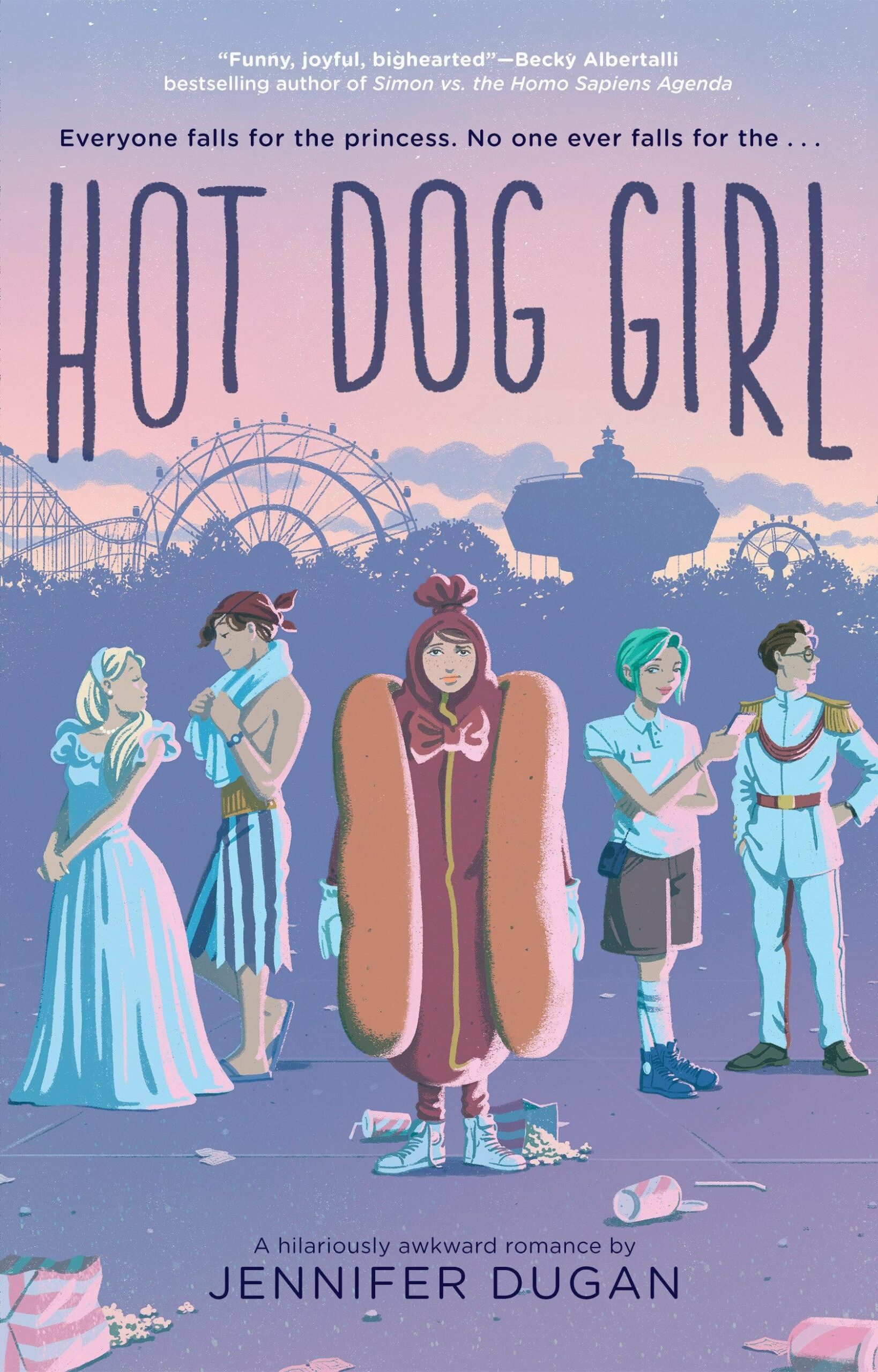
The list, writes Danika Ellis at Book Riot, is “a bizarre assortment of titles, formatted in a way that suggests it’s copy-and-pasted from library listings.” It includes books about human rights, sex education, any and every LGBTQ topic, race, American history, and policing. Ironically, it also includes books about burning books and bullying (a problem causing student walkouts around the country). The books range from those for young children to middle and high school students and college-aged young adults. Most of them “were written by women, people of color and LGBTQ writers.” It also includes “a particularly puzzling choice,” writes Powell (probably a mistake?): Cynical Theories by Helen Pluckrose and James Lindsay, two authors who have made careers out of exposing what they allege are illegitimate “grievances” in academia.
You can see Krause’s full list here. The state rep’s “motive was unclear,” Powell writes, but it seems clear enough he wished to flag these books for possible removal. Given that critical race theory is not, in fact, a phrase that means “anything that makes conservatives feel guilty and/or uncomfortable” but is foremost a legal theory, we might ask legal questions like cui bono? – “who benefits” from banning the books on Krause’s list? Who feels uncomfortable and guilty when they read about racist policing, healthy gay relationships, or the civil rights movement– and why? Should that discomfort provide just cause for censorship and the violation of other students’ rights to quality educational material? How can the subjective standard of “comfort” be used to evaluate the educational value of a book?
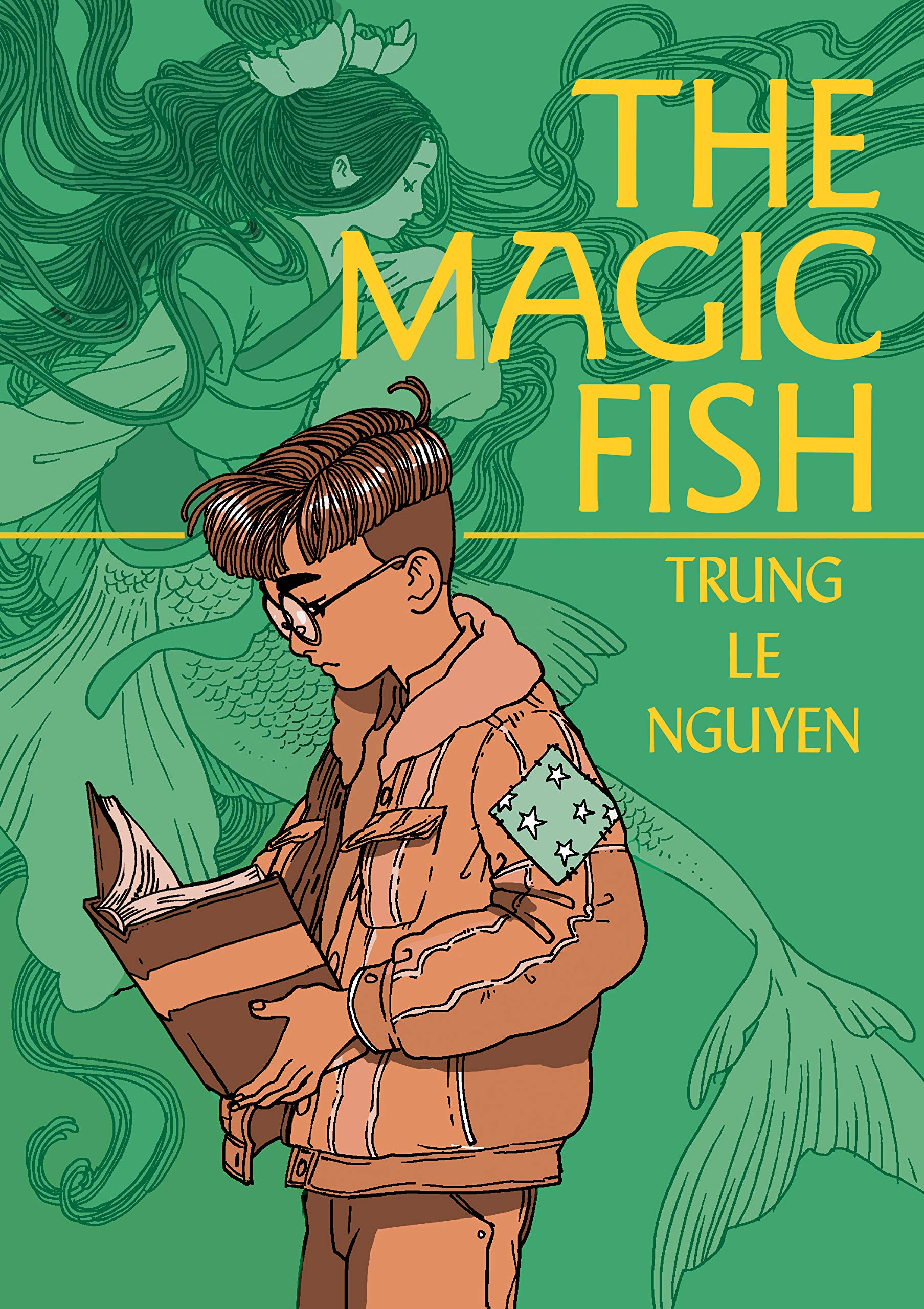
Debates over free inquiry in education seem never to end. (Consider that the first book banned in Colonial North America mocked the Puritans, who themselves loved nothing more than banning things.) As we approach the question this time around, it seems we might have learned not to ban books under vague laws that empower bigots to hunt down an amorphous enemy so insidious it can lurk anywhere and everywhere. Such laws have their own history, too, in the U.S. and elsewhere. Nowhere have they led to a state of affairs most of us want, one free from violence, bigotry, discrimination and state repression — that is, unless we need such things to make us comfortable.
Related Content:
America’s First Banned Book: Discover the 1637 Book That Mocked the Puritans
Read 14 Great Banned & Censored Novels Free Online: For Banned Books Week 2014
Josh Jones is a writer and musician based in Durham, NC. Follow him at @jdmagness
Read More...Class Critiques in Squid Game, Succession, etc. — Pretty Much Pop: A Culture Podcast #112

Popular shows have commented on wealth inequality by showing how dire the situation is for the poor and/or how disconnected and clueless the rich are. How effective is this type of social commentary?
Your host Mark Linsenmayer is joined by philosopher and NY Times writer Lawrence Ware, novelist and writing professor Sarahlyn Bruck, and educator with a rhetoric doctorate Michelle Parrinello-Cason to discuss the appeal of both reality show (“fishbowl”) horror and satire. Is it OK if we don’t like any of the characters in Succession? Does Squid Game actually deserve its 94% on Rotten Tomatoes? Are we even capable as American viewers of appreciating what it’s trying to do?
We also touch on White Lotus, The Hunt, Schitt’s Creek, torture porn, social commentary in songs, and more. Lurking in the background here are foundational works for this trend: Parasite, Get Out, Battle Royale, and The Hunger Games.
A few articles we may have drawn on for the discussion:
- “The 3 Biggest Problems With ‘Squid Game’ — The #1 Show On Netflix” by Erik Kain
- “ ‘Squid Game’ Brings the Horrifying Reality of Class Inequality to Our Screens” by Moria Piroshkova
- “You Can’t Understand Squid Game Without Understanding the Korean Concept Driving It” by Ashely Oh
- “7 Terrifying Horror Stories About Class” by Nino Cipri
Hear more from our guests on past episodes: Law on various PEL discussions on race and religion, Sarahlyn on PMP on soap operas, Michelle on PMP on board games. Follow them @law_writes, @sarahlynbruck and @DaylaLearning.
This episode includes bonus discussion you can access by supporting the podcast at patreon.com/prettymuchpop or by choosing a paid subscription through Apple Podcasts. This podcast is part of the Partially Examined Life podcast network.
Pretty Much Pop: A Culture Podcast is the first podcast curated by Open Culture. Browse all Pretty Much Pop posts.
Read More...How the Beatles Experimented with Indian Music & Pioneered a New Rock and Roll Sound
If the Beatles’ experiments with Indian classical music helped bridge their transition from touring pop stars to avant-garde studio wizards, it can seem less obvious how seriously they took Indian classical music itself, though the band introduced millions of Westerners to Ravi Shankar and other Indian musicians (some of whom did not get credit on albums like Sgt. Pepper’s Lonely Hearts Club Band and were only discovered decades later). Because of the Beatles, the sitar is indelibly associated in the West with psychedelia, and Indian classical forms and instruments have entered the pop music vernacular to stay. But none of that’s to say the band set out to accomplish these goals in their first dalliance with Eastern sounds.
That introduction came in the most unserious of ways during the making of 1965’s slapstick Help!: a chase scene in a London Indian restaurant. The Beatles would come to regret making the movie altogether, and never quite understood it while they were making it. (“It was wrong for us,” Paul McCartney later reflected. “We were guest stars in our own movie.”)
Its story featured a sinister, stereotypical “Eastern sect,” as Lennon put it, and the restaurant scene, he said, was “the first time that we were aware of anything Indian.”
Lennon later called the movie “bullshit” but reflected on its musical importance: “All of the Indian involvement,” he said in a 1972 interview, “came out of the film Help!” As George Harrison recalled, the restaurant scene was life-changing:
I remember picking up the sitar and trying to hold it and thinking, ‘This is a funny sound.’ It was an incidental thing, but somewhere down the line I began to hear Ravi Shankar’s name. The third time I heard it, I thought, ‘This is an odd coincidence.’ And then I talked with David Crosby of The Byrds and he mentioned the name. I went and bought a Ravi record; I put it on and it hit a certain spot in me that I can’t explain, but it seemed very familiar to me. The only way I could describe it was: my intellect didn’t know what was going on and yet this other part of me identified with it. It just called on me … a few months elapsed and then I met this guy from the Asian Music Circle organisation who said, ‘Oh, Ravi Shankar’s gonna come to my house for dinner. Do you want to come too?’
Harrison followed up the visit with several weeks of study under Shankar (see them playing together in Rishikesh, India, below) and the Asian Music Circle in London. He began applying what he learned from Shankar to Beatles songs. “Within You Without You,” from Sgt. Pepper’s, for example, was based on a Shankar composition.
The first official Beatles release to feature Indian instrumentation involved none of the band’s members. It was, rather, a medley of “A Hard Day’s Night,” “Can’t Buy Me Love,” and “I Should Have Known Better,” played on sitar, tablas, flute, and finger cymbals for the restaurant scene and released on the North American recording of Help! In that same year, however, the band used Indian sounds themselves for the first time on Rubber Soul when the sitar appeared on the recording of “Norwegian Wood.” The track “needed something,” Harrison said. “We would usually start looking through the cupboard to see if we could come up with something, a new sound, and I picked the sitar up — it was just lying around; I hadn’t really figured out what to do with it. It was quite spontaneous: I found the notes that played the lick. It fitted and it worked.” The song has been heralded as the first appearance of “raga rock.” Not long afterward, Harrison composed “Love You To” for Revolver in 1966, a song that not only incorporated the hypnotic drone of the sitar but also integrated classical Indian musical theory into its composition.
In the video at the top, pianist and teacher David Bennett demonstrates how the Beatles did not simply pick up the sitar as a novelty instrument; they found ways to combine Western rock idioms with a traditional Eastern musical vocabulary. “Love You To” makes “extensive use of Indian instrumentation like sitar, table and tambura,” says Bennett, “but the song’s treatment of harmony, melody, and structure was also heavily influenced by the Indian style rather than being based on a chord progression like most Western pop music.” We learn how the song uses a drone note — a root note of C — throughout, “typical of Indian classical music,” and we learn the definition of terms like “raga” and “alap”: a short introductory section — such as that which opens “Love You To” — “usually in free time, where the key center and raga are established.”
How seriously did the Beatles take Indian classical music? That depends on which Beatle you mean. In Harrison’s hands, at least, an exploration of the musical traditions of the subcontinent produced a unique body of psychedelic rock widely imitated but never paralleled — one that did not use exotic instrumentation simply as ornament but rather as an opportunity to learn and change and adapt to new forms. Find out in Bennett’s video how each of the Beatles’ “raga rock” songs from the mid-sixties incorporated Indian classical music in various ways, and listen to a playlist of those songs here.
Related Content:
Josh Jones is a writer and musician based in Durham, NC. Follow him at @jdmagness
Read More...An AI Computer Watched Hitchcock’s Vertigo 20 Times & Then Made Its Own Disturbing Movie
If you could watch only one movie, Alfred Hitchcock’s Vertigo would hardly be the worst choice. Its containment and expression of such a range of cinema’s possibilities surely did its part to bring it to the top spot on Sight & Sound’s most recent critics’ poll of the greatest films of all time. But what if Vertigo was all you knew of the entire world? Such is the case with the artificial-intelligence system used by artist Chris Peters to create “Vertigo A.I.,” the short film above. As the system repeatedly “watched” Vertigo over a two-day period, says Peters’ official site, the artist “recorded the machine’s neural network forming in real time — the ‘movie experience’ — made manifest.”
This experience is a five-minute film, “not footage in the traditional sense of photographed scenes, but footage of the internal experience of a new intelligence learning about our world for the first time.” As for what we hear, “a separate A.I. was used to write a narration for the recordings. Given a few lines of dialogue from Vertigo, the machine generated sentences that went off on their own wild tangents.”
After about thirty seconds, any cinephile will recognize the visual source material. As for the “story” told over the images, one can only imagine what processes the chosen pieces of Vertigo’s screenplay went through in the mind of the machine. “In the dream, I was in a room with a figure,” begins the narrator. “He was tall and covered in white.”
Dreams make for notoriously dull subject matter, but then, the enduring appeal of cinema has long been explained through its ability to transport us into a state not at all dissimilar from dreaming. Vertigo in particular, as Sight & Sound editor Nick James puts it, is “a dream-like film about people who are not sure who they are but who are busy reconstructing themselves and each other to fit a kind of cinema ideal of the ideal soul-mate.” 27 spots below it on the magazine’s critics’ poll comes Mulholland Drive by David Lynch, a film similarly praised for its compelling but elusive story and its images seemingly pulled straight from the unconscious. Suitably, “Vertigo A.I.” has something more than a little Lynchian about it, making one wonder how the A.I. would handle Lynch’s filmography — and how we would handle the result.
via Aeon
Related Content:
Gaze at Global Movie Posters for Hitchcock’s Vertigo: U.S., Japan, Italy, Poland & Beyond
Watch Brian Eno’s Experimental Film “The Ship,” Made with Artificial Intelligence
Based in Seoul, Colin Marshall writes and broadcasts on cities and culture. His projects include the book The Stateless City: a Walk through 21st-Century Los Angeles and the video series The City in Cinema. Follow him on Twitter at @colinmarshall or on Facebook.
Read More...How Eating Kentucky Fried Chicken Became a Christmas Tradition in Japan
This time of year, the internet thrills to the fact that the Japanese eat Kentucky Fried Chicken for Christmas. Those Japanese customers who want a premium KFC dinner with all the trimmings ready by Christmas Eve should reserve it well in advance, much as they do with the elaborately decorated kurisumasu keeki that follows it as dessert. Less well-understood are the origins of this curious modern custom. The Japanese themselves, even those who religiously tuck into a Colonel Sanders-branded Christmas dinner each year, are subject to certain misconceptions. At least in my experience, every Japanese person has expressed surprise when told that KFC at Christmastime is not an American tradition.
KFC’s marketing in Japan has long exploited an association with American heritage, implicitly or indeed explicitly.” Colonel Sanders is discovered as a boy of seven baking rye bread in the roomy kitchen of his ‘old Kentucky home,’ ” writes Japanologist John Nathan in his memoir Living Carelessly in Tokyo and Elsewhere, describing a KFC television commercial of the 1980s.
“ ‘A lifetime later,’ the narrator intoned, ‘this same tradition of excellence was transferred by the Colonel to his fried chicken.’ The preposterous selling point was KFC as traditional, aristocratic food from the American South. I couldn’t imagine a more amusing example of an American advertiser playing to Japan’s national obsession with American values and manners.”
This commercial appears in The Colonel Comes to Japan, a 1981 half-hour documentary Nathan filmed for the WGBH business series Enterprise. So does Loy Weston, the American executive in charge of KFC’s Japanese operations, who insists that the aristocracy angle offers no “consumer benefit.” But when informed by a Japanese executive that the spot tested better than any they’d produced before, he responds simply: “I give up. This is Japan.” Four decades later, Westerners who want to succeed doing business in the Land of the Rising Sun must still share that attitude — especially when presented with strategies they lack the cultural grounding to comprehend.
KFC’s presence in Japan goes back to 1970, when its first store opened for the Osaka World Expo. Its manager Takeshi Okawara was the one to think of promoting the chain’s “party barrels” of chicken as a festive substitute for an American-style turkey dinner. The inspiration, according to the Cheddar Examines video at the top of the post, was being asked by a local school to deliver chicken to its Christmas party dressed as Santa Claus. (His willingness to do so no doubt played a part in his later becoming Japanese KFC’s chief executive.) Within a few years “Kentucky Christmas” had become a household phrase, and one still used in the more recent TV commercials compiled just above.
In Japan, a country where Christians constitute just one or two percent of the population, eating KFC has become one of Christmas’ primary cultural associations. The Christmas song “Sutekina Holiday” by Mariya Takeuchi — now world-famous as the singer of the revived-by-Youtube 1980s dance tune “Plastic Love” — is commonly known as “the Kentucky Christmas song.” With Christmastime business accounting for a startling ten percent of Japanese KFC’s sales in any given year, measures have been taken to ensure that the coronavirus pandemic doesn’t put too much of a dent into it: the introduction of some social distancing, for example, into its notoriously long holiday lines. Kentucky Christmas has proven a success year after year in Japan, but thus far it hasn’t been adopted in other Asian countries. It certainly hasn’t in Korea, where I live — but then again, we’ve got much better fried chicken out here.
Related Content:
In Japanese Schools, Lunch Is As Much About Learning As It’s About Eating
Based in Seoul, Colin Marshall writes and broadcasts on cities and culture. His projects include the book The Stateless City: a Walk through 21st-Century Los Angeles and the video series The City in Cinema. Follow him on Twitter at @colinmarshall or on Facebook.
Read More...How Jean Renoir’s Great Anti-War Film Grand Illusion Became “Cinematographic Enemy Number One” to the Nazis
Contrary to popular belief, Nazi propaganda minister Joseph Goebbels did not admit to spreading a “Big Lie.” As scholar of German propaganda Randall Bytwerk says, “Goebbels always maintained that propaganda had to be truthful. That doesn’t mean he didn’t lie, but it would be a pretty poor propagandist who publicly proclaimed that he was going to lie.” Still, Goebbels incessantly accused others of lying and spreading dishonest propaganda, and he brutally suppressed those truths he found inconvenient. He was particularly incensed at the 1937 release of a film by French director Jean Renoir (son of the painter Pierre-Auguste Renoir) called La Grande Illusion — a film that questioned several fantasies the Nazis seemed desperate to maintain.
Among these were the idea that war was inevitable and desirable, that a natural aristocracy should rise above the common horde — and that elites should have no solidarity or sympathy for Jews or other minorities. These beliefs were central to fascist ideology and to Goebbels’ propaganda project. Renoir’s Grand Illusion undermined them all, despite the fact that it was set in World War I and based on an even earlier British book, Norman Angell’s The Great Illusion, from 1909, which argued that war in Europe was economically destructive in contrast to mutual co-operation. Goebbels so feared Renoir’s anti-war film he called it “cinematographic enemy number one” and ordered every print turned over and burned and the original negatives destroyed.
Cinema Tyler explains in the video at the top how the effort to stamp out The Grand Illusion “had the full might of the Nazi propaganda machine on a mission to destroy every copy.” They failed. As Roger Ebert notes, the original negative, assumed destroyed in a 1942 Allied air raid, “had already been singled out by a German film archivist named Frank Hensel, then a Nazi officer in Paris, who had it shipped to Berlin.” In the 1960s, Renoir himself “supervised the assembly of a ‘restored’ print,” Then, thirty years later, at the time of Ebert’s writing in 1999, the original negative resurfaced and a sparkling new print circulated, renewing praise for a movie about which Franklin Roosevelt proclaimed, at the time of its release, “all the democracies in the world must see this film.”
The film came out as Nazi Germany and the Soviet Union squared off aggressively in monumental pavilions for the 1937 International Exposition of Arts and Technics in Modern Life in Paris. Germany was three years away from invading France, and while Renoir could not have known the future, the film uses its characters “to illustrate how the themes of the first war would tragically worsen in the second,” Ebert writes. It centers on three captured French officers: “De Boieldieu (Pierre Fresnay), from an old aristocratic family.… Marechal (Jean Gabin), a workingman, a member of the emerging proletariat, and Rosenthal (Marcel Dalio), a Jewish banker who has ironically purchased the chateau that de Boieldieu’s family can no longer afford.”
The French officers’ jailor, wounded pilot von Rauffenstein (played by great German silent director Erich von Stroheim), believes himself to have more in common with de Boieldieu than the latter does with his countrymen, and in many respects, this proves so. Still, the French aristocrat uses his privilege, as we might say today, to help the other prisoners escape, at the cost of his life. When Marechal and Rosenthal are given shelter by a German farm widow, “perhaps Renoir is whispering that the true class connection across enemy lines is between the workers, not the rulers,” writes Ebert. Perhaps it was also the national solidarity among the prisoners that unsettled Goebbels — their persistent, “single obsession: to escape,” despite the comforts of their captivity, as the film’s trailer says dramatically above. The war had not yet begun, and yet, writes A.O. Scott at The New York Times:
In France the late 1930s were the years of the Popular Front, an attempt by the left to counter the rise of fascism and overcome its own tendencies toward sectarianism and orthodoxy. The political face of the front was Léon Blum, a moderate Jewish Socialist whose two truncated, frustrating terms as prime minister coincided with the production and release of Renoir’s film.… The action takes place during World War I (in which Renoir had served as a pilot), when the Dreyfus Affair was still a recent memory, but it has an eye on contemporary anti-Semitism and labor militancy as well as a subtle, anxious premonition of global conflicts to come.
Grand Illusion not only inspired two of the most famous moments of film history — the tunnel in The Great Escape and the singing of “La Marseillaise” in Casablanca — but it remains in its own right one of the greatest films ever made. (Orson Welles claimed it as one of only two films he would take with him “on the ark.”) It continues in its “gently ironic” way, to “question all kinds of ‘illusions,’ ” writes David M. Lubin, “that, in [Renoir’s] view sustain modern warfare: that one side is morally superior to the other… that class divisions are natural, that men must be conventionally manly, that Jews are inferior to Gentiles, and so forth.” Rather than simply denounce Grand Illusion as a big, propagandistic lie, Goebbels tried to have it snuffed out of existence.
Related Content:
Education for Death: The Making of the Nazi–Walt Disney’s 1943 Film Shows How Fascists Are Made
Watch a Gripping 10-Minute Animation About the Hunt for Nazi War Criminal Adolf Eichmann
Josh Jones is a writer and musician based in Durham, NC. Follow him at @jdmagness
Read More...Hear Brian Eno Sing The Beatles’ “Tomorrow Never Knows” as Part of The Best Live Album of the Glam/Prog Era (1976)
After leaving Roxy Music and its tour-record-tour-record cycle, Brian Eno became a studio recording artist, creating multilayered masterworks of progressive pop, proto-punk, and ambient environments, often on the same album. As a fan, however, you had zero chance of seeing Eno play any of this live. That is, except for one brief moment in 1976 that just happens to be one of the best live albums of the glam/prog era: 801 Live. It’s pure lightning in a bottle, and for a taster may we direct your ears to the opening number, a grooving, funky, spacey cover of “Tomorrow Never Knows” (written as T.N.K. on the track list).
Here’s the thing, this wasn’t even Eno’s band. This was instead the band of fellow Roxy Music member Phil Manzanera, who formed an ad-hoc supergroup of friends to play three gigs in England. With Roxy Music temporarily on hiatus, Manzanera brought in Bill MacCormick, from his other side group Quiet Sun, on bass; Francis Monkman from Curved Air on keyboards; popular session drummer Simon Philips; and guitarist Lloyd Watson, who Eno fans will know from his whacked-out slide on “Some of them Are Old” from his first album. Eno provides the majority of everything else, listed in the credits as “keyboards, synthesizers, guitar, vocals and tapes.”
It’s the vocals that are key, though, and his warm tones are perfect for this re-arranged Beatles classic. They also elevate the album throughout from “decent live gig” to essential listening. His version of Quiet Sun’s angular “Rongwrong” is smooth and wistful, turning a jokey tune into…well, into an Eno song.
The band only rehearsed three weeks before the three-city tour started, beginning in Norfolk, then playing the Reading Festival, and finally ending in London at Queen Elizabeth Hall, where the show was recorded. For a set-list consisting of Eno songs, Manzanera songs, space jams, two 1960s covers (the other being the Kinks’ “You Really Got Me”) and played by a band that hadn’t really met a month before, it’s a rock-solid album. It also sounds fantastic, almost like a “live in the studio” recording save for the applause in-between numbers.
Eno has rarely played live since then, and when he has it’s been his ambient music, most recently at a one-night-only concert with his brother at the Acropolis in Greece. But to hear the velvety glam-god rocking out? It’s just 801 Live, my friends, and that’s all you really need.
Related Content:
Brian Eno Launches His Own Radio Station with Hundreds of Unreleased Tracks: Hear Two Programs
Hear Brian Eno’s Rarely-Heard Cover of the Johnny Cash Classic, “Ring of Fire”
Ted Mills is a freelance writer on the arts who currently hosts the Notes from the Shed podcast and is the producer of KCRW’s Curious Coast. You can also follow him on Twitter at @tedmills, and/or watch his films here.
Read More...Support Us
We're hoping to rely on loyal readers, rather than erratic ads. Please click the Donate button and support Open Culture. You can use Paypal, Venmo, Patreon, even Crypto! We thank you!

About Us

Open Culture scours the web for the best educational media. We find the free courses and audio books you need, the language lessons & educational videos you want, and plenty of enlightenment in between.
Advertise With Us
FREE UPDATES!
GET OUR DAILY EMAIL
Get the best cultural and educational resources on the web curated for you in a daily email. We never spam. Unsubscribe at any time.
FOLLOW ON SOCIAL MEDIA
Open Culture editor Dan Colman scours the web for the best educational media. He finds the free courses and audio books you need, the language lessons & movies you want, and plenty of enlightenment in between.
Advertise With Us

