Make Body Language Your Superpower: A 15-Minute Primer on Body Language & Public Speaking from Stanford Business School
A few years ago, the idea of “power poses” — that is, physical stances that increase the dynamism of one’s personality — gained a great many adherents in a very short time, but not long thereafter emerged doubts as to its scientific soundness. Nevertheless, while standing with your hands on your hips may not change who you are, we can fairly claim that such a thing as body language does exist. And in that language, certain bodily arrangements communicate better messages than others: according to the presenters of the talk above, keeping your hands power-poseishly on your hips is actually a textbook bad public-speaking position, down there with shoving them in your pockets or clasping them before you in the dreaded “fig leaf.”
Now viewed well over 5.5 million times, “Make Body Language Your Superpower” was originally delivered as the final project of a team of graduate students at Stanford’s Graduate School of Business. That same institution gave us lecturer Matt Abrahams’ talk “Think Fast, Talk Smart,” which, with its 23 million views and counting, suggests its campus possesses a literal fount of public-speaking wisdom.
Working as a team, these students keep it short and simple, accompanying their talk with takeaway-announcing Powerpoint slides (“1. Posture breeds success, 2. Gestures strengthen our message, 3. The audience’s body matters too”) and even a video clip that vividly illustrates what not to do: in this case, with a fidgety, rotation-heavy turn on stage by Armageddon and Transformers auteur Michael Bay.
Though we can’t hear what Bay is saying, we couldn’t be blamed for assuming it’s not the truth. That owes not so much to the Hollywood penchant for dissimulation and hyperbole as it does to his particular stances, gestures, and perambulations, all of a kind that primes our subconsciousness to expect lies. “We all want to avoid our own Michael Bay moments when we communicate,” says one of the presenters, but even when we take pains to tell the truth, the whole truth, and nothing but the truth, the defensive postures into which many of us instinctively retreat can undercut our efforts. “Decoding Deceptive Body Language,” the talk just above, can help us learn both to identify the impression of dishonesty and to avoid giving it ourselves. Not that it’s always easy: as the example of Bill Clinton underscores in both these presentations, even master communicators have their slip-ups.
Related Content:
How to Spot Bullshit: A Primer by Princeton Philosopher Harry Frankfurt
How to Sound Smart in a TED Talk: A Funny Primer by Saturday Night Live‘s Will Stephen
Based in Seoul, Colin Marshall writes and broadcasts on cities, language, and culture. His projects include the Substack newsletter Books on Cities, the book The Stateless City: a Walk through 21st-Century Los Angeles and the video series The City in Cinema. Follow him on Twitter at @colinmarshall or on Facebook.
Read More...Watch The Weight of the Nation Free Online: An Emmy-Nominated HBO Documentary Films Series on Obesity
The Emmy-nominated HBO Documentary Films series on obesity, The Weight of the Nation, premiered in May 2012. And it’s now free to watch online.
Made in collaboration with the NIH, the four-part series — Consequences, Choices, Children in Crisis, and Challenges —explored America’s obesity epidemic–its causes, symptoms, treatments, and solutions. You can watch all four parts above and below. The documentary will be added to our list of Free Documentaries, a subset of our collection, 4,000+ Free Movies Online: Great Classics, Indies, Noir, Westerns, Documentaries & More.
Part 2
Part 3
Part 4
Brian Eno Day: Hear 10 Hours of Radio Programming Featuring Brian Eno Talking About His Life & Career (1988)
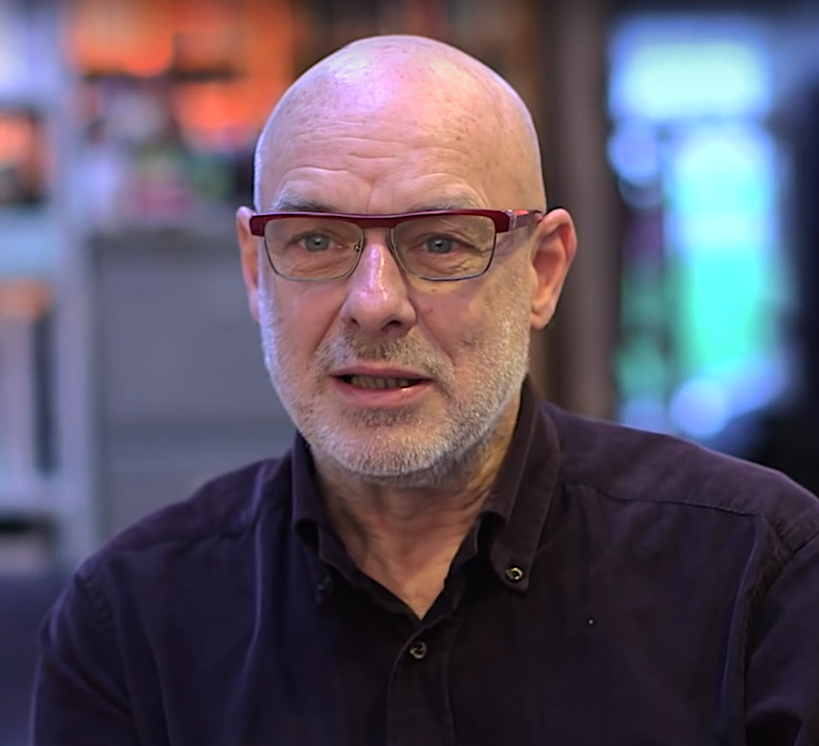
Image via Wikimedia Commons
Brian Eno kept busy during last year’s pandemic, telling the L.A. Times this past January about one of his latest ideas, an open source Zoom alternative, just one of any number of projects he’s kicking around at any given time. One of the most prolific and influential artists, musicians, producers, and thinkers of the past several decades, Eno is such a cultural institution, he warrants his own appreciation day. That’s just what he got on February 12, 1988 when KPFA (a radio station in Berkeley, CA) turned over an entire day to hosting Eno for wide-ranging interviews, stories about his collaborations, and conversations about the musical genres he invented. He even takes questions, and his replies are illuminating and urbane.
Eno’s always been a generous and witty conversationalist. The Brian Eno Day broadcast hits on nearly all of the major highlights of his career up to that point, with a comprehensive overview of his work, earlier interview recordings, and loads of songs and excerpts from his extensive recorded corpus. Much of this work is obscure and much of it is as well-known as the man himself. One cannot tell the stories of artists like U2, Talking Heads, and David Bowie, for example, without talking about Eno’s guiding hand as a producer. Eno’s renowned for founding glam rock pioneers Roxy Music, inventing ambient music, and for his generative approaches to making art, whether on small paper cards or in software and apps.
Eno once said his first musical instrument was a tape recorder, and he’s been obsessed with recording technology ever since, delivering his influential lecture “The Recording Studio as a Compositional Tool” in 1979 and demonstrating its principles in all of the music he’s made. In these interviews, Eno not only discusses the major plot points, but also “reveals such tasty tidbits as his dislike for computer keyboards; an admission that even he does not know what his lyrics mean; a preference for the music of Stockhausen’s students rather than that of Stockhausen himself; and the differences between New Age, Minimal, and Ambient Music,” notes the description on Internet Archive.
In the 33 years since this broadcast, Eno has produced enough music and visual art to fill another 10-hour day of interviews and overviews. But his methods have not changed: he has pursued his later work with the same openness, curiosity, and collaborative spirit he developed in his first few decades. Hear him in his element, ranging far afield in conversations about architecture, genetic evolution, and his own video installation pieces. Eno rarely gets personal, preferring to talk about his work, but it’s humility, not secrecy, that keeps him off the topic of himself. As he recently told a Guardian interviewer, “I’m not f*cking interested at all in me. I want to talk about ideas.” Hear Eno do exactly that in 10 hours of recordings just above.
Related Content:
Behold the Original Deck of Oblique Strategies Cards, Handwritten by Brian Eno Himself
Brian Eno Explains the Origins of Ambient Music
Hear Brian Eno Reinvent Pachelbel’s Canon (1975)
Josh Jones is a writer and musician based in Durham, NC. Follow him at @jdmagness
Read More...The Beatles’ 8 Pioneering Innovations: A Video Essay Exploring How the Fab Four Changed Pop Music
In modern society, some facts are simply accepted: one plus one equals two, the Earth revolves around the Sun, and The Beatles are the greatest band in history. “So obviously dazzling was The Beatles’ achievement that few have questioned it,” writes Ian MacDonald in his study of the band Revolution in the Head. “Agreement on them is all but universal: they were far and away the best-ever pop group and their music enriched the lives of millions.” Today, just as half a century ago, most Beatles fans never rigorously examine the basis of the Fab Four’s stature in not just music but culture more broadly. Suffice it to say that no band has ever been as influential, and — more than likely — no band ever will be again.
To each new generation of Beatles fans, however, this very influence has made the band’s innovations more difficult to sense. For decade after decade, practically every major rock and pop band has performed in sports stadia and on international television, made use in the studio of guitar feedback and automatically double-tracked vocals, and shot music videos.
But the Beatles made all these now-common moves first, and others besides, as recounted in the video essay above, “8 Things The Beatles Pioneered.” Its creator David Bennett explains the musical, technological and cultural importance of all these strategies, which have since become so common that they’re seldom named among The Beatles’ many signature qualities.
Not absolutely everyone loves The Beatles, of course. But even those who don’t particularly enjoy their records must acknowledge their Shakespearean, even Biblical super-canonical status in popular music today. This can actually make it somewhat intimidating to approach the music of The Beatles, despite its very popularity, and especially for those of us who weren’t drawn to it growing up. I myself only recently listened through the Beatles canon, at the age of 35, an experience I’d deferred for so long knowing it would send me down an infinitely deep rabbit hole of associated reading. If you, too, consider yourself a candidate for late-onset Beatlemania, consider starting with the half-hour video just above, which tells the story of the band’s origins — and thus the origin, in a sense, of the pop culture that still surrounds us.
Related Content:
How “Strawberry Fields Forever” Contains “the Craziest Edit” in Beatles History
Hear the Beautiful Isolated Vocal Harmonies from the Beatles’ “Something”
Based in Seoul, Colin Marshall writes and broadcasts on cities, language, and culture. His projects include the Substack newsletter Books on Cities, the book The Stateless City: a Walk through 21st-Century Los Angeles and the video series The City in Cinema. Follow him on Twitter at @colinmarshall or on Facebook.
Read More...Banksy’s Great British Spraycation: The Artist Spray Paints England’s Favorite Summer-Holiday Destinations
“We’re all going on a summer holiday / no more working for a week or two,” sings Cliff Richard in one of his most famous songs. “Fun and laughter on a summer holiday / no more worries for me or you.” Like The Beatles’ ultra-northern “When I’m Sixty-Four,” with its cottage rentals on the Isle of Wight (“if it’s not too dear”), Richard’s “Summer Holiday” dates from a time in Britain when tourism was, as a rule, domestic. And so it has become again over the past couple of years, what with the coronavirus pandemic and its severe curtailment of international travel. Ever tuned in to current events, the pseudonymous graffiti artist Banksy has taken the opportunity to go on a “Great British Spraycation.”
This was a busman’s holiday for Banksy, who appears to have had a detailed plan of exactly which east-coast resort towns to visit, and exactly where in each of them to surreptitiously create another of his signature pieces of high-contrast satirical art.
“The stenciled pieces are often integrated with repurposed objects from the area, highlighting the pre-planned and perfectly positioned nature of the work,” writes Designboom’s Kat Barandy. “In Lowestoft, a massive seagull dines on a box of ‘chips’ rendered by a dumpster filled with insulation material. Nearby a child is depicted building a sandcastle with a crowbar, fronted by a mound of sand on the pavement.”
That work, Arts University Bournemouth professor Paul Gough tells the BBC for its guide to the Great British Spraycation, may be a reference to the 1968 Paris student uprising and its slogan “Sous les pavés, la plage!” You can see these and other fresh works documented in the video at the top of the post, which also catches the reactions of passing locals and tourists. “That looks all like mindless vandalism, that,” says one woman, articulating a common assessment of Banksy’s artistic statements. “It looks a lot better from far away than it does when you get this close,” says another. But the most telling comment, in a variety of respects, comes from a man regarding Banksy’s addition of a cartoonish tongue and ice cream cone to the statue of 19th-century mayor Frederick Savage in King’s Lynn: “Yeah, someone’s done that, ain’t they?”
Related Content:
Banksy Strikes Again in London & Urges Everyone to Wear Masks
Banksy Strikes Again in Venice
Based in Seoul, Colin Marshall writes and broadcasts on cities, language, and culture. His projects include the Substack newsletter Books on Cities, the book The Stateless City: a Walk through 21st-Century Los Angeles and the video series The City in Cinema. Follow him on Twitter at @colinmarshall or on Facebook.
Read More...Hear 45 Minutes of Funky Old Soundtracks from 1960s-70s Japanese Films & TV Shows
The life of a Japanese film composer in the 1960s and 70s was very different from their American counterparts. “For Hollywood movies, there is a three-month period to write the music after the film has been finished,” says legendary film and television composer Chumei Watanabe. When Watanabe first began working for Shintoho studios, “at first, they gave us five days. Of course, it would usually be shortened…. One time, there was a Toei movie being filmed in Kyoto. The next day was the recording day for the music…. I had less than 24 hours to write the music!”
Despite the immense pressures on composers for films and TV shows, even those primarily for children, “I kept in mind that I would not compose childish music,” says Watanabe, who worked well into his 90s composing for TV. “That’s why people in their 40s and 50s still listen to my songs and sing them at karaoke.” His music is as widely beloved as that of his prolific contemporary, Dragon Ball Z composer Shunsuke Kikuchi, who passed away this year at 89.
“Over the course of his career,” writes Okay Player, “Kikuchi wrote the music for a number of popular anime series and live-action television shows, including Abarenbo Shogun (800 episodes over 30 years,) Doraemon (26 years on the air,) and Kamen Rider, Key Hunter, and G‑Men ’75.” So iconic was Kikuchi’s music that his “Urami Bushi” — the theme for 1972 Japanese exploitation film Female Prisoner 701: Scorpion — was given pride of place in Quentin Tarantino’s Kill Bill Vol. 2.f
If you aren’t familiar with the music of late-20th century Japanese genre film and television, you’ll be forgiven for thinking the mix at the top of the post comes from Tarantino’s films. Described by its YouTube poster Tripmastermonk as “45 minutes of various funky old japanese soundtrack, samples, breaks, and beats. (all killer, no filler),” it includes classic compositions from Watanabe, Kikuchi, and many other composers from the period who worked as hard on anime series as they did on so-called “pink films” like the “Female Prisoner” series, a vehicle for Japanese star Meiko Kaji (of Lady Snowblood fame), who sang “Urami Bushi” and turned the song into a major hit.
Dig the funky music of Japanese action films from the 60s and 70s in the mix, full name: “Tripmastermonk — Knocksteady Zencast Vol. 2: Ninja Funk & Gangster Ballads: Ode to the Brotherland.” And find more of Tripmastermonk’s musical concoctions on Soundcloud.
Related Content:
Discover the Ambient Music of Hiroshi Yoshimura, the Pioneering Japanese Composer
Hear Enchanting Mixes of Japanese Pop, Jazz, Funk, Disco, Soul, and R&B from the 70s and 80s
Sonic Explorations of Japanese Jazz: Stream 8 Mixes of Japan’s Jazz Tradition Free Online
Josh Jones is a writer and musician based in Durham, NC. Follow him at @jdmagness.
Read More...Introduction to Ancient Greek History: A Free Online Course by Yale Historian Donald Kagan (RIP)
Earlier this month, Yale historian Donald Kagan passed away at age 89 in Washington D.C. In their obituary, The New York Times writes:
Professor Kagan was considered among the country’s leading historians. His four-volume account of the Peloponnesian War, from 431 B.C. to 404 B.C., was hailed by the critic George Steiner as “the foremost work of history produced in North America in the 20th century.”
He was equally renowned for his classroom style, in which he peppered nuanced readings of ancient texts with references to his beloved New York Yankees and inventive, sometimes comic exercises in class participation, like having students form a hoplite phalanx to demonstrate how Greek soldiers marched into combat.
If you never sat in Kagan’s classroom, you can still experience his teaching style online. Recorded in 2007, Kagan’s course Introduction to Ancient Greek History traces “the development of Greek civilization as manifested in political, intellectual, and creative achievements from the Bronze Age to the end of the classical period.” You can watch the 24 video lectures above, or find them on YouTube. The lectures also appear on iTunes in audio and video. Find the texts used in the course below. More information about the course, including the syllabus, can be found on this Yale website.
- Pomeroy, Burstein, Donlan and Roberts. Ancient Greece. Oxford University Press: New York, 1999.
- Kagan, Donald. “Problems in Ancient History.” In The Ancient Near East and Greece. 2nd ed., vol. 1. Prentice-Hall: New York, 1975.
- Herodotus, The Histories.
- Plutarch, The Rise and Fall of the Athens.
- Thucydides, The Peloponnesian War.
Introduction to Ancient Greek History will be added to our collection of Free Online History courses, a subset of our collection, 1,700 Free Online Courses from Top Universities.
If you would like to support the mission of Open Culture, consider making a donation to our site. It’s hard to rely 100% on ads, and your contributions will help us continue providing the best free cultural and educational materials to learners everywhere. You can contribute through PayPal, Patreon, and Venmo (@openculture). Thanks!
Related Content
Learn Ancient Greek in 64 Free Lessons: A Free Online Course from Brandeis & Harvard
Roman Architecture: A Free Online Course from Yale University
The Ancient Greeks: A Free Online Course from Wesleyan University
Read More...Inside MK-Ultra, the CIA’s Secret Program That Used LSD to Achieve Mind Control (1953–1973)
If the CIA ever wants to change its motto to something hip and trendy that the kids’ll like, may I suggest “f*ck around and find out”? Because in this above mini-doc on the secret LSD mind-control experiments known as MK-Ultra (1953–1973), they were certainly doing a lot of the former, and then they took a lot of the latter and sent it down the old memory hole.
Could the Soviets be developing mind-control programs? The CIA, as several of these accounts tell us, became convinced they were. However, it’s never specified why they were convinced. Could it be a bit of guilt for hiring some ex-Nazi (and/or Nazi supporting) German scientists through Operation Paperclip? Or was this all just a cover because the CIA really wanted to experiment with mind control? I mean, it’s 70 years later, you can admit it. There were all these new drugs being developed that altered the mind, so why not start there?
Top among the cornucopia of pharmacologica was lysergic acid diethylamide, and the man who knew LSD the best was Dr. Sidney Gottlieb, the “Poisoner in Chief” as his biographer Stephen Kinzer calls him. (See his book: Poisoner in Chief: Sidney Gottlieb and the CIA Search for Mind Control.) Raised in the Bronx, Gottlieb’s love of chemistry and science earned him a prestigious place at CalTech. By the end of the 1940s he had been recruited by the CIA.
Gottlieb’s paradox was his love of LSD. He took it more than 200 times. He tended towards Buddhism, not surprising for those whose mind has been expanded by psychedelics. And he lived like a proto-hippie, growing his own vegetables and living “off the grid” for a while with his family. Yet at the same time, he had no problems with absolute devilish behavior. Once he convinced the CIA to buy up the world’s supply of LSD, he set to work. He’d dose colleagues with massive amounts and only tell them afterwards. He’d conduct experiments on sex workers, prisoners, or people with terminal illness. Many didn’t know what they were signing up for. The LSD in heavy doses were meant to annihilate the mind, and allow a new mind to be put in place. That didn’t work out that well, but Gottlieb and associates kept trying, under the aegis of then-CIA director Allen Dulles and Chief of Operations Richard Helms. In reality, Dulles and others high up in the CIA had a hands-off approach. Better not to know what Gottlieb was up to, especially when it went against the Nuremberg Code of experimenting on people against their will–the very things the Nazis did.
There were many victims too, corpses that were the cost of doing business in the Cold War, and so many we will not know about. The highest profile death—and what pulled MK-Ultra out of obscurity—was government scientist Frank Olsen. His jump from a NYC hotel room was ruled a suicide by the government, a result of work stress. (The whole Olsen affair forms the backbone of Errol Morris’ 2017 documentary series Wormwood.) The uncovering of the truth helped expose the history of MK-Ultra to a mid-‘70s America that had lost faith in its government and was ripe for conspiracy theories to take hold.
Yes, MK-Ultra was an actual thing. But because Gottlieb and his bosses had destroyed most of the records, conspiracy theories filled in the gaps. Were Lee Harvey Oswald and Sirhan Sirhan MK-Ultra experiments gone wrong? What about Charles Manson, who author Tim O’Neill discovered was a “lab rat” for CIA experiments? Mobster Whitey Bulger was part of a LSD experiment and the FBI let him continue to commit crimes. The future Unabomber Ted Kaczynski had taken part in “brutal” psychological experiments while at Harvard.
On the other hand, the MK-Ultra experiments also affected culture in a good way. Allen Ginsberg tried his first dose in Northern California, as did Ken Kesey, who came out of it a proponent of LSD and formed the nascent hippie movement.
Gottlieb retired in 1972, and MK-Ultra’s results were lacking in any practical results. In 1999, Gottlieb passed away from unknown causes. Possibly a heart attack…but who knows, right?
Related Content:
Hofmann’s Potion: 2002 Documentary Revisits the History of LSD
Ken Kesey’s First LSD Trip Animated
Ken Kesey Talks About the Meaning of the Acid Tests
Ted Mills is a freelance writer on the arts who currently hosts the Notes from the Shed podcast and is the producer of KCRW’s Curious Coast. You can also follow him on Twitter at @tedmills, and/or watch his films here.
Read More...Pompeii Rebuilt: A Tour of the Ancient City Before It Was Entombed by Mount Vesuvius
We can’t regard the ruins of Pompeii, however unusually well-preserved they are, without trying to imagine what the place looked like before 79 AD. It was in that year, of course, that Mount Vesuvius erupted, entombing the ancient Roman city in ash and pumice. The exhumed Pompeii has taught modern humanity a great deal about first-century urban planning as practiced by the Roman Empire. But it’s one thing to walk the paths Pompeiians walked, and quite another to see the built environment that they must have seen. The latter experience is available in the eighteen-minute video above, which uses computer graphics to create a tour of a rebuilt Pompeii.
This production, in fact, provides views of Pompeii that Pompeiians themselves could never have seen, including drone-like flights along its streets and around its famous structures like the Temple of Apollo, the Basilica, and the Forum. But even more than its grand public buildings, the city’s private dwellings — many of them grand in their own way — have influenced the way we’ve built in recent centuries.
“With their unmistakable style, they have inspired architects of all times,” says the video’s narrator. Even as urbanization reduced the size of Pompeiian houses, they gained “richness in decorations,” reflecting the sensibility of the local culture.
“Temples, basilicas, spas, houses, and a refined, high-level lifestyle make Pompeii one of the most famous cities of the Roman Empire of the first century,” says the narrator. “All of this, however, is about to end abruptly.” We all know what happened next, but the extent of the destruction wrought by Mount Vesuvius takes a vivid form in the video just above, which compares its own CGI reconstructions of these same buildings to the ruins of today. In its time, Pompeii’s refinement made it a well-known city, and something of a showcase of Roman civilization. But nearly two millennia after its destruction, it has become much more famous as a symbol of civilization itself: its surprising continuity, but also its deceptive fragility.
Related Content:
Archaeologists Discover an Ancient Roman Snack Bar in the Ruins of Pompeii
Based in Seoul, Colin Marshall writes and broadcasts on cities, language, and culture. His projects include the Substack newsletter Books on Cities, the book The Stateless City: a Walk through 21st-Century Los Angeles and the video series The City in Cinema. Follow him on Twitter at @colinmarshall or on Facebook.
Read More...Take a Trip to the LSD Museum, the Largest Collection of “Blotter Art” in the World
When Ken Kesey and his Merry Pranksters kicked off Haight-Ashbury’s counterculture in the 1960s, LSD was the key ingredient in their potent mix of drugs, the Hell’s Angels, the Beat poets, and their local band The Warlocks (soon to become The Grateful Dead). Kesey administered the drug in “Acid Tests” to find out who could handle it (and who couldn’t) after he stole the substance from Army doctors, who themselves administered it as part of the CIA’s MKUltra experiments. Not long afterward, Grateful Dead soundman Owsley “Bear” Stanley synthesized “the purest form of LSD ever to hit the street,” writes Rolling Stone, and became the country’s biggest supplier, the “king of acid.”
Whatever uses it might have had in psychiatric settings — and there were many known at the time — LSD was made illegal in 1968 by the U.S. government, repressing what the government had itself helped bring into being. But it has since returned with newfound respectability. “Once dismissed as the dangerous dalliances of the counterculture,” writes Nature, psychedelic drugs are “gaining mainstream acceptance” in clinical treatment. Psilocybin, MDMA, and LSD “have been steadily making their way back into the lab,” notes Scientific American. “Scientists are rediscovering what many see as the substances’ astonishing therapeutic potential.”
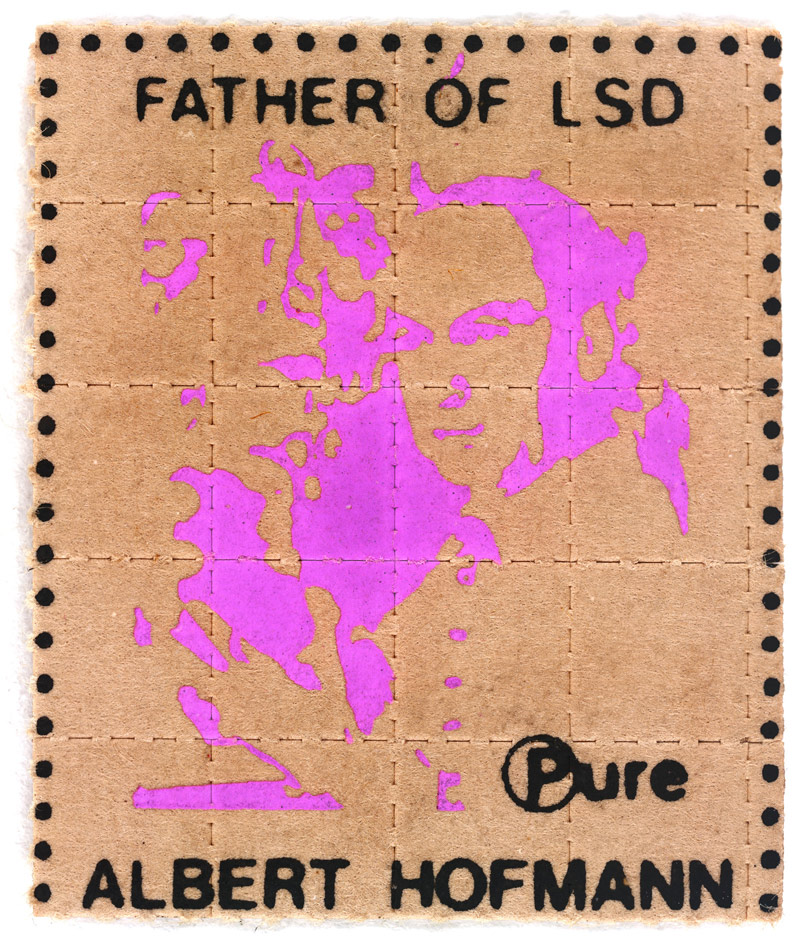
None of this comes as news to San Francisco fixture Mark McCloud. “In the same moralistic manner many San Franciscans pontificate on the health benefits of marijuana,” writes Gregory Thomas at Mission Local, “McCloud and his friends tout the merits of acid.” Next to curing “anxiety, depression and ‘marital problems,’” it is also an important source of folk art, says McCloud, the owner and sole proprietor of the informally-named “LSD Museum” housed in his three-story Victorian home in San Francisco.
His mission in creating and maintaining the museum formally called the Institute of Illegal Images, he says, is to “preserve a ‘skeletal’ remnant of San Francisco’s drug-induced 1960s legacy, ‘so maybe our children can better understand us.’”
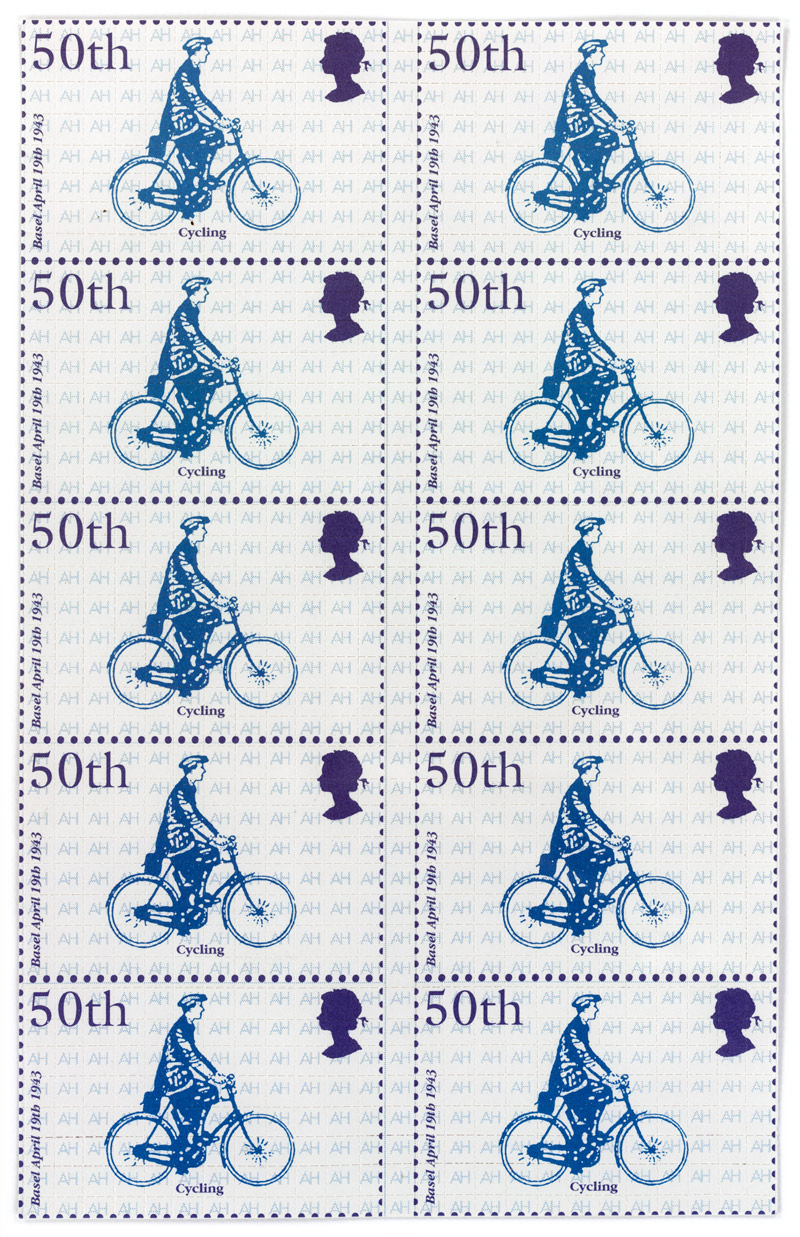
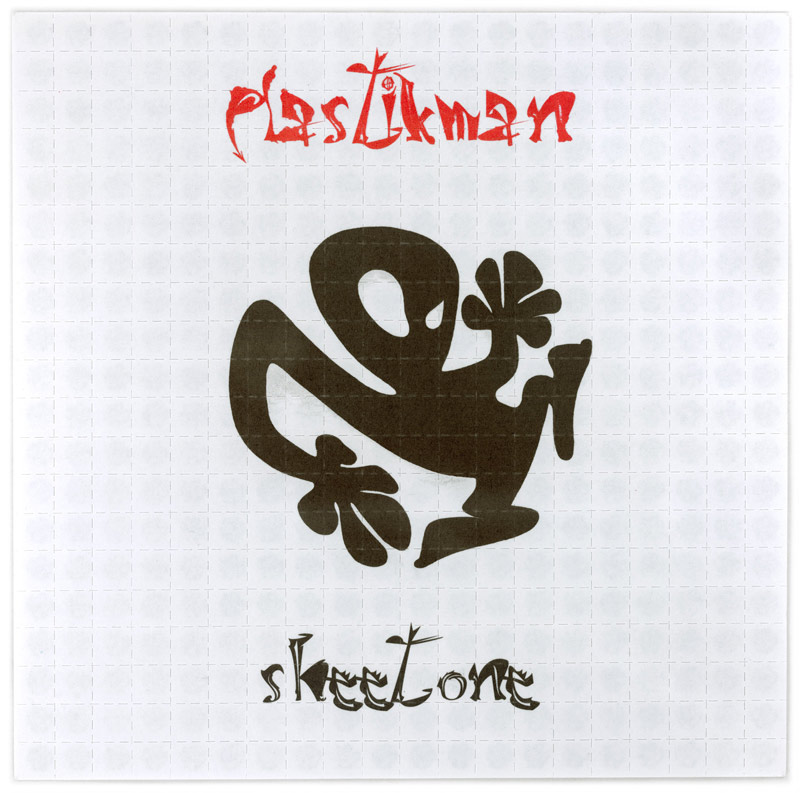
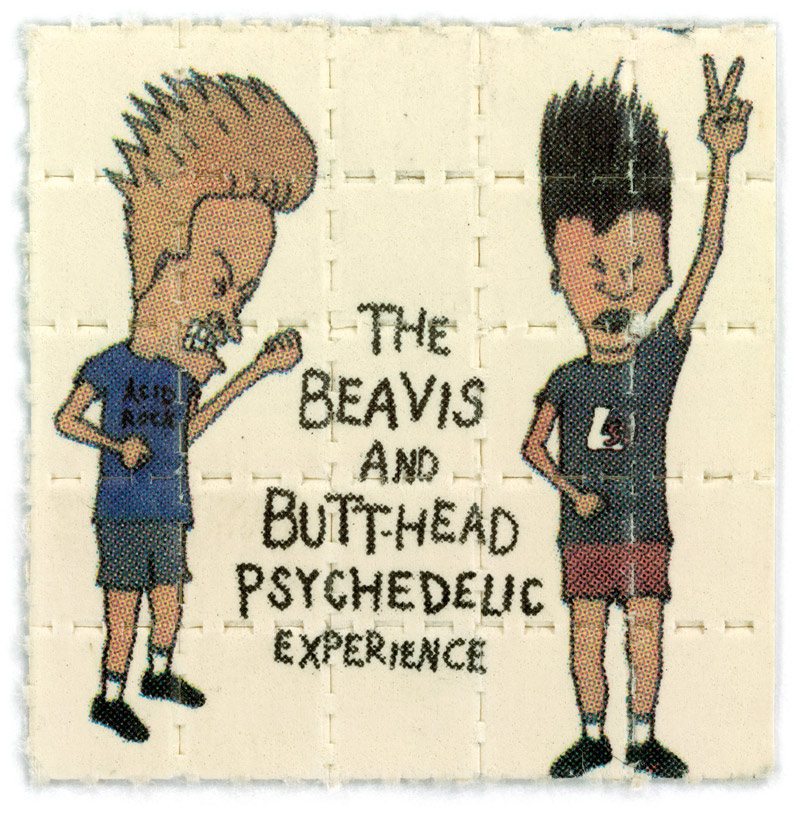
Specifically, as Culture Trip explains, McCloud preserves the art on sheets of blotter acid. As is clear from the many pop cultural references on blotter art — like Beavis and Butthead and techno artist Plastikman (who named his debut album Sheet One) — the 60s blotter acid legacy extended far beyond its founders’ vision in underground scenes throughout the 70s, 80s, 90s, and oughts.
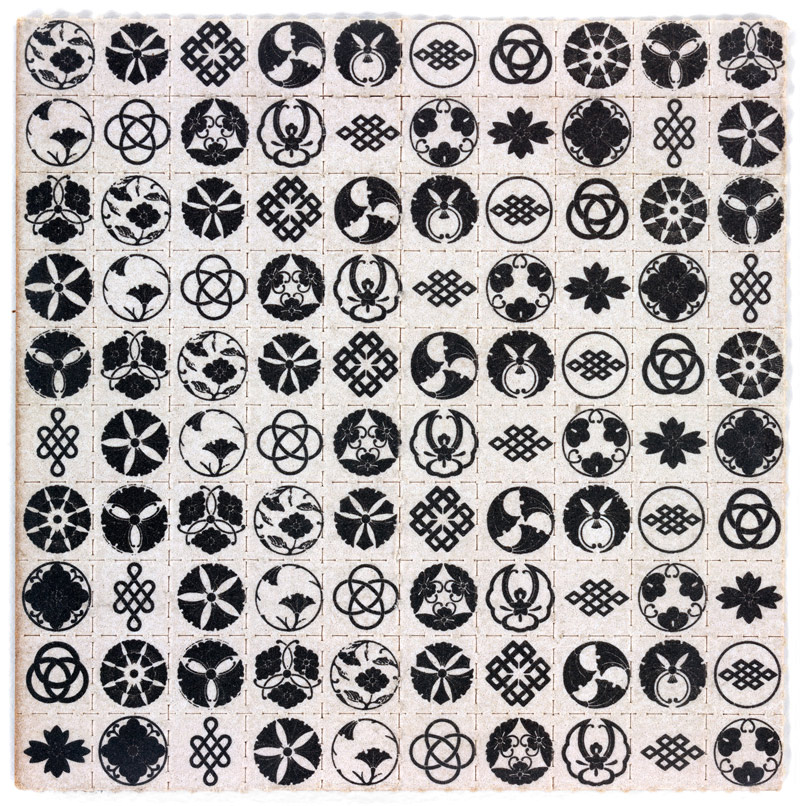
Also known as the Blotter Barn or the Institute of Illegal Images, McCloud’s house is located on 20th Street between Mission and Capp. The house preserves over 33,000 sheets of LSD blotter, treating them like tiny little works of art. Most of the sheets are framed and hanging on McCloud’s walls, decorating the home with vibrant colors and patterns, and the rest are kept safe in binders. The house also features a perforation board, allowing McCloud to turn any work of art sized 7.5 by 7.5 inches into 900 pieces, as is typical for LSD blotter sheets.
McCloud has faced intense scrutiny from the FBI, and on a couple of occasions — in 1992 and again in 2001 — arrest and trial by “not very sympathetic” juries, who nonetheless acquitted him both times. Despite the fact that he has a larger collection of blotter acid sheets than the DEA, he and his museum have withstood prosecution and attempts to shut them down, since all the sheets in his possession have either never been dipped in LSD or have become chemically inactive over time. (The museum’s website explains the origins of “blotter” paper as a means of preparing LSD doses after the drug was criminalized in California in 1966.)
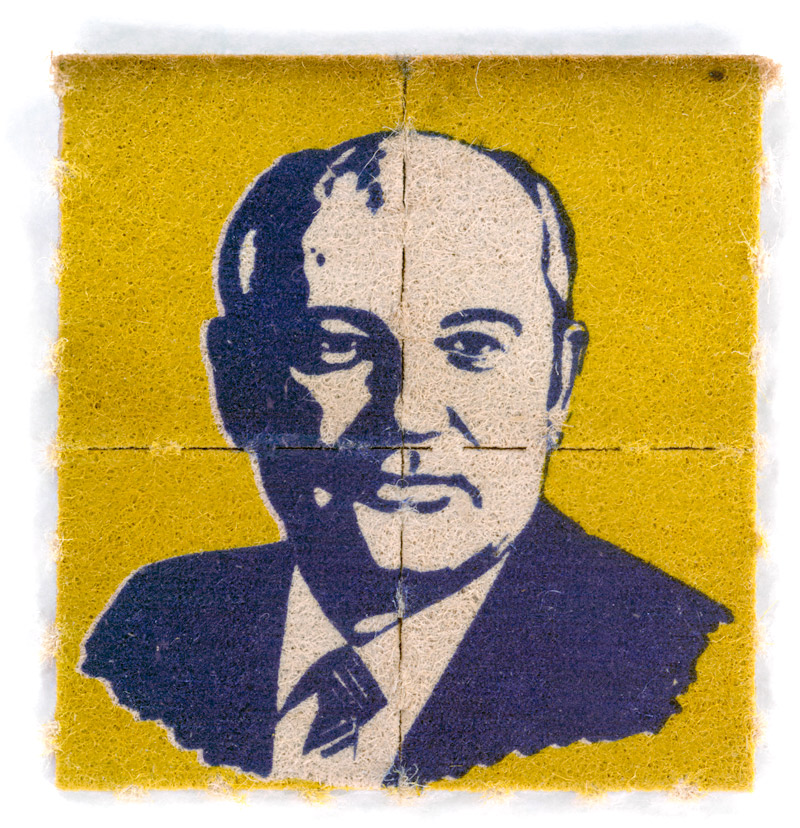
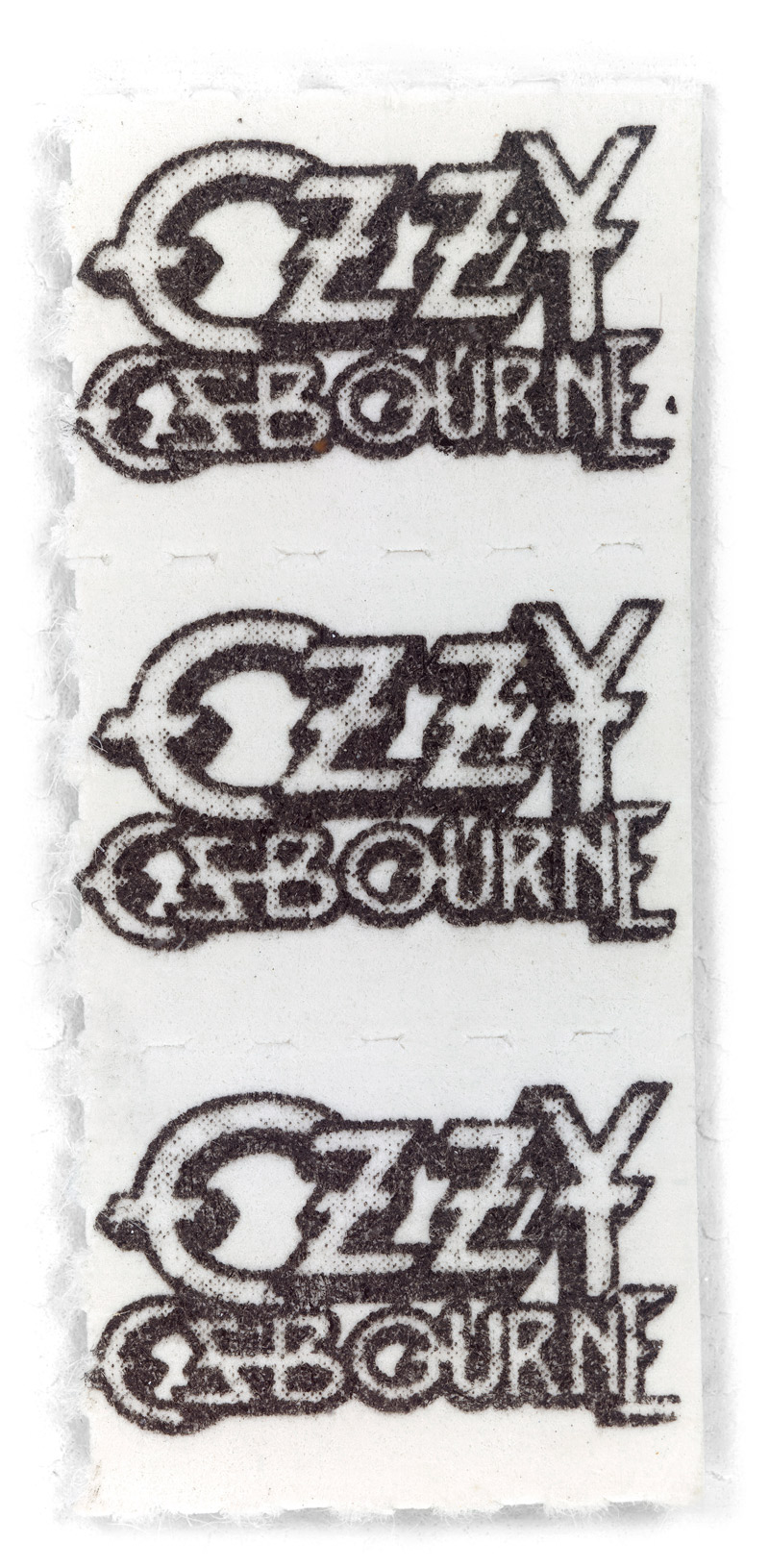
“What fascinates me about blotter is what fascinates me about all art. It changes your mind,” says McCloud in the Wired video at the top of the post. None of his museum’s artwork will change your mind in quite the way it was intended, but the mere association with hallucinogenic experiences is enough to inspire the artists “to build the myriad of subject matter appearing on the blotters,” Atlas Obscura writes, “ranging from the spiritual (Hindu gods, lotus flowers) to whimsical (cartoon characters), as well as cultural commentary (Gorbachev) and the just plain demented (Ozzy Osbourne).”
The museum does not keep regular hours and was only open by appointment before COVID-19. These days, it’s probably best to make a virtual visit at blotterbarn.com, where you’ll find dozens of images of acid blotter paper like those above and learn much more about the history and culture of LSD during long years of prohibition — a condition that seems poised to finally end as governments give up the wasteful, punishing War on Drugs and allow scientists and psychonauts to study and explore altered states of consciousness again.





Related Content:
Josh Jones is a writer and musician based in Durham, NC. Follow him at @jdmagness
Read More...Support Us
We're hoping to rely on loyal readers, rather than erratic ads. Please click the Donate button and support Open Culture. You can use Paypal, Venmo, Patreon, even Crypto! We thank you!

About Us

Open Culture scours the web for the best educational media. We find the free courses and audio books you need, the language lessons & educational videos you want, and plenty of enlightenment in between.
Advertise With Us
FREE UPDATES!
GET OUR DAILY EMAIL
Get the best cultural and educational resources on the web curated for you in a daily email. We never spam. Unsubscribe at any time.
FOLLOW ON SOCIAL MEDIA
Open Culture editor Dan Colman scours the web for the best educational media. He finds the free courses and audio books you need, the language lessons & movies you want, and plenty of enlightenment in between.
Advertise With Us


