Why Has The Great British Baking Show Conquered America? Pretty Much Pop: A Culture Podcast #75 w/ Stephen Carlile (from Broadway’s The Lion King)
What explains the immense quarantine-time popularity in America of this quaint British reality cooking show? What do we get out of watching talented amateurs bake things? Stephen Carlile, who is famous for playing Scar in The Lion King on Broadway (and is VERY British himself), joins your hosts Erica Spyres, Brian Hirt, and Mark Linsenmayer to consider the format, context, and appeal of the show.
A few articles we reviewed to prepare included:
- “The ‘Great British Baking Show’ Is Broken. Here’s a Five-Point Plan to Fix It.” by Brian Phillips
- “Why Americans love the Great British Bake Off” by Vicky Baker
- “Bake Off’s Mel and Sue Quit on Day One After Tears Left a Bad Taste” by Mark Brown
- “Paul Hollywood: ‘Girls Abandoned Bake Off’ Over Channel 4 Move” from Sky News.
- “Bake Off Hidden Secrets” by Kyle O’Sullivan
Follow Stephen on Instagram @carlile1. Visit with him online.
Hear more of this podcast at prettymuchpop.com. This episode includes bonus discussion you can access by supporting the podcast at patreon.com/prettymuchpop. This podcast is part of the Partially Examined Life podcast network.
Pretty Much Pop: A Culture Podcast is the first podcast curated by Open Culture. Browse all Pretty Much Pop posts.
Read More...Listen to James Baldwin’s Record Collection in a 478-track, 32-Hour Spotify Playlist
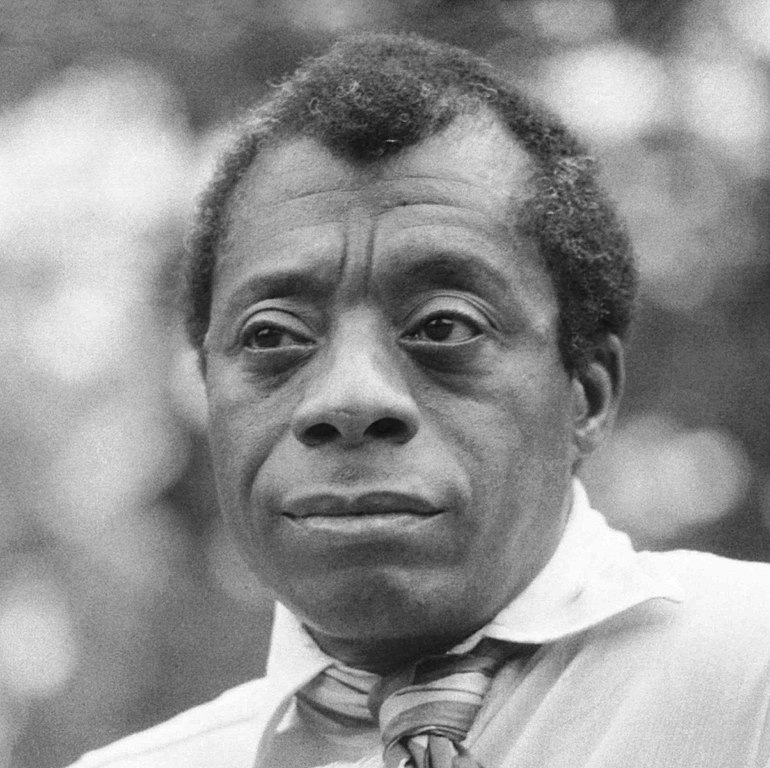
Photo via Wikimedia Commons
Each writer’s process is a personal relationship between them and the page—and the desk, room, chair, pens or pencils, typewriter or laptop, turntable, CD player, streaming audio… you get the idea. The kind of music suitable for listening to while writing (I, for one, cannot write to music with lyrics) varies so widely that it encompasses everything and nothing. Silence can be a kind of music, too, if you listen closely.
Far more interesting than trying to make general rules is to examine specific cases: to learn the music a writer hears when they compose, to divine the rhythms that animated their prose.
There are almost always clues. Favorite albums left behind in writing rooms or written about with high praise. Sometimes the music enters into the novel, becomes a character itself. In James Baldwin’s Another Country, music is a powerful procreative force:
The beat: hands, feet, tambourines, drums, pianos, laughter, curses, razor blades: the man stiffening with a laugh and a growl and a purr and the woman moistening and softening with a whisper and a sigh and a cry. The beat—in Harlem in the summertime one could almost see it, shaking above the pavements and the roof.
Baldwin finished his first novel, 1953’s Go Tell It on the Mountain, not in Harlem but in the Swiss Alps, where he moved “with two Bessie Smith records and a typewriter under his arm,” writes Valentina Di Liscia at Hyperallergic. He “largely attributes” the novel “to Smith’s bluesy intonations.” As he told Studs Terkel in 1961, “Bessie had the beat. In that icy wilderness, as far removed from Harlem as anything you can imagine, with Bessie and me… I began…”
Ikechúkwú Onyewuenyi, a curator at the Hammer Museum in Los Angeles, has gone much further, digging through all the deep cuts in Baldwin’s collection while living in Provence and trying to recapture the atmosphere of Baldwin’s home, “those boisterous and tender convos when guests like Nina Simone, Stevie Wonder… Maya Angelou, Toni Morrison” stopped by for dinner and debates. He first encountered the records in a photograph posted by La Maison Baldwin, the organization that preserves his house in Saint-Paul de Vence in the South of France. “I latched onto his records, their sonic ambience,” Onyewuenyi says.
“In addition to reading the books and essays” that Baldwin wrote while living in France, Onyewuenyi discovered “listening to the records was something that could transport me there.” He has compiled Baldwin’s collection into a 478-track, 32-hour Spotify playlist, Chez Baldwin. Only two records couldn’t be found on the streaming platform, Lou Rawls’ When the Night Comes (1983) and Ray Charles’s Sweet & Sour Tears (1964). Listen to the full playlist above, preferably while reading Baldwin, or composing your own works of prose, verse, drama, and email.
“The playlist is a balm of sorts when one is writing,” Onyewuenyi told Hyperallergic. “Baldwin referred to his office as a ‘torture chamber.’ We’ve all encountered those moments of writers’ block, where the process of putting pen to paper feels like bloodletting. That process of torture for Baldwin was negotiated with these records.”
via Hyperallergic
Related Content:
The Best Music to Write By: Give Us Your Recommendations
The Best Music to Write By, Part II: Your Favorites Brought Together in a Special Playlist
Josh Jones is a writer and musician based in Durham, NC. Follow him at @jdmagness.
Read More...The Power of Pulp Fiction’s Dance Scene, Explained by Choreographers and Even John Travolta Himself
All the great movies have a few memorable scenes; Pulp Fiction is made of nothing but. More than a quarter-century ago, that film’s release turned a young video-store clerk-turned-auteur called Quentin Tarantino into a household name. Cinephiles today still argue about which is the most memorable among its scenes, and only the most contrarian could fail to consider the dance. It comes early in the film, when the hitman Vincent Vega takes his boss’ wife out to dinner, the absent kingpin having ordered him to do so. The two eat at an elaborately 1950s-themed diner and on a whim enter its twist contest. They walk off the dance floor with a trophy — as well as a couple decades’ influence on popular culture.
“The twist was made famous in the 60s,” explains choreographer Lauren Yalango-Grant in the Vanity Fair video just above. “There were a lot of variations that came out of the twist that we do see in this scene,” such as “the monkey,” “the swim,” and “the Batman,” better known as “the Batusi.”
As busted by John Tavolta and Uma Thurman, all these moves come out in an improvisational fashion, each in response to the last: “If John starts to do the Batman, then Uma’s going to ‘yes-and’ it with not only a Batman but an open palm, her own version of this move,” adds choreographer Christopher Grant. Their movements give the scene a great deal of its impact, but so does those movements’ incongruity with their expressions, which Yalango-Grant calls “the juxtaposition of their seriousness and the lack of play on their faces versus the play in their bodies.”
Though now cinematically iconic in its own right, Pulp Fiction’s dance scene pays homage to a host of older films. The most obvious is Jean-Luc Godard’s Bande à part, with what Yalango-Grant calls its “amazing dance sequence in a cafe. It’s totally out of context, of nowhere.” Never shy to admit his acts of artistic “theft,” Tarantino once complained that too few picked up this one: “Everybody thinks that I wrote this scene just to have John Travolta dancing. But the scene existed before John Travolta was cast.” The director’s intention, rather, was to pay tribute to his favorite musical sequences, which “have always been in Godard, because they just come out of nowhere. It’s so infectious, so friendly. And the fact that it’s not a musical, but he’s stopping the movie to have a musical sequence, makes it all the more sweet.”
The casting of Travolta (Tarantino’s “strong, strong, strong second choice” for Vincent Vega) proved fortuitous. The very image of the man dancing made for yet another chapter of pop culture from which the film could draw, but without his real-life dancing skills and instincts, the scene wouldn’t have been as memorable as it is. “Quentin was dead-set on both of us doing the twist, which is a very fun dance, but it’s limited in how long one wants to watch someone do the twist,” Travolta remembers on a recent appearance on The Late Late Show with James Corden. So he told the director, “When I was growing up, there were novelty dances. There were dances like the swim and the Batman and the hitchhiker and the tighten up. Maybe we should widen the spectrum on this.” Tarantino’s unwillingness to compromise his ambitions and obsessions has made him perhaps the most acclaimed filmmaker of his generation, but so has knowing when to defer to the star of Saturday Night Fever.
Related Content:
Quentin Tarantino Gives Sneak Peek of Pulp Fiction to Jon Stewart in 1994
Quentin Tarantino’s Original Wish List for the Cast of Pulp Fiction
The Music in Quentin Tarantino’s Films: Hear a 5‑Hour, 100-Song Playlist
An Analysis of Quentin Tarantino’s Films Narrated (Mostly) by Quentin Tarantino
How Anna Karina (RIP) Became the Mesmerizing Face of the French New Wave
Based in Seoul, Colin Marshall writes and broadcasts on cities, language, and culture. His projects include the Substack newsletter Books on Cities, the book The Stateless City: a Walk through 21st-Century Los Angeles and the video series The City in Cinema. Follow him on Twitter at @colinmarshall, on Facebook, or on Instagram.
Read More...The David Bowie Monopoly Game Is Here: Advance to GO and Collect 200 Hunky Dorys!
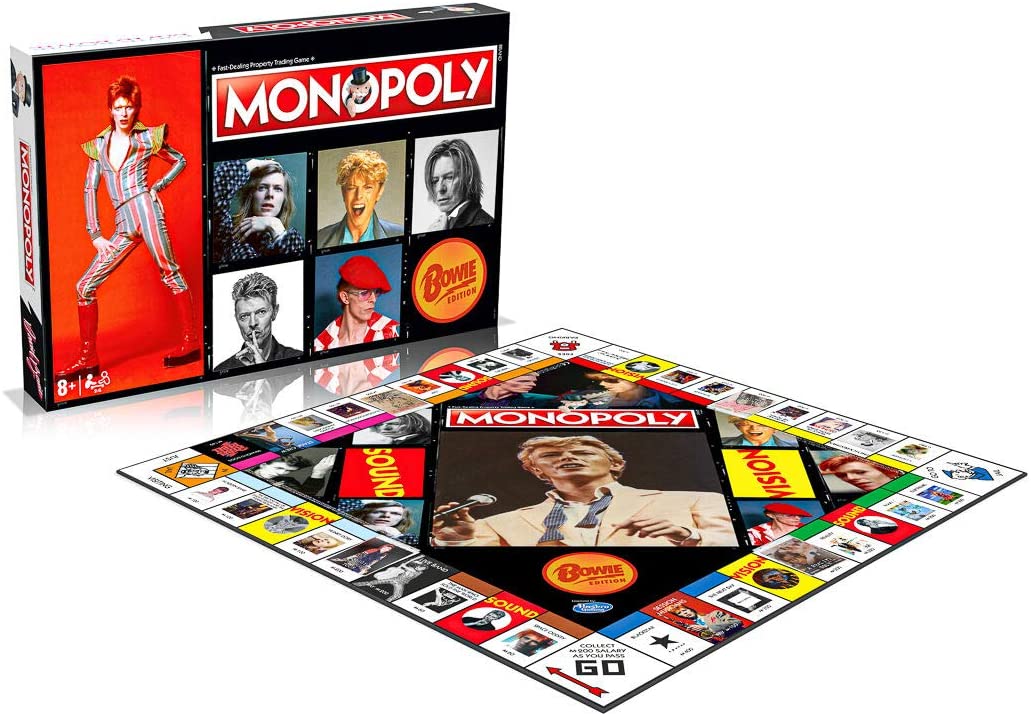
Another way to pass the time while we’re snuggled in, awaiting the arrival of a vaccine: David Bowie Monopoly.
Gone are the thimble, the top hat, the old boot and other iconic game pieces you may remember from your childhood or rainy days in seaside holiday rentals.
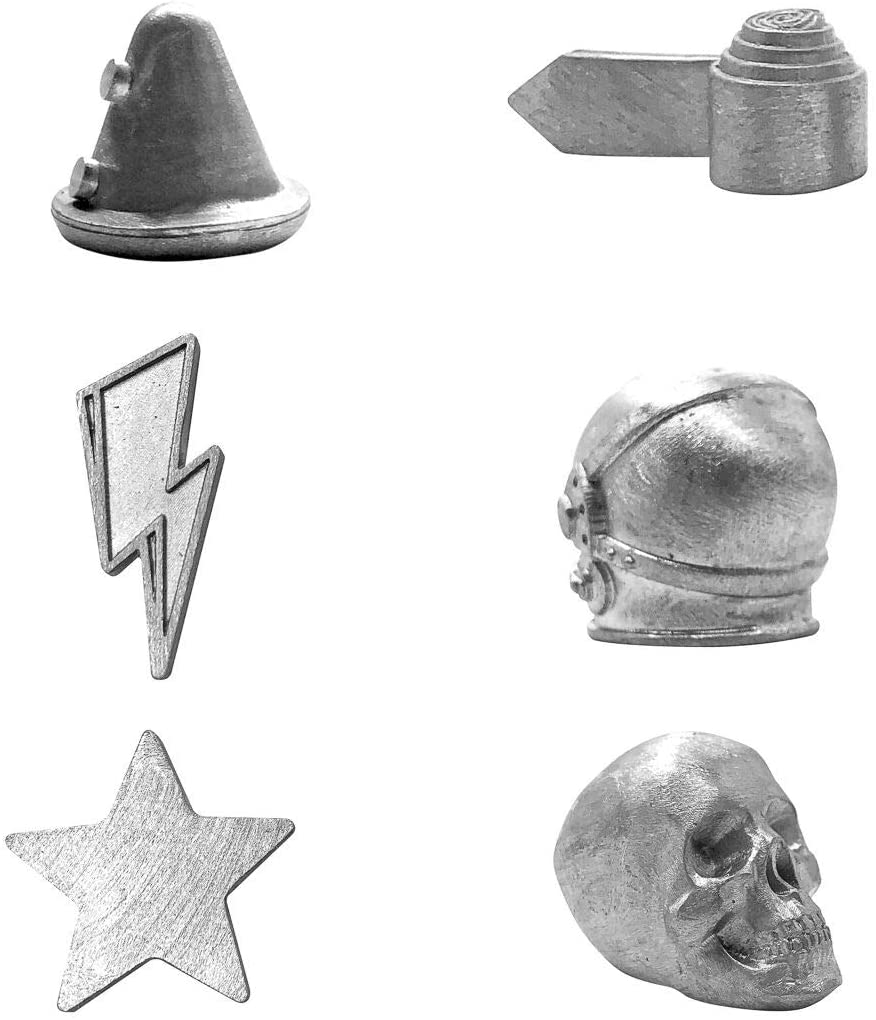
This special edition replaces them with 6 major Bowie signifiers: a star, a skull, a Pierrot hat, a rolled up tie, a space helmet, and a lightning bolt.
Monopoly has previously catered to music fans with sets devoted to AC/DC, Beatles, Metallica and the Rolling Stones, but Bowie’s chameleonic quality and highly developed aesthetic sense ensures that this one’s ephemera will appeal to all factions of the Bowieligious, not just those with the patience for a long board game.
Forget about Boardwalk and Marvin Gardens. Instead of real estate, the perimeters of the board feature albums from Bowie’s enormous catalog.
Secure albums to begin erecting stages and stadiums that other players will have to “rent” when they roll into town.
The Chance and Community Chest decks have also undergone some ch-ch-changes. Players now draw Sound and Vision cards which have the capacity to “open doors, pull some strings or bring the stars crashing down.”

Collectors will find that this set’s paper money pairs nicely with the souvenir Metrocards from Bowie’s posthumous 2018 takeover of a New York City subway station.
The four cornerstones of Monopoly—GO, Free Parking, JAIL, and Go to Jail—remain faithful to the original, leaving some fans opining that an opportunity was missed:

When you weary of David Bowie Monopoly, you can play a couple hands of Bowie, a free downloadable card game that can be printed at home:
Each player will play David Bowie, or more accurately, a persona of David Bowie. The object of the game is to achieve the greatest legacy of any Bowie and survive the 1970’s. Legacy is judged by points earned from cutting records (flat, black, round- oh, nevermind). There is one slight problem. The Bowies are endangered by various threats, dark princes, and figures of the occult (which is in no way related to the copious amount of cocaine being inhaled by our hero). If any Bowie dies, all Bowies are dead and the game is lost.
There’s also Bowie’s appearance in the 1999 video game, Omikron: The Nomad Soul:
David Bowie Monopoly is available for purchase here.
Related Content:
David Bowie’s Rise as Ziggy Stardust Documented in a New 300-Page Photo Book
When David Bowie Launched His Own Internet Service Provider: The Rise and Fall of BowieNet (1998)
Ayun Halliday is an author, illustrator, theater maker and Chief Primatologist of the East Village Inky zine. She most recently appeared as a French Canadian bear who travels to New York City in search of food and meaning in Greg Kotis’ short film, L’Ourse. Follow her @AyunHalliday.
Read More...The Ultimate 80s Medley: A Nostalgia-Inducing Performance of A‑Ha, Tears for Fears, Depeche Mode, Peter Gabriel, Van Halen & More
The last time we checked in with Germany’s own Martin Miller Session Band, they dropped a lovely cover of Pink Floyd’s Dark Side of the Moon album, one that balanced all the bits you know by heart with enough of their own identity to make it jump off your YouTube screen.
Now they’re back with a new session in the age of COVID–hence a few of them wearing masks–to run through a tight 26 minutes of 1980s songs in a medley that will have your toes a’tappin’.
Now, the selection does tend toward the rock side, but the Miller Session band are set up that way, with a solid rhythm section in drummer Felix Lehrmann and Benni Jud on bass. Lehrmann certainly played *more* drums than the minimalist Nick Mason on their Pink Floyd tribute–the YouTube comments called him out a bit too much on that–but here it’s all good. If anything some of the ‘80s hits had a bit too much programmed drums, and they liven up the experience. The special guest this time is Michal Skulski, playing sax on “Sledgehammer”.
Of course, your mileage may vary with this playlist, as there are songs here that I dearly love (“Everybody Wants to Rule the World,” “Enjoy the Silence”) and ones that I could live without (“The Final Countdown, “Eye of the Tiger”), and that’s all about taste, whether you went to high school in the 1980s, or were born during it, and your repeated exposure ad nauseum to these tunes. You might be glad about the bits they leave in, or disgruntled over the sections they leave out (Miller improvs his own solo to the Tears for Fears song, but if you ask me, that original solo by Roland Orzabal and then Neil Taylor is one of the best from that entire decade, and ‘80s pop really didn’t *have* guitar solos).
But any band that decides to have a go at “Take On Me” better have those octave jumping pipes. Miller, I’m glad to say, does, channeling his inner Ronnie Dio to do so. And Marius Leicht’s organ solo is actually an improvement on the original.
However, I must point out that the finale, Depeche Mode’s “Enjoy the Silence” is not an ‘80s song. As any Mode fan will tell you, the single came out in early 1990. (I was *there* mannn, it was a totally different decade!) Still, the Martin Miller Session Band really get into this one, breaking the song down and building it back up again for a tremendous finish.
It may not be the “ultimate” ‘80s medley, but is *an* ‘80s medley and a damn good one too.
Related Content:
How the Yamaha DX7 Digital Synthesizer Defined the Sound of 1980s Music
Ted Mills is a freelance writer on the arts who currently hosts the Notes from the Shed podcast and is the producer of KCRW’s Curious Coast. You can also follow him on Twitter at @tedmills, and/or watch his films here.
Read More...In 1896, a French Cartoonist Predicted Our Socially-Distanced Zoom Holiday Gatherings
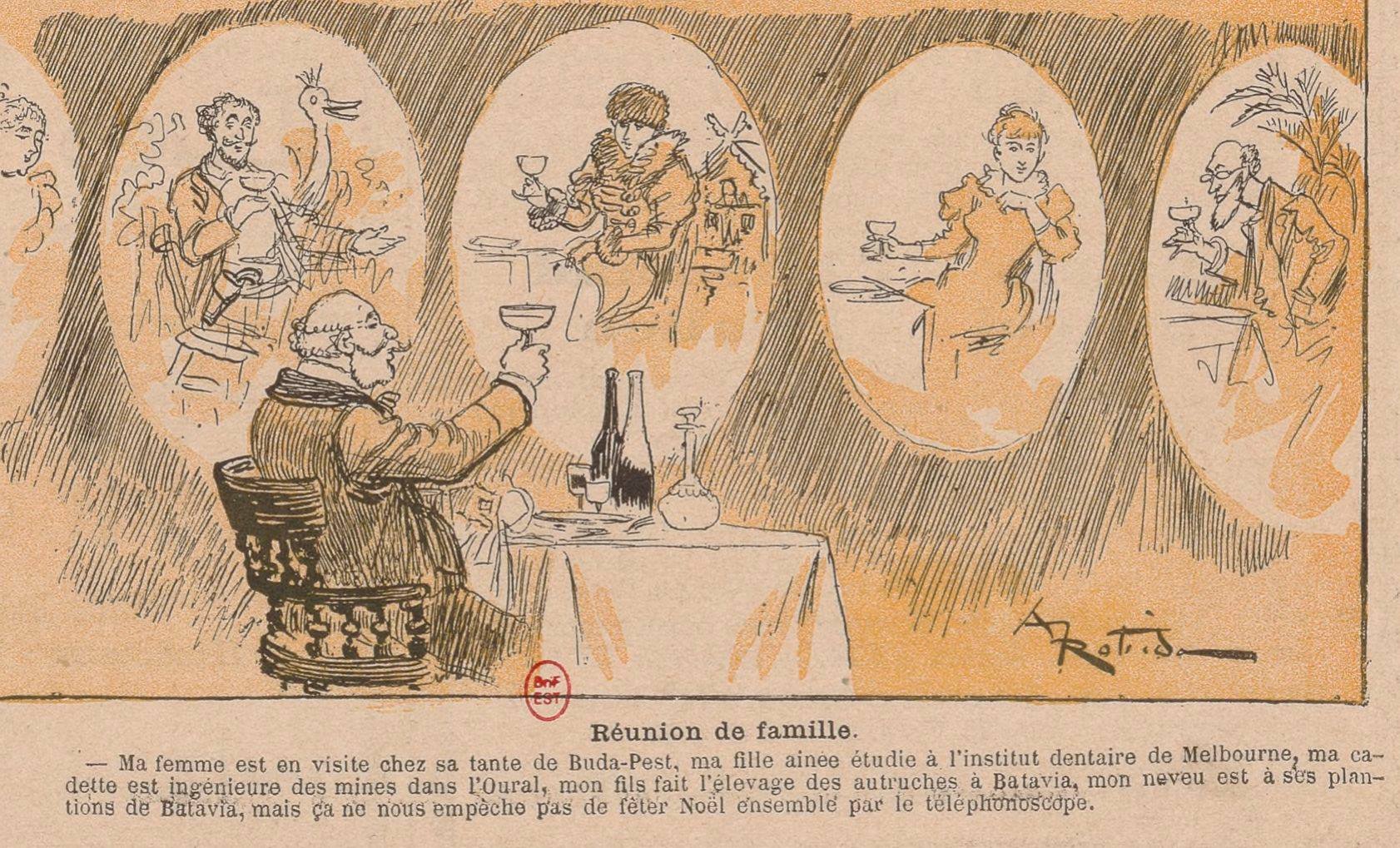
Imagine that, this time last year, you’d heard that your family’s holiday gatherings in 2020 would happen on the internet. Even if you believed such a future would one day come, would you have credited for a moment that kind of imminence? Yet our videoconference toasts this season were predicted — even rendered in clear and reasonably accurate detail — more than 120 years ago. “My wife is visiting her aunt in Budapest, my older daughter is studying dentistry in Melbourne, my younger daughter is a mining engineer in the Urals, my son raises ostriches in Batavia, my nephew is on his plantations in Batavia,” says the caption of the 1896 cartoon above. “But this does not prevent us from celebrating Christmas on the telephonoscope.”
This panel ran in Belle Époque humor magazine Le rire (available to read at the Internet Archive), drawn by the hand and produced by the imagination of Albert Robida. A novelist as well as an artist, Robida drew acclaim in his day for the series Le Vingtième Siècle, whose stories offered visions of the technology to come in that century.
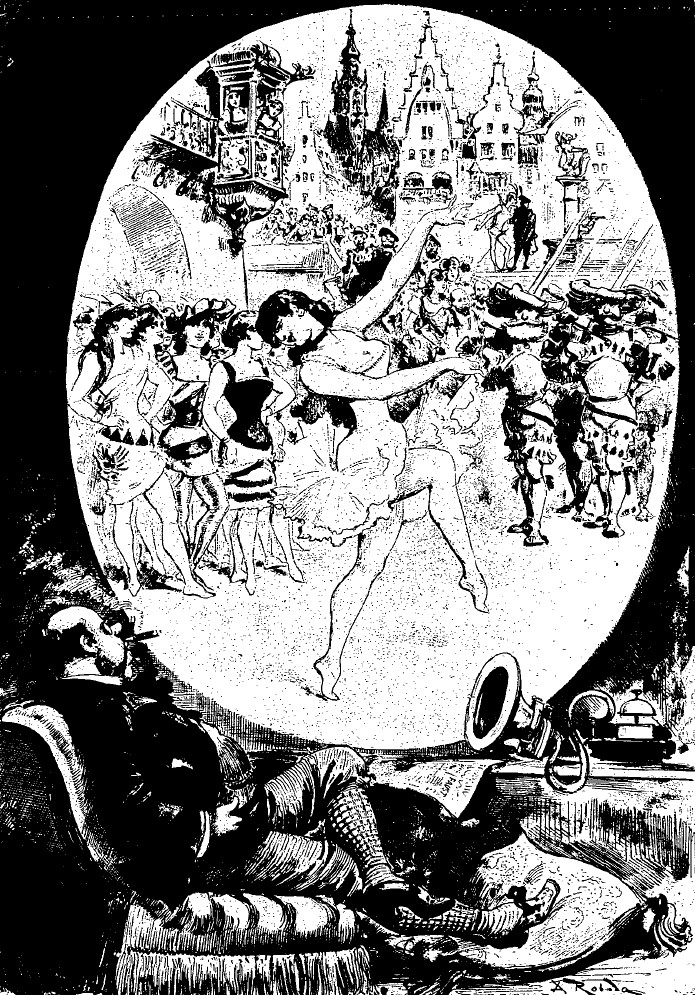
“Next to Zoom Christmas,” tweets philosophy professor Helen de Cruz, Robida also imagined a future in which this “telephonoscope” would “give us education, movies, teleconferencing.” As early as the 1860s, says the Public Domain Review, Robida had “published an illustration depicting a man watching a ‘televised’ performance of Faust from the comfort of his own home.” See image above.
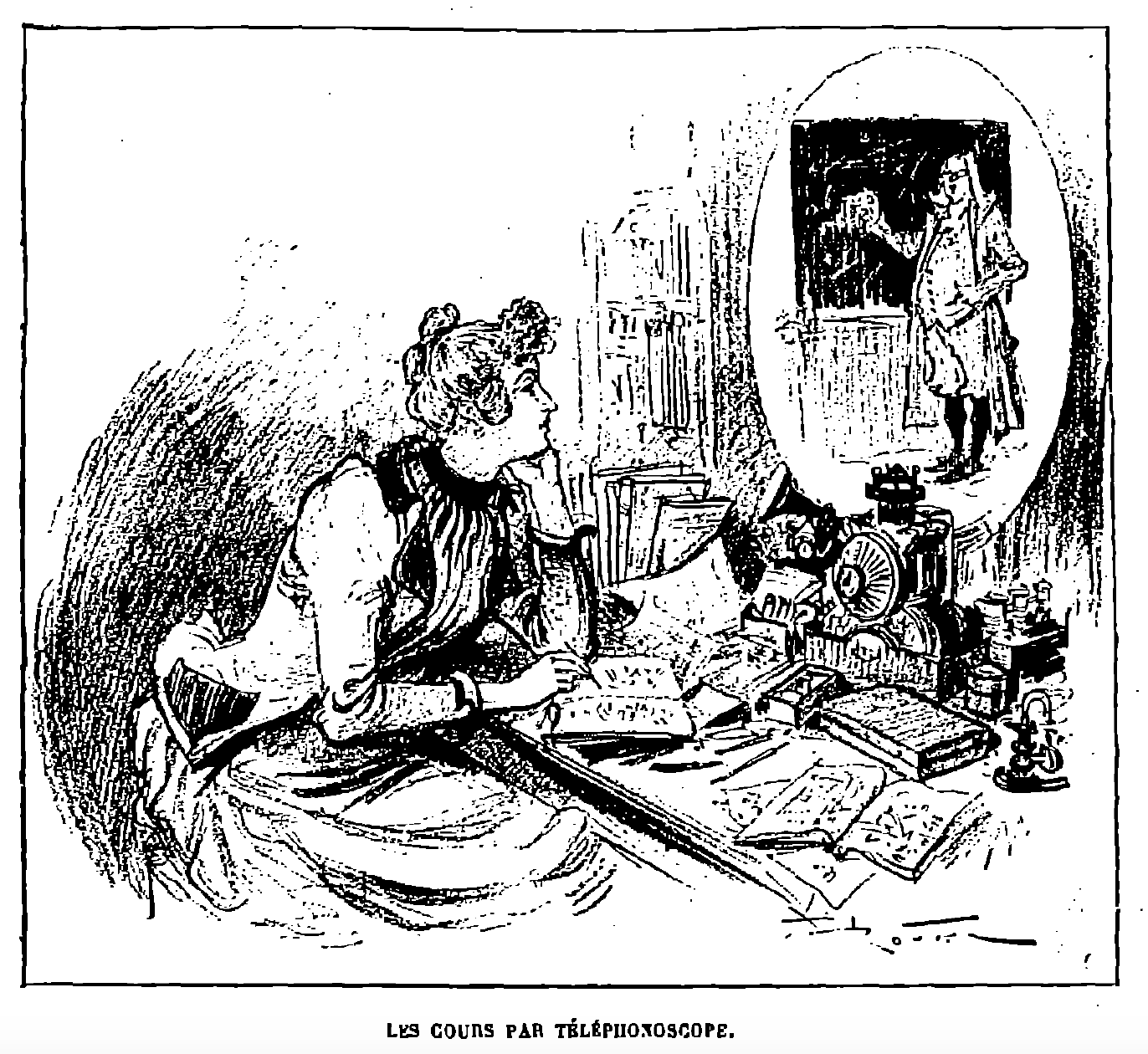
Though Robida seems to have coined the word “telephonoscope,” he wasn’t the first to publish the kind of idea to which it referred. “The concept of the device first appeared not long after the telephone was patented in 1876,” writes Verity Hunt in a Literature and Science article quoted by the Public Domain Review. “The term ‘telectroscope’ was used by the French scientist and publisher Louis Figuier in L’Année Scientifique et Industrielle in 1878 to popularize the invention, which he incorrectly interpreted as real and ascribed to Alexander Graham Bell.” The goal was to “do for the eye what the telephone had done for the ear,” though it wouldn’t be fully realized for well over a century. When you raise a glass to a webcam this week, consider toasting Albert Robida, to whom the year 2021 would have sounded impossibly distant — but who has proven more prescient about it than many of us alive today.
Related Content:
A 1947 French Film Accurately Predicted Our 21st-Century Addiction to Smartphones
How French Artists in 1899 Envisioned Life in the Year 2000: Drawing the Future
Paris Had a Moving Sidewalk in 1900, and a Thomas Edison Film Captured It in Action
Based in Seoul, Colin Marshall writes and broadcasts on cities, language, and culture. His projects include the Substack newsletter Books on Cities, the book The Stateless City: a Walk through 21st-Century Los Angeles and the video series The City in Cinema. Follow him on Twitter at @colinmarshall, on Facebook, or on Instagram.
Read More...Revisit Kate Bush’s Peculiar Christmas Special, Featuring Peter Gabriel (1979)
It’s been hard out there for Kate Bush fans. Since the genius “Queen of British Pop” retired from touring in 1979, public appearances have been few and far-between. She found the machinery of pop-stardom a hindrance to her process, and she’s been busy with other things, she says. “Every time I finish an album, I go into visual projects…. So I started to veer away from the thing of being a live performing artist, to one of being a recording artist with attached visuals.”
Fans are not entitled to her presence, but Kate Bush was sorely missed in the 35 years between her first tour and her 2014 “Before the Dawn” residency at London’’s Hammersmith Apollo. Before returning to the stage, she kept herself in the public eye with elaborately costumed music videos, a format perfectly suited to her theatrical and cinematic ambitions. (Asked by an interviewer in 1980 what she wanted to do next, she answered, “Everything.”)
But then there’s the Kate Bush Christmas Special, “titled simply Kate on-screen,” writes Christine Pallon. The program, which “aired on the BBC on December 28th, 1979,” followed on the heels of the Tour of Life, the whirlwind debut concert series that promised, but did not deliver, so many more. “The Christmas special’s choreography borrows heavily from that tour. But where she sang live on the Tour of Life, she lip-syncs to pre-recorded tracks here and incorporates pre-recorded video segments. As a result, the Christmas special plays out more like a crazy, longform music video than a traditional stage show.”
Does Kate Bush sing Christmas songs? Does she sit on Santa’s lap? Does she mime, arms akimbo, before the yule log?
Does she lounge on a piano next to a Golden Age crooner?
C’mon…
Okay, she sings one Christmas song, “December Will Be Magic Again,” an original released as a UK single that year. The song pays earnest homage to traditional Christmas figures like Bing Crosby, Saint Nick, and Oscar Wilde before Kate turns into some kind of strange Santa-like being who drops down on “the white city” in a parachute to “cover the lovers.”
Otherwise, the Christmas Special draws on Bush’s first three albums. In addition to her entourage of dancers and backup lip-syncers, she also invites a special guest—Peter Gabriel, of course (who might just as well be called the male Kate Bush)—to sing his “Here Comes the Flood” and duet with her on the extremely downbeat “Another Day.”
Christmas spirit? Who needs it? This is Kate, answering the age-old question, Pallon writes, “what would happen if the BBC gave a Christmas special to an incredibly ambitious 21-year-old art rocker who also smokes a ton of weed?” See the full tracklist, with timestamps, just below. Enjoy, and Happy Kate Bush Christmas Special Day!
Kate Bush — Christmas Special Tracklist:
(Intro) 00:00
Violin 00:29
(Gymnopédie No.1 — composed by Erik Satie) 03:44
Symphony In Blue 04:44
Them Heavy People 08:20
(Intro for Peter Gabriel) 12:52
Here Comes The Flood (Peter Gabriel) 13:22
Ran Tan Waltz 17:02
December Will Be Magic Again 19:43
The Wedding List 23:35
Another Day (with Peter Gabriel) 28:05
Egypt 31:41
The Man With The Child In His Eyes 36:21
Don’t Push Your Foot On The Heartbreak 39:24
Related Content:
300 Kate Bush Impersonators Pay Tribute to Kate Bush’s Iconic “Wuthering Heights” Video
2009 Kate Bush Documentary Dubs Her “Queen of British Pop”
Josh Jones is a writer and musician based in Durham, NC. Follow him at @jdmagness
Read More...Stream 48 Hours of Vintage Christmas Radio Broadcasts Featuring Orson Welles, Bob Hope, Frank Sinatra, Jimmy Stewart, Ida Lupino & More (1930–1959)
The Golden Age of American Radio began in the 1930s and lasted well into the 50s. That makes nearly thirty Christmases, not one of which passed without special broadcasts by the major networks. This Christmas, thanks to The World War II News and Old Time Radio Channel on Youtube, you can experience the Golden Age’s three decades through 48 straight hours of holiday broadcasts. Strung like an audio garland in chronological order, these begin with an episode of NBC’s Empire Builders, quite possibly the first-ever Western radio drama, first broadcast on December 22nd, 1930 — a rare year from which to hear a recorded radio show at all, let alone a Christmas special. The compilation ends one day shy of 29 years later, with a Top 40 broadcast from WMGM in New York.
Throughout this all-Christmas listening experience, old-time radio enthusiasts will recognize many of America’s very favorite shows: Lum and Abner, Amos and Andy, Fibber McGee and Molly and The Great Gildersleeve, The Jack Benny Program and The Charlie McCarthy Show. For many seasonally appropriate episodes of those series as well as one-off variety broadcasts, networks would wrangle as many big names as they could into the studio, from Bob Hope and Lionel Barrymore to Gary Cooper and Frank Sinatra to Carmen Miranda and Ida Lupino (director, film noir fans know, of The Hitch-Hiker).
In 1947, CBS’ Lux Radio Theater put on a full production of It’s a Wonderful Life with Jimmy Stewart and Donna Reed, stars of the film that had come out just the year before. Even U.S. presidents like Franklin D. Roosevelt and Dwight D. Eisenhower turn up to deliver Christmas addresses.
Open Culture readers may well remember CBS’ 1941 production of Oscar Wilde’s “The Happy Prince” featuring Orson Welles and Bing Crosby, but even those of us who know our classic radio will hear a good deal in these 48 hours of broadcasts that we’ve never heard before. Though all of them celebrate the season in one way or another, they do so in a host of different forms and genres, even beyond the broad divisions of drama, comedy, music, and celebrity chat. In gradually passing from living memory, the golden age of American radio comes to seem a longer era than it was. But through that relatively brief window, opened by the household adoption of radio and closed by the rise of television, came an abundance of creativity that can still surprise us — and indeed inspire us — here at the close of the year 2020.
Related Content:
A Christmas Carol, A Vintage Radio Broadcast by Orson Welles and Lionel Barrymore (1939)
Bob Dylan Reads “‘Twas the Night Before Christmas” On His Holiday Radio Show (2006)
Based in Seoul, Colin Marshall writes and broadcasts on cities, language, and culture. His projects include the Substack newsletter Books on Cities, the book The Stateless City: a Walk through 21st-Century Los Angeles and the video series The City in Cinema. Follow him on Twitter at @colinmarshall, on Facebook, or on Instagram.
Read More...When Our World Became a de Chirico Painting: How the Avant-Garde Painter Foresaw the Empty City Streets of 2020
This past spring, media outlets of every kind published photos and videos of eerily empty public spaces in cities like Beijing, New York, Milan, Paris, and Seoul, cities not known for their lack of street life. At least in the case of Seoul, where I live, the depopulated image was a bit of an exaggeration, but taken as a whole, these stunned visual dispatches from around the world reflected a real and sudden change in urban life caused by this year’s coronavirus pandemic. They also got us thinking, not just about our cities but about the built environment, and even human civilization, in general. Life, as often, had imitated art: specifically, it had imitated the paintings of Giorgio de Chirico, the founder of the Metaphysical art movement.
“In 1909, de Chirico was sitting on a bench in the Piazza Santa Croce in Florence, recovering from an intestinal illness, when all of a sudden he had a profound experience.” So says Evan Puschak, better known as the Nerdwriter, in his new video essay “When the World Became a de Chirico Painting.”
As the artist himself later remembered it a few years later, “The whole world, down to the marble of the buildings and fountains, seemed to me to be convalescent.” There followed the painting The Enigma of an Autumn Afternoon, depicting a hollowed-out Piazza Santa Croce, its statue of Dante now headless. “This and all the plazas in his Metaphysical Town Square series are simplified, empty, cut with dramatic shadows.”
Seldom does a human being — that is, a human being not made of stone — appear in de Chirico’s Metaphysical Town Squares. But he does include the occasional train in the distance, usually with a billowing smokestack. This suggests that, though life in the foreground seems to have stopped indefinitely, modernity continues apace in the background. To many of us, the vague disorientation this causes now feels almost normal, as does the sensation of seeing familiar places made unfamiliar. In 2020, Puschak says, “cities and towns became immense museums of strangeness, and it was possible to see what we built through alien eyes.” For more than a century, De Chirico’s paintings have, on a much smaller scale, presented us the same opportunity for reflection. But among other things we’ve learned this year, nobody wants to live in a De Chirico for long.
Related Content:
See Web Cams of Surreally Empty City Streets in Venice, New York, London & Beyond
How To Understand a Picasso Painting: A Video Primer
The Museum of Modern Art (MoMA) Puts Online 75,000 Works of Modern Art
Based in Seoul, Colin Marshall writes and broadcasts on cities, language, and culture. His projects include the Substack newsletter Books on Cities, the book The Stateless City: a Walk through 21st-Century Los Angeles and the video series The City in Cinema. Follow him on Twitter at @colinmarshall, on Facebook, or on Instagram.
Read More...The Ukulele Orchestra of Great Britain Performs The Rolling Stones’ “(I Can’t Get No) Satisfaction”
The Ukulele Orchestra of Great Britain–we’ve featured them here before, playing covers of everything from David Bowie’s “Heroes,” to Nirvana’s “Smells Like Teen Spirit,” Talking Heads’ “Psycho Killer” and The Who’s “Pinball Wizard.” And let’s not forget their stirring performances of Ennio Morricone’s western theme songs. Now, to help lift you out of the COVID gloom, they’re back with a novel take on the Stones’ 1965 classic, “(I Can’t Get No) Satisfaction.” Hope you enjoy.
Note: The orchestra plans to post a new video every Sunday on their YouTube channel, and a full (pay-per-view) concert every month available on their website.
If you would like to support the mission of Open Culture, consider making a donation to our site. It’s hard to rely 100% on ads, and your contributions will help us continue providing the best free cultural and educational materials to learners everywhere. You can contribute through PayPal, Patreon, and Venmo (@openculture). Thanks!
Related Content
David Bowie’s “Heroes” Delightfully Performed by the Ukulele Orchestra of Great Britain
Read More...Support Us
We're hoping to rely on loyal readers, rather than erratic ads. Please click the Donate button and support Open Culture. You can use Paypal, Venmo, Patreon, even Crypto! We thank you!

About Us

Open Culture scours the web for the best educational media. We find the free courses and audio books you need, the language lessons & educational videos you want, and plenty of enlightenment in between.
Advertise With Us
FREE UPDATES!
GET OUR DAILY EMAIL
Get the best cultural and educational resources on the web curated for you in a daily email. We never spam. Unsubscribe at any time.
FOLLOW ON SOCIAL MEDIA
Open Culture editor Dan Colman scours the web for the best educational media. He finds the free courses and audio books you need, the language lessons & movies you want, and plenty of enlightenment in between.
Advertise With Us


.jpg)