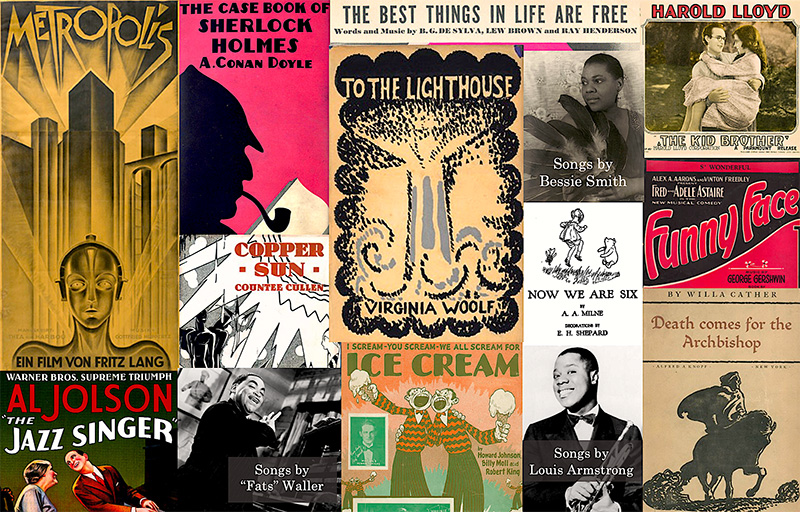
It’s safe to say that few, if any, of us alive today were doing any movie-going in 1927. But that shouldn’t stop us from recognizing the importance of that year to cinema itself. It saw the release of, among other pictures, The Lodger, with which the young Alfred Hitchcock first fully assembled his signature mechanics of suspense; Metropolis, Fritz Lang’s still-influential vision of Art Deco dystopia; F. W. Murnau’s Sunrise, a lavish romantic drama complete with sound effects; and even the very first feature-length “talkie,” The Jazz Singer starring Al Jolson. And don’t even get us started on what a year 1927 was for literature.
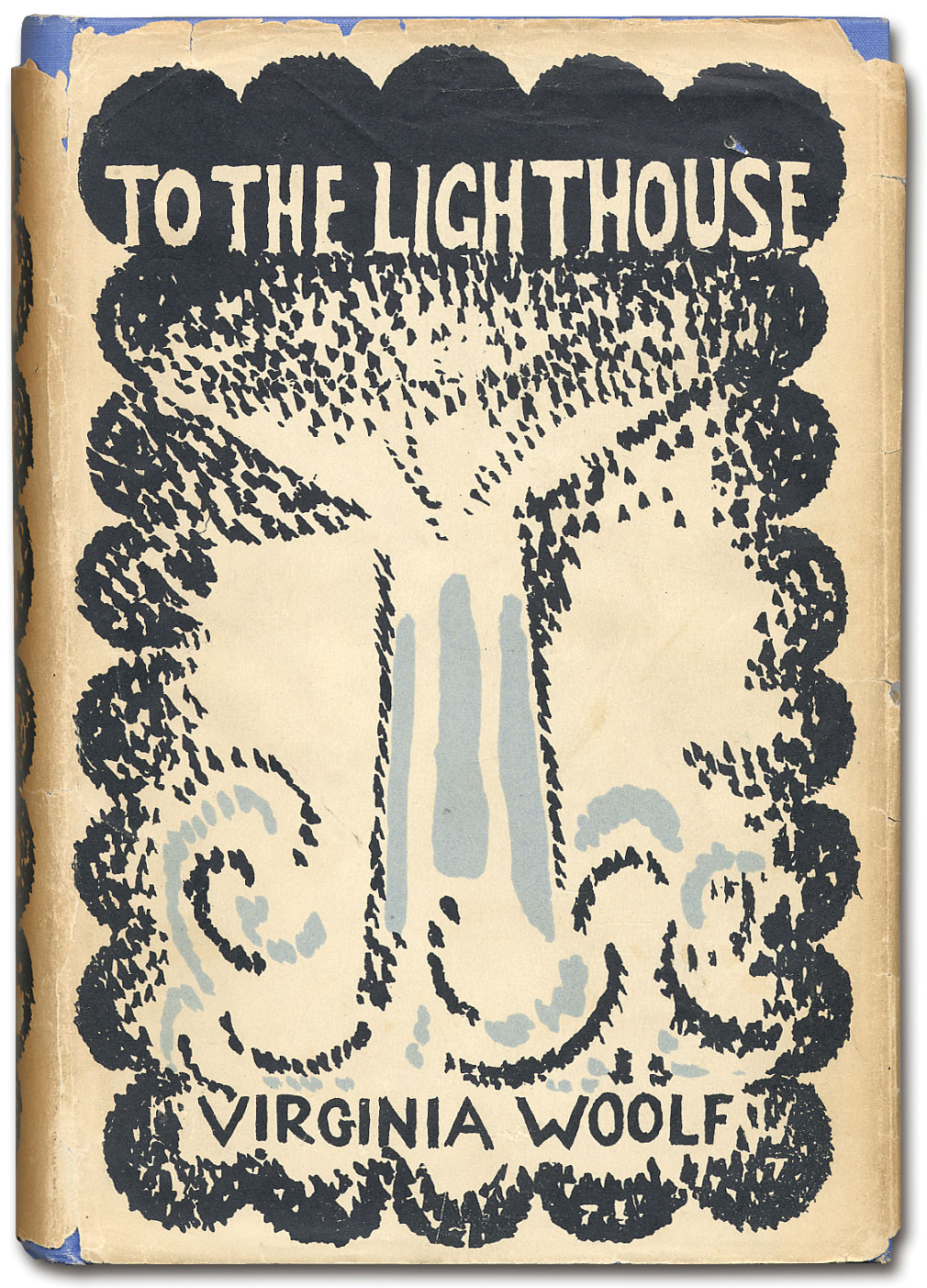
Rather, take it from Hyperallergic’s Rhea Nayyar, who highlights Franz Kafka’s posthumously published first novel Amerika, which is now “considered one of his more realistic and humorous works.” Nayyar also mentions Virginia Woolf’s much better-known To the Lighthouse, which, like Amerika as well as all the aforementioned films, has just entered the public domain in the United States in 2023 for anyone to enjoy and use as they please.
So has Arthur Conan Doyle’s The Case-Book of Sherlock Holmes, the final book of stories featuring that iconic detective, Ernest Hemingway’s collection Men Without Women, Hermann Hesse’s Der Steppenwolf, and even the very first Hardy Boys novel, The Tower Treasure.
You’ll find many such notable books, movies, and musical compositions — that last group including such immortal tunes as “The Best Things in Life are Free,” “Puttin’ on the Ritz” and “(I Scream You Scream, We All Scream for) Ice Cream” — rounded up here by Jennifer Jenkins, director of Duke Law School’s Center for the Study of the Public Domain. She also explains why we should care: “1927 was a long time ago. The vast majority of works from 1927 are out of circulation. When they enter the public domain in 2023, anyone can rescue them from obscurity and make them available, where we can all discover, enjoy, and breathe new life into them.” We know that many works created in 1927 have stood the test of time; now to find out what they’ll inspire us to create in 2023.
Based in Seoul, Colin Marshall writes and broadcasts on cities, language, and culture. His projects include the Substack newsletterBooks on Cities, the book The Stateless City: a Walk through 21st-Century Los Angeles and the video series The City in Cinema. Follow him on Twitter at @colinmarshall or on Facebook.
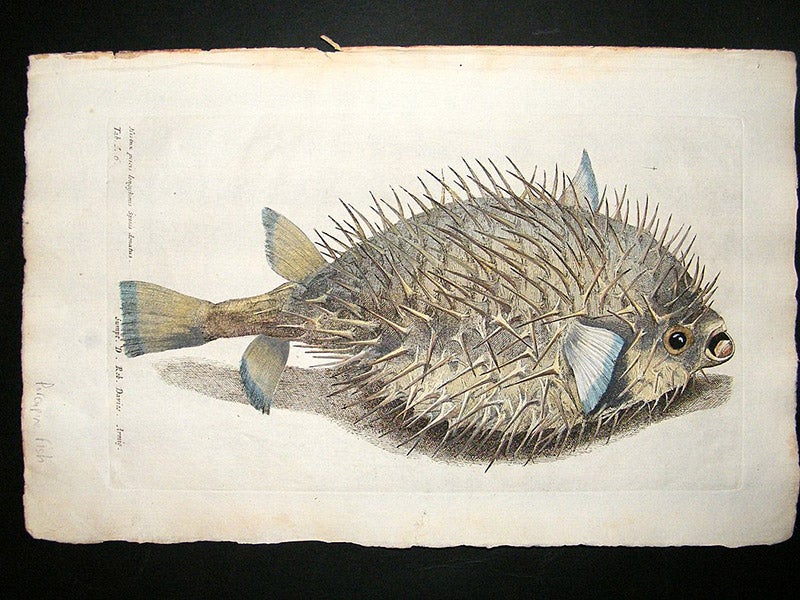
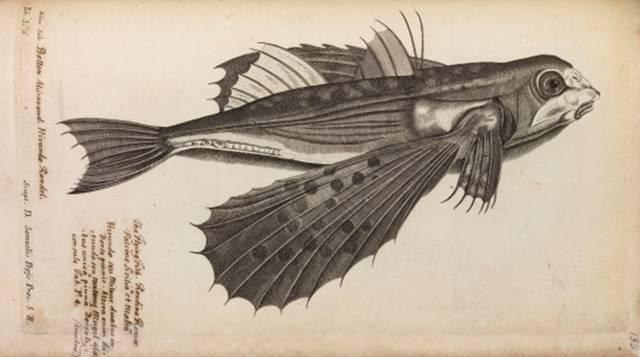
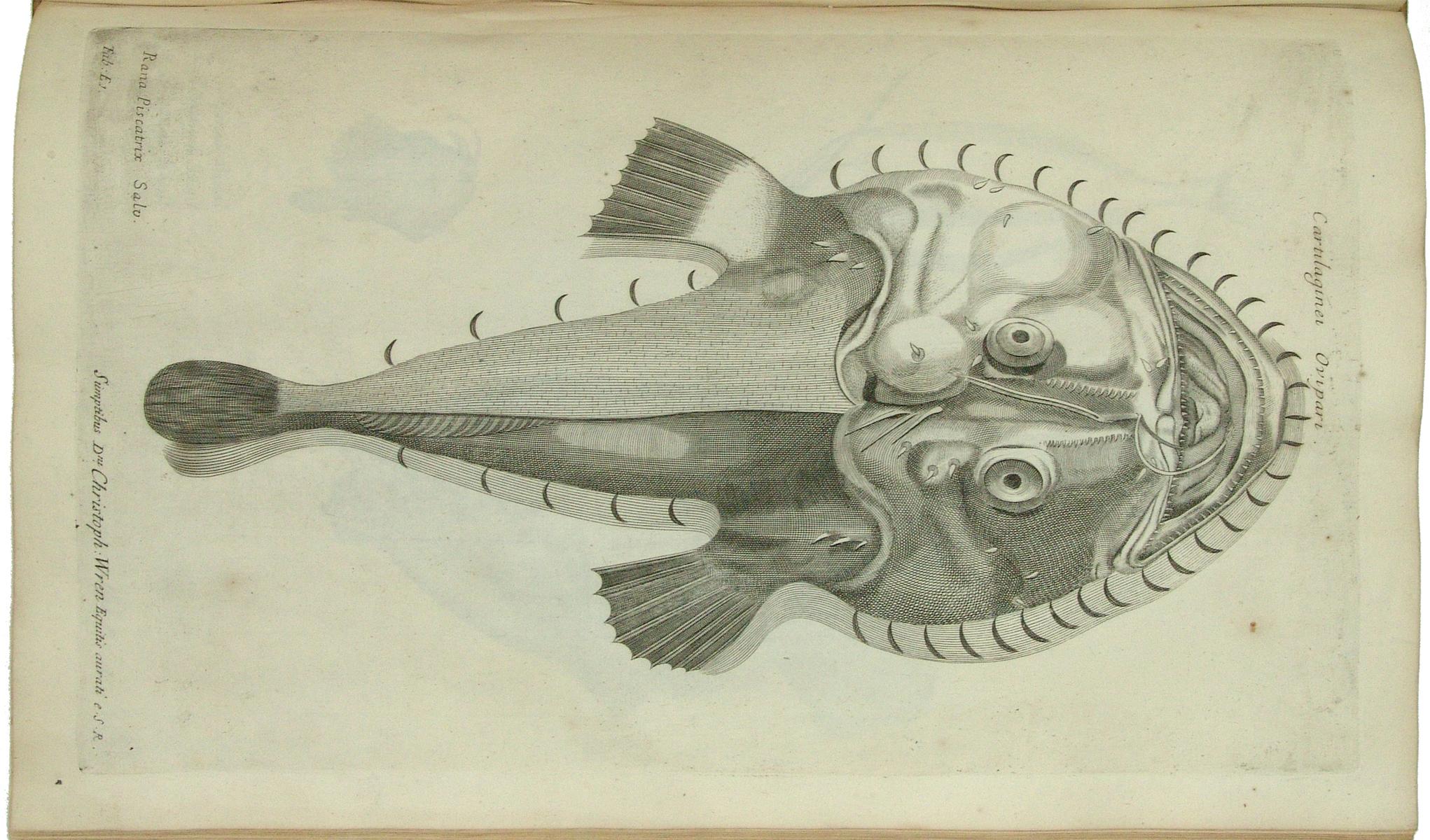
The exalted status of Isaac Newton’s Philosophiæ Naturalis Principia Mathematica is reflected by the fact that everybody knows it as, simply, the Principia. Very few of us, by contrast, speak of the Historia when we mean to refer to John Ray and Francis Willughby’s De Historia Piscium, which came out in 1686, the year before the Principia. Both books were published by the Royal Society, and as it happens, the formidable cost of Willughby and Ray’s lavish work of ichthyology nearly kept Newton’s groundbreaking treatise on motion and gravitation from the printing press.
According to the Royal Society’s web site, “Ray and Willughby’s Historia did not prove to be the publishing sensation that the Fellows had hoped and the book nearly bankrupted the Society. This meant that the Society was unable to meet its promise to support the publication of Isaac Newton’s masterpiece.”
Fortunately, “it was saved from obscurity by Edmund Halley, then Clerk at the Royal Society” — and now better known for his eponymous comet — “who raised the funds to publish the work, providing much of the money from his own pocket. ”
Halley’s great reward, in lieu of the salary the Royal Society could no longer pay, was a pile of unsold copies of De Historia Piscium. That may not have been quite the insult it sounds like, given that the book represented a triumph of production and design in its day. You can see a copy in the episode of Adam Savage’s Tested at the top of the post, and you can closely examine its imagery at your leisure in the digital archive of the Royal Society. In the words of Jonathan Ashmore, Chair of the Royal Society’s Library Committee, a browsing session should help us “appreciate why early Fellows of the Royal Society were so impressed by Willughby’s stunning illustrations of piscine natural history.”
Though Savage duly marvels at the Royal Society’s copy of the Historia — a reconstruction made up of pages long ago cut out and sold separately, as was once common practice with books with pictures suitable for framing — it’s clear that much of the motivation for his visit came from the prospect of close proximity to Newtoniana, up to and including the man’s death mask. But then, Newton lays fair claim to being the most important scientist who ever lived, and the Principia to being the most important science book ever written. Almost three and a half centuries later, physics still holds mysteries for generations of Newton’s successors to solve. But then, so do the depths of the ocean.
Based in Seoul, Colin Marshall writes and broadcasts on cities, language, and culture. His projects include the Substack newsletterBooks on Cities, the book The Stateless City: a Walk through 21st-Century Los Angeles and the video series The City in Cinema. Follow him on Twitter at @colinmarshall or on Facebook.
No matter where you may stand on herbal medicine as a viable 21st-century option, it’s not hard to imagine we’d have all been true believers back in the 15th-century.
In an article for Heart Views, cardiologist Rachel Hajar lists some common herbal treatments of the Middle Ages:
Headache and aching joints were treated with sweet-smelling herbs such as rose, lavender, sage, and hay. A mixture of henbane and hemlock was applied to aching joints. Coriander was used to reduce fever. Stomach pains and sickness were treated with wormwood, mint, and balm. Lung problems were treated with a medicine made of liquorice and comfrey. Cough syrups and drinks were prescribed for chest and head-colds and coughs.
If nothing else, such approaches sound rather more pleasant than bloodletting.
Monks were responsible for the study and cultivation of medicinal herbs.
You may recall how one of Friar Lawrence’s daily tasks in Romeo and Julietinvolved venturing into the monastery garden, to fill his basket full “baleful weeds and precious-juicèd flowers.”
(The powerful sleeping potion he concocted for the young lovers may have had disastrous consequences, but no one can claim it wasn’t effective.)
Monks preserved their herbal knowledge in illustrated books and manuscripts, many of which cleaved closely to works of classical antiquity such as Pliny the Elder’s Naturalis Historia and Dioscordes’ De Materia Medica.
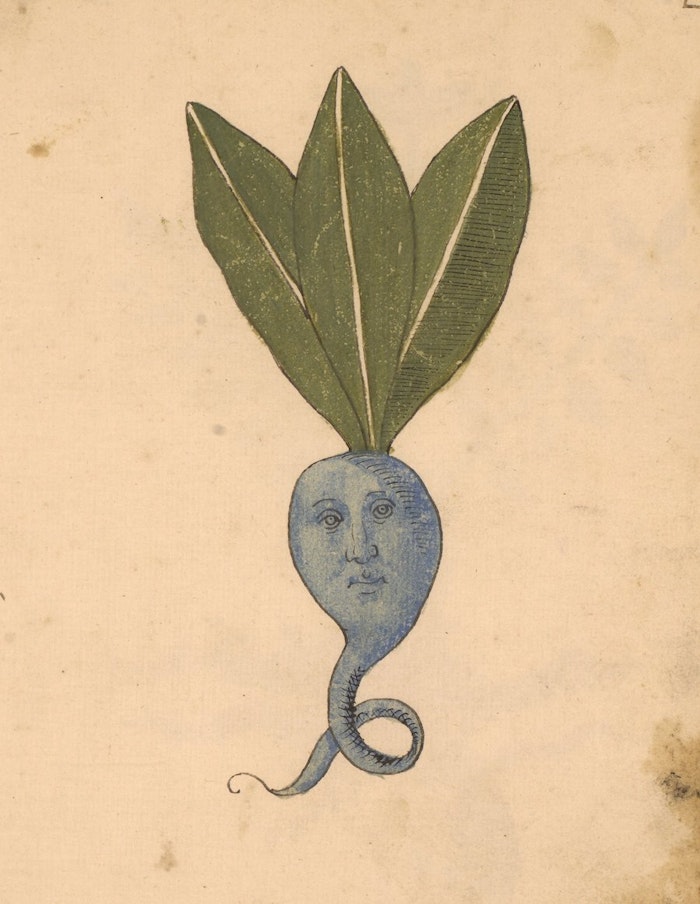
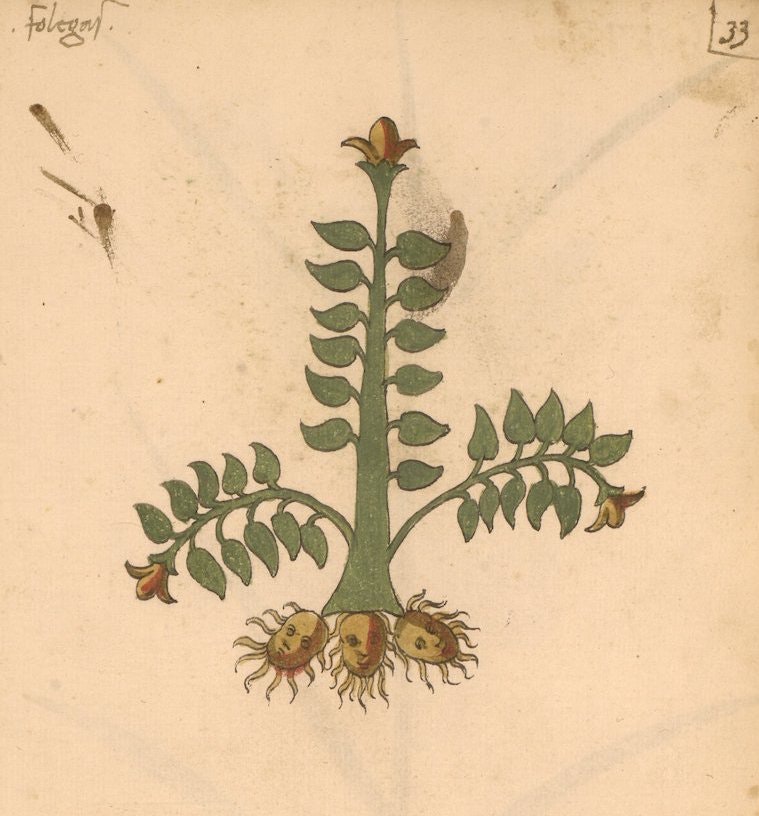
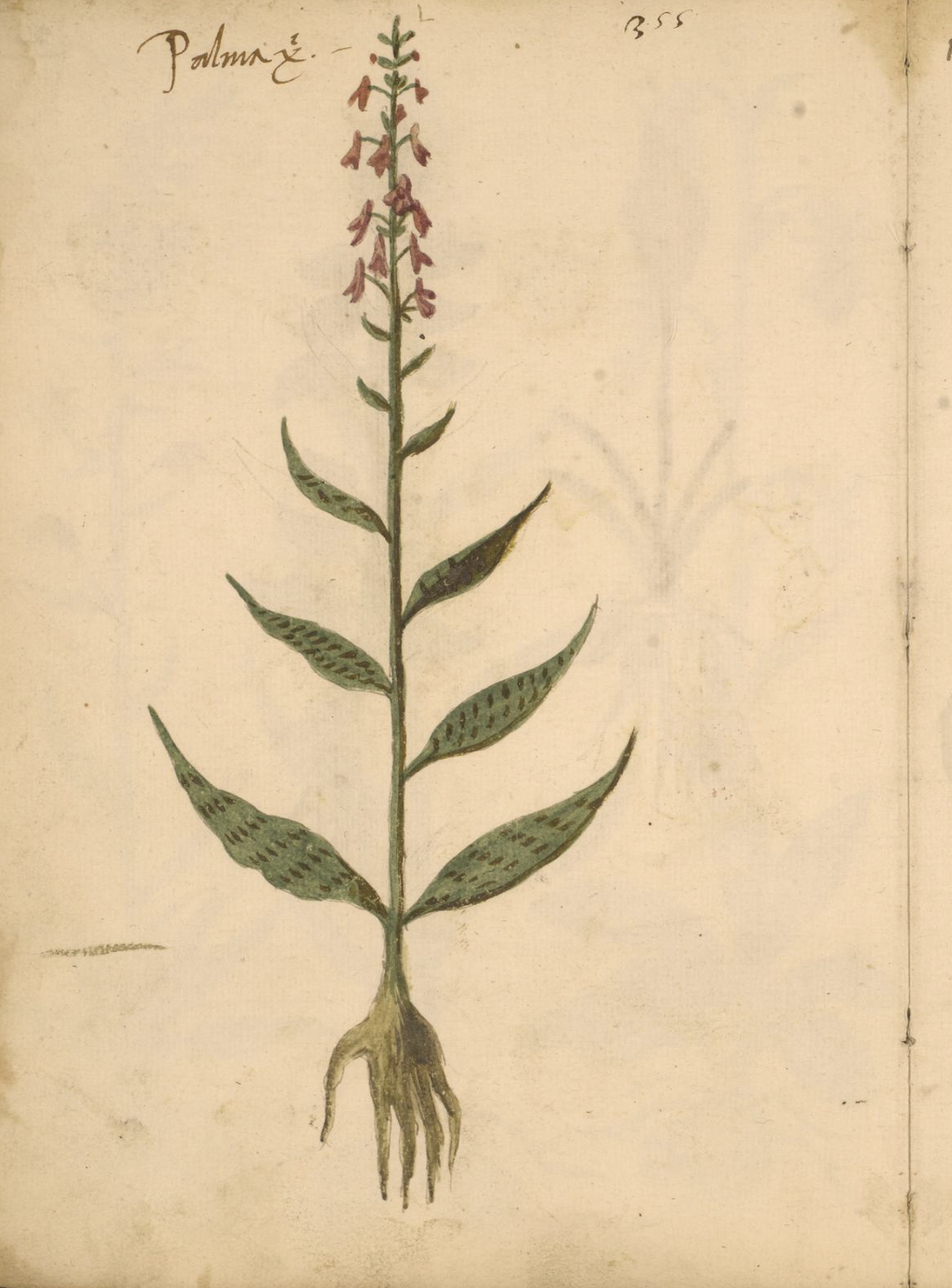
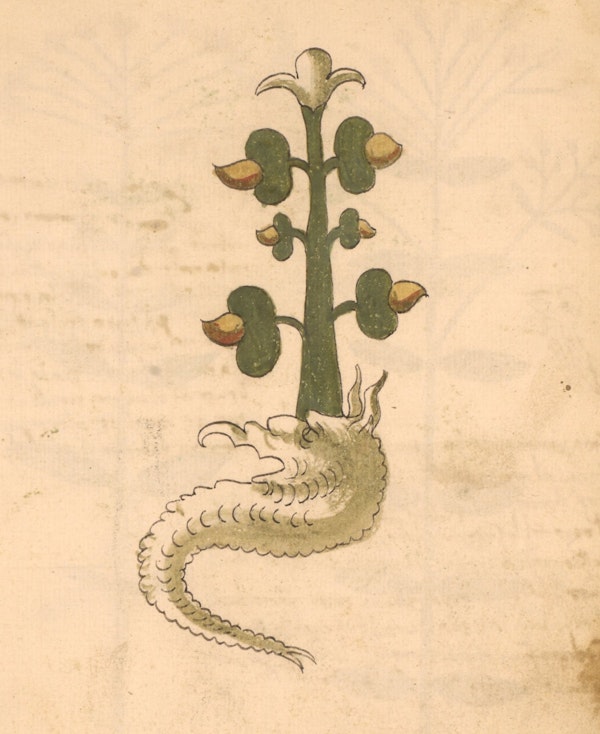
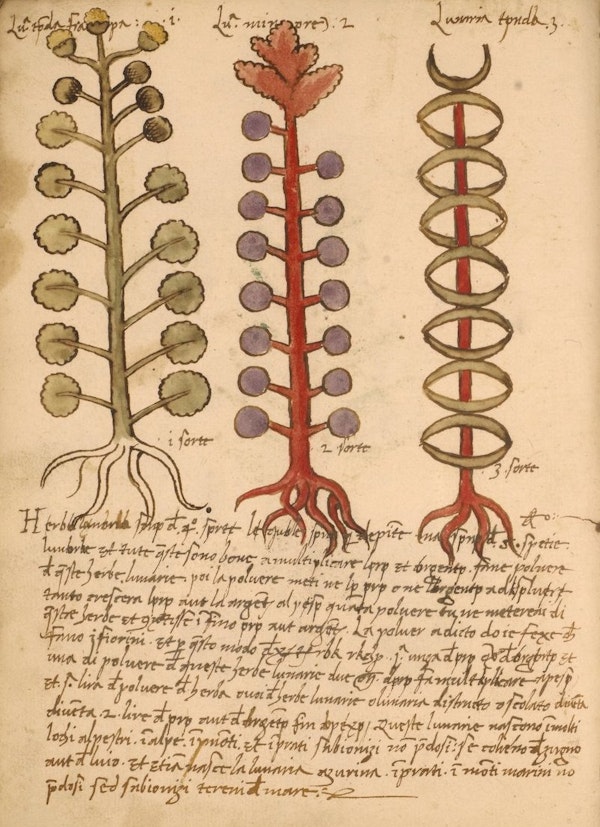
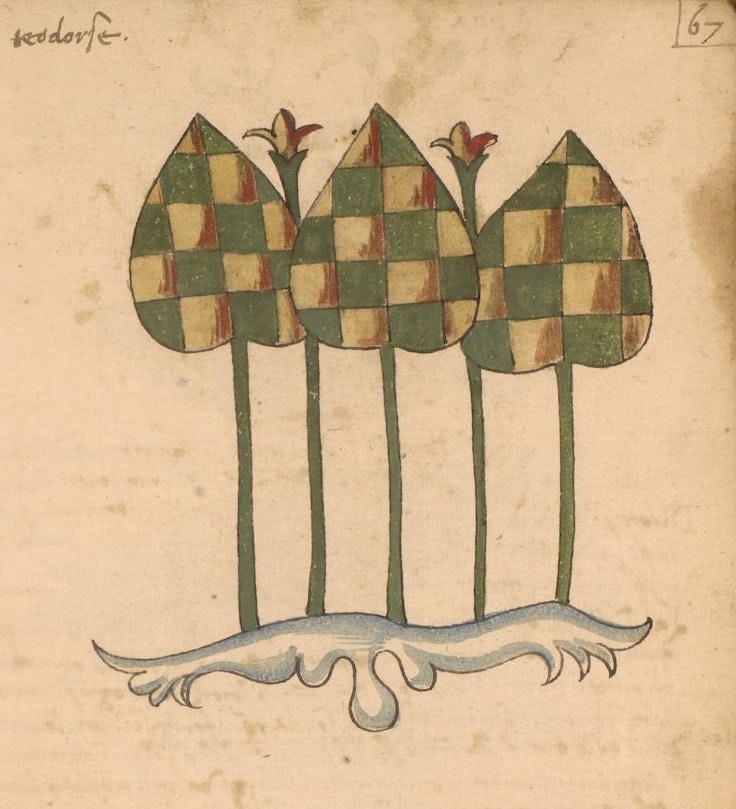
These early medical texts can still be appreciated as art, particularly when they contain fantastical embellishments such as can be seen in Erbario, above, a handmade 15th-century herbal from northern Italy that was recently added to the University of Pennsylvania Library’s collection of rare books and manuscripts.
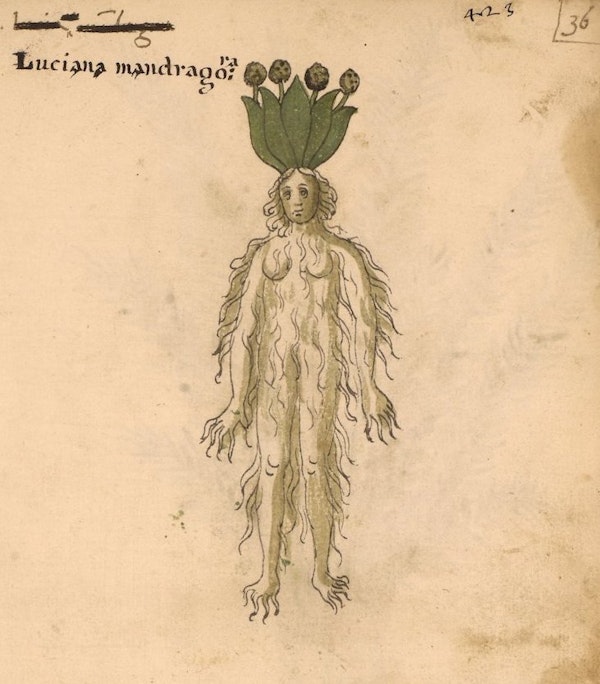
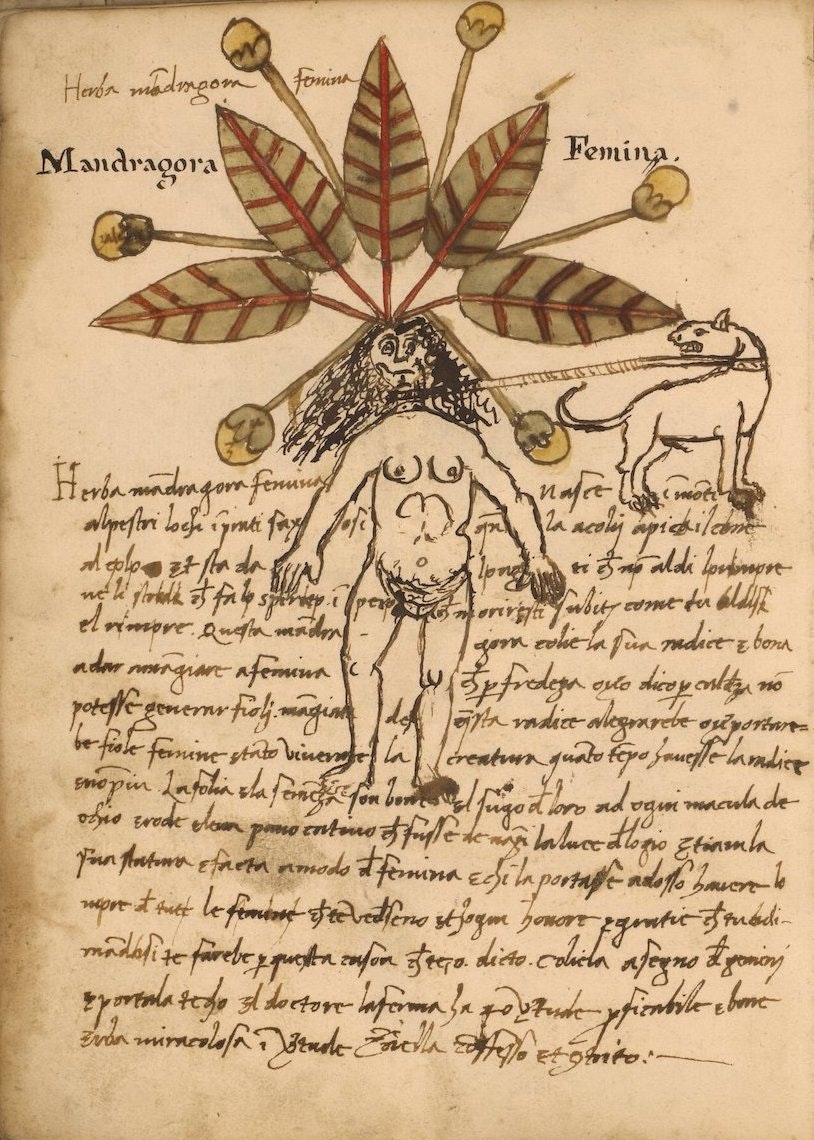
In addition to straightforward botanical illustrations, there are some roots, leaves, flowers and fruit (pardon the pronoun) of a decidedly anthropomorphic bent.
Fancying up drawings of plants with human faces and or dragon-shaped roots was a medieval convention.
Mandrake roots — prescribed as an anesthetic, an aphrodisiac, a fertility booster, and a sleep aid — were frequently rendered as humans.
Wired’s Matt Simon writes that mandrake roots “can look bizarrely like a human body and legend holds that it can even come in male and female form:”
It’s said to spring from the dripping fat and blood and semen of a hanged man. Dare pull it the from the earth and it lets out a monstrous scream, bestowing agony and death to all those within earshot.
Yikes! Can we get a spoonful of sugar to help that go down?
No wonder Juliet, preparing to quaff Friar Lawrence’s sleeping potion in the family tomb, fretted that it might wear off prematurely, leaving her subject to “loathsome smells” and “shrieks like mandrakes torn out of the earth.”
Methinks some chamomile might have calmed those nerves…
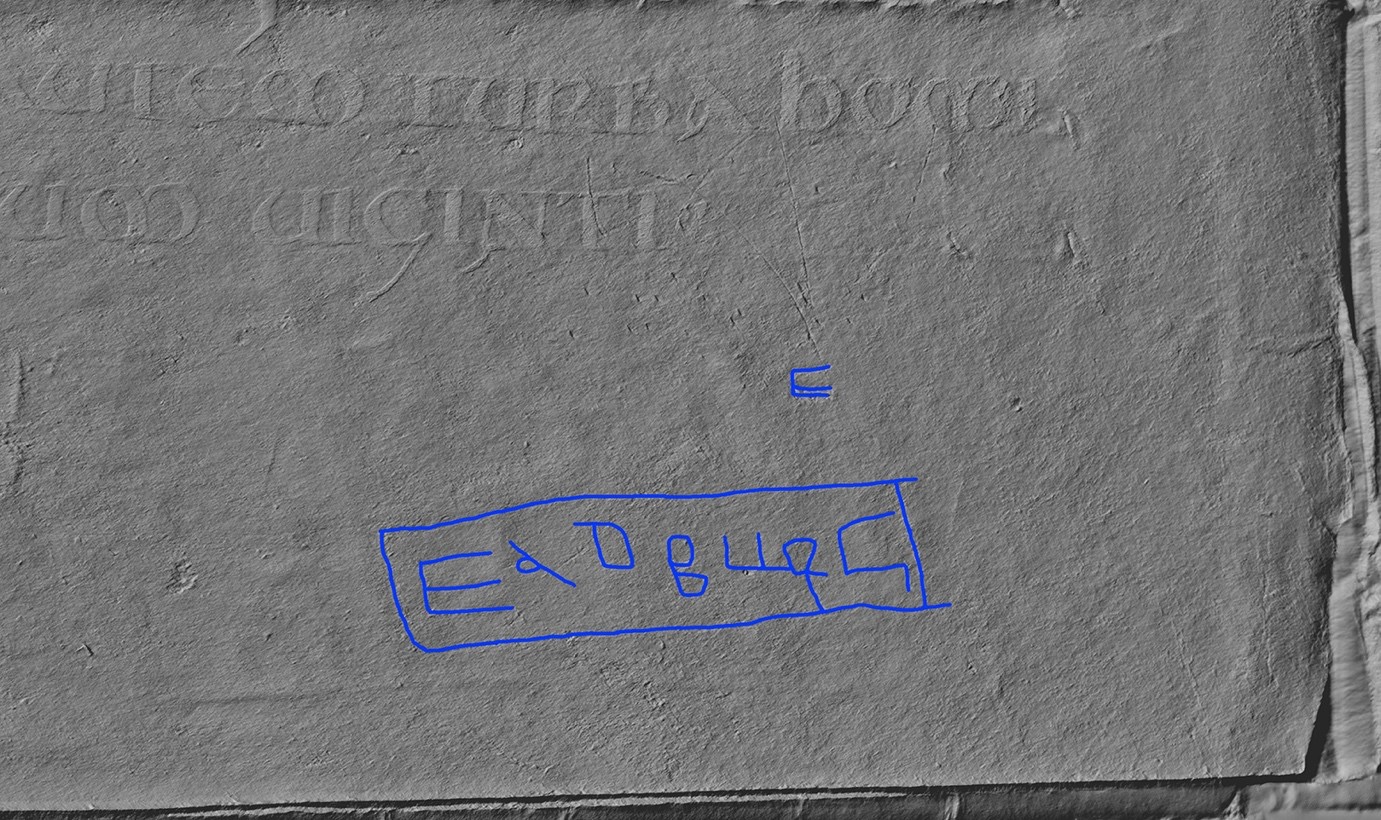
Most of us have doodled in the margins of our books at one time or another, and some of us have even dared to write our own names. But very of few us, presumably, would have expected our handiwork to be marveled at twelve centuries hence. Yet that’s just what has happened to the marginalia left by a medieval Englishwoman we know only as Eadburg, who some time in the eighth century committed her name — as well as other symbols and figures — to the pages of a Latin copy of the Acts of the Apostles.
Eadburg did this with such secrecy that only advanced twenty-first century technology has allowed us to see it at all. That the readers in the Middle Ages sometimes jotted in their manuscripts isn’t unheard of.
But unlike most of them, Eadburg seems to have favored a drypoint stylus — i.e., a tool with nothing on it to leave a clear mark — which would have made her writing nearly impossible to notice with the naked eye. To see all of them necessitated the use of a technique called “photometric stereo,” which Oxford University’s Bodleian Library Senior Photographer John Barrett explains in this blog post.
The scanning process collects images that “map the direction and height of the original’s surface, and are processed into renders showing only the relief of the original with the tone and color removed.” Subsequent steps of filtering and enhancement result in a digital reproduction of “the three-dimensional surface of the page,” which, with the proper enhancements, finally allows drypoint inscriptions to be seen. Eadburg’s name, reports the Guardian’s Donna Ferguson, was found “passionately etched into the margins of the manuscript in five places, while abbreviated forms of the name appear a further ten times.”
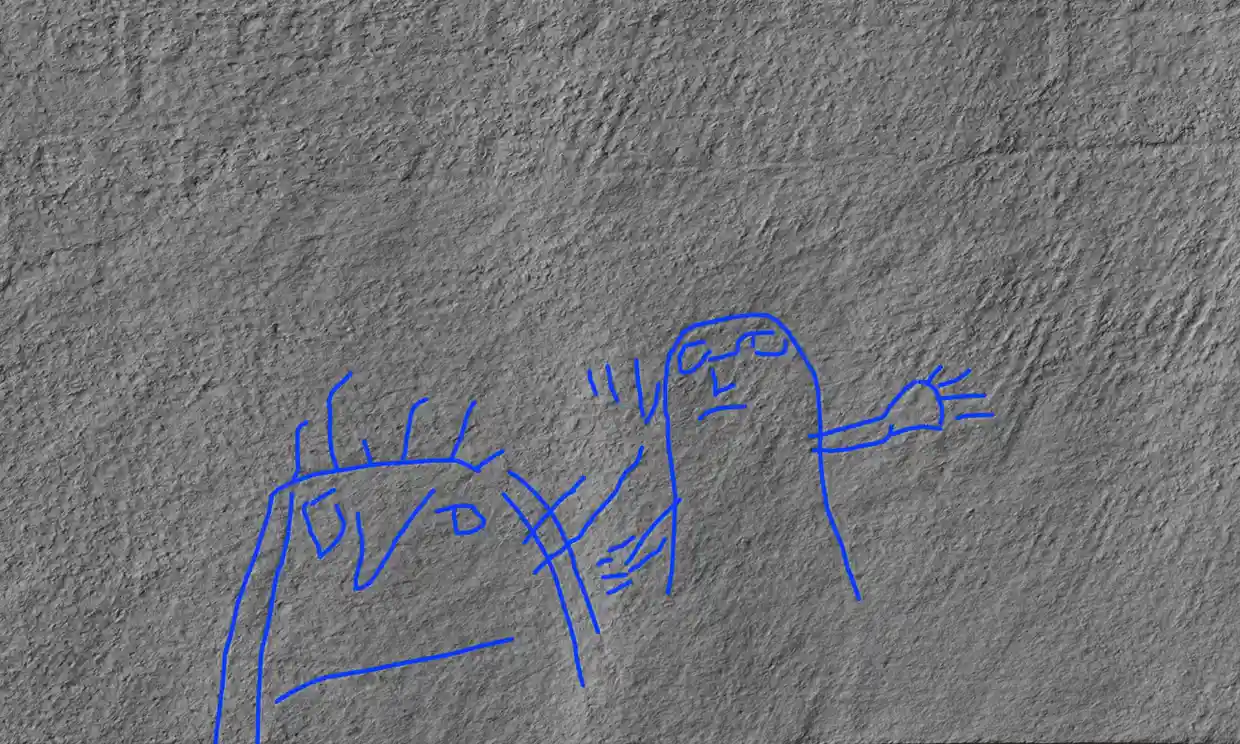
Other new discoveries in the manuscript’s pages include “tiny, rough drawings of figures — in one case, of a person with outstretched arms, reaching for another person who is holding up a hand to stop them.” What Eadburg meant by it all remains a matter of active inquiry, but then, so does her very identity. “Charter evidence suggests that a woman called Eadburg was abbess of a female religious community at Minster-in-Thanet, in Kent from at least 733 until her death sometime between 748 and 761,” writes Barrett, but she wasn’t the only Eadburg who could’ve possessed the book. All this contains a lesson for today’s marginalia-makers: if you’re going to sign your name, sign it in full.
Based in Seoul, Colin Marshall writes and broadcasts on cities, language, and culture. His projects include the Substack newsletterBooks on Cities, the book The Stateless City: a Walk through 21st-Century Los Angeles and the video series The City in Cinema. Follow him on Twitter at @colinmarshall or on Facebook.
When considering whether to buy yet another book, you might well ask yourself when you’ll get around to reading it. But perhaps there are other, even more important considerations, such as the intellectual value of the book in its still-unread state. In our personal libraries we all keep at least a few favorites, volumes to which we turn again and again. But what would be the use of a book collection consisting entirely of books we’ve already read? This is the question put to us by the reading (or at least acquiring) life of no less a man of letters than Umberto Eco, seen in the video above walking through his personal library of 30,000 books — a fair few of which, we can safely assume, he never got through.
As Nassim Taleb tells it, Eco separated his visitors into two categories: “those who react with ‘Wow! Signore professore dottore Eco, what a library you have. How many of these books have you read’ and the others — a very small minority — who get the point is that a private library is not an ego-boosting appendages but a research tool.”
One’s library should therefore contain not just what one knows, but much more of what one doesn’t yet know. “Indeed, the more you know, the larger the rows of unread books. Let us call this collection of unread books an antilibrary.” This passage comes from Taleb’s The Black Swan, a book all about the human tendency — defied by Eco — to overvalue the known and undervalue the unknown.
“The antilibrary’s value stems from how it challenges our self-estimation by providing a constant, niggling reminder of all we don’t know,” writes Big Think’s Kevin Dickinson. “The titles lining my own home remind me that I know little to nothing about cryptography, the evolution of feathers, Italian folklore, illicit drug use in the Third Reich, and whatever entomophagy is.” The New York Times’ Kevin Mims connects Taleb’s concept of the antilibrary to the Japanese concept of tsundoku, previously featured here on Open Culture, which captures the way books tend to pile up unread in our homes. There’s nothing inherently wrong with that, as long as we’ve stocked those piles with valuable knowledge — and more of it than we can ever use.
Based in Seoul, Colin Marshall writes and broadcasts on cities, language, and culture. His projects include the Substack newsletterBooks on Cities, the book The Stateless City: a Walk through 21st-Century Los Angeles and the video series The City in Cinema. Follow him on Twitter at @colinmarshall or on Facebook.
There’s a passage from Kurt Vonnegut’s Breakfast of Champions that crosses our desk a lot at this time of year. It’s the one in which he declares Armistice Day, which coincidentally falls on his birthday, sacred:
What else is sacred? Oh, Romeo and Juliet, for instance.
And all music is.
Here, here!
Hopefully Shakespeare won’t take umbrage if we skip over his doomed teenaged lovers to celebrate Kurt Vonnegut’s 11/11 Centennial with songs inspired by his work.
The driving force behind the KTE Tim Langsford, a drummer who mentors Autistic students at the University of Plymouth, was looking for ways to help his “foggy mind remember the key concepts, characters, and memorable lines that occur in each” of Vonnegut’s 14 books.
The solution? Community and accountability to an ongoing assignment. Langsford launched the Plymouth Vonnegut Collective in 2019 with a typewritten manifesto, inviting interested parties to read (or re-read) the novels in publication order, then gather for monthly discussions.
His loftier goal was for book club members to work collaboratively on a 14-track concept album informed by their reading.
They stuck to it, with efforts spanning a variety of genres.
The psychedelic God Bless You, Mister Rosewatermixes quotes from the book with edited clips of the collective’s discussion of the novel.
The project pushed Langsford out from behind the drum kit, as well as his comfort zone:
It has taken an awful lot to be comfortable with the songs on which I sing. However, I have tried to invoke KV’s sense of creation as if no one is watching. It doesn’t matter so do it for yourself…. Although do I contradict that by sharing these things to the internet rather than trashing them unseen or unheard?!
Ah, but isn’t one of the most beautiful uses of the Internet as a tool for finding out what we have in common with our fellow humans?
Congratulations to our fellow Vonnegut fans in Plymouth, who will be celebrating their achievement and the legendary author’s 100th birthday with an event featuring poetry, art, music and film inspired by the birthday boy’s novels.
Folk rocker Al Stewart is another who “was drawn by the Sirens of Titan.” The lyrics make perfect sense if the novel is fresh in your mind:
The band gave the author a writing credit. He repaid the compliment with a fan letter:
I was at my daughter’s house last night, and the radio was on. By God if the DJ didn’t play our song, and say it was number ten in New York, and say how good you guys are in general. You can imagine the pleasure that gave me. Luck has played an enormous part in my life. Those who know pop music keep telling me how lucky I am to be tied in with you. And I myself am crazy about our song, of course, but what do I know and why wouldn’t I be? This much I have always known, anyway: Music is the only art that’s really worth a damn. I envy you guys.
If that isn’t nice, we don’t know what is.
Vonnegut’s best known work, the time-traveling, perennially banned anti-war novel,Slaughterhouse-Five, presents an irresistible songwriting challenge, judging from the number of tunes that have sprouted from its fertile soil.
She titled her recent EP of five Vonnegut-inspired songs, Everything is Sateen, a nod to the Sateen Dura-Luxe house paint Vonnegut’s abstract expressionist, Rabo Karabekian, favors in Bluebeard.
We’re fairly confident that Hwang’s No Answer, offered above as a thank you to crowdfunders of a recent tour, will be the bounciest adaptation of Slaughterhouse-Five you’ll hear all day.
Keep listening.
Sweet Soubrette, aka Ellia Bisker, another Bushwick Book Club fixture and one half of the goth-folk duo Charming Disaster, leaned into the horrors of Dresden for her Slaughterhouse-Five contribution, namechecking rubble, barbed wire, and the “mustard gas and roses” breath born of a night’s heavy drinking.
Songwriting musicologist Gail Sparlin’s My Blue Heaven: The Love Song of Montana Wildhack — seen here in a library performance — is as girlish and sweet as Valerie Perrine’s take on the character in George Roy Hill’s 1972 film of Slaughterhouse-Five.
Back in 1988, Hawkwind’s The War I Survived suffused Slaughterhouse-Five with some very New Wave synths…
The chorus of Sam Ford’s wistful So It Goes taps into the novel’s time traveling aspect, and touches on the challenges many soldiers experience when attempting to reintegrate into their pre-combat lives :
That ain’t the way home
Who says I wanna go home? I’m always home I’m always home.
Having invoked Vonnegut’s evergreen phrase, there’s no getting away without mentioning Nick Lowe’s 1976 power pop hit, though it may make for a tenuous connection.
Hi ho!
Still, tenuous connections can count as connections, especially when you tally up all the references to Cat’s Cradle’s secret government weapon, Ice Nine, in lyrics and band names.
Then there are the submerged references. We may not pick up on them, but we’re willing to believe they’re there.
Pearl Jam’s front man Eddie Vedder wrote that “books like Cat’s Cradle, God Bless You, Mr. Rosewater, Player Piano…they’ve had as much influence on me as any record I’ve ever owned.”
A memorable Breakfast of Champions illustration is said to have lit a flame with New Order, propelling Vonnegut out onto the dance floor.
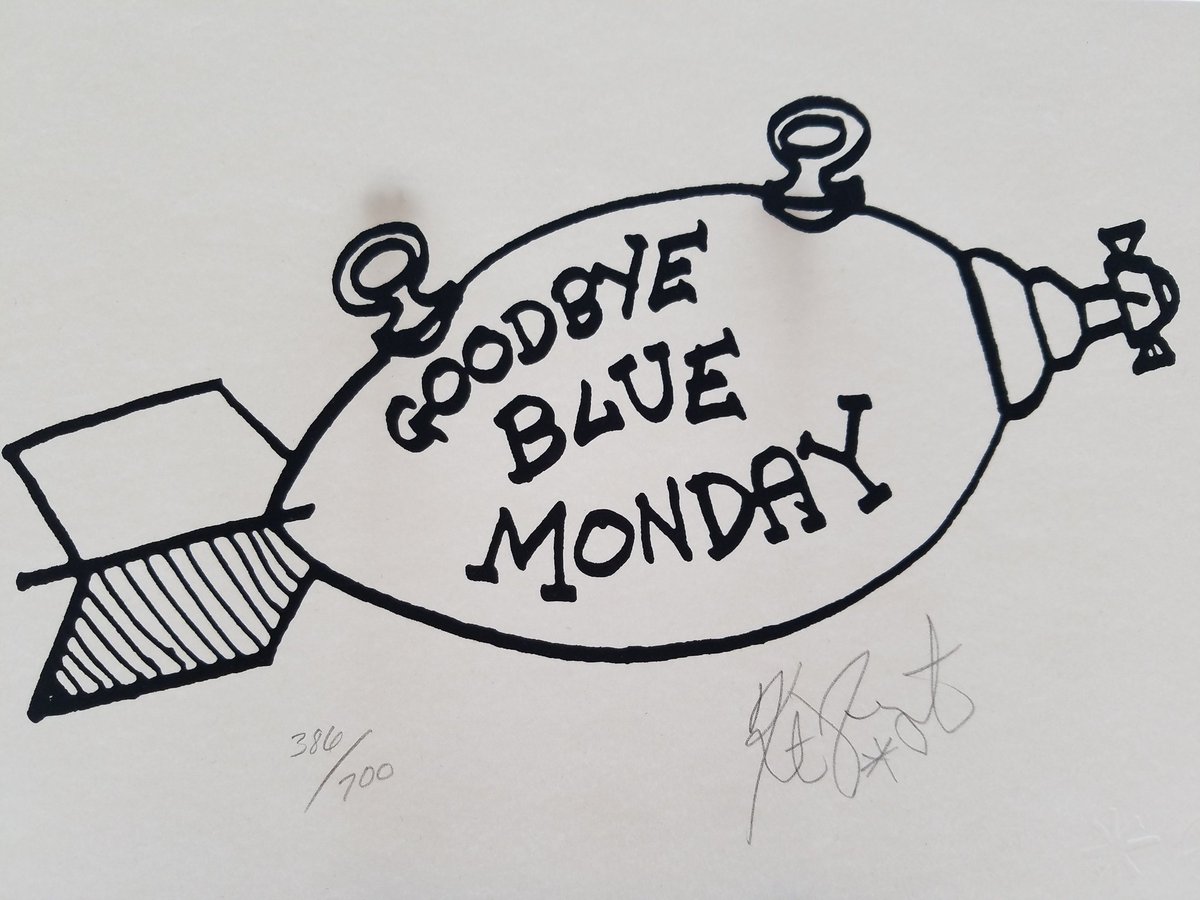
And Ringo Starr edged his way to favorite Beatle status when he tipped his hat to Breakfast of Champions, dedicating his 1973 solo album to “Kilgore Trout and all the beavers.”
There are dozens more we could mention — you’ll find some of them in the playlist below — but without further ado, let’s welcome to the stage Special K and His Crew!
Yes, that’s Phish drummer (and major Vonnegut fan) Jon Fishman on vacuum.
But who’s that mystery front man, spitting Chaucer’s Canterbury Tales?
Happy 100th, Kurt Vonnegut! We’re glad you were born.
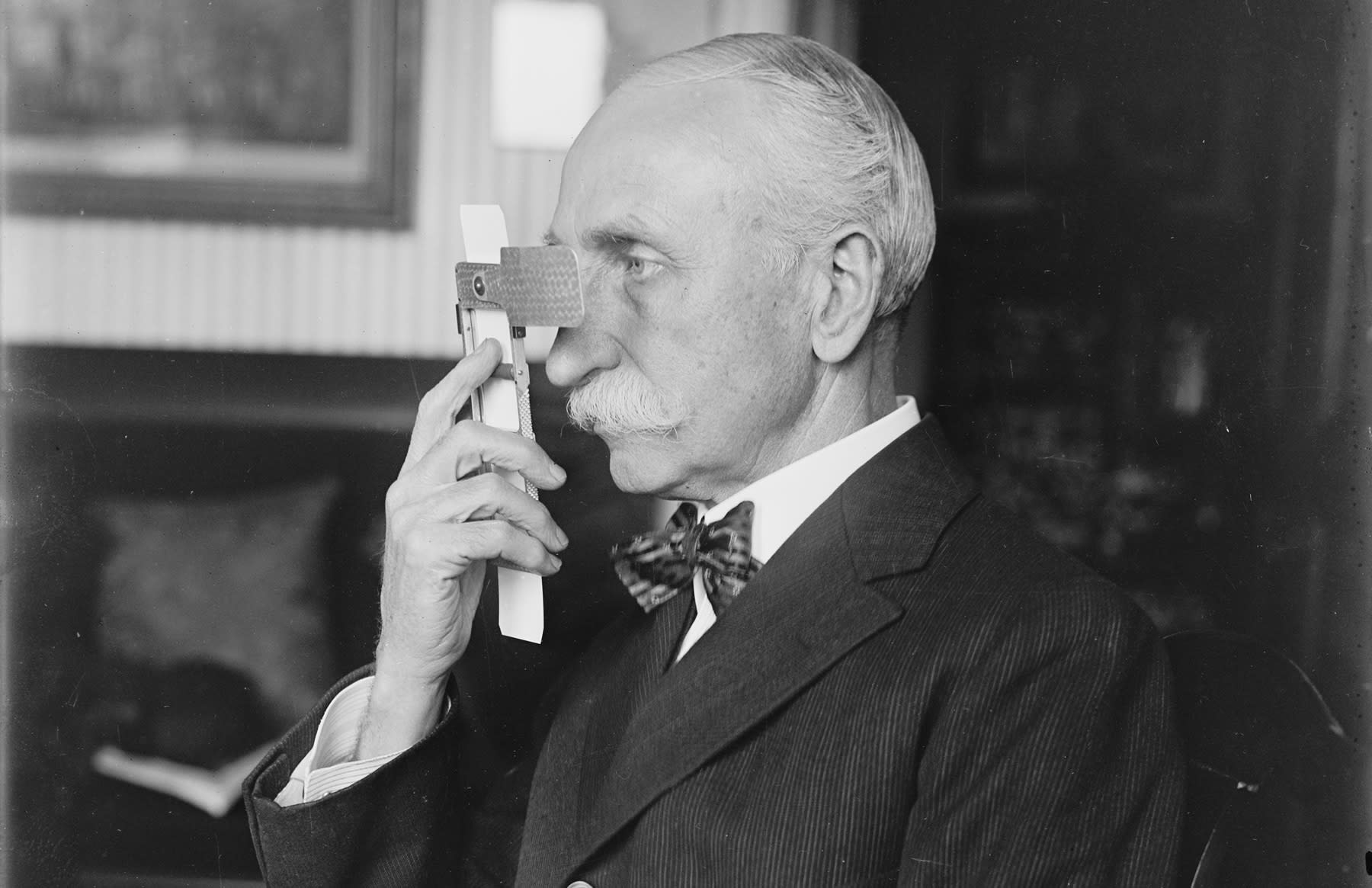
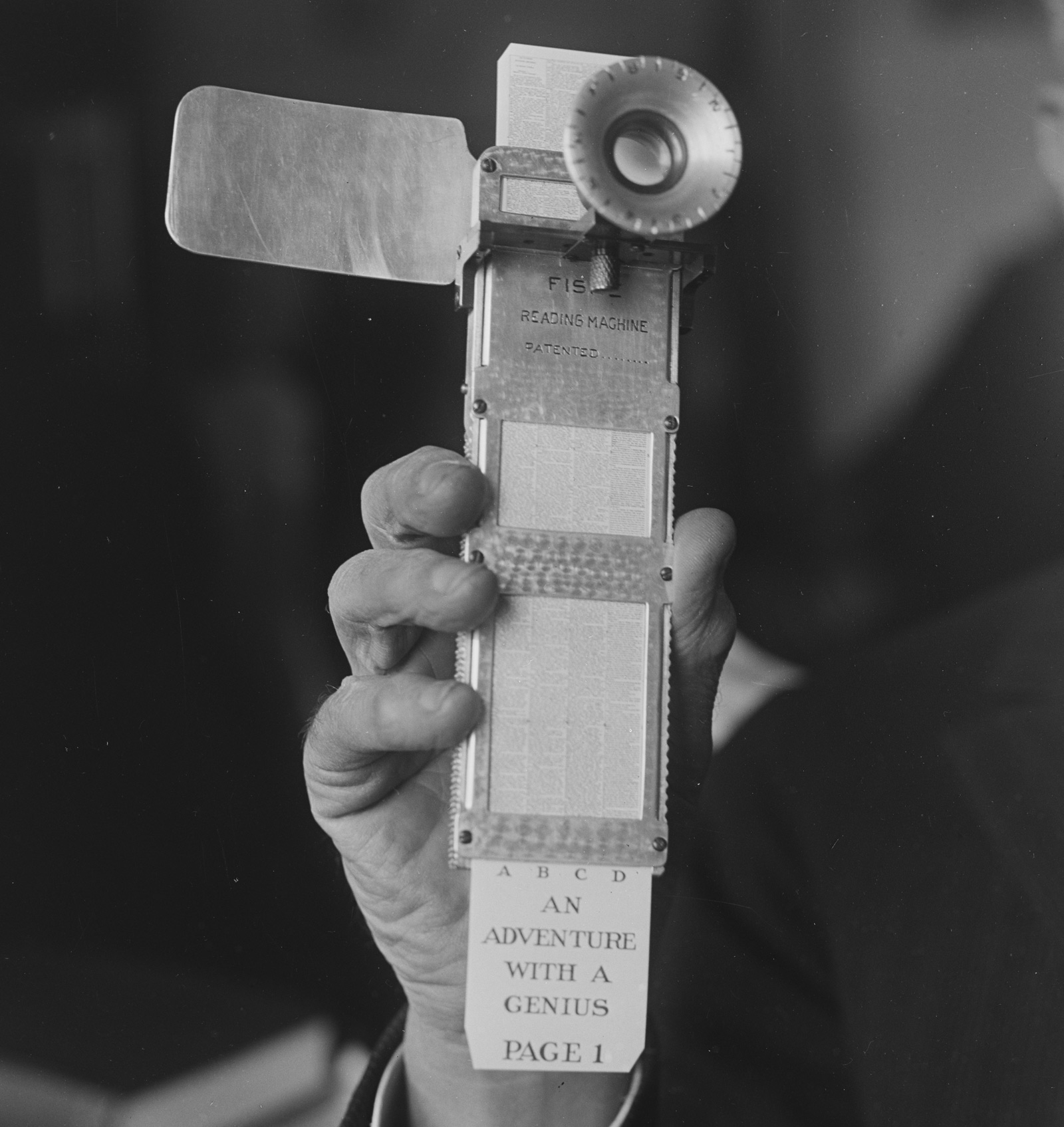
The Sony Librie, the first e‑reader to use a modern electronic-paper screen, came out in 2004. Old as that is in tech years, the basic idea of a handheld device that can store large amounts of text stretches at least eight decades farther back in history. Witness the Fiske Reading Machine, an invention first profiled in a 1922 issue of Scientific American. “The instrument, consisting of a tiny lens and a small roller for operating this eyepiece up and down a vertical column of reading-matter, is a means by which ordinary typewritten copy, when photographically reduced to one-hundredth of the space originally occupied, can be read with quite the facility that the impression of conventional printing type is now revealed to the unaided eye,” writes author S. R. Winters.
Making books compatible with the Fiske Reading Machine involved not digitization, of course, but miniaturization. According to the patents filed by inventor Bradley Allen Fiske (eleven in all, between 1920 and 1935), the text of any book could be photo-engraved onto a copper block, reduced ten times in the process, and then printed onto strips of paper for use in the machine, which would make them readable again through a magnifying lens. A single magnifying lens, that is: “A blinder, attached to the machine, can be operated in obstructing the view of the unused eye.” (Winters adds that “the use of both eyes will doubtless involve the construction of a unit of the reading machine more elaborate than the present design.”)
“Fiske believed he had single-handedly revolutionized the publishing industry,” writes Engadget’s J. Rigg. “Thanks to his ingenuity, books and magazines could be produced for a fraction of their current price. The cost of materials, presses, shipping and the burden of storage could also be slashed. He imagined magazines could be distributed by post for next to nothing, and most powerfully, that publishing in his format would allow everyone access to educational material and entertainment no matter their level of income.” Considering how the relationship between readers and reading material ultimately evolved, thanks not to copper blocks and magnifiers and tiny strips of paper but to computers and the internet, it seems that Fiske was a man ahead of his time.
Alas, the Fiske Reading Machine itself was just on the wrong side of technological history. Even as Fiske was refining its design, “microfilm was beginning to catch on,” and “while it initially found its feet in the business world — for keeping record of cancelled checks, for example — by 1935 Kodak had begun publishing The New York Times on 35mm microfilm.” Despite the absolute prevalence that format soon attained in the world of archiving, “the appetite for miniaturized novels and handheld readers never materialized in the way Fiske had imagined.” Nor, surely, could he have imagined the form the digital, electronic-paper-screened, and slim yet hugely capacious form that the e‑reader would have to take before finding success in the marketplace — yet somehow without quite displacing the paper book as even he knew it.
Based in Seoul, Colin Marshall writes and broadcasts on cities, language, and culture. His projects include the Substack newsletterBooks on Cities, the book The Stateless City: a Walk through 21st-Century Los Angeles and the video series The City in Cinema. Follow him on Twitter at @colinmarshall or on Facebook.
Even by the extreme standards of dystopian fiction, the premise of Ray Bradbury’s Fahrenheit 451can seem a little absurd. Firemen whose job is to set fires? A society that bans all books? Written less than a decade after the fall of the Third Reich, which announced its evil intentions with book burnings, the novel explicitly evokes the kind of totalitarianism that seeks to destroy culture—and whole peoples—with fire. But not even the Nazis banned all books. Not a few academics and writers survived or thrived in Nazi Germany by hewing to the ideological orthodoxy (or at least not challenging it), which, for all its terrifying irrationalism, kept up some semblance of an intellectual veneer.
The novel also recalls the Soviet variety of state repression. But the Party apparatus also allowed a publishing industry to operate, under its strict constraints. Nonetheless, Soviet censorship is legendary, as is the survival of banned literature through self-publishing and memorization, vividly represented by the famous line in Mikhail Bulgokov’s The Master and Margarita, “Manuscripts don’t burn.”
Bulgakov, writes Nathaniel Rich at Guernica, is saying that “great literature… is fireproof. It survives its critics, its censors, and even the passage of time.” Bulgakov wrote from painful experience. When his diary was discovered by the NKVD in 1929, then returned to him, he “promptly burned it.” Sometime afterward, during the long composition of his posthumously published novel, he burned the manuscript, then later reconstructed it from memory.
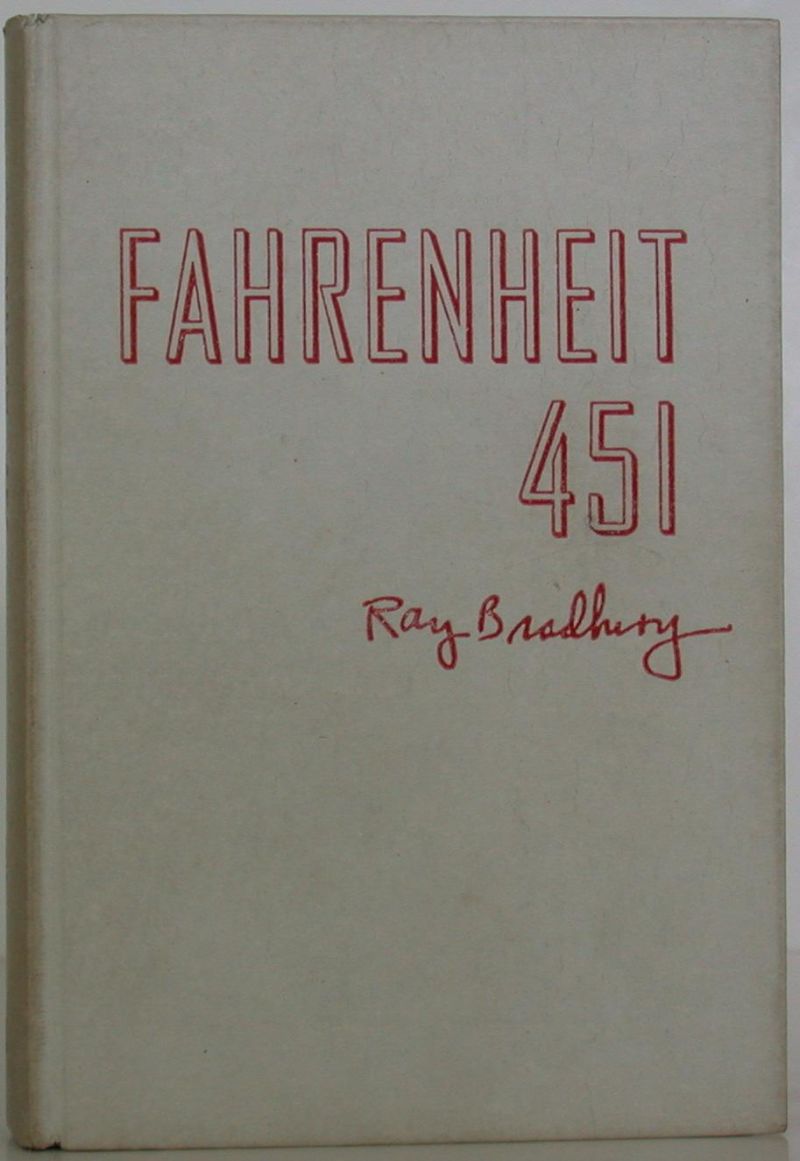
These examples bring to mind the exiled intellectuals in Bradbury’s novel, who have memorized whole books in order to one day reconstruct literary culture. Europe’s totalitarian regimes provide essential background for the novel’s plot and imagery, but its key context, Bradbury himself noted in a 1956 radio interview, was the anti-Communist paranoia of the U.S. in the early 1950s. “Too many people were afraid of their shadows,” he said, “there was a threat of book burning. Many of the books were being taken off the shelves at that time.” Reading the novel as a chilling vision of a future when all books are banned and burned makes the artifact pictured above particularly poignant—an edition of Fahrenheit 451 bound in fireproof asbestos.
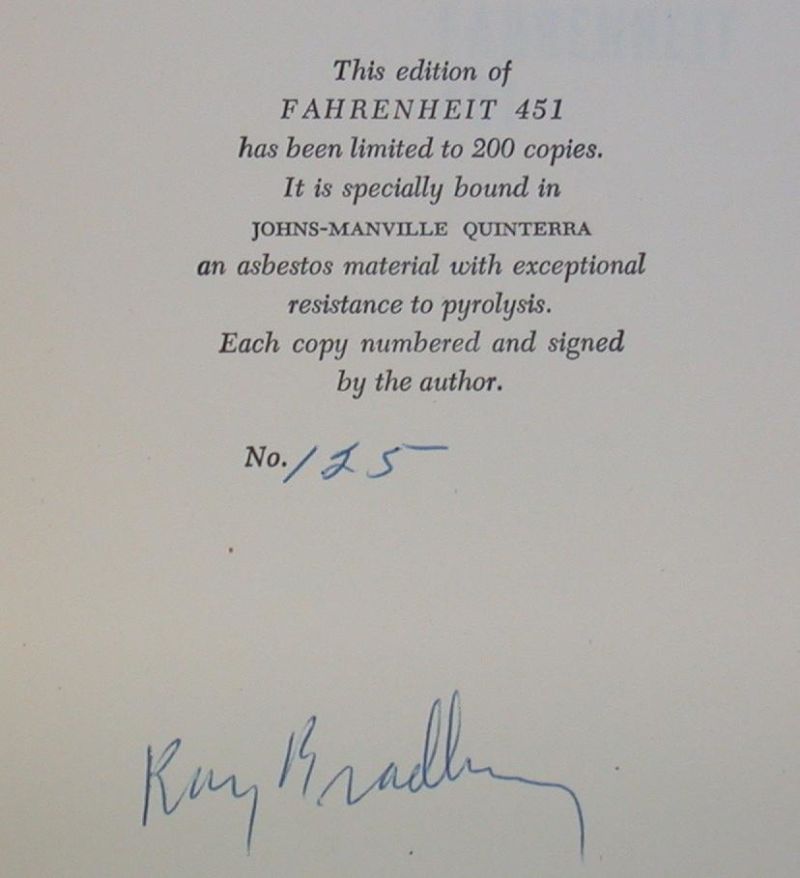
Released in 1953 by Ballantine in a limited run of two-hundred signed copies, the books were “bound in Johns-Manville Qinterra,” notes Lauren Davis at io9, “a chrysolite asbestos material.” Now the fireproof covers, with their “exceptional resistance to pyrolysis,” are “much sought after by collectors” and go for upwards of $20,000. A fireproof Fahrenheit 451, on the one hand, can seem a little gimmicky (its pages still burn, after all). But it’s also the perfect manifestation of a literal interpretation of the novel as a story about banning and book burning. All of us who have read the novel have likely read it this way, as a vision of a repressive totalitarian nightmare. As such, it feels like a product of mid-twentieth century fears.
Rather than fearing mass book burnings, we seem, in the 21st century, on the verge of being washed away in a sea of information (and dis- and mis-information). We are inundated with writing—in print and online—such that some of us despair of ever finding time to read the accumulating piles of books and articles that daily surround us, physically and virtually. But although books are still published in the millions, with sales rising, falling, then rising again, the number of people who actually read seems in danger of rapidly diminishing. And this, Bradbury also said, was his real fear. “You don’t have to burn books to destroy a culture,” he claimed, “just get people to stop reading them.”
We’ve misread Fahrenheit 451, Bradbury told us in his later years. It is an allegory, a symbolic representation of a grossly dumbed-down society, hugely oppressive and destructive in its own way. The firemen are not literal government agents but symbolic of the forces of mass distraction, which disseminate “factoids,” lies, and half-truths as substitutes for knowledge. The novel, he said, is actually about people “being turned into morons by TV.” Add to this the proliferating amusements of the online world, video games, etc. and we can see Bradbury’s Fahrenheit 451not as a dated representation of 40s fascism or 50s repression, but as a too-relevant warning to a distractible society that devalues and destroys education and factual knowledge even as we have more access than ever to literature of every kind.
We're hoping to rely on loyal readers, rather than erratic ads. Please click the Donate button and support Open Culture. You can use Paypal, Venmo, Patreon, even Crypto! We thank you!
Open Culture scours the web for the best educational media. We find the free courses and audio books you need, the language lessons & educational videos you want, and plenty of enlightenment in between.