Above, we have the menu for an 1899 Thanksgiving dinner at the Plaza Hotel in New York. If you were a turkey, you had it relatively easy. But the ducks? Not so much. On the menu, you’ll find Mallard duck and Ruddy duck. But also Red-head duck, Long Island duckling, Teal duck and Canvas-back duck, too. A duck in NYC was not a good place to be.
And, oh, those prices! Not one item above a few dollars. But let’s account for inflation, shall we? In 2021, one Redditor noted: “I found a calculator and it turns out that $.30 in 1899 equals $10.00 now. The Fried oyster crabs would be $24.99 now and a Philadelphia chicken would be $66.65. So, the cheapest thing on the menu is Sweet buttermilk for $.10, but today would be $3.33.”
For our U.S. readers, enjoy your holiday tomorrow…
You might know Winsor McCay (1867? ‑1934) for the gorgeously surreal Little Nemo comic strip or for his early animated short Gertie the Dinosaur(1914). But did you know that he also created some of the earliest examples of animated propaganda ever?
On May 7, 1915, the RMS Lusitania was just off the coast of Ireland, heading towards its destination of Liverpool, when a German U‑boat attacked the ship without warning. Eighteen minutes after two torpedoes slammed into the ship, it was under water. 1,198 died. The furor over the incident eventually led to the United States entering WWI.
At the time of the sinking, McCay was employed by William Randolph Hearst as an editorial cartoonist. Though McCay was incensed by the attack, Hearst was an isolationist and demanded that he draw anti-war cartoons. This grated on the artist more and more until finally he decided to follow up on his hugely successful Gertie the Dinosaur by making The Sinking of the Lusitania (1918), which you can see above.
The movie took two years of painstaking effort to make and consisted of over 25,000 drawings—all done by hand and most done by McCay himself during his free time after work.
Compared to other animation done around this time, the film is both stark and serious, lending it the air of a documentary. The piece, which isn’t much shorter than the actual time it took for the Lusitania to sink, gives a blow-by-blow account of the attack. Though the incident is depicted largely from afar, as if from a camera on another ship, McCay doesn’t shy away from showing some really gut-wrenching moments of the tragedy up close. At one point, there is a shot of a desperate mother trying to keep her baby above the waves. At another point, dozens of people are seen bobbing in the choppy seas like driftwood.
And, just in case you haven’t quite grasped the thrust of the film, McCay includes some intertitles, which are, even by the standards of war propaganda, pretty heavy-handed.
The babe that clung to his mother’s breast cried out to the world – TO AVENGE the most violent cruelty that was ever perpetrated upon an unsuspecting and innocent people.
And
The man who fired the shot was decorated for it by the Kaiser! – AND YET THEY TELL US NOT TO HATE THE HUN.
The curious thing about the movie, considering its subject matter, is how beautiful it is. Just look at the stylized lines of the ocean, the baroque arabesques of the smoke coming off the ship’s smokestacks, the elegant use of negative space. Each and every cel of the movie is worthy of getting framed. How many war propaganda movies can you say that about?
Actor George Takei was once best known as Star Trek’s Mr. Sulu. He still is, of course, but over the last couple decades his friendly, intelligent, and wickedly funny presence on social media has landed him a new popular role as a civil liberties advocate. Takei’s activist passion is informed not only by his status as a gay man, but also by his childhood experiences. At the age of 5, Takei was rounded up with his American-born parents and taken to a Japanese internment camp in Arkansas, where he would live for the next three years. In an interview with Democracy Now, Takei spoke frankly about this history:
We’re Americans…. We had nothing to do with the war. We simply happened to look like the people that bombed Pearl Harbor. But without charges, without trial, without due process—the fundamental pillar of our justice system—we were summarily rounded up, all Japanese Americans on the West Coast, where we were primarily resident, and sent off to 10 barb wire internment camps—prison camps, really, with sentry towers, machine guns pointed at us—in some of the most desolate places in this country.
Takei and his family were among over 100,000 Japanese-Americans—over half of whom were U.S. citizens—interned in such camps.
Into one of these camps, Manzanar, located in the foothills of the Sierra Nevadas, celebrated photographer Ansel Adams managed to gain entrance through his friendship with the warden. Adams took over 200 photographs of life inside the camp.
In 1965, he donated his collection to the Library of Congress, writing in a letter, “The purpose of my work was to show how these people, suffering under a great injustice, and loss of property, business and professions, had overcome the sense of defeat and dispair [sic] by building for themselves a vital community in an arid (but magnificent) environment.”
Adams had another purpose as well—as scholar of the period Frank H. Wu describes it—“to document some aspects of the internment camp that the government didn’t want to have shown.” These include “the barbed wire, and the guard towers, and the armed soldiers.” Prohibited from documenting these control mechanisms directly, the photographer “captured them in the background, in shadows,” says Wu: “In some of the photos when you look you can see just faintly that he’s taking a photo of something, but in front of the photo you can see barbed wire, or on the ground you can see the shadow of barbed wire. Some of the photos even show the blurry outline of a soldier’s shadow.”
The photographs document the daily activities of the internees—their work and leisure routines, and their struggles to maintain some semblance of normalcy while living in hastily constructed barracks in the harshest of conditions.
Though the landscape, and its climate, could be desolate and unforgiving, it was also, as Adams couldn’t help but notice, “magnificent.” The collection includes several wide shots of stretches of mountain range and sky, often with prisoners staring off longingly into the distance. But the majority of the photos are of the internees—men, women, and children, often in close-up portraits that show them looking variously hopeful, happy, saddened, and resigned.
You can view the entire collection at the Library of Congress’ online catalog. Adams also published about 65 of the photographs in a book titled Born Free and Equal: The Story of Loyal Japanese Americans in 1944. The collection represents an important part of Adams’ work during the period. But more importantly, it represents events in U.S. history that should never be forgotten or denied.
Note: An earlier version of this post appeared on our site in 2015.
New York isn’t the oldest city in the United States of America, and it certainly isn’t the newest. But it is, quite possibly, the American city where more layers of history coexist than any other, a quality that manifests most vividly in its built environment. Even the most casual tourist can sense the sheer variety of time periods embodied in the buildings around them on, say, a stroll down Broadway — one of the streets featured in the ten-part walking tour compiled in the new Architectural Digest video above. As a whole, it offers a two-hour journey through the city beginning in Central Park and ending on Wall Street.
In between come on-foot examinations of everything from the fin-de-siècle “apartment hotels” of the Upper West Side to the recently built “super-tall” residential towers of West 57th Street to the developments atop the buried Grand Central Station to the disused industrial railway now known — and imitated around the world — as a linear park called the High Line.
Tend though longtime New Yorkers may to regard each part of the city as more or less a nation unto itself, a perspective with a bit more distance reveals signs of the never-ending social, economic, and aesthetic exchange between them: an important factor in how the use of and role played by even the city’s most august structures has been subject to change after unanticipated change.
Helping us to understand all this are architects Michael Wyetzner and Nick Potts, both professionally well placed to explain both the big picture of New York’s evolution and the significance of the various oddities and eccentricities on its streets. Even an architectural layman would take impressed notice while passing, say, the mansions once inhabited by Alexander Hamilton and Aaron Burr; the jagged bunker that has housed the Whitney Museum of American Art, the Met Breuer, and Frick Madison; the impossibly skinny-looking skyscrapers of the so-called “Billionaire’s Row”; or the Dakota, John Lennon’s final residence. But to learn what such buildings have to tell us about the history and nature of New York, we must look at them, as another famous rock star once sang, thru’ these architects’ eyes.
Based in Seoul, Colin Marshall writes and broadcasts on cities, language, and culture. His projects include the Substack newsletterBooks on Cities and the book The Stateless City: a Walk through 21st-Century Los Angeles. Follow him on the social network formerly known as Twitter at @colinmarshall.
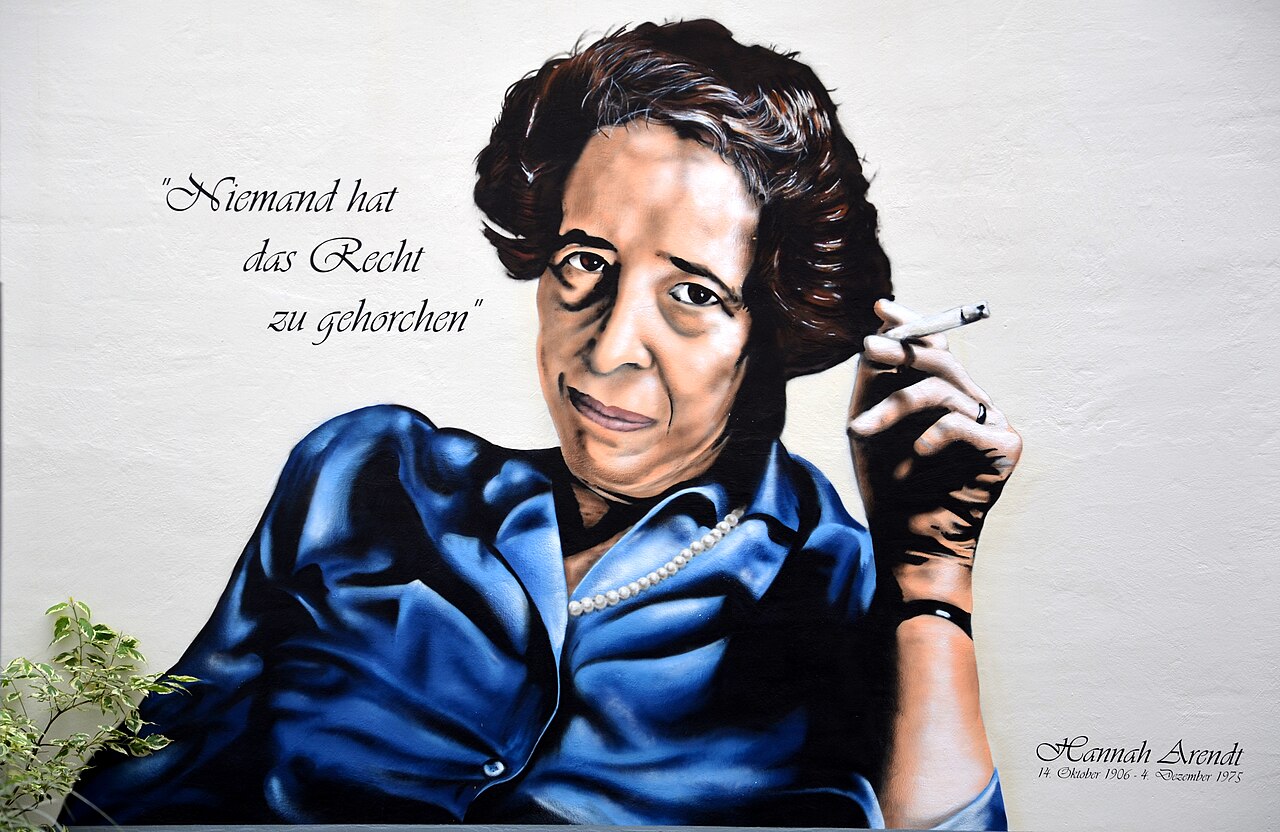
Whether or not we believe that the cards of the tarot have supernatural powers, we all think of them primarily as tools for divination. It might seem as if they’ve played that cultural role since time immemorial, but in fact, that particular use only goes back to the eighteenth century. They were, at first, playing cards, used for a game known as tarocchi in Renaissance Italy. That was the original purpose of the oldest tarot cards in possession of the Victoria and Albert Museum, which you can see unboxed by curator Ruth Hibbard in the video above. Throughout its fifteen minutes, Hibbard and two colleagues also “unbox” five other decks produced across the half-millennium of tarot history.
These include the early eighteenth-century Minchiate Deck, whose name refers to a slightly more complex Florentine card game that evolved alongside tarot. The word itself possibly originates from the term sminchiare, “to play your highest card” (though in Sicilian dialect today, it has a rather different meaning).
Later, circa 1807, comes Le Petit Oracle des Dames, “the petite oracle of women,” the earliest deck in the video expressly produced for cartomancy, or prediction of the future through cards — albeit only as a form of light entertainment for gatherings of ladies. A decade or two later, out came the luxurious Tarocco Soprafino, which bears lavish illustrations made with copper-plate engraving and colored stenciling.
The V&A also has an early twentieth-century tarot deck with rich, lively art created by the occultist Pamela Colman-Smith, whose work has previously been featured here on Open Culture. “What makes these cards so great is that they’re just so rich with mythology and symbology and multilayered meaning,” says curator Beckie Billingham, “allowing you to read the cards in many different ways.” That’s even true of the much more thematically deliberate deck that follows, an example from the early two-thousands that brings into our digital century the mission of tarot art to “reveal clandestine knowledge and the hidden powers at work in the world.” Computers, drones, Aldous Huxley, world wars, the World Wide Web: perhaps these cards let us see our future, but they certainly give us a clear view on our present.
Based in Seoul, Colin Marshall writes and broadcasts on cities, language, and culture. His projects include the Substack newsletterBooks on Cities and the book The Stateless City: a Walk through 21st-Century Los Angeles. Follow him on the social network formerly known as Twitter at @colinmarshall.
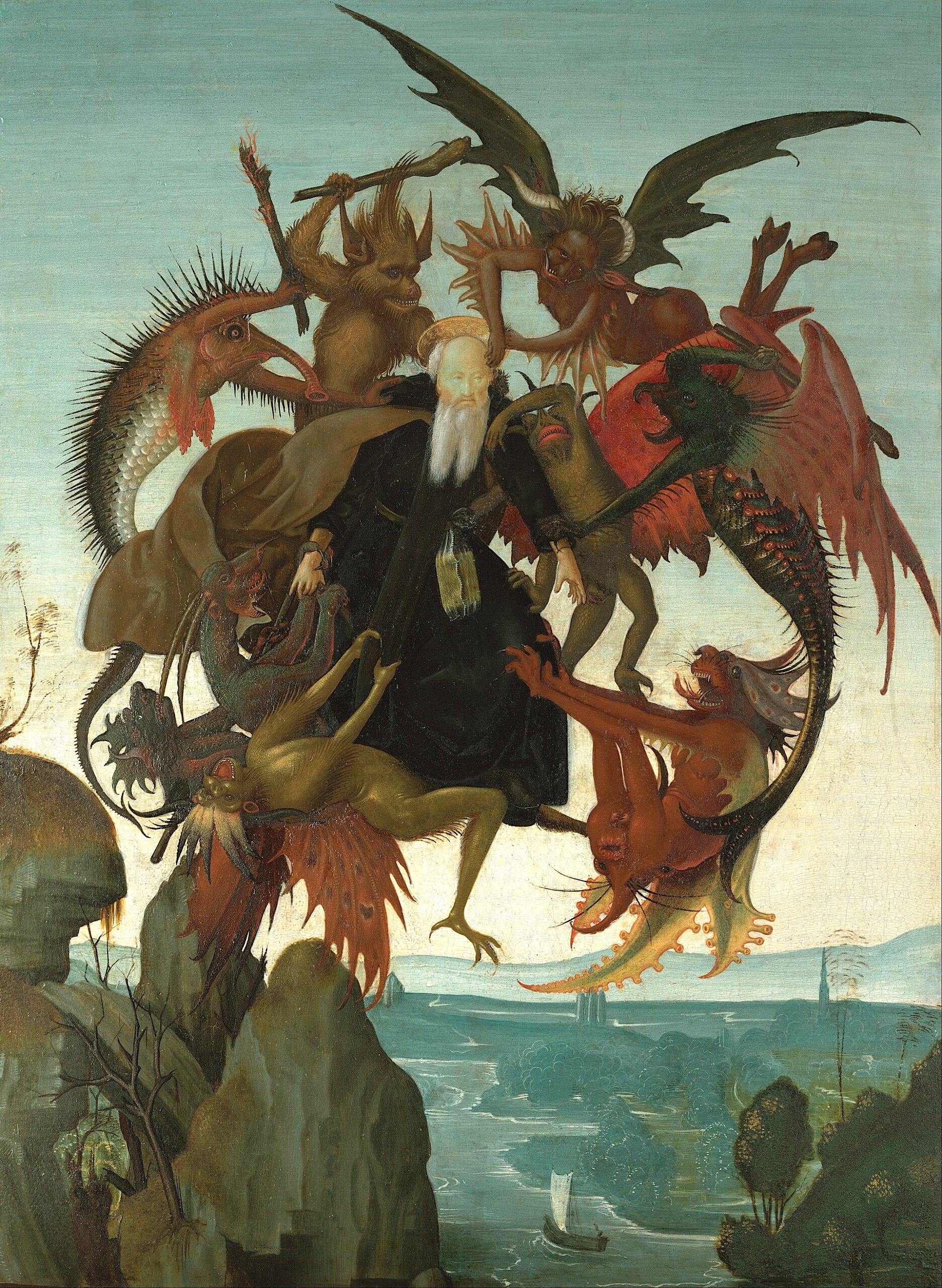
Everyone in ancient Rome wore togas, surrounded themselves with pure-white marble statues, bayed for blood as gladiators fought to the death in the Colosseum, programmatically imitated the Greeks, and, after each and every debaucherous feast, excused themselves to the vomitoria, where they ritually vacated their stomachs. Or at least that’s the picture any of us here in the twenty-first century might piece together out of the impressions we happen to receive from a steady flow of sword-and-sandals movies and TV shows — not to mention the countless references that popular culture makes to the Roman Empire, which inevitably make their way into the consciousness even of those of us who don’t think about it every day.
In the new, almost 80-minute Big Think interview above, Mary Beard explains some of the ways in which we’ve been “picturing ancient Rome all wrong.” The ancient Romans lived in a world in which men kissed each other as a standard greeting (at least until a massive outbreak of herpes put a stop to it it), statuary was painted in all manner of garish colors (though just how garish remains a matter of scholarly inquiry), citizens rich enough to wear togas needed the assistance of slaves even to get dressed in the morning, and Greece took cultural influence as well as gave it. These may not yet be features of the Rome we imagine, but they could be if we make a habit of listening to Beard’s new podcast Instant Classics.
Whatever liberties they take, the depictions of the Roman Empire that entertain us today also remind us that, as Beard puts it, “Rome has never gone away in the modern world.” Nowhere is that clearer than in ever-more-frequent discussions about the fate of modern global powers. If we look at our surroundings and see Rome, perhaps that’s because the Eternal City has “given us an image of what it is to be powerful, what it is to be larger than life, what it is to be funny, what it is to be an empire, so it’s provided many of the building blocks we need to think about ourselves.” Even if we’re not the modern equivalents of Augustus, Virgil, Cicero, or even Nero — to name a few of the Romans Beard name as, for better or worse, the most important — we could all stand to make our image of Roman life a little more realistic.
Based in Seoul, Colin Marshall writes and broadcasts on cities, language, and culture. His projects include the Substack newsletterBooks on Cities and the book The Stateless City: a Walk through 21st-Century Los Angeles. Follow him on the social network formerly known as Twitter at @colinmarshall.
Even today, the Paris of the popular imagination is, for the most part, the Paris envisioned by Baron Georges-Eugène Haussmann and made a reality in the eighteen-fifties and sixties. Not that he could order the city built whole: as explained by Manuel Bravo in the new video above, Paris had already existed for about two millennia, growing larger, denser, and more intricate all the while. But as the prefect under Emperor Napoleon III, Haussmann was empowered to carve it up by force, opening “dozens of wide, long avenues that connected important parts of the city,” a layout that “mirrored the street system in Rome created 300 years earlier by Pope Sixtus V, but on a much grander scale.”
However considerable the violence it did to medieval Paris, this process of “Haussmannization” showed a certain historical consciousness. After all, the French capital was once a Roman city: Lutetia Parisorum, named for the Parisii, the Gallic tribe that had inhabited the island in the middle of the Seine that Parisians now call Île de la Cité.
As was their usual modus operandi, the conquering Romans laid a cardo maximus running from north to south, today known as Rue Saint-Jacques. Thereafter, “the rest of the original layout was lost to organic growth.” In the form Paris eventually took in the Middle Ages, “there were no public urban spaces of major significance”: no Place Dauphine, no Place des Vosges, no Place Vendôme.
Those very same Parisian squares now enjoyed by locals and tourists alike did much to develop the expectation of “aesthetic unity” in the city’s built environment, and a couple of centuries before Haussmann at that. It may not be a complete exaggeration to call Paris frozen in the Baron’s mid-nineteenth century, but as Bravo explains, a close examination of both the city’s celebrated spaces and overall form reveals the ways in which a much deeper past has done its part to shape or inspire them. An enthusiast of urban history can spend weeks, months, or even years appreciating the details that remind us that the palimpsest of Paris has never quite been overwritten, even in a place as unrelentingly examined — if seldom truly seen — as the Louvre.
Based in Seoul, Colin Marshall writes and broadcasts on cities, language, and culture. His projects include the Substack newsletterBooks on Cities and the book The Stateless City: a Walk through 21st-Century Los Angeles. Follow him on the social network formerly known as Twitter at @colinmarshall.

You’ve likely heard the reason people never smile in very old photographs. Early photography could be an excruciatingly slow process. With exposure times of up to 15 minutes, portrait subjects found it impossible to hold a grin, which could easily slip into a pained grimace and ruin the picture. A few minutes represented a marked improvement on the time it took to make the very first photograph, Nicéphore Niépce’s 1826 “heliograph.” Capturing the shapes of light and shadow outside his window, Niépce’s image “required an eight-hour exposure,” notes the Christian Science Monitor, “long enough that the sunlight reflects off both sides of the buildings.”
Niépce’s business and inventing partner is much more well-known: Louis Jacques Mandé Daguerre, who went on after Niépce’s death in 1833 to develop the Daguerreotype process, patenting it in 1839. That same year, the first selfie was born. And the year prior Daguerre himself took what most believe to be the very first photograph of a human, in a street scene of the Boulevard du Temple in Paris. The image shows us one of Daguerre’s early successful attempts at image-making, in which, writes NPR’s Robert Krulwich, “he exposed a chemically treated metal plate for ten minutes. Others were walking or riding in carriages down that busy street that day, but because they moved, they didn’t show up.”
Visible, however, in the lower left quadrant is a man standing with his hands behind his back, one leg perched on a platform. A closer look reveals the fuzzy outline of the person shining his boots. A much finer-grained analysis of the photograph shows what may be other, less distinct figures, including what looks like two women with a cart or pram, a child’s face in a window, and various other passersby. The photograph marks a historically important period in the development of the medium, one in which photography passed from curiosity to revolutionary technology for both artists and scientists.
Although Daguerre had been working on a reliable method since the 1820s, it wasn’t until 1838, the Metropolitan Museum of Art explains, that his “continued experiments progressed to the point where he felt comfortable showing examples of the new medium to selected artists and scientists in the hope of lining up investors.” Photography’s most popular 19th century use—perhaps then as now—was as a means of capturing faces. But Daguerre’s earliest plates “were still life compositions of plaster casts after antique sculpture,” lending “the ‘aura’ of art to pictures made by mechanical means.” He also took photographs of shells and fossils, demonstrating the medium’s utility for scientific purposes.
If portraits were perhaps less interesting to Daguerre’s investors, they were essential to his successors and admirers. Candid shots of people moving about their daily lives as in this Paris street scene, however, proved next to impossible for several more decades. What was formerly believed to be the oldest such photograph, an 1848 image from Cincinnati, shows what appears to be two men standing at the edge of the Ohio River. It seems as though they’ve come to fetch water, but they must have been standing very still to have appeared so clearly. Photography seemed to stop time, freezing a static moment forever in physical form. Blurred images of people moving through the frame expose the illusion. Even in the stillest, stiffest of images, there is movement, an insight Eadweard Muybridge would make central to his experiments in motion photography just a few decades after Daguerre debuted his world-famous method.
Note: An earlier version of this post appeared on our site in 2017.
We're hoping to rely on loyal readers, rather than erratic ads. Please click the Donate button and support Open Culture. You can use Paypal, Venmo, Patreon, even Crypto! We thank you!
Open Culture scours the web for the best educational media. We find the free courses and audio books you need, the language lessons & educational videos you want, and plenty of enlightenment in between.
