In 1922, a Novelist Predicts What the World Will Look Like in 2022: Wireless Telephones, 8‑Hour Flights to Europe & More

A cen­tu­ry ago, the pop­u­lar Eng­lish nov­el­ist W.L. George sat down and put his mind to envi­sion­ing the world we live in today. That world has not, alas, turned out to be one in which his books are much read, but in his day a great many read­ers were moved by his social cause-dri­ven fic­tion and reportage. One might com­pare him to Upton Sin­clair, his con­tem­po­rary on the oth­er side of the Atlantic. In the Paris-born-and-raised George’s ances­tral home­land, George Orwell described him as an author of what G.K. Chester­ton called “good bad books,” sin­gling out for praise his 1920 nov­el Cal­iban amid the “shod­dy rub­bish” of his wider oeu­vre.

Still even authors of rub­bish — and per­haps espe­cial­ly authors of rub­bish — can sense the shape of things to come. For its edi­tion of May 7, 1922, the New York Her­ald com­mis­sioned George to share that sense with their read­ers. In response he described a world in which “com­mer­cial fly­ing will have become entire­ly com­mon­place,” reduc­ing the sep­a­ra­tion of Amer­i­ca and Europe to eight hours, and whose pas­sen­ger steam­ers and rail­roads will have con­se­quent­ly fall­en into obso­les­cence. “Wire­less teleg­ra­phy and wire­less tele­phones will have crushed the cable sys­tem,” result­ing in gen­er­a­tions who’ll nev­er have seen “a wire out­lined against the sky.”

That goes for the trans­mis­sion of elec­tric­i­ty as well, since George cred­its (a bit hasti­ly, it seems) the pos­si­bil­i­ty of wire­less pow­er sys­tems of the kind researched by Niko­la Tes­la. In 2022, coal will take a dis­tant back­seat to the tides, the sun, and radi­um, and “it may also be that atom­ic ener­gy will be har­nessed.” As for the cin­e­ma, “the fig­ures on the screen will not only move, but they will have their nat­ur­al col­ors and speak with ordi­nary voic­es. Thus, the stage as we know it to-day may entire­ly dis­ap­pear, which does not mean the doom of art, since the movie actress of 2022 will not only need to know how to smile but also how to talk.”

Oth­er women, how­ev­er, have proven just as capa­ble as George had imag­ined: “All posi­tions will be open to them and a great many women will have risen high. The year 2022 will prob­a­bly see a large num­ber of women in Con­gress, a great many on the judi­cial bench, many in civ­il ser­vice posts, and per­haps some in the Pres­i­den­t’s Cab­i­net.” Georges fore­sees the birth-con­trol pill, but also the “pill lunch.” Unlike some reform­ers, he hes­i­tates to declare the abo­li­tion of the fam­i­ly, but he does imag­ine the “major­i­ty of mankind” occu­py­ing mod­u­lar homes in high-rise com­mu­nal dwellings (“I have a vision of walls, fur­ni­ture, and hang­ings made of more or less com­pressed papi­er-mâché”), all gath­ered in cli­mate-con­trolled cities set under glass.

On the whole, in 2022, “the advance­ment of sci­ence will be amaz­ing, but it will be noth­ing like so amaz­ing as is the present day in rela­tion to a hun­dred years ago.” Indeed, he sus­pects that a glimpse of our real­i­ty would­n’t much sur­prise “the lit­tle girl who sells can­dies at Grand Cen­tral Sta­tion.” It could even be dull, what with com­plete set­tle­ment and devel­op­ment leav­ing “no more oppor­tu­ni­ty in Amer­i­ca than there is in Eng­land to-day.” In 1922, George could write that “in fic­tion, Amer­i­ca leads the world by sin­cer­i­ty, faith and fear­less­ness,” and believe that “in 2022 Amer­i­can lit­er­a­ture will be a lit­er­a­ture of cul­ture. The bat­tle will be over and the muz­zle off. There will be no more things one can’t say, and things one can’t think.” What­ev­er the inspi­ra­tions of his prophe­cy, they must not have told him about social media.

You can find a copy of George’s orig­i­nal arti­cle over at the Library of Con­gress.

If you would like to sign up for Open Culture’s free email newslet­ter, please find it here. It’s a great way to see our new posts, all bun­dled in one email, each day.

If you would like to sup­port the mis­sion of Open Cul­ture, con­sid­er mak­ing a dona­tion to our site. It’s hard to rely 100% on ads, and your con­tri­bu­tions will help us con­tin­ue pro­vid­ing the best free cul­tur­al and edu­ca­tion­al mate­ri­als to learn­ers every­where. You can con­tribute through Pay­Pal, Patre­on, and Ven­mo (@openculture). Thanks!

via Messy Nessy

Relat­ed Con­tent:

In 1953, a Tele­phone-Com­pa­ny Exec­u­tive Pre­dicts the Rise of Mod­ern Smart­phones and Video Calls

Jules Verne Accu­rate­ly Pre­dicts What the 20th Cen­tu­ry Will Look Like in His Lost Nov­el, Paris in the Twen­ti­eth Cen­tu­ry (1863)

In 1900, Ladies’ Home Jour­nal Pub­lish­es 28 Pre­dic­tions for the Year 2000

Futur­ist from 1901 Describes the World of 2001: Opera by Tele­phone, Free Col­lege & Pneu­mat­ic Tubes Aplen­ty

In 1911, Thomas Edi­son Pre­dicts What the World Will Look Like in 2011: Smart Phones, No Pover­ty, Libraries That Fit in One Book

In 1926, Niko­la Tes­la Pre­dicts the World of 2026

9 Sci­ence-Fic­tion Authors Pre­dict the Future: How Jules Verne, Isaac Asi­mov, William Gib­son, Philip K. Dick & More Imag­ined the World Ahead

Based in Seoul, Col­in Mar­shall writes and broad­casts on cities and cul­ture. His projects include the book The State­less City: a Walk through 21st-Cen­tu­ry Los Ange­les and the video series The City in Cin­e­ma. Fol­low him on Twit­ter at @colinmarshall or on Face­book.

Jon Hamm Narrates a Modernized Version of Plato’s Allegory of the Cave, Helping to Diagnose Our Social Media-Induced Narcissism

The Matrix gave a gen­er­a­tion or two rea­son to recon­sid­er, or indeed first to con­sid­er, Pla­to’s alle­go­ry of the cave. That era-defin­ing block­buster’s cav­al­cade of slick visu­al effects came deliv­ered atop a plot about human­i­ty’s hav­ing been enslaved — plugged into a colos­sal machine, as I recall, like an array of liv­ing bat­ter­ies — while con­vinced by a direct-to-brain sim­u­la­tion that it was­n’t. Here in real life, about two and a half mil­len­nia ear­li­er, one of Pla­to’s dia­logues had con­jured up a not-dis­sim­i­lar sce­nario. You can see it retold in the video above, a clip drawn from a form as rep­re­sen­ta­tive of the ear­ly 21st cen­tu­ry as The Matrix’s was of the late 20th: Legion, a dra­mat­ic tele­vi­sion series based on a com­ic book.

“Imag­ine a cave, where those inside nev­er see the out­side world,” says nar­ra­tor Jon Hamm (him­self an icon of our Gold­en Age of Tele­vi­sion, thanks to his lead per­for­mance in Mad Men). “Instead, they see shad­ows of that world pro­ject­ed on the cave wall. The world they see in the shad­ows is not the real world, but it’s real to them. If you were to show them the world as it actu­al­ly is, they would reject it as incom­pre­hen­si­ble.” Then, Hamm sug­gests trans­pos­ing this rela­tion­ship to real­i­ty into life as we know it — or rather, as we two-dimen­sion­al­ly per­ceive it on the screens of our phones. But “unlike the alle­go­ry of the cave, where the peo­ple are real and the shad­ows are false, here oth­er peo­ple are the shad­ows.”

This prop­a­gates “the delu­sion of the nar­cis­sist, who believes that they alone are real. Their feel­ings are the only feel­ings that mat­ter, because oth­er peo­ple are just shad­ows, and shad­ows don’t feel.” And “if every­one lived in caves, then no one would be real. Not even you.” With the rise of dig­i­tal com­mu­ni­ca­tion in gen­er­al and social media in par­tic­u­lar, a great many of us have ensconced our­selves, by degrees and for the most part uncon­scious­ly, inside caves of our own. Over the past decade or so, increas­ing­ly sober­ing glimpses of the out­side world have moti­vat­ed some of us to seek diag­noses of our col­lec­tive con­di­tion from thinkers of the past, such as social the­o­rist Christo­pher Lasch.

“The new nar­cis­sist is haunt­ed not by guilt but by anx­i­ety,” Lasch writes The Cul­ture of Nar­cis­sism. “Lib­er­at­ed from the super­sti­tions of the past, he doubts even the real­i­ty of his own exis­tence” — won­ders, in oth­er words, whether he isn’t one of the shad­ows him­self. Nev­er­the­less, he remains “facile at man­ag­ing the impres­sions he gives to oth­ers, rav­en­ous for admi­ra­tion but con­temp­tu­ous of those he manip­u­lates into pro­vid­ing it,” and depen­dent on “con­stant infu­sions of approval and admi­ra­tion.” Social media has revealed traces of this per­son­al­i­ty, belong­ing to one who “sees the world as a mir­ror of him­self and has no inter­est in exter­nal events except as they throw back a reflec­tion of his own image,” in us all. It thus gives us pause to remem­ber that Lasch was writ­ing all this in the 1970s; but then, Pla­to was writ­ing in the fifth cen­tu­ry B.C.

Relat­ed Con­tent:

Hear John Malkovich Read Plato’s “Alle­go­ry of the Cave,” Set to Music Mixed by Ric Ocasek, Yoko Ono & Sean Lennon, OMD & More

Two Ani­ma­tions of Plato’s Alle­go­ry of the Cave: One Nar­rat­ed by Orson Welles, Anoth­er Made with Clay

Plato’s Cave Alle­go­ry Ani­mat­ed Mon­ty Python-Style

New Ani­ma­tion Explains Sher­ry Turkle’s The­o­ries on Why Social Media Makes Us Lone­ly

The Case for Delet­ing Your Social Media Accounts & Doing Valu­able “Deep Work” Instead, Accord­ing to Com­put­er Sci­en­tist Cal New­port

A 1947 French Film Accu­rate­ly Pre­dict­ed Our 21st-Cen­tu­ry Addic­tion to Smart­phones

Based in Seoul, Col­in Mar­shall writes and broad­casts on cities and cul­ture. His projects include the book The State­less City: a Walk through 21st-Cen­tu­ry Los Ange­les and the video series The City in Cin­e­ma. Fol­low him on Twit­ter at @colinmarshall or on Face­book.

Explore the New 717-Gigapixel Scan of Rembrandt’s The Night Watch, the Most Detailed Photo Ever Taken of a Work of Art

Film­mak­er and seri­ous Rem­brandt enthu­si­ast Peter Green­away once called The Night Watch the most famous paint­ing in the West­ern world, behind the Mona Lisa, The Last Sup­per, and the ceil­ing of the Sis­tine Chapel. But if the resources devot­ed to its scruti­ny are any­thing to go by, the Dutch mas­ter­work has been gain­ing on those oth­er three in recent years. Can any work of Leonar­do or Michelan­ge­lo, for exam­ple, boast of hav­ing been dig­i­tized at a res­o­lu­tion of 717 gigapix­els, as the Rijksmu­se­um has just done with The Night Watch?

In fact, no oth­er work of art in exis­tence has ever been the sub­ject of such a large and detailed pho­to­graph. Each of its 717,000,000,000 pix­els, says the Rijksmu­se­um’s site, “is small­er than a human red blood cell.”

This neces­si­tat­ed the use of “a 00-megapix­el Has­sel­blad H6D 400 MS-cam­era to make 8439 indi­vid­ual pho­tos mea­sur­ing 5.5cm x 4.1cm. Arti­fi­cial intel­li­gence was used to stitch these small­er pho­tographs togeth­er to form the final large image, with a total file size of 5.6 ter­abytes.” You may remem­ber arti­fi­cial intel­li­gence also hav­ing played a role in the recon­struc­tion of the paint­ing’s miss­ing sec­tions, pre­vi­ous­ly fea­tured here on Open Cul­ture.

The result far sur­pass­es the dig­i­tal ver­sion of The Night Watch made avail­able by the Rijksmu­se­um in 2020, itself high-res­o­lu­tion enough to allow view­ers to zoom in to see the paint­ing’s every indi­vid­ual brush stroke. (It even out­does last year’s 10-bil­lion-pix­el scan of Girl with a Pearl Ear­ring, the best-known work by Rem­brandt’s fel­low Dutch mas­ter Johannes Ver­meer.) Now, writes Colos­sal’s Grace Ebert, you can see all the way down to “the cracked tex­ture of the paint, brush­strokes, and slight pig­ment vari­a­tions that wouldn’t be vis­i­ble even if you were stand­ing in front of the work itself.”

380 years after Rem­brandt paint­ed it, The Night Watch remains almost unique­ly strik­ing in its employ­ment of con­trast­ing shad­ow and light, all in ser­vice of a large-scale com­po­si­tion at once life­like and some­how more vivid than real­i­ty. This dig­i­ti­za­tion and the AI-assist­ed com­ple­tion are both arts of “Oper­a­tion Night Watch,” the thor­ough­go­ing restora­tion project now under­way at the Rijksmu­se­um, which will make all the ele­ments of that com­po­si­tion more imme­di­ate­ly vis­i­ble than they’ve been in gen­er­a­tions.

But the ques­tion of how, exact­ly, Rem­brandt achieved such pow­er­ful effects can be answered only through rig­or­ous exam­i­na­tion of each and every detail, an activ­i­ty open to all on the 717-gigapix­el scan at the Rijksmu­se­um’s site.

via Colos­sal

Relat­ed Con­tent:

What Makes The Night Watch Rembrandt’s Mas­ter­piece

Enter an Online Inter­ac­tive Doc­u­men­tary on Rembrandt’s The Night Watch and Learn About the Painting’s Many Hid­den Secrets

The Long-Lost Pieces of Rembrandt’s Night Watch Get Recon­struct­ed with Arti­fi­cial Intel­li­gence

The Restora­tion of Rembrandt’s The Night Watch Begins: Watch the Painstak­ing Process On-Site and Online

Late Rem­brandts Come to Life: Watch Ani­ma­tions of Paint­ings Now on Dis­play at the Rijksmu­se­um

A 10 Bil­lion Pix­el Scan of Vermeer’s Mas­ter­piece Girl with a Pearl Ear­ring: Explore It Online

Based in Seoul, Col­in Mar­shall writes and broad­casts on cities and cul­ture. His projects include the book The State­less City: a Walk through 21st-Cen­tu­ry Los Ange­les and the video series The City in Cin­e­ma. Fol­low him on Twit­ter at @colinmarshall or on Face­book.

In 1953, a Telephone-Company Executive Predicts the Rise of Modern Smartphones and Video Calls

We live in the age of the smart­phone, which took more than a few of us by sur­prise. But in all human his­to­ry, not a sin­gle piece of tech­nol­o­gy has actu­al­ly come out of nowhere. Long before smart­phones came on the mar­ket in the 2000s, those close to the telecom­mu­ni­ca­tions indus­try had a sense of what form its most wide­ly used device would even­tu­al­ly take. “Here is my prophe­cy: In its final devel­op­ment, the tele­phone will be car­ried about by the indi­vid­ual, per­haps as we car­ry a watch today,” said Pacif­ic Tele­phone and Tele­graph Com­pa­ny direc­tor Mark R. Sul­li­van in 1953. “It prob­a­bly will require no dial or equiv­a­lent and I think the users will be able to see each oth­er, if they want, as they talk. Who knows but it may actu­al­ly trans­late from one lan­guage to anoth­er?”

Sul­li­van’s pre­scient-sound­ing words sur­vive in the clip­ping of the Asso­ci­at­ed Press arti­cle seen at the top of the post. It’s worth remem­ber­ing that the speech in ques­tion dates from a time when the rotary phone was the most advanced per­son­al com­mu­ni­ca­tion device in Amer­i­can house­holds.

Just three years ear­li­er, writes KQED’s Rae Alexan­dra, Sul­li­van “appeared in the San Fran­cis­co Exam­in­er talk­ing about the lat­est inno­va­tions in tele­phone tech­nol­o­gy. The advance­ment he was most proud of was a new device about the size of a small type­writer that auto­mat­i­cal­ly cal­cu­lat­ed how long people’s phone calls were.” How­ev­er log­i­cal, pock­et tele­phones with video-call­ing and trans­la­tion capa­bil­i­ties would then have struck many as the stuff of sci­ence fic­tion.

Though born before the time of house­hold elec­tri­fi­ca­tion, Sul­li­van him­self lived just long enough to see the debut of the first com­mer­cial cell­phone  “The Motoro­la DynaT­AC 8000X was def­i­nite­ly not watch-sized and cost a whop­ping $3,995 in 1983 (about $11,000 today),” writes Alexan­dra, “but Sul­li­van might have seen this devel­op­ment as a step towards his long-ago vision — a sign that every one of his 1953 pre­dic­tions would even­tu­al­ly come to fruition.” As print­ed in the Taco­ma News Tri­bune, the AP arti­cle con­vey­ing those pre­dic­tions to the pub­lic appeared under the head­line “There’ll Be No Escape in Future from Tele­phones,” which sounds even more chill­ing today — in that very future — than it did near­ly 70 years ago. But then, even the visions of actu­al sci­ence fic­tion are sel­dom whol­ly untrou­bled.

Relat­ed Con­tent:

A 1947 French Film Accu­rate­ly Pre­dict­ed Our 21st-Cen­tu­ry Addic­tion to Smart­phones

Niko­la Tesla’s Pre­dic­tions for the 21st Cen­tu­ry: The Rise of Smart Phones & Wire­less, The Demise of Cof­fee, The Rule of Eugen­ics (1926/35)

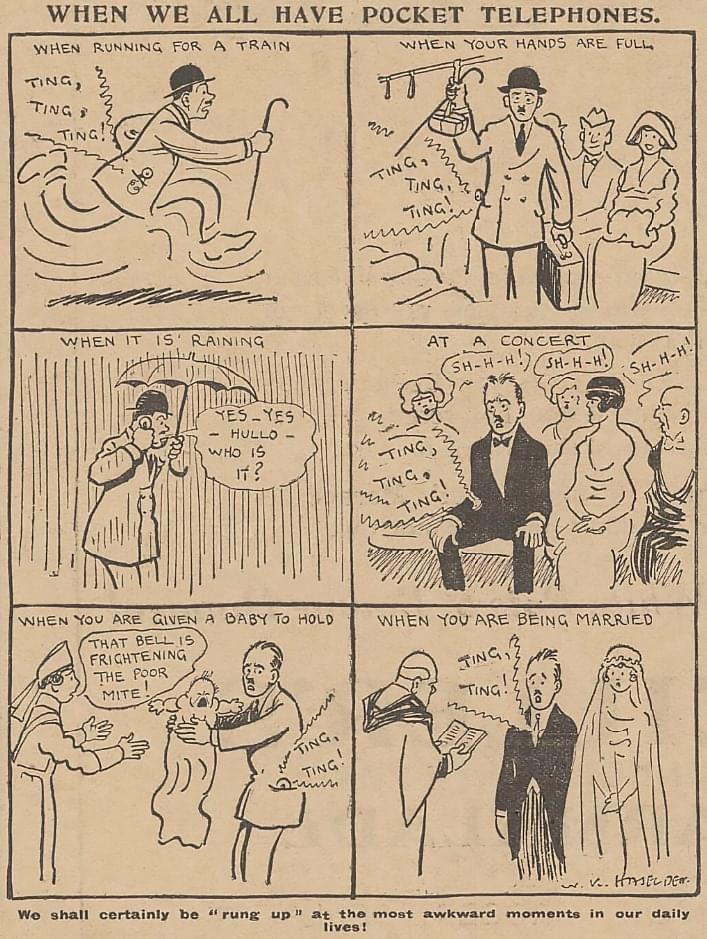
When We All Have Pock­et Tele­phones (1923)

In 1911, Thomas Edi­son Pre­dicts What the World Will Look Like in 2011: Smart Phones, No Pover­ty, Libraries That Fit in One Book

Lyn­da Bar­ry on How the Smart­phone Is Endan­ger­ing Three Ingre­di­ents of Cre­ativ­i­ty: Lone­li­ness, Uncer­tain­ty & Bore­dom

Film­mak­er Wim Wen­ders Explains How Mobile Phones Have Killed Pho­tog­ra­phy

Based in Seoul, Col­in Mar­shall writes and broad­casts on cities and cul­ture. His projects include the book The State­less City: a Walk through 21st-Cen­tu­ry Los Ange­les and the video series The City in Cin­e­ma. Fol­low him on Twit­ter at @colinmarshall or on Face­book.

The Amazing Engineering of James Webb Telescope

If you want to see the cur­rent height of tech­nol­o­gy, you could do worse than tak­ing a look at the James Webb Space Tele­scope. Mil­lions have been doing just that over the past few weeks, giv­en that this past Christ­mas Day wit­nessed the launch of that ten-bil­lion-dol­lar NASA project a decade in the mak­ing. As the suc­ces­sor to the now-ven­er­a­ble Hub­ble Space Tele­scope, the JWST is designed to go much far­ther into out­er space and thus see much fur­ther back in time, poten­tial­ly to the for­ma­tion of the first galax­ies. If all goes well, it will give us what the Real Engi­neer­ing video above calls a glimpse of the “ear­ly uni­verse from which we and every­thing we know was born.”

But one does not sim­ply glance sky­ward to see back 13.5 bil­lion years. No, “the com­bi­na­tion of tech­nolo­gies required to make the James Webb tele­scope pos­si­ble are unique to this time peri­od in human his­to­ry.” These include the heat shield that will unfold to pro­tect its sen­si­tive com­po­nents from the heat of the sun, to the onboard cry­ocool­er that main­tains the mid-infrared detec­tion instru­ment (which itself will enable the view­ing of many more stars and galax­ies than pre­vi­ous tele­scopes) at a cool sev­en degrees Kelvin, to the array of gold-coat­ed beryl­li­um mir­rors that can pick up unprece­dent­ed amounts of light.

How­ev­er com­pli­cat­ed the JWST’s devel­op­ment and launch, “the tru­ly nerve-wrack­ing process begins on day sev­en,” says the Real Engi­neer­ing video’s nar­ra­tor. At that point, with the satel­lite find­ing its pre­cise­ly deter­mined posi­tion 1.5 mil­lion kilo­me­ters from Earth, the heat shield begins unfold­ing, and “there are over 300 sin­gle points of fail­ure in this unfold­ing sequence: 300 chances for a ten bil­lion-dol­lar, 25-year project to end.” With that process under­way as of this writ­ing, the teeth of the pro­jec­t’s engi­neers are no doubt firm­ly embed­ded in their nails.

As it plays out, also-ner­vous fans of space explo­ration (who’ve had much to get excit­ed about in recent years) might con­sid­er dis­tract­ing them­selves with the above episode of Neil DeGrasse Tyson’s StarTalk. In it Tyson has in-depth dis­cus­sions about the JWST’s con­cep­tion, pur­pose, and poten­tial with both NASA astronomer Natal­ie Batal­ha and film­mak­er Nathaniel Kahn, whose doc­u­men­tary The Hunt for Plan­et B exam­ines the JWST team’s “quest to find anoth­er Earth among the stars.” But let’s not get ahead of our­selves: even if the shield deploys with­out a hitch, there remains the not-untricky process of unfold­ing those mir­rors. What we see through the tele­scope will no doubt change our ideas about human­i­ty’s place in the uni­verse — but if it func­tions as planned, we’ll have good rea­son to be pleased with human com­pe­tence.

Relat­ed Con­tent:

The Beau­ty of Space Pho­tog­ra­phy

Free Inter­ac­tive e‑Books from NASA Reveal His­to­ry, Dis­cov­er­ies of the Hub­ble & Webb Tele­scopes

How Sci­en­tists Col­orize Those Beau­ti­ful Space Pho­tos Tak­en By the Hub­ble Space Tele­scope

Van Gogh’s ‘Star­ry Night’ Re-Cre­at­ed by Astronomer with 100 Hub­ble Space Tele­scope Images

NASA Enlists Andy Warhol, Annie Lei­bovitz, Nor­man Rock­well & 350 Oth­er Artists to Visu­al­ly Doc­u­ment America’s Space Pro­gram

Based in Seoul, Col­in Mar­shall writes and broad­casts on cities and cul­ture. His projects include the book The State­less City: a Walk through 21st-Cen­tu­ry Los Ange­les and the video series The City in Cin­e­ma. Fol­low him on Twit­ter at @colinmarshall or on Face­book.

An AI Computer Watched Hitchcock’s Vertigo 20 Times & Then Made Its Own Disturbing Movie

If you could watch only one movie, Alfred Hitch­cock­’s Ver­ti­go would hard­ly be the worst choice. Its con­tain­ment and expres­sion of such a range of cin­e­ma’s pos­si­bil­i­ties sure­ly did its part to bring it to the top spot on Sight & Sound’s most recent crit­ics’ poll of the great­est films of all time. But what if Ver­ti­go was all you knew of the entire world? Such is the case with the arti­fi­cial-intel­li­gence sys­tem used by artist Chris Peters to cre­ate “Ver­ti­go A.I.,” the short film above. As the sys­tem repeat­ed­ly “watched” Ver­ti­go over a two-day peri­od, says Peters’ offi­cial site, the artist “record­ed the machine’s neur­al net­work form­ing in real time — the ‘movie expe­ri­ence’ — made man­i­fest.”

This expe­ri­ence is a five-minute film, “not footage in the tra­di­tion­al sense of pho­tographed scenes, but footage of the inter­nal expe­ri­ence of a new intel­li­gence learn­ing about our world for the first time.” As for what we hear, “a sep­a­rate A.I. was used to write a nar­ra­tion for the record­ings. Giv­en a few lines of dia­logue from Ver­ti­go, the machine gen­er­at­ed sen­tences that went off on their own wild tan­gents.”

After about thir­ty sec­onds, any cinephile will rec­og­nize the visu­al source mate­r­i­al. As for the “sto­ry” told over the images, one can only imag­ine what process­es the cho­sen pieces of Ver­ti­go’s screen­play went through in the mind of the machine. “In the dream, I was in a room with a fig­ure,” begins the nar­ra­tor. “He was tall and cov­ered in white.”

Dreams make for noto­ri­ous­ly dull sub­ject mat­ter, but then, the endur­ing appeal of cin­e­ma has long been explained through its abil­i­ty to trans­port us into a state not at all dis­sim­i­lar from dream­ing. Ver­ti­go in par­tic­u­lar, as Sight & Sound edi­tor Nick James puts it, is “a dream-like film about peo­ple who are not sure who they are but who are busy recon­struct­ing them­selves and each oth­er to fit a kind of cin­e­ma ide­al of the ide­al soul-mate.” 27 spots below it on the mag­a­zine’s crit­ics’ poll comes Mul­hol­land Dri­ve by David Lynch, a film sim­i­lar­ly praised for its com­pelling but elu­sive sto­ry and its images seem­ing­ly pulled straight from the uncon­scious. Suit­ably, “Ver­ti­go A.I.” has some­thing more than a lit­tle Lynchi­an about it, mak­ing one won­der how the A.I. would han­dle Lynch’s fil­mog­ra­phy — and how we would han­dle the result.

via Aeon

Relat­ed Con­tent:

Mar­tin Scors­ese Intro­duces Clas­sic Movies: From Cit­i­zen Kane and Ver­ti­go to Lawrence of Ara­bia and Gone with the Wind

Gaze at Glob­al Movie Posters for Hitchcock’s Ver­ti­go: U.S., Japan, Italy, Poland & Beyond

Aban­doned Alter­nate Titles for Two Great Films: Kubrick’s Dr. Strangelove and Hitchcock’s Ver­ti­go

Watch “Sun­spring,” the Sci-Fi Film Writ­ten with Arti­fi­cial Intel­li­gence, Star­ring Thomas Mid­dled­itch (Sil­i­con Val­ley)

Watch Bri­an Eno’s Exper­i­men­tal Film “The Ship,” Made with Arti­fi­cial Intel­li­gence

Based in Seoul, Col­in Mar­shall writes and broad­casts on cities and cul­ture. His projects include the book The State­less City: a Walk through 21st-Cen­tu­ry Los Ange­les and the video series The City in Cin­e­ma. Fol­low him on Twit­ter at @colinmarshall or on Face­book.

How Peter Jackson Used Artificial Intelligence to Restore the Video & Audio Featured in The Beatles: Get Back

Much has been made in recent years of the “de-aging” process­es that allow actors to cred­i­bly play char­ac­ters far younger than them­selves. But it has also become pos­si­ble to de-age film itself, as demon­strat­ed by Peter Jack­son’s cel­e­brat­ed new docu-series The Bea­t­les: Get Back. The vast major­i­ty of the mate­r­i­al that com­pris­es its near­ly eight-hour run­time was orig­i­nal­ly shot in 1969, under the direc­tion of Michael Lind­say-Hogg for the doc­u­men­tary that became Let It Be.

Those who have seen both Lin­day-Hog­g’s and Jack­son’s doc­u­men­taries will notice how much sharp­er, smoother, and more vivid the very same footage looks in the lat­ter, despite the six­teen-mil­lime­ter film hav­ing lan­guished for half a cen­tu­ry. The kind of visu­al restora­tion and enhance­ment seen in Get Back was made pos­si­ble by tech­nolo­gies that have only emerged in the past few decades — and pre­vi­ous­ly seen in Jack­son’s They Shall Not Grow Old, a doc­u­men­tary acclaimed for its restora­tion of cen­tu­ry-old World War I footage to a time-trav­el-like degree of verisimil­i­tude.

“You can’t actu­al­ly just do it with off-the-shelf soft­ware,” Jack­son explained in an inter­view about the restora­tion process­es involved in They Shall Not Grow Old. This neces­si­tat­ed mar­shal­ing, at his New Zealand com­pa­ny Park Road Post Pro­duc­tion, “a depart­ment of code writ­ers who write com­put­er code in soft­ware.” In oth­er words, a suf­fi­cient­ly ambi­tious project of visu­al revi­tal­iza­tion — mak­ing media from bygone times even more life­like than it was to begin with — becomes as much a job of tra­di­tion­al film-restora­tion or visu­al-effects as of com­put­er pro­gram­ming.

This also goes for the less obvi­ous but no-less-impres­sive treat­ment giv­en by Jack­son and his team to the audio that came with the Let It Be footage. Record­ed in large part monau­ral­ly, these tapes pre­sent­ed a for­mi­da­ble pro­duc­tion chal­lenge. John, Paul, George, and Ringo’s instru­ments share a sin­gle track with their voic­es — and not just their singing voic­es, but their speak­ing ones as well. On first lis­ten, this ren­ders many of their con­ver­sa­tions inaudi­ble, and prob­a­bly by design: “If they were in a con­ver­sa­tion,” said Jack­son, they would turn their amps up loud and they’d strum the gui­tar.”

This means of keep­ing their words from Lind­say-Hogg and his crew worked well enough in the whol­ly ana­log late 1960s, but it has proven no match for the arti­fi­cial intelligence/machine learn­ing of the 2020s. “We devised a tech­nol­o­gy that is called demix­ing,” said Jack­son. “You teach the com­put­er what a gui­tar sounds like, you teach them what a human voice sounds like, you teach it what a drum sounds like, you teach it what a bass sounds like.” Sup­plied with enough son­ic data, the sys­tem even­tu­al­ly learned to dis­tin­guish from one anoth­er not just the sounds of the Bea­t­les’ instru­ments but of their voic­es as well.

Hence, in addi­tion to Get Back’s rev­e­la­to­ry musi­cal moments, its many once-pri­vate but now crisply audi­ble exchanges between the Fab Four. “Oh, you’re record­ing our con­ver­sa­tion?” George Har­ri­son at one point asks Lind­say-Hogg in a char­ac­ter­is­tic tone of faux sur­prise. But if he could hear the record­ings today, his sur­prise would sure­ly be real.

Relat­ed Con­tent:

Watch Paul McCart­ney Com­pose The Bea­t­les Clas­sic “Get Back” Out of Thin Air (1969)

Peter Jack­son Gives Us an Entic­ing Glimpse of His Upcom­ing Bea­t­les Doc­u­men­tary The Bea­t­les: Get Back

Lennon or McCart­ney? Sci­en­tists Use Arti­fi­cial Intel­li­gence to Fig­ure Out Who Wrote Icon­ic Bea­t­les Songs

Arti­fi­cial Intel­li­gence Pro­gram Tries to Write a Bea­t­les Song: Lis­ten to “Daddy’s Car”

Watch The Bea­t­les Per­form Their Famous Rooftop Con­cert: It Hap­pened 50 Years Ago Today (Jan­u­ary 30, 1969)

How Peter Jack­son Made His State-of-the-Art World War I Doc­u­men­tary They Shall Not Grow Old: An Inside Look

Based in Seoul, Col­in Mar­shall writes and broad­casts on cities and cul­ture. His projects include the book The State­less City: a Walk through 21st-Cen­tu­ry Los Ange­les and the video series The City in Cin­e­ma. Fol­low him on Twit­ter at @colinmarshall or on Face­book.

Stephen Fry Takes Us Inside the Story of Johannes Gutenberg & the First Printing Press

Stephen Fry loves tech­nol­o­gy. Here on Open Cul­ture we’ve fea­tured his inves­ti­ga­tions into every­thing from cloud com­put­ing to nanoscience to arti­fi­cial intel­li­gence and sim­u­la­tion the­o­ry. “I have nev­er seen a smart­phone I haven’t bought,” he wrote in 2007, the year Apple’s iPhone came out. But the iPhone would sure­ly nev­er have been if not for the Mac­in­tosh, the third of which ever sold in the Unit­ed King­dom went to Fry. (His fel­low British technophile Dou­glas Adams had already snagged the first two.) And there would­n’t have been a Mac­in­tosh — a stretch though this may seem — if not for the print­ing press, which by some reck­on­ings set off the tech­no­log­i­cal rev­o­lu­tion that car­ries us along to this day.

The his­to­ry of the print­ing press is thus, in a sense, a his­to­ry of tech­nol­o­gy in micro­cosm. In the hour­long doc­u­men­tary The Machine that Made Us, Fry seeks out an under­stand­ing of the inven­tion, the work­ings, and the evo­lu­tion of the device that, as he puts it, “shaped the mod­ern world.”

The use of mov­able type to run off many copies of a text goes back to 11th-cen­tu­ry Chi­na, strict­ly speak­ing, but only in Europe did it first flour­ish to the point of giv­ing rise to mass media. In order to place him­self at the begin­ning of that par­tic­u­lar sto­ry, Fry trav­els to Mainz in mod­ern-day Ger­many, birth­place of a cer­tain Johannes Guten­berg, whose edi­tion of the Bible from the 1450s isn’t just the ear­li­est mass-pro­duced book but the most impor­tant one as well.

Fry may not have a straight­for­ward rela­tion­ship with reli­gion, but he does under­stand well the ram­i­fi­ca­tions of Guten­berg’s Bible-print­ing enter­prise. And he comes to under­stand that enter­prise itself more deeply while fol­low­ing the “Guten­berg trail,” retrac­ing the steps of the man him­self as he assem­bled the resources to put his inven­tion into action. Since none of the press­es Guten­berg built sur­vive today (though at least one func­tion­ing approx­i­mate mod­el does exist), Fry involves him­self in recon­struct­ing an exam­ple. He also vis­its a paper mill and a type foundry whose crafts­men make their mate­ri­als with the same meth­ods used in the 15th cen­tu­ry. The fruit of these com­bined labors is a sin­gle repli­ca page of the Guten­berg Bible: a reminder of what brought about the eco­nom­ic, polit­i­cal, and cul­tur­al real­i­ty we still inhab­it these 570 years lat­er.

Relat­ed Con­tent:

See How The Guten­berg Press Worked: Demon­stra­tion Shows the Old­est Func­tion­ing Guten­berg Press in Action

Oxford Uni­ver­si­ty Presents the 550-Year-Old Guten­berg Bible in Spec­tac­u­lar, High-Res Detail

The Old­est Book Print­ed with Mov­able Type is Not The Guten­berg Bible: Jikji, a Col­lec­tion of Kore­an Bud­dhist Teach­ings, Pre­dat­ed It By 78 Years and It’s Now Dig­i­tized Online

The Art of Col­lo­type: See a Near Extinct Print­ing Tech­nique, as Lov­ing­ly Prac­ticed by a Japan­ese Mas­ter Crafts­man

Stephen Fry Pro­files Six Russ­ian Writ­ers in the New Doc­u­men­tary Russia’s Open Book

Stephen Fry Intro­duces the Strange New World of Nanoscience

Based in Seoul, Col­in Mar­shall writes and broad­casts on cities, lan­guage, and cul­ture. His projects include the Sub­stack newslet­ter Books on Cities, the book The State­less City: a Walk through 21st-Cen­tu­ry Los Ange­les and the video series The City in Cin­e­ma. Fol­low him on Twit­ter at @colinmarshall or on Face­book.

« Go BackMore in this category... »
Quantcast