Why Public Transit Sucks in the United States: Four Videos Tell the Story

Many dif­fer­ent words could describe the state of pub­lic trans­porta­tion in Amer­i­ca today. In recent decades, more and more of a con­sen­sus seems to have set­tled around one word in par­tic­u­lar: that it “sucks.” Giv­en its “anti­quat­ed tech­nol­o­gy, safe­ty con­cerns, crum­bling infra­struc­ture,” and often “nonex­is­tence,” says the nar­ra­tor of the video above, “it’s not hard to argue that the U.S. pub­lic trans­porta­tion net­work is just not good.” That nar­ra­tor, Sam Den­by, is the cre­ator of Wen­dover Pro­duc­tions, a Youtube chan­nel all about geog­ra­phy, tech­nol­o­gy, eco­nom­ics, and the infra­struc­ture where all three inter­sect. He believes not only that Amer­i­ca’s pub­lic tran­sit sucks, but that the coun­try’s “lack of sol­id pub­lic trans­porta­tion almost defines Amer­i­can cul­ture.”

This would make a cer­tain sense in a poor, small, strug­gling coun­try — but not in the Unit­ed States of Amer­i­ca, described not long ago by Anne Apple­baum in the Atlantic as “accus­tomed to think­ing of itself as the best, most effi­cient, and most tech­no­log­i­cal­ly advanced soci­ety in the world.”

As any­one mak­ing their first vis­it will expe­ri­ence, Amer­i­ca’s still-for­mi­da­ble wealth and pow­er does­n’t square with the expe­ri­ence on the ground, or indeed under it: whether by sub­way, bus, or street­car, the task of nav­i­gat­ing most U.S. cities is char­ac­ter­ized by incon­ve­nience, dis­com­fort, and even impos­si­bil­i­ty. This in a coun­try whose pub­lic trans­porta­tion once real­ly was the envy of the world: at the turn of the 20th cen­tu­ry, its cities boast­ed 11,000 miles of street­car track alone.

In the mid-2010s, by Den­by’s reck­on­ing, “the com­bined mileage of every tram, sub­way, light rail, and com­muter rail sys­tem” added up only to 5,416. What hap­pened in the hun­dred or so years between? He cites among oth­er fac­tors the pro­duc­tion of the first wide­ly afford­able auto­mo­biles in the 1920s, and lat­er that of bus­es, with their low­er oper­at­ing costs than street­cars — but as com­mon­ly oper­at­ed today, their low­er-qual­i­ty tran­sit expe­ri­ence as well. (Resent­ment about this large-scale replace­ment of urban street­car sys­tems runs deep enough to make some con­sid­er it a con­spir­a­cy.) The U.S. “grew up as the car grew up, so its cities were built for cars,” espe­cial­ly in its more recent­ly set­tled west. Indi­rect sub­sides low­ered the cost of gas, and from the 1950s the build­ing of the Inter­state High­way Sys­tem made it easy, at least for at time, to com­mute between city and sub­urb.

As point­ed out in the Vox videos “Why Amer­i­can Pub­lic Tran­sit Is So Bad” and “How High­ways Wrecked Amer­i­can Cities,” these mas­sive roads ran not around or under cities (as they do in much of Europe and Asia) but straight through their cen­ters, part of a larg­er process of “urban renew­al” that iron­i­cal­ly destroyed quite a few of what dense urban neigh­bor­hoods the U.S. had. More than half a cen­tu­ry of high­way-build­ing, sub­ur­ban­iza­tion, and strict zon­ing lat­er, most Amer­i­cans find them­selves unable to get where they need to go with­out buy­ing a car and dri­ving them­selves. The sit­u­a­tion is even worse for those trav­el­ing between cities, as exam­ined above in Wen­dover Pro­duc­tions’ “Why Trains Suck in Amer­i­ca.” As an Amer­i­can, I take a cer­tain sat­is­fac­tion in hear­ing these ques­tions addressed — but I take an even greater one in being an Amer­i­can liv­ing abroad.

Relat­ed Con­tent:

A Sub­way Ride Through New York City: Watch Vin­tage Footage from 1905

Design­er Mas­si­mo Vignel­li Revis­its and Defends His Icon­ic 1972 New York City Sub­way Map

Archive of 5,000 Images Doc­u­ment the His­to­ry of San Fran­cis­co and the Vehi­cles That Put It in Motion

Trips on the World’s Old­est Elec­tric Sus­pen­sion Rail­way in 1902 & 1917 Show How a City Changes Over a Cen­tu­ry

A Brief His­to­ry of the Great Amer­i­can Road Trip

Based in Seoul, Col­in Mar­shall writes and broad­casts on cities, lan­guage, and cul­ture. His projects include the Sub­stack newslet­ter Books on Cities, the book The State­less City: a Walk through 21st-Cen­tu­ry Los Ange­les and the video series The City in Cin­e­ma. Fol­low him on Twit­ter at @colinmarshall or on Face­book.

A 10 Billion Pixel Scan of Vermeer’s Masterpiece Girl with a Pearl Earring: Explore It Online

We admire Johannes Ver­meer’s Girl with a Pearl Ear­ring for many rea­sons, not least that it looks exact­ly like a girl with a pearl ear­ring. Or at least it does from a dis­tance, as the mas­ter of light him­self no doubt stepped back to con­firm count­less times dur­ing the paint­ing process, at any moment of which he would have been more con­cerned with the brush­strokes con­sti­tut­ing only a small part of the image. But even Ver­meer him­self could have per­ceived only so much detail of the paint­ing that would become his mas­ter­piece.

Now, more than 350 years after its com­ple­tion, we can get a clos­er view of Girl with a Pearl Ear­ring than any­one has before through a new­ly released 10 bil­lion-pix­el panora­ma. At this res­o­lu­tion, writes Petapix­el’s Jason Schnei­der, we can “see the paint­ing down to the lev­el of 4.4‑microns per pix­el.”

Under­tak­en by Emi­lien Leon­hardt and Vin­cent Sabati­er of 3D micro­scope mak­er Hirox Europe “in order to eval­u­ate the sur­face con­di­tion of the paint­ing, mea­sure cracks, and see the topog­ra­phy of var­i­ous key areas while assess­ing past restora­tions,” the project required tak­ing 9,100 pho­tos, which “were auto­mat­i­cal­ly cap­tured and stitched togeth­er to form one fin­ished panora­ma image where one pix­el equals 4.4 microns.”

You’ll under­stand what this means if you view the panora­ma and click the plus sym­bol on the bot­tom con­trol bar to zoom in — and click it again, and again, and again. (Or just click it and hold it down.) Before long, Girl with a Pearl Ear­ring will look less like a girl with a pearl ear­ring than what she real­ly is: cen­turies-old oil paints on a cen­turies-old can­vas. The phys­i­cal­i­ty of this work of art, one so often held up as the real­iza­tion of aes­thet­ic ide­al, becomes even less ignor­able if you click the “3D” but­ton. This presents ten indi­vid­ual sec­tions of the paint­ing scanned in three dimen­sions, which you can freely rotate and even light from all direc­tions.

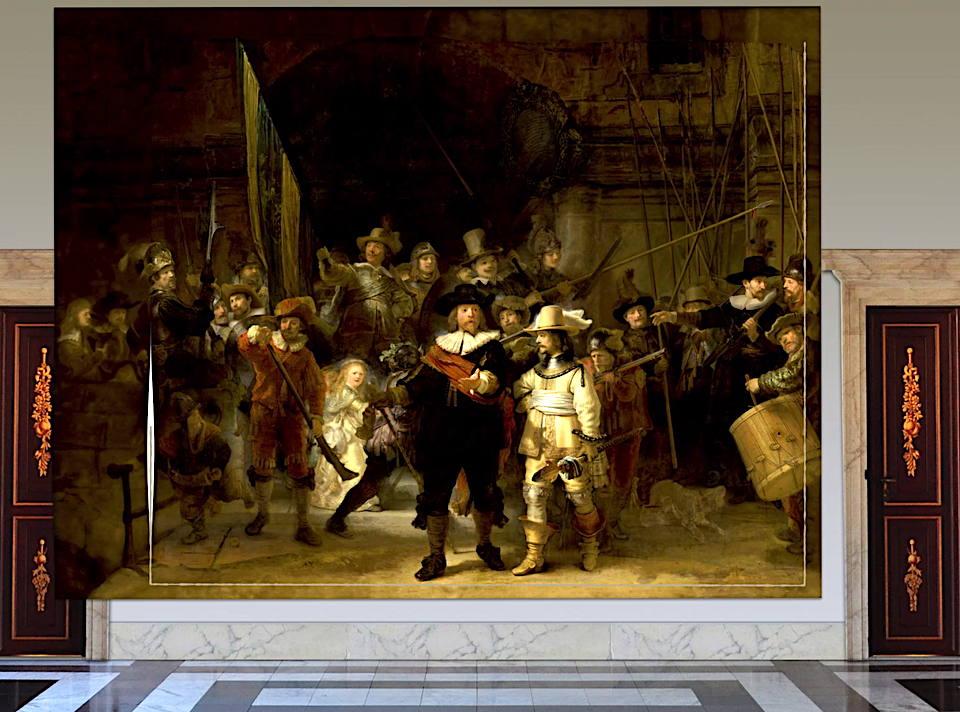
The 3D-scanned por­tions include the tit­u­lar pearl ear­ring, which appears to have a bit of a gouge in it. They’re more clear­ly vis­i­ble in 5x topo­graph­i­cal view­ing mode (selec­table on the top con­trol bar). This offi­cial Hirox video offers a glimpse of the pro­ce­dure required to achieve the kind of unprece­dent­ed­ly high-res­o­lu­tion view of Girl with a Pearl Ear­ring that allows us to behold details hereto­fore prac­ti­cal­ly invis­i­ble. At more than 10,000 megapix­els, the back­ground reveals itself to be in fact a dark green cur­tain, and the girl her­self has clear­ly defined eye­lash­es. But as for her long-spec­u­lat­ed-about iden­ti­ty, well, there are some things microscopy can’t deter­mine. Take a close look at Ver­meer’s paint­ing here. And if you’d like to take a sim­i­lar look at Rem­brandt’s The Night Watch, click here.

via Colos­sal

Relat­ed Con­tent:

Why is Vermeer’s Girl with a Pearl Ear­ring Con­sid­ered a Mas­ter­piece?: An Ani­mat­ed Intro­duc­tion

Mas­ter of Light: A Close Look at the Paint­ings of Johannes Ver­meer Nar­rat­ed by Meryl Streep

Down­load All 36 of Jan Vermeer’s Beau­ti­ful­ly Rare Paint­ings (Most in Bril­liant High Res­o­lu­tion)

The Largest & Most Detailed Pho­to­graph of Rembrandt’s The Night Watch Is Now Online: Zoom In & See Every Brush Stroke

Based in Seoul, Col­in Mar­shall writes and broad­casts on cities, lan­guage, and cul­ture. His projects include the Sub­stack newslet­terBooks on Cities, the book The State­less City: a Walk through 21st-Cen­tu­ry Los Ange­les and the video series The City in Cin­e­ma. Fol­low him on Twit­ter at @colinmarshall, on Face­book, or on Insta­gram.

Take a New Virtual Reality Tour of the Metropolitan Museum of Art

You can go to the Met­ro­pol­i­tan Muse­um of Art today, and in real life at that. This isn’t true of all the world’s great art insti­tu­tions, still shut down as many are by mea­sures in response to the past year’s coro­n­avirus pan­dem­ic. But then, none of them have offered a dig­i­tal vis­it­ing expe­ri­ence quite like The Met Unframed, recent­ly launched in part­ner­ship with cell­phone ser­vice provider Ver­i­zon. For a peri­od of five weeks, any­one can join and freely roam a vir­tu­al recon­struc­tion, or rather reimag­in­ing, of the Met and its gal­leries. There they’ll encounter paint­ings by Pol­lock, Van Gogh, and Rem­brandt, as well as work by cur­rent artists and majes­tic arti­facts from antiq­ui­ty.

“Upon enter­ing the web­site, vis­i­tors are wel­comed to the museum’s Great Hall with a view of Kent Monkman’s dip­tych mist­ikôsi­wak: Wood­en Boat Peo­ple (2019),” writes Hyper­al­ler­gic’s Hakim Bishara. “From there, ban­ners offer broad the­mat­ic con­cepts — Pow­er, Home, Nature, and Jour­ney — through which vis­i­tors can explore the gal­leries.”

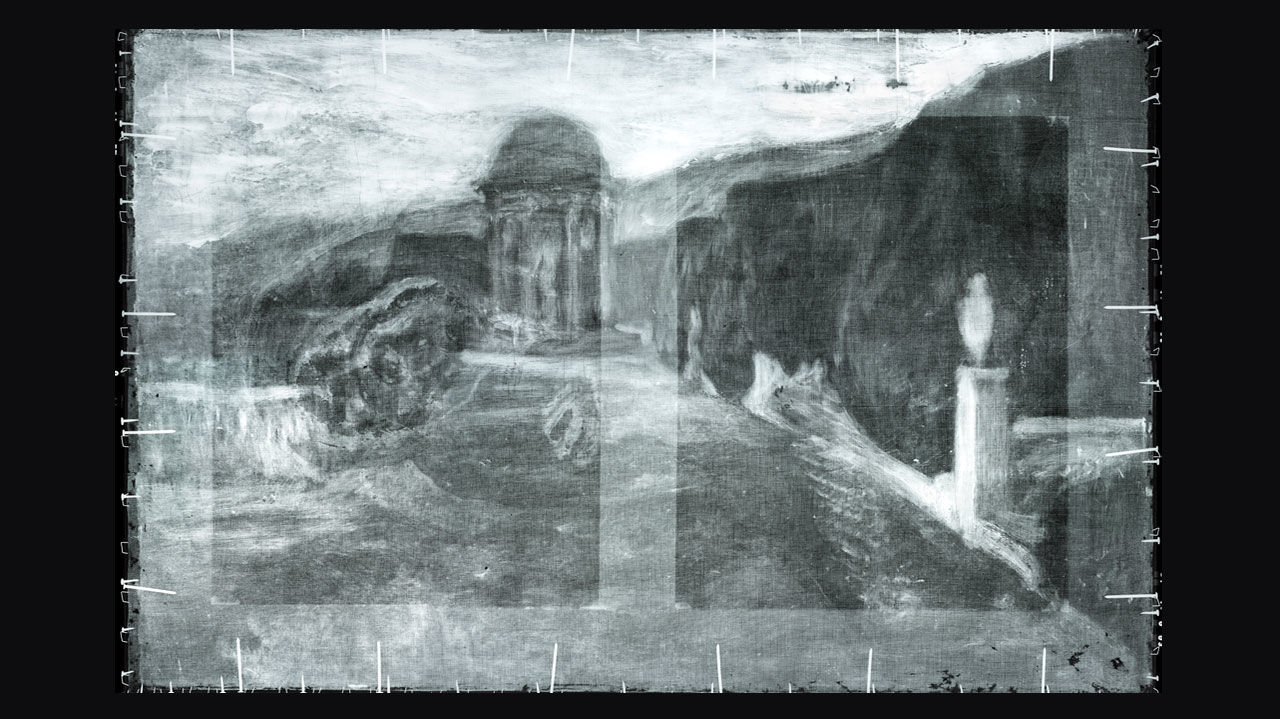
Embed­ded in cer­tain pieces of art, you’ll find not just his­tor­i­cal details and audio-tour expla­na­tions but mini-games, which “include triv­ia ques­tions and rid­dles that encour­age close obser­va­tion of the art­works and labels. A game called ‘Analy­sis’ uses the Met’s infrared and X‑ray con­ser­va­tion scans of paint­ings to reveal under­draw­ings and oth­er hid­den details of well-known paint­ings.”

Win enough such games, and you’ll get the chance to “bor­row” the art­work you’ve clicked to dis­play, through aug­ment­ed real­i­ty, in your space of choice — for fif­teen min­utes, at least. At Art­net, crit­ic Ben Davis writes of plac­ing here and there around his apart­ment Fred­er­ic Edwin Church’s Heart of the Andes, Jacob Lawrence’s The Pho­tog­ra­ph­er, and a Baby Yoda-scaled ver­sion of Rem­brandt’s Self-Por­trait. He even makes a seri­ous if ulti­mate­ly frus­trat­ed effort to win dig­i­tal bor­row­ing rights to the ancient Egypt­ian Tem­ple of Den­dur, one of the Met’s pièces de résis­tance since the late 1970s.

To expe­ri­ence The Met Unframed for your­self, just head over to its web site and use your phone to scan the QR code that comes up (if you’re not brows­ing on your phone in the first place). You’ll then be tak­en straight to the vir­tu­al Great Hall, which you can nav­i­gate by swip­ing in any direc­tion — or phys­i­cal­ly mov­ing your phone around, if you’ve enabled gyro­scope mode — and tap­ping the icons glow­ing along the ground or on the walls. The com­bi­na­tion of high tech­nol­o­gy, his­tor­i­cal ref­er­ence, depop­u­lat­ed but ele­gant­ly designed set­tings, puz­zle chal­lenges, and a score in which syn­the­siz­ers meet ambi­ent noise will remind vis­i­tors of a cer­tain age of noth­ing so much as the adven­ture games of the ear­ly 1990s, espe­cial­ly Myst and its clones. But then, what does a muse­um do if not unite the past and the present?

via Hyper­al­ler­gic

Relat­ed Con­tent:

An Unbe­liev­ably Detailed, Hand-Drawn Map Lets You Explore the Rich Col­lec­tions of the Met Muse­um

Down­load 584 Free Art Books from The Met­ro­pol­i­tan Muse­um of Art

The Met­ro­pol­i­tan Muse­um of Art Puts 400,000 High-Res Images Online & Makes Them Free to Use

Down­load 50,000 Art Books & Cat­a­logs from the Met­ro­pol­i­tan Muse­um of Art’s Dig­i­tal Col­lec­tions

Take a Vir­tu­al Tour of 30 World-Class Muse­ums & Safe­ly Vis­it 2 Mil­lion Works of Fine Art

Based in Seoul, Col­in Mar­shall writes and broad­casts on cities, lan­guage, and cul­ture. His projects include the Sub­stack newslet­terBooks on Cities, the book The State­less City: a Walk through 21st-Cen­tu­ry Los Ange­les and the video series The City in Cin­e­ma. Fol­low him on Twit­ter at @colinmarshall, on Face­book, or on Insta­gram.

How Lava Lamps Help Secure the Internet

Try not to think too hard about the con­cept of ran­dom­ness — and espe­cial­ly about the ques­tion of how, exact­ly, one gen­er­ates a ran­dom num­ber. Most of us, of course, sim­ply ask a com­put­er to do it. But how can a com­put­er, which by its very nature fol­lows unam­bigu­ous direc­tions in a pre­dictable man­ner, come up with a tru­ly ran­dom num­ber, in the lit­er­al sense of the word? As far as the every­day pur­pos­es for which we might need “ran­dom” num­bers — set­ting the com­bi­na­tion on a lock, for instance — mere­ly unpre­dictable num­bers suf­fice. But where, exact­ly, can we draw the line between unpre­dictabil­i­ty and ran­dom­ness?

Albert Ein­stein famous­ly pro­nounced that “God does not play dice with the uni­verse,” draw­ing on a metaphor still cen­tral to human­i­ty’s con­cep­tion of ran­dom­ness. Dice pro­vide “ran­dom” num­bers in that, when thrown, they’re sub­ject to too many phys­i­cal fac­tors — an area of some inter­est for Ein­stein — for us to reli­ably guess which way they’ll land. And so we find our­selves again deliv­ered back from ran­dom­ness into unpre­dictabil­i­ty. But achiev­ing ever-greater unpre­dictabil­i­ty, which has proven invalu­able to fields like cryp­tog­ra­phy, has neces­si­tat­ed com­bin­ing com­put­ers with ana­log phys­i­cal phe­nom­e­na essen­tial­ly sim­i­lar to the rolling of dice.

Using a some­what less ancient tech­nol­o­gy, inter­net secu­ri­ty provider Cloud­flare has tak­en a step clos­er to gen­uine ran­dom­ness. “Every time you log in to any web­site, you’re assigned a unique iden­ti­fi­ca­tion num­ber,” explains Wired’s Ellen Airhart. “It should be ran­dom, because if hack­ers can pre­dict the num­ber, they’ll imper­son­ate you.” But who could pre­dict “the goopy mes­mer­ic swirlings of oil, water, and wax” with­in a lava lamp, let alone an entire wall cov­ered with them? “Cloud­flare films the lamps 24/7 and uses the ever-chang­ing arrange­ment of pix­els to help cre­ate a super­pow­ered cryp­to­graph­ic key.”

The­o­ret­i­cal­ly, Airhart acknowl­edges, “bad guys could sneak their own cam­era into Cloudflare’s lob­by to cap­ture the same scene,” but the com­pa­ny also “films the move­ments of a pen­du­lum in its Lon­don office and records the mea­sure­ments of a Geiger counter in Sin­ga­pore to add more chaos to the equa­tion. Crack that, Rus­sians.” Con­stant vig­i­lance against a threat from Rus­sia aid­ed by psy­che­del­ic bed­room light fix­tures? You’d be for­giv­en for feel­ing unstuck in time, par­tial­ly trans­port­ed to the real­i­ty of half a cen­tu­ry ago. But then, Cloud­flare is head­quar­tered in San Fran­cis­co — a city where the ground­break­ing and the groovy haven’t part­ed ways just yet.

Relat­ed Con­tent:

Stephen Fry Explains Cloud Com­put­ing in a Short Ani­mat­ed Video

“The Bay Lights,” The World’s Largest LED Light Sculp­ture, Debuts in San Fran­cis­co

How Art Nou­veau Inspired the Psy­che­del­ic Designs of the 1960s

Visu­al­iz­ing WiFi Sig­nals with Light

Based in Seoul, Col­in Mar­shall writes and broad­casts on cities, lan­guage, and cul­ture. His projects include the Sub­stack newslet­ter Books on Cities, the book The State­less City: a Walk through 21st-Cen­tu­ry Los Ange­les and the video series The City in Cin­e­ma. Fol­low him on Twit­ter at @colinmarshall, on Face­book, or on Insta­gram.

Dial-a-Poem: The Groundbreaking Phone Service That Let People Hear Poems Read by Patti Smith, William S. Burroughs, Allen Ginsberg & More (1968)

Thanks for allow­ing me to be a poet. A noble effort, doomed, but the only choice. —John Giorno, Thanx for Noth­ing

Dial­ing a poem today, I’m con­nect­ed to Joe Brainard, who died of AIDS-relat­ed pneu­mo­nia in 1994, read­ing an excerpt of “I Remem­ber.” He stum­bles over some words. It’s excit­ing. There’s a feel­ing of imme­di­a­cy. When the read­ing ends in an old-fash­ioned dial tone, I imme­di­ate­ly think of a half-dozen friends I’d like to call (assum­ing they respond to some­thing that’s not a tag or text).

“Take down this num­ber,” I’d say. “641–793-8122. Don’t ask ques­tions. Just call it. You’ll love it.”

And they prob­a­bly would, though they wouldn’t hear the same record­ing I did.

As Dial-A-Poem’s founder, the late John Giorno, remarked in a 2012 inter­view:

 A per­son asked me the oth­er day: “What hap­pens if I lis­ten to a poem and I want to tell a friend to lis­ten to it?” I told him: “Well, she can’t.” [laughs] That’s the point. What hap­pens is, when things are real­ly suc­cess­ful, you cre­ate desire that is unful­fil­l­able. That’s what makes some­thing work.

Giorno estab­lished Dial-A-Poem in 1968, plac­ing ten land­lines con­nect­ed to reel-to-reel answer­ing machines in a room in New York City’s Archi­tec­tur­al League:

I sort of stum­bled on [the con­cept] by chance… I was talk­ing to some­one on the tele­phone one morn­ing, and it was so bor­ing. I prob­a­bly had a hang­over and was prob­a­bly crash­ing, and I got irri­ta­ble and said to myself at that moment, “Why can’t this be a poem?” That’s how the idea came to me. And we got a quar­ter of a page in The New York Times with the tele­phone num­ber you could dial. 

In its first four-and-a-half months of oper­a­tion, Dial-A-Poem logged 1,112,237 incom­ing calls, includ­ing some from lis­ten­ers over­seas. (The orig­i­nal phone num­ber was 212–628-0400.) The hours of heav­i­est traf­fic sug­gest­ed that a lot of bored office work­ers were sneak­ing a lit­tle poet­ry into their 9‑to‑5 day.

Dial-A-Poem recon­ceived of the tele­phone as a new media device:

Before Dial-A-Poem, the tele­phone was used one-to-one. Dial-A-Poem’s suc­cess gave rise to a Dial-A-Some­thing indus­try: from Dial-A-Joke, Dial-A-Horo­scope, Dial-A-Stock Quo­ta­tion, Dial Sports, to the 900 num­ber pay­ing for a call, to phone sex, and ever more extra­or­di­nary tech­nol­o­gy. Dial-A-Poem, by chance, ush­ered in a new era in telecom­mu­ni­ca­tions.

Fea­tured poets includ­ed such heavy hit­ters as William S. Bur­roughsPat­ti SmithAllen Gins­berg, Ted Berri­g­an, Robert Cree­leySylvia PlathCharles Bukowski, and Frank O’Hara (who “only liked you if you wrote like him”).

The con­tent was risqué, polit­i­cal, a direct response to the Viet­nam War, the polit­i­cal cli­mate, and social con­ser­vatism. No one both­ered with rhymes, and inspi­ra­tion was not nec­es­sar­i­ly the goal.

Unlike Andy WarholJasper Johns, and oth­er career-mind­ed artists who he hung out with (and bed­ded), Giorno nev­er made a secret of his homo­sex­u­al­i­ty. Sex­u­al­ly explic­it and queer con­tent had a home at Dial-a-Poem.

Mean­while, Dial-a-Poem was fea­tured in Junior Scholas­tic Mag­a­zine, and dial­ing in became a home­work assign­ment for many New York City Pub­lic School stu­dents.

Two twelve-year-old boys near­ly scup­pered the project when one of their moth­ers caught them gig­gling over the Jim Car­roll poem, above, and raised a ruckus with the Board of Ed, who in turn put pres­sure on the tele­phone com­pa­ny to dis­con­tin­ue ser­vice. The New York State Coun­cil on the Arts’ lawyers inter­vened, a win for horny mid­dle school­ers… and poet­ry!

For any­one inter­est­ed, an album called You’re A Hook: The 15 Year Anniver­sary Of Dial-A-Poem (1968–1983) was released in 1983. Vinyl copies are still float­ing around.

If you dial 641.793.8122, you can still access record­ings from an archive of poet­ry, notes SFMo­MA.

via Messy Nessy

Relat­ed Con­tent: 

Stream Clas­sic Poet­ry Read­ings from Harvard’s Rich Audio Archive: From W.H. Auden to Dylan Thomas

Library of Con­gress Launch­es New Online Poet­ry Archive, Fea­tur­ing 75 Years of Clas­sic Poet­ry Read­ings

Car­toon­ist Lyn­da Bar­ry Reveals the Best Way to Mem­o­rize Poet­ry

Ayun Hal­l­i­day is an author, illus­tra­tor, the­ater mak­er and Chief Pri­ma­tol­o­gist of the East Vil­lage Inky zine. She most recent­ly appeared as a French Cana­di­an bear who trav­els to New York City in search of food and mean­ing in Greg Kotis’ short film, L’Ourse.  Fol­low her @AyunHalliday

Technology Arbitrage: Amazon is Selling Airpods Pro Headphones for $50 Less Than Apple

Psst. Ama­zon cur­rent­ly has Air­Pods Pro head­phones for $199, while Apple has them list­ed for $249. It’s the deal of the day for any­one look­ing for wire­less Blue­tooth ear­buds, with noise-can­celling, immer­sive sound.

H/T Rolling Stone

by | Permalink | Make a Comment ( 1 ) |

In 1896, a French Cartoonist Predicted Our Socially-Distanced Zoom Holiday Gatherings

Imag­ine that, this time last year, you’d heard that your fam­i­ly’s hol­i­day gath­er­ings in 2020 would hap­pen on the inter­net. Even if you believed such a future would one day come, would you have cred­it­ed for a moment that kind of immi­nence? Yet our video­con­fer­ence toasts this sea­son were pre­dict­ed — even ren­dered in clear and rea­son­ably accu­rate detail — more than 120 years ago. “My wife is vis­it­ing her aunt in Budapest, my old­er daugh­ter is study­ing den­tistry in Mel­bourne, my younger daugh­ter is a min­ing engi­neer in the Urals, my son rais­es ostrich­es in Batavia, my nephew is on his plan­ta­tions in Batavia,” says the cap­tion of the 1896 car­toon above. “But this does not pre­vent us from cel­e­brat­ing Christ­mas on the tele­phono­scope.”

This pan­el ran in Belle Époque humor mag­a­zine Le rire (avail­able to read at the Inter­net Archive), drawn by the hand and pro­duced by the imag­i­na­tion of Albert Robi­da. A nov­el­ist as well as an artist, Robi­da drew acclaim in his day for the series Le Vingtième Siè­cle, whose sto­ries offered visions of the tech­nol­o­gy to come in that cen­tu­ry.

“Next to Zoom Christ­mas,” tweets phi­los­o­phy pro­fes­sor Helen de Cruz, Robi­da also imag­ined a future in which this “tele­phono­scope” would “give us edu­ca­tion, movies, tele­con­fer­enc­ing.” As ear­ly as the 1860s, says the Pub­lic Domain Review, Robi­da had “pub­lished an illus­tra­tion depict­ing a man watch­ing a ‘tele­vised’ per­for­mance of Faust from the com­fort of his own home.” See image above.

Though Robi­da seems to have coined the word “tele­phono­scope,” he was­n’t the first to pub­lish the kind of idea to which it referred. “The con­cept of the device first appeared not long after the tele­phone was patent­ed in 1876,” writes Ver­i­ty Hunt in a Lit­er­a­ture and Sci­ence arti­cle quot­ed by the Pub­lic Domain Review. “The term ‘telec­tro­scope’ was used by the French sci­en­tist and pub­lish­er Louis Figu­ier in L’An­née Sci­en­tifique et Indus­trielle in 1878 to pop­u­lar­ize the inven­tion, which he incor­rect­ly inter­pret­ed as real and ascribed to Alexan­der Gra­ham Bell.” The goal was to “do for the eye what the tele­phone had done for the ear,” though it would­n’t be ful­ly real­ized for well over a cen­tu­ry. When you raise a glass to a web­cam this week, con­sid­er toast­ing Albert Robi­da, to whom the year 2021 would have sound­ed impos­si­bly dis­tant — but who has proven more pre­scient about it than many of us alive today.

via Helen De Cruz

Relat­ed Con­tent:

A 1947 French Film Accu­rate­ly Pre­dict­ed Our 21st-Cen­tu­ry Addic­tion to Smart­phones

Jules Verne Accu­rate­ly Pre­dicts What the 20th Cen­tu­ry Will Look Like in His Lost Nov­el, Paris in the Twen­ti­eth Cen­tu­ry (1863)

How French Artists in 1899 Envi­sioned Life in the Year 2000: Draw­ing the Future

Mark Twain Pre­dicts the Inter­net in 1898: Read His Sci-Fi Crime Sto­ry, “From The ‘Lon­don Times’ in 1904”

In 1911, Thomas Edi­son Pre­dicts What the World Will Look Like in 2011: Smart Phones, No Pover­ty, Libraries That Fit in One Book

Paris Had a Mov­ing Side­walk in 1900, and a Thomas Edi­son Film Cap­tured It in Action

Based in Seoul, Col­in Mar­shall writes and broad­casts on cities, lan­guage, and cul­ture. His projects include the Sub­stack newslet­ter Books on Cities, the book The State­less City: a Walk through 21st-Cen­tu­ry Los Ange­les and the video series The City in Cin­e­ma. Fol­low him on Twit­ter at @colinmarshall, on Face­book, or on Insta­gram.

The Blob Opera Lets You Create Festive Music with Ease: An Interactive Experiment Powered by Machine Learning

Tis the sea­son when we’re nev­er more than one sin­ga­long Mes­si­ah away from wish­ing we had a bet­ter voice.

David Li’s inter­ac­tive Blob Opera allows us to pre­tend.

The machine learn­ing exper­i­ment takes its cues from four opera singers—soprano Olivia Dout­ney, mez­zo-sopra­no Joan­na Gam­ble, tenor Chris­t­ian Joel, and bass Fred­die Tong—who pro­vid­ed it with 16 hours of record­ed mate­r­i­al.

The result is tru­ly an all-ages activ­i­ty that’s much eas­i­er on the ears than most dig­i­tal diver­sions.

Click and drag one of the gum­my-bod­ied blobs up and down to change its pitch.

Pull them for­wards and back­wards to vary their vow­el sounds.

Once all four are in posi­tion, the three you’re not active­ly con­trol­ling will har­mo­nize like a heav­en­ly host.

You can dis­able indi­vid­ual blobs’ audio to cre­ate solos, duets and trios with­in your com­po­si­tion.

Press record and you can share with the world.

The blobs don’t sing in any dis­cernible lan­guage, but they can do lega­to, stac­ca­to, and shoot up to incred­i­bly high notes with a min­i­mum of effort. Their eyes pin­wheel when they har­mo­nize.

As Li describes to co-pro­duc­er Google Arts & Cul­ture below, it’s not the orig­i­nal singers’ voic­es we’re chan­nel­ing, but rather the machine learn­ing model’s under­stand­ing of the oper­at­ic sound.

Click the pine tree icon and the blobs will ser­e­nade you with the most-searched Christ­mas car­ols.

Begin your col­lab­o­ra­tion with Blob Opera here.

If you find your­self want­i­ng more, have a go at the inter­ac­tive Choir Li cre­at­ed for Adult Swim.

Relat­ed Con­tent:

Stephen Fry Hosts “The Sci­ence of Opera,” a Dis­cus­sion of How Music Moves Us Phys­i­cal­ly to Tears

The Met Opera Stream­ing Free Operas Online to Get You Through COVID-19

The Opera Data­base: Find Scores, Libret­ti & Syn­opses for Thou­sands of Operas Free Online

Ayun Hal­l­i­day is an author, illus­tra­tor, the­ater mak­er and Chief Pri­ma­tol­o­gist of the East Vil­lage Inky zine. She most recent­ly appeared as a French Cana­di­an bear who trav­els to New York City in search of food and mean­ing in Greg Kotis’ short film, L’Ourse.  Fol­low her @AyunHalliday.

« Go BackMore in this category... »
Quantcast