AI Software Creates “New” Nirvana, Jimi Hendrix, Doors & Amy Winehouse Songs: Hear Tracks from the “Lost Tapes of the 27 Club”
What would pop music sound like now if the musicians of the 27 club had lived into maturity? Can we know where Amy Winehouse would have gone, musically, if she had taken another path? What if Hendrix’s influence over guitar heroics (and less obvious styles) came not only from his sixties playing but from an unimaginable late-career cosmic blues? Whether questions like these can ever be given real flesh and blood, so to speak, by artificial intelligence may still be very much undecided.
Of course, it may not be for us to decide. “The charts of 2046,” Mark Beaumont predicts at NME, “will be full of 12G code-pop songs, baffling to the human brain, written by banks of composerbots purely for the Spotify algorithm to recommend to its colonies of ÆPhone listening farms.” Seems as likely as any other future music scenario at this point. In the meantime, we still get to judge the successes, such as they are, of AI songwriters on human merits.
The Beatles-esque “Daddy’s Car,” the most notable computer-generated tribute song to date, was “composed by AI… capable of learning to mimic a band’s style from its entire database of songs.” The program produced a competent pastiche that nonetheless sounds like “cold computer psychedelia — eerie stuff.” What do we, as humans, make of Lost Tapes of the 27 Club, a compilation of songs composed in the style of musicians who infamously perished by suicide or overdose at the tender age of 27?
The “tapes” include four tracks designed to sound like lost songs from Hendrix, Winehouse, Nirvana, and the Doors. Highlighting a handful of artists who left us too soon in order to address “music’s mental health crisis,” the project used Magenta, the same Google AI as “Daddy’s Car,” to analyze the artists’ repertoires, as Rolling Stone explains:
For the Lost Tapes project, Magenta analyzed the artists’ songs as MIDI files, which works similarly to a player-piano scroll by translating pitch and rhythm into a digital code that can be fed through a synthesizer to recreate a song. After examining each artist’s note choices, rhythmic quirks, and preferences for harmony in the MIDI file, the computer creates new music that the staff could pore over to pick the best moments.
There is significant human input, such as the curation of 20 or 30 songs fed to the computer, broken down separately into different parts of the arrangement. Things did not always go smoothly. Kurt Cobain’s “loose and aggressive guitar playing gave Magenta some trouble,” writes Endgadget, “with the AI mostly outputting a wall of distortion instead of something akin to his signature melodies.”
Judge the end results for yourself in “Drowned by the Sun,” above. The music for all four songs is synthesized with MIDI files. “An artificial neural network was then used to generate the lyrics,” Eddie Fu writes at Consequence of Sound, “while the vocals were recorded by Eric Hogan, frontman of an Atlanta Nirvana tribute band.” Other songs feature different sound-alike vocalists (more or less). In no ways does the project claim that MIDI-generated computer files can replace actual musicians.
They’re affectionate tributes, made by players without hearts, but they don’t really tell us anything about what, say, Jim Morrison would have done if he hadn’t died at 27. Yet the cause is a noble one: a rejection of the romantic idea at the heart of the “27 Club” narrative — that mental illness, substance abuse, etc. should be glamorized in any way. “Lost Tapes of the 27 Club is the work of Over the Bridge,” notes Fu, “a Toronto organization that helps members of the music industry struggling with mental illness.” Learn more about the project here and about Over the Bridge’s programs here.
Related Content:
Artificial Intelligence Program Tries to Write a Beatles Song: Listen to “Daddy’s Car”
Josh Jones is a writer and musician based in Durham, NC. Follow him at @jdmagness
Read More...The World of Wong Kar-Wai: How the Films of Hong Kong’s Most Acclaimed Auteur Have Stayed Thrilling
I’ve just seen the future of cinema.” So declared the American film critic Peter Brunette after stumbling, “still dazed,” from a screening at the 1995 Toronto International Film festival. “Oh,” replied TIFF Cinémathèque programmer (and respected authority on Asian cinema) James Quandt. “You’re just coming from the Wong Kar-wai film?” Brunette includes this story in his monograph on Wong’s work, which was published in 2005. At that point, his pictures like Days of Being Wild, Chungking Express, and In the Mood for Love had already torn through global film culture, inspiring cinephiles and filmmakers alike to believe that an intoxicating range of cinematic possibilities still lay unexplored.
What’s more, they seemed to do it all of a sudden, having come out of nowhere. Of course, they came out of somewhere: Hong Kong, to be precise, a small but densely populated and economically mighty soon-to-be-former-colony whose distinctive cultural and industrial mixture produced a kind of modernity at once familiar and alien to beholders around the world.
Or at least it felt that way to those beholding it through Wong Kar-wai movies, which created their very own aesthetic world within the context of Hong Kong. That “neon-drenched” world in which “lonely souls drift around, desperately trying to make a meaningful connection, no matter how fleeting,” is the subject of the new BFI video essay at the top of the post.
As a part of Hong Kong’s “second new wave,” Wong found his cinematic voice by telling “highly atmospheric stories of restrained passion, using dazzling visuals, memorable songs, and unconventional narratives,” all the while “pushing the boundaries of Hong Kong genre cinema to create something fresh and inventive.” The West got its first big dose of it in 1994 through Chungking Express, whose worldwide release owed in part to the enthusiasm of Quentin Tarantino. In the clip above Tarantino does some enthusing about it and the rest of Wong’s oeuvre up to that point, which “has all that same energy that Hong Kong tends to bring to its cinema, but he’s also taking a cue from the French New Wave” — and especially Jean-Luc Godard, who showed how to “take genre pieces and break the rules.”
None of Wong’s films has made as much of an impact as 2000’s In the Mood for Love, the tale of a man and woman brought together — though not all the way together — by the fact that their spouses are cheating on them with each other. Evan Puschak, better known as the Nerdwriter, analyzes the movie’s power in the video essay “Frames within Frames.” Watching it, he says, “you can’t help but feel that you’re in the hands of somebody in complete control.” By restricting his cinematic language, Wong “echoes the restriction of action that plagues Mr. Chow and Mrs. Chan in 1960s Hong Kong.” The recent 20th-anniversary restoration of In the Mood for Love and those of Wong’s other work are even now being screened around the globe. Having caught one such screening just last night, I feel like I’ve seen the future of cinema again.
Note: The Criterion Collection now offers a Wong Kar-wai box set that features seven blu-rays, including 4k digital restorations of Chungking Express, In the Mood for Love, Happy Together and more. Find it here.
Related Content:
The Best 100 Movies of the 21st Century (So Far) Named by 177 Film Critics
Quentin Tarantino Picks the 12 Best Films of All Time; Watch Two of His Favorites Free Online
Based in Seoul, Colin Marshall writes and broadcasts on cities, language, and culture. His projects include the Substack newsletter Books on Cities, the book The Stateless City: a Walk through 21st-Century Los Angeles and the video series The City in Cinema. Follow him on Twitter at @colinmarshall or on Facebook.
Read More...5 Free Online Courses on Marx’s Capital from Prof. David Harvey
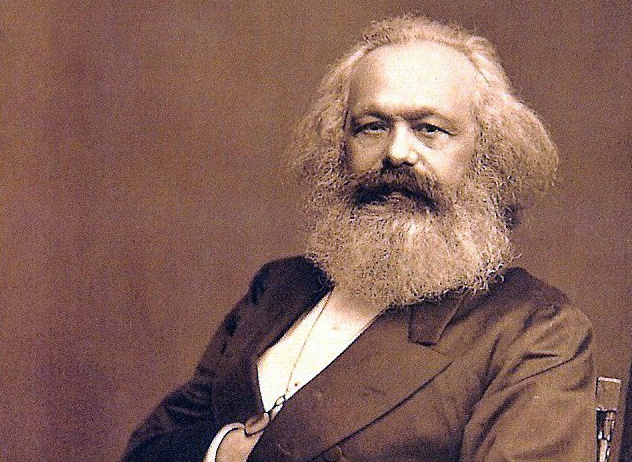
Geographer and Marxist scholar David Harvey did not set out to become a Marxist. He didn’t even know what a Marxist was. He simply started to read Marx one day, at the age of 35, because all of the other social science methods he had applied in his study of the housing market and social unrest in US cities “didn’t seem to be working well,” he says in a Jacobin interview. “So, I started to read Marx, and I found it more and more relevant…. After I cited Marx a few times favorably, people pretty soon said I was a Marxist. I didn’t know what it meant… and I still don’t know what it means. It clearly does have a political message, though, as a critique of capital.”
The word “Marxist” has been as much a defamatory term of moral and political abuse as it has a coherent description of a position. But ask Harvey to explain what Marx means in the German philosopher’s massive analysis of political economy, Capital, and he will gladly tell you at length. Harvey has not only read all three volumes of the work many times over, a feat very few can claim, but he has explicated them in detail in his courses at Johns Hopkins and the City University of New York since the 1970s. In the age of YouTube, Harvey posted his lectures online, and they became so popular they inspired a series of equally popular written companion books.
Why study a dead 19th-century socialist? What could he possibly have to say about the world of AI, COVID, and climate change? “I think Marx is more relevant today than ever before,” says Harvey. “When Marx was writing, capital was not dominant in the world. It was dominant in Britain and Western Europe and the eastern United States, but it wasn’t dominant in China or India. Now it’s dominant everywhere. So, I think Marx’s analysis of what capital is and its contradictions is more relevant now than ever.”
To illustrate, and exhaustively explain, the point, Harvey announced by tweet recently that he’s made 5 courses freely available online as videos and podcasts. Find links to all 5 courses below. Or find them in our collection: 1,700 Free Online Courses from Top Universities.
Reading Marx’s Capital Volume 1 with David Harvey – 2019 Edition
Reading Marx’s Capital Volume I with David Harvey – 2007 Edition
Reading Marx’s Capital Volume 2 with David Harvey
Reading Marx’s Grundrisse with David Harvey
Marx, Capital, and the Madness of Economic Reason
Related Content:
Marxism by Raymond Geuss: A Free Course
A Short Animated Introduction to Karl Marx
David Harvey’s Course on Marx’s Capital: Volumes 1 & 2 Now Available Free Online
Josh Jones is a writer and musician based in Durham, NC. Follow him at @jdmagness
Read More...Discover the First Modern Kitchen–the Frankfurt Kitchen–Pioneered by the Architect Margarete Schütte-Lihotzky (1926)
Nearly 100 years after it was introduced, architect Margarete (Grete) Schütte-Lihotzky’s famous Frankfurt Kitchen continues to exert enormous influence on kitchen design.
Schütte-Lihotzky analyzed designs for kitchens in train dining cars and made detailed time-motion studies of housewives’ dinner preparations in her quest to come up with something that would be space saving, efficient, inexpensively pre-fabricated, and easily installed in the new housing springing up in post-WWI Germany.
Schütte-Lihotzky hoped that her design would have a liberating effect, by reducing the time women spent in the kitchen. Nothing is left to chance in these 1.9 by 3.44 meters, with the main emphasis placed on the well-traveled “golden triangle” between worktop, stove, and sink.
The design’s scientific management honored ergonomics and efficiency, initiating a sort of household dance, but as filmmaker Maribeth Romslo, who directed eight dancers on a painstaking facsimile of a Frankfurt Kitchen, below, observes:
…as with any progress, there is friction and pressure. As women gain more rights (then and now), are they really just adding more to their to-do list of responsibilities? Adding to the number of plates they need to spin? They haven’t been excused from domestic duties in order to pursue careers or employment, the new responsibilities are additive.
(Note: enter your information to view the film.)
Choreographer Zoé Henrot, who also appears in the film, emphasizes the Frankfurt Kitchen’s design efficiencies and many of its famous features — the drawers for flour and other bulk goods, the adjustable stool, the cutting board with a receptacle for parings and peels.
At the same time, she manages to telegraph some possible Catch-22s.
Its diminutive size dictates that this workplace will be a solitary one — no helpers, guests, or small children.
The built-in expectations regarding uniformity of use leaves little room for culinary experimentation or a loosey goosey approach.
When crushingly repetitive tasks begin to chafe, options for escape are limited (if very well-suited to the expressive possibilities of modern dance).
Interestingly, many assume that a female architect working in 1926 would have brought some personal insights to the task that her male colleagues might have been lacking. Not so, as Schütte-Lihotzky readily admitted:
The truth of the matter was, I’d never run a household before designing the Frankfurt Kitchen, I’d never cooked, and had no idea about cooking.
Singer-songwriter Robert Rotifer is another artist who was moved to pay homage to Schütte-Lihotzky and the Frankfurt Kitchen, a “calculated move” that he describes as something closer to designing a kitchen than “divine inspiration”:
I sat on the train traveling from Canterbury up to London… I was about to record a new album, and I needed one more uptempo song, something driving and rhythmical. While the noisy combination of rickety train and worn-out tracks suggested a beat, I began to think about syncopations and subjects.
I thought about the mundane things nobody usually writes songs about, functional things that defy metaphor—tools, devices, household goods. As I listed some items in my head, I soon realized that kitchen utensils were the way to go. I thought about the mechanics of a kitchen, and that’s when the name of the creator of the famous Frankfurt Kitchen flashed up in my head.
There, in the natural rhythm of her name, was the syncopation I had been looking for: “I sing this out to Grete Schütte-Lihotzky.” Writing the rest of the lyrics was easy. The repetitive element would illustrate the way you keep returning to the same tasks and positions when you are working in a kitchen. In the middle-eight I would also find space for some of the criticisms that have been leveled at Schütte-Lihotzky’s kitchen over the decades, such as the way her design isolated the kitchen worker, i.e. traditionally the woman, from the rest of the family.
Rotifer, who also created the paintings used in the animated music video, gives the architect her due by including accomplishments beyond the Frankfurt Kitchen: her micro-apartment with “a disguised roll-out bed,” her terraced houses at the Werkbundsiedlung, a housing project’s kindergarten, a printing shop, and the Viennese Communist party headquarters.
It’s a lovely tribute to a design pioneer who, reflecting on her long career around the time of her 100th birthday, remarked:
If I had known that everyone would keep talking about nothing else, I would never have built that damned kitchen!
Museums that have acquired a Frankfurt Kitchen include Frankfurt’s Museum Angewandte Kunst, New York City’s Museum of Modern Art, London’s Victoria and Albert Museum, and Oslo’s National Museum.
Learn more about the Kitchen Dance Project in this conversation between filmmaker Maribeth Romslo, choreographer Zoé Emilie Henrot, and Minneapolis Institute of Art curator Jennifer Komar Olivarez.
Related Content:
Recipes from the Kitchen of Georgia O’Keeffe
The Politics & Philosophy of the Bauhaus Design Movement: A Short Introduction
Ayun Halliday is an author, illustrator, theater maker and Chief Primatologist of the East Village Inky zine. Follow her @AyunHalliday
Read More...Why Every World Map Is Wrong
The idea that the world maps are wrong — all of them — is hardly controversial. It’s a mathematical fact that turning a globe (or an oblate spheroid) into a two-dimensional object will result in unavoidable distortions. In the TED-Ed lesson above by Kayla Wolf, you’ll learn a brief history of world maps, starting all the way back with the Greek mathematician Ptolemy, who “systematically mapped the Earth on a grid” in 150 AD in order to create maps that had a consistent scale. His grid system is still in use today — 180 lines of latitude and 360 lines of longitude.
Most of the world maps we knew come from the Mercator Projection, “a cylindrical map projection presented by the Flemish geographer and cartographer Gerardus Mercator in 1569,” writes Steven J. Fletcher.
This map projection is practical for nautical applications due to its ability to represent lines of constant course, known as rhumb lines, as straight segments that conserve the angles with the meridians…. the Mercator projection distorts the size of objects as the latitude increases from the equator to the poles, where the scale becomes infinite.
Mercator’s innovation allowed for the shipping routes that created the modern world (including those through the now-unblocked Suez Canal). But the projection has its problems: 14 Greenlands, for example, could fit inside the continent of Africa, says Wolf, but “you wouldn’t guess it from most maps of the world” in which the two land masses are almost the same size.
“In 2010,” Adam Taylor notes at The Washington Post, “graphic artist Kai Krause made a map to illustrate just how big the African continent is. He found that he was able to fit the United States, India and much of Europe inside the outline of the African continent.”
Geographical misperceptions “shape our understanding of the world,” Nick Routley writes at Business Insider, “and in an increasingly interconnected and global economy, this geographic knowledge is more important than ever.” We are no longer primarily using maps, that is to say, to chart, trade with, or conquer formerly unknown regions of the world — from locations assumed to be the natural centers of commerce, culture, or religion.
Non-Mercator world maps have, over the last few decades especially, attempted to correct the errors of cylindrical projection by unfolding the globe like an orange peel or a series of interlocking triangles, as in Buckminster Fuller’s 1943 Dymaxion Map. These have proved nautical miles more accurate than previous versions but they are useless in navigating the world.
Why create new, more accurate world maps? Because the Mercator projection has given the impression of Euro-American geographical supremacy for almost 500 years now, Wolf’s lesson argues, simply by virtue of the location of its origin and its original purpose. But it is now not only inaccurate and outdated, it is also irrelevant. Maps play a vital role in education. The practical utility, however, of flat world maps these days is pretty much beside the point, since GPS technology has mostly eliminated the need for them altogether.
Related Content:
Buckminster Fuller’s Map of the World: The Innovation that Revolutionized Map Design (1943)
Japanese Designers May Have Created the Most Accurate Map of Our World: See the AuthaGraph
Why Making Accurate World Maps Is Mathematically Impossible
Josh Jones is a writer and musician based in Durham, NC. Follow him at @jdmagness
Read More...Online Degrees & Mini Degrees: Explore Masters, Mini Masters, Bachelors & Mini Bachelors from Top Universities
Explore a collection of online Degree and Mini Degree Programs from major universities, including MIT, Harvard, UC Berkeley & more.
The lists below include Online Mini Master’s Degrees, Online Master’s Degrees, Online Mini Bachelor’s Degrees, and finally Online Bachelor’s Degrees.
Many of these programs are offered at a significantly lower price than traditional degree programs.
Mini Master’s Programs
To learn more about the value of MicroMasters programs from edX, and MasterTrack Certificate programs from Coursera, read this article from Business Insider.
Business
- Accounting — Indiana University via edX
- Business Leadership — The University of Queensland via edX
- Business Management — Indian Institute of Management Bangalore via edX
- Business and Operations for a Circular Bio-Economy — Wageningen University & Research via edX
- Certified Lifestyle Medicine Executive — Doane University via edX
- Corporate Innovation — The University of Queensland via edX
- Design Thinking - Rochester Institute of Technology via edX
- Digital Leadership — Boston University via edX
- Digital Product Management — Boston University via edX
- Entrepreneurship — Indian Institute of Management Bangalore via edX
- Finance — MIT via edX
- Finance, Analysis and Modeling — Macquarie via Coursera
- Global Business Leadership and Management — Arizona State via edX
- Global Leadership and Human Resource Management - Macquarie Business School via Coursera
- Healthcare Administration — Doane University via edX
- Innovation & Entrepreneurship — Tecnológico de Monterrey via edX
- Innovation Management & Entrepreneurship — HEC via Coursera
- International Hospitality Management — The Hong Kong Polytechnic University via edX
- Leadership in Global Development — The University of Queensland via edX
- MBA Core Curriculum — University of Maryland via edX
- Managing Technology & Innovation: How to deal with disruptive change — RWTH Aachen University via edX
- Marketing Analytics — UC Berkeley via edX
- Marketing in a Digital World — Curtin University via edX
- Principles of Manufacturing — MIT via edX
- Project Management — Rochester Institute of Technology via edX
Computer Science
- AI and Machine Learning — Arizona State University via Coursera
- Blockchain Applications — Duke University via Coursera
- Cloud Computing — University of Maryland via edX
- Cybersecurity — Rochester Institute of Technology via edX
- Cybersecurity- Arizona State University via Coursera
- Industrial Internet of Things — UC Boulder via Coursera
- Information Systems — Indiana University via edX
- Internet of Things (IoT) — Curtin University via edX
- Machine Learning for Analytics- U Chicago via edX
- Nanoscience and Technology — Purdue University via edX
- Predictive Analytics using Python — The University of Edinburgh via edX
- Quantum Technology: Computing — Purdue University via edX
- Quantum Technology: Detectors and Networking — Purdue University via edX
- Software Development — The University of British Columbia via edX
- Software Engineering - Arizona State University via Coursera
- Supply Chain Management — MIT via edX
- Supply Chain Excellence — Rutgers University via Coursera
Data Science
- Algorithms and Data Structures — UC San Diego via edX
- Analytics: Essential Tools and Methods — Georgia Tech via edX
- Big Data — University of Adelaide via edX
- Big Data — Arizona State University via Coursera
- Data Analytics for Managers — Tufts University via Coursera
- Data Science — UC San Diego via edX
- Statistics and Data Science — MIT via edX
Education
- Instructional Design- University of Illinois via Coursera
- Instructional Design and Technology — University of Maryland via edX
- Leading Educational Innovation and Improvement — University of Michigan via edX
Engineering
- Construction Engineering and Management — University of Michigan via Coursera
- Reliability and Decision Making in Engineering Design — Purdue University via edX
- Solar Energy Engineering - Delft University of Technology via edX
- Structural Design — Purdue University via edX
Health
- Health Informatics - Yale University via Coursera
- Water and Global Human Health — Queen’s University via edX
Humanities/Arts & Culture
- Humanities & Soft Skills — Tecnológico de Monterrey via edX
- Integrated Digital Media — NYU via edX
- English Proficiency for Graduate Studies Certificate — Arizona State University via Coursera
- Writing for Performance and the Entertainment Industries - Cambridge University via edX
Sustainability
- Economics and Policies for a Circular Bio-Economy — Wageningen University & Research via edX
- Emerging Automotive Technologies — Chalmers University via edX
- Sustainable Agribusiness — Doane University via edX
- Sustainable Energy — The University of Queensland via edX
- Sustainability and Development — University of Michigan via Coursera
UX Design
- UX Design — University of Minnesota via Coursera
- UX Design and Evaluation — HEC Montréal via edX
Sundry
- Chemistry and Technology for Sustainability — Wageningen University & Research via edX
- International Law - Université catholique de Louvain via edX
- Social Work: Practice, Policy and Research — University of Michigan via Coursera
Online Master’s Degrees
Business
- Online Master’s of Accounting (iMSA) — University of Illinois via Coursera
- Master’s Degree in Accounting — Indiana University via edX
- Master of Business Administration (iMBA) — University of Illinois via Coursera
- Online MBA Degree: Master of Business Administration — Boston University via edX
- Global Master of Business Administration (GMBA) — Macquarie University via Coursera
- MSc in Innovation and Entrepreneurship — HEC via Coursera
- Master’s Degree in Leadership: Service Innovation — The University of Queensland via edX
- Master of Science in Management — University of Illinois via Coursera
- Master’s Degree in Supply Chain Management — Arizona State via edX
Computer Science & Electrical Engineering
- Master’s Degree in Analytics — Georgia Tech via edX
- Master’s Degree in Computer Science - UT Austin via edX
- Master of Computer and Information Technology — University of Pennsylvania
- Master of Computer Science — Arizona State via Coursera
- Master of Computer Science (Featuring Data Science Track) — University of Illinois via Coursera
- Master’s Degree in Cybersecurity — Georgia Tech via edX
- Master’s Degree in IT Management — Indiana University via edX
- Master of Science in Electrical Engineering — UC Boulder via Coursera
- Master’s Degree in Electrical and Computer Engineering — Purdue University via edX
- Master of Machine Learning and Data Science - Imperial College London via Coursera
Data Science
- Master of Applied Data Science — University of Michigan via Coursera
- Master’s Degree in Data Science — UT-Austin via edX
- Master of Science in Data Science — UC Boulder via Coursera
Public Health
- Master of Public Health — University of Michigan via Coursera
- Global Master of Public Health (GMPH) — Imperial College London via Coursera
- Master of Science in Population and Health Sciences — University of Michigan via Coursera
Sundry
- Master’s Degree in Civil Engineering — Purdue University via edX
- Master’s Degree in Nutritional Sciences — UT-Austin via edX
- Master’s Degree in Mechanical Engineering — Purdue University via edX
Micro Bachelor’s Degrees
- Business Analytics Foundations - Southern New Hampshire University via edX
- Business and Professional Communication for Success — Doane University via edX
- Computer Science Fundamentals — NYU via edX
- Cybersecurity Fundamentals — NYU via edX
- Data Management with Python and SQL - Southern New Hampshire University via edX
- Elements of Data Science — Rice University via edX
- Introduction to Databases — NYU via edX
- Introduction to Information Technology — Western Governors University via edX
- Marketing Essentials — Doane University via edX
- Professional Writing — Arizona State via edX
- Programming & Data Structures — NYU via edX
Bachelor’s Degrees
- Bachelor of Applied Arts and Sciences — University of North Texas via Coursera
To explore a list of free courses, see our collection, 1,700 Free Online Courses from Top Universities.
Read More...Researchers Develop a Digital Model of the 2,200-Year-Old Antikythera Mechanism, “the World’s First Computer”
What’s the world’s oldest computer? If you answered the 5‑ton, room-sized IBM Mark I, it’s a good guess, but you’d be off by a couple thousand years or so. The first known computer may have been a handheld device, a little larger than the average tablet. It was also hand-powered and had a limited, but nonetheless remarkable, function: it followed the Metonic cycle, “the 235-month pattern that ancient astronomers used to predict eclipses,” writes Robby Berman at Big Think.
The ancient artifact known as the Antikythera mechanism — named for the Greek Island under which it was discovered — turned up in 1900. It took another three-quarters of a century before the secrets of what first appeared as a “corroded lump” revealed a device of some kind dating from 150 to 100 BC. “By 2009, modern imaging technology had identified all 30 of the Antikythera mechanism’s gears, and a virtual model of it was released,” as we noted in an earlier post.
The device could predict the positions of the planets (or at least those the Greeks knew of: Mercury, Venus, Mars, Jupiter, and Saturn), as well as the sun, moon, and eclipses. It placed Earth at the center of the universe. Researchers studying the Antikythera mechanism understood that much. But they couldn’t quite understand exactly how it worked, since only about a third of the complex mechanism has survived.
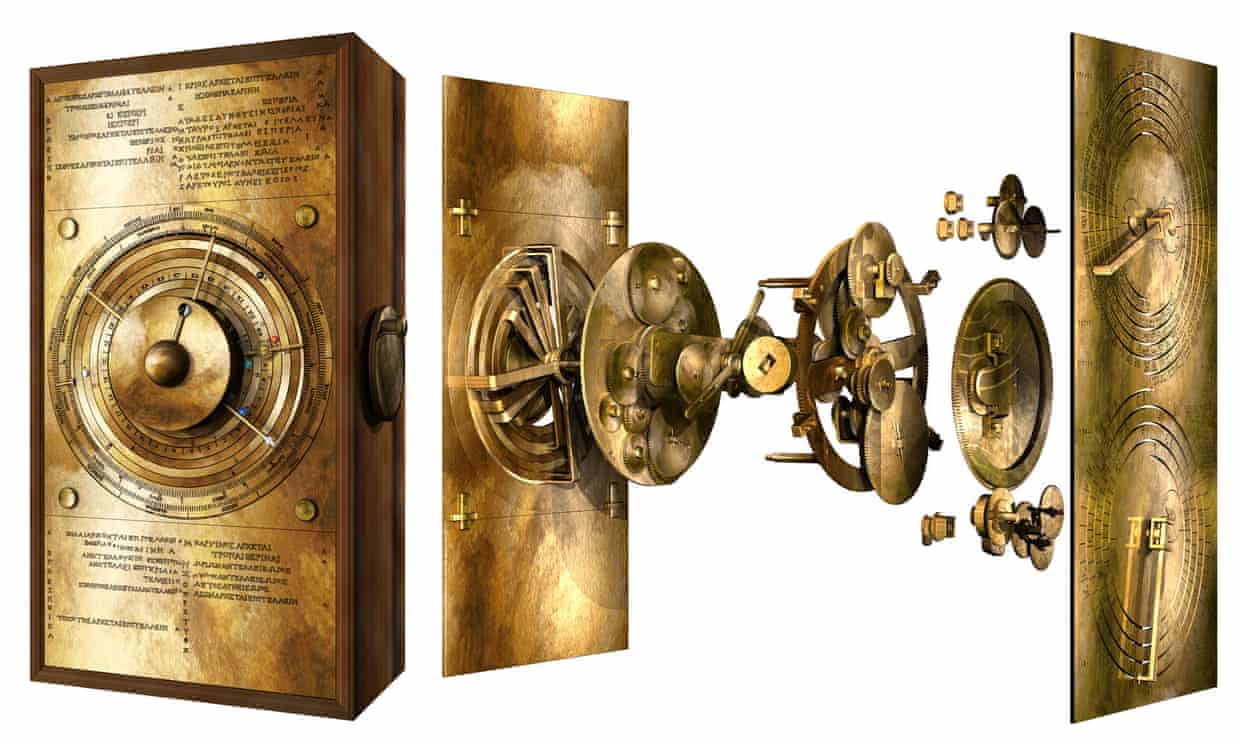
Image by University College London
Now, it appears that researchers from the University College of London have figured it out, debuting a new computational model in Scientific Reports. “Ours is the first model that conforms to all the physical evidence and matches the scientific inscriptions engraved on the mechanism itself,” lead author Tony Freeth tells The Engineer. In the video above, you can learn about the history of the mechanism and its rediscovery in the 20th century, and see a detailed explanation of Freeth and his team’s discoveries.
“About the size of a large dictionary,” the artifact has proven to be the “most complex piece of engineering from the ancient world” the video informs us. Having built a 3D model, the researchers next intend to build a replica of the device. If they can do so with “modern machinery,” writes Guardian science editor Ian Sample, “they aim to do the same with techniques from antiquity” — no small task considering that it’s “unclear how the ancient Greeks would have manufactured such components” without the use of a lathe, a tool they probably did not possess.
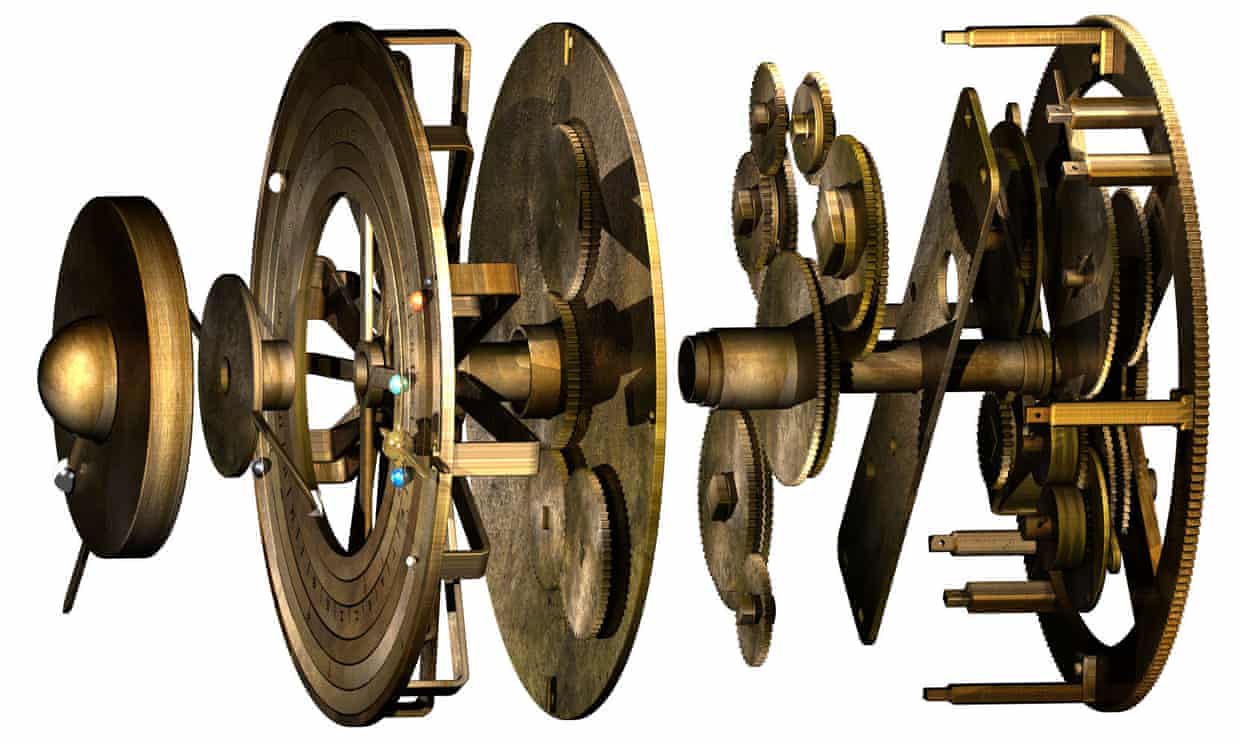
Image by University College London
The mechanism will still hold its secrets even if the UCL team’s model works. Why was it made, what was it used for? Were there other such devices? Hopefully, we won’t have to wait another several decades to learn the answers. Read the team’s Scientific Reports article here.
Related Content:
Modern Artists Show How the Ancient Greeks & Romans Made Coins, Vases & Artisanal Glass
How the Ancient Greeks Shaped Modern Mathematics: A Short, Animated Introduction
Josh Jones is a writer and musician based in Durham, NC. Follow him at @jdmagness
Read More...The Letters of Mozart’s Sister Maria Anna Get Transformed into Music
The talent of an individual may not always run in the family, but we can never discount the possibility of its doing so. This is true even in the case of Wolfgang Amadeus Mozart, not just one of the best-known composers ever to live, but a byword for deep, innate, and unrepeatable genius. Mozart was composing original music at the age of of four or five, an astonishing fact we know today in part because his older sister witnessed and later attested to it. Known as Nannerl, Maria Anna Mozart preceded her bother into keyboard lessons from their father Leopold, a composer and teacher. Together Wolfgang and Maria Anna toured Europe as a performing duo of child prodigies, until Maria Anna’s attainment of marriageable age took her off the circuit.
If Maria Anna ever composed music of her own, none of it has survived. But she did leave behind a fair few diaries and letters, many of the latter exchanged with her brother. These writings provided the material for pianist Heloísa Fernandes to create a piece in tribute to the lesser-known Mozart sibling.
“The writing, all in German, underwent painstaking analysis so that its tone and pronunciation could be translated into musical notes,” says Little Black Book. “A German interpreter was invited to read the letters and diary of Maria Anna Mozart out loud,” and a piece of software “translated the recording into musical notes by tuning the syllables. If a spoken syllable hit 387 Hz, for example, the program interpreted it as G.” Thus were Nannerl’s words transformed into music.
The resulting piece, “Das Königreich Rücken,” is named after “an imaginary kingdom that Maria and Wolfgang made reference to in their letters to each other,” as Sara Spary notes in Adweek — a publication that would naturally cover it, commissioned as it was by an ad campaign for LG Electronics. Developed by Brazilian firm AlmapBBDO in cooperation with the production company Supersônica, “Projecto Ms. Mozart” is meant to promote LG’s XBOOM Go Bluetooth speaker. But whichever device you use to hear “Das Königreich Rücken,” you’ll surely find that it sounds quite unlike any piece you’ve heard before. Fans of Maria Anna Mozart as a historical figure will listen and wonder what could have been, and even those ignorant of her can’t but welcome these three additional minutes of Mozart into the world.
Related Content:
Mozart’s Diary Where He Composed His Final Masterpieces Is Now Digitized and Available Online
Hear the Pieces Mozart Composed When He Was Only Five Years Old
Based in Seoul, Colin Marshall writes and broadcasts on cities, language, and culture. His projects include the Substack newsletter Books on Cities, the book The Stateless City: a Walk through 21st-Century Los Angeles and the video series The City in Cinema. Follow him on Twitter at @colinmarshall or on Facebook.
Read More...The Little-Known Female Scientists Who Mapped 400,000 Stars Over a Century Ago: An Introduction to the “Harvard Computers”
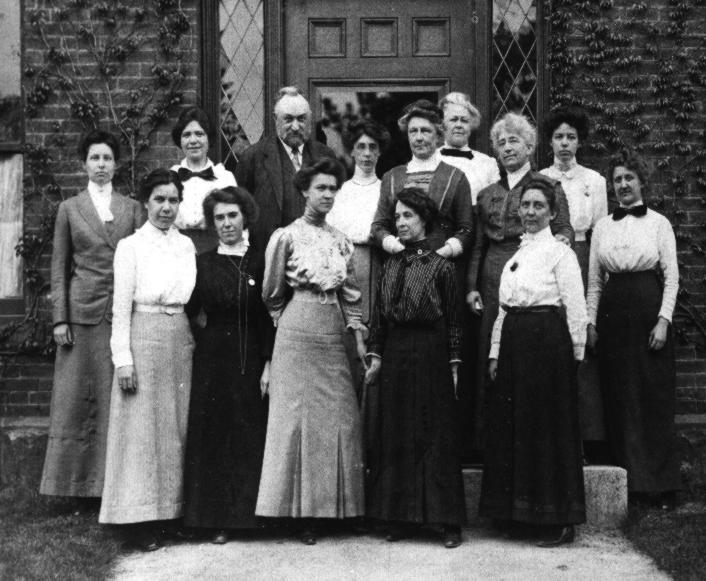
Image via Wikimedia Commons
As team names go, the Harvard Computers has kind of an oddball ring to it, but it’s far preferable to Pickering’s Harem, as the female scientists brought in under the Harvard Observatory’s male director were collectively referred to early on in their 40-some years of service to the institution.
A possibly apocryphal story has it that Director Edward Pickering was so frustrated by his male assistants’ pokey pace in examining 1000s of photographic plates bearing images of stars spotted by telescopes in Harvard and the southern hemisphere, he declared his maid could do a better job.
If true, it was no idle threat.
In 1881, Pickering did indeed hire his maid, Williamina Fleming, to review the plates with a magnifying glass, cataloguing the brightness of stars that showed up as smudges or grey or black spots. She also calculated—aka computed—their positions, and, when possible, chemical composition, color, and temperature.
The newly single 23-year-old mother was not uneducated. She had served as a teacher for years prior to emigrating from Scotland, but when her husband abandoned her in Boston, she couldn’t afford to be fussy about the kind of employment she sought. Working at the Pickerings meant secure lodging and a small income.
Not that the promotion represented a financial windfall for Fleming and the more than 80 female computers who joined her over the next four decades. They earned between 25 to 50 cents an hour, half of what a man in the same position would have been paid.
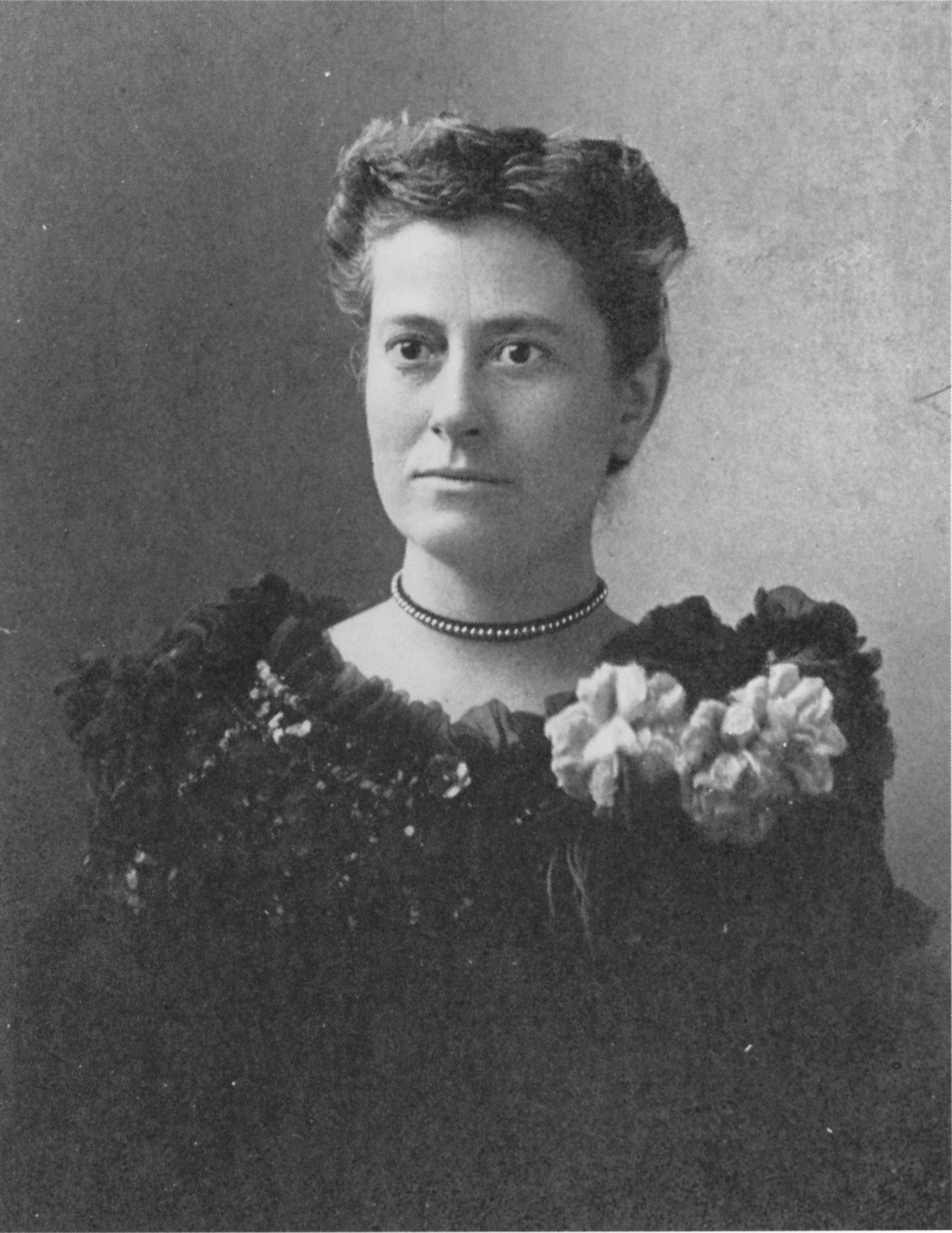
Image via Wikimedia Commons
At one point Fleming, who as a single mother was quite aware that she was burdened with “all housekeeping cares …in addition to those of providing the means to meet their expenses,” addressed the matter of her low wages with Pickering, leaving her to vent in her diary:
I am immediately told that I receive an excellent salary as women’s salaries stand.… Does he ever think that I have a home to keep and a family to take care of as well as the men?… And this is considered an enlightened age!
Harvard certainly got its money’s worth from its female workforce when you consider that the classification systems they developed led to identification of nearly 400,000 stars.
Fleming, who became responsible for hiring her coworkers, was the first to discover white dwarfs and the Horsehead Nebula in Orion, in addition to 51 other nebulae, 10 novae, and 310 variable stars.
An impressive achievement, but another diary entry belies any glamour we might be tempted to assign:
From day to day my duties at the Observatory are so nearly alike that there will be little to describe outside ordinary routine work of measurement, examination of photographs, and of work involved in the reduction of these observations.
Pickering believed that the female computers should attend conferences and present papers, but for the most part, they were kept so busy analyzing photographic plates, they had little time left over to explore their own areas of interest, something that might have afforded them work of a more theoretical nature.
Another diary entry finds Fleming yearning to get out from under a mountain of busy work:
Looking after the numerous pieces of routine work which have to be kept progressing, searching for confirmation of objects discovered elsewhere, attending to scientific correspondence, getting material in form for publication, etc, has consumed so much of my time during the past four years that little is left for the particular investigations in which I am especially interested.
And yet the work of Fleming and other notable computers such as Henrietta Swan Leavitt and Annie Jump Cannon is still helping scientists make sense of the heavens, so much so that Harvard is seeking volunteers for Project PHaEDRA, to help transcribe their logbooks and notebooks to make them full-text searchable on the NASA Astrophysics Data System. Learn how you can get involved here.
Related Content:
Women Scientists Launch a Database Featuring the Work of 9,000 Women Working in the Sciences
Real Women Talk About Their Careers in Science
Ayun Halliday is an author, illustrator, theater maker and Chief Primatologist of the East Village Inky zine. Follow her @AyunHalliday.
Read More...Flim: a New AI-Powered Movie-Screenshot Search Engine

There was a time when cinephile shorthand consisted mostly of quotations from movies — from movies’ dialogue, to be precise. The distinction matters these days, now that the internet has enabled us to communicate just as easily with visual quotations as verbal ones. While some of us go the extra mile by manually combing through our film collections and taking the screenshots that best reflect our personal sentiments, most of us have long relied on the results, however approximate, served up by search engines like Google Images.
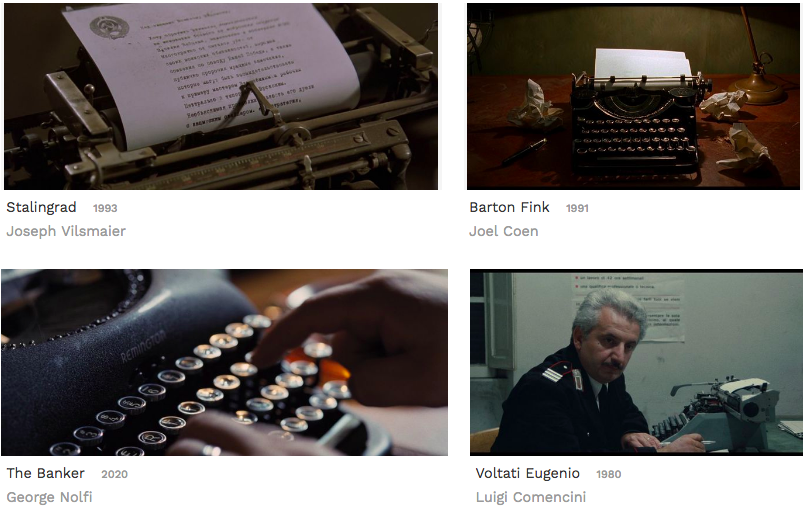
Now a promising new solution has emerged, called Flim (not to be confused with “film”). Described on its about page as “a constantly evolving database of HD screenshots,” with a claim of 50,000 provided daily, Flim uses artificial intelligence to perform color analysis and detect “objects, clothes, characters, etc.”
This means that when you enter terms like “tree,” “guitar,” “tuxedo,” or “pizza,” you get a selection of images including trees, guitars, tuxedos, and pizzas, all taken straight from a range of motion pictures wide enough to include The Nightmare Before Christmas and An American Werewolf in London, Easy Rider and Wayne’s World 2, Mélo and Wedding Crashers.

Artificial intelligence has come a long way in recent years, especially in its capacity to recognize the content of images. The one driving Flim does seem to have committed the occasional amusing misfile, but it’s still early days. And though cinephiles will be quick to notice the omissions in its database, they’ll find a great deal of visual material from the work of their favorite auteurs: more than 100 screenshots from that of David Lynch, more than 300 from that of Éric Rohmer, more than a thousand from that of Stanley Kubrick, and nearly 1,500 from that of Alfred Hitchcock.
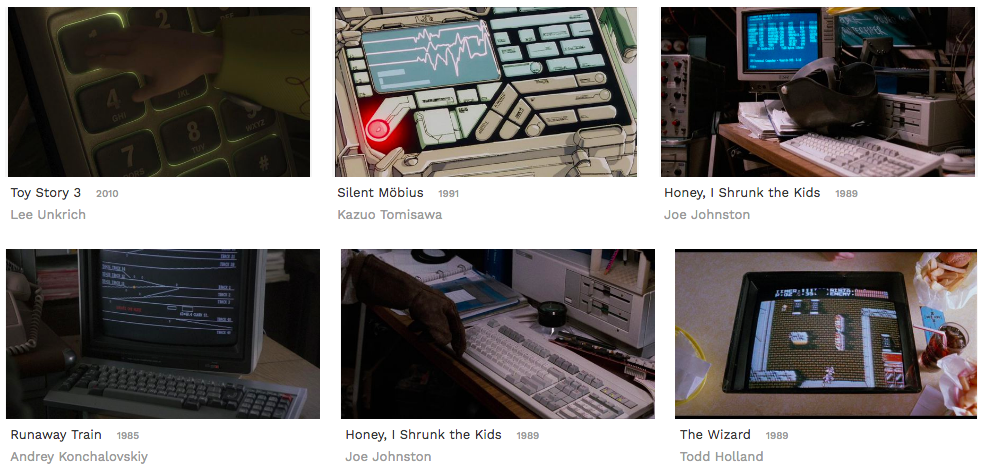
“I would love for the screenshot detail pages to include timecodes,” suggests Jason Kottke. It would make this an amazing tool for creating supercuts, film analysis videos, and other sorts of media. Imagine how much easier Christian Marclay’s job would have been with ‘clock’ and ‘watch’ searches on Flim.” Certainly I could have used it while making my own video essay on Los Angeles’ Bonaventure Hotel, a notable film-shoot location over the past few decades — though as yet the Bonaventure’s name returns no results, nor do the names of any other real-world buildings that come to mind.
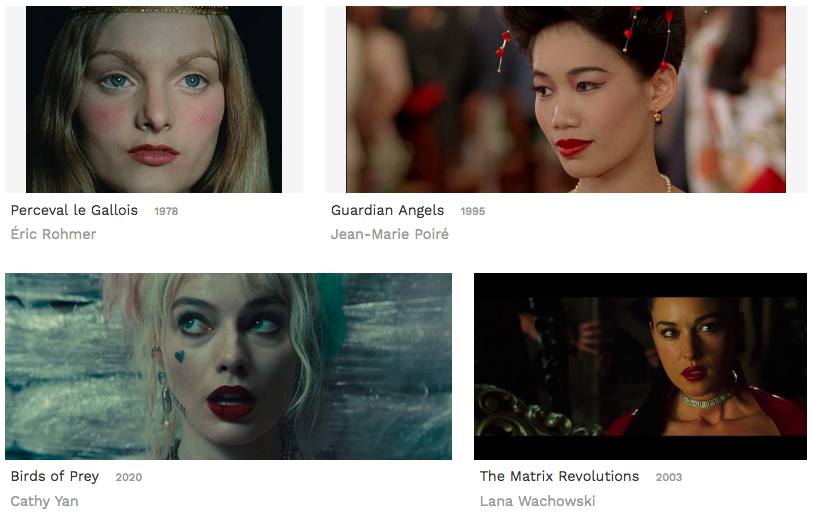
Still, if Flim expands apace, it will become a valuable resource for cinephiles and non-cinephiles alike, as well as filmmakers themselves: No Film School’s Jason Hellerman describes it as a potentially revolutionary aid for the assembly of “mood boards” and “lookbooks,” industry-standard elements of pitch presentations for “music videos, features, and commercials.” As with any newly developed tool of this kind, though, the most interesting uses will surely be the least obvious ones. In time, Flim could even prove to be a trusted source of reading recommendations.
via Kottke
Related Content:
The 100 Most Memorable Shots in Cinema Over the Past 100 Years
Download 6600 Free Films from The Prelinger Archives and Use Them However You Like
Download for Free 2.6 Million Images from Books Published Over Last 500 Years on Flickr
Based in Seoul, Colin Marshall writes and broadcasts on cities, language, and culture. His projects include the Substack newsletter Books on Cities, the book The Stateless City: a Walk through 21st-Century Los Angeles and the video series The City in Cinema. Follow him on Twitter at @colinmarshall or on Facebook.
Read More...Support Us
We're hoping to rely on loyal readers, rather than erratic ads. Please click the Donate button and support Open Culture. You can use Paypal, Venmo, Patreon, even Crypto! We thank you!

About Us

Open Culture scours the web for the best educational media. We find the free courses and audio books you need, the language lessons & educational videos you want, and plenty of enlightenment in between.
Advertise With Us
FREE UPDATES!
GET OUR DAILY EMAIL
Get the best cultural and educational resources on the web curated for you in a daily email. We never spam. Unsubscribe at any time.
FOLLOW ON SOCIAL MEDIA
Open Culture editor Dan Colman scours the web for the best educational media. He finds the free courses and audio books you need, the language lessons & movies you want, and plenty of enlightenment in between.
Advertise With Us

