How to Wear a Toga the Official Ancient Roman Way
What does it take to wear an ancient Roman toga with dignity and grace?
Judging from the above demonstration by Dr Mary Harlow, Associate Professor of Ancient History at the University of Leicester, a couple of helpers, who, in the first century CE, would have invariably been enslaved, and thus ineligible for togas of their own.
The iconic outer garments, traditionally made of wool, begin as single, 12–16m lengths of fabric.
Extra hands were needed to keep the cloth from dragging on the dirty floor while the wearer was being wrapped, to secure the garment with additional pleats and tucks, and to create the pouch-like umbo at chest level, in a manner as aesthetically pleasing as every other fold and drape was expected to be.
As formal citizen’s garb, the toga was suitable for virtually every public occasion, as well as an audience with the emperor.
In addition to slaves, the toga was off-limits to foreigners, freedmen, and, with the notable exception of adulteresses and prostitutes, women.
Wealthier individuals flaunted their status by accenting their outfit with stripes of Tyrian Purple.
The BBC reports that dying even a single small swatch of fabric this shade “took tens of thousands of desiccated hypobranchial glands wrenched from the calcified coils of spiny murex sea snails” and that thus dyed, the fibers “retained the stench of the invertebrate’s marine excretions.”
Achieving that Tyrian Purple hue was “a very smelly process,” Dr. Harlow confirms, “but if you could retain a little bit of that fishy smell in your final garment, it would show your colleagues that you could afford the best.”
Given the laundry-related revelations of some toga investigating students in Salisbury University’s Department of Theatre and Dance study abroad program, above, a fishy odor might not have been the greatest olfactory challenge associated with this garment.
The students also share how toga-clad Romans dealt with stairs, and introduce viewers to 5 forms of toga:
Toga Virilis — the toga of manhood
Toga Praetexta — the pre-toga of manhood toga
Toga Pulla — a dark mourning toga
Toga Candida- a chalk whitened toga sported by those running for office
Toga Picta- to be worn by generals, praetors celebrating games and consuls. The emperor’s toga picta was dyed purple. Uh-oh.
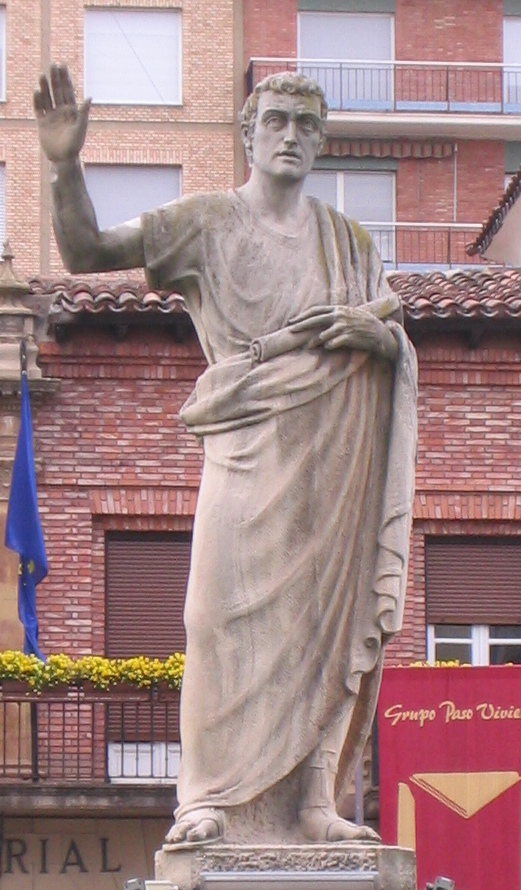
Their youthful enthusiasm for antiquity is rousing, though Quintilian, the first century CE educator and expert in rhetoric might have had some thoughts on their clownish antics.
He certainly had a lot of thoughts about togas, which he shared in his instructive masterwork, Institutio Oratoria:
The toga itself should, in my opinion, be round, and cut to fit, otherwise there are a number of ways in which it may be unshapely. Its front edge should by preference reach to the middle of the shin, while the back should be higher in proportion as the girdle is higher
behind than in front. The fold is most becoming, if it fall to a point a little above the lower edge of the tunic, and should certainly never fall below it. The other fold which passes obliquely like a belt under the right shoulder and over the left, should neither be too tight nor too loose. The portion of the toga which is last to be arranged should fall rather low, since it will sit better thus and be kept in its place. A portion of the tunic also should be drawn back in order that it may not fall over the arm when we are pleading, and the fold should be thrown over the shoulder, while it will not be unbecoming if the edge be turned back. On the other hand, we should not cover the shoulder and the whole of the throat, otherwise our dress will be unduly narrowed and will lose the impressive effect produced by breadth at the chest. The left arm should only be raised so far as to form a right angle at the elbow, while the edge of the toga should fall in equal lengths on either side.
Quintillian was willing to let some of his high standards slide if the wearer’s toga had been untidied by the heat of rousing oration:
When, however, our speech draws near its close, more especially if fortune shows herself kind, practically everything is becoming; we may stream with sweat, show signs of fatigue, and let our dress fall in careless disorder and the toga slip loose from us on every side…On the other hand, if the toga falls down at the beginning of our speech, or when we have only proceeded but a little way, the failure to replace it is a sign of indifference, or sloth, or sheer ignorance of the way in which clothes should be worn.
We’re pretty sure he would have frowned on classical archaeologist Shelby Brown’s experiments using a twin-size poly-blend bed sheet in advance of an early 21st-century College Night at the Getty Villa.
Prospective guests were encouraged to attend in their “best togas.”
Could it be that the party planners , envisioning a civilized night of photo booths, classical art viewing, and light refreshments in the Herculaneum-inspired Getty Villa, were so ignorant of 1978’s notorious John Belushi vehicle Animal House?
…Estne volumen in toga, an solum tibi libet me videre?
Related Content
Roman Statues Weren’t White; They Were Once Painted in Vivid, Bright Colors
Archaeologists Discover an Ancient Roman Sandal with Nails Used for Tread
- Ayun Halliday is the Chief Primatologist of the East Village Inky zine and author, most recently, of Creative, Not Famous: The Small Potato Manifesto. Follow her @AyunHalliday.
Read More...The Depths of Wikipedia: Enjoy a Compendium of the Online Encyclopedia’s Most Bizarre Pages
@depthsofwikipedia If the authorities kill me for making this tiktok just know I loved you guys #learnontiktok #tiktokpartner ♬ original sound — Annie Rauwerda
What’s your stance on Wikipedia, the free, open content online encyclopedia?
Students are often discouraged or disallowed from citing Wikipedia as a source, a bias that a Wikipedia entry titled “Wikipedia should not be considered a definitive source in and of itself” supports:
As a user-generated source, it can be edited by anyone at any time, and any information it contains at a particular time could be vandalism, a work in progress, or simply incorrect. Biographies of living persons, subjects that happen to be in the news, and politically or culturally contentious topics are especially vulnerable to these issues…because Wikipedia is a volunteer-run project, it cannot constantly monitor every contribution. There are many errors that remain unnoticed for hours, days, weeks, months, or even years.
(Another entry counsels those who would persist to cite the exact time, date, and article version they are referencing.)
Wikipedia has a clearly stated policy prohibiting contributors from close paraphrasing or outright copying and pasting from outside sources, though in a bit of a circle-in-a-circle situation, several noted authors and journalists have been caught plagiarizing Wikipedia articles.
A list of Wikipedia controversies, published on — where else? — Wikipedia is a hair raising litany of political sabotage, character assassination, and “revenge edits”. (The list is currently substantiated by 338 reference links, and has been characterized as in need of update since October 2021, owing to a lack of edits regarding the “controversy about Mainland Chinese editors.”)
It can be a pretty scary place, but University of Michigan senior Annie Rauwerda, creator of the Instagram account Depths of Wikipedia is unfazed. As she wrote in an article for the tech publication Input:
Wikipedia is a splendidly extensive record of almost everything that matters; a modern-day Library of Alexandria that’s free, accessible, and dynamic. But Wikipedia is characterized not only by what it is but also by what it is not. It’s not a soapbox, a battleground, nor a blog.
It’s also becoming famous as Rauwerda’s playground, or more accurately, a packed swap shop in which millions of bizarre items are tucked away.
If your schedule limits the amount time you can spend down its myriad rabbit holes, Rauwerda will do the digging for you.
Turning a selection of Wikipedia excerpts into a collage for a friend’s quaran-zine inspired her to keep the party going with screenshots of oddball entries posted to a dedicated Instagram account.



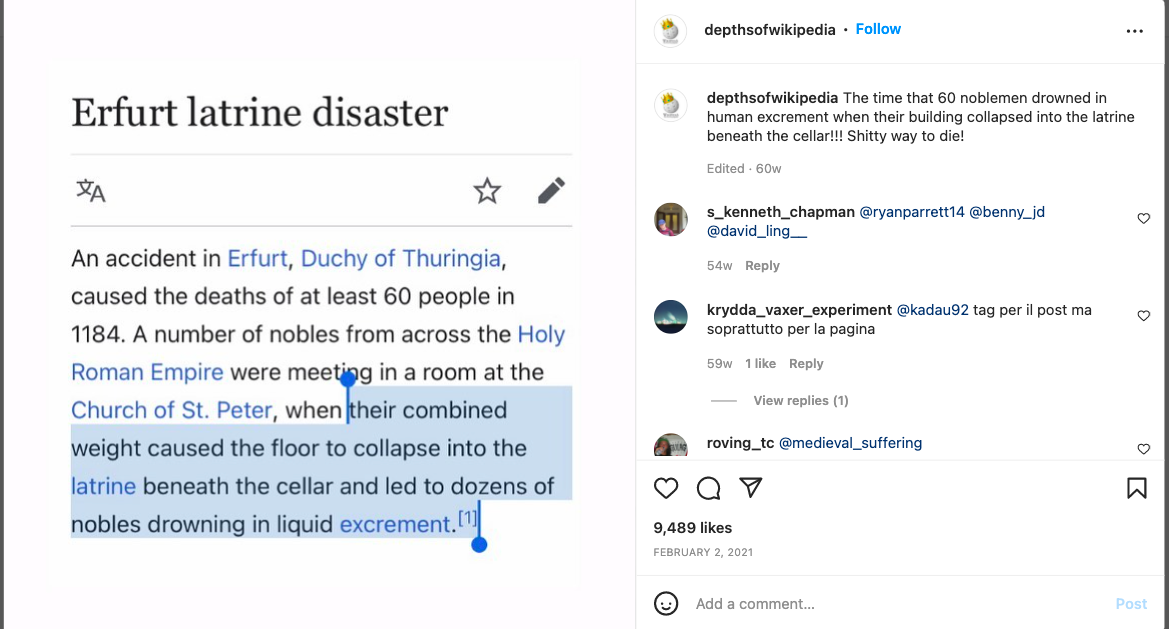
Her followers don’t seem to care whether a post contains an image or not, though the neuroscience major finds that emotional, short or animal-related posts generate the most excitement. “I used to post more things that were conceptual,” she told Lithium Magazine, “like mind-blowing physics concepts, but those didn’t lend themselves to Instagram as well since they require a few minutes of thinking and reading.”
The bulk of what she posts come to her as reader submissions, though in a pinch, she can always turn to the “holy grail” — Wikipedia’s own list of unusual articles.
In addition to Instagram, her discoveries find their way into an infrequently published newsletter, and onto TikTok and Twitter, where some of our recent faves include the definition of humster, a list of games that Buddha would not play, and the Paul O’Sullivan Band, “an internationally based, pop-rock band consisting of four members, all of whom are named Paul O’Sullivan.”
Along the way, she has found ways to give back, co-hosting a virtual edit-a-thon and bringing some genuine glamour to a livestreamed Wikipedia trivia contest.
And she recently authored a serious article for Slate about Russians scrambling to download a 29-gigabyte file containing Russian-language Wikipedia after the Federal Service for Supervision of Communications, Information Technology and Mass Media (Roskomnadzor) threatened to block it over content related to the invasion of Ukraine.
(You can read more about how that’s going on Wikipedia…)



Submit a link to Wikipedia page for possible inclusion on the Depths of Wikipedia here.
Follow Annie Rauwinda’s Depths of Wikipedia on Instagram and TikTok.
Related Content
Listen to Wikipedia: A Web Site That Turns Every Wikipedia Edit Into Ambient Music in Real Time
- Ayun Halliday is the Chief Primatologist of the East Village Inky zine and author, most recently, of Creative, Not Famous: The Small Potato Manifesto. Follow her @AyunHalliday.
Read More...When Stalin Starved Ukraine
Since its launch last month, Russia’s invasion of Ukraine has sent observers around the world scrambling for context. It is a fact, for example, that Russia and Ukraine were once “together” in the communist mega-state that was the Union of Soviet Socialist Republics. But it is also a fact that such Soviet togetherness hardly ensured warm feelings between the two lands. An especially relevant chapter of their history is known in Ukraine as the Holodomor, or “death by starvation.” Spanning the years 1932 and 1933, this period of famine resulted in three to six million lives lost — and that according to the lower accepted estimates.
“It was genocide,” says the narrator of the Vox “Missing Chapter’ video above, “carried out by a dictator who wanted to keep Ukraine under his control, and would do everything in his power to cover it up for decades. That dictator was, of course, Joseph Stalin, who accompanied brutal methods of rule with tight control of information. “In 1917, after the fall of the Russian Empire, Ukraine briefly gained freedom,” the video explains. “But by 1922, it was forcibly integrated into the newly formed Soviet Union.” A rural and highly fertile land, Ukraine was known as “the breadbasket of the Soviet Union” — hence Stalin’s desire to nip any potential revolution there in the bud.
First came a “widespread, violent purge of Ukrainian intellectuals along with priests and religious structures.” At the same time as they advanced this attempted dismantling of Ukrainian culture, Soviet higher-ups were also implementing Stalin’s five-year plan of industrialization, consolidation, and collectivization, including that of all agriculture. This was the time of the kulak, or “wealthy peasant,” the label invented to disgrace anyone resistant to this process. Any kulaks known to Stalin faced a terrible fate indeed, including exile, imprisonment, and even execution; those farmers who remained then fell victim to the dictator’s engineered famine.
Under the pretext of enforcing deliberately unrealistic grain-production quotas, Stalin’s enforcers seized farms across Ukraine in order to sell their products to the West. Before long, “Soviet police began seizing not just grain, but anything edible.” Farmers were stopped from leaving their homeland, where Stalin intended them to starve, “but even in this unimaginable suffering, Ukrainians fought for their lives and each other.” This video incorporates interviews with a grandson and granddaughter of two such Ukrainians who left behind personal records of the Holodomor. A story of endurance and survival under the very worst circumstances, and ultimately a return to national independence, it goes some way to explaining how and why Ukraine continues to put up such a valiant fight against the forces that have descended upon it.
Related content:
Putin’s War on Ukraine Explained in 8 Minutes
Why Russia Invaded Ukraine: A Useful Primer
Russian Invasion of Ukraine Teach-Out: A Free Course from the University of Michigan
Joseph Stalin, a Lifelong Editor, Wielded a Big, Blue, Dangerous Pencil
Based in Seoul, Colin Marshall writes and broadcasts on cities, language, and culture. His projects include the Substack newsletter Books on Cities, the book The Stateless City: a Walk through 21st-Century Los Angeles and the video series The City in Cinema. Follow him on Twitter at @colinmarshall or on Facebook.
Read More...Adapting Agatha Christie for the Screen — Pretty Much Pop: A Culture Podcast #118
In light of the newly released, Kenneth Branagh-directed film Death on the Nile, Pretty Much Pop discusses the continuing appearance of the works of the world’s most successful mystery writer in film and TV.
Your host Mark Linsenmayer is joined by repeat guests Sarahlyn Bruck, Al Baker, and Nicole Pometti to discuss the recent films, the Sarah Phelps TV adaptations (like The ABC Murders), the Poirot BBC TV series, and some older adaptations.
We take on the different characterizations of Poirot and how recent, grittier interpretations compare with those of James Bond and Sherlock Holmes. Also, how should a screenwriter adapt such fact-heavy novels? What works and doesn’t in terms of modernizing them to current audience expectations? How did Christie keep things interesting for herself writing so many mysteries? How deep do her meditations on psychology and ethics run in these books, and can that be adequately conveyed on screen? What’s the future of the mystery genre?
Here are a few relevant sources:
- “What Makes a Good Hercule Poirot? (It’s More Than the Little Gray Cells.)” by Calum Marsh
- “Death on the Nile is a good old-fashioned mess of a movie” by Joshua Rivera
- “10 Agatha Christie Film Adaptations to Watch Ahead of ‘Death on the Nile’ ” by Sara Century
- “The best Agatha Christie movies and TV shows to satiate your murder/mystery cravings” by Karen Rought
Listen to Nicole’s Remakes, Reboots and Revivals podcast. Look into Sarahlyn’s book and other writings. Check out Al’s work fighting disinformation at Logically.
Follow our guests at @remakespodcast (Nicole), @sarahlynbruck, and @ixisnox (Al).
This episode includes bonus discussion featuring all of our guests that you can access by supporting the podcast at patreon.com/prettymuchpop or by choosing a paid subscription through Apple Podcasts. This podcast is part of the Partially Examined Life podcast network.
Pretty Much Pop: A Culture Podcast is the first podcast curated by Open Culture. Browse all Pretty Much Pop posts.
Read More...Japanese Researcher Sleeps in the Same Location as Her Cat for 24 Consecutive Nights!

Cross cat napping with bed hopping and you might end up having an “adventure in comfort” similar to the one that informs student Yuri Nakahashi’s thesis for Tokyo’s Hosei University.
For 24 consecutive nights, Nakahashi forwent the comforts of her own bed in favor of a green sleeping bag, unfurled in whatever random location one of her five pet cats had chosen as its sleeping spot that evening.
(The choice of which cat would get the pleasure of dictating each night’s sleeping bag coordinates was also randomized.)
As the owner of five cats, Nakahashi presumably knew what she was signing up for…
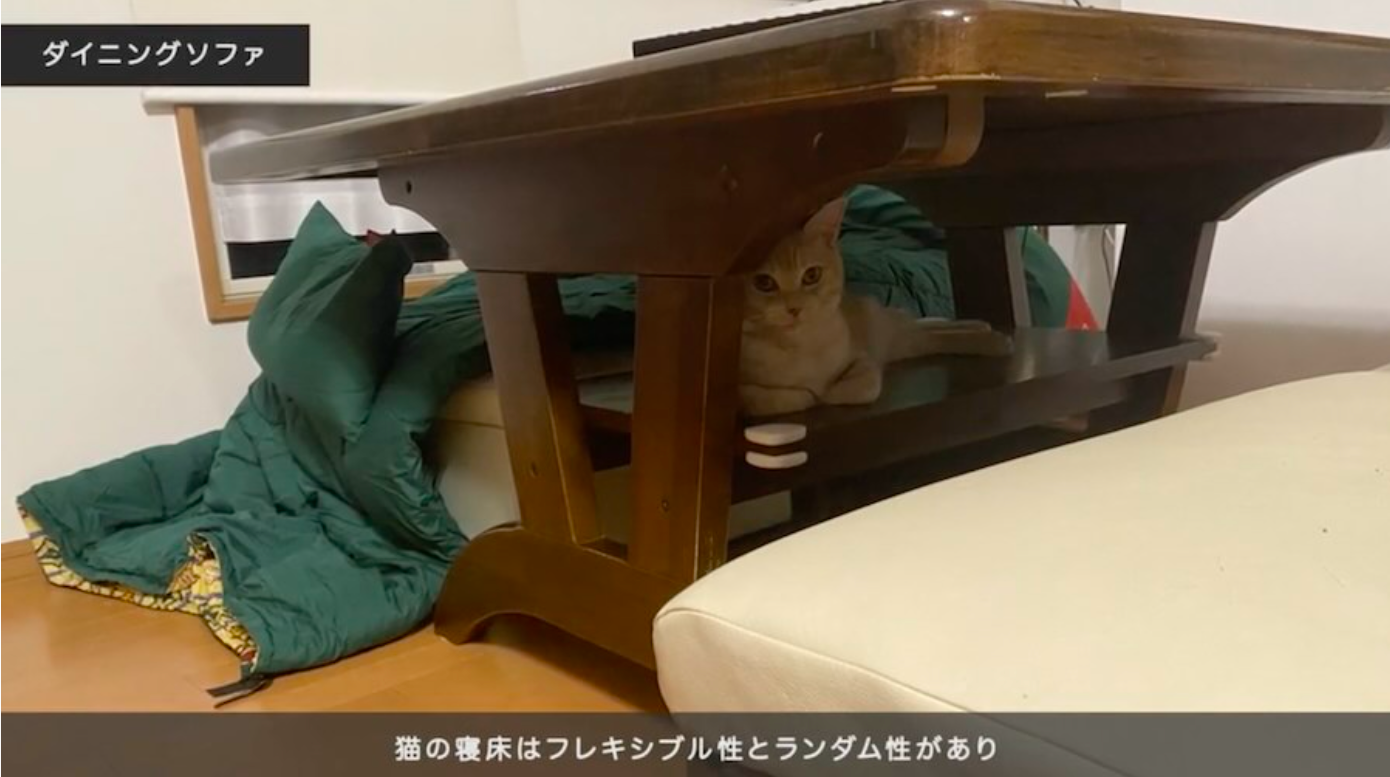

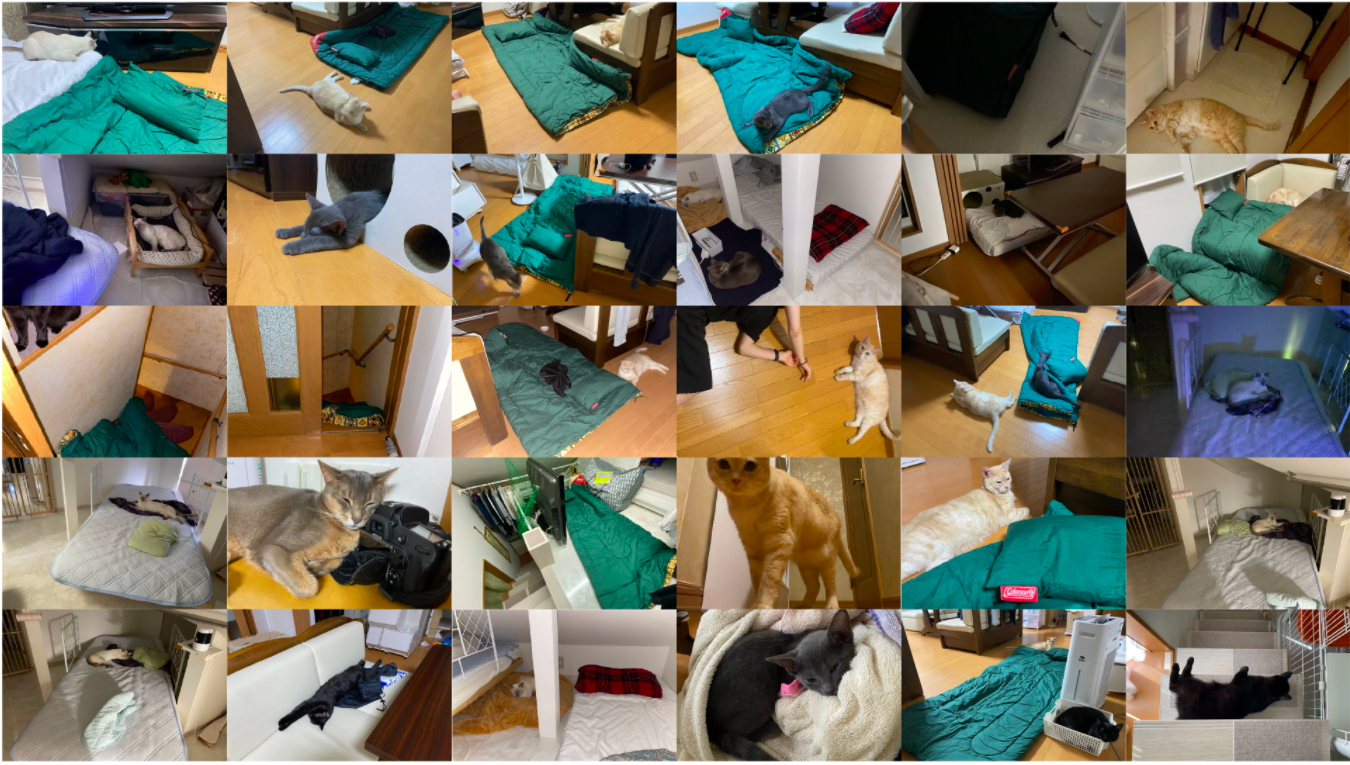
Cats rack out atop sofa backs, on stairs, and under beds…and so did Nakahashi.
Her photos suggest she logged a lot of time on a bare wooden floor.
A FitBit monitored the duration and quality of time spent asleep, as well as the frequency with which she awakened during the night.
She documented the physical and psychological effects of this experiment in an interactive published by the Information Processing Society of Japan.
She reports that she eagerly awaited the revelation of each night’s coordinates, and that even when her sleep was disrupted by her pets’ middle of the night grooming routines, bunking next to them had a “relaxing effect.”
Meanwhile, our research suggests that the same experiment would awaken a vastly different response in a different human subject, one suffering from ailurophobia, say, or severe allergies to the proteins in feline saliva, urine, and dander.
What’s really surprising about Nakahashi’s itinerant, and apparently pleasure-filled undertaking is how little difference there is between her average sleep score during the experiment and her average sleep score from the 20 days preceding it.

At left, an average sleep score of 84.2 for the 20 days leading up to experiment. At right, an average sleep score 83.7 during the experiment.
Nakahashi’s entry for the YouFab Global Creative Awards, a prize for “work that attempts a dialogue that transcends the boundaries of species, space, and time” reflects the playful spirit she brought to her slightly off-kilter experiment:
Is it possible to add diversity to the way we enjoy sleep? Let’s think about food. In addition to the taste and nutrition of the food, each meal is a special experience with diversity depending on the people you are eating with, the atmosphere of the restaurant, the weather, and many other factors. In order to bring this kind of enjoyment to sleep, we propose an “adventure in comfort” in which the cat decides where to sleep each night, away from the fixed bedroom and bed. This project is similar to going out to eat with a good friend at a restaurant, where the cat guides you to sleep.
She notes that traditional beds have an immobility owing to “their physical weight and cultural concepts such as direction.”
This suggests that her work could be of some benefit to humans in decidedly less fanciful, involuntary situations, whose lack of housing leads them to sleep in unpredictable, and inhospitable locations.
Nakahashi’s time in the green sleeping bag inspired her to create the below model of a more flexible bed, using a polypropylene bag, rice and nylon film.
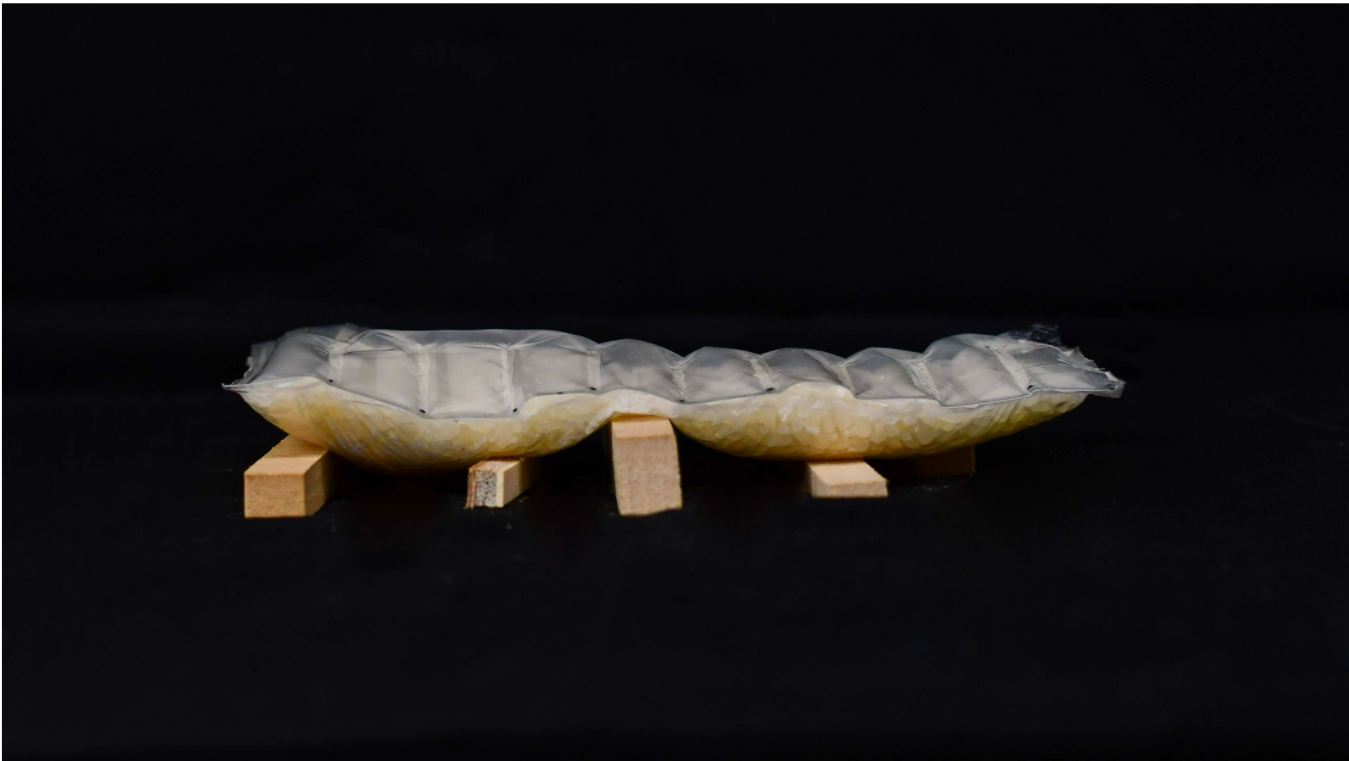
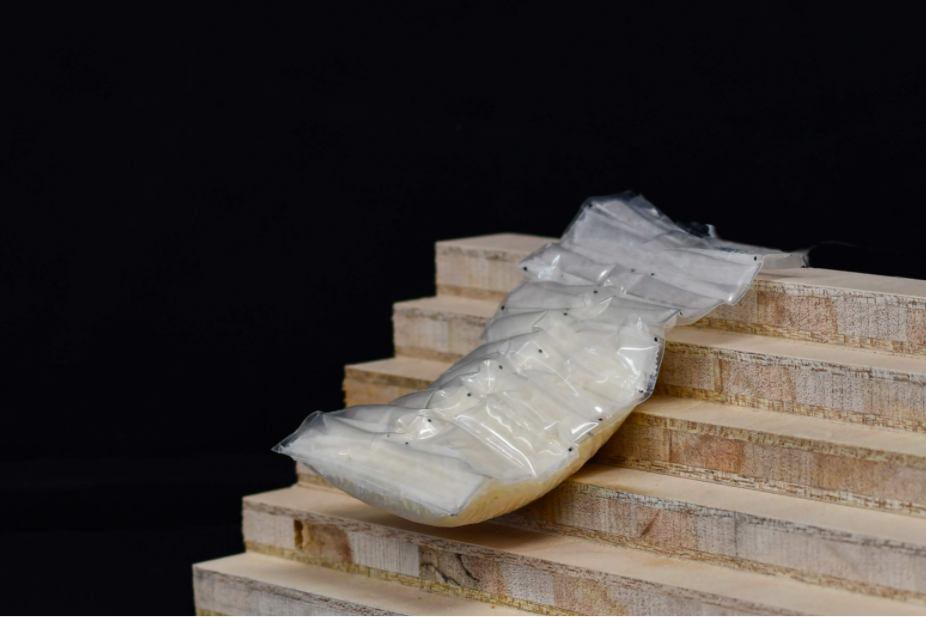

We have created a prototype of a double-layered inflatable bed that has a pouch structure that inflates with air and a jamming structure that becomes hard when air is compressed. The pouch side softly receives the body when inflated. The jamming side becomes hard when the air is removed, and can be firmly fixed in an even space. The air is designed to move back and forth between the two layers, so that when not in use, the whole thing can be rolled up softly for storage.
It’s hard to imagine the presence of a pussycat doing much to ameliorate the anxiety of those forced to flee their familiar beds with little warning, but we can see how Nakahashi’s design might bring a degree of physical relief when sleeping in subway stations, basement corners, and other harrowing locations.
Via Spoon & Tomago
- Ayun Halliday is the Chief Primatologist of the East Village Inky zine and author, most recently, of Creative, Not Famous: The Small Potato Manifesto. Follow her @AyunHalliday.
Related Content
A 110-Year-Old Book Illustrated with Photos of Kittens & Cats Taught Kids How to Read
GPS Tracking Reveals the Secret Lives of Outdoor Cats
Read More...How Yayoi Kusama, Obsessed with Polka Dots, Became One of the Most Radical Artists of All Time
Yayoi Kusama turned 93 this past Tuesday, and she remains not just artistically productive but globally beloved. Her work itself continues to appeal to an ever wider range of viewers of all nationalities and ages. “Yayoi Kusama is a Japanese artist who is sometimes called ‘the princess of polka dots’,” says the brief introduction to her life and work offered at Take Kids. “Although she makes lots of different types of art – paintings, sculptures, performances and installations – they have one thing in common, DOTS!” That’s certainly one way of describing her, though anyone who’s followed her 70-year-long career will notice the conspicuous absence of other, equally important elements of her art’s development: mental illness, for instance, or enormous numbers of phalluses.
Yet even the new video essay on Kusama from Great Art Explained, a Youtube channel very much pitched to an adult viewership, takes as its focus the artist’s relationship with variously sized two-dimensional solid circles. At the age of ten, says the channel’s creator James Payne, she “had her first hallucination, which she described as flashes of light, auras, or dense fields of dots. The dots would come to life and consume her and she would find herself obliterated.” Since then, and though her art has “crossed from art to fashion and from filmmaking to performance art, her continuing exploration of the polka dot has remained the one consistent motif.”
In approaching an artist through a single motif rather than a single work, this video breaks from the standard Great Art Explained format, but that doesn’t stop Payne from telling Kusama’s story with his usual succinctness. He begins with her discomfiting upbringing in a well-off rural Japanese household and continues to her discovery of and subsequent correspondence with Georgia O’Keeffe, who made Kusama the necessary introductions in the New York art world. Through her rigorous work habits and continuous pushing of aesthetic and political boundaries, Kusama eventually became a figure of some renown in that city’s avant-garde scene of the nineteen-sixties — a milieu that proved receptive to the “soft-sculpture phalluses” with which many of her creations then bristled.
Kusama returned to her homeland in the early 1970s, and soon thereafter only those with the sharpest memories of the avant-garde sixties remembered her work. Only a 1989 retrospective at New York’s Center for International Contemporary Arts returned her to the international fame she has enjoyed ever since. Many of us now have vivid memories of stepping into her completely mirrored, densely dot-lit “infinity rooms” over the years and in different museums around the world. Though Kusama began making them in the mid-nineteen-sixties, they’ve turned out to be ideally suited to the social-media era. “People queue up for hours for just sixty seconds in one of her infinity-room installations,” says Payne. “Each image they take of infinity joins millions more on the internet — itself infinite.” Only now, in Kusama’s tenth decade, has the rest of the world caught up with her.
Related content:
The MoMA Teaches You How to Paint Like Pollock, Rothko, de Kooning & Other Abstract Painters
Based in Seoul, Colin Marshall writes and broadcasts on cities, language, and culture. His projects include the Substack newsletter Books on Cities, the book The Stateless City: a Walk through 21st-Century Los Angeles and the video series The City in Cinema. Follow him on Twitter at @colinmarshall or on Facebook.
Read More...Footage of George Harrison & Bob Dylan Rehearsing “If Not For You” at the Concert for Bangladesh (1971)
“Dylan… was really into the whole idea of it for the refugees.…” says George Harrison over the restored footage above from 1971’s Concert for Bangladesh. The quiet Beatle’s scouser lilt will surely tug at your heartstrings, as will Harrison and Dylan’s careful rehearsal take of “If Not for You,” a song they did not end up playing together during the concert. It’s a significant shared moment nonetheless. As fans know, “If Not for You” became a keystone song for both artists at the turn of the 70s.
Dylan wrote the song the year previous as the first track on his 1970 New Morning, a record critics heralded as a return to form after the panned double album, Self Portrait. Harrison himself sat in on a session for the song and recorded a “languid early version,” notes Beatles Bible, “at Columbia’s Studio B in New York.”
The track is “thought to be Harrison’s first recorded instance of slide guitar,” a technique that would characterize the sound of his double debut, All Things Must Pass. His presence arguably helped shape the direction of Dylan’s recording, which Dylan himself would later describe as “sort of Tex-Mex.”
Harrison’s album, released in the same year as New Morning, features his — perhaps better known — version of “If Not for You,” a song that has been covered dozens of times since. (All Things Must Pass also features a 1968 collaboration between Harrison and Dylan: namely, the opening track, “I’d Have You Anytime.”) It’s a song that seems to sum up the two musicians’ contentment with their marriages and lives at the time. The performance, though only a soundcheck, provides “an intimate glimpse,” critic Simon Leng comments, “of the warm friendship between two major cultural figures at a point when both were emotionally vulnerable.”
On one hand, the Concert for Bangladesh was a world-historical event, providing inspiration for Live Aid and other stadium-sized benefit shows. “In one day,” as Ravi Shankar put it, “the whole world knew the name of Bangladesh.” NME called it “The Greatest Rock Spectacle of the Decade” and Rolling Stone’s editors described “a brief incandescent revival of all that was best about the Sixties.”
But on the other hand, in moments like these, we can see the concert as a turn into a more mature, sensitive seventies. “Instead of crying ‘I want you so bad,” wrote Ed Ward in his 1970 New Morning review, Dylan is “celebrating the fact that not only has he found her, but they know each other well, and get strength from each other, depend on each other.” In the take at the top, Jack Whatley observes, Harrison and Dylan “spend the entire song looking at each other, as if they’re singing about their own relationship.”
Related Content:
Bob Dylan’s Famous Televised Press Conference After He Went Electric (1965)
How Bob Dylan Created a Musical & Literary World All His Own: Four Video Essays
Josh Jones is a writer and musician based in Durham, NC. Follow him at @jdmagness
Read More...Japanese Toy Designs from the Late 19th & Early 20th Century: Explore an Online Archive
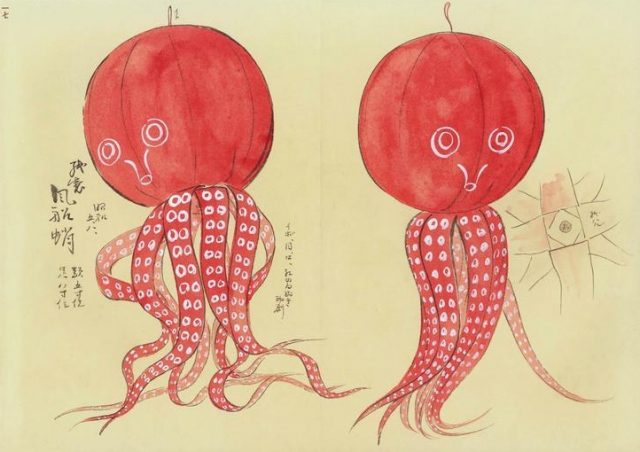
After two centuries of isolation, Japan re-opened to the world in the 1860s, at which point Westerners immediately became enamored with things Japanese. It was in that very same decade that Vincent Van Gogh began collecting ukiyo‑e woodblock prints, which inspired him to create “the art of the future.” But not every Westerner was drawn first to such elevated fruits of Japanese culture. When the American educator William Elliot Griffis went to Japan in 1876 he marveled at a country that seemed to be a paradise of play: “We do not know of any country in the world in which there are so many toy-shops, or so many fairs for the sale of things which delight children,” he wrote.
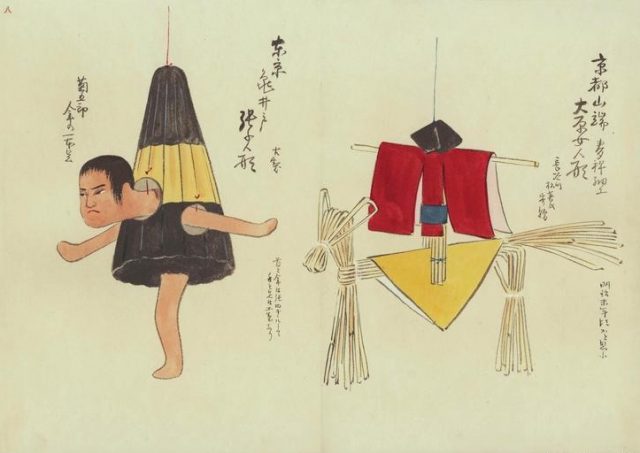
That quote comes from Matt Alt’s Pure Invention: How Japan’s Pop Culture Conquered the World. “While Western tastemakers voraciously consumed prints, glassware, textiles, and other grown-up delights, it was in fact toys that formed the backbone of Japan’s burgeoning export industry in the late nineteenth century,” Alt writes.
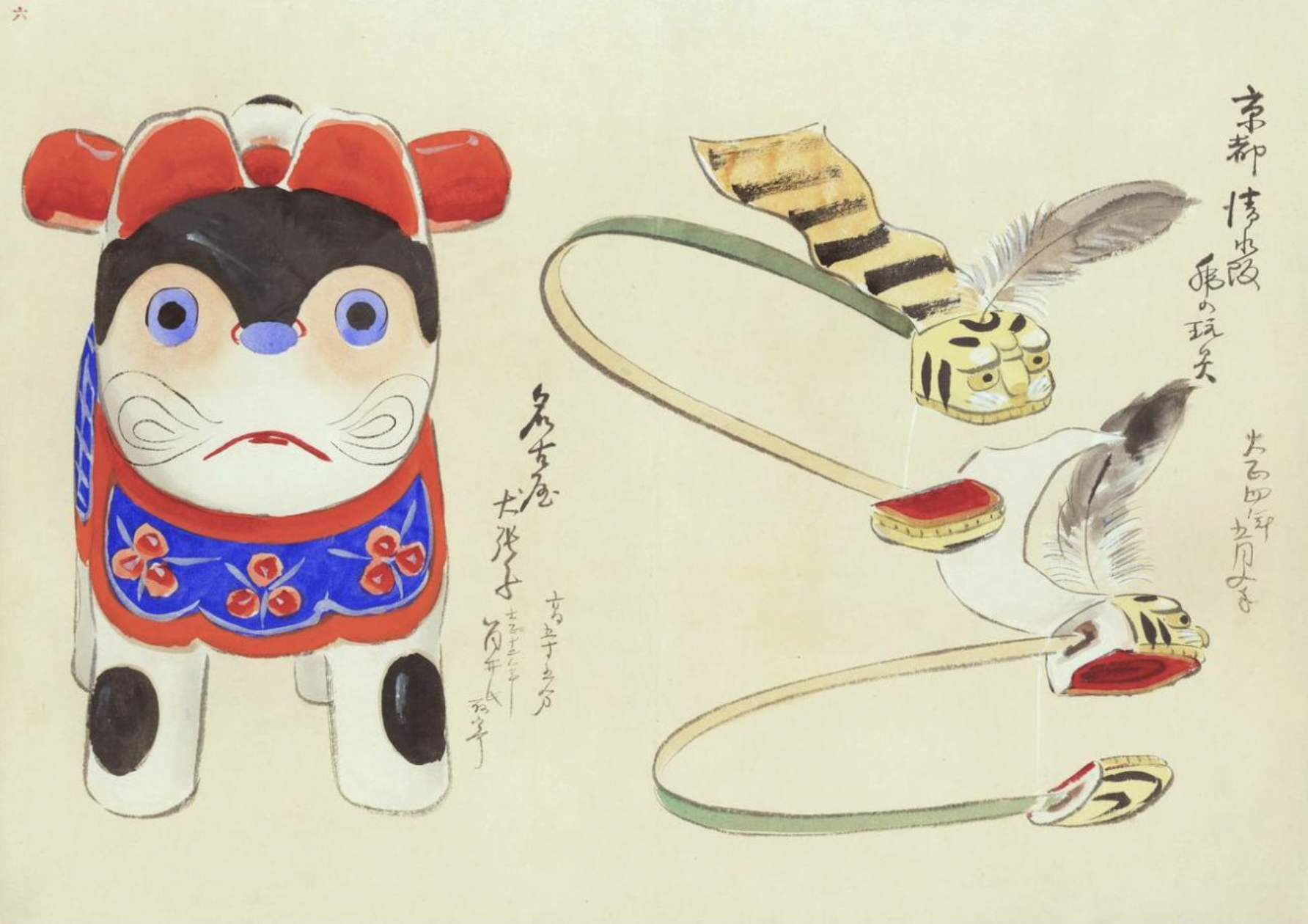
You can experience some of the pleasures of that period’s Japanese visual art along with some of the pleasures of that period’s Japanese toy culture in the Ningyo-do Bunko database. This digital archive’s more than 100 albums of watercolor toy-design renderings from the late nineteenth and early twentieth centuries are, in the words of BibliOdyssey’s Paul Kerrigan, “by turns scary and intriguing.”
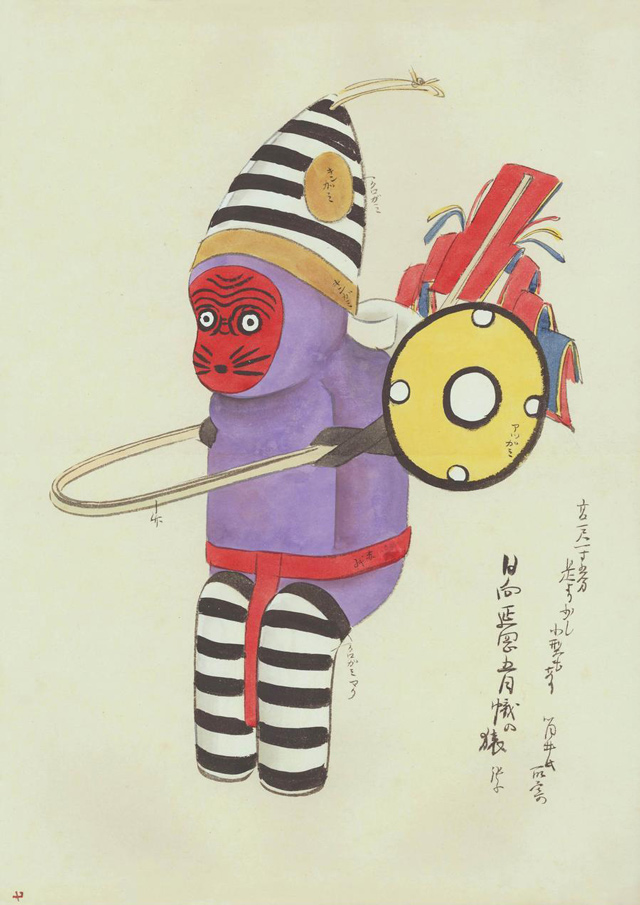
These masks, dolls, tops, and other fanciful works of the toymaker’s craft may not immediately appeal to a generation raised with smartphones. But their designs, rooted in Japanese mythology and regional cultures, nevertheless exude both a still-uncommon artistry and a still-fascinating “otherness.” If this seems like kid’s stuff, bear in mind the causes of Japan’s transformation from a post-World War II shambles to perhaps the most advanced country in the world. As Alt tells the story of this astonishing development, Japan went from making simple tin jeeps to transistor radios to karaoke machines to Walkmen to vast cultural industries of comics, film, television, and related merchandise: all toys, broadly defined, and we in the rest of the world underestimate their power at our peril. Rummage through the designs here.
Related content:
Wagashi: Peruse a Digitized, Centuries-Old Catalogue of Traditional Japanese Candies
How Frank Lloyd Wright’s Son Invented Lincoln Logs, “America’s National Toy” (1916)
Watch Battered & Bruised Vintage Toys Get Mesmerizingly Restored to Near Mint Condition
On Christmas, Browse A Historical Archive of More Than 50,000 Toys
Based in Seoul, Colin Marshall writes and broadcasts on cities, language, and culture. His projects include the Substack newsletter Books on Cities, the book The Stateless City: a Walk through 21st-Century Los Angeles and the video series The City in Cinema. Follow him on Twitter at @colinmarshall or on Facebook.
Read More...When James Brown Played Rikers Island Prison 50 Years Ago (1972)
Though not as well known as Johnny Cash’s concerts at Folsom and San Quentin prisons, James Brown’s 1972 concert at Rikers Island equally quelled rising tensions, and displayed the humility of the artist at the top of his game. Fifty years ago on March 16, Brown and his full band played two sets in front of a crowd of around 550. And until a better source is found, the above video is the only moving record of that event, a shot from a television news broadcast. How did this concert come about? According to the research of New York Times writer Billy Heller, a lot comes down to the tenacity of Gloria Bond, who worked at the New York Board of Corrections.
Earlier in 1972, Rikers Island had seen major unrest. Inhumane conditions and overcrowding had led to a riot that injured 75 inmates and 20 guards. The post-riot atmosphere was a “pressure cooker”. The Board had previously brought in Coretta Scott King to speak to prisoners, and Harry Belafonte to perform. But James Brown was somebody different, with music that was revolutionary, and lyrics that were influenced by, and an influence on, the Black Power movement.
Brown’s manager Charles Bobbit told Gloria Bond that the Godfather of Soul was a hard man to get a hold of and rarely came to the office. According to Bond’s daughter Anna, Gloria replied:
“She says to him: ‘Well, Mr. Bobbit, I’ll tell you what I’ll do. I’ll bring my knitting and I’ll sit in that corner over there,’” Anna Bond said. “‘I won’t bother anybody. I’ll just wait till he comes.’”
Gloria Bond did just that. “Everybody in the office got to know her, and they’d bring her coffee,” Anna Bond said. “She became part of the entourage by sitting in her little corner, knitting.” Eventually, Brown arrived at the office and came face to face with Gloria Bond. “And the rest is history,” Anna Bond said.
It helped that Brown was on a musical crusade to save kids from drugs and a fast track to prison. Having once served time in his younger days, Brown saw too many Black youth going to jail for drug-related crimes. He had recorded a song, a spoken poem in the style of “It’s a Man’s, Man’s, Man’s World” called “King Heroin.” The drug was decimating communities by the turn of the decade.
At Rikers he told the mostly young audience: “When you leave here, you can have a good life or you can have a bad life. However you do it when you get out is up to you.” Brown used his own life as a model of rising above adversity. He also brought his full game (and his full ensemble to the show), treating this gig as important as a show at the Apollo, maybe more so.
The photographer Diana Mara Henry shot several rolls of film that day and documented in black and white Brown and his band. Her quote from the short video below (note the incorrect year) serves as a vibe for the whole experience:
“As an artist, you put everything you can into a performance and at some point you turn it over to the audience.”
Related Content:
James Brown Gives You Dancing Lessons: From The Funky Chicken to The Boogaloo
The Best Commercial Ever? James Brown Sells Miso Soup (1992)
Ted Mills is a freelance writer on the arts who currently hosts the Notes from the Shed podcast and is the producer of KCRW’s Curious Coast. You can also follow him on Twitter at @tedmills, and/or watch his films here.
Read More...Meet Anita Berber, the Cabaret Star Who Scandalized Weimar-Era Berlin
Anita Berber, the taboo-busting, sexually omnivorous, fashion forward, frequently naked star of the Weimar Republic cabaret scene, tops our list of performers we really wish we’d been able to see live.
While Berber acted in 27 films, including Prostitution, director Fritz Lang’s Dr. Mabuse: The Gambler, and Different from the Others, which film critic Dennis Harvey describes as “the first movie to portray homosexual characters beyond the usual innuendo and ridicule,” we have a strong hunch that none of these appearances can compete with the sheer audacity of her stage work.
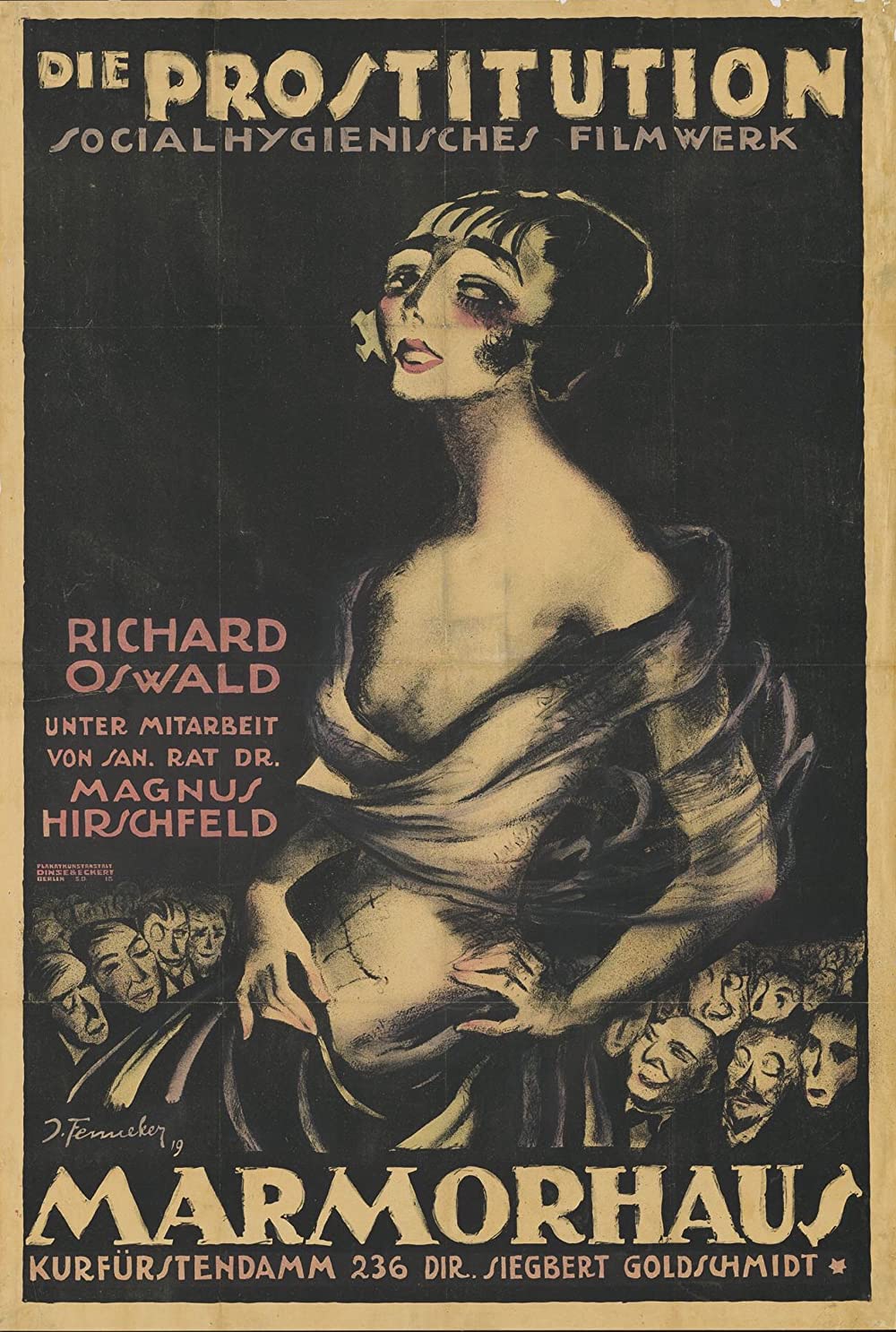
Audiences at Berlin’s White Mouse cabaret (some wearing black or white masks to conceal their identities) were titillated by her Expressionistic nude solo choreography, as well as the troupe of six teenaged dancers under her command.
As biographer Mel Gordon writes in The Seven Addictions and Five Professions of Anita Berber: Weimar Berlin’s Priestess of Depravity, Berber, often described as a “stripper”, displayed the passion of a serious artist, “respond(ing) to the audience’s heckling with show-stopping obscenities and indecent provocations:”
Berber had been known to spit brandy on them or stand naked on their tables, dousing herself in wine whilst simultaneously urinating… It was not long before the entire cabaret one night sank into a groundswell of shouting, screams and laughter. Anita jumped off the stage in fuming rage, grabbed the nearest champagne bottle and smashed it over a businessman’s head.
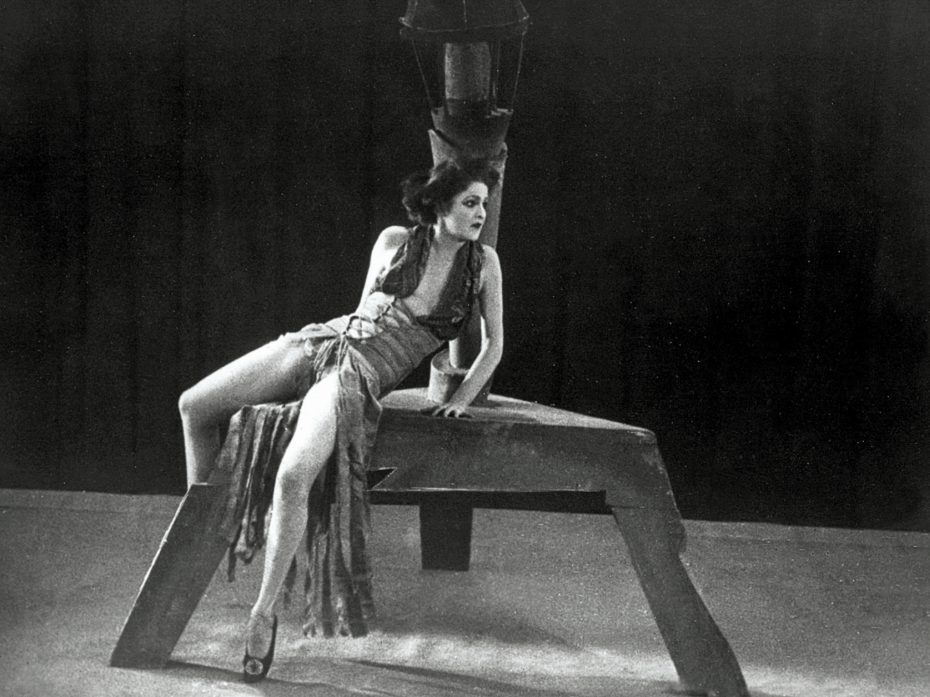
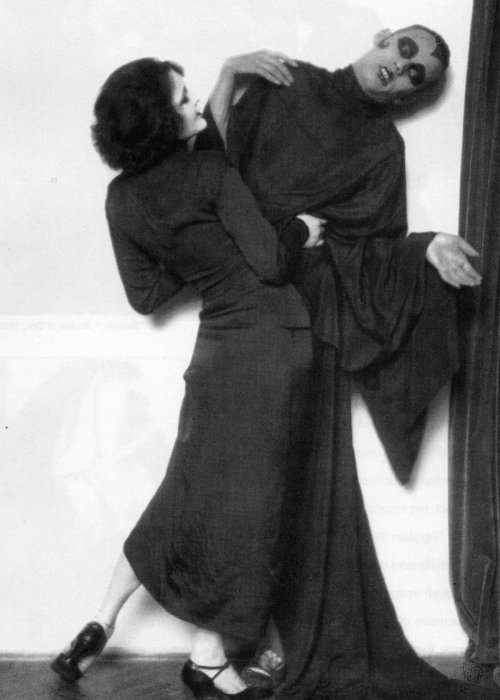
Her collaborations with her second husband, dancer Sebastian Droste, carried Berber into increasingly transgressive territory, both onstage and off.
According to translator Merrill Cole, in the introduction to the 2012 reissue of Dances of Vice, Horror and Ecstasy, a book of Expressionist poems, essays, photographs, and stage designs which Droste and Berber co-authored, “even the biographical details seduce:”
…a bisexual sometimes-prostitute and a shady figure from the male homosexual underworld, united in addiction to cocaine and disdain for bourgeois respectability, both highly talented, Expressionist-trained dancers, both beautiful exhibitionists, set out to provide the Babylon on the Spree with the ultimate experience of depravity, using an art form they had helped to invent for this purpose. Their brief marriage and artistic interaction ended when Droste became desperate for drugs and absconded with Berber’s jewel collection.
This, and the description of Berber’s penchant for “haunt(ing) Weimar Berlin’s hotel lobbies, nightclubs and casinos, radiantly naked except for an elegant sable wrap, a pet monkey hanging from her neck, and a silver brooch packed with cocaine,” do a far more evocative job of resurrecting Berber, the Weimar sensation, than any wordy, blow-by-blow attempt to recreate her shocking performances, though we can’t fault author Karl Toepfer, Professor Emeritus of Theater Arts at San Jose State University, for trying.
In Empire of Ecstasy: Nudity and Movement in German Body Culture, 1910–1935, Toepfer draws heavily on Czech choreographer Joe Jenčík’s eyewitness observations, to reconstruct Berber’s most notorious dance, Cocaine, beginning with the “ominous scenery by Harry Täuber featuring a tall lamp on a low, cloth-covered table:”
This lamp was an expressionist sculpture with an ambiguous form that one could read as a sign of the phallus, an abstraction of the female dancer’s body, or a monumental image of a syringe, for a long, shiny needle protruded from the top of it…It is not clear how nude Berber was when she performed the dance. Jenčík, writing in 1929, flatly stated that she was nude, but the famous Viennese photographer Madame D’Ora (Dora Kalmus) took a picture entitled “Kokain” in which Berber appears in a long black dress that exposes her breasts and whose lacing, up the front, reveals her flesh to below her navel.
In any case, according to Jenčík, she displayed “a simple technique of natural steps and unforced poses.” But though the technique was simple, the dance itself, one of Berber’s most successful creations, was apparently quite complex. Rising from an initial condition of paralysis on the floor (or possibly from the table, as indicated by Täuber’s scenographic notes), she adopted a primal movement involving a slow, sculptured turning of her body, a kind of slow-motion effect. The turning represented the unraveling of a “knot of flesh.” But as the body uncoiled, it convulsed into “separate parts,” producing a variety of rhythms within itself. Berber used all parts of her body to construct a “tragic” conflict between the healthy body and the poisoned body: she made distinct rhythms out of the movement of her muscles; she used “unexpected counter-movements” of her head to create an anguished sense of balance; her “porcelain-colored arms” made hypnotic, pendulumlike movements, like a marionette’s; within the primal turning of her body, there appeared contradictory turns of her wrists, torso, ankles; the rhythm of her breathing fluctuated with dramatic effect; her intense dark eyes followed yet another, slower rhythm; and she introduced the “most refined nuances of agility” in making spasms of sensation ripple through her fingers, nostrils, and lips. Yet, despite all this complexity, she was not afraid of seeming “ridiculous” or “painfully swollen.” The dance concluded when the convulsed dancer attempted to cry out (with the “blood-red opening of the mouth”) and could not. The dancer then hurled herself to the floor and assumed a pose of motionless, drugged sleep. Berber’s dance dramatized the intense ambiguity involved in linking the ecstatic liberation of the body to nudity and rhythmic consciousness. The dance tied ecstatic experience to an encounter with vice (addiction) and horror (acute awareness of death).
A noble attempt, but forgive us if we can’t quite picture it…
And what little evidence has been preserved of her screen appearances exists at a similar remove from the dark subject matter she explicitly referenced in her choreographed work — Morphine, Suicide, The Corpse on the Dissecting Table…
Cole opines:
There are a number of narrative accounts of her dances, some pinned by professional critics, and almost all commending her talent, finesse, and mesmerizing stage presence. We also have film images from the various silent films in which she played bit parts. There exist, too, many still photographs of Berber and Droste, as well as renditions of Berber by other artists, most prominently the Dadaist Otto Dix’s famous scarlet-saturated portrait. In regard to the naked dances, unfortunately, we have no moving images, no way to watch directly how they were performed.
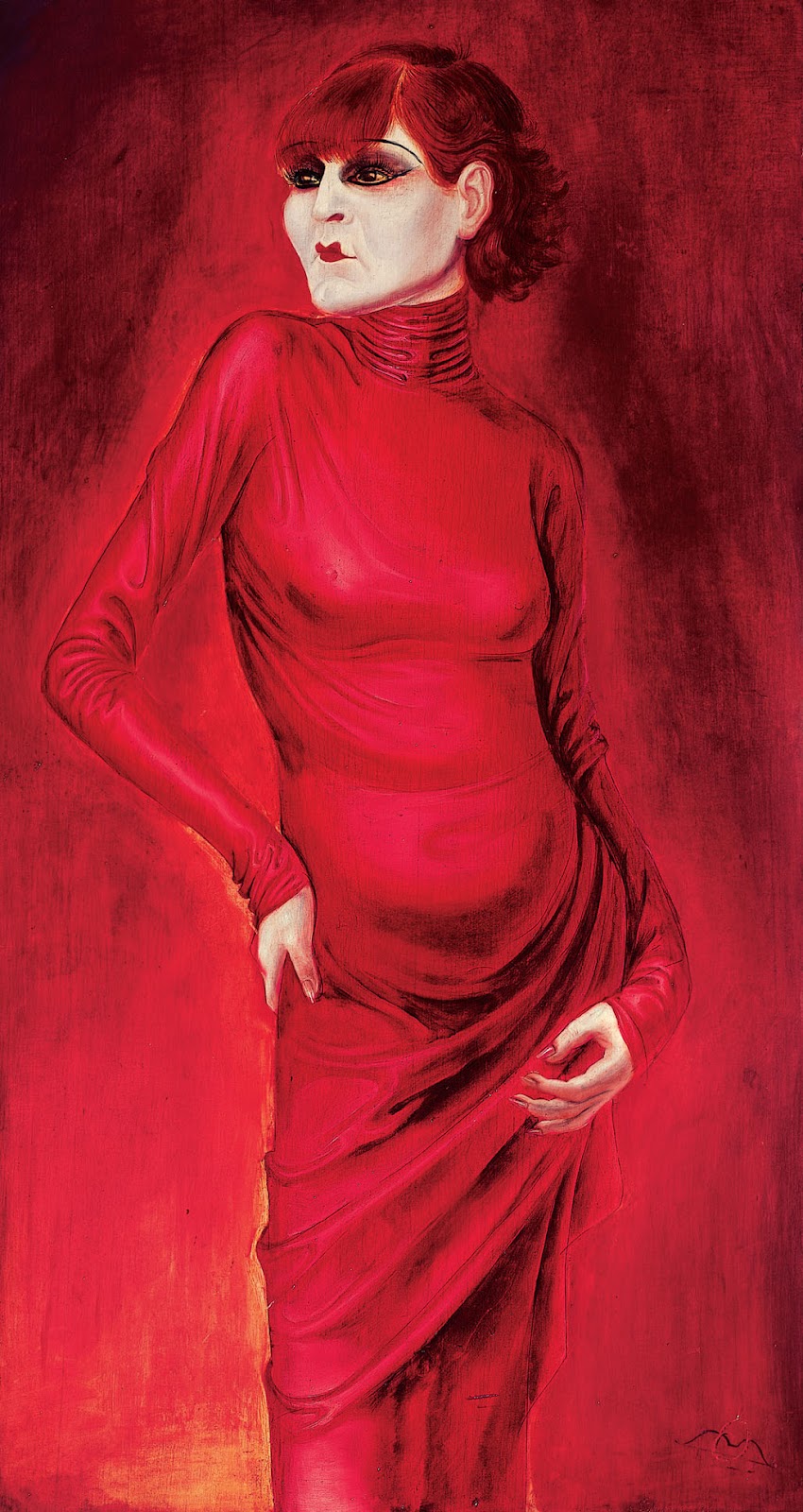
For a dishy overview of Anita Berber’s personal life, including her alleged dalliances with actress Marlene Dietrich, author Lawrence Durrell, and the King of Yugoslavia, her influential effect on director Leni Riefenstahl, and her sad demise at the age of 29, a “carrion soul that even the hyenas ignored,” take a peek at Victoria Linchong’s biographical essay for Messy Nessy Chic, or better yet, Iron Spike’s Twitter thread.
Berber was addicted to alcohol, cocaine, opium, and morphine. But one of her favorite drugs was chloroform and ether, mixed in a bowl. She would stir the bowl with the bloom of a white rose, and then eat the petals.
Have you ever heard anything so extra in your ENTIRE LIFE. pic.twitter.com/sh9xL3it0E
— Iron Spike (@Iron_Spike) January 11, 2020
- Ayun Halliday is the Chief Primatologist of the East Village Inky zine and author, most recently, of Creative, Not Famous: The Small Potato Manifesto. Follow her @AyunHalliday.
Related Content
The Nazis’ 10 Control-Freak Rules for Jazz Performers: A Strange List from World War II
Download Hundreds of Issues of Jugend, Germany’s Pioneering Art Nouveau Magazine (1896–1940)
Read More...Support Us
We're hoping to rely on loyal readers, rather than erratic ads. Please click the Donate button and support Open Culture. You can use Paypal, Venmo, Patreon, even Crypto! We thank you!

About Us

Open Culture scours the web for the best educational media. We find the free courses and audio books you need, the language lessons & educational videos you want, and plenty of enlightenment in between.
Advertise With Us
FREE UPDATES!
GET OUR DAILY EMAIL
Get the best cultural and educational resources on the web curated for you in a daily email. We never spam. Unsubscribe at any time.
FOLLOW ON SOCIAL MEDIA
Open Culture editor Dan Colman scours the web for the best educational media. He finds the free courses and audio books you need, the language lessons & movies you want, and plenty of enlightenment in between.
Advertise With Us

