Klaus Kinski Has a Tantrum on the Set of Werner Herzog’s Fitzcarraldo
Ford and Wayne, Hitchcock and Stewart, Truffaut and Léaud, Scorsese and De Niro: these are just a few of film history’s most beloved collaborations between a director and an actor who never threatened to murder one another. If we remove that qualifier, however, the list lengthens to include the work of Werner Herzog and Klaus Kinski. Between the early 1970s and the late 1980s, Herzog directed Kinski in Aguirre, the Wrath of God, Nosferatu the Vampyre, Woyzeck, Fitzcarraldo, and Cobra Verde — to the extent, in any case, that the volatile Kinski was directable at all. The clip above captures just one of his explosions, this one on the set of Fitzcarraldo.
“By some rare chance, I was not the brunt of it this time,” Herzog says over the footage, which comes from his documentary on Kinski, My Best Fiend. “I didn’t bother to interfere because Kinski, compared with his other outbreaks, seemed rather mild.” But the star’s ravings proved “a real problem for the Indians, who solved their conflicts in a totally different manner.”
For the production had recruited a number of native locals, operating as it was in the Peruvian jungle for maximum realism. (Its story of an aspiring rubber baron dragging a steamship over a hill also necessitated, at Herzog’s insistence, dragging a real steamship over a real hill.) At one point a chief offered to kill Kinski, but Herzog had to turn him down. There was a movie to finish, and he’d already shot almost half of it once, with Jason Robards in the title role, but when Robards came down with dysentery he was forced to re-cast and re-shoot.
A normal filmmaker would perhaps hesitate to introduce a notoriously erratic actor into an already difficult production — but then, Herzog is hardly a normal filmmaker. He was also one of the few directors who could work with Kinski, the two having known each other since they lived in the same boarding house as teenagers. (In My Best Fiend, Herzog remembers the young Kinski locking himself in the bathroom for two days and tearing it apart.) While shooting Aguirre, the Wrath of God, Herzog had employed an unorthodox technique to put an end to Kinski’s meltdowns: pulling out a gun. “You will have eight bullets through your head, and the last one is going to be for me,” he later recalled telling Kinski in an interview with Terry Gross. “So the bastard somehow realized that this was not a joke anymore.” All such director-actor collaborations hinge on the former knowing how to get the best performance out of the latter — by any mean necessary.
Related Content:
Portrait Werner Herzog: The Director’s Autobiographical Short Film from 1986
Werner Herzog Offers 24 Pieces of Filmmaking and Life Advice
Werner Herzog Gets Shot During Interview, Doesn’t Miss a Beat
Start Your Day with Werner Herzog Inspirational Posters
Norman Mailer: Strong Writer, Weak Actor, Brutally Wrestles Actor Rip Torn
Based in Seoul, Colin Marshall writes and broadcasts on cities, language, and culture. His projects include the Substack newsletter Books on Cities, the book The Stateless City: a Walk through 21st-Century Los Angeles and the video series The City in Cinema. Follow him on Twitter at @colinmarshall or on Facebook.
Read More...A First Look at How Tony Soprano Became Tony Soprano: Watch the New Trailer for The Many Saints of Newark
When The Sopranos drew to a close fourteen years ago, its ambiguous yet somehow definitive final scene hardly promised a continuation of the New Jersey mafia saga. Since then, fans have had to make do with reflections, histories, and exegeses, up to and including re-watch podcasts hosted by the actors themselves. As time has passed the show has only drawn higher and higher acclaim, which can’t be said about every product of the ongoing “golden age of television drama” The Sopranos got started. A return to the well was perhaps inevitable, and indeed has just been announced: The Many Saints of Newark, a prequel film co-written by David Chase, the creator credited with contributing to the original series a significant portion of its genius.
Onscreen, The Sopranos drew its power from one Soprano above all: local mob boss Tony Soprano, as portrayed by James Gandolfini in what has been ranked among the greatest screen acting achievements of all time. Whether or not Tony survived that final scene, Gandolfini died in 2013, and ever since it has been impossible to imagine any other actor portraying the character — or at least portraying the character in a modern-day setting.
Telling the story of a Tony Soprano in his youth, with a young actor necessarily playing him, has remained a viable proposition. Into that role, for the 1960s and 70s-set The Many Saints of Newark, has stepped Gandolfini’s real-life son Michael.
For the then-20-year-old Michael Gandolfini, taking over his father’s role had to be a daunting prospect, especially since he’d never seen The Sopranos before. At least one binge-watch of the series (among other rigorous forms of preparation) later, he delivered the performance of which you can take a first look in The Many Saints of Newark’s new trailer above. “As rival gangs try to wrest control from the DiMeo crime family in the race-torn city of Newark,” Consequence Film’s Ben Kaye writes of its story, the young Anthony Soprano, a promising but indifferent student with an eye on college, “gets swept up in the violence and crime by his uncle Dickie Moltisanti.” As Sopranos fans know full well, “Anthony becomes the feared mob head Tony Soprano and treats Dickie’s son, Christopher, as his protégé.” Evidently, an antihero of Tony’s stature is made, not born.
Related Content:
How David Chase Breathed Life into the The Sopranos
David Chase Reveals the Philosophical Meaning of The Sopranos’ Final Scene
James Gandolfini Shows Kinder, Softer, Gentler Side on Sesame Street (2002)
Based in Seoul, Colin Marshall writes and broadcasts on cities, language, and culture. His projects include the Substack newsletter Books on Cities, the book The Stateless City: a Walk through 21st-Century Los Angeles and the video series The City in Cinema. Follow him on Twitter at @colinmarshall or on Facebook.
Read More...How Jaco Pastorius Invented the Electric Bass Solo & Changed Musical History (1976)
How does one define a masterpiece? Is it personally subjective, or it is just another word we use for status symbols? In an essay on bass player Jaco Pastorius’ 1976 self-titled debut album, scholar Uri González offers an older definition: “in the old European guild system, the aspiring journeyman was expected to create a piece of handicraft of the highest quality in order to reach the status of ‘master.’ One was then officially allowed to join the guild and to take pupils under tutelage.”
Pastorius’ debut album certified him as a master musician; he leapt from “anonymity to jazz stardom, earning admiration both from the average musically uneducated concert-goer to the hippest jazz cat,” and he gained a following among an “ever growing number of adept students that, still today, study his solos, licks, compositions and arrangements.” Pastorius’ solo on his version of the Charlie Parker tune “Donna Lee,” especially, helped redefine the instrument by, first, inventing the electric bass solo.
The “Donna Lee” solo, Pat Metheny writes, is “one of the freshest looks at how to play on a well traveled set of chord changes in recent jazz history — not to mention that it’s just about the hippest start to a debut album in the history of recorded music.”
Whether you like Jaco Pastorius’ music or not, it’s beyond question that his playing changed musical history through a transformative approach to the instrument. In the video at the top, producer Rick Beato explains the importance of the “Donna Lee” solo, an interpretation of a jazz standard played on a fretless bass Pastorius made himself, and creating a sound no one had heard before.
Beato’s is a technical explanation for those with a background in music theory, and it highlights just how intimidating Pastorius’ playing can be for musicians and non-musicians alike. But technique, as Herbie Hancock noted in a blurb on Jaco Pastorius, means little without the musical sensibilities that move people to care, and Pastorius had it in abundance. “He had this wide, fat swath of a sound,” wrote one of his most famous collaborators, Joni Mitchell, in tribute. “He was an innovator…. He was changing the bottom end of the time, and he knew it.”
One of those changes, from “Donna Lee” to the end of Pastorius’ tumultuous life and career in 1987 involved moving the electric bass into a melodic role it had not played before. This not only meant leaving the lower root notes, but also crafting a bright, round, lively tone that for those upper registers. “In the Sixties and Seventies,” writes Mitchell, “you had this dead, distant bass sound. I didn’t care for it. And the other thing was, I had started to think, ‘Why couldn’t the bass leave the bottom sometimes and go up and play in the midrange and then return?’” She found the answer to her questions in Jaco.
Hear Pastorius’ original recording of “Donna Lee” further up, and see a live version from 1982 above to take in what Mitchell called his “joie de vivre.” The song, which already had a venerable jazz history, is now considered, González writes, “the quintessential bass players’ manifesto.” Or, as conga player Don Alias, the only accompanist during Pastorius’ famous solo, put it, “every bass player I know can now cut ‘Donna Lee’ thanks to Jaco.”
Related Content:
Jazz Legend Jaco Pastorius Gives a 90 Minute Bass Lesson and Plays Live in Montreal (1982)
Legendary Studio Musician Carol Kaye Presents 150 Free Tips for Practicing & Playing the Bass
What Makes Flea Such an Amazing Bass Player? A Video Essay Breaks Down His Style
Josh Jones is a writer and musician based in Durham, NC. Follow him at @jdmagness
Read More...Michelangelo’s David: The Fascinating Story Behind the Renaissance Marble Creation
Like many schoolchildren, and, for that matter, Goliath, the Biblical giant who was felled by a slingshot, I am a bit of a Philistine.
I admit that the first and, for a long time, primary thing that compelled me about Michelangelo’s David ( 1501–1504) was the frankness with which a certain part of his anatomy was displayed.
Mugs depicting him with a strategically placed fig leaf that dissolves in response to hot liquid, Dress Me Up David fridge magnets, and an endless parade of risqué merchandise suggest that historically, I am not alone.
Kudos to gallerist James Payne, creator and host of the video series Great Art Explained, for his nod to the rabble in opening the above episode not with a view of David’s handsome head or miraculously detailed hands, but rather that most famous of male members.
Having gotten it out of the way right at the top, Payne refrains from mentioning it for nearly 10 minutes, educating viewers instead on other aspects of the statue’s anatomy, including the sculptor’s unusual methods and the narrow, flawed, previously used block of marble from which this masterpiece emerged.
He also delves into the social context into which Michelangelo’s singular vision was delivered.
Florentines were proud of their highly cultured milieu, but were not nearly as comfortable with depictions of nudity as the ancient Greeks and Romans.
This explains the comparative smallness of David’s tackle box. Perhaps Goliath might have gotten away with a gargantuan penis, but David, who vanquished him using intelligence and willpower rather than brute strength, was assigned a size that would convey modesty, respectability, and self-control.
The Bible identifies David as an an Israelite, but Michelangelo decided that this particular Jew should remain uncircumcised, in keeping with Greco-Roman aesthetics. It was a look Christian Florence could get behind, though they also forged 28 copper leaves to conceal David’s controversial manhood.
(This theme returns throughout history — the 1860s saw him outfitted with a temporary fig leaf.)
One wonders how much smaller things would have appeared from the ground, were David installed atop the Duomo, as originally planned. Michelangelo designed his creation with this perspective in mind, deliberately equipping him with larger than usual hands and head.
One of Payne’s viewers points out that David’s face, which conveys both resolve and fear as he considers his upcoming confrontation with Goliath, seems utterly confident when viewed from below.
Given that David is 17’ tall, that’s the vantage point from which most of his in-person admirers experience him. 16th-century Civic leaders, captivated by David’s perfection, placed him not atop the Florentine Cathedral, but rather in Piazza della Signoria, the political heart of Florence, where a replica still faces south toward Rome. (The original was relocated to the Galleria dell’Accademia in 1873, to protect it from the elements.)
Payne points out that David has survived many societal shifts throughout his 600+ years of existence. Fig-leafed or not, he is a perpetual emblem of the underdog, the determined guy armed with only a slingshot, and is thus unlikely to be toppled by history or human passions.
Watch more episodes of James Payne’s Great Art Explained on his YouTube channel. As a bonus below, we’ve included another informatiive video from Smarthistory featuring the always illuminating Dr. Steven Zucker and Dr. Beth Harris.
Related Content:
What Makes Leonardo’s Mona Lisa a Great Painting?: An Explanation in 15 Minutes
New Video Shows What May Be Michelangelo’s Lost & Now Found Bronze Sculptures
Michelangelo’s Handwritten 16th-Century Grocery List
Ayun Halliday is an author, illustrator, theater maker and Chief Primatologist of the East Village Inky zine. Follow her @AyunHalliday.
Read More...Hear Demos & Outtakes of Joni Mitchell’s Blue on the 50th Anniversary of the Classic Album
When Joni Mitchell released Blue in 1971, she revealed herself to the world as a poet with a hard-boiled interior life. The album, writes Rolling Stone, challenged the image many had of her as an innocent flower child. “The West Coast feminine ideal” was a role “Mitchell hadn’t asked for and did not want.” Of her writing of the album, she said in a 2013 interview, “They better find out who they’re worshipping. Let’s see if they can take it. Let’s get real.”
Get real she did, shocking the men around her, some of whom she’d written about candidly, including Graham Nash, Leonard Cohen, and James Taylor, who played on several tracks. She wrote about the heartbreak of leaving her daughter and rewrote the breakup song as a confessional on “River.” The album’s cultural impact, 50 years after its release, has much to do with Mitchell as a lone female protagonist in a male-dominated industry. “Along with its romantic melancholy,” Rolling Stone writes, “Blue was the sound of a woman availing herself of the romantic and sexual freedom that was, until then, an exclusively male province in rock.”
We listen to Blue now and hear the voices of later generations of singer-songwriters, from Tracy Chapman and Tori Amos to Phoebe Bridgers, who seized their own power. By the time of Blue’s release, Mitchell had become a powerful voice of her generation, penning “Woodstock” just the year before. “Blue is Mitchell’s first song cycle whereby all the songs interrelate in their themes of loss and transformation,” writes Classic Album Sundays. “The album reflects the disillusionment and disenchantment felt by a generation during the closing of The Sixties.”
“It’s a description of the times,” Mitchell attests. “There were so many sinking but I had to keep thinking I could make it through the waves. You watched that high of the hippie thing descend into drug depression. Right after Woodstock, then we went through a decade of basic apathy where my generation sucked it’s thumb and then just decided to be greedy and pornographic.”
As if capturing the feelings of her own personal losses and those of millions of others weren’t enough, Mitchell’s songwriting and musicianship on the album are consistently astonishing, each word married to a suspended note, an unexpected chord voicing, a pregnant breath. “My words and music are locked together,” she says. She proved on Blue that she was a talent to be reckoned with and never underestimated. On the 50th anniversary of Blue’s release, Mitchell is releasing a five song EP, Blue 50 (Demos & Outtakes), which you can hear above (see tracklist below).
- A Case Of You (Demo) 0:00:00
- California (Demo) 0:04:00
- Hunter (Outtake) 0:07:30
- River (Outtake with French Horns) 0:10:25
- Urge For Going (Outtake with Strings) 0:14:27
It’s a document of a different album, one that might have included “Hunter” — a country-like strummer — and might have had french horns on “River,” perhaps the album’s best-known song and one of the most beloved Christmas songs of the past 50 years. Look for the next release celebrating a half-century of Blue on October 29th. Joni Mitchell Archives Vol. 2: The Reprise Years (1968–1971) “will explore the period leading up to Blue,” notes her official YouTube, “through nearly six hours of unreleased home, studio, and live recordings.” Or, you could just listen to Blue over and over. It seems to reveal something different every time.
Related Content:
How Joni Mitchell’s Song of Heartbreak, “River,” Became a Christmas Classic
Josh Jones is a writer and musician based in Durham, NC. Follow him at @jdmagness
Read More...British Actor Bob Hoskins Helped Thousands Learn to Read in On the Move, a 1970s “Sesame Street for Adults”
British character actor Bob Hoskins has been remembered for “playing Americans better than Americans,” as USA Today wrote when Hoskins passed away in 2014. Characters like Who Framed Roger Rabbit?’s Eddie Valiant, Nixon’s J. Edgar Hoover, and The Cotton Club’s Owney Madden stand out as some of his best performances in Hollywood. But he began his career in British film and television, playing cops and gangsters. Helen Mirren, who starred opposite him in his first major role, The Long Good Friday, and onstage in The Duchess of Malfi, penned a glowing tribute for The Guardian. “London,” she wrote, “will miss one of her best and most loving sons, and Britain will miss a man to be proud of.”
Mirren’s sentiments were echoed by British actors everywhere. Shane Meadows called him “the most generous actor I have ever worked with.” Stephen Woolley described Hoskins as a working-class hero. “With his talent, Bob gatecrashed the world of celebrity, and made all of us ordinary people feel a little better about ourselves.” It was a role he was seemingly born to play, despite his range. Hoskins was “a great actor,” writes Woolley, “yet unlike many actors he was first and foremost a courteous, sweet and caring human being. He could make monsters human and wring a smile out of any situation without a whisker of embarrassment.”
Those are the very qualities that endeared viewers to Hoskins’ first breakout character, Alf Hunt, a furniture removal man who struggled with reading and writing in On the Move, a kind of “Sesame Street for adults” that ran in 1976 on the BBC. The 10-minute shorts ran on Sunday afternoons “as part of the BBC’s adult education remit,” Mark Lawson writes at The Guardian. Hoskins’ performance brought to life for viewers “a proud man who has desperately disguised his learning difficulties.” It met a serious need among the nation’s populace.
“The show attracted 17 million viewers a week, (way beyond the size of its target audience),” notes a MetaFilter user. On the Move “helped make Hoskins famous. It was also responsible for persuading 70,000 people to sign up for adult literacy programmes.” Hoskins treasured the letters he received from viewers who decided to change their lives after seeing the show. They may well have done so because he gave his all to the character, as Lawson writes:
Handed a working-class stereotype (not for the last time in his career), Hoskins gave Alf a vulnerability and poignancy far beyond the requirements of a public information short. Apart from its intended audience of adults struggling with reading and writing, On the Move gained a large secondary following among literate viewers because, even then, Hoskins’ expressive face and growly voice made you want to watch and listen.
In each episode, Alf revealed his struggles to his friend Bert, played by Donald Gee. The show also featured inspiring interviews with adults who had taken adult literacy classes and appearances by special guest stars like Patricia Hayes and Martin Shaw (who both appear in the episode at the top). While other famous actors may disown early television work, Hoskins never did. On the Move “shared the qualities of his best stuff. Whereas most footage in Before They Were Famous type shows is calculated to be bathetic or embarrassing,” Hoskins’ earliest work does quite the opposite, explaining why he “went on to become the star he did.”
On the Move may also have earned Hoskins another title, one he might have cherished as much as any acting plaudit. George Auckland, who later directed the BBC’s adult education program, called him “the best educator Britain has produced” because of his wide reach among adults struggling with literacy in 1970s Britain. See an episode of On the Move at the top of the post and hear what commenters call “the catchiest theme song ever” just above.
Related Content:
Take The Near Impossible Literacy Test Louisiana Used to Suppress the Black Vote (1964)
Josh Jones is a writer and musician based in Durham, NC. Follow him at @jdmagness
Read More...Igor Stravinsky Appears on American Network TV & Tells Stories About His Unconventional Musical Life (1957)
One evening in 1957, viewers all across America tuned in to see Stravinsky. The broadcast wasn’t a performance of Stravinsky’s music, although those would continue to draw television audiences well into the following decade. It was a conversation with the man himself, Igor Fyodorovich Stravinsky, who even when he was still alive had become an institution by virtue of his industry and innovation. “For half a century, Stravinsky’s musical explorations have dominated modern music,” says the program’s narrator. “His nearly 100 works — ballets, symphonies, religious music, even jazz — have often outraged audiences at first hearing.”
The famously “riotous” audience reaction to the Paris debut of Stravinsky’s The Rite of Spring had happened 44 years earlier, back when the Russian-born composer was rising to international fame. But by 1957 he’d been an American citizen for years, and it’s in his Hollywood home — and on the eve of his 75th birthday — that NBC’s crew shot this episode of Wisdom.
Having debuted just that year, Wisdom would continue to run until 1965, broadcasting long-form interviews with figures like Marcel Duchamp, Pearl S. Buck, Robert Frost, Somerset Maugham, and Eleanor Roosevelt. Here Stravinsky speaks with his young protégé, the American conductor Robert Craft, who asks him to remember various chapters of his long musical life, which included encounters with the likes of Nikolai Rimsky-Korsakov, Dylan Thomas, and Pablo Picasso.
The story begins with Stravinsky’s first improvisations at the piano during his childhood in Russia (and his first lessons, taught by a woman of nineteen: “for me that was an old maid, but of course I was in love with this old maid”). All throughout, we see flashes of the invention-above-convention sensibility that made Stravinsky more a Homo faber, as he liked to say, than a Homo sapiens. “Who invented the scale?” he asks, rhetorically. “Somebody invented the scale. If somebody invented the scale, I can change something in the scale and invent something else.” And why is it, Craft asks, that every new work of yours arouses protests in the public? “Each time I have new problems, and this new problem requires a new approach,” Stravinsky explains, and but for the public, “the idea of a new approach, of a new problem, doesn’t come to their mind.” So you’re ahead of the public – including, implicitly, the American public viewing at home? “Inevitably.”
Related Content:
The Night When Charlie Parker Played for Igor Stravinsky (1951)
Stravinsky’s “Illegal” Arrangement of “The Star Spangled Banner” (1944)
Hear Igor Stravinsky’s Symphonies & Ballets in a Complete, 32-Hour, Chronological Playlist
Based in Seoul, Colin Marshall writes and broadcasts on cities, language, and culture. His projects include the Substack newsletter Books on Cities, the book The Stateless City: a Walk through 21st-Century Los Angeles and the video series The City in Cinema. Follow him on Twitter at @colinmarshall or on Facebook.
Read More...Umberto Eco’s 36 Rules for Writing Well (in English or Italian)
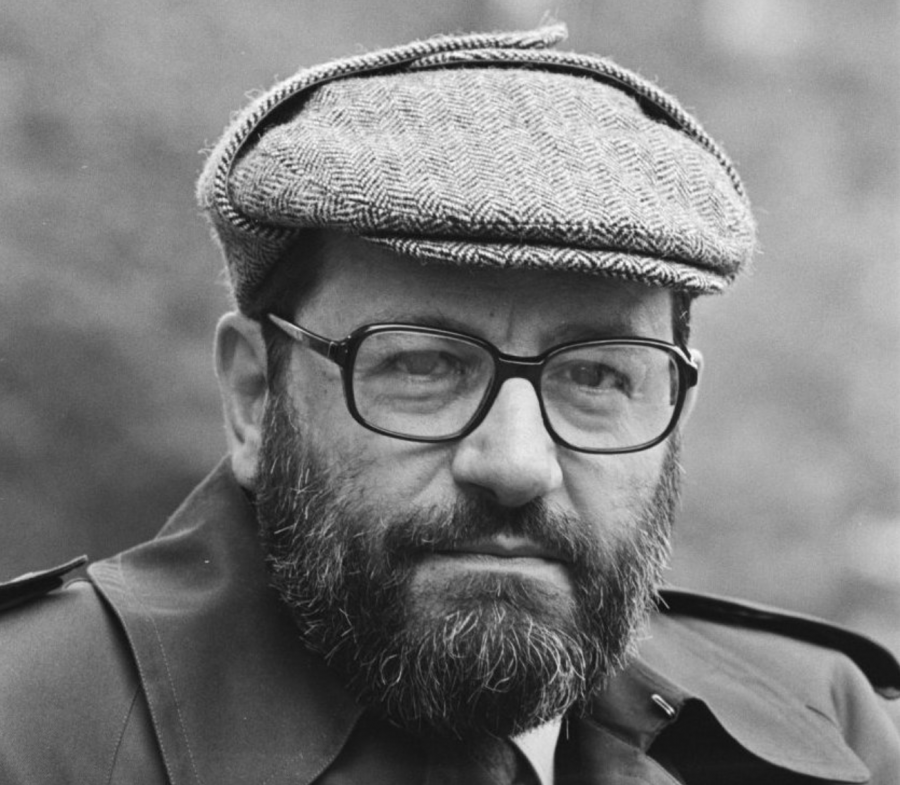
Creative Commons image by Rob Bogaerts, via the National Archives in Holland
Umberto Eco knew a great many things. Indeed too many things, at least according to his critics: “Eco knows everything there is to know and spews it in your face in the most blasé manner,” declared Pier Paolo Pasolini, “as if you were listening to a robot.” That line appears quoted in Tim Parks’ review of Pape Satàn Aleppe, a posthumous collection of essays from La Bustina di Minerva, the magazine column Eco had written since 1985. “This phrase means ‘Minerva’s Matchbook,’ ” Parks explains. “Minerva is a brand of matches, and, being a pipe smoker, Eco used to jot down notes on the inside flap of their packaging. His columns were to be equally extemporaneous, compulsive and incisive, each as illuminating and explosive as a struck match.”
At the same time, “the reference to the Roman goddess Minerva is important; it warns us that in the modern world we may struggle to distinguish between divinities and bric-a-brac.” This was as true, and remains as true, in the realm of letters as in any other. And of all the things Eco knew, he surely knew best how to use words; hence his La Bustina di Minerva column laying out 40 rules for speaking and writing.
This meant, of course, speaking and writing in Italian, his native tongue and the language of which he spent his career demonstrating complete mastery. But as translator Gio Clairval shows in her English rendition of Eco’s rules, most of them apply just as well to this language.
“I’ve found online a series of instructions on how to write well,” says Eco’s introduction to the list. “I adopt them with a few variations because I think they could be useful to writers, particularly those who attend creative writing classes.” A few examples will suffice to give a sense of his guidance:
- Avoid alliterations, even if they’re manna for morons.
- Avoid clichés: they’re like death warmed over.
- Never generalize.
- Hold those quotes. Emerson aptly said, “I hate quotes. Tell me only what you know.”
- Don’t write one-word sentences. Ever.
- Recognize the difference between the semicolon and the colon: even if it’s hard.
- Do you really need rhetorical questions?
- Be concise; try expressing your thoughts with the least possible number of words, avoiding long sentences– or sentences interrupted by incidental phrases that always confuse the casual reader– in order to avoid contributing to the general pollution of information, which is surely (particularly when it is uselessly ripe with unnecessary explanations, or at least non indispensable specifications) one of the tragedies of our media-dominated time.
- Don’t be emphatic! Be careful with exclamation marks!
- No need to tell you how cloying preteritions are.
Not only does each of Eco’s points offer a useful piece of writing advice, it elegantly demonstrates just how your writing will come off if you fail to follow it. In the event that “you can’t find the appropriate expression,” he writes, “refrain from using colloquial/dialectal expressions.” To this he appends, of course, a colloquial expression, Peso el tacòn del buso: “The patch is worse than the hole.” However clichéd it sounds in Italian, all of us would do well to bear it in mind no matter the language in which we write. (And if you write in Italian, be sure to read Eco’s original column, which contains additional rules applying only to that language: Non usare metafore incongruenti anche se ti paiono “cantare,” for instance. Sono come un cigno che deraglia.)
You can read all 36 of Eco’s English-relevant writing rules at Clairval’s site. If you’d like to hear more of his writing advice, watch the Louisiana Channel interview clip we featured after his death in 2016. And elsewhere in our archives, you can compare and contrast Eco’s list of rules for writing with those drawn up by the likes of Walter Benjamin, Steven Pinker, Stephen King, V.S. Naipaul, Friedrich Nietzsche, Elmore Leonard, and George Orwell. Though Eco could, in his writing, assume what Parks calls an “immeasurably superior” persona, he surely would have agreed with the final, thoroughly English point on Orwell’s list: “Break any of these rules sooner than say anything outright barbarous.”
Related content:
Umberto Eco Dies at 84; Leaves Behind Advice to Aspiring Writers
Umberto Eco Explains Why We Make Lists
Watch Umberto Eco Walk Through His Immense Private Library: It Goes On, and On, and On!
Based in Seoul, Colin Marshall writes and broadcasts on cities, language, and culture. His projects include the Substack newsletter Books on Cities, the book The Stateless City: a Walk through 21st-Century Los Angeles and the video series The City in Cinema. Follow him on Twitter at @colinmarshall or on Facebook.
Read More...Watch Franz Liszt’s “Un Sospiro” Played with the Mesmerizing “Three-Hand Technique”
“Piano education is important for teaching polyphony, improving sight-reading, consolidating the knowledge of harmony and gaining much more musical abilities,” write Turkish researchers in the behavioral sciences journal Procedia. The student of the piano can advance solo or with another player in duets, playing what are called “four-hand pieces.” But learning “to gain the attitudes of duet playing” poses a challenge. Researchers Izzet Yucetoker and Koksal Apaydinli suggest a possible intervention — overcoming the difficulties of playing four-hand pieces by learning to play what are called “three-hand pieces.”
How, you might wonder, does one play the piano with three hands? It does not take an extra limb or a partner with one hand tied behind their back. Three-hand technique is a dextrous sleight-of-hand developed in the 1830s, most prominently by pianist Sigismond Thalberg, a rival of Franz Liszt who could “apparently not only counter Liszt’s legendary fire and thunder with subtlety,” Bryce Morrison writes at Gramophone, “but who played as if with three hands. Three hands were heard, two were visible!” Might this somehow be easier than playing duets?
One contemporary reviewer of Thalberg’s playing described it as “myriads of notes sounding from one extremity of the instrument to the other without disturbing the subject, in which the three distinct features of this combination are clearly brought out by his exquisite touch.” The Polish pianist and student of Liszt Moriz Rosenthal claimed Thalberg adopted the technique from the harp. “Such legerdemain quickly had novelty-conscious Paris by the ears,” Morrison writes, “and an elegant white kid-glove rather than than a mere gauntlet was thrown down before Liszt.”
Liszt would have none of it, deriding three-hand technique as a trick unfit for his virtuosity. Nonetheless, “in 1837, Liszt, arguably the most charismatic virtuoso of all time, was challenged for supremacy by Sigismond Thalberg…. Stung and infuriated by what he saw as Thalberg’s aristocratic pretensions… Liszt replied with corruscating scorn.” He agreed to meet Thalberg, not in a duet but a duel, at “the home of Countess Cristina Belgiojoso — lover of Lafayette, Heine and Liszt,” notes Georg Prodota at Interlude.
The Countess “gave a charity event for the refugees of the Italian war of independence, and the contemporary press compared the concert to the battle between Rome and Carthage.” Countess Belgiojoso herself (as did the press) pronounced the outcome a draw:
Never was Liszt more controlled, more thoughtful, more energetic, more passionate; never has Thalberg played with greater verve and tenderness. Each of them prudently stayed within his harmonic domain, but each used every one of his resources. It was an admirable joust. The most profound silence fell over that noble arena. And finally Liszt and Thalberg were both proclaimed victors by this glittering and intelligent assembly. Thus two victors and no vanquished …
History was not so kind. Liszt is now celebrated as “the most charismatic virtuoso of all time,” while Thalberg is hardly remembered. And some of the most celebrated examples of pieces played with three-hand technique come not from Thalberg but from Liszt, such as “Un Sospiro” (“A Sigh”), the last of his Three Concert Études, composed between 1845 and 1849, not only as performance pieces, but — as it so happens — for the general improvement of a pianist’s technique. Hear pianist Paul Barton play three versions of “Un Sospiro” above and download the sheet music for the piece here.
Related Content:
The Piano Played with 16 Increasing Levels of Complexity: From Easy to Very Complex
Acclaimed Japanese Jazz Pianist Yōsuke Yamashita Plays a Burning Piano on the Beach
Josh Jones is a writer and musician based in Durham, NC. Follow him at @jdmagness
Read More...The Rashomon Effect: The Phenomenon, Named After Akira Kurosawa’s Classic Film, Where Each of Us Remembers the Same Event Differently
Toward the end of The Simpsons’ golden age, one episode sent the titular family off to Japan, not without resistance from its famously lazy patriarch. “Come on, Homer,” Marge insists, “Japan will be fun! You liked Rashomon.” To which Homer naturally replies, “That’s not how I remember it!” This joke must have written itself, not as a high-middlebrow cultural reference (as, say, Frasier would later name-check Tampopo) but as a play on a universally understood byword for the nature of human memory. Even those of us who’ve never seen Rashomon, the period crime drama that made its director Akira Kurosawa a household name in the West, know what its title represents: the tendency of each human being to remember the same event in his own way.
“A samurai is found dead in a quiet bamboo grove,” says the narrator of the animated TED-Ed lesson above. “One by one, the crime’s only known witnesses recount their version of the events that transpired. But as they each tell their tale, it becomes clear that every testimony is plausible, yet different, and each witness implicates themselves.”
So goes “In a Grove,” a story by celebrated early 20th-century writer Ryūnosuke Akutagawa. An avid reader, Kurosawa combined that literary work with another of Akutagawa’s to create the script for Rashomon. Both Akutagawa and Kurosawa “use the tools of their media to give each character’s testimony equal weight, transforming each witness into an unreliable narrator.” Neither reader nor viewer can trust anyone — nor, ultimately, can they arrive at a defensible conclusion as to the identity of the killer.
Such conflicts of memory and perception occur everywhere in human affairs: this TED-Ed lesson finds examples in biology, anthropology, politics, and media. Sufficiently many psychological phenomena converge to give rise to the Rashomon effect that it seems almost overdetermined; it may be more illuminating to ask under what conditions doesn’t it occur. But it also makes us ask even tougher questions: “What is truth, anyway? Are there situations when an objective truth doesn’t exist? What can different versions of the same event tell us about the time, place, and people involved? And how can we make group decisions if we’re all working with different information, backgrounds, and biases?” We seem to be no closer to definitive answers than we were when Rashomon came out more than 70 years ago — only one of the reasons the film holds up so well still today.
Related Content:
How to Improve Your Memory: Four TED Talks Explain the Techniques to Remember Anything
What Is Déjà Vu? Michio Kaku Wonders If It’s Triggered by Parallel Universes
Based in Seoul, Colin Marshall writes and broadcasts on cities, language, and culture. His projects include the Substack newsletter Books on Cities, the book The Stateless City: a Walk through 21st-Century Los Angeles and the video series The City in Cinema. Follow him on Twitter at @colinmarshall or on Facebook.
Read More...Support Us
We're hoping to rely on loyal readers, rather than erratic ads. Please click the Donate button and support Open Culture. You can use Paypal, Venmo, Patreon, even Crypto! We thank you!

About Us

Open Culture scours the web for the best educational media. We find the free courses and audio books you need, the language lessons & educational videos you want, and plenty of enlightenment in between.
Advertise With Us
FREE UPDATES!
GET OUR DAILY EMAIL
Get the best cultural and educational resources on the web curated for you in a daily email. We never spam. Unsubscribe at any time.
FOLLOW ON SOCIAL MEDIA
Open Culture editor Dan Colman scours the web for the best educational media. He finds the free courses and audio books you need, the language lessons & movies you want, and plenty of enlightenment in between.
Advertise With Us


