The Does and Don’ts of Putting on a Prison Concert: Johnny Cash, BB King, the Grateful Dead, Bonnie Tyler & The Cramps
The prison gig has been a staple of live performance since Johnny Cash played Folsom in 1968, with variations on the theme like the Cramps’ legendary performance at a California Psychiatric Hospital (revisited in the documentary We Were There to Be There). Some bands who play institutions may not be far away from inhabiting them. When the Sex Pistols played Chelmsford Prison, it was not the first time guitarist Steve Jones had been inside, what with his 14 criminal convictions. In fact, Jones has credited the band for saving him from a life of crime.
BB King gave one of the best performances of his career from behind the walls of Sing Sing, three years after Cash’s concert at San Quentin. King himself hadn’t done time, but having grown up in poverty on a cotton plantation in Mississippi, he well understood the conditions that led people to incarceration.
As his keyboardist Ron Levy said after an earlier prison concert in Cook County Jail, “If anybody had the blues, it was those people incarcerated. And BB really felt compassion for those guys.” Likewise, Johnny Cash never did hard time, but his childhood poverty, struggles with addiction, and love for underdogs and outcasts lent him an authenticity inmates recognized immediately.
Other matchups between stars and prison audiences have not only been less authentic, but sometimes downright baffling, as when Bonnie Tyler gave a concert at Long Lartin prison in England …. or so the inmates thought. It turned out Tyler had only used her audience as props for a botched music video that never aired. This, clearly, is how not to run a prison concert, also the title of the Bandsplaining video at the top, which begins with Tyler’s kerfuffle and goes on to examine the genre of prison concerts through prison concert films, TV, and albums.
Johnny Cash, the Grateful Dead, BB King, Freddie King, John Lee Hooker, The Cramps, Fugazi, and Fugazi’s previous incarnation, Minor Threat, are all covered here. Missing are artists like Freddy Fender (who did it before Cash), Sonny James, and Big Mama Thornton, who released an album called Jail in 1975, compiled from two different prison performances, and who surely deserves top honors for knowing how to do it right. In prison, writes Music Times, “she finally gets to perform her hit, ‘Ball ‘n’ Chain’ — which was made famous by Janis Joplin and The Holding Company — where it was made to be played: Jail.”
Related Content:
B.B. King Plays Live at Sing Sing Prison in One of His Greatest Performances (1972)
Josh Jones is a writer and musician based in Durham, NC. Follow him at @jdmagness
Read More...Mozart Sonatas Can Help Treat Epilepsy: A New Study from Dartmouth
Many and bold are the claims made for the power of classical music: not just that it can enrich your aesthetic sensibility, but that it can do everything from deter juvenile delinquency to boost infant intelligence. Making claims for the latter are CDs with titles like Baby Mozart: Music to Stimulate Your Baby’s Brain, a case of trading on the name of one of the most beloved composers in music history. Alas, the proposition that classical music in general can make anyone smarter has yet to pass the most rigorous scientific trials. But recent research does suggest that Mozart’s music in particular has desirable effects on the brain: his Sonata for Two Pianos in D Major on epilepsy-afflicted brains in particular.
For about 30 years the piece has been thought to reduce symptoms of epilepsy in the brain, a phenomenon known as the “K448 effect” (the number being a reference to its place in the Köchel catalogue). Recent work by researchers at the Geisel School of Medicine, Dartmouth-Hitchcock Medical Center (DHMC) and Dartmouth College’s Bregman Music and Affective Sound Lab has gone deep into the workings of that effect, and you can read the results free online: the paper “Musical Components Important for the Mozart K448 Effect in Epilepsy,” published just last month in Nature. What they’ve found suggests that the K448 effect is real: that the piece is effective, to be more specific, in “reducing ictal and interictal epileptiform activity.”
Writing for non-neuroscientists, Madeleine Mudzakis at My Modern Met explains that when the researchers “played the tune while monitoring brain implant sensors in the subjects,” they detected “events known as interictal epileptiform discharges (IEDs). These brain events are a symptom of epilepsy and are harmful to the brain.” But “after 30 seconds of listening to the sonata, the subjects experienced noticeably fewer IEDs,” and “transitions between musical phases lead to larger effects, possibly because of anticipation being created which culminates in the pleasant nature of a shifted tune.” These neurologically soothing qualities may also have something to do with the pleasure all Mozart aficionados, epileptics or otherwise, feel when they hear the Sonata for Two Pianos in D Major — or what they don’t feel when they hear Wagner, whose music was here employed as the control that every proper scientific experiment needs.
Related Content:
Hear All of Mozart in a Free 127-Hour Playlist
Mozart’s Diary Where He Composed His Final Masterpieces Is Now Digitized and Available Online
How Music Can Awaken Patients with Alzheimer’s and Dementia
Based in Seoul, Colin Marshall writes and broadcasts on cities, language, and culture. His projects include the Substack newsletter Books on Cities, the book The Stateless City: a Walk through 21st-Century Los Angeles and the video series The City in Cinema. Follow him on Twitter at @colinmarshall or on Facebook.
Read More...When Salvador Dali Viewed Joseph Cornell’s Surrealist Film, Became Enraged & Shouted: “He Stole It from My Subconscious!” (1936)
Did Salvador Dalí meet the diagnostic criteria for a personality disorder and maybe, also, a form of psychosis, as some have alleged? Maybe, but there’s no real way to know. “You can’t diagnose psychiatric illnesses without doing a face to face psychiatric examination,” Dutch psychiatrist Walter van den Broek writes, and it’s possible Dali “consciously created an ‘artistic’ personality… for the money or in order to succeed.” No doubt Dalí was a tireless self-promoter who marketed his work by way of a sensationalist persona.
But maybe Dalí faked symptoms of mental illness (via his understanding of Freud) in order to deliberately induce states of psychosis as part of his paranoid-critical method, a “spontaneous method of irrational knowledge based on the critical and systematic objectivity of the associations and interpretations of delirious phenomena,” he wrote. One of Dalí’s extreme “unorthodox methods for idea generation,” the practice of pretending to be insane may have driven Dalí to believe too strongly in his own delusions at times.
Throughout the early 1930s, Dalí championed paranoia, “a form of mental illness in which reality is organized in such a manner so as to be served through the control of an imaginative construction,” he said in a 1930 lecture. “The paranoiac who thinks he is being poisoned discovers in all the things that surround him, down to their most imperceptible and subtle details, preparations for his death.” And the paranoiac Surrealist who believes he’s being robbed of his ideas may see artistic theft everywhere — especially in an exhibit of Surrealist artists that does not include him. (After all, as Dalí once declared, “I am Surrealism.”)
In 1936, Dalí attended a screening of Joseph Cornell’s short Surrealist film Rose Hobart (top), named for the obscure silent actress whose scenes Cornell excised from a “1931 jungle adventure film” called East of Borneo. Cornell took the footage, slowed it down, “chopped it up, reordered it, and discarded the entire plot,” writes Catherine Corman. “He cut out reaction shots… removed overtly upsetting scenes,” edited in scenes from other films, and “made the film seem deliberately modest and worn,” projecting it through a blue filter and scoring it with two songs from Nestor Amaral’s album Holiday in Brazil (which he’d found at a junk shop).
The screening happened to be held in New York at the same time as the Museum of Modern Art’s first exhibit of Surrealist art, an exhibition “rife with controversy,” MoMA writes, that “provoked fierce reactions from battle factions among the Dadaists and the Surrealists.” French Surrealist poet and critic André Breton, who two years earlier expelled Dalí from the Surrealist group for “the glorification of Hitlerian fascism,” wrote the catalogue introduction. The Spanish Civil War had just broken out that year, further aggravating Dalí, no doubt, when he encountered Cornell’s film at a matinee screening.
Partway through the screening of Rose Hobart, Dalí became enraged, stood up, shouting in Spanish, and overturned the projector. Later, he reportedly told Julian Levy, whose gallery held the screening: “My idea for a film is exactly that, and I was going to propose it to someone who would pay to have it made.… I never wrote it or told anyone, but it is as if [Cornell] had stolen it.” Other versions of the story had Dalí saying, “He stole it from my subconscious!” or “He stole my dreams!” Cornell had not, of course, reached into Dalí’s subconscious but had manifested the film from his own obsessions with silent film and Hollywood divas, themes that run throughout his work. After Dalí’s outburst, the shy, reclusive artist refused to screen Rose Hobart again until the 1960s.
Dalí had vanquished an imaginary rival, but perhaps his true targets — Breton and his former Surrealist colleagues — remained untouched. It would not matter: Dalí eclipsed them all in fame, especially in the age of television, which embraced the artist’s antics like no other medium. But through his performances of insanity, maybe Dalí actually did touch into a creative preconscious state shared among artists — a place in which Joseph Cornell just might have found and stolen his ideas.
In 1932, Dalí had an epiphany about Jean-Francois Millet’s The Angelus, a painting with which he’d been obsessed since childhood and that influenced him heavily as an adult, becoming a key source for his paranoid-critical method. Dalí claimed that the two farmers praying over a meager harvest were actually mourning a lost child. He persisted in this belief until the Louvre agreed to X‑ray the painting. Underneath, they found a small, child-sized coffin, and at least one of Dalí’s paranoid fantasies was proved true.
Related Content:
When Salvador Dalí Created a Surrealist Funhouse at New York World’s Fair (1939)
Josh Jones is a writer and musician based in Durham, NC. Follow him at @jdmagness
Read More...The Beautifully Illustrated Atlas of Mushrooms: Edible, Suspect and Poisonous (1827)
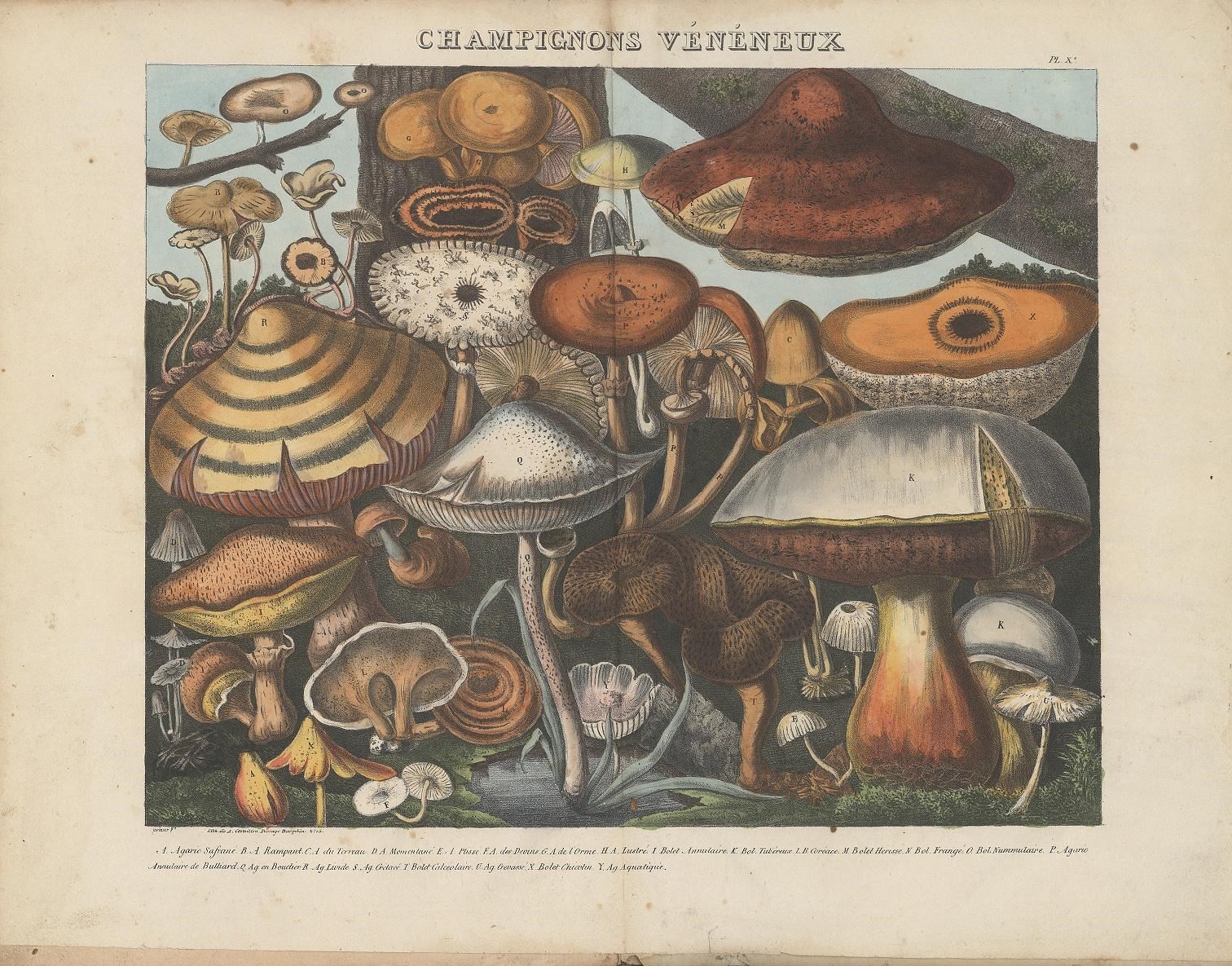
Two centuries ago, Haiti, “then known as Saint-Domingue, was a sugar powerhouse that stood at the center of world trading networks,” writes Philippe Girard in his history of the Haitian war for independence. “Saint-Domingue was the perle de Antilles… the largest exporter of tropical products in the world.” The island colony was also at the center of the trade in plants that drove the scientific revolution of the time, and many a naturalist profited from the trade in slaves and sugar, as did planter, “physician, botanist, and inadvertent historiographer of the Haitian Revolution” Michel Etienne Descourtilz, the Public Domain Review writes.
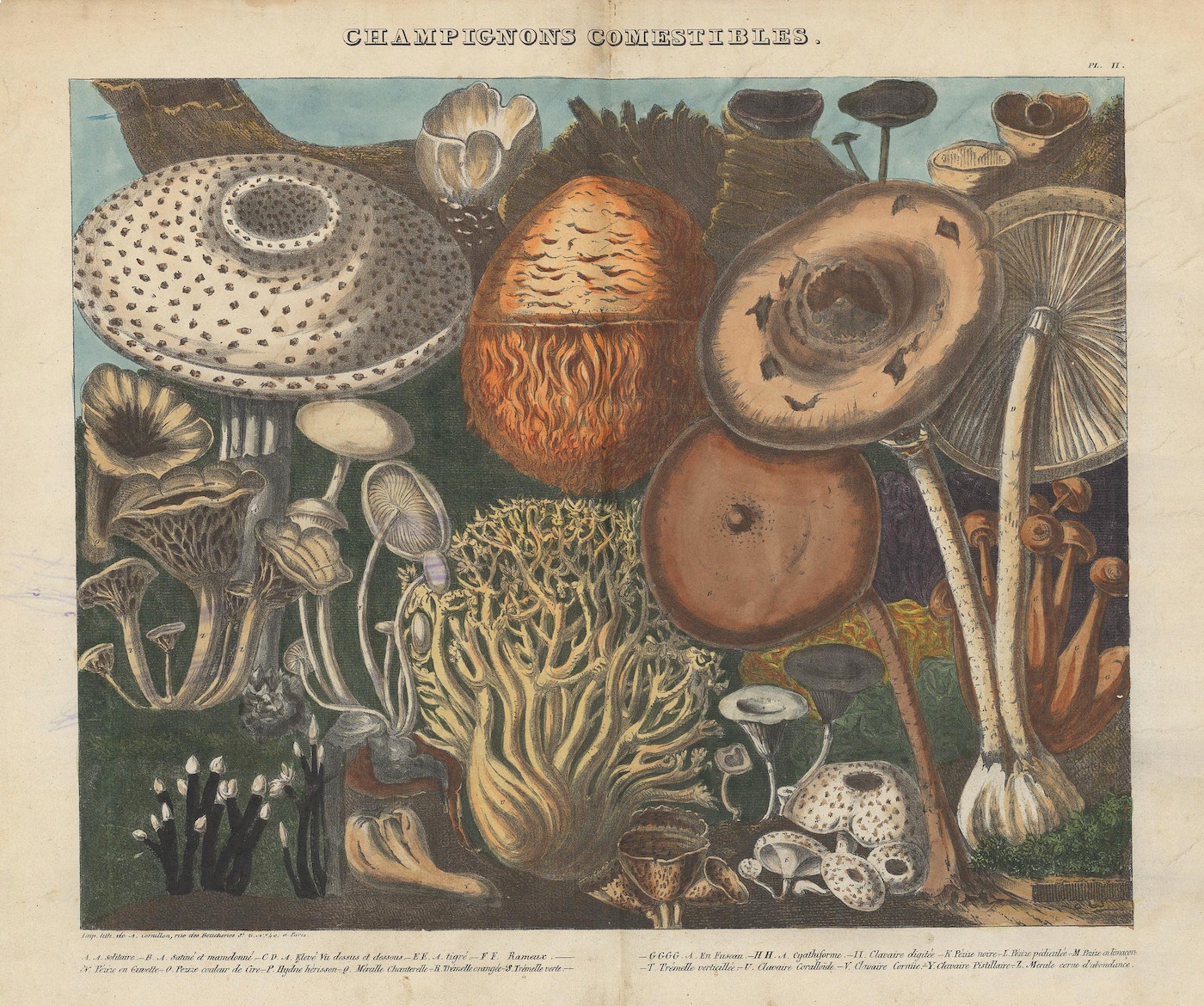
Descourtilz’ 1809 Voyages d’un naturaliste “chronicles, among other adventures, a trip from France to Haiti in 1799 in order to secure his family’s plantations.” Instead, he was arrested and conscripted as a doctor under Jean-Jacques Dessalines.
The experience did not change his view that the island should be reconquered, though he did admit “the germ” of rebellion “must secretly have existed everywhere there were slaves.” Decourtilz chiefly spent his time, while not attending to those wounded by Napoleon’s army, collecting plants between Port-au-Prince and Cap-Haïtien.
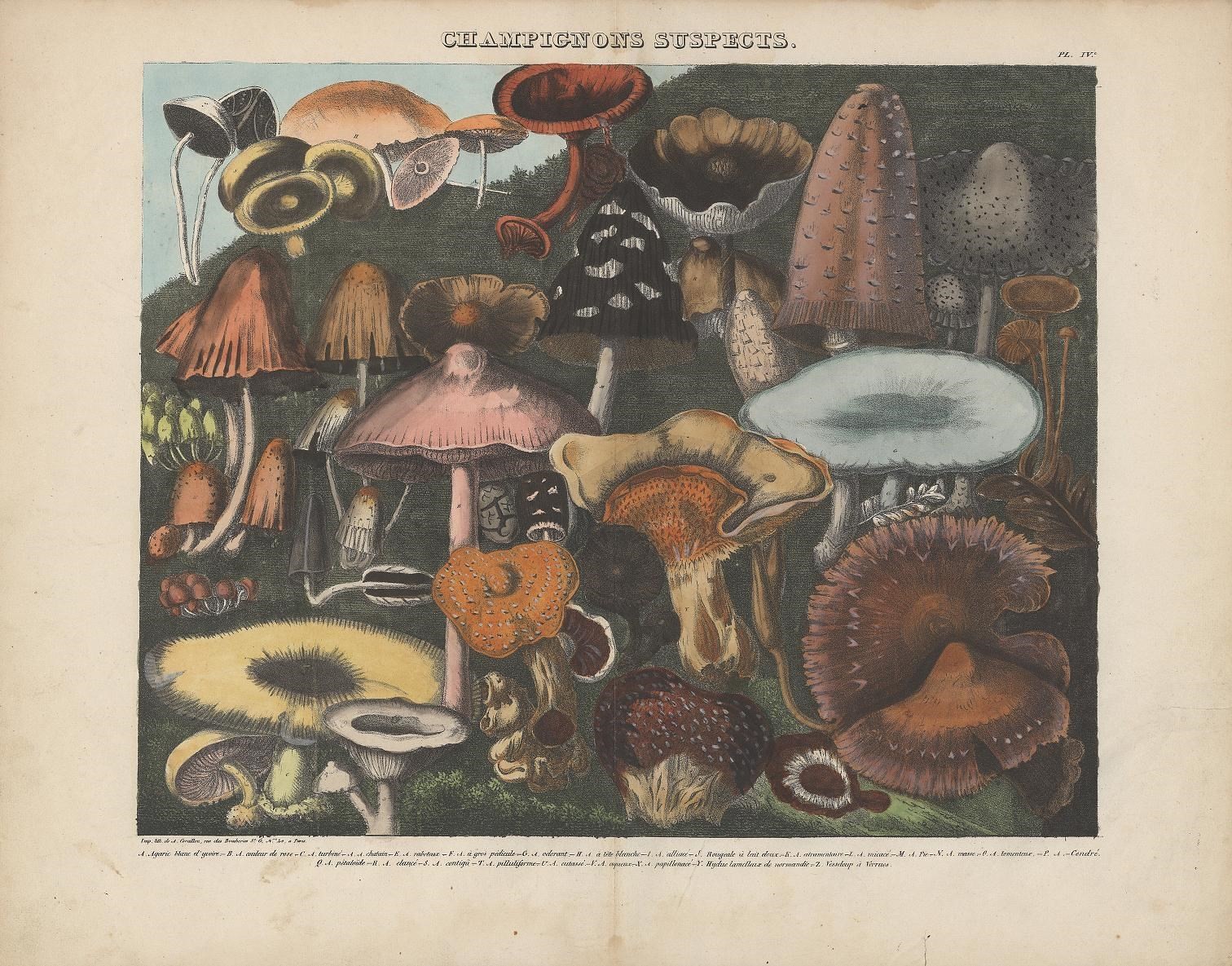
In the dense tropical growth along the Artibonite river, now part of the border between Haiti and the Dominican Republic, Decourtilz learned much about the plant world — and maybe learned from some Haitians who knew more about the island’s flora than the Frenchman did. Rescued in 1802, Decourtilz returned to France with his plants and began to compile his research into taxonomic books, including Flores pittoresque et medicale des Antilles, in eight volumes, and a later, 1827 work entitled Atlas des champignons: comestibles, suspects et vénéneux, or “Atlas of mushrooms: edible, suspect and poisonous.”
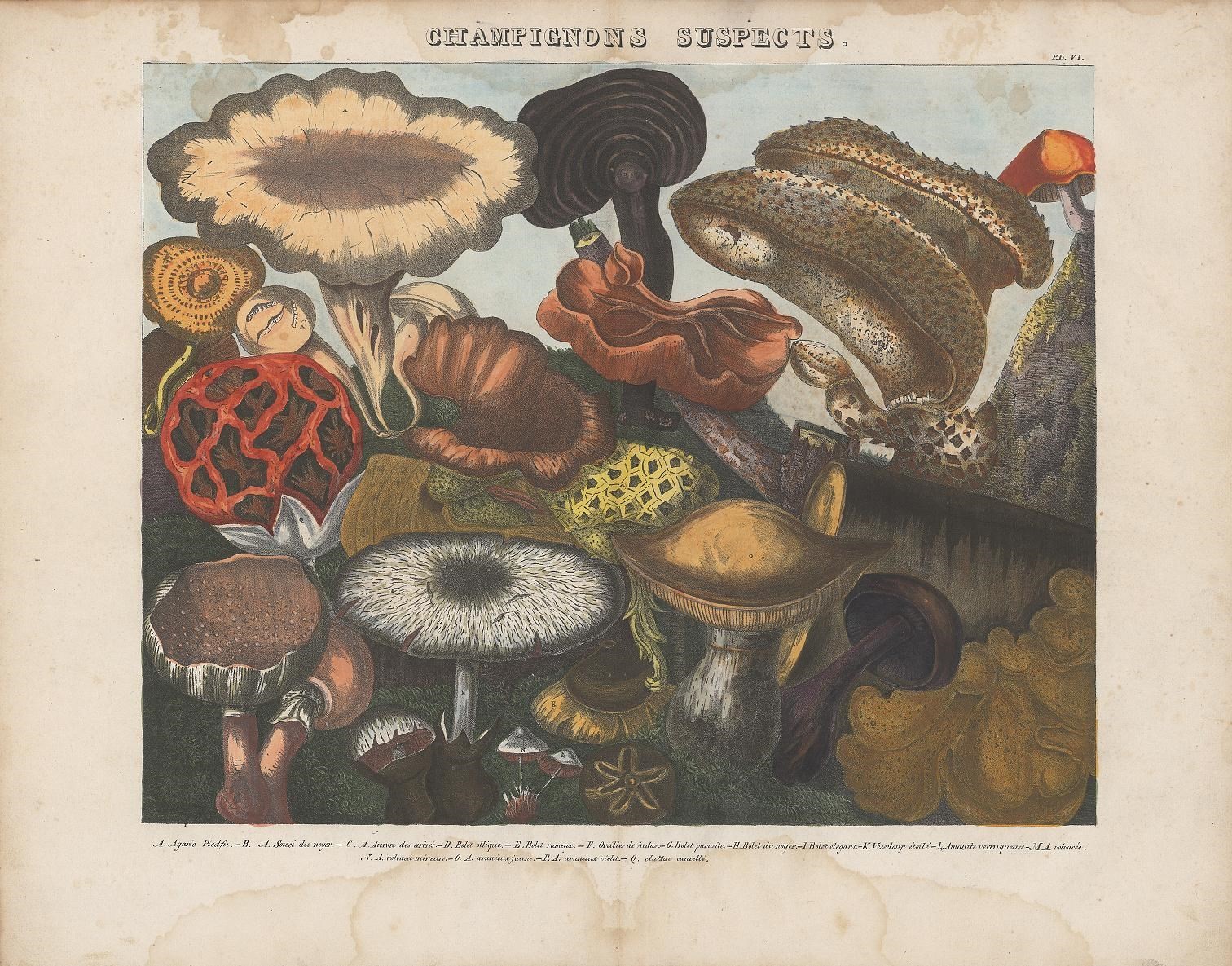
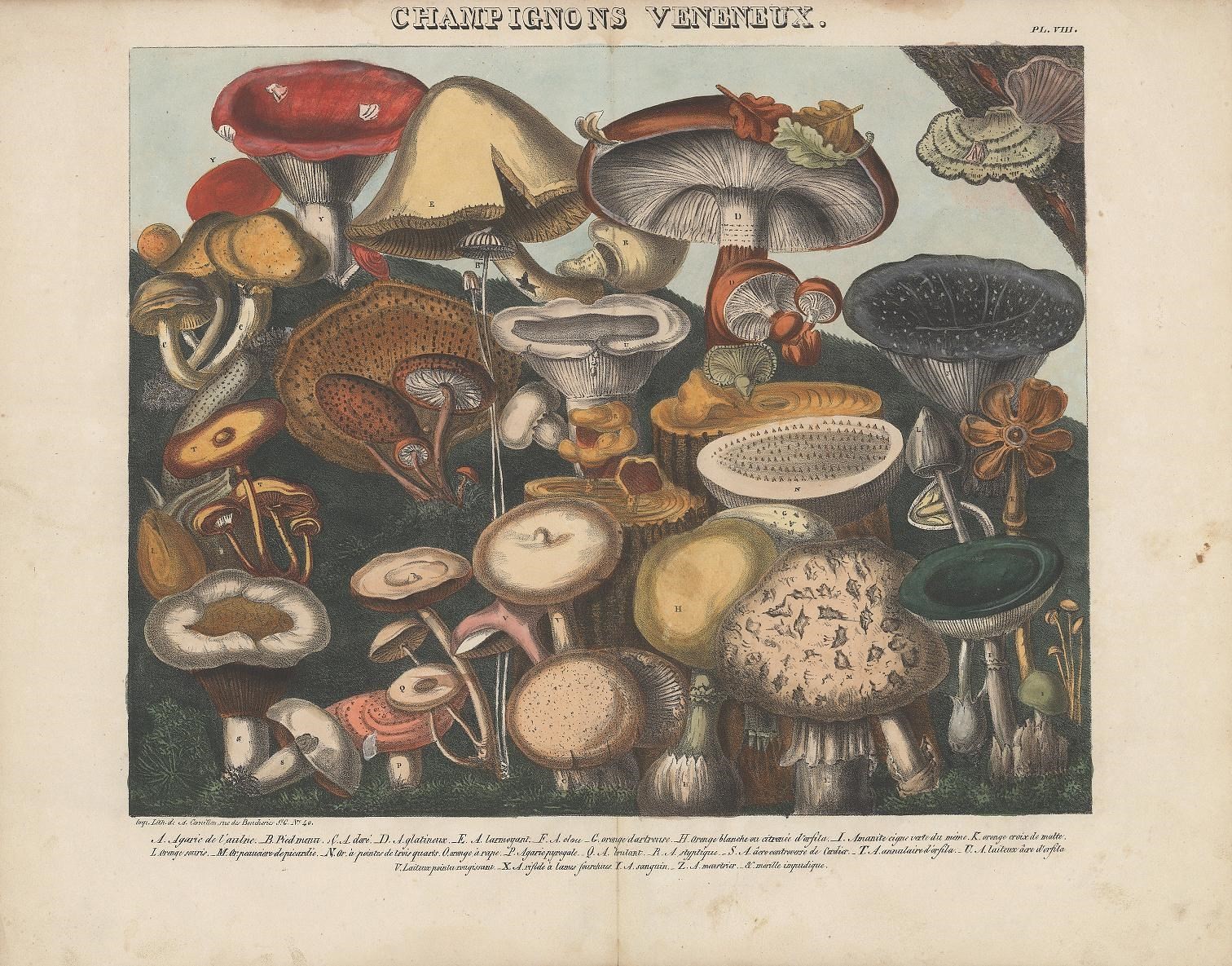
As the title makes clear, sorting out the differences between one mushroom and another can easily be a matter of life and death, or at least serious poisoning. “Fly agaric, for example,” writes the Public Domain Review, “can resemble edible species of blushers.” Consumed in small amounts, it might cause hallucinations and euphoria. Larger doses can lead to seizures and coma. One can imagine the numbers of colonists in the French Caribbean who either had very bad trips or were poisoned or killed by unfamiliar plant life. Just last year alone in France, hundreds were poisoned from misidentified mushrooms.
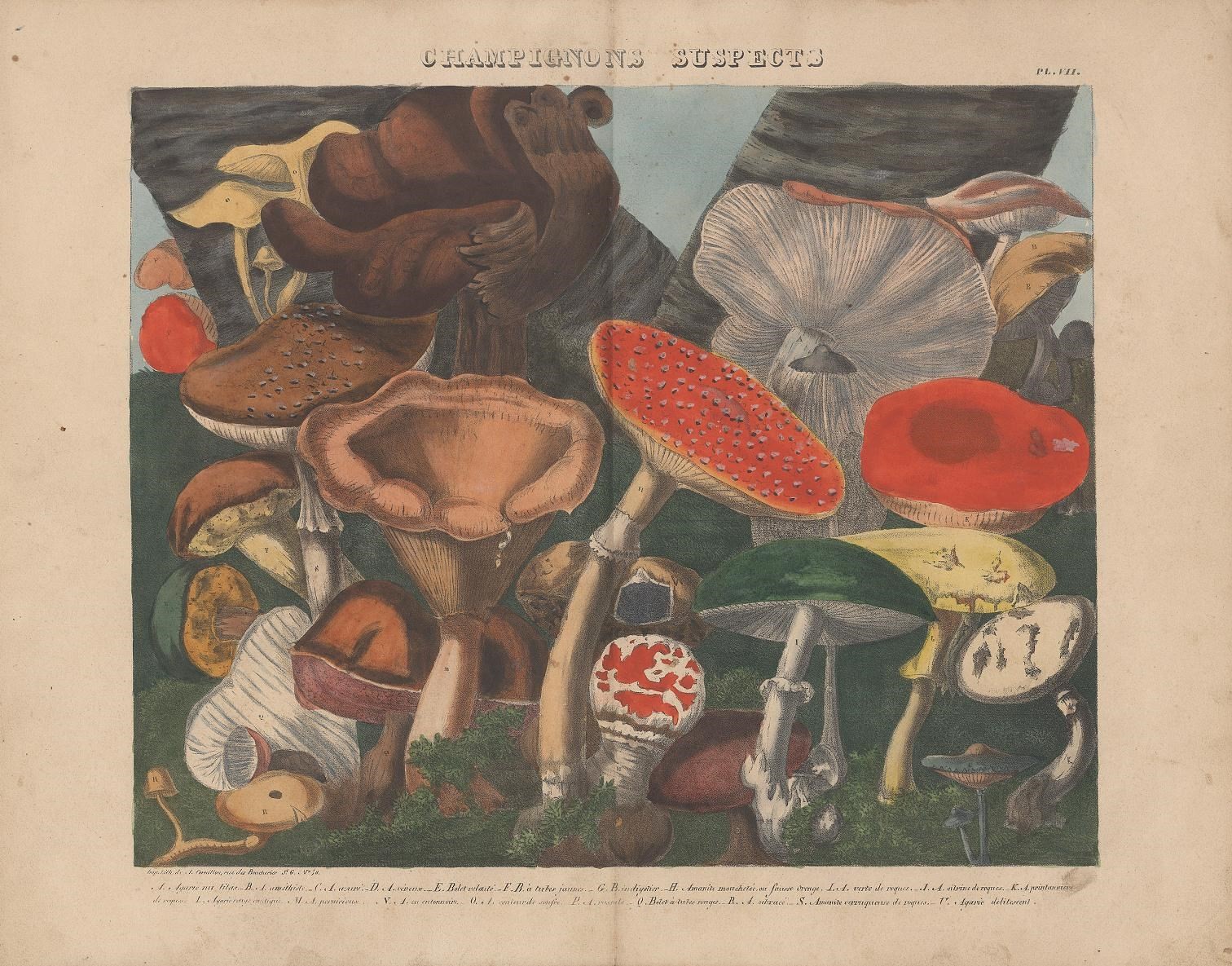
To guide the mushroom hunter, cook, and eater, Decourtiliz’s book featured these rich, colorful lithographs here by artist A. Cornillon (which may remind us of the proto-psychedelic scientific art of Ernst Haeckel). He alludes to the great dangers of wild mushrooms in a dedication to “S.A.R., Duchesse de Berry” and promises his guide will prevent “mortal accidents” (those which “frequently occur among the poor.”) Descourtilz offers his guide, accessible to all, he writes, out of a devotion to the alleviation of human suffering. Read his Atlas of Mushrooms, in French at the Internet Archive, and see more of Cornillon’s illustrations here.
Related Content:
1,000-Year-Old Illustrated Guide to the Medicinal Use of Plants Now Digitized & Put Online
Josh Jones is a writer and musician based in Durham, NC. Follow him at @jdmagness
Read More...A 13th-Century Cookbook Featuring 475 Recipes from Moorish Spain Gets Published in a New Translated Edition
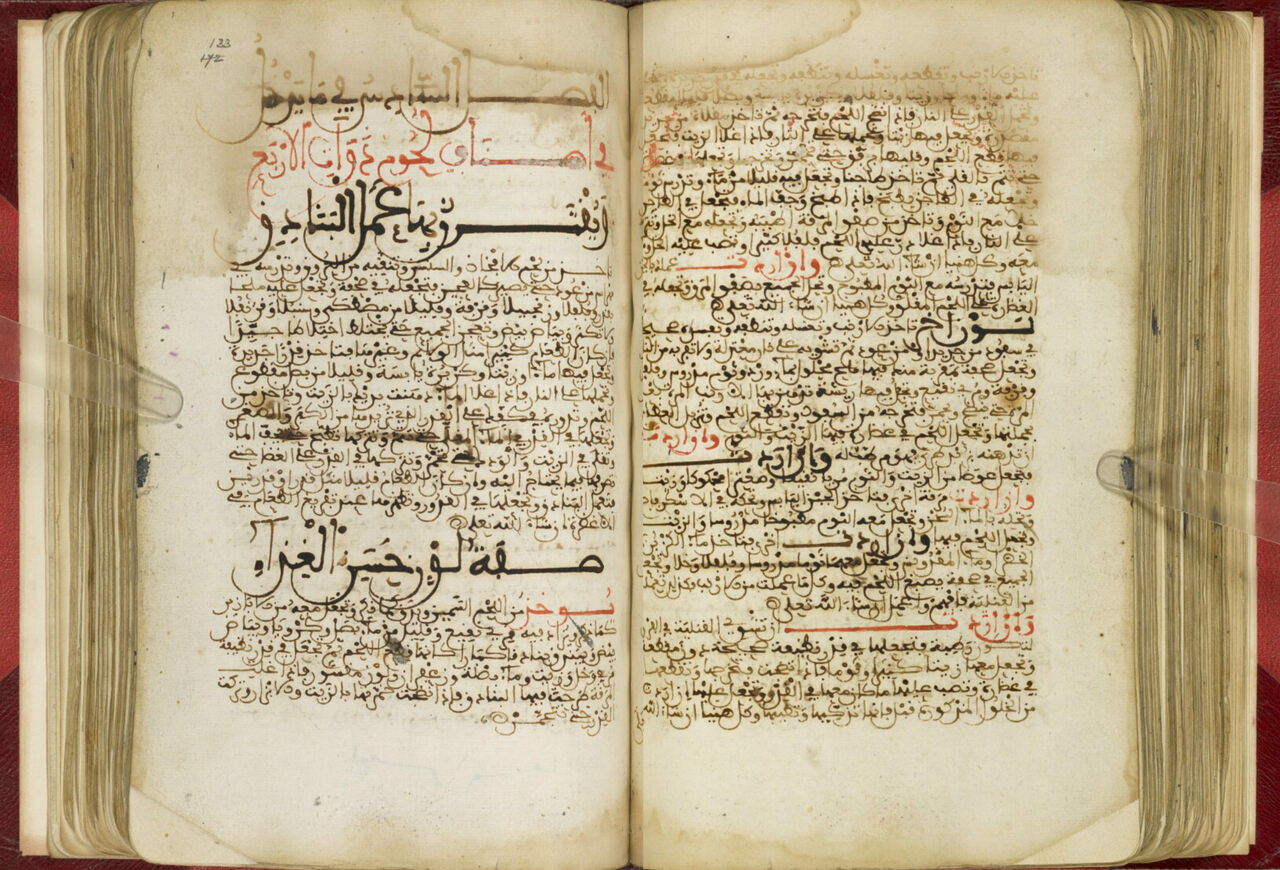
Some of the distinctiveness of Spain as we know it today comes as a legacy of the period from 700 to 1200, when most of it was under Muslim rule. The culture of Al-Andalus, as the Islamic states of modern-day Spain and Portugal were then called, survives most visibly in architecture. But it also had its own cuisine, developed by not just Muslims, but by Christians and Jews as well. Whatever the dietary restrictions they individually worked under, “cooks from all three religions enjoyed many ingredients first brought to the Iberian peninsula by the Arabs: rice, eggplants, carrots, lemons, sugar, almonds, and more.”
So writes Atlas Obscura’s Tom Verde in an article occasioned by the publication of a thirteenth-century Moorish cookbook. Fiḍālat al-Khiwān fī Ṭayyibāt al‑Ṭaʿām wa-l-Alwān, or Best of Delectable Foods and Dishes from al-Andalus and al-Maghrib had long existed only in bits and pieces. A “maddeningly incomplete carrot recipe, along with missing chapters on vegetables, sauces, pickled foods, and more, left a gaping hole in all existing editions of the text, like an empty aisle in the grocery store.” But in 2018, British Library curator of Arabic scientific manuscripts Dr. Bink Hallum happened upon a nearly complete fifteenth- or sixteenth-century copy of the Fiḍāla within a manuscript on medieval Arab pharmacology.
The Fiḍāla itself dates to around 1260. It was composed in Tunis by Ibn Razīn al-Tujībī, “a well-educated scholar and poet from a wealthy family of lawyers, philosophers, and writers. As a member of the upper class, he enjoyed a life of leisure and fine dining which he set out to celebrate in the Fiḍāla.” The Christian Reconquista had already put a bitter end to all that leisure and fine dining, and it was in relatively hardscrabble African exile that al-Tujībī wrote this less as a cookbook than as “an exercise in culinary nostalgia, a wistful look back across the Strait of Gibraltar to the elegant main courses, side dishes, and desserts of the author’s youth, an era before Spain’s Muslims and Jews had to hide their cultural cuisines.”

That description comes from food historian Nawal Nasrallah, translator of the complete Fiḍāla into an English edition published last month by Brill. In some of its sections al-Tujībī covers breads, vegetables, poultry dishes, and “meats of quadrupeds”; in others, he goes into detail on stuffed tripe, “edible land snails,” and techniques for “remedying overly salty foods and raw meat that does not smell fresh.” (The book includes 475 recipes in total.) Though much in the Moorish diet is a far cry from that of the majority in modern English-speaking countries, interest in historical gastronomy has been on the rise in recent years. And as even those separated from al-Tujībī by not just culture but seven centuries’ worth of time know, whatever your reasons for leaving a place, you soon long for nothing as acutely as the food — and that longing can motivate impressive achievements.
Related Content:
What Did People Eat in Medieval Times? A Video Series and New Cookbook Explain
An Archive of 3,000 Vintage Cookbooks Lets You Travel Back Through Culinary Time
Discover Japan’s Oldest Surviving Cookbook Ryori Monogatari (1643)
Download 10,000+ Books in Arabic, All Completely Free, Digitized and Put Online
Based in Seoul, Colin Marshall writes and broadcasts on cities, language, and culture. His projects include the Substack newsletter Books on Cities, the book The Stateless City: a Walk through 21st-Century Los Angeles and the video series The City in Cinema. Follow him on Twitter at @colinmarshall or on Facebook.
Read More...A Beautifully Illustrated Edition of On Tyranny: Twenty Lessons from the Twentieth Century, the Bestselling Book by Historian Timothy Snyder
For all its talk of liberty, the US government has practiced dehumanizing authoritarianism and mass murder since its founding. And since the rise of fascism in the early 20th century, it has never been self-evident that it cannot happen here. On the contrary — wrote Yale historian Timothy Snyder before and throughout the Trump presidency — it happened here first, though many would like us to forget. The histories of southern slavocracy and manifest destiny directly informed Hitler’s plans for the German colonization of Europe as much as did Europe’s 20th-century colonization of Africa and Asia.
Snyder is not a scholar of American history, though he has much to say about his country’s present. His work has focused on WWII’s totalitarian regimes and his popular books draw from a “deep knowledge of twentieth-century European history,” write Françoise Mouly and Genevieve Bormes at The New Yorker.
These books include bestsellers like Bloodlands: Europe Between Hitler and Stalin and the controversial Black Earth: The Holocaust as History and Warning, a book whose arguments, he said, “are clearly not my effort to win a popularity contest.”
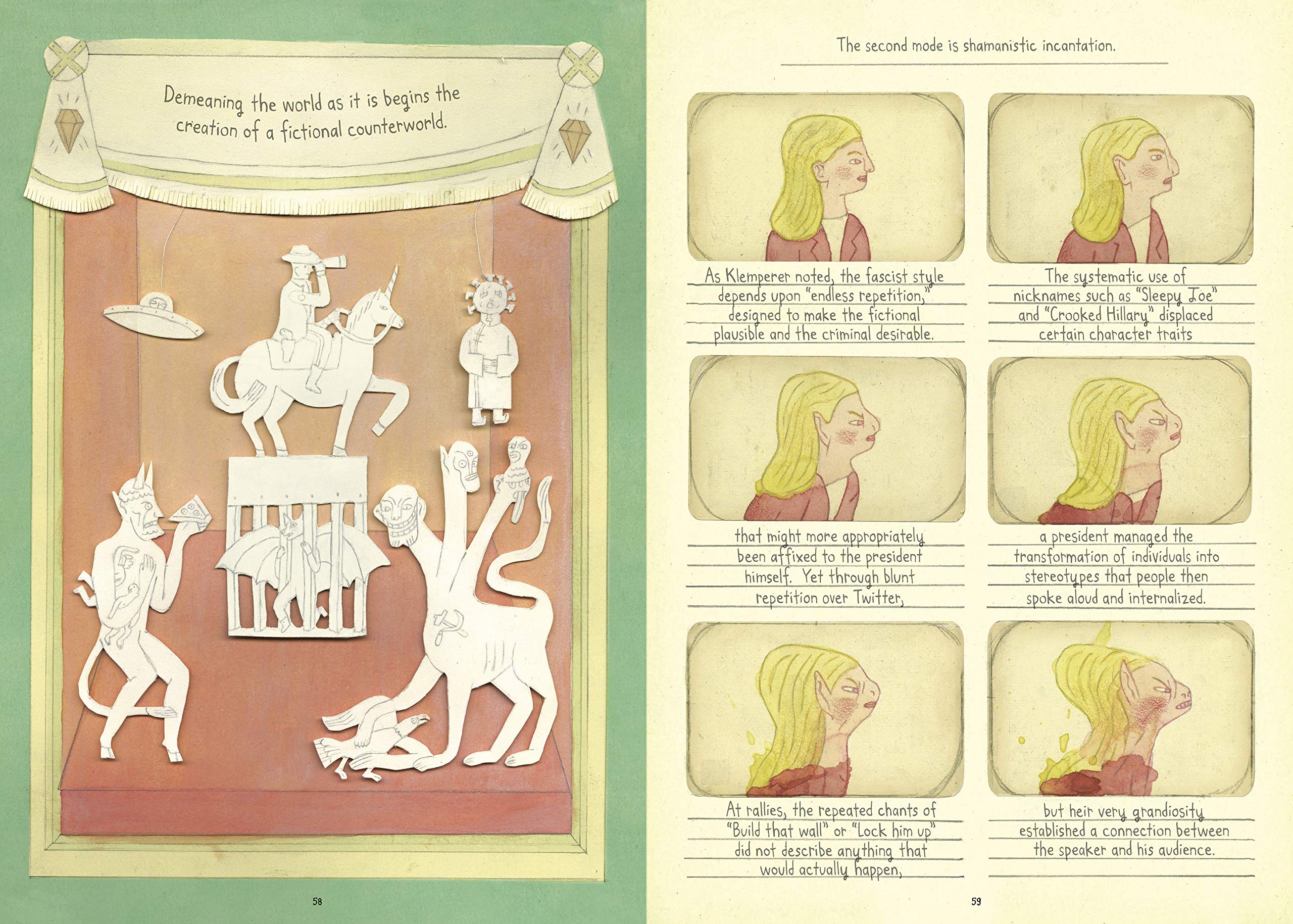
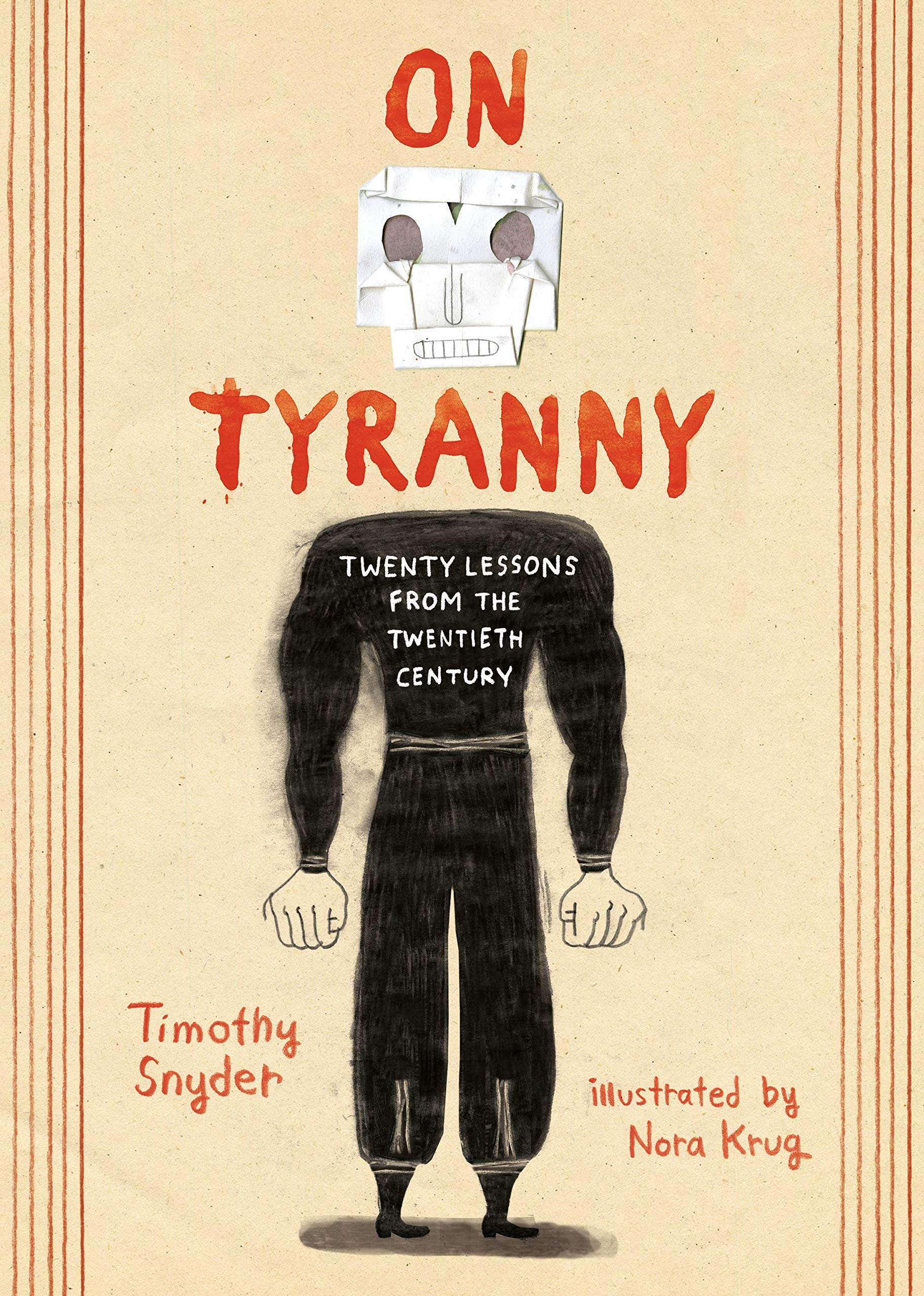
Indeed, the problem with rigid conformity to populist ideas became the subject of Snyder’s 2017 bestseller, On Tyranny: Twenty Lessons from the Twentieth Century, “a slim volume,” Mouly and Bormes note, “which interspersed maxims such as ‘Be kind to our language’ and ‘Defend institutions’ with biographical and historical sketches.” (We posted an abridged version of Snyder’s 20 lessons that year.) On Tyranny became an “instant best-seller… for those who were looking for ways to combat the insidious creep of authoritarianism at home.”
If you’ve paid any attention to the news lately, maybe you’ve noticed that the threat has not receded. Ideas about how to combat anti-democratic movements remain relevant as ever. It’s also important to remember that Snyder’s book dates from a particular moment in time and draws on a particular historical perspective. Contextual details that can get lost in writing come to the fore in images — clothing, cars, the use of color or black and white: these all key us in to the historicity of his observations.
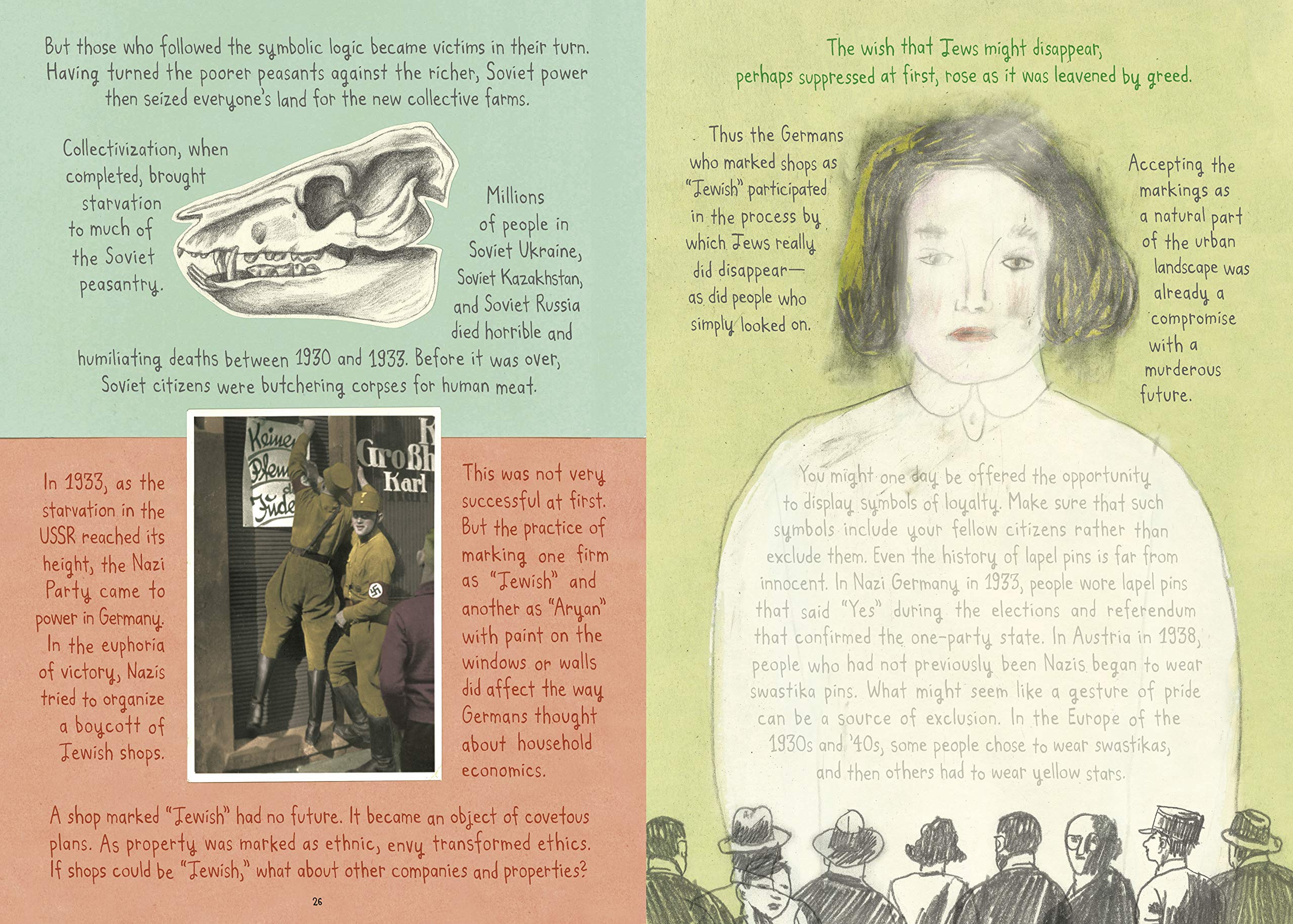
“We don’t exist in a vacuum,” says artist Nora Krug, the designer and illustrator of a new, graphic edition of On Tyranny just released this month. “I use a variety of visual styles and techniques to emphasize the fragmentary nature of memory and the emotive effects of historical events.” Krug worked from artifacts she found at flea markets and antique stores, “depositories of our collective consciousness,” as she writes in an introductory note to the new edition.
Krug’s choice of a variety of mediums and creative approaches “allows me to admit,” she says, “that we can only exist in relationship to the past, that everything we think and feel is thought and felt in reference to it, that our future is deeply rooted in our history, and that we will always be active contributors to shaping how the past is viewed and what our future will look like.”
It’s an approach also favored by Snyder, who does not shy away, like many historians, from explicitly making connections between past, present, and possible future events. “It’s easy for historians to say, ‘It’s not our job to write the future,’” he told The New York Times in 2015. “Yes, right. But then whose job is it?” See many more images from the illustrated On Tyranny at The New Yorker and purchase a copy of the book here.
Via Kottke
Related Content:
Umberto Eco Makes a List of the 14 Common Features of Fascism
Josh Jones is a writer and musician based in Durham, NC. Follow him at @jdmagness
Read More...Criterion Collection Flash Sale: Get 50% Off In-Stock Blu Rays & DVDs

FYI. For the next 22 hours, the Criterion Collection is running a flash sale (click here), giving you a chance to purchase “all in-stock Blu-rays & DVDs at 50% off.” Head over to the Criterion site and get classic films by Hitchcock, Lynch, Welles, Kubrick, the Coen Brothers, and many others. The sale ends on October 20, 2021.
If you would like to support the mission of Open Culture, consider making a donation to our site. It’s hard to rely 100% on ads, and your contributions will help us continue providing the best free cultural and educational materials to learners everywhere. You can contribute through PayPal, Patreon, and Venmo (@openculture). Thanks!
Read More...Nick Cave’s Online Store: Pencils Adorned with Lyrics, Mugs, Polaroids & More

I’m sitting on the balcony
Reading Flannery O’Connor
With a pencil and a plan- Nick Cave, Carnage
Access to technology has transformed the creative process, and many artists who’ve come to depend on it have long ceased to marvel at the labor and time saved, seething with resentment when devices and digital access fails.
Musician Nick Cave, founder and frontman of The Bad Seeds, is one who hasn’t abandoned his analog ways, whether he’s in the act of generating new songs, or seeking respite from the same.
“There has always been a strong, even obsessive, visual component to the (songwriting) process,” he writes, “a compulsive rendering of the lyric as a thing to be seen, to be touched, to be examined:”
I have always done this—basically drawn my songs—for as long as I’ve been writing them…when the pressure of song writing gets too much, well, I draw a cute animal or a naked woman or a religious icon or a mythological creature or something. Or I take a Polaroid or make something out of clay. I do a collage, or write a child’s poem and date stamp and sticker it, or do some granny-art with a set of watercolour paints.
Last year, these extra creative labors became fruits in their own right, with the opening of Cave Things, an online shop well stocked with quirky objects “conceived, sourced, shaped, and designed” by the musician.
These include such longtime fascinations as prayer cards, picture discs, and Polaroids, and a series of enameled charms and ceramic figures that evoke Victorian Staffordshire “flatbacks.”
T‑shirts, guitar picks and egg cups may come graced with doodles of frequent collaborator Warren Ellis’ bearded mug, or the aforementioned naked women, which Cage describes to Interview’s Ben Barna as “a compulsive habit I have had since my school days”:
They have no artistic merit. Rather, they are evidence of a kind of ritualistic and habitual thinking, not dissimilar to the act of writing itself, actually.
Of all of Cave’s Cave Things, the ones with the broadest appeal may be the pencil sets personalized with thematic snippets of his lyrics.


White god pencils quote from “Into My Arms,” “Idiot Prayer,” “Mermaids,” and “Hand of God.”
A red devil pencil bearing lines from “Brompton Oratory” slips a bit of god into the mix, as well as a reference to the sea, a frequent Cave motif.




Madness and war pencils are counterbalanced by pencils celebrating love and flowers.
The pencils are Vikings, a classic Danish brand well known to pencil nerds, hard and black on the graphite scale.
Put them all in a cup and draw one out at random, or let your mood or feelings about what said pencil will be writing or drawing determine your pick.
Meanwhile Cave’s implements of choice may surprise you. As he told NME’s Will Richards last December:
My process of lyric writing is as follows: For months, I write down ideas in a notebook with a Bic medium ballpoint pen in black. At some point, the songs begin to reveal themselves, to take some kind of form, which is when I type the new lyrics into my laptop. Here, I begin the long process of working on the words, adding verses, taking them away, and refining the language, until the song arrives at its destination. At this stage, I take one of the yellowing back pages I have cut from old second-hand books, and, on my Olympia typewriter, type out the lyrics. I then glue it into my bespoke notebook, number it, date-stamp it, and sticker it. The song is then ‘officially’ completed.
Hmm. No pencils, though there’s a reference to a blind pencil seller in Cave’s contribution to the soundtrack of Wim Wenders’ science fiction epic Until the End of the World.
Two more lyrics about pencils and he’ll have enough to put a Pencil Pencils set up on Cave Things!
Follow Cave Things on Instagram to keep tabs on new pencil drops.

Related Content:
Listen to Nick Cave’s Lecture on the Art of Writing Sublime Love Songs (1999)
Ayun Halliday is an author, illustrator, theater maker and Chief Primatologist of the East Village Inky zine. Follow her @AyunHalliday.
Read More...The Downfall of Oscar Wilde: An Animated Video Tells How Wilde Quickly Went from Celebrity Playwright to Prisoner
Oscar Wilde left a body of literature that continues to entertain generation after generation of readers, but for many of his fans his life leads to his work, not the other way around. Its latest retelling, Oscar Wilde: A Life by Matthew Sturgis, came out in the United States just this past week. “Universally heralded as a genius” when his play The Importance of Being Earnest premiered in London in 1895, he was just a few months later “bankrupt and about to be imprisoned. His reputation was in tatters and his life was ruined beyond repair.” This is how Alain de Botton tells it in “The Downfall of Oscar Wilde,” the animated School of Life video above.
Wilde was imprisoned, as even those who’ve never read a word he wrote know, for his homosexuality. This de Botton described as “the swift fall of a great man due to a small but fateful slip,” a result of the social and legal conditions that obtained in the time and place in which Wilde lived. Having fallen for “a beguiling young man named Lord Alfred Douglas,” known as “Bosie,” Wilde found himself on the receiving end of threats from Bosie’s father, the Marquess of Queensbury. Their conflict eventually provoked the Marquess to publicize Wilde and Bosie’s relationship all throughout London, and since “homosexuality was illegal and deeply frowned upon in Victorian society, this was a dangerous accusation.”
Though Wilde fought a valiant and characteristically eloquent court battle, he was eventually convicted of “gross indecency” and sentenced to two years of imprisonment and hard labor. “For someone of Wilde’s luxurious background,” says de Botton, “it was an impossible hardship.” This time inspired his essay De Profundis, and later his poem The Ballad of Reading Gaol, but according to most accounts of his life, he never really recovered from it before succumbing to meningitis in 1900. He had plans, writes The New Yorker’s Clare Bucknell, “for a new social comedy, a new Symbolist drama, a new libretto.” But as his lover Bosie put it, Wilde’s life of post-release continental exile was “too narrow and too limited to stir him to creation.”
The United Kingdom has since pardoned Wilde (and others, like computer scientist Alan Turing) for the crimes committed in their lifetimes that would not be considered crimes today. More than a century has passed since Wilde’s death, and “our society has become generous towards Wilde’s specific behavior,” says de Botton. “Many of us would, across the ages, want to comfort and befriend Oscar Wilde. It’s a touching hope, but one that would be best employed in extending understanding to all those less talented and less witty figures who are right now facing grave difficulties.” Wilde might have come to a bleak end, but the life he lived and the reactions it provoked still have much to teach us about our attitudes today.
Related Content:
Hear Oscar Wilde Recite a Section of The Ballad of Reading Gaol (1897)
Based in Seoul, Colin Marshall writes and broadcasts on cities, language, and culture. His projects include the Substack newsletter Books on Cities, the book The Stateless City: a Walk through 21st-Century Los Angeles and the video series The City in Cinema. Follow him on Twitter at @colinmarshall or on Facebook.
Read More...A 110-Year-Old Book Illustrated with Photos of Kittens & Cats Taught Kids How to Read
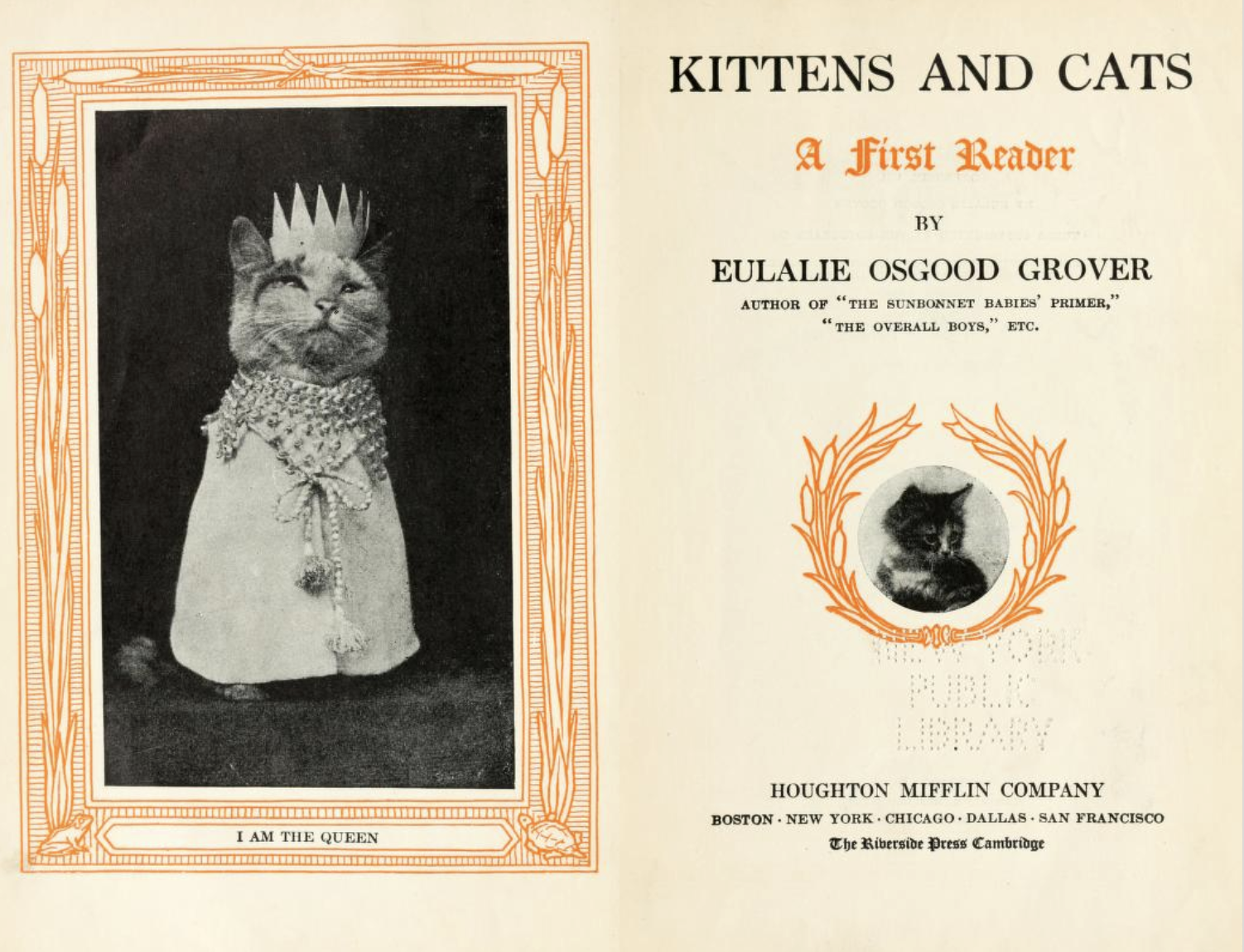
Unlike our 21st-century cat memes and other such online feline-based entertainments, children’s author Eulalie Osgood Grover’s 1911 work, Kittens and Cats: A First Reader was intended to educate.
Its related poems will almost certainly strike those of us whose understanding of feline attitude has been shaped by LOLCats, Grumpy Cat, the existential Henri, Talking Kitty Cat’s acerbic Sylvester, and the mordant 1970s TV spokescat Morris as sweet to the point of sickly. But it boasts six hundred vocabulary words, a rhyme structure that promotes reading aloud, and a note to teachers with suggestions for classroom activities.
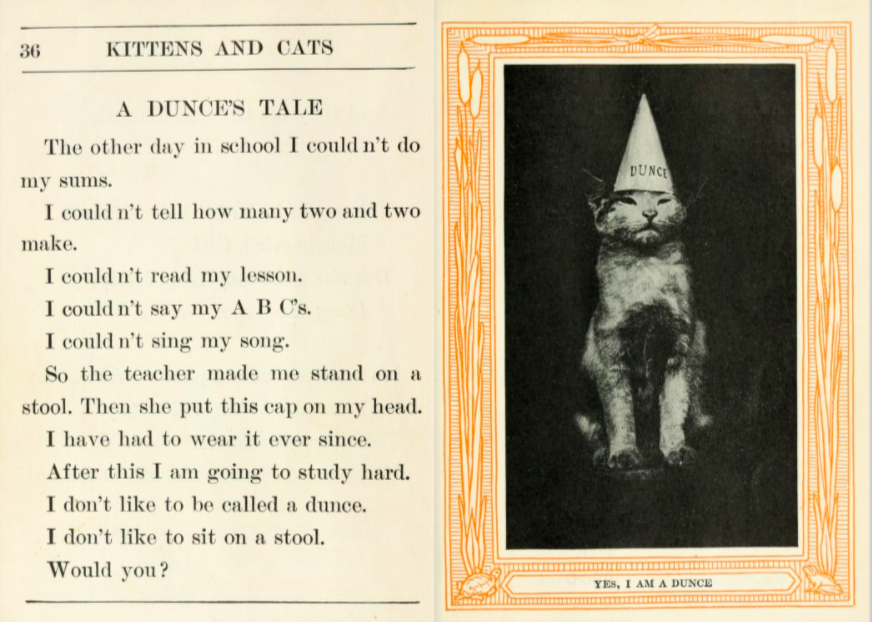
Grover explained how her feline cast of characters would win over even the most reluctant reader, inspiring “much the same delight to the little reader of juvenile fiction, as do adventure and romance to the grown-up reader”:
In one respect kittens take precedence over dolls. They are alive. They must be treated kindly. They will not bear the abuse and neglect given to many beautiful dolls. They demand attention and companionship, and they return a real devotion in return for kindness and care. Therefore we love them and especially do our children love them and delight in stories of them.
The loosely structured story concerns a grand party thrown by the Queen of the Cats. Following some breathless preparations, the guests take turns introducing themselves to her majesty, though unlike T.S. Eliot’s Old Possum’s Book of Practical Cats (1939), there’s not much that could be cobbled into a hit musical.
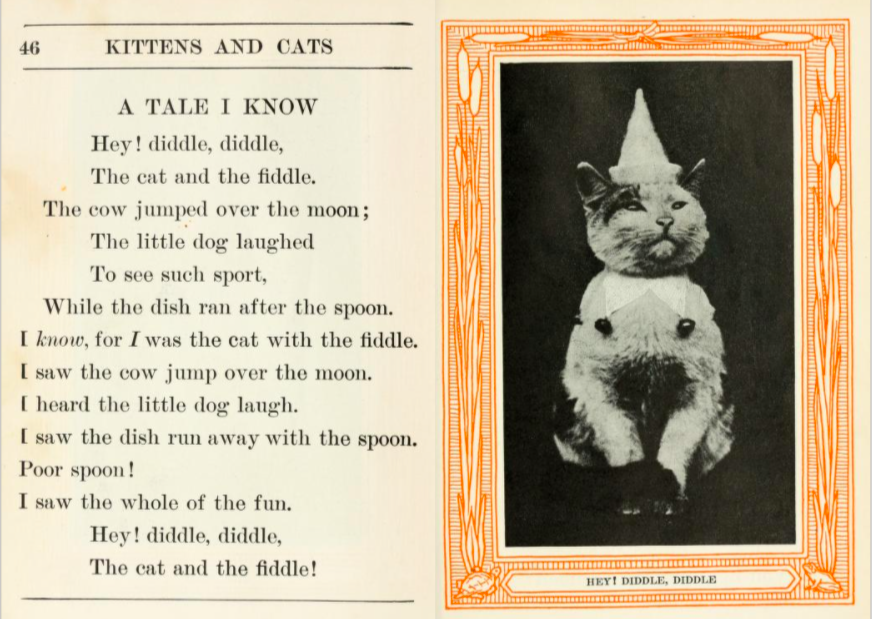
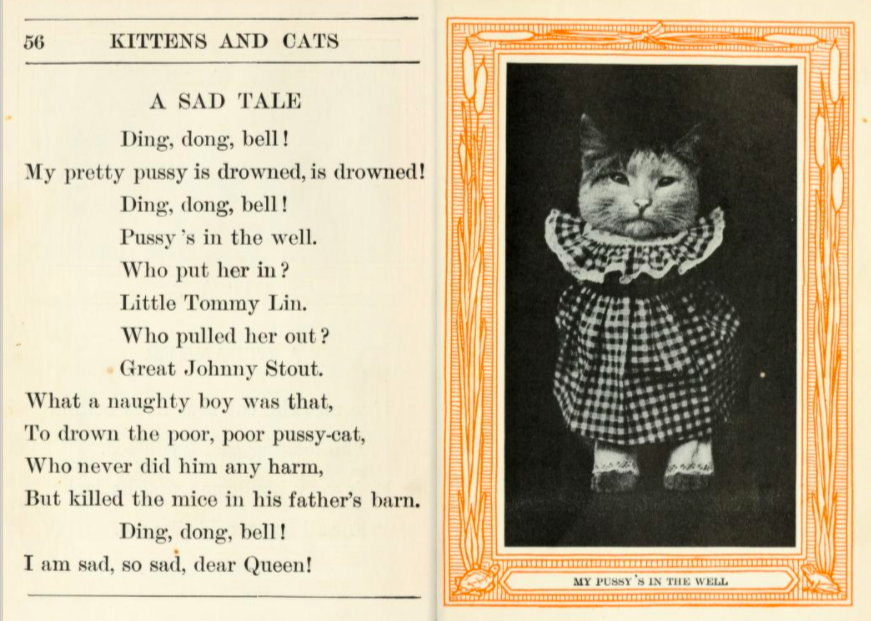
Grover fleshes out the narrative with callbacks to a number of cat-rich nursery rhymes — Hickory Dickory Dock, Three Little Kittens, Hey Diddle Diddle, As I Was Going to St. Ives, Ding Dong Bell…
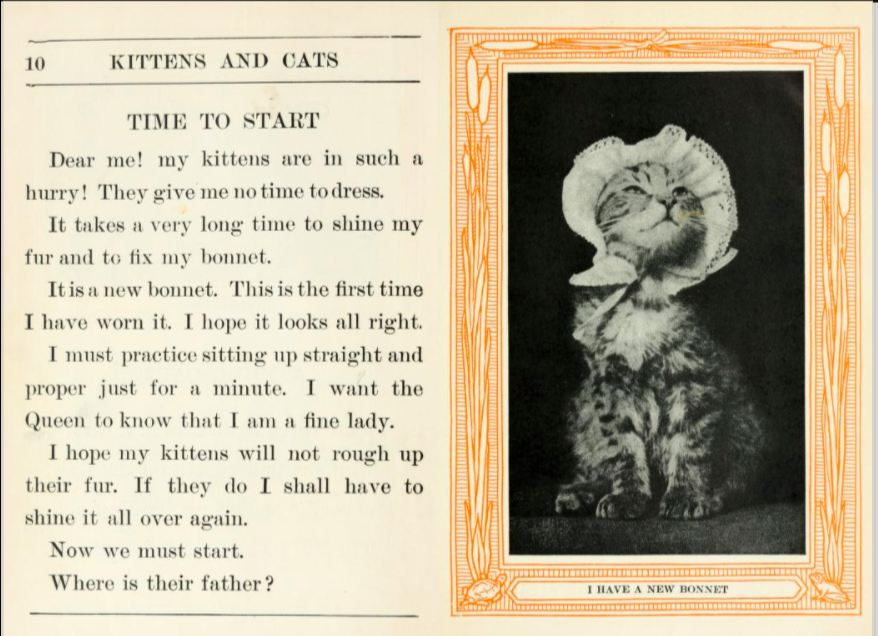
One lace-bonneted character is reminiscent of Tom Kitten’s mother, Mrs. Tabitha Twitchit, and her unsuccessful attempts to wrangle her rambunctious offspring into clothing fit for “fine company,” though the wit falls somewhat short of Beatrix Potter’s.
Headgear abounds, as do restrictive buntings that must’ve been a great help when dealing with uncooperative models and long exposures.
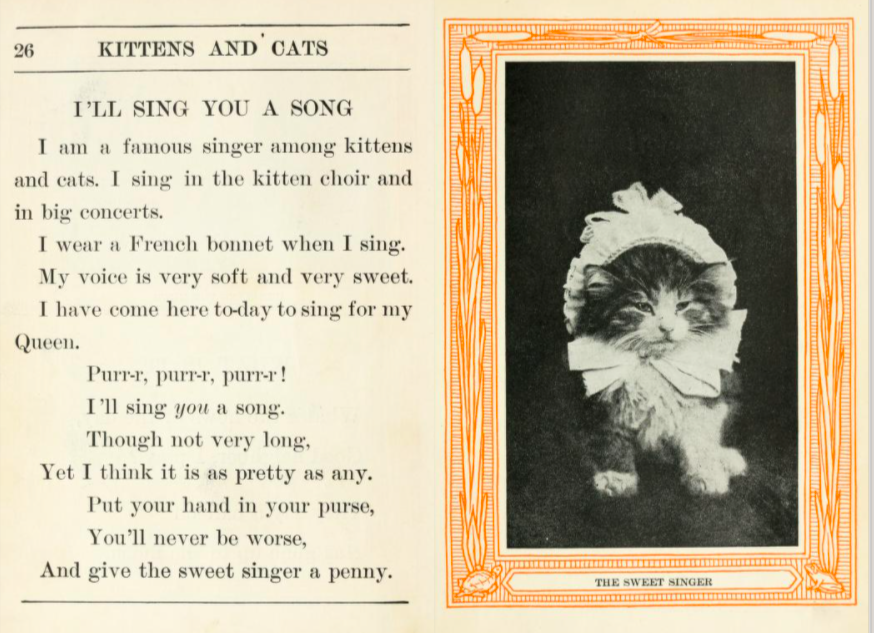
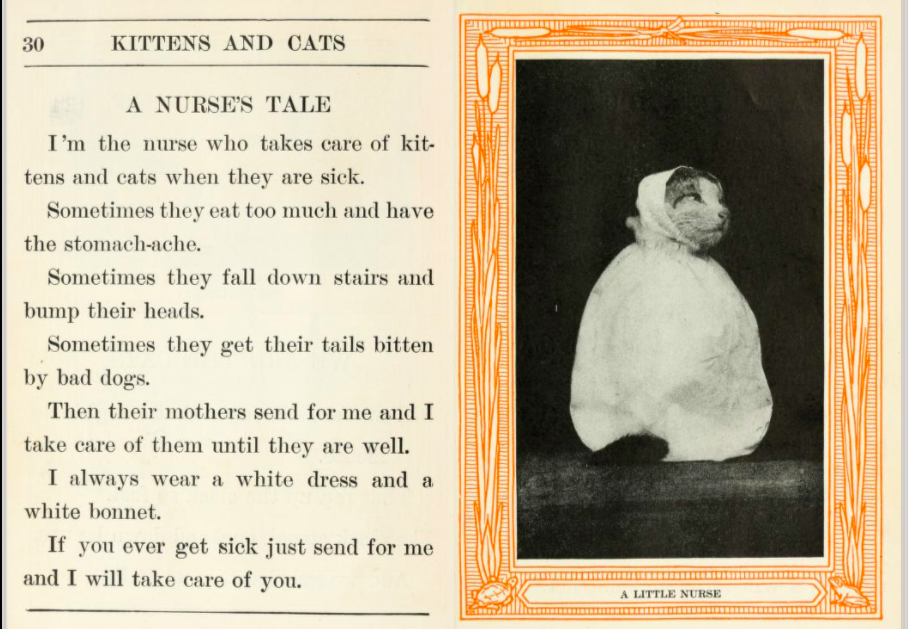
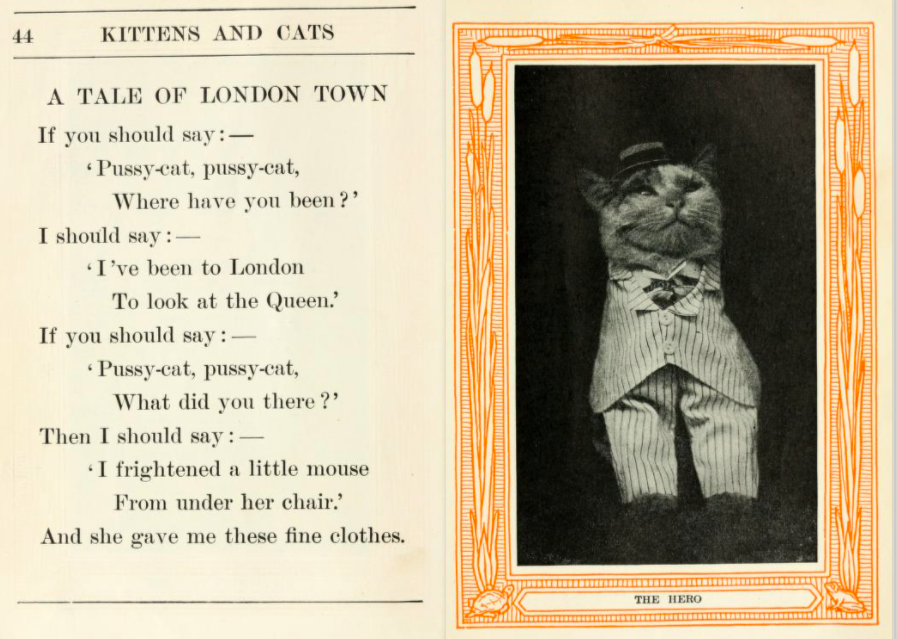
Although the photographer is uncredited, the images are likely the work of Harry Whittier Frees, a “pioneer of the anthropomorphic kitten photograph genre” as per the New York Daily News. In his introduction to his far more ambitiously posed 1915 work, The Little Folks of Animal Land, Frees alluded to his process:
The difficulties of posing kittens and puppies for pictures of this kind have been overcome only by the exercise of great patience and invariable kindness. My little models receive no especial training, and after their daily performance before the camera they enjoy nothing more than a good frolic about the studio.
That’s a pleasant thought, though historian and postcard collector Mary L. Weigley tells a somewhat different tale in an article for Pennsylvania Heritage, describing how only 3/10 of his negatives could be published, and his work was so “challenging, time-consuming and nerve-wracking” that he took 9 months out of every year to recuperate.
Cats!
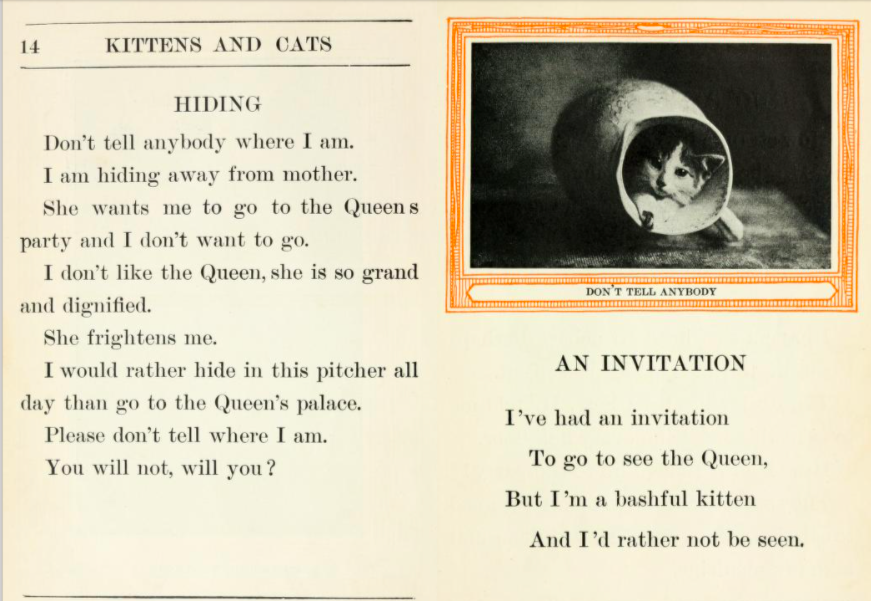
Download a free copy of Eulalie Osgood Grover’s Kittens and Cats here.
Related Content:
Why Humans Are Obsessed with Cats
GPS Tracking Reveals the Secret Lives of Outdoor Cats
Ayun Halliday is an author, illustrator, theater maker and Chief Primatologist of the East Village Inky zine. Follow her @AyunHalliday.
Read More...Support Us
We're hoping to rely on loyal readers, rather than erratic ads. Please click the Donate button and support Open Culture. You can use Paypal, Venmo, Patreon, even Crypto! We thank you!

About Us

Open Culture scours the web for the best educational media. We find the free courses and audio books you need, the language lessons & educational videos you want, and plenty of enlightenment in between.
Advertise With Us
FREE UPDATES!
GET OUR DAILY EMAIL
Get the best cultural and educational resources on the web curated for you in a daily email. We never spam. Unsubscribe at any time.
FOLLOW ON SOCIAL MEDIA
Open Culture editor Dan Colman scours the web for the best educational media. He finds the free courses and audio books you need, the language lessons & movies you want, and plenty of enlightenment in between.
Advertise With Us

