When Was the Pinnacle of Saturday Night Live? A YouTuber Watches One Episode from Each Season & Reports Back
How do we evaluate a show like Saturday Night Live? And to what, exactly, can it be compared? Before its “lackluster” debut on October 11,1975, nothing quite like it existed on television, and since that debut, everything resembling SNL exists because of SNL. The show has launched a few dozen careers, but it has also been a veritable comedy graveyard. Co-founders Lorne Michaels and Dick Ebersol both quit at different times, both after begging NBC to move to pre-recorded content because SNL’s production schedule is so grueling. Whether or not its formula works during any given episode, it’s truly unlike any other show on television.
Given its unique, and in recent decades, socially vaunted, place in popular culture, we generally judge Saturday Night Live by comparing it to itself — or to earlier iterations of itself, when it was funner, edgier, less formulaic, pandering, or whatever the current criticism happens to be. Is this a fair standard? Are expectations for the show’s political relevance or comic consistency too high? The lack of any serious competition for the time slot means that SNL exists in a league of its own. The standards we apply to it are necessarily subjective, and subject to change given changing social climate and the show’s increasing topicality.
“So much of what Saturday Night Live wanted to be, or what I wanted it to be when it began, was cool,” says Ebersol. Try staying cool for 45 years. So why do we still care? Maybe because everyone born in the last few decades has nostalgic memories of a golden age of SNL that just happened to coincide with their adolescence. But nostalgia, says YouTuber Drew Gooden above, “is a drug that causes us to misconstrue our memories.” We want Saturday Night Live to be “good again,” by which we mean funny in ways it was. But measuring its goodness independently of memory proves difficult.
Rather than assuming, as so many viewers do, that the show peaked in the past (say the early 80s) and has steeply declined since then, Gooden hypothesizes that an accurate graph of its quality might just as well look like a jagged line full of peaks and valleys over the decades. Saturday Night Live, that is to say, has always been consistently full of great moments and terrible ones — within the same season and often the same episode. It’s in the very nature of live TV that some ideas work and others don’t on the day, and the sketches and characters we remember from our youth may not hold up well ten, twenty, thirty, even forty years later.
Gooden decided to withhold judgment on the overall quality curve of Saturday Night Live, his favorite show, before putting in the time and effort to watch at least one episode from every year in its run. See how the show comes out in his estimation after the experiment. He may not change anyone’s mind about the best, and worst, seasons, episodes, cast members, and hosts. But he does demonstrate an admirable willingness to dig into SNL’s history and give years of comedy positively antiquated by 21st century standards a fair shake.
Related Content:
Saturday Night Live’s Very First Sketch: Watch John Belushi Launch SNL in October, 1975
Classic Punk Rock Sketches from Saturday Night Live, Courtesy of Fred Armisen
Josh Jones is a writer and musician based in Durham, NC. Follow him at @jdmagness
Read More...The Psychology of Video Game Engagement — Pretty Much Pop: A Culture Podcast #94 with Jamie Madigan

Why do people play video games, and what keeps them playing? Do we want to have to think through innovative puzzles or just lose ourselves in mindless reactivity? Your hosts Mark Linsenmayer, Erica Spyres, and Brian Hirt are joined by Dr. Jamie Madigan, an organizational psychologist who runs the Psychology of Video Games podcast, to discuss what sort of a thing this is to research, the evolution of games, player types, motivation vs. engagement, incentives and feedback, as well as the gamification of work or school environments. Some games we touch on include Donkey Kong, Dark Souls, It Takes Two, Returnal, Hades, Subnautica, Fortnite, and Age of Z.
Some of the episodes of Jamie’s podcast relevant for our discussion are:
- Ep. 3 on psychological flow in games
- Ep. 6 on using psychology to craft user experiences
- Ep. 9 on how games differ from other media
Check out his books and articles too. Here are a couple of additional sources about engagement:
- “The Player Engagement Process– An Exploration of Continuation Desire in Digital Games” by Henrik Schoenau-Fog
- “Understanding Video Gaming’s Engagement” by Eric Gregory
The site Erica mentions about disabled modes in gaming is caniplaythat.com.
Hear more of this podcast at prettymuchpop.com. This episode includes bonus discussion that you can access by supporting the podcast at patreon.com/prettymuchpop. This podcast is part of the Partially Examined Life podcast network.
Pretty Much Pop: A Culture Podcast is the first podcast curated by Open Culture. Browse all Pretty Much Pop posts.
Read More...What Is Contemporary Art?: A Free Online Course from The Museum of Modern Art
What is contemporary art? In this course from the Museum of Modern Art, you’ll explore this question through more than 70 works of art made from 1980 to the present, with a focus on art of the last decade. You’ll hear directly from artists, architects, and designers from around the globe about their creative processes, materials, and inspiration.
3D printed glass and sculptures made of fiber. Dance performed in the factory and the museum. Hacking into television and video games. Portraits made with paint or artificial intelligence. Intimate explorations of the body and collective actions.
In this course, you’ll learn about artworks in both traditional and surprising mediums, all drawn from the collection of MoMA. Each week students will look at contemporary art from a different theme: Media from Television to the Internet, Territories & Transit, Materials & Making, Agency, and Power.
You can take What Is Contemporary Art? for free by selecting the audit option upon enrollment. If you want to take the course for a certificate, you will need to pay a fee.
What Is Contemporary Art? will be added to our list of Free Art & Art History Courses, 1,700 Free Online Courses from Top Universities.
Related Content:
For a complete list of online courses, please visit our complete collection, 1,700 Free Online Courses from Top Universities.
For a list of online certificate programs, visit 200 Online Certificate & Microcredential Programs from Leading Universities & Companies, which features programs from our partners Coursera, Udacity, FutureLearn and edX.
And if you’re interested in Online Mini-Masters and Master’s Degrees programs from universities, see our collection: Online Degrees & Mini Degrees: Explore Masters, Mini Masters, Bachelors & Mini Bachelors from Top Universities.
Read More...When Neil Young & Rick “Super Freak” James Formed the 60’s Motown Band, The Mynah Birds
At the height of Motown’s powers in the 1960s they were setting trends, not chasing them, but even that record company fell under the spell of the British Invasion. Sure, the jukebox R’n’B singles that made their way across the Atlantic were in the DNA of The Beatles, Rolling Stones, and the Who, but in the mid’60’s the label decided they needed a beat group of their own. That’s how one of the weirdest tales of pop music unfolded, and would have stayed a tiny footnote if it weren’t for the future fame of two of the Mynah Birds’ members: funk overlord Rick James and folk-rocker-noisemaker Neil Young.
Yes, for a brief period of time they were in the same band together in Toronto, Canada, part of an exploding beat group scene that was mostly all white. “I was an authentic R&B singer living in a city where white musicians were striving to play authentic R&B,” Rick James wrote in his autobiography quoted in Bandsplaining’s above video. “That added to my status. It also got me laid.”
James Ambrose Johnson Jr., had been in Canada for two years already, having escaped the Vietnam draft by fleeing north in 1964. Saved from a bar brawl by future members of The Band, Levon Helm and Garth Hudson, he entered the music scene and adopted the name Ricky Matthews, as a way to hide his identity. The Mynah Birds began in 1964 and even put out a single on Columbia that went nowhere. They tried (and failed) again in 1965, with an ever-changing line-up. Ricky Matthews though, remained the dynamic lead singer.
Enter Neil Young. As Rick James tells it, he was looking to change their sound and he saw Neil Young playing in a coffeehouse and asked him to join. (James’ recollection is in the above video.) However, Kevin Plummer in the Torontoist has a different version:
One day—most likely in the fall of 1965, but some say in early 1966—Young was walking down Yorkville Avenue with an amp on his shoulder. As he passed, Palmer struck up a conversation. The Mynah Birds were, once again, without a lead guitarist, so he asked Young to join—despite the fact that Young only owned the twelve-string acoustic. “I had to eat,” Young is quoted in John Einarson’s Neil Young: Don’t Be Denied (Quarry Press, 1992). “I needed a job and it seemed like a good thing to do. I still liked playing and I liked Bruce so I went along. There was no pressure on me. It was the first time that I was in a band where I wasn’t calling the shots.”
As Young and James were soon to share a basement apartment and a whole lot of drugs, the participants can be forgiven for their hazy memories.
The video also conflates their svengali (John Craig Eaton, a department store heir who bankrolled the band and gave them rehearsal space) with their manager (folk singer and fan Morley Shelman). Whether it was Eaton, Shelman, or just luck, within two months of having Young in the band, and a reputation for wild, amphetamine-driven concerts—the band had signed a seven-year contract with Motown, the first mostly-white act to do so.
Neil Young remembered the first album sessions in an interview with Cameron Crowe:
We went in and recorded five or six nights, and if we needed something, or if they thought we weren’t strong enough, a couple of Motown singers would just walk right in. And they’d Motown us! A couple of ’em would be right there, and they’d sing the part. They’d just appear and we’d all do it together. If somebody wasn’t confident or didn’t have it, they didn’t say, ‘Well, let’s work on this.’ Some guy would just come in who had it. Then everybody was grooving. And an amazing thing happened—we sounded hot. And all of a sudden it was Motown. That’s why all those records sounded like that.
Rick James was worried about entering the States and being arrested for avoiding the draft. But in Detroit he was safe. It was when he returned that the trouble began—he discovered that Shelman had apparently spent their advance on a fancy new motorbike and a not-so-fancy heroin habit. A fight broke out and Shelman retaliated by ratting James out. James turned himself in to the American authorities and the Mynah Birds’ career—at least the James/Young version—ended. Only four of the tracks recorded for the album were ever released, two at the time as a single, the other two in 2006 as part of a Rhino Records Motown retrospective. More are rumored to exist but they remain hidden away in a vault at best, destroyed at worst.
Young would move to California soon after and join Buffalo Springfield. James, once out of jail, would make his way back into the recording industry, ironically returning to Motown. Band members Goldy McJohn and Nick St. Nicholas would form Steppenwolf. And through it all, James and Young remained friends.
Related Content:
Catch Stevie Wonder, Ages 12–16, in His Earliest TV Performances
Ted Mills is a freelance writer on the arts who currently hosts the Notes from the Shed podcast and is the producer of KCRW’s Curious Coast. You can also follow him on Twitter at @tedmills, and/or watch his films here.
Read More...Download 1,000+ Beautiful Woodblock Prints by Hiroshige, the Last Great Master of the Japanese Woodblock Print Tradition
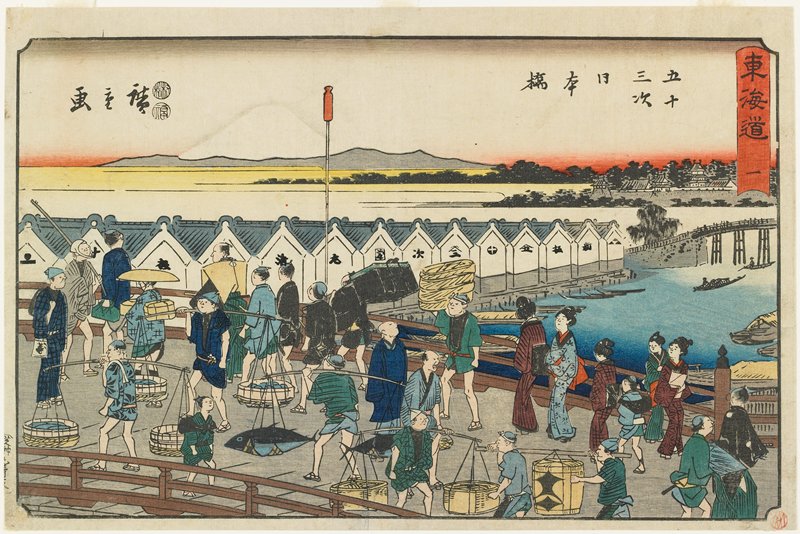
For 200 years, beginning in the 1630s, Japan closed itself off from the world. In its capital of Edo the country boasted the largest city in existence, and among its population of more than a million not a single one was foreign-born. “Practically the only Europeans to have visited it were a handful of Dutchmen,” writes professor of Japanese history Jordan Sand in a new London Review of Books piece, “and so it would remain until the mid-19th century. No foreigners were permitted to live or trade on Japanese soil except the Dutch and Chinese, who were confined to enclaves in the port of Nagasaki, 750 miles from Edo. No Japanese were permitted to leave: those who disobeyed did so on pain of death.”
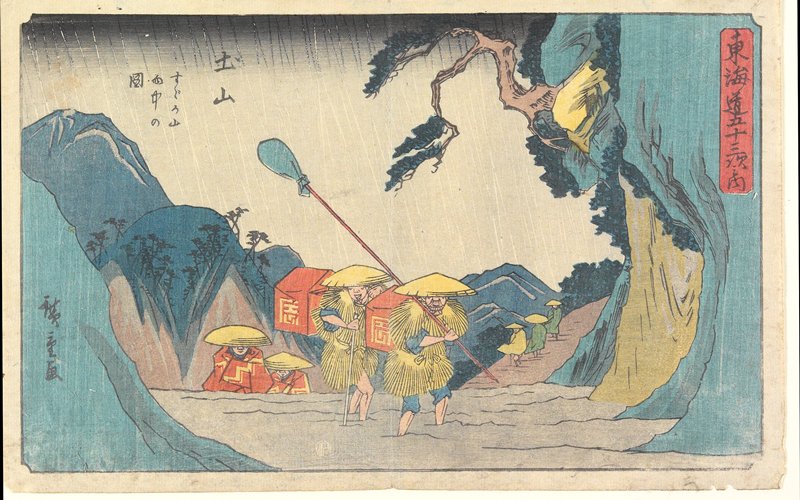
These centuries of isolation in the Japanese capital — known today as Tokyo — thus produced next to nothing in the way of Westerner-composed accounts. But “the people of Edo themselves left a rich archive,” Sand notes, given the presence among them of no few individuals highly skilled in the literary and visual arts.
Such notable Edo chroniclers include Andō Hiroshige, the samurai-descended son of a fireman who grew up to become Utagawa Hiroshige, or simply Hiroshige, one of the last masters of the ukiyo‑e woodblock-printing tradition.
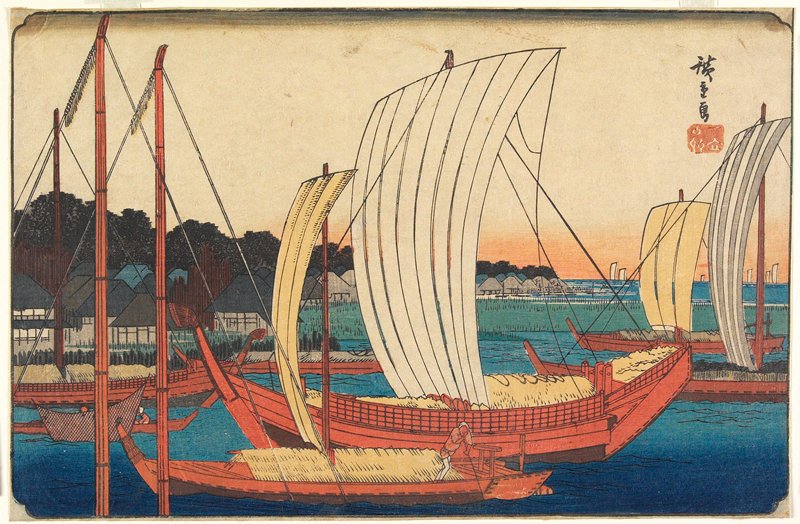
Hiroshige’s late “pictures of the floating world” are among the most vivid images of life in Japan just before it reopened, works that Sand quotes art historian Timon Screech as claiming “attest to a new sense of Edo’s place in the world.” For the historiographical view of the sakoku (or “closed country”) policy has long since come in for revision. The Japan of the mid-17th to late 19th century may not actually have been as closed as all that, or at least not as free of foreign influence as previously assumed. The evidence for this proposition includes Hiroshige’s ukiyo‑e prints, especially his late series of masterworks One Hundred Famous Views of Edo.
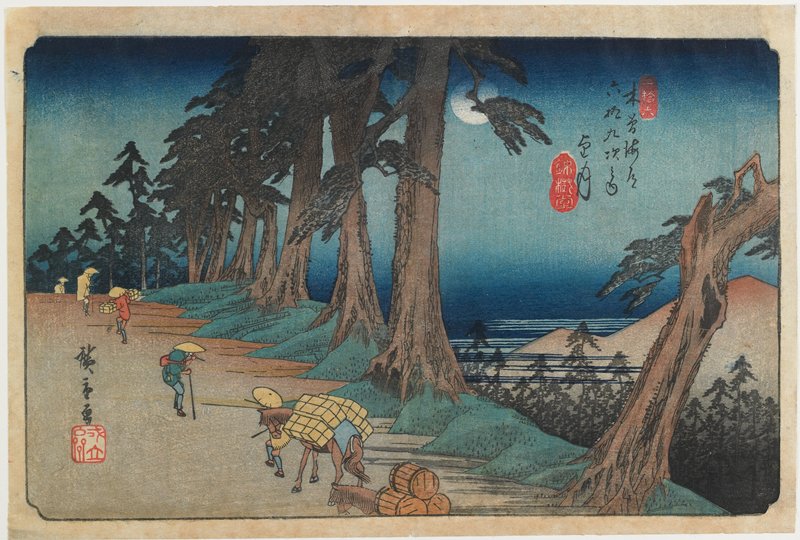
Now, thanks to the Minneapolis Institute of Art’s digital collection, you can take as long and as close a look as you’d like at — and even download — more than 1,000 of his works. That’s an impressive number for a single institution, but bear in mind that Hiroshige produced about 8,000 pieces in his lifetime, capturing not just the attractions of Edo but views from all over his homeland as he knew it, which had already begun to vanish in the last years of his life. More than a century and a half on, the coronavirus pandemic has prompted Japan to put in place entry restrictions that, for many if not most foreigners around the world, have effectively re-closed the country. Japan itself has changed a great deal since the mid-19th century, but to much of the world it has once again become a land of wonders accessible only through its art. Explore 1,000+ woodblock prints by Hiroshige here.
Related Content:
Download Hundreds of 19th-Century Japanese Woodblock Prints by Masters of the Tradition
Download 2,500 Beautiful Woodblock Prints and Drawings by Japanese Masters (1600–1915)
Enter a Digital Archive of 213,000+ Beautiful Japanese Woodblock Prints
The Real Locations of Ukiyo‑e, Historic Japanese Woodblock Prints, Plotted on a Google Map
Based in Seoul, Colin Marshall writes and broadcasts on cities, language, and culture. His projects include the Substack newsletter Books on Cities, the book The Stateless City: a Walk through 21st-Century Los Angeles and the video series The City in Cinema. Follow him on Twitter at @colinmarshall or on Facebook.
Read More...Who Designed the 1980s Aesthetic?: Meet the Memphis Group, the Designers Who Created the 80s Iconic Look
For those who remember the 1980s, it can feel like they never left, so deeply ingrained have their designs become in the 21st century. But where did those designs themselves originate? Vibrant, clashing colors and patterns, bubbly shapes; “the geometric figures of Art Deco,” writes Sara Barnes at My Modern Met, “the color palette of Pop Art, and the 1950s kitsch” that inspired designers of all kinds came from a movement of artists who called themselves the Memphis Group, after Bob Dylan’s “Stuck Inside of Mobile with the Memphis Blues Again,” a song “played on repeat during their first meeting” in a tiny Milan apartment. “I think you’d be hard-pressed to think of any other design phenomenon that can be located as specifically to a group of people,” says Yale Center of British Art’s Glenn Adamson in the Vox explainer above,
Founded in December 1980 by designer Ettore Sottsass — known for his red Olivetti Valentine typewriter — and several like-minded colleagues, the movement made a deliberate attempt to disrupt the austere, clean lines of the 70s with work they described as “radical, funny, and outrageous.” They flaunted what had been considered “good taste” with abandon. Memphis design shows Bauhaus influences — though it rejected the “strict, straight lines of modernism,” notes Curbed. It taps the anarchic spirit of Dada, without the edgy, anarchist politics that drove that movement. It is mainly characterized by its use of laminate flooring materials on tables and lamps and the “Bacterio print,” the squiggle design which Sottsass created in 1978 and which became “Memphis’s trademark pattern.”
Memphis design shared with modernism another quality early modernists themselves fully embraced: “Nothing was commercially successful at the time,” says Barbara Radice, Sottsass’s widow and Memphis group historian. But David Bowie and Karl Lagerfield were early adopters, and the group’s 80s work eventually made them stars. “We came from being nobodies,” says designer Martine Bedin. By 1984, they were celebrated by the city of Memphis, Tennessee and given the key to the city. “They were waiting for us at the airport with a band,” Bedin remembers. “It was completely crazy.” The Memphis Group had officially changed the world of art, architecture, and design. The following year, Sottsass left the group, and it formally disbanded in 1987, having left its mark for decades to come.
By the end of the 80s, Memphis’ look had become pop culture wallpaper, informing the sets, titles, and fashions of TV staples like Saved by the Bell, which debuted in 1989. “Although their designs didn’t end up in people’s homes,” notes Vox — or at least not right away — “they inspired many designers working in different mediums.” Find out above how “everything from fashion to music videos became influenced” by the loud, playful visual vocabulary of the Memphis Group artists, and learn more about the designers of “David Bowie’s favorite furniture” here.
Related Content:
Meet the Memphis Group, the Bob Dylan-Inspired Designers of David Bowie’s Favorite Furniture
Watch Brian Eno’s “Video Paintings,” Where 1980s TV Technology Meets Visual Art
Josh Jones is a writer and musician based in Durham, NC. Follow him at @jdmagness
Read More...When Salvador Dalí Created a Surrealist Funhouse at New York World’s Fair (1939)
Only the violence and duration of your hardened dream can resist the hideous mechanical civilization that is your enemy, that is also the enemy of the ‘..pleasure-..principle’ of all men. It is man’s right to love women with the ecstatic heads of fish. — Salvador Dalí, “Declaration of the Independence of the Imagination and the Rights of Man to His Own Madness”
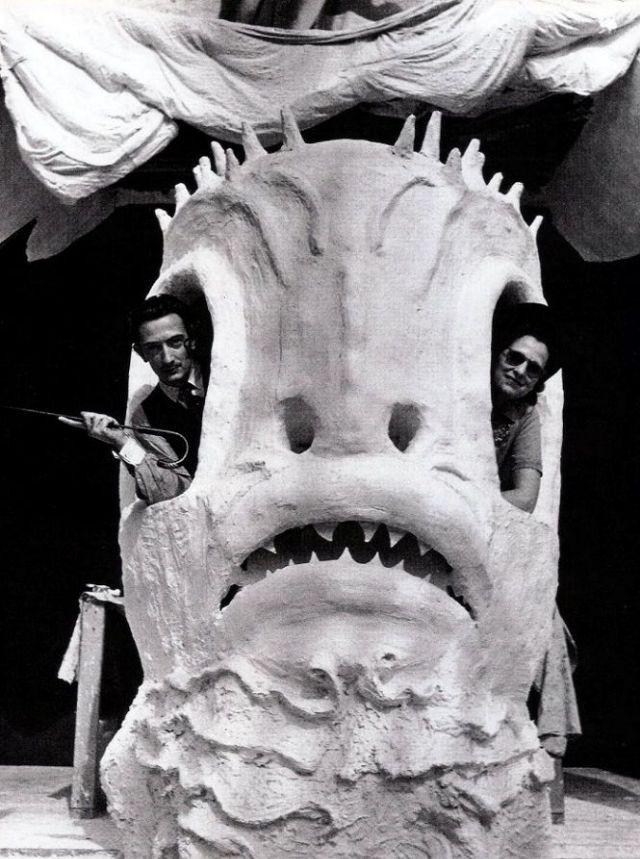
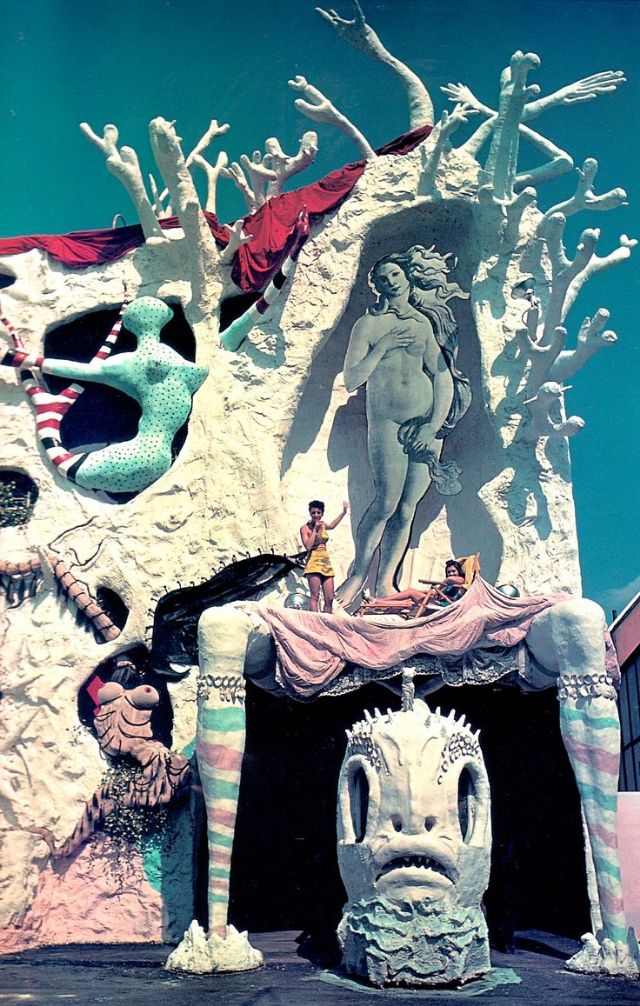
Whatever organizers of the 1939 New York World’s Fair thought they might get when Salvador Dalí was chosen to design a pavilion, they got a Coney Island of the Surrealist mind. The vision was so initially upsetting, the committee felt compelled to censor Dalí’s plans. They nixed the idea, for example, of reproducing a gigantic reproduction of Boticelli’s Venus with a fish head — as well as fish heads for the many partially nude models in Dalí’s exhibit. These and other changes enraged the artist, and he hired a pilot to drop a manifesto over the city in which he declared “the Independence of the Imagination and the Rights of Man to His Own Madness.”
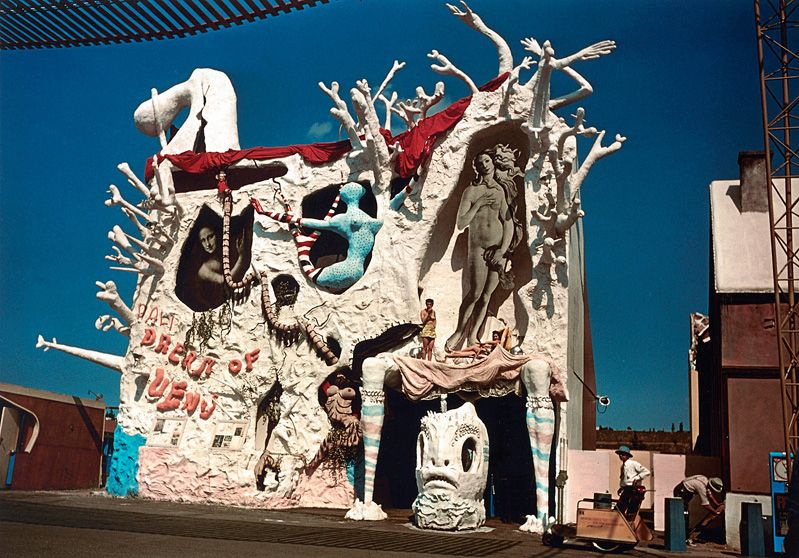
It was all part of the theater of the “Dream of Venus,” Dalí’s so-called “funhouse” and public experiment playing with “the old polarity between the elite and popular cultures,” says Montse Aguer, Director of the Dalí Museums.
This conflict had “changed into a tense confrontation between true art and mass culture, with all that the second ambiguous concept brought with it consumed by the masses, but not produced by them.” While Dalí rained down a “screw you” letter to the establishment, he also seduced the public away from “the streamline style that dominated the Expo in 1939” — the “modern architecture, which with time had turned against modern life.”
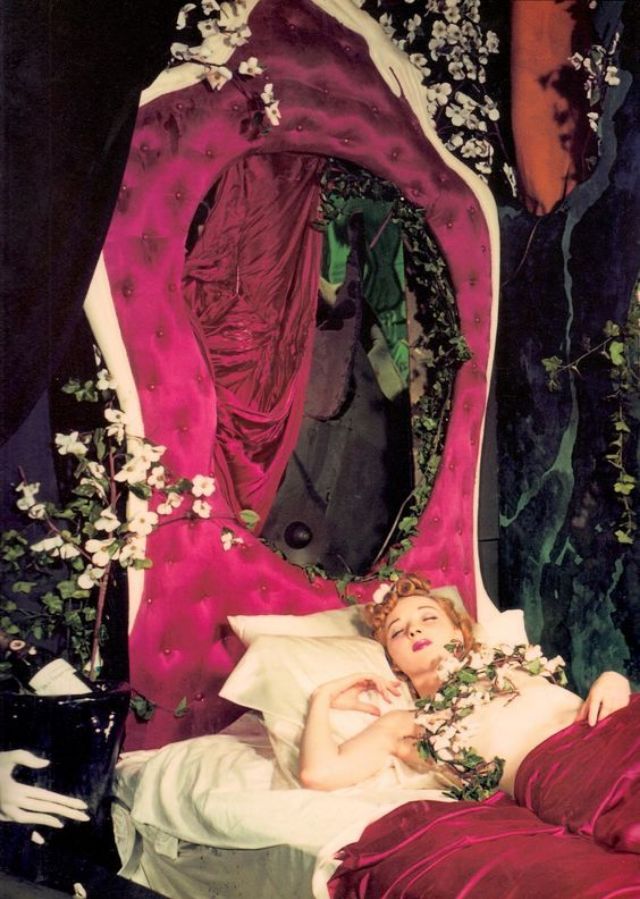
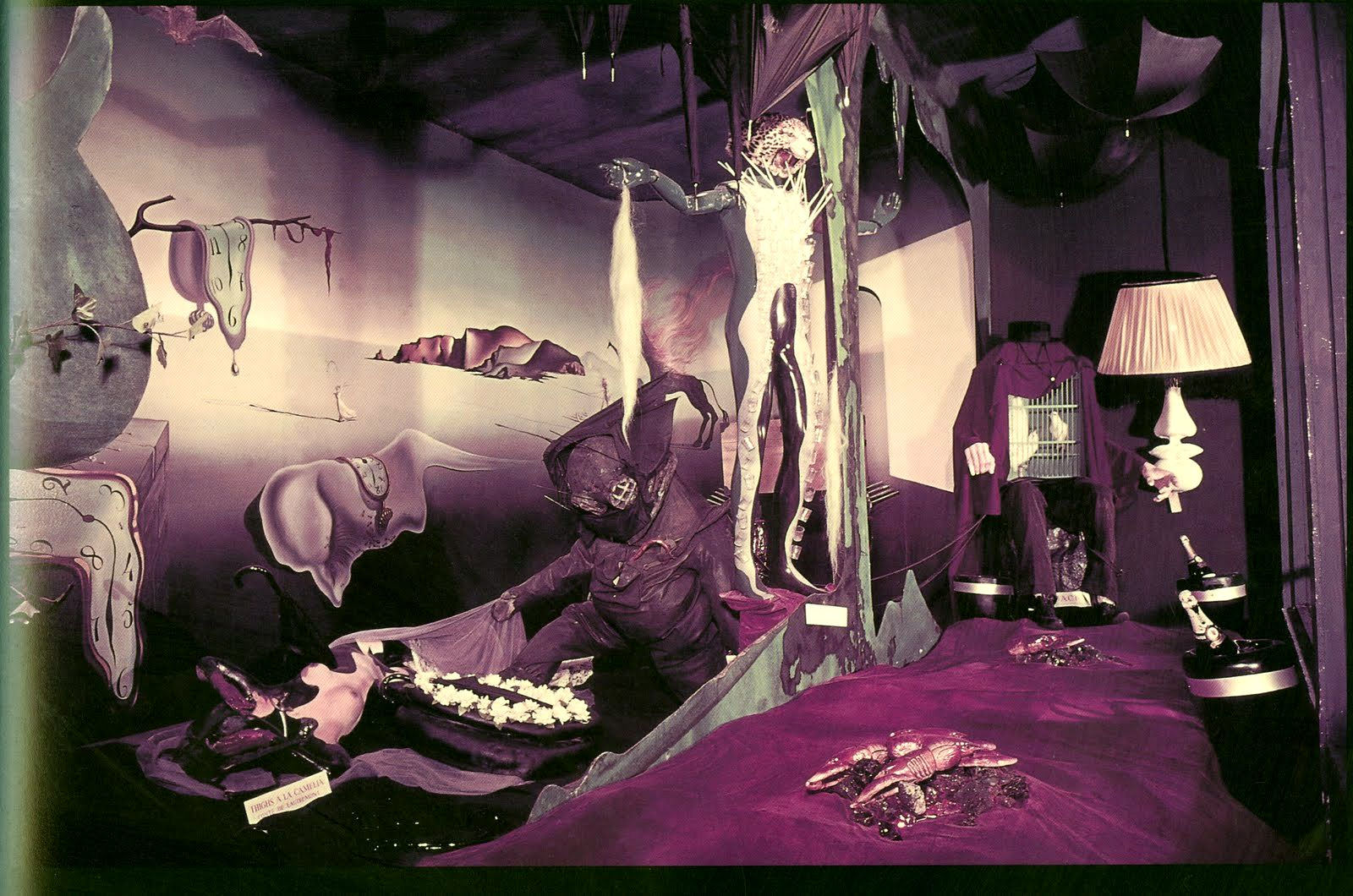
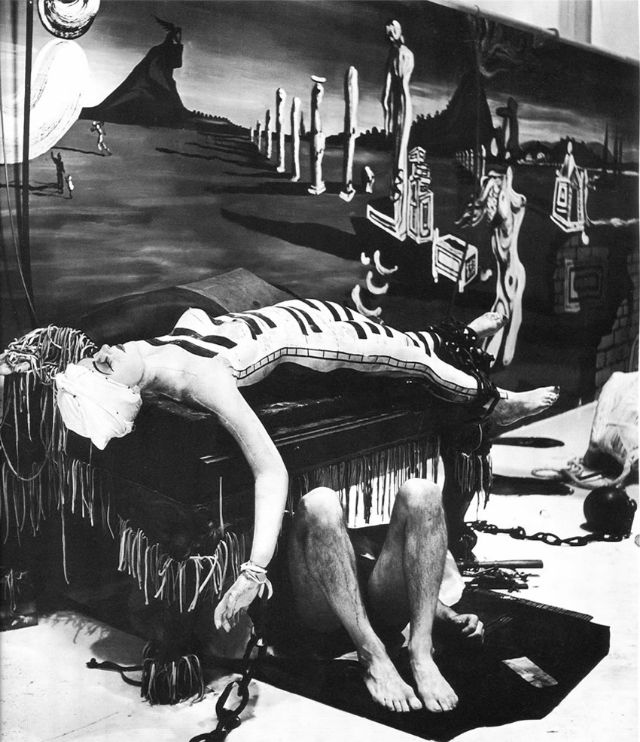
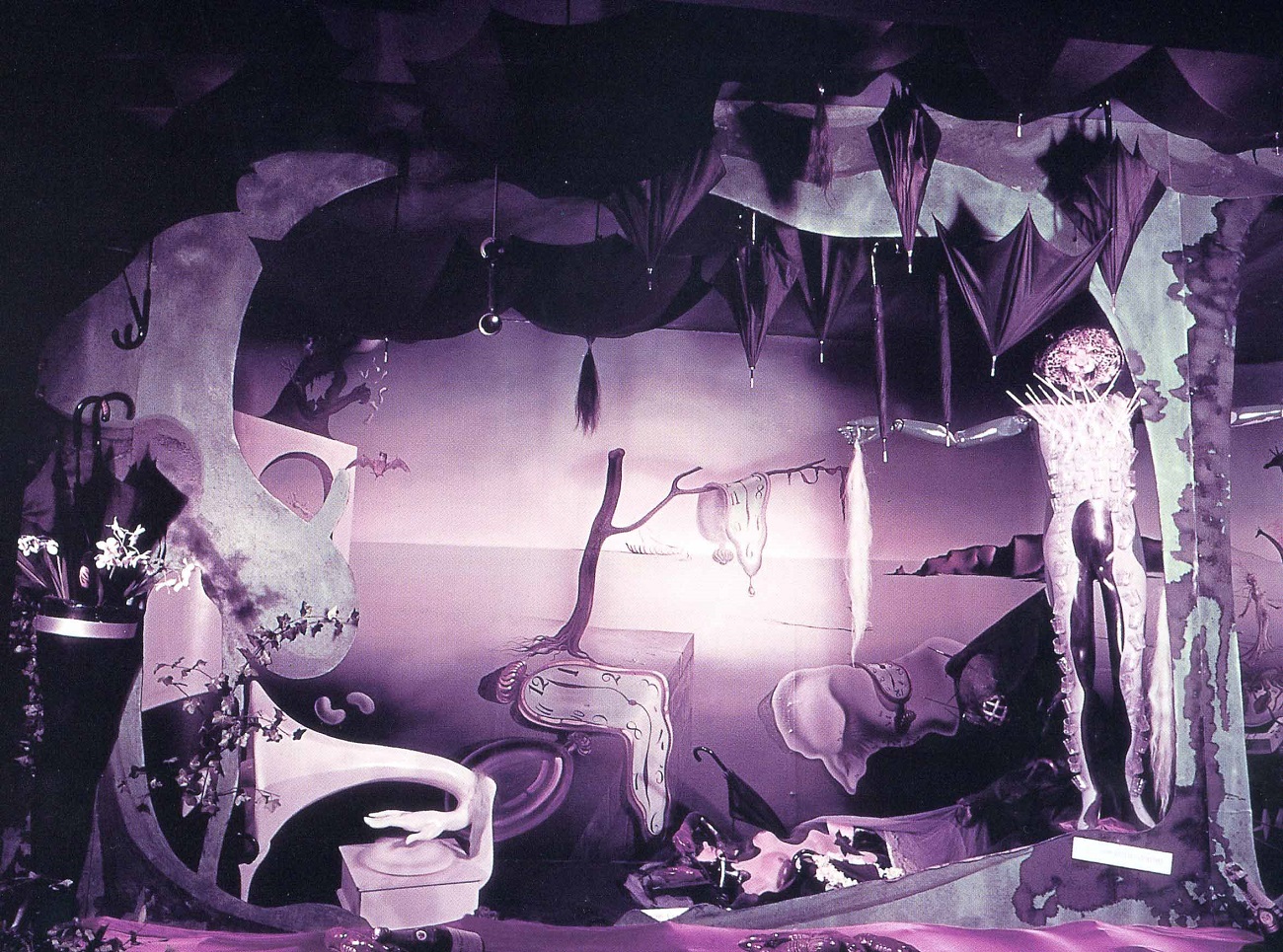
Rather than a sleek “World of Tomorrow,” visitors to Dalí’s pavilion encountered “a kind of shapeless mountain from which sprouts out, like the body of a sticky hedgehog, a series of soft appendages, some in the shape of arms and hand; others of cactus or tips and others of crutches…. The world of machines, cars and robots had been replaced — or should one say challenged — by a universe of dreams.” Inside the weird structure, a goddess stretched out on bed, dreaming two dreams, “wet,” and “dry.” As Dangerous Minds describes it, once visitors entered the exhibit, through a giant pair of legs, they encountered:
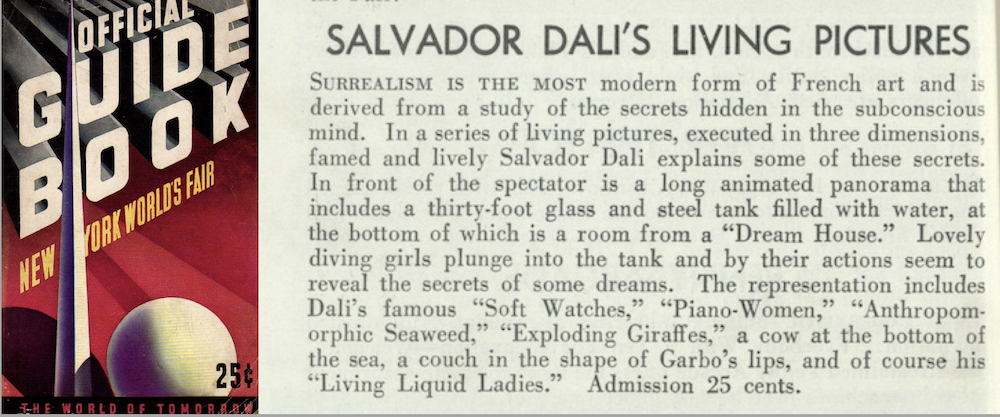
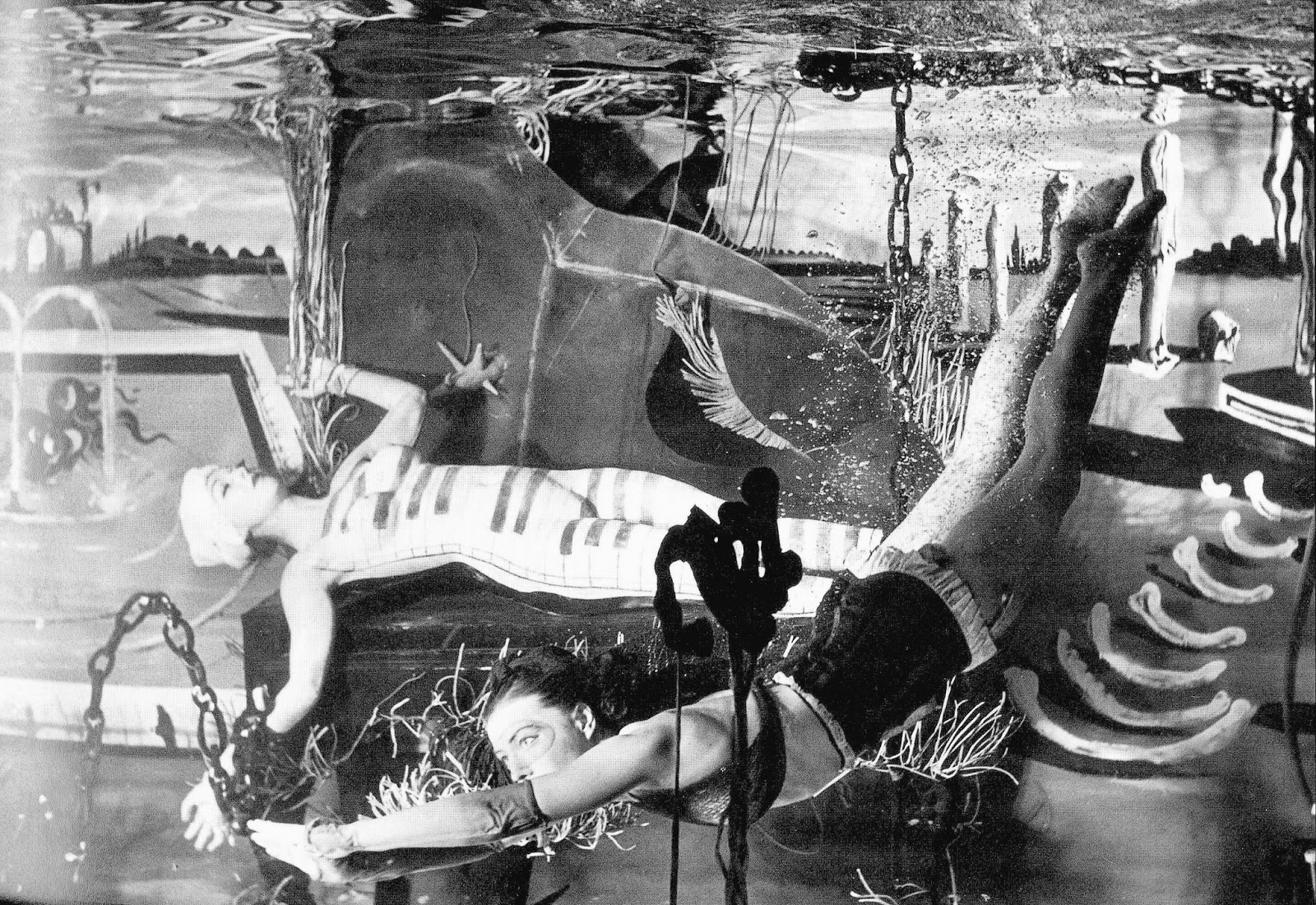
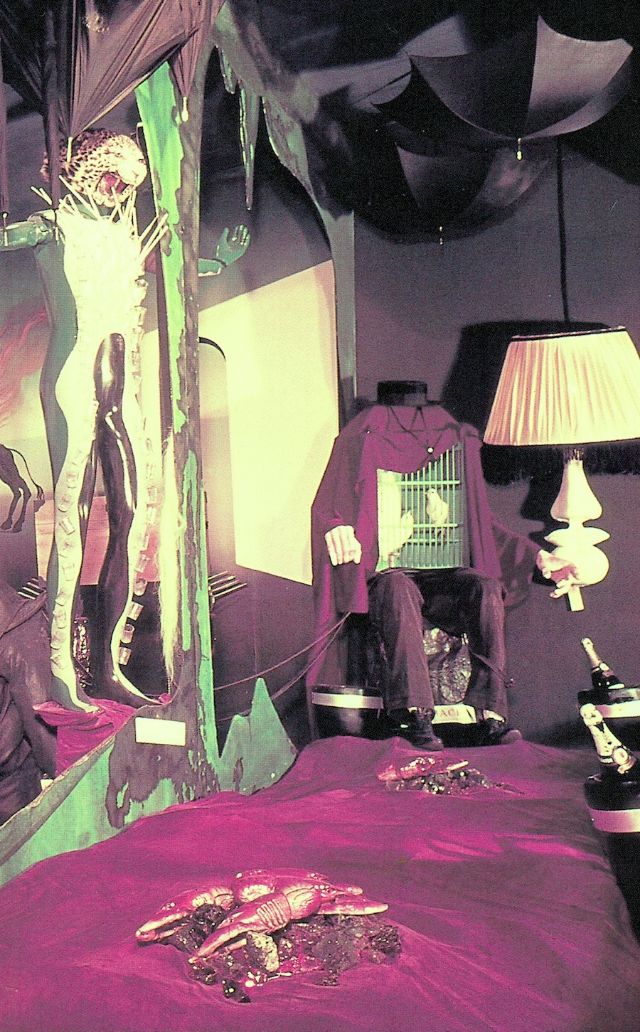
Two huge swimming pools featured partially nude models floating around in the water. In one of the pools, a woman dressed in a head-to-toe rubber suit that had been painted with piano keys cavorted around with other “mermaids” who “played” her imaginary piano. In fact, the place was filled with scantly-clad women lying in beds or perched on top of a taxi being driven by a female looking S&M batwoman. There were functional telephones made of rubber as well as an offputting life-size version of a cow’s udder that you could touch—if you wanted to, that is.
The exhibition had been coordinated by architect, artist, and collector Ian Woodner and New York art dealer Julien Levy. It was so popular “it reopened for a second season,” notes Messy Nessy, “but once torn down it faded from memory and its outlandishness became the stuff of urban myth.” In 2002, the photographs here by German-born photographer Eric Schaal were rediscovered and collected in a book titled Salvador Dalí’s Dream of Venus: The Surrealist Funhouse from the 1939 World’s Fair. See rare footage from the pavilion in the short documentary at the top and read Dalí’s manifesto here.
Related Content:
Salvador Dalí Explains Why He Was a “Bad Painter” and Contributed “Nothing” to Art (1986)
Josh Jones is a writer and musician based in Durham, NC. Follow him at @jdmagness
Read More...Martin Scorsese Introduces Classic Movies: From Citizen Kane and Vertigo to Lawrence of Arabia and Gone with the Wind
In today’s cinema culture, there’s only one thing as reliably entertaining as watching a Martin Scorsese movie: watching Martin Scorsese talk about the movies of his predecessors. Before becoming a director, one must understand what a director does, an education delivered to the young Scorsese practically at a stroke by Citizen Kane. Watching Orson Welles’ masterpiece (in the original sense), Scorsese also “began to become aware of editing and camera positions,” as he recalls in the clip above.
It comes from an interview conducted by the American Film Institute, which also collected the ultra-cinephile New Hollywood icon’s takes on a series of other classic pictures including John Ford’s The Searchers and Alfred Hitchcock’s Rear Window.
In discussing Citizen Kane these days, of course, a different Hitchcock film tends to rush into the discussion: Vertigo, which displaced Citizen Kane on the top spot of the latest Sight & Sound Critics Poll in 2012. Whatever his feelings about the comparative merits of Welles and Hitchcock, Scorsese would surely be unlikely to balk at this changing of the guard.
When he first saw Vertigo with his friends, as he puts it in the clip just above, “we thought it was good; we didn’t know why.” Re-watching it in the intervening decades, he found its beating heart in “the obsession of the character,” James Stewart’s traumatized ex-cop bent on re-creating the object of his infatuation. “The story doesn’t matter. You watch that film repeatedly and repeatedly because of the way he takes you through his obsession.”
The late 1950s and early 60s must have been a fine time for a budding cinephile. Not only could you enter and leave the theater at any time, staying as long as you liked — a custom whose pleasures he emphasizes more than once — you could walk in on these works of surprising cinematic art. But stepping into David Lean’s Lawrence of Arabia, the twenty-year-old Scorsese had to have an inkling of what he was in for. “There it is, up on the screen in 70 millimeter,” he remembers. “The main character is not Ben-Hur, it’s not a saint, it’s not a man struggling to come to terms with God and his soul and his heart; it’s a character that really, in a way, comes out of a B movie.” No doubt this portrayal of Lawrence as a “self-destructive” and “self-loathing” protagonist at an epic scale did its part to influence what would become Scorsese’s own cinema.
Scorsese also finds much to admire, and even use, in films from before his time. “It’s melodramatic, it’s stereotypes — racial stereotypes — and yet, you know, those characters,” he says of Victor Fleming’s Gone with the Wind. “There’s complexity to them.” Though its production “smacks of the nineteenth century” (with which Scorsese himself has exhibited his own fascination in The Age of Innocence and Gangs of New York), it stands alongside Casablanca as one of “the two high points of the studio system.” Few experiences so forthrightly deliver “that magic of old Hollywood,” one variety of the power of cinema that Scorsese knows well. But as his remarks on everything from Michael Powell and Emeric Pressburger’s The Life and Death of Colonel Blimp to Thorald Dickinson’s The Queen of Spades to Nicholas Ray’s Johnny Guitar show us, he’s more than acquainted with many other varieties besides.
Related Content:
Martin Scorsese Names His Top 10 Films in the Criterion Collection
Martin Scorsese Introduces Filmmaker Hong Sangsoo, “The Woody Allen of Korea”
Martin Scorsese Creates a List of 39 Essential Foreign Films for a Young Filmmaker
Based in Seoul, Colin Marshall writes and broadcasts on cities, language, and culture. His projects include the Substack newsletter Books on Cities, the book The Stateless City: a Walk through 21st-Century Los Angeles and the video series The City in Cinema. Follow him on Twitter at @colinmarshall or on Facebook.
Read More...Design Thinking for the Greater Good: A Free Online Course from the University of Virginia
Design Thinking for the Greater Good: Innovation in the Social Sector shows how and why human-centered design is a powerful tool. Offered by the Darden School of Business at the University of Virginia, the course lets students “view design thinking success stories from around the world, in areas as diverse as government, health care, and education.” Throughout the course, students will “learn the tools, techniques and mindset needed to use design thinking to uncover new and creative solutions in the social sector.”
You can take Design Thinking for the Greater Good for free by selecting the audit option upon enrolling. If you want to take the course for a certificate, you will need to pay a fee.
Design Thinking for the Greater Good has been added to our list of Free Business Courses, a subset of our collection, 1,700 Free Online Courses from Top Universities.
Related Content
Read More...Meet the Inventor of Karaoke, Daisuke Inoue, Who Wanted to “Teach the World to Sing”
Daisuke Inoue has been honored with a rare, indeed almost certainly unique combination of laurels. In 1999, Time magazine named him among the “Most Influential Asians of the Century.” Five years later he won an Ig Nobel Prize, which honors particularly strange and risible developments in science, technology, and culture. Inoue had come up with the device that made his name decades earlier, in the early 1970s, but its influence has proven enduring still today. It is he whom history now credits with the invention of the karaoke machine, the assisted-singing device that the Ig Nobel committee, awarding its Peace Prize, described as “an entirely new way for people to learn to tolerate each other.”
The achievement of an Ig Nobel recipient should be one that “makes people laugh, then think.” Over its half-century of existence, many have laughed at karaoke, especially as ostensibly practiced by the drunken salarymen of its homeland. But upon further consideration, few Japanese inventions have been as important.
Hence its prominent inclusion in Japanologist Matt Alt’s recent book Pure Invention: How Japan’s Pop Culture Conquered the World. As Alt tells its story, the karaoke machine emerged out of Sannomiya, Kobe’s red-light district, which might seem an unlikely birthplace — until you consider its “some four thousand drinking establishments crammed into a cluster of streets and alleys just a kilometer in radius.”
In these bars Inoue worked as a hiki-katari, a kind of freelance musician who specialized in “sing-alongs, retuning their performances on the fly to match the singing abilities and sobriety levels of paying customers.” This was karaoke (the Japanese term means, literally, “empty orchestra”) before karaoke as we know it. Inoue had mastered its rigors to such an extent that he became known as “Dr. Sing-along,” and the sheer demand for his services inspired him to create a kind of automatic replacement he could send to extra gigs. The 8 Juke, as he called it, amounted to an 8‑track car stereo connected to a microphone, reverb box, and coin slot. Pre-loaded with instrumental covers of bar-goers’ favorite songs, the 8 Jukes Inoue made soon started taking in more coins than they could handle.
“When I made the first Juke 8s, a brother-in-law suggested I take out a patent,” Inoue said in a 2013 interview. “But at the time, I didn’t think anything would come of it.” Having assembled his invention from off-the-shelf components, he didn’t think there was anything patentable about it, and unknown to him, at least one similar device had already been built elsewhere in Japan. But what Inoue invented, as Alt puts it, was “the total package of hardware and custom software that allowed karaoke to grow from a local fad into an enormous global business.” Had it been patented, says Inoue himself, “I don’t think karaoke would have grown like it did.” Would it have grown to have, as Alt puts it, “profound effects on the fantasy lives of Japanese and Westerners both”? And would Inoue have found himself onstage more than 30 years later at the Ig Nobels, leading a crowd of Americans in a round of “I’d Like to Teach the World to Sing”?
Related Content:
The 10 Commandments of Chindōgu, the Japanese Art of Creating Unusually Useless Inventions
This Man Flew to Japan to Sing ABBA’s “Mamma Mia” in a Big Cold River
Karaoke-Style, Stephen Colbert Sings and Struts to The Rolling Stones’ “Brown Sugar”
Based in Seoul, Colin Marshall writes and broadcasts on cities, language, and culture. His projects include the Substack newsletter Books on Cities, the book The Stateless City: a Walk through 21st-Century Los Angeles and the video series The City in Cinema. Follow him on Twitter at @colinmarshall or on Facebook.
Read More...Support Us
We're hoping to rely on loyal readers, rather than erratic ads. Please click the Donate button and support Open Culture. You can use Paypal, Venmo, Patreon, even Crypto! We thank you!

About Us

Open Culture scours the web for the best educational media. We find the free courses and audio books you need, the language lessons & educational videos you want, and plenty of enlightenment in between.
Advertise With Us
FREE UPDATES!
GET OUR DAILY EMAIL
Get the best cultural and educational resources on the web curated for you in a daily email. We never spam. Unsubscribe at any time.
FOLLOW ON SOCIAL MEDIA
Open Culture editor Dan Colman scours the web for the best educational media. He finds the free courses and audio books you need, the language lessons & movies you want, and plenty of enlightenment in between.
Advertise With Us

