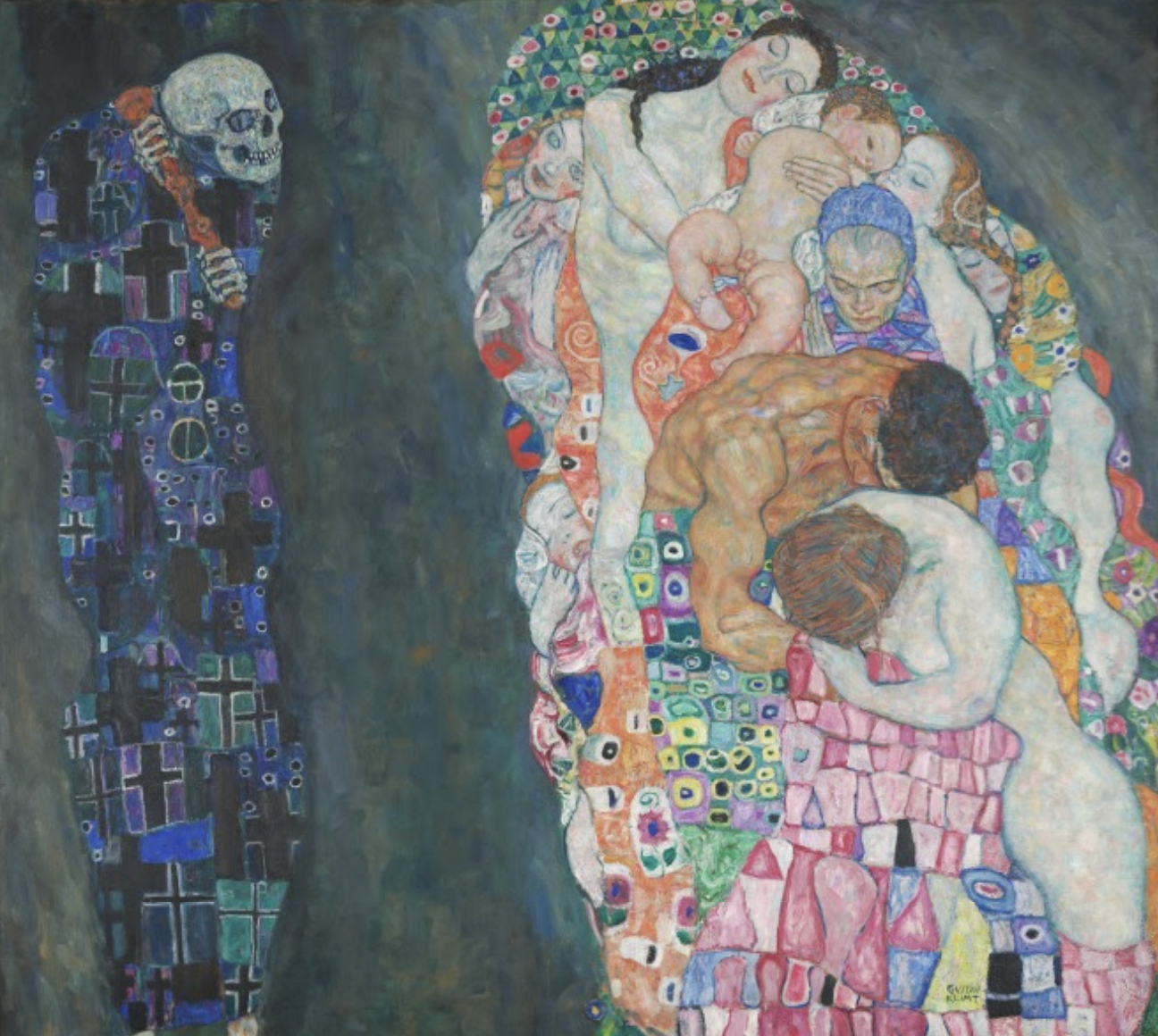
This two part course from the University of Pennsylvania (Part 1 here — Part 2 here) “traces the origins of philosophy in the Western tradition in the thinkers of Ancient Greece,” beginning with “the Presocratic natural philosophers who were active in Ionia in the 6th century BCE and are also credited with being the first scientists.” The course description continues:
Thales, Anaximander, and Anaximines made bold proposals about the ultimate constituents of reality, while Heraclitus insisted that there is an underlying order to the changing world. Parmenides of Elea formulated a powerful objection to all these proposals, while later Greek theorists (such as Anaxagoras and the atomist Democritus) attempted to answer that objection. In fifth-century Athens, Socrates insisted on the importance of the fundamental ethical question—“How shall I live?”—and his pupil, Plato, and Plato’s pupil, Aristotle, developed elaborate philosophical systems to explain the nature of reality, knowledge, and human happiness. After the death of Aristotle, in the Hellenistic period, Epicureans and Stoics developed and transformed that earlier tradition.
Part I covers Plato and his predecessors. Part II covers Aristotle and his successors. Both courses are taught by professor Susan Sauvé Meyer.
You can take these courses for free by selecting the audit option upon enrolling. If you want to take the courses for a certificate, you will need to pay a fee.
If you would like to sign up for Open Culture’s free email newsletter, please find it here. It’s a great way to see our new posts, all bundled in one email, each day.
If you would like to support the mission of Open Culture, consider making a donation to our site. It’s hard to rely 100% on ads, and your contributions will help us continue providing the best free cultural and educational materials to learners everywhere. You can contribute through PayPal, Patreon, and Venmo (@openculture). Thanks!
“They didn’t want it but he built it anyway” — The Pixies, “Alec Eiffel”
When the Eiffel Tower — gateway to the Paris World’s Fair and centennial marker of the Revolution — was first designed and built, it was far from beloved. Its creator, Alexandre Gustave Eiffel, an engineer known for building bridges, faced widespread condemnation, both from the city’s creative class and in the popular press. French writer Guy de Maupassant summed up the prevailing sentiment when he called Eiffel “a boilermaker with delusions of grandeur.”
Before construction began, Maupaussant joined a commission of 300 artists, architects, and prominent citizens who opposed in a letter what they imagined as “a giddy, ridiculous tower dominating Paris like a gigantic black smokestack…. [A]ll of our humiliated monuments will disappear in this ghastly dream.” One critic wrote of it as a “hideous column with railings, this infundibuliform chicken wire, glory to the wire and the slab, arrow of Notre-Dame of bric-a-brac.…”
To these objections, Eiffel cooly replied it made no sense to judge a building solely from its plans. He also repeated his promise: the tower, he said, would symbolize “not only the art of the modern engineer, but also the century of industry and science in which we are living.” His “unapologetically industrial language,” writes Architizer, “did not please all.” But Eiffel did not boast in vain. When completed, the tower stood almost twice as high as the Washington Monument, then the tallest building in the world at 555 feet.
Not only extremely tall for its time, the Eiffel Tower was also very intricate. It would be made of 18,000 wrought iron pieces held together with 2.5 million rivets, with four curved iron piers connected by a lattice of girders. After careful calculations, the tower’s curves were designed to offer the maximum amount of efficient wind resistance.
In the video just above, you can see the tower’s incredible construction from August 1887 to March 1889, modeled in an animated timelapse animation. Its design has far outlasted its originally short lifespan. Slated to be torn down after 20 years, the tower stands as tall as ever, though it’s been dwarfed several times over by structures that would appall the signatories against Gustave Eiffel in 1887.
Indeed, it is impossible now to imagine Paris without Eiffel’s creation. Maupassant, however, spent his life trying to do just that. He reportedly had his lunch in the tower’s restaurant every day, since it was the only place in Paris one could not see it.
Both, though in her lifetime, the press was far more inclined to fixate on her ladylike aspect and homemaking duties than her career as a self-taught cryptoanalyst, with headlines such as “Pretty Woman Who Protects United States” and “Solved By Woman.”
The novelty of her gender led to a brief stint as America’s most recognizable codebreaker, more famous even than her fellow cryptologist, husband William Friedman, who was instrumental in the founding of the National Security Agency during the Cold War.
Renowned though she was, the highly classified nature of her work exposed her to a security threat in the person of FBI director J. Edgar Hoover.
Hoover credited the FBI, and by extension, himself, for deciphering some 50 Nazi radio circuits’ codes, at least two of them protected with Enigma machines.
He also rushed to raid South American sources in his zeal to make an impression and advance his career, scuppering Friedman’s mission by causing Berlin to put a stop to all transmissions to that area.
Too bad no one asked him to demonstrate the methods he’d used to crack these impossible nuts.
The German agents used the same codes and radio techniques as the Consolidated Exporters Corporation, a mob-backed rum-running operation whose codes and ciphers Elizebeth had translated as chief cryptologist for the U.S. Treasury Department during Prohibition.
As an expert witness in the criminal trial of international rumrunner Bert Morrison and his associates, she modestly asserted that it was “really quite simple to decode their messages if you know what to look for,” but the sample decryption she provided the jury made it plain that her work required tremendous skill. The Mob Museum’s Jeff Burbank sets the scene:
She read a sample message, referring to a brand of whiskey: “Out of Old Colonel in Pints.” She showed how the three “o” and “l” letters in “Colonel” had identical cipher code letters. From the cipher’s letters for “Colonel” she could figure out the letter the racketeers chose for “e,” the most frequently occurring letter in English, based on other brand names of liquor they mentioned in other messages. The “o” and “l” letters in “alcohol,” she said, had the same cipher letters as “Colonel.”
Cinchy, right?
Elizebeth’s biographer, Jason Fagone, notes that in discovering the identity, codename and ciphers used by German spy network Operation Bolívar’s leader, Johannes Siegfried Becker, she succeeded where “every other law enforcement agency and intelligence agency failed. She did what the FBI could not do.”
Sexism and Hoover were not the only enemies.
William Friedman’s criticism of the NSA for classifying documents he thought should be a matter of public record led to a rift resulting in the confiscation of dozens of papers from the couple’s home that documented their work.
This, together with the 50-year “TOP SECRET ULTRA” classification of her WWII records, ensured that Elizebeth’s life would end beneath “a vast dome of silence.”
Recognition is mounting, however.
Nearly 20 years after her 1980 death, she was inducted into the National Security Agency’s Cryptologic Hall of Honor as “a pioneer in code breaking.”
A National Security Agency building now bears both Friedmans’ names.
The U.S. Coast Guard will soon be adding a Legend Class Cutter named the USCGC Friedman to their fleet.
I am a big admirer of Kevin Kelly for the same reason I am of Brian Eno—he is constantly thinking. That thirst for knowledge and endless curiosity has always been the backbone to their particular art forms. For Eno it’s music, but for Kelly it’s in his editorship of the Whole Earth Review and then Wired magazine, providing a space for big ideas to reach the widest audience. (He’s also the reason one of my bucket lists is the Nakasendo, after seeing his photo essay on it.)
“I’m positive that in 100 years much of what I take to be true today will be proved to be wrong, maybe even embarrassingly wrong, and I try really hard to identify what it is that I am wrong about today.”
However, the list is more about wisdom from a life well-spent. Many fall into the art of being a curious human among other humans:
Everyone is shy. Other people are waiting for you to introduce yourself to them, they are waiting for you to send them an email, they are waiting for you to ask them on a date. Go ahead.
The more you are interested in others, the more interesting they find you. To be interesting, be interested.
Being able to listen well is a superpower. While listening to someone you love keep asking them “Is there more?”, until there is no more.
And this is probably the hardest piece of advice these days:
Learn how to learn from those you disagree with, or even offend you. See if you can find the truth in what they believe.
Other bits of advice have to do with creativity and being an artist:
Always demand a deadline. A deadline weeds out the extraneous and the ordinary. It prevents you from trying to make it perfect, so you have to make it different. Different is better.
Don’t be the smartest person in the room. Hangout with, and learn from, people smarter than yourself. Even better, find smart people who will disagree with you.
To make something good, just do it. To make something great, just re-do it, re-do it, re-do it. The secret to making fine things is in remaking them.
Art is in what you leave out.
And some of the more interesting ones are his disagreements with perceived wisdom:
Following your bliss is a recipe for paralysis if you don’t know what you are passionate about. A better motto for most youth is “master something, anything”. Through mastery of one thing, you can drift towards extensions of that mastery that bring you more joy, and eventually discover where your bliss is.
If something fails where you thought it would fail, that is not a failure.
Being wise means having more questions than answers.
I have never met a person I admired who did not read more books than I did.
Every person you meet knows an amazing lot about something you know virtually nothing about. Your job is to discover what it is, and it won’t be obvious.
and finally:
Don’t let your email inbox become your to-do list.
There is a small shift in Kelly’s 2021 list from his 2020 list, like a little more frustration with the world, a need for more order in the chaos. I wonder what his advice will be in a few more years?
Ted Mills is a freelance writer on the arts who currently hosts the Notes from the Shed podcast and is the producer of KCRW’s Curious Coast. You can also follow him on Twitter at @tedmills, and/or watch his films here.
From her early, unhappy teen years in Port Arthur, Texas, Janis Joplin seemed to know she wanted to be a blues singer. She once said she decided to become a singer when a friend “loaned her his Bessie Smith and Leadbelly records,” writes biographer Ellis Amburn. “Ten years later, Janis was hailed as the premier blues singer of her time. She paid tribute to Bessie by buying her a headstone for her unmarked grave.” She was devoted to the blues, from her earliest encounters with the music in her youth to her last recorded song, the lonely, a capella blues, “Mercedes Benz.”
But when Joplin first appeared on the San Francisco scene in 1963, she did so as a Dylan-influenced folkie fresh from the University of Texas, Austin. The year before, she had been described by a profile in The Daily Texan as an artist who “goes barefooted when she feels like it, wears Levis to class because they’re more comfortable, and carries her autoharp with her everywhere she goes so that in case she gets the urge to break into song, it will be handy.” The article was titled “She Dares to Be Different.”
Joplin’s folk persona was hardly unique in either San Francisco or Austin in the early 60s. “In fact, her love of Dylan and folk simply marked her out as a rider of the zeitgeist,” writes music journalist Chris Salewicz. “When, for example, a former University of Texas alumnus called Chet Helms passed through [Austin] he was astonished at the wealth of folk music.” Helms, who had already moved west, promised Joplin gigs in San Francisco. The pair hitchhiked to the city “midway through January 1963, with considerable trepidation… a trek in which they spent 50 hours on the road.”
Once in North Beach, a neighborhood defined by City Lights bookstore and the Beats, Helms found Joplin gigs at Coffee and Confusion, then the Coffee Gallery, where she “was just one of many future rockers to play the Coffee Gallery as a folkie,” writes Alice Echols. In South Bay coffeehouses, she met Jerry Garcia and future Jefferson Airplane guitarist Jorma Kaukonen. Everyone made the coffeehouse rounds, acoustic guitar in hand. It was the way to make a name in the scene, which Janis did quickly, appearing the same year she arrived in San Francisco on the side stage at the Monterey Folk Festival.
But Janis brought something different than other students of Dylan — bigger and bolder and louder and deeply rooted in a Southern blues tradition Joplin spread to astonished beatniks like a “Blues Historian,” one commenter notes, “turning a small audience on to some obscure and forgotten performers, whose music would serve as the foundation for an entire genre yet to come.” You can hear her do just that in the gig above at the Coffee Gallery in 1963: “no drums, no crowds. Just Janis and a small group of people gathered to hear some samples of rural blues, done by an enthusiast from Texas.”
See the full setlist below. Other performers on the recording, according to the YouTube uploader, are Larry Hanks on acoustic guitar and vocals, and Billy Roberts (or possibly Roger Perkins) on acoustic guitar, as well as banjo, vocals, and harmonica.
Leaving’ This Morning (K.C. Blues) Daddy, Daddy, Daddy Careless Love Bourgeois Blues Black Mountain Blues Gospel Ship Stealin’
We get the culture our technology permits, and in the 21st century no technological development has changed culture like that of the smartphone. As with every piece of personal technology that we struggle to remember how we lived without, it evolved into being from a series of simpler predecessors that, no matter how clunky they seem now, were received as technological marvels in their day. Take it from Martin Cooper, the Motorola Engineer who invented the first handheld cellular mobile phone. “We didn’t know it was going to be historic in any way at all,” he says of the first publicly demonstrated cellphone call in 1973 in the Bloomberg video above. “We were only worried about one thing: is the phone going to work when we turn it on?”
The device Cooper had in hand was the prototype that would eventually become the Motorola DynaTAC 8000X, the first commercial portable cellular phone. (This as distinct from the existing car-phone systems that Cooper credits with inspiring him to develop an entirely handheld version.) Brought to market in 1983, it weighed about two pounds, took ten hours to charge a battery that lasted only 30 minutes, could store no more than 30 phone numbers, and cost nearly $10,000 in today’s dollars.
Yet “consumers were so impressed by the concept of being always accessible with a portable phone that waiting lists for the DynaTAC 8000X were in the thousands,” says Motorola design master Rudy Krolopp as quoted by the Project Management Institute. “In 1983, the notion of simply making wireless phone calls was revolutionary.”
38 years after “the brick,” as the 8000X was known, we’ve grown so used to that notion that many of us hardly ever make wireless phone calls anymore, preferring to communicate on our phones through text messages or an ever-expanding universe of internet-based apps — to say nothing of the other aspects of our lives increasingly handled through palm-sized touchscreens. “The modern smartphone is a technological marvel,” says Cooper. “It really is incredible, all the stuff that is squeezed into that cellphone.” Yet despite the astonishing evolution of his invention it represents, he’s not satisfied. “We think that we can make a smartphone that does all things for all people, and yet we know that it doesn’t do any of those things perfectly. We’ve still got a ways to go.” If you’re reading this on a smartphone, know that you hold in your hand the “brick” of 2059.
Based in Seoul, Colin Marshall writes and broadcasts on cities, language, and culture. His projects include the Substack newsletterBooks on Cities, the book The Stateless City: a Walk through 21st-Century Los Angeles and the video series The City in Cinema. Follow him on Twitter at @colinmarshall or on Facebook.
When woodcut artist Katsushika Hokusai made his famous print The Great Wave off Kanagawa in 1830 — part of the series Thirty-six Views of Mount Fuji — he was 70 years old and had lived his entire life in a Japan closed off from the rest of the world. In the 19th century, however, “the rest of the world was becoming industrialized,” James Payne explains above in his Great Art Explained video, “and the Japanese were concerned about foreign invasions.” The Great Wave shows “an image of Japan fearful that the sea — which has protected its peaceful isolation for so long — would become its downfall.”
It’s also true, however, that The Great Wave would not have existed without a foreign invasion. Prussian blue, the first stable blue pigment, accidentally invented around 1705 in Berlin, arrived in the ports of Nagasaki on Dutch and Chinese ships in the 1820s. Prussian Blue would start a new artistic movement in Japan, aizuri‑e, woodcuts printed in bright, vivid blues.
“Hokusai was one of the first Japanese printmakers to boldly embrace the colour,” Hugh Davies writes at The Conversation, “a decision that would have major implications in the world of art.” When the country’s isolationist policies ended in the 1850s, “a showcase at the inaugural Japanese Pavilion elevated the artistic status of woodblock prints and a craze for their collection quickly followed.”
Cultural circles throughout Europe greatly admired Hokusai’s work…. Major artists of the Impressionist movement such as Monet owned copies of Hokusai prints, and leading art critic Philippe Burty, in his 1866 Chefs-d’oeuvre des Arts industriels, even stated that Hokusai’s work maintained the elegance of Watteau, the fantasy of Goya, and the movement of Delacroix. Going one step further in his lauded comparisons, Burty wrote that Hokusai’s dexterity in brush strokes was comparable only to that of Rubens.
These comparisons are not misplaced, John-Paul Stonard explains in The Guardian: “That the Great Wave became the best known print in the west was in large part due to Hokusai’s formative experience of European art.” Not only did he absorb Prussian blue into his repertoire, but “prints from early in his career show him attempting, rather awkwardly, to apply the lesson of mathematical perspective, learnt from European prints brought into Japan by Dutch Traders.” By the time of The Great Wave, he had perfected his own synthesis of Western and Japanese art, over two decades before European painters would attempt the same in the explosion of Japanophilia of the late 19th and early 20th century.
What drives someone to collect Star Wars figures or Transformers or LEGOs or whatever else? Your Pretty Much Pop hosts Mark Linsenmayer, Erica Spyres, and Brian Hirt are joined by guest Matt Young of the Hello from the Magic Tavern and Improvised Star Trek podcasts to talk about this potentially expensive and life-eating habit. No kidulting required.
After the episode, Matt remained on the line for our Aftertalk, which is typically only available for supporters via patreon.com/prettymuchpop, but this this case we’ve unleashed it to the public:
2020 was “a year for the (record) books in publishing,” wrote Jim Milliot in Publisher’s Weekly this past January, a surge continuing into 2021. Yet some kinds of print books have so declined in sales there may be no reason to keep publishing them, or buying them, since their equivalents online are superior in almost every respect to any version on paper. As I finally conceded during a recent, aggressive spring cleaning, I personally have no reason to store heavy, bulky, dusty reference books, except in cases of extreme sentiment.
The online Stanford Encyclopedia of Philosophy, or the SEP, dispensed with the need for philosophy encyclopedias in print years ago. It’s “the most interesting website on the internet,” wrote Nikhail Sonnad at Quartz in 2015. “Not because of the content — which includes fascinating entries on everything from ambiguity to zombies—but because of the site itself. Its creators have solved one of the internet’s fundamental problems: How to provide authoritative, rigorously accurate knowledge, at no cost to readers. It’s something the encyclopedia, or SEP, has managed to do for two decades.”
Started in 1995 by Stanford philosopher Edward Zalta with only two entries, the SEP is “positively ancient in internet years,” but it is hardly “ossified,” remaining an online source “‘comparable in scope, depth and authority,’” the American Library Association’s Booklist review wrote, “to the biggest philosophy encyclopedias in print.”
I personally think the SEP is just as interesting for its content as its achievement, if not more so — and now, thanks to engineer and developer Joseph DiCastro, that content is more accessible than ever, though an interactive visualization project and search engine called Visualizing SEP.
Visualizing SEP “provides clear visualizations based on a philosophical taxonomy that DiCastro adapted from the one developed by the Indiana University Philosophy Ontology Project (InPhO),” Justin Weinberg writes at Daily Nous. “Type a term into the search box and suggested SEP entries will be listed. Click on one of the entry titles, and a simple visualization will appear with your selected entry at the center and related entries surrounding it.” At the top of the page, you can select from a series of “domains.” Each selection produces a similar visualization of various-sized dots.
I found enough entries to keep me busy for hours in the very first domain graph, “Aesthetics and Philosophy of Art.” The last of these, simply titled “Thinker,” links together all of the philosophers mentioned in the Stanford Encyclopedia of Philosophy, from the most famous household names to the most obscure and scholastic. Just skimming through these names and reading the brief biographies at the left will leave readers with a broader contextual understanding than they could gain from a print encyclopedia. (Click on the “Article Details” button to expand the full article).
The visualizer project carries forth into the data-obsessed 21st century one of the best things about the Internet in its earliest years: access to free, high quality (and highly portable) information with few barriers for entry. Learn more about how to best navigate Visualizing SEP at Daily Nous.
Anti-Chinese racism runs deep in American culture and law, beginning in the 19th century as competition intensified in California gold and land rushes. Chinese immigrants were pushed into teeming cities, then denigrated for surviving in overcrowded slums. To get a sense of the scope of the prejudice, we need only consider the 1882 law known as the Chinese Exclusion Act — the only legislation passed to explicitly restrict immigration by one ethnic or national group. The law actually goes back to 1875, when the Page Act banned Chinese women from immigrating. It was only repealed in 1943.
Although routinely evaded, the severe restrictions and outright bans on Chinese immigration under the Exclusion Act drove and were driven by racist ideas still visible today in tropes of dangerous, exoticized “dragon ladies” or sexually submissive concubines: roles given in early Hollywood films to the first Chinese-American movie star, Anna May Wong, who, after 1909 — despite being the most recognizable Chinese-American in the world — had to carry identification at all times to prove her legal status.
Wong was born in Los Angeles, a city that — like every other major metropolis — became home to its own Chinatown, and a famous one at that. But the most famous of the segregated urban areas originated in San Francisco, after the 1906 earthquake that nearly leveled the city and “came on the heels of decades of violence and racist laws targeting Chinese communities in the US,” notes Vox. “The earthquake devastated Chinatown. But in the destruction, San Francisco’s Chinese businessmen had an idea for a fresh start” that would define the look of Chinatowns worldwide.
The new Chinatown was more than a new start; it was survival. As often happens after disasters, proposals for relocating the unpopular immigrant neighborhood appeared “before the dust had settled and smoke cleared,” notes 99 Percent Invisible. “The city’s mayor commissioned architect and urban designer Daniel Burnham to draw up plans aligned with the City Beautiful movement.” Feeling they had to cater to white American stereotypes to gain acceptance, Chinese-American business leaders “hired architect T. Paterson Ross and engineer A.W. Burgren to rebuild—even though neither man had been to China.”
The architects “relied on centuries-old images, primarily of religious vernacular, to develop the look of the new Chinatown,” and the result was to create a genuine tourist attraction — an “iconic look,” the Vox Missing Chapter video explains, that bears little resemblance to actual Chinese cities. The Chinese immigrant community in San Francisco “kept their culture alive by inventing a new one,” a deliberate co-optation of Orientalist stereotypes for a city, its merchants decided, that would be built of “veritable fairy palaces.”
The New Chinatown was “not quite Chinese, not quite American”; safe for middle-class tourism and consumption and safer for Chinese businesses to flourish. The model spread rapidly. Now, in whatever major city we might might visit — outside of China, that is — the Chinatown we encounter is both a unique cultural hybrid and a marketing triumph that offered a measure of protection to beleaguered Chinese immigrant communities around the world.
If you find yourself hungry in Amritsar, a major city in the Indian state of Punjab, you could do worse than stopping into the Golden Temple, the largest Sikh house of worship in the world. It thus also operates the largest community kitchen, or langar, in the world, which serves more than 100,000 free meals a day, 24 hours a day. Anyone familiar with Sikhism knows that, for its believers, serving food to the hungry constitutes an essential duty: not just to the poor, and certainly not just to fellow Sikhs, but to all comers. Wherever in the world you may live, if there’s a Sikh temple or shrine in the vicinity, there’s quite possibly a langar you can visit as well.
Of course, no other langar matches the scale of the Golden Temple’s. As explained in the Food Insider video above, it operates with a permanent staff of 300 to 350 employees as well as a large number of volunteers, all of whom work in concert with machines around the clock to produce an unending stream of vegetarian meals, which include daal lentil stew and chapati bread. There’s always been a market for free food, but recent years have seen increases in demand great enough to necessitate the construction of additional dining halls, and total operating expenses come to the equivalent of some US$4 million per year. (Every day, $5,000 goes to ghee, or Indian clarified butter, alone.)
Apart from the people of Amritsar and pilgrimage-making devotees, the Golden Temple langar has also drawn the attention of culinarily minded travelers. Take the Canadian Youtuber Trevor James, better known as the Food Ranger, to whose taste for extreme scale and quantity the operation no doubt appeals. His visit also affords him the opportunity, before his meal, to be outfitted in traditional dress, up to and including a Sikh turban. (The Golden Temple requires its diners to wear a head-covering of some kind.) James’ stock of travel-vlogger superlatives is nearly exhausted by the splendor of the temple itself before he steps into the kitchen to observe (and even lend a hand in) the cooking process. “Look at this,” he exclaims upon taking his seat on the floor of the hall with a tray of his own. “This is an almost spiritual meal” — an aura exuded whether you believe in Waheguru, the gods of street food, or anything else besides.
Based in Seoul, Colin Marshall writes and broadcasts on cities, language, and culture. His projects include the Substack newsletterBooks on Cities, the book The Stateless City: a Walk through 21st-Century Los Angeles and the video series The City in Cinema. Follow him on Twitter at @colinmarshall or on Facebook.
We're hoping to rely on loyal readers, rather than erratic ads. Please click the Donate button and support Open Culture. You can use Paypal, Venmo, Patreon, even Crypto! We thank you!
Open Culture scours the web for the best educational media. We find the free courses and audio books you need, the language lessons & educational videos you want, and plenty of enlightenment in between.