If you want to learn to read hieroglyphics, you must first learn that (with apologies to the artists behind “You Never Knew”) there are no such things as hieroglyphics. There are only hieroglyphs, as the British Museum’s curator of ancient writing Ilona Regulski explains in the video just above, and hieroglyphic is the adjectival form. You may remember Regulski from another British Museum video we’ve featured here on Open Culture, about what the Rosetta Stone actually says — which she knows because she can actually read it, not just in the ancient Greek language, but in the ancient Egyptian one. Here, she explains how to interpret its once utterly mysterious symbols.
It would take an incurious viewer indeed not to be captivated by their first glimpse of hieroglyphs, which possess a kind of detail and beauty little seen in other writing systems. Or at least they do when carved into stone, Regulski explains; in more everyday contexts, the impressive arrangements of owls, ankhs, baskets, eyes, and bread loaves took on a more simplified, abstracted form.
Either way, it makes use of a complex and distinctive grammatical system about which we can draw a good deal of insight from examining a single inscription: in this case, an inscription on a lintel glorifying Amenemhat III, “one of the most famous kings of ancient Egypt.”
Those who feel their historical-linguistic curiosity piqued would do well to visit the British Museum’s current exhibition “Hieroglyphs: Unlocking Ancient Egypt,” which runs until February 19th of next year. If you can’t make it to London, you can still go a bit deeper with the video below. Drawn the Great Courses series “Decoding the Secrets of Egyptian Hieroglyphs,” it features Egyptologist Bob Brier’s breakdown of such relevant concepts as phonetics, determinatives, and ideograms, as well as guided exercises in sentence translation and name transliteration. After demonstrating admirable hieroglyphic penmanship (certainly compared to most moderns), Brier leaves us with a homework assignment — just the sort of thing the ancient Egyptians themselves were doing a few millennia ago.
Based in Seoul, Colin Marshall writes and broadcasts on cities, language, and culture. His projects include the Substack newsletterBooks on Cities, the book The Stateless City: a Walk through 21st-Century Los Angeles and the video series The City in Cinema. Follow him on Twitter at @colinmarshall or on Facebook.
It was the opinion voiced most loudly by the popular boys.
Dissenters pushed back at their own peril.
I didn’t know what YMCA was about, and I’m not convinced the ski jacketed, puka-necklaced alpha males at my school did either.
(My father, who sang along joyfully whenever it came on the car radio, definitely did.)
Disco’s been dead for a long time now.
In the four plus decades since disgruntled Chicago radio DJ Steve Dahl commandeered a baseball stadium for a Disco Demolition Night where fans tossed around homophobic and racist epithets while destroying records, there’s been notable social progress.
This progress is the lens that makes Noah Lefevre’s Polyphonic video essay The Untold History of Disco, and other investigations into the racial and sexual underpinnings of disco possible.
I certainly never heard of Stonewall as a kid, but many contemporary viewers, coming of age in a country that is, on the whole, much more LGBTQ-friendly than the world of their parents and grandparents, are familiar with it as a gay rights milestone.
Lefevre ties the birth of disco to the 1969 Stonewall Uprising, and a subculture born of necessity, wherein gay men improvised underground dance clubs where they could cut freely loose with same sex partners.
Instead of live dance music, these venues boasted DJs, crate diggers open to any groove that would keep the party going on the dance floor: psychedelic, classic soul, progressive soul, jazz fusion, Latin American dance music, African pop…
You can hear it in Jimmy Nolen’s chicken scratch lead guitar for James Brown and session drummer Earl Young’s open high hat and four-to-the-floor beat on Harold Melvin and the Blue Notes’ The Love I Lost.
It was supposed to be a secret, but I don’t know how secret it could have been when faggots and lesbians can come out of a church from midnight till sunrise.
As discotheque DJs began driving the record charts, mainstream producers took note, opening the gates for such monster hits as the Barry White-helmed Love Unlimited Orchestra’s Love’s Theme, Donna Summer’s Love to Love Ya, and Chic’s Le Freak.
A glitter-bedecked nude man rode a white horse into Bianca Jagger’s birthday party at Studio 54 on the stroke of midnight, while hinterland squares did The Hustle at their local Holiday Inns.
By the time celebs like the Rolling Stones and Rod Stewart starting horning in on the act, disco had already reached its tipping point.
(An unexpected pleasure of Lefevre’s video is seeing all those familiar record labels spinning just the way they did on our precious stereos — Atlantic! Casablanca! Polydor! RSO! Somebody pass me a Dr. Pepper and a yellow plastic insert!)
Radio DJ Rick Dees’ novelty hit with Disco Duck seemed so harmless at the time, but it was surely music to the mainstream “disco sucks” crowd’s ears. (Good luck to any punk who betrayed a fondness for Disco Duck )
Disco’s reign was brief — Lefevre notes that its end coincides with the beginning of the AIDS crisis — but its impact has been greater than many assume at first blush.
Disco’s emphasis on turntables and long play versions influenced hip hop and electronic dance music.
Nearly half a century after discomania seized the land, its deep connection to Black, Latino and LGBTQ history must not be tossed aside lightly.
Watch more of Noah Lefevre’s Polyphonic video essays here.
I will admit it: I’m one of those oft-maligned non-sports people who becomes a football (okay, soccer) enthusiast every four years, seduced by the colorful pageantry, cosmopolitan air, nostalgia for a game I played as a kid, and an embarrassingly sentimental pride in my home country’s team. I don’t lose all my critical faculties, but I can’t help but love the World Cup even while recognizing the corruption, deepening poverty and exploitation, and host of other serious sociopolitical issues surrounding it. And as an American, it’s simply much easier to put some distance between the sport itself and the jingoistic bigotry and violence—“sentimental hooliganism,” to use Franklin Foer’s phrase—that very often attend the game in various parts of the world.
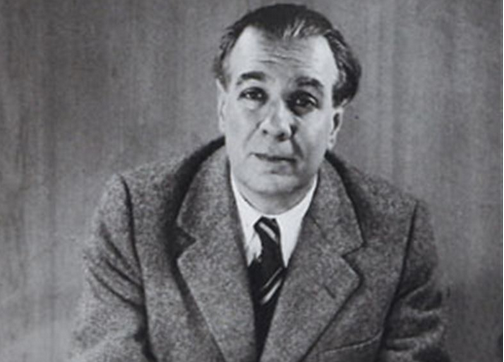
In Argentina, as in many soccer-mad countries with deep social divides, gang violence is a routine part of futbol, part of what Argentine writer Jorge Luis Borges termed a horrible “idea of supremacy.” Borges found it impossible to separate the fan culture from the game itself, once declaring, “soccer is popular because stupidity is popular.” As Shaj Mathew writes in TheNew Republic, the author associated the mass mania of soccer fandom with the mass fervor of fascism or dogmatic nationalism. “Nationalism,” he wrote, “only allows for affirmations, and every doctrine that discards doubt, negation, is a form of fanaticism and stupidity.” As Mathews points out, national soccer teams and stars do often become the tools of authoritarian regimes that “take advantage of the bond that fans share with their national teams to drum up popular support [….] This is what Borges feared—and resented—about the sport.”
There is certainly a sense in which Borges’ hatred of soccer is also indicative of his well-known cultural elitism (despite his romanticizing of lower-class gaucho life and the once-demimonde tango). Outside of the hugely expensive World Cup, the class dynamics of soccer fandom in most every country but the U.S. are fairly uncomplicated. New Republic editor Foer summed it up succinctly in How Soccer Explains the World: “In every other part of the world, soccer’s sociology varies little: it is the province of the working class.” (The inversion of this soccer class divide in the U.S., Foer writes, explains Americans’ disdain for the game in general and for elitist soccer dilettantes in particular, though those attitudes are rapidly changing). If Borges had been a North, rather than South, American, I imagine he would have had similar things to say about the NFL, NBA, NHL, or NASCAR.
Nonetheless, being Jorge Luis Borges, the writer did not simply lodge cranky complaints, however politically astute, about the game. He wrote a speculative story about it with his close friend and sometime writing partner Adolfo Bioy Casares. In “Esse Est Percipi” (“to be is to be perceived”), we learn that soccer has “ceased to be a sport and entered the realm of spectacle,” writes Mathews: “representation of sport has replaced actual sport.” The physical stadiums crumble, while the games are performed by “a single man in a booth or by actors in jerseys before the TV cameras.” An easily duped populace follows “nonexistent games on TV and the radio without questioning a thing.”
The story effectively illustrates Borges’ critique of soccer as an intrinsic part of a mass culture that, Mathews says, “leaves itself open to demagoguery and manipulation.” Borges’ own snobberies aside, his resolute suspicion of mass media spectacle and the coopting of popular culture by political forces seems to me still, as it was in his day, a healthy attitude. You can read the full story here, and an excellent critical essay on Borges’ political philosophy here. For those interested in exploring Franklin Foer’s book, see How Soccer Explains the World: An Unlikely Theory of Globalization.
Note: An earlier version of this post appeared on our site in 2014.
Chantal Akerman’s Jeanne Dielman, 23 quai du Commerce, 1080 Bruxelles is a three-and-a-half hour film in which nothing happens. That, in any case, will be the description offered by many who will view it for the first time in the coming months. Their curiosity will have been piqued by its triumph in the just-released results of Sight and Sound magazine’s critics poll to determine the greatest films of all time. Conducted just once per decade since 1952, it has only seen two other top-spot upsets in that time: when Citizen Kane displaced Bicycle Thieves in 1962, and when Vertigodisplaced Citizen Kane half a century later.
Singin’ in the Rain (Gene Kelly and Stanley Donen, 1952)
Since 1992, the magazine has also run a separate poll that collects the votes of not critics but film directors, which this year placed 2001 at number one. Its top ten also includes such selections as Federico Fellini’s 8½, Andrei Tarkovsky’s Mirror, and Abbas Kiarostami’s Close-Up.
The directors ranked Jeanne Dielman at a respectable number four, tied with Tokyo Story. “On the side of content, the film charts the breakdown of a bourgeois Belgian housewife, mother and part-time prostitute over the course of three days,” writes film theorist Laura Mulvey on Sight and Sound’s page for the film.
“On the side of form, it rigorously records her domestic routine in extended time and from a fixed camera position.” As you may already imagine, these elements — as well as the fact that the title character is played by no less grand a movie star than Delphine Seyrig — make for a singular viewing experience.
That title isn’t without a certain irony, given how much of the film Akerman devotes to straightforward depictions of a middle-aged woman performing household chores — taking us far indeed from the domain of, say, Jerry Bruckheimer. “Shot in static, long takes, the film’s pace and tone may first seem slow or dull,” writes Adam Cook in the IndieWire video essay “Chantal Akerman’s Jeanne Dielman Is a True Action Movie,” but “in observing these household tasks free of periphery, they take on a dramaturgy of their own.” Only with time and repetition do “the nuances in Delphine Seyrig’s expressions convey vastly different connotations” and “the smallest details take on narrative power and significance.”
“Her life is organized to allow no gaps in the day,” Akerman told a television chat-show audience in 1975, when Jeanne Dielman had just come out. But “her very structured universe starts to unravel,” and “her subconscious expresses itself through a series of little slip-ups.” In a 2009 interview for the Criterion Collection, Akerman drew connections between her character’s regimentation and the strict Jewish rituals she herself observed in childhood: “Knowing every moment of every day, what she must do the next moment, brings a sort of peace.” When the routine is disrupted, “a suspense builds, because I think that deep down, we know that something’s going to happen.” On this emotional level, Jeanne Dielman is more conventional than it may seem. And to those who can immerse themselves in it, it feels like the only film in which anything does happen.
Based in Seoul, Colin Marshall writes and broadcasts on cities, language, and culture. His projects include the Substack newsletterBooks on Cities, the book The Stateless City: a Walk through 21st-Century Los Angeles and the video series The City in Cinema. Follow him on Twitter at @colinmarshall or on Facebook.
It’s bittersweet whenever a pioneering, long overlooked female scientist is finally given the recognition she deserves, especially so when the scientist in question is a person of color.
Chemist Alice Ball’s youth and drive — just 23 in 1915, when she discovered a gentle, but effective method for treating leprosy — make her an excellent role model for students with an interest in STEM.
But in a move that’s only shocking for its familiarity, an opportunistic male colleague, Arthur Dean, finagled a way to claim credit for her work.
We’ve all heard the tales of female scientists who were integral team players on important projects, who ultimately saw their role vastly downplayed upon publication or their names left off of a prestigious award.
But Dean’s claim that he was the one who had discovered an injectable water-soluble method for treating leprosy with oil from the seeds of the chaulmoogra fruit is all the more galling, given that he did so after Alice Ball’s tragically early death at the age of 24, suspected to be the result of accidental poisoning during a classroom lab demonstration.
Not everyone believed him.
Ball, the University of Hawaii chemistry department’s first Black female graduate student, and, subsequently, its first Black female chemistry instructor, had come to the attention of Harry T. Hollmann, a U.S. Public Health Officer who shared her conviction that chaulmoogra oil might hold the key to treating leprosy.
After her death in 1916, Hollmann reviewed Dean’s publications regarding the highly successful new leprosy treatment then referred to as the Dean Method and wrote that he could not see “any improvement whatsoever over the original [method] as worked out by Miss Ball:”
After a great amount of experimental work, Miss Ball solved the problem for me by making the ethyl esters of the fatty acids found in chaulmoogra oil.
Type “the Dean Method leprosy” into a search engine and you’ll be rewarded with a satisfying wealth of Alice Ball profiles, all of which go into detail regarding her discovery of what became known as the Ball Method, in use until the 1940s.
Kathleen M. Wong’s article on this trailblazing scientist in the Smithsonian Magazine delves into why Hollmann’s professional efforts to posthumously confer credit where credit was due were insufficient to secure Ball her rightful place in science history.
That began to change in the 1990s when Stan Ali, a retiree researching Black people in Hawaii, found his interest piqued by a reference to a “young Negro chemist” working on leprosy in The Samaritans of Molokai.
Ali teamed up with Paul Wermager, a retired University of Hawaii librarian, and Kathryn Waddell Takara, a poet and professor in the Ethnic Studies Department. Together, they began combing over old sources for any passing reference to Ball and her work. They came to believe that her absence from the scientific record owed to sexism and racism:
During and just after her lifetime, she was believed to be part Hawaiian, not Black. (Her birth and death certificates list both Ball and her parents as white, perhaps to “make travel, business and life in general easier,” according to the Honolulu Star-Bulletin.) In 1910, Black people made up just 0.4 percent of Hawaiʻi’s population.
“When [the newspapers] realized she was not part Hawaiian, but [Black], they felt they had made an embarrassing mistake, forgetting about it and hoping it would go away,” Ali said. “It did for 75 years.”
Their combined efforts spurred the state of Hawaii to declare February 28 Alice Ball Day. The University of Hawaii installed a commemorative plaque near a chaulmoogra tree on campus. Her portrait hangs in the university’s Hamilton Library, alongside a posthumously awarded Medal of Distinction.
(“Meanwhile,” as Carlyn L. Tani dryly observes in Honolulu Magazine, “Dean Hall on the University of Hawai‘i Mānoa campus stands as an enduring monument to Arthur L. Dean.)
Further afield, the London School of Hygiene and Tropical Medicine celebrated its 120th anniversary by adding Ball’s, Marie Sklodowska-Curie’s and Florence Nightingale’s names to a frieze that had previously honored 23 eminent men.
And now, the Godmother of Punk Patti Smith has taken it upon herself to introduce Ball to an even wider audience, after running across a reference to her while conducting research for her just released A Book of Days.
Things have really changed. I think we are living in a very beautiful period of time because there are so many female artists, poets, scientists, and activists. Through books especially, we are rediscovering and valuing the women who have been unjustly forgotten in our history. During my research, I came across a young black scientist who lived in Hawaii in the 1920s. At that time, there was a big leper colony in Hawaii. She had discovered a treatment using the oil from the seeds of a tree to relieve the pain and allow patients to see their friends and family. Her name was Alice Ball, and she died at just 24 after a terrible chemical accident during an experiment. Her research was taken up by a professor who removed her name from the study to take full credit. It is only recently that people have discovered that she was the one who did the work.
“Chevrolet,” a new track on Neil Young’s 42nd studio album World Record, takes you on a long, rambling road trip, covering a lot of different terrain over 15 minutes, with some verses lasting more than two minutes. Above, you can watch Neil Young and Crazy Horse (Nils Lofgren, Billy Talbot and Ralph Molina) play the song for the very first time. It’s also the same cut that appears on the album. It’s a pretty remarkable display of musicianship, and a great new Neil Young track.
If you would like to support the mission of Open Culture, consider making a donation to our site. It’s hard to rely 100% on ads, and your contributions will help us continue providing the best free cultural and educational materials to learners everywhere. You can contribute through PayPal, Patreon, and Venmo (@openculture). Thanks!
There are many reasons to look down on art forgery, from its illegality to its lack of originality. But much like any other human endeavor, you need a great deal of skill and stamina to do it well. Certain individual forgers have lived on in history: Han Van Meegeren, say, who tricked the Nazis with his Vermeers, or Elmyr de Hory, whose skills at imitating the styles of Picasso, Matisse, Modigliani, and Renoir landed him in Orson Welles’ F for Fake. If Zhao Xiaoyong doesn’t yet figure among the names of the best-known art forgers, it’s not because nobody’s made a movie about him.
That movie is Yu Haibo and Kiki Tianqi Yu’s documentary China’s Van Goghs, which you can watch just above. Much of it takes place in the village of Dafen in China’s Guangdong province, home to thousands and thousands of oil painters, all of whom make their living making replicas (in various sizes) of famous paintings by the likes of Leonardo, Rembrandt, Dalí, Basquiat, and — above all, it seems — Van Gogh. It speaks to the speed and scale of modern Chinese industry that this activity began only in 1989, but grew such that, at one point, Dafen was supplying 60 percent of the oil paintings in the world.
Zhao arrived in Dafen in the early nineteen-nineties, but still got into its nascent industry quite early on. “Back then, painting in the village hadn’t scaled up yet,” he writes in an essay at The World of Chinese. “I was moved the first time I saw the oil paintings there. They were so delicate. The people’s eyes and skin looked so vivid, so alive.” In Dafen’s small factories, “all of the painters there were rushing to fill orders, so nobody was going to hold my hand.” After his first batch of sales, he made himself a promise to “master the works of Van Gogh.”
At the time, Zhao would have had no way of knowing how close he would eventually get to those works. Even when he established himself to the point that he could start his own studio, the dream of visiting Van Gogh’s homeland — as opposed to selling copies of Van Gogh’s art to Van Gogh’s own countrymen — must have seemed far off. But then the documentarians came calling: “They wanted to make a film about my life. With their encouragement and support, I made a trip to Amsterdam.” (In the film, that trip begins at the 46:23 mark.)
Seeing the very same Van Goghs he’d copied countless many times before, Zhao encountered more “delicate brushstrokes and subdued colors” than he’d ever noticed before, among other physical signs that Van Gogh “must have been trying different things all the time.” After getting back to China, he found that his experience in Amsterdam had motivated him to paint not Van Gogh’s work but his own. “My wife had been with me for so many years, and we’d painted for so long, but she didn’t have a painting of herself, Zhou writes. “The first original painting I did was of my wife.” The future of Dafen may be in doubt, but Zhou’s commitment to art certainly isn’t.
Based in Seoul, Colin Marshall writes and broadcasts on cities, language, and culture. His projects include the Substack newsletterBooks on Cities, the book The Stateless City: a Walk through 21st-Century Los Angeles and the video series The City in Cinema. Follow him on Twitter at @colinmarshall or on Facebook.
Perhaps you’ve seen Scottish actor Brian Cox perform with the Royal Shakespeare Company in critically-acclaimed performances of The Taming of The Shrew and Titus Andronicus. Or, more likely, you’ve seen him in the blockbuster HBO series, Succession. But there’s perhaps another role you haven’t seen him in: tutor of toddlers. A number of years back, Cox taught Theo, then only 30 months old, the famous soliloquy from Hamlet, hoping to show there’s a Shakespearean actor in all of us. Later, Cox talked to the BBC about his “masterclass” with Theo and what he took away from the experience. Watch him muse right below:
If you would like to support the mission of Open Culture, consider making a donation to our site. It’s hard to rely 100% on ads, and your contributions will help us continue providing the best free cultural and educational materials to learners everywhere. You can contribute through PayPal, Patreon, and Venmo (@openculture). Thanks!
Auguste and Louis Lumière thought that cinema didn’t have a future. Fortunately, they came to that conclusion only after producing a body of work that comprises some of the earliest films ever made, as well as invaluable glimpses of the end of the nineteenth century and the dawn of the twentieth, an era that has now passed out of living memory. Using the motion-photography system that they developed themselves, the Lumière brothers captured life around them in not just their native France, but Switzerland, Italy, England, the United States, and even more exotic lands like Egypt, Turkey, and Japan — all of which you can see in the compilation video above.
The smooth color footage you see here is not, of course, what the Lumière brothers showed to their wide-eyed audiences well over a century ago. It all comes specially prepared by Youtuber Denis Shirayev, who specializes in enhancing old film with current technologies, some of them driven by machine learning.
For this compilation video’s first four and half minutes, Shirayev explains how he does it. But first, he offers a disclaimer: “Some people mistakenly think that the colors in this video are the original source colors, or that the source material had audio, or that the enhanced faces are real.” All that was in fact added later, and that’s where the artificial intelligence comes in: even in the absence of direct historical evidence, it can “guess” what the real details not captured by the Lumière bothers’ camera might have looked like. This is part of a process that also includes upscaling, stabilization, and conversion to 60 frames per second — a form of motion smoothing, in recent years the subject of a cinematic controversy the Lumière brothers certainly couldn’t have imagined.
After Shirayev’s remarks, you can start watching 21 Lumière brothers films after the 4:30 mark.
Based in Seoul, Colin Marshall writes and broadcasts on cities, language, and culture. His projects include the Substack newsletterBooks on Cities, the book The Stateless City: a Walk through 21st-Century Los Angeles and the video series The City in Cinema. Follow him on Twitter at @colinmarshall or on Facebook.
Deep fried coffee. Yes, it’s a thing, and coffee connoisseur James Hoffmann decided to give it a go. How did it turn out? We won’t spoil it for you–other than to say, don’t be surprised if deep fried coffee makes its way into a future edition of Hoffmann’s book, The World Atlas of Coffee.
If you would like to support the mission of Open Culture, consider making a donation to our site. It’s hard to rely 100% on ads, and your contributions will help us continue providing the best free cultural and educational materials to learners everywhere. You can contribute through PayPal, Patreon, and Venmo (@openculture). Thanks!
It took me four years to paint like Raphael, but a lifetime to paint like a child. — Pablo Picasso
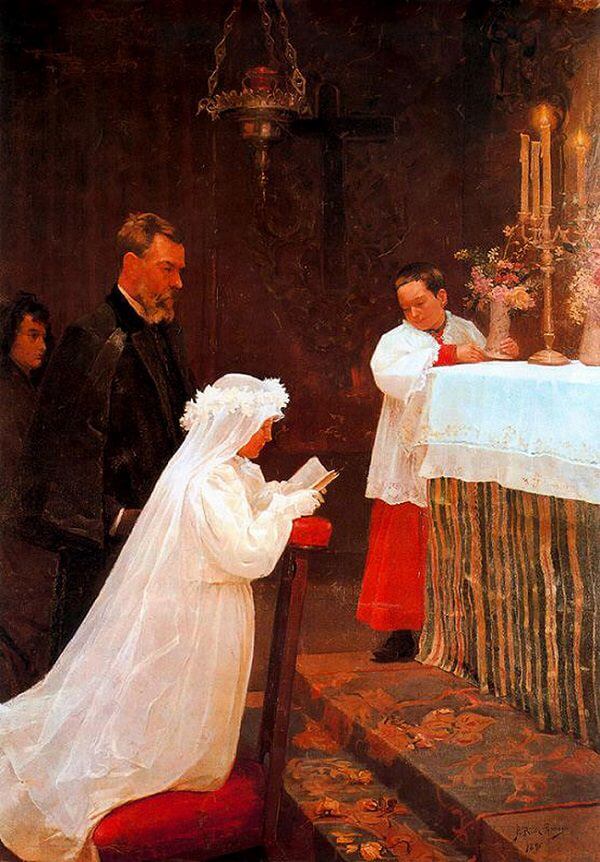
We think it’s safe to say that most of us have a preconceived notion of Picasso’s style, and The First Communion, above, isn’t it.
Picasso was just 15 when he completed this large-scale oil, having lost his 7‑year-old sister, Conchita, to diphtheria one year before.
The stricken young artist had attempted to bargain with God, vowing to give up painting if she was spared. As Arianna Huffington writes in the biography Picasso: Creator and Destroyer:
…he was torn between wanting her saved and wanting her dead so that his gift would be saved. When she died, he decided that God was evil and destiny an enemy. At the same time, he was convinced that it was his ambivalence that had made it possible for God to kill Conchita. His guilt was enormous—the other side of his belief in his powers to affect the world around him. And it was compounded by his almost magical conviction that his little sister’s death had released him to be a painter and follow the call of the powers he had been given, whatever the consequences.
If there’s evil at work in the “First Communion,” he keeps it under wraps. All eyes are on the rapt young communicant, embodied in his surviving sister, Lola, in a snowy veil and gown.
Their father, painter and drawing professor José Ruiz y Blasco, assumes the part of the girl’s father or godfather, a solemn witness to this rite of passage.
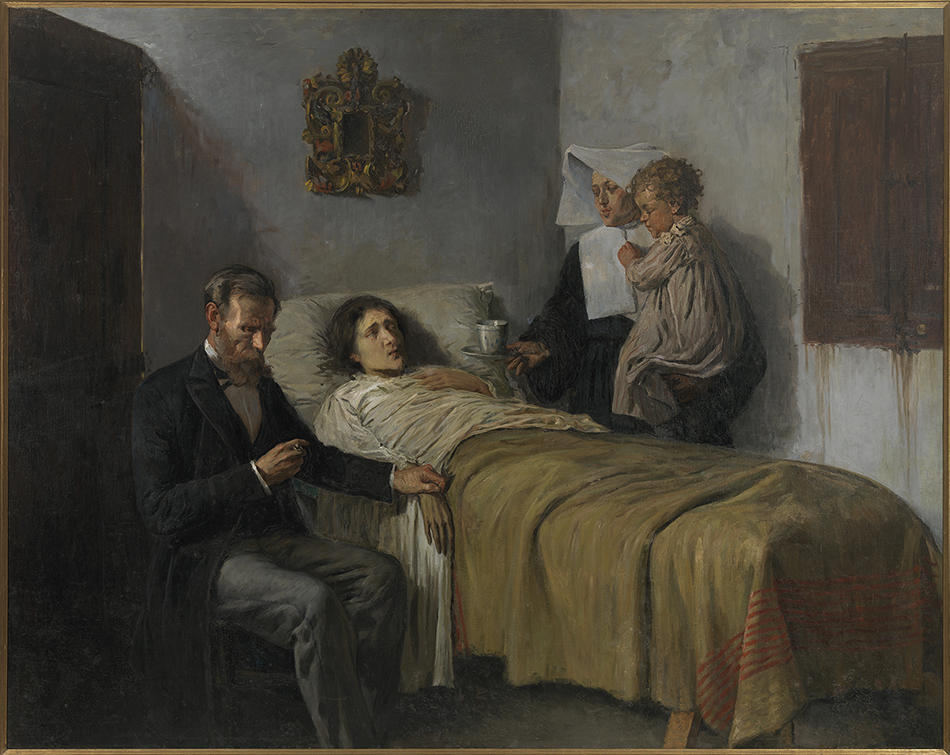
Ruiz y Blasco provided instruction and championed his son’s gift. He encouraged him to enter the “First Communion,” and later, “Science and Charity” (in which he appears as the doctor) in the Exposicion de Bellas Artes, a competition and exhibition opportunity for emerging artists.
Picasso later remarked that “every time I draw a man, I think of my father. To me, man is Don José, and will be all my life…”
Ruiz y Blasco, convinced that Picasso’s talent would bring success as a naturalistic painter of classical scenes and portraits, was deeply disappointed when his teenaged son began blowing off class at Madrid’s prestigious Academia Real de San Fernando.
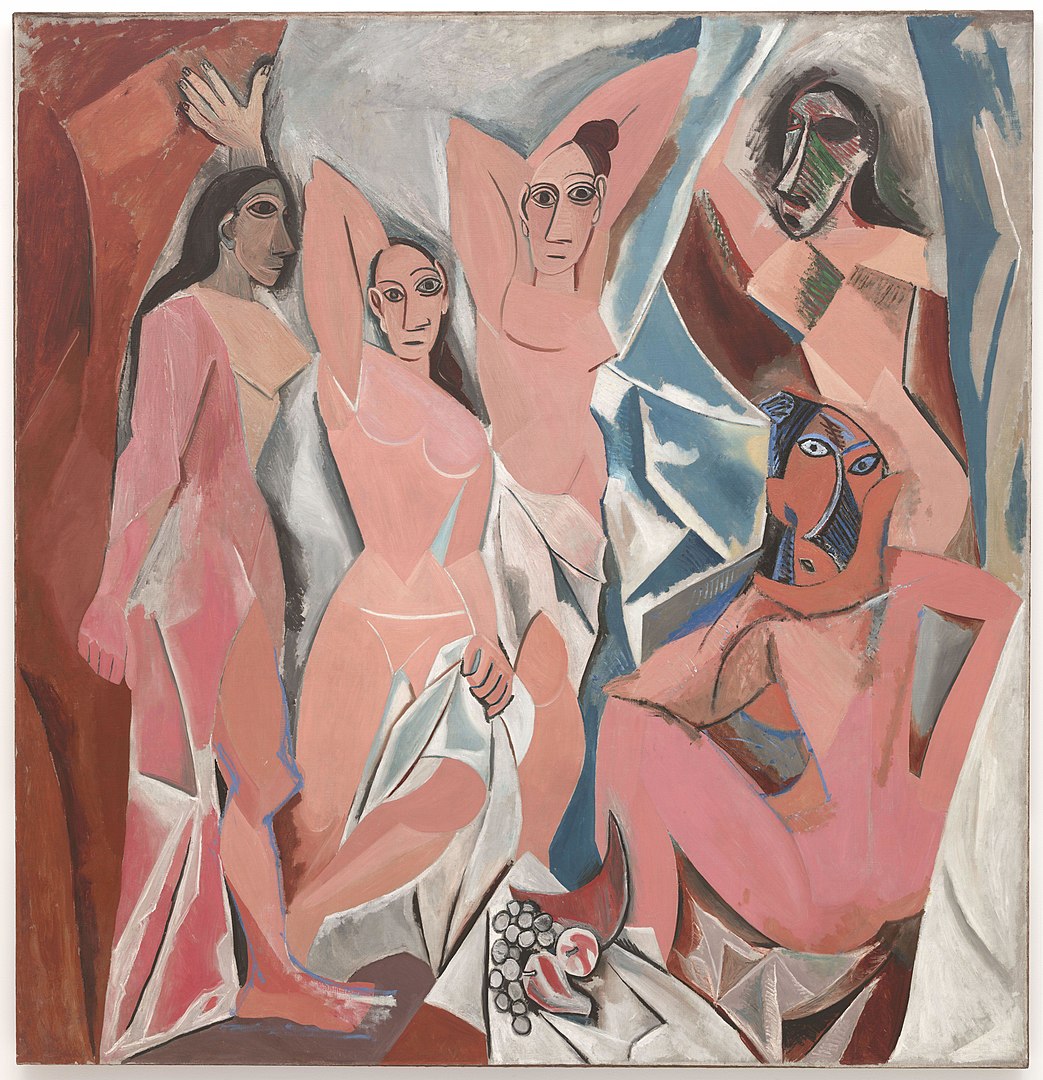
Just imagine how he reacted to the scandalous Cubist vision of “Les Demoiselles d’Avignon,” unveiled a mere eleven years after the “First Communion.”
The rest is history.
Just for fun, we invited the free online AI image generator Craiyon (formerly known as DALL‑E Mini) to have a go using the prompt “Picasso First Communion”.
We're hoping to rely on loyal readers, rather than erratic ads. Please click the Donate button and support Open Culture. You can use Paypal, Venmo, Patreon, even Crypto! We thank you!
Open Culture scours the web for the best educational media. We find the free courses and audio books you need, the language lessons & educational videos you want, and plenty of enlightenment in between.