Evan Puschak, better known as Youtube’s Nerdwriter, has created video essays on a host of visual artists from Goya to Picasso, de Chirico to Hopper, Leonardo to Van Gogh. And though he narrates all his analyses of their work with evident enthusiasm, one sooner or later comes to suspect that he isn’t without personal preferences in this arena. In the opening of his new video above does he name his personal favorite painter: John Singer Sargent, for whom he makes the case by telling us why — and how — the artist “painted outside the lines.”
“Sargent came of age as the Impressionist movement, led by Claude Monet, flowered,” says Puschak. But despite his close association with Monet himself, “Sargent was not usually counted among the Impressionists,” but he was an impressionist in that “the impressions of light and color were his subjects.”
By his early twenties, he had already become a master of conjuring (and even enhancing) reality on a canvas with an absolute minimum of brushstrokes or fine detail work. “High society came knocking en masse,” all wanting to commission a Sargent portrait; in fulfilling their orders, Sargent became “the greatest portraitist who ever lived.”
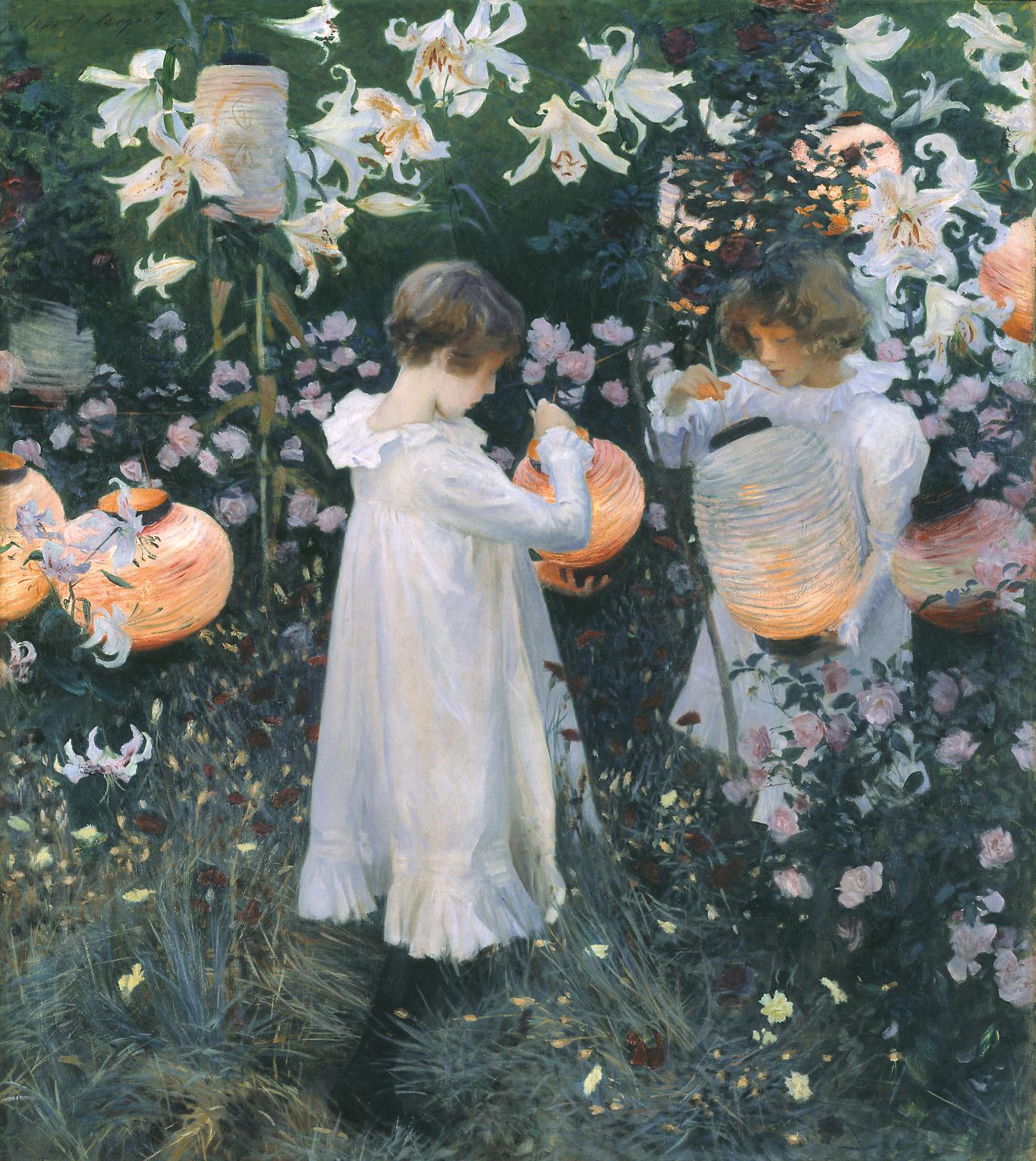
It was also portraiture that got him into trouble. After his “stunning painting of a wealthy socialite” — Madame X, as previously featured here on Open Culture — “caused a scandal in Paris for being too racy,” he move to England. There he would paint Carnation, Lily, Lily, Rose in 1885 and 1886, working only during the “golden hour” just before sunset in order to capture its distinctive light. Puschak explains that, apart from the power of the artist’s long-refined small‑i impressionist technique, “what Sargent gets here, by the accumulation of little effects, is an atmosphere, a mauve-ish coloring that gets in the air itself, which is what it really feels like to be outside on a summer evening.” We all enjoy that feeling, of course, but in this painting — Puschak’s favorite — Sargent established himself as the most masterful summer-evening appreciator of them all.
Below you can watch from the Tate “How John Singer Sargent Painted Carnation, Lily, Lily, Rose”
Related content:
When John Singer Sargent’s Madame X Scandalized the Art World in 1884
Edward Hopper’s Iconic Painting Nighthawks Explained in a 7‑Minute Video Introduction
Why Monet Painted The Same Haystacks 25 Times
How Andrew Wyeth Made a Painting: A Journey Into His Best-Known Work Christina’s World
Why Leonardo da Vinci’s Greatest Painting is Not the Mona Lisa
Based in Seoul, Colin Marshall writes and broadcasts on cities, language, and culture. His projects include the Substack newsletter Books on Cities, the book The Stateless City: a Walk through 21st-Century Los Angeles and the video series The City in Cinema. Follow him on Twitter at @colinmarshall or on Facebook.