How Did Cartographers Create World Maps before Airplanes and Satellites? An Introduction

Reg­u­lar read­ers of Open Cul­ture know a thing or two about maps if they’ve paid atten­tion to our posts on the his­to­ry of car­tog­ra­phy, the evo­lu­tion of world maps (and why they are all wrong), and the many dig­i­tal col­lec­tions of his­tor­i­cal maps from all over the world. What does the sev­en and a half-minute video above bring to this com­pendi­um of online car­to­graph­ic knowl­edge? A very quick sur­vey of world map his­to­ry, for one thing, with stops at many of the major his­tor­i­cal inter­sec­tions from Greek antiq­ui­ty to the cre­ation of the Cata­lan Atlas, an aston­ish­ing map­mak­ing achieve­ment from 1375.

The upshot is an answer to the very rea­son­able ques­tion, “how were (some­times) accu­rate world maps cre­at­ed before air trav­el or satel­lites?” The expla­na­tion? A lot of his­to­ry — mean­ing, a lot of time. Unlike inno­va­tions today, which we expect to solve prob­lems near-imme­di­ate­ly, the inno­va­tions in map­ping tech­nol­o­gy took many cen­turies and required the work of thou­sands of trav­el­ers, geo­g­ra­phers, car­tog­ra­phers, math­e­mati­cians, his­to­ri­ans, and oth­er schol­ars who built upon the work that came before. It start­ed with spec­u­la­tion, myth, and pure fan­ta­sy, which is what we find in most geo­gra­phies of the ancient world.

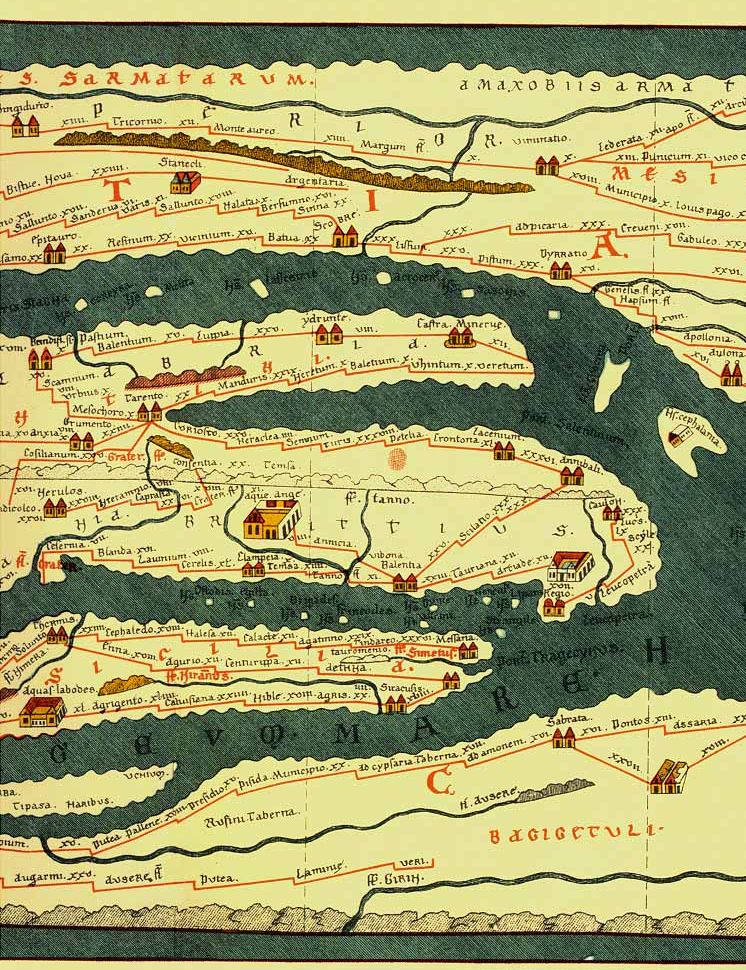
Then came the Greek Anax­i­man­der, “the first per­son to pub­lish a detailed descrip­tion of the world.” He knew of three con­ti­nents, Europe, Asia, and Libya (or North Africa). They fit togeth­er in a cir­cu­lar Earth, sur­round­ed by a ring of ocean. “Even this,” says Jere­my Shuback, “was an incred­i­ble accom­plish­ment, roughed out by who knows how many explor­ers.” Sand­wiched in-between the con­ti­nents are some known large bod­ies of water: the Mediter­ranean, the Black Sea, the Pha­sis (mod­ern-day Rioni) and Nile Rivers. Even­tu­al­ly Eratos­thenes dis­cov­ered the Earth was spher­i­cal, but maps of a flat Earth per­sist­ed. Greek and Roman geo­g­ra­phers con­sis­tent­ly improved their world maps over suc­ceed­ing cen­turies as con­quer­ers expand­ed the bound­aries of their empires.

Some key moments in map­ping his­to­ry involve the 2nd cen­tu­ry AD geo­g­ra­ph­er and math­e­mati­cian Marines of Tyre, who pio­neered “equirec­tan­gu­lar pro­jec­tion and invent­ed lat­i­tude and lon­gi­tude lines and math­e­mat­i­cal geog­ra­phy.” This paved the way for Claudius Ptole­my’s huge­ly influ­en­tial Geo­graphia and the Ptole­ma­ic maps that would even­tu­al­ly fol­low. Lat­er Islam­ic car­tog­ra­phers “fact checked” Ptole­my, and reversed his pref­er­ence for ori­ent­ing North at the top in their own map­pa mun­di. The video quotes his­to­ri­an of sci­ence Son­ja Bren­thes in not­ing how Muham­mad al-Idrisi’s 1154 map “served as a major tool for Ital­ian, Dutch, and French map­mak­ers from the six­teenth cen­tu­ry to the mid-eigh­teenth cen­tu­ry.”

The inven­tion of the com­pass was anoth­er leap for­ward in map­ping tech­nol­o­gy, and ren­dered pre­vi­ous maps obso­lete for nav­i­ga­tion. Thus car­tog­ra­phers cre­at­ed the por­tolan, a nau­ti­cal map mount­ed hor­i­zon­tal­ly and meant to be viewed from any angle, with wind rose lines extend­ing out­ward from a cen­ter hub. These devel­op­ments bring us back to the Cata­lan Atlas, its extra­or­di­nary accu­ra­cy, for its time, and its extra­or­di­nary lev­el of geo­graph­i­cal detail: an arti­fact that has been called â€śthe most com­plete pic­ture of geo­graph­i­cal knowl­edge as it stood in the lat­er Mid­dle Ages.”

Cre­at­ed for Charles V of France as both a por­tolan and map­pa mun­di, its con­tours and points of ref­er­ence were not only com­piled from cen­turies of geo­graph­ic knowl­edge, but also from knowl­edge spread around the world from the dias­poric Jew­ish com­mu­ni­ty to which the cre­ators of the Atlas belonged. The map was most like­ly made by Abra­ham Cresques and his son Jahu­da, mem­bers of the high­ly respect­ed Major­can Car­to­graph­ic School, who worked under the patron­age of the Por­tuguese. Dur­ing this peri­od (before mas­sacres and forced con­ver­sions dev­as­tat­ed the Jew­ish com­mu­ni­ty of Major­ca in 1391), Jew­ish doc­tors, schol­ars, and scribes bridged the Chris­t­ian and Islam­ic worlds and formed net­works that dis­sem­i­nat­ed infor­ma­tion through both.

In its depic­tion of North Africa, for exam­ple, the Cata­lan Atlas shows images and descrip­tions of Malian ruler Mansa Musa, the Berber peo­ple, and spe­cif­ic cities and oases rather than the usu­al drag­ons and mon­sters found in oth­er Medieval Euro­pean maps — despite the car­tog­ra­phers’ use of the works like the Trav­els of John Man­dev­ille, which con­tains no short­age of bizarre fic­tion about the region. While it might seem mirac­u­lous that humans could cre­ate increas­ing­ly accu­rate views of the Earth from above with­out flight, they did so over cen­turies of tri­al and error (and thou­sands of lost ships), build­ing on the work of count­less oth­ers, cor­rect­ing the mis­takes of the past with supe­ri­or mea­sure­ments, and crowd­sourc­ing as much knowl­edge as they could.

To learn more about the fas­ci­nat­ing Cata­lan Atlas, see the Flash Point His­to­ry video above and the schol­ar­ly descrip­tion found here. Find trans­la­tions of the map’s leg­ends here at The Cresque Project.

Relat­ed Con­tent: 

The His­to­ry of Car­tog­ra­phy, the “Most Ambi­tious Overview of Map Mak­ing Ever,” Is Now Free Online

Down­load 91,000 His­toric Maps from the Mas­sive David Rum­sey Map Col­lec­tion

Why Every World Map Is Wrong

Ani­mat­ed Maps Reveal the True Size of Coun­tries (and Show How Tra­di­tion­al Maps Dis­tort Our World)

The Evo­lu­tion of the World Map: An Inven­tive Info­graph­ic Shows How Our Pic­ture of the World Changed Over 1,800 Years

Josh Jones is a writer and musi­cian based in Durham, NC. Fol­low him at @jdmagness

Watch “The Impossible Map,” a Short Animated Film That Uses a Grapefruit to Show Why Maps of the Earth Are Misleading (1947)

There are any num­ber of ways one might try to turn a globe into a two-dimen­sion­al sur­face. You could start by cut­ting it down the mid­dle, as in this Vox video on world maps. You could choose vol­un­teers and have them come up to the head of the class and peel oranges in one piece, flat­ten­ing out the strips onto an over­head pro­jec­tor, as in this Nation­al Geo­graph­ic les­son on world maps. Or, you might attack an already halved grape­fruit peel with a rolling pin, as in the Nation­al Film Board of Canada’s ani­mat­ed short, “The Impos­si­ble Map,” above.

Each method (except, maybe, the rolling pin) has its mer­its, but none of them will make a 2‑dimensional sur­face with­out warp­ing, stretch­ing, and dis­tort­ing. That’s the point, in all these exer­cis­es, a point that has been made over and over through­out the years as car­tog­ra­phers search for bet­ter, more accu­rate ways to turn the Earth’s sphere (or oblate spher­oid) into a rep­re­sen­ta­tive rec­tan­gle that rough­ly pre­serves the scale of the con­ti­nents. As the hands-on demon­stra­tions show, you don’t need to remem­ber your geom­e­try to see that it’s impos­si­ble to do so with much pre­ci­sion.

A car­tog­ra­ph­er must choose a focal point, as Ger­ar­dus Mer­ca­tor did in the 16th cen­tu­ry in his famous cylin­dri­cal pro­jec­tion. Since the map was designed by a Euro­pean for use by Euro­pean nav­i­ga­tors, it nat­u­ral­ly puts Europe in the cen­ter, result­ing in extreme dis­tor­tions of the land mass­es around it. These have been reme­died by alter­nate pro­jec­tions like the Moll­wei­de, Goode Homolo­sine (the “orange-peel map”), and the 1963 Robin­son pro­jec­tion, which was “adopt­ed for Nation­al Geographic’s world maps in 1988,” The Guardian notes, and “appears in [a] grow­ing num­ber of oth­er pub­li­ca­tions, [and] may replace Mer­ca­tor in many class­rooms.”

Pio­neer­ing Cana­di­an ani­ma­tor Eve­lyn Lam­bart made “The Impos­si­ble Map” in 1947, sev­er­al years before pro­fes­sor Arthur Robin­son cre­at­ed his “Pseudo­cylin­dri­cal Pro­jec­tion with Pole Line” — for which he used “a huge num­ber of tri­al-and-error com­put­er sim­u­la­tions,” as the Arthur H. Robin­son Map Library writes. “To this day, no oth­er pro­jec­tion uses this approach to build a map,” not even most GPS map­ping soft­ware, which still, in many cas­es, uses a “Web Mer­ca­tor” pro­jec­tion to rep­re­sent the whole Earth. But while Lam­bart’s film may not be tech­no­log­i­cal­ly up-to-date, it is visu­al­ly and ped­a­gog­i­cal­ly bril­liant, explain­ing, with some basic nar­ra­tion and sliced pro­duce, why globes still beat flat maps of the Earth every time.

via Aeon

Relat­ed Con­tent: 

The His­to­ry of Car­tog­ra­phy, “the Most Ambi­tious Overview of Map Mak­ing Ever Under­tak­en,” Is Free Online

Why Mak­ing Accu­rate World Maps Is Math­e­mat­i­cal­ly Impos­si­ble

Why Every World Map Is Wrong

Josh Jones is a writer and musi­cian based in Durham, NC. Fol­low him at @jdmagness

A Beautiful, High-Resolution Map of the Internet (2021)


The begin­nings of the Inter­net were unchart­ed ter­ri­to­ry, espe­cial­ly before the days of graph­ic browsers. You had a num­ber, you dialed up to a loca­tion. Cer­tain loca­tions were named after their host uni­ver­si­ties or gov­ern­ment sites and that made sense in an old-school tele­phone exchange way. But the rest was just a vast ocean of data, of strange lands, and many, many bar­ri­ers. How big, exact­ly, is the inter­net? And how do we mea­sure it? What is the “space” of cyber­space?

There have been maps that over­lay the internet’s main land­lines onto the map of the earth—this Vox arti­cle shows the spi­dery web grow­ing from the first four loca­tions of ARPANET until the whole world is con­nect­ed. But that’s not how we think of it. Sure­ly Open Cul­ture is always where you, dear read­er, reside, and this writer’s undis­closed loca­tion has noth­ing to do with it. Maybe the inter­net is real­ly the space that it takes up in our minds, in our lives, and in the amount of inter­net traf­fic.

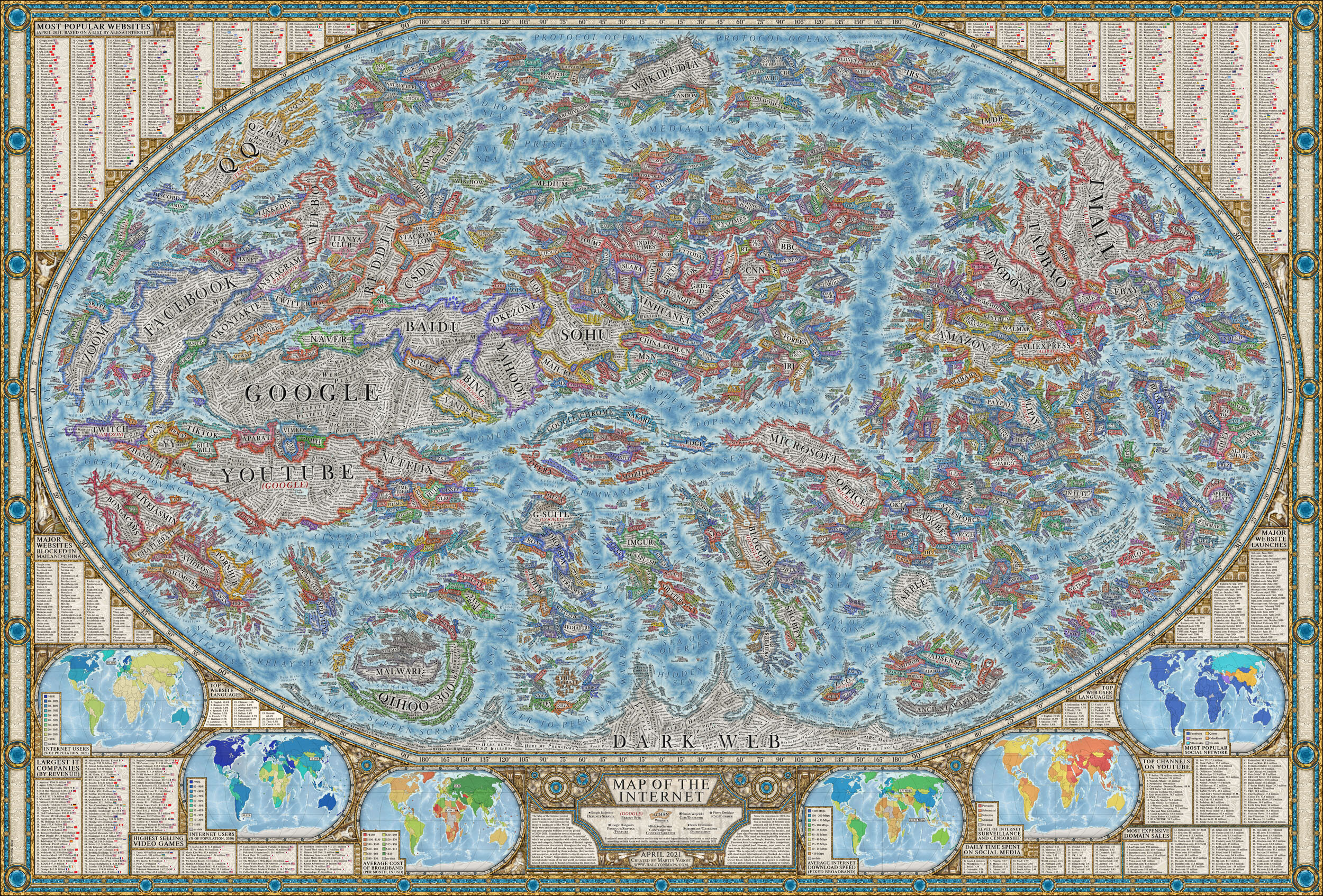
Ama­teur graph­ic design­er Mar­tin Var­gic visu­al­ized those spaces as coun­tries on a vast globe inspired by Nation­al Geo­graph­ic Mag­a­zine. (Although Nation­al Geo­graph­ic bor­rowed its car­to­graph­ic style from some of the first print­ed maps of the world.) Var­gic first pub­lished his map in 2014 when he was a stu­dent in Slo­va­kia. And now he has decid­ed to update the map for 2021. (See the map in high res­o­lu­tion here.) Large con­ti­nents rep­re­sent the main web­sites of the Inter­net: Face­book, Google, Apple, Ama­zon. The seas rep­re­sent the afore­men­tioned ocean of data under dif­fer­ent names: Ocean of Infor­ma­tion, North Con­nec­tion Ocean, etc. To com­pare his rel­a­tive­ly spare orig­i­nal map to the one he just released is to notice how much more crowd­ed this world has become, and how divid­ed.

First, his method­ol­o­gy.

Var­gic based the rel­a­tive size of each web­site on its aver­age traf­fic between Jan­u­ary 2020 and Jan­u­ary 2021, accord­ing to Alexa Rank, the Ama­zon-owned Alexa Internet’s mea­sure of how pop­u­lar a web­site is, cal­cu­lat­ed by unique users and page views.

How­ev­er, the cen­ter of the map is now dif­fer­ent. This now depicts the “core and back­bone of the Inter­net as we know it,” Var­gic said. This means a core of ser­vice providers sur­round­ed by larg­er islands of web browsers (Chrome, Fire­fox, et al).

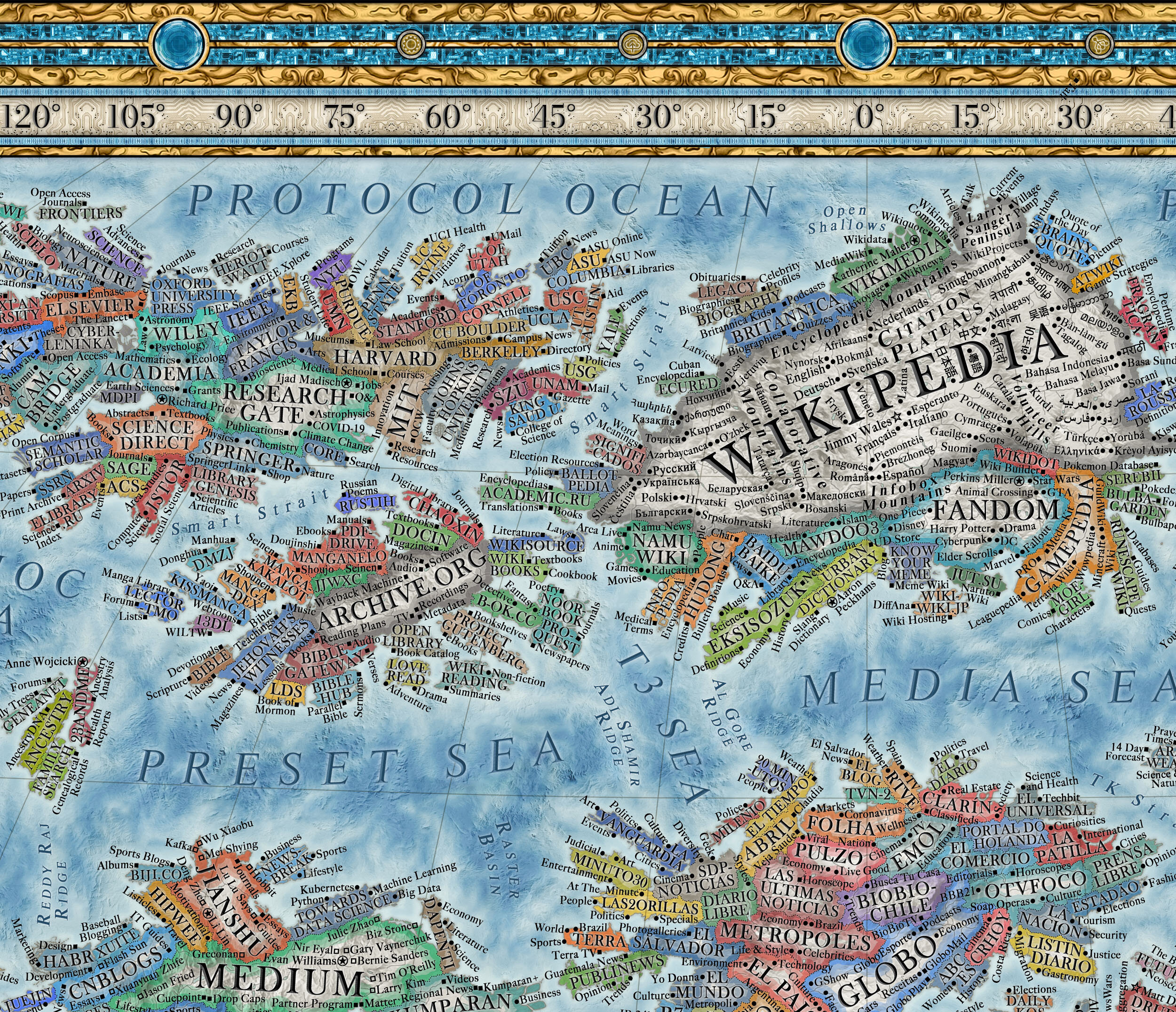
While the 2014 map con­sid­ered web­site size as the main orga­niz­er and con­tained around 200 web­sites, this ver­sion con­tains 3,000. The north of the globe fea­tures coun­try clus­ters: a group­ing of aca­d­e­m­ic, research, and free edu­ca­tion sites (wikipedia, archive.org, etc.), gov­ern­men­tal web­sites to the east and con­spir­a­cy QAnon lands to the west.

The Antarc­ti­ca of the map? The Dark Web, where the Onion isn’t a par­o­dy news site and TOR isn’t the sci-fi/­fan­ta­sy pub­lish­er.

You might find some of Vargic’s deci­sions odd, or you might just spend your time won­der­ing how much of the inter­net is indeed an unknown land, with large “coun­tries” you’ve nev­er heard of, but with mil­lions of “res­i­dents”. It might not be real, but Vargic’s map will put you in an explorato­ry mood while you light off for the ter­ri­to­ries. You can view it in a high res­o­lu­tion for­mat here. Pur­chase it as a poster here.

Relat­ed Con­tent:

The His­to­ry of the Inter­net in 8 Min­utes

How the Inter­net Archive Dig­i­tizes 3,500 Books a Day–the Hard Way, One Page at a Time

The Old­est Known Globe to Depict the New World Was Engraved on an Ostrich Egg, Maybe by Leonar­do da Vin­ci (1504)

Ted Mills is a free­lance writer on the arts who cur­rent­ly hosts the Notes from the Shed pod­cast and is the pro­duc­er of KCR­W’s Curi­ous Coast. You can also fol­low him on Twit­ter at @tedmills, and/or watch his films here.

Why Every World Map Is Wrong

The idea that the world maps are wrong — all of them — is hard­ly con­tro­ver­sial. It’s a math­e­mat­i­cal fact that turn­ing a globe (or an oblate spher­oid) into a two-dimen­sion­al object will result in unavoid­able dis­tor­tions. In the TED-Ed les­son above by Kay­la Wolf, you’ll learn a brief his­to­ry of world maps, start­ing all the way back with the Greek math­e­mati­cian Ptole­my, who “sys­tem­at­i­cal­ly mapped the Earth on a grid” in 150 AD in order to cre­ate maps that had a con­sis­tent scale. His grid sys­tem is still in use today — 180 lines of lat­i­tude and 360 lines of lon­gi­tude.

Most of the world maps we knew come from the Mer­ca­tor Pro­jec­tion, “a cylin­dri­cal map pro­jec­tion pre­sent­ed by the Flem­ish geo­g­ra­ph­er and car­tog­ra­ph­er Ger­ar­dus Mer­ca­tor in 1569,” writes Steven J. Fletch­er.

This map pro­jec­tion is prac­ti­cal for nau­ti­cal appli­ca­tions due to its abil­i­ty to rep­re­sent lines of con­stant course, known as rhumb lines, as straight seg­ments that con­serve the angles with the merid­i­ans…. the Mer­ca­tor pro­jec­tion dis­torts the size of objects as the lat­i­tude increas­es from the equa­tor to the poles, where the scale becomes infi­nite. 

Mercator’s inno­va­tion allowed for the ship­ping routes that cre­at­ed the mod­ern world (includ­ing those through the now-unblocked Suez Canal). But the pro­jec­tion has its prob­lems: 14 Green­lands, for exam­ple, could fit inside the con­ti­nent of Africa, says Wolf, but “you wouldn’t guess it from most maps of the world”  in which the two land mass­es are almost the same size.

“In 2010,” Adam Tay­lor notes at The Wash­ing­ton Post, “graph­ic artist Kai Krause made a map to illus­trate just how big the African con­ti­nent is. He found that he was able to fit the Unit­ed States, India and much of Europe inside the out­line of the African con­ti­nent.”

Geo­graph­i­cal mis­per­cep­tions “shape our under­stand­ing of the world,” Nick Rout­ley writes at Busi­ness Insid­er, “and in an increas­ing­ly inter­con­nect­ed and glob­al econ­o­my, this geo­graph­ic knowl­edge is more impor­tant than ever.” We are no longer pri­mar­i­ly using maps, that is to say, to chart, trade with, or con­quer for­mer­ly unknown regions of the world — from loca­tions assumed to be the nat­ur­al cen­ters of com­merce, cul­ture, or reli­gion.

Non-Mer­ca­tor world maps have, over the last few decades espe­cial­ly, attempt­ed to cor­rect the errors of cylin­dri­cal pro­jec­tion by unfold­ing the globe like an orange peel or a series of inter­lock­ing tri­an­gles, as in Buck­min­ster Fuller’s 1943 Dymax­ion Map. These have proved nau­ti­cal miles more accu­rate than pre­vi­ous ver­sions but they are use­less in nav­i­gat­ing the world.

Why cre­ate new, more accu­rate world maps? Because the Mer­ca­tor pro­jec­tion has giv­en the impres­sion of Euro-Amer­i­can geo­graph­i­cal suprema­cy for almost 500 years now, Wolf’s les­son argues, sim­ply by virtue of the loca­tion of its ori­gin and its orig­i­nal pur­pose. But it is now not only inac­cu­rate and out­dat­ed, it is also irrel­e­vant. Maps play a vital role in edu­ca­tion. The prac­ti­cal util­i­ty, how­ev­er, of flat world maps these days is pret­ty much beside the point, since GPS tech­nol­o­gy has most­ly elim­i­nat­ed the need for them alto­geth­er.

Relat­ed Con­tent: 

Buck­min­ster Fuller’s Map of the World: The Inno­va­tion that Rev­o­lu­tion­ized Map Design (1943)

Japan­ese Design­ers May Have Cre­at­ed the Most Accu­rate Map of Our World: See the Autha­Graph

Why Mak­ing Accu­rate World Maps Is Math­e­mat­i­cal­ly Impos­si­ble

Ancient Maps that Changed the World: See World Maps from Ancient Greece, Baby­lon, Rome, and the Islam­ic World

Down­load 67,000 His­toric Maps (in High Res­o­lu­tion) from the Won­der­ful David Rum­sey Map Col­lec­tion

Josh Jones is a writer and musi­cian based in Durham, NC. Fol­low him at @jdmagness

BirdCast: You Can Now Forecast the Migration of Birds Across the U.S. Just Like the Weather

We talk about the weath­er more often than we talk about most things, oth­er nat­ur­al phe­nom­e­na includ­ed. We cer­tain­ly talk about the weath­er more often than we talk about birds, much to the dis­ap­point­ment of ornitho­log­i­cal enthu­si­asts. This could be down to the com­par­a­tive robust­ness of weath­er pre­dic­tion, both as a tra­di­tion and as a dai­ly tech­no­log­i­cal pres­ence in our lives. We can hard­ly avoid see­ing the weath­er fore­cast, but when was the last time you checked the bird fore­cast? Such a thing does, in fact, exist, though it’s only come into exis­tence recent­ly, in the form of Bird­cast, which pro­vides “real-time pre­dic­tions of bird migra­tions: when they migrate, where they migrate, and how far they will be fly­ing.”

Devel­oped by Col­orado State Uni­ver­si­ty and the Cor­nell Lab of Ornithol­o­gy, Bird­Cast offers both live bird migra­tion maps and bird fore­cast migra­tion maps for the Unit­ed States. “These fore­casts come from mod­els trained on the last 23 years of bird move­ments in the atmos­phere as detect­ed by the US NEXRAD weath­er sur­veil­lance radar net­work,” says Bird­Cast’s web site.

Unprece­dent­ed in both the kind of infor­ma­tion they pro­vide and the detail in which they pro­vide it, “these bird migra­tion maps rep­re­sent­ed the cul­mi­na­tion of a 20-year long vision, so too the begin­nings of new inspi­ra­tion for the next gen­er­a­tion of bird migra­tion research, out­reach and edu­ca­tion, and appli­ca­tion.”

You can learn more about the devel­op­ment and work­ings of Bird­Cast in the record­ed webi­nar below, fea­tur­ing research asso­ciate Adri­aan Dok­ter and Julia Wang, leader of the Lights Out project, which aims to get Amer­i­cans spend­ing more time in just such a state. â€śEvery spring and fall, bil­lions of birds migrate through the US, most­ly under the cov­er of dark­ness,” says its sec­tion of Bird­Cast’s site. “This mass move­ment of birds must con­tend with a dra­mat­i­cal­ly increas­ing but still large­ly unrec­og­nized threat: light pol­lu­tion.” The goal is “turn­ing off unnec­es­sary light­ing dur­ing crit­i­cal migra­tion peri­ods,” and with spring hav­ing begun last week­end, we now find our­selves in just such a peri­od. Luck­i­ly, our fine feath­ered friends should­n’t be dis­turbed by the glow of the Bird­Cast map on your screen. View live Bird­Cast maps here.

via Kot­tke

Relat­ed Con­tent:

Explore an Inter­ac­tive Ver­sion of The Wall of Birds, a 2,500 Square-Foot Mur­al That Doc­u­ments the Evo­lu­tion of Birds Over 375 Mil­lion Years

What Kind of Bird Is That?: A Free App From Cor­nell Will Give You the Answer

Cor­nell Launch­es Archive of 150,000 Bird Calls and Ani­mal Sounds, with Record­ings Going Back to 1929

Watch “The “Art of Fly­ing,” a Short Film Cap­tur­ing the Won­drous Mur­mu­ra­tions of the Com­mon Star­ling

Based in Seoul, Col­in Mar­shall writes and broad­casts on cities, lan­guage, and cul­ture. His projects include the Sub­stack newslet­ter Books on Cities, the book The State­less City: a Walk through 21st-Cen­tu­ry Los Ange­les and the video series The City in Cin­e­ma. Fol­low him on Twit­ter at @colinmarshall or on Face­book.

The Growth of London, from the Romans to the 21st Century, Visualized in a Time-Lapse Animated Map

From a port set­tle­ment on the banks of the Thames that the Romans called Lon­dini­um came a thriv­ing city of “rough­ly 100,000 peo­ple” in Shakespeare’s time, “a cross-sec­tion of ear­ly mod­ern Eng­lish cul­ture,” the British Library notes, includ­ing “roy­al­ty, nobil­i­ty, mer­chants, arti­sans, labor­ers, actors, beg­gars, thieves, and spies, as well as refugees from polit­i­cal and reli­gious per­se­cu­tion on the con­ti­nent.” The city thrived eco­nom­i­cal­ly and mer­chants from the known world passed through its ports. “As a result, Lon­don­ers would hear a vari­ety of accents and lan­guages as they strolled about the city — a cho­rus of voic­es from across Europe and from all walks of life.”

The cho­rus of voic­es became a cacoph­o­ny for many Lon­don­ers in the fol­low­ing cen­tu­ry who res­ur­rect­ed a pas­toral ide­al and/or retired to the coun­try­side in the 1600s. The city swelled to a pop­u­la­tion of around half a mil­lion. “It is also a peri­od dur­ing which a high pro­por­tion of London’s inhab­i­tants were migrants,” writes the Pro­ceed­ings of the Old Bai­ley. “It was only by main­tain­ing this con­stant influx that the cap­i­tal could pos­si­bly main­tain its pop­u­la­tion growth,” slow as it was. “London’s pop­u­la­tion in this peri­od was also char­ac­ter­ized by its diver­si­ty,” and by stag­na­tion as plague and fire dev­as­tat­ed the city through­out the cen­tu­ry.

The city’s cos­mopoli­tan com­mu­ni­ties grew as Eng­land became a colo­nial world pow­er. Neo­clas­si­cal art and archi­tec­ture beau­ti­fied the city’s new wealth, and along with wealth came pover­ty, over­crowd­ing, immis­er­a­tion, and crime. “Here mal­ice, rap­ine, acci­dent, con­spire;  and now a rab­ble, now a fire,” wrote Samuel John­son in “Lon­don,” (1738), a poem writ­ten in imi­ta­tion of Juvenal’s satire on Impe­r­i­al Rome. In his “Lon­don” over half a cen­tu­ry lat­er, William Blake saw “marks of weak­ness, marks of woe” on every face he met in the city — begin­ning a protest tra­di­tion that reached its zenith dur­ing the mas­sive pop­u­la­tion growth in Dick­ens’ time, and found new voice in glam, punk, grime, etc.

Peo­ple have come from all over the world to make their home in Lon­don for cen­turies. Each wave of migrants has had to nav­i­gate the city’s class hier­ar­chies — through plagues, fires, the Blitz, strikes, riots, protests, more fires, Brex­it.… Lon­don has burned, “Lon­don is drown­ing,” sang Joe Strum­mer. But Lon­don remains, a megac­i­ty of near­ly 9 mil­lion. In the video above, you can see the city’s growth mapped over a peri­od of 2,000 years, from the Romans to the Sax­ons; from Tudor to Stu­art, ear­ly and late Geor­gian, ear­ly and late Vic­to­ri­an, and into the wartorn 20th cen­tu­ry.

Relat­ed Con­tent: 

The Lon­don Time Machine: Inter­ac­tive Map Lets You Com­pare Mod­ern Lon­don, to the Lon­don Short­ly After the Great Fire of 1666

Fly Through 17th-Cen­tu­ry London’s Grit­ty Streets with Prize-Win­ning Ani­ma­tions

The Old­est Known Footage of Lon­don (1890–1920) Fea­tures the City’s Great Land­marks

Josh Jones is a writer and musi­cian based in Durham, NC. Fol­low him at @jdmagness

The Roman Roads of Gaul Visualized as a Modern Subway Map

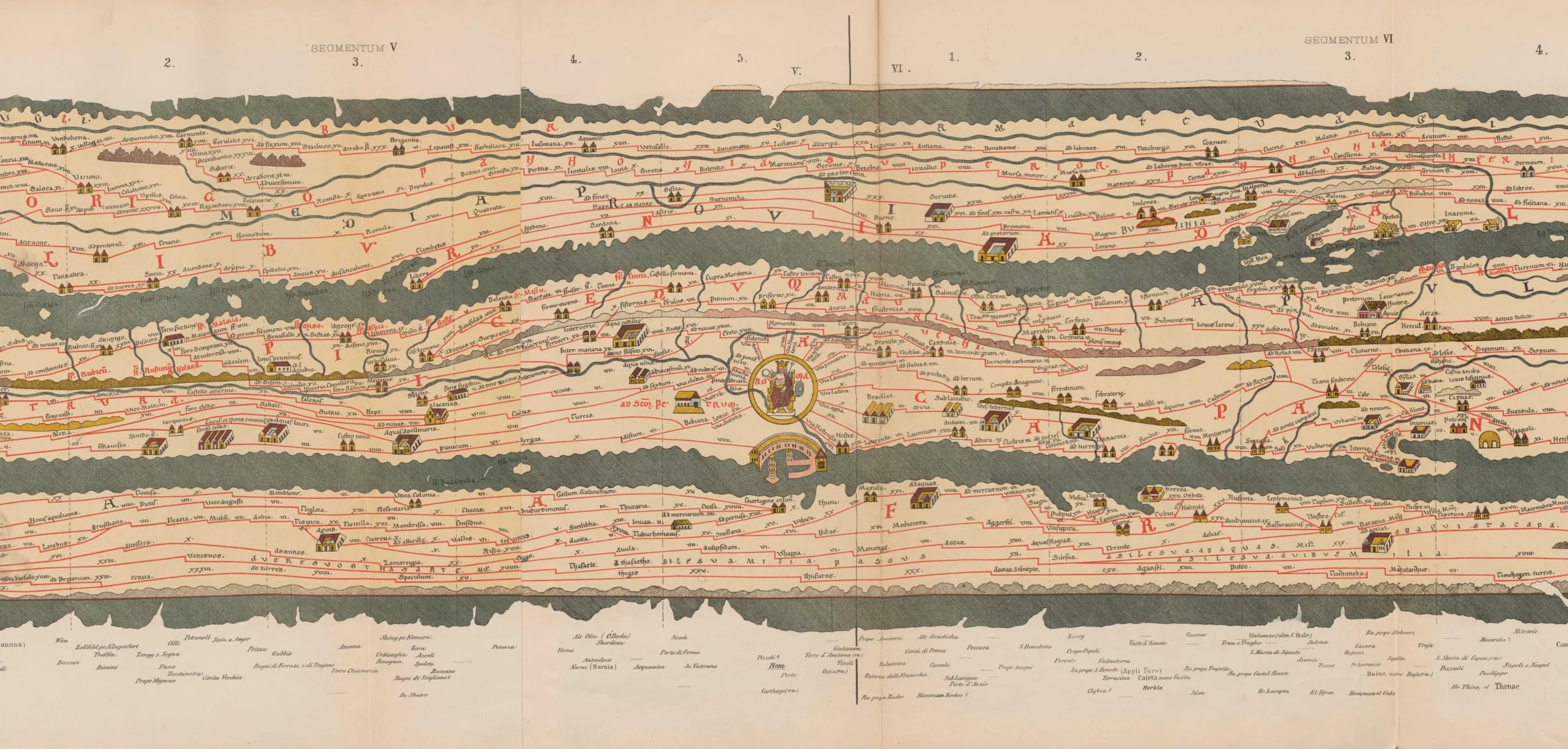
At a casu­al glance, some trav­el­ers may take the map above for a depic­tion of France’s envi­able inter­ci­ty high-speed rail net­work Train à Grande Vitesse, bet­ter known as TGV. In real­i­ty, its con­tent pre­dates that sys­tem’s inau­gu­ra­tion in the ear­ly 1980s — and by near­ly two mil­len­nia at that. This is in fact a map of Gaul, a region of Europe that, most broad­ly defined, includ­ed mod­ern-day France, Lux­em­bourg, and Bel­gium, as well as parts of Switzer­land, Italy, the Nether­lands, and Ger­many. Ruled by Rome for five cen­turies until the fall of the Roman Empire itself, Gaul was run through with a num­ber of Roman roads, a sub­ject of fas­ci­na­tion for many archae­o­log­i­cal­ly inclined his­to­ri­ans.

They’ve also become a sub­ject of fas­ci­na­tion for a young data sci­en­tist and graph­ic design­er by the name of Sasha Tru­bet­skoy. His work, much fea­tured here on Open Cul­ture, includes maps of the Roman Roads of Britain, Italy, Spain and Por­tu­gal, as well as, at a larg­er scale, those of the entire empire.

“This was an inter­est­ing map to make, but I can’t say it was fun all the time,” writes Tru­bet­skoy. “Gen­er­al­ly I enjoyed the process, but it was far more chal­leng­ing than I had antic­i­pat­ed.” You can hear him describe some of the chal­lenges involved, and even show how solv­ing them played out in his design process, in his three-hour explana­to­ry live stream now archived on Youtube.

You can down­load Tru­bet­skoy’s Roman Roads of Gaul map from his site, and even buy a high-res­o­lu­tion file suit­able for print­ing as a poster (USD $9). “As far as I can tell, it’s done,” writes Tru­bet­skoy of the work, wise­ly — or from frus­trat­ing per­son­al expe­ri­ence — acknowl­edg­ing that, despite or because of the cen­turies of dis­tance between us and the rel­e­vant his­tor­i­cal and geo­graph­i­cal facts, those facts could still change. Just as ancient his­to­ry can­not both make its way to us and main­tain absolute­ly per­fect fideli­ty to the past, so the kind of prac­ti­cal visu­al design embod­ied in a sub­way map neces­si­tates a great deal of sim­pli­fi­ca­tion and approx­i­ma­tion to be use­ful. And speak­ing of the graph­ic arts, just imag­ine how use­ful this par­tic­u­lar map would’ve been to Aster­ix.

Relat­ed Con­tent:

Ancient Rome’s Sys­tem of Roads Visu­al­ized in the Style of Mod­ern Sub­way Maps

The Roman Roads of Britain Visu­al­ized as a Sub­way Map

All the Roman Roads of Italy, Visu­al­ized as a Mod­ern Sub­way Map

The Roman Roads of Spain & Por­tu­gal Visu­al­ized as a Sub­way Map: Ancient His­to­ry Meets Mod­ern Graph­ic Design

Based in Seoul, Col­in Mar­shall writes and broad­casts on cities, lan­guage, and cul­ture. His projects include the Sub­stack newslet­ter Books on Cities, the book The State­less City: a Walk through 21st-Cen­tu­ry Los Ange­les and the video series The City in Cin­e­ma. Fol­low him on Twit­ter at @colinmarshall or on Face­book.

The Oldest Known Globe to Depict the New World Was Engraved on an Ostrich Egg, Maybe by Leonardo da Vinci (1504)

Image by Davidguam via Wiki­me­dia Com­mons

Every time you think you’ve got a han­dle on Leonar­do da Vinci’s genius (which is to say, you think you’ve heard about the most impor­tant things he paint­ed, wrote, and invent­ed), yet more evi­dence comes to light of the many ways he meets the stan­dard for the adjec­tive “genius”.… Recent­ly, Leonar­do re-appeared not only as an inven­tor of futur­is­tic mil­i­tary tech­nol­o­gy or dis­cov­er­er of com­plex human anato­my, but also as the first Euro­pean to depict the “New World” on a globe–proving he knew about Colum­bus’ voy­ages when the globe was made in 1504.

The dis­cov­ery “marks the first time ever that the names of coun­tries such as Brazil, Ger­ma­nia, Ara­bia and Judea have appeared on a globe,” notes Cam­bridge Schol­ars Pub­lish­ing, who released a book by the globe’s dis­cov­er­er and pri­ma­ry researcher, Ste­faan Missinne. The arti­fact attrib­uted to Leonar­do is engraved, “with immac­u­late detail,” writes Meeri Kim at The Wash­ing­ton Post, “on two con­joined halves of ostrich eggs.” And it fea­tures a sin­gle sen­tence, in Latin, above South­east Asia: Hic Sunt Dra­cones–“Here be drag­ons.”

We’ll notice oth­er unique fea­tures of the engraved egg Missinne calls, sim­ply, “the Da Vin­ci Globe,” such as the fact that in place of Cen­tral and North Amer­i­ca are the islands of Colum­bus’ “dis­cov­ery,” sur­round­ed by a vast ocean in which Pacif­ic and Atlantic join. Why ostrich eggs? Humans have used them for dec­o­ra­tive pur­pos­es for mil­len­nia. Also, “in that time peri­od,” says Thomas Sander, edi­tor of the Wash­ing­ton Map Society’s jour­nal, Por­tolan, “the ostrich was quite the ani­mal, and it was a big thing for the noble peo­ple to have ostrich­es in their back gar­dens.”

Missinne, a real estate devel­op­er, col­lec­tor, and globe expert orig­i­nal­ly from Bel­gium, dis­cov­ered the globe in 2012 at the Lon­don Map Fair. It was pur­chased “from a deal­er who said it had been part of an impor­tant Euro­pean col­lec­tion for decades,” and its buy­er and own­er remain anony­mous. After the globe appeared, Missinne “con­sult­ed more than 100 schol­ars and experts in his year-long analy­sis,” putting “about five years of research into one year,” says Sander, call­ing the research “an incred­i­ble detec­tive sto­ry.”

Missinne’s inves­ti­ga­tion seems to sub­stan­ti­ate his claims that the globe was made by Leonar­do or his work­shop. The evi­dence, some of which you can find on the Cam­bridge Schol­ars Pub­lish­ing site, includes a 1503 prepara­to­ry map in da Vinci’s papers; the pres­ence of arsenic, which only Leonar­do was known to use at the time in cop­per to keep it from los­ing its lus­tre; “The use of chiaroscuro, pen­ti­en­ti, tri­an­gu­lar shapes, the math­e­mat­ics of the scale reflect­ing Leonardo’s writ­ten dimen­sion of plan­et earth”; and a 1504 let­ter from Leonar­do him­self stat­ing, “my world globe I want returned back from my friend Gio­van­ni Ben­ci.”

Missinne and Geert Ver­ho­even, of the Lud­wig Boltz­mann Insti­tute for Archae­o­log­i­cal Prospec­tion & Vir­tu­al Arche­ol­o­gy, have pub­lished a paper on the “unfold­ing” of Leonardo’s globe into the two-dimen­sion­al image above (see an inter­ac­tive ver­sion here). “This minia­ture egg globe is not only the old­est extant engraved globe,” the authors write, “but it is also the old­est post-Columbian globe of the world and the first ever to depict New­found­land and many oth­er ter­ri­to­ries.” Pre­vi­ous­ly, the Hunt-Lenox Globe, a small cop­per globe, was thought to be the old­est known such arti­fact. Dat­ed to around 1510, this globe, Missinne dis­cov­ered, is actu­al­ly a copy made from a cast of the old­er, orig­i­nal ostrich-egg globe.

Missinne’s find­ings have their detrac­tors, includ­ing John W. Hessler of the Library of Con­gress, who claims Missinne him­self is the anony­mous own­er of the globe, which rais­es issues of con­flict of inter­est. “Where this thing comes from needs to be clar­i­fied,” says Renais­sance car­tog­ra­phy expert Chet Van Duzer of the John Carter Brown Library in Prov­i­dence, R.I., though he adds, “It is an excit­ing dis­cov­ery, no ques­tion.” Missinne’s claims for the egg’s prove­nance are more mod­est than his mar­ket­ing. He “spec­u­lates,” writes Kim, “ the egg could have loose con­nec­tions to the work­shop of Leonar­do da Vin­ci.” Hessler’s view is less equiv­o­cal: “The Leonar­do con­nec­tion is pure non­sense.”

A layper­son like Missinne, what­ev­er his per­son­al invest­ment, might be inclined to over­in­ter­pret evi­dence or make ten­u­ous con­nec­tions a trained schol­ar would avoid. The many schol­ars he cites in sup­port of his claims for the globe are also vul­ner­a­ble to these charges, how­ev­er, though to a less­er degree. What do we make of French Mona Lisa expert Pas­cal Cotte’s tes­ti­mo­ni­al, “I here­by con­firm the evi­dence of the left-hand­ed­ness of the engrav­ings on the Ostrich Egg Globe. As Leonar­do was the only left-hand­ed artist in his work­shop, I here­by endorse the hypoth­e­sis of Leonar­do da Vinci’s author­ship”? As in all such aca­d­e­m­ic debates, “Here be drag­ons.” Weigh the case in full in Missinne’s 2018 book, The Da Vin­ci Globe.

Relat­ed Con­tent:

Leonar­do da Vinci’s Ele­gant Stud­ies of the Human Heart Were 500 Years Ahead of Their Time

Leonar­do da Vin­ci Draws Designs of Future War Machines: Tanks, Machine Guns & More

Leonar­do da Vinci’s Ear­li­est Note­books Now Dig­i­tized and Made Free Online: Explore His Inge­nious Draw­ings, Dia­grams, Mir­ror Writ­ing & More

Josh Jones is a writer and musi­cian based in Durham, NC. Fol­low him at @jdmagness

« Go BackMore in this category... »
Quantcast