Read Margaret Cavendish’s The Blazing World: The First Sci-Fi Novel Written By a Woman (1666)
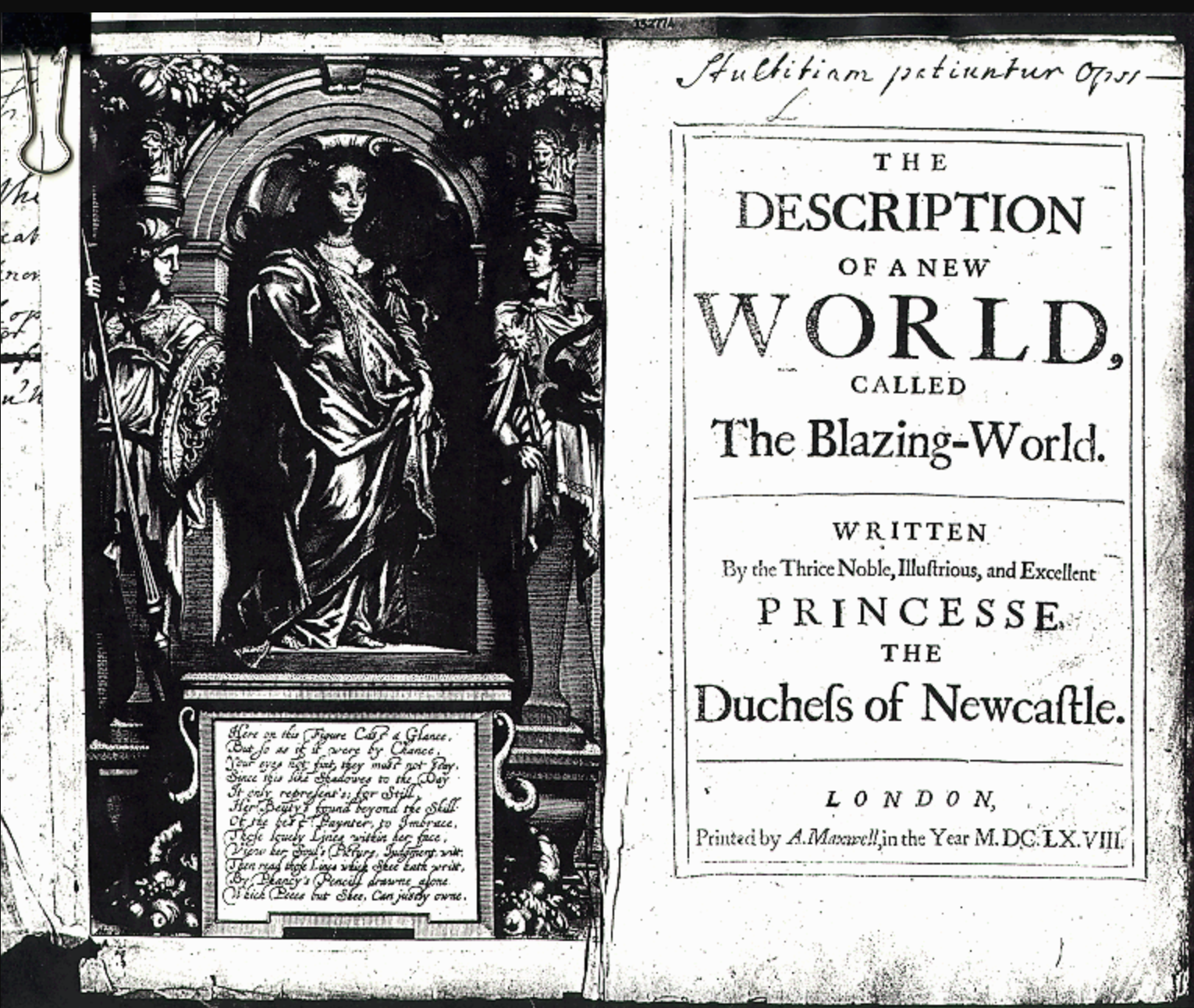
For a variety of reasons, science fiction has long been regarded as a mostly male-oriented realm of literature. This is evidenced, in part, by the eagerness to celebrate particular works of sci-fi written by women, like Ursula K. LeGuin’s Earthsea saga, Octavia Butler’s Parable novels, Joanna Russ’ The Female Man, or Margaret Attwood’s The Handmaid’s Tale (uneasily though it fits within the boundaries of the genre). But those who prefer the early stuff can go all the way back to the mid-seventeenth century, where they’ll find Margaret Cavendish’s The Blazing World, readable and downloadable in all its strange glory free online.
“The Blazing World was first published in 1666 and is often considered a forerunner to both science fiction and the utopian novel genres,” writes book blogger Eric Karl Anderson. “It’s a totally bonkers story of a woman who is stolen away to the North Pole only to find herself in a strange bejeweled kingdom of which she becomes the supreme Empress. Here she consults with many different animal/insect people about philosophical, religious and scientific ideas. The second half of the book pulls off a meta-fictional trick where Cavendish (as the Duchess of Newcastle) enters the story herself to become the Empress’ scribe and close companion.”
In the video just below, Youtuber Great Books Prof frames this as not just a work of proto-science fiction, but also a pioneering use of the “multiverse” concept that has undergirded any number of twenty-first-century blockbusters.
The Blazing World continues to inspire: actor-director Carlson Young put out a loose cinematic adaptation just a few years ago. Cavendish herself described the book as a “hermaphroditic text,” possibly in reference to its engagement with topics then addressed almost exclusively by men. But it also occupied two categories at once in that she originally published it as a fictional section of her book Observations upon Experimental Philosophy, one of six philosophical volumes she wrote. In fact, her work qualified her as not just philosopher and novelist, but also scientist, poet, playwright, and even biographer. That last she accomplished by writing The Life of the Thrice Noble, High and Puissant Prince William Cavendish, who happened to be her husband. Let her life be a lesson to those young girls who simultaneously dream of becoming a princess and a writer whose books are read for centuries: sometimes, you can have it all.
Related content:
100 Great Sci-Fi Stories by Women Writers (Read 20 for Free Online)
The First Work of Science Fiction: Read Lucian’s 2nd-Century Space Travelogue A True Story
When Astronomer Johannes Kepler Wrote the First Work of Science Fiction, The Dream (1609)
The Encyclopedia of Science Fiction: 17,500 Entries on All Things Sci-Fi Are Now Free Online
Based in Seoul, Colin Marshall writes and broadcasts on cities, language, and culture. His projects include the Substack newsletter Books on Cities, the book The Stateless City: a Walk through 21st-Century Los Angeles and the video series The City in Cinema. Follow him on Twitter at @colinmarshall or on Facebook.
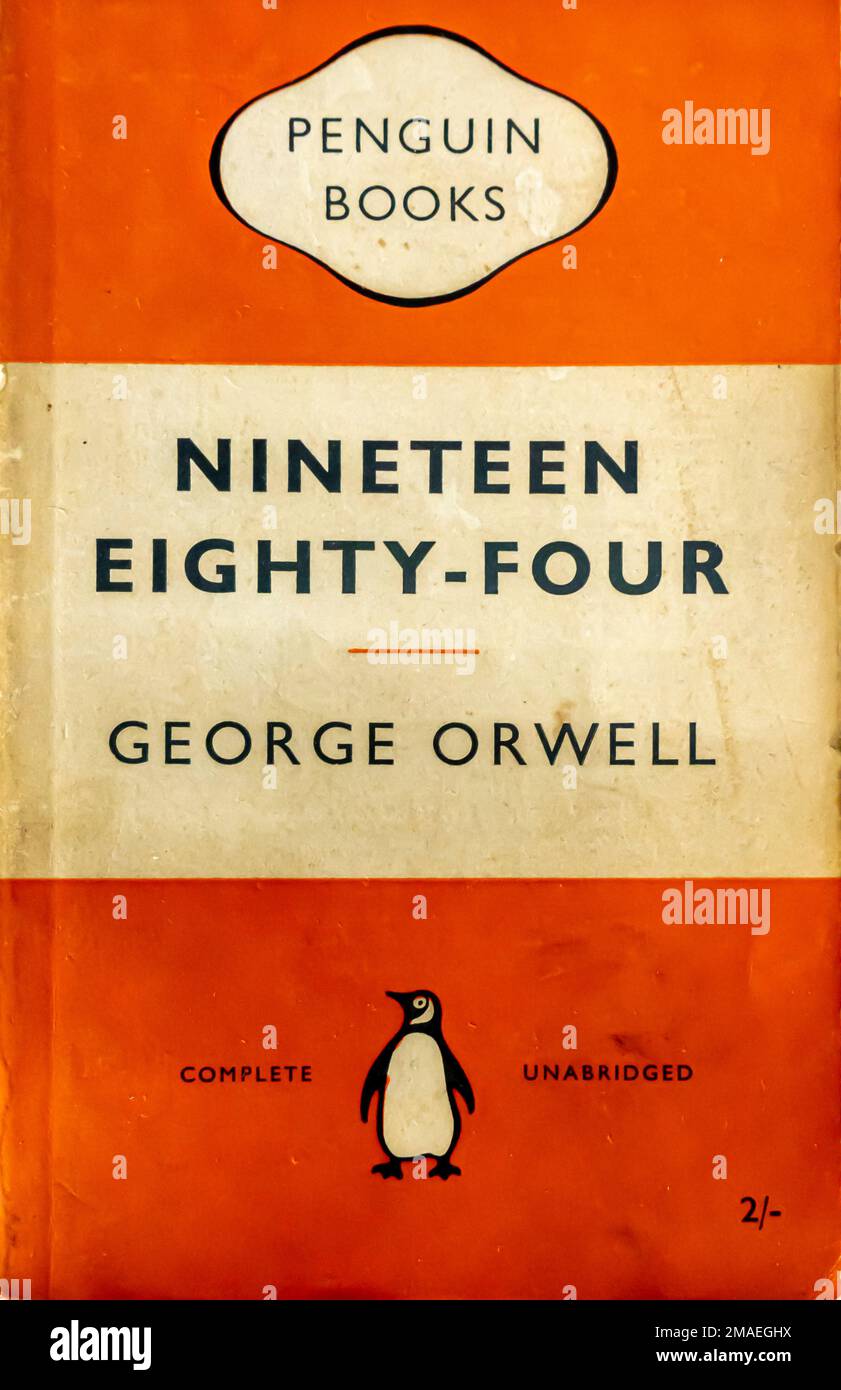
Read More...Free Download: A Knitting Pattern for a Sweater Depicting an Iconic Cover of George Orwell’s 1984
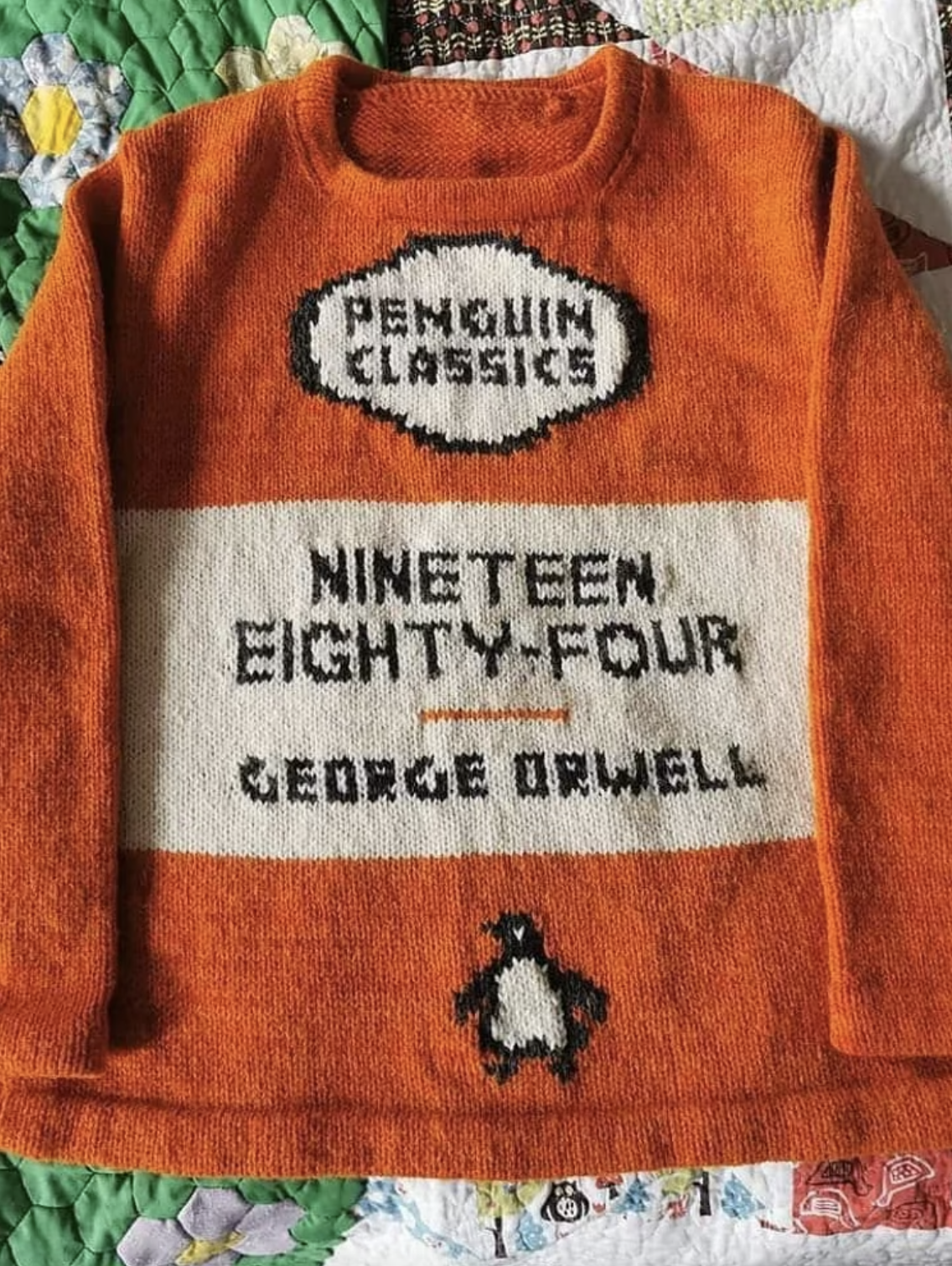
It’s winter, and we still have a ways to go. So maybe we could interest you in a free knitting pattern that depicts a vintage Penguin Classics cover of George Orwell’s <i>1984</i>. A college student gave it a go and posted the results on Reddit. It’s pretty swellegant. You can download the pattern here.
Please note, “The pattern includes extra alphabet charts so that you can customise the title and author to your favourite book.”
Related Content
Behold an Anatomically Correct Replica of the Human Brain, Knitted by a Psychiatrist
Read More...
Before ChatGPT, There Was ELIZA: Watch the 1960s Chatbot in Action
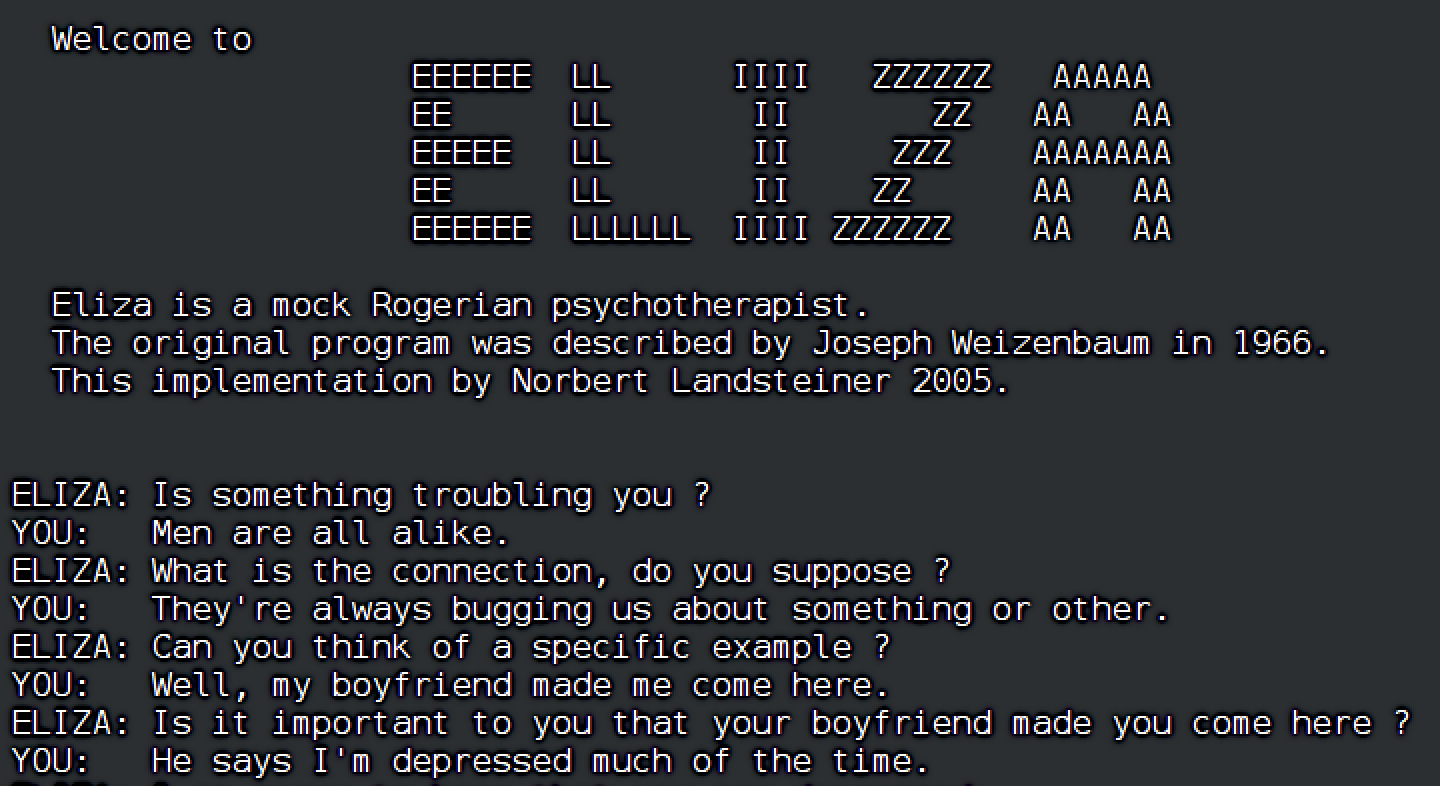
In 1966, the sociologist and critic Philip Rieff published The Triumph of the Therapeutic, which diagnosed how thoroughly the culture of psychotherapy had come to influence ways of life and thought in the modern West. That same year, in the journal Communications of the Association for Computing Machinery, the computer scientist Joseph Weizenbaum published “ELIZA — A Computer Program For the Study of Natural Language Communication Between Man and Machine.” Could it be a coincidence that the program Weizenbaum explained in that paper — the earliest “chatbot,” as we would now call it — is best known for responding to its user’s input in the nonjudgmental manner of a therapist?
ELIZA was still drawing interest in the nineteen-eighties, as evidenced by the television clip above. “The computer’s replies seem very understanding,” says its narrator, “but this program is merely triggered by certain phrases to come out with stock responses.” Yet even though its users knew full well that “ELIZA didn’t understand a single word that was being typed into it,” that didn’t stop some of their interactions with it from becoming emotionally charged. Weizenbaum’s program thus passes a kind of “Turing test,” which was first proposed by pioneering computer scientist Alan Turing to determine whether a computer can generate output indistinguishable from communication with a human being.
In fact, 60 years after Weizenbaum first began developing it, ELIZA — which you can try online here — seems to be holding its own in that arena. “In a preprint research paper titled ‘Does GPT‑4 Pass the Turing Test?,’ two researchers from UC San Diego pitted OpenAI’s GPT‑4 AI language model against human participants, GPT‑3.5, and ELIZA to see which could trick participants into thinking it was human with the greatest success,” reports Ars Technica’s Benj Edwards. This study found that “human participants correctly identified other humans in only 63 percent of the interactions,” and that ELIZA, with its tricks of reflecting users’ input back at them, “surpassed the AI model that powers the free version of ChatGPT.”
This isn’t to imply that ChatGPT’s users might as well go back to Weizenbaum’s simple novelty program. Still, we’d surely do well to revisit his subsequent thinking on the subject of artificial intelligence. Later in his career, writes Ben Tarnoff in the Guardian, Weizenbaum published “articles and books that condemned the worldview of his colleagues and warned of the dangers posed by their work. Artificial intelligence, he came to believe, was an ‘index of the insanity of our world.’ ” Even in 1967, he was arguing that “no computer could ever fully understand a human being. Then he went one step further: no human being could ever fully understand another human being” — a proposition arguably supported by nearly a century and a half of psychotherapy.
Related content:
A New Course Teaches You How to Tap the Powers of ChatGPT and Put It to Work for You
What Happens When Someone Crochets Stuffed Animals Using Instructions from ChatGPT
Noam Chomsky Explains Where Artificial Intelligence Went Wrong
Based in Seoul, Colin Marshall writes and broadcasts on cities, language, and culture. His projects include the Substack newsletter Books on Cities, the book The Stateless City: a Walk through 21st-Century Los Angeles and the video series The City in Cinema. Follow him on Twitter at @colinmarshall or on Facebook.
Read More...How Walking Fosters Creativity: Stanford Researchers Confirm What Philosophers & Writers Have Always Known

Image via Diego Sevilla Ruiz
A certain Zen proverb goes something like this: “A five year old can understand it, but an 80 year old cannot do it.” The subject of this riddle-like saying has been described as “mindfulness”—or being absorbed in the moment, free from routine mental habits. In many Eastern meditative traditions, one can achieve such a state by walking just as well as by sitting still—and many a poet and teacher has preferred the ambulatory method.
This is equally so in the West, where we have an entire school of ancient philosophy—the “peripatetic”—that derives from Aristotle and his contemporaries’ penchant for doing their best work while in leisurely motion. Friedrich Nietzsche, an almost fanatical walker, once wrote, “all truly great thoughts are conceived by walking.” Nietzsche’s mountain walks were athletic, but walking—Frédéric Gros maintains in his A Philosophy of Walking—is not a sport; it is “the best way to go more slowly than any other method that has ever been found.”
Gros discusses the centrality of walking in the lives of Nietzsche, Rimbaud, Kant, Rousseau, and Thoreau. Likewise, Rebecca Solnit has profiled the essential walks of literary figures such as William Wordsworth, Jane Austen, and Gary Snyder in her book Wanderlust, which argues for the necessity of walking in our own age, when doing so is almost entirely unnecessary most of the time. As great walkers of the past and present have made abundantly clear—anecdotally at least—we see a significant link between walking and creative thinking.
More generally, writes Ferris Jabr in The New Yorker, “the way we move our bodies further changes the nature of our thoughts, and vice versa.” Applying modern research methods to ancient wisdom has allowed psychologists to quantify the ways in which this happens, and to begin to explain why. Jabr summarizes the experiments of two Stanford walking researchers, Marily Oppezzo and her mentor Daniel Schwartz, who found that almost two hundred students tested showed markedly heightened creative abilities while walking. Walking, Jabr writes in poetic terms, works by “setting the mind adrift on a frothing sea of thought.”
Oppezzo and Schwartz speculate, “future studies would likely determine a complex pathway that extends from the physical act of walking to physiological changes to the cognitive control of imagination.” They recognize that this discovery must also account for such variables as when one walks, and—as so many notable walkers have stressed—where. Researchers at the University of Michigan have tackled the where question in a paper titled “The Cognitive Benefits of Interacting with Nature.” Their study, writes Jabr, showed that “students who ambled through an arboretum improved their performance on a memory test more than students who walked along city streets.”
One wonders what James Joyce—whose Ulysses is built almost entirely on a scaffolding of walks around Dublin—would make of this. Or Walter Benjamin, whose concept of the flâneur, an archetypal urban wanderer, derives directly from the insights of that most imaginative decadent poet, Charles Baudelaire. Classical walkers, Romantic walkers, Modernist walkers—all recognized the creative importance of this simple movement in time and space, one we work so hard to master in our first years, and sometimes lose in later life if we acquire it. Going for a walk, contemporary research confirms—a mundane activity far too easily taken for granted—may be one of the most salutary means of achieving states of enlightenment, literary, philosophical, or otherwise, whether we roam through ancient forests, over the Alps, or to the corner store.
Note: An earlier version of this post appeared on our site in 2015.
via The New Yorker/Stanford News
Related Content:
Why You Do Your Best Thinking In The Shower: Creativity & the “Incubation Period”
Josh Jones is a writer and musician based in Durham, NC. Follow him at @jdmagness
Read More...My Neighbor Totoro Inspires a Line of Traditional Japanese Handicrafts
We suppose it’s conceivable that a gift of a wooden Totoro figurine, hand-carved from a single block using 50 different kinds of chisels, might spark a reverence for traditional Japanese craft and nature in the next generation…
Or, they may be left wishing you’d given them a vastly more huggable machine-made plushie version, especially if you can’t help sucking in your breath every time they start fumbling with that exquisitely crafted ¥330,000 yen heirloom-to-be. (That’s $2341.81 in US dollars.)
Of course, director Hayao Miyazaki’s 1988 animated feature My Neighbor Totoro has legions of fans of all ages, and some will consider themselves quite lucky if they win the lottery that grants them the ability to purchase such a treasure.



They’re not only carved by skilled artisans in Inami, the city of woodcarving, but the wood is also that of a camphor tree — the natural habitat of the mysterious, magical Totoro! (It’s also considered holy by practitioners of the Shinto religion.)
Still, if it’s unclear that the recipient will truly appreciate such thoughtfulness, you’re probably better off going with another offering from Studio Ghibli’s Totoro-themed collaboration with Nakagawa Masashichi Shoten, a purveyor of traditional Japanese crafts.

Perhaps a¥4180 bud vase fired in Ureshino City’s Edo-period Yozan Kiln, featuring Totoro or a cluster of susuwatari, the pom pom-like soot sprites infesting the Kusakabe family’s new home, who also play a part in Spirited Away.

Maybe a tiny Totoro bell amulet, molded by craftsmen in Odawara, celebrated for the quality of their metalwork since the early 1500s, when they outfitted samurai with weapons, armor and helmets?
What about a Totoro-emblazoned treasure box from Yatsuo, made of stencil-dyed handmade washi paper? There’s nothing inherently wrong with stashing your acorn collection in an old Altoid’s tin, but this vessel comes with historic pedigree:
As one of the leading towns along the trunk road, Yatuso flourished through … production of wrapping paper for the nation-wide famous “Toyama Medicine”. At its golden age, from the Edo Era to the beginning of the Meiji Era in the 19th century, many people were engaged in papermaking by handwork in their homes. Yatsuo Japanese paper was expected to be unbreakable because it was used as package for expensive medicine and at the same time it should look brilliant. It had to be thick and stout so that it could be impervious to water and the label printed on the surface would not be smeared.
The list of Totoro-inspired traditional crafts is impressive. A representative sampling:
Chusen-dyed tenugui handkerchiefs and t‑shirts…
Dishtowels made from five layers of Kayaori fabric that “was introduced to Japan during the Nara period and is said to allow wind to pass through but keep mosquitoes out”…
Tiny Arita ware acorn plates that reward members of the clean plate club with a view of the Catbus…
View the collection and learn more about February’s lottery for a chance to purchase a Camphor wood Totoro here.
Hands-on fans may prefer to cultivate an appreciation for traditional Japanese handicrafts by attempting a DIY Totoro.
Via Spoon & Tamago/Colossal
Related Content
– Ayun Halliday is the Chief Primatologist of the East Village Inky zine and author, most recently, of Creative, Not Famous: The Small Potato Manifesto and Creative, Not Famous Activity Book. Follow her @AyunHalliday.
Read More...Watch the Moment When a 13-Year-Old Becomes the First Person to Ever “Beat” Tetris
On December 21, Willis Gibson, a 13-year-old from Stillwater, Oklahoma, became the first person to push Tetris to its absolute limit. Around the 38:20 mark of the video above, Gibson advances to Level 157 and soon encounters Tetris’ “kill screen.” Realizing that he’s broken Tetris for the first time (Alexey Pajitnov designed the game in 1985), the youngster nearly hyperventilates. Eventually catching his breath, he declares, “I can’t feel my fingers.”
On YouTube, Gibson adds: “When I started playing this game I never expected to ever crash the game, or beat it.” According to The Oklahoman, Gibson “dedicated his win to his dad, who died last month.”
If you would like to support the mission of Open Culture, consider making a donation to our site. It’s hard to rely 100% on ads, and your contributions will help us continue providing the best free cultural and educational materials to learners everywhere. You can contribute through PayPal, Patreon, and Venmo (@openculture). Thanks!
Read More...The Great Gatsby Explained: How F. Scott Fitzgerald Indicted & Endorsed the American Dream (1925)
When The Great Gatsby was first published, it flopped; nearly a century later, its place at the pinnacle of American literature is almost universally agreed upon. Of the objectors, many no doubt remember too vividly having to answer essay questions about the meaning of the green light on the Buchanans’ dock. Perhaps “the most debated symbol in the history of American literature,” it tends to be interpreted simultaneously as “Gatsby’s love for Daisy, money, and the American dream,” as James Payne puts it in his new Great Books Explained video above. Examined more closely, “what it may suggest is that the American dream’s most un-discussed quality is its inaccessibility.”
“Fitzgerald felt that the American dream has lost its way,” Payne says. “Baseball, America’s pastime and the purest of games, had been corrupted by the Black Sox game fixing of 1919, a real-life scandal mentioned in The Great Gatsby. Fitzgerald used it as an allegory of America: if baseball is corrupt, then we are really in trouble.”
Hence Gatsby’s ultimate discovery that Daisy, the woman for whom he had wholly reinvented himself (in that quintessentially American way), falls so far short of what he’d imagined; hence how Gatsby’s own “classic rags-to-riches story” is “complicated by the fact that he made his money in bootlegging.” In the end, “the American dream only belongs to establishment figures,” those “who were born into it. Everyone’s class is fixed, just like the World Series.”
Though not well-received in its day, The Great Gatsby offered a premonition of disaster ahead that subsequently came true in both the American economy and Fitzgerald’s personal life. But even in the book, “despite his fear that America is lost, he still offers hope.” Hence the vivid quasi-optimism of the closing lines about how “Gatsby believed in the green light, the orgastic future that year by year recedes before us,” which frames Americans as “boats against the current, borne back ceaselessly into the past” — a passage whose interpretation teachers are always liable to demand. If you happen to be a student yourself, saving Payne’s video in hopes of a quick and easy A on your English lit exam, know that there are few more time-honored techniques in pursuit of the American dream than looking for shortcuts.
Related content:
Free: The Great Gatsby & Other Major Works by F. Scott Fitzgerald
The Great Gatsby Is Now in the Public Domain and There’s a New Graphic Novel
83 Years of Great Gatsby Book Cover Designs: A Photo Gallery
Haruki Murakami Translates The Great Gatsby, the Novel That Influenced Him Most
Based in Seoul, Colin Marshall writes and broadcasts on cities, language, and culture. His projects include the Substack newsletter Books on Cities, the book The Stateless City: a Walk through 21st-Century Los Angeles and the video series The City in Cinema. Follow him on Twitter at @colinmarshall or on Facebook.
Read More...How Toilets Worked in Ancient Rome and Medieval England
However detailed they may be in other respects, many accounts of daily life centuries and centuries ago pass over the use of the toilet in silence. Even if they didn’t, they wouldn’t involve the kind of toilets we would recognize today, but rather chamber pots, outhouses, and other kinds of specialized rooms with chutes emptying straight out into rivers and onto back gardens. And that was just the residences. What would public facilities have been like? We have one answer in the Told in Stone video above, which describes “public latrines in ancient Rome,” the facilities constructed in almost every Roman town “where citizens could relieve themselves en masse.”
These usually had at least a dozen seats, Told in Stone creator Garrett Ryan explains, though some were grander in scale than others: the Roman agora of Athens, for example, boasted a 68-seater. A facility in Timgad, the “African Pompeii” previously featured here on Open Culture, had “fancy armrests in the shape of leaping dolphins.”
Judged by their ruins, these public “restrooms” may seem unexpectedly impressive in their engineering and elegant in their design. But we may feel somewhat less inclined toward time-travel fantasies when Ryan gets into such details as “the sponge on a stick that served as toilet paper” that remains “one of the more notorious aspects of daily life in ancient Rome.”
These weren’t technically latrines, as Lina Zeldovich notes at Smithsonian.com. “The word ‘latrine,’ or latrina in Latin, was used to describe a private toilet in someone’s home, usually constructed over a cesspit. Public toilets were called foricae,” and their construction tended to rely on deep-pocketed organizations or individuals. “Upper-class Romans, who sometimes paid for the foricae to be erected, generally wouldn’t set foot in these places. They constructed them for the poor and the enslaved — but not because they took pity on the lower classes. They built these public toilets so they wouldn’t have to walk knee-deep in excrement on the streets.”
The problem of large-scale human waste disposal is as old as urban civilization, and Rome hardly solved it once and for all. The Absolute History short above shows how the castles of medieval England handled it, using lavatories with holes over the moat (and piles of “moss, grass, or hay” in lieu of yet-to-be-invented toilet paper). At Medievalists.net, Lucie Laumonier writes that the urban equivalent of Roman foricae were “often built over bridges and on quays to facilitate the evacuation of human waste that went directly into running water.” Innovative as this was, it must have posed difficulties for boaters passing below, to say nothing of the users unfortunate enough to sit on a wooden seat just rotten enough to give out — the prospect of which, for all the deficiencies of Modern Western civilization’s public restrooms, at least no longer worries us quite so much today.

Related content:
Everything You Wanted to Know About Going to the Bathroom in Space But Were Afraid to Ask
Based in Seoul, Colin Marshall writes and broadcasts on cities, language, and culture. His projects include the Substack newsletter Books on Cities, the book The Stateless City: a Walk through 21st-Century Los Angeles and the video series The City in Cinema. Follow him on Twitter at @colinmarshall or on Facebook.
Read More...John Waters’ Hand-Made, Oddball Christmas Cards: 1964-Present

Ten years ago, we featured John Waters’ handmade Christmas cards, which he’s been making since he was a high-school student in 1964, long before William S. Burroughs deemed him the “Pope of Trash” (also the title of a retrospective exhibition at the Academy of Motion Pictures in Los Angeles this past fall). It was Waters’ films that qualified him for that honor, of course, but his regular season’s greetings are no less a medium for his career-long artistic reclamation of bad taste. Christmas cards also have the advantage of being even more “underground” than his early features, directed as they are to only a select group of recipients, large though Waters’ mailing list has grown in recent decades: he mentioned to the New York Times that he sends out over 2,000 cards, and that was back in 2013.

“Christmas cards are your first duty and you must send one (with a personal, handwritten message) to every single person you ever met, no matter how briefly,” Waters wrote in a 1980s essay: “Give Me Another Present! Why I Love Christmas”. “Of course, you must make your own cards by hand. ‘I don’t have time,’ you may whine, but since the whole purpose of life is Christmas, you’d better make time, buster.”
As you can see at this gallery and this recent Twitter thread, Waters has made the time: the time to get his mugshot taken by the Baltimore Police Department, to stuff dead cockroaches into tree ornaments, to commission a painting of himself as a pipe-smoking patriarch (with a Divine-looking wife) presiding over an askew nineteen-fifties Christmas morning, and, last year, to produce blow-up dolls in his own likeness.

In the decade since we last looked at them, Waters’ Christmas cards have also depicted him putting an eye out with a candy cane, feasting on Rudolph the Red-Nosed Reindeer, and decked out in Christmas-thug regalia, complete with tattoos promising “chimney invasions” and “season’s beatings.” This Christmas, Waters opted for a more technical complexity, appearing as a distressed toddler in the lap of a department-store Santa (a fairly common fifties tableau, I gather) who, as a separate component attached by some kind of spring, flails wildly when flicked. Fans who haven’t received one of their own can at least console themselves with the prospect of Waters’ next film, which will be his first in twenty years — and bring to the screen Waters’ own novel Liarmouth, which more than a few of them probably found in their stockings last Christmas. See a gallery of his Christmas cards here.

Related Content:
John Waters Makes Handmade Christmas Cards, Says the “Whole Purpose of Life is Christmas”
When Salvador Dalí Created Christmas Cards That Were Too Avant Garde for Hallmark (1960)
Watch Terry Gilliam’s Animated Short, The Christmas Card (1968)
John Waters Designs a Witty Poster for the New York Film Festival
Based in Seoul, Colin Marshall writes and broadcasts on cities, language, and culture. His projects include the Substack newsletter Books on Cities, the book The Stateless City: a Walk through 21st-Century Los Angeles and the video series The City in Cinema. Follow him on Twitter at @colinmarshall or on Facebook.
Read More...Why Abel Gance’s 1927 Napoléon Is “the Most Creative Film Ever Made”
Since it came out this past November, Ridley Scott’s Napoleon has drawn a variety of critical reactions. Whatever else can be said about it, it certainly takes a different tack from past depictions of that particular French Emperor. It was, perhaps, Scott’s good luck not to have to go up against the Napoleon picture that Stanley Kubrick dreamed of making, but even so, there are plenty of other precedents dating from throughout cinema history. The most formidable must surely be Napoléon, from 1927, also known as Napoléon vu par Abel Gance (Abel Gance being one of France’s foremost silent-era auteurs), which depicts the protagonist’s early years over the course of, in at least one of its many versions, five and a half hours.
Granted that, almost a century later, a silent historical epic as long as three average movies may be considered something of a “hard sell.” But if you’re intrigued, consider starting with the half-hour-long introduction to Napoléon above by The Cinema Cartography’s Lewis Bond, previously featured here on Open Culture for his exegesis of everything from the rule-breaking of the French New Wave to the poetry of Andrei Tarkovsky and the copycat-ism of Quentin Tarantino to the aesthetic of anime. We can thus rest assured that when Bond says that Napoléon, “without hyperbole, is the most inventive cinematic endeavor in the history of the medium,” he doesn’t do so lightly.
Like any good video essayist, Bond first provides context, framing Gance as a kind of early nineteenth-century Romantic artist working in the early twentieth, a descendant of Victor Hugo working in film rather than literature. But whatever this information may do to enrich your viewing experience, “many of the great works don’t hide their greatness away,” and Napoléon is one of the works in which that greatness is “visible from the moment you set your eyes to it.” Even its very first sequence, in which a young Napoleon leads his military-school compatriots in a large-scale snowball fight, is executed with the kind of camera moves and image dissolves that would only find their way into standard cinematic grammar decades later.
This technical and formal ingenuity continues throughout the film: “with the sheer breadth of techniques, and just how ostentatious they are, it’s difficult to pack everything Napoléon presents us into a cohesive package.” This makes Gance, who always had “a penchant for displeasing his producers due to his constant desire to disrupt film language,” look like a Nouvelle Vague filmmaker avant la lettre. It also reveals his understanding that cinema, far from the novelty entertainment some had dismissed in his time, “was to be the medium in which our next great Homeric epic will emerge.” With Napoléon, Gance and his collaborators created not just a movie but a “panorama of existence, which would entrance the viewers in an almost religious delirium” — an experience sure to be intensified, for those whose religious leanings tend toward the cinematic, by the restored seven-hour cut scheduled to debut next year.
Related content:
Watch the Newly Released Trailer for Ridley Scott’s Napoleon, Starring Joaquin Phoenix
Napoleon: The Greatest Movie Stanley Kubrick Never Made
Vintage Photos of Veterans of the Napoleonic Wars, Taken Circa 1858
Why Is Napoleon’s Hand Always in His Waistcoat?: The Origins of This Distinctive Pose Explained
Based in Seoul, Colin Marshall writes and broadcasts on cities, language, and culture. His projects include the Substack newsletter Books on Cities, the book The Stateless City: a Walk through 21st-Century Los Angeles and the video series The City in Cinema. Follow him on Twitter at @colinmarshall or on Facebook.
Read More...
Support Us
We're hoping to rely on loyal readers, rather than erratic ads. Please click the Donate button and support Open Culture. You can use Paypal, Venmo, Patreon, even Crypto! We thank you!

About Us

Open Culture scours the web for the best educational media. We find the free courses and audio books you need, the language lessons & educational videos you want, and plenty of enlightenment in between.
Advertise With Us

FREE UPDATES!
GET OUR DAILY EMAIL
Get the best cultural and educational resources on the web curated for you in a daily email. We never spam. Unsubscribe at any time.
FOLLOW ON SOCIAL MEDIA

Open Culture editor Dan Colman scours the web for the best educational media. He finds the free courses and audio books you need, the language lessons & movies you want, and plenty of enlightenment in between.
Advertise With Us