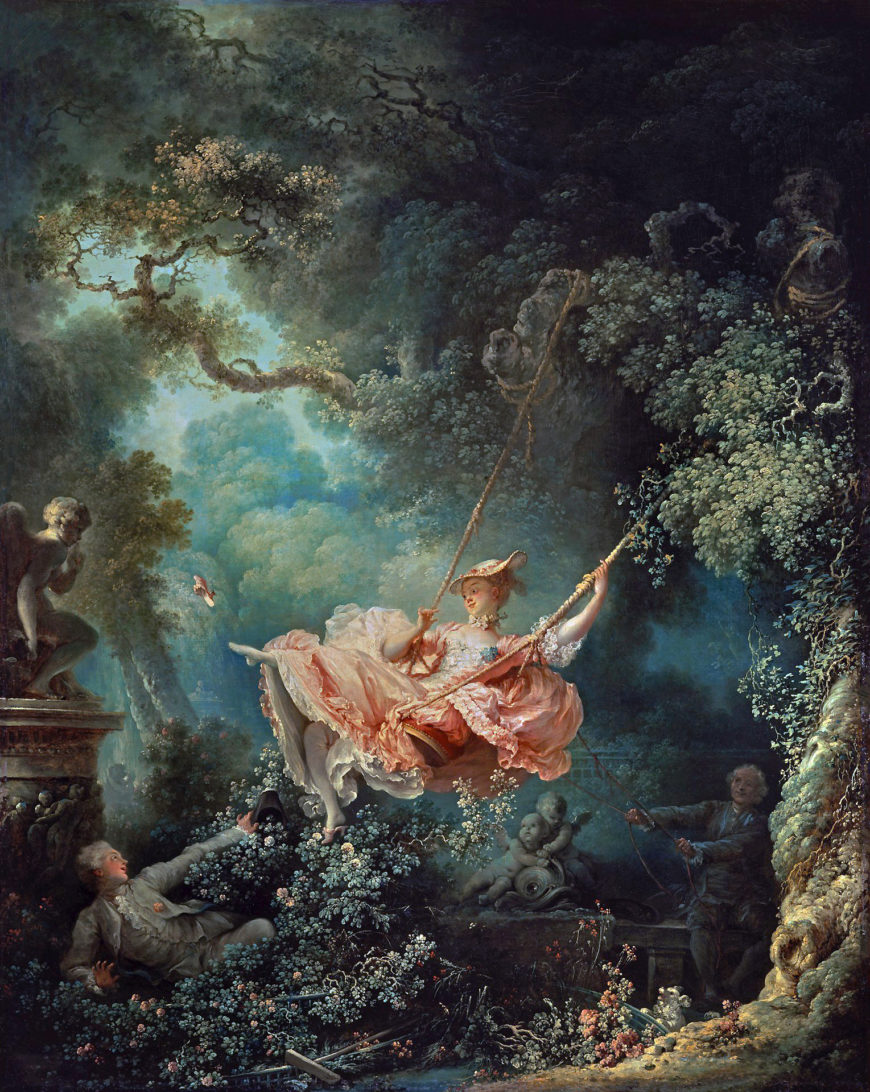
If you were to see Jean-Honoré Fragonard’s L’Escarpolette, or TheSwing, at the Wallace Collection, you might not think particularly hard about it. Though all the subtle light effects that make the young woman in pink pop out of the lush garden that surrounds her are impressive, granted — and they’ve become even more so since the painting’s recent restoration — there doesn’t seem to be much else of interest at first glance. But take a second glance, and you may well get a sense of what, back in the seventeen-sixties, made this commission “so raunchy, many artists wouldn’t have done it for all the money in the world.”
So says the narrator of the Art Deco video above, which promises an explanation of why The Swing “isn’t as innocent as it seems.” Take, for example, the young man reclining in the canvas lower-left corner, whose ecstatic expression can perhaps be explained by what’s entered his line of sight. But “forget about the fact that he can see up her skirt: her ankle is showing, a very erotic gesture at the time.”
All of this intensifies when we know the story behind the painting, and specifically that “the man who commissioned the painting is the man in the bush, and he’s also the woman’s lover, not her husband.” Is her husband the older fellow crouched in the opposite corner, clutching the swing’s reins? Perhaps, but like any piece of art worth regarding, this one leaves room for interpretation.
Still, if you understand something of the mores of its time and place, there’s no mistaking its titillating intent. None of Fragonard’s contemporaries could have imagined that this painting would one day hang in a public gallery for all the world to see, commissioned as it was for display only in a private home. Many paintings were in the time of Rococo, “a style of art that comes out of the Baroque,” as art historian Steven Zucker says in the Smarthistory video just above, which despite having “jettisoned the seriousness, the morality” of its predecessor, nevertheless retained “a sense of energy, a sense of movement.” The Swing remains “a perfect expression of the frivolity, the luxury, and the indulgence of the Rococo” — and a reminder, as the Art Deco video puts it, that “whatever happens in the mystical garden, stays in the mystical fairy garden.”
Based in Seoul, Colin Marshall writes and broadcasts on cities, language, and culture. His projects include the Substack newsletterBooks on Cities, the book The Stateless City: a Walk through 21st-Century Los Angeles and the video series The City in Cinema. Follow him on Twitter at @colinmarshall or on Facebook.
Give it a chance, you won’t be disappointed. While the first 30 seconds of the video above may resemble an amateur iPhone prank, it soon becomes something unexpectedly enchanting—a visualization of the physics of music in real-time. The Youtuber places his phone inside an acoustic guitar, then plays Metallica’s “Nothing Else Matters” against a backdrop of clouds and blue sky. Due to what Twisted Sifter identifies as the phone camera’s rolling shutter effect, the actual waves of the vibrating guitar strings are as clearly visible as if they were on an oscilloscope.
The comparison is an apt one, since we might use exactly such a device to measure and visualize the acoustic properties of stringed instruments. “A guitar string”—writes physicist and musician Sam Hokin in his short explanation—is a common example of a string fixed at both ends which is elastic and can vibrate.
The vibrations of such a string are called standing waves, and they satisfy the relationship between wavelength and frequency that comes from the definition of waves.”
Those with a physics background might appreciate The Physics Classroom’s technical description of guitar string vibration, with several technical diagrams. For others, the video above by Youtube physics teacher Doc Shuster may be a better format. Shuster explains such entities as nodes and antinodes (you’ll have to tell me if you get any of his jokes). And at about 2:25, he digresses from his musings on these phenomena to talk about guitar strings specifically, which “make one note for a given tightness of the string, a given weight of the string, and a given length of the string.”
This is, of course, why changing the length of the string by pressing down on it changes the note the string produces, and it applies to all stringed instruments and the piano. Other factors, says Shuster, like the body of the guitar, use of pickups, etc., have a much smaller effect on the frequency of a guitar string than tightness, weight, and length. We see how the complexity of different standing wave forms relates to harmonics (or overtones). And when we return to the Metallica video at the top, we’ll have a better understanding of how the strings vibrate differently as they produce different frequencies at different harmonics.
Shuster’s video quickly lapses into calculus, and you may or may not be lost by his explanations. The Physics Classroom has some excellent, free tutorials on various types of waves, pitch frequency, vibration, and resonance. Perhaps all we need to keep in mind to understand the very basics of the science is this, from their introduction: “As a guitar string vibrates, it sets surrounding air molecules into vibrational motion. The frequency at which these air molecules vibrate is equal to the frequency of vibration of the guitar string.” The action of the string produces an equal and opposite reaction in the air, which then creates “a pressure wave which travels outward from its source.” The pressure waves strike our eardrums, our brains interpret sound, and there you have it.
If you would like to support the mission of Open Culture, consider making a donation to our site. It’s hard to rely 100% on ads, and your contributions will help us continue providing the best free cultural and educational materials to learners everywhere. You can contribute through PayPal, Patreon, and Venmo (@openculture). Thanks!
Note: An earlier version of this post appeared on our site in 2015.
If those who have read Cal Newport’s Deep Work: Rules for Focused Success in a Distracted World— and even more so, those who’ve been meaning to read it — share any one desire, it’s surely the desire to read more books. And for those who have reading habits similar to Newport’s, it wouldn’t actually have been a Herculean task to read more than 400 books over the past seven years since Deep Work’s publication in 2016. Formidable though that total number may sound, it would only require reading about five books per month, and in the video above, a clip from his podcast Deep Questions, Newport explains his strategies for doing just that.
First, Newport recommends choosing “more interesting books”: that is to say, follow your own interests instead of asking, “What book is going to impress other people if they heard I read it?” Read a wide variety of books, changing up the genre, subject, and even format — paper versus audio, for example — every time. (For my part, I’d also recommend reading across several languages, matching the ambitions of your selected books to your skill level in each one.)
Then, schedule regular reading sessions: “Very few people tackle physical exercise with the mindset of, ‘If I have time and I’m in the mood, I’ll do it.’ As we know from long experience, that means you will do exactly zero hours of exercise. The same is true for reading.”
This hardly means you just have to grit your teeth and read. You can “put rituals around reading that make it more enjoyable”: Newport spends his Friday nights in his study with a book and a glass of bourbon, and in the summertime reads on his outdoor couch with a cup of coffee. Also satisfying is making the “closing push,” the final binge when “you’re at that last hundred pages, you have some momentum, you’ve been working on this book for a while, you can see the finish line.” But none of these strategies can have much of an effect if you don’t “take everything interesting off your phone.” Unlike most millennials, Newport has never participated in social media, with the positive side effect that reading books has become “my default activity when I don’t have something else to do.”
If you’d like to know more about how Newport, who’s also a father and a professor of computer science, fits reading into his life, have a look at his discussion of how to become a serious reader. This involves building a “training regime,” beginning with short spurts of whichever books you happen to find most exciting and working your way up to longer sessions with more complex reading material. He also has a video of advice for becoming a disciplined person in general, in which he employs his own specialized concepts, like identifying “deep life buckets” and, from them, drawing “keystone habits.” But as with so much in life, being disciplined in practice is a matter of identity. If you first “convince yourself that you are a disciplined person,” you’ll feel a constant, motivating need to live up to that label. In order to read more, then, declare yourself a reader: not just one who reads a lot, ideally, but one who reads well.
Based in Seoul, Colin Marshall writes and broadcasts on cities, language, and culture. His projects include the Substack newsletterBooks on Cities, the book The Stateless City: a Walk through 21st-Century Los Angeles and the video series The City in Cinema. Follow him on Twitter at @colinmarshall or on Facebook.
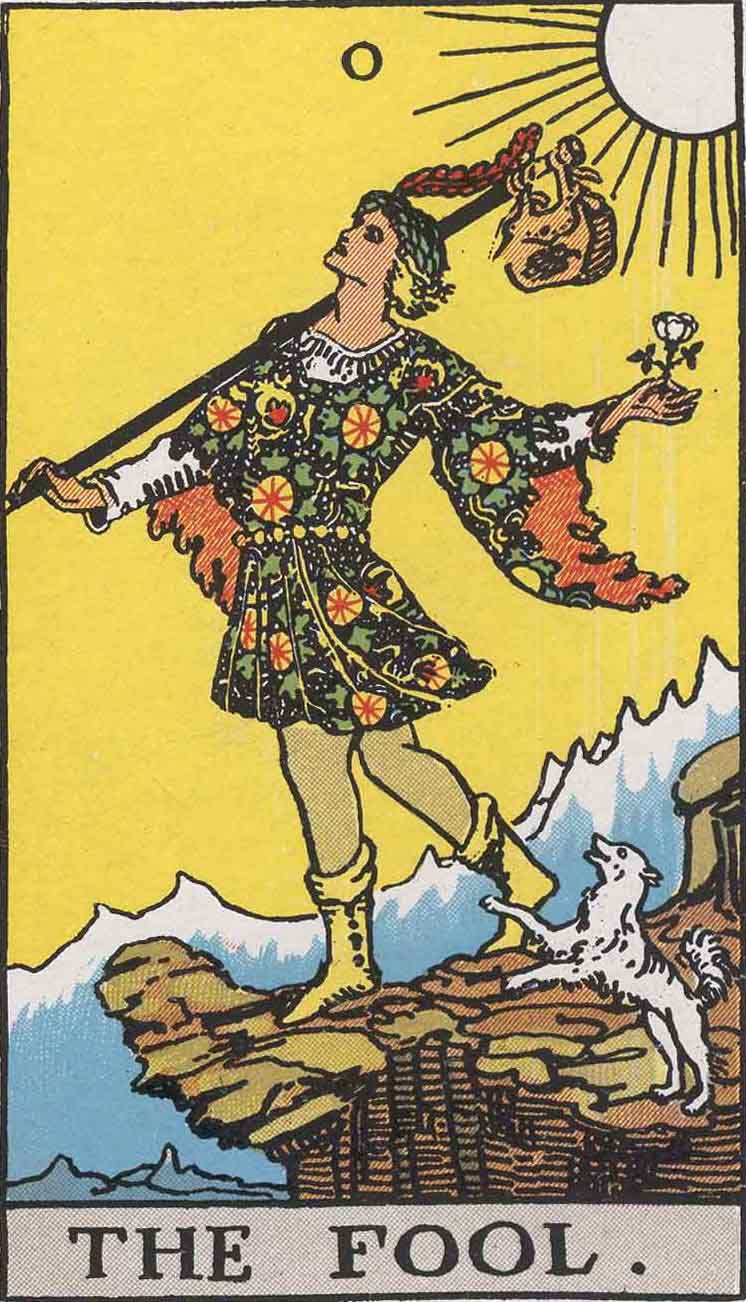
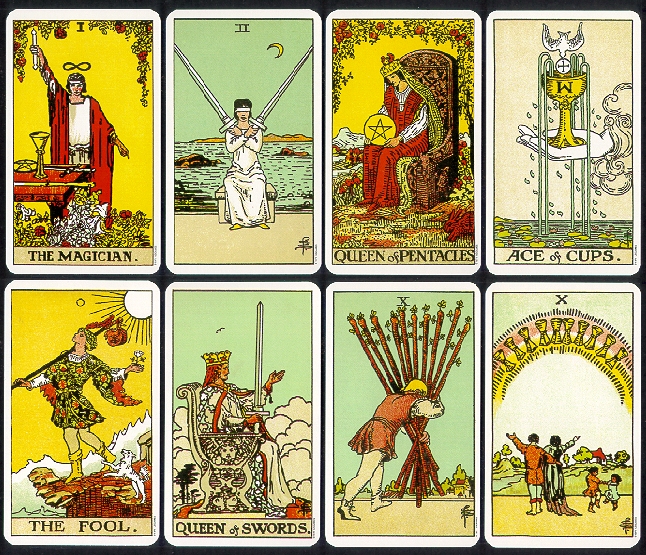
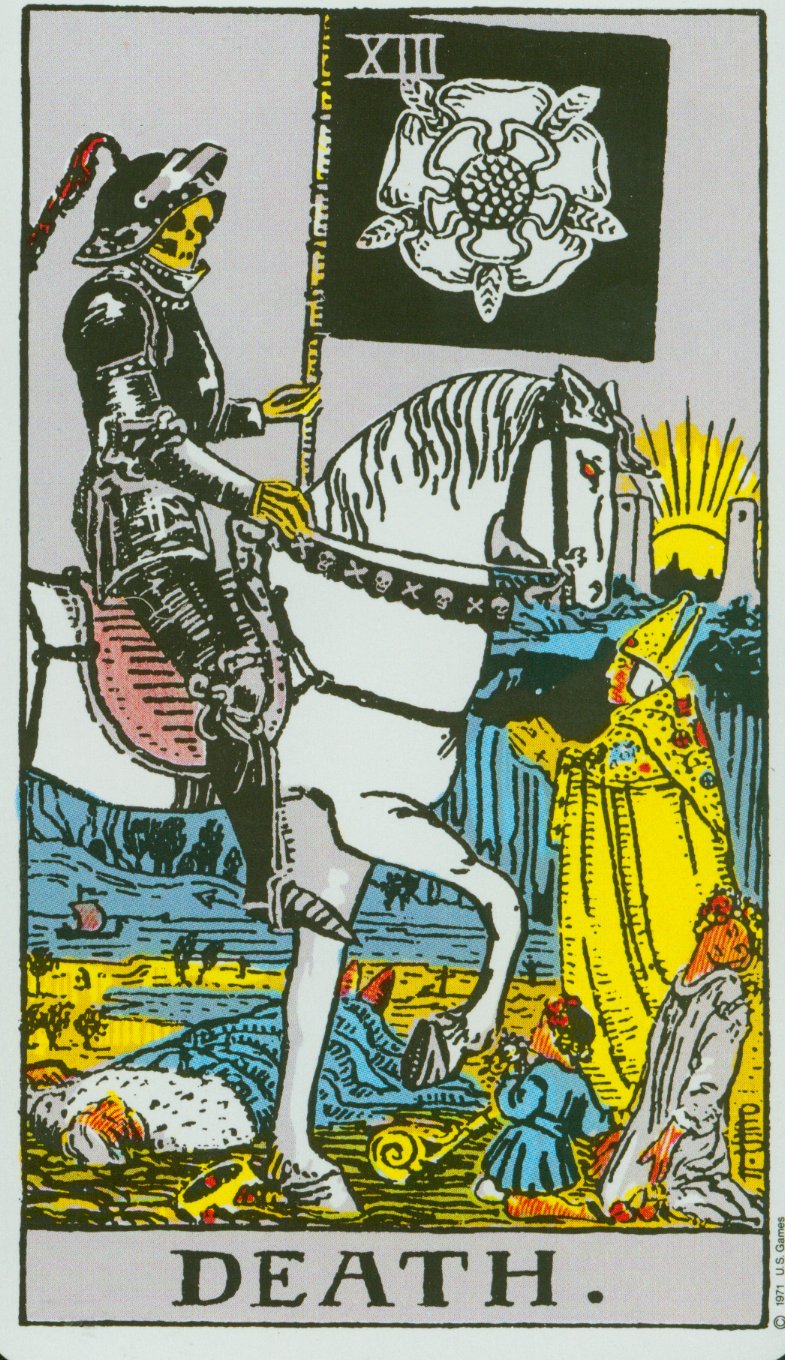
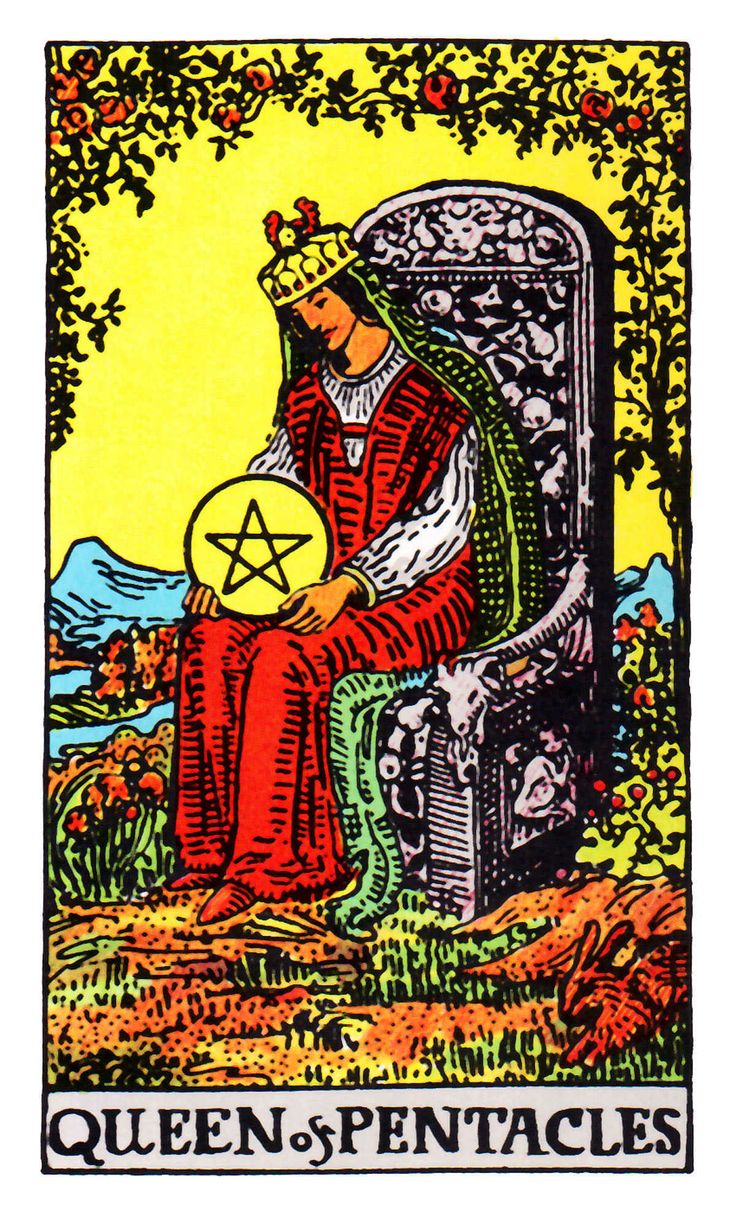
It is generally accepted that the standard deck of playing cards we use for everything from three-card monte to high-stakes Vegas poker evolved from the Tarot. “Like our modern cards,” writes Sallie Nichols, “the Tarot deck has four suits with ten ‘pip’ or numbered cards in each…. In the Tarot deck, each suit has four ‘court’ cards: King, Queen, Jack, and Knight.” The latter figure has “mysteriously disappeared from today’s playing cards,” though examples of Knight playing cards exist in the fossil record. The modern Jack is a survival of the Page cards in the Tarot. (See examples of Tarot court cards here from the 1910 Rider-Waite deck.) The similarities between the two types of decks are significant, yet no one but adepts seems to consider using their Gin Rummy cards to tell the future.
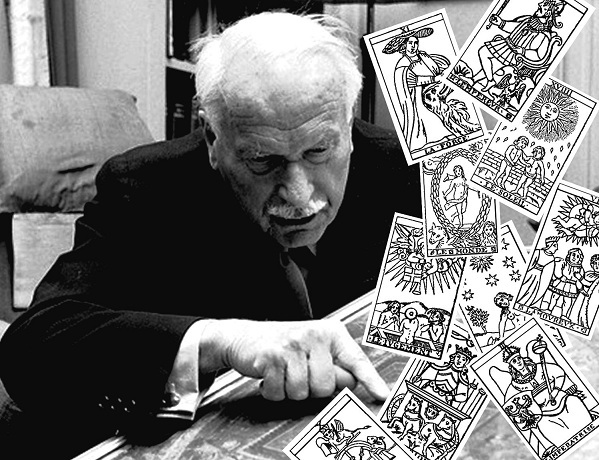
The eminent psychiatrist Carl Jung, however, might have done so.
As Mary K. Greer explains, in a 1933 lecture Jung went on at length about his views on the Tarot, noting the late Medieval cards are “really the origin of our pack of cards, in which the red and the black symbolize the opposites, and the division of the four—clubs, spades, diamonds, and hearts—also belongs to the individual symbolism.
They are psychological images, symbols with which one plays, as the unconscious seems to play with its contents.” The cards, said Jung, “combine in certain ways, and the different combinations correspond to the playful development of mankind.” This, too, is how Tarot works—with the added dimension of “symbols, or pictures of symbolical situations.” The images—the hanged man, the tower, the sun—“are sort of archetypal ideas, of a differentiated nature.”
Thus far, Jung hasn’t said anything many orthodox Jungian psychologists would find disagreeable, but he goes even further and claims that, indeed, “we can predict the future, when we know how the present moment evolved from the past.” He called for “an intuitive method that has the purpose of understanding the flow of life, possibly even predicting future events, at all events lending itself to the reading of the conditions of the present moment.” He compared this process to the Chinese I Ching, and other such practices. As analyst Marie-Louise von Franz recounts in her book Psyche and Matter:
Jung suggested… having people engage in a divinatory procedure: throwing the I Ching, laying the Tarot cards, consulting the Mexican divination calendar, having a transit horoscope or a geometric reading done.
Content seemed to matter much less than form. Invoking the Swedenborgian doctrine of correspondences, Jung notes in his lecture, “man always felt the need of finding an access through the unconscious to the meaning of an actual condition, because there is a sort of correspondence or a likeness between the prevailing condition and the condition of the collective unconscious.”
What he aimed at through the use of divination was to accelerate the process of “individuation,” the move toward wholeness and integrity, by means of playful combinations of archetypes. As another mystical psychologist, Alejandro Jodorowsky, puts it, “the Tarot will teach you how to create a soul.” Jung perceived the Tarot, notes the blog Faena Aleph, “as an alchemical game,” which in his words, attempts “the union of opposites.” Like the I Ching, it “presents a rhythm of negative and positive, loss and gain, dark and light.”
Much later in 1960, a year before his death, Jung seemed less sanguine about Tarot and the occult, or at least downplayed their mystical, divinatory power for language more suited to the laboratory, right down to the usual complaints about staffing and funding. As he wrote in a letter about his attempts to use these methods:
Under certain conditions it is possible to experiment with archetypes, as my ‘astrological experiment’ has shown. As a matter of fact we had begun such experiments at the C. G. Jung Institute in Zurich, using the historically known intuitive, i.e., synchronistic methods (astrology, geomancy, Tarot cards, and the I Ching). But we had too few co-workers and too little means, so we could not go on and had to stop.
Later interpreters of Jung doubted that his experiments with divination as an analytical technique would pass peer review. “To do more than ‘preach to the converted,’” wrote the authors of a 1998 article published in the Journal of Parapsychology, “this experiment or any other must be done with sufficient rigor that the larger scientific community would be satisfied with all aspects of the data taking, analysis of the data, and so forth.” Or, one could simply use Jungian methods to read the Tarot, the scientific community be damned.
You can see images of each of Wang’s cards here. His books purport to be exhaustive studies of Jung’s Tarot theory and practice, written in consultation with Jung scholars in New York and Zurich. Sallie Nichols’ Jung and Tarot: An Archetypal Journey is less voluminous and innovative—using the traditional, Pamela Coleman-Smith-illustrated, Rider-Waite deck rather than an updated original version. But for those willing to grant a relationship between systems of symbols and a collective unconscious, her book may provide some penetrating insights, if not a recipe for predicting the future.
Note: An earlier version of this post appeared on our site in 2017.
If you would like to support the mission of Open Culture, consider making a donation to our site. It’s hard to rely 100% on ads, and your contributions will help us continue providing the best free cultural and educational materials to learners everywhere. You can contribute through PayPal, Patreon, and Venmo (@openculture). Thanks!
The Romans fashioned their buildings with concrete that has endured for 2,000 years. Their secret? Some researchers think it’s how the Romans heated lime. Others think it’s how they usedpozzolanic material such as volcanic ash. Nowhere does coffee figure into the equation. Too bad.
Happily, researchers at the Royal Melbourne Institute of Technology (RMIT) University have discovered that “concrete can be made 30% stronger by replacing a percentage of sand with spent coffee grounds, an organic waste product produced in huge amounts that usually ends up in landfills,” writes New Atlas. Rajeev Roychand (above), the lead author of a study in the Journal of Cleaner Production, notes: “The disposal of organic waste poses an environmental challenge as it emits large amounts of greenhouse gasses including methane and carbon dioxide, which contribute to climate change. The inspiration for our work was to find an innovative way of using the large amounts of coffee waste in construction projects rather than going to landfills—to give coffee a ‘double shot’ at life.” If Roychand’s research findings endure, archaeologists and materials engineers might enjoy puzzling over the mysteries of coffee and concrete another two millennia from now.
If you would like to support the mission of Open Culture, consider making a donation to our site. It’s hard to rely 100% on ads, and your contributions will help us continue providing the best free cultural and educational materials to learners everywhere. You can contribute through PayPal, Patreon, and Venmo (@openculture). Thanks!
In the fall of 1969, there were still a great many people who’d never heard a synthesizer. And even among those who had, few would have known how its unfamiliar sounds were actually made. Hence the importance of the segment from the BBC program Tomorrow’s World above, which introduced the Moog synthesizer (originally created by Robert Moog) to viewers across Britain. Having come on the market four years earlier, it would go on to change the sound of music — a project, in fact, on which it had already made serious inroads, with such Moog showcases as the Doors’ “Strange Days” and Wendy Carlos’ Switched-on Bachhaving already become cultural phenomena unto themselves.
Manfred Mann would also do his part to make an impact with the Moog. Calling him “the Moog pioneer of rock music,” Fidelity magazine’s Hans-Jürgen Schaal writes that “Mann lent his instrument out to be used to produce the first Moog solo on a record by Emerson Lake & Palmer. He even did the keyboard work himself on the first Moog solo by Uriah Heep.”
It is Michael Vickers, a multi-instrumentalist veteran of Mann’s eponymous band, who demonstrates the Moog for Tomorrow’s World by playing a variety of melodies through it on a keyboard — though not before plugging in a series of patch cords to create just the right electronic sound.
Whether or not the BBC viewers of 1969 had ever heard anything like the Moog before, they almost certainly hadn’t seen anything like it before. Despite looking less like a musical instrument than like a piece of military hardware, it actually represented, like most technological advancements, a step forward in ease of use. As presenter Derek Cooper puts it, the Moog “produces sounds in a matter of minutes which would normally take radiophonic experts with their complicated equipment,” like the BBC’s own Daphne Oram or Delia Derbyshire, “days of work and multiple re-recordings to achieve.” Not that the average hobbyist could afford the Moog seen in this broadcast back then — nor, for that matter, can the average hobbyist afford the $35,000 a faithful re-creation of it costs now.
Based in Seoul, Colin Marshall writes and broadcasts on cities, language, and culture. His projects include the Substack newsletterBooks on Cities, the book The Stateless City: a Walk through 21st-Century Los Angeles and the video series The City in Cinema. Follow him on Twitter at @colinmarshall or on Facebook.
“If you’re in Venice, you might not enjoy it so much if you follow a tour-guide route that gets you to the main attractions.” So says Youtuber Manuel Bravo — whom we’ve previously featured here on Open Culture for his videos on Pompeii, the Duomo di Firenze, and the Great Pyramids of Giza — in “Venice Explained” just above. “But if you get off that road, the charm of Venice is that it’s such a tangled mess that nobody ventures out there” — out, that is, into the “wonderful little neighborhoods with little squares with cisterns and little cafés.” Diminutive though that may sound, Venice comes off in Bravo’s analysis as an entire, unique urban realm unto itself.
“Historically, Venice is really detached from Italy proper,” Bravo says. “It was not a Roman town. It does not have the detritus of Roman ruins scattered around. It does not have remnants of a Roman town plan with cardo and decumanus. It does not even have, well, land.”
Indeed, Venice is famous for having been built in the Adriatic Sea, on a “new fortified ground plane” made of strong trees imported from Croatia. As its political and economic importance grew, so did its “incomparable medieval urban landscape that has remained practically unchanged.” This built environment is full of architectural styles and details seen nowhere else, to which Bravo draws our attention through the course of the video.
Though he recommends departing from the tourist-beaten paths, he doesn’t ignore such world-famous Venetian structures as the Ca d’Oro, “perhaps the most beautiful building in Venice”; the Doge’s Palace with its “antigravity” architecture; and — in detail — the Basilica and Piazza San Marco, “one of the most memorable spatial complexes in the history of urban planning.” No first visit would be complete without some time spent at each of these sites. But “Venice is a city of light,” and in order properly to enjoy it, we must “see it at different times of the day and experience all the nuances that it offers”: good advice in this “most visually seductive of all the cities in the world,” but also worth bearing in mind as a means of appreciating even the less majestic places in which most of us usually find ourselves.
Based in Seoul, Colin Marshall writes and broadcasts on cities, language, and culture. His projects include the Substack newsletterBooks on Cities, the book The Stateless City: a Walk through 21st-Century Los Angeles and the video series The City in Cinema. Follow him on Twitter at @colinmarshall or on Facebook.
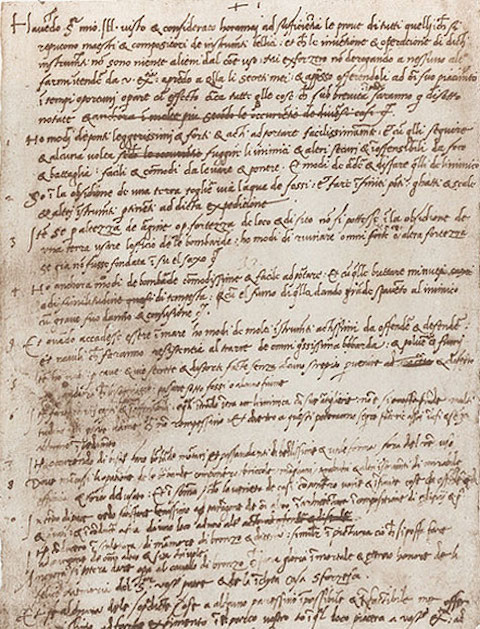
We know that Michelangelo wrote grocery lists; now we have evidence that Leonardo wrote resumes. “Before he was famous, before he painted the Mona Lisa and the Last Supper, before he invented the helicopter, before he drew the most famous image of man, before he was all of these things, Leonardo da Vinci was an artificer, an armorer, a maker of things that go ‘boom,’ ” writes Marc Cendella on his blog about job-searching and recruitment advice. “Like you, he had to put together a resume to get his next gig. So in 1482, at the age of 30, he wrote out a letter and a list of his capabilities and sent it off to Ludovico il Moro, Duke of Milan.” Having yet to establish his reputation as perhaps the Italian Renaissance’s most respected polymath, Leonardo spelled himself out, in translation, as follows:
Most Illustrious Lord, Having now sufficiently considered the specimens of all those who proclaim themselves skilled contrivers of instruments of war, and that the invention and operation of the said instruments are nothing different from those in common use: I shall endeavor, without prejudice to any one else, to explain myself to your Excellency, showing your Lordship my secret, and then offering them to your best pleasure and approbation to work with effect at opportune moments on all those things which, in part, shall be briefly noted below.
1. I have a sort of extremely light and strong bridges, adapted to be most easily carried, and with them you may pursue, and at any time flee from the enemy; and others, secure and indestructible by fire and battle, easy and convenient to lift and place. Also methods of burning and destroying those of the enemy.
2. I know how, when a place is besieged, to take the water out of the trenches, and make endless variety of bridges, and covered ways and ladders, and other machines pertaining to such expeditions.
3. If, by reason of the height of the banks, or the strength of the place and its position, it is impossible, when besieging a place, to avail oneself of the plan of bombardment, I have methods for destroying every rock or other fortress, even if it were founded on a rock, etc.
4. Again, I have kinds of mortars; most convenient and easy to carry; and with these I can fling small stones almost resembling a storm; and with the smoke of these cause great terror to the enemy, to his great detriment and confusion.
5. And if the fight should be at sea I have kinds of many machines most efficient for offense and defense; and vessels which will resist the attack of the largest guns and powder and fumes.
6. I have means by secret and tortuous mines and ways, made without noise, to reach a designated spot, even if it were needed to pass under a trench or a river.
7. I will make covered chariots, safe and unattackable, which, entering among the enemy with their artillery, there is no body of men so great but they would break them. And behind these, infantry could follow quite unhurt and without any hindrance.
8. In case of need I will make big guns, mortars, and light ordnance of fine and useful forms, out of the common type.
9. Where the operation of bombardment might fail, I would contrive catapults, mangonels, trabocchi, and other machines of marvellous efficacy and not in common use. And in short, according to the variety of cases, I can contrive various and endless means of offense and defense.
10. In times of peace I believe I can give perfect satisfaction and to the equal of any other in architecture and the composition of buildings public and private; and in guiding water from one place to another.
11. I can carry out sculpture in marble, bronze, or clay, and also I can do in painting whatever may be done, as well as any other, be he who he may.
Again, the bronze horse may be taken in hand, which is to be to the immortal glory and eternal honor of the prince your father of happy memory, and of the illustrious house of Sforza.
And if any of the above-named things seem to anyone to be impossible or not feasible, I am most ready to make the experiment in your park, or in whatever place may please your Excellency – to whom I comment myself with the utmost humility, etc.
Even the densest fifteenth-century Duke, I wager, could see the use in a man able to make portable bridges, get water out of trenches, destroy rock built upon rock, fling a storm of stones, fortify vessels, pass under rivers, and make everything from “big guns,” catapults, mangonels, and trabocchi to unattackable covered chariots. Though Leonardo understandably concentrates on his wartime engineering skills, he also touches on the range of other disciplines — Renaissance man, remember — he has mastered, like architecture, sculpture, and painting. Perhaps most impressively of all, he rattles off all these points without seeming particularly boastful. “You’ll notice he doesn’t recite past achievements,” Cendella adds, “because those are about hisachievements, and not about the Duke’s needs.” Still, he might have added that, given just a few more years, he could design a pretty captivating organ.
Note: An earlier version of this post appeared on our site in 2014.
If you would like to support the mission of Open Culture, consider making a donation to our site. It’s hard to rely 100% on ads, and your contributions will help us continue providing the best free cultural and educational materials to learners everywhere. You can contribute through PayPal, Patreon, and Venmo (@openculture). Thanks!
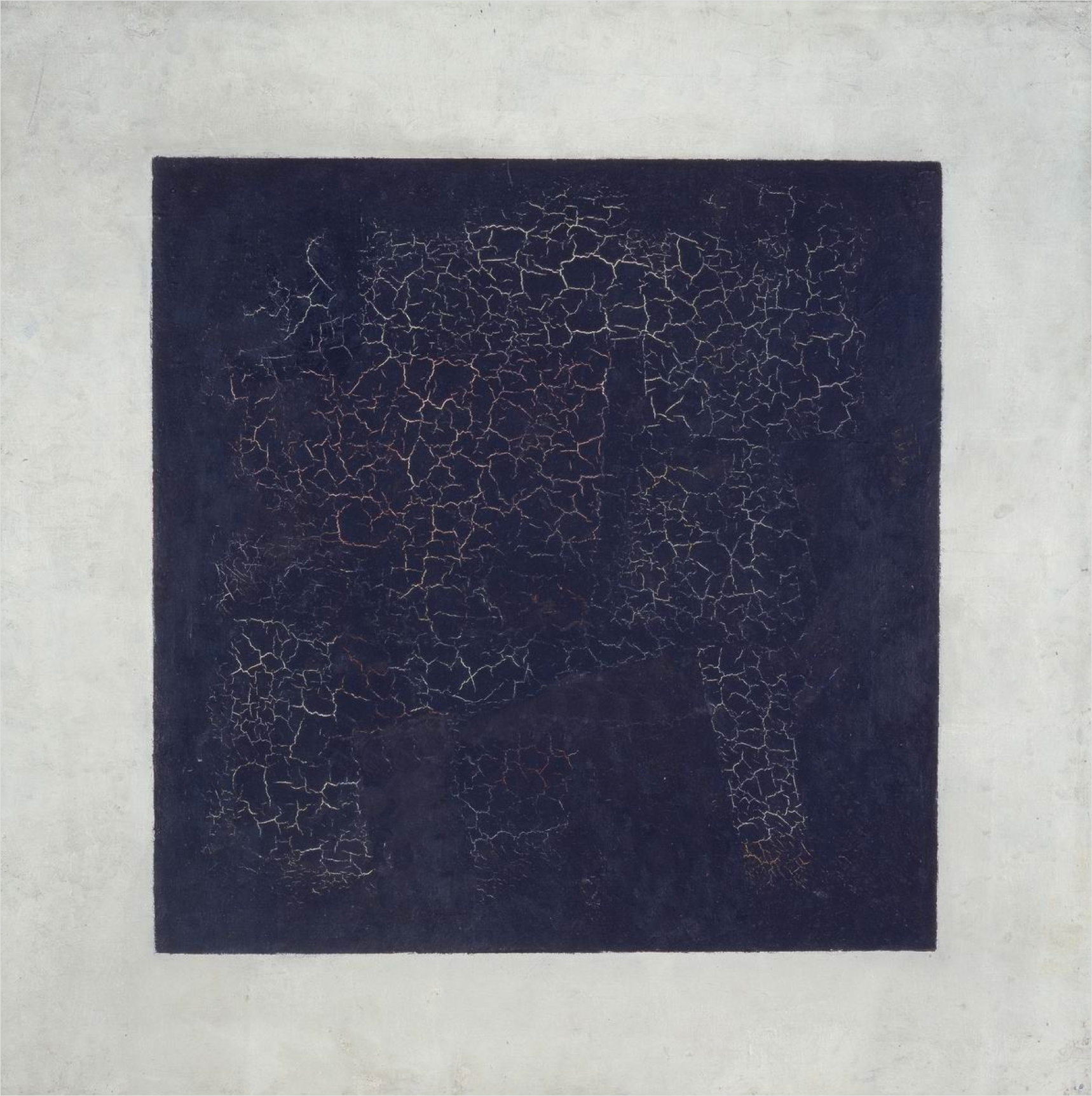
Who created the first work of abstract art has long been a fraught question indeed. Better, perhaps, to ask who first said of a work of art that a kid could have made it. A strong contender in that division is the Russian artist Véra Pestel, whom history remembers as having reacted to Kazimir Malevich’s 1915 painting Black Square with the words “Anyone can do this! Even a child can do this!” Yes, writes novelist Tatyana Tolstaya a century later in the New Yorker, “any child could have performed this simple task, although perhaps children lack the patience to fill such a large section with the same color.” And in any case, time having taken its toll, Malevich’s square doesn’t look quite as black as it used to.
Nor was the square ever quite so square as we imagine it. “Its sides aren’t parallel or equal in length, and the shape isn’t quite centered on the canvas,” says the narrator of the animated TED-Ed lesson above. Instead, Malevich placed the form slightly off-kilter, giving it the appearance of movement, and the white surrounding it a living, vibrating quality.”
Fair enough, but is it art? If you’d asked Malevich himself, he might have said it surpassed art. In 1913, he “realized that even the most cutting-edge artists were still just painting objects from everyday life, but he was irresistibly drawn to what he called ‘the desert,’ where nothing is real except feeling.” Hence his invention of the style known as Suprematism, “a departure from the world of objects so extreme, it went beyond abstraction.”
Malevich made bold claims for Suprematism in general and Black Square in particular. “Up until now there were no attempts at painting as such, without any attribute of real life,” he wrote. “Painting was the aesthetic side of a thing, but never was original and an end in itself.” As Tolstaya puts it, he “once and for all drew an uncrossable line that demarcated the chasm between old art and new art, between a man and his shadow, between a rose and a casket, between life and death, between God and the Devil. In his own words, he reduced everything to the ‘zero of form.’ ” She calls this zero’s emergence in such a stark form “one of the most frightening events in art in all of its history of existence.” If so, here we have an argument for not letting young children see Black Square and enduring the consequent nightmares — even if they could have painted it themselves.
Based in Seoul, Colin Marshall writes and broadcasts on cities, language, and culture. His projects include the Substack newsletterBooks on Cities, the book The Stateless City: a Walk through 21st-Century Los Angeles and the video series The City in Cinema. Follow him on Twitter at @colinmarshall or on Facebook.
During the 15th and 16th centuries, fashionable men sported a codpiece. Originally a garment designed to protect and support the proverbial “Willy” (especially when men wore tights), the codpiece morphed into something else–a sign of virility, “a bulging and absurd representation of masculinity itself.” The codpiece featured prominently in paintings by masters such as Titian, Giorgione, Bruegel and Holbein. Above, Evan Puschak (aka the Nerdwriter) introduces you to Holbein’s famous portrait of Henry VIII, “the poster boy for codpieces.”
If you would like to support the mission of Open Culture, consider making a donation to our site. It’s hard to rely 100% on ads, and your contributions will help us continue providing the best free cultural and educational materials to learners everywhere. You can contribute through PayPal, Patreon, and Venmo (@openculture). Thanks!
To get back to the essence of kintsugi, and gain a clearer understanding of its laborious physical nature, it couldn’t hurt to watch a few kintsugists at work. Take Hiroki Kiyokawa, who reflects on his 45 years practicing the art in Kyoto — not without expressing his own ideas about how he feels he’s also “restoring the broken parts of myself” — in the BBC video above.
Or, for a more modern presentation, have a look at this tutorial video from Chimahaga, a kintsugist who not long ago launched his own Youtube channel dedicated to explaining what he does. He’s even uploaded videos about not just kintsugi, (金継ぎ, or “golden joinery”), but also gintsugi (銀継ぎ), which achieves a different but equally striking effect using silver instead of gold.
Kintsugi clearly isn’t a hobby you can master over a few weekends. But you don’t have to be a lifelong Kyoto artisan to benefit from learning it, as emphasized by psychologist Alexa Altman in the video just above. Having learned kintsugi in Japan, she practices it here in a somewhat unconventional way, repairing not pottery damaged over time or by accident, but pottery which she’s smashed on purpose. The bowl, in this case, represents “some aspect of yourself”; the hammer is “an instrument of change”; the glue is “all about connection”; the holes and cracks “can be representations of loss”; the gold is “glory, a celebration.” Whether or not you accept these metaphors, those who practice kintsugi — or any craft demanding such a degree of patience and concentration — surely improve their psychological state in so doing.
Based in Seoul, Colin Marshall writes and broadcasts on cities, language, and culture. His projects include the Substack newsletterBooks on Cities, the book The Stateless City: a Walk through 21st-Century Los Angeles and the video series The City in Cinema. Follow him on Twitter at @colinmarshall or on Facebook.
We're hoping to rely on loyal readers, rather than erratic ads. Please click the Donate button and support Open Culture. You can use Paypal, Venmo, Patreon, even Crypto! We thank you!
Open Culture scours the web for the best educational media. We find the free courses and audio books you need, the language lessons & educational videos you want, and plenty of enlightenment in between.