Watch an Avant-Garde Bauhaus Ballet in Brilliant Color, First Staged in 1922

We cred­it the Bauhaus school, found­ed by Ger­man archi­tect Wal­ter Gropius in 1919, for the aes­thet­ic prin­ci­ples that have guid­ed so much mod­ern design and archi­tec­ture in the 20th and 21st cen­turies. The school’s rela­tion­ships with artists like Paul Klee, Wass­i­ly Kandin­sky, Las­z­lo Moholy-Nagy, and Lud­wig Mies van der Rohe mean that Bauhaus is close­ly asso­ci­at­ed with Expres­sion­ism and Dada in the visu­al and lit­er­ary arts, and, of course, with the mod­ernist indus­tri­al design and glass and steel archi­tec­ture we asso­ciate with Frank Lloyd Wright and Charles and Ray Eames, among so many oth­ers.

We tend not to asso­ciate Bauhaus with the art of dance, per­haps because of the school’s found­ing ethos to bring what they saw as ener­vat­ed fine arts and crafts tra­di­tions into the era of mod­ern indus­tri­al pro­duc­tion. The ques­tion of how to meet that demand when it came to per­haps one of the old­est of the per­form­ing arts might have puz­zled many an artist.

But not Oskar Schlem­mer. A poly­math, like so many of the school’s avant-garde fac­ul­ty, Schlem­mer was a painter, sculp­tor, design­er, and chore­o­g­ra­ph­er who, in 1923, was hired as Mas­ter of Form at the Bauhaus the­atre work­shop.

Before tak­ing on that role, Schlem­mer had already con­ceived, designed, and staged his most famous work, Das Tri­adis­che Bal­lett (The Tri­adic Bal­let). “Schlemmer’s main theme,” says schol­ar and chore­o­g­ra­ph­er Debra McCall, “is always the abstract ver­sus the fig­u­ra­tive and his work is all about the con­cil­i­a­tion of polarities—what he him­self called the Apol­lon­ian and Dionysian. [He], like oth­ers, felt that mech­a­niza­tion and the abstract were two main themes of the day. But he did not want to reduce the dancers to automa­tons.” These con­cerns were shared by many mod­ernists, who felt that the idio­syn­crasies of the human could eas­i­ly become sub­sumed in the seduc­tive order­li­ness of machines.

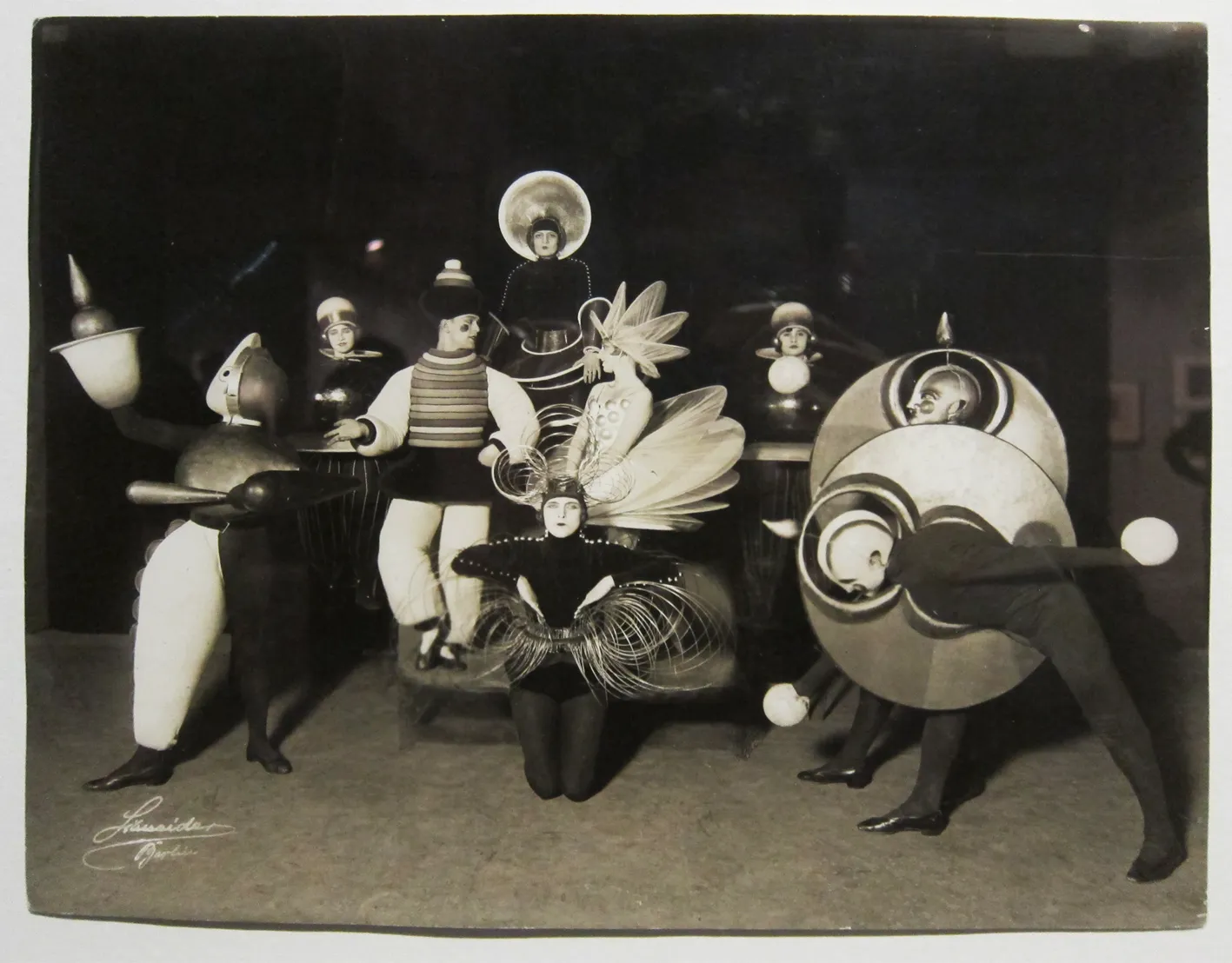
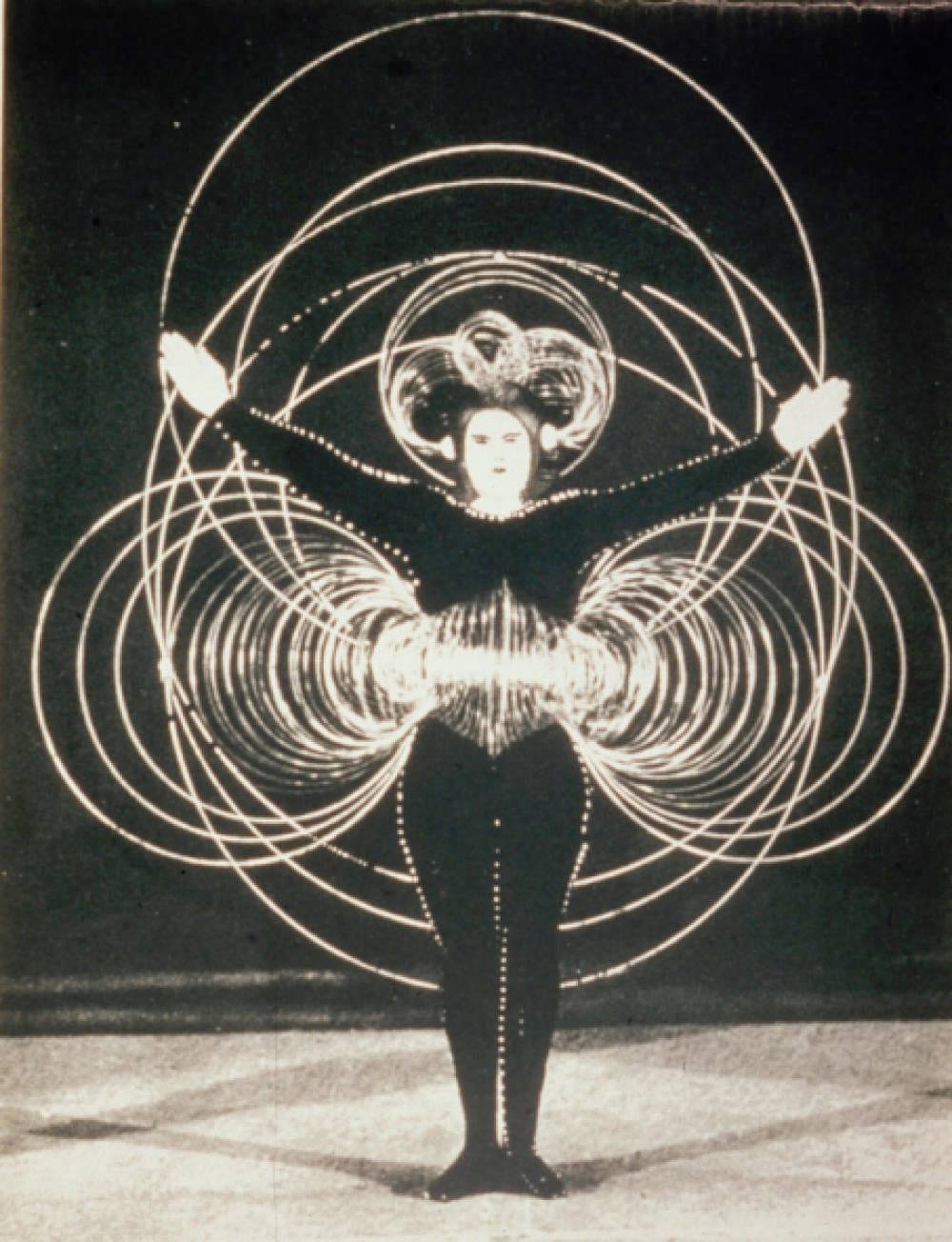
Schlem­mer’s inten­tions for The Tri­adic Bal­let translate—in the descrip­tions of Dan­ger­ous Minds’ Amber Frost—to “sets [that] are min­i­mal, empha­siz­ing per­spec­tive and clean lines. The chore­og­ra­phy is lim­it­ed by the bulky, sculp­tur­al, geo­met­ric cos­tumes, the move­ment sti­fling­ly delib­er­ate, incred­i­bly mechan­i­cal and mathy, with a rare hint at any flu­id dance. The whole thing is dar­ing­ly weird and strange­ly mes­mer­iz­ing.” You can see black and white still images from the orig­i­nal 1922 pro­duc­tion above (and see even more at Dan­ger­ous Minds). To view these bizarrely cos­tumed fig­ures in motion, watch the video at the top, a 1970 recre­ation in full, bril­liant col­or.

triadic-ballet-notes

For var­i­ous rea­sons, The Tri­adic Bal­let has rarely been restaged, though its influ­ence on futur­is­tic dance and cos­tum­ing is con­sid­er­able. The Tri­adic Bal­let is “a pio­neer­ing exam­ple of mul­ti-media the­ater,” wrote Jack Ander­son in review of a 1985 New York pro­duc­tion; Schlem­mer “turned to chore­og­ra­phy,” writes Ander­son, “because of his con­cern for the rela­tion­ships of fig­ures in space.” Giv­en that the guid­ing prin­ci­ple of the work is a geo­met­ric one, we do not see much move­ment we asso­ciate with tra­di­tion­al dance. Instead the bal­let looks like pan­tomime or pup­pet show, with fig­ures in awk­ward cos­tumes trac­ing var­i­ous shapes around the stage and each oth­er.

triadic-group-photo-and-eight-scene-photos

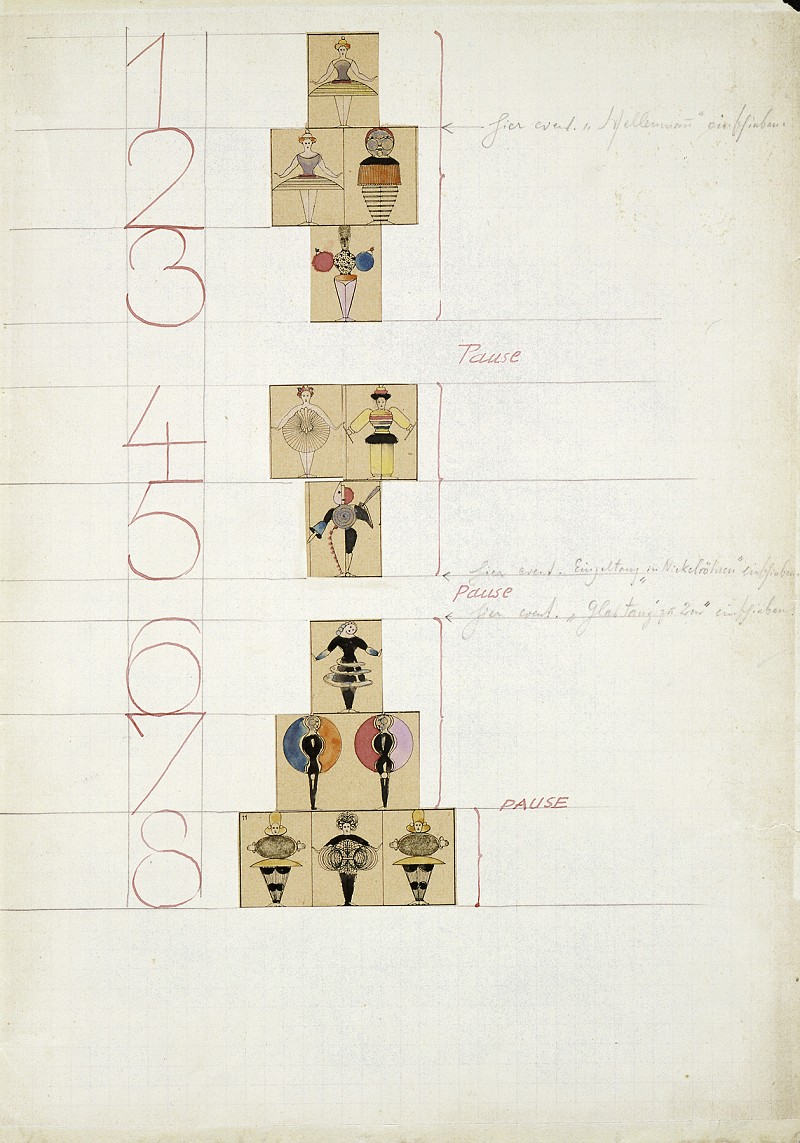
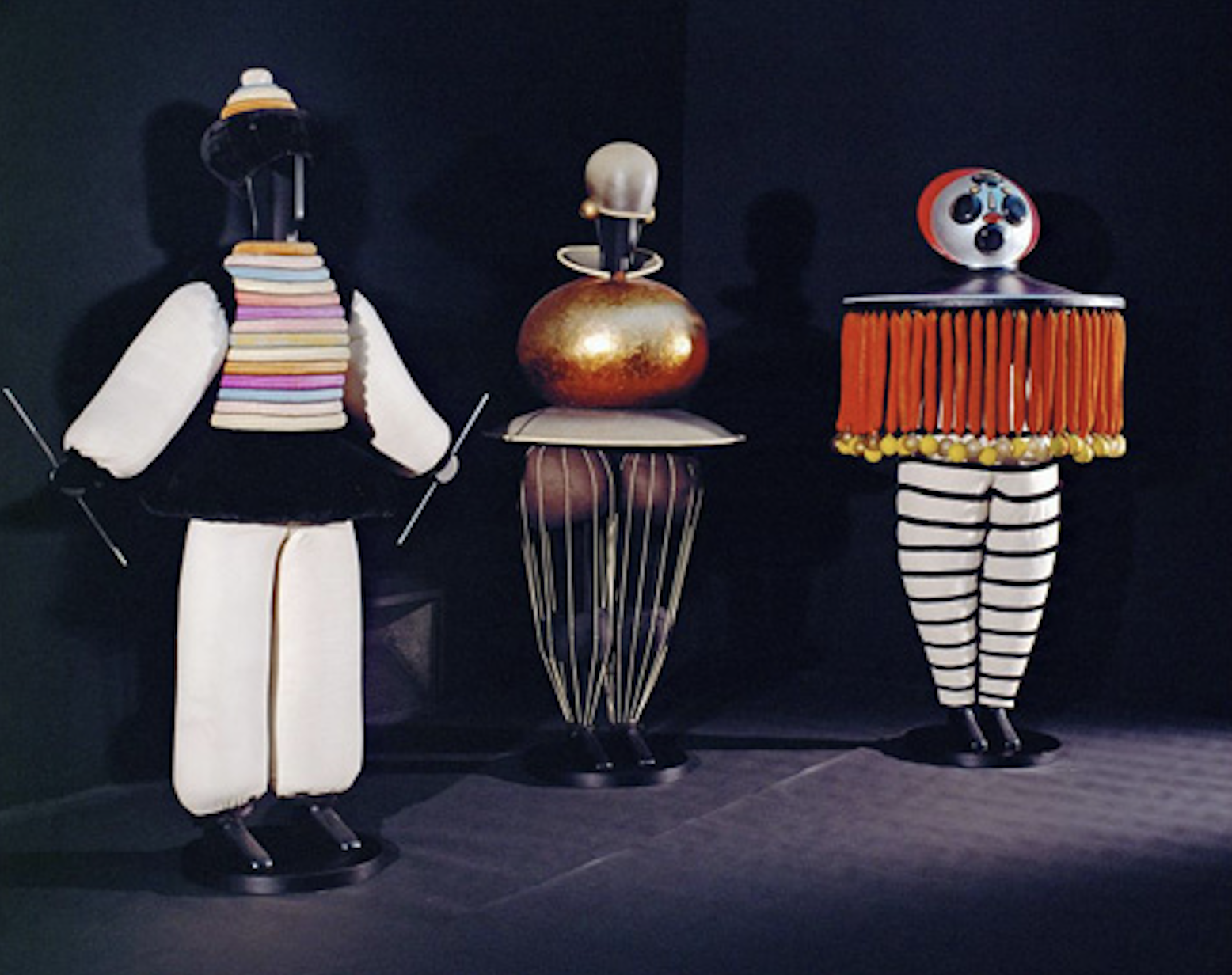
As you can see in the images fur­ther up, Schlem­mer left few notes regard­ing the chore­og­ra­phy, but he did sketch out the group­ing and cos­tum­ing of each of the three move­ments. (You can zoom in and get a clos­er look at the sketch­es above at the Bauhaus-archiv Muse­um.) As Ander­son writes of the 1985 revived pro­duc­tion, “unfor­tu­nate­ly, Schlemmer’s chore­og­ra­phy for these fig­ures was for­got­ten long ago, and any new pro­duc­tion must be based upon research and intu­ition.” The basic out­lines are not dif­fi­cult to recov­er. Inspired by Arnold Schoenberg’s Pier­rot Lunaire, Schlem­mer began to see bal­let and pan­tomime as free from the bag­gage of tra­di­tion­al the­ater and opera. Draw­ing from the styl­iza­tions of pan­tomime, pup­petry, and Com­me­dia dell’Arte, Schlem­mer fur­ther abstract­ed the human form in dis­crete shapes—cylindrical necks, spher­i­cal heads, etc—to cre­ate what he called “fig­urines.” The cos­tum­ing, in a sense, almost dic­tates the jerky, pup­pet-like move­ments of the dancers. (These three cos­tumes below date from the 1970 recre­ation of the piece.)

Schlemmer’s rad­i­cal pro­duc­tion has some­how not achieved the lev­el of recog­ni­tion of oth­er avant-garde bal­lets of the time, includ­ing Schoen­berg’s  Pier­rot Lunaire and Stravinsky’s, Nijin­sky-chore­o­graphed The Rite of SpringThe Tri­adic Bal­let, with music com­posed by Paul Hin­demith, toured between 1922 and 1929, rep­re­sent­ing the ethos of the Bauhaus school, but at the end of that peri­od, Schlem­mer was forced to leave “an increas­ing­ly volatile Ger­many,” writes Frost. Revivals of the piece, such as a 1930 exhi­bi­tion in Paris, tend­ed to focus on the “fig­urines” rather than the dance. Schlem­mer made many sim­i­lar per­for­mance pieces in the 20s (such as a “mechan­i­cal cabaret”) that brought togeth­er indus­tri­al design, dance, and ges­ture. But per­haps his great­est lega­cy is the bizarre cos­tumes, which were worn and copied at var­i­ous Bauhaus cos­tume par­ties and which went on to direct­ly inspire the look of Fritz Lang’s Metrop­o­lis and the glo­ri­ous excess­es of David Bowie’s Zig­gy Star­dust stage show.

Note: An ear­li­er ver­sion of this post appeared on our site in 2016.

Relat­ed Con­tent:

The Women of the Bauhaus: See Hip, Avant-Garde Pho­tographs of Female Stu­dents & Instruc­tors at the Famous Art School

32,000+ Bauhaus Art Objects Made Avail­able Online by Har­vard Muse­um Web­site

Watch Bauhaus World, a Free Doc­u­men­tary That Cel­e­brates the 100th Anniver­sary of Germany’s Leg­endary Art, Archi­tec­ture & Design School

Bauhaus Bal­let: A Dance of Geom­e­try

Josh Jones is a writer and musi­cian based in Durham, NC. Fol­low him at @jdmagness

The Story of How Quentin Tarantino Became a Filmmaker and Created Pulp Fiction, as Told by Quentin Tarantino

For a film, explained a young Quentin Taran­ti­no in one inter­view, “the real test of time isn’t the Fri­day that it opens. It’s how the film is thought of thir­ty years from now.” It just so hap­pens that Pulp Fic­tion, which made Taran­ti­no the most cel­e­brat­ed direc­tor in Amer­i­ca prac­ti­cal­ly on its open­ing day, came out thir­ty years ago last fall. That pro­vid­ed the occa­sion for the video essay from YouTu­ber Dod­ford above, which tells the sto­ry of how Taran­ti­no became a film­mak­er, assem­bled for the most part out of Taran­ti­no’s own words — and in the not-quite-lin­ear chronol­o­gy with which peo­ple still asso­ciate him.

As Taran­ti­no’s body of work has grown, it’s come to seem less defined by such sliced-and-diced time­lines, or even by the obses­sions with pop cul­ture or graph­ic vio­lence the media tend­ed to exag­ger­ate when first he rose to fame. “They thought it was far more vio­lent than it was,” he says of the pub­lic reac­tion to his first fea­ture Reser­voir Dogs in a Char­lie Rose inter­view from which this video draws. He could take that as a tes­ta­ment to his under­stand­ing of cin­e­ma, a form that draws its pow­er just as often from what it does­n’t show as what it does.

Taran­ti­no began cul­ti­vat­ing that under­stand­ing ear­ly, through­out his movie-sat­u­rat­ed child­hood and his stint as a video-store clerk in Man­hat­tan Beach. Con­trary to pop­u­lar belief, how­ev­er, Video Archives did­n’t make him a movie expert: “I was already a movie expert; that’s how I got hired.” It was dur­ing that peri­od that he com­menced work on My Best Friend’s Birth­day, which he meant to be his first film. Though he nev­er com­plet­ed it even after three years of work, he did notice the artis­tic devel­op­ment evi­dent in a com­par­i­son between its ama­teur­ish ear­ly scenes and its more effec­tive lat­er ones.

That failed project turned out to be “the best film school a per­son could pos­si­bly have,” and it pre­pared him to seize the oppor­tu­ni­ties that would come lat­er. After writ­ing and sell­ing the script for True Romance, he was in a posi­tion to work on Reser­voir Dogs, which even­tu­al­ly made it to pro­duc­tion thanks to the inter­est of Har­vey Kei­t­el, who would play Mr. White. When that pic­ture got atten­tion at Sun­dance and became an indie hit, Taran­ti­no went off on a Euro­pean sojourn, osten­si­bly in order to work on his next script — and to fig­ure out how to beat “the dread­ed sopho­more curse,” some­thing with which he’d had much sec­ond-hand expe­ri­ence as a dis­ap­point­ed movie­go­er.

The fruit of those labors, a crime-sto­ry anthol­o­gy called Pulp Fic­tion, first seemed, incred­i­bly, to promise lit­tle box-office poten­tial. But one sens­es that Taran­ti­no knew exact­ly what he had, because he knew his audi­ence. It’s not that he’d com­mis­sioned inten­sive mar­ket research, but that, as he once put it, “It’s me; I’m the audi­ence.” And so he’s remained over the past three decades, draw­ing ever clos­er to com­plet­ing what, as he’s often said, will ulti­mate­ly con­sti­tute a ten-pic­ture fil­mog­ra­phy. Actu­al­ly stop­ping there would, of course, risk the dis­ap­point­ment of his many fans, who only want more. But when a film­mak­er keeps at it too long, as the cinephile in Taran­ti­no well under­stands, he runs the far more dire risk of dis­ap­point­ing him­self.

Relat­ed con­tent:

Quentin Taran­ti­no Explains How to Write & Direct Movies

My Best Friend’s Birth­day, Quentin Tarantino’s 1987 Debut Film

An Analy­sis of Quentin Tarantino’s Films Nar­rat­ed (Most­ly) by Quentin Taran­ti­no

Quentin Taran­ti­no Gives a Tour of Video Archives, the Store Where He Worked Before Becom­ing a Film­mak­er

Quentin Taran­ti­no & Roger Avary Rewatch Cult-Clas­sic Movies on Their New Video Archives Pod­cast

Why Quentin Taran­ti­no Will Only Make 10 Movies

Based in Seoul, Col­in Marshall writes and broad­casts on cities, lan­guage, and cul­ture. His projects include the Sub­stack newslet­ter Books on Cities and the book The State­less City: a Walk through 21st-Cen­tu­ry Los Ange­les. Fol­low him on the social net­work for­mer­ly known as Twit­ter at @colinmarshall.


Download a 417-Megapixel Panorama of the Andromeda Galaxy—A Decade-Long NASA Project in the Making

Using the Hub­ble Space Tele­scope, astronomers have cre­at­ed a majes­tic 417-megapix­el panora­ma of the Androm­e­da galaxy, locat­ed some 2.5 mil­lion light-years away from our plan­et. Tak­ing more than a decade to com­plete, the pho­to­mo­sa­ic cap­tures 200 mil­lion stars, which is only a frac­tion of Andromeda’s esti­mat­ed one tril­lion stars. Accord­ing to NASA, the 2.5 bil­lion pix­el mosa­ic “will help astronomers piece togeth­er the galaxy’s past his­to­ry that includes merg­ers with small­er satel­lite galax­ies.” On this NASA web­site, you can down­load a copy of the mosa­ic, and learn more about the explo­ration of Androm­e­da.

If you would like to sign up for Open Culture’s free email newslet­ter, please find it here. It’s a great way to see our new posts, all bun­dled in one email, each day.

If you would like to sup­port the mis­sion of Open Cul­ture, con­sid­er mak­ing a dona­tion to our site. It’s hard to rely 100% on ads, and your con­tri­bu­tions will help us con­tin­ue pro­vid­ing the best free cul­tur­al and edu­ca­tion­al mate­ri­als to learn­ers every­where. You can con­tribute through Pay­Pal, Patre­on, and Ven­mo (@openculture). Thanks!

via PetaPix­el

Relat­ed Con­tent 

NASA Releas­es a Mas­sive Online Archive: 140,000 Pho­tos, Videos & Audio Files Free to Search and Down­load

Sun Ra Applies to NASA’s Art Pro­gram: When the Inven­tor of Space Jazz Applied to Make Space Art

NASA Enlists Andy Warhol, Annie Lei­bovitz, Nor­man Rock­well & 350 Oth­er Artists to Visu­al­ly Doc­u­ment America’s Space Pro­gram

NASA Dig­i­tizes 20,000 Hours of Audio from the His­toric Apol­lo 11 Mis­sion: Stream Them Free Online

Carl Sagan Sent Music & Pho­tos Into Space So That Aliens Could Under­stand Human Civ­i­liza­tion (Even After We’re Gone)


Why David Lynch’s Dune Went Wrong: A Comparison with Denis Villeneuve’s Hit Adaptation

Denis Vil­leneu­ve’s recent film adap­ta­tion of Dune is gen­er­al­ly con­sid­ered to be supe­ri­or to the late David Lynch’s, from 1984 — though even accord­ing to many of Lynch’s fans, it could hard­ly have been worse. In a 1996 piece for Pre­miere mag­a­zine, David Fos­ter Wal­lace described Dune as “unques­tion­ably the worst movie of Lynch’s career,” not least due to the mis­cast­ing of the direc­tor him­self: “Eraser­head had been one of those sell-your-own-plas­ma-to-buy-the-film-stock mas­ter­pieces, with a tiny and large­ly unpaid cast and crew. Dune, on the oth­er hand, had one of the biggest bud­gets in Hol­ly­wood his­to­ry,” mar­shaled by super-pro­duc­er Dino De Lau­ren­ti­is. But could even a mas­ter block­buster crafts­man have made cin­e­mat­ic sense of Frank Her­bert’s orig­i­nal sto­ry, “which even in the nov­el is con­vo­lut­ed to the point of pain”?

With its two parts hav­ing been released in the twen­ty-twen­ties, Vil­leneu­ve’s Dune prac­ti­cal­ly cries out for Youtube video essays com­par­ing it to Lynch’s ver­sion. The one above from Archer Green first high­lights their dif­fer­ences through one scene that was mem­o­rable in the nov­el and both films: when, being put to the test by the Rev­erend Moth­er Gaius Helen Mohi­am, the young hero Paul Atrei­des, played in the old Dune by Kyle MacLach­lan and the new one by Tim­o­th­ée Cha­la­met, inserts his hand into a box that inflicts extreme pain. Super­fi­cial­ly sim­i­lar though they may appear, the two sequences reveal defin­ing qual­i­ties of each pic­ture’s look and feel — Vil­leneu­ve’s is shad­owy and full of ancient-look­ing details, while Lynch’s looks like a piece of retro-futur­is­tic Jacobean the­ater — as well as the con­trast between how they dra­ma­tize the source mate­r­i­al.

The new Dune is “a very mod­ern-look­ing film that goes for a real­is­tic and ground­ed aes­thet­ic, and it feels more like a seri­ous pres­tige sci-fi movie,” says Archer Green, “where­as old Dune is more sur­re­al­ist: it’s elab­o­rate, grungy, and ulti­mate­ly quite over the top.” Their hav­ing been made in dif­fer­ent eras explains some of this, but so does their hav­ing been made at dif­fer­ent scales of time. Viewed back-to-back, Vil­leneu­ve’s Dune movies run just over five and a half hours. Lynch open­ly admit­ted that he’d “sold out” his right to the final cut in exchange for a major Hol­ly­wood project, but he also sel­dom failed to men­tion that the stu­dio demand­ed that the film be “squeezed” to two hours and 17 min­utes in order to guar­an­tee a cer­tain min­i­mum num­ber of dai­ly screen­ings.

This pres­sure to get the run­time down must have moti­vat­ed some of what even in the nine­teen-eight­ies felt old-fash­ioned about Lynch’s Dune, like its extend­ed “expo­si­tion dumps” and its “hav­ing char­ac­ters’ thoughts audi­bi­lized on the sound­track while the cam­era zooms in on the char­ac­ter mak­ing a think­ing face,” as Wal­lace put it. The film’s fail­ure “could eas­i­ly have turned Lynch into an embit­tered hack, doing effects-inten­sive gorefests for com­mer­cial stu­dios” or “sent him scur­ry­ing to the safe­ty of acad­eme, mak­ing obscure, plot­less 16mm’s for the pipe-and-beret crowd.” Instead, he took the pal­try deal sub­se­quent­ly offered him by De Lau­ren­ti­is and made Blue Vel­vet, whose suc­cess he rode to become a major cul­tur­al fig­ure. In a way, Lynch’s Dune fias­co gave Cha­la­met the even­tu­al oppor­tu­ni­ty to become the defin­i­tive Paul Atrei­des — and MacLach­lan, to become Spe­cial Agent Dale Coop­er.

Relat­ed con­tent:

A Side-by-Side, Shot-by-Shot Com­par­i­son of Denis Villeneuve’s 2020 Dune and David Lynch’s 1984 Dune

Hear Bri­an Eno’s Con­tri­bu­tion to the Sound­track of David Lynch’s Dune (1984)

The Dune Col­or­ing & Activ­i­ty Books: When David Lynch’s 1984 Film Cre­at­ed Count­less Hours of Pecu­liar Fun for Kids

The Glos­sary Uni­ver­sal Stu­dios Gave Out to the First Audi­ences of David Lynch’s Dune (1984)

The 14-Hour Epic Film, Dune, That Ale­jan­dro Jodor­owsky, Pink Floyd, Sal­vador Dalí, Moe­bius, Orson Welles & Mick Jag­ger Nev­er Made

The Wide-Rang­ing Cre­ative Genius of David Lynch (RIP): Dis­cov­er His Films, Music Videos, Car­toons, Com­mer­cials, Paint­ings, Pho­tog­ra­phy & More

Based in Seoul, Col­in Marshall writes and broad­casts on cities, lan­guage, and cul­ture. His projects include the Sub­stack newslet­ter Books on Cities and the book The State­less City: a Walk through 21st-Cen­tu­ry Los Ange­les. Fol­low him on the social net­work for­mer­ly known as Twit­ter at @colinmarshall.

Fred Armisen & Bill Hader’s Comedic Take on the History of Simon and Garfunkel

Dur­ing their days film­ing Doc­u­men­tary Now!, a mock­u­men­tary series that aired on IFC, Fred Armisen and Bill Had­er teamed up and cre­at­ed a fic­tion­al­ized “his­to­ry” of Simon and Gar­funkel, telling the “real” sto­ry behind the mak­ing of “Bridge Over Trou­bled Water” and “Mrs. Robinson”–stories you’ve assured­ly nev­er heard before. Have a laugh. Enjoy!

Relat­ed Con­tent 

Paul Simon Tells the Sto­ry of How He Wrote “Bridge Over Trou­bled Water” (1970)

Fred Armisen Teach­es a Short Sem­i­nar on the His­to­ry of Punk

Paul Simon Decon­structs “Mrs. Robin­son” (1970)

Clas­sic Punk Rock Sketch­es from Sat­ur­day Night Live, Cour­tesy of Fred Armisen

Art Gar­funkel Lists 1195 Books He Read Over 45 Years, Plus His 157 Favorites (Many Free)

Watch Simon & Gar­funkel Sing “The Sound of Silence” 45 Years After Its Release, and Just Get Haunt­ing­ly Bet­ter with Time

by | Permalink | Make a Comment ( 2 ) |

The Wide-Ranging Creative Genius of David Lynch (RIP): Discover His Films, Music Videos, Cartoons, Commercials, Paintings, Photography & More

Image by Sasha Kar­galt­sev via Wiki­me­dia Com­mons

As every cinephile has by now heard, and lament­ed, we’ve just lost a great Amer­i­can film­mak­er. From Eraser­head to Blue Vel­vet to Mul­hol­land Dri­ve to Inland Empire, David Lynch’s fea­tures will sure­ly con­tin­ue to bewil­der and inspire gen­er­a­tion after gen­er­a­tion of aspir­ing young auteurs. (There seems even to be a re-eval­u­a­tion under­way of his adap­ta­tion of Dune, the box-office cat­a­stro­phe that turned him away from the Hol­ly­wood machine.) But Lynch was nev­er exact­ly an aspir­ing young auteur him­self. He actu­al­ly began his career as a painter, just one of the many facets of his artis­tic exis­tence that we’ve fea­tured over the years here at Open Cul­ture.

Lynch stud­ied paint­ing at the Penn­syl­va­nia Acad­e­my of Fine Arts in the mid-nine­teen-six­ties, and the urban decay of Philadel­phia at the time did a great deal to inspire the aes­thet­ic of Eraser­head, which made his name on the mid­night-movie cir­cuit a decade lat­er. When the MTV era fired up in just a few years, he found his sig­na­ture blend of grotes­querie and hyper-nor­mal­i­ty — what would soon be termed “Lynchi­an” — in demand from cer­tain like-mind­ed record­ing artists. It was around that same time that he launched a side career as a com­ic artist, or in any case a com­ic writer, con­tribut­ing a thor­ough­ly sta­t­ic yet com­pelling­ly var­ied strip called The Angri­est Dog in the World to the LA Read­er from the ear­ly eight­ies through the ear­ly nineties.

In 1987, the year after the art-house block­buster that was Blue Vel­vet set off what Guy Maddin lat­er called “the last real earth­quake in Amer­i­can cin­e­ma,” Lynch host­ed a BBC tele­vi­sion series on the his­to­ry of sur­re­al­ist film. That ultra-mass medi­um would turn out to be a sur­pris­ing­ly recep­tive venue for his high­ly idio­syn­crat­ic art: first he made com­mer­cials, then he co-cre­at­ed with Mark Frost the ABC mys­tery series Twin Peaks, which prac­ti­cal­ly over­took Amer­i­can pop­u­lar cul­ture when it debuted in 1990. (See also these video essays on the mak­ing and mean­ing of the show.) Not that the phe­nom­e­non was lim­it­ed to the U.S., as evi­denced by Lynch’s going on to direct a mini-sea­son of Twin Peaks in the form of canned-cof­fee com­mer­cials for the Japan­ese mar­ket.

Even Mul­hol­land Dri­ve, the pic­ture many con­sid­er to be Lynch’s mas­ter­piece, was con­ceived as a pilot for a TV show. Not long after its release, he put out more work in ser­i­al form, includ­ing the sav­age car­toon Dum­b­land and the har­row­ing sit­com homage Rab­bits (lat­er incor­po­rat­ed into Inland Empire, his final film). In the late two-thou­sands, he pre­sent­ed Inter­view Project, a doc­u­men­tary web series co-cre­at­ed by his son; in the ear­ly twen­ty-tens, he put out his first (but not last) solo music album, Crazy Clown Time. That same decade, his pho­tographs of old fac­to­ries went on dis­play, his line of organ­ic cof­fee came onto the mar­ket, his auto­bi­og­ra­phy was pub­lished, and his Mas­ter­Class went online.

Lynch remained pro­lif­ic through the COVID-19 pan­dem­ic of the twen­ty-twen­ties, in part by post­ing Los Ange­les weath­er reports from his home to his YouTube chan­nel. In recent years, he announced that he would nev­er retire, despite liv­ing with a case of emphy­se­ma so severe that he could no longer direct in any con­ven­tion­al man­ner. Such are the wages, as he acknowl­edged, of hav­ing smoked since age sev­en, though he also seemed to believe that every habit and choice in life con­tributed to his work. Per­haps the smok­ing did its part to inspire him, like his long prac­tice of Tran­scen­den­tal Med­i­ta­tion or his dai­ly milk­shake at Bob’s Big Boy, about all of which he spoke open­ly in life. But if there’s any par­tic­u­lar secret of his for­mi­da­ble cre­ativ­i­ty, it feels as if he’s tak­en it with him.

Relat­ed Con­tent:

Twin Peaks Actu­al­ly Explained: A 4‑Hour Video Essay Demys­ti­fies It All

David Lynch Teach­es You to Cook His Quinoa Recipe in a Strange, Sur­re­al­ist Video

David Lynch Being a Mad­man for a Relent­less 8 Min­utes and 30 Sec­onds

David Lynch Explains Why Depres­sion Is the Ene­my of Cre­ativ­i­ty — and Why Med­i­ta­tion Is the Solu­tion

David Lynch Mus­es About the Mag­ic of Cin­e­ma & Med­i­ta­tion in a New Abstract Short Film

David Lynch Tries to Make a List of the Good Things Hap­pen­ing in the World … and Comes Up Blank

Ange­lo Badala­men­ti Reveals How He and David Lynch Com­posed the Twin Peaks’ “Love Theme”

Based in Seoul, Col­in Marshall writes and broad­casts on cities, lan­guage, and cul­ture. His projects include the Sub­stack newslet­ter Books on Cities and the book The State­less City: a Walk through 21st-Cen­tu­ry Los Ange­les. Fol­low him on the social net­work for­mer­ly known as Twit­ter at @colinmarshall.


Watch Design for Disaster, a 1962 Film That Shows Why Los Angeles Is Always at Risk of Devastating Fires

“This is fire sea­son in Los Ange­les,” Joan Did­ion once wrote, relat­ing how every year “the San­ta Ana winds start blow­ing down through the pass­es, and the rel­a­tive humid­i­ty drops to fig­ures like sev­en or six or three per cent, and the bougainvil­lea starts rat­tling in the dri­ve­way, and peo­ple start watch­ing the hori­zon for smoke and tun­ing in to anoth­er of those extreme local pos­si­bil­i­ties — in this instance, that of immi­nent dev­as­ta­tion.” The New York­er pub­lished this piece in 1989, when Los Ange­les’ fire sea­son was “a par­tic­u­lar­ly ear­ly and bad one,” but it’s one of many writ­ings on the same phe­nom­e­non now cir­cu­lat­ing again, with the high­ly destruc­tive Pal­isades Fire still burn­ing away.

Back in 1989, long­time Ange­lenos would have cit­ed the Bel Air Fire of 1961 as a par­tic­u­lar­ly vivid exam­ple of what mis­for­tune the San­ta Ana winds could bring. Wide­ly rec­og­nized as a byword for afflu­ence (not unlike the now vir­tu­al­ly oblit­er­at­ed Pacif­ic Pal­isades), Bel Air was home to the likes of Den­nis Hop­per, Burt Lan­cast­er, Joan Fontaine, Zsa Zsa Gabor and Aldous Hux­ley — all of whose hous­es count­ed among the 484 destroyed in the con­fla­gra­tion (in which, mirac­u­lous­ly, no lives were lost). You can see the Bel Air Fire and its after­math in “Design for Dis­as­ter,” a short doc­u­men­tary pro­duced by the Los Ange­les Fire Depart­ment and nar­rat­ed by William Con­rad (whose voice would still have been instant­ly rec­og­niz­able as that of Mar­shal Matt Dil­lon from the gold­en-age radio dra­ma Gun­smoke).

Los Ange­les’ repeat­ed afflic­tion by these blazes is per­haps overde­ter­mined. The fac­tors include not just the dread­ed San­ta Anas, but also the geog­ra­phy of its canyons, the dry­ness of the veg­e­ta­tion in its chap­ar­ral (not, pace Did­ion, desert) ecol­o­gy, and the inabil­i­ty of its water-deliv­ery sys­tem to meet such a sud­den and enor­mous need (which also proved fate­ful in the Pal­isades Fire). It did­n’t help that the typ­i­cal house at the time was built with “a com­bustible roof; wide, low eaves to catch sparks and fire; and a big pic­ture win­dow to let the fire inside,” nor that such dwellings were “close­ly spaced in brush-cov­ered canyons and ridges ser­viced by nar­row roads.” The Bel Air Fire brought about a wood-shin­gle roof ban and a more inten­sive brush-clear­ance pol­i­cy, but the six decades of fire sea­sons since do make one won­der what kind of mea­sures, if any, could ever sub­due these par­tic­u­lar forces of nature.

via Boing Boing

Relat­ed con­tent:

NASA Cap­tures the World on Fire

When Steve Busce­mi Was a Fire­fight­er — and Took It Up Again After 9/11

Take a Tour of Frank Lloyd Wright’s Ennis House, the Man­sion That Has Appeared in Blade Run­ner, Twin Peaks & Count­less Hol­ly­wood Films

Aldous Hux­ley Explains How Man Became “the Vic­tim of His Own Tech­nol­o­gy” (1961)

Take a Dri­ve Through 1940s, 50s & 60s Los Ange­les with Vin­tage Through-the-Car-Win­dow Films

Behold 19th-Cen­tu­ry Japan­ese Firemen’s Coats, Rich­ly Dec­o­rat­ed with Myth­i­cal Heroes & Sym­bols

Based in Seoul, Col­in Marshall writes and broad­casts on cities, lan­guage, and cul­ture. His projects include the Sub­stack newslet­ter Books on Cities and the book The State­less City: a Walk through 21st-Cen­tu­ry Los Ange­les. Fol­low him on the social net­work for­mer­ly known as Twit­ter at @colinmarshall.

Freddie Mercury & David Bowie’s Isolated Vocals for Queen’s “Under Pressure” (1981)

In the sum­mer of 1981, the British band Queen was record­ing tracks for their tenth stu­dio album, Hot Space, at Moun­tain Stu­dios in Mon­treux, Switzer­land. As it hap­pened, David Bowie had sched­uled time at the same stu­dio to record the title song for the movie Cat Peo­ple. Before long, Bowie stopped by the Queen ses­sions and joined in. The orig­i­nal idea was that he would add back­up vocals on the song “Cool Cat.” “David came in one night and we were play­ing oth­er peo­ple’s songs for fun, just jam­ming,” says Queen drum­mer Roger Tay­lor in Mark Blake’s book Is This the Real Life?: The Untold Sto­ry of Fred­die Mer­cury and Queen. “In the end, David said, ‘This is stu­pid, why don’t we just write one?’ ”

And so began a marathon ses­sion of near­ly 24 hours, fueled, accord­ing to Blake, by wine and cocaine. Built around John Dea­con’s dis­tinc­tive bass line, the song was most­ly writ­ten by Mer­cury and Bowie. Blake describes the scene, begin­ning with the rec­ol­lec­tions of Queen’s gui­tarist:

‘We felt our way through a back­ing track all togeth­er as an ensem­ble,’ recalled Bri­an May. ‘When the back­ing track was done, David said, “Okay, let’s each of us go in the vocal booth and sing how we think the melody should go–just off the top of our heads–and we’ll com­pile a vocal out of that.” And that’s what we did.’ Some of these impro­vi­sa­tions, includ­ing Mer­cury’s mem­o­rable intro­duc­to­ry scat­ting vocal, would endure on the fin­ished track. Bowie also insist­ed that he and Mer­cury should­n’t hear what the oth­er had sung, swap­ping vers­es blind, which helped give the song its cut-and-paste feel.

“It was very hard,” said May in 2008, “because you already had four pre­co­cious boys and David, who was pre­co­cious enough for all of us. Pas­sions ran very high. I found it very hard because I got so lit­tle of my own way. But David had a real vision and he took over the song lyri­cal­ly.” The song was orig­i­nal­ly titled “Peo­ple on Streets,” but Bowie want­ed it changed to “Under Pres­sure.” When the time came to mix the song at Pow­er Sta­tion stu­dios in New York, Bowie insist­ed on being there. “It did­n’t go too well,” Blake quotes Queen’s engi­neer Rein­hold Mack as say­ing. “We spent all day and Bowie was like, ‘Do this, do that.’ In the end, I called Fred­die and said, ‘I need help here,’ so Fred came in as a medi­a­tor.” Mer­cury and Bowie argued fierce­ly over the final mix.

At one point Bowie threat­ened to block the release of the song, but it was issued to the pub­lic on Octo­ber 26, 1981 and even­tu­al­ly rose to Num­ber One on the British charts. It was lat­er named the num­ber 31 song on VH1’s list of the 100 great­est songs of the 1980s. “ ‘Under Pres­sure’ is a sig­nif­i­cant song for us,” May said in 2008, “and that is because of David and its lyri­cal con­tent. I would have found that hard to admit in the old days, but I can admit it now.… But one day, I would love to sit down qui­et­ly on my own and re-mix it.”

After lis­ten­ing to the iso­lat­ed vocal track above, you can hear the offi­cial­ly released 1981 mix below:

Note: An ear­li­er ver­sion of this post appeared on our site in 2013.

Relat­ed Con­tent:

Watch David Bowie & Annie Lennox in Rehearsal, Singing “Under Pres­sure,” with Queen (1992)

The Mak­ing of Queen and David Bowie’s 1981 Hit “Under Pres­sure”: Demos, Stu­dio Ses­sions & More

An Opera Singer & Cabaret Artist Record an Aston­ish­ing Ver­sion of David Bowie & Queen’s “Under Pres­sure”

200 Bassists Play the Famous Bass Line of Queen & Bowie’s “Under Pres­sure”


« Go BackMore in this category... »
Quantcast