A Wooden Artwork That Beautifully Unfolds into a Functional Desk

Robert van Embric­qs, a design­er based in Ams­ter­dam, has cre­at­ed The Flow Wall Desk–a wood­en dec­o­ra­tion that “trans­forms from a piece of art on the wall into a func­tion­al desk by show­ing off its unique aes­thet­ic.” On his site, he writes:

The Flow Wall Desk acknowl­edges the poten­tial how to com­bine func­tion­al­i­ty with art. This results in cre­at­ing a desk inside one’s indoor envi­ron­ment. And only with one twist, it becomes a true joy to have a sep­a­rate work­ing area when need­ed. It can be sub­scribed as a piece of func­tion­al art that builds on the design track record of trans­for­ma­tions in space. How­ev­er, this one offers a part of the inte­ri­or that shifts with time: a cozy work­space dur­ing the day becomes a com­pact wall hang­ing after being used.

Inspired by recent glob­al events and the longer-term trends that pre­cede them, to devise a state­ment piece that lends dig­ni­ty to the dig­i­tal work­space through craft, warm tex­tures, and durably engi­neered fas­ten­ings. The Flow Wall Desk is adapt­able and with the con­tem­po­rary design ele­ments, it can be used through­out homes, libraries, hotels, and many oth­er inside des­ig­na­tions. Dur­ing the design process, van Embric­qs strove to merge the desk’s exe­cu­tion with its design for­mu­la by cre­at­ing a cohe­sive whole.

Usabil­i­ty demands that an every­day object such as this should be cre­at­ed with a gen­er­al­ized user’s psy­chol­o­gy in mind. Ver­ti­cal ele­ment emerges from the wall like a cater­pil­lar with the help of specif­i­cal­ly placed hinges. These exposed brass hinges estab­lish a visu­al rhythm and ensure that the form can fol­low its func­tion. This led to the notion of a trans­for­ma­tion in form and pur­pose achieved through a sin­gle, sim­ple ges­ture that every­one can famil­iar­ize them­selves with. With a sin­gle turn by hand around its axis, a table­top is cre­at­ed and once in its hor­i­zon­tal posi­tion, the table­top is sup­port­ed by wood­en slats, cre­at­ing a more nat­ur­al look and organ­ic effect that also serves as a screen for more pri­va­cy.

The hor­i­zon­tal work sur­face is com­fort­able yet func­tion­al due to its depth and width for the seat­ed user and mak­ing it per­fect for typ­ing and hand­writ­ing. Final­ly, a unique oppor­tu­ni­ty is cre­at­ed for a tem­po­rary work sur­face and ergonom­i­cal­ly adjustable desk in a sun­ny cor­ner which invites the user to fold that desk away when work is over.

With the fin­ished design appear­ance, more sus­tain­able mate­r­i­al devel­op­ments are being exam­ined and ana­lyzed for pro­duc­tion. And when it comes to func­tion­al­i­ty, each part of the Flow Wall desk has been specif­i­cal­ly engi­neered with­out los­ing the appeal to attract, just like a fold­ing mag­ic trick with a well-kept secret.

You can pur­chase your own Flow Wall desk (for about $2850) via Robert’s web­shop here. And find more of his work on Insta­gram here.

via Colos­sal

If you would like to sign up for Open Culture’s free email newslet­ter, please find it here. It’s a great way to see our new posts, all bun­dled in one email, each day.

If you would like to sup­port the mis­sion of Open Cul­ture, con­sid­er mak­ing a dona­tion to our site. It’s hard to rely 100% on ads, and your con­tri­bu­tions will help us con­tin­ue pro­vid­ing the best free cul­tur­al and edu­ca­tion­al mate­ri­als to learn­ers every­where. You can con­tribute through Pay­Pal, Patre­on, and Ven­mo (@openculture). Thanks!

Relat­ed Con­tent 

Behold the Elab­o­rate Writ­ing Desks of 18th Cen­tu­ry Aris­to­crats

Who Wrote at Stand­ing Desks? Kierkegaard, Dick­ens and Ernest Hem­ing­way Too

by | Permalink | Make a Comment ( 1 ) |

Behold! The Very First Christmas Card (1843)

Christ­mas cards aren’t just an anachro­nism.

They’re almost an endan­gered species, the vic­tim of the Inter­net, postal rate increas­es, and the jet­ti­son­ing of any time con­sum­ing tra­di­tion whose exe­cu­tion has been found to bring the oppo­site of joy.

Above, Vic­to­ria and Albert Muse­um cura­tors Alice Pow­er and Sarah Beat­tie take us on a back­wards trip to a time when the exchange of Christ­mas cards was a source of true social mer­ri­ment.

Christ­mas cards must hold a spe­cial place in both the V&A’s col­lec­tions and heart, giv­en that the museum’s founder, Hen­ry Cole, inad­ver­tent­ly invent­ed them in 1843.

As a well respect­ed man about town, he received a great many more hol­i­day let­ters than he had time or incli­na­tion to respond to, but nei­ther did he wish to appear rude.

So he enlist­ed his friend, painter J.C. Hors­ley, to cre­ate a fes­tive illus­tra­tion with a built-in hol­i­day greet­ing, leav­ing just enough space to per­son­al­ize with a recipient’s name and per­haps, a hand­writ­ten line or two.

He then had enough post­card-sized repro­duc­tions print­ed up to send to 1000 of his friends.

(It’s hell being pop­u­lar…)

Talk about zeit­geist: Charles Dick­ens’ A Christ­mas Car­ol was first pub­lished that very same hol­i­day sea­son.

No won­der every­one want­ed in on the fun.

Part of the rea­son the cards in the V&A’s col­lec­tion are so well pre­served is that their recip­i­ents prized them enough to keep them in sou­venir albums.

Under­stand­ably. They’re very appeal­ing lit­tle arti­facts.

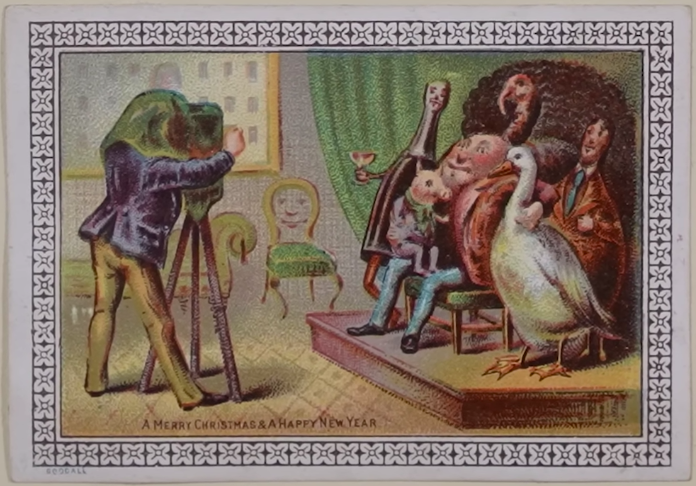
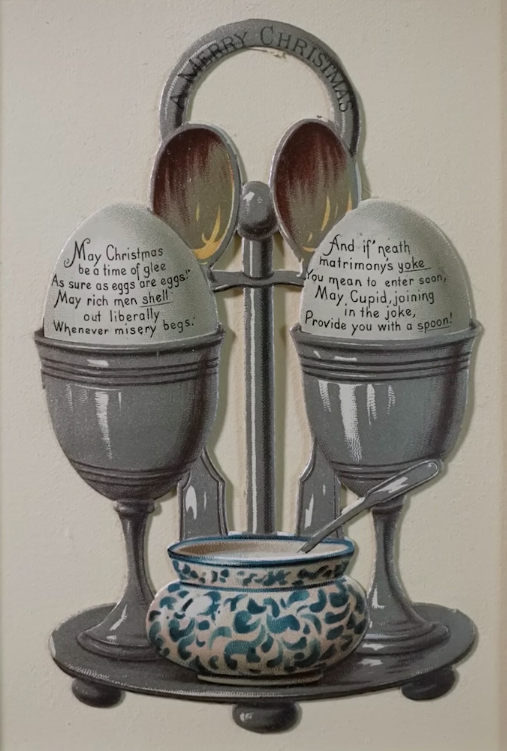
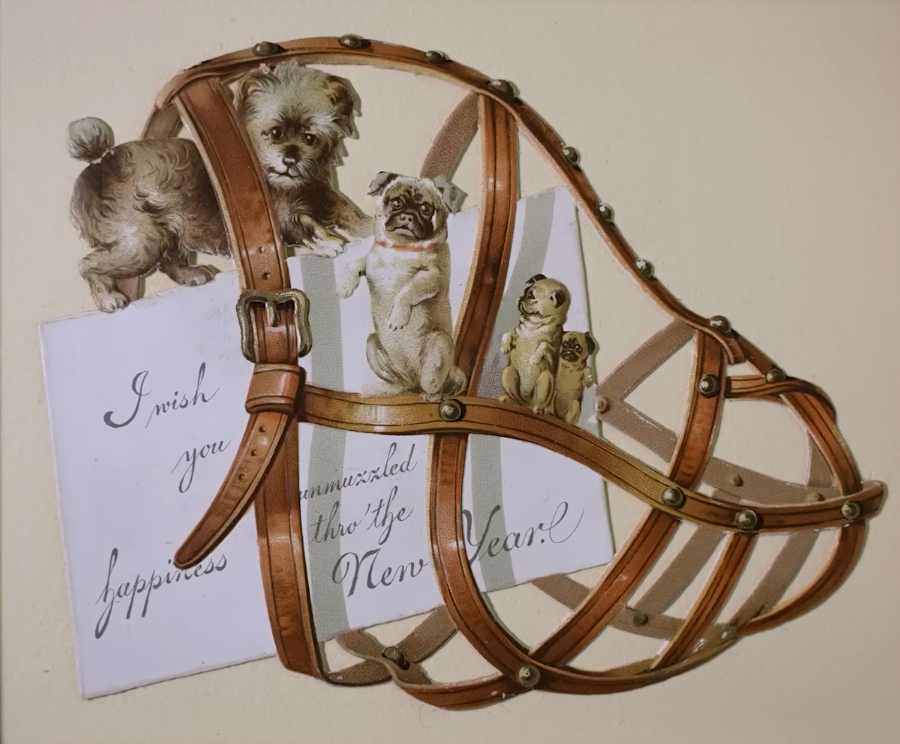
The upper crust could afford such fan­cy design ele­ments as clever die-cut shapes, pop up ele­ments, and translu­cent win­dows that encour­aged the recip­i­ents to hold them up to actu­al win­dows.

Tech­no­log­i­cal advances in the print­ing indus­try, and the cre­ation of the cost-effec­tive Pen­ny Post allowed those whose bud­gets were more mod­est than Mr. Cole’s to par­tic­i­pate too.

Their cards tend­ed to be sim­pler in exe­cu­tion, though not nec­es­sar­i­ly con­cept.

In addi­tion to the views we’ve come to expect — win­ter, Father Christ­mas, hol­ly — the Vic­to­ri­ans had a thing for jol­ly anthro­po­mor­phized food and some tru­ly shame­less puns.

Enjoy these Ghosts of Christ­mas Past, dear read­ers. We’re almost inspired to revive the tra­di­tion!

Read more about the advent of this tra­di­tion, includ­ing how it jumped the pond, in Smith­son­ian Magazine’s His­to­ry of the Christ­mas Card.

Relat­ed Con­tent 

When Sal­vador Dalí Cre­at­ed Christ­mas Cards That Were Too Avant Garde for Hall­mark (1960)

J.R.R. Tolkien Sent Illus­trat­ed Let­ters from Father Christ­mas to His Kids Every Year (1920–1943)

Langston Hugh­es’ Home­made Christ­mas Cards From 1950

Watch Ter­ry Gilliam’s Ani­mat­ed Short, The Christ­mas Card (1968)

Hear Neil Gaiman Read A Christ­mas Car­ol Just Like Charles Dick­ens Read It

An Oscar-Win­ning Ani­ma­tion of Charles Dick­ens’ Clas­sic Tale, A Christ­mas Car­ol (1971)

- Ayun Hal­l­i­day is the Chief Pri­ma­tol­o­gist of the East Vil­lage Inky zine and author, most recent­ly, of Cre­ative, Not Famous: The Small Pota­to Man­i­festo.  Fol­low her @AyunHalliday.

Behold Beautiful Original Movie Posters for Metropolis from France, Sweden, Germany, Japan & Beyond

Of Fritz Lang’s Metrop­o­lis, the crit­ic Siegfried Kra­cauer wrote that “the Amer­i­cans rel­ished its tech­ni­cal excel­lence; the Eng­lish remained aloof; the French were stirred by a film which seemed to them a blend of Wag­n­er and Krupp, and on the whole an alarm­ing sign of Ger­many’s vital­i­ty.” By Wag­n­er, Kra­cauer of course meant the com­pos­er; Krupp referred to the arms man­u­fac­tur­er Friedrich Krupp AG. We must remem­ber that Metrop­o­lis first came out in the Ger­many of 1927, and thus into a sociopo­lit­i­cal con­text grow­ing more volatile by the moment.

But the film also came out in the gold­en age of silent cin­e­ma, and every seri­ous movie­go­er in the world must have been enor­mous­ly eager for a glimpse of the spec­ta­cle of the elab­o­rate dystopi­an future Lang and his col­lab­o­ra­tors had put onscreen.

And screen around the world that spec­ta­cle did, albeit in a ver­sion cen­sored and oth­er­wise cut in a vari­ety of ways that Lang found ter­ri­bly dis­pleas­ing. How­ev­er bowd­ler­ized the Metrop­o­lis seen by so many back then, it proved to be so much of an attrac­tion that its adver­tis­ing mate­ri­als became near­ly as artis­tic as the film itself.

At Stephen O’Don­nel­l’s blog Gods and Fool­ish Grandeur, you can see a selec­tion of the posters for Metrop­o­lis put up dur­ing the late nine­teen-twen­ties and ear­ly nine­teen-thir­ties in the movie the­aters of var­i­ous coun­tries, includ­ing Swe­den, France, Japan, and Aus­tralia.

All are visu­al­ly strik­ing, but it prob­a­bly comes as no sur­prise that the Amer­i­can ones — prod­ucts, after all, of the cul­ture that gave rise to Hol­ly­wood — get espe­cial­ly breath­less with the accom­pa­ny­ing text.

“FANTASTIC FUTURISTIC FATALISTIC,” promis­es one poster, but not with­out adding “IMAGINARY IMPRESSIVE IMPOSSIBLE” and “EROTIC EXOTIC ERRATIC.” Anoth­er sheet holds out to view­ers a flight “HIGH INTO THE AIR!” Lest they sus­pect that would­n’t give them their quar­ter’s worth of fan­ta­sy, it also promis­es them a plunge “DEEP IN THE EARTH!” A dif­fer­ent tagline, also used in oth­er Eng­lish-speak­ing coun­tries, declares of the film that “Every­one is talk­ing about it, yet no one can describe it!”

That’s not for lack of try­ing, least of all by the dis­trib­u­tor’s pub­lic­i­ty depart­ment: anoth­er poster’s detailed para­graph boasts of a “mighty, surg­ing love dra­ma of the two worlds that work out their moil­ing des­tinies with­in the con­fines of a great city.” But over the gen­er­a­tions — and after restora­tions — Metrop­o­lis has sur­passed these claims with its val­ue as a work of cin­e­mat­ic art, and indeed become as time­less as a ques­tion once used to pro­mote it: “What’s the world com­ing to?”

via Messy­Nessy

Relat­ed con­tent:

Metrop­o­lis: Watch Fritz Lang’s 1927 Mas­ter­piece

Read the Orig­i­nal 32-Page Pro­gram for Fritz Lang’s Metrop­o­lis (1927)

H. G. Wells Pans Fritz Lang’s Metrop­o­lis in a 1927 Movie Review: It’s “the Sil­li­est Film”

Gaze at Glob­al Movie Posters for Hitchcock’s Ver­ti­go: U.S., Japan, Italy, Poland & Beyond

10,000 Clas­sic Movie Posters Get­ting Dig­i­tized & Put Online by the Har­ry Ran­som Cen­ter at UT-Austin: Free to Browse & Down­load

40,000 Film Posters in a Won­der­ful­ly Eclec­tic Archive: Ital­ian Tarkovsky Posters, Japan­ese Orson Welles, Czech Woody Allen & Much More

Based in Seoul, Col­in Mar­shall writes and broad­casts on cities, lan­guage, and cul­ture. His projects include the Sub­stack newslet­ter Books on Cities, the book The State­less City: a Walk through 21st-Cen­tu­ry Los Ange­les and the video series The City in Cin­e­ma. Fol­low him on Twit­ter at @colinmarshall or on Face­book.

The History of Jazz Visualized on a Circuit Diagram of a 1950s Phonograph: Features 1,000+ Musicians, Artists, Songwriters and Producers

The dan­ger of enjoy­ing jazz is the pos­si­bil­i­ty of let­ting our­selves slide into the assump­tion that we under­stand it. To do so would make no more sense than believ­ing that, say, an enjoy­ment of lis­ten­ing to records auto­mat­i­cal­ly trans­mits an under­stand­ing of record play­ers. One look at such a machine’s inner work­ings would dis­abuse most of us of that notion, just as one look at a map of the uni­verse of jazz would dis­abuse us of the notion that we under­stand that music in all the vari­eties into which it has evolved. But a jazz map that exten­sive has­n’t been easy to come by until this month, when design stu­dio Dorothy put on sale their Jazz Love Blue­print.

Mea­sur­ing 80 cen­time­ters by 60 cen­time­ters (rough­ly two and half by two feet), the Jazz Love Blue­print visu­al­ly cel­e­brates “over 1,000 musi­cians, artists, song­writ­ers and pro­duc­ers who have been piv­otal to the evo­lu­tion of this ever chang­ing and con­stant­ly cre­ative genre of music,” dia­gram­ming the con­nec­tions between the defin­ing artists of major eras and move­ments in jazz.

These include the “inno­va­tors that laid the foun­da­tions for jazz music” like Scott Joplin and Jel­ly Roll Mor­ton, “orig­i­nal jazz giants” like Louis Arm­strong and Ella Fitzger­ald, “inspired musi­cians of bebop” like Char­lie Park­er, Dizzy Gille­spie, and such lead­ing lights of â€śspir­i­tu­al jazz” as John Coltrane, Alice Coltrane, and the late Pharoah Sanders.

You prob­a­bly know all those names, even if you only casu­al­ly lis­ten to jazz. But you may not have heard of such play­ers on “the cur­rent vibrant UK scene” as Ezra Col­lec­tive, Shaba­ka Hutch­ings, Nubya Gar­cia, Koko­roko, and Moses Boyd, or those on “the explod­ing US scene” like Kamasi Wash­ing­ton, Robert Glasper, and Makaya McCraven. The map includes not only the indi­vid­u­als but also the insti­tu­tions that have shaped jazz in all its forms: clubs like Bird­land and Ron­nie Scot­t’s, record labels like Blue Note, Verve, and ECM. Even the most expe­ri­enced jazz fans will sure­ly spot new lis­ten­ing paths on the Jazz Love Blue­print. Those with an elec­tron­ic or mechan­i­cal bent will also notice that the whole design has been based on the cir­cuit dia­gram of a phono­graph: the very machine that set so many of us on the path to our love of jazz in the first place.

You can find oth­er dia­grams map­ping the his­to­ry of Elec­tron­ic Music, Rock, Hip Hop and Alter­na­tive Music here.

Relat­ed con­tent:

Linked Jazz: A Huge Data Visu­al­iza­tion Maps the Rela­tion­ships Between Count­less Jazz Musi­cians & Restores For­got­ten Women to Jazz His­to­ry

Hear 2,000 Record­ings of the Most Essen­tial Jazz Songs: A Huge Playlist for Your Jazz Edu­ca­tion

1959: The Year That Changed Jazz

Langston Hugh­es Presents the His­to­ry of Jazz in an Illus­trat­ed Children’s Book (1955)

Hear the First Jazz Record, Which Launched the Jazz Age: “Liv­ery Sta­ble Blues” (1917)

Behold the MusicMap: The Ulti­mate Inter­ac­tive Geneal­o­gy of Music Cre­at­ed Between 1870 and 2016

Based in Seoul, Col­in Mar­shall writes and broad­casts on cities, lan­guage, and cul­ture. His projects include the Sub­stack newslet­ter Books on Cities, the book The State­less City: a Walk through 21st-Cen­tu­ry Los Ange­les and the video series The City in Cin­e­ma. Fol­low him on Twit­ter at @colinmarshall or on Face­book.

Behold a 21st-Century Medieval Castle Being Built with Only Tools & Materials from the Middle Ages

Con­struc­tion sites are hives of spe­cial­ized activ­i­ty, but there’s no par­tic­u­lar train­ing need­ed to fer­ry 500 lbs of stone sev­er­al sto­ries to the masons wait­ing above. All you need is the sta­mi­na for a few steep flights and a medieval tread­wheel crane or “squir­rel cage.”

The tech­nol­o­gy, which uses sim­ple geom­e­try and human exer­tion to hoist heavy loads, dates to ancient Roman times.

Retired in the Vic­to­ri­an era, it has been res­ur­rect­ed and is being put to good use on the site of a for­mer sand­stone quar­ry two hours south of Paris, where the cas­tle of an imag­i­nary, low rank­ing 13th-cen­tu­ry noble­man began tak­ing shape in 1997.

There’s no typo in that time­line.

Château de Guéde­lon is an immer­sive edu­ca­tion­al project, an open air exper­i­men­tal arche­ol­o­gy lab, and a high­ly unusu­al work­ing con­struc­tion site.

With a project time­line of 35 years, some 40 quar­rypeo­ple, stone­ma­sons, wood­cut­ters, car­pen­ters, tilers, black­smiths, rope mak­ers and carters can expect anoth­er ten years on the job.

That’s longer than a medieval con­struc­tion crew would have tak­en, but unlike their 21st-cen­tu­ry coun­ter­parts, they did­n’t have to take fre­quent breaks to explain their labors to the vis­it­ing pub­lic.

A team of arche­ol­o­gists, art his­to­ri­ans and castel­lol­o­gists strive for authen­tic­i­ty, eschew­ing elec­tric­i­ty and any vehi­cle that does­n’t have hooves.

Research mate­ri­als include illu­mi­nat­ed man­u­scripts, stained glass win­dows, finan­cial records, and exist­ing cas­tles.

The 1425-year-old Can­ter­bury Cathe­dral has a non-repro­duc­tion tread­mill crane stored in its rafters, as well as a levers and pul­leys activ­i­ty sheet for young vis­i­tors that notes that oper­at­ing a “human tread­mill” was both gru­el­ing and dan­ger­ous:

Philoso­pher John Stu­art Mill wrote that they were “unequalled in the mod­ern annals of legal­ized tor­ture.”

Good call, then, on the part of Guédelon’s lead­er­ship to allow a few anachro­nisms in the name of safe­ty.

Guédelon’s tread­mill cranes, includ­ing a dou­ble drum mod­el that piv­ots 360º to deposit loads of up to 1000 lbs wher­ev­er the stone­ma­sons have need of them, have been out­fit­ted with brakes. The walk­ers inside the wood­en wheels wear hard hats, as are the over­seer and those mon­i­tor­ing the brakes and the cra­dle hold­ing the stones.

The onsite work­er-edu­ca­tors may be garbed in peri­od-appro­pri­ate loose-fit­ting nat­ur­al fibers, but rest assured that their toes are steel-rein­forced.

Château de Guéde­lon guide Sarah Pre­ston explains the rea­son­ing:

Obvi­ous­ly, we’re not try­ing to dis­cov­er how many peo­ple were killed or injured in the 13th-cen­tu­ry.

Learn more about Château de Guéde­lon, includ­ing how you can arrange a vis­it, here.

Explore the his­to­ry of tread­mill cranes here.

And see how the Château de Guéde­lon has housed Ukrain­ian refugees here.

via The Kids Should See This

Relat­ed Con­tent 

The Medieval City Plan Gen­er­a­tor: A Fun Way to Cre­ate Your Own Imag­i­nary Medieval Cities

A Medieval Book That Opens Six Dif­fer­ent Ways, Reveal­ing Six Dif­fer­ent Books in One

Behold the Medieval Wound Man: The Poor Soul Who Illus­trat­ed the Injuries a Per­son Might Receive Through War, Acci­dent or Dis­ease

- Ayun Hal­l­i­day is the Chief Pri­ma­tol­o­gist of the East Vil­lage Inky zine and author, most recent­ly, of Cre­ative, Not Famous: The Small Pota­to Man­i­festo. Fol­low her @AyunHalliday.

Artist Makes Astonishing Armor for Cats & Mice

As a child, Jeff De Boer, the son of a sheet met­al fab­ri­ca­tor, was fas­ci­nat­ed by the Euro­pean plate armor col­lec­tion in Calgary’s Glen­bow Muse­um:

There was some­thing mag­i­cal or mys­ti­cal about that emp­ty form, that con­tained some­thing. So what would it con­tain? A hero? Do we all con­tain that in our­selves?

After grad­u­at­ing from high school wear­ing a par­tial suit of armor he con­struct­ed for the occa­sion, De Boer com­plet­ed sev­en full suits, while major­ing in jew­el­ry design at the Alber­ta Col­lege of Art and Design.

A sculp­ture class assign­ment pro­vid­ed him with an excuse to make a suit of armor for a cat. The artist had found his niche.

Using steel, sil­ver, brass, bronze, nick­el, cop­per, leather, fiber, wood, and his del­i­cate jew­el­ry mak­ing tools, DeBoer became the cats’ armor­er, spend­ing any­where from 50 to 200 hours pro­duc­ing each increas­ing­ly intri­cate suit of feline armor.  A noble pur­suit, but one that inad­ver­tent­ly cre­at­ed an “imbal­ance in the uni­verse”:

The only way to fix it was to do the same for the mouse.

“The suit of armor is a trans­for­ma­tion vehi­cle. It’s some­thing that only the hero would wear,” De Boer notes.

Fans of David Petersen’s Mouse Guard series will need no con­vinc­ing, though no real mouse has had the mis­for­tune to find its way inside one of his aston­ish­ing, cus­tom-made cre­ations.

Not even a taxi­dermy spec­i­men, he revealed on the Mak­ing, Our Way pod­cast:

It’s not an alto­geth­er bad idea. The only rea­son I don’t do it is that hol­low suit of armor like you might see in a muse­um, your imag­i­na­tion will make it do a mil­lion things more than if you stick a mouse in it will ever do. I have put armor on cats. I can tell you, it’s noth­ing like what you think it’s going to be. It’s not a very good expe­ri­ence for the cat. It does not ful­fill any fan­tasies about a cat wear­ing a suit of armor.


Though cats were his entry point, De Boer’s sym­pa­thies seem aligned with the under­dog — er, mice. Equip­ping hum­ble, hypo­thet­i­cal crea­tures with exquis­ite­ly wrought, his­tor­i­cal pro­tec­tive gear is a way of push­ing back against being per­ceived dif­fer­ent­ly than one wish­es to be.

Accept­ing an Hon­orary MFA from his alma mater ear­li­er this year, he described an armored mouse as a metaphor for his “ongo­ing cat and mouse rela­tion­ship with the world of fine art…a mis­chie­vous, rebel­lious being who dares to com­pete on his own terms in a world ruled by the cool cats.”

Each tiny piece is pre­ced­ed by painstak­ing research and many ref­er­ence draw­ings, and may incor­po­rate spe­cial mate­ri­als like the Japan­ese silk haori-himo cord lac­ing the shoul­der plates to the body armor of a Samu­rai mouse fam­i­ly.

Addi­tion­al cre­ations have ref­er­enced Mon­go­lian, glad­i­a­tor, cru­sad­er, and Sara­cen styles — this last per­fect for a Per­sian cat.

“I mean, “Why not?” he asks in his TED‑x Talk,Village Idiots & Inno­va­tion, below.

His lat­est work com­bines ele­ments of Maratha and Hus­sar armor in a ver­i­ta­ble puz­zle of minus­cule pieces.

See more of Jeff De Boer’s cat and mouse armor on his Insta­gram.

Relat­ed Con­tent 

What’s It Like to Fight in 15th Cen­tu­ry Armor?: A Sur­pris­ing Demon­stra­tion

Cats in Medieval Man­u­scripts & Paint­ings

A Record Store Designed for Mice in Swe­den, Fea­tur­ing Albums by Mouse Davis, Destiny’s Cheese, Dol­ly Pars­ley & More

- Ayun Hal­l­i­day is the Chief Pri­ma­tol­o­gist of the East Vil­lage Inky zine and author, most recent­ly, of Cre­ative, Not Famous: The Small Pota­to Man­i­festo. Fol­low her @AyunHalliday.

How a Dutch “Dementia Village” Improves Quality of Life with Intentional Design

Peo­ple suf­fer­ing from demen­tia lose their abil­i­ty to take an active part in con­ver­sa­tions, every­day activ­i­ties, and their own phys­i­cal upkeep.

They are prone to sud­den mood swings, irri­tabil­i­ty, depres­sion, and anx­i­ety.

They may be strick­en with delu­sions and wild hal­lu­ci­na­tions.

All of these things can be under­stand­ably upset­ting to friends and fam­i­lies. There’s a lot of stig­ma sur­round­ing this sit­u­a­tion.

Tak­ing care of a spouse or par­ent with demen­tia can be an over­whelm­ing­ly iso­lat­ing expe­ri­ence, though no one is more iso­lat­ed than the per­son expe­ri­enc­ing severe cog­ni­tive decline first­hand.

While many of us would do any­thing to stay out of them, the sad fact is res­i­den­tial mem­o­ry care facil­i­ties are often the end-of-the-line real­i­ty for those liv­ing with extreme demen­tia.

Dur­ing the first sum­mer of the COVID-19 pan­dem­ic, nurs­ing home deaths attrib­uted to Alzheimer’s dis­ease and demen­tia increased by more than 20 per­cent, owing to such fac­tors as chron­ic staffing short­ages and a ban on out­side vis­i­tors.

As DeAnn Wal­ters, direc­tor of clin­i­cal affairs for the Cal­i­for­nia Asso­ci­a­tion of Health Facil­i­ties, told Politi­co:

We’re try­ing to be sup­port­er, social work­er, care­giv­er, friend and house­keep­ing for the res­i­dent. It’s putting a lot of pres­sure on the care­givers and the oper­a­tion of the facil­i­ty to make sure every­one has what they need. Before the pan­dem­ic we couldn’t even get socks on peo­ple and you’d see them walk­ing around bare­foot.

Not the vision any of us would choose for our parent’s gold­en years, or our own.

The Hogeweyk, a planned vil­lage just out­side of Ams­ter­dam, offers a dif­fer­ent sort of future for those with severe demen­tia.

The above episode of By Design, Vox’s series about the inter­sec­tion of design and tech­nol­o­gy, explores the inno­va­tions that con­tribute to the Hogeweyk’s res­i­dents over­all hap­pi­ness and well­be­ing.

Rather than group­ing res­i­dents togeth­er in a sin­gle insti­tu­tion­al set­ting, they are placed in groups of six, with every­one inhab­it­ing a pri­vate room and shar­ing com­mon spaces as they see fit.

The com­mon spaces open onto out­door areas that can be freely enjoyed by all housed in that “neigh­bor­hood”. No need to wait until a staff mem­ber grants per­mis­sion or fin­ish­es some task.

Those wish­ing to ven­ture fur­ther afield can avail them­selves of such pleas­ant quo­tid­i­an des­ti­na­tions as a gro­cery, a restau­rant, a bar­ber­shop, or a the­ater.

These loca­tions are designed in accor­dance with cer­tain things proven to work well in insti­tu­tion­al set­tings —  for instance, avoid­ing dark floor tiles, which some peo­ple with demen­tia per­ceive as holes.

But oth­er design ele­ments reflect the choice to err on the side of qual­i­ty of life. Hand rails may help in pre­vent­ing falls, but so do rol­la­tors and walk­ers, which the res­i­dents use on their jaunts to the town squares, gar­dens and pub­lic ameni­ties.

The design­ers believe that equip­ping res­i­dents with a high lev­el of free­dom not only pro­motes phys­i­cal activ­i­ty, it min­i­mizes issues asso­ci­at­ed with demen­tia like aggres­sion, con­fu­sion, and wan­der­ing.

Co-founders Eloy van Hal and Jan­nette Spier­ing write that the Hogeweyk’s crit­ics com­pare it to the Tru­man Show, the 1998 film in which Jim Car­rey’s title char­ac­ter real­izes that his whole­some small town life, and his every inter­ac­tion with his pur­port­ed friends, neigh­bors, and loved ones, have been a set up for a high­ly rat­ed, hid­den cam­era real­i­ty TV show.

They describe The Hogeweyk as a stage for, “the rem­i­nis­cence world”, in which actors help the res­i­dents live in a fic­ti­tious world. Many Alzheimer’s experts have, how­ev­er, val­ued The Hogeweyk for what it real­ly is: a famil­iar and safe envi­ron­ment in which peo­ple with demen­tia live while retain­ing their own iden­ti­ty and auton­o­my as much as pos­si­ble. They live in a social com­mu­ni­ty with real streets and squares, a real restau­rant with real cus­tomers, a super­mar­ket for gro­ceries and a the­atre that hosts real per­for­mances. There is no fake bus stop or post office, there are no fake façades and sets. The restau­rant employ­ee, the handy­man, the care­tak­er, the nurse, the hair­dress­er, etc.—in short: every­one who works at The Hogeweyk uses their pro­fes­sion­al skills to actu­al­ly sup­port the res­i­dents and are, there­fore, cer­tain­ly not actors.

Pro­fes­sion­al care and sup­port goes on around the clock, but rarely takes cen­ter­stage. Nor­mal life is pri­or­i­tized.

A vis­i­tor describes a stroll through some of the Hogeweyk’s pub­lic areas:

In the shade of one of the large trees, a mar­ried cou­ple gazes hap­pi­ly at the activ­i­ty in the the­atre square. An elder­ly gen­tle­man, togeth­er with a young lady, intent­ly study the large chess board and take turns mov­ing the pieces. At the foun­tain, a group of women chat loud­ly on colour­ful gar­den chairs. The sto­ry is clear­ly audible—it is about a mem­o­ry of a vis­it to a park in Paris which had the same chairs. Passers-by, old and young, greet the women enthu­si­as­ti­cal­ly. A lit­tle fur­ther on, a woman is talk­ing to a man oppo­site her. She is ges­tur­ing wild­ly. After a while, anoth­er woman joins the con­ver­sa­tion. The two women then walk through the open front door of Boule­vard 15. 

The cov­ered pas­sage smells of fresh­ly-baked cook­ies. The scent is com­ing from De Bonte Hof. Amus­ing con­ver­sa­tions can be heard that pause for a moment when the oven beeps in the kitchen that has been dec­o­rat­ed in an old-fash­ioned style. A tray of fresh cook­ies is removed from the oven. Two women, one in a wheel­chair, enter the venue, obvi­ous­ly seduced by the smell. They sam­ple the cook­ies. 

The super­mar­ket across the street is very busy. Shop­ping trol­leys loaded with gro­ceries are pushed out of the shop. The rat­tle of a shop­ping trol­ley dis­si­pates into the dis­tance as it dis­ap­pears from view towards Grote Plein. A man reluc­tant­ly push­es the full trol­ley while two women fol­low behind him arm in arm. The trio dis­ap­pear behind the front door of Grote Plein 5.


A staffer’s account of a typ­i­cal morn­ing in one of Hogeweyk’s hous­es reveals more about the hands-on care that allows res­i­dents to con­tin­ue enjoy­ing their care­ful­ly designed home, and the autonomous lifestyle it makes pos­si­ble:

Mr Hen­dricks wakes up on the sofa. He unzips his fly. I jump up and escort him to the toi­let just in time. I grab a roll of med­ica­tion for him from the med­ica­tion trol­ley. He is now walk­ing to his room. We pick out clothes togeth­er and I lay them out on his bed. He wash­es him­self at the sink. I watch briefly before leav­ing. Fif­teen min­utes lat­er, I poke my head through the door. That’s not how elec­tric shav­ing works! I offer to help, but Mr. Hen­dricks is clear­ly a bit irri­tat­ed and grum­bles. He’ll be a lit­tle less shaven today. We’ll try again after break­fast…

We help Mrs Sti­j­nen into the show­er chair with the hoist. She is clear­ly not used to it. Dis­cussing her exten­sive Swarovs­ki col­lec­tion, dis­played in the glass case in her room, turns out to be an excel­lent dis­trac­tion. She proud­ly talks about the lat­est piece she acquired this year. On to the show­er. The two oth­er res­i­dents are still sleep­ing. Great, that gives me the chance to devote some extra time to Mrs Sti­j­nen today. 

The door­bell rings again and my col­league, Yas­min, walks in. She’s the famil­iar face that every­one can rely on. Always present at 8 a.m., 5 days a week. What a relief for res­i­dents and fam­i­ly. She, too, puts her coat and bag in the lock­er. The wash­ing machine is ready, and Yas­min loads up the dry­er. The table in the din­ing room is then set. Yas­min puts a flo­ral table­cloth from the cup­board on the table. Mr Hen­dricks lends a hand and, with some guid­ance, puts two plates in their place, but then walks away to the sofa and sits down. A Dutch break­fast with bread, cheese, cold cuts, jam, cof­fee, tea and milk is served. Yas­min is mak­ing por­ridge for Mrs Smit. As always, she has break­fast in bed. Yas­min helps Mrs Smit. It is now 08:45 and Mr Hen­dricks and Mrs Sti­j­nen are sit­ting at the din­ing table. Yas­min push­es the chairs in and sits down her­self. They chat about the weath­er, and Yas­min lends a help­ing hand when need­ed. 

Mr Hen­dricks is real­ly grumpy today and is cur­rent­ly grum­bling at Mrs Jansen. I’m won­der­ing if we’re over­look­ing some­thing?

Learn more about the Hogeweyk, the world’s first demen­tia vil­lage here.

Watch a playlist of Vox By Design episodes here.

Relat­ed Con­tent 

The Restau­rant of Mis­tak­en Orders: A Tokyo Restau­rant Where All the Servers Are Peo­ple Liv­ing with Demen­tia

How Music Can Awak­en Patients with Alzheimer’s and Demen­tia

Demen­tia Patients Find Some Eter­nal Youth in the Sounds of AC/DC

- Ayun Hal­l­i­day is the Chief Pri­ma­tol­o­gist of the East Vil­lage Inky zine and author, most recent­ly, of Cre­ative, Not Famous: The Small Pota­to Man­i­festo.  Fol­low her @AyunHalliday.

How a Simple, Bauhaus-Designed Chair Ended Up Everywhere Over the Past 100 Years

If you don’t believe chairs can be art, you’ll have to take it up with the cura­tors, gal­lerists, col­lec­tors, archi­tects, and design­ers around the world who spend their lives obsess­ing over chair design. Every major muse­um has a fur­ni­ture col­lec­tion, and every col­lec­tion dis­play­ing fur­ni­ture gives spe­cial pride of place to the rad­i­cal inno­va­tions of mod­ernist chairs, from ear­ly arti­san cre­ations of the Bauhaus to mass-pro­duced mid-cen­tu­ry chairs of leg­end. Chairs are sta­tus sym­bols, art objects, and phys­i­cal man­i­fes­ta­tions of leisure, pow­er, and repose.

Who could for­get Charles and Ray Eames’ icon­ic lounge chair, Arne Jacob­sen’s “Egg,” the ele­gant­ly sim­ple side chairs of Eero Saari­nen and Charles Eames, or even the more recent cor­ner office sta­ple, the Aeron Chair — the Her­man Miller orig­i­nal that has been part of the Muse­um of Mod­ern Art’s per­ma­nent col­lec­tion since 1992? “In chairs more than in any oth­er object, human beings are the unit of mea­sure,” says Muse­um of Mod­ern Art cura­tor Pao­la Antonel­li, “and design­ers are forced to walk a line between stan­dard­iza­tion and per­son­al­iza­tion.”

Artist Mar­cel Breuer, a Bauhaus design­er, archi­tect, and instruc­tor, applied more than his share of inno­v­a­tive ideas to a series of chairs and tables designed and built in the 1920s and 30s. The most icon­ic of these, from a design per­spec­tive, may be the “Wass­i­ly,” a club chair-shaped con­trap­tion made of steel tub­ing and can­vas straps. (The chair acquired the name because Breuer’s Bauhaus col­league Wass­i­ly Kandin­sky so admired it.) One rarely encoun­ters this chair out­side the envi­rons of upscale fur­ni­ture gal­leries and the fin­er homes and wait­ing rooms.

Breuer’s Cesca, how­ev­er, the Wass­i­ly’s small­er, more util­i­tar­i­an cousin from 1928, seems to show up all over the place. Also called the B32 (with an arm­chair ver­sion called the B64), the Cesca’s one-piece, steel tube design was, like Breuer’s full line of Bauhaus fur­ni­ture, inspired by his exper­i­ments in bike-build­ing and inter­est in “mass pro­duc­tion and stan­dard­iza­tion,” he said. Unlike the Wass­i­ly, which might set you back around $3,300 for a qual­i­ty repro­duc­tion, a Cesca comes in at around 1/10th the price, and seems ubiq­ui­tous, the Vox video above points out.

No, it’s still not cheap, but Breuer’s rat­tan chair design is wide­ly beloved and copied. “The can­tilevered cane-and-chrome chair is all over the place,” Vox writes, “in trendy homes, in movies and on TV shows, even tat­tooed on peo­ple’s bod­ies.… [This] some­what unas­sum­ing two-legged chair is the real­iza­tion of a man­i­festo’s worth of utopi­an ideals about design and func­tion­al­i­ty.” It sat­is­fies the school’s brief, that is to say, for the util­i­tar­i­an as utopi­an, as Breuer him­self lat­er com­ment­ed on his design:

I already had the con­cept of span­ning the seat with fab­ric in ten­sion as a sub­sti­tute for thick uphol­stery. I also want­ed a frame that would be resilient and elas­tic [as well as] achieve trans­paren­cy of forms to attain both visu­al and phys­i­cal light­ness.… I con­sid­ered such pol­ished and curved lines not only sym­bol­ic of our mod­ern tech­nol­o­gy, but actu­al­ly tech­nol­o­gy itself.

Learn more about the prac­ti­cal, com­fort­able, beau­ty of the Cesca — and the ideals of the Bauhaus — in the video at the top. Learn more about the chair’s design­er, Mar­cel Breuer, in this online MoMA mono­graph by Christo­pher Wilk.

Relat­ed Con­tent: 

How the Icon­ic Eames Lounge Chair Is Made, From Start to Fin­ish

Down­load Orig­i­nal Bauhaus Books & Jour­nals for Free: A Dig­i­tal Cel­e­bra­tion of the Found­ing of the Bauhaus School 100 Years Ago

The Women of the Bauhaus: See Hip, Avant-Garde Pho­tographs of Female Stu­dents & Instruc­tors at the Famous Art School

Josh Jones is a writer and musi­cian based in Durham, NC. Fol­low him at @jdmagness

« Go BackMore in this category... »
Quantcast