If you don’t believe chairs can be art, you’ll have to take it up with the curators, gallerists, collectors, architects, and designers around the world who spend their lives obsessing over chair design. Every major museum has a furniture collection, and every collection displaying furniture gives special pride of place to the radical innovations of modernist chairs, from early artisan creations of the Bauhaus to mass-produced mid-century chairs of legend. Chairs are status symbols, art objects, and physical manifestations of leisure, power, and repose.
Artist Marcel Breuer, a Bauhaus designer, architect, and instructor, applied more than his share of innovative ideas to a series of chairs and tables designed and built in the 1920s and 30s. The most iconic of these, from a design perspective, may be the “Wassily,” a club chair-shaped contraption made of steel tubing and canvas straps. (The chair acquired the name because Breuer’s Bauhaus colleague Wassily Kandinsky so admired it.) One rarely encounters this chair outside the environs of upscale furniture galleries and the finer homes and waiting rooms.
Breuer’s Cesca, however, the Wassily’s smaller, more utilitarian cousin from 1928, seems to show up all over the place. Also called the B32 (with an armchair version called the B64), the Cesca’s one-piece, steel tube design was, like Breuer’s full line of Bauhaus furniture, inspired by his experiments in bike-building and interest in “mass production and standardization,” he said. Unlike the Wassily, which might set you back around $3,300 for a quality reproduction, a Cesca comes in at around 1/10th the price, and seems ubiquitous, the Vox video above points out.
No, it’s still not cheap, but Breuer’s rattan chair design is widely beloved and copied. “The cantilevered cane-and-chrome chair is all over the place,” Vox writes, “in trendy homes, in movies and on TV shows, even tattooed on people’s bodies.… [This] somewhat unassuming two-legged chair is the realization of a manifesto’s worth of utopian ideals about design and functionality.” It satisfies the school’s brief, that is to say, for the utilitarian as utopian, as Breuer himself later commented on his design:
I already had the concept of spanning the seat with fabric in tension as a substitute for thick upholstery. I also wanted a frame that would be resilient and elastic [as well as] achieve transparency of forms to attain both visual and physical lightness.… I considered such polished and curved lines not only symbolic of our modern technology, but actually technology itself.
Learn more about the practical, comfortable, beauty of the Cesca — and the ideals of the Bauhaus — in the video at the top. Learn more about the chair’s designer, Marcel Breuer, in this online MoMA monograph by Christopher Wilk.
The highest quality classical guitars handmade in the 21st century can run into the tens of thousands of dollars. This is no frivolous expense for a professional player. Put such an instrument in the hands of an amateur and you may not hear much difference between it and a $150 factory-made budget model. In the hands of a seasoned player, a high-end guitar truly sings. Tone resides in the fingers — or 90% of it anyway — but a skilled guitarist knows how to discover and make use of all an instrument’s best qualities. For a musician who makes a living doing so, spending the cost of a car on a guitar makes economic sense (as does a good insurance policy).
The tonal qualities of the instrument below, a handmade classical guitar from 1888, are clearly abundant; it’s also clear that guitarist Brandon Acker — who has appeared in many of our previous posts on the guitar — knows how to exploit them. At times, he brings out such rich resonance, the instrument sounds like a piano; at others, it is almost harp-like. We have a confluence of rarity: a highly skilled player with deep knowledge of classical stringed instruments, and an instrument like no other — so rare, in fact, that it’s valued at over a quarter of a million dollars, roughly the average cost of a moderately-priced house in the U.S., the largest investment most people make in their lifetime.
To understand why the instrument carries such a high price tag, see Acker and YouTuber and guitarist Rob Scallon visit with father-and-son luthier team R.E. and M.E. Bruné at their shops in Illinois in the video at the top. The Brunés are specialists in classical and flamenco guitars. (The elder Bruné tells a charming story of making his first flamenco guitar for himself from his parents’ first dining room table.) In their shop’s storage area, they have ready access to some of the rarest guitars in the world, and they give us a lively tour — starting with a “bit of a letdown,” the “low-end,” 1967 Daniel Friederich concert model valued at $50,000.
In Acker’s hands, each guitar delivers the full potential of its sustain and resonance. Finally, at 16:00, we come to the 1888 Antonio de Torres guitar valued at $275,000. There are many older guitars in existence, even guitars made by Antonio Stradivari and his heirs. But it was this guitar, or one of the few others made by the legendary Torres around the same time, that revolutionized what a guitar looked and sounded like. When Andrés Segovia arrived on stages playing his Torres, the Brunés tell us, guitarists around the world decided that the old style, small-bodied guitars in use for centuries were obsolete.
There are perhaps 90 to 100 of the Torres classical guitars in existence, and this extravagantly-priced number 124 is “as close as you’re going to get to original,” says the elder Bruné, while his son makes the fascinating observation, “older instruments that have been played a lot, especially by great players… learn the music.” Acker expresses his surprise at the “sweetness” of the very touch of the guitar.
If you had attended the 2016 Guitar Foundation of America conference in Denver, where M.E. Bruné exhibited several of his shop’s rare guitars, you would have been able to play the Torres yourself — or even purchase it for the lesser price of $235,000.
In the video interview above from the GFA conference, M.E. Bruné describes the year plus-long restoration process on the guitar, one that involved some disassembly, extra bracing, and a replacement fingerboard, but preserved the beautiful spruce and birdseye maple of the guitar, wood that “doesn’t grow on trees like this anywhere” these days, says Bruné. It is, he says, “the best-sounding Torres” he’s ever heard. Coming from someone who has heard, and restored, the sweetest-sounding guitars in existence, that’s saying a lot. $275,000 worth? Maybe. Or maybe it’s impossibly arbitrary to put any price on such an artifact.
American nostalgia as we know it was invented in the nineteen-seventies. Consider that decade’s preponderance of backward-looking pop-cultural phenomena: Sha Na Na; Happy Days; “Yesterday Once More”; American Graffiti, whose tagline asked “Where were you in ’62?”, a time just eleven years before the release of the picture itself. But no piece of work stands more iconically for the seventies revival of the late fifties and early sixties than Grease. First produced as a stage musical in Chicago in 1971, it graduated to Broadway the next year. But Grease wouldn’t take its most enduring form until 1978, the year that brought Randal Kleiser’s film adaptation starring John Travolta and the late Olivia Newton-John.
A 28-year-old Australian might have seemed an unconventional choice for the part of Sandy Dombrowski, the new girl at midwestern Rydell High School. But after the alteration of a few details in the character and story, she made the role entirely her own. “It was Newton-John’s dulcet intimacy as a singer that set her up perfectly to play the naïve Sandy onscreen,” writes the New Yorker’s Rachel Syme.
Her “squeaky prudishness and moony innocence as she wails ‘Hopelessly Devoted to You’ stands in such sharp, silly contrast to her vampy fallen-woman persona at the end of the film that the whole thing feels like a camp commentary on the power of costuming and collective fantasy (not to mention a good perm).”
It didn’t hurt that Newton-John was already established as a singer: she’d represented the United Kingdom in 1974’s Eurovision Song Contest (losing, ultimately, to ABBA), and that very same year scored country hits in the United States. Her skills did much not just to make the Grease soundtrack America’s second-best-selling album of 1978 (second to the soundtrack of Travolta’s own vehicle Saturday Night Fever), but to keep it enduringly popular throughout the decades since. At Grease’s 2002 DVD release party, Newton-John and Travolta reunited onstage to sing “You’re the One That I Want,” much to the delight of the audience — all of whom must still remember where they were in ’02, at least for those three minutes.
Based in Seoul, Colin Marshall writes and broadcasts on cities, language, and culture. His projects include the Substack newsletterBooks on Cities, the book The Stateless City: a Walk through 21st-Century Los Angeles and the video series The City in Cinema. Follow him on Twitter at @colinmarshall, on Facebook, or on Instagram.
The mid-nineteen-nineties was not a time without irony. You may recall that, back then, “alternative” rock had not only gone mainstream, but, in certain regions, had even become the most popular genre of music on the radio. That was certainly true in the Seattle area, where I grew up. And if you wanted to start a rock band there, as writer Adam Cadre remembers, you knew what steps you had to take: “get a record deal, make a video, get it on 120 Minutes, have it become a Buzz Clip, wonder why massive success doesn’t ease the aching void inside.”
If you got into bands like 10,000 Maniacs, Smashing Pumpkins, R.E.M., The Replacements, the Pixies, the Offspring, or Sonic Youth in the mid-nineties (to say nothing of a certain trio called Nirvana), chances are — statistically speaking, at least — that you first saw them on 120 Minutes.
At the peak of its popularity on MTV, the show defined the alternative-rock zeitgeist, introducing new bands as well as bringing new waves of listeners to existing ones. Though most strongly associated with the nineties, it premiered in 1986, hosted by three of the first MTV VJs, J. J. Jackson, Martha Quinn, and Alan Hunter. 36 years later, you can relive the entirety of 120 Minutes’ seventeen-year run (with a brief revival in the twenty-tens) on Youtube.
Based in Seoul, Colin Marshall writes and broadcasts on cities, language, and culture. His projects include the Substack newsletterBooks on Cities, the book The Stateless City: a Walk through 21st-Century Los Angeles and the video series The City in Cinema. Follow him on Twitter at @colinmarshall, on Facebook, or on Instagram.
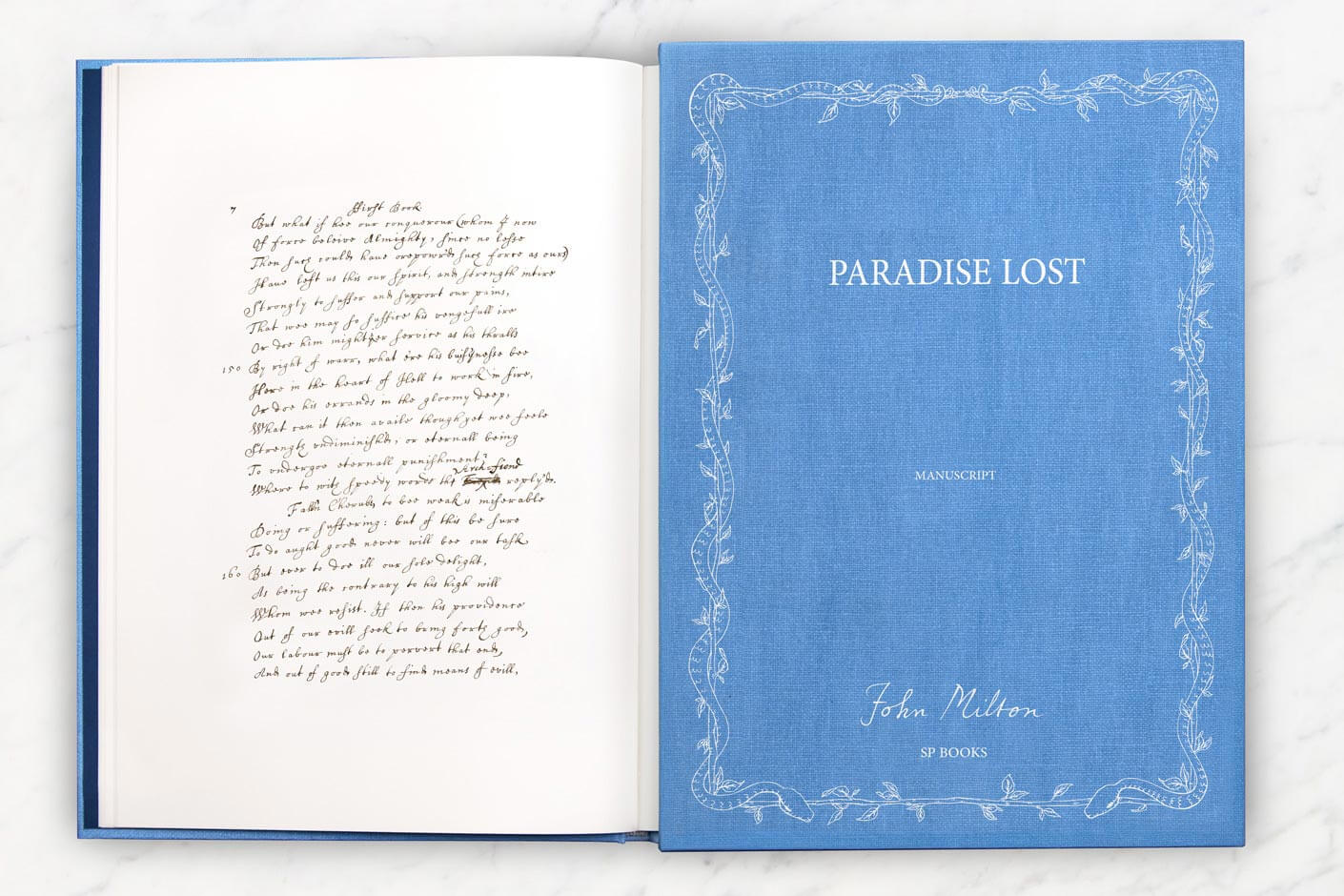
According to the Book of Revelation, the returning Christ arrives surrounded by seven candlesticks. In its author’s prophetic dream, “his head and his hairs were white like wool, as white as snow; and his eyes were as a flame of fire.” From his mouth issues “a sharp sword with which to strike down the nations.” It’s a startling image, created for symbolic purposes. Without a key to what those symbols mean, the text remains obscure. It is, after all, a vision given to a mystic hermit exiled on an island.
Many a Revelation-inspired magical grimoire from succeeding centuries also remains nearly incomprehensible to non-adepts. Such is the case with the “strange 18th-century manuscript called Clavis Inferni (key of hell),” as Benjamin Breen writes at Slate. “Filled with invocations, cryptic sigils, and paintings of supernatural beings” — such as the illustration from Revelation above — “the book defies interpretation — as it was meant to do.” Also, like Revelation, the text’s authorship is mysterious, and yet significant to our understanding of its intent.
The Key of Hell is attributed to a Cyprianus, a name that “probably refers to St. Cyprian of Antioch (d. 304 CE),” Breen writes in a post at Atlas Obscura, “a very common apocryphal attribution for medieval magical texts, since Cyprian was reputed to have been a powerful magician and demon-summoner before converting to Christianity.” The use of pseudoepigraphy — an author assuming the name of a long-dead figure — was common practice throughout the history of both theological and alchemical writing. Rather than an attempt at deception, it could signal the continuation of a tradition of occult knowledge.
The title page of the Key of Hell “seems to date it to 1717,” writes Breen, but a Sotheby’s catalogue entry claims, “the script seems to be of the late 18th century” and dates it to 1775. At the Wellcome Library — who host the text online in its entirety — we find this “Harry Potter-esque” origin story:
Also known as the Black Book, [the Key of Hell] is the textbook of the Black School at Wittenberg, the book from which a witch or sorcerer gets his spells. The Black School at Wittenberg was purportedly a place in Germany where one went to learn the black arts.
Written in Latin, Greek, Hebrew, and “the Magical Alphabet devised by occultist Cornelius Agrippa in his Third Book of Occult Philosophy from 1510,” notes Flashbak, the manuscript is “filled with invocations to spirits and demons — including a Hebrew invocation for summoning God.” (It also includes helpful instructions for banishing summoned spirits.) The manuscript’s full Latin title — Clavis Inferni sive magic alba et nigra approbata Metatrona — translates to “The Key of Hell with white and black magic approved by Metatron,” an archangel in the Talmudic and Kabbalist traditions. The use of this name suggests the spells within come from a higher authority.
Breen, however, found some unusual commentary on the book’s possible author, including the idea in Denmark that Cyprianus was “a fellow Dane so evil during his lifetime that when he died the devil threw him out of Hell,” writes professor of Norwegian literature Kathleen Stokker. Cyprianus was so enraged by this treatment that “he dedicated himself to writing the nine Books of Black Arts that underlie all subsequent Scandinavian black books.” Another apocryphal story identifies Cyprianus as a “ravishingly beautiful” Mexican nun from 1351 (?!) who met a “gory” end.
The story of artist John Heartfield — born Helmut Franz Josef Herzfeld in Berlin in 1891 — begins like a German fairy tale. In 1899, his parents, ill and poverty-stricken, abandoned Helmut and his three siblings in a mountain cabin at Aigen, near Salzburg. The hungry children were discovered four days later by the mayor of the town and his wife, who took them in and fostered them. Meanwhile, their uncle, a lawyer, appeared with a trust from their wealthy grandfather’s estate to fund their educations.
Helmut trained at several art schools in Germany, eventually arriving at the School of Arts and Crafts in the bohemian Berlin of the 1910s, where he abandoned his dream of becoming a painter and instead invented hugely effective anti-war propaganda art during World War I and the rise of the Nazis. As The Canvas video above explains, Heartfield’s work pointedly encapsulates the “anti-bourgeois, anti-capitalist, anti-fascist” attitudes of radical Berlin Dadaists. He was “one of Hitler’s most creative critics.”
Herzfeld began his anti-war art campaign by anglicizing his name to counter rising anti-British sentiment at the start of World War I. As John Heartfield, he collaborated with his brother, Weiland, and satirical artist George Grosz on the leftist journal New Youth and the revolutionary publishing house, Malik Verlag. After the war, they joined the German Communist party. (Heartfield “received his party book,” writes Sybille Fuchs, “from KPD leader Rosa Luxemburg herself.”); they also became “founding members of the Berlin Dadaists,” developing the photomontage style Heartfield used throughout his graphic design career.
“Photomontage allowed Heartfield to create loaded and politically contentious images,” the Getty writes. “To compose his works, he chose recognizable press photographs of politicians or events from the mainstream illustrated press.… Heartfield’s strongest work used variations of scale and stark juxtapositions to activate his already gruesome photo-fragments. The result could have a frightening visual impact.” They also had widespread influence, becoming an almost standard style of radical protest art throughout Europe in the early part of the 20th century.
On rare occasions, Heartfield included photographs of himself, as in the self-portrait below with scissors clipping the head of the Berlin police commissioner; or he used his own photography, as in an unglamorous shot a young pregnant woman behind whose head Heartfield places what appears to be the body of a dead young man. The 1930 work protested Weimar’s anti-abortion laws with the title “Forced Supplier of Human Material Take Courage! The State Needs Unemployed People and Soldiers!”
John Heartfield, Self-Portrait with the Police Commissioner Zörgiebel
Heartfield’s direct attacks on state power were allied with his support for worker movements. “In 1929, following ten years of activity in photomontage and publishing,” The Art Institute of Chicago writes, “John Heartfield began working for the left-wing periodical Worker’s Illustrated Magazine (Arbeiter-Illustrierte-Zeitung [AIZ]).” This weekly publication “served from the first as a major organ of opposition to the rising National Socialist Party.” Heartfield’s provocative covers mocked Hitler and portrayed the power of organized labor against the fascist threat. He traveled to the Soviet Union in 1931 under the magazine’s auspices and gave photomontage courses to the Red Army. His style spread internationally until the lifeless propaganda painting of Socialist Realism purged modernist art from the party style.
Unfortunately for Heartfield, and for Europe, the German left failed to present a unified front against Nazism as the KPD also became increasingly dogmatic and Stalinist. The artist and the editors of the AIZ were forced to flee to Prague when Hitler took power in 1933. (Heartfield reportedly escaped a “gang of Nazi thugs,” writes Fuchs, by leaping from his balcony in Berlin). In Czechoslovakia, he continued his counter-propaganda campaign against Hitler through the covers of the AIZ. When the Nazis occupied Prague in 1938, he fled again, to London but never stopped working through the war. He would eventually return to Berlin in the early 1950s and take up a career as a professor of literature.
Heartfield is a complicated figure — an overlooked yet key member of the German avant garde who, with his brother Weiland and artists like George Grosz revolutionized the media of photography, typography, and printing in order to virulently oppose war, oppression, and Nazism, despite the dangers to their livelihoods and lives. You can learn more about the artist’s life and work at the Official John Heartfield Exhibition site, which features many of the collages shown in the Canvas video at the top. (See especially the feature on Heartfield’s relevance to our current moment.) Also, don’t miss this interactive online exhibition from the Akademie Der Künste in Berlin, which controls the artist’s estate and has put a number of rare photos and documents online.
In 1958, Mao Zedong launched the Great Leap Forward. Eight years later, he announced the beginning of the Great Proletarian Cultural Revolution. Between those two events, of course, came the Great Chinese Famine, and historians now view all three as being “great” in the same pejorative sense. Though Chairman Mao may not have understood the probable consequences of policies like agricultural collectivization and ideological purification, he did understand the importance of his own image in selling those policies to the Chinese people: hence the famous 1966 photo of him swimming across the Yangtze River.
By that point, “the Chinese leader who had led a peasant army to victory in the Chinese Civil War and established the communist People’s Republic of China in 1949 was getting old.” So says Coleman Lowndes in the Vox Darkroom video above. Worse, Mao’s Great Leap Forward had clearly proven calamitous. The Chairman “needed to find a way to seal his legacy as the face of Chinese communism and a new revolution to lead.” And so he repeated one of his earlier feats, the swim across the Yangtze he’d taken in 1956. Spread far and wide by state media, the shot of Mao in the river taken by his personal photographer illustrated reports that he’d swum fifteen kilometers in a bit over an hour.
This meant “the 72-year-old would have shattered world speed records,” a claim all in a day’s work for propagandists in a dictatorship. But those who saw photograph wouldn’t have forgotten what happened the last time he took such a well-publicized dip in the Yangtze. “Experts feared that Mao was on the verge of kicking off another disastrous period of turmoil in China. They were right.” The already-declared Great Proletarian Cultural Revolution, now widely known as the Cultural Revolution, saw millions of Chinese youth — ostensibly radicalized by the image of their beloved leader in the flesh — organize into “the fanatical Red Guards,” a paramilitary force bent on extirpating, by any means necessary, the “four olds”: old culture, old ideology, old customs, and old traditions.
As with most attempts to usher in a Year Zero, Mao’s final revolution wasted little time becoming an engine of chaos. Only his death ended “a decade of destruction that had elevated the leader to god-like levels and resulted in over one million people dead.” The Chinese Communist’s Party has subsequently condemned the Cultural Revolution but not the Chairman himself, and indeed his swim remains an object of yearly commemoration. “Had Mao died in 1956, his achievements would have been immortal,” once said CCP official Chen Yun. “Had he died in 1966, he would still have been a great man but flawed. But he died in 1976. Alas, what can one say?” Perhaps that, had the aging Mao drowned in the Yangtze, Chinese history might have taken a happier turn.
Based in Seoul, Colin Marshall writes and broadcasts on cities, language, and culture. His projects include the Substack newsletterBooks on Cities, the book The Stateless City: a Walk through 21st-Century Los Angeles and the video series The City in Cinema. Follow him on Twitter at @colinmarshall, on Facebook, or on Instagram.
The 2022 Oscar winner for Best Picture was CODA, a story about a musically inclined girl with a deaf family. Kambri Crews, herself a CODA and author of a much darker story about this called Burn Down the Ground, joins your Pretty Much Pop host Mark Linsenmayer, writer Sarahlyn Bruck, and jack-of-many-intellectual-trades Al Baker to talk about how deaf culture interacts with film.
Films tend to show deafness as tragic, which is not necessarily how the deaf community views themselves. We talk about balancing the demands of a story, how real life works, and the need for positive representation. Also, deaf bowling!
In addition to CODA, we talk about The Sound of Metal, A Quiet Place, Children of a Lesser God, Mr. Holland’s Opus, See No Evil Hear No Evil, Eternals, Drive My Car, and more.
Note that this discussion was recorded in May but got bumped with all the shows wrapping up at that time and summer movies launching.
Charlie Chaplin had many high-profile fans in his day, including some of the luminaries of the early twentieth century. We could perhaps be forgiven for assuming that the writer and activist Hellen Keller was not among them, given the limitations her condition of deafness and blindness — or “deafblindness” — would naturally place on the enjoyment of film, even the silent films in which Chaplin made his name. But making that assumption would be to misunderstand the driving force of Keller’s life and career. If the movies were supposedly unavailable to her, then she’d make a point of not just watching them, but befriending their biggest star.
Keller met Chaplin in 1919 at his Hollywood studio, during the filming of Sunnyside. This, as biographers have revealed, was not one of the smoothest-going periods in the comedian-auteur’s life, but that didn’t stop him from enjoying his time with Keller, and even learning from her.
In her 1928 autobiography Midstream, she would remember that he’d been “shy, almost timid,” and that “his lovely modesty lent a touch of romance to the occasion that might otherwise have seemed quite ordinary.” The pictures that have circulated of the meeting, seen here, include one of Keller teaching Chaplin the tactile sign-language alphabet she used to communicate.
It was also the means by which, with the assistance of companion Anne Sullivan, she followed the action of Chaplin’s films A Dog’s Life and Shoulder Arms when they were screened for her that evening. When Keller and Chaplin met again nearly thirty years later, he sought her feedback on the script for his latest picture, Monsieur Verdoux. “There is no language for the terrifying power of your message that sears with sarcasm or rends apart coverts of social hypocrisy,” Keller later wrote to Chaplin. A politically charged black comedy about a bigamist serial killer bearing little resemblance indeed to the beloved Little Tramp, Monsieur Verdoux met with critical and commercial failure upon its release. The film has since been re-evaluated as a subversive masterwork, but it was perhaps Keller who first truly saw it.
Based in Seoul, Colin Marshall writes and broadcasts on cities, language, and culture. His projects include the Substack newsletterBooks on Cities, the book The Stateless City: a Walk through 21st-Century Los Angeles and the video series The City in Cinema. Follow him on Twitter at @colinmarshall, on Facebook, or on Instagram.
Damien Hirst is into NFTs. Some will regard this as a reflection on the artist, and others a reflection on the technology. Whether you take those reflections to be positive or negative reveals something about your own concept of how the art world, the business world, and the digital world intersect. So will your reaction to The Currency, Hirst’s just-completed art project and technological experiment. Launched in July of last year, it produced 10,000 unique non-fungible tokens “that were each associated with corresponding artworks the British artist made in 2016,” as Artnet’s Caroline Goldstein writes. “The digital tokens were sold via a lottery system for $2,000.”
Hirst also laid down an unprecedented condition: he announced “that his collectors would have to make a choice between the physical artwork and its digital version, and set a one-year deadline — asking them, in effect, to vote for which had more lasting value.” For each buyer who chooses the original work, Hirst would assign its NFT to an inaccessible address, the closest thing to destroying it. And for each buyer who chooses the NFT, Hirst would throw the paper version onto a bonfire. The final numbers, as Hirst tweeted out at the end of last month, came to “5,149 physicals and 4,851 NFTs (meaning I will have to burn 4,851 corresponding physical Tenders).” Hirst also retained 1,000 copies for himself.
“In the beginning I had thought I would definitely choose all physical,” Hirst explains. “Then I thought half-half and then I felt I had to keep all my 1,000 as NFTs and then all paper again and round and round I’ve gone, head in a spin.” In the end he went wholly digital, having decided that “I need to show my 100 percent support and confidence in the NFT world (even though it means I will have to destroy the corresponding 1000 physical artworks).” Perhaps this was a victory of Hirst’s neophilia, but then, those instincts have served him well before: few living artists have managed to draw such public fascination, enamored or hostile, for so many years straight — let alone such formidable sale prices, and not just for his stuffed shark.
“I’ve never really understood money,” Hirst says to Stephen Fry in the video above. (You can watch an extended version of their conversation here.) “All these things — art, money, commerce — they’re all ethereal,” ultimately based on nothing more than “belief and trust.” Returning to the techniques of his early “spot paintings” — those he made himself before farming the task out to steadier-handed assistants — and minting the results into unique digital objects for sale was perhaps an attempt to get his head around the even less intuitive concept of the NFT. All told, The Currency brought in about $89 million in revenue. More telling will be the price of its tokens on the secondary market, where they’re changing hands at the moment for around $7,000: a price impossible properly to evaluate for now, and thus not without the thrilling ambiguity of certain modern artworks.
Based in Seoul, Colin Marshall writes and broadcasts on cities, language, and culture. His projects include the Substack newsletterBooks on Cities, the book The Stateless City: a Walk through 21st-Century Los Angeles and the video series The City in Cinema. Follow him on Twitter at @colinmarshall, on Facebook, or on Instagram.
These women’s contributions to the movement were considerable, but Krasner and deKooning spent much of their careers overshadowed by celebrated husbands — fellow Abstract Expressionists Jackson Pollock and Willem de Kooning.
The New York-based Abstract Expressionism deposed Paris as the center of the art world, and was the most macho of movements. Krasner, Frankenthaler, and Elaine de Kooning often heard their work described as “feminine”, “lyrical”, or “delicate”, the implication being that it was somehow less than.
Hans Hofmann, an Abstract Expressionist who ran the 8th Street atelier where Krasner studied after training at Cooper Union, the Art Students League, and the National Academy of Design, and working for the WPA’s Federal Art Project, once praised one of her canvases by saying, “This is so good you would not believe it was done by a woman.”
Payne and Shurvell detail how the sociable Krasner, already established in the NYC art scene, shared important contacts with Pollock, with whom she became romantically entangled shortly after their work was shown alongside Picasso’s, Matisse’s , and Georges Braque’s in the pivotal 1942 French and American Painting exhibition at the McMillen Gallery.
She was an energetic promoter of his work, and a cheerleader when he flagged.
They married and moved to Long Island in an unsuccessful bid to put the kibosh on his drinking and extracurricular affairs. He commandeered a barn on the property for his studio, while she made do with a bedroom.
While Pollock ranged around large canvases laid on the barn floor, famously splattering, Krasner produced a Little Image series on a table, sometimes applying paint straight from the tube.
MoMA’s description of an untitled Little Image in their collection states:
Krasner likened these symbols to Hebrew letters, which she had studied as a child but could no longer read or write. In any case, she said, she was interested in creating a language of private symbols that did not communicate any one specific meaning.”
After Pollock died in a car crash while driving under the influence — his mistress survived — Krasner claimed the barn studio for her own practice.
It was a transformative move. Her work not only grew larger, it was informed by the full-body gestures that went into its creation.
Ten years later, she got her first solo show in New York, and MoMA gave her a retrospective in 1984, six months before her death.
In a wildly entertaining 1978 interview on Inside New York’s Art World, below, Krasner recalls how early on, her gender didn’t factor into how her work was received.
I start in high school, and it’s only women artists, all women. Then I’m at Cooper Union, woman’s art school, all women artists and even when I’m on WPA later on, there’s no — you know, there’s nothing unusual about being a woman and being an artist. It’s considerably later that all this begins to happen, specifically when the seat moves from Paris, which was the center, and shifts into New York, and I think that period is known as Abstract Expressionism, where we now have galleries, price, money, attention. Up ’til then it’s a pretty quiet scene. That’s when I’m first aware of being a woman and “a situation” is there.
Elaine de Kooning was an abstract portraitist, an art critic, a political activist, a teacher, and “the fastest brush in town”, but these accomplishments were all too often viewed as less of an achievement than being Mrs. Willem de Kooning, the female half of an Abstract Expressionist “it couple.”
Great Art Cities Explained suggests that the twenty year period in which she and Willem were estranged — they reconciled when she was in her late 50s — was one of personal and artistic growth. She took inspiration from the bullfights she witnessed on her travels, turned a lusty female gaze on male subjects, and was commissioned to paint President Kennedy’s official portrait:
All my sketches from life as he talked on the phone, jotted down notes, read papers, held conferences, had to be made very quickly, catching features and gestures, half for memory, even as I looked, because he never sat still. It was not so much that he seemed restless, rather, he sat like an athlete or college boy, constantly shifting in his chair. At first this impression of youthfulness was a hurdle, as was the fact that he never sat still.
Like Krasner and Elaine de Kooning, Helen Frankenthaler was also part of an Abstract Expressionist golden couple, but fortune decreed she would not play a distant second fiddle to husband Robert Motherwell .
This surely owes something to her pioneering development of the “soak-stain” technique, wherein she poured turpentine-thinned oil paint directly onto unprimed canvas, laid flat.
Soak-stain pre-dated her marriage.
After a visit to Frankenthaler’s studio, where they viewed her landmark Mountains and Sea, above, abstract painters Kenneth Noland and Morris Louis also adopted the technique, as well as her penchant for broad, flat expanses of color — what became known as Color Field Painting.
Like Pollock, Frankenthaler scored a LIFE Magazine spread, though as Art She Says observes, not all LIFE artist profiles were created equal:
The dialogue between these two spreads appears to be a tale of socially-determined masculine energy and feminine composure. Though Pollock’s dominant stance is a key part of his artistic praxis, the issue is not that he is standing while she is sitting. Rather, it is that, with Pollock, we are allowed to glimpse into the intimate sides of his tortured and groundbreaking practice. In stark opposition, Parks’ images of Frankenthaler reinforce our need to see women artists as highly curated, polished figures who are as complete as the masterpieces that they produce. Even if those works appear highly abstracted and visceral, each stroke is perceived, at some level, to represent a calculated, perfected moment of visual enlightenment.
We're hoping to rely on loyal readers, rather than erratic ads. Please click the Donate button and support Open Culture. You can use Paypal, Venmo, Patreon, even Crypto! We thank you!
Open Culture scours the web for the best educational media. We find the free courses and audio books you need, the language lessons & educational videos you want, and plenty of enlightenment in between.