An Entire Ancient Greek Philosophical Treatise Burned by Mount Vesuvius Has Been Deciphered with X‑Ray and AI Technologies
Most of our conception of Stoicism, an ancient school of thought much featured here on Open Culture, derives from the writings of just three figures: Epictetus, Marcus Aurelius, and Seneca the Younger. But there were other Stoics, and despite their antiquity, we may yet learn more about them. Take Chrysippus of Soli, who was officially known as the Second Founder of Stoicism due to his influence on its spread throughout the Greek and Roman world. What we know of his demanding work, we know because of references written on scrolls inadvertently preserved in a villa in Herculaneum when nearby Mount Vesuvius erupted in the year 79. To date, most of those “Herculaneum papyri” have been unreadable, but soon, thanks to technologies like X‑ray microtomography and artificial intelligence, that may change.
In 2023, we posted about the decoding of the first word of one such scroll, an achievement made with the incentive of prizes offered by a contest called the Vesuvius Challenge. Now, says its website, “we have completely virtually unwrapped and read PHerc. 1667 — the scroll the Vesuvius Challenge community knows as Scroll 4 — without ever touching its pages.”
What appears to be little more than a big hunk of charcoal, further damaged by several physical unrolling attempts in less technologically advanced times, turns out to be “a philosophical treatise on ethics, and the evidence points to a Stoic work: it turns on human nature, impulse, and the moral progress of human beings.” The scroll’s last preserved column even drops the name of Aristocreon, “nephew and disciple of the great Stoic Chrysippus,” suggesting it dates to the second century BC.
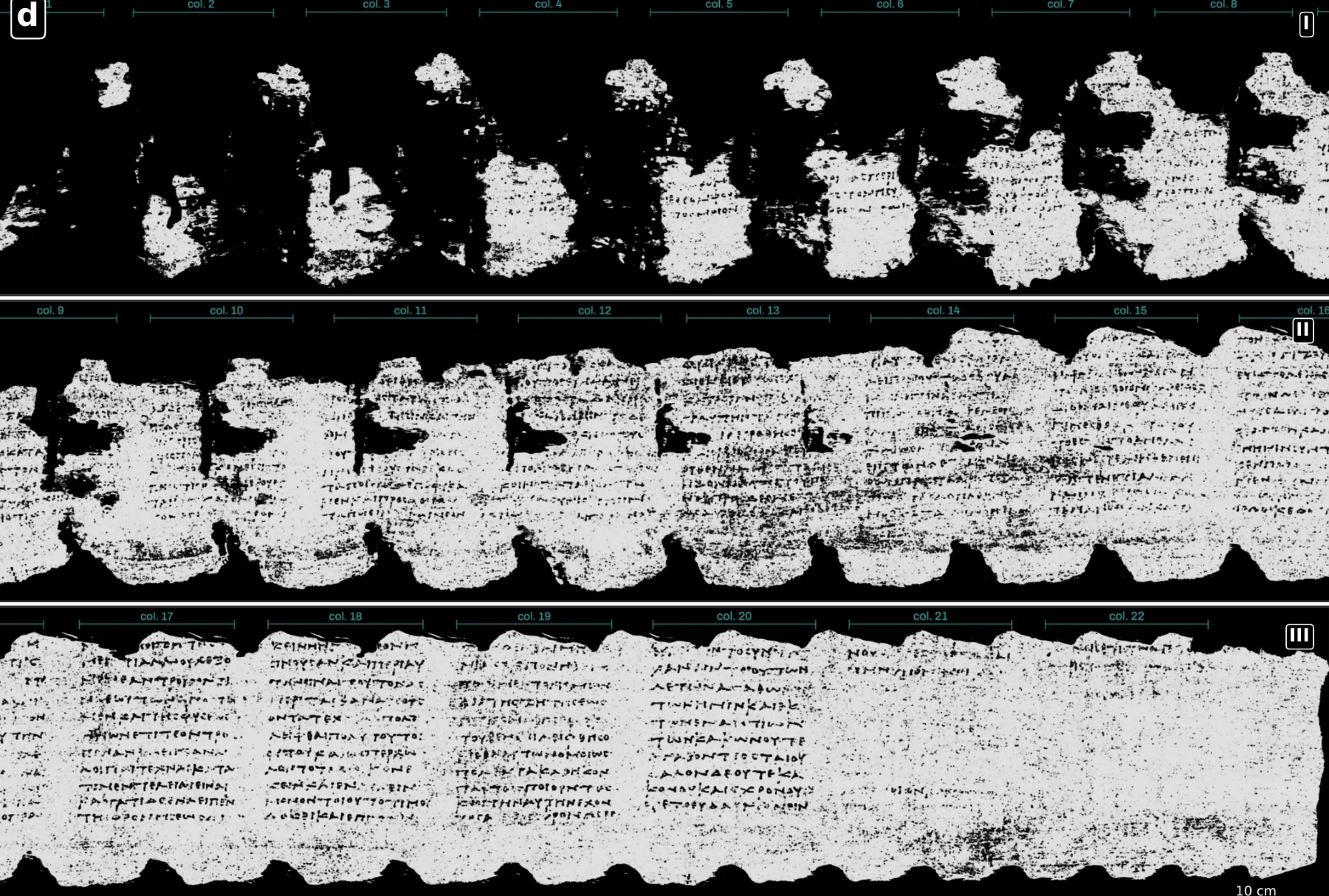
These collaborative efforts, both technological and intellectual, have made PHerc. 1667 “the first Herculaneum papyrus to be digitally unrolled and read in full, end to end, and made available for sustained scholarly study.” But there are also other texts still being deciphered, including PHerc. 139, which has been identified as “Philodemus, On Gods, Book 8 — a treatise by the Epicurean philosopher whose works fill so much of this library.” In their day, Stoicism and Epicureanism stood as similar but rival philosophies, and it seems that the owner of the so-called Villa of the Papyri (possibly Julius Caesar’s father-in-law) had an interest in both of them. Ancient Stoics and Epicureans carried on a lively debate about how to live, some of whose arguments were written down. If the necessary technologies continue to advance, perhaps we’ll one day be able to read them all and pick that conversation up right where they left it off. Learn more about the decoding of the papyrus here and here.
Related content:
Researchers Use AI to Decode the First Word on an Ancient Scroll Burned by Vesuvius
Based in Seoul, Colin Marshall writes and broadcasts on cities, language, and culture. He’s the author of the newsletter Books on Cities as well as the books 한국 요약 금지 (No Summarizing Korea) and Korean Newtro. Follow him on the social network formerly known as Twitter at @colinmarshall.
Read More...Hannah Arendt on “Personal Responsibility Under Dictatorship:” Better to Suffer Than Collaborate

Image by Bernd Schwabe, via Wikimedia Commons
When Eichmann in Jerusalem—Hannah Arendt’s book about Nazi officer Adolf Eichmann’s trial—came out in 1963, it contributed one of the most famous of post-war ideas to the discourse, the “banality of evil.” And the concept at first caused a critical furor. “Enormous controversy centered on what Arendt had written about the conduct of the trial, her depiction of Eichmann, and her discussion of the role of the Jewish Councils,” writes Michael Ezra at Dissent magazine, “Eichmann, she claimed, was not a ‘monster’; instead, she suspected, he was a ‘clown.’”
Arendt blamed victims who were forced to collaborate, critics charged, and made the Nazi officer seem ordinary and unremarkable, relieving him of the extreme moral weight of his responsibility. She answered these charges in an essay titled “Personal Responsibility Under Dictatorship,” published in 1964. Here, she aims to clarify the question in her title by arguing that if Eichmann were allowed to represent a monstrous and inhuman system, rather than shockingly ordinary human beings, his conviction would make him a scapegoat and let others off the hook. Instead, she believes that everyone who worked for the regime, whatever their motives, is complicit and morally culpable.
But although most people are culpable of great moral crimes, those who collaborated were not, in fact, criminals. On the contrary, they chose to follow the rules in a demonstrably criminal regime. It’s a nuance that becomes a stark moral challenge. Arendt points out that everyone who served the regime agreed to degrees of violence when they had other options, even if those might be fatal. Quoting Mary McCarthy, she writes, “If somebody points a gun at you and says, ‘Kill your friend or I will kill you,’ he is tempting you, that is all.”
While this circumstance may provide a “legal excuse,” for killing, Arendt seeks to define a “moral issue,” a Socratic principle she had “taken for granted” that we all believed: “It is better to suffer than do wrong,” even when doing wrong is the law. People like Eichmann were not criminals and psychopaths, Arendt argued, but rule-followers protected by social privilege. “It was precisely the members of respectable society,” she writes, “who had not been touched by the intellectual and moral upheaval in the early stages of the Nazi period, who were the first to yield. They simply exchanged one system of values against another,” without reflecting on the morality of the entire new system.
Those who refused, on the other hand, who even “chose to die,” rather than kill, did not have “highly developed intelligence or sophistication in moral matters.” But they were critical thinkers practicing what Socrates called a “silent dialogue between me and myself,” and they refused to face a future where they would have to live with themselves after committing or enabling atrocities. We must remember, Arendt writes, that “whatever else happens, as long as we live we shall have to live together with ourselves.”
Such refusals to participate might be small and private and seemingly ineffectual, but in large enough numbers, they would matter. “All governments,” Arendt writes, quoting James Madison, “rest on consent,” rather than abject obedience. Without the consent of government and corporate employees, the “leader… would be helpless.” Arendt admits the unlikely effectiveness of active opposition to a one-party authoritarian state. And yet when people feel most powerless, most under duress, she writes, an honest “admission of one’s own impotence” can give us “a last remnant of strength” to refuse.
We have only for a moment to imagine what would happen to any of these forms of government if enough people would act “irresponsibly” and refuse support, even without active resistance and rebellion, to see how effective a weapon this could be. It is in fact one of the many variations of nonviolent action and resistance—for instance the power that is potential in civil disobedience.
We have example after example of these kinds of refusals to participate in a murderous system or further its aims. Arendt was aware these actions can come at great cost. The alternatives, she argues, may be far worse.
Note: An earlier version of this post appeared on our site in 2017.
Related Content:
Hannah Arendt’s Original Articles on “the Banality of Evil” in the New Yorker Archive
Henry David Thoreau on When Civil Disobedience and Resistance Are Justified (1849)
Josh Jones is a writer and musician based in Durham, NC.
Read More...How Japan Invented Daisugi, the Ancient Method of Growing Lumber Without Cutting Down Trees
Ask anyone, of most any age and in most any society, how we get wood, and you’ll hear one answer: by cutting down trees. It’s therefore natural that any method of lumber production that leaves trees standing will get a lot of attention. Such has been the case with daisugi, the 600-year-old Japanese technique we’ve previously featured here on Open Culture. The Leaf of Life video above explains just what it involves: “Specially planted cedar trees are pruned heavily. Think of it as a giant bonsai.” While these operations take place biennially, “harvesting takes 20 years, and old tree stock grows up to 100 shoots at a time,” producing a stronger and more flexible wood to boot.
Such an unusual method of cultivation, you may imagine, must have arisen in unusual circumstances. As the video explains, daisugi was originally invented in the western Japanese region of Kitayama, well south of the Osaka-Kyoto-Nara conurbation.
Working under a shortage of seedlings and flat terrain, the arborists of Kitayama developed this method of foresting that made it possible to “reduce the number of plantations, make the harvest cycle faster, and produce denser wood as well.” More than a little of the demand for it owed to the fourteenth-century elite vogue for sukiya-zukuri, an elegant form of residential architecture much expanded from the traditional Japanese tea house.
For a more nuts-and-bolts — or rather, trunks-and-branches — explanation of how daisugi is done, have a look at the video just above from Roji Gardening. You first need a sugi tree, also known as a Cryptomeria japonica or Japanese redwood, whose fast growth makes it all work. When it reaches six or seven meters, which takes about as many years, “you do something Western gardeners would never dream of”: cut the trunk at the height of half a meter, prune back the remaining branches, and cultivate the buds that appear on the remaining “platform seeder.” Continue regularly pruning the series of “perfectly vertical” new trunks into which they grow, eventually removing everything but the top 30 centimeters on each. Within a decade, you’ll end up with a good source of wood, if you need it, but also an “ever-changing, interesting statement tree” — that, as a bonus, will also look like something out of a Ghibli movie.
If you would like to support the mission of Open Culture, consider making a donation to our site. It’s hard to rely 100% on ads, and your contributions will help us continue providing the best free cultural and educational materials to learners everywhere. You can contribute through PayPal, Patreon, and Venmo (@openculture). Thanks!
If you would like to support the mission of Open Culture, consider making a donation to our site. It’s hard to rely 100% on ads, and your contributions will help us continue providing the best free cultural and educational materials to learners everywhere. You can contribute through PayPal, Patreon, and Venmo (@openculture). Thanks!
Related Content:
The Art of Creating a Bonsai: One Year Condensed Condensed Into 22 Mesmerizing Minutes
The Biology of Bonsai Trees: The Science Behind the Traditional Japanese Art Form
Based in Seoul, Colin Marshall writes and broadcasts on cities, language, and culture. He’s the author of the newsletter Books on Cities as well as the books 한국 요약 금지 (No Summarizing Korea) and Korean Newtro. Follow him on the social network formerly known as Twitter at @colinmarshall.
Read More...When Bill Murray Unexpectedly Adapted a W. Somerset Maugham Novel: The Razor’s Edge (1984)
In summer of 1984, American popular culture was dominated by Ghostbusters, a blockbuster that combined sharp comedy and spectacular visual effects on a scale — and in an unlikely harmony — moviegoers had never seen before. Its great success advanced the careers of everyone involved, not least that of Bill Murray. Having already been an early (if not immediately beloved) Saturday Night Live cast member and given much-praised performances in comedies like Caddyshack, Stripes, and Tootsie, he brought his famously detached sensibility to the role of the ghost-busting Dr. Peter Venkman and thereby became the most in-demand comic actor in Hollywood. When, less than six months later, The Razor’s Edge opened with Murray in the starring role, fans bought tickets in hopes of more laughs.
It’s not as if they hadn’t been warned. The Razor’s Edge was adapted from a novel by W. Somerset Maugham, a popular writer in his day, but hardly a straightforward humorist. On the promotional circuit, Murray stressed that this was “a serious movie,” not a comedy but a drama. Nevertheless, both critics and audiences at the time had trouble accepting him in the role of Larry Darrell, a once-lighthearted young man who comes back from World War I overwhelmed by the need to venture back out into the world in search of the ultimate truths of existence. Murray was driven to make the film (for which he took pay only as co-screenwriter) out of the deep identification he felt with the character, which can only have intensified the sting of its failure.
That Larry was a fellow Chicagoan only explains part of the appeal. Murray’s thirtieth birthday, the birth of his first child, and the death of friends like Doug Kenney and John Belushi (who’s indirectly eulogized in the film) had put him in a reflective state of mind, while his growing wealth and fame brought personal and psychological challenges of their own. The prospect of exotic location shoots in Paris and the Himalayas, where Larry’s peripatetic seeking takes him, may have sweetened the deal. Revisited today, the result has plenty of memorable moments, some of them possessed of genuine beauty and grandeur. Alas, the story Maugham tells in the novel, rich with the subtleties of memory, perception, and deception, doesn’t survive the Hollywood tendencies toward over-compression and literal-mindedness.
It must be said that some of the blame lies with Murray himself, whose goofball instincts clash against the nineteen-twenties setting; as he later admitted, he and director John Byrum were wrong to insist on a period piece. (Just imagine the possibilities of Murray playing a returned Vietnam veteran instead.) Regardless, he continued to follow his inner Larry in the aftermath, decamping to Paris with his young family in order to live and learn far from the American scene he knew. It was there that he encountered the teachings of the mystic G. I. Gurdjieff, whose influence on Murray’s persona we’ve previously featured here on Open Culture. That marked another step along the path of experience that would lead him to play wiser, sadder, yet never entirely unfunny characters in pictures like Wes Anderson’s Rushmore and Sofia Coppola’s Lost in Translation — and, in so doing, win dramatic respectability after all.
Related Content:
The Philosophy of Bill Murray: The Intellectual Foundations of His Comedic Persona
The Zen of Bill Murray: I Want to Be “Really Here, Really in It, Really Alive in the Moment”
Listen to Bill Murray Lead a Guided Meditation on How It Feels to Be Bill Murray
An Animated Bill Murray on the Advantages & Disadvantages of Fame
Bill Murray, the Struggling New SNL Cast Member, Apologizes for Not Being Funny (1977)
15 Great Films Adapted from Equally Great Novels
Based in Seoul, Colin Marshall writes and broadcasts on cities, language, and culture. He’s the author of the newsletter Books on Cities as well as the books 한국 요약 금지 (No Summarizing Korea) and Korean Newtro. Follow him on the social network formerly known as Twitter at @colinmarshall.
Read More...Rare Film of Sculptor Auguste Rodin Working at His Studio in Paris (1915)
We’ve previously featured a series of remarkable little films of French artists Pierre-Auguste Renoir, Claude Monet and Edgar Degas. Here we wrap things up with just one more: a rare glimpse of the great sculptor Auguste Rodin.
The footage was taken in 1915, two years before Rodin’s death. There are several sequences. The first shows the artist at the columned entrance to an unidentified structure, followed by a brief shot of him posing in a garden somewhere. The rest of the film, beginning at the 53-second mark, was clearly shot at the palatial, but dilapidated, Hôtel Biron, which Rodin was using as a studio and second home.
The mansion was built as a private residence in the early 18th century, and served as a Catholic school for girls from 1820 until about 1904, when it became illegal for public money to be used for religious education. When the last of the nuns cleared out, the rooms of the Hôtel Biron were rented out to a diverse group of people that included some notable artists: Jean Cocteau, Isadora Duncan, Henri Matisse and Rainer Maria Rilke, who served for a time as Rodin’s secretary. It was Rilke’s wife, the sculptor Clara Westhoff Rilke, who first told Rodin about the place in 1909.
Rodin first rented four rooms on the main floor, but was alarmed when he learned of plans to sell the property off in pieces to developers. So he made a deal with the government: In exchange for bequeathing all his works to the French state, the sculptor was allowed to occupy the mansion for the rest of his life, and after he died, the estate would become the Musée Rodin.
By the time actor Sacha Guitry and his cameraman arrived to film this scene from Ceux de Chez Nous, or “Those of Our Land,” Rodin was the sole occupant of the Hôtel Biron. The film shows the 74-year-old artist walking down the weed-covered steps of the mansion and working inside, chipping away at a marble statue with a hammer and chisel. When Rodin was asked once about how he created his statues, he said, “I choose a block of marble and chop off whatever I don’t need.”
Note: An earlier version of this post appeared on our site in 2012.
If you would like to support the mission of Open Culture, consider making a donation to our site. It’s hard to rely 100% on ads, and your contributions will help us continue providing the best free cultural and educational materials to learners everywhere. You can contribute through PayPal, Patreon, and Venmo (@openculture). Thanks!
Written by Mike Springer
Related Content:
Time Travel Back to 1926 and Watch Wassily Kandinsky Make Art in Some Rare Vintage Video
Georgia O’Keeffe: A Life in Art, a Short Documentary on the Painter Narrated by Gene Hackman
Read More...
When The Surrealists Expelled Salvador Dalí for “the Glorification of Hitlerian Fascism” (1934)
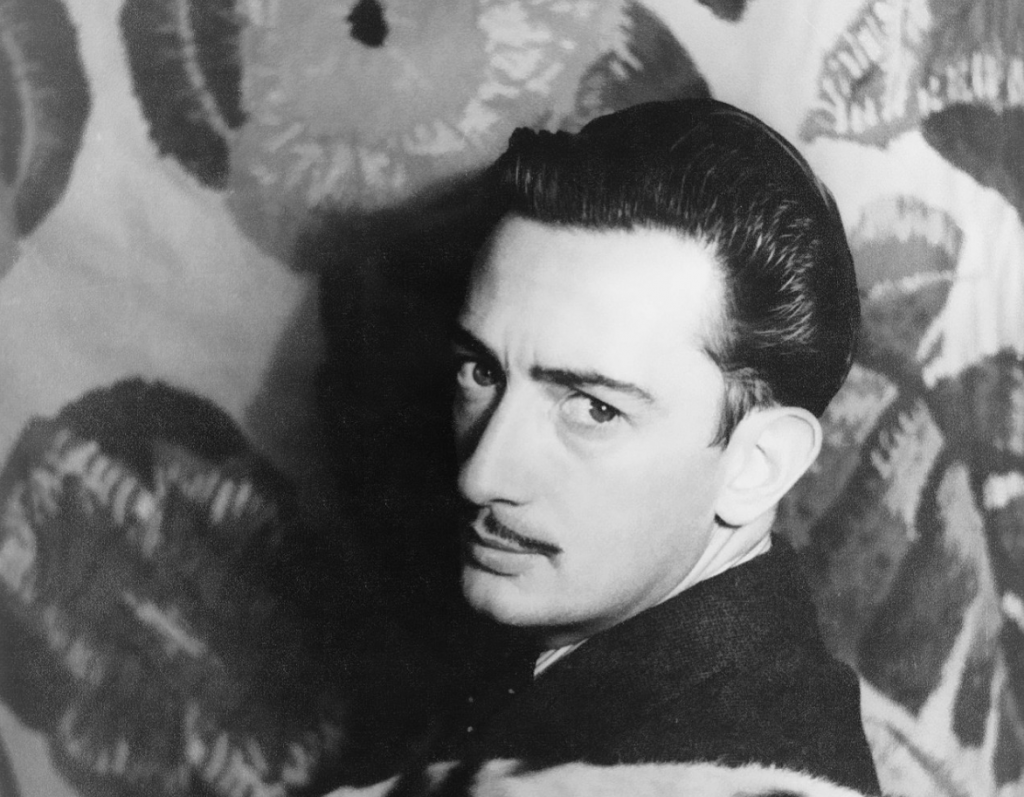
Image by Carl Van Vechten, via Library of Congress and Wikimedia Commons
We may be conditioned to offering an opinion at the push of a button, but before venturing on the question of whether we can, or should, separate the art from the artist, it seems ever prudent to ask, “Which art and which artist?” There are the usual case studies, in addition to the crop of disgraced celebrities: Ezra Pound, P.G. Wodehouse, and, in philosophy, Martin Heidegger. One case of a very troubling artist, Salvador Dalí, gets less attention, but offers us much material for consideration, especially alongside an essay by George Orwell, who ruminated on the question and called Dalí both “a disgusting human being” and an artist of undeniably “exceptional gifts.”
Like these other figures, Dalí has long been alleged to have had fascist sympathies, a charge that goes back to the 1930s and perhaps originated with his fellow Surrealists, especially André Breton, who put Dalí on “trial” in 1934 for “the glorification of Hitlerian fascism” and expelled him from the movement. The Surrealists, most of whom were communists, were provoked by Dalí’s disdain for their politics, expressed in the likeness of Lenin in The Enigma of William Tell. It’s also true that Dalí seemed to publicly profess an admiration for Hitler. But as with everything he did, it’s impossible to tell how seriously we can take any of his pronouncements.
Another painting, 1939’s The Enigma of Hitler is even more ambiguous than The Enigma of William Tell, a collection of dream images, with the recurring melting objects, crutches, mollusk shells, and food images, set around a tiny portrait of the German dictator. Kamila Kocialkowska suggests that psychoanalytic motifs in the painting, some rather obvious, reflect Hitler’s “fear of impotence, and certain commentators have noted that Hitler’s enthusiastic promotion of nationalistic breeding can further explain the innuendo present in this image.”
The Hitler obsession began years earlier. “I often dreamed of Hitler as a woman,” Dalí supposedly said,
His flesh, which I imagined as whiter than white, ravished me. I painted a Hitlerian wet nurse sitting kneeling in a puddle of water….
There was no reason for me to stop telling one and all that to me Hitler embodied the perfect image of the great masochist who would unleash a world war solely for the pleasure of losing and burying himself beneath the rubble.
The painting Dalí alludes to, The Weaning of Furniture-Nutrition, is the work that first raised Breton’s ire, since “Dalí had originally painted a swastika on the nurse’s armband,” notes art historian Robin Adèle Greeley, “which the Surrealists later forced him to paint out.” Dalí later claimed that his Hitler paintings “subvert fascist ideologies,” Greeley writes: “Breton and company appear not to have appreciated a fellow Surrealist suggesting that there were connections to be made between bourgeois childhoods such as their own and the family life of the Nazi dictator.” Likewise, his creepy dream-language above is hardly more straightforward than the paintings, though he did write in The Unspeakable Confessions of Salvador Dalí, “Hitler turned me on in the highest.”
Other pieces of evidence for Dalí’s politics are also compelling but still circumstantial, such as his friendship with the proudly professed Nazi-sympathizer, Wallis Simpson, the American Duchess of Windsor, and his admiration for Spanish dictator Francisco Franco, whom he called, as Lauren Oyler points out at Vice, “the greatest hero of Spain.” (Dalí painted a portrait of Franco’s daughter). Oyler points out that Dalí’s “wickedness,” as Orwell put it in his scathing review of the artist’s “autobiography” (a spurious category in the case of serial fabricator Dalí), matters even if it were pure provocation rather than genuine commitment.
The claim carries more weight when applied to the artist’s attested sadism in general. Dalí spends a good part of his Confessions delighting in stories of brutal physical and sexual assault and cruelty to animals. (The famous Dalí Atomicus photo, his collaboration with Philippe Halsman, required 28 attempts, Oyler notes, and “each of those attempts involved throwing three cats in the air and flinging buckets of water at them.”) Whether or not Dalí was a genuine Nazi sympathizer or an amoral right-wing troll, Orwell is completely unwilling to give him a pass for generally cruel, abusive behavior.
“In his outlook,” writes Orwell, “his character, the bedrock decency of a human being does not exist. He is as anti-social as a flea. Clearly, such people are undesirable, and a society in which they can flourish has something wrong with it.” But perhaps Dalí means to say exactly that. Allowing for the possibility, Orwell is also unwilling to toss aside Dalí’s work. The artist, he writes “has fifty times more talent than most of the people who would denounce his morals and jeer at his paintings.”
When it comes to the question of Dalí as fascist, some less-than-nuanced views of his work (“Marxist criticism has a short way with such phenomena as Surrealism,” writes Orwell) might miss the mark. The Weaning of Furniture-Nutrition, writes Greeley, seems to reveal “a secret about his own middle-class background” as a nursery for fascism, especially given the “disturbing” fact that “the nurse is a portrait of Dalí’s own, and that she droops hollowly on the shore near the painter’s Catalan childhood home, suggesting that Dalí himself might have had a ‘hitlerian’ upbringing.”
Greeley’s further elaboration on Dalí’s conflict with Breton further weakens the charges against him. “Ten days before the February meeting, he had defended himself to Breton,” she writes, “claiming, ‘I am hitlerian neither in fact nor in intention.’ ” He pointed out that the Nazis would likely burn his work, and chastised leftists for “their lack of insight into fascism.”
The question of Dalí’s fascist sympathies is incoherent without the biography, and the biographical evidence against Dalí seems fairly thin. Nonetheless, he has emerged from history as a violent, vicious, opportunistic person. How much this should matter to our appreciation of his art is a matter you’ll have to decide for yourself.
Note: An earlier version of this post appeared on our site in 2018.
Related Content:
Heidegger’s “Black Notebooks” Suggest He Was a Serious Anti-Semite, Not Just a Naive Nazi
Josh Jones is a writer and musician based in Durham, NC.
Read More...Leonardo da Vinci’s Notebooks, Separated for 400 Years, Have Been Reunited and Put Online
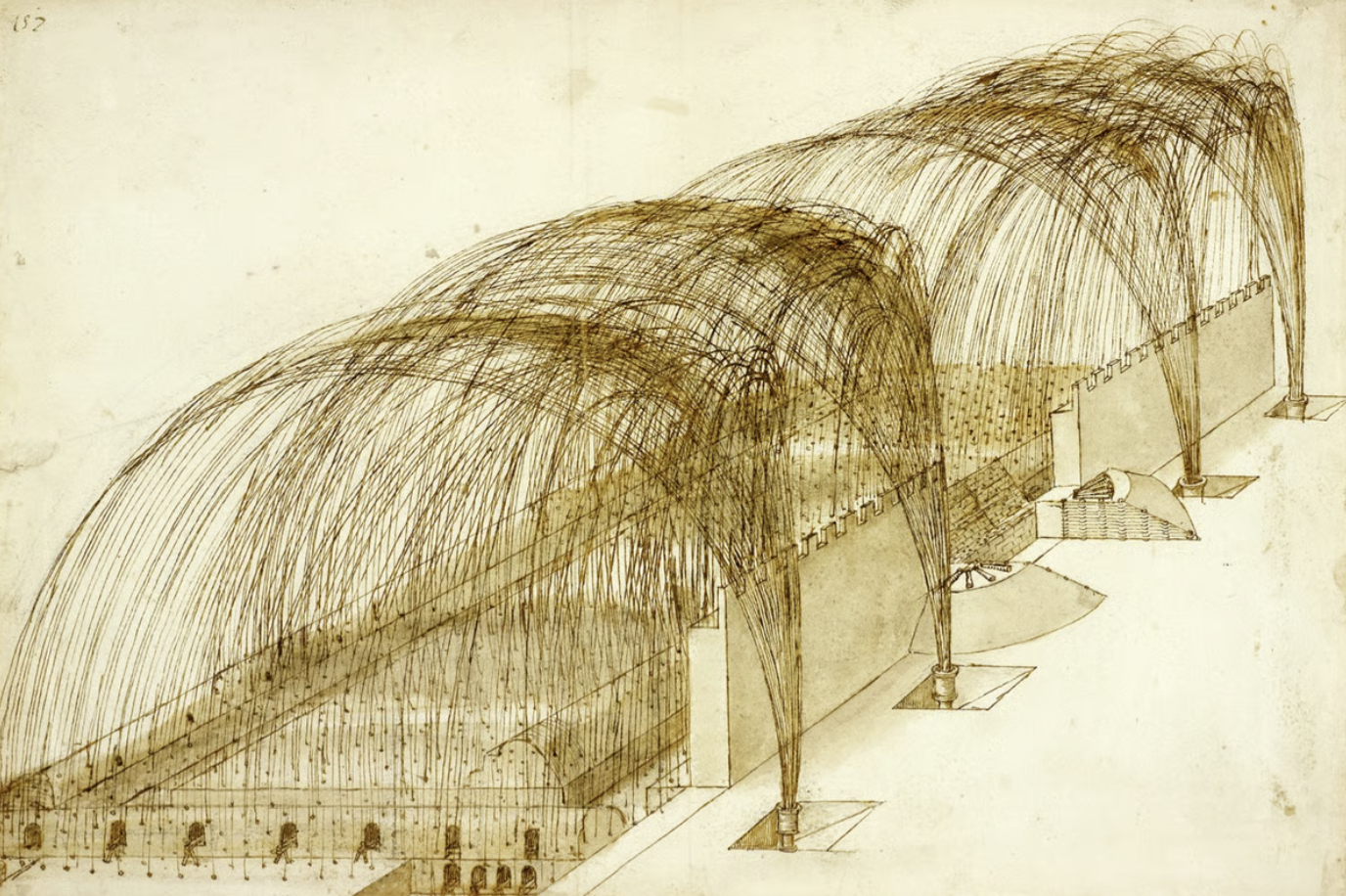
Leonardo da Vinci was a painter, draughtsman, engineer, scientist, theorist, sculptor, and architect, to provide only his most widely agreed-upon list of occupations. It is he, more than any other single figure, who comes to mind when we think of the ideal of the “Renaissance man.” Though considered rather less practical today than it was in fifteenth-century Italy, the relentless questing for both scientific knowledge and artistic perfection implied by that title has never entirely ceased to appeal. For aspiring modern Renaissance men, one of the most enduring sources of inspiration remains Leonardo’s own notebooks, full of backwards-written explorations of ideas both realized and unrealized that move unpredictably from one intellectual domain to another.

That last quality seems to have displeased the sculptor Pompeo Leoni, who eventually came into possession of Leonardo’s notebooks after they were inherited by his last student Francesco Melzi. Leoni “dismounted and cut the folios, separating the materials into two albums according
to his own judgement,” notes the Italian Embassy in London, “the larger portion for technical and scientific topics,” and the smaller for “Leonardo’s artistic and figurative workings.”
In the early seventeenth century, Leoni’s son-in-law sold the former album, now known as the Codex Atlanticus, to a count who in turn donated it to the Veneranda Biblioteca Ambrosiana; the latter ended up in England’s Royal Collection by 1670 or so. Only now have they been reunited, thanks to a project called Leonardotheka.
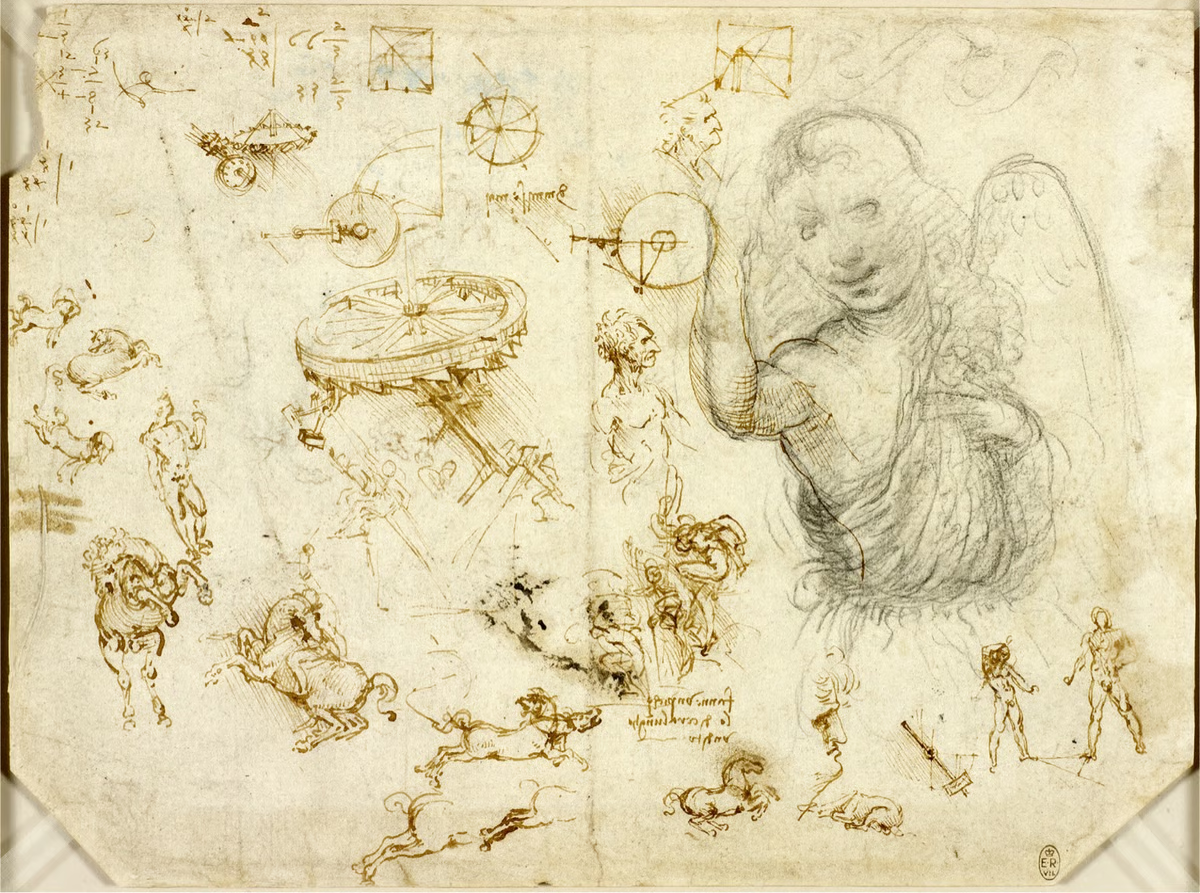
The culmination of a decade’s work involving the Veneranda Biblioteca Ambrosiana as well as the Biblioteca Leonardiana and the Royal Collection Trust, Leonardotheka digitally reunites those albums after four centuries apart. Such a task also entailed the reconstruction of 50 long-sundered individual pages and their replacement into their original context. The notebooks combined “decades of anatomical studies, flying machines, landscapes, and grocery-list-adjacent musings, all tangled together the way Leonardo’s mind may have worked,” writes Anastasia Scott at Discover. Yet he’d “likely never intended to separate art from science in the first place. A single page might hold a machine, a horse, and a poem, and Leoni severed connections the artist had made on purpose.” With those connections restored, we here in the twenty-twenties — a time plagued by its own doubts about the relationship between what we now call “humanities” and “STEM” — can see once again how a real Renaissance mind worked. Enter the Leonardotheka here.
via Kottke
Related content:
Leonardo da Vinci’s Handwritten Resume (Circa 1482)
Leonardo da Vinci’s To-Do List from 1490: The Plan of a Renaissance Man
Based in Seoul, Colin Marshall writes and broadcasts on cities, language, and culture. He’s the author of the newsletter Books on Cities as well as the books 한국 요약 금지 (No Summarizing Korea) and Korean Newtro. Follow him on the social network formerly known as Twitter at @colinmarshall.
Read More...The History of Soccer and the World Cup: A Short Introduction
Every four years, humanity undergoes a great increase in its number of soccer fans — or rather, football fans, depending on what part of the world we’re talking about. That’s not to imply that the world otherwise suffers from a dearth of enthusiasts of that particular sport. Nor is football an obscure secondary term: the language of most every country obsessed with the thing itself has localized that name for it, resulting in a variety of words from fútbol to futbol to futebol to Fußball. There remains the matter of calcio, but then, Italians have always done things their own way. So do Americans, as this year’s World Cup has emphasized, but you’ll find that soccer actually turns out not to have originated as yet another awkward custom exclusive to the United States.
In fact, it derives from a few letters of the full British name of the game, “association football.” Commonly heard in the U.K. up until the nineteen-seventies, soccer eventually came in handy on the other side of the pond to differentiate it from what most of the world calls “American football.”
As explained in about 20 minutes in the Geo History video at the top of the post, the history of soccer, football, fútbol, or whatever you may call it is full of facts that will surely surprise those of who only pay it any attention when the World Cup comes around — and may occasionally surprise the die-hards who live and breathe the game even during the off years. For a much deeper (and more humorous) dive into a narrower slice of the past, we also have this two-hour history of the World Cup from football YouTuber Vizeh.
If you want to avoid a name specific to any one national language, you can always refer to “the beautiful game,” but even if that adjective applies to the action on the field, at least on a good day, it sits less easily with the politicking, backbiting, and not-always-above-board dealmaking characteristic of its business and administration at a global scale. The whole enterprise has come to represent all the glories and ugliness of modernity, reduced to a rigidly standardized battlefield on which increasingly many nations of the world aspire to achieve first presence, then domination. For example, South Korea, where I live, has made its seriousness on the pitch sufficiently known over four straight decades of World Cup participation that you might want to learn the Korean word chukgu — at least if the coming match with South Africa goes its way.
Related content:
Restored Footage from the First World Cup: Uruguay, 1930
Pelé’s Great World Cup Goals (RIP)
The Monty Python Philosophy Soccer Match: The Ancient Greeks Versus the Germans
Why Jorge Luis Borges Hated Soccer: “Soccer is Popular Because Stupidity is Popular”
Based in Seoul, Colin Marshall writes and broadcasts on cities, language, and culture. He’s the author of the newsletter Books on Cities as well as the books 한국 요약 금지 (No Summarizing Korea) and Korean Newtro. Follow him on the social network formerly known as Twitter at @colinmarshall.
Read More...The Encyclopedia of Women Philosophers: A New Web Site Presents the Contributions of Women Philosophers, from Ancient to Modern
In a conversation with Julian Baggini on why there are so few women in academic philosophy, Mary Warnock once noted that “of all the humanities departments in British universities, only philosophy departments have a mere 25% women members.” That number is even lower in the US. “Why should this be?” Warnock asked. She asserted that the problem may lie with the discipline itself. “I think that academic philosophy has become an extraordinarily inward-looking subject,” she said, “If you pick up a professional journal now, you find little nitpicking responses to previous articles. Women tend to get more easily bored with this than men. Philosophy seems to stop being interesting just when it starts to be professional.”
It’s a provocative claim, one I’m sure many women in philosophy would contest, though the more general idea that academic philosophy has become an arid practice divorced from real life concerns might have wider support. The data on women in academic philosophy presents a very complex picture. “No single intervention is likely to change the climate,” as Tania Lombrozo writes at NPR. Explicit and implicit biases do play a role, as do instances of sexual harassment and coercion by those in positions of power. But another significant issue Warnock seemed to ignore is the way that philosophy is generally taught at the undergraduate level.
In the research on which Lombrozo reports, studies found that “the biggest drop in the proportion of women in the philosophy pipeline seems to be from enrollment in an introductory philosophy class to becoming a philosophy major. At Georgia State, for example, women make up about 55 percent of Introduction to Philosophy students but only around 33 percent of philosophy majors.” This may have to do with the fact that “readings on the syllabus were overwhelmingly by men (over 89 percent).” As Georgia State graduate student Morgan Thompson explained at a conference in 2013:
This problem is compounded by the fact that introductory philosophy textbooks have an even worse gender balance; women account for only 6 percent of authors in a number of introductory philosophy textbooks.
Does this disparity reflect an unalterable truth about the history of philosophy? No, and it can very well be remedied. The Center for the History of Women Philosophers and Scientists is working to do that with a new site, the Encyclopedia of Concise Concepts by Women Philosophers. The joint project of Paderborn University’s Ruth Hagengruber and Cleveland State’s Mary Ellen Waithe, this resource aims to introduce “women philosophers who mostly have been omitted from the philosophical canon despite their historical and philosophical influence.” So far, reports Daily Nous, “there are around 100 entries… with more to be added every few months.”
Each entry is written by a recognized scholar. The easy-to-navigate site has four main sections: Concepts, Keywords, Philosophers, and Contributors. There are a few names most people will recognize, like Mary Wollstonecraft, Ayn Rand, and Simone de Beauvoir. But most of these thinkers will seem obscure, despite their meaningful contributions to various fields of thought. Integrating these philosophers into syllabi and textbooks could go a long way toward retaining women in philosophy departments. As importantly, it will broaden the tradition, giving all students a wider range of perspectives.
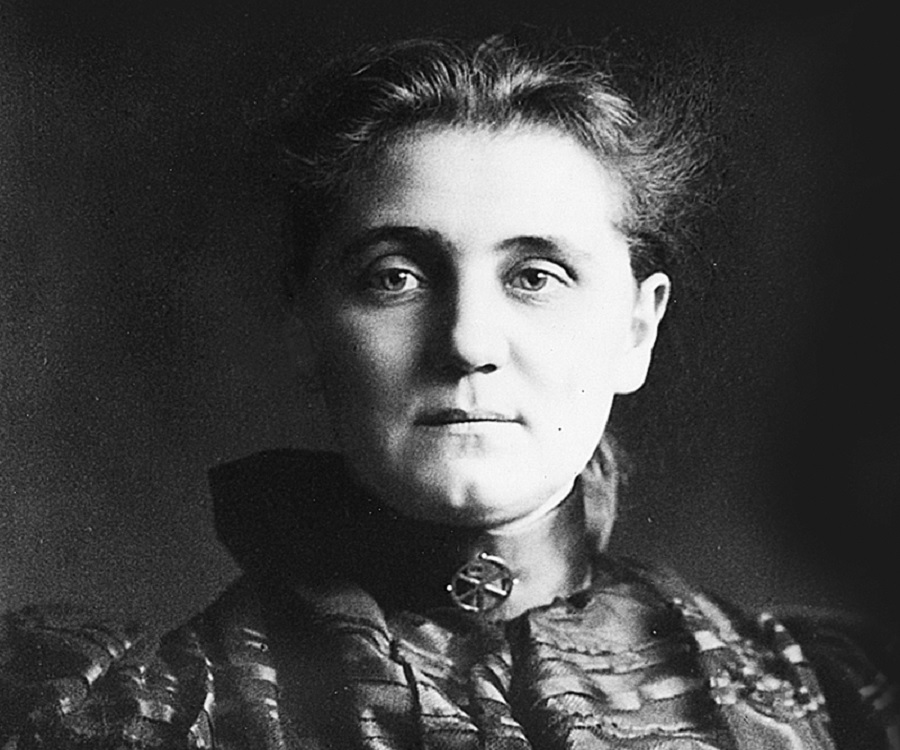
For example, much of the academic work on social ethics in democracy might reference Adam Smith’s “Theory of Moral Sentiments” or the prolific 20th century work of John Dewey. But it might overlook the work of Dewey’s contemporary Jane Addams (top), who also wrote critical studies on democracy and education and who “sees a connection,” writes Maurice Hamington in a short entry about her, “between sympathetic understanding and a robust democracy.… For Addams, it is crucial that citizens in a democracy engage with one another to reach across difference to care and find common cause.”
Addams brought her philosophical concerns into real world practice. She made important interventions in the treatment of immigrants and African-Americans in Chicago, supported working mothers, and helped pass child protection laws and end child labor. But while she has long been renowned as a social reformer and Nobel Peace Prize winner, “the dynamics of canon formation,” notes the Stanford Encyclopedia of Philosophy, “resulted in her philosophical work being largely ignored until the 1990s.” Now, many philosophers recognize that works like Democracy and Social Ethics anticipated key contemporary issues in political philosophy a century ago.
Other thinkers in the Encyclopedia of Concise Concepts by Women Philosophers like Diotima of Mantinea (whom Socrates revered) and early American thinker Mercy Otis Warren made important contributions to the theories of beauty and government, respectively. Yet they may receive no more than a footnote in most undergraduate philosophy courses. This may have less to do with explicit bias than with the way professors themselves have been educated. But the history, and current practice, of philosophy needs the inclusion of these views. Learn more about many historically overlooked women in philosophy at the Encyclopedia here.
Note: An earlier version of this post appeared on our site in 2018.
Related Content:
The Contributions of Women Philosophers Recovered by the New Project Vox Website
An Animated Introduction to the Feminist Philosophy of Simone de Beauvoir
An Animated Introduction to the Feminist Philosophy of Simone de Beauvoir
Josh Jones is a writer and musician based in Durham, NC.
Read More...Before Bill Nye, There Was Julius Sumner Miller: Watch Complete Episodes of His Classic Science Show, Why Is It So?, Free Online (1962–73)
“We are approaching a darkness in the land. Boys and girls are emerging from every level of school with certificates and degrees, but they can’t read, write or calculate. We don’t have academic honesty or intellectual rigor.” That quote may sound like a familiar lament today, but it’s actually drawn from an interview conducted about half a century ago with the physicist and television host Julius Sumner Miller. If that name sounds familiar to you, there’s a fair chance you’re an Australian who grew up between the sixties and the eighties — and it’s hardly impossible that, thanks to his program Why Is It So?, you went on to pursue a career in science or engineering.
Generations of young viewers down under and elsewhere learned from Why Is It So? that physics and its principles could be fun. Even if you weren’t among them at the time, you can now watch full episodes of the show uploaded to YouTube by ABC, the Australian Broadcasting Corporation.
As you may notice after just a few seconds of listening to him, Miller himself was American. The Massachusetts-born son of immigrants from Latvia and Lithuania, he studied physics at Boston University and thereafter taught and performed research at various institutions (befriending Albert Einstein along the way) before taking a long-term position at El Camino College in Torrance, California in 1952.
Miller’s popularity at El Camino, the school’s proximity to Hollywood, and television’s rapid expansion into a mass medium led to his launching Why Is It So? on KNXT in Los Angeles in 1959. By the mid-sixties, he was also explaining scientific phenomena on Disney’s Mickey Mouse Club, Great Moments in Science, and Science and Its Magic, as well as on Steve Allen’s late-night talk show. He made his debut on Australian television when the University of Sydney brought him out as a visiting lecturer. The appearance went wrong when he couldn’t perform his standard trick of driving a drinking straw through a potato, but what it nevertheless got him — apart from an office filled with the domestic straws he’d jokingly criticized on-air — was a new home for Why Is It So? on ABC.
ABC has so far made available seven full broadcasts originally aired between the early sixties and the early seventies. Despite their black-and-white production and lack of visual effects, they hold up well today in both educational and entertainment value. However engaging his personality as what we would now call a science communicator, it seems that “Miller could be a terror in the classroom,” according to his Los Angeles Times obituary from 1987, “intolerant of misspelled words or misplaced punctuation” and insistent that “most faculty were not rigid enough and that students were not learning enough.” He’d hardly be pleased with what’s happened to intellectual standards in the nearly four decades since his death, but he’d surely appreciate that his teaching continues to reach “everybody ages four to 94,” as he liked to describe his audience. Age, nationality, and even credentials didn’t matter; what counted was genuine curiosity and the willingness to pursue it, whether in the classroom or the living room.
Related Content:
Watch a Young Carl Sagan Appear in His First TV Documentary, The Violent Universe (1969)
Based in Seoul, Colin Marshall writes and broadcasts on cities, language, and culture. He’s the author of the newsletter Books on Cities as well as the books 한국 요약 금지 (No Summarizing Korea) and Korean Newtro. Follow him on the social network formerly known as Twitter at @colinmarshall.
Read More...Support Us
We're hoping to rely on loyal readers, rather than erratic ads. Please click the Donate button and support Open Culture. You can use Paypal, Venmo, Patreon, even Crypto! We thank you!

About Us

Open Culture scours the web for the best educational media. We find the free courses and audio books you need, the language lessons & educational videos you want, and plenty of enlightenment in between.
Advertise With Us

FREE UPDATES!
GET OUR DAILY EMAIL
Get the best cultural and educational resources on the web curated for you in a daily email. We never spam. Unsubscribe at any time.
FOLLOW ON SOCIAL MEDIA

Open Culture editor Dan Colman scours the web for the best educational media. He finds the free courses and audio books you need, the language lessons & movies you want, and plenty of enlightenment in between.
Advertise With Us


