Imagine that, this time last year, you’d heard that your family’s holiday gatherings in 2020 would happen on the internet. Even if you believed such a future would one day come, would you have credited for a moment that kind of imminence? Yet our videoconference toasts this season were predicted — even rendered in clear and reasonably accurate detail — more than 120 years ago. “My wife is visiting her aunt in Budapest, my older daughter is studying dentistry in Melbourne, my younger daughter is a mining engineer in the Urals, my son raises ostriches in Batavia, my nephew is on his plantations in Batavia,” says the caption of the 1896 cartoon above. “But this does not prevent us from celebrating Christmas on the telephonoscope.”
This panel ran in Belle Époque humor magazine Le rire (available to read at the Internet Archive), drawn by the hand and produced by the imagination of Albert Robida. A novelist as well as an artist, Robida drew acclaim in his day for the series Le Vingtième Siècle, whose stories offered visions of the technology to come in that century.
“Next to Zoom Christmas,” tweets philosophy professor Helen de Cruz, Robida also imagined a future in which this “telephonoscope” would “give us education, movies, teleconferencing.” As early as the 1860s, says the Public Domain Review, Robida had “published an illustration depicting a man watching a ‘televised’ performance of Faust from the comfort of his own home.” See image above.
Though Robida seems to have coined the word “telephonoscope,” he wasn’t the first to publish the kind of idea to which it referred. “The concept of the device first appeared not long after the telephone was patented in 1876,” writes Verity Hunt in a Literature and Science article quoted by the Public Domain Review. “The term ‘telectroscope’ was used by the French scientist and publisher Louis Figuier in L’Année Scientifique et Industrielle in 1878 to popularize the invention, which he incorrectly interpreted as real and ascribed to Alexander Graham Bell.” The goal was to “do for the eye what the telephone had done for the ear,” though it wouldn’t be fully realized for well over a century. When you raise a glass to a webcam this week, consider toasting Albert Robida, to whom the year 2021 would have sounded impossibly distant — but who has proven more prescient about it than many of us alive today.
Based in Seoul, Colin Marshall writes and broadcasts on cities, language, and culture. His projects include the Substack newsletterBooks on Cities, the book The Stateless City: a Walk through 21st-Century Los Angeles and the video series The City in Cinema. Follow him on Twitter at @colinmarshall, on Facebook, or on Instagram.
The Golden Age of American Radio began in the 1930s and lasted well into the 50s. That makes nearly thirty Christmases, not one of which passed without special broadcasts by the major networks. This Christmas, thanks to The World War II News and Old Time Radio Channel on Youtube, you can experience the Golden Age’s three decades through 48 straight hours of holiday broadcasts. Strung like an audio garland in chronological order, these begin with an episode of NBC’s Empire Builders, quite possibly the first-ever Western radio drama, first broadcast on December 22nd, 1930 — a rare year from which to hear a recorded radio show at all, let alone a Christmas special. The compilation ends one day shy of 29 years later, with a Top 40 broadcast from WMGM in New York.
Throughout this all-Christmas listening experience, old-time radio enthusiasts will recognize many of America’s very favorite shows: Lum and Abner, Amos and Andy, Fibber McGee and Molly and The Great Gildersleeve, The Jack Benny Program and The Charlie McCarthy Show. For many seasonally appropriate episodes of those series as well as one-off variety broadcasts, networks would wrangle as many big names as they could into the studio, from Bob Hope and Lionel Barrymore to Gary Cooper and Frank Sinatra to Carmen Miranda and Ida Lupino (director, film noir fans know, of The Hitch-Hiker).
In 1947, CBS’ Lux Radio Theater put on a full production of It’s a Wonderful Life with Jimmy Stewart and Donna Reed, stars of the film that had come out just the year before. Even U.S. presidents like Franklin D. Roosevelt and Dwight D. Eisenhower turn up to deliver Christmas addresses.
Open Culture readers may well remember CBS’ 1941 production of Oscar Wilde’s “The Happy Prince” featuring Orson Welles and Bing Crosby, but even those of us who know our classic radio will hear a good deal in these 48 hours of broadcasts that we’ve never heard before. Though all of them celebrate the season in one way or another, they do so in a host of different forms and genres, even beyond the broad divisions of drama, comedy, music, and celebrity chat. In gradually passing from living memory, the golden age of American radio comes to seem a longer era than it was. But through that relatively brief window, opened by the household adoption of radio and closed by the rise of television, came an abundance of creativity that can still surprise us — and indeed inspire us — here at the close of the year 2020.
Based in Seoul, Colin Marshall writes and broadcasts on cities, language, and culture. His projects include the Substack newsletterBooks on Cities, the book The Stateless City: a Walk through 21st-Century Los Angeles and the video series The City in Cinema. Follow him on Twitter at @colinmarshall, on Facebook, or on Instagram.
This past spring, media outlets of every kind published photos and videos of eerily empty public spaces in cities like Beijing, New York, Milan, Paris, and Seoul, cities not known for their lack of street life. At least in the case of Seoul, where I live, the depopulated image was a bit of an exaggeration, but taken as a whole, these stunned visual dispatches from around the world reflected a real and sudden change in urban life caused by this year’s coronavirus pandemic. They also got us thinking, not just about our cities but about the built environment, and even human civilization, in general. Life, as often, had imitated art: specifically, it had imitated the paintings of Giorgio de Chirico, the founder of the Metaphysical art movement.
“In 1909, de Chirico was sitting on a bench in the Piazza Santa Croce in Florence, recovering from an intestinal illness, when all of a sudden he had a profound experience.” So says Evan Puschak, better known as the Nerdwriter, in his new video essay “When the World Became a de Chirico Painting.”
As the artist himself later remembered it a few years later, “The whole world, down to the marble of the buildings and fountains, seemed to me to be convalescent.” There followed the painting The Enigma of an Autumn Afternoon, depicting a hollowed-out Piazza Santa Croce, its statue of Dante now headless. “This and all the plazas in his Metaphysical Town Square series are simplified, empty, cut with dramatic shadows.”
Seldom does a human being — that is, a human being not made of stone — appear in de Chirico’s Metaphysical Town Squares. But he does include the occasional train in the distance, usually with a billowing smokestack. This suggests that, though life in the foreground seems to have stopped indefinitely, modernity continues apace in the background. To many of us, the vague disorientation this causes now feels almost normal, as does the sensation of seeing familiar places made unfamiliar. In 2020, Puschak says, “cities and towns became immense museums of strangeness, and it was possible to see what we built through alien eyes.” For more than a century, De Chirico’s paintings have, on a much smaller scale, presented us the same opportunity for reflection. But among other things we’ve learned this year, nobody wants to live in a De Chirico for long.
Based in Seoul, Colin Marshall writes and broadcasts on cities, language, and culture. His projects include the Substack newsletterBooks on Cities, the book The Stateless City: a Walk through 21st-Century Los Angeles and the video series The City in Cinema. Follow him on Twitter at @colinmarshall, on Facebook, or on Instagram.
If the name of Napoleon Bonaparte should come up in a game of charades, we all know what to do: stand up with one foot in front of the other, stick a hand into our shirt, and consider the round won. Yet the recognition of this pose as distinctively Napoleonic may not be as wide as we assume, or so Coleman Lowndes discovered in the research for the video above, “Napoleon’s Missing Hand, Explained.” Asked to act out the image of Napoleon, not all of Lowndes colleagues at Vox tried to evoke his hand in his waistcoat, opting instead for grand posturing and an approximation of the (probably apocryphal) modest stature for which that posturing supposedly compensated. Yet enough of us still picture Napoleon hand-in-waistcoat that we might well wonder: how did that image take shape in the first place?
Representations of the most famous statesman in all French history, from paintings made in his life time to Bill and Ted’s Excellent Adventure, include countless examples of the pose. This has given rise to bodily-oriented speculations — a manual deformity, internal organs pained by the cancer that killed him — but the form came with historical precedent.
“Concealing a hand in one’s coat was a portraiture cliche long before Napoleon was painted that way in the early 1800s,” says Lowndes, in reference to Jacques-Louis David’s The Emperor Napoleon in His Study at the Tuileries, a portrait definitive enough to head up Napoleon’s Wikipedia entry. Notables previously depicted with one conspicuously hidden hand include George Washington, Mozart, and Francisco Pizarro.
Even ancient Greek orator Aeschines “claimed that restricting the movement of one hand was the proper way to speak in public.” According to one 18th-century British etiquette guide, “keeping a hand in one’s coat was key to posturing oneself with manly boldness, tempered with becoming modesty.” It eventually became common enough to lose its high status, until David captured Napoleon’s use of it in his masterly propagandistic portrait. But the extent we think of Napoleon keeping a hand perpetually in his waistcoat today surely owes much to the many caricaturists and parody artists who took up the trope, including Charlie Chaplin — who, after trying a mustache and bowler hat for a role, knew what it was to be turned iconic by a seemingly minor stylistic choice.
Based in Seoul, Colin Marshall writes and broadcasts on cities, language, and culture. His projects include the Substack newsletterBooks on Cities, the book The Stateless City: a Walk through 21st-Century Los Angeles and the video series The City in Cinema. Follow him on Twitter at @colinmarshall, on Facebook, or on Instagram.
If we envision serial killers as figures who taunt law enforcement with cryptic messages sent to the media, we do so in large part because of the Zodiac Killer, who terrorized northern California in the late 1960s and early 70s. Though he seems to have stopped killing more than half a century ago, he remains an object of great fascination (and even became the subject of David Fincher’s acclaimed film Zodiac in 2007). As thoroughly as the case has been investigated, much remains unknown — not least what he actually said in some of his coded letters. But just this month, a team of three cryptography enthusiasts managed to break one of the Zodiac’s ciphers, finally revealing the contents of a 51-year old letter.
The Zodiac wrote this particular communiqué in a transposition cipher, which, as Ars Technica’s Dan Goodin writes, uses “rules to rearrange the characters or groups of characters in the message.” In the case of the 340, named for the number of symbols, the content “was probably rearranged by manipulating triangular sections cut from messages written into rectangles.” For the past half-century, nobody could successfully return the text to its original arrangement, but in 2020, there’s an app for that. Or rather, a software engineer named David Oranchak, a mathematician named Sam Blake, and a programmer named Jarl Van Eycke made an app for that. Goodin quotes Oranchak as saying the three had been “working on and off on solving the 340 since 2006.”
You can see Oranchak explain how he and his collaborators finally cracked the 340’s cipher in the video at the top of the post, the final episode of his five-part series Let’s Crack the Zodiac. This wasn’t a matter of simply whipping up the right piece of artificial intelligence and letting it rip: they had to generate hundreds of thousands of permutations of the message as well as attempts at decryptions of those messages. And even when recognizable words and phrases began to emerge in the results — “TRYING TO CATCH ME,” “THE GAS CHAMBER” — quite a bit of trial, error, and thought, remained to be done. It helped that Oranchak knew his Zodiac history, such as that someone claiming to be the killer mentioned not wanting to be sent to the gas chamber when he called in to a local television show on October 20, 1969, two weeks before the 340 was received.
Was it really him? The 340, when finally decoded — a process complicated by the mistakes the Zodiac made, not just in spelling but in executing his laborious, fully analog encryption process — seems to provide the answer:
I HOPE YOU ARE HAVING LOTS OF FUN IN TRYING TO CATCH ME
THAT WASNT ME ON THE TV SHOW
WHICH BRINGS UP A POINT ABOUT ME
I AM NOT AFRAID OF THE GAS CHAMBER
BECAUSE IT WILL SEND ME TO PARADICE ALL THE SOONER
BECAUSE I NOW HAVE ENOUGH SLAVES TO WORK FOR ME
WHERE EVERYONE ELSE HAS NOTHING WHEN THEY REACH PARADICE
SO THEY ARE AFRAID OF DEATH
I AM NOT AFRAID BECAUSE I KNOW THAT MY NEW LIFE IS
LIFE WILL BE AN EASY ONE IN PARADICE DEATH
“The message doesn’t really say a whole lot,” admits Oranchak. “It’s more of the same attention-seeking junk from Zodiac. We were disappointed that he didn’t put any personally identifying information in the message, but we didn’t expect him to.” The Zodiac Killer remains unidentified, and indeed remains one of recent history’s more compelling villains, not just to those with an interest in true crime, but to those with an interest in cryptography as well. For two more messages still remain to be decoded, and in one of them he offers a short cipher that, he writes, contains his name — but then, if there’s any correspondent we shouldn’t rush to take at his word, it’s this one.
Based in Seoul, Colin Marshall writes and broadcasts on cities, language, and culture. His projects include the Substack newsletterBooks on Cities, the book The Stateless City: a Walk through 21st-Century Los Angeles and the video series The City in Cinema. Follow him on Twitter at @colinmarshall, on Facebook, or on Instagram.
“Manuscripts are the most important medium writing has ever had,” declares the Centre for the Study of Manuscript Cultures at the Universität Hamburg. Under the influence of a certain presentist bias, this can be hard to believe. We are conditioned by what Marshall McLuhan described as The Gutenberg Galaxy: each of us is in some way what he called (in gendered language) a “Gutenberg Man.” From this point of view, “manuscript technology,” as he wrote in 1962, does “not have the intensity or power of extension to create publics on a national scale.” It seems quaint, archaic, too rarified to have much influence.
It may be the case, as McLuhan writes, that the printing press and the modern nation state arose together, but this is not necessarily an unqualified measure of progress. Print has had a few hundred years—however, “for thousands of years,” Universität Hamburg reminds us, “manuscripts have had a determining influence on all cultures that were shaped by them.” McLuhan himself was a distinguished scholar and a devoted Catholic who no doubt understood this very well. One suspects lesser writers might avoid the manuscript, in its incredible complexity, because it’s not only a different kind, it is a different species of media altogether.
Manuscript culture is its own field of study for good reason. We are generally talking about texts written on parchment or vellum, which are, after all, treated animal skins. Paper is easier to reproduce, but has a much shorter shelf life. No two manuscripts are the same, some differ from each other wildly: variants, interpolations, redactions, erasures, palimpsests, etc. are standard, requiring special training in editorial methods. Then there’s the languages and the handwriting…. It can be forbidding, but there are other, more surmountable reasons this field has been so hermetic until the recent past.
The primary sources have been inaccessible, hidden away in special collections, and the scholarship and pedagogy have been cloistered behind university walls. Open access digital publishing and free online courses and materials have changed the situation radically. And it is rapidly becoming the case that most manuscript libraries have major, and expanding, online collections, often scanned in high resolution, sometimes with transcriptions, and usually with additional resources explaining provenance and other such important details.
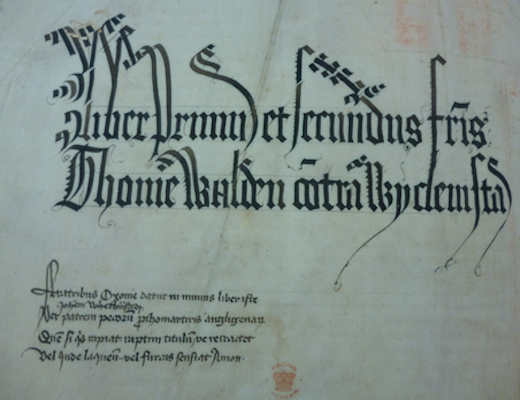
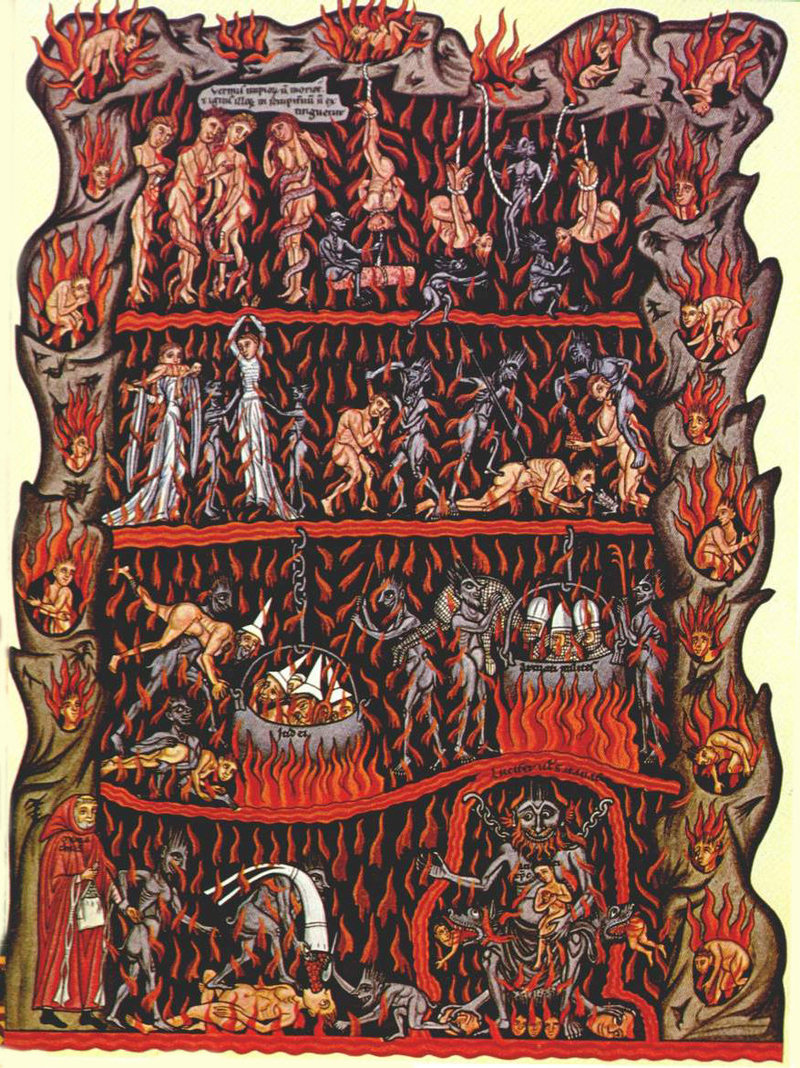
Indeed, there are thousands of manuscript pages online from well over a thousand years, and you’ll find them digitized at the links to several venerable institutions of preservation and higher learning below. There is, of course, no reason we cannot appreciate this long historical tradition for purely aesthetic reasons. So many Medieval manuscripts are works of art in their own right. But if we want to get into the gritty details, we can start by learning how such illuminated medieval manuscripts were made: a lost art, but not, thanks to the durability of parchment, a lost tradition.
Today one can behold the pyramids of Giza and feel the temptation to believe that the ancient Egyptians knew something we moderns didn’t. Just imagine, then, what it must have felt like in the 17th century, when the recovery of lost ancient knowledge was still very much an active enterprise. Back then, no less formidable a mind than Sir Isaac Newton suspected that to understand the pyramids would be to understand much else besides, from the nature of gravity — a subject on which he would become something of an authority — to Biblical prophecy. The key he reckoned, lay in an ancient Egyptian unit of measurement called the royal cubit.
“Establishing the precise length of the Egyptian cubit would allow him to reconstruct in turn other ancient measures, crucially the sacred cubit of the Hebrews, and so be able to reconstruct with precision a building that was, to Newton, of much greater import even than the Great Pyramid: the Temple of Solomon,” says Sotheby’s.
There, a few pages of Newton’s notes on the subject (burnt at the edges, which legend has it happened when his dog knocked over a candle) recently sold for £378,000, but you can still view them online. Given that Ezekiel describes the Temple of Solomon as the setting of the Apocalypse — the end of the world being another subject of Newtonian interest — “an exact knowledge of the Temple’s architecture and dimensions was therefore needed to correctly interpret the Bible’s deep and hidden meanings.” It would also reveal the eventual timing of the the Apocalypse.
Newton’s belief that “the ancient Egyptians possessed knowledge that had been lost in the intervening centuries,” as Smithsonian.com’s Livia Gershon puts it, did not set him far apart from mainstream European scholarship at the time. He also thought, Gershon writes, “that the ancient Greeks had successfully measured Earth’s circumference using a unit called the stade, which he believed was borrowed from the Egyptians. By translating the ancient measurement, Newton hoped to validate his own theory of gravity,” as he ultimately did, though not, perhaps, in the manner he first expected to. We must, it seems, consider the pyramids, alongside the Philosopher’s stone, the South Sea Company, and toad-vomit plague cures, as another example of the great genius’ occasionally excessive enthusiasms — albeit an unusually powerful one.
Based in Seoul, Colin Marshall writes and broadcasts on cities, language, and culture. His projects include the Substack newsletterBooks on Cities, the book The Stateless City: a Walk through 21st-Century Los Angeles and the video series The City in Cinema. Follow him on Twitter at @colinmarshall, on Facebook, or on Instagram.
We must fight against puddles of sauce, disordered heaps of food, and above all, against flabby, anti-virile pastasciutta. —poet Filippo Tommaso Marinetti
Odds are Filippo Tommaso Marinetti, the father of Futurism and a dedicated provocateur, would be crestfallen to discover how closely his most incendiary gastronomical pronouncement aligns with the views of today’s low-carb crusaders.
In denouncing pasta, “that absurd Italian gastronomic religion,” his intention was to shock and criticize the bourgeoisie, not reduce bloat and inflammation.
He did, however, share the popular 21st-century view that heavy pasta meals leave diners feeling equally heavy and lethargic.
Futurist cooking will be free of the old obsessions with volume and weight and will have as one of its principles the abolition of pastasciutta. Pastasciutta, however agreeable to the palate, is a passéist food because it makes people heavy, brutish, deludes them into thinking it is nutritious, makes them skeptical, slow, pessimistic… Any pastascuittist who honestly examines his conscience at the moment he ingurgitates his biquotidian pyramid of pasta will find within the gloomy satisfaction of stopping up a black hole. This voracious hole is an incurable sadness of his. He may delude himself, but nothing can fill it. Only a Futurist meal can lift his spirits. And pasta is anti-virile because a heavy, bloated stomach does not encourage physical enthusiasm for a woman, nor favour the possibility of possessing her at any time.
Bombast came naturally to him. While he truly believed in the tenets of Futurism—speed, industry, technology, and the cleansing effects of war, at the expense of tradition and the past—he gloried in hyperbole, absurdity, and showy pranks.
The Futurist Cookbookreflects this, although it does contain actual recipes, with very specific instructions as to how each dish should be served. A sample:
RAW MEAT TORN BY TRUMPET BLASTS: cut a perfect cube of beef. Pass an electric current through it, then marinate it for twenty-four hours in a mixture of rum, cognac and white vermouth. Remove it from the mixture and serve on a bed of red pepper, black pepper and snow. Each mouthful is to be chewed carefully for one minute, and each mouthful is divided from the next by vehement blasts on the trumpet blown by the eater himself.
Intrepid host Trevor Dunseith documents his attempt to stage a faithful Futurist dinner party in the above video.
Guests eat salad with their hands for maximum “pre-labial tactile pleasure” before balancing oranges stuffed with antipasto on their heads to randomize the selection of each mouthful. While not all of the flavors were a hit, the party agreed that the experience was—as intended—totally novel (and 100% pasta free).
Marinetti’s anti-pasta campaign chimed with Prime Minister Benito Mussolini’s goal of eliminating Italy’s economic dependence on foreign markets—the Battle for Grain. Northern farmers could produce ample supplies of rice, but nowhere near the amount of wheat needed to support the populace’s pasta consumption. If Italians couldn’t grow more wheat, Mussolini wanted them to shift from pasta to rice.
F.T. Marinetti by W. Seldow, 1934
Marinetti agreed that rice would be the “patriotic” choice, but his desired ends were rooted in his own avant-garde art movement:
… it is not just a question of replacing pasta with rice, or of preferring one dish to another, but of inventing new foods. So many mechanical and scientific changes have come into effect in the practical life of mankind that it is also possible to achieve culinary perfection and to organize various tastes, smells and functions, something which until yesterday would have seemed absurd because the general conditions of existence were also different. We must, by continually varying types of food and their combinations, kill off the old, deeply rooted habits of the palate, and prepare men for future chemical foodstuffs. We may even prepare mankind for the not-too-distant possibility of broadcasting nourishing waves over the radio.
Futurism’s ties to fascism are not a thing to brush off lightly, but it’s also important to remember that Marinetti believed it was the artist’s duty to put forward a bold public personae. He lived to ruffle feathers.
Mission accomplished. His anti-pasta pronouncements resulted in a tumult of public indignation, both locally and in the States.
The Duke of Bovino, mayor of Naples, reacted to Marinetti’s statement that pasta is “completely hostile to the vivacious spirit and passionate, generous, intuitive soul of the Neapolitans” by saying, “The angels in Heaven eat nothing but vermicelli al pomodoro.” Proof, Marinetti sniped back, of “the unappetizing monotony of Paradise and of the life of the Angels.”
He agitated for a futuristic world in which kitchens would be stocked with ”atmospheric and vacuum stills, centrifugal autoclaves (and) dialyzers.”
His recipes, as Trevor Dunseith discovered, function better as one-time performance art than go-to dishes to add to one’s culinary repertoire.
Marinetti supported Fascism to the extent that it too advocated progress, but his allegiance eventually wavered. To Marinetti, Roman ruins and Renaissance paintings were not only boring but also antithetical to progress. To Mussolini, by contrast, they were politically useful. The dictator drew on Italian history in his quest to build a new, powerful nation—which also led to a national campaign in food self-sufficiency, encouraging the growing and consumption of such traditional foods as wheat, rice, and grapes. The government even funded research into the nutritional benefits of wheat, with one scientist claiming whole-wheat bread boosted fertility. In short, the prewar dream of futurist food was tabled yet again.
Ayun Halliday is an author, illustrator, theater maker and Chief Primatologist of the East Village Inky zine. See her as a French Canadian bear who travels to New York City in search of food and meaning in Greg Kotis’ short film, L’Ourse. Follow her @AyunHalliday.
We're hoping to rely on loyal readers, rather than erratic ads. Please click the Donate button and support Open Culture. You can use Paypal, Venmo, Patreon, even Crypto! We thank you!
Open Culture scours the web for the best educational media. We find the free courses and audio books you need, the language lessons & educational videos you want, and plenty of enlightenment in between.