Explore the New 717-Gigapixel Scan of Rembrandt’s The Night Watch, the Most Detailed Photo Ever Taken of a Work of Art
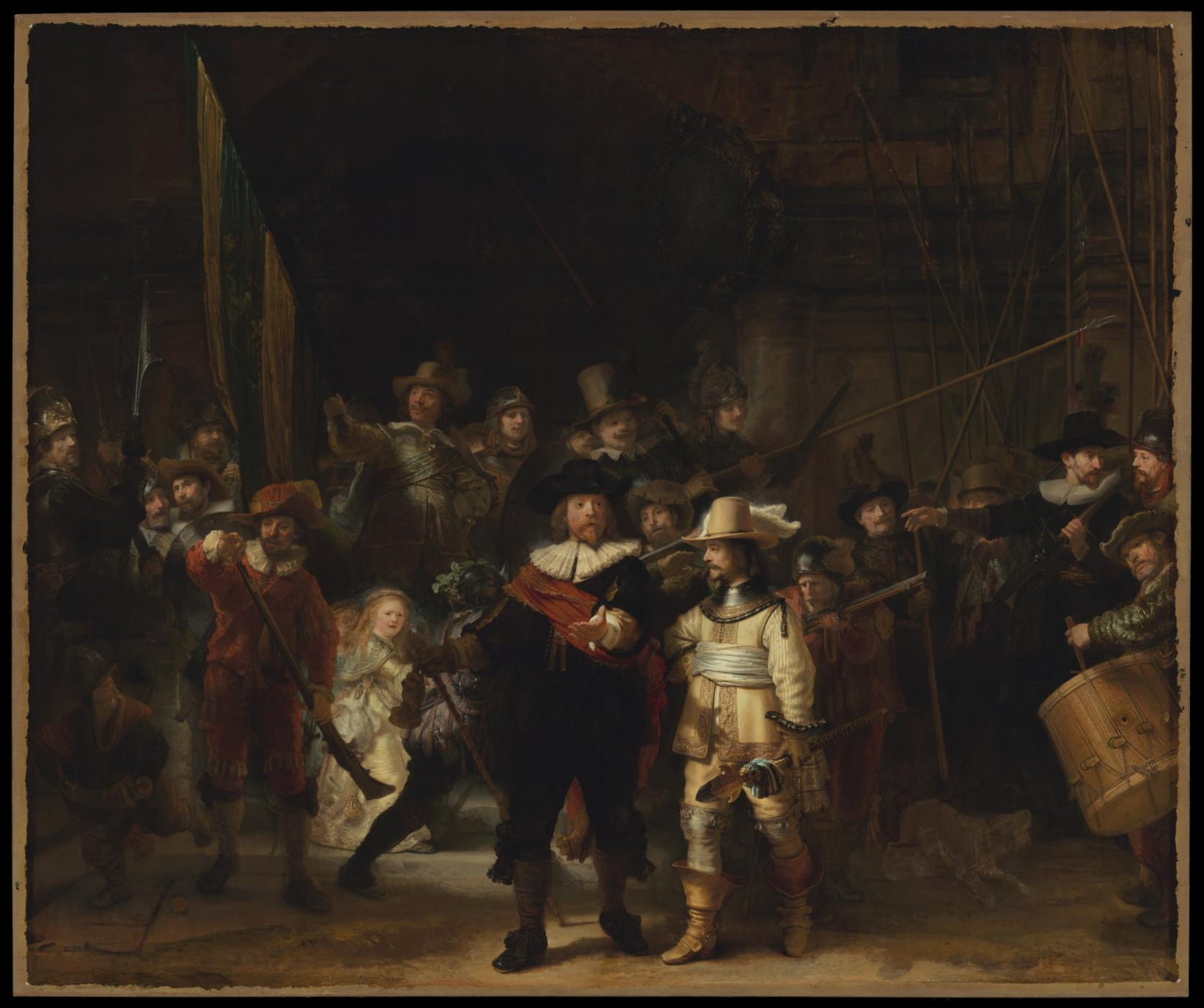
Filmmaker and serious Rembrandt enthusiast Peter Greenaway once called The Night Watch the most famous painting in the Western world, behind the Mona Lisa, The Last Supper, and the ceiling of the Sistine Chapel. But if the resources devoted to its scrutiny are anything to go by, the Dutch masterwork has been gaining on those other three in recent years. Can any work of Leonardo or Michelangelo, for example, boast of having been digitized at a resolution of 717 gigapixels, as the Rijksmuseum has just done with The Night Watch?

In fact, no other work of art in existence has ever been the subject of such a large and detailed photograph. Each of its 717,000,000,000 pixels, says the Rijksmuseum’s site, “is smaller than a human red blood cell.”
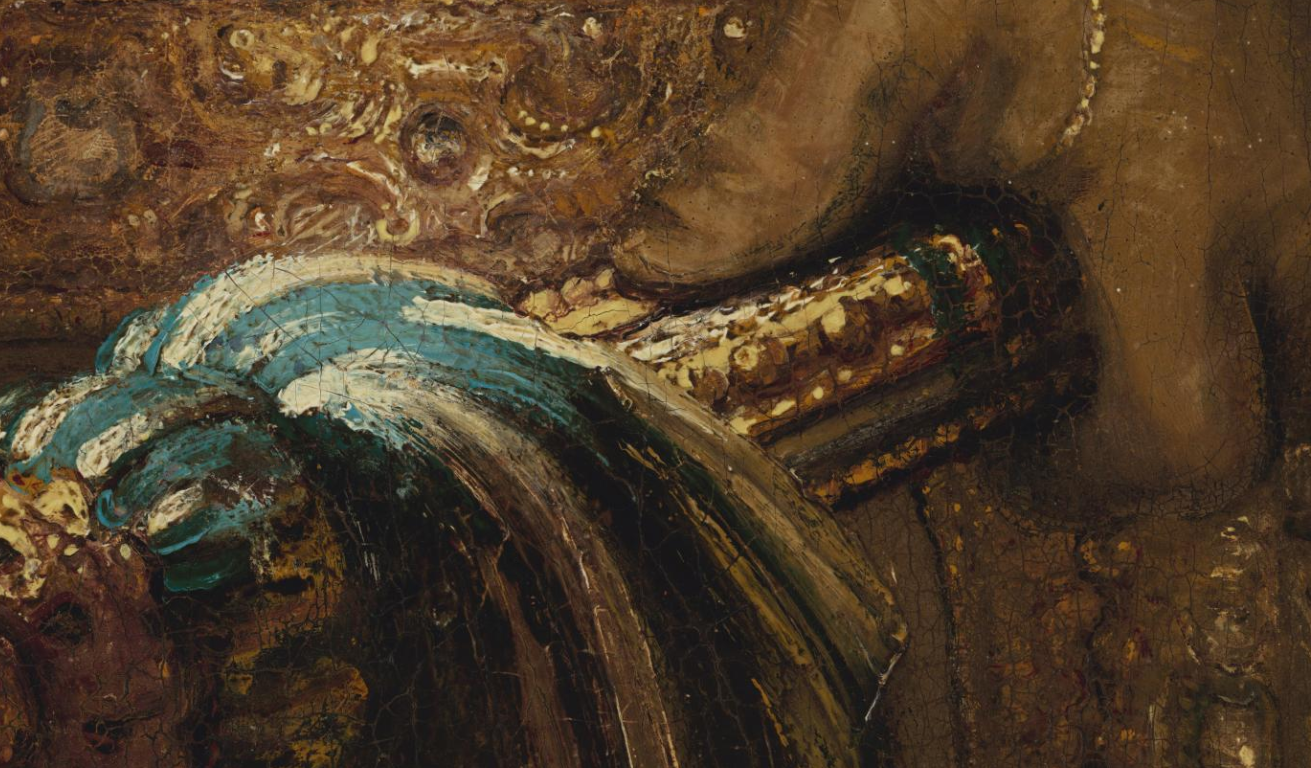
This necessitated the use of “a 00-megapixel Hasselblad H6D 400 MS-camera to make 8439 individual photos measuring 5.5cm x 4.1cm. Artificial intelligence was used to stitch these smaller photographs together to form the final large image, with a total file size of 5.6 terabytes.” You may remember artificial intelligence also having played a role in the reconstruction of the painting’s missing sections, previously featured here on Open Culture.

The result far surpasses the digital version of The Night Watch made available by the Rijksmuseum in 2020, itself high-resolution enough to allow viewers to zoom in to see the painting’s every individual brush stroke. (It even outdoes last year’s 10-billion-pixel scan of Girl with a Pearl Earring, the best-known work by Rembrandt’s fellow Dutch master Johannes Vermeer.) Now, writes Colossal’s Grace Ebert, you can see all the way down to “the cracked texture of the paint, brushstrokes, and slight pigment variations that wouldn’t be visible even if you were standing in front of the work itself.”
380 years after Rembrandt painted it, The Night Watch remains almost uniquely striking in its employment of contrasting shadow and light, all in service of a large-scale composition at once lifelike and somehow more vivid than reality. This digitization and the AI-assisted completion are both arts of “Operation Night Watch,” the thoroughgoing restoration project now underway at the Rijksmuseum, which will make all the elements of that composition more immediately visible than they’ve been in generations.

But the question of how, exactly, Rembrandt achieved such powerful effects can be answered only through rigorous examination of each and every detail, an activity open to all on the 717-gigapixel scan at the Rijksmuseum’s site.
Related Content:
What Makes The Night Watch Rembrandt’s Masterpiece
The Long-Lost Pieces of Rembrandt’s Night Watch Get Reconstructed with Artificial Intelligence
Late Rembrandts Come to Life: Watch Animations of Paintings Now on Display at the Rijksmuseum
A 10 Billion Pixel Scan of Vermeer’s Masterpiece Girl with a Pearl Earring: Explore It Online
Based in Seoul, Colin Marshall writes and broadcasts on cities and culture. His projects include the book The Stateless City: a Walk through 21st-Century Los Angeles and the video series The City in Cinema. Follow him on Twitter at @colinmarshall or on Facebook.
Read More...The Amazing Engineering of James Webb Telescope
If you want to see the current height of technology, you could do worse than taking a look at the James Webb Space Telescope. Millions have been doing just that over the past few weeks, given that this past Christmas Day witnessed the launch of that ten-billion-dollar NASA project a decade in the making. As the successor to the now-venerable Hubble Space Telescope, the JWST is designed to go much farther into outer space and thus see much further back in time, potentially to the formation of the first galaxies. If all goes well, it will give us what the Real Engineering video above calls a glimpse of the “early universe from which we and everything we know was born.”
But one does not simply glance skyward to see back 13.5 billion years. No, “the combination of technologies required to make the James Webb telescope possible are unique to this time period in human history.” These include the heat shield that will unfold to protect its sensitive components from the heat of the sun, to the onboard cryocooler that maintains the mid-infrared detection instrument (which itself will enable the viewing of many more stars and galaxies than previous telescopes) at a cool seven degrees Kelvin, to the array of gold-coated beryllium mirrors that can pick up unprecedented amounts of light.
However complicated the JWST’s development and launch, “the truly nerve-wracking process begins on day seven,” says the Real Engineering video’s narrator. At that point, with the satellite finding its precisely determined position 1.5 million kilometers from Earth, the heat shield begins unfolding, and “there are over 300 single points of failure in this unfolding sequence: 300 chances for a ten billion-dollar, 25-year project to end.” With that process underway as of this writing, the teeth of the project’s engineers are no doubt firmly embedded in their nails.
As it plays out, also-nervous fans of space exploration (who’ve had much to get excited about in recent years) might consider distracting themselves with the above episode of Neil DeGrasse Tyson’s StarTalk. In it Tyson has in-depth discussions about the JWST’s conception, purpose, and potential with both NASA astronomer Natalie Batalha and filmmaker Nathaniel Kahn, whose documentary The Hunt for Planet B examines the JWST team’s “quest to find another Earth among the stars.” But let’s not get ahead of ourselves: even if the shield deploys without a hitch, there remains the not-untricky process of unfolding those mirrors. What we see through the telescope will no doubt change our ideas about humanity’s place in the universe — but if it functions as planned, we’ll have good reason to be pleased with human competence.
Related Content:
The Beauty of Space Photography
How Scientists Colorize Those Beautiful Space Photos Taken By the Hubble Space Telescope
Van Gogh’s ‘Starry Night’ Re-Created by Astronomer with 100 Hubble Space Telescope Images
Based in Seoul, Colin Marshall writes and broadcasts on cities and culture. His projects include the book The Stateless City: a Walk through 21st-Century Los Angeles and the video series The City in Cinema. Follow him on Twitter at @colinmarshall or on Facebook.
Read More...What Does It Take to Be a Great Artist?: An Aging Painter Reflects on His Creative Process & Why He Will Never Be a Picasso
What does it take to be an artist? In the short film above by Jakub Blank, artist Bill Blaine meditates on the question as he strolls around his home and studio and talks about his work. Blaine has aged into the realization that making art is what fulfills him, even though it probably won’t bring him immortal fame. “I’ve thought about this,” he says. “I would probably be a happier person if I were painting all the time.” Bloated egos belong to the young, and Blaine is glad to put the “absurd” ambitions of youth behind him. “In the old days,” he muses, “your ego was so big, that you wanted to be better than everybody else, you wanted to be on the cutting edge of things… at least with old age, you don’t have a lot of that.”
And yet, though he seems to have everything an artist could want in the material sense – a palatial estate with its own well-appointed studio – a melancholy feeling of defeat hangs over the artist. Sadness remains in his ready smile as he gently interrogates himself, “So then, why the hell aren’t you painting all the time?” Blaine chuckles as he contemplates seeing a therapist, an idea he doesn’t seem to take particularly seriously. Aside from a few outliers, maybe the psychiatric profession hasn’t taken the creative impulse particularly seriously either. One psychoanalyst who did, Otto Rank, wrote in Art and Artist of the importance of creativity to all human development and activity.
“The human urge to create,” Rank argued, “does not find expression in works of art alone. It also produces religion and mythology and the social institutions corresponding to these. In a word, it produces the whole culture.” Everything we do, from baking bread to writing symphonies, is a creative act, in that we take raw materials and make things that didn’t exist before. In Western culture, however, the role of the artist has been distorted. Artists are elevated to the status of genius, or relegated to mediocrities, at best, disposable deadbeats, at worst. Blaine surely deserves his lot of happiness from his work. Has he been undermined by self-doubt?
His vulnerability and the sharp candor of his observations leave us with a portrait of a man almost in agony over the knowledge, he says – again using the accusatory second person – that “you’re not going to be the next Picasso or the next Frank Stella or whatever else.” There’s more to the negative comparisons than wounded vanity. He should feel free to do what he likes, but he lacks what made these artists great, he says:
You have to be obsessive, you really do. Compulsive. And I’m not enough, unfortunately. Had a certain amount of talent, just didn’t have the obsession apparently. I think that’s what great artists have. They can’t let it go. And eventually, whatever they do, that’s their art, that’s who they are.
Blaine contrasts greatness with the work of unserious “dilettantes” who may approximate abstract expressionist or other styles, but whose work fails to manifest the personality of the artist. “You can see through it,” says Blaine, wincing. Shot in his “home and studio in Mount Dora, Florida,” notes Aeon, the film is “full of his original paintings and photographs. Blaine offers his unguarded thoughts on a range of topics related to the generative process.”
Artists are rarely their own best critics, and Blaine’s assessments of his work can seem withering when voiced over Blank’s slideshow presentations. But as he opens up about his creative process, and his perception of himself as “too bourgeois” to really make it, he may reveal much more about the struggles that all artists — or all creative people — face than he realizes.
Related Content:
Josh Jones is a writer and musician based in Durham, NC. Follow him at @jdmagness
Read More...An Oscar-Winning Animation of Charles Dickens’ Classic Tale, A Christmas Carol (1971)
I HAVE endeavoured in this Ghostly little book, to raise the Ghost of an Idea, which shall not put my readers out of humour with themselves, with each other, with the season, or with me. May it haunt their houses pleasantly, and no one wish to lay it. — Charles Dickens
Some twenty years before Tim Burton’s The Nightmare Before Christmas, another animated entertainment injected “the most wonderful time of the year” with a potent dose of horror.
Surely I’m not the only child of the 70s to have been equal parts mesmerized and stricken by director Richard Williams’ faithful, if highly condensed, interpretation of Charles Dickens’ A Christmas Carol.
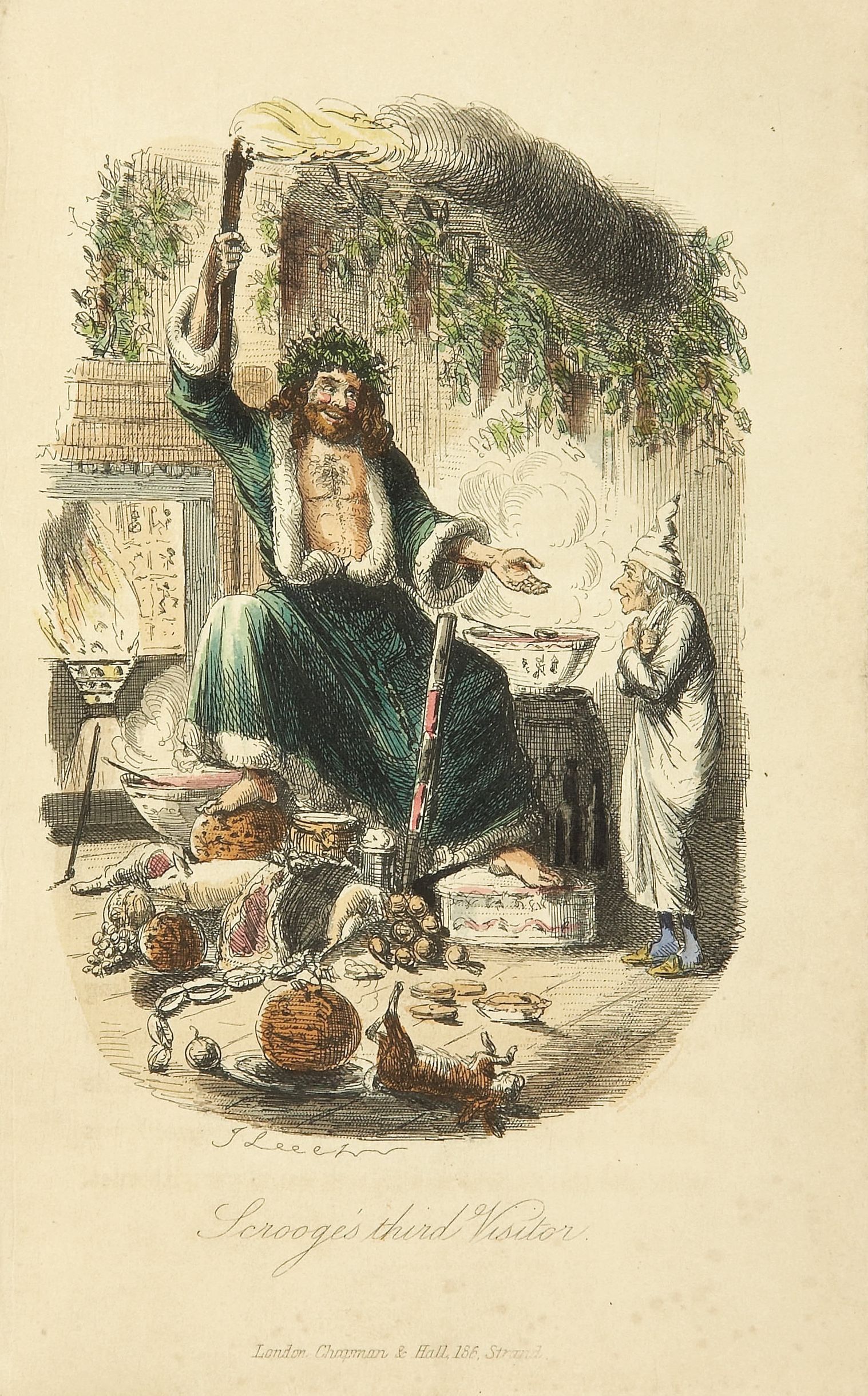
The 25-minute short features a host of hair-raising images drawn directly from Dickens’ text, from a spectral hearse in Scrooge’s hallway and the Ghost of Marley’s gaping maw, to a night sky populated with miserable, howling phantoms and the monstrous children lurking beneath the Ghost of Christmas Present’s skirts:
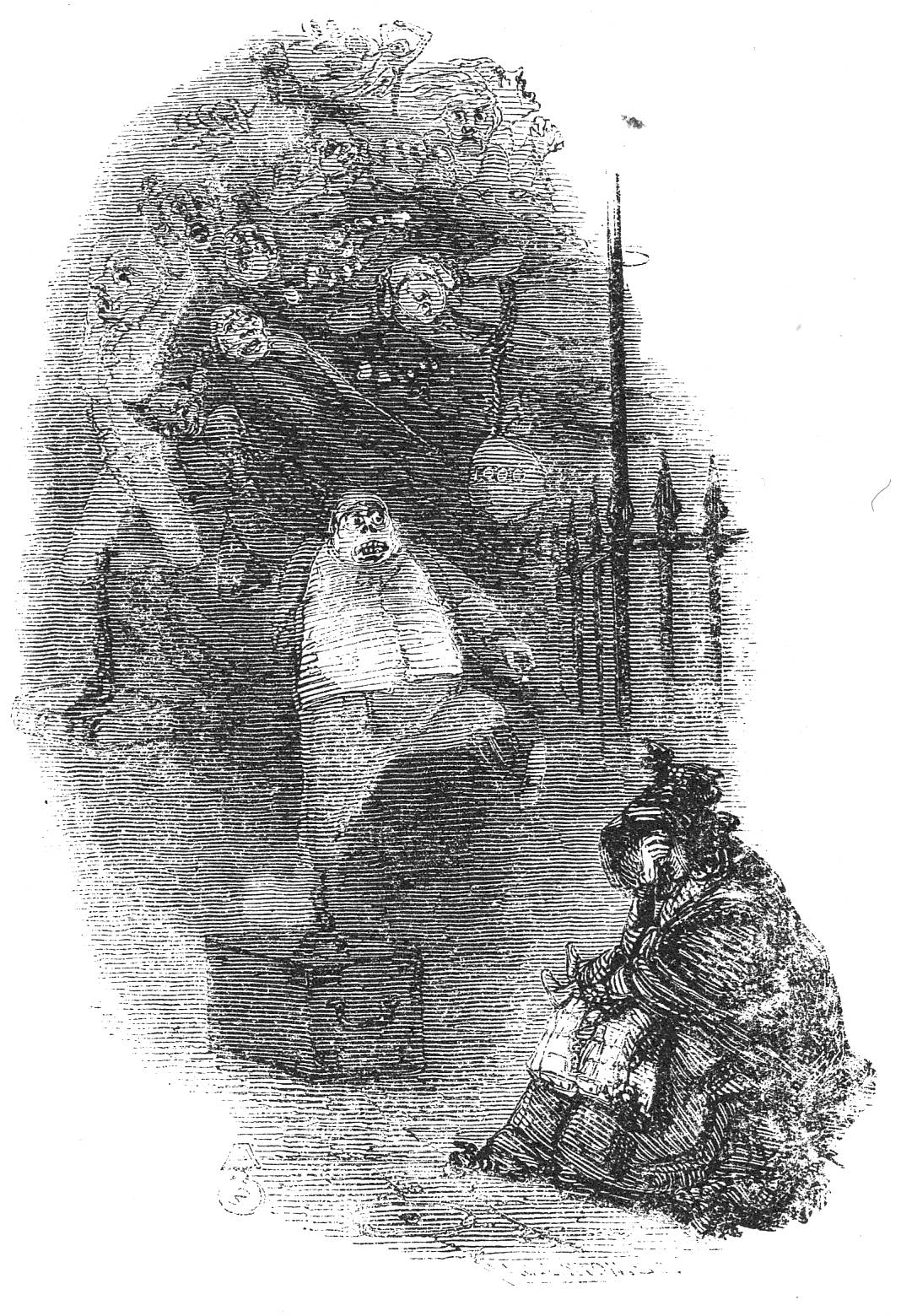
Yellow, meagre, ragged, scowling, wolfish; but prostrate, too, in their humility. Where graceful youth should have filled their features out, and touched them with its freshest tints, a stale and shrivelled hand, like that of age, had pinched, and twisted them, and pulled them into shreds. Where angels might have sat enthroned, devils lurked, and glared out menacing. No change, no degradation, no perversion of humanity, in any grade, through all the mysteries of wonderful creation, has monsters half so horrible and dread… This boy is Ignorance. This girl is Want. Beware them both, and all of their degree, but most of all beware this boy, for on his brow I see that written which is Doom, unless the writing be erased.
Producer Chuck Jones, whose earlier animated holiday special, Dr. Seuss’ How the Grinch Stole Christmas!, is in keeping with his classic work on Bugs Bunny and other Warner Bros. faves, insisted that this cartoon should mirror the look of the John Leech steel engravings illustrating Dickens’ 1843 original.
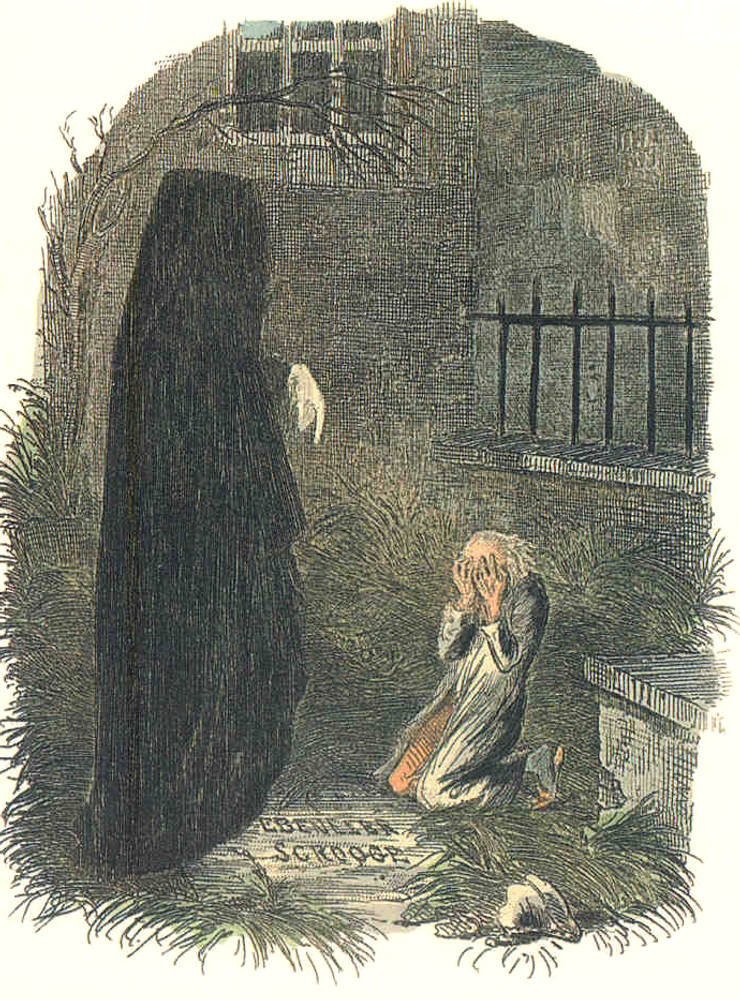
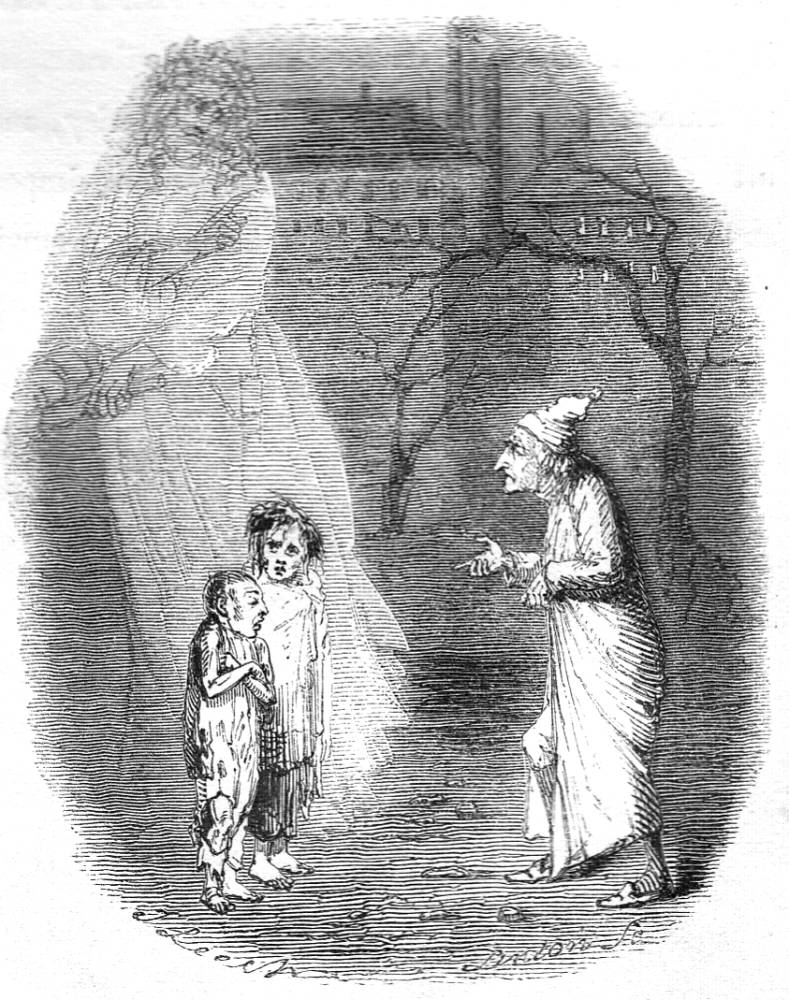
D.T. Nethery, a former Disney animation artist and fan of this Christmas Carol explains that the desired Victorian look was achieved with a labor-intensive process that involved drawing directly on cels with Mars Omnichrom grease pencil, then painting the backs and photographing them against detailed watercolored backgrounds.
As director Williams recalls below, he and a team including master animators Ken Harris and Abe Levitow were racing against an impossibly tight deadline that left them pulling 14-hour days and 7‑day work weeks. Reportedly, the final version was completed with just an hour to spare. (“We slept under our desks for this thing.”)
As Michael Lyons observes in Animation Scoop, the exhausted animators went above and beyond with Jones’ request for a pan over London’s rooftops, “making the entire twenty-five minutes of the short film take on the appearance of art work that has come to life”:
…there are scenes that seem to involve camera pans, or sequences in which the camera seemingly circles around the characters. Much of this involved not just animating the characters, but the backgrounds as well and in different sizes as they move toward and away from the frame. The hand-crafted quality, coupled with a three-dimensional feel in these moments, is downright tactile.
Revered British character actors Alistair Sim (Scrooge) and Michael Hordern (Marley’s Ghost) lent some extra class, reprising their roles from the evergreen, black-and-white 1951 adaptation.
The short’s television premiere caused such a sensation that it was given a subsequent theatrical release, putting it in the running for an Oscar for Best Animated Short Subject. (It won, beating out Tup-Tup from Croatia and the NSFW-ish Kama Sutra Rides Again which Stanley Kubrick had handpicked to play before A Clockwork Orange in the UK.)
With theaters in Dallas, Los Angeles, Portland, Providence, Tallahassee and Vancouver cancelling planned live productions of A Christmas Carol out of concern for the public health during this latest wave of the pandemic, we’re happy to get our Dickensian fix, snuggled up on the couch with this animated 50-year-old artifact of our childhood.…
Related Content:
Hear Neil Gaiman Read A Christmas Carol Just as Dickens Read It
Charles Dickens’ Hand-Edited Copy of His Classic Holiday Tale, A Christmas Carol
A Christmas Carol, A Vintage Radio Broadcast by Orson Welles (1939)
Ayun Halliday is the Chief Primaologist of the East Village Inky zine and author, most recently, of Creative, Not Famous: The Small Potato Manifesto. Follow her @AyunHalliday.
Read More...60 Film Noir Movies Online
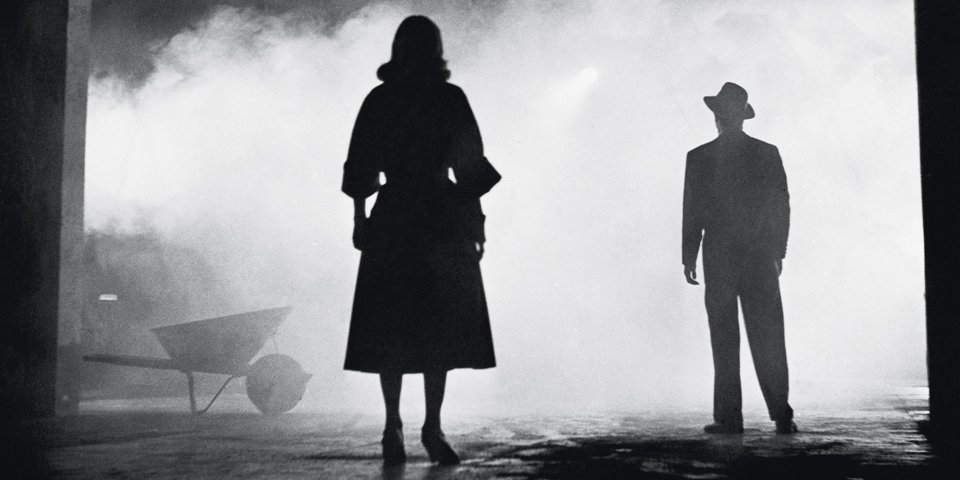
During the 1940s and 50s, Hollywood entered a “noir” period, producing riveting films based on hard-boiled fiction. These films were set in dark locations and shot in a black & white aesthetic that fit like a glove. Hardened men wore fedoras and forever smoked cigarettes. Women played the femme fatale role brilliantly. Love was the surest way to death. All of these elements figured into what Roger Ebert calls “the most American film genre” in his short Guide to Film Noir.
If you head over to this list of Noir Films, you can find 60 films from the noir genre, including some classics by John Huston, Orson Welles, Fritz Lang and Ida Lupino. The list also features some cinematic legends like Humphrey Bogart, Peter Lorre, Barbara Stanwyck, Edward G. Robinson, and even Frank Sinatra. Hope the collection helps you get through the days ahead.
If you would like to support the mission of Open Culture, consider making a donation to our site. It’s hard to rely 100% on ads, and your contributions will help us continue providing the best free cultural and educational materials to learners everywhere. You can contribute through PayPal, Patreon, and Venmo (@openculture). Thanks!
Related Content
The Essential Elements of Film Noir Explained in One Grand Infographic
The 5 Essential Rules of Film Noir
Roger Ebert Lists the 10 Essential Characteristics of Noir Films
4,000+ Free Movies Online: Great Classics, Indies, Noir, Westerns, Documentaries & More Read More...New York’s Lost Skyscraper: The Rise and Fall of the Singer Tower
New York is never just one city; it’s always several, interacting with – or pushing out – each other. This goes for the city’s architecture as much as for its population. Its strata of public works projects, cultural institutions, department stores, hotels, hostels, housing, and skyscraping office buildings tell the story of its evolution. Now, artists, urbanists, and architects protest faceless condos and big box stores. In decades past, they fought the faceless towers that rose into the atmosphere and blocked the sun. Such opposition stretches back well over 100 years, to the turn-of-the-century New York of the Flatiron Building and Beaux Arts wonders like Penn Station, a building, The New York Times writes, that “once made travelers feel important.”
“In the 1890’s,” writes Christopher Gray, Paris-trained architect Ernest Flagg “denounced the growing crop of skyscrapers, and by the turn of the 20th century he was horrified by the darkened streets and raw side walls produced by such buildings.” Flagg’s opinions were of little interest to his New York employers, so he “shifted his focus to reforming skyscraper design” instead of decrying them outright.
The endeavor produced a modern marvel, “a one-of-a-kind tower” rising above the New York City skyline, notes the video above, “a total masterpiece of architecture and engineering unlike anything seen before” — the Singer Tower, built for the Singer Sewing Machine Company in 1908.
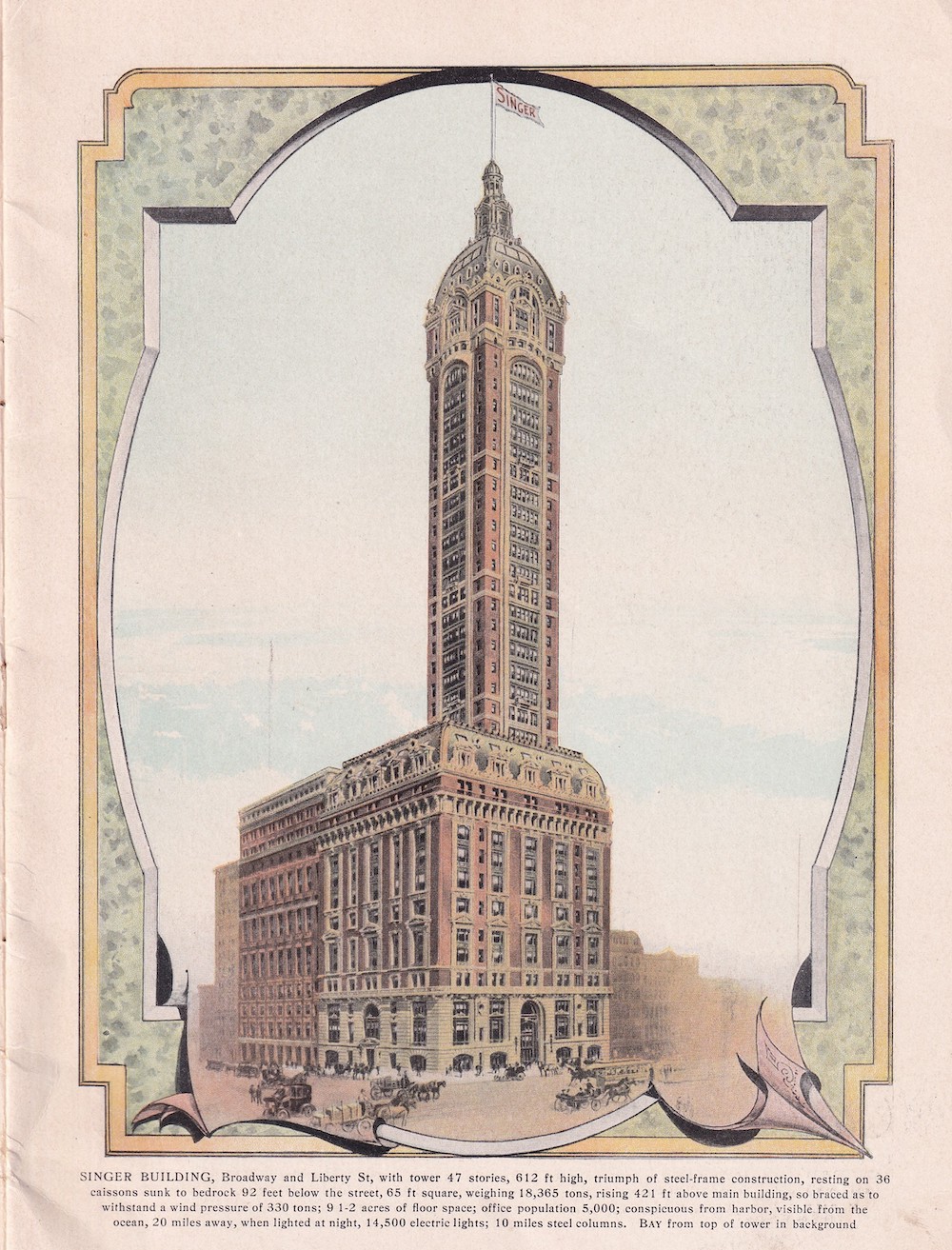
So impressive was it for its time that Flagg’s building won comparisons to the pyramids of Ancient Egypt. For a brief moment, between the years 1908 and 1909, it was the tallest building in the world, until it lost the title to the Metropolitan Life Insurance Company Tower, another unusual building unlike the rectangular skyscrapers against which Flagg railed. Unconcerned with maximizing available real estate, he “urged that skyscraper towers more than 10 or 15 stories high should be set back from the property lines, so that the tower occupied only one-quarter of the lot,” writes Gray. “All four sides could then be treated architecturally, and ‘we should soon have a city of towers instead of a city of dismal ravines.’ ”
Working in a Beaux-Arts style, Flagg put his theories to the test in the Singer Tower, also called the Singer Building, expanding an original 10-story base to 14 stories, then building a smaller 33 ‑story tower atop it. Capped by a dome with a lantern and flagpole rising from it, the tower’s “bulbous top became one of New York’s best known landmarks.” Its lobby had the ornate luxury “seen in world’s fair and exposition architecture of the period.” But Flagg’s vision of “a city of free-standing towers” would remain the dream of a single architect. Despite his work for legislation to curb skyscrapers that took up entire city blocks, such buildings, including the 34-story City Investing Building, would continue to rise around the distinctive Singer Tower.
Finally, Flagg’s quirks proved too much for New York’s real estate elite. When the Singer company moved its headquarters in 1961, interest in the Tower remained low “because the small square footage of the building’s narrow tower was antithetical to the booming growth of modern business, which demanded more, not less, office space,” writes Katie Hiler. Deconstruction of the first skyscraper “ever to be peacefully demolished” began in 1967, five years after the demolition of Penn Station. In place of the Singer Tower would rise the 54-story One Liberty Plaza, a harbinger of things to come in the city’s new financial hub, the World Trade Center.
Related Content:
Josh Jones is a writer and musician based in Durham, NC. Follow him at @jdmagness
Read More...Watch Frank Zappa Play Michael Nesmith (RIP) on The Monkees–and Vice Versa (1967)
In December 1967, The Monkees blew their audience’s minds by hosting Frank Zappa, “participant in and perhaps even leader of” the Mothers Of Invention.
Or did they?
The tidal wave of affection that comprises twenty-first century Monkees mania makes us forget that children were the primary audience for The Monkees’ titular sitcom. (One might also say that The Monkees were the sitcom’s titular band.)
But even if the kids at home weren’t sufficiently conversant in the musical underground to identify the special guest star of the episode, “The Monkees Blow Their Minds,” we are.
It’s a joy to see Zappa and The Monkees’ supremely laid back Michael Nesmith (RIP) impersonating each other.
Zappa’s idea, apparently. He’s in complete control of the gimmick from the get go, whereas Nesmith struggles to keep their names straight and his prosthetic nose in place before getting up to speed.
It’s important to remember that it’s not Frank, but Nesmith playing Frank who accuses The Monkees’ music of being banal and insipid.
Zappa himself was a great supporter of The Monkees. “When people hated us more than anything, he said kind things about us,” Nesmith recalled in Barry Miles’ Zappa biography. Zappa attempted to teach Nesmith how to play lead guitar, and offered drummer Micky Dolenz a post-Monkees gig with The Mothers of Invention.
Their mutual warmth makes lines like “You’re the popular musician! I’m dirty gross and ugly” palatable. It put me in mind of comedian Zach Galifianakis’ Between Two Ferns, and countless other loosely rehearsed web series.
After a couple of minutes, Nesmith gets his hat back to conduct as Zappa smashes up a car to the tune of the Mother’s Of Invention’s “Mother People.”
Related Content:
A Young Frank Zappa Turns the Bicycle into a Musical Instrument on The Steve Allen Show (1963)
Ayun Halliday is an author, homeschooler, and Chief Primatologist of the East Village Inky zine. Follow her @AyunHalliday
Read More...
Stephen Sondheim’s 40 Favorite Films
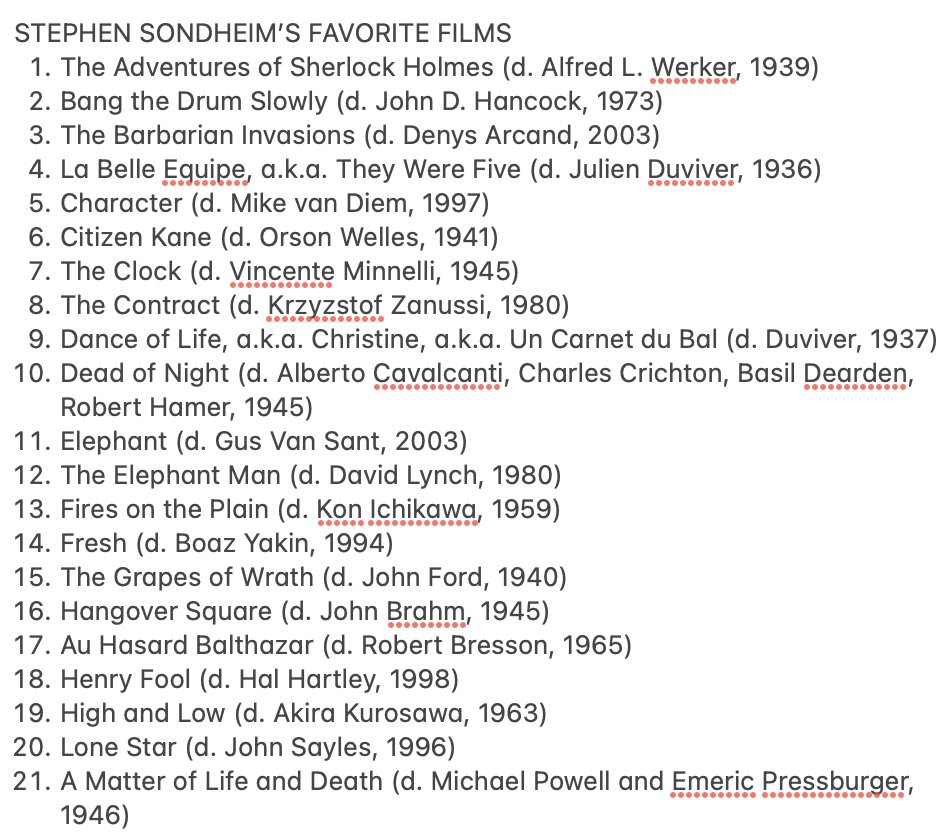
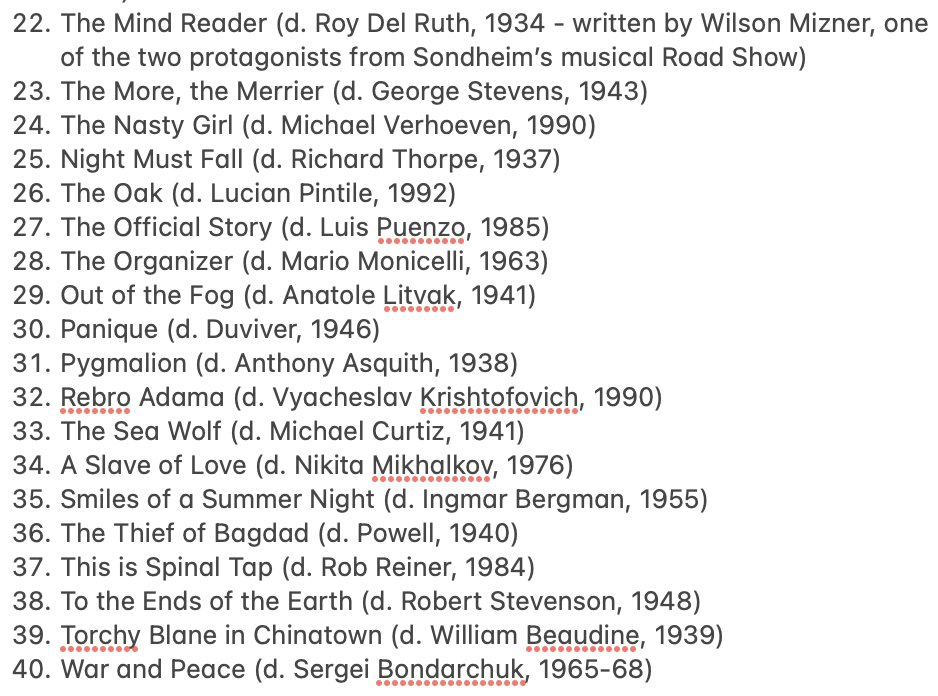
A true cineaste, a friend once told me, will have the most eclectic “best of” list, forged from a deep love of cinema and an absolute confidence in their choices. There will be no looking at a Great Movies book, no consideration of public taste. They have not a care for legacies or film schools. That’s why this recently unearthed list of Stephen Sondheim’s favorite films is such a fascinating read.
The composer passed away last month at 91, having changed Broadway musicals from big and brassy popular fare into something that could tackle strange and experimental themes and stories yet be just as successful. He provided the lyrics for West Side Story and Gypsy, and then went on to a string of challenging hits: Company, Follies, A Little Night Music, Sweeney Todd, Into the Woods, Assassins.
The subject matters he tackled were often dark and complex. He watched many of his musicals get the Hollywood treatment, occasionally wrote songs for cinema, and toyed with adapting several films for the stage, including Being There and Sunset Boulevard. So what must his film list be like?
Really odd, is the answer. The published list is in alphabetical order, and there are very few classics in there—Welles’ Citizen Kane, Bergman’s Smiles on a Summer Night, Bresson’s Au Hasard Balthazar, and Kurosawa’s High and Low.
Conspicuously missing: other musicals.
“The only kind of movie that held no interest for me whatsoever was musical,” he told the New York Times in 2003. ”We’re talking about from the age of 10 to the age of 25. I knew the musicals because I would hear the songs, but I never went out of my way to see them. Not the fabulous Arthur Freed MGM unit, and it’s not that I thought they were bad. It’s what I loved were westerns. Melodramas, even romantic comedies. High drama.’’
The interview suggests a method to the list—these were films Sondheim loved but most had not seen; he would insist friends and collaborators watch them. That’s how he describes 1980’s The Contract, directed by Krzysztof Zanussi, a “movie of his I find so extraordinary, I want to share it with everybody,’’ he said.
Born in 1930, Sondheim’s favorite decade (by movie count) is his teenage years, from the fantasy of Michael Powell’s The Thief of Bagdad to the horror of Dead of Night. Later years are more scattershot, with Lynch’s The Elephant Man and Rob Reiner’s This Is Spinal Tap being stand-out choices. His 1990s selections, right up through the mid-2000s show his continuing interest in dark themes (Gus Van Zant’s school shooting mood piece Elephant), large novelistic intertwining narratives (John Sayles’ Lone Star) and complicated family dramas (Denys Arcand’s The Barbarian Invasions).
Sondheim fans will find much to chew over on this list, that is, if they’ve even seen most of them. My percentage is admittedly low, let us know yours in the comments.
Related Content:
Watch Stephen Sondheim (RIP) Teach a Kid How to Sing “Send In the Clowns”
Martin Scorsese Names His Top 10 Films in the Criterion Collection
Ted Mills is a freelance writer on the arts who currently hosts the Notes from the Shed podcast and is the producer of KCRW’s Curious Coast. You can also follow him on Twitter at @tedmills, and/or watch his films here.
Read More...Download 215,000 Japanese Woodblock Prints by Masters Spanning the Tradition’s 350-Year History
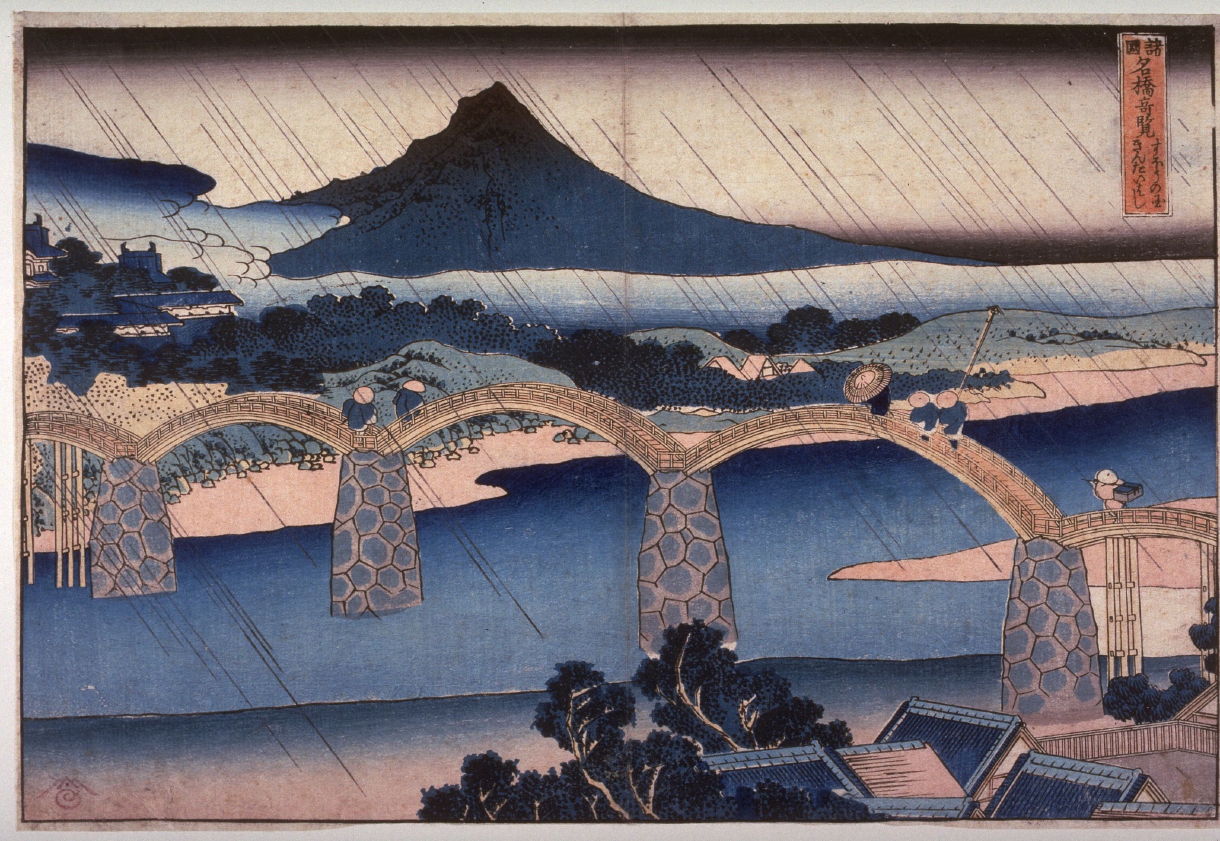
If you enjoy Japanese woodblock prints, that appreciation puts you in good company: with Vincent van Gogh, for example, and perhaps even more flatteringly, with many of your fellow readers of Open Culture. So avid is the interest in ukiyo‑e, the traditional Japanese “pictures of the floating world,” that you might even have missed one of the large, free online collections we’ve featured over the years. Take, for instance, the one made available by the Van Gogh Museum itself, which features the work of such well-known masters as Katsushika Hokusai, artist of The Great Wave off Kanazawa, and Utagawa Hiroshige, he of the One Hundred Views of Edo.
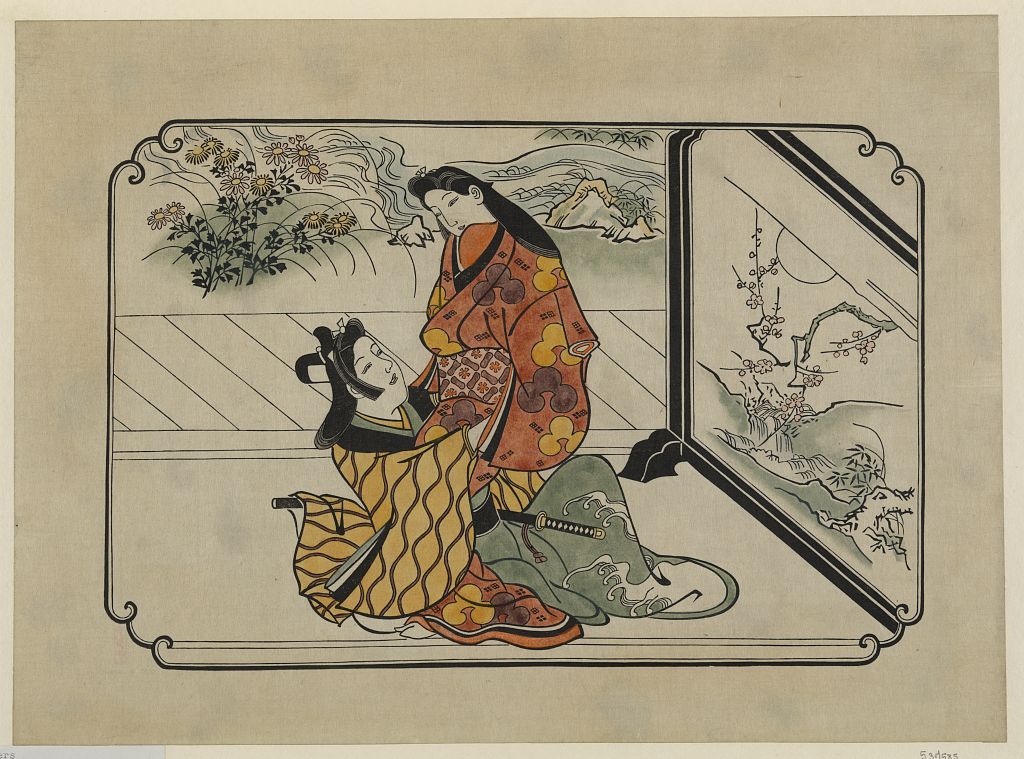
Edo was the name of Tokyo until 1868, a decade after Hiroshige’s death — an event that itself marked the end of an aesthetically fruitful era for ukiyo‑e. But the history of the form itself stretches back to the 17th century, as reflected by the United States Library of Congress’ online collection “Fine Prints: Japanese, pre-1915.”
There you’ll find plenty of Hokusai and Hiroshige, but also others who took the art form in their own directions like Utagawa Yoshifuji, whose prints include depictions of not just his countrymen but visiting Westerners as well. (The results are somewhat more realistic than the ukiyo‑e London imagined in 1866 by Utagawa Yoshitora, another member of the same artistic lineage.)

As if all this wasn’t enough, you can also find more than 220,000 Japanese woodblock prints at Ukiyo‑e.org. Quite possibly the most expansive such archive yet created, it includes works from Hiroshige and Hokusai’s 19th-century “golden age of printmaking” as well as from the development of the art form early in the century before. Even after its best-known practitioners were gone, ukiyo‑e continued to evolve: through Japan’s modernizing Meiji period in the late 19th and early 20th century, through various aesthetic movements in the years up to the Second World War, and even on to our own time, which has seen the emergence even of prolific non-Japanese printmakers.
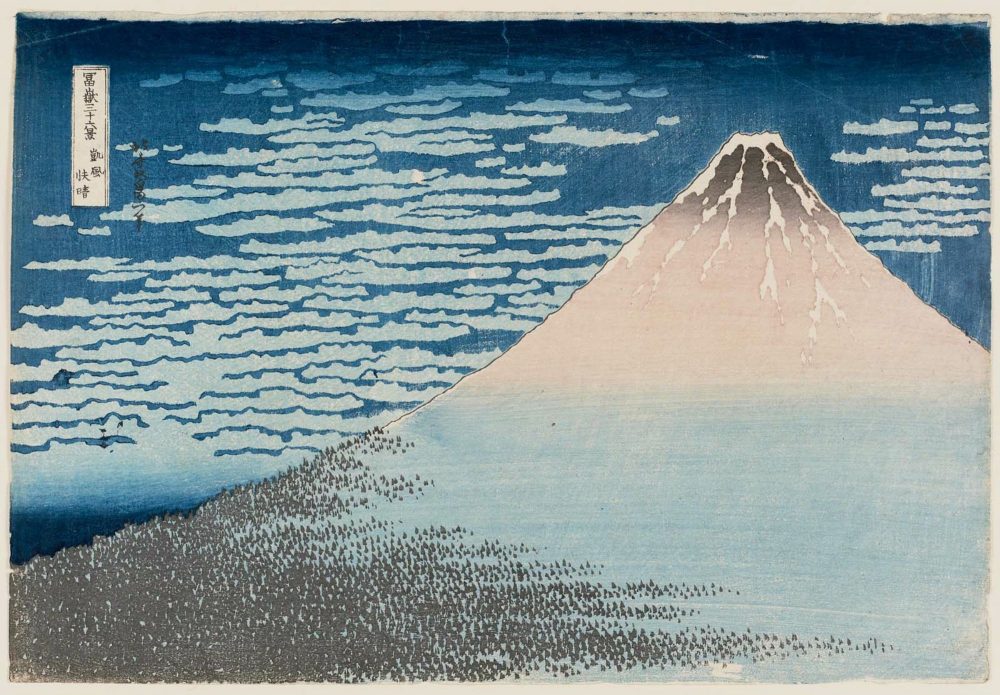
Of course, these ukiyo‑e prints weren’t originally created to be viewed on the internet; the works of Hokusai and Hiroshige may look good on a tablet, but not by their design. Still, they did often have the individual consumer in mind: these are artists “known today for their woodblock prints, but who also excelled at illustrations for deluxe poetry anthologies and popular literature,” writes the Metropolitan Museum of Art curator John Carpenter. His words greet the visitor to the Met’s online collection of more than 650 illustrated Japanese books, which presents ukiyo‑e as it would actually have been seen by most people when the form first exploded in popularity — not that, even then, its enthusiasts could imagine how many appreciators it would one day have around the world.
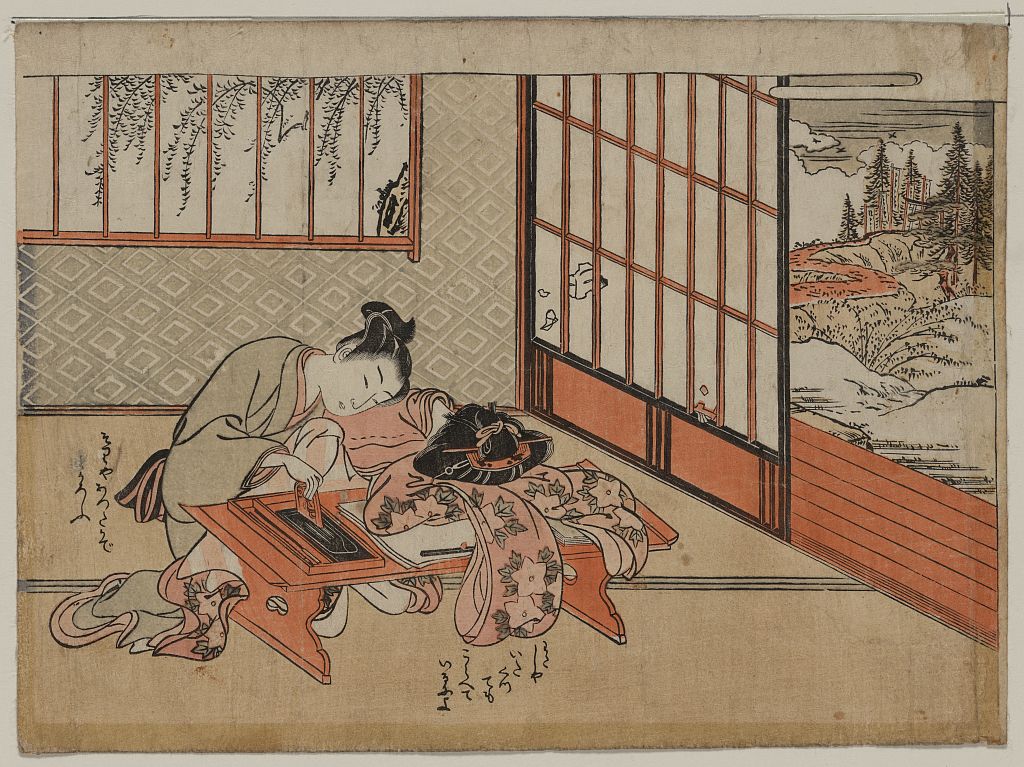
Below you can find a list of prior posts featuring archives of Japanese woodblock prints. Please feel free to explore them at your leisure.
Related content:
Download Hundreds of 19th-Century Japanese Woodblock Prints by Masters of the Tradition
Download 2,500 Beautiful Woodblock Prints and Drawings by Japanese Masters (1600–1915)
Enter a Digital Archive of 213,000+ Beautiful Japanese Woodblock Prints
Based in Seoul, Colin Marshall writes and broadcasts on cities and culture. His projects include the book The Stateless City: a Walk through 21st-Century Los Angeles and the video series The City in Cinema. Follow him on Twitter at @colinmarshall or on Facebook.
Read More...Support Us
We're hoping to rely on loyal readers, rather than erratic ads. Please click the Donate button and support Open Culture. You can use Paypal, Venmo, Patreon, even Crypto! We thank you!

About Us

Open Culture scours the web for the best educational media. We find the free courses and audio books you need, the language lessons & educational videos you want, and plenty of enlightenment in between.
Advertise With Us

FREE UPDATES!
GET OUR DAILY EMAIL
Get the best cultural and educational resources on the web curated for you in a daily email. We never spam. Unsubscribe at any time.
FOLLOW ON SOCIAL MEDIA

Open Culture editor Dan Colman scours the web for the best educational media. He finds the free courses and audio books you need, the language lessons & movies you want, and plenty of enlightenment in between.
Advertise With Us

