Albert Einstein Appears in Remarkably Colorized Video & Contemplates the Fate of Humanity After the Atomic Bomb (1946)

We lived in one world before August 6, 1945, and have lived in anoth­er ever since. Nobody under­stood this more clear­ly than Albert Ein­stein, who had advo­cat­ed for the research that cul­mi­nat­ed in that day. “A let­ter from Dr. Ein­stein in 1939 informed Pres­i­dent Roo­sevelt that the Ger­mans were engaged in the devel­op­ment of an atom­ic bomb and urged that sci­ence and tech­nol­o­gy in the Unit­ed States be mobi­lized on a sim­i­lar effort,” says a 1946 New York Times arti­cle. “This [1939] let­ter gave the first impe­tus to the devel­op­ment of the Atom­ic Bomb.” This sto­ry was includ­ed by way of con­text of a new call to action by Ein­stein and oth­er promi­nent sci­en­tists, one meant to secure human­i­ty’s future in a world with the bomb.

“Our world faces a cri­sis as yet unper­ceived by those pos­sess­ing pow­er to make great deci­sions for good or evil,” declares a telegram sent by Ein­stein to what the Times calls “sev­er­al hun­dred promi­nent Amer­i­cans.” “The unleashed pow­er of the atom has changed every­thing save our modes of think­ing and we thus drift toward unpar­al­leled cat­a­stro­phe. We sci­en­tists who released this immense pow­er have an over­whelm­ing respon­si­bil­i­ty in this world life-and-death strug­gle to har­ness the atom for the ben­e­fit of mankind and not for humanity’s destruc­tion.”

Hence the for­ma­tion of the Emer­gency Com­mit­tee of Atom­ic Sci­en­tists, chaired by Ein­stein and includ­ing as mem­bers such fig­ures as Hans A. Bethe, who’d direct­ed the The­o­ret­i­cal Divi­sion at Los Alam­os, and Leo Szi­lard, Ein­stein’s col­lab­o­ra­tor on the 1939 let­ter to Roo­sevelt.

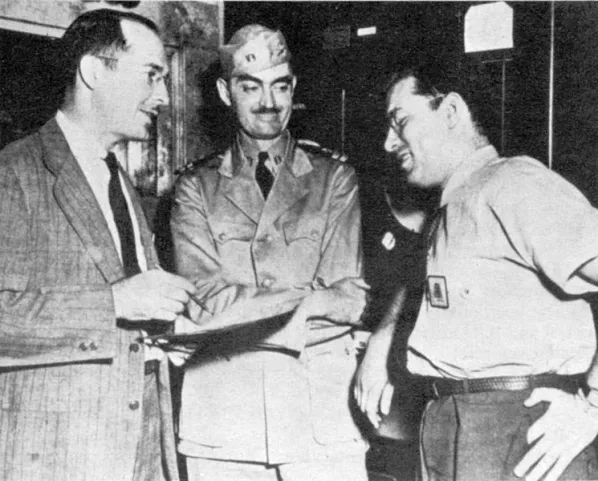
Szi­lard also appears along Ein­stein in the col­orized short film clip above, in which they lis­ten to a ver­sion of their telegram read aloud “We beg you to sup­port our efforts to bring real­iza­tion to Amer­i­ca that mankind’s des­tiny is being decid­ed today, now, this moment,” reads the announc­er. The telegram itself spec­i­fies that “we need two hun­dred thou­sand dol­lars at once for a nation-wide cam­paign to let the peo­ple know that a new type of think­ing is essen­tial if mankind is to sur­vive and move toward high­er lev­els.” In oth­er words, one mind­set had enabled the cre­ation of nuclear weapons, and quite anoth­er was need­ed to pre­vent them from ever being used again. In 1954, the year before his death, Ein­stein wrote that “I made one great mis­take in my life — when I signed the let­ter to Pres­i­dent Roo­sevelt rec­om­mend­ing that atom bombs be made.” It’s one kind of ambi­tion to change the mind of a politi­cian, and quite anoth­er to change the mind of human­i­ty.

Relat­ed con­tent:

Albert Ein­stein in Four Col­or Films

Hear Albert Ein­stein Read “The Com­mon Lan­guage of Sci­ence” (1941)

Albert Ein­stein Explains Why We Need to Read the Clas­sics

Hear the Voice of Albert Ein­stein: Vin­tage Album Fea­tures Him Talk­ing About E=MC2, World Peace & More

“The Most Intel­li­gent Pho­to Ever Tak­en”: The 1927 Solvay Coun­cil Con­fer­ence, Fea­tur­ing Ein­stein, Bohr, Curie, Heisen­berg, Schrödinger & More

Based in Seoul, Col­in Marshall writes and broad­casts on cities, lan­guage, and cul­ture. His projects include the Sub­stack newslet­ter Books on Cities, the book The State­less City: a Walk through 21st-Cen­tu­ry Los Ange­les and the video series The City in Cin­e­ma. Fol­low him on Twit­ter at @colinmarshall or on Face­book.

How the Avant-Garde Art of Gustav Klimt Got Perversely Appropriated by the Nazis

On paper, the Nazis should­n’t have liked Gus­tav Klimt. As gal­lerist and Youtu­ber James Payne says in his new Great Art Explained video above, their denun­ci­a­to­ry “Degen­er­ate Art Exhi­bi­tion” of 1937 includ­ed the work of “Paul Klee, Otto Dix, Pablo Picas­so, Marc Cha­gall, and Piet Mon­dri­an, as well as Egon Schiele and Oskar Kokosch­ka” — but some­how not Klimt, “who, at one time or anoth­er, had been described as moral­ly ques­tion­able, obscene, or even porno­graph­ic, and was friends with Jew­ish patrons, intel­lec­tu­als, and artists.” And it isn’t as if the Nazis just ignored his work; in fact, they active­ly pressed a few of his paint­ings into the ser­vice of their ide­ol­o­gy.

The search for those paint­ings, and thus an answer to the ques­tion of how they could have been giv­en a pro-Nazi spin, takes Payne to Vien­na (this video being part of his Great Art Cities sub-series). It was there that the 22-year-old Klimt — along with his broth­er Ernst and their friend Franz Mach — received the career-mak­ing com­mis­sion, straight from the emper­or him­self, to paint a series of ten his­tor­i­cal murals on the ceil­ings and walls of the city’s sto­ried Burgth­e­ater. This made pos­si­ble Klimt and Mach’s next major mur­al project for the Uni­ver­si­ty of Vien­na, though the for­mer’s con­tri­bu­tions were reject­ed by the offi­cials, and lat­er delib­er­ate­ly destroyed by Ger­man forces retreat­ing at the war’s end.

Hav­ing died in 1918, Klimt nev­er learned of his work’s ulti­mate fate (much less its more recent recon­struc­tion with arti­fi­cial intel­li­gence). Even by the time the Nazis rose to pow­er, he’d been dead long enough for them to appro­pri­ate his art, and even the much more dar­ing art he made after the Uni­ver­si­ty of Vien­na deba­cle. Take his Beethoven Frieze from 1902, a “34-meter-long homage to Beethoven’s Ninth Sym­pho­ny as inter­pret­ed by Richard Wag­n­er: Hitler’s favorite piece of music, often played at Nazi ral­lies, inter­pret­ed by his favorite com­pos­er.” That Klimt “cel­e­brates the tri­umph of ide­al­ism over mate­ri­al­ism” seems to have rep­re­sent­ed enough of a philo­soph­i­cal over­lap to be use­ful to the Third Reich.

“In 1943, in Vien­na, the Nazis even spon­sored the largest-ever ret­ro­spec­tive of Klimt’s art.” Indeed, Payne iden­ti­fies “a Teu­ton­ic qual­i­ty to Klimt’s work that would have appealed to the Nazi aes­thet­ic.” But he could also be por­trayed as “part of the Aus­tri­an folk tra­di­tion” with “Ger­man philo­soph­i­cal roots,” and like con­ven­tion­al Nazi artists, Klimt made much use of clas­si­cal icons and nude bod­ies. Yet there is lit­tle in his life or world­view of which the Nazis could pos­si­bly have approved, and even his work itself sug­gests that he knew full well the dan­gers of pop­u­lar appeal. “If you can­not please every­one with your actions and art, you should sat­is­fy a few,” says the quo­ta­tion from the poet and philoso­pher Friedrich Schiller incor­po­rat­ed into Klimt’s 1899 paint­ing Nuda Ver­i­tas. “To please many is dan­ger­ous.”

Relat­ed con­tent:

Gus­tav Klimt’s Icon­ic Paint­ing The Kiss: An Intro­duc­tion to Aus­tri­an Painter’s Gold­en, Erot­ic Mas­ter­piece (1908)

The Nazis’ Philis­tine Grudge Against Abstract Art and The “Degen­er­ate Art Exhi­bi­tion” of 1937

Gus­tav Klimt’s Mas­ter­pieces Destroyed Dur­ing World War II Get Recre­at­ed with Arti­fi­cial Intel­li­gence

Vienna’s Alberti­na Muse­um Puts 150,000 Dig­i­tized Art­works Into the Pub­lic Domain: Klimt, Munch, Dür­er, and More

136 Paint­ings by Gus­tav Klimt Now Online (Includ­ing 63 Paint­ings in an Immer­sive Aug­ment­ed Real­i­ty Gallery)

The Life & Art of Gus­tav Klimt: A Short Art His­to­ry Les­son on the Aus­tri­an Sym­bol­ist Painter and His Work

Based in Seoul, Col­in Marshall writes and broad­casts on cities, lan­guage, and cul­ture. His projects include the Sub­stack newslet­ter Books on Cities, the book The State­less City: a Walk through 21st-Cen­tu­ry Los Ange­les and the video series The City in Cin­e­ma. Fol­low him on Twit­ter at @colinmarshall or on Face­book.

Why Hiroshima, Despite Being Hit with the Atomic Bomb, Isn’t a Nuclear Wasteland Today

Jan Mor­ris vis­it­ed Hiroshi­ma in 1959, four­teen years after its dev­as­ta­tion by the Unit­ed States’ atom­ic bomb. “The city has long been rebuilt, and a new pop­u­la­tion has flood­ed in to replace the vic­tims of the holo­caust,” she wrote, “but for all the bright new build­ings and the broad boule­vards, no Pom­peii is more sure­ly frozen in its atti­tude of dis­as­ter, and no Mont Pelée more per­ma­nent­ly scarred.” Despite the robust urban form and activ­i­ty around her, she felt “for all the world as though the tall new build­ings are not there at all, and the islands of the Ota delta are still black­ened and smok­ing. Assured indeed must be the vis­i­tor who has not, just for a fleet­ing fool­ish moment, won­dered if the stones of Hiroshi­ma were still radioac­tive, or eyed the run­ning water thought­ful­ly.”

Today, the very name of Hiroshi­ma still evokes one thing and one thing only, at least to most for­eign­ers. But if those for­eign­ers actu­al­ly make the trip to that once-destroyed city, it will prob­a­bly strike them as even more incon­gru­ous­ly alive than it did Mor­ris those six decades ago.

Some would imag­ine that, giv­en that the drop­ping of the bomb known as “Lit­tle Boy” remains just with­in liv­ing mem­o­ry — its 78th anniver­sary passed just last Sun­day — Hiroshi­ma would be an aban­doned nuclear waste­land. Here to explain why it flour­ish­es instead is Youtu­ber Kyle Hill, whose new video above explains the dif­fer­ence between the long-term effects of nuclear dev­as­ta­tion on Hiroshi­ma and those on a place like the region of the Cher­nobyl nuclear pow­er plant.

“For all the destruc­tion it caused, the Lit­tle Boy bomb was ter­ri­bly inef­fi­cient,” Hill says. “Of the bom­b’s 64 kilo­grams of ura­ni­um, less than one kilo­gram under­went fis­sion. This means that “every joule of ener­gy that dev­as­tat­ed Hiroshi­ma, a fire­ball so hot it etched ‘neg­a­tives’ of peo­ple into con­crete, a blast wave so intense, it shat­tered win­dows 200 kilo­me­ters away, came from less than a gram of mat­ter con­vert­ed direct­ly into ener­gy.” To the much more pow­er­ful nuclear weapons devel­oped since there can be no com­par­i­son, even con­sid­er­ing that Lit­tle Boy (like “Fat Man,” which hit Nagasa­ki) was det­o­nat­ed high in the air, not on the ground, thus caus­ing rel­a­tive­ly lit­tle last­ing con­t­a­m­i­na­tion. As a result, there’s no need to feel radi­a­tion-relat­ed hes­i­ta­tion about vis­it­ing Hiroshi­ma. If you go, by all means vis­it the Hiroshi­ma Peace Memo­r­i­al Muse­um, but don’t for­get to enjoy an okonomiya­ki or two as well.

If you would like to sign up for Open Culture’s free email newslet­ter, please find it here. It’s a great way to see our new posts, all bun­dled in one email, each day.

If you would like to sup­port the mis­sion of Open Cul­ture, con­sid­er mak­ing a dona­tion to our site. It’s hard to rely 100% on ads, and your con­tri­bu­tions will help us con­tin­ue pro­vid­ing the best free cul­tur­al and edu­ca­tion­al mate­ri­als to learn­ers every­where. You can con­tribute through Pay­Pal, Patre­on, and Ven­mo (@openculture). Thanks!

Relat­ed Con­tent:

Watch Chill­ing Footage of the Hiroshi­ma & Nagasa­ki Bomb­ings in Restored Col­or

The Sto­ry of Akiko Takaku­ra, One of the Last Sur­vivors of the Hiroshi­ma Bomb­ing, Told in a Short Ani­mat­ed Doc­u­men­tary

This 392-Year-Old Bon­sai Tree Sur­vived the Hiroshi­ma Atom­ic Blast & Still Flour­ish­es Today: The Pow­er of Resilience

The “Shad­ow” of a Hiroshi­ma Vic­tim, Etched into Stone, Is All That Remains After 1945 Atom­ic Blast

A Look Into the Won­drous Life & Expan­sive Work of the Late Jan Mor­ris, Who Wrote the Entire World

Based in Seoul, Col­in Marshall writes and broad­casts on cities, lan­guage, and cul­ture. His projects include the Sub­stack newslet­ter Books on Cities, the book The State­less City: a Walk through 21st-Cen­tu­ry Los Ange­les and the video series The City in Cin­e­ma. Fol­low him on Twit­ter at @colinmarshall or on Face­book.

Discover the Buddhist Diamond Sutra, the World’s Oldest Surviving Complete Printed Book (868 AD)

It isn’t easy to say which book is the old­est in the world, because the answer depends on what, exact­ly qual­i­fies as a book. Dat­ing from the year 868, the Chi­nese Dia­mond Sūtra is known as “the world’s ear­li­est dat­ed, print­ed book,” the words used on the web site of the British Library, which owns the thing itself. It was found in north­west Chi­na, “in a holy site called the Mogao (or ‘Peer­less’) Caves or the ‘Caves of a Thou­sand Bud­dhas,’ which was a major Bud­dhist cen­tre from the 4th to 14th cen­turies,” its page explains. “In 1900, a monk named Wang Yuan­lu dis­cov­ered the sealed entrance to a hid­den cave, where tens of thou­sands of man­u­scripts, paint­ings and oth­er arti­facts had been deposit­ed and sealed up some­time around the begin­ning of the 11th cen­tu­ry.”

Includ­ed in this trea­sure trove, this copy of the Dia­mond Sutra “was brought to Eng­land by the explor­er Sir Aurel Stein in 1907.” With the form of not a‑book-as-we-know-it but “sev­en strips of yel­low-stained paper print­ed from carved wood­en blocks and past­ed togeth­er to form a scroll 16 feet by 10. 5 inch­es wide,” as Jere­my Nor­man writes at Historyofinformation.com, it may not seem all that impres­sive when seen from a dis­tance.

But “its text, print­ed in Chi­nese, is one of the most impor­tant sacred works of the Bud­dhist faith,” a dia­logue between the Bud­dha and one of his pupils on the “per­fec­tion of insight” and the nature of real­i­ty itself, titled for its poten­tial to cut like a dia­mond blade through the lay­ers of illu­sion in which we live.

Today, we need not exam­ine the Chi­nese Dia­mond Sutra only at a dis­tance, for The Dun­huang Pro­gramme has made a com­plete dig­i­ti­za­tion of the scroll avail­able on its site. For those who don’t read ninth-cen­tu­ry Chi­nese, the most inter­est­ing ele­ment will be the fron­tispiece, which, as Nor­man writes, “shows the Bud­dha expound­ing the sutra to an elder­ly dis­ci­ple called Sub­huti. That is the ear­li­est dat­ed book illus­tra­tion, and the ear­li­est dat­ed wood­cut print.” The British Library notes that “the finesse in the details evi­dences the fact that print­ing had already grown into a mature tech­nol­o­gy by the ninth cen­tu­ry in Chi­na,” long before such oth­er famous books as Shake­speare’s First Folio or even the Guten­berg Bible. This is an arti­fact of great his­tor­i­cal val­ue, reflect­ed by the degree of care with which it’s been con­served. But as a believ­er might add, why focus on the age of a book when the wis­dom it offers is time­less? View the Dia­mond Sutra here.

Relat­ed con­tent:

The Old­est Book Print­ed with Mov­able Type is Not The Guten­berg Bible: Jikji, a Col­lec­tion of Kore­an Bud­dhist Teach­ings, Pre­dat­ed It By 78 Years and It’s Now Dig­i­tized Online

Europe’s Old­est Intact Book Was Pre­served and Found in the Cof­fin of a Saint

The Medieval Mas­ter­piece The Book of Kells Has Been Dig­i­tized and Put Online

Oxford Uni­ver­si­ty Presents the 550-Year-Old Guten­berg Bible in Spec­tac­u­lar, High-Res Detail

Behold a Dig­i­ti­za­tion of “The Most Beau­ti­ful of All Print­ed Books,” The Kelm­scott Chaucer

One of World’s Old­est Books Print­ed in Mul­ti-Col­or Now Opened & Dig­i­tized for the First Time

Based in Seoul, Col­in Marshall writes and broad­casts on cities, lan­guage, and cul­ture. His projects include the Sub­stack newslet­ter Books on Cities, the book The State­less City: a Walk through 21st-Cen­tu­ry Los Ange­les and the video series The City in Cin­e­ma. Fol­low him on Twit­ter at @colinmarshall or on Face­book.

The Oldest Known Photographs of Rome (1841–1871)

The rav­ages of COVID-19 have been fol­lowed by the rav­ages of the post-pan­dem­ic tourism boom. If you’ve been read­ing recent cov­er­age of aggres­sive trav­el and its dis­con­tents, you may well assume that it’s too late to have a gen­uine expe­ri­ence of, say, the great cities of Europe. Paris, Vien­na, Barcelona: none are as they used to be, we’re told, and the same may even be true of the Eter­nal City. Lovers of such places were com­plain­ing about tourists decades and decades ago, of course, but how far back in time would one have to trav­el in order to take in the glo­ries of a Rome that had­n’t yet fall­en to the invad­ing T‑shirt-and-flip-flopped hordes?

One would have to trav­el back about 150 years, at least accord­ing to the pic­to­r­i­al evi­dence pro­vid­ed in the video above from Youtu­ber Jarid Boost­ers, who appears to have a strong inter­est in his­tor­i­cal pho­tog­ra­phy.

His most pop­u­lar videos include gath­er­ings-up of pic­tures of old Los Ange­les, of the lost archi­tec­ture of the Ger­man Empire, of nine­teenth-cen­tu­ry Iran. In this new episode, he presents the ear­li­est known pho­tographs tak­en in Rome, which date from the ear­ly eigh­teen-for­ties to the ear­ly eigh­teen-sev­en­ties. Most were tak­en by an ear­ly Ital­ian adopter of pho­tog­ra­phy named Gioacchi­no Alto­bel­li.

Soon after pick­ing up a cam­era in the eigh­teen-thir­ties, Alto­bel­li ded­i­cat­ed his career to “pho­tograph­ing some of the most ancient and most infa­mous sites through­out Rome,” says Boost­ers. “From 1841 through 1871, Alto­bel­li, along with a team of oth­er pho­tog­ra­phers, includ­ing Richard Jones, took it upon them­selves to doc­u­ment the most famous and ancient city of Rome as com­plete­ly as pos­si­ble.” Their sub­jects includ­ed the still-rec­og­niz­able likes of the Colos­se­um and Hadri­an’s tomb, nat­u­ral­ly, as well as the Arch of Drusus, the Tem­ple of Venus and Roma, and the Por­to di Ripet­ta. Hav­ing been demol­ished by the ear­ly twen­ti­eth cen­tu­ry, the Por­to di Ripet­ta stands out as one of the fea­tures that sets the Rome of Alto­bel­li’s day apart from the Rome of today — well, that and the absence of self­ie-tak­ers.

Relat­ed con­tent:

Rome Comes to Life in Pho­tochrom Col­or Pho­tos Tak­en in 1890: The Colos­se­um, Tre­vi Foun­tain & More

New Dig­i­tal Archive Puts Online 4,000 His­toric Images of Rome: The Eter­nal City from the 16th to 20th Cen­turies

Some of the Old­est Pho­tos You Will Ever See: Dis­cov­er Pho­tographs of Greece, Egypt, Turkey & Oth­er Mediter­ranean Lands (1840s)

Behold the Pho­tographs of John Thom­son, the First West­ern Pho­tog­ra­ph­er to Trav­el Wide­ly Through Chi­na (1870s)

A Vir­tu­al Tour of Ancient Rome, Cir­ca 320 CE: Explore Stun­ning Recre­ations of The Forum, Colos­se­um and Oth­er Mon­u­ments

High-Res­o­lu­tion Walk­ing Tours of Italy’s Most His­toric Places: The Colos­se­um, Pom­peii, St. Peter’s Basil­i­ca & More

Based in Seoul, Col­in Marshall writes and broad­casts on cities, lan­guage, and cul­ture. His projects include the Sub­stack newslet­ter Books on Cities, the book The State­less City: a Walk through 21st-Cen­tu­ry Los Ange­les and the video series The City in Cin­e­ma. Fol­low him on Twit­ter at @colinmarshall or on Face­book.

The First Masterpieces to Depict Regular People: An Introduction to the Reformation Painting of Pieter Bruegel the Elder

The skat­ing scene that opens A Char­lie Brown Christ­mas is such an evoca­tive, arche­typ­i­cal win­ter vision, it’s like­ly to stir nos­tal­gia even in those whose child­hoods did­n’t involve glid­ing across frozen ponds.

Pieter Bruegel the Elder cre­at­ed a sim­i­lar scene in the 16th-cen­tu­ry. His changed the course of West­ern art.

Pri­or to his 1558 Ice Skat­ing before the Gate of Saint George, Antwerp, West­ern artists most­ly stuck to VIP por­traits, and reli­gious and mytho­log­i­cal sub­jects.

As the Nerd­writer, Evan Puschak, explains above, the rare excep­tions to these themes were intend­ed to rein­force some moral instruc­tion, often via buf­foon­ish depic­tions of reg­u­lar peo­ple behav­ing bad­ly.

The cou­ple in Quentin Mat­sys’ The Mon­ey Chang­er and His Wife are far less grotesque than the cen­tral fig­ure of his satir­i­cal por­trait, The Ugly Duchess, but the sym­bol­ism and the wife’s keen focus on the coins her hus­band is count­ing point to a sort of spir­i­tu­al ugli­ness, name­ly a pre­oc­cu­pa­tion with mate­r­i­al wealth.

Jan Sanders van Hemessen’s Loose Com­pa­ny and Pieter Aertsen’s The Egg Dance are both set in broth­els, where debauch­ery is in ample evi­dence.

Bruegel paint­ed some works in this vein too. The Fight Between Car­ni­val and Lent pits pious church­go­ers against a plump butch­er rid­ing a bar­rel, a guy with a pot on his head, and many more rev­el­ers act­ing the fool.

His skat­ing scene, by con­trast, pass­es no judge­ments. It’s just an obser­va­tion of ordi­nary cit­i­zens amus­ing them­selves out­doors dur­ing the ‘Lit­tle Ice Age’ that gripped West­ern Europe in the mid 16th cen­tu­ry.

Adults bind run­ner-like blades to their feet with laces…

A small child uses poles to pro­pel him­self on a sled made from the mandible of a cow or horse…

A back­ground fig­ure plays with a hock­ey stick…

Less gift­ed skaters cut ungain­ly fig­ures as they attempt to remain upright. (Pity the poor woman sprawled in the mid­dle, whose skirts have flipped up to expose her bare heinie…)

Bruegel’s human­ist por­tray­al of a crowd engaged in a rec­og­niz­able, pop­ulist activ­i­ty proved wild­ly pop­u­lar with the grow­ing mer­chant class. They might not have been able to afford an orig­i­nal paint­ing, but prints of the engrav­ing, pub­lished by the won­der­ful­ly named Hierony­mus Cock, were well with­in their reach.

The every­day sub­ject mat­ter that so cap­ti­vat­ed them was made pos­si­ble in part by the Protes­tant Ref­or­ma­tion, which came to a head with the Icon­o­clas­tic Fury, eight years after “Peas­ant” Bruegel’s dense­ly pop­u­lat­ed image appeared.

The image wins the approval of mod­ern skat­ing buffs too.

Amer­i­can field hock­ey pio­neer Con­stance M.K. Apple­bee includ­ed it in her 20s era mag­a­zine, The Sports­woman. So did sports­writer Arthur R. Good­fel­low in 1972’s Won­der­ful world of skates: Sev­en­teen cen­turies of skat­ing which prompt­ed fig­ure skat­ing his­to­ri­an Ryan Stevens to quote a trans­lat­ed Old Flem­ish inscrip­tion on his blog:

Skat­ing on ice out­side the walls of Antwerp,

Some slide hith­er, oth­ers hence, all have onlook­ers every­where;

One trips, anoth­er falls, some stand upright and chat.

This pic­ture also tells one how we skate through our lives,

And glide along our paths; one like a fool, anoth­er like a wise;

On this per­ish­able earth, brit­tler than ice.

Explore anoth­er of Pieter Bruegel’s teem­ing depic­tions of ordi­nary life with the Khan Academy/Smart History’s  break­down of 1567’s Peas­ant Wed­ding, below.

Relat­ed Con­tent 

The Stay At Home Muse­um: Your Pri­vate, Guid­ed Tours of Rubens, Bruegel & Oth­er Flem­ish Mas­ters

What Makes Vermeer’s The Milk­maid a Mas­ter­piece?: A Video Intro­duc­tion

A Short Intro­duc­tion to Car­avag­gio, the Mas­ter Of Light

A Brief Ani­mat­ed His­to­ry of Mar­tin Luther’s 95 The­ses & the Reformation–Which Changed Europe and Lat­er the World

– Ayun Hal­l­i­day is the Chief Pri­ma­tol­o­gist of the East Vil­lage Inky zine and author, most recent­ly, of Cre­ative, Not Famous: The Small Pota­to Man­i­festo and Cre­ative, Not Famous Activ­i­ty Book. Fol­low her @AyunHalliday.

Novelist Michael Chabon Digitally Re-Creates the Science Fiction & Fantasy Section of His Favorite 1970s Bookstore

Michael Chabon was born in 1963, which placed him well to be influ­enced by the unpre­dictable, indis­crim­i­nate, and often lurid cul­tur­al cross-cur­rents of the nine­teen-sev­en­ties. He seemed to have received much of that influ­ence at Page One, the local book­store in his home­town of Colum­bia, Mary­land — and it was to Page One that his imag­i­na­tion drift­ed dur­ing the long days of the COVID-19 pan­dem­ic spent in his per­son­al library. “As I sat around com­muning with my tat­tered old friends,” he writes, “I dis­cov­ered that I retained a sharp rec­ol­lec­tion — title, author, cov­er design — of what felt like every sin­gle book that had ever appeared on those tall shelves along the left wall of Page One, toward the back, between 1972 and 1980.”

That was the store’s “Sci­ence Fic­tion & Fan­ta­sy” sec­tion, which in that peri­od was well-stocked with titles by such stars of those gen­res as Ray Brad­bury, Ursu­la K. LeGuin, Arthur C. Clarke, J. G. Bal­lard, C. J. Cher­ryh, Michael Moor­cock, and Philip K. Dick.

Or at least it did if Chabon’s dig­i­tal re-cre­ation “The Shelves of Time” is any­thing to go by. Down­load­able here in “small” (96 MB), “large” (283 MB) and “very large” (950 MB) for­mats, the lav­ish image func­tions as what Chabon calls a “time tele­scope,” offer­ing “a look back at the visu­als that embod­ied and accom­pa­nied my ear­ly aspi­ra­tions as a writer, and at the mass-mar­ket splen­dor of paper­back sf and fan­ta­sy in those days.”

“I’m the same age as Chabon, and I was also a book­store rat, star­ing at these exact same cov­ers and ago­niz­ing over which one I’d lay down my $1.25 for,” writes Ruben Bolling at Boing Boing. “Just look at those beau­ti­ful John Carter of Mars cov­ers. I col­lect­ed and cher­ished these, and the Tarzan series.” Bolling also high­lights the adap­ta­tions Chabon includes on these re-imag­ined shelves: there’s “the James Blish Star Trek series, just as I remem­ber it,” and also the nov­el­iza­tion of Star Wars, which he read before the open­ing of the film itself.  “So instead of expe­ri­enc­ing the movie as it should have been — as campy movie fun — I expe­ri­enced it as an adap­ta­tion of a lit­er­ary work.”

Despite being a cou­ple of decades younger, I, too, remem­ber these cov­ers vivid­ly. My own sci-fi-and-fan­ta­sy peri­od occurred in the late nineties, by which time these very same mass-mar­ket paper­backs from the sev­en­ties were turn­ing up in quan­ti­ty at used book­stores. For me, few images from these gen­res of that era could trig­ger read­ing mem­o­ries as rich as those Bal­lan­tine cov­ers of The Sheep Look Up, The Shock­wave Rid­er, and Stand on Zanz­ibar by John Brun­ner, a British spe­cial­ist in social and envi­ron­men­tal cat­a­stro­phe. Like many read­ers, I put this sort of thing aside after a few years, but Chabon has proven infi­nite­ly more ded­i­cat­ed: half a cen­tu­ry after his days haunt­ing Page One, his mis­sion to “drag the decay­ing corpse of genre fic­tion out of the shal­low grave where writ­ers of seri­ous lit­er­a­ture aban­doned it,” as crit­ic Ruth Franklin once described it, con­tin­ues apace.

via Boing Boing

Relat­ed con­tent:

The Art of Sci-Fi Book Cov­ers: From the Fan­tas­ti­cal 1920s to the Psy­che­del­ic 1960s & Beyond

Nov­el­ist Michael Chabon Sang in a Punk Band Dur­ing the ’80s: New­ly Released Audio Gives Proof

600+ Cov­ers of Philip K. Dick Nov­els from Around the World: Greece, Japan, Poland & Beyond

The Dune Ency­clo­pe­dia: The Con­tro­ver­sial, Defin­i­tive Guide to the World of Frank Herbert’s Sci-Fi Mas­ter­piece (1984)

The Amaz­ing Adven­tures of Kava­lier and Clay: Ani­ma­tion Con­cepts

The Ency­clo­pe­dia of Sci­ence Fic­tion: 17,500 Entries on All Things Sci-Fi Are Now Free Online

Based in Seoul, Col­in Marshall writes and broad­casts on cities, lan­guage, and cul­ture. His projects include the Sub­stack newslet­ter Books on Cities, the book The State­less City: a Walk through 21st-Cen­tu­ry Los Ange­les and the video series The City in Cin­e­ma. Fol­low him on Twit­ter at @colinmarshall or on Face­book.

Watch Oppenheimer: The Decision to Drop the Bomb, a 1965 Documentary Featuring J. Robert Oppenheimer

If you’ve seen Christo­pher Nolan’s new Oppen­heimer film, you may want to turn your atten­tion to anoth­er film, the 1965 doc­u­men­tary called Oppen­heimer: The Deci­sion to Drop the Bomb. With it, you can hear direct­ly from J. Robert Oppen­heimer and oth­er archi­tects of the first atom­ic bomb. Released on NBC News’ offi­cial YouTube chan­nel, the film cap­tures their reflec­tions two decades after the bomb­ing of Hiroshi­ma and Nagasa­ki. It also fea­tures a coda by pres­i­den­tial his­to­ri­an Michael Beschloss. As one YouTube com­menter put it, “This is some­thing every­one should see. I was total­ly engrossed and cap­ti­vat­ed. His­to­ry brought to life by the very peo­ple that were involved. Thank you NBC archives.” You can watch it above…

Oppen­heimer: The Deci­sion to Drop the Bomb will be added to our list of Free Doc­u­men­taries, a sub­set of our col­lec­tion: 4,000+ Free Movies Online: Great Clas­sics, Indies, Noir, West­erns, Doc­u­men­taries & More.

If you would like to sign up for Open Culture’s free email newslet­ter, please find it here. It’s a great way to see our new posts, all bun­dled in one email, each day.

If you would like to sup­port the mis­sion of Open Cul­ture, con­sid­er mak­ing a dona­tion to our site. It’s hard to rely 100% on ads, and your con­tri­bu­tions will help us con­tin­ue pro­vid­ing the best free cul­tur­al and edu­ca­tion­al mate­ri­als to learn­ers every­where. You can con­tribute through Pay­Pal, Patre­on, and Ven­mo (@openculture). Thanks!

by | Permalink | Make a Comment ( 13 ) |

« Go BackMore in this category... »
Quantcast