Download Free Courses from Famous Philosophers: From Bertrand Russell to Michel Foucault
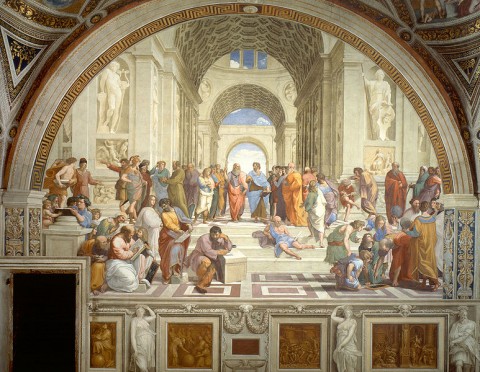
You can download hundreds of Free Courses from Great Universities. (Perhaps you already knew that.) And that includes courses by some of the biggest minds teaching in philosophy. (Is that old news too? Or some welcomed good news?) So we’re starting the week by giving you a rundown of some notable mentions.
John Searle began teaching philosophy at UC-Berkeley in 1959, and first did important work on “speech act” theory. Later he turned to consciousness and artificial intelligence, out of which came his famous “Chinese room” thought experiment. You can find a nice trio of classes online.
- Philosophy of Language — iTunes
- Philosophy of Mind — iTunes
- Philosophy of Society — iTunes
Walter Kaufmann spent 33 years teaching philosophy at Princeton. And more than anyone else, Kaufmann introduced Nietzsche’s philosophy to the English-speaking world and made it possible to take Nietzsche seriously as a thinker. Here he delivers three lectures on existentialists.
- Lectures on Nietzsche, Kierkegaard and Sartre — Web Site
Leo Strauss landed at The University of Chicago in 1949, where he spent decades teaching and writing on political philosophy, especially the political thought of the Ancients. His intellectual legacy is controversial, but his courses valuable.
- Hegel: The Philosophy of History - Web Site
- Kant — Web Site
- Nietzsche, Beyond Good and Evil - Web Site
Find many more Strauss courses here.
Bertrand Russell was one of the most important British philosophers of the last century — a logician, essayist and social critic best known for his work in mathematical logic and analytic philosophy. When it comes to this lecture series, start with the bottom lecture first and then work your way up.
- Authority & the Individual: Six BBC Lectures — Web Site
Michel Foucault taught history and philosophy at the Collège de France and published influential writings on power, knowledge, and discourse.
- Six Lectures on Truth & Subjectivity presented on the UC Berkeley campus (English) - YouTube
Find more Foucault audio here and here.
Hubert Dreyfus has taught many popular existentialism and phenomenology courses also at UC Berkeley, some of which laid the foundation for his new book, All Things Shining: Reading the Western Classics to Find Meaning in a Secular Age.
- Existentialism in Literature & Film — iTunes
- Heidegger — iTunes
- Heidegger’s Being & Time — iTunes
Michael Sandel has taught political philosophy at Harvard since 1980. His course on justice (below) has been taken by more than 15,000 students, making it the most popular undergraduate course at Harvard. This version aired on PBS and the web.
For all 75 philosophy courses, please see the Philosophy section of our list of 575 Free Online Courses.
Related Content:
The Harvard Classics: A Free Digital Collection
Stephen Fry on Philosophy & Unbelief
The Existential Star Wars: Sartre Meets Darth Vader
Read More...Vladimir Nabokov on Lolita: Just Another Great Love Story?
We take you back to the mid 1950s, to an interview with Vladimir Nabokov and literary critic Lionel Trilling conducted soon after the publication of Lolita (1955). Lolita’s basic plot is well known — middle-aged Humbert Humbert develops a passionate obsession for twelve-year old Dolores Haze and takes her on the road. For some critics, this was enough to reject the book out of hand. One British reviewer called it “the filthiest book I have ever read” (which perhaps didn’t say much about the scope of his reading). Other literary observers, Trilling included, recognized the book’s literary merits straightaway. And years later, critics still agree. Recently, The Modern Library called it the fourth most important novel published in English during the 20th century.
The video above features Nabokov and Trilling talking interestingly about how Lolita finds its place in a grand literary tradition that’s more concerned with love, often scandalous love, than with sex per se. And, it’s in this sense that Lolita sits in the same tradition as Tolstoy’s Anna Karenina.
The video is actually the second part of a longer interview. You can start with Part I here.
Related Content:
Vladimir Nabokov Marvels Over Different “Lolita” Book Covers
Nabokov Tweaks Kafka’s “The Metamorphosis”
Read More...Harry Partch’s Kooky Orchestra of DIY Musical Instruments
Composer and instrument inventor Harry Partch (1901–1974) is one of the pioneers of 20th-century experimental instrumentation, known for writing and playing music on incredible custom-made instruments like the Boo II and the Quadrangularis Reversum, and laying the foundations for many of today’s most creative experimental musical instruments.
In this Universal Newsreel footage from the 1950s, Partch conducts a student music performance on his instruments, built with insights from atomic research and Partch’s 30-year obsession with finding the elusive tones that exist between the tones of a regular piano. The setting is Mills College in Oakland, CA. The unorthodox orchestra performs music tuned to the 43-tone scale Partch invented, rather than the usual 12-tone, even though individual instruments can only play subsets of the scale.
For more on Partch’s genius and seminal innovation, see his excellent 1949 meditation, Genesis of a Music: An Account of a Creative Work, its Roots, and its Fulfillments.
Maria Popova is the founder and editor in chief of Brain Pickings, a curated inventory of cross-disciplinary interestingness. She writes for Wired UK, The Atlantic and DesignObserver, and spends a great deal of time on Twitter.
Read More...Dave Eggers: The Teacher Who Encouraged Me to Write

Image by Rhododendrites, via Wikimedia Commons
Thousands of public school teachers won’t be returning to the classroom this fall, thanks to budget cuts nationwide. And that means more than a few Jay Criche’s won’t get the chance to tap the hidden talents of young students. Jay Criche, in case you’re wondering, taught English at Lake Forest High School and counted Dave Eggers (A Heartbreaking Work of Staggering Genius and What Is the What) as one of his students. Criche passed away recently, and, writing in Salon, Eggers remembers his teacher’s deep influence:
He was kind to me, but I had no sense that he took particular notice of me. There were other, smarter kids in the class, and soon I fell back into my usual position — of thinking I was just a little over average in most things. But near the end of the semester, we read “Macbeth.” Believe me, this is not an easy play to connect to the lives of suburban high schoolers, but somehow he made the play seem electric, dangerous, relevant. After procrastinating till the night before it was due, I wrote a paper about the play — the first paper I typed on a typewriter — and turned it in the next day.
I got a good grade on it, and below the grade Mr. Criche wrote, “Sure hope you become a writer.” That was it. Just those six words, written in his signature handwriting — a bit shaky, but with a very steady baseline. It was the first time he or anyone had indicated in any way that writing was a career option for me. We’d never had any writers in our family line, and we didn’t know any writers personally, even distantly, so writing for a living didn’t seem something available to me. But then, just like that, it was as if he’d ripped off the ceiling and shown me the sky.
Over the next 10 years, I thought often about Mr. Criche’s six words. Whenever I felt discouraged, and this was often, it was those six words that came back to me and gave me strength. When a few instructors in college gently and not-so-gently tried to tell me I had no talent, I held Mr. Criche’s words before me like a shield. I didn’t care what anyone else thought. Mr. Criche, head of the whole damned English department at Lake Forest High, said I could be a writer. So I put my head down and trudged forward.
You can read Egger’s remembrance in full here.
Read More...Download The Edupunks’ Guide to a DIY Credential (Free eBook)
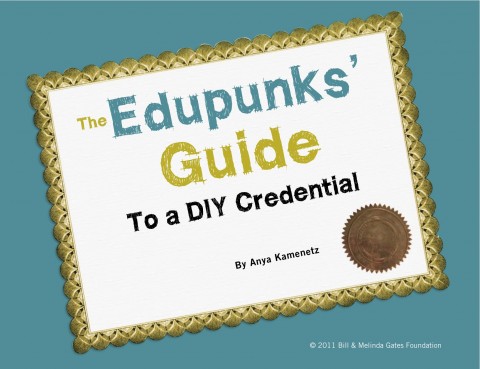 It’s hot off the digital press. Anya Kamenetz, a senior writer at Fast Company Magazine and author of DIY U: Edupunks, Edupreneurs, and the Coming Transformation of Higher Education, has teamed up with the Gates Foundation to release a free ebook, The Edupunks’ Guide to a DIY Credential.
The new ebook offers a “comprehensive guide to learning online and charting a personalized path to an affordable credential,” and it comes complete with some handy-sounding tutorials: how to write a personal learning plan, how to teach yourself online, how to build your personal learning network, 7 ways to get college credit without taking a college course, etc.
The book also smartly features a long list of open educational resources, where the author was nice enough to give us a small mention.
You can read The Edupunks’ Guide to a DIY Credential on Scribd, or alternatively you can download it in multiple formats (PDF, Kindle, ePub, RTF, etc.) at the bottom of this page.
Read More...Movie Tearjerkers: What’s the Saddest Scene in Cinema?
According this fascinating piece in The Smithsonian, Franco Zeffirelli’s 1979 weepfest The Champ is the most consistently effective tearjerker in the history of film. It’s also the tearjerker most often used in scientific studies of grief and sadness:
The Champ has been used in experiments to see if depressed people are more likely to cry than non-depressed people (they aren’t). It has helped determine whether people are more likely to spend money when they are sad (they are) and whether older people are more sensitive to grief than younger people (older people did report more sadness when they watched the scene). Dutch scientists used the scene when they studied the effect of sadness on people with binge eating disorders (sadness didn’t increase eating).
We would have gone with either the last scene of West Side Story or that devastating 1989 Negro College Fund commercial with the pennies. Feel free to post your own candidates in the comments.
via Neatorama
Sheerly Avni is a San Francisco-based arts and culture writer. Her work has appeared in Salon, LA Weekly, Mother Jones, and many other publications. You can follow her on twitter at @sheerly.
Read More...125 Science Videos: Our Greatest Hits
We reached deep into our archives and pulled out a list of our greatest hits — our favorite science videos from the past five years. 125 videos in total, and the list will grow from here. Right now, it covers everything from Astronomy and Space Travel, to Physics and Biology, and then Psychology and Neuroscience. Our recommendation? Just jump right in here. But if you want a little preview, then let’s start you off with ten slam-dunk videos from the collection:
(Note: In the future, you can access this collection by clicking the “Great Science Videos” link under “Essentials.” Top of the center column.)
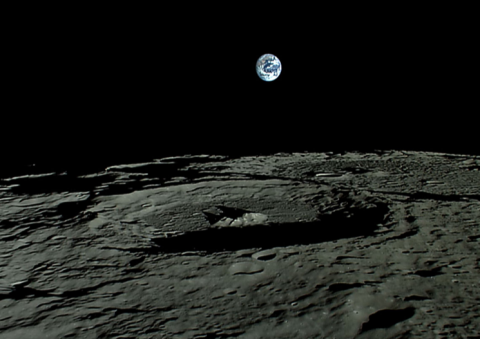
- Earthrise in HD – Video — In November 2007, Japan’s Kaguya spacecraft orbited the moon and captured the first HD footage of an “earthrise” and “earthset.”
- Touring the Earth from Space (in HD) – Video — Give NASA 7 minutes, and they’ll show you the Earth’s most impressive landscapes — as seen from space.
- “First Orbit”: Celebrating 50th Anniversary of Yuri Gagaran’s Space Flight - Video — 99-minute documentary recreates the Soviet cosmonaut’s historic launch into space on April 12, 1961.
- Arthur C. Clarke Presents the Colors of Infinity – Video – The futurist brings us inside Mandelbrot’s world of fractal geometry.
- Physics from Hell: How Dante’s Inferno Inspired Galileo’s Physics – Video – Fascinating presentation by Mark Peterson, physics professor at Mount Holyoke College.
- Lawrence Krauss: Every Atom in Your Body Comes From a Star- Video – Theoretical physicist talks about his work at the World Economic Forum in Davos.
- What It Feels Like To Have a Stroke - Video — Harvard neuroanatomist Jill Bolte Taylor recounts her experience having a stroke. One of the most popular TED Talks of all time.
- Nature by Numbers - Video — Well-known geometrical and mathematical formulas (The Fibonacci Series and Spiral, The Golden and Angle Ratios, The Delauney Triangulation and Voronoi Tessellations) present themselves in nature.
- Tsunami Ripples Across Globe: Animated Video — Video — The National Oceanic and Atmospheric Administration shows Japanese tsunami rippling across the Pacific.
- Daniel Pink: The Surprising Truth About What Motivates Us - Video — Research reveals what really, truly motivates us. And it’s all shown with animation.
Find the full list of Science Videos here…
Read More...125 Great Science Videos: From Astronomy to Physics & Psychology
Astronomy & Space Travel
- A Brief, Wondrous Tour of Earth (From Outer Space) - Video — Recorded from August to October, 2011 at the International Space Station, this HD footage offers a brilliant tour of our planet and stunning views of the aurora borealis.
- A Universe from Nothing - Video — In 53 minutes, theoretical physicist Lawrence Krauss answers some big enchilada questions, including how the universe came from nothing.
- A Year of the Moon in 2.5 Minutes — Video — The Lunar Reconnaissance Orbiter has been orbiting the moon for over a year. The footage gets compressed into 2 slick minutes.
- A Day on Earth (as Seen From Space) — Video — Astronaut Don Pettit trained his camera on planet Earth, took a photo once every 15 seconds, and then created a brilliant time-lapse film.
- Atlantis’s Final Landing at Kennedy Space Center - Video — After more than 30 years, the space shuttle era comes to a close. Video runs 30 minutes. July, 2011.
- Cassini Solstice Mission: Saturn’s Moons Meet Nine Inch Nails — Video — Incredible black-and-white images of Saturn and its moons, all captured by Cassini’s “camera.”
- Death by Black Hole — Video — Neil deGrasse Tyson, head of the Hayden Planetarium in NYC, breaks down what our demise would look like.
- Earthrise in HD — Video — In November 2007, Japan’s Kaguya spacecraft orbited the moon and captured the first HD footage of an “earthrise” and “earthset.”
- Endeavour’s Launch Viewed from Booster Cameras - Video — On board camera show liftoff from multiple angles.
- First 360 Degree View of the Sun - Video — Courtesy of NASA.
- “First Orbit”: Celebrating 50th Anniversary of Yuri Gagaran’s Space Flight - Video — 99-minute documentary recreates Yuri Gagarin’s historic launch into space on April 12, 1961.
- How Large is the Universe? — Video — Fascinating 20-minute documentary by Thomas Lucas and Dave Brody exploring the universe’s immense scale of distance and time.
- Jupiter Slips Behind the Sun — Video — NASA’s STEREO spacecraft sees Jupiter move behind the Sun in this 30 hour animation compressed into just 11 seconds.
- Landing on the Moon: July 20, 1969 — Video — Does it ever get old to watch?
- NASA: The Frontier is Everywhere — Video — An homage to NASA modeled after Michael Marantz’s short film, Earth: The Pale Blue Dot.
- NASA Captures Giant Solar Storm - Video — Amazing video captured in high def by NASA’s Solar Dynamics Observatory.
- NASA Lauches Photo Archive on Flickr — Images — A photo archive covering a half century of NASA’s photographic history.
- NASA Zooms into Spiral Galaxy - Video — A stunning view of the spiral galaxy NGC 2841, which lies 46 million light-years away in the constellation of Ursa Major (The Great Bear)
- Solar Eclipse Seen From Outer Space - Video — NASA STEREO spacecraft sees the disk of the Moon pass in front of the Sun in a view never seen before by human eyes.
- Stars Orbiting Black Holes — Video — “One of the coolest movies in all of science.” Shows stars orbiting around a supermassive black hole at the center of our galaxy over the past 15 earth years.
- Stephen Hawking: Abandon Earth Or Face Extinction - Video — That makes space – planets beyond our own – the next great frontier.
- Touring the Earth from Space (in HD) — Video — Give NASA 7 minutes, and they’ll show you the Earth’s most impressive landscapes — as seen from space.
- The Aurora Borealis Viewed from Orbit (and What Creates Those Northern Lights?) - Video — Two videos in one. A brilliant view of the Northern Lights from space, and an animated video explaining the forces behind the Aurora Borealis.
- The Best of NASA Space Shuttle Videos (1981–2010) - Video — Matt Melis, a NASA engineer, has compiled what he calls the “best of the best, state of the art” video produced by the space shuttle program.
- The Life of a Star — Video — 12 billion years in 6 minutes.
- The Milky Way over Texas — Video — 45 second timelapse video of the “Galactic Center of the Milky Way” rising over Texas Star Party (2009).
- The Moon Up Close, in HD - Video — NASA’s Lunar Reconnaissance Orbiter shows us the Moon’s surface (mountains, craters and the rest) in HD.
- The Soundtrack of the Universe — Video — Janna Levin (Columbia University) on how we can mathematically model sounds made by black holes.
- The Wisdom of Carl Sagan Animated - Video — The Pale Blue Dot put into animation by animation student Adam Winnik.
- What a Hurricane Looks Like From Outer Space - Video — Hurricane Dean captured by a NASA crew in 2007.
- What Does 47 Billion Light Years (in Radius) Look Like? — Video — The size of our universe visualized using pictures from the Hubble Space Telescope
- What It Feels Like to Fly Over Planet Earth - Video — James Drake, a professor of Physics at U. Maryland, downloaded 600 images from The Gateway to Astronaut Photography of Earth, stitched them together and produced an amazing view of our planet.
- When Galaxies Collide - Video — A preview of what will happen 3 to 5 billion years from now, when our galaxy will likely merge with the Andromeda galaxy.
- William Shatner Narrates Space Shuttle Documentary - Video — 80 minute documentary commemorates the 30 year Space Shuttle program.
Physics
- A is for Atom: Vintage PR Film for Nuclear Energy - Video — Animated film produced by General Electric in 1952 with hope of swaying public opinion in favor of nuclear energy after WWII.
- Arthur C. Clarke Presents the Colors of Infinity — Video — The futurist brings us inside Mandelbrot’s world of fractal geometry.
- Astrophysics Goes Extreme — Video — Anil Ananthaswamy talks at TED about physicists who journey to inhospitable parts of the world to perform important experiments.
- Carl Sagan and Stephen Hawking Remixed — Video — A musical tribute to two great men of science. “A Glorious Dawn — Cosmos Remixed.”
- Do Physicists Believe in God? — Video — Physicists at The University of Nottingham School of Physics answer big questions on YouTube.
- E=mc²: Einstein Explains His Famous Formula — Audio — Original audio.
- Einstein and the Mind of God — Audio — American Public Media program sorts out Einstein’s religious sensibility and how it squares with his scientific thinking.
- Einstein for the Masses - Video — Yale prof Ramamurti Shankar breaks down Einstein’s theories and formulas for a lay audience.
- Einstein in 60 Seconds - Video — Dr. Michio Kaku sums up Einstein’s legacy in a nutshell.
- Fun to Imagine with Richard Feynman — Video – The Nobel Prize-winning physicist hosts the BBC program, which uses physics to explain how the everyday world works. (1983)
- How Large is the Universe - Video — Fascinating 20-minute documentary by Thomas Lucas & Dave Brody explores the universe’s immense scale of distance and time.
- How Long is a Piece of String - Video — Alan Davies explores the riddle’s philosophical implications and inevitable connection to string theory.
- Physics from Hell: How Dante’s Inferno Inspired Galileo’s Physics — Video — Fascinating presentation by Mark Peterson, physics professor at Mount Holyoke College.
- Lawrence Krauss: Every Atom in Your Body Comes From a Star - Video — Theoretical physicist talks about his work at the World Economic Forum in Davos.
- Magnetic Fields Made Visible — Video — What do natural magnetic fields look like? Footage from NASA’s Space Sciences Laboratory (UC Berkeley) gives you a glimpse.
- Pendulum Waves as Kinetic Art — Video — Harvard-produced viral video shows pendulum balls swirling, moving almost impossibly from pattern to pattern. Includes explanation.
- Richard Feynman Lectures – Video – The Nobel Prize-winning physicist gives lectures at Cornell in 1964. A great physics introduction. Posted online by Bill Gates.
- Stars Orbiting Black Holes — Video — “One of the coolest movies in all of science.” Shows stars orbiting around a supermassive black hole at the center of our galaxy over the past 15 earth years.
- The Bohr-Einstein Debates, With Dog Puppets — Video — Pretty much what the titles says.
- The Pleasure of Finding Things Out — Video — Produced in 1981 by the BBC and PBS, the show features Richard Feynman, the Nobel prize-winning physicist talking in a very personal way about the joys of scientific discovery.
- The Physics of a Quarterback’s Pass — Video — Fun clip gives you the basic physics of Drew Brees’ passing game.
- The Physics of the Bike - Video — A new theory about why bikes stay upright almost by themselves.
- The Search For Hidden Dimensions - Video — Theoretical physicist Brain Greene hosts a short video that takes us into the speculative world of “hidden dimensions.”
- Water Drop Filmed in 10,000 Frames Per Second - Video — Courtesy of MIT.
- What Genius Looks Like at Zero Gravity - Video — Stephen Hawking enters a state of weightlessness on the “Vomit Comet.”
Biology & Chemistry
- Baba Brinkman: The Rap Guide to Evolution - Video — Canadian “geek rapper” Baba Brinkman pays homage to Charles Darwin with the “The Rap Guide to Evolution.”
- Biology That Makes Us Tick — Video — Free Stanford Course by Robert Sapolsky on human behavior.
- Darwin’s Legacy on YouTube — Video — Free Stanford course commemorating the 200th anniversary of Darwin’s birth and the 150th anniversary of the publication of On the Origin of Species.
- Darwin’s Dangerous Idea — Video — Daniel Dennett explains why Darwin’s concept of natural selection was so subversive from the beginning.
- Dopamine Jackpot! — Video — Stanford professor Robert Sapolsky on the Science of Pleasure.
- E. chromi: Designer Bacteria — Video — Short film about a unique collaboration between designers and biologists. Won the best documentary award at Bio:Fiction.
- Evolution Made Us All - Video — Ben Hillman offers a creative little riff on “All Things Bright and Beautiful.”
- How a Flu Invades Our Body - Video — NPR’s Robert Krulwich and medical animator David Bolinsky take an animated look at what happens when viruses invade your body and trick a single cell into making a million more viruses.
- How Ants Know What to Do — Video — Biologist Deborah Gordon talks about the wonders of ants at TED.
- Nature by Numbers — Video — Well-known geometrical and mathematical formulas (The Fibonacci Series and Spiral, The Golden and Angle Ratios, The Delauney Triangulation and Voronoi Tessellations) present themselves in nature.
- Sapolsky Breaks Down Depression - Video — The professor explains why depression is deeply biological; why it is rooted in biology, just like diabetes.
- The Billion-Bug Highway You Can’t See - Video — Fun, animated NPR video visits the insects inhabiting the upper levels of the troposphere.
- The Future of Human Health - Video — A series of TED-style talks presented at Stanford University.
- The Periodic Table of Videos — Video — An ambitious chemistry project out of the University of Nottingham.
- What It Feels Like To Have a Stroke - Video — Harvard neuroanatomist Jill Bolte Taylor recounts her experience having a stroke. One of the most popular TED Talks of all time.
- World’s Smallest Periodic Table on a Human Hair - Video — World’s smallest periodic table etched onto a strand of hair belonging to chemistry Professor Martyn Poliakoff.
Environment, Geology and & Ecology
- Chilean Earthquake Waves in Animation - Video — A global view of the Chilean earthquake in action that gripped the nation in 2010.
- Fire Ants Create Life Raft in 100 Seconds Flat - Video — Produced by researchers at the Georgia Institute of Technology.
- Floor of Kilauea Volcano Crater Collapses Before Your Eyes — Video — Recorded by the U.S. Geological Survey when it detected unusual activity at the Kilauea volcano.
- Japan’s Earthquake & Tsunami: How They Happened - Video — NOVA’s 47 minute documentary explains the science behind these twin geologic catastrophes.
- My Water’s On Fire Tonight: The Fracking Song - Video — NYU journalism students and ProPublica raise awareness of fracking with a light-hearted video.
- The Birth of a Tornado - Video — Amazing footage with some background information on how tornadoes take form.
- The Climate Scientist Rap — Video — A very Not-Safe-For-Work rap produced by the Australian television show Hungry Beast.
- The President’s Guide to Science - Video — BBC production asks famous scientists to offer important words of advice to the next American president. Environment is front and center.
- The Wild Kingdom on YouTube - Video — Revisit the influential show hosted by Marlin Perkins and Jim Fowler from 1963 through 1988. Watch full episodes.
- Tsunami Ripples Across Globe: Animated Video — Video — The National Oceanic and Atmospheric Administration shows Japanese tsunami rippling across the Pacific.
- What Earth Will Look Like 100 Million Years From Now — Video — 700 million years of geological history covered in an efficient three minutes.
Psychology & Neuroscience
- A Video Illusion: Can You Spot the Change? - Video — Intriguing research on perception by Kevin O’Regan and his team at the University of Paris Descartes.
- Alex the Parrot and the Hidden World of Animal Intelligence - Video — Animal psychologist Irene Pepperberg at Harvard and Brandeis talks about her days working with Alex the Parrot.
- Creativity, Flow and the Source of Happiness - Video — Speaking at the TED Conference, famed psychologist Mihaly Czikszentmihalyi explains the source of happiness.
- Dan Ariely on the Irrationality of Bonuses - Video — Ariely, professor of psychology and behavioral economics at Duke, distills his thinking in his new book, The Upside of Irrationality: The Unexpected Benefits of Defying Logic at Work and at Home.
- Daniel Levitin Shows How Musicians Communicate Emotion — Video — Levitin is James McGill Professor of Psychology and Behavioral Neuroscience at McGill University in Montreal.
- Daniel Pink: The Surprising Truth About What Motivates Us - Video — Research reveals what really, truly motivates us.
- Neuroscience and Free Will - Video — Marcus Du Sautoy (Oxford University) participates in intriguing brain imaging experiment conducted by John-Dylan Haynes, a neuroscientist based in Berlin.
- Oliver Sacks Talks Music with Jon Stewart — Video — A short primer on the relationship between music and neuroscience.
- Sam Harris: Science Can Answer Moral Questions - Video — Sam Harris argues at TED that science (particularly neuroscience) can address all moral questions.
- Smile or Die: The Perils of Positive Psychology — Video — Barbara Ehrenreich, author of the bestselling book Nickel and Dimed, outlines the perils of positive psychology.
- Steven Pinker: How Innuendo Makes Things Work - Video — Steven Pinker, the famed Harvard linguist and cognitive scientist, makes sense of innuendo.
- The Dalai Lama on the Neuroscience of Compassion — Video — Tibet’s spiritual leader goes to Stanford to attend conference about the neurobiological underpinnings of compassion.
- The Famous Stanford Prison Experiment on YouTube — Video — Conducted by Philip Zimbardo, a Stanford psychology professor, in 1971, the experiment shows how good people can go bad.
- The MIT “Checker Shadow Illusion” Brought to Life — Video — A realtime demonstration of an optical illusion created by Edward Adelson (MIT) in 1995.
- The Secret Powers of Times - Video — Philip Zimbardo discusses how our attitudes toward time, often unconscious ones, can strongly shape our personalities and the kind of lives we lead.
- Turn On, Tune In, Drop Out — Video — BBC revisits Timothy Leary, the famous counterculture figure, who advocated the therapeutic and spiritual benefits of LSD.
- When the Dalai Lama Meets the Neuroscientists - Video — Daniel Goleman, bestselling science journalist, talks about the Dalai Lama’s work at the nexus of meditation and neuroscience.
Science & Religion
- 50 Famous Academics & Scientists Talk About God - Video — A montage of 50 renowned academics talking about their thoughts on the existence of God. The list includes includes 16 Nobel prize winners.
- Another 50 Famous Academics & Scientists Talk About God — Video — A continuation of the series immediately above.
- Do Physicists Believe in God? — Video — Physicists at The University of Nottingham School of Physics answer big questions on YouTube.
- Einstein and the Mind of God — Audio — American Public Media program sorts out Einstein’s religious sensibility and how it squares with his scientific thinking.
- Richard Dawkins & John Lennox Debate Science & Atheism - Video — Two Oxford profs – atheist biologist Richard Dawkins and Christian mathematician John Lennox – debating God and science in Birmingham, Alabama.
- Stephen Hawking on Religion: ‘Science Will Win Because it Works’ — Video — It’s all in the video.
Technology & Mathematics
- Anatomy of a Computer Virus: A 3.5 Minute Primer - Video — A quick revealing look at Stuxnet, the computer virus launched against Iran’s nuclear infrastructure in 2010.
- Arduino Documentary: Open Source Hardware is Here — Video — Revisits a project launched in the Italian town of Ivrea back in 2005.
- Inventing the Digital Camera: A Short Portrait of Steven Sasson — Video — A short documentary featuring the inventor of the digital camera.
- Multiplication: The Vedic Way - Video — Better just to watch…
- Nature by Numbers — Video — Well-known geometrical and mathematical formulas (The Fibonacci Series and Spiral, The Golden and Angle Ratios, The Delauney Triangulation and Voronoi Tessellations) present themselves in nature.
- Norman Mailer & Marshall McLuhan Debate the Electronic Age - Video — Norman Mailer and Marshall McLuhan debate the relative merits of our Electronic/Information Age. 1968
- Ray Kurzweil, Futurist: 10 Questions About What’s Coming Next — Video — Hint: Singularity.
- Technology Is Amazing, Nobody Is Happy - Video — A classic comedy bit from Louis C. K.
- The Beautiful Math of Coral & Crochet - Video — Science writer Margaret Wertheim explains how the art of crochet emulates sea slugs creating coral structures in hyperbolic space. A TED Talk.
- The Math of Rock Climbing — Video — Skip Garibaldi, a professor of mathematics at Emory University, describes how math figures into his passion for rock climbing.
- The Secret History of Silicon Valley — Video — What set the stage for Silicon Valley to change the entire landscape of technology? Steve Blank explains at Google.
- The World’s Fastest Solar Car - Video — Watch a world record set by students from The University of New South Wales.
- “They Were There” — Errol Morris Directs a Film for IBM - Video — The acclaimed director directs a film to commemorate the 100th anniversary of the company’s founding.
- Visualizing WiFi Signals with Light — Video — WiFi signals around Oslo, Norway revealed.
- What Technology Wants: Kevin Kelly @ Google - Video — Co-founder of Wired magazine distills the thinking in his new book, What Technology Wants.
Stay tuned for more to come…
Read More...The Best Magazine Articles Ever, Curated by Kevin Kelly
A few days ago, we asked you to send us your favorite non-fiction titles. We’ll be posting your many excellent suggestions soon, and, in the meantime, we thought we should offer something in return — more specifically, yet another list of excellent non-fiction compiled by someone other than ourselves.
Kevin Kelly, web-pioneer, co-founder of Wired Magazine, former editor of the Whole Earth Catalog, and one of the best all-around living arguments for ditching college and traveling the world instead, has put together a crowdsourced list of the best magazine articles from the 60s, 70s, 80s, 90s, 00s and 10s, almost all of them available on the web. He’s also gathered the top 25 of all time (based on the number of votes received) on one thrilling page.
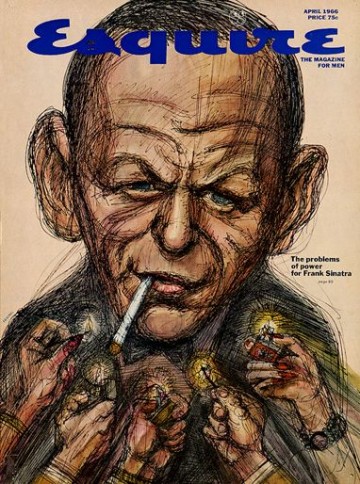
The list includes pieces like Fear and Loathing in Las Vegas by Hunter S. Thompson, David Foster Wallace’s Consider the Lobster, and Gay Talese’s legendary 1966 Esquire cover story, Frank Sinatra Has a Cold. It’s an invaluable resource, whether you’re an aspiring journalist or novelist, a history buff, or just a person who wants to enjoy the evolution of the past 60 years of the English language.
You may already be familiar with the sites Instapaper, Longreads, and Longform. All three can help you find great reading material on the web, organize it, and download it to your Kindle, iPad, or tablet. Enjoy.
Get more classics from our collection of Free eBooks.
Sheerly Avni is a San Francisco-based arts and culture writer. Her work has appeared in Salon, LA Weekly, Mother Jones, and many other publications. You can follow her on twitter at @sheerly.
Read More...Conan O’Brien Kills It at Dartmouth Graduation
The stars shined upon the Ivy League schools this graduation season. Tom Hanks at Yale, Amy Poehler at Harvard, Denzel Washington at U Penn. These kids have it good, but nowhere near as good as the Dartmouth grads. This weekend, Conan O’Brien rolled into Hanover, New Hampshire and dished out plenty of jokes:
Parents, if your child majored in fine arts or philosophy, you have good reason to be worried. The only place where they are now really qualified to get a job is ancient Greece. Good luck with that degree.
You know, New Hampshire is such a special place. When I arrived I took a deep breath of this crisp New England air and thought, “Wow, I’m in the state that’s next to the state where Ben and Jerry’s ice cream is made.”
To this day I cannot help but wonder: What if I had gone to Dartmouth? If I had gone to Dartmouth, I might have spent at least some of my college years outside and today I might not be allergic to all plant life, as well as most types of rock. If I had gone to Dartmouth, right now I’d be wearing a fleece thong instead of a lace thong… If I had gone to Dartmouth, I’d have a liver the size and consistency of a bean bag chair. Finally, if I had gone to Dartmouth, today I’d be getting an honorary degree at Harvard. Imagine how awesome that would be.
And a little wisdom for life, which, honestly, holds entirely true.
For decades, in show business, the ultimate goal of every comedian was to host The Tonight Show. It was the Holy Grail, and like many people I thought that achieving that goal would define me as successful. But that is not true. No specific job or career goal defines me, and it should not define you. In 2000—in 2000—I told graduates to not be afraid to fail, and I still believe that. But today I tell you that whether you fear it or not, disappointment will come. The beauty is that through disappointment you can gain clarity, and with clarity comes conviction and true originality.
Many of you here today are getting your diploma at this Ivy League school because you have committed yourself to a dream and worked hard to achieve it. And there is no greater cliché in a commencement address than “follow your dream.” Well I am here to tell you that whatever you think your dream is now, it will probably change. And that’s okay. Four years ago, many of you had a specific vision of what your college experience was going to be and who you were going to become. And I bet, today, most of you would admit that your time here was very different from what you imagined. Your roommates changed, your major changed, for some of you your sexual orientation changed. I bet some of you have changed your sexual orientation since I began this speech. I know I have. But through the good and especially the bad, the person you are now is someone you could never have conjured in the fall of 2007.
You can find the complete transcript of the speech here. And don’t miss Conan’s visit to Google last summer, which was full of good laughs…
Read More...Support Us
We're hoping to rely on loyal readers, rather than erratic ads. Please click the Donate button and support Open Culture. You can use Paypal, Venmo, Patreon, even Crypto! We thank you!

About Us

Open Culture scours the web for the best educational media. We find the free courses and audio books you need, the language lessons & educational videos you want, and plenty of enlightenment in between.
Advertise With Us
FREE UPDATES!
GET OUR DAILY EMAIL
Get the best cultural and educational resources on the web curated for you in a daily email. We never spam. Unsubscribe at any time.
FOLLOW ON SOCIAL MEDIA
Open Culture editor Dan Colman scours the web for the best educational media. He finds the free courses and audio books you need, the language lessons & movies you want, and plenty of enlightenment in between.
Advertise With Us


.jpg)